Why one should definitely watch ‘F.R.I.E.N.D.S’

Imagine a Friday evening. You came back from your office after a long week. Of course you do not feel the urge to cook and so you order Pizza from your authentic pizza store. You snug into your bed, with the large hot pizza and open a bottle of red wine. You take out your laptop and start searching for a good show for binge watching. But somehow, you find yourself listening to the tune:

“So no one told you life was gonna be this way
Your job’s a joke, you’re broke
Your love life’s D.O.A …….”

Friday night is sorted. Good food with a good show.

F.R.I.E.N.D.S – The iconic show celebrates 25 years today ...
F.R.I.E.N.D.S Poster

But it is not just about a show. We all have our favorite shows, but F.R.I.E.N.D.S is a tad bit different. Apart from just enjoying an evening with the show, this show teaches us some aspects of management and career which can make our ‘binge-watching’ time worthwhile. So just to further accelerate your career, I would like to list a few management tips which we can learn from F.R.I.E.N.D.S:

  1. Have patience. Remember when Phoebe was trying to teach Joey a new language and how he was getting on her nerves by learning it the wrong way? Yes, and how did Phoebe respond? She just maintained her calmness and her patience level high, without giving up on him. She knows that she might be an expert in that language while the other person is not. Key takeaway is that in your work life, you will definitely come across various situations and meetings where you need to explain that thing at which you are an expert, and even though the other person is not aware of that thing, you should have enough patience to explain.
  2. Be really focused. One of the most heartbreaking scene was that when Monica broke up with Richard (apparently of age and difference of opinion issues) but even that scene taught us something very valuable. Monica took that negative event and turned it into a positive trait by going down to the dock, buying loads of fruits and making batches of jam. And she did not just deliver it, she gave her full efforts to make the best batches of jam. So the key takeaway is that whatever be the situation, use it to your advantage and give your best, especially while you are working on a project and there can be innumerable roadblocks.
  3. Sleep for at least 8 hours before a big meeting.We can never forget that meeting when Chandler fell asleep, only to be woken up to the decision of heading the branch office from Tulsa. Now well, a promotion in all forms is always good, but not at the expense of leaving your family and, especially, to the most remote place possible. So the key takeaway is to get hold of your mind before any big event in office.
  4. Be great at networking and always have the support of your friends. Remember when Phoebe came up with a job of a head chef at first for almost everyone, except for Monica, especially at the time when Monica had no work. Another instance when Rachel lost her job at Ralph Lauren because her boss overheard her conversation for a job interview at Gucci. Even then she was rescued by Mark, who happens to be her ex-colleague, to on-board her for a better position at Louis Vuitton in Paris. So the key takeaway is that always maintain a great relationship with everyone and one thing is to be kept in mind – ‘Give what you would want to receive.
  5. Give your 100%. Remember the time when Phoebe was given the charge of ice even though she wanted to play a major role in a party. But she took her job very seriously, arranged for all the forms of ice and cups and delivered the biggest hit of the party. So the key takeaway is that even though you get a mini part of a big event, give your best and make it a hit, so that others will definitely notice.
  6. And finally, never be afraid to follow your passion. Rachael started her career as a waiter and finally followed her passion to land up in Ralph Lauren. Joey failed multiple times as an actor but he was passionate about it. Monica was passionate about cooking. But the most notable one was about Chandler. How he left his job in “statistical analysis and data reconfiguration” only to follow his passion of writing to land up as an intern in advertising. So the key takeaway is that even though you might be best at what you do, but you should still be brave enough to follow your passion.
Friends - Phoebe's Cups And Ice - YouTube
Phoebe managing the ‘ice counter’ of the big party

So these are some of the management tips which you can take away from the show. The show depicts that love, friendships and relationships are meant to be nurtured. And that’s not limited to just your personal life, but also to your professional life too.

But for now, take hold of your career and just binge away …

Source:
SUPERVISION OF MANAGEMENT

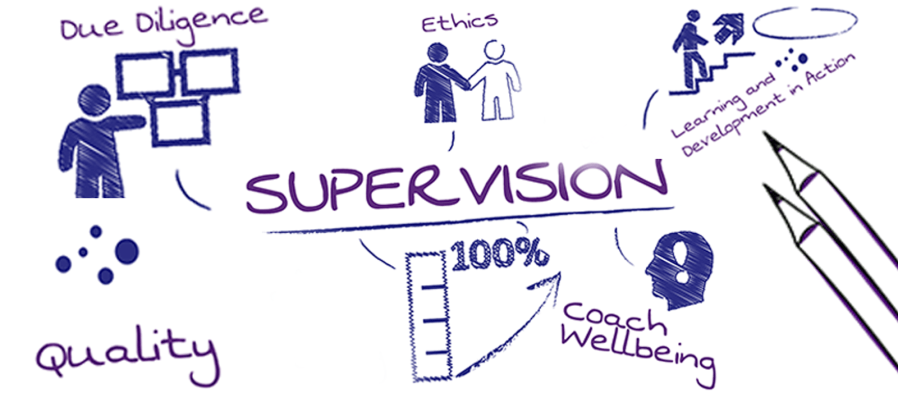
Supervision is an important aspect of the directing function and it involves the managerial task of observing the subordinates at work to ensure that they are working according to plans and policies of the organization, keeping the time schedule and supervision also includes helping subordinates to resolve their work problems. Managers at all level are in direct contact with subordinates and oversee their work performance and the top management supervises the work of middle-level managers, who in turn supervise the first-line managers or supervisors and the first-line managers are in direct contact with the operatives and thus, all levels of management are generally engaged in supervising the work of their immediate subordinates. According to R.C. Davis “Supervision is the function of assuring that the work is being done in accordance with the plan and instructions”. Supervision includes the following three elements:

  1. Commanding
  2. Guiding
  3. Controlling

This is the reason why, “Supervisors are known as a friend, philosopher, and Guide of workers”.

ROLE OF SUPERVISORS

Supervision has special importance only at the lower management level and the question which is now required to be discussed is to what role does a person working at the managerial level, the supervisor play in the organization.

1. Supervisor as a key man

 In every organization, the work of putting the plans into action is done by non-managerial staff who works under the guidance of a supervisor but however, at this level, even a little carelessness may cause the closure of the organization and that is why the supervision is referred to as the key man in the organization.

2. Supervision as a middle man

   In the organization, the supervisor plays the role of a middle man and he acts as a link between the higher-level managers and him workers, and his main job is to prepare a co-operative atmosphere among the two parties in order to facilitate the achievement of the goal of the organization.

3. Supervisor as a human relation specialist

A supervisor is likely to face a number of problems related to human behavior, for which one has to try and find out solutions and he can do so only if he is a human relation specialist.

FUNCTIONS OF SUPERVISOR

1. Planning the work or schedule activity

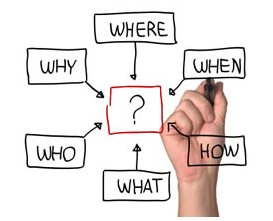
The supervisor is a low-level manager and he is required to study and analyze the work of his department and decide what, where, which, why, and by whom the work is to be performed. He has to chalk out daily and weekly program and he has also to arrange the raw materials, machines, tools, and equipment and the successful supervisor is an efficient planner.

2. Achieving the target

It is the most important duty of the supervisor to achieve the target prescribed for his department by the management and this can be achieved if the supervisor enables the best possible use of the available resources of the department towards the desired goal.

3. Enbaling standardized output through instruction and guidance

It is the supervisor, who ensures that the actual performance corresponds to the norms and standards laid by the management and the supervisor must satisfy himself as to the quality of the output and he should concentrate on both quality and quantity of goods. 

PLANNING- process and importance

WHAT IS PLANNING?????
Planning is a common term which focuses on pre deciding the things which we have to do later. Not only deciding the things but also planning includes thinking of the ways by which we can complete a particular plan successfully. It is an important parameter of the management and we need to plan things in the every sphere of life so that we can go on accordingly. Planning is the combination of creativity and innovation. Planning is done to perform any task effectively and efficiently so that there is no hurdle between the complete process of the task which we wish to perform. In the business world, it is said that planning acts as a bridge to reach the position where we wish to reach.
STEPS OF PLANNING
Planning is not an easy task rather it is a combination of several steps. The complete process of planning has been divided into 7 different steps which are mentioned below –

  1. To set objectives i.e. to decide where we aim to reach. It is basically aiming the destination. Every organization has some targets and thus has to complete them so setting objectives is the first and important step of the planning process.
  2. To develop premises i.e. to set assumptions. No work is completed without a risk and assuming things. So premises are basically assuming what can be done. So making those assumptions is the next step.
  3. To identify alternative courses of action is the third step i.e. once the objective has been set and assumptions have been made, then it is the time to identify and think the proper course of actions which must be performed to reach that particular aim.
  4. To evaluate alternative course i.e. to think of the advantages and disadvantages of each course of action and to find what alternative can work for it if that would not happen.
  5. The next step is to select the best alternative which would be suitable according to our aim. The best plan is adapted and implemented.
  6. The next step is to implement the actual plan which has been thought of yet. This is the step where actually planned course of actions take place and where actually the work is done by the individuals.
  7. The next and final step of the process of planning is to follow-up the actions. In this step all the validation and verification occurs that whether the planned process is going on with the same flow or not. Also it is seen that whether the plan needs any change or it should go on like that only.

IMPORTANCE OF PLANNING

  1. Planning tends to reduce the uncertainty of occurring a process.
  2. It is very essential to provide a proper direction to the plan.
  3. Planning helps to promote innovative ideas and thus the planned work is done more efficiently.
  4. Planning helps in decision-making and dividing the equal amount of work to each individual of the group or team.
  5. Planning reduces confusion at any level of the process.
  6. Planning helps in setting some goals and thus an organization does better work.

DIRECTING

Directing, in simple words, is instructing the subordinates to follow a certain process to attain a given objective and it is getting the work done through instructions and orders and directing is an important element of management without which success cannot be achieved in the managerial process and it is very essence of management and in fact, it is the sum total of all managerial efforts and it helps in the organization marching towards its defined goal. After planning, determination of objectives, organization, and forecasting, the working force needs briefing about the stated goals which have to be accomplished following the policies, programmes and schedules. Directing is the managerial function of guiding, motivating, leading and supervising the subordinates to accomplish desired objectives. It is an important managerial function that initiates organiser’s action and it is a connecting and activating link with various functions of management and it is a process around which all performance revolves and directing bits of help in mobilising and synthesizing human resources and efforts to accomplish the goals of the organization and directing is the heart of management-in-action and essence of operations. According to Ernest Dale directing is “Directing is telling people what to do and seeing that they do it to the best of their ability and it includes making the assignment, corresponding procedures, seeing that mistakes are corrected, providing on-the-job instructions and of course, issuing orders” and according to another author Newman directing is “ The process of directing is concerned with the way an executive issues instructions to his instructions to his subordinates or otherwise indicates what is to be done”. As a continuous process, directing comprises of:

  1. Issuing orders that are clear, complete, and within the capabilities of subordinates to accomplish.
  2. Training and instructing subordinates to carry out their assignments in the existing situations.
  3. Motivating subordinates to try to meet the expectations of the manager; and
  4. Maintaining discipline and rewarding those who perform properly.

NATURE OF DIRECTING

1. Directing Initiates Actions

Directing is a key managerial function and a manager has to perform this function along with planning, organizing, staffing, and controlling while discharging his duties in the organization and while other functions prepare a setting for action, directing initiates action in the organization.

2. Directing takes place at every level of management

Directing is a pervasive function of management and it exists at every level, location and operates throughout an enterprise and every manager, regardless of the number of subordinates, performs this function and he has to give instructions to the instructions, guide them and motivate them for the achievement of certain goals.

3. Directing is a continuous process

Directing is a dynamic and continuing function and it is the essence of management practice and the techniques and methods of directing have to be changed with t eh changing organizational conditions and a manager are expected to guide his subordinates in all the changing environments. Directing’s objectives are to get the work done and to see that the management works More responsibly and the manager has to make sure that the problem faced by his mens are solved quickly.

COORDINATION IN AN ORGANIZATION

Coordination is the process of synchronizing the activities and works of different departments of an organization to show and ensure the unity and group or team work. Coordination allows the company to progress because obviously a team can work better than an individual. It helps in maintaining harmony and balance between the works in an organization. A group maintains a balance and thus provides proper quality work to its organization. It is basically a force that binds all the management functions. Coordination helps in running the various things in an organization such as purchase, production, sales and finance. Any organization with the coordination gives better results than others. Coordination is referred as the essence of management because it is sometimes considered as a separate function of management. Coordination is essential in maintaining the harmony among individuals working together so that everyone gets the praise for the part of work they have done. To elaborate that coordination is not a separate function, rather it is the part of the management, it can be seen in different parts which can be also said as the stages of coordination –

  1. Planning is the first stage of coordinating in which the top management decides what and how to execute the complete work.
  2. Next is the organizing step, in which the organizational plans are actually organized as per planning.
  3. Third stage is staffing which is performed after the plans are organized.
  4. Next stage of coordination is directing in which plans which are organized and staffed are actually executed.
  5. Last and final stage of coordination is controlling in which all the activities which are newly executed are controlled so that no confusion and problem occurs.

WHY IS COORDINATION IMPORTANT?????
The need for coordination in an organization arises due to following reasons –

  1. Growth in size of organization i.e. as the organization grows, number of employees increases and thus to manage more number of individuals there is a need of coordination.
  2. Functional differentiation in an organization i.e. different departments of an organization need to be coordinated for better management.
  3. Specialization in the people of organization may lead to discrimination due to which coordination is necessary.

CHARACTERISTICS OF COORDINATION

  1. Coordination tends to integrate different individual efforts in the form of a group.
  2. Coordination ensures and protects unity of actions and binds all the individuals of the departments of the organization.
  3. Coordination is a continuous process i.e. it never stops and goes on like management. It starts at the planning stage and continues till controlling stage. It can never stop if the organization needs to work better and gain popularity.
  4. Coordination like management, is all pervasive i.e. it is universal and is required at each level and in each department of the organization. It is basically a binding force, which can never stop.
  5. Coordination is the responsibility of managers i.e. all the head departments are responsible for coordinating to other departments because in the first stage of coordination which is planning, higher authorities are required.

SELECTION

Selection is the process of choosing the most suitable candidates from applicants for the various jobs and it follows the recruitment and much information has to be obtained, from the prospective candidates to facilitate the selection process and it is then analyzed and evaluated and the information relates to the qualifications, work experience, age, levels of skills and other accomplishments, family background, aptitudes and interests, physical and mental fitness and so on. The enterprise has to choose the best and the most promising persons from among the applicants and in this sense, it may be said that while recruitment is a positive function, in that it seeks to induce as many persons as possible to apply for a job in the enterprise, the selection is a negative function because it aims at eliminating or weeding out those applicants who are not found suitable in one respect or the other. Thus, the selection is the process of securing relevant information about an applicant to evaluate his qualifications, experience, and other qualities to match these with the requirements of a job, and it essentially a process of picking out the man or men best suited for the organization’s requirements. According to Dale Yoder “Selection is the process in which candidates for employment, are divided into two classes-those who are to be offered employment and those who are not”.

SIGNIFICANCE OF SELECTION

Hiring of employees is an important function of the personnel department and this function must be performed careful because errors committed at the time of selection may prove to very costly and of selection process is faulty, absenteeism will be too high and the rate of labour turnover will also be higher and whenever unsuitable candidates are hired, the efficiency of the organization will go down and such persons will shrink work and will be absent themselves from the work more often and in many cases unsuitable employees have to leave their jobs and this will lead to waste of time, energy and money in hiring such employees and the training cost incurred on them will also go waste and proper selection and placement of personnel go a long way towards building up a suitable workforce and it will keep the rates of absenteeism and labour turnover low and will increase the morale of the employees and if the employees are quite suitable according to the requirements of the jobs, they will show higher efficiency and will enable the organization to achieve its objectives effectively. Recruitment and selection are two separate functions that usually go together and recruitment aims at stimulating and attracting job applications for positions in the organization, while selection consists of choosing among the applicants, to choose those, most suited to the job requirements, keeping in view the job analysis information. Recruitment is simple and candidates are not required to cross several hurdles whereas the selection process is complex and consists of many hurdles created by the management internally and Recruitment initiates the procurement aspect of personnel management whereas the selection completes the procurement aspect of personnel management.

MANAGEMENT

Management is not only a term but a whole process of getting things done more effectively. In managing things, we aim to achieve our goals more effectively and efficiently. Management is very essential for all the organizations, whether small or big, profit or non-profit. Every type of organization requires management in achieving their goals more successfully. Lack of management makes the things confusing and thus company may fall or lack as compared to other companies of their competition. Management is a group or team work and cannot be actually achieved by a single individual.
Management has several advantages and importance in an organization such as –
• It actually helps in achieving group or team goals.
• It helps in increasing efficiency of work.
• It actually creates a dynamic organization.
• Despite of group, it also helps in achieving the personal goals or it can be said that it develops the personality of the individual.
• It also helps in the development of the society by the interaction of different people.
The complete definition of the management contains 3 essential terms –

  1. PROCESS i.e. management is a process requiring planning, organizing, staffing, directing, and controlling.
  2. EFFECTIVELY i.e. managing the task helps us complete the task more effectively and better than before.
  3. EFFICIENCY i.e. management increases the benefits and profits by the tasks than before.

CHARACTERISTICS OF MANAGEMENT

  1. Management is a goal oriented process i.e. it does not go just like that. It is actually a goal oriented process. These goals are decided and stated before starting any project and there is no doubt in the fact that management helps us achieving our goals more efficiently and better than before.
  2. Management is all pervasive i.e. it has been observed and meant that management is a universal concept all types of organization, whether small or big, profit or non-profit has to apply some management rules to improve their organization’s standards.
  3. Management is multi-dimensional i.e. it is a kind of complex activity. It can be more understood by saying that a lot of things need to be managed in order to rum an organization. Management of work, people, and operations are the three main dimensions which need to be managed for effective working.
  4. Management is a continuous process i.e. it never stops. It is an ongoing process. It requires constantly solving the issues faced by the organization by managing its dimensions.
  5. Management is a group activity i.e. it is not the work of a single person rather it requires a group or team. Every member of the team has to work very effectively for the good results of the operation they are performing.
  6. Management is a dynamic function i.e. management allows the organization to better interact with the surrounding environment and to build better relations with other organizations so that they can help in need.
  7. Management is an intangible force i.e. it cannot be seen but its effect can be felt and seen in the betterment of the organization. The company works more happily, employees are more energetic when each and every work of the organization is managed properly.

STAFFING

Staffing may be defined as the managerial function of employing and developing human resources for carrying out the various managerial and non-managerial activities in an organization. The function is concerned with attracting, acquiring and activating the human resources for achieving organizational goals and staffing also involves upgrading the quality and usefulness of members of the organization with a view to getting higher performance from them and in other words the policy of selecting ‘right man for the right job’ should be adopted. The staffing function includes such activities as manpower or human resource planning, recruitment, selection, placement, training and development, remuneration, performance appraisal, promotion, transfers, and so on. Staffing is a continuous function of managers and this is because the organization’s need to retain and maintain its personnel is a need ending process and managers have to keep a regular watch on the size and composition of personnel needed by the organization. As said by Weihrich and Koontz “The managerial function of staffing involves the filling and keeping filled, positions in the organizational structure”.

NATURE OF STAFFING

Staffing is related to people not with goods and it is a human factor related to people and staffing is also influenced by the social, economical, political, and educational environment of the country. Speaking, staffing is a function of far-reaching consequences and the reason is that managers are not shown as an asset in the balance-sheet of the organization whatsoever money we may have to spend on their selection, education, training and development and hence, we may conclude that staffing is a function of a for reaching consequences. According to Theo Haimann “Staffing is also a liability of the management like its other functions which is to be done by a manager continuously”. Recruitment, selection, training, and development of employees is a continuous process and with the increase in the size of the organization, continuity in staffing also increases. Staffing is influenced by the internal and external environment of the organization and the internal environment includes policies regarding promotion, retirement, etc., while the external environment includes the social, economic, political, and educational environment of the country and speaking both internal and external effect the staffing function.

In management selection, training, development, and evaluation of manpower are interlinked and hence convert staffing into a system and it is treated as a sub-system of management system because it is linked with organizational structure. Staffing is done not only to fulfill the present vacancies but also to fulfill the future vacancies and here we have to forecast the number and type of vacancies in near future and the level of the educated and trained people required for fulfilling these vacancies and arrange for the fulfillment, education, and training for these vacancies in advance. Staffing is not a phase of organizing but a separate managerial function and staffing is the responsibility of the managers. Staffing helps in determining and securing qualified and capable personnel for various jobs and it places round pegs in round holes and square pegs in square holes and it aims at economical and better employee performance.

INFORMAL ORGANIZATION

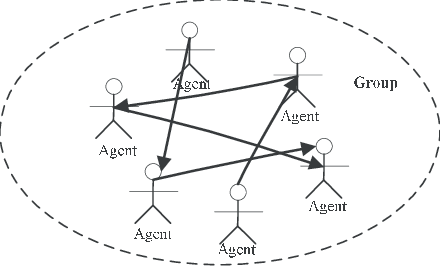
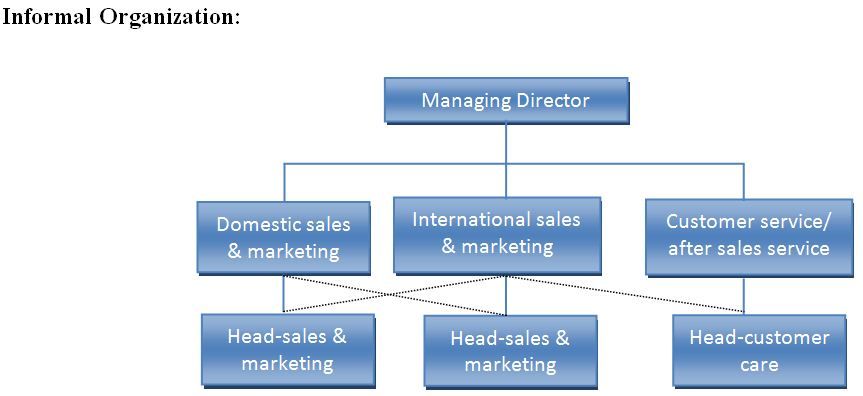
Informal organization refers to relationships between individuals in the organization based on interest, personal attitudes, emotions, prejudices, likes, dislikes, physical location, the similarity of work et. The informal organization comes into existence because of the limitations of the formal structure and it represents a natural grouping of people in working situations and the birth of small groups in an organization is a natural phenomenon. The informal group may overlap because an individual may be a member of more than one informal group. Informal groups come into being to support and supplement the formal organization. The formal and informal organization are inextricably interlinked. As Joseph L. Massie said, “Informal organization has been defined as any human interactions that occur spontaneously and naturally over long periods of time”.

CHARACTERISTICS OF INFORMAL ORGANIZATION

The main characteristics of informal organization are:

  1. It has no place in the formal chart.
  2. It is definite and has no structure.
  3. It is a network of personal and social relations.
  4. It has its own rules and traditions.
  5. It provides for social satisfaction to its members.
  6. An informal organization arises spontaneously.
  7. It is an integral part of a total organization and management cannot eliminate it.
  8. It is based on personal attitudes, emotions likes and dislikes etc.

  ADVANTAGES OF INFORMAL ORGANIZATION

The informal organization is a psycho-social system and the main advantages of an informal organization are:

  1. Informal organization evolve short cuts and eliminate various individuals and departments.
  2. Informal organizations help in solving work problems of members.
  3. Informal groups recognise talented workers as their leaders.
  4. A manager can build better relations with his subordinates through informal contacts.
  5. Informal groups do not allow managers to cross the limits of authority.
  6. Informal groups often fill up the communication gaps which might arise in the organization.
  7. The informal organization may fill in gaps, if any, in the abilities of managers.
  8. Informal groups develop certain norms of behaviour which differentiate between good and bad conduct and between legitimate and illegitimate activities.

LIMITATIONS OF INFORMAL ORGANIZATION

Informal groups have negative aspects too. They may create problems for the organization as mentioned below:

  1. Informal groups generally tend to resist change and change requires new skills but informal groups want to maintain the status quo and this creates obstructions in implementing new ideas and thus organization’s growth.
  2. An informal leader may turn out to be a troublemaker for the organisation and to increase his influence, he may work against the policies of management, and try to manipulate the behaviour of his followers.
  3. Every member of an informal group is also a member of the formal organization and sometimes role conflict may arise because the ideas, expectations and requirements of both the organizations may be opposite to each other.
  4. An informal group exerts strong pressure on its members for conformity and the members may become so loyal to their group that following the group norms may become a part of their life.
  5. Informal communications may give rise to rumours which may create conflict and misunderstanding among the people and rumours may prove dangerous for the organization. 

FORMAL ORGANIZATION

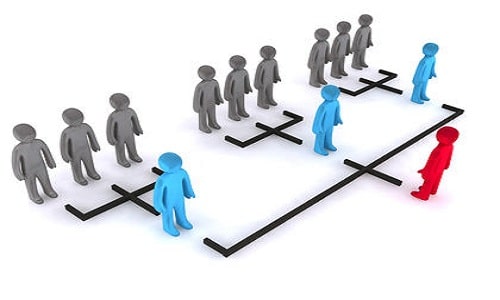
A formal organization is a planned structure which represents the officially established pattern of relationships among individuals, groups, sections, units, departments and divisions to accomplish the goals of the enterprise. A formal organization provides a broad framework and delineates certain prescribed functions and the relationships between them, a formal organization may be defined as a system of consciously coordinated activity of two or more persons towards a given objective. A formal organization may also be defined as:

  1. A pattern of formal relationships and duties, the organization charts, job description and position guides.
  2. Formal rules, policies, work procedures and similar devices adopted by management to guide employee behaviour in certain ways within the structure of formal relationships.

   As Louis A. Allen said, “The formal organization is a system of well-defined jobs, each bearing a definite measure of authority, responsibility and accountability, the whole consciously designed to enable people of the enterprise to work more effectively together in accomplishing their objectives”.  A formal organization facilitates the determination of objectives and policies. Communication, the delegation of authority, and coordination take place according to a prescribed pattern and in fact, formal structure restricts and circumstances the area of operation of individuals working within an organization.

FEATURES OF FORMAL ORGANIZATION

The main characteristics of a formal organization are:

  1. It is based on the division of Labour.
  2. This organization is formed by voluntary thinking.
  3. It is represented by organizational charts and manuals.
  4. In this organization, the rights, duties and liabilities of different persons are clarified on different levels of management.
  5. In a formal organization, unity of command is followed.
  6. It is prepared only for the accomplishment of od predetermined goals.
  7. Here the relationships among members are fully impersonal.
  8. Here delegation of authority flows from top to bottom.

 ADVANTAGES OF FORMAL ORGANIZATION

The main advantages of Formal Organization include:

  1. The best use of resources.
  2. Feeling of cooperation in a formal organization.
  3. No duplication of work.
  4. End of biased opinions from everyone related to any work.
  5. Proper standardisation of work becomes easy to implement.
  6. Helpful in achieving objectives.
  7. Well defined authority and responsibility and accountability avoid any chance of friction and enmity.
  8. Merits of specialisation can be achieved due to the principle of division of labour.
  9. The efficiency of employees can easily be measured due to the predetermination of the rights and duties of each individual.
  10. This type of organization restricts conflicts among executives.

LIMITATIONS OF FORMAL ORGANIZATION

The main limitations of Formal organization include:

  1. Rules are considered more important than the person.
  2. This organization ends the spirit of initiative.
  3. Excessive and undue use of authority takes place in this type of organization.
  4. In this type of organization procedures, programmes, rules etc., are followed strictly and that is why frequent changes are not possible.
  5. A formal organization is impersonal; that is why human feelings have no place here.
  6. There is a lack of coordination among the activities of different persons in different departments.
  7. No consideration is given to the social and human elements.
  8. This organization takes into consideration only the formal communication and creates obstacles in the application of informal communication.

STRUCTURE OF ORGANISING

The structure is the pattern in which various parts or components are integrated or interconnected and this prescribes the relationships among various activities and positions, as these positions are held by various persons, a structure is called the relationships among people in the organization and thus organization structure refers to the differentiation and integration of activities and authority, role and relationships in the organization. Differentiation is the differences in cognitive and emotional orientations among managers in different functional departments and differences in formal structure among these departments. Integration refers to the quality of the state of collaboration that is required to achieve unity of effort by the organization. The structure of an organization thus regulates, coordinates, and reduces uncertainty in the behaviour of people. According to Peter F. Drucker, “Organisation structure is the most important means as a structure wrongly build cannot assist in the promotion of the business”. Thus, the organisational structure is the lifeline of an organisation and this determines the mutual relationship of different persons working within an institution and clarifies the position of each person in it.

TYPES OF ORGANISATION

Creation of an appropriate structure is indispensable for any organisation and Organisation structure represents the hierarchical arrangement of various positions in the enterprise and it helps in allocating authority and responsibility formally and it also lays down the pattern of communication and coordination in the enterprise and As Kimball write, “ The problem of an organisation is to select and combine the efforts of men of proper characteristics to produce the desired results”. Although character and type of organization would depend largely on the size and nature of the enterprise, yet, there are certain patterns of organising the personnel in an organisation and the need of clear-cut authority/responsibility relationships has led to different forms of administrative organisation as follows:

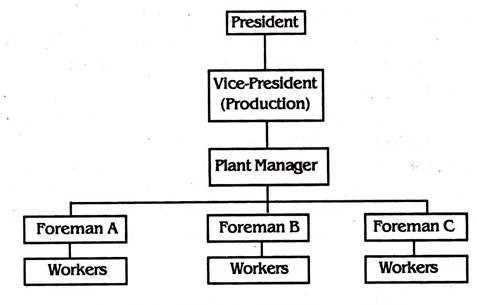
1. Line Organisation

It represents a direct vertical relationship through which an activity flows from top to bottom throughout the organization and the quantum of authority is highest at the top and it reduces at each successive level down the hierarchy, every person in the organisation is in the direct chain of command. The line of authority not only becomes the avenue of command to operating personnel but also provides the channel of communication, coordination and accountability in the enterprise.

2. Line and Staff organization

Under the line and staff organization, the function of line is similar to its function under the line of organisation but some staff or experts are also appointed as advisors to the line officers. The functions of line officer are to take decisions, while the function of the staff officers is to advise them and these staff officers are experts in their respective fields and they offer their useful advice after analysing the problems presented by the line officers and in the way, the work of thinking and execution is done by different persons and this removes the chief defect of the line organisation and it can be adopted in case of large business enterprises. It is, however, important to make it clear that the line officers are not bound to accept the advice offered by the staff officers because the line officers alone are responsible for the outcome.

PLANNING IN MANAGEMENT

Planning is deciding the objectives and methods to achieve them. Planning involves deciding in advance what is to be done, how is to be done, where is to do, how is to done and by whom is to be done and it makes things happen which may not occur otherwise and it bridges the gap between where we are and where we want to go, the process of planning includes two things:

             1. Deciding objectives

             2. Choosing best from available alternatives

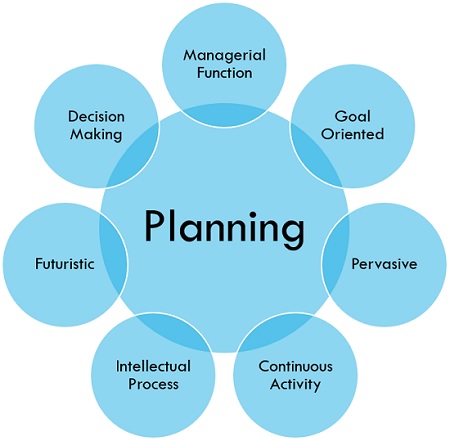
Planning is a fundamental managerial function planning implies an arrangement for doing something as considered in advance and simple words, planning is deciding in advance and Prof. Urwick rightly said: “Planning is fundamentally a mental predisposition to things in an orderly way, to think before acting and to act in the light of facts rather than guesses”. Thus, a plan is a predetermined course of action and it is an attempt on the part of a manager to anticipate the future to achieve better performance, and planning is based on the principle, Look before you leap’.

CONCEPT OF PLANNING

Planning requires goals and it focuses attention on purposes and determines ways achieving them and planning is necessarily a problem of choice and it involves the selection of the most feasible course of action from all available alternatives. Planning is a means of building a bridge to span the present position of the firm with its desired future position. It implies the work of both problems solving as well as decision-making. Man possesses a unique power of reasoning and he often evaluates the pros and cons before proceeding further into the matter.

NATURE OF PLANNING

1. Planning focuses on achieving objectives:

 Planning is to facilitate the attainment of objectives of the organization and planning focuses action on purposes. Planning is merely an empty mental exercise if it loses sight of the organizational objectives and every plan should contribute towards the achievement of company goals. Thus, all plans are directly linked with the goals and objectives of the enterprise and contribute to its attainment and if there are objectives, there is no need for any planning.

2. Planning is a primary function of Management

 Planning is a primary function of management and a manager must perform efficient and intelligent planning before performing any other managerial activities. Thus, planning comes before the execution of all other managerial functions. Planning function of management has the distinction of establishing objectives and all managerial efforts of organizing, staffing, directing, and controlling are directed towards their attainment.

3. Planning is pervasive  An element of planning can be seen behind every human activity in an organization and God has gifted man with the faculty of reasoning and this enables a person to measure the consequences of his planned actions and we can quote several examples where planning precedes individual or group action. Planning is a pervasive activity covering the entire enterprise will all its segments and every level of management. Top management does strategic planning, middle management looks after the administrative planning and the lower management concentrates on operational planning.

Global Financial Management Application Software

Global financial management application software (GFMAS) facilitates the process of monitoring and streamlines all assets for increasing profits and gaining sustainability. Many tools are available for improving the financial management in a company with scores of features uploaded in it. However, it is important to consider the exact need of the company; the facilities offered by the financial management software and ponder over all the points required for the company. Financial Management Application Software can provide a range of services right from capital management, day to day transaction management, the support system for improvement of the portfolio and above all the risk management. 

Benefits, importance & requirement of (GFMAS)

These software’s help in keeping a track of day to day transaction, analysis of financial growth and stability and forecasting the financial achievement by incorporation and implementation of planned strategies of growth and management. Helps in supervision and management of assets, income and expenditure aligned with the profit generation and regular income. Maintenance of record of all the transactions is also facilitated by this software. They help in taking decisions for investment and progress in a calculated way. The accuracy of analysis can provide details for processing the forecasted demand for a better investment opportunity. They help in assessing the financial health of the company.

Current global trends & developments in the GFMAS software category

Financial services act as a catalyst for the development of any enterprise. Provision of data-driven and meeting user requirement gives a wide scope of improvement and market to this industry. Globalization has already increased the scope and area of the market for carrying out financial transactions. Automation of the processes of audit, planning contingencies, analysis, feedback of customer, surveys makes financial software’s an essential part of the growth of the economy.

Global competition and top GFMAS products in the market

Global competition among the leading players of the world is based on the initial demand and subsequent growth of the enterprise for which the financial software’s are provided. Some companies have made a good fortune and reached a million and at the same time, some could not explore the benefit of growth. However, the implementation of online banking across the globe has provided the business opportunity to financial firms. The top products in the market are:-

  • USU Software.
  • ACCIOD
  • Upland Software
  • PMCS
  • Nicus
  • Servicenow
  • Clausmark
  • Digital Fuel
  • Apptio
  • ClearCost

Future growth prospects of GFMAS in the next few years

User-friendly financial management software has a positive scope of growth as the companies can delve upon the analysis provided by the software and forecast the development plan systematically. All financial aspects about the procurement process, billing, payment, error-free accounting, more scope of organized record-keeping, addressing the taxation part effectively and above all the capacity to admit changes suggested by the user. The demand for Global financial management application software (GFMAS) is increasing as the users are more interested to plan the growth of their business.

FUNCTION OF MANAGEMENT

According to George R. Terry, “Functions are the main entities around which a manager builds an effective organization structure”. The study of functions of management is an important topic in the field of management, the basic characteristics of efficient management are common whether the unit to be managed is as small as a family or large enough as a business, social, political or religious organization.

The main functions of management are:

  1. Planning
  2. Organizing
  3. Staffing
  4. Directing
  5. Controlling

1. Planning

 Planning is decided in advance and it is an important and vital function of management. Planning is done to chalk out the future course of action and according to M.E. Hurle, “Planning is deciding in advance, what is done and it involves the objectives, policies, procedures programming for attaining enterprise goals”. Planning is a critical evaluation of relative merits and demerits of alternate policies and actions and in choosing the best program for achieving the predetermined objectives and targets.

2. Organizing

To organize means to put into working order and arrange on a system and organizing can be defined as arranging several complex tasks to manageable units and defining the formal relationship among the people who are assigned the various units of tasks and the process of organizing is very essential for accomplishing the objectives of the organization set by the administration and planned by management.

3. Staffing

The staffing of an organization is as important as the structure itself since successful performance by individuals determines whether the structure can produce its results successfully or not and staffing is a process of matching the jobs with the individuals. Staffing requires and involves the recruitment, selection, training, placement, compensating, promotion and demotion, and finally, the retirement of an employee and the sole aim of staffing is to take the right man for the right job and it needs man power-planning, job analysis, and such other staff functions. Psychology and sociology have added a considerable and important of knowledge and practice in this area of the managerial function.

4. Directing

Directing means telling people what to do and seeing that they do it to the best of their ability. As a process of management, directing is concerned with getting work done through, and with people, they require continuous and encouragement to work effectively. According to Terry, “Directing means moving to action and supplying stimulating power to a group of persons”. Good planning and the best organization may fail to deliver goods if the direction is faulty and is not up to the mark. The direction is concerned with the execution of plans and it initiates organized action and breathes life into the organization and speaking, the direction is Management in action and it includes:

  1. Supervision
  2. Communication
  3. Leadership
  4. Motivation

5.Controlling

Control is an important function of management and it is an essential feature of scientific management and control ensure the qualitative and quantitative performance of work in the organization for the achievement of objectives and completion of plans and it is the binding force that orderly links all components of an enterprise. Controlling includes an evaluation to determine whether planned objectives or results have been achieved.

SCIENTIFIC MANAGEMENT

The origin of scientific management dates back to the year 1832 when Charles Babbage discussed the principles of scientific management in his book “The economy of manufactures”. In real sense, scientific management owes its origin to Frederick Winslow Taylor, who is commonly regarded as the father of scientific management.

MEANING OF SCIENTIFIC MANAGEMENT

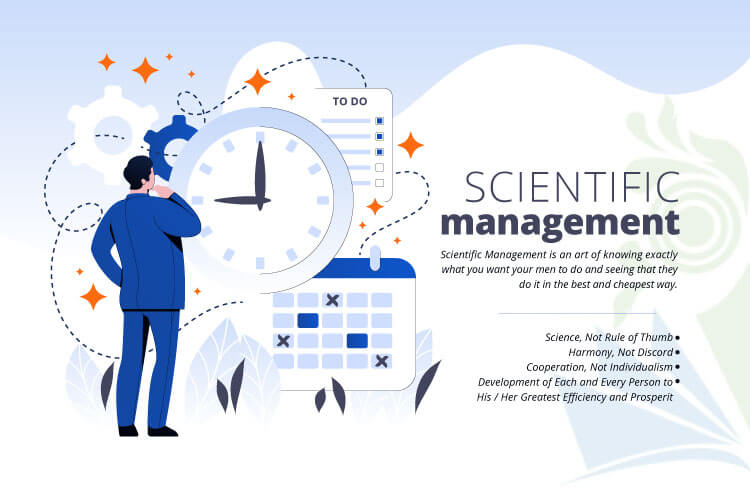
Scientific management may be regarded as a set of scientific techniques that are supposed to increase the efficiency of an enterprise. Under scientific management, the selection of men, machines, materials is made by a scientific approach. Here, all the organizational activities are performed by rationality and proper discipline, this scientific management is a logical approach towards the solution of management and it assumes that the methods of scientific inquiry, analysis and experimentation can be applied to the activities of managers. It means approaching the problems of management in the manner and spirit of scientific research using tools such as definition, analysis, experiments, etc. It is ‘Scientific Management’ as opposed to ‘Traditional Management’ based on the rule of thumb, trial, error. As said by Peter F. Drucker The cost of scientific management is the organized study of work, the analysis of work into its simplest elements and the systematic management of the worker’s performance of each element”.

We can summarise scientific management as:

  1. Scientific study and analysis of work.
  2. Scientific selection and training of employees.
  3. Standardization of raw material, equipment, and working conditions.
  4. Reasonable remuneration to employees.
  5. Scientific management is an economical method that makes the best possible use by integration and coordination of available resources.

MAIN CHARACTERISTICS OF SCIENTIFIC MANAGEMENT

1. A definite plan: To achieve predetermined definite objectives, management needs a definite plan, and the plan should be goal-oriented.

2. A definite objective: In scientific management, every organization has to establish the basic objectives and efforts are to be made by applying physical and human resources to achieve these predetermined objectives.

3. A set of rules: To make scientific management more effective, a set of rules are framed and these sets of rules are tested and verified as regards their effectiveness in the real business situations by a group of persons.

4. Economy: The main aim of scientific management is to achieve the economy of time, money, and labor, and the technique of economy is used for producing maximum at a minimum cost.

5. Scientific analysis and experiment: Before starting any work, the utility, effectiveness, and suitability of plans are to be tested and analyzed, and thus by scientific analysis and experiment, we can choose the best course of action.

6. Increase in efficiency: The techniques of scientific management help in increasing the efficiency of workers and new techniques and improved tools are used for increasing efficiency.

7. Time study: Time study is concerned with labor productivity and according to it, an estimate is made of the amount of work required to be done to perform a job.

8. Cooperation: In the present competitive situation, efforts should be made to establish a cordial relation between labor and capital. Cooperation is essential for efficient management and group efforts for group benefit can be the active cooperation of each individual.