CAPITALISM

Capitalism is a political and economic system where a country’s trade and industry are controlled by private owners and not by the state. It is basically a system where there is private ownership of property. Capitalistic ownership means owners control the factors of production and derive their income from their ownership. That gives them the ability to operate their companies efficiently. It works for profit maximisation rather than public benefit. Capitalism needs a free market to work efficiently and succeed.   In a capitalist society, the distribution of goods and services is according to the laws of demand and supply. According to the law of demand, when the demand for a particular product increases then it also leads to an increase in its price. In a capitalist society there are a number of competitors. When these competitors realise that they can make a higher profit since the demand is high then, they increase production . The greater supply reduces prices to a level where only the best competitors remain.

EMERGENCE OF CAPITALISM

Capitalism emerged during the 16th century and expanded during the Industrial Revolution, pushed forward by colonialism, the nascent factory system, and the Atlantic Slave Trade. This system generated wealth and prestige for owners, but also exploited people who had very little or no power like the workers in the factory and people indigenous to Africa and the Americas. The expansion of Capitalism in America in the 19th-century relied on economic growth and was generated through the labour of enslaved people on land that were forcefully taken from Native Americans.

The United States is one example of capitalism. The other examples of capitalist countries are: Singapore, New Zealand, Australia, Switzerland, Ireland , United Kingdom, Canada, Denmark etc.

HOW CAPITALISM WORKS

In a capitalist society the owner of supply competes against each other to earn the highest profit by selling the goods at the highest possible price while keeping their costs as low as possible. Competition keeps prices moderate and production efficient, although it can also lead to worker exploitation and poor labour conditions. As there are a number of options for the consumer in the market due to competition then the consumer has a lot of choices.

Another component of capitalism is the free operation of the capital markets. The laws of supply and demand set fair prices for stocks, bonds, derivatives, currency, and commodities. Capital markets also  allow the companies to raise funds to expand.

According to the  economic theory Laissez- faire it argues that the government should take a hands-off approach to capitalism and should only intervene to maintain a level playing field. The government’s role is to protect the free market. It should prevent the unfair advantages obtained by monopolies or oligarchies. It ought to prevent the manipulation of information, making sure it is distributed equitably.

ADVANTAGES OF CAPITALISM

  • It creates healthy competition in the market.
  • Due to the number of companies and products in the market consumers have more choices.
  • Since the consumer’s demands are high and they will pay more for what they want, Capitalism results in the best products for the best prices.
  • It results in efficient production. In a capitalist system, firms have incentives to be productively efficient by cutting costs to improve competitiveness and productivity. If firms don’t remain productive and efficient they will run out of business.
  • Capitalism encourages trade between different nations and different people which is a mechanism for overcoming discrimination and bringing people together.
  • It raises the standard of living.
  • As the capitalist economy is dependent on the push factor of individuals, there is no limit to the level of wealth an individual can accumulate through progression within the economy.
  • Through capitalism, firms and companies are inclined to produce with greater efficiency, by cutting cost and improving efficiency. This is done with an aim to prevent losses in an industry where competition is high, bettering the economy as a whole.

DISADVANTAGES OF CAPITALISM

  • Private ownership of capital enables firms to gain a monopoly power in product and labour markets. Firms with monopoly power can exploit their position to charge higher prices.
  • Social benefit is ignored, as the owner cares about profit maximisation, public good is ignored, the poor people who cannot afford expensive products have no option.
  • A capitalist society argues it is good if people can earn more leading to income and wealth inequality. However, this ignores the diminishing marginal utility of wealth.
  • In a capitalist system where the means of production and distribution of goods and services are owned by just a few members of the society, the wealth of an entire nation could be controlled by just a few wealthy individuals and families and hence there is unequal distribution of wealth.
  • Due to the market being profit and demand driven, negative externalities such as pollution are generally ignored until they become a serious issue within the economy.
  • Socialists and communists are people who do not support capitalism. They say it hurts workers, because businesses make more money by selling things than they pay the workers who make the things. Business owners become rich while workers remain poor and exploited. 

Source: https://www.thebalance.com/capitalism-characteristics-examples

EFFECTS OF GLOBALIZATION ON INDIAN SOCIETY

Globalization has many meaning depending on the circumstance and on the individual who is talking about. There is one of the term of Globalization is a process of the “reconfiguration of geography, so that social space is not entirely mapped in terms of territorial distance, territorial places and territorial borders.” The simple term of globalization refers to the integration of economies of the world through uninhibited trade and financial flows, as also through mutual exchange of technology and knowledge. Ideally, it also contains free inter country movement of labor.

Indian society drastically changes after urbanization and globalization. The economic policies has direct influence in forming the basic framework of the Indian economy. The government shaped administrative policies which aim to promote business opportunities in every country, generate employment and attract global investment. In which the Indian economy witnessed an impact on its culture and introduction to other societies and their norms brought various changes to the culture of this country as well. The developed countries have been trying to pursue developing countries to liberalize the trade and allow more flexibility in business policies to provide equal opportunities to multinational firms in their domestic market. The International Monetary Fund (IMF) and World Bank helped them in this endeavor. Liberalization began to hold its foot on barren lands of developing countries like India by means of reduction in excise duties on electronic goods in a fixed time Frame.

Globalization has several aspects and can be political, cultural, social, and economic, out of Financial integration is the most common aspect. India is one of the fastest-growing economies in the world and has been predicted to reach the top three in the next decade. India’s massive economic growth is largely due to globalization which was a transformation that didn’t occur until the 1990s. Since then, the country’s gross domestic product (GDP) has grown at an exponential rate.

Indian government did the same and liberalized the trade and investment due to the pressure from the World Trade Organization. Import duties were cut down phase-wise to allow MNC’s operate in India on an equal basis. As a result globalization has brought to India new technologies, new products and also the economic opportunities.

Despite bureaucracy, lack of infrastructure and an ambiguous policy framework that adversely impact MNCs operating in India, MNCs are looking at India in a big way, and are making huge investments to set up R&D centres in the country. India has made a lead over other growing economies for IT, business processing, and R&D investments. There have been both positive and negative impacts of globalisation on social and cultural values in India.

Economic Impact:

1. Greater Number of Jobs: The advent of foreign companies led to the growth in the economy which led to creating job opportunities. However, these jobs are concentrated in the various services sectors and led to rapid growth of the service sector creating problems for individuals with low levels of education. The last decade came to be known for its jobless growth as job creation was not proportionate to the level of economic growth.

2. More choice to consumers: Globalisation has led to having more choices in the consumer products market. There is a range of choices in selecting goods unlike the times where there were just a couple of manufacturers.

3. Higher Disposable Incomes: People in cities working in high paying jobs have greater income to spend on lifestyle goods. There’s been an increase in the demand for products like meat, egg, pulses, organic food as a result. It has also led to protein inflation.

Protein food inflation contributes a large part to the food inflation in India. It is evident from the rising prices of pulses and animal proteins in the form of eggs, milk and meat. With an improvement standard of living and rising income level, the food habits of people changed. People tend toward taking more protein intensive foods. This shift in dietary pattern, along with rising population results in an overwhelming demand for protein rich food, which the supply side could not meet. Thus resulting in a demand supply mismatch thereby, causing inflation.

In India, the Green Revolution and other technological advancements have primarily focused on enhancing cereals productivity and pulses and oilseeds have traditionally been neglected.

Shrinking Agricultural Sector: Agriculture now contributes only about 15% to GDP. The international norms imposed by WTO and other multilateral organizations have reduced government support for agriculture. Greater integration of global commodities markets leads to constant fluctuation in prices.

• This has increased the vulnerability of Indian farmers. Farmers are also increasingly dependent on seeds and fertilisers sold by the MNCs.

Globalization does not have any positive impact on agriculture. On the contrary, it has few detrimental effects as the government is always willing to import food grains, sugar etc. Whenever there is a price increase of these commodities.

• Government never thinks to pay more to farmers so that they produce more food grains but resorts to imports. On the other hand, subsidies are declining so the cost of production is increasing. Even farms producing fertilizers have to suffer due to imports. There are also threats like introduction of GM crops, herbicide resistant crops etc.

Increasing Health-Care costs: Greater interconnections of the world have also led to the increasing susceptibility to diseases. Whether it is the bird-flu virus or Ebola, the diseases have taken a global turn, spreading far and wide. This results in greater investment in the healthcare system to fight such diseases.

Child Labor: Despite prohibition of child labors by the Indian constitution, over 60 to a 115 million children in India work. While most rural child workers are agricultural laborer’s, urban children work in manufacturing, processing, servicing and repairs. Globalization most directly exploits an estimated 300,000 Indian children who work in India’s hand-knotted carpet industry, which exports over $300 million worth of goods a year. The many effects of globalization of Indian society and has immense multiple aspects on Indian trade, finance, and cultural system. Globalization is associated with rapid changes and significant human societies. The movement of people from rural to urban areas has accelerated, and the growth of cities in the developing world especially is linked to substandard living for many.

Sources: https://www.clearias.com/effects-globalization-indian-society/

Council raises GST on low-cost footwear, garments to 12%

In its first physical meeting in two years, the GST Council on Friday effected several long-pending tweaks in tax rates including an increase in the GST levied on footwear costing less than ₹1,000 as well as readymade garments and fabrics to 12% from 5%.

The new rates on these products, a decision on which had been deferred by the Council over the past year owing to the pandemic’s impact on households, will come into effect from January 1, Finance Minister Nirmala Sitharaman said.

The Council approved a special composition scheme for brick kilns with a turnover threshold of ₹20 lakh, from April 1, 2022. Bricks would attract GST at the rate of 6% without input tax credits under the scheme, or 12% with input credits.

While this will please States like Uttar Pradesh that had sought a special scheme for brick kilns, a decision on extending such a scheme for other evasion-prone sectors like pan masala, gutkha and sand mining was put off.


The Council also decided to extend the concessional tax rates granted for COVID-19 medicines like Amphotericin B and Remdesivir till December 31, but similar sops offered by the Council at its last meeting in June for equipment like oxygen concentrators will expire on September 30.

The GST rate on seven more drugs useful for COVID-19 patients has been slashed till December 31 to 5% from 12%, including Itolizumab, Posaconazole and Favipiravir. The GST rate on Keytruda medicine for treatment of cancer has been reduced from 12% to 5%.

Life-saving drugs Zolgensma and Viltepso used in the treatment of spinal muscular atrophy, particularly for children, has been exempted from GST when imported for personal use. These medicines cost about ₹16 crore, Ms. Sitharaman said.

Food delivery tax shift
The Council also decided to make food delivery apps like Swiggy and Zomato liable to collect and remit the taxes on food orders, as opposed to the current system where restaurants providing the food remit the tax.

Revenue Secretary Tarun Bajaj stressed this did not constitute a new or extra tax, just the tax that was payable by restaurants would now be paid by aggregators. Some restaurants were avoiding paying the GST even though it was billed to customers.

“The decision to make food aggregators pay tax on supplies made by restaurants from January 1, 2022, seems to have been done based on empirical data of under reporting by restaurants, despite having collected tax on supplies of food to customers,” said Mahesh Jaising, Partner, Deloitte India.

“The impact on the end consumer is expected to be neutral where the restaurant is a registered one. For those supplies from unregistered, there could be a 5% GST going forward,” he added.

Aircraft on lease
The GST Council has exempted Integrated GST levied on import of aircraft on lease basis. This will help the aviation industry avoid double taxation, the Finance Minister said, and will also be granted for aircraft lessors who are located in Special Economic Zones.

Goods supplied at Indo-Bangladesh border haats have also been exempted from GST.

Written by: Ananya Kaushal

MONEY MANAGMENT

Money is not life but it's an important part of life, to survive, to give yourself good facilities, and to live in a good condition with two meals a day. Money may not be a power, also it's not like one cannot live without money, but without it one has to struggle to survive, and has to face scarcity in his life. 
As per the slave theory of Aristotle, society cannot be of people with equal living standards. Hence, the entire society especially in the context of Indian society is divided into 3 social classes: Rich people, middle class people and poor people. 
What does this division depict about the people of each class? On what basis these classes are formed? It's on the basis of money, people who are rich, have large amounts of money, they had a good living. Middle class people are the one who are neither rich nor poor, they can make money to live a normal life and can fulfill essential necessities of eating and education easily. Poor class people have to struggle even for the meals, they don't have shelters over their head, they cannot afford education for their children. 
It's said that home is the first school of a child, he learns whatever he sees or feels in his home environment, whatever his parents teach him, he accepts it as their reality. 
A child of a rich class knows that he has money and can make more money in the future, as he is given good education by his parents, he has money in his hand so maybe he knows how to manage it. 
A person of poor class will teach his child about money what? Few among them can barely afford money to give education, he could just say "study and work hard". He himself never had so much money, what will he teach about Money Management to his children. 
In this democratic India where everybody has an equal right to get education, hardly there would be any school who discriminate children on the basis of financial status. The concept of money is taught to children in the home itself, here's where he sees that whether I am poor or I am rich. 
A child of rich parents knows nothing that whatever facilities he is given is because they have enough money and other classes exist in this world who cannot afford it. A child of poor class doesn't know that he is lacking somewhere, he doesn't know that there are people who have all the facilities that he doesn't have. All these things he learns from his parents and the type of environment he understands as he grows up. 
Sometimes even if a child of poor family studies hard and passes with the high grade, the financial conditions and mentality will be same, that he is poor, he can for sure eat well and live well, but he never tries to change himself, to explore himself, except few, all those who have came out of poverty, tries to earn more and more money, firstly for themselves and then for their children. 
The above mentioned things sometimes go wrong because there are many cases, when a person has a good family background, he is born with Silver spoon in his mouth, but a time comes when he is grown up or after several years he is left with nothing and has to face poverty. 
Whereas sometimes a child from a poor section comes up with great talent, determination and struggle and he doesn't face any scarcity of money which he faced earlier. 
So, why these drastic changes occur in the life of people? It is because of the management of money. The amount of money a person handles to fulfill his most important needs, makes life easy and smooth. Money management is a talent, which not everyone has. 
Money management is, how you tackle all your financial aspects, from making a budget and where every penny is being spent,  along with saving money for the future. If a person lacks in money management even the crores or any amount of money proves to be less to him because desires are never ending. 
Under money management one has to learn to say 'NO' to any unnecessary purchasing and 'YES' to the thing which is far more important for the individual. Differentiation between what is unnecessary and what is necessary is also a work of wise human. When one has desire in mind for anything, he cannot resist himself from buying or doing unnecessary spending. 
Money management starts with what assets you are having in your hand, assets like bank balance and property, one has to subtract it from all your debts or liabilities or from the money you have to spend on your essentials. The net amount which is left decides whether you have proper money management or not? If the amount of liabilities is more than assets, it puts your financial conditions in dilemma. 
For proper money management the first and foremost step one should take is setting goal, this helps you to give clarity about which expenses are necessary,  and which one can be cut down. Let's say if a car is your necessity or goal, in order to buy it you have to cut out the expenses of movies, dinners, hiring taxis, buying expensive clothes etc. 
No matter, if sometimes your budget goes up, you should not change your budget and the expenses on different items, this will help you to keep more money as savings and will limit your expenses. Budget should be  changed or should be made of higher expenses if you have increment, or consistently the amount of your money is increasing after sufficient savings. 
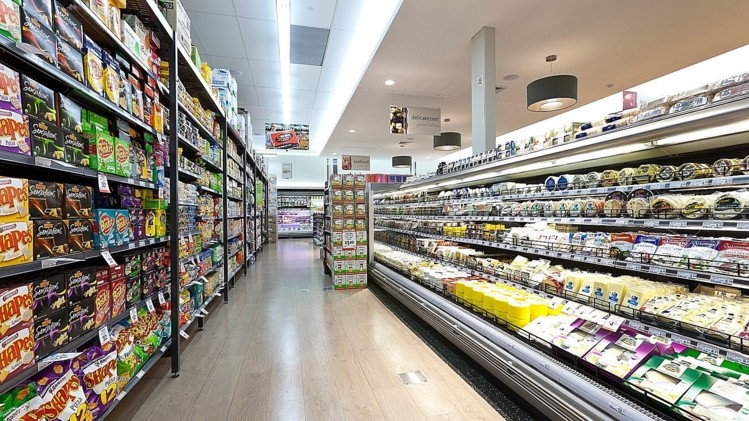
People get easily influenced by the magic of market, when one goes to supermarket he/she buys many things which may not be necessary. The marketers and business man plays with the psychology of buyers, they keep goods on offer, give the scheme of buy 1 get 1 free and use many other marketing tricks and there people get stuck in the web of market's beauty. 
When a person lives a student life he gets pocket money from the parents and that becomes the first step of money management, from there a child builds up the quality of money management, and that's the reason parents should leave their children in the world with small amount of money, doesn't matter if he belongs to a rich family. 
Money is something which cannot buy happiness or can give happiness. It's just for fulfilling basic necessities and some hobbies, but yes money makes life easy and comfortable. It can give you a good living and it can motivate you to move ahead. Money is just the necessary evil. 

Agricultural Marketing; a boost for Agro-Products and their contribution towards G.D.P.

Article by – Shishir Tripathi
Intern at Hariyali Foundation
In collaboration with
Educational News

For an Agrarian Economy like India, the agricultural sector should contribute more than any other sector in the Gross Domestic Product (G.D.P) but even after being an occupation of almost 55 -60% of people, agriculture is contributing just 15 – 20% in the G.D.P. Being an occupation of such a large group of people and still minimal share in the G.D.P. of the economy means that there are certain limitations which are needed to be overcome.


The biggest limitation is that the agricultural products right from the simple wheat to a produced wheat bread, there is absence of proper agricultural marketing.

Now, when one uses this terms agricultural marketing, he or she is simply referring to an organized process of planning, organizing, directing and handling of agricultural produce in such a way as to satisfy the farmers, intermediaries and consumers. It involves numerous inter connected activities like planning production, growing and harvesting, grading, packing and packaging, transport, storage, agro and food processing, provision of market information, distribution, advertising and sale.

Agricultural marketing is based upon the idea of reducing the distance between the farmers (producers) and the consumers. It is a broader concept not just limited to villages and small towns but across the International borders too. Planned agriculture which comes under agricultural marketing is important so that whatever crop is produced it meets the demand of the consumers in the form of finished products. It aims in such a way that there is neither a situation of excess supply or excess production (that is just left uncared without good storage facilities) nor a situation of excess demand.

It also includes growing and harvesting of crops paying extra attention towards the techniques followed in the production process and efficient use of land and human resource along with technological resources too.

Grading is also done amongst different types of harvested crops and other agricultural products so that different types of products are available to different types of consumers with different requirements and available financial resources.

After Grading, the product is needed to be packaged in such way that it must be appealing to the consumers including use of different images and colors, and involving the details of the ingredients and the nutritional value of the product. Packaging the products in such a way that they must last longer and can be stored as well at the stockrooms and at consumers’ place as well.

Storage facilities are needed to developed by the government and other concerned authorities so that whichever good is produced in ample amounts, it can be stored for future without any degradation in the quality of the product due to insects, rats and other factors like moisture, rain, heat, etc.

Various researchers are trying to study markets and find the idealistic market structure for people living in villages and small town. The emphasis to markets is given in such a way that they meet the requirements of all the people living in that particular area.

Also, the transportation facilities are needed to be facilitated properly and should be made available to the producers in the remote areas of the country. The transportation costs must be affordable so that every producer willing to transport his produce or product should not stop himself or herself in being a part of this long chain and enjoying the benefits after the final sale of the produce or other agricultural products.


Now the most important of all is branding and advertising. Even if any other foreign firm or domestic firm is willing to sell the product under its label then also proper advertising should be there for the given product through Television ads and promotions through social media on various Apps. Advertising should be done in such a way that the product should look so appealing to the consumer and an urgent feel of purchasing the concerned product should be felt by the consumer after watching the advertisement. The buyers must feel that how important the product is to them in their daily lives after watching the product’s advertisement.

And the market for the product is again very important whether the product is sold online through e-commerce sites or is sold by various outlets in the cities and towns. A well managed system is needed so that the good that is sold to consumer is of the best quality and a justified price and the producers along with the intermediaries involved in this long chain are satisfied and get their share after the sale of a good.

Agro products not only include crop produce and other products manufactured from those crops but also the products produced by the people at local level such as milk from cattle, honey from bee-keeping, etc.

Such mechanisms will increase the share of primary sector in the G.D.P. The state and the central governments should make provisions and provide incentives to the producers and the intermediaries for developing such a fruitful mechanism that will be giving good returns to the country as well in the form of overall growth of people in remote areas and prosperity of the nation too.

Freelancing

Amidst this pandemic, everyone whether a fresher or an experienced employee all are suffering. We all are thinking of working from home. So, here I am trying to encompass a topic which is very well known maybe but very less discussed surely freelancing. Now, who are freelancers?

They are the ones that are not committed to one kind of job, instead they can do any job according to the skills they have mastered and are paid accordingly. they are not considered employees by the company rather contractors. This is a field anyone can try hands-on whether he is a student-teacher or learner. Now how they work and what about their monthly income?

According to a survey by PayPal, most freelancers in India are getting 23 lakhs per annum as an average salary. According to Narsi Subramanian, Director – Growth, PayPal India, “We are focused on cross-border trade and we will continue to because that is where a significant opportunity lies for us. But, as far as our growth plan is concerned, the freelancer segment is something that we will focus on”.

Most of the international work comes from the countries UK, Australia, and the US. The report said, “Of the wide range of aspects, freelancers feel that they need external support in aspects such as setting up their website, finding and retaining clients, fee and negotiation advice, protection and insurance”. As an Indian freelancer to get a secured and stable life an average of 15 projects and 13 retailer clients is a threshold.

Now how to start working as a freelancer because this job is not as easy as it sounds and sometimes it’s even scary. But a smooth start can help you a lot.

Decide your skill: Discover your secondary skills do not limit yourself but that doesn’t mean you have to learn everything so make a reasonable list of skills and start working on it. (I had written articles for that too you can check them out. Hopefully, they will surely help.)

Make a portfolio: It could be as easy as making a Facebook page. It could be anything like a blog or a Behance profile, simply make sure your skill is showcased in the best possible way.

Choose what you want from free-lancing: First of all, decide what you want as free-lancer money or experience. Be clear for somethings before starting :

  • How much time you can invest in this field?
  • Mode of contact with the clients
  • types of clients you want to deal with
  • the number of clients, you want to deal with at a single time.

Start pitching: Now when you are clear from your side, start pitching the clients and it’s just a suggestion pitch clients from many ids but do not spam. You can simply forge on google how to pitch clients and all the stuff you can easily find out but do not go with nonsense.

Pre-work communication: It is always recommended to send your clients your terms when they try to hire you and try to be professional in this send them your payment needs, copyright terms, and other related stuff. I highly recommend to not compromise with payment because this sends a wrong impression on the clients. This is a complete myth that free-lancing is free from the boss, your client is your boss so choose them wisely.

Be confident and serious: To be very clear free-lancing is sole entrepreneurship so if you want to establish your business be serious and professional towards your work. Be ready to face criticism and failures. Persist until your industry starts trusting your work blindly.

Hope you guys found this helpful. Happy reading!

Indian Detergent Market

The detergent market in India is divided into three segments – premium, mid-range, and popular. The premium segment comprises Ariel and Surf; the mid-range segment comprises Tide, Henko, and Rin; and the popular segment comprises Mr White, Wheel, Nirma and Ghari. The market share of the detergents in the premium segment is 15%, and that of the mid-range and popular are 40% and 45% respectively. These detergent brands are considered organized players in the industry and comprise 60% of the total market. The remaining 40% of the market is saturated with regional and small unorganized players. Reports show that India’s per capital consumption of detergent stands at 2.7kg – the lowest in the world.  

Before 1985, Hindustan Unilever’s Surf held the number one position in the detergent market in India. However, when Nirma Chemicals launched a detergent brand called Nirma, catering to the middle and lower middle class customers, Surf was evicted from its number one position. Soon, HLL realized that there were fragments of the market which were untouched by major detergent players in India and it came up with two low-priced detergents called Wheel and Rin to cater to the lower middle class group.  When Hindustan Lever, HLL, and Nirma Chemicals began increasing their market share, Rohit Surfactants, yet another player, launched a detergent brand called Ghari for rural customers, and middle and lower middle class customers.

Today, Ghari is the market leader in the detergent industry, with a market share of 17.3% and Wheel is tagging behind closely at 16.9%. Tide is at present at the third position with a market share of 13.5% and Nirma has less than 6% market share. Ghari has always maintained affordable pricing, which is why it has managed to become a household name in India. To increase its customer base, Rohit Surfactants has spread its distribution network for Ghari detergent to more states in India. In fact, in the last three years, the company has increased its reach to 10 more states and it sells Garhi detergent through more than 3,500 dealers.   

The detergent industry is worth Rs 13,000 crores and industry players are constantly improving their products to suit the changing needs of consumers. A few years back, liquid detergents were almost unheard of; however, today, we witness more and more companies producing liquid detergents alongside powder detergents and laundry bar soaps.    In the past, consumers in India used to wash clothes by hand but today, with the advancement of technology, more and more people are shifting to washing machines. Hence, detergent companies have tweaked their products to enable the washing of clothes in all types of washing machines – top load, front loading, fully automatic, and semi automatic washing machines.​​​​​​​ In addition, detergent companies have started manufacturing powder detergents in packs of 20 grams, 200 grams, 500 grams, 1 kg, and 2 kg to cater to the needs of those who prefer to buy in small packets and in bulk.    Today, consumers have a number of products to choose from, which is why companies are constantly upgrading their products and coming up with better and innovative advertising campaigns to increase their market share.

The Indian detergent market is largely divided into two markets of organised and unorganised players. The main products sold here are the detergent bars, detergent powder & liquid detergent. The major proportion of Indian market lies in the rural area in which people are less aware of the brands, buys from general retails and are also highly price sensitive. Moreover, they can easily switch to another product if it is being offered at lower price.

Hence, price competition is a major factor in Indian Detergent market. On the other side, urban people are educated and are aware of the trends, brands and fabric hygiene. Furthermore, they also purchase detergents from multibrand retails and e commerce. Hence, the premium detergent products such as washing machine powders and liquid detergents were developed targeting the urban audience.

The Indian Detergent market has always seen a substantial growth and is expected to reach INR 49067 crore with a compounded annual growth rate (CAGR) of more than 9%. The Surf brand of Hindustan Unilever Limited claims to be the first brand of the market but soon with the introduction of indigenous brands such as Nirma and Ghari, the global leader lost its shares in Indian market. The indigenous brands Nirma and Ghari pinched the empathy of Indian consumers and started making available detergent powder in Indian market.

However, Nirma lost its share over the Ghari Detergent and the brand Ghari by Rohit Surfactants is currently leading the Indian Market with highest market share. The liquid detergent was brought by HUL in the year 2013 under the brand name of Surf Excel. Other price friendly brands such as Rin, Active Wheel, Tide, etc came into the market with their pricing strategies.

The detergents are made available to the end consumer through mainly three sales channels- General retail, Multi brand retail and online retails. The rural market have only general retails which restricts the people to have only one buying option. But the urban people enjoy various discounts and festive offers given by Multibrand and online retails. The major working chain in Indian multibrand retails re Big Bazaar, D mart, Bansal, etc. and e commerce such as Amazon, Flipkart, etc. offers variety of detergents in different size and packaging.

The two welcome developments on deeper financial and commodity market

Two invite advancements in household money related markets have occurred in the previous week. Banks have started taking an interest in the seaward rupee subordinates showcase; and a dish India power advertise with 60 minutes ahead conveyance is currently useful.

Developing monetary markets would realize better allotment of scant assets, help chance relief and furthermore give quality occupations.

There stay capital controls on the rupee, however we currently have fluid markets for the rupee abroad, the non-deliverable forward (NDF) advertise, settled in a convertible money like the US dollar. Truth be told, forward agreements on the rupee exchanged over the counter in monetary focuses seaward presently rival inland money markets, and they have an expanding job in value disclosure here. The route ahead is for banks to use neighborhood information, mastery and aptitudes to productively support piece of the pie in rupee exchanging.

Couple, the Reserve Bank of India (RBI) needs to change interest in the seaward rupee advertise by giving simple access to outside assets and different partners in GIFT City.

Monetary administrations are, obviously, expertise and innovation concentrated and offer India upper hand. We should strategy initiate collaboration between Indian markets, nearby data, neighborhood request stream and nearby liquidity. The possibility of Atmanirbhar Bharat must not be restricted only to products. Mumbai can possibly figure among the best five worldwide money related focuses. Flourishing monetary markets would fire up efficiency gains.

India presently makes some genuine memories power showcase. It should prompt increasingly ideal limit utilization and better interest the executives. We need a lively market for product subsidiaries, and, keeping that in mind, a huge assortment of members, and an anticipated administrative structure set up.

EFFECT OF BRANDING ON CUSTOMER PURCHASE DECISION

Branding is the process of giving a name or a sign or a symbol to a product.
One of the most important decisions that a marketer has to take in selling a product is in respect of branding. He/ She has to decide whether the firm’s product will be marketed under a brand name or a generic name.
Generic name refers to the name of the class of the product. If the products were sold by their generic names, it would be difficult for the marketers to distinguish their products from that of competitors. Therefore, most of the marketers give a name to their products, which helps in identifying and distinguishing their products from the competitors products.

As the traditional marketing tools and techniques has been replaced by the modern marketing tools and techniques and the number of factories of every good has now been increased, the producer tries to make their product different from other producer of the same product. These things give birth to a new marketing dimension and new era of marketing by the emergence of BRANDING.
In olden days, the brands were just a mark, sign or some sort of numbers to differentiate their goods. The brand then builds many function which creates the value in the mind of the customer. Like the advertisement, which is the function of the branding and it creates a unique association and memory link in the minds of customers on one side and on the other hand, it creates the demand for your goods and services as it attracts the customer, it creates awareness about your production and also educate the customer about the use of goods and services.

ADVANTAGES OF BRANDING
To the marketers

  1. Enables making product differentiation.
  2. Ease in introduction of new product.
  3. Differential pricing.
  4. Helps in advertising and display programs.
    To the customers
  5. Helps in product identification.
  6. Ensures quality.
  7. Status symbol.

CHARACTERISTICS OF A GOOD BRAND NAME

  1. A brand name should be short, easy to pronounce, spell, recognize and remember.
  2. A brand name should suggest the product’s benefits and qualities. It should be appropriate to the product’s function.
  3. A brand name should be distinctive.
  4. Chosen name should have staying power i.e., it should not het out of date.
  5. The brand name should be sufficiently versatile to accommodate new products, which are added to the product line.
  6. It should be adaptable to packaging or labelling requirements, to different advertising media and to different languages.
  7. It should be capable of being registered and protected legally.

Brand image is positive and creates many customers and build strong customers relationship with them and maintain loyalty. But if the brand image is negative, it will be harmful as there will be no customers repetition and retention. So, firm pays a huge investment on advertisement to maintain the brand image and brand equity management programs. As brand image creates perception in customer mind so after purchase, if cognitive dissonance occurs then there is a change in customer’s behavior.
Brand association will impact the consumer buying pattern and behavior. These associations will affect your decision positively if the brand image is positive. Brand loyalty reduce the cost for the firm to retain the customer forever. A loyal customer is helpful for the firm to create new customers.
Generally, brand has greater impact on consumer buying behavior. But at local level, behavior of customer also changes due to branded products and services. Consumer buying behavior is the study of actions of consumer towards planning, purchasing and consuming goods and services.
Consumer buying decision consists of 7 steps:

  1. Need recognition
  2. Information search
  3. Pre-purchase evaluation
  4. Choose alternative
  5. Purchase consumption
  6. Post consumption evaluation
  7. Feedback
    Now, market has become too much competitive due to hyper competition in the market. The best way is to compete these conditions by developing a strong brand image. Basically, the key driver of brand equity is simply brand image. By easily remembering brand , quality production increases which leads to sales increase and makes mire profit. It is the best way which leads towards maximizing market share and to sustain competitive advantage and strong position in the market.