Menstruation is the actual time when women bleed. And the entire time between 2 menstruation is called Menstrual cycle.
The excessive pain in menstruation is not normal and this condition is called Dysmenorrhea.
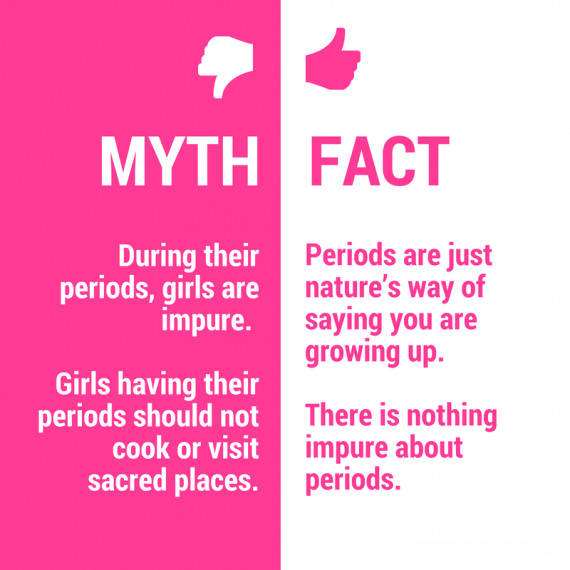
As everyone says period blood is dirty blood but in reality it is not the rejected blood of the body. It is less concentrated than normal blood and it has less blood cells.
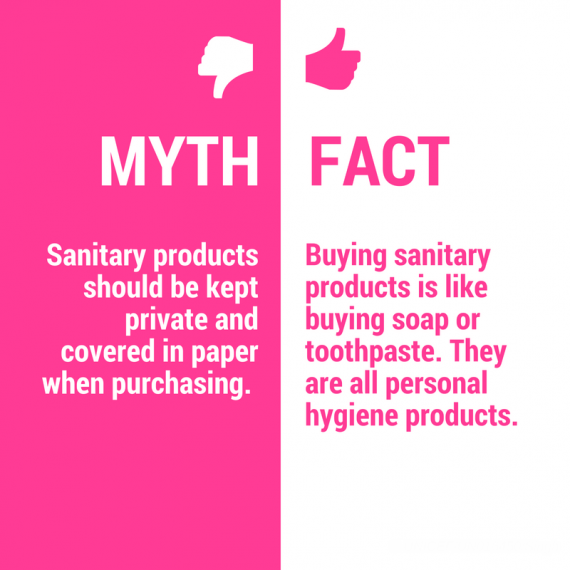
“Smuggling pads to the bathroom like it’s some sort of illegal thing gotta be the worst adaptation to patriarchy”
Transgender men may still get their periods, just as transgender women might not have periods.
Girls miss their school 1-2 days every month and it affect their studies and education.
We bleed 5 days in a month and it really sucks…
I am a girl Yes, I am a girl And like every other girl, I also go through those painful days The day which comes and goes every month. When the day comes, I feel like I’m in hell I don’t have to touch stuff I am not allowed to go to bed I am not allowed to go to the place of worship. I am not allowed to say anything I am not allowed to cry because of this cycle I feel like thousands of hammers are breaking my bones. I go through all these things like – mood swings, cramps, frustration, anger, and much more. But I am not allowed to cry I am not allowed to cry even when I feel the worst. The reason behind this is that I am a girl I am a girl And I always taught to hide this I always have to do that I always have to be away from everyone I have to hide this just because I am a girl And I am on my periods
How it feels when I am on my periods and no one understands the pain I am going through…
Superstitions
INDIA
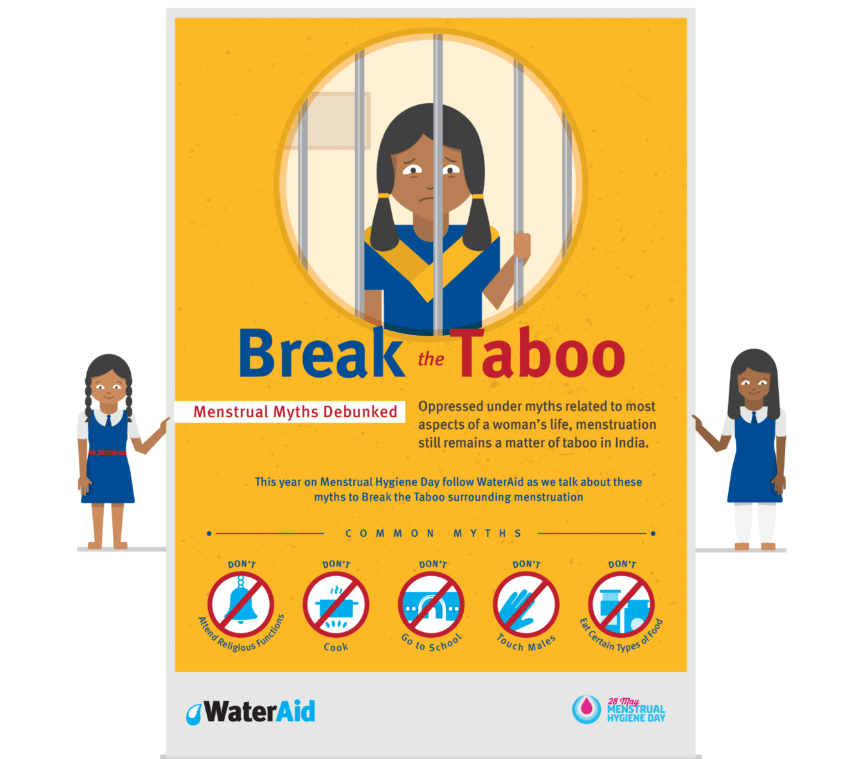
Yoan’t enter a kitchen or cook food for anyone else.
Can’t enter a place of worship.
only enter a place of prayer once we’ve washed our hair on or after the fourth day.
Must wash our hair on the first day of our period to clean ourself completely. Buttt on the contrary…
If we wash our hair, our flow will be less and it will affect our fertility later in life.
Italy
Can’t touch plants.
Everything we cook will be a disaster.
UK
Tampons will break our hymen and make us impure.
Can’t take a bath.
Bolivia
can’t cradle babies or we’ll cause them to get sick.
As we know it is just because improper balance of estrogen and progesterone leads to the breakdown of endometrium lining that ultimately causes Menstruation every month.
we were taught to hide this. Why, why do we have to hide this if it is natural.
This menstrual cycle is a natural thing and this is the reason why only women carry babies.But despite this, we all try to hide this.Everyone knows that this menstrual cycle always comes during it’s duration but everyone tries to hide it.When it is natural then why do we feel shame for this. Why??
Period education is so important. So many people remain ignorant and hence they call it dirty. It should be a part of school education. These FAQ p will definitely help you to know more about menstrual cup.
Switching a menstrual cup is a big decision! You’re daring to be different, and daring to make a difference for not only the planet but also for another woman somewhere around the world.
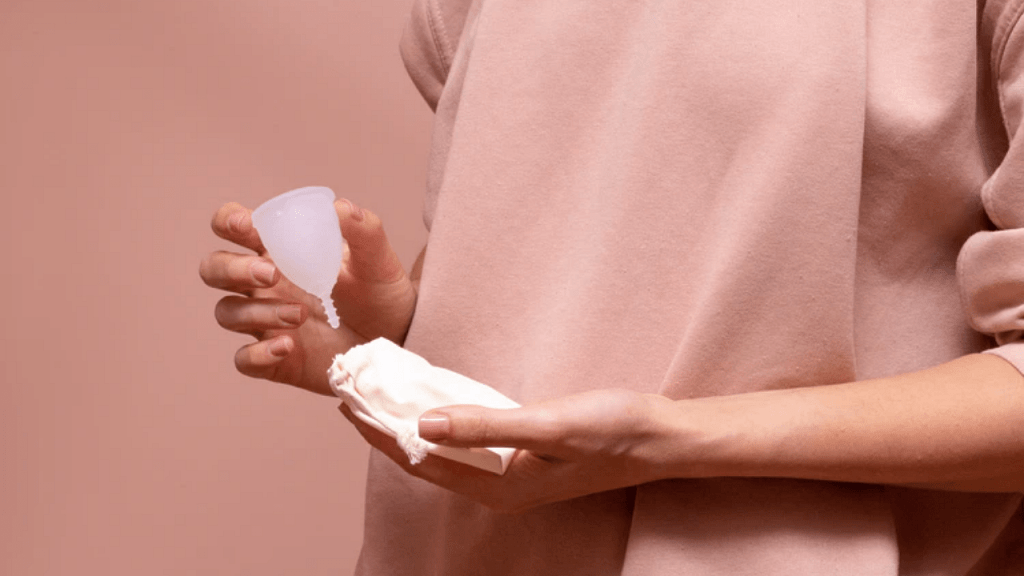
What is menstrual cup? It is a sanitary care product which is used during peroids and inserted inside the vagina.
How to choose the right size? This is based on your cervix, whether you’ve given birth or not and on your flow. But the best thing is go to the site where you are going to purchase the menstrual cup from, brand that you are buying just use their size guide to figure out which one is right for you. Because every brand has slightly different sizes.
At what age you can use a menstrual cup? You can use it from any age.
Can menstrual cup is used by virgin? Yes you can. It doesn’t make any difference to your virginity. But it might be little difficult to use it for the first few times and might be slightly uncomfortable.
Will using a cup break my hymen? Yes there is chances of breaking it. It’s sometime associated with community but it has nothing to do with it. And a lot of womens are born without a hymen or partial opening in hymen. It’s also possible that your hymen may break while cycling, horse riding or other active sports.
It will make your vagina bigger? It’s very stretchy andtissue can return to its normal size so putting a menstrual cup inside for few days is not going to stretch you out or change the size of your vagina at all.
Can cup get stuck or lost inside your body? A big No. Our vagina is actually open from one end which is the side you menstruate from or give birth. The other end is closed with a cervix. And this cervix has a small hole that opens for menstruation and it’s open when women give birth as well. So it will not loss, you will able to remove it easily. If you feel it’s stuck, just relax your muscle and use your finger to squeeze it slightly to release that suction and gently pull it out. No need to panic at all.
Can you use a toilet while wearing a cup? Yes you can. You’re wearing a cup in vagina. It’s not like tampons where some people feel like its pushing because it’s so small while menstrual cup creates suction inside vagina and not come out during pee.
If you’re wearing a cup correctly it not feel at all.
It causes any irritation or rash? No because menstrual cup are made up of smooth silicon, so they’re not going to cut you or make rashes
How long can we wear it? You can wear it from 8 to 12 hours. At the beginning of using it, I would say it is little bit of trial and error. Start with 6 hour of wearing it and check it out.
Is it Comfortablewhile sleeping? Yes you can. It doesn’t cause any discomfort if you’re wearing it correctly. It not leaks, no matter what position are you sleeping. You can sleep through the nightwithout worrying about changing it like pads.
Menstruation is associated with the onset of puberty in girls. Menstrual health and hygiene or menstrual hygiene management brings up the adequate access to menstrual hygiene products to collect and absorb the flow of blood during the menstruating period. It also refers to the privacy to change the used material to a new and clean one and to dispose the used one . Still today in many parts of India , menstruation is considered a taboo and often it brings with it tons of rules , many restrictions and sometimes discrimination and isolation. A girl or a women in her period is often excluded from many social and religious events and even sometimes they are not even allowed to enter in the kitchen of their own house . Cause of menstruation still being a taboo – Still today girls and women feel uncomfortable to talk about their period loudly and consider it a shame ; and not being talked about it loudly results in adolescent girls remaining unknown and ignorant of the hygiene and health practise which many a times results in adverse health conditions. Illiteracy , poverty and lack of awareness are the major behind menstruation still being a taboo in indian society. Several studies indicate that in india, specially in the rural areas and in the slums, most of the girls and women do not have consistent and adequate access to good quality menstrural hygiene products with 88% of them using homemade alternatives such as clothes, rags, hay, sand and ash. OUTCOMES OF NOT HAVING ACESS TO MENSTRUAL HYGIENE PRODUCTS Not having adequate access to clean and proper menstrual hygiene products causes many health problems like Reproductive Tract Infections (RTI), irritation of skin which causes discomfort and possibly results in dermatitis which is a medical condition in which the skins swells , turns red and at times becomes a sore with blisters. There is a balance of good and bad bacteria that live in the vagina . If this balance gets disrupted or hampered because of certain poor menstrual hygiene it causes vaginosis . This impact women the most when they are pregnant or trying to get pregnant . RTI also increases the chances of having cervical cancer. Added to the discomfort it also hampers their mobilty and day – to – day activites. Why is menstrual awareness important ? Myths about menstruation is largely prevalent forcing many girls to dropout of school early year at menarche in India . A study finds a 12 % decline in school enrollment rate for girls in the menarche group , also in the co-ed schools , disparity is clearly visible in the ratio of girls to boys always remaining low. It is very important to spread awareness on menstrual hygiene . Menstruation considered a taboo topic , most of the adolescent girls when they get their first period, they don’t know about “menstrual hygiene management “. Many a time, unawareness about menstrual hygiene has an a adverse impact on women’s health especially in rural areas and the slums of the cities. Not having access to proper menstrual hygiene products is the harsh reality of most rural and slum womens. Lack of information and other socio-cultural norms and the use of unhygenic products instead of safe sanitary napkins and tampons makes it difficult for the girls to remain hygenic . Its high time we spead correct information and educate the adolescent girls about menstruation and help them know about how to maintain proper menstrual hygiene . To educate girls and spread awareness among the womens of slums and the rural areas , the much needed measure is to spread awareness that it a normal very biological process and busts the myths associated with menstruation to ensure healthy menstrual practices. Spreading awareness about menstruation and menstrual hygiene can help in creating a culture that welcomes discussions about it and can also prevent many diseases and infections caused due to unhygenic practices. MENSTRUAL PRODUCTS IS A BASIC NECESSITY Poverty is another reason why the womens of rural areas and slums use alternatives most of them cannot afford adequate and proper menstral products . the unavailability of menstrual products n rural areas ans high cost of the same in the cities deter menstrual hygiene in India. To increase awareness about menstrual hygiene product being a necessity the washrooms in schools shouls also stock menstrual product besides stocking soaps , papaer towels etc. Having the supply of free menstrual products in every schools will not only ensure that every menstruating girl gets access to the basic needs easily , but many a times it helps in solving economic issues. Its time for us to start spreading awareness about menstrual hygiene and spread knowledge and correct information about it and start treating it is as a healthly biological process and not a taboo.
In India, 23 million girls drop out of school early when they start menstruating and many of them end up facing acute health problems
1.71% adolescent girls in India remain unaware of menstruation .
2.Menstruation is a rarely discussed topic in homes and schools in India.
3.Since 2010, the government has stepped up to address menstrual hygiene.
It was the occasion of an annual function at a secondary school in Rajasthan’s Dholpur district in May 2017. Manoj Kumar, the district health officer was one of the dignitaries invited to the function. While giving a short speech on the importance of education, Mr Kumar noticed the alarmingly low number of girls present in the crowd of school students. On enquiring further, he was told that many girls drop out of school on reaching the sixth or seventh standard as they reach puberty. In a remote district like Dholpur, a primary school is barely equipped with a functional toilet, let alone something as essential as sanitary napkin dispensers. But more than the infrastructure for young girls in Dholpur, like millions of others in districts, towns and cities across India, menstruation remains a biological event shrouded in mystery and taboo, not to be spoken about openly.
355 million is the number of menstruating women in India, accounting for nearly 30 per cent of the country’s population. Menstruation continues to be a subject of gender disparity in India. Myths about menstruation are largely prevalent, forcing many girls to drop out of school early or be ostracised for the duration of their menstrual cycle every month. A 2014 report by the NGO Dasra titled Spot On! found that nearly 23 million girls drop out of school annually due to lack of proper menstrual hygiene management facilities, which include availability of sanitary napkins and logical awareness of menstruation. The report also came up with some startling numbers. 70 per cent of mothers with menstruating daughters considered menstruation as dirty and 71 per cent adolescent girls remained unaware of menstruation till menarche. A 2014 UNICEF report pointed out that in Tamil Nadu, 79 per cent girls and women were unaware of menstrual hygiene practices. The percentage was 66% in Uttar Pradesh, 56% in Rajasthan and 51% in West Bengal.
Lack of Awareness
Lack of awareness makes for a major problem in India’s menstrual hygiene scenario. Indian Council for Medical Research’s 2011-12 report stated that only 38 per cent menstruating girls in India spoke to their mothers about menstruation. Many mothers were themselves unaware what menstruation was, how it was to be explained to a teenager and what practices could be considered as menstrual hygiene management. Schools were not very helpful either as schools in rural areas refrained from discussing menstrual hygiene. A 2015 survey by the Ministry of Education found that in 63% schools in villages, teachers never discussed menstruation and how to deal with it in a hygienic manner.
Lack of Sanitary Napkins and Adequate Facilities
In a city, availing a sanitary napkin for a woman aware of menstrual hygiene is a normalised process. Not only are sanitary napkins available in pharmacies and grocery stores in cities, they are commercialised via advertisements so that they are treated as any other product. In rural areas, sanitary napkins are found with difficulty. Most girls rely on home-grown or other readily available material, the latter often being unhygienic and unsanitary. Only 2 to 3 per cent women in rural India are estimated to use sanitary napkins. The lack of demand results in storekeepers not stocking up on sanitary pads. This results in women resorting to unhygienic practices during their menstrual cycle, such as filling up old socks with sand and tying them around waists to absorb menstrual blood, or taking up old pieces of cloth and using them to absorb blood. Such methods increase chances of infection and hinder the day-to-day task of a woman on her period.
Impact on Women’s Health
Surveys by the Ministry of Health in 2002, 2005, 2008 and 2012 found out that most problems related to menstrual hygiene in India are preventable, but are not due to low awareness and poor menstrual hygiene management. This resulted in development of some serious ailments for adolescent girls. Roughly 120 million menstruating adolescents in India experience menstrual dysfunctions, affecting their normal daily chores. Nearly 60,000 cases of cervical cancer deaths are reported every year from India, two-third of which are due to poor menstrual hygiene.
Other health problems associated with menstrual hygiene like anaemia, prolonged or short periods, infections of reproductive tracts, as well as psychological problems such as anxiety, embarrassment and shame.
Government Schemes On Menstrual Hygiene
From a ban on advertisements on sanitary napkins in 1990, to a full-fledged feature film, PadMan, on a low-cost sanitary napkin entrepreneur in 2018, India has indeed come a long way. It was eight years back in 2010, when the Ministry of Health and Family Welfare launched the Freeday Pad Scheme, a pilot project to provide sanitary napkins at subsidised rates for rural girls. The scheme was launched in 152 districts across 20 states and sanitary napkins were sold to adolescent girls at the rate of Rs. 6 per pack of six napkins by Accredited Social Health Activists (ASHAs). The estimated cost for the entire scheme was Rs 70 crore.
A year later, the Union government launched the SABLA scheme across 2015 districts in the country. The scheme aimed at improving health conditions for adolescent girls with menstrual hygiene as an important component. Two years later, under the then ongoing Nirmal Bharat Abhiyan, focus on menstrual hygiene was added as a key component of the sanitation mission. In 2014, the Union government launched the Rashtriya Kishor Swashthya Karyakram, aimed at improving the health and hygiene of an estimated 243 million adolescents. Menstrual hygiene was also included as an integral part of the programme.
Under the ongoing Swachh Bharat Abhiyan, menstrual hygiene has been given high importance. The Swachh Bharat (Gramin) guidelines explicitly state that funds allocated for information, education and communication (IEC) maybe spent on bettering awareness on menstrual hygiene in villages. Adequate knowledge of menstrual hygiene and development of local sanitary napkin manufacturing units is encouraged by Swachh Bharat Mission (rural) and self-help groups are to help in propagating such efforts.
Recently, Union Minister for Drinking Water and Sanitation Uma Bharti said that sanitary napkin, similar to a toilet, is a right of every woman. Reiterating that menstrual hygiene was a key concern for the ministry, Ms Bharti at a recent press conference said that she spoke to Union Minister for Textile Smriti Irani and Union Minister for Woman and Child Development Maneka Gandhi on making affordable sanitary napkins available to women in rural areas.
Looking Ahead: An India With Proper Menstrual Hygiene
“The myths and taboos surrounding menstruation need to be broken down effectively before schemes and incentives make their way to make life better for menstruating women,” said a WaterAid India official.
Conditions for menstruating women in India can only improve when awareness on menstrual hygiene is spread. IEC on menstrual hygiene, under Swachh Bharat Abhiyan or any other state scheme must educate women across all ages on what menstruation is and why the taboos surrounding it do tremendous harm. Simultaneously, sanitary napkins must be provided to menstruating women to ensure that they do not fall prey to age old unhygienic traditions of using cloth, soil or sand. It must be remembered that 88% of India’s menstruating women do not use sanitary napkins. Making sanitary napkins available to over 300 million women and ensuring that they do use these will be a herculean task, and can only be achieved with due cooperation all stakeholders and proper coordination between them to improve the status menstrual hygiene in India.





 Eduindex
You must be logged in to post a comment.