Success of ‘Sagarmanthan’ to Build Consensus for Partnerships of a Prosperous Future of Humanity

Daily writing prompt
Who are your current most favorite people?

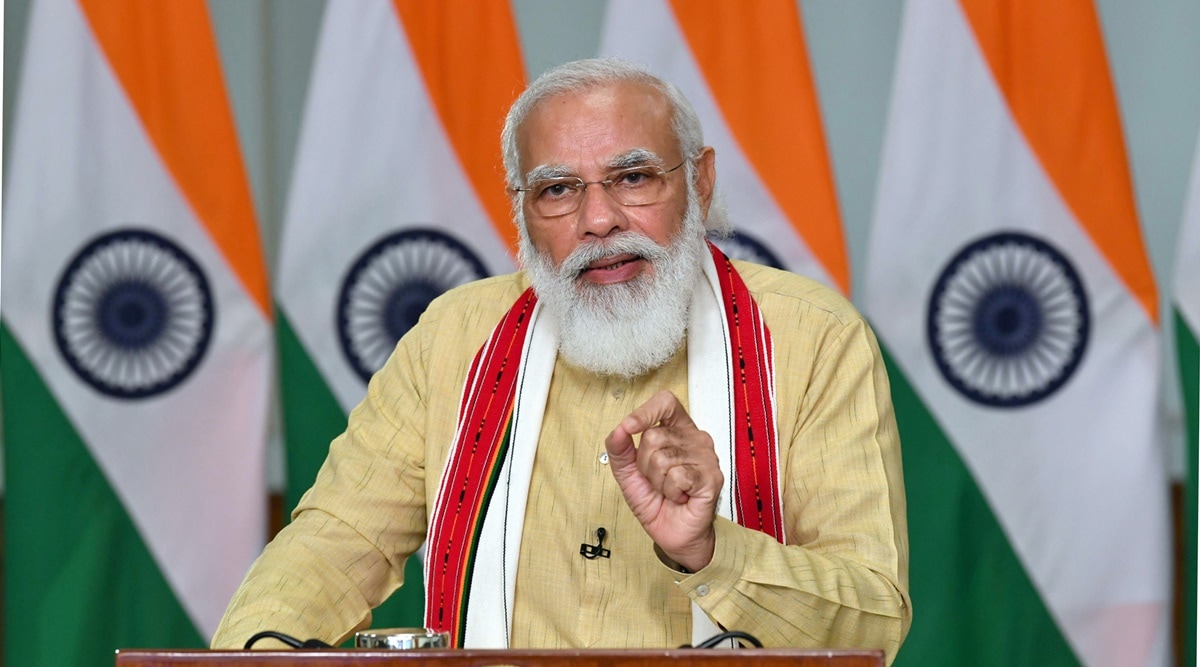
The Prime Minister Shri Narendra Modi shared his message on the successful organising of the maiden maritime event – Sagarmanthan, The Ocean’s Dialogue – being held at the national capital. PM Modi called for success of Sagarmanthan to build consensus for partnerships of a prosperous future of humanity.

In his message sent from Camp Office in Nigeria, the PM Modi shared, “Our vision for a free, open and secure maritime network – be it the Indian Ocean or the Indo Pacific region – is finding resonance across the world. The ‘Indo Pacific Oceans Initiative’ envisions marine resources as a key pillar for growth for nations. This dialogue on oceans further strengthen the rules-based world order and enhance peace, trust and friendship between nations. As we strive to realise the vision of a Viksit Bharat by 2047, dialogues such as Sagarmanthan are invaluable to build consensus, partnerships and most importantly, a prosperous future. With the collective efforts of all stakeholders, I am confident that these discussions will resonate far and wide, paving the way toward a brighter, more connected future.”

Highlighting India’s rich maritime legacy & steps to build the sector, the PM Modi shared, “India’s maritime tradition goes back several millennia and is among the richest in the world. The thriving port cities of Lothal and Dholavira, the fleets of the Chola dynasty, the exploits of Chhatrapati Shivaji Maharaj are great inspirations. Oceans are a shared heritage for nations and societies, as well as the lifeline for international trade. Today, the security and prosperity of nations is intimately connected to oceans. Recognising the potential of oceans, several transformative steps have been taken to bolster India’s maritime capabilities. Over the last decade, guided by the vision of ‘Ports of Prosperity,’ ‘Ports for Progress’ and ‘Ports for Productivity,’ we have doubled the capacity of our ports. By enhancing port efficiency, reducing turnaround times and strengthening last-mile connectivity through expressways, reducing turnaround times and strengthening last mile connectivity through expressways, railways and riverine networks, we have transformed India’s shoreline.”

Acknowledging the pioneering role for transformation of maritime sector, the Union Minister of Ports, Shipping & Waterways, Shri Sarbananda Sonowal thanked the Prime Minister for his generous words for the success of the maiden edition of Sagarmanthan – The Oceans Dialogue. On PM Modi’s message, the Union Minister Sarbananda Sonowal said, “Under the dynamic leadership of Prime Minister Shri Narendra Modi ji, India has been witnessing a transformational experience in the maritime sector. The message by the Prime Minister Modi ji encapsulates the very essence that this maiden maritime thought leadership forum – Sagarmanthan – aims to achieve. In his own words, Modi ji shared the framework to a ‘Viksit Bharat’ based on how ‘collaboration and effort can yield the tools and direction we need to ensure prosperity.’ I, on behalf of all whose tireless effort has led to this wonderful forum, want to extend deepest appreciation to the most popular leader of the world, Narendra Modi ji, for his visionary message of rich wisdom, insight & sense for the success of ‘Sagarmanthan – The Oceans Dialogue’.”

****
Government vs Twitter

Chris pirillo said that “twitter is a great place to tell the world what you are thinking before you have had a chance to think about it”. However, the government wants to control it. 

India’s Covid-19 rise had eclipsed all superlatives only a few months ago. Hundreds of thousands of people have died because of India’s worst public-health catastrophe in history, which has highlighted the country’s deteriorating healthcare infrastructure. In the midst of the tragedy, while armies of medical personnel and volunteers focused their energies on battling the virus, the administration looked to be concentrating on a different issue. And that issue is TWITTER.

 The initial root of the situation was a tweet sent by BJP spokesperson Sambit Patra on May 18. Patra displayed a paper he referred to as a “toolkit” in this tweet, which appears to be an internal Congress document outlining the processes for undermining the BJP’s reaction to the epidemic and increasing publicity of the party’s activities. Days later, the Delhi Police, which reports to the Union government but is not a full-fledged state, paid a visit to Twitter’s headquarters in Delhi and Gurugram, ostensibly to find out why the company opted to put the warning label on Patra’s post. According to local sources, authorities in Uttar Pradesh recently blamed Twitter, along with journalists and opposition party officials, for posting a video that sparked communal strife. The video, which alleged to depict majority Hindus beating a minority Muslim guy, prompted another complaint against Twitter India CEO Manish Maheshwari, according to Delhi police. However, The problematic footage has subsequently been deleted, with no more comment from the firm other than a remark about following local regulations. 

The government has opted to focus on digital image management many times during the epidemic, including the most recent occurrences. Following government demands, Twitter and Facebook pulled down about 100 postings in April. The government’s approach to the epidemic was criticized in several of these tweets.Following the agricultural demonstrations, Twitter agreed to the BJP’s demands to temporarily and permanently restrict 500 accounts, including those of opposition leaders and journalists. The government also forced Twitter to remove several well-known personalities who expressed support for the protestors, like Punjabi musician JazzyB, whose account has 1.2 million followers but can’t be viewed from India, though the firm hasn’t followed through on all of its demands.

Therefore, they not only silence the critical voices but also exposes the corporation to much more pressure to stifle government critics in India and elsewhere. Twitter, a relative newcomer with 17.5 million members, has India as one of its fastest-growing markets. However, its limited reach makes it vulnerable in a country that demonstrated its willingness to outlaw popular foreign services a year ago when it banned TikTok — which had 200 million users in the country — WeChat, and hundreds of other Chinese-made apps following a violent clash on the disputed border. It is critical to political debate in India, and Modi himself is a frequent user with a following of over 69 million people, demonstrating its global reach. While politicians have been outspoken in their criticism of Twitter, none have publicly threatened to abolish it. 

Modi 2.0 Cabinet Expansion 2021

PM Modi 2.0 Reshuffle Cabinet:

The Union Cabinet led by Prime Minister Narendra Modi yesterday expanded its council of ministers, the first such exercise in the third year of his second term. While the cabinet reshuffle was on the cards for a long time, the move comes at a time when the Modi government faces criticism over the alleged mishandling of the COVID-19 pandemic. The list of ministers also indicates that due attention has been given to upcoming assembly elections and the 2024 Lok Sabha elections. Day before yesterday, two major political developments took place which indicated that the BJP has started preparing for the polls besides appeasing its allies. In the first development, Thawar Chand Gehlot was appointed Governor of Karnataka to make more space for new ministers. Later in the day, a new ministry was created – the Ministry of Cooperation.

The focus has been on Uttar Pradesh, Madhya Pradesh, Odisha and West Bengal. Uttar Pradesh is the most crucial state for the BJP given the number of Lok Sabha seats. The inclusion of the allies like JD(U), Apna Dal etc. indicates that the Modi government is not willing to let go more of its allies since two of its major partners – Shiv Sena and Shiromani Akali Dal had already deserted the NDA over different issues. The move will boost the confidence of its allies and the same will prove beneficial for the saffron party in the coming polls.

Below is the full list of new ministers in Modi Cabinet:

Cabinet Ministers

  • Narayan Rane
  • Sarbananda Sonowal : Ports and Shipping, AYUSH Ministry.
  • Dr Virendra Kumar
  • Jyotiraditya Scindia : Civil Aviation.
  • Ramchandra Prasad Singh : Steel Ministry.
  • Ashwini Vaishnav : Railways, Communication & Electronics and Information Technology.
  • Pashu Pati Kumar Paras: Minister of Food Processing Industries.
  • Kiren Rijiju : Law and Justice Ministry.
  • Dharmendra Pradhan : Education Ministry.
  • Raj Kumar Singh : Power and Ministry of New and Renewable Energy.
  • Hardeep Singh Puri : Petroleum, Housing and Urban Development.
  • Mansukh Mandaviya : Chemicals and Fertilizers, Health Ministry.
  • Bhupender Yadav
  • Parshottam Rupala
  • G Kishen Reddy
  • Anurag Thakur : Information & Broadcasting and Sports.

Ministers of State

Pankaj Choudhary
Anupriya Singh Patel
Satya Pal Singh Baghel
Rajeev Chandrasekhar
Shobha Karandlaje
Bhanu Pratap Singh Verma
Darshana Vikram Jardosh
Meenakshi Lekhi
Annpurna Devi
A Narayanaswamy
Kaushal Kishore
Ajay Bhatt
BL Verma
Ajay Kumar
Chauhan Devusinh
Bhagwanth Khuba
Pratima Bhoumik
Subhas Sarkar
Bhagwat Kishanrao Karad
Rajkumar Ranjan Singh
Bharati Pravin Pawar
Bishweswar Tudu
Shantanu Thakur
Dr Munjapara Mahendrabhai
John Barla
Dr L Murugan
Nishith Pramanik

Kapil Moreshwar Patil

WHEN THE ‘TOOLKIT’ BECOMES THE TOOL

In light of the recent ‘Farmer’s protest toolkit controversy’, a 22-year-old environmental activist from Bengaluru, Disha Ravi has been arrested by the Delhi police on Sunday 14th February 2021. She is now under five-day police custody as the Delhi Magistrate decided to remand her following the arrest. She has been booked under Indian Penal Code Sections 124(a) for sedition, 153(a) for promoting enmity between different sections of the society and 120(b) for criminal conspiracy. She is accused of involvement in the composition of the “toolkit”, an online document shared by the International environmental activist Greta Thunberg, which consists of action plans to protest against the farm bill. Police claimed that the toolkit had the violence on 26th January as one of its “action plans” to protest against the farm bill, in addition to the pro-Khalistani elements.

Since last October, thousands of farmers have been camping on the national capital borders, protesting against the three newly passed farm laws introduced by the NDA government. On the republic day, the tractor rally conducted by the protesting farmers has resulted in great commotion as the farmers attempted to enter the national capital region, storming the Red Fort complex and clashing with the police and security forces. The police allege that plans for such actions were formulated in the online document, described as a “toolkit” that Ravi created and shared with Thunberg. “The main aim of the toolkit was to create misinformation and disaffection against the lawfully enacted government,” said a police official. “The toolkit sought to artificially amplify the fake news through various tweets which they have created in the form of a tweet bank. The document that they drafted had secessionist and pro-Khalistani content embedded into it through links and texts” he added. 

The arrest of Disha has instigated furious criticism against the fascist actions of the government regarding the farmers protest. The efforts made by the government to silence and oppress the voice of the farmers and the people supporting them is more of a provocative manner than a call for peace.

India and Bangladesh to hold virtual summit in December

India-Bangladesh bilateral summit is likely to be held in December. A final call in this regard will be taken during the foreign ministers’ meeting on Tuesday, sources tell India Today.

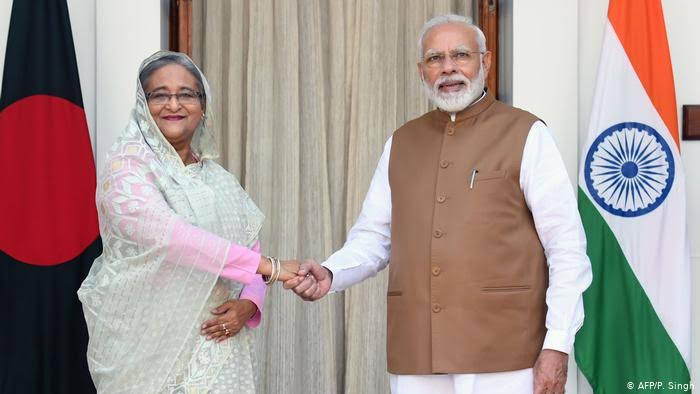
There is a possibility of the summit being a virtual one if the Covid-19 situation does not ease by the end of this year, sources said. In the case that the bilateral summit is held physically, Prime Minister Narendra Modi is likely to travel to Dhaka to meet his Bangladeshi counterpart Sheikh Hasina.

Meanwhile, the sixth Joint Consultative Commission (JCC) at the foreign ministers’ level is slated to take place virtually on Tuesday. This meeting will be attended by External Affairs Minister (EAM) Dr S Jaishankar in New Delhi and his counterpart Dr AK Abdul Momen in Dhaka.

The two foreign ministers will review the entire spectrum of bilateral relations between India and Bangladesh. Substantial progress has been made in this regard in multiple areas despite the pandemic. The JCC is, in fact, a mechanism to overview the progress and substantial progress has been achieved between the two countries.

The date of the JCC meet was finalised during Foreign Secretary Harsh Shringla’s visit to Dhaka in August and a subsequent phone call with Bangladesh Prime Minister Sheikh Hasina.

According to sources, high-level visits are expected to be discussed during the JCC meet among a range of other issues.

Prime Minister Narendra Modi was unable to visit Dhaka this year for the Mujib Barsho celebrations on account of the Covid-19 pandemic. Since the JCC is meeting during the celebrations, an announcement related to Mujib Barsho is expected, sources added.

Earlier, PM Modi in his inaugural address at the Mujib Barsho celebrations in March had said that Bangladesh’s founder Sheikh Mujibur Rahman is hailed as a “hero” in India too.

The year 2021 seems promising for India-Bangladesh relations since both sides will commemorate 50 years of the Bangladesh Liberation War in which India played a crucial role. Next year will also mark 50 years since India and Bangladesh established diplomatic ties.

Fit India Dialogue 2020

Celebrating the first anniversary of the Fit India movement, Prime Minister Narendra Modi interacted with several fitness influencers, celebrities and citizens in a nationwide, online “Fit India Dialogue”.

Fitness ki dose, aadha ghanta roz,” PM Modi introduced a new slogan to encourage citizens to exercise for at least half-an-hour in a day.

Among the participants were Virat Kohli, Milind Soman, both known to be passionate about fitness, footballer Afshan Ashiq, paralympic javelin gold medallist Devendra Jhajharia, and celebrity nutritionist Rujuta Diwekar, among others.

narendra modi

The online interaction will see participants sharing anecdotes and tips of their own fitness journey while drawing out guidance from PM Modi on his thoughts about fitness and good health. In times of Covid-19, fitness has become an even more important aspect of life. This dialogue will see a timely and fruitful conversation on nutrition, wellness and various other aspects on fitness.

While talking about the importance of fitness and a healthy diet, he recounted how his mother always makes it a point to ask him if he is eating haldi (turmeric) or not. Turmeric has antioxidant properties; here are its other health benefits. While speaking to Diwekar, the Prime Minister also talked about his recipe for making parathas with drumsticks, which he said he still eats once or twice a week.

PM Modi also asked Kohli about the Yo-Yo test, which measures the endurance levels of athletes, to which the cricketer said how it is an important benchmark. He pointed out that India’s Yo-Yo test scores were on the lower side as compared to global standards. He then went on to talk about how his grandmother inspires him to eat healthy, home-cooked food.