

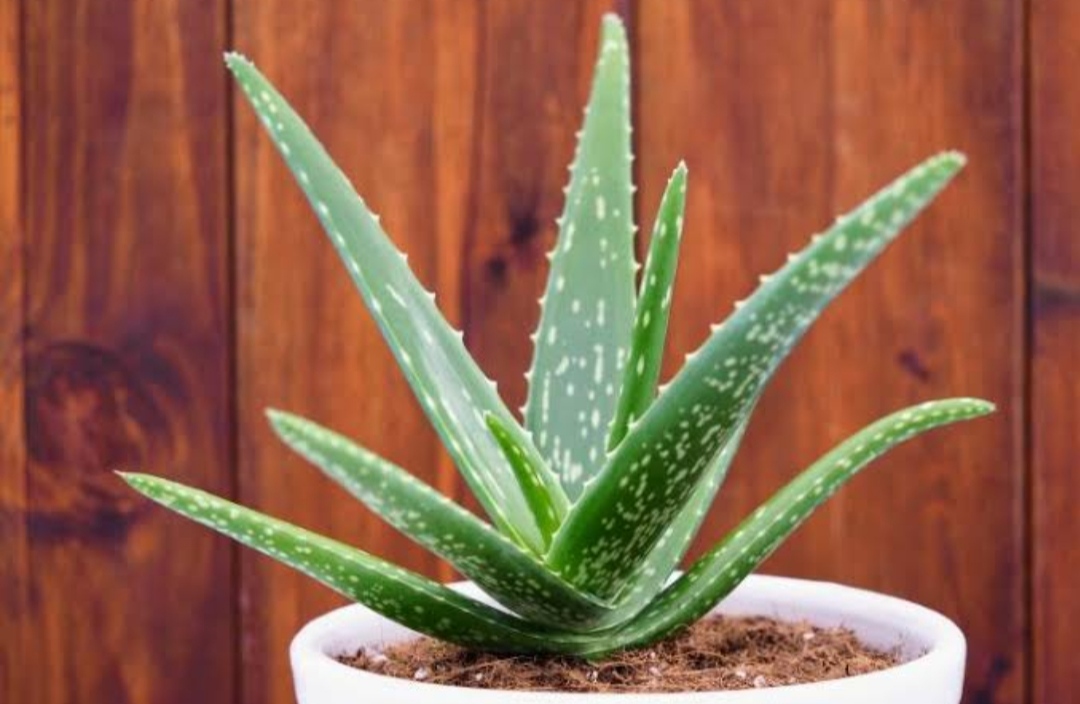
Most people know that you can use Aloevera to soothe sunburns. However, this versatile plant has several other medicinal properties, making it one of nature’s best herbal remedies. Its vitamins, minerals, and phytonutrients make it an anti-inflammatory powerhouse. We can find Aloevera plant in everything from skin and hair care products to ointments, drinks.
There are 500 species of aloe vera, but Aloe barbadensis Miller, native to the Arabian peninsula, is the most widely available and most popular one. You can buy a small plant from farmers markets or small local growers, and let it grow, or buy a large plant and divide it as it gets even bigger.
Aloe vera needs a minimum of six hours of daily sunlight, so it’ll grow best in bright spots indoors (especially in the winter) or in a sheltered, sunny part of the garden. It can handle full sun, but it doesn’t need it. You can move the plant outside during summer, just make sure it receives the proper amount of light.
Aloe vera leaves are long and slightly curved with ragged edges. Inside, you’ll find a clear gel.
Use sharp, clean kitchen scissors or a knife, and cut a bottom leaf from the base of the plant. Place the cut aloe leaf into a small cup or glass, cut end down. You’ll notice a yellow sap seeping out—allow it to drain for 10 minutes before discarding it.
While not toxic in small quantities, this sap is bitter, has laxative properties, and can cause intestinal discomfort.
Once you get rid of the sap, it’s time to extract the aloe vera gel. Using a clean, sharp knife, trim the fleshy leaf’s top, bottom, and sides, then slice it horizontally, like filleting a fish. With a clean large spoon or a dull knife, gently scrape the mucilaginous gel into a container.
Aloe vera gel is known for its anti-inflammatory, skin protection, antibacterial, antiviral, antiseptic, and wound healing properties.
Aloevera gel is used to treat
Acne
Dandruff
Mosquito bites
It can be also used as moisturiser and sanitizer.

 Eduindex
You must be logged in to post a comment.