MTR FOODS – A MARKETING MARVEL

MTR FOODS-A MARKETING MARVEL

MTR foods is a successful company due to their continuous marketing activities by focusing on what the customer requirement is! It is a marketing oriented company and also shows the legacy by catering the needs of customers and providing their matching products.

Any company or business unit is successful in strategy when it is able to map its internal resources with external environment and create value for customers in the process of revenue of the company. MTR is the legacy of MARKETING STRATEGY THINKING in the food industry for seven and a half decades. 

It is a marvel because it has the ability to stand in the environmental demand drives that dominates food industry with the appropriate marketing mix

EVOLUTION OF MAVALLI TIFFIN ROOMS:

The MAVALLI TIFFIN ROOMS commonly called as MTR foods is the brand name of food related Enterprise located in India. Having it’s origin in Banglore, it has a restaurant now in Lal Bagh Road, Banglore and in 6 branches of the city, as well as Singapore, Dubai and  Muscat. This restaurant was closed in the period of Indian Emergency which was in mid of 1970 when the food control act was made profitable to serve food items until it reopened in 1984. This made the beginning of the entry into the convenience and instant food business, in sense a turning point. MTR foods is also the first company in the world to have frozen dosa, which can be heated and eaten. It is believed that MTR is the one who brought the  Ice cream vending machine to India.

MARKETING MIX PERSPECTIVE OF MTR FOODS

Product – Marketing Mix

MTR foods is a food product company offering a diversified range of packaged food products. It includes items for breakfast, meals and in between meals like Frozen foods. It innovates continuously based on the products which matches the customers needs, wants and demand. The framework of customer vs product matching of this company can be understood as marketing Marvel Company.

Place – Marketing Mix

Place in marketing mix means distribution or channel for selling the products. It spreads it’s business from Banglore, exports to several countries like Singapore, Malaysia, Mauritius, Japan, Middle East, New Zealand, Australia, Germany, United Kingdom, Canada and United States. Their products are easily available in supermarkets, hypermarkets, discount rates, convenience stores and grocery stores. MTR foods have also launched it’s E commerce platform from Banglore as a venture to move with changing times.

Promotion – Marketing Mix

Promotion is a tool in marketing to make the customer aware, inform and create a positive attitude towards company and products. The tool is advertising, personal – selling, sales promotions and publicity. It has organized sampling activities at popular places and launched several campaigns. 

Price – Marketing Mix

Price is the last one marketer but it is difficult when compared to all marketing elements. MTR foods are estimated as rupees 700crore company with growth rate at 18%CAGR. Its export is nearly 20% and sales in Southern states to 60% of its total revenue. It has launched it’s web portal as much needed initiative to earn larger profits to cut down distribution costs. 

Win Marketing, be a Marvel!

How did India's MTR Foods Overcome The Economic Downturns

 Hello everybody , On 25th of June 1975 the Indira Gandhi government officially declared a nationwide emergency. The fundamental rights were curbed, the press was censored and within a fortnight the livelihood of 620 million Indians was at stake. Little did they know that the next 21 months of their lives would be known as the darkest chapter in the history of Indian democracy. And all of this was happening during a time when India was already witnessing a socioeconomic crisis. During this time, let alone business prosperity even survival was considered to be a miracle. And the story that I’m about to tell you today is the story of one such miracle wherein amidst this economic nightmare while most businesses were shutting down there was one incredible businessman who turned this very same emergency into an business opportunity and built a business empire that now has a revenue of 1000 crores. This businessman is Mr Sadananda Maiya and the company that I’m talking about is Mavalli Tiffin Room which is popularly known as MTR. 

The question is- What was so special about MTR and how was it able to turn an economic nightmare into a business opportunity ? The answer to this question lies in the rich history of MTR that dates back to 1924. This is when the Maiya family started the MTR restaurant with the vision to serve the most authentic, hygienic and the tastiest South Indian food to its customers. And the entire family was so dedicated to their profession that even during the post-independence time when the country was witnessing a political turmoil they still served the most authentic, hygienic and the tastiest South Indian food in town. Within a few years the restaurant became so popular that it became a hotspot for tourists television personalities and even film stars. But after 5 long decades of prosperity; in 1975 when the emergency was imposed the family hit a dead end due to the socio-economic crisis. 

During this time, apart from the emergency India had already seen 2 bad agricultural years and due to the formation of OPEC the oil prices had quadrupled and the inflation in the country had skyrocketed to 15%. The situation was so bad that the government had to stop all new construction work they froze the wages and salaries in the public sectors And imposed compulsory savings on income tax payers. And this meant that every single rupee was a lifesaver for a middle class person and it obviously meant that rarely anybody ever went to a restaurant. On top of that, the government required every restaurant to conform to prices set by the government and it was practically impossible to run a profitable restaurant business with those given prices. For example, under the President’s rule, the price of Idli was clipped to 10p from 25p while a cup of coffee which costed one rupee was to be sold for just 25p. 

Now, people, when something like this happens most of the restaurant owners do either one or many of these 3 things to survive. And this is something that you would’ve seen even during the COVID-19 crisis. Number one, they do extreme cost cutting and fire all of their employees. Number two, they indulge in adulteration and serve extremely low quality food to their customers which eventually leads to health hazards. Or number three they just shut their shop altogether and wait for the situation to get back to normal. And this is exactly what the restaurant owners did in 1975 because they saw no other option to survive. But you know what ? Even during this time MTR foods still served the most authentic, hygienic and the tastiest South Indian food to its customers without compromising on their quality. 

And not just that They retained most of their employees and built a supply chain that was so robust that when the emergency was lifted MTR went on to become one of the most successful food companies in the country. The question is- What exactly was this strategy and what was so special about it ? As it turns out, when the government imposed the prices the MTR restaurants started bleeding. They were loosing out ₹25,000 on weekdays and lost upto 1 lakh rupees during weekends. But even during that time Sadanand Maiya sir was not willing to compromise on his family business values. At the same time he did not want to fire any of the employees because they had stayed loyal to the business for decades So you know what ? He took a bold step to shut down the restaurant altogether and made 3 strategic changes to it’s business.
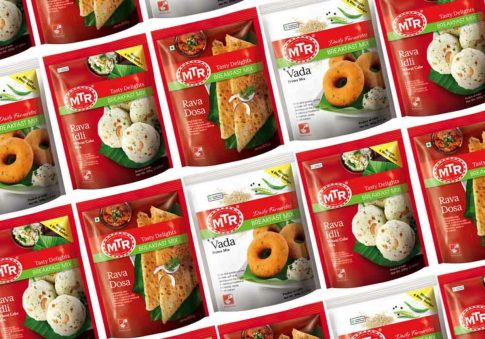
 Number one, he realised that inspite of the emergency, the demand for food did not go down. It’s just that the purchase power of the customers had declined drastically. And the supply chain of the restaurant was too costly to actually cater to their demands. So, to reduce the cost he moved from cooked food to packed food. Because of this the heavy cost and loss due to perishable items was completely eliminated. On top of that instead of adulterating the costly ingredients he changed the ingredients altogether. For example, they moved from rice idlis to rava idlis to make idlis cost effective. And even today, Rava Idli is one of MTR’s signature dishes. 

Number two since he could not comply by the prices imposed by the government he turned the same restaurant into a grocery store and started selling food mixes via grocery sales. And last and most importantly he trained his entire staff to build an efficient supply chain to make packed food and sold it at an affordable price. In the corporate world this is what we call as reskilling. And that is how ladies and gentlemen MTR was able to survive the emergency without compromising on its business values. And guess what ? As soon as the emergency was lifted MTR restaurant reopened but this time along with the restaurant they had a ready to fire manufacturing chain which produced nothing but high quality products. Soon enough it extended to multiple food mixes like pickles, like spices and even special spice mixtures. Fast forward to today MTR has emerged as one of the finest food brands in the country with a revenue of almost 1000 crores. And MTR exports its products to 21 countries including US, UK, Australia and Japan. 

And most importantly it has successfully stood the test of time for 97 years without ever compromising its values And even during the COVID crisis, 10 years after Maiya sir stepped down The company is still setting very high standards for change management in the industry. While most companies were clueless and struggled to keep their supply chain intact during the COVID crisis; MTR foods had already doubled their inventory level from 14 days to 30 days capacity. And while the first lockdown was imposed on 25th of March MTR rigorously started preparing for the crisis way back from 10th March itself. And this is when none of us had a clue that our lives were about to change forever. 

And that is how time and again by turning a business threat into a business opportunity MTR has consistently set a benchmark for other brands to follow and from entrepreneurs like you and me to learn from. Now there are 3 very important lessons that we need to learn from this iconic case study. Number one and this is something that has been followed by Dhirubhai Ambani sir better than anybody else wherein his policy was everytime you see a market crisis you need to realize that your competitors are facing the exact same crisis as you are. The question is are you going to see it as an obstacle and succumb to it or treat it as a business opportunity and get way ahead of your competition.

 Number two, money can build a company but it takes guts, quality and values to build a brand. And last and most importantly as much as the Internet is filled with American and European business case studies we often fail to realise the fact that India has had a long history of political and economic crisis and the adversity has been so much that let alone business, even staying alive was considered to be a big deal.

 But even during these times we have had some incredible entrepreneurs who were able to build a business empire and have established a golden legacy for us to follow and we being in the Indian markets need to pay very close attention to these lesser known goldmines because they have got nuggets of wisdom that can turn us into extraordinary business leaders of this country. 

How did India's MTR Foods Overcome The Economic Downturns

 Hello everybody , On 25th of June 1975 the Indira Gandhi government officially declared a nationwide emergency. The fundamental rights were curbed, the press was censored and within a fortnight the livelihood of 620 million Indians was at stake. Little did they know that the next 21 months of their lives would be known as the darkest chapter in the history of Indian democracy. And all of this was happening during a time when India was already witnessing a socioeconomic crisis. During this time, let alone business prosperity even survival was considered to be a miracle. And the story that I’m about to tell you today is the story of one such miracle wherein amidst this economic nightmare while most businesses were shutting down there was one incredible businessman who turned this very same emergency into an business opportunity and built a business empire that now has a revenue of 1000 crores. This businessman is Mr Sadananda Maiya and the company that I’m talking about is Mavalli Tiffin Room which is popularly known as MTR. 

The question is- What was so special about MTR and how was it able to turn an economic nightmare into a business opportunity ? The answer to this question lies in the rich history of MTR that dates back to 1924. This is when the Maiya family started the MTR restaurant with the vision to serve the most authentic, hygienic and the tastiest South Indian food to its customers. And the entire family was so dedicated to their profession that even during the post-independence time when the country was witnessing a political turmoil they still served the most authentic, hygienic and the tastiest South Indian food in town. Within a few years the restaurant became so popular that it became a hotspot for tourists television personalities and even film stars. But after 5 long decades of prosperity; in 1975 when the emergency was imposed the family hit a dead end due to the socio-economic crisis. 

During this time, apart from the emergency India had already seen 2 bad agricultural years and due to the formation of OPEC the oil prices had quadrupled and the inflation in the country had skyrocketed to 15%. The situation was so bad that the government had to stop all new construction work they froze the wages and salaries in the public sectors And imposed compulsory savings on income tax payers. And this meant that every single rupee was a lifesaver for a middle class person and it obviously meant that rarely anybody ever went to a restaurant. On top of that, the government required every restaurant to conform to prices set by the government and it was practically impossible to run a profitable restaurant business with those given prices. For example, under the President’s rule, the price of Idli was clipped to 10p from 25p while a cup of coffee which costed one rupee was to be sold for just 25p. 

Now, people, when something like this happens most of the restaurant owners do either one or many of these 3 things to survive. And this is something that you would’ve seen even during the COVID-19 crisis. Number one, they do extreme cost cutting and fire all of their employees. Number two, they indulge in adulteration and serve extremely low quality food to their customers which eventually leads to health hazards. Or number three they just shut their shop altogether and wait for the situation to get back to normal. And this is exactly what the restaurant owners did in 1975 because they saw no other option to survive. But you know what ? Even during this time MTR foods still served the most authentic, hygienic and the tastiest South Indian food to its customers without compromising on their quality. 

And not just that They retained most of their employees and built a supply chain that was so robust that when the emergency was lifted MTR went on to become one of the most successful food companies in the country. The question is- What exactly was this strategy and what was so special about it ? As it turns out, when the government imposed the prices the MTR restaurants started bleeding. They were loosing out ₹25,000 on weekdays and lost upto 1 lakh rupees during weekends. But even during that time Sadanand Maiya sir was not willing to compromise on his family business values. At the same time he did not want to fire any of the employees because they had stayed loyal to the business for decades So you know what ? He took a bold step to shut down the restaurant altogether and made 3 strategic changes to it’s business.

 Number one, he realised that inspite of the emergency, the demand for food did not go down. It’s just that the purchase power of the customers had declined drastically. And the supply chain of the restaurant was too costly to actually cater to their demands. So, to reduce the cost he moved from cooked food to packed food. Because of this the heavy cost and loss due to perishable items was completely eliminated. On top of that instead of adulterating the costly ingredients he changed the ingredients altogether. For example, they moved from rice idlis to rava idlis to make idlis cost effective. And even today, Rava Idli is one of MTR’s signature dishes. 

Number two since he could not comply by the prices imposed by the government he turned the same restaurant into a grocery store and started selling food mixes via grocery sales. And last and most importantly he trained his entire staff to build an efficient supply chain to make packed food and sold it at an affordable price. In the corporate world this is what we call as reskilling. And that is how ladies and gentlemen MTR was able to survive the emergency without compromising on its business values. And guess what ? As soon as the emergency was lifted MTR restaurant reopened but this time along with the restaurant they had a ready to fire manufacturing chain which produced nothing but high quality products. Soon enough it extended to multiple food mixes like pickles, like spices and even special spice mixtures. Fast forward to today MTR has emerged as one of the finest food brands in the country with a revenue of almost 1000 crores. And MTR exports its products to 21 countries including US, UK, Australia and Japan. 

And most importantly it has successfully stood the test of time for 97 years without ever compromising its values And even during the COVID crisis, 10 years after Maiya sir stepped down The company is still setting very high standards for change management in the industry. While most companies were clueless and struggled to keep their supply chain intact during the COVID crisis; MTR foods had already doubled their inventory level from 14 days to 30 days capacity. And while the first lockdown was imposed on 25th of March MTR rigorously started preparing for the crisis way back from 10th March itself. And this is when none of us had a clue that our lives were about to change forever. 

And that is how time and again by turning a business threat into a business opportunity MTR has consistently set a benchmark for other brands to follow and from entrepreneurs like you and me to learn from. Now there are 3 very important lessons that we need to learn from this iconic case study. Number one and this is something that has been followed by Dhirubhai Ambani sir better than anybody else wherein his policy was everytime you see a market crisis you need to realize that your competitors are facing the exact same crisis as you are. The question is are you going to see it as an obstacle and succumb to it or treat it as a business opportunity and get way ahead of your competition.

 Number two, money can build a company but it takes guts, quality and values to build a brand. And last and most importantly as much as the Internet is filled with American and European business case studies we often fail to realise the fact that India has had a long history of political and economic crisis and the adversity has been so much that let alone business, even staying alive was considered to be a big deal.

 But even during these times we have had some incredible entrepreneurs who were able to build a business empire and have established a golden legacy for us to follow and we being in the Indian markets need to pay very close attention to these lesser known goldmines because they have got nuggets of wisdom that can turn us into extraordinary business leaders of this country. 

How did India's MTR Foods Overcome The Economic Downturns

 Hello everybody , On 25th of June 1975 the Indira Gandhi government officially declared a nationwide emergency. The fundamental rights were curbed, the press was censored and within a fortnight the livelihood of 620 million Indians was at stake. Little did they know that the next 21 months of their lives would be known as the darkest chapter in the history of Indian democracy. And all of this was happening during a time when India was already witnessing a socioeconomic crisis. During this time, let alone business prosperity even survival was considered to be a miracle. And the story that I’m about to tell you today is the story of one such miracle wherein amidst this economic nightmare while most businesses were shutting down there was one incredible businessman who turned this very same emergency into an business opportunity and built a business empire that now has a revenue of 1000 crores. This businessman is Mr Sadananda Maiya and the company that I’m talking about is Mavalli Tiffin Room which is popularly known as MTR. 

The question is- What was so special about MTR and how was it able to turn an economic nightmare into a business opportunity ? The answer to this question lies in the rich history of MTR that dates back to 1924. This is when the Maiya family started the MTR restaurant with the vision to serve the most authentic, hygienic and the tastiest South Indian food to its customers. And the entire family was so dedicated to their profession that even during the post-independence time when the country was witnessing a political turmoil they still served the most authentic, hygienic and the tastiest South Indian food in town. Within a few years the restaurant became so popular that it became a hotspot for tourists television personalities and even film stars. But after 5 long decades of prosperity; in 1975 when the emergency was imposed the family hit a dead end due to the socio-economic crisis. 

During this time, apart from the emergency India had already seen 2 bad agricultural years and due to the formation of OPEC the oil prices had quadrupled and the inflation in the country had skyrocketed to 15%. The situation was so bad that the government had to stop all new construction work they froze the wages and salaries in the public sectors And imposed compulsory savings on income tax payers. And this meant that every single rupee was a lifesaver for a middle class person and it obviously meant that rarely anybody ever went to a restaurant. On top of that, the government required every restaurant to conform to prices set by the government and it was practically impossible to run a profitable restaurant business with those given prices. For example, under the President’s rule, the price of Idli was clipped to 10p from 25p while a cup of coffee which costed one rupee was to be sold for just 25p. 

Now, people, when something like this happens most of the restaurant owners do either one or many of these 3 things to survive. And this is something that you would’ve seen even during the COVID-19 crisis. Number one, they do extreme cost cutting and fire all of their employees. Number two, they indulge in adulteration and serve extremely low quality food to their customers which eventually leads to health hazards. Or number three they just shut their shop altogether and wait for the situation to get back to normal. And this is exactly what the restaurant owners did in 1975 because they saw no other option to survive. But you know what ? Even during this time MTR foods still served the most authentic, hygienic and the tastiest South Indian food to its customers without compromising on their quality. 

And not just that They retained most of their employees and built a supply chain that was so robust that when the emergency was lifted MTR went on to become one of the most successful food companies in the country. The question is- What exactly was this strategy and what was so special about it ? As it turns out, when the government imposed the prices the MTR restaurants started bleeding. They were loosing out ₹25,000 on weekdays and lost upto 1 lakh rupees during weekends. But even during that time Sadanand Maiya sir was not willing to compromise on his family business values. At the same time he did not want to fire any of the employees because they had stayed loyal to the business for decades So you know what ? He took a bold step to shut down the restaurant altogether and made 3 strategic changes to it’s business.

 Number one, he realised that inspite of the emergency, the demand for food did not go down. It’s just that the purchase power of the customers had declined drastically. And the supply chain of the restaurant was too costly to actually cater to their demands. So, to reduce the cost he moved from cooked food to packed food. Because of this the heavy cost and loss due to perishable items was completely eliminated. On top of that instead of adulterating the costly ingredients he changed the ingredients altogether. For example, they moved from rice idlis to rava idlis to make idlis cost effective. And even today, Rava Idli is one of MTR’s signature dishes. 

Number two since he could not comply by the prices imposed by the government he turned the same restaurant into a grocery store and started selling food mixes via grocery sales. And last and most importantly he trained his entire staff to build an efficient supply chain to make packed food and sold it at an affordable price. In the corporate world this is what we call as reskilling. And that is how ladies and gentlemen MTR was able to survive the emergency without compromising on its business values. And guess what ? As soon as the emergency was lifted MTR restaurant reopened but this time along with the restaurant they had a ready to fire manufacturing chain which produced nothing but high quality products. Soon enough it extended to multiple food mixes like pickles, like spices and even special spice mixtures. Fast forward to today MTR has emerged as one of the finest food brands in the country with a revenue of almost 1000 crores. And MTR exports its products to 21 countries including US, UK, Australia and Japan. 

And most importantly it has successfully stood the test of time for 97 years without ever compromising its values And even during the COVID crisis, 10 years after Maiya sir stepped down The company is still setting very high standards for change management in the industry. While most companies were clueless and struggled to keep their supply chain intact during the COVID crisis; MTR foods had already doubled their inventory level from 14 days to 30 days capacity. And while the first lockdown was imposed on 25th of March MTR rigorously started preparing for the crisis way back from 10th March itself. And this is when none of us had a clue that our lives were about to change forever. 

And that is how time and again by turning a business threat into a business opportunity MTR has consistently set a benchmark for other brands to follow and from entrepreneurs like you and me to learn from. Now there are 3 very important lessons that we need to learn from this iconic case study. Number one and this is something that has been followed by Dhirubhai Ambani sir better than anybody else wherein his policy was everytime you see a market crisis you need to realize that your competitors are facing the exact same crisis as you are. The question is are you going to see it as an obstacle and succumb to it or treat it as a business opportunity and get way ahead of your competition.

 Number two, money can build a company but it takes guts, quality and values to build a brand. And last and most importantly as much as the Internet is filled with American and European business case studies we often fail to realise the fact that India has had a long history of political and economic crisis and the adversity has been so much that let alone business, even staying alive was considered to be a big deal.

 But even during these times we have had some incredible entrepreneurs who were able to build a business empire and have established a golden legacy for us to follow and we being in the Indian markets need to pay very close attention to these lesser known goldmines because they have got nuggets of wisdom that can turn us into extraordinary business leaders of this country.