
Floods in Maharashtra

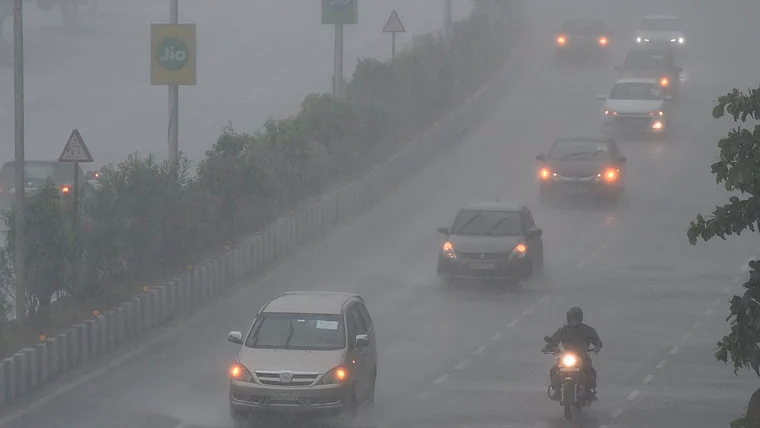
Navi Mumbai Weather Update: As rain lashes city, NNMC shares monsoon  estimates for Vashi, Belapur, Nerul and Airoli
when it rained,
after days, after months,
after years, I felt alive
when the rain touched,
my cheeks, they blushed,
and grinned. As they do,
when they meet a long-lost friend
i wanna go out and say hi,
say that it’s been rough,
without you,
but I can’t.
me grinning and blushing,
and dancing hands in hands,
in rain, would bring back wounds,
the ones that are healed,
the ones that are to be healed.

Climate change is real!

Maharashtra has been dealing with two disasters; Floods in the midst of this ongoing pandemic. These floods have posed a grave threats to all the people.

Maharashtra witnessed high-intensity floods due to the incessant rains over the past few weeks. At least 209 people have died due to the floods in Maharashtra and eight still remain missing. A total of 4,34,185 people from eight districts have been evacuated to safer places, as rescue operations continue.1Among the 209 fatalities, the Satara district reported 46 deaths, followed by 35 in Ratnagiri, 15 in Thane, seven in Kolhapur, four in Mumbai, three in Pune, four in Sindhudurg and two each in eastern Maharashtra’s Wardha and Akola districts.

A total of 3,221 animals have died. Meanwhile, the floodwater has entered the roads and fields, submerging many areas of the Sangli district in Maharashtra making it hard for people to commute from one place to another.

Heavy rainfall in Maharashtra has caused flooding in several areas of the state, including Kolhapur. Houses, roads, and commercial establishments remained partially submerged in floodwater in Kolhapur on Monday.

MUMBAI: Despite the fact that the rains have lessened this week after last week’s torrential downpour, Mumbai has already received 93 percent of the season’s average rainfall. The average rainfall for this season is 2205.8 mm, with 2052.7 mm recorded at the Santacruz observatory. There are two more months of monsoon left to cover the remaining 7% of the seasonal rain target.
While there were no rains at the IMD’s Colaba observatory, the Santacruz observatory recorded 4.3mm of rain, which is considered light rain. Significant weather systems, such as the offshore trough from Karnataka to Kerala’s coast, as well as the low pressure region, have become less prominent, according to IMD sources.
Most of the season’s rainfall so far has been recorded in a heavy rain spell restricted to just a few hours.
This resulted in significant water logging, as well as the loss of life and property. Since the start of the monsoons, IMD’s Santacruz observatory has recorded 235mm of rain on July 17-18, and 253mm on July 16-17. A total of 231.3mm fell in a 24-hour period between June 9 and 10. The IMD has issued a green alert till Thursday, indicating only light to moderate rain activity.

In these past months,

THE 26/11 ATTACK

The Mumbai 2008 attack a.k.a 26/11 was a chain of terrorist attack that took place in November in the year of 2008. There were 10 members of Lashkar-e-Taiba, it was an Islamist terrorist organization from India’s biggest enemy country, Pakistan. They successfully achieved 12 synchronized bomb attacks and firing that lasted 4 days in the Mumbai.  This attack withdrew the attention of everyone all over the world. The attack lasted for 4 days, began on Wednesday, 25 November 2011 and continued till Saturday, 29 November 2011.

174 people died in this attack, including 9 terrorist and more than 300 people were injured. Chhatrapati Shivaji Terminus, Mumbai Chabad House, The Oberoi Trident, the Taj Palace & Tower was attacked 8 times. There was also a massive explosion in Mazagaon. On 28 November, in the early morning except Taj Hotel all the sites were secured by Mumbai Police and security force. Operation Black Tornado was conducted by Indian’s National Security Guard to wash out the left-over attackers, this winded up with death of remaining attacker in Taj Hotel and ended the strike. Pakistan dined the attack. Ajmal Kasab was the only attacker who survived the strike. He revealed that he and other 9 were the members of terrorist group named Lashkar-e-Taiba. Soon later the Indian Government declared that the attackers were from Pakistan, and they were controlled from there itself only. After this Pakistan confirmed that the sole survivor of the attack was a citizen of Pakistan. On 19 April 2015, the major person Zakiur Rehman Lakhvi who initiated the attack was prison free on bail and got vanished. He was then again caught and arrested in Lahore on 2 January 2021.

THE BACKGROUND

Mumbai has faced many terrorists attack since the 13 interrelated bomb explosions in which 257 were killed and 700 were injured. In the year 1993 an attack was carried out with the feeling of taking revenge in earlier religious breakdown for peace that killed many Muslims. In the year 2006 on 6th of December, a blast in a Ghatkopar station killed two people and 28 were injured. The bomb explosion took place on the 10th anniversary of the destruction of the Babri Mosque in Ayodhya. In January 2003, the Prime Minister of Indian, Atal Bihari Vajpayee visited the city, and a day before that a bicycle bomb explode near the Vile Parle station in Mumbai, in which one person died and 25 were injured. On 25 August in the year 2003, two bombs were dropped in South Mumbai, one near the Gateway of India and the other at Zaveri Bazaar situated in Kalbadevi, 44 people were killed and 150 were serious due to this attack. On the Suburban Railway in Mumbai seven bomb were exploded within 11 minutes on 11th of July 2006, which killed 209 people, 22 foreigners were also included in this and more than 700 injured. According to the Mumbai Police, the bombings were carried out by Laskhar-e-Taiba group of terrorists.

With due respect I salute Mumbai police the real life heroes who were standing still and showed enough bravery to fight against the group of terrorists not once but many times and made all the people of Mumbai to feel safe and secure.

A rainy July for 2 Indian cities

Indian monsoon, the most prominent of the world’s monsoon systems, which primarily affects India and its surrounding water bodies. It blows from the northeast during cooler months and reverses direction to blow from the southwest during the warmest months of the year. This process brings large amounts of rainfall to the region during June and July.

After meagre rains were received, Mumbai saw a downpour through the night and in the early hours of July 16th, leading to 27 roads being inundated, 85 bus routes diverted and 250 people evacuated from the Mithi River banks. Extremely heavy rain was recorded at the India Meteorological Department (IMD) Santacruz observatory at 253.3mm, which is the second highest 24-hour rainfall in a decade.

In 2019, the city had recorded 375.2mm which was the highest 24-hour rain in the months between 2015 and 2020. In 2018, it was 184.3mm, 163.4mm (2017), 114.5mm (2016) and 61 mm in 2015.

The meteorological department classifies 15.6-64.4mm in 24 hours as moderate rain; 64.5-115.5mm rain as heavy; 115.6-204.4mm as very heavy; and over 204.5mm as extremely heavy rain. Moderate to heavy rain is likely in the city and suburbs with the possibility of heavy to very heavy rain at isolated places, said the IMD.

The Extremely heavy rain left 27 city roads waterlogged— areas like Hind Mata, Gandhi Market, Sion Road number 24, Wadala Bridge, Chunabhatti, Siddharth Nagar in Goregaon, RCF, Chembur Phatak, Milan Subway, roads leading to eastern freeway. As per the BMC (Brihanmumbai Municipal Corporation) data, between 4am to 7 am, the city recorded 36mm rainfall, 73mm in the western suburb and the highest 75mm in the eastern suburb of Mumbai.

The Mithi River crossed a dangerous mark following which so far about 250 people have been evacuated from Kranti Nagar slum which is located at the bank river. After the rains took a break following the evacuation of people, the water level of the river went down to 2 metres from 3.7 metres. After that, most of the evacuated people returned to their places. The IMD has predicted moderate rain in the city and suburbs with possibility of heavy rainfall at isolated places, the civic official said, adding that the city will witness high tide of 4.08 metres on Friday at 4.26 metres.

Meanwhile, the city of Hyderabad witnessed heavy rains on the night of July 14th, which went on till the next morning. According to the IMD, Hyderabad records, at 69mm, this day was the third rainiest July day for Hyderabad in the last 10 years. The city recorded 115.1mm of rain on July 21, 2012 followed by 86.4mm on July 12, 2013. It was after seven years that Hyderabad witnessed this kind of rain in 24 hrs.

Several localities in the city, including Hayathnagar, Uppal, Saroornagar and Saidabad received heavy rains overnight. Meanwhile, Bandlaguda, Uppal received the maximum rainfall of 212.5 mm, followed by Vanasthalipuram, which witnessed 192.3 mm rain. Kapra, Serilingampally, Khairatabad, Golconda and Marredpally also experienced moderate rains.

Several other districts including Rangareddy, Medchal-Malkajgiri, Yadadri-Bhuvanagiri, Jangaon, Rajanna Sircilla and Jagtial also received heavy rainfall. Chegunta in Medak received the highest rainfall of 227.5 mm on Wednesday. According to the forecast by Indian Meteorological Department (IMD), Hyderabad, the city will witness cloudy sky throughout the day, accompanied with light showers at isolated places.