Vishnu Sahasranama is an ancient script, a Sanskrit hymn that literally translates to thousand names of Lord Vishnu who is believed to be one of the most revered Gods in Hinduism. Lord Vishnu is also known as the preserver of this world. ‘Sahasra’ means thousand and ‘nama’ means name. It is said that one of the easiest ways to pray and pay respect to the Lord is by reciting mantras, strotras, and shlokas.
Lord Vishnu is believed to be the supreme power who rules the entire universe, the one who saves lives. The Vishnu Sahasranama or Strotra is written by Sankskrit scholar Sage Vyasa who has written epics like Ramayana, Mahabharata and Bhagwat Gita.
If you are suffering from insomnia, see bad dreams every night while sleeping or have a fear in your mind then reading the strotra helps you fight them all. Reading it helps you have a peaceful mind. Chanting the Vishnu Sahasranama calms down your mind and sharpens your focus in life. Reading every name of Lord Vishnu helps you boost your inner energies which further increases your focus. This helps you meditate better. It is best to read the strotra in the morning after you have taken a bath. However, if you wish to read it later in the day then the best time would be in the evening between 5-7 pm. Chanting the strotra before going to sleep is also said to be beneficial.
There are 108 shlokas in the Vishnu Sahasranama. Even if you find it difficult to read then even listening to it can be really beneficial.
Greek mythology, body of stories concerning the gods, heroes, and rituals of the ancient Greeks. That the myths contained a considerable element of fiction was recognized by the more critical Greeks, such as the philosopher Plato in the 5th–4th century BCE. In general, however, in the popular piety of the Greeks, the myths were viewed as true accounts. Greek mythology has subsequently had extensive influence on the arts and literature of Western civilization, which fell heir to much of Greek culture. Although people of all countries, eras, and stages of civilization have developed myths that explain the existence and workings of natural phenomena, recount the deeds of gods or heroes, or seek to justify social or political institutions, the myths of the Greeks have remained unrivaled in the Western world as sources of imaginative and appealing ideas. Poets and artists from ancient times to the present have derived inspiration from Greek mythology and have discovered contemporary significance and relevance in Classical mythological themes.
Sources of Myths: The Homeric poems
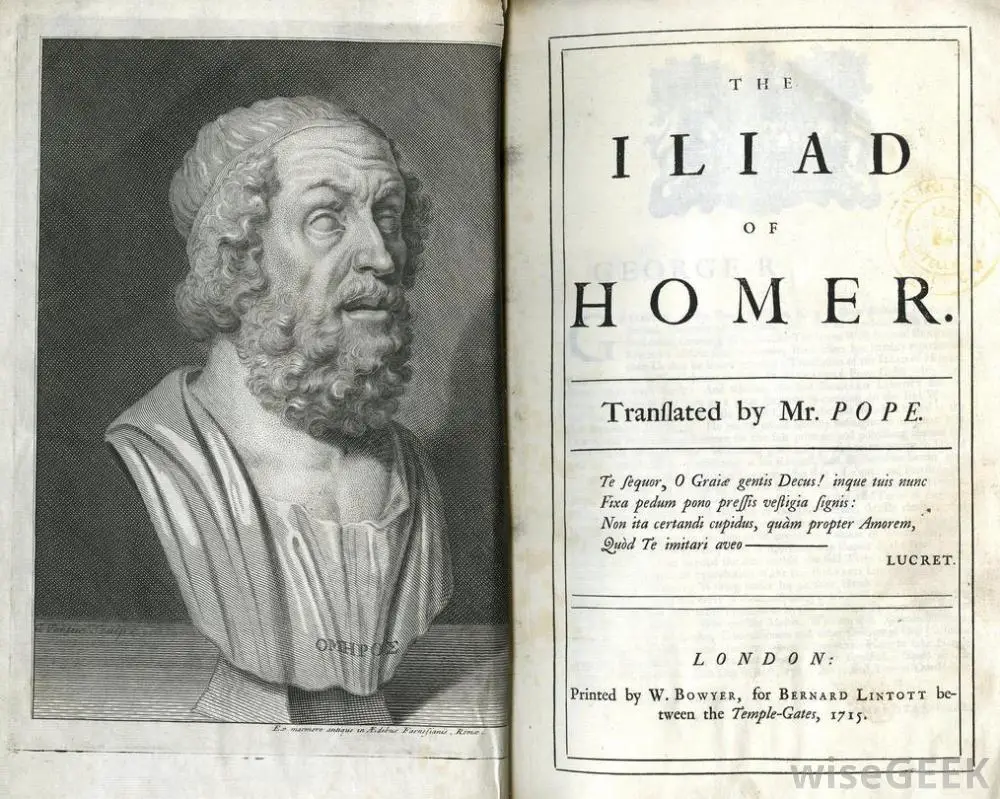
The 5th-century-BCE Greek historian Herodotus remarked that Homer and Hesiod gave to the Olympian gods their familiar characteristics. Few today would accept this literally. In the first book of the Iliad, the son of Zeus and Leto is as instantly identifiable to the Greek reader by his patronymic as are the sons of Atreus. In both cases, the audience is expected to have knowledge of the myths that preceded their literary rendering.
Sources of Myths: The works of Hesoid
he fullest and most important source of myths about the origin of the gods is the Theogony of Hesiod (c. 700 BCE). The elaborate genealogies mentioned above are accompanied by folktales and etiological myths. The Works and Days shares some of these in the context of a farmer’s calendar and an extensive harangue on the subject of justice addressed to Hesiod’s possibly fictitious brother Perses.The Theogony declares the identities and alliances of the gods, while the Works and Days gives advice on the best way to succeed in a dangerous world, and Hesiod urges that the most reliable—though by no means certain—way is to be just.
Sources of Myths: Archaeological Discoveries
The discovery of the Mycenaean civilization by Heinrich Schliemann, a 19th-century German amateur archaeologist, and the discovery of the Minoan civilization in Crete by Sir Arthur Evans, a 20th-century English archaeologist, are essential to the 21st-century understanding of the development of myth and ritual in the Greek world. Geometric designs on pottery of the 8th century BCE depict scenes from the Trojan cycle, as well as the adventures of Heracles. The extreme formality of the style, however, renders much of the identification difficult, and there is no inscriptional evidence accompanying the designs to assist scholars in identification and interpretation.
Forms of Myths: Religious Myths
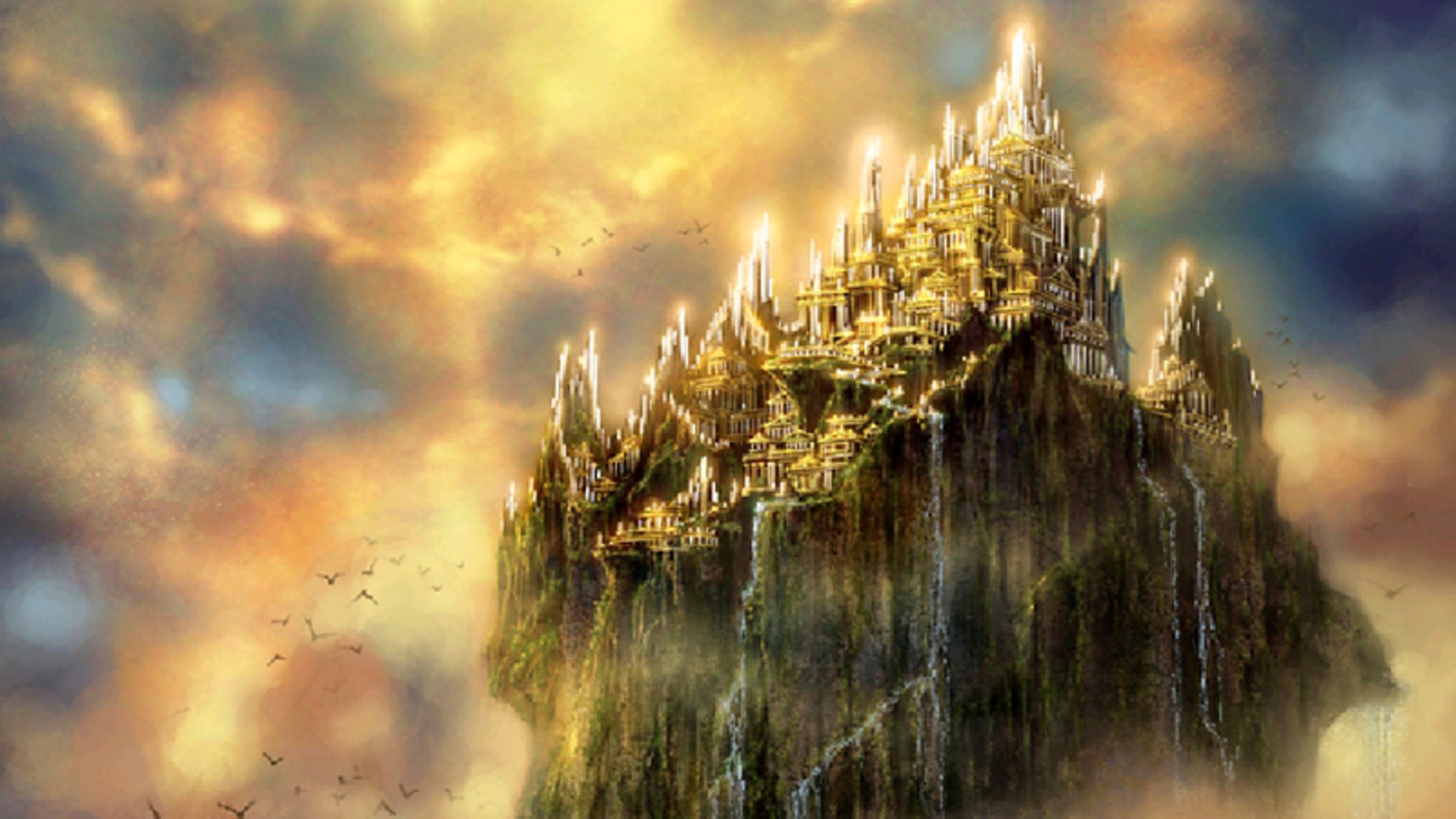
Olympus
Greek religious myths are concerned with gods or heroes in their more serious aspects or are connected with ritual. They include cosmogonical tales of the genesis of the gods and the world out of Chaos, the successions of divine rulers, and the internecine struggles that culminated in the supremacy of Zeus, the ruling god of Olympus (the mountain that was considered the home of the gods). They also include the long tale of Zeus’s amours with goddesses and mortal women, which usually resulted in the births of younger deities and heroes. Myths of Dionysus, on the other hand, demonstrate the hostility aroused by a novel faith. Some myths are closely associated with rituals, such as the account of the drowning of the infant Zeus’s cries by the Curetes, attendants of Zeus, clashing their weapons, or Hera’s annual restoration of her virginity by bathing in the spring Canathus.
Forms of Myths: Legends
Hercules fighting the Nemean Lion
Myths were viewed as embodying divine or timeless truths, whereas legends (or sagas) were quasi-historical. Hence, famous events in epics, such as the Trojan War, were generally regarded as having really happened, and heroes and heroines were believed to have actually lived. Earlier sagas, such as the voyage of the Argonauts, were accepted in a similar fashion. Most Greek legends were embellished with folktales and fiction, but some certainly contain a historical substratum. Such are the tales of more than one sack of Troy, which are supported by archaeological evidence, and the labors of Heracles, which might suggest Mycenaean feudalism. Again, the legend of the Minotaur (a being part human, part bull) could have arisen from exaggerated accounts of bull leaping in ancient Crete.
Forms of Myths: Folktales
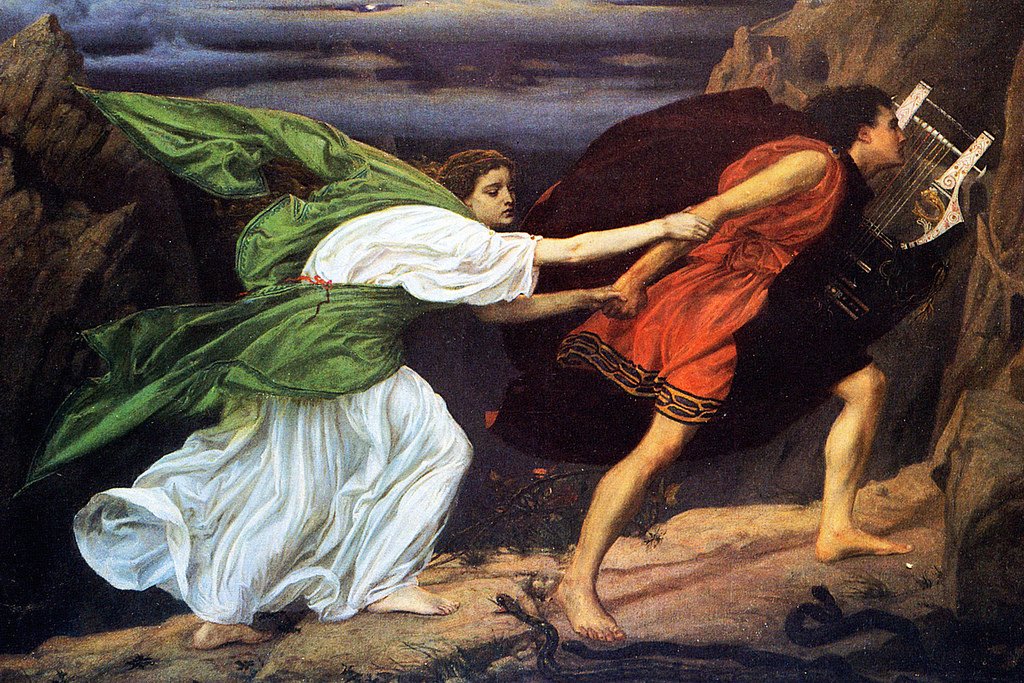
Folktales, consisting of popular recurring themes and told for amusement, inevitably found their way into Greek myth. Such is the theme of lost persons—whether husband, wife, or child —found or recovered after long and exciting adventures. Journeys to the land of the dead were made by Orpheus (a hero who went to Hades to restore his dead wife, Eurydice, to the realm of the living), Heracles, Odysseus, and Theseus (the slayer of the Minotaur). The victory of the little man by means of cunning against impossible odds, the exploits of the superman (e.g., Heracles), or the long-delayed victory over enemies are still as popular with modern writers as they were with the Greeks.
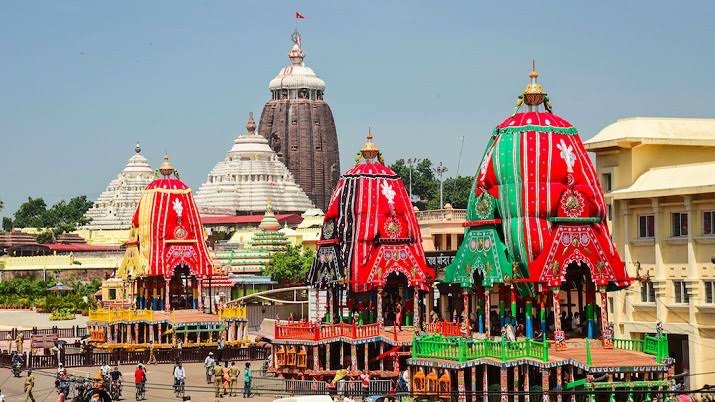
One of India’s biggest festivals, Rath Yatra begins today, July 12 and that is celebrated all across the world by millions of Indians. The festival has its primary significance in Indian states like Odisha, Jharkhand, West Bengal and Assam.
Picture Credits: India TV. Location: Puri Jagannath Temple.
As everyone has their eyes on Puri Jagannath Temple’s grand celebration for this festival, let us know some of the important facts about the temple.
1) Formation of Temple.
The temple was first built by the Ganga Dynasty ruler Anantavarman Chodaganga in 12 Century CE and was further developed by several other kings including that of the Ganga Dynasty as well as the Suryvamshi Dynasty.
2) Deities Worshipped
Lord Jagannath, Lord Balabhadra and Goddess Subhadra are worshipped inside the temple. The deities are adorned with different jewelleries and accessories according to different seasons.
3) Structure of the Temple.
The Temple has four distinct structures:
a) Deula, Vimana or Garba Griha where the triad deities are kept on the ratnavedi, the throne of pearls, in Deula Style.
b) Mukhashala, the frontal porch
c) Nata Mandir, Natamandapa which is known as Jagmohan, the audience hall or the dancing hall.
d) Bhoga Mandapa, the offerings hall.
The main temple is a curvilinear temple and crowning the top is the Srichakra, an eight spoked wheel of Lord Vishnu. It is also known as Nilachakra which is made out of Ashtdhatu and is considered sacrosanct.
4) The Food Offerings:
The food is offered to the Lord six times a day. The breakfast that is offered early morning is called Gopala Vallabha Bhog, the next offering at about 10 am is known as Sakala Bhog and another offering after some time is called the Sankhudi Bhoga which consists of Pakhala with curd and Kanji Payas.
The noon offering is known as Madhyanha Dhupa and that is followed by evening food at 8 pm known as Sandhya Dhupa. The last offering to Lord is called the Bada Simhara Bhoga.
5) Rosaighara- Temple’s Kitchen.
The temple’s kitchen is considered to be the largest in the world. About 56 varieties of food are produced which are purely vegetarian and prepared without the use of onions, garlic or chilies as prescribed by some Hindu Texts. Cooking is done only by using earthen pots with some water that comes from two nearby tube-wells known as Ganga and Yamuna. The most awaited food offering is known as Kotho Bhoga, offered during Mid-Day. After being offered to Lord Jagannath and other deities, the food is sold in a nearby market.
Jnanapana is a devotional Malayalam poem which directly translates to ‘song of wisdom’ or ‘the fountain of divine wisdom’. It is written by Poonthanam, a 16th century bhakti poet who lived in keezhattur in Kerala. He was an ardent devotee of Lord Vishnu, who is considered to be the preserver of life from the Hindu pantheon of gods. Poonthanam was particularly devoted to Vishnu in the form of ‘Guruvayurappa’ (the lord and the presiding deity of the Guruvayur Temple in Thrissur, Kerala.)
According to the legends, Poonthanam and his wife were devoid of any children even after years of trying. The couple was desperate for a child and prayed to the deity in Guruvayur to bless them with an offspring. The couple was elated when they were soon able to bear a boy child. But it so happened that on the day of the celebration of the child’s first birthday, an unfortunate accident occurred. The child had been accidentally buried under a pile of clothes put up by the guests who came to attend the child’s birthday celebrations. Tormented by grief upon the loss of their only child, Poonthanam sought refuge in the Guruvayur Temple to seek penance.
As the legend goes, it is said that Lord Vishnu himself appeared in front of the ardently praying devotee in the form of a young child and blessed the poet-saint with his divine godly graces. Since then, Poonthanam spent his life meditating in the halls of Guruvayur and was devoted to the god like a father to a son. Later, when he wrote Jnanapana, poonthanam says “When Lord Krishna himself dances in my heart, why do I need any other children…” That’s the intensity with which poonthanam adored Krishna and it’s a very powerful and touching statement.
Unlike the other contemporary poet-saints of his time who were well-versed in Sanskrit, Poonthanam wrote most of his poems in very simple verses of Malayalam. This is the reason why ‘Jnanapana’ became popular, as it was easily understandable to the common folks. In fact, when a fellow poet named Melpattur (Who is the author of the reputed devotional song ‘Narayaneeyam’) criticised him for the same, it is said that Krishna himself appeared before him and said “I prefer Poonthanam’s ‘bhakthi’ (devotion) over Melpattur’s ‘vibhakthi’ (scholarly knowledge/input).
Jnanappana is Poonthanam’s magnum opus with over 360 verses of lines. The poet, deeply touched by human beings’ sorry plight in this age of Kali (Kali Yuga), extols the virtues of Jnana (wisdom) and urges them to follow the path of Jnana and to forsake the transient and ephemeral aspects of worldly life through his poem. It is highly philosophical and inquires about the deeper meaning of life and human existence in this world. Yet, the localized language helped the common folks to sing and celebrate this ‘song of wisdom’ for generations to come.
Some of the most philosophical and thought-evoking lines from the poem is as follows:
If God wishes, the people we see now or are with us now, may disappear or be dead in the next moment. Or if HE wishes, in few days a healthy man may be paraded to his funeral pyre.
-Poonthanam
If God wishes, the king living in a palace (malika) today may lose everything and end up carrying a dirty bag on his shoulders and walk around homeless.
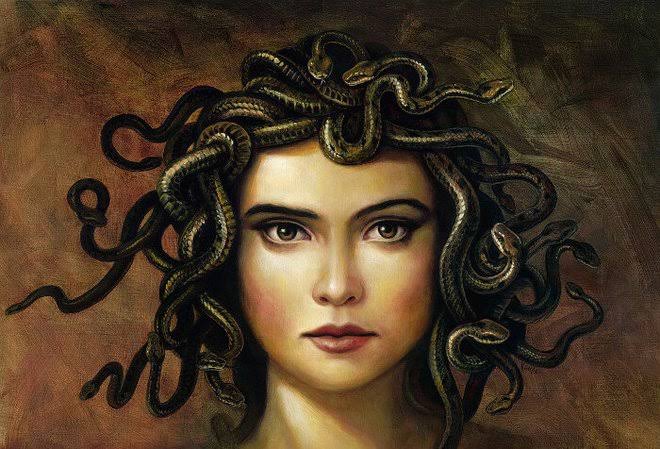
Since the days of early Western civilization, when myths were forged in fire and stone, society has been fascinated with the ancient Greek imagination. Tales of gods, Titans, and giants fill children’s fairy tales, while a variety of mythological monsters have captivated viewers on the big screen. No female character, however, is perhaps as popular as Medusa, the monster who could turn men to stone with a single glance.
Some versions of the story claim that Medusa went from being a beautiful woman into the famous monster, whose eyes sparkled with light that, when you looked at them, they turned you into stone. It was all due to Athena’s anger; she was a warrior goddess with the gifts of strategy, wisdom, and ability.
Medusa’s beauty dazzled Poseidon, who then seduced her. But when he saw that his interest was not reciprocated, the god of the sea attacked her and raped her inside a temple devoted to Athena, which awakened her anger. After that offense, Athena punished Medusa and turned her into a heartless monster, with snakes instead of hair, and gave her the curse of turning into stone whoever looked at her.
Medusa was exiled and sent to live in the hyperborean lands, where she discovered that she was pregnant after Poseidon’s attack. This situation fueled Athena’s anger, who immediately asked for Medusa to be killed.
Perseus, son of Zeus and the mortal Danae, was in charge of making Athena’s order come true. Wearing a pair of winged sandals given to him by Hermes and a bright shield, he waited for Medusa to fall asleep. With the help of his winged sandals, he hovered over Medusa and cut off her head. When Medusa was decapitated, the giant Crisaor and the winged horse Pegasus came out of her neck; they were the offspring that resulted from Poseidon’s rape.
Unlike other figures of Greek mythology, most of us know Medusa—even if we can’t recall the details of her myth. A quick character sketch might well include snakes, deadly eyes, and a taste for destruction.
The patriarchal tendency to punish the victim of rape rather than the perpetrator has, as we can see in the myth of Medusa, ancient origins.
One of the messages in the myth, the real story of Medusa, is her powerlessness as a woman. In neither her rape or its consequences does she have any agency. She has no choice but to submit to the hand of fate.
Medusa is silent in the myth.
She’s blamed for the sexual violence dispensed to her. There is no mention of her suffering, no discourse on her trauma. This reflects the true experience of many women forced to submit to sexual violence. Many women report feelings of self-hatred and self-blame after the experience of rape, and that they cannot, dare not, speak out against their aggressors.
What’s clear from the changing faces of Medusa is that there is no universal truth to her myth. Beautiful victim, monstrous villain, powerful deity—she’s all of those things, and more besides. Perhaps it’s that mercurial nature that makes her an endless source of fascination. She is, in a sense, a site for our collective projections of both fear and desire: simultaneously a symbol of women’s rage and a figure sexualized by the very patriarchal forces she is seeking vengeance against.
We see millions of dazzling flowers in our life. We recognise them by their colour, their fragrance and their appearance. But do we know the deep meaning behind them? Do we know what exactly the flower symbolises..?
Hindu Mythology
Mythologies make us see the world from a different perspective. From a different point of view. A rather interesting one . Mythologies make us see a simple flying bird from a different frame of reference. Similarly, in the Hindu mythology many flowers and many objects which we see in our daily lives have a greater meaning to it. One of them is the Parijata flower.
The Story
Once upon a time, there lived a princess named Parijaat. She was exquisitely beautiful and delicate. It is believed that she saw the Sun God( Surya Dev) riding in his chariot from east to west and immediately fell in love with him. Many warned her that the relationship of a God and a materialistic person is not possible, but she was blinded and completely devoted to the Sun God. Even the Sun God was swayed by her devotion and had to descend on the earth to stay with Parijaat for a while. Soon, the summer season arrived. With time, the Sun God’ s energy intensified due to staying on earth and yearned to go back to the heaven. When he stood up in his chariot, to return to heaven, Parijaat tried to follow him. The Sun God’s energy was excessive to its most at that time, and Parijaat being a human, burned due to such a force of energy. The Sun God stood helpless and asked help from the other gods. The Gods, seeing the love of Surya and Parijaat, gave princess Parijaat another life. Hence, she embodiments as a tree of Parijata
In her next life. The Parijata flower was of the purest shade of white,with the bright orange delicate stem like structure. The Parijata flower embellished the love of Parijaat and Surya. But even as a plant,it was affected by the Sunrays. It cannot even stand the first stroke of the Sun and therefore sheds, symbolising the story of Princess Parijaat and Surya. The shedding releases a heavenly scent of the flowers. It has the sweetest scent, because it was believed to be kissed by the Sun God himself.
By Rajatkanti Bera from Shutterstock
Parijata became one of the purest flowers.One of the five divine flowers in heaven. Later, during the time of Samudra Manthana,the gods found a Parijata flower, deep in the milk ocean. Indra declared to have it for himself in his own empire, the gods finally agreed after a lot of thinking. According to them, if Indra did not get the flower, either he would bring droughts in every land or flood every region heavily. Indra’s wife Indrani(Sachi) cherished the flower like her own child with love and affection.
After many years, Narada once visited Krsna and offered him a Parijata flower. He wanted to see who would Krsna give the flower , amongst his wives. Krsna gave the Parijata flower to his first wife, Rukmini. Narada immediately goes to Satyabhama, the second wife of Krsna with a grieved face. Upon Satyabhama asking what the problem was, Narada said about the Parijata flower. Now, Satyabhama ,being a human became furious with jealousy. When Krsna arrived and asked the reason about her anger, she demanded Krsna to give her not the flower but the whole tree of Parijata.
Hence, Lord Krsna set out to the empire of Indra, who was believed to be residing in Amravati. As Lord Krsna worked to root up the tree,the king of Gods, Indra arrived at the place. In some scriptures, it is said that , Indra being intoxicated, challenged Krsna for a combat and was defeated in the most humiliating way,whereas in some scriptures, Indra, understanding that it was Lord Krsna who came to take the tree, allowed him to take the the Parijata. In this way, the Parijata flower descends to the earth. Hence,it is still believed to be the flower which incarnated from heaven.
Not only this, but Parijata leaves also have many medicinal properties! According to indiagardening.com, the Parijata leaves have the properties like,
The leaves having an anti aging property and is often used by people
Helps in the curing of fever, with being anti- malarial.
Usually considered beneficial for dry cough.
The leaves are meant to be good for diseases like Arthritis.
It is also a natural laxative
Source: Pinterest
Parijata leaves have so many more medicinal properties in the branch of Ayurveda.The flowers? Well, as the flowers taste a bit bitter, it is used for ophthalmic disease. It is also said to be very useful for constipation in children. And also for the various treatments like snakebites, antidotes, etc.
Many flowers have deep and philosophical meaning behind them. Which is why mythologies are read. So that we know we should not repeat what happened in the Deut Sabha in Mahabharata. And what happens in the Trojan War.
Fact: Parijata flower is the only flower which can still be offered to the gods after falling to the ground.
Some stories are at the heart of Indian history. The mythological stories of Mahabharata are one of these. This epic of Maharishi Ved Vyasa was written by Lord Shri Ganesh.
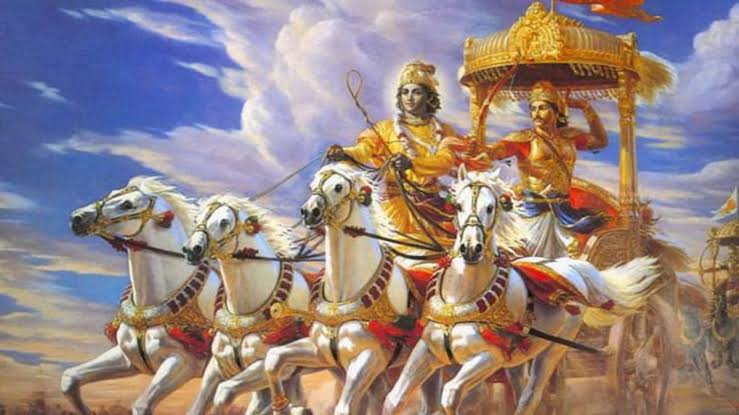
The characters in these amazing stories of the epic have many amazing powers. Even Narayana himself, through his wisdom, diplomacy and deceit, had led the right Pandavas to victory in this great war of Mahabharata.
Mahabharata war has a great aspect of the number 18. There are 18 chapters in this epic. Lord Krishna gave the knowledge of Gita to Arjuna for a total of 18 days. The Mahabharata war lasted for 18 days. The Gita also has 18 chapters. Army of the Kauravas and the Pandavas had a total number of 18 Akshohini army of which 11 belongs to Kauravas and 7 to Pandavas were Akshohini army. The main initiators of this war was also 18. Also only a number of 18 warriors survived in this war.
Some such skeletons were found in Mohenjo daro which had the effect of radiation. In Mahabharata, the results of Brahmastra were given from the chapter number 13 to 15 of the Saptik festival. Historians believe that the Brahmastra left 5561 BC was the atomic bomb.
There were no zodiac signs during Mahabharata. Astrology at that time was totally based on 27 constellations, not on 12 zodiac signs. In the constellations,not Ashwini but Rohini was the first place. Various civilizations experimented in astrology and created zodiac signs based on the moon and the sun and began to predict the future of the people, while in the Vedas and the Mahabharata there is no mention of such learning to show that the planetary constellation would make a person’s life They affect.
The Mahabharata is written by Ved Vyasa. Actually, Ved Vyas was not a name, but a title, which was given to people with knowledge of Vedas. There were a number of 27 Ved Vyas before Krishnadvapayana and he was himself the 28 Ved Vyas. He was named Krishnadvapayan because he was born as a dynasty and was born on an island.
Ghatotkacha, son of Bhima and Nagakanya Ahilavati had a son named ‘Barbarika’. At some places, it is also said that he was born from the stomach of Murmant’s daughter ‘Kamakantakata’. When the war of Mahabharata was decided, Barbarik also expressed his desire to join the war and promised his mother to support the loser. Barbarik rode his blue horse with three arrows and a bow to the battlefield of Kurukshetra.
Three arrows were enough for Barbarik, on whose strength he could destroy the entire army of Kauravas and Pandavas. Knowing this, Lord Krishna appeared in front of him in the form of a Brahmin and asked him to trick Barbareek into charity.
Barbarik prayed to Krishna that he wanted to see war till the end, then Krishna accepted his statement. He donated his head to the Dwadashi of Falgun Mas. Lord Krishna watered that head with nectar and placed it on a hill near the battlefield, from where Barbarik could see the entire Mahabharata war.
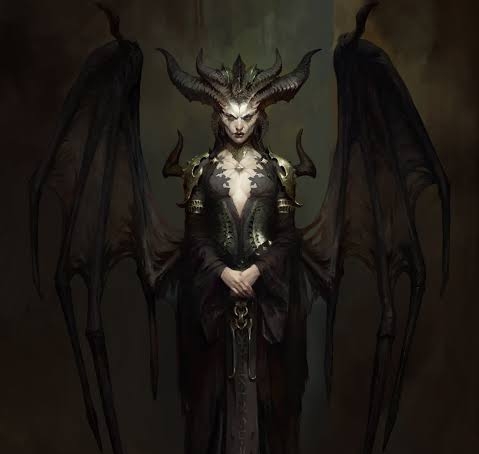
We all are well known with the tale of Adam and Eve. The first man and woman, however a very less among us are aware of the belief that Eve wasn’t the first woman. It was someone else. According to legend, Lilith was Adam’s first wife. Exiled from Eden for her refusal to submit to him, she was known for centuries as a baby-snatching demon. But contemporary feminists and religious scholars insist there’s more to the story.
Lilith has a curious and complicated history, even as spiritual beings go. If you search her name today, you’ll come up with hundreds of images of scantily clad demon women. She’s been a subject of debate for centuries, and of appreciation and homage in recent years.
The Tale relates that God created Lilith from the earth, just as he had created Adam. When the first man, Adam, saw that he was alone, God made for him a woman like himself, from the earth.God called her name Lilith, and brought her to Adam. They immediately began to quarrel. Adam said: “You lie beneath me.” And Lilith said: “You lie beneath me! We are both equal, for both of us are from the earth.” And they would not listen to one another. As soon as Lilith saw this, she uttered the Divine name and flew up into the air and fled. So, God sent three angels to bring Lilith back, but Lilith didn’t return.
The Lilith of this story confronts both Adam and God: she defies patriarchy, refuses a submissive status,and in the end refuses marriage altogether, preferring to become a demon rather than live under Adam’s authority. Some believe that Lilith was a demon who used to steal children’s souls at night, which she does out of envy for not being able to birth her own child. All she could birth according to history, are were demons.
However in the modern period, the tale of the put-upon wife who flees to a place of liberation became a celebrated paradigm. Numerous modern Jewish poets and authors, female and male, wrote accounts of Lilith that use old stories to express new ideas. Modern feminists celebrate her bold struggle for independence from Adam. Her name appears as the title of a Jewish women’s magazine and a national literacy program. An annual music festival that donates its profits to battered women’s shelters and breast cancer research institutes is called the Lilith Fair.
In 1976, Lilith Magazine was launched, proudly billing itself as “Independent, Jewish & Frankly Feminist”. In its first issue, Jewish feminist and activist Aviva Cantor Zuckoff wrote an op-ed explaining why a modern magazine would name itself after an ancient demon. “Lilith is a powerful female… By acknowledging Lilith’s revolt and even in telling of her vengeful activities, myth-makers also acknowledge Lilith’s power,” she said. “Even if we accept Lilith’s vengeful activities… we can regard them as having originated in self-defense against male domination and as a consequence of having to fight on alone, century after century, for her independence.
If the first male had only agreed to serve under the first female half of the time (that is all she asked of him) Lilith would have been Eve and the history would have been completely different than what it actually is.
The tale of Hades and Persephone is actually the way of the ancient Greeks to explain the change of the seasons, the eternal cycle of the Nature’s death and rebirth. According to Greek Mythology, Persephone, the queen of the underworld, was the daughter of Zeus and Demeter, the goddess of harvest and fertility.
The myth begins with Aphrodite (Venus) the goddess of love looking down from Olympus. Aphrodite was apparently a wee bit concerned about the mother/daughter relationship of Demeter and Persephone. Among other reasons, Aphrodite was reportedly concerned because there was no man involved in the picture so she sent Eros (The Cupid, love God) to strike the dark powerful god of the underworld, Hades, with an arrow of love and desire for Persephone.
Then one day Persephone was picking flowers and saw an incredibly beautiful one she wanted. She went to pick it, and as she did, a crack in the earth opened and Hades came out in his chariot and grabbed her. He put her in the chariot and drove into the Underworld while Persephone called out for her mother and father.
Hades and Persephone lived in the underworld while Demeter started searching everywhere. Demeter was extremely distraught by the loss of her daughter, so distraught and angry that she decided to take drastic action. Demeter decided to take away her life-sustaining gifts and command the earth die and mold until someone brought Persephone back or told her where Persephone was. The cries of the people who were suffering reached Olympus and the divine ears of Zeus. The mighty god finally realized that if he wouldn’t do something about Demeter’s wrath, all humanity would disappear. Thus he tried to find another solution to both calm Demeter and please Hades.
However when Persephone was in the underworld with Hades, he gifted her with six pomegranate seeds to eat, and she did. In Greek mythology, it was believed that if one ate food given to them by their captor, they would always return. Zeus decided that Persephone would split her time between her mother and her husband. Since she ate six pomegranate seeds, Persephone would spend half the year with her mother at Olympus and the other half with Hades.
The changing seasons :
Many believe that the Demeter and Persephone story explains the seasons of the year. During the time that Persephone spends away from her mother, Demeter causes the earth to wither and die. This time of the year became autumn and winter.
Persephone’s arrival to be reunited with her mother signals a renewal of hope causing Summer and Spring. It represents the rebirth of untold splendor and abundance. The earth once again becomes fertile and fruitful.
In many ancient versions of this myth – Persephone was actually quite happy and satisfied to be with Hades. And together they conceived a child.
Ancient Egyptian Society had many different deities which were an important part of the people’s belief system. There were about 2000 deities in the Egyptian pantheon which were an integral part of the culture. The most famous gods were considered as State Deities while others were a part of the rituals of a specific region. Some of the most popular Deities are – Isis, Osiris, Horus, Ra, Bastet, Set, Nephthys, Anubis.
Isis
Isis was the goddess of magic and was a clever and ambitious woman. She was the wife of Osiris and the patron of magicians. She loved her husband very much and encouraged their son to take vengeance on the evil god Set who had Osiris. She is shown as a beautiful woman with colourful wings.
Osiris
Osiris was a wise and good pharaoh and the husband of Isis. He taught men about farming and is said to have built the first cities of Egypt. His brother Set tricked him into getting inside a coffin and made it into pieces and then hid the pieces all over Egypt. Isis spent years searching for him and eventually put all the pieces together when he partially came back to life. He was the god of the underworld and he sat in judgement over the souls of the dead.
Horus
Horus was called as the Avenger and the son of Isis and Osiris. When he grew up, he defeated Set and became the new pharaoh of Egypt. All mortal pharaohs are considered as descendants of him. Falcon is his symbol and he is often pictured as the man with a falcon’s head.
Ra
Ra was the first pharaoh of the world and the God of the Sun. The Egyptians celebrated as Ra would emerge victoriously after sailing the golden sun ship across the sky. After many centuries Ra became old and went back to the heaven after giving his throne to Osiris.
Bastet
Bastet was the goddess of cats and extremely popular in Egypt. She was a protective goddess and people used to wear amulets with her likeness for good luck. She is pictured as a cat fighting with a knife with the serpent Apep. She was the faithful cat of Ra.
Set
He was the god of desert, storms and evil. He is very tricky and the strongest of all the gods. He became the pharaoh after killing his brother Osiris and was later defeated by his nephew Horus. After that he fled into the desert and controlled the harsh lands outside of the Nile valley. In his old age he spent his days sailing Ra’s boat and defending her from the armies of the serpent Apep. He is pictured as a red skinned god with the head of an unknown animal demon.
Nephthys
Nephthys is the kind and gentle river goddess. She is the wife of Set and the sister of Isis. She didn’t like Set and helped Isis to find the pieces of Osiris and put him together. Her son was Anubis.
Anubis
Anubis is the god of funerals and the most important god. He helped Isis make Osiris into the first mummy. He is pictured as a man with a jackal’s head.







 Eduindex
You must be logged in to post a comment.