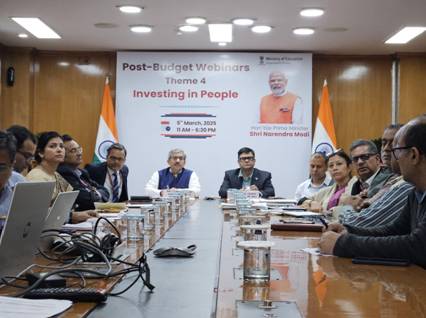
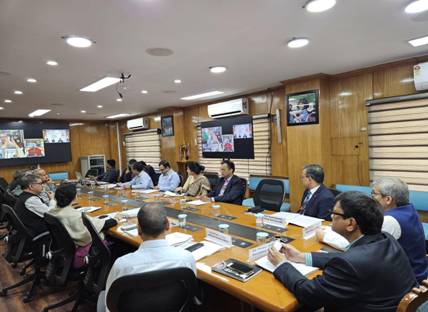
Ministry of Education organised Post Budget Webinar on the theme ‘Investing in People’, today. The Prime Minister Shri Narendra Modi delivered a special address at the inaugural session. Union Education Minister Shri Dharmendra Pradhan along with Secretary, Department of School Education & Literacy (DoSEL), Shri Sanjay Kumar; UGC Chairman Professor M. Jagadesh Kumar ; Secretary, Dept. of Higher Education, Shri Vineet Joshi; Secretary, Ministry of Health and Family Welfare Smt. Punya Salila Srivastava; Secretary Labour & Employment Ms. Sumita Dawra participated in the session.
The webinar brought together experts from the government, industry, and academia to discuss key reforms in job creation, academic flexibility, credit mobility, and future-ready skills—paving the way for a highly skilled and globally competitive workforce in line with Viksit Bharat 2047.
Speaking about the webinar, Shri Pradhan said that investment is one of the engines outlined in the Union Budget 2025-2026 which will turbocharge our journey to Viksit Bharat by 2047. He further said that the insightful special address by the Prime Minister Shri Narendra Modi has put forth new ideas for realising aspirations, future-proofing our population, accelerating inclusive development and ensuring benefits of Union Budget reaches every citizen of the country.
He expressed his gratitude to the Prime Minister for drawing attention to the vast potential of ‘Education Tourism’ and its key role in facilitating employment-linked growth and development. The Minister assured that the academic community will engage in comprehensive deliberations to chart out a strong roadmap for moving ahead in this direction. He further said that, together, with the spirit of jan-bhagidari and right investment in right direction, academia and industry will work together for bridging skills gap, harnessing demographic dividend, leveraging AI in education, catalysing research landscape and strengthening deep-tech start-up ecosystem for a future-ready workforce, stronger economy and Viksit Bharat.
Prof M. Jagadesh Kumar opened the session by emphasizing the transformative role of higher education. He highlighted that the implementation of NEP 2020 provided a unique opportunity to reshape India’s higher education landscape. During the webinar, Prof M. Jagadesh Kumar, Chairman, UGC stated that the policy was not merely reformative but transformative, designed to empower youth with the skills, knowledge, and adaptability required to thrive in the 21st century. He stressed that investing in people through quality education, research, and innovation was central to building a self-reliant, inclusive, and globally competitive economy.
Shri Sanjay Kumar stated that education is fundamentally about investing in people. He acknowledged the broad perspective provided by the UGC Chairman on higher education and noted that the 2025-26 Budget included key announcements regarding the establishment of 50,000 Atal Tinkering Labs in government schools over the next five years and the provision of broadband internet connectivity to government schools in rural areas. He further highlighted a significant trend observed over the last decade, noting that the proportion of female teachers has increased. He mentioned that in 2014-15, male teachers comprised 52 percent of the total, while female teachers accounted for 48 percent. By 2025, these figures have reversed, with female teachers now making up 52 percent and male teachers 48 percent, reflecting a move towards greater gender parity in the education sector.
The discussions reinforced the need for strategic investments in human capital to ensure sustainable economic growth, social equity, and global leadership. The government remained committed to fostering a skilled workforce, ensuring India’s continued rise as an innovation and technology hub.
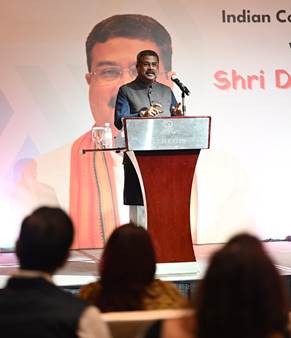
Prime Minister’s address the Post-Budget Webinar on boosting job creation- Investing in People, Economy, and Innovation
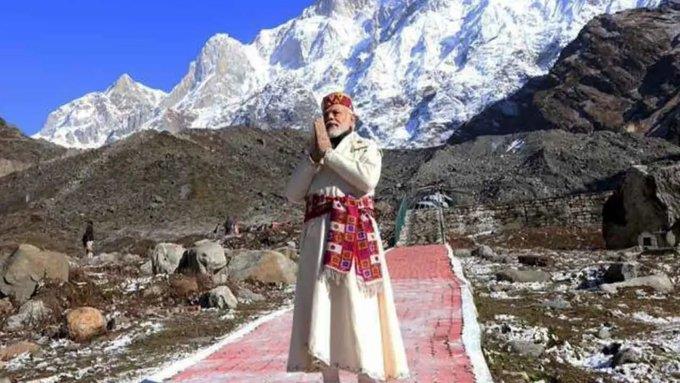
The Prime Minister Shri Narendra Modi participated in the Winter Tourism Program after flagging off a trek and bike rally at Harsil, Uttarakhand. He also performed pooja and darshan at the winter seat of Maa Ganga in Mukhwa. Addressing the gathering, he expressed his deep sorrow over the tragic incident in Mana village and extended his condolences to the families of those who lost their lives in the accident. He said the people of the nation stand in solidarity during this time of crisis, which has provided immense strength to the affected families.
“The land of Uttarakhand, known as Devbhoomi, is imbued with spiritual energy and blessed by the Char Dham and countless other sacred sites”, said the Prime Minister, highlighting that this region serves as the winter abode of the life-giving Maa Ganga. He expressed his gratitude for the opportunity to visit again and meet the people and their families, calling it a blessing. He emphasized that it is by Maa Ganga’s grace that he had the privilege of serving Uttarakhand for decades. “Maa Ganga’s blessings guided me to Kashi, where I now serve as a Member of Parliament”, said Shri Modi, recalling his statement in Kashi that Maa Ganga had called him and shared his recent realization that Maa Ganga has now embraced him as her own. The Prime Minister described this as Maa Ganga’s affection and love for her child, which brought him to her maternal home in Mukhwa village and had the honor of performing darshan and puja at Mukhimath-Mukhwa. Remarking on his visit to the land of Harsil, expressing his fond memories of the affection shown by the local women, whom he referred to as “Didi-Bhuliyas”, Shri Modi highlighted their thoughtful gestures of sending him Harsil’s rajma and other local products. He expressed his gratitude for their warmth, connection, and gifts.
The Prime Minister recalled his visit to Baba Kedarnath, where he had declared that, “this decade would be the decade of Uttarakhand”. He remarked that the strength behind those words came from Baba Kedarnath himself and highlighted that, with Baba Kedarnath’s blessings, this vision is gradually becoming a reality. Emphasizing that new avenues for Uttarakhand’s progress are opening up, fulfilling the aspirations that led to the state’s formation, Shri Modi noted that the commitments made for Uttarakhand’s development are being realized through continuous achievements and new milestones. He added, “winter tourism is a significant step in this direction, aiding in harnessing Uttarakhand’s economic potential” and congratulated the Uttarakhand government for this innovative effort and extended his best wishes for the state’s progress.
“Diversifying and making the tourism sector a year-round activity is important and necessary for Uttarakhand”, said the Prime Minister, remarking that there should be no “off-season” in Uttarakhand, and tourism should thrive in every season. He mentioned that currently, tourism in the hills is seasonal, with a significant influx of tourists during March, April, May, and June. However, he added that the number of tourists drops drastically afterward, leaving most hotels, resorts, and homestays vacant during winters. He pointed out that this imbalance leads to economic stagnation for a large part of the year in Uttarakhand and also poses challenges to the environment.
“Visiting Uttarakhand during winters offers a true glimpse of the divine aura of Devbhoomi”, said Shri Modi, highlighting the thrill of activities like trekking and skiing that winter tourism in the region provides. He stressed that winters hold special significance for religious journeys in Uttarakhand, with many sacred sites hosting unique rituals during this time. He pointed out the religious ceremonies in Mukhwa village as an integral part of the region’s ancient and remarkable traditions. The Prime Minister noted that the Uttarakhand government’s vision for year-round tourism will provide people with opportunities to connect with divine experiences. He underlined that this initiative will create year-round employment opportunities, significantly benefiting the local population and the youth of Uttarakhand.
“Our governments at Center and state are working together to make Uttarakhand a developed state”, said the Prime Minister, remarking on the significant progress achieved in the past decade, including the Char Dham All-Weather Road, modern expressways, and the expansion of railways, air, and helicopter services in the state. He also mentioned that the Union Cabinet had recently approved the Kedarnath Ropeway Project and the Hemkund Ropeway Project. He noted that the Kedarnath Ropeway will reduce the travel time from 8-9 hours to approximately 30 minutes, making the journey more accessible, especially for the elderly and children. Shri Modi emphasized that thousands of crores of rupees will be invested in these ropeway projects. He extended his congratulations to Uttarakhand and the entire nation for these transformative initiatives.
Underlining the focus on developing eco-log huts, convention centers, and helipad infrastructure in the hills, Shri Modi said, “tourism infrastructure is being newly developed in locations such as Timmer-Sain Mahadev, Mana village, and Jadung village”. He added that the Government has worked to ensure the erstwhile emptied villages of Mana and Jadung in 1962, have been restored. He noted that as a result, the number of tourists visiting Uttarakhand has increased significantly over the past decade. He shared that before 2014, an average of 18 lakh pilgrims visited the Char Dham Yatra annually, which has now risen to approximately 50 lakh pilgrims each year. The Prime Minister announced that this year’s budget includes provisions to develop 50 tourist destinations, granting hotels at these locations the status of infrastructure. He emphasized that this initiative will enhance facilities for tourists and promote local employment opportunities.
Emphasising the Government’s efforts to ensure that border areas of Uttarakhand also benefit from tourism, the Prime Minister said, “villages once referred to as the “last villages” are now being called the “first villages” of the country”. He highlighted the launch of the Vibrant Village Program for their development, under which 10 villages from this region have been included. He noted that efforts have begun to resettle Nelong and Jadung villages and mentioned the flagging off of a bike rally to Jadung from the event earlier. He also declared that those building homestays will be provided benefits under the Mudra Yojana. Shri Modi appreciated the Uttarakhand government’s focus on promoting homestays in the state. He highlighted that villages deprived of infrastructure for decades are now witnessing the opening of new homestays, which is boosting tourism and increasing the income of local residents.
Making a special appeal to people from all corners of the country, particularly the youth, Shri Modi highlighted that while much of the country experiences fog during winters, the hills offer the joy of basking in sunlight, which can be turned into a unique event. He suggested the concept of “Gham Tapo Tourism” in Garhwali, encouraging people from across the country to visit Uttarakhand during winters. He specifically urged the corporate world to participate in winter tourism by organizing meetings, conferences, and exhibitions in the region, emphasizing the vast potential of the MICE sector in Devbhoomi Uttarakhand. The Prime Minister remarked that Uttarakhand provides opportunities for visitors to recharge and re-energize through yoga and Ayurveda. He also appealed to universities, private schools, and colleges to consider Uttarakhand for students’ winter trips.
Pointing out the significant contribution of the wedding economy, worth thousands of crores, the Prime Minister reiterated his appeal to the people of the country to “Wed in India” and encouraged prioritizing Uttarakhand as a destination for winter weddings. He also expressed his expectations from the Indian film industry, noting that Uttarakhand has been awarded the title of the “Most Film-Friendly State.” He emphasized the rapid development of modern facilities in the region, making Uttarakhand an ideal destination for film shootings during winters.
Shri Modi underscored the popularity of winter tourism in several countries and emphasized that Uttarakhand can learn from their experiences to promote its own winter tourism. He urged all stakeholders in Uttarakhand’s tourism sector, including hotels and resorts, to study these countries’ models. He called on the Uttarakhand government to actively implement actionable points derived from such studies. He stressed the need to promote local traditions, music, dance, and cuisine. The Prime Minister remarked that Uttarakhand’s hot springs can be developed into wellness spas, and serene, snow-covered areas can host winter yoga retreats, urging the Yoga gurus to arrange a yoga camp in Uttarakhand annually. He also suggested organizing special wildlife safaris during the winter season to establish a unique identity for Uttarakhand. He emphasized adopting a 360-degree approach and working at every level to achieve these goals.
The Prime Minister emphasized that alongside developing facilities, spreading awareness is equally important and appealed to the country’s young content creators to play a vital role in promoting Uttarakhand’s winter tourism initiative. Mentioning the significant contribution of content creators in boosting the tourism sector, Shri Modi urged them to explore new destinations in Uttarakhand and share their experiences with the public. He suggested the State Government to organize a competition of making short films by content creators to promote tourism in Uttarakhand. He concluded by expressing confidence that the sector will witness rapid growth in the coming years and congratulated Uttarakhand for its year-round tourism campaign.
The Chief Minister of Uttarakhand, Shri Pushkar Singh Dhami, Union Minister of State for Road Transport and Highways, Shri Ajay Tamta were present among other dignitaries at the event.
Background
The Uttarakhand government has initiated a Winter Tourism programme this year. Thousands of devotees have already visited the winter seats of Gangotri, Yamunotri, Kedarnath, and Badrinath. The programme is aimed to promote religious tourism and boost the local economy, homestays, tourism businesses, among others.
Ministry of Education organised Post Budget Webinar on the theme ‘Investing in People’, today. The Prime Minister Shri Narendra Modi delivered a special address at the inaugural session. Union Education Minister Shri Dharmendra Pradhan along with Secretary, Department of School Education & Literacy (DoSEL), Shri Sanjay Kumar; UGC Chairman Professor M. Jagadesh Kumar ; Secretary, Dept. of Higher Education, Shri Vineet Joshi; Secretary, Ministry of Health and Family Welfare Smt. Punya Salila Srivastava; Secretary Labour & Employment Ms. Sumita Dawra participated in the session.
The webinar brought together experts from the government, industry, and academia to discuss key reforms in job creation, academic flexibility, credit mobility, and future-ready skills—paving the way for a highly skilled and globally competitive workforce in line with Viksit Bharat 2047.
Speaking about the webinar, Shri Pradhan said that investment is one of the engines outlined in the Union Budget 2025-2026 which will turbocharge our journey to Viksit Bharat by 2047. He further said that the insightful special address by the Prime Minister Shri Narendra Modi has put forth new ideas for realising aspirations, future-proofing our population, accelerating inclusive development and ensuring benefits of Union Budget reaches every citizen of the country.
He expressed his gratitude to the Prime Minister for drawing attention to the vast potential of ‘Education Tourism’ and its key role in facilitating employment-linked growth and development. The Minister assured that the academic community will engage in comprehensive deliberations to chart out a strong roadmap for moving ahead in this direction. He further said that, together, with the spirit of jan-bhagidari and right investment in right direction, academia and industry will work together for bridging skills gap, harnessing demographic dividend, leveraging AI in education, catalysing research landscape and strengthening deep-tech start-up ecosystem for a future-ready workforce, stronger economy and Viksit Bharat.
Prof M. Jagadesh Kumar opened the session by emphasizing the transformative role of higher education. He highlighted that the implementation of NEP 2020 provided a unique opportunity to reshape India’s higher education landscape. During the webinar, Prof M. Jagadesh Kumar, Chairman, UGC stated that the policy was not merely reformative but transformative, designed to empower youth with the skills, knowledge, and adaptability required to thrive in the 21st century. He stressed that investing in people through quality education, research, and innovation was central to building a self-reliant, inclusive, and globally competitive economy.
Shri Sanjay Kumar stated that education is fundamentally about investing in people. He acknowledged the broad perspective provided by the UGC Chairman on higher education and noted that the 2025-26 Budget included key announcements regarding the establishment of 50,000 Atal Tinkering Labs in government schools over the next five years and the provision of broadband internet connectivity to government schools in rural areas. He further highlighted a significant trend observed over the last decade, noting that the proportion of female teachers has increased. He mentioned that in 2014-15, male teachers comprised 52 percent of the total, while female teachers accounted for 48 percent. By 2025, these figures have reversed, with female teachers now making up 52 percent and male teachers 48 percent, reflecting a move towards greater gender parity in the education sector.
The discussions reinforced the need for strategic investments in human capital to ensure sustainable economic growth, social equity, and global leadership. The government remained committed to fostering a skilled workforce, ensuring India’s continued rise as an innovation and technology hub.
Prime Minister’s address the Post-Budget Webinar on boosting job creation- Investing in People, Economy, and Innovation
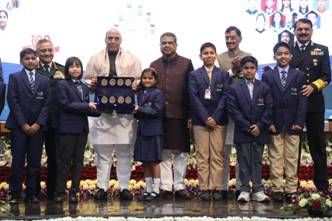
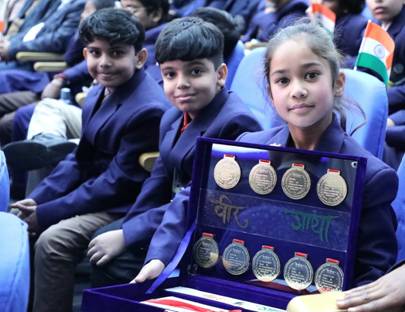
RakshaMantri Shri Rajnath Singh and Minister for Education Shri Dharmendra Pradhan felicitated the Super-100 winners of Veer Gatha 4.0 in New Delhi on January 25, 2025. Among the 100 winners, 66 are girls from different parts of the country. During the felicitation ceremony, each winner was presented with a cash prize of Rs. 10,000, a medal and a certificate. These Super-100 are among the approx. 10,000 Special Guests, who will be witnessing the Republic Day Parade at Kartavya Path on January 26, 2025.
In his address, RakshaMantri congratulated the winners and appreciated the joint efforts of Ministry of Defence and Ministry of Education towards achieving Veer Gatha’s objective of connecting the youth with the glorious history of the country’s bravehearts. He acknowledged the pan-India participation of over 1.76 crore students in this fourth edition of the Project, stating that it is providing recognition to the bravehearts through education. He commended the intelligence, enthusiasm and patriotism of the students who participated in the competition.
Expressing delight over the fact that 2/3rd of the Super-100 winners of Veer Gatha 4.0 are girls, Shri Rajnath Singh made special mention of a Class 10 student named ‘Nemneineng’ from Manipur, who had lost her parents when she was a child. RakshaMantri commended her perseverance for not giving up her studies despite numerous difficulties and securing a place among the winners.
Explaining the true meaning of a ‘hero’ to the students present on the occasion, RakshaMantri asserted that a hero works for the upliftment of the nation; whose work gives a new direction to the society. He added that the youth are future heroes of India and they will play a major role in making India ‘Viksit Bharat’ by 2047, as envisioned by the Government, led by Prime Minister Shri Narendra Modi.
“India’s stature has grown on the global stage due to the Prime Minister’s dynamic leadership. Today, when we speak on any international forum, the whole world listens. This has been made possible due to the hard work of every Indian, including our brave soldiers, scientists and young ignited minds. We have a major young population of about 50 crore youth. How can a country with such creative minds not develop?,” Shri Rajnath Singh asked the students.
RakshaMantri exhorted them to continue taking inspiration from bravehearts such as freedom fighters Bhagat Singh, Chandrashekhar Azad, Ashfaqulla Khan and courageous soldiers, whose bravery and sacrifice will never be forgotten. He termed the sense of national pride as the most crucial aspect for the development of any country.
Shri Rajnath Singh encouraged students to not feel afraid in the face of challenges and continue moving forward towards their goals with confidence & good intent. He urged them to never allow the feeling of ego creep into their hearts, even when they touch greater heights. Always remaining polite and modest is the key, he said.
Speaking on the occasion, Minister for Education Shri Dharmendra Pradhan emphasised that initiatives like Veer Gatha educate school students about the valour and sacrifices of the brave gallantry award winners while nurturing the creativity of young minds. He highlighted the record-breaking participation of 1.76 crore students from over 2.5 lakh schools who engaged in activities such as drawing, painting, and essay writing, paying heartfelt tributes to the heroes for their immense service and sacrifice to the nation.
The Minister of Education also noted that this initiative would help instil values of patriotism, grit, and national pride, inspiring students to contribute to the nation’s progress. Congratulating every student who participated with enthusiasm and respect for the gallantry award winners, he lauded the Super-100 awardees for their success. Wishing them a bright future, he remarked that their enthusiasm and creativity would serve them well in life.
During the event, ParamVir Chakra Awardee Subedar Major Sanjay Kumar shared his inspiring experience from the 1999 Kargil War, urging students to embody the values of bravery, selflessness and integrity in their lives. “True bravery lies not only in combat but in standing up for what is right in everyday life,” he said, inspiring the young participants.
RakshaRajyaMantri Shri Sanjay Seth, Chief of Defence Staff General Anil Chauhan, Chief of the Naval Staff Admiral Dinesh K Tripathi, Chief of the Air Staff Air Chief Marshal AP Singh, Secretary, Department of School Education & Literacy Shri Sanjay Kumar, Secretary (Defence Production) Shri Sanjeev Kumar, Secretary, Department of Defence R&D and Chairman DRDO Dr Samir V Kamat, Vice Chief of the Army Staff Lt Gen NS Raja Subramani and other senior officials attended the event.
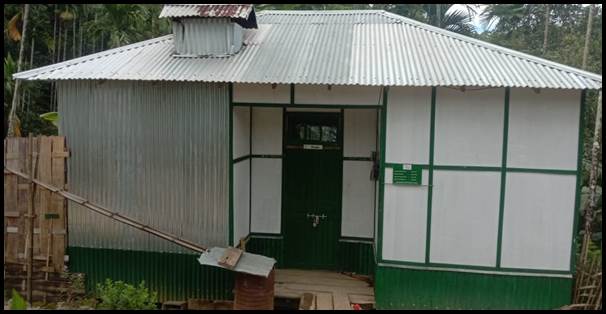
In the small village of ‘Rotlang W’ in Mizoram,’ Nondo’s family faced a constant battle for survival. As a daily wage laborer, Nondo worked tirelessly to feed his wife and five children. Yet, no amount of effort could change the harsh reality of their living conditions. Their dilapidated kutcha house, with its leaky roof and crumbling walls, offered little protection against the elements.
During the monsoons, water seeped through the roof, soaking their clothes and bedding. Winters were unbearably cold, with biting winds finding their way through the fragile structure. The family’s health and peace of mind suffered with every cold night made us worry if our house would hold up.
Relief came in 2017 when Nondo’s name appeared on the beneficiary list of the Pradhan Mantri Awaas Yojana – Grameen (PMAY-G). The scheme, designed to provide pucca houses for vulnerable rural families, offered Nondo the opportunity to build a secure home. With financial assistance and support from local officials, construction of his house began.
Lunglei District, Mizoram
By the end of the year, the family moved into their new home. It was a simple and sturdy structure, built to withstand harsh weather and provide a safe haven for the family. The new house brought a profound sense of security to Nondo’s family. No longer did they worry about rainwater flooding their home or chilly winds making their children sick. Their pucca house stood firm against the elements, offering warmth and stability. The newfound security also gave Nondo a sense of pride and belonging. For the first time, his family could welcome guests into their home without embarrassment or fear of judgment.
Nondo’s story is a testament to the transformative power of PMAY-G, launched in 2016 by the Government of India to fulfil the vision of “Housing for All.” The scheme focuses on providing pucca houses with essential amenities to rural families living in kutcha houses or without a home. The key features of PMAY-G include providing financial assistance for constructing houses with a minimum size of 25 square meters. The scheme prioritizes vulnerable groups such as houseless families, households without literate adults, and those reliant on casual labour for income. Special emphasis is placed on supporting marginalized communities, including Scheduled Castes, Scheduled Tribes, and other disadvantaged sections of society.
Through such targeted measures, the program ensures that the most deserving households, like Nondo’s, benefit first.
Today, Nondo and his family live with peace of mind, no longer burdened by the fear of homelessness or the harshness of nature. Their pucca house is more than a shelter; it is a symbol of hope, resilience, and progress.
The Government is continuously working under the leadership of Prime Minister Shri Narendra Modi for the development of the country, especially the vulnerable tribal group families, through the ambitious Pradhan Mantri Jan Man Yojana (PM-Jan Man). Under this, Union Minister for Rural Development and Agriculture & Farmers’ Welfare Shri Shivraj Singh Chouhan giving a gift to the tribal families of Madhya Pradesh, has approved more than 30 thousand houses in Madhya Pradesh. Union Minister said that PM Modi’s government is fully committed and sensitive towards the deprived and exploited. He said that every possible work will be done continuously for the upliftment of this section.
Union Minister Shri Shivraj Singh Chouhan, while approving the allocation of additional targets for the year 2024-25 under the Pradhan Mantri Awas Yojana, Ministry of Rural Development, said that PM Janman Mission aims at the development of 75 Particularly Vulnerable Tribal Groups (PVTGs) who have been left out from the schemes of various Ministries/Departments. Shri Chouhan said that the full focus of the Modi government is to reach out to the last person in the country. He informed that the targeted housing (4.90 lakh houses) under PM-Janman is to be completed by March 2026.
Union Minister informed that earlier a target6 of 3,70,963 (2,18,890 in the year 2023-24 and 1,52,073 in the year 2024-25) has been allocated to the States4, out of which 3.38 lakh houses have been sanctioned and the first installment3 has been released to 2.71 lakh beneficiaries and 62,005 houses have been completed. After the survey, the states have identified 46,573 additional eligible families, out of which more than 30 thousand houses have been allotted additionally to Madhya Pradesh. Earlier, 1,44,200 houses have been approved for Madhya Pradesh.
Approval of roads in Andhra Pradesh under PM-Janman – Shri Shivraj Singh Chouhan has also approved 76 roads of 297.18 km length in the state of Andhra Pradesh under PM-Janman. The estimated cost of these 76 roads is Rs 275.07 crore, out of which the central share is Rs 163.39 crore and the state share is Rs 111.68 crore.
Additional sanctioned housing in Madhya Pradesh (district wise)
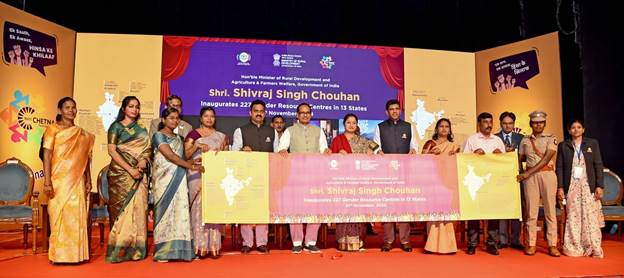
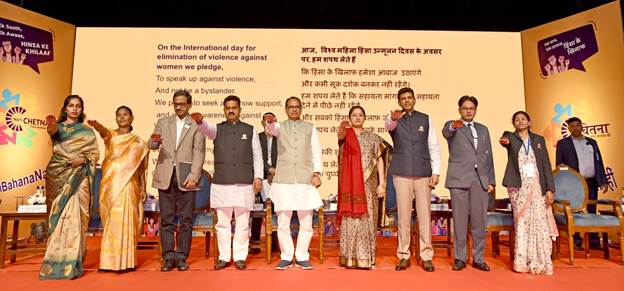
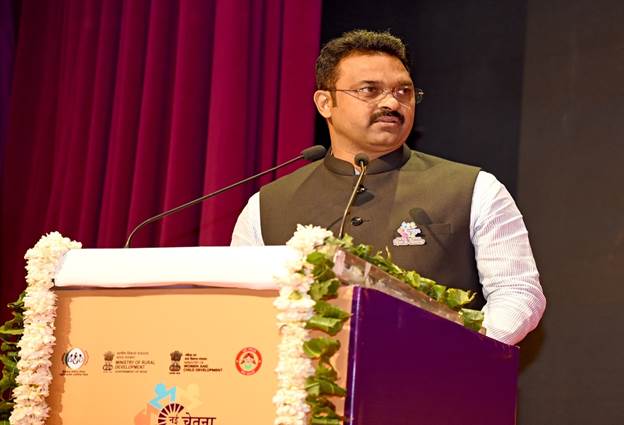
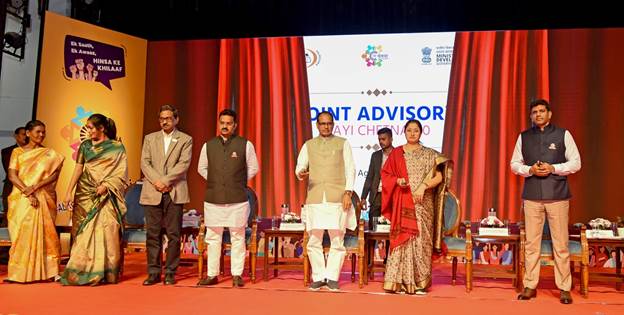
Union Minister of Rural Development and Agriculture & Farmers’ Welfare, Shri Shivraj Singh Chouhan launched the third edition of Nayi Chetna – Pahal Badlaav Ki, a one month long national campaign against gender-based violence in New Delhi today. Union Minister of Women and Child Development Smt. Annpurna Devi also graced the event with Ministers of states of Rural Development Shri Kamlesh Paswan and Dr. Chandra Sekhar Pemmasani. The campaign, organized by the Deendayal Antyodaya Yojana – National Rural Livelihoods Mission (DAY-NRLM) under the aegis of the Ministry of Rural Development, will run across all States and Union Territories until 23rd December 2024. This initiative, led by DAY-NRLM’s extensive Self-Help Group (SHG) network, embodies the spirit of Jan Andolan. The Nayi Chetna campaign aims to amplify awareness and drive informed action against gender-based violence through grassroots initiatives. Union Minister of Rural Development Shri Shivraj Singh Chouhan released Nayi Chetna 3.0 joint Advisory along with Union Minister of Women and Child Development Smt. Annpurna Devi and Ministers of state of Rural Development Shri Kamlesh Paswan and Dr. Chandra Sekhar Pemmasani. And they also inaugurated 227 new Gender Resource Centers in 13 states.
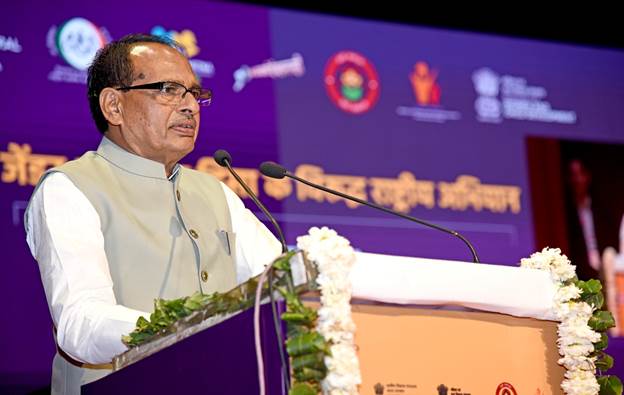
Shri Shivraj Singh Chouhan said that during his tenure as Chief Minister of Madhya Pradesh, he initiated numerous schemes aimed at women’s development. These initiatives brought about significant positive change in their lives, also enhancing their respect within their households.If women are to be completely empowered, then women empowerment, social empowerment, political empowerment, and educational empowerment must be achieved. Under the leadership of Prime Minister Shri Narendra Modi, women empowerment initiatives are being implemented as a campaign. I heartily congratulate Prime Minister Shri Narendra Modi for this endeavour. Programs like Nayi Chetna must be taken to society, as violence persists, affecting not only rural areas but also cities, where incidents like Nirbhaya occur. Daughters like Rubika Pahari and Ankita Sen are victims of heinous crimes. During my tenure as Chief Minister, I observed that 90% of rape cases involved acquaintances. Widespread public awareness is essential to combat this issue. Women self-help groups have sparked a revolution in women empowerment, uniting women as a force. This campaign must be taken to every village through these groups. To enhance its effectiveness, we will review and strategize its implementation in every village and city, with a focus on urban areas.
Shri Chouhan emphasizes the need for a new consciousness in India, where the tradition of respecting women seems to be dwindling. He stresses that there should be no tolerance for violence against women and no excuses for not taking action. To achieve this, he advocates for the death penalty for those convicted of rape, arguing that human rights are for humans, not for those who commit heinous crimes. He also highlights the importance of unity and collective effort among women, the Women Development Department, self-help groups, and society as a whole to ensure safety and end violence. Shri Chouhan envisions a future where women can live without fear of violence, and he urges everyone to work together to achieve this goal.
Shri Kamlesh Paswan highlighted the remarkable efforts of the Rural Development Ministry, under Prime Minister Shri Narendra Modi’s leadership, in empowering women, who constitutes half of India’s population. Notably, the housing scheme has made significant strides, allocating 75% of houses to women. This initiative is part of the rapid changes taking place in India to promote women’s equality.
Dr. Chandra Sekhar Pemmasani said that our nation’s progress hinges on the dignity, security, and freedom of every woman especially those in our rural heart land. Gender based violence is a global issue that knows no boundaries, taking many forms from physical and emotional abuse to online harassment and cyber bullying. Many gender based violence cases go unnoticed due to fear, social stigma, lack of awareness and inadequate support systems, therefore empowering women isn’t just a policy, and it’s our moral duty and societal necessity Dr. Pemmasani added.
Secretary of Rural Development Shri Shailesh Kumar emphasized the crucial role of women’s determination and dedication in driving this movement forward. He stressed that a strong movement can only be formed with the active participation and support of women. Shri Shailesh Kumar also acknowledged the current situation of gender-based violence and inequalities in India. Despite progress in women’s education, health, and political participation, women continue to face challenges like discrimination, social norms, high levels of violence, and unequal household workload. In rural India, the statistics are alarming, with 49% of women having no control over their income and 32% believing their opportunities are limited due to gender inequality.
The campaign is a collaborative effort in the spirit of “whole of government” approach and witness participation of 9 Ministries/Departments namely Ministry of Women and Child Development, Ministry of Health and Family Welfare, Department of School Education and Literacy, Ministry of Home Affairs, Ministry of Panchayati Raj, Ministry of Social Justice and Empowerment, Ministry of Youth Affairs and Sports, Ministry of Information and Broadcasting and Department of Justice.
The objectives of Nayi Chetna 3.0 include raising awareness of all forms of gender-based violence, encouraging communities to speak out and demand action, providing access to support systems for timely assistance and empowering local institutions to act decisively against violence.The campaign’s slogan, “Ek Saath, Ek Awaaz, Hinsa Ke Khilaaf,” embodies the call for collective action through convergence efforts, adopting a whole-of-society and whole-of-government approach.
The official data source on Employment and Unemployment is Periodic Labour Force Survey (PLFS) which is conducted by the Ministry of Statistics and Programme Implementation (MoSPI) since 2017-18. The survey period is July to June every year. As per the latest available Annual PLFS reports, the estimated Worker Population Ratio (WPR) and Unemployment Rate (UR) on usual status for persons of age 15 years and above in the country is as follows:
Year
WPR (in %)
UR (in %)
2017-18
46.8
6.0
2018-19
47.3
5.8
2019-20
50.9
4.8
2020-21
52.6
4.2
2021-22
52.9
4.1
2022-23
56.0
3.2
2023-24
58.2
3.2
Source: PLFS, MoSPI
The above data indicates that the WPR i.e. employment has increasing trend and Unemployment Rate has a decreasing trend over the years.
The KLEMS (K: Capital, L: Labour, E: Energy, M: Materials and S: Services) database published by Reserve Bank of India’s (RBI) provides employment estimates at all India level. As per the latest data of the database, provisional estimates for 2023-24, employment in the country increased to 64.33 crore in year 2023-24 compared to 47.15 crore in 2014-15. Total increase in employment during 2014-15 to 2023-24 is about 17 crore.
To provide various employment related services to the youth of the country on a single platform, Government of India has launched National Career Service (NCS) portal (www.ncs.gov.in) which includes services like job search & matching, career counselling, vocational guidance, information on skill development courses, internships etc through the portal. During the year 2024-25 (as on 15.11.2024), 1.12 crore vacancies were posted on NCS portal and more than 3.53 Crore number of vacancies mobilized on the portal since its launch in 2015.
Further, Government of India has also launched MY Bharat platform which provides myriad opportunities for youth engagement through various organizations onboarded on the portal with a view to involve them in meaningful activities. The MY Bharat portal is envisioned as a pivotal, technology-driven facilitator for youth development and youth-led development, with the overarching goal of providing equitable opportunities to empower the youth in realizing their aspirations.
Employment generation coupled with improving employability is the priority of the Government. Accordingly, the Government of India has taken various steps for generating employment in the country.
The various Ministries/ Departments of Government of India like Ministry of Micro, Small and Medium Enterprises, Ministry of Rural Development, Ministry of Housing and Urban Affairs, Ministry of Finance, Ministry of Textiles, Ministry of Electronics and Information Technology, etc. are implementing different employment generation schemes/ programmes like Prime Minister’s Employment Generation Programme (PMEGP), Mahatma Gandhi National Rural Employment Guarantee Scheme (MGNREGS), Deen Dayal Upadhyaya Grameen Kaushalya Yojana (DDU-GKY), Rural Self Employment and Training Institutes (RSETIs), Deendayal Antyodaya Yojana-National Urban Livelihoods Mission (DAY-NULM), Pradhan Mantri Mudra Yojana (PMMY), etc. including increase in capital expenditure to boost employment creation. The details of various employment generation schemes/programmes being implemented by the Government of India may be seen at https://dge.gov.in/dge/schemes_programmes.
Further, Government announced in the Budget 2024-25, the Prime Minister’s package of 5 schemes and initiatives to facilitate employment, skilling and other opportunities for 4.1 crore youth over a 5-year period with a central outlay of Rs. 2 lakh crore.
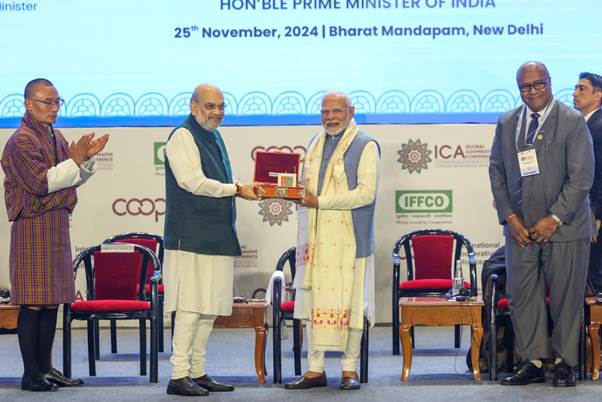
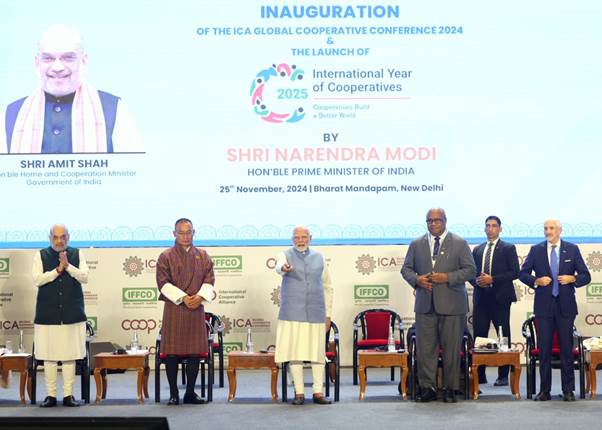
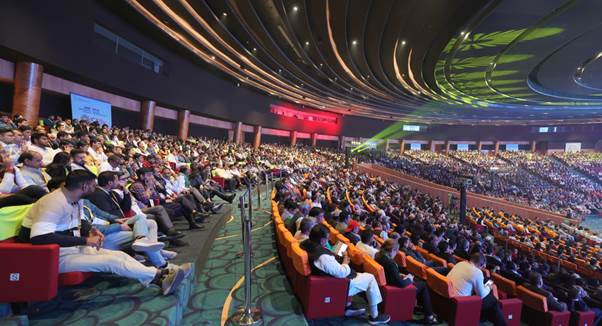
Prime Minister Shri Narendra Modi inaugurated the Global Cooperative Conference 2024 at Bharat Mandapam in New Delhi. Prime Minister Shri Narendra Modi also launched the United Nations’ International Year of Cooperatives 2025 and released a commemorative postal stamp. On this occasion, Union Home Minister and Minister of Cooperation Shri Amit Shah, the Prime Minister of Bhutan, the Deputy Prime Minister of Fiji, the President of International Cooperative Alliance (ICA), the Secretary of the Ministry of Cooperation, and several other dignitaries were present.
On this occasion, Union Home Minister and Minister of Cooperation Shri Amit Shah said in his address that the United Nations’ decision to observe 2025 as the International Year of Cooperatives is a timely step and will prove to be a blessing for millions of poor people and farmers worldwide. He added that the inauguration of the International Year of Cooperatives-2025 by Prime Minister Modi today and the hosting of the International Cooperative Conference of the ICA in India is a welcome step.
Shri Amit Shah said that Prime Minister Shri Narendra Modi three years ago gave the clarion call of “Sahkar Se Samriddhi” which reflects the essence of theme of this conference, which paved the way for the prosperity of millions of villages, women, and farmers. He said that in previous 3 years, many new activities have taken place in the cooperative sector of India, and after 75 years of independence, India’s cooperative movement has experienced a revival, bringing with it a new zeal.
Union Home Minister and Minister of Cooperation said that in next 3 years, through 2 lakh new Primary Agricultural Credit Societies (PACS), there will not be a single village panchayat in India without a cooperative society. He said that many steps have also been taken to make PACS modern, tech-enabled and economically-viable. He said that through 3 new cooperative bodies formed at the national level, the farmers of India will be able to increase their access to the domestic as well as global market. He said that National Cooperative Exports Limited (NCEL), National Cooperative Organics Limited (NCOL) and Bharatiya Beej Sahakari Samiti Limited (BBSSL) will not only increase the participation of farmers in world trade in the coming days, but will also work to inspire cooperatives all over the World as to how a small farmer can reach all the markets of the World. Shri Shah said that Indian Farmers Fertiliser Cooperative (IFFCO), Krishak Bharti Cooperative (KRIBHCO) and Amul have set examples in the field of cooperatives all over the world and similarly these three cooperatives will also guide the people working in the cooperative sectors of the World.
Shri Amit Shah said that after the formation of the Ministry of Cooperation three years ago, the entire legal framework of cooperatives has been strengthened, the White Revolution 2.0 and the Blue Revolution have also begun, in which the role of cooperatives is very important. He said that under the leadership of Prime Minister Modi, comprehensive changes have taken place in the last 3 years for the overall development of cooperatives. Shri Shah said that in the coming days, we are also going to build a cooperative university, through which trained and tech-enabled human resources will be created. In the “International Year of Cooperatives,” the Modi government will usher in new dimensions to India’s cooperative movement by introducing a new cooperative policy.
Union Home Minister and Minister of Cooperation said that in order to expand the reach of cooperatives, the Government of India is committed to connecting every village and farmer with the cooperative movement. He added that numerous efforts have been made to explore new areas and extend the scope of cooperatives.
Shri Shah stated that under the guidance of Prime Minister Modi, significant work has been done in the past three years to extend the reach of cooperatives to every individual and sector. He emphasized that the cooperative movement has opened several avenues for the empowerment of villages, farmers, women, and the underprivileged. Through this movement, the goal of “Sahkar se Samriddhi” envisioned by Prime Minister Modi, can be achieved in the coming times. He also said that the International Year of Cooperatives, inaugurated today by Prime Minister Shri Narendra Modi, will pave the way for the empowerment of millions of poor people, farmers, and women worldwide, enabling them to live with dignity and respect.
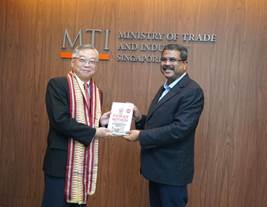
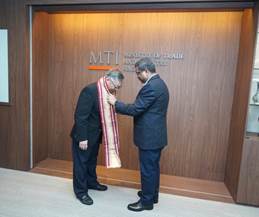
Union Minister for Education, Shri Dharmendra Pradhan, met the Deputy Prime Minister and Minister for Trade & Industry of Singapore, H.E. Gan Kim Yong.
Shri Pradhan had an engaging conversation with H.E. Gan Kim Yong on cooperation in skills-based education and training to build competencies of the future generations.
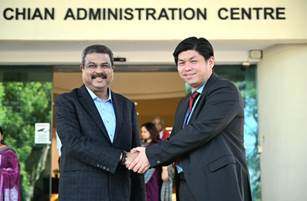
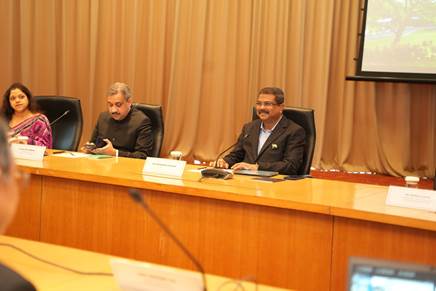
Earlier in the day, Shri Pradhan met the Prime Minister of Singapore, H.E. Lawrence Wong, and had meaningful conversations on elevating and expanding the bilateral cooperation in school education, vocational education and research, between the two nations.
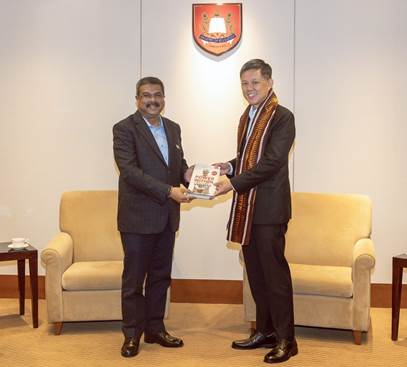
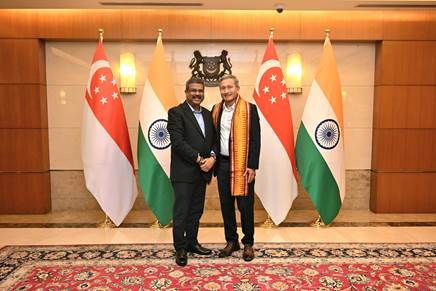
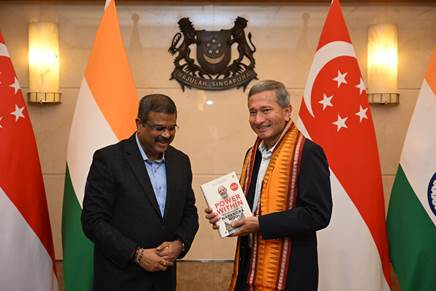
Shri Pradhan also met Singapore’s Minister for Education, Mr. Chan Chun Sing, to discuss strengthening bilateral cooperation across various areas of education. The Minister also met with Singapore’s Minister for Foreign Affairs, Mr. Vivian Balakrishnan, to discuss deepening the India-Singapore Knowledge Partnership.
Shri Pradhan visited the Hwa Chong Institution (HCI) in Singapore, to explore best practices for building ‘schools of the future’. He commended the school’s use of cutting-edge technologies, such as AI, to enhance student experiences, strengthen learning outcomes, and nurture the unique strengths, talents, and creative pursuits of each student. Shri Pradhan also observed several similarities between the educational approaches outlined in India’s National Education Policy (NEP) 2020 and the curriculum, pedagogy, and student development strategies at HCI. He reiterated India’s commitment to shaping responsible global citizens by providing students with access to world-class education.
The Minister’s visit to Singapore, followed by a trip to Australia, from 20 to 26 October 2024, aims to foster collaboration, participation, and synergy in critical areas of mutual interest in education.
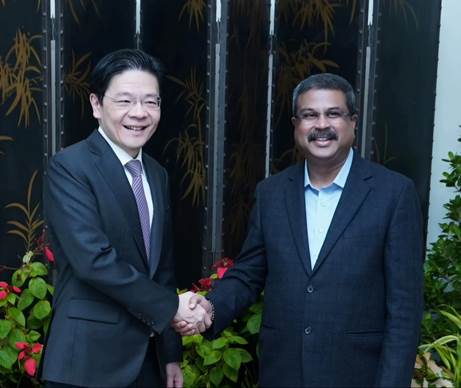
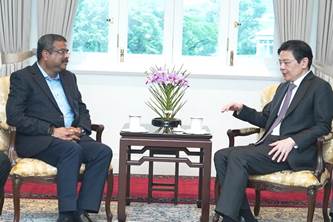
Union Minister for Education, Shri Dharmendra Pradhan met the Prime Minister of Singapore, H.E. Lawrence Wong today.
The Ministers had meaningful conversations on elevating and expanding the bilateral cooperation in school education, vocational education and research, between the two nations. The discussions focused on strengthening the partnership through three key pillars—‘Talent, Resource & Market.’
Shri Pradhan emphasized that India views Singapore as a trusted knowledge partner, particularly in advancing deep tech, startups, and innovation ecosystems.
Shri Pradhan also highlighted that Prime Minister Narendra Modi and Prime Minister Mr. Wong have outlined a robust framework to elevate India-Singapore cooperation into a comprehensive partnership, including collaboration in critical and emerging sectors.
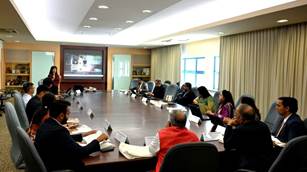
Earlier in the day, Shri Pradhan met his counterpart, Singapore’s Minister for Education, Mr. Chan Chun Sing, to discuss strengthening bilateral cooperation across various areas of education. Shri Pradhan emphasized the significance of the National Education Policy 2020 in facilitating the internationalization of India’s education system. The two ministers explored avenues for overseas internship programs, allowing Indian students to gain practical experience in Singaporean companies.
To further strengthen cultural connect between students of both countries the possibility of twinning of schools in India and Singapore was discussed. Joint Research collaboration in areas of mutual interest like deep tech, medicine, advance materials, etc. was also discussed.
They also deliberated on fostering academic and research collaboration through the twinning of schools and universities in both countries. Shri Pradhan highlighted opportunities for collaboration between Singapore’s National Institute of Education and NCERT in areas such as curriculum development, pedagogy, and teacher capacity-building.
Extending an invitation to Minister Chan to visit India, Shri Pradhan expressed his commitment to advancing shared goals and enhancing educational ties between the two nations.
Shri Pradhan also met with Singapore’s Minister for Foreign Affairs, Mr. Vivian Balakrishnan, to discuss deepening the India-Singapore Knowledge Partnership.
Both leaders emphasized the importance of working closely to elevate bilateral cooperation in education and expand collaborative efforts to achieve shared objectives.
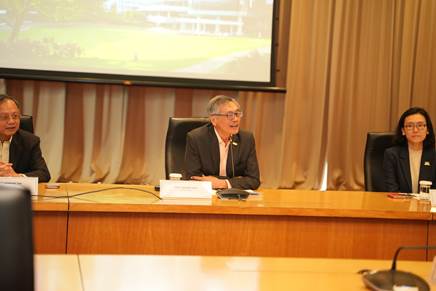
Shri Pradhan also visited the National University of Singapore and met with Prof. Tan Eng Chye, President of the university. They discussed leveraging complementary strengths to build knowledge bridges, strengthen academic and research collaborations, and deepen engagements between NUS and top Indian higher education institutions across all academic fronts.
Shri Pradhan emphasized that NUS and Indian HEIs can collaborate to create value in areas such as deep start-ups, healthcare, advanced materials, digitalization, and sustainability, among others. The Minister also highlighted that a key focus area of NEP 2020 is enhancing access to quality higher education for the youth of India and the internationalization of its education system.
On the first day of his visit on 20th October 2024, Shri Pradhan had engaged with the members of the Indian diaspora in Singapore. He highlighted NEP 2020’s role in upskilling India’s youth and the enormous scale and magnitude of education in India.
The Minister’s visit to Singapore, followed by a trip to Australia, from 20 to 26 October 2024, aims to foster collaboration, participation, and synergy in critical areas of mutual interest in education.
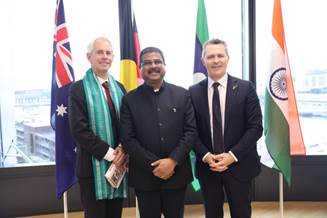
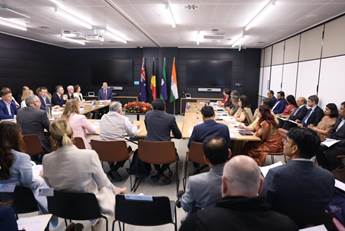
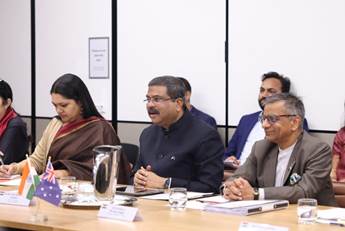
Union Minister for Education, Shri Dharmendra Pradhan, attended the 2nd Australia-India Education and Skills Council (AIESC) meeting in Sydney, Australia today alongside Minister for Education, Government of Australia, Mr. Jason Clare MP and Minister for Skills and Training, Government of Australia, Mr. Andrew Giles MP.
Addressing the event, Shri Pradhan emphasized that the AIESC meeting has become a crucial platform for strengthening knowledge bridges, advancing shared priorities in education and skills development, breaking new ground, and envisioning a brighter future for Australia and India.
Shri Dharmendra Pradhan said that education and skills will be the driving force for building economic prosperity for India and Australia and also forging lasting connections between our people and institutions.
The Ministers held discussions focused on forecasting future workforce, education needs, bridging skill gaps through education and training, and strengthening research collaboration between the two countries’ higher education institutions. He hoped that AIESC would further strengthen the bilateral partnership between Australia and India at all levels of education: school, skills and higher education. He also informed that the next AIESC meeting will be in India in 2025.
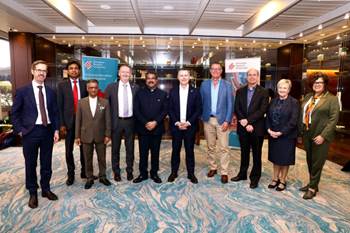
Earlier in the day Shri Pradhan interacted with high level administrators from Innovative Research Universities (IRU) – a coalition of Universities in Australia, where he engaged in enriching discussions with its members. During his visit, he learned about their collaborative approaches to education delivery and efforts to facilitate impactful research for society. The Minister also explored the scope for potential collaborations between the IRU and Indian higher education institutions to advance the education agenda. The IRU is a group of Australian universities committed to inclusive excellence in education and research that advances the communities.
In a significant move to enhance bilateral cooperation in the education sector, Shri Pradhan is visiting Australia from 22 to 26 October 2024. The visit is expected to foster collaboration, participation, and synergy in critical areas of mutual interest in education. Earlier this week from 20-21 October, Shri Pradhan visited Singapore and met the Prime Minister, Deputy Prime Minister, Education Minister and other dignitaries to expand bilateral cooperation in skill-based education and research.
The Prime Minister Shri Narendra Modi shared his message on the successful organising of the maiden maritime event – Sagarmanthan, The Ocean’s Dialogue – being held at the national capital. PM Modi called for success of Sagarmanthan to build consensus for partnerships of a prosperous future of humanity.
In his message sent from Camp Office in Nigeria, the PM Modi shared, “Our vision for a free, open and secure maritime network – be it the Indian Ocean or the Indo Pacific region – is finding resonance across the world. The ‘Indo Pacific Oceans Initiative’ envisions marine resources as a key pillar for growth for nations. This dialogue on oceans further strengthen the rules-based world order and enhance peace, trust and friendship between nations. As we strive to realise the vision of a Viksit Bharat by 2047, dialogues such as Sagarmanthan are invaluable to build consensus, partnerships and most importantly, a prosperous future. With the collective efforts of all stakeholders, I am confident that these discussions will resonate far and wide, paving the way toward a brighter, more connected future.”
Highlighting India’s rich maritime legacy & steps to build the sector, the PM Modi shared, “India’s maritime tradition goes back several millennia and is among the richest in the world. The thriving port cities of Lothal and Dholavira, the fleets of the Chola dynasty, the exploits of Chhatrapati Shivaji Maharaj are great inspirations. Oceans are a shared heritage for nations and societies, as well as the lifeline for international trade. Today, the security and prosperity of nations is intimately connected to oceans. Recognising the potential of oceans, several transformative steps have been taken to bolster India’s maritime capabilities. Over the last decade, guided by the vision of ‘Ports of Prosperity,’ ‘Ports for Progress’ and ‘Ports for Productivity,’ we have doubled the capacity of our ports. By enhancing port efficiency, reducing turnaround times and strengthening last-mile connectivity through expressways, reducing turnaround times and strengthening last mile connectivity through expressways, railways and riverine networks, we have transformed India’s shoreline.”
Acknowledging the pioneering role for transformation of maritime sector, the Union Minister of Ports, Shipping & Waterways, Shri Sarbananda Sonowal thanked the Prime Minister for his generous words for the success of the maiden edition of Sagarmanthan – The Oceans Dialogue. On PM Modi’s message, the Union Minister Sarbananda Sonowal said, “Under the dynamic leadership of Prime Minister Shri Narendra Modi ji, India has been witnessing a transformational experience in the maritime sector. The message by the Prime Minister Modi ji encapsulates the very essence that this maiden maritime thought leadership forum – Sagarmanthan – aims to achieve. In his own words, Modi ji shared the framework to a ‘Viksit Bharat’ based on how ‘collaboration and effort can yield the tools and direction we need to ensure prosperity.’ I, on behalf of all whose tireless effort has led to this wonderful forum, want to extend deepest appreciation to the most popular leader of the world, Narendra Modi ji, for his visionary message of rich wisdom, insight & sense for the success of ‘Sagarmanthan – The Oceans Dialogue’.”
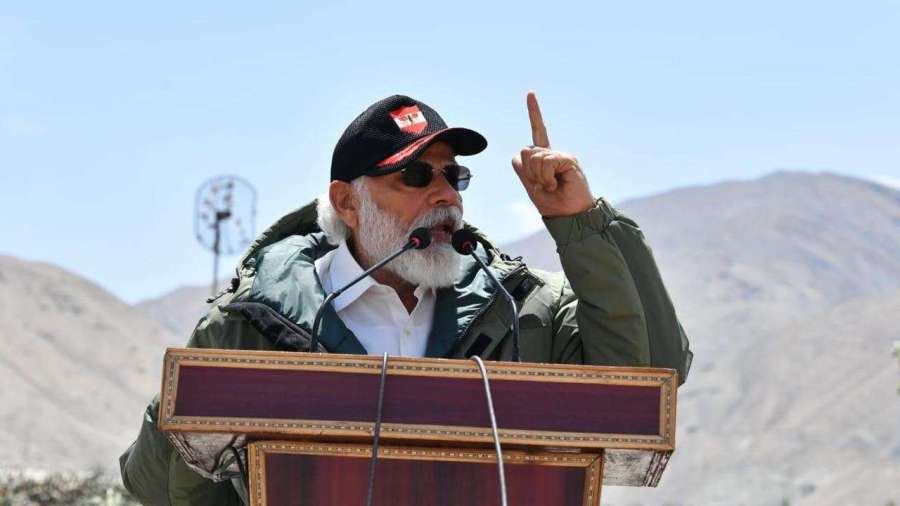
Making an apparent hit at china, Prime Minister Narendra Modi on Friday said the age of expansionism is over and added that the new age of development is here.
“Age of expansionism is over and this is the age of development. History is witness that expansionist forces have either lost or were forced to turn back,” Modi said addressing soldiers in Ladakh’s Nimmoo. However, the Prime Minister did not mention China at all in his address to the soldiers.
The remark comes amidst the on-going tension between India and China at Line of Actual Control in the eastern Ladakh. In a violent brawl between forces almost 20 Indian soldiers were martyred in the Galwan Valley on June 15 midnight when Chinese troops attempted to unilaterally change the status quo during the de-escalation.
The Prime Minister also said that the people of Ladakh have rejected every attempt to create separatism in the region.
“Ladakh is the head of the country. This is the symbol of pride for the 130 crore citizens of India. This land belongs to the people who are willing to make the ultimate sacrifice for the country… Every attempt to create separatism in the region was rejected by the nationalist people of Ladakh,” Modi said.
He further added, “We are the same people who pray to the flute playing Lord Krishna, but we are also the same people who idealise and following the same Lord Krishna who carries the Sudarshan Chakra”. The two countries, India and China have been involved in talks to ease the on-going border dispute since last month.
Praising the bravery displayed by the soldiers, the Prime Minister said: “The bravery that you and your compatriots showed, a message has gone to the world about India’s strength.”
“Your courage is higher than the heights where you are posted today,” he added.
“Atmanirbhar Bharat ka sankalp aapke tyag, balidan, pursharth ke karan aur bhi mazbut hai,”(The vision of self-dependent India gets strengthened from your sacrifice and courage),” the Prime Minister said.
During Prime Minister’s address the soldiers were observed maintaining social distance amid pandemic.
PM Modi on Friday made a surprise visit to Ladakh and was briefed by senior officers at Nimmoo amid ongoing tension with China. The Prime Minister was accompanied by Army Chief General Manoj Mukund Naravane and Chief of Defence Staff (CDS) General Bipin Rawat.
He reached Nimmoo, early in the morning and interacted with Army, Air Force and ITBP personnel. Located at 11,000 feet, this is among the tough terrains, surrounded by Zanskar range and on the banks of the Indus. Prime Minister Modi Also performed Prayer rituals at the Holy Indus River.
The idea of India started its journey with high moral values (non-violence, democracy, people rights) and since 1947 we’ve indulge into many wars, conflicts being internal or external both resolved with democratic path. This path of Democracy is extremely hard, to pass one reform bill in the parliament of India could take years, as we all (Indians) know it’s quite hard to please the majority, though for good things. This does make progress of India slow but what wonder it does is the trust and believe it seeds among the rest of the Nations in the world. World would definitely prefer a democratic nation when compared to a communist country. Democracy has always been a safer place to live in and contributes zero threat to the world’s security and safety. This further boosts India’s take on becoming a reliable superpower to which world can trust.
The days of expansionism are apparently turning fade with the rising support for India’s stand at border disputes with China. The world now knows that the new India would never compromise on its national integrity and would never step back from its own territory. The recent aggressive response of Indian Army at the Galwan with close to 43 casualties on the Chinese side was a true representation of its new mood of hitting harder. The government of India following a straight path of “No Compromise” shows its rising diplomatic presence at global politics.
Indeed, a lot has changed since 1962’s Indo-China war. India in 2020 is much technically advanced than ever before. India is the biggest influencer of information technology, it is Indians who are providing software strength to major Chinese IT firms since China so far had focused only on manufacturing leading into a hardware oriented industry.
Apart from IT, India’s military might had boosted exponentially with more weapon, warheads and war machine imports, India is also focused on indigenous weapons, thus reducing the foreign imports and reliability.
Taking military strength, China does seem upper handed while looking at numbers. India has an approximate of 1.3 Million active armed personnel and China has close to 2.1 Million of armed personnel. Yet, strategically China is helpless. Surrounded with 14 neighbouring nations China could never risk putting all of its force on to the west, this will leave East China (China’s Densely Populated and Economy Region) in a huge threat from Japan, USA and other Nations.
India with complete command over Indian Ocean reflects threat to China’s trade route to the Gulf countries. India is able to improve its political position in the global community by making more of friends and forming strong business ties that works two ways, equally.
Prime Minister today had a telephonic conversation with H.E. Ursula Von Der Leyen, President of the European Commission. The two leaders discussed the global situation in the context of ongoing COVID-19 pandemic.
The Prime Minister expressed his condolences on the loss of life in the European Union due to COVID-19. He emphasized on the need for coordination and cooperation among all the countries to fight the pandemic. The Prime Minister also dwelt on the steps taken by India for containing the spread of Coronavirus infection.
Ms. Von Der Leyenmentioned that the Prime Minister’s leadership in taking early measures has been the key to preventing a rapid spread of the disease in India. She also expressed her appreciation for the assistance rendered to the European citizens in India in this situation.
Ms. Von Der Leyen emphasized the importance of maintaining a steady supply of essential items, including medicines and coordinated efforts for vaccine development.
The two leaders discussed possible cooperation within the G-20 framework, and the forthcoming video-conference in this context.












 Eduindex
You must be logged in to post a comment.