WHAT MAKES 18 JULY A SIGNIFICANT DAY ?

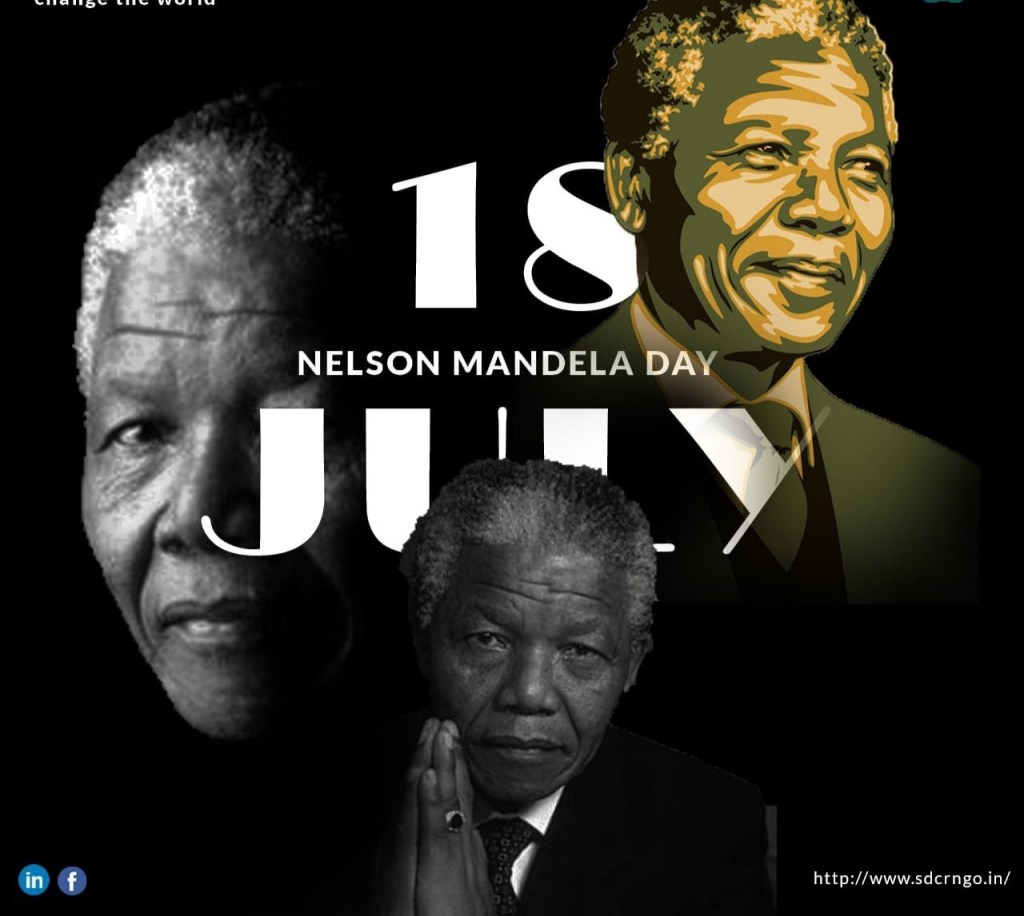
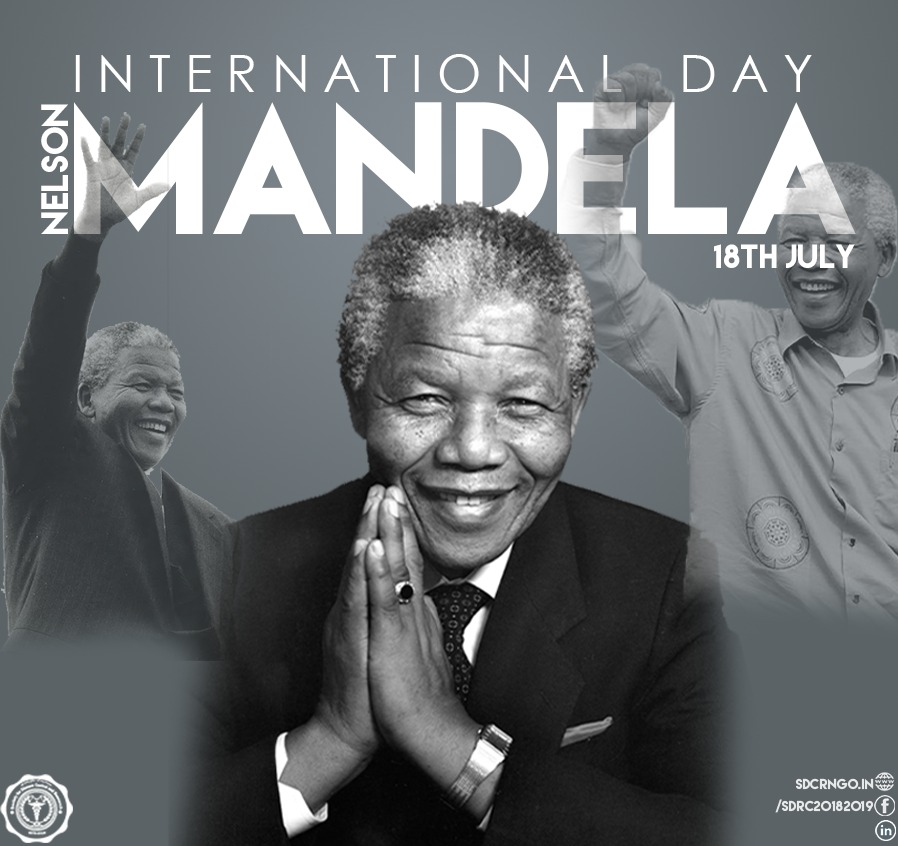
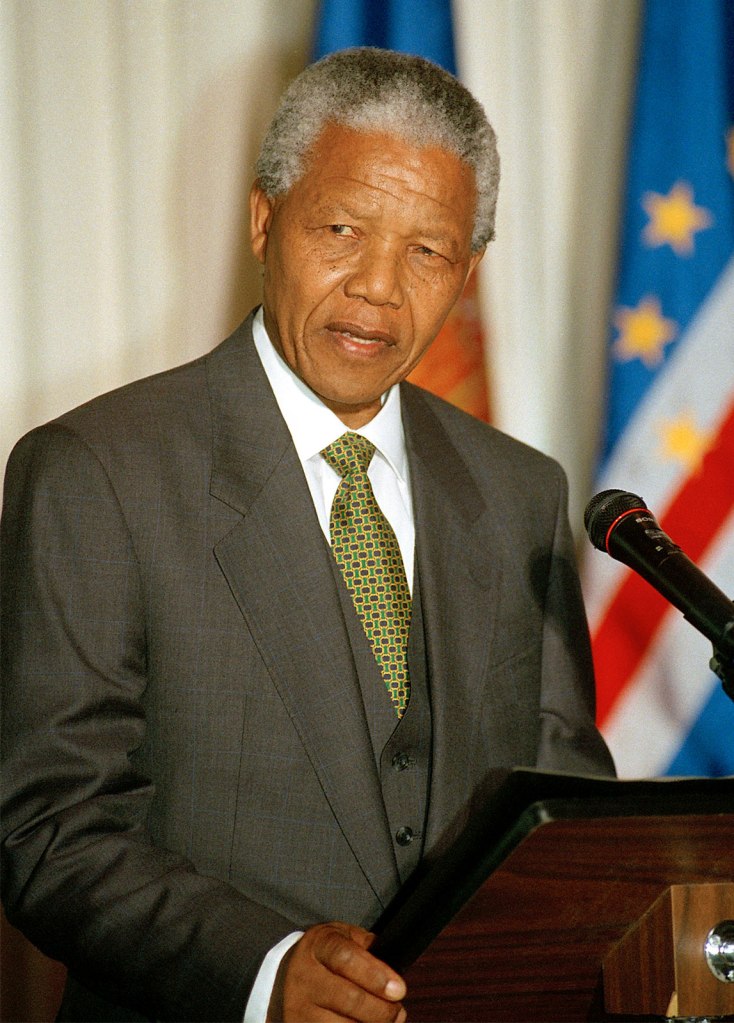
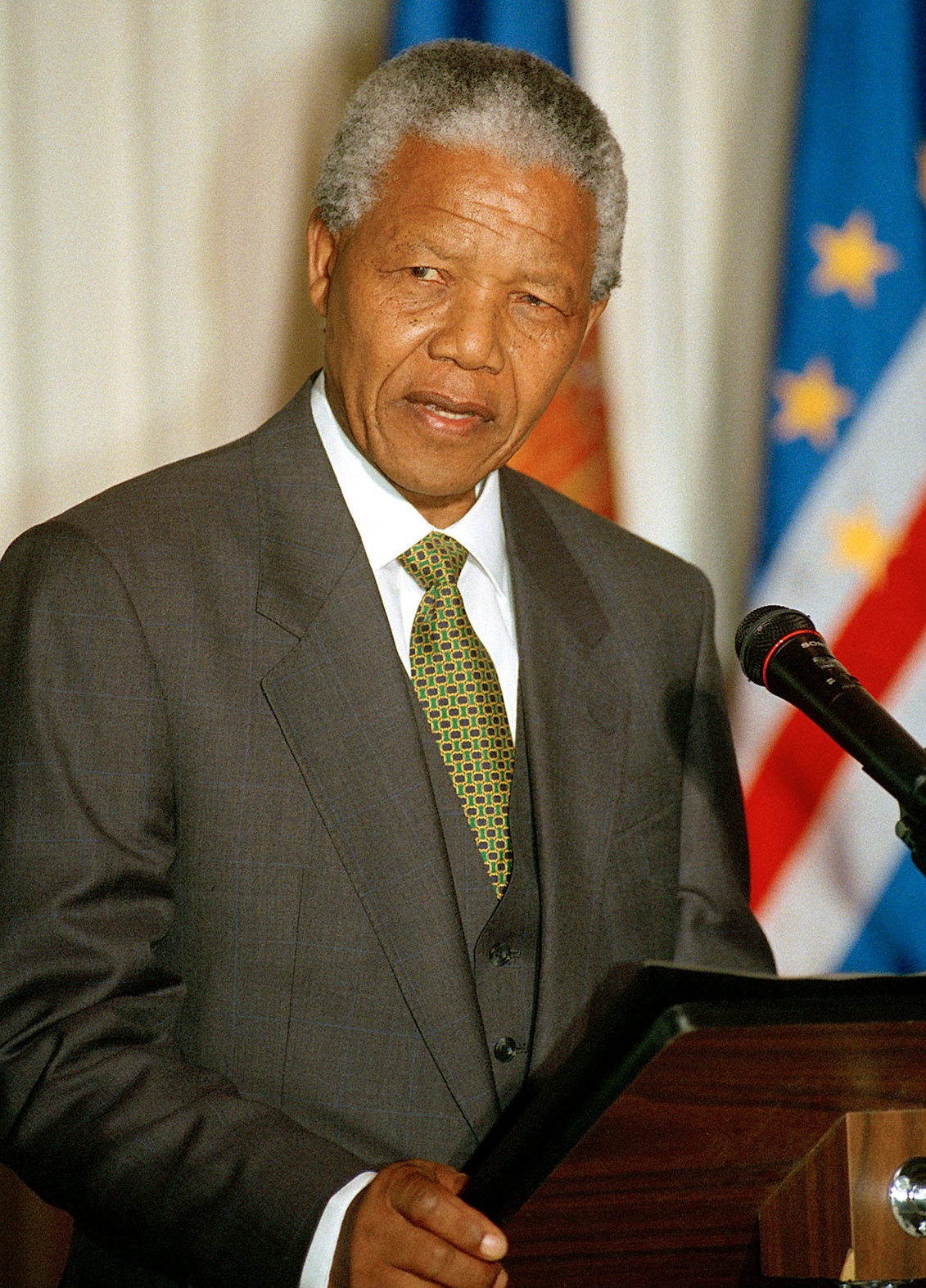
18th July marks the birth of an iconic figure who vanquished South Africa’s apartheid system. The great personality who fought for human rights and was an international peacemaker. This person who played a very vital role in shaping the society and conserving the human rights was Nelson Rolihlahla Mandela.

 “It is easy to break down and destroy.
The heroes are those who make peace and build.” 

 – Nelson Mandela

ABOUT NELSON MANDELA

Nelson Rolihlahla Mandela (18 July 1918 – 5 December 2013) was a South African anti-apartheid revolutionary, who served as President of South Africa from 1994 to 1999. The main focus of his government was on knocking down the apartheid regime by fostering racial reconciliation and tackling institutionalized racism. Nelson Mandela is an iconic figure who was an human rights lawyer, a prisoner of conscience and an international peacemaker. He is that great personality who vanquished South Africa’s apartheid system and was the first democratically elected president of free South Africa. Nelson Mandela was born Nelson Rolihlahla Mandela in Transkei, South Africa on 18 July, 1918. His strategy was to bring change through Legal Revolution but not through actual violence. He began his journey towards by following the path of non-violence, later embracing violence, and then adopting a non-violent approach for negotiation and reconciliation.

ABOUT NELSON MANDELA INTERNATIONAL DAY

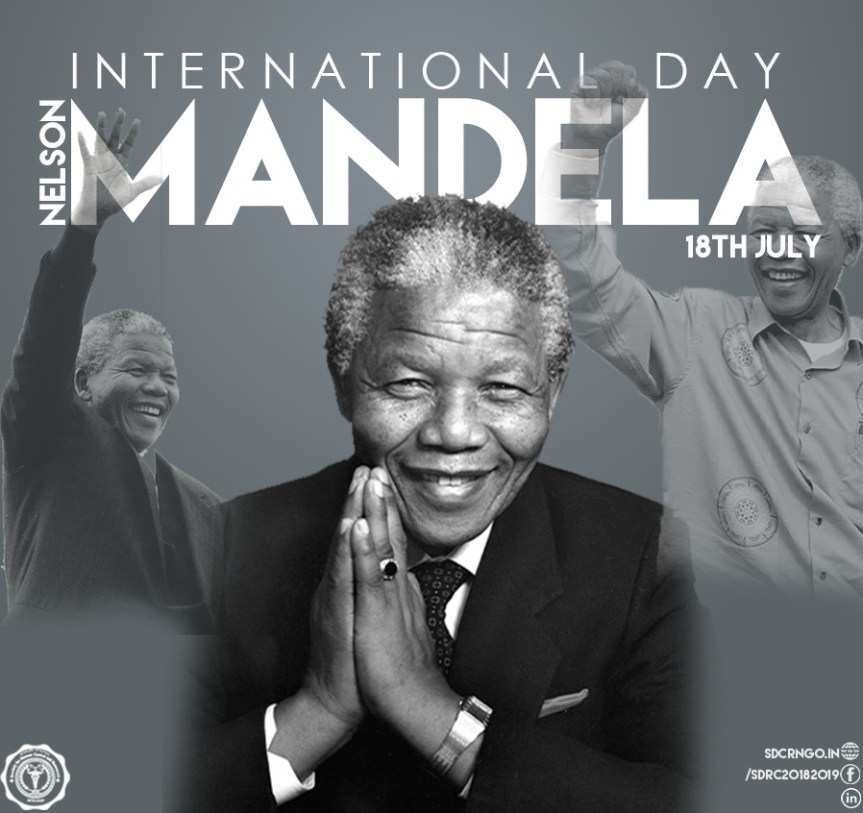
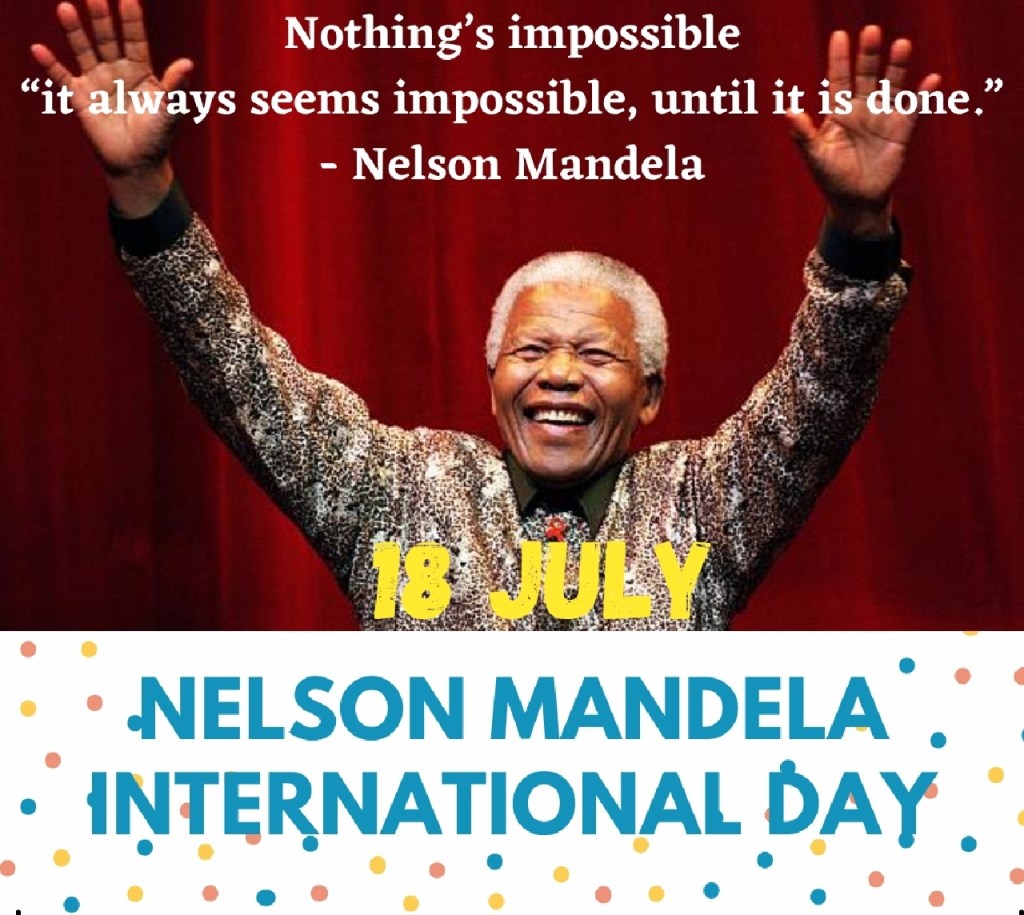
Nelson Mandela International Day (or Mandela Day) is celebrated in honor of Nelson Mandela, the former South African President, on his birthday, that is on 18 July. This day was declared officially by the United Nations in November 2009 and the first Mandela Day was thus held on 18 July 2010. There are many other groups who celebrated this day before 2010 also, that is from 18 July 2009.

The UN General Assembly (UNGA) declared 18th July as “Nelson Mandela International Day” for paying tribute and for recognizing his contributions for achieving and promoting peace and freedom. Mandela Day reminds us that “Each individual has the potential and power to bring a positive change, transform and ability to make an impact.”

MESSAGE OF MANDELA DAY CAMPAIGN

Nelson Mandela fought for peace and harmony. He fought for bringing social justice for over 67 years. This day urges the people of Mother Earth to fight poverty and promote peace, reconciliation and cultural diversity.

While establishing this international day, UNGA recognized the values and dedication of Nelson Mandela for serving the humanity. He constantly fought for democracy and for promoting cultural peace throughout the world. Some other values for which he fought are:

  1. Conflict Resolution
  2. Race Relations
  3. Promotion and Protection of Human Rights
  4. Reconciliation
  5. Gender Equality
  6. Rights of Children and other vulnerable groups
  7. Fight against Poverty
  8. Promotion of Social Justice

The contribution of Nelson Mandela to the society can never be measured and his works remind us that “Everyone has the ability and the responsibility to change the world for the better!” Mandela Day is one such occasion which urges all to take action and inspire change.

WHY DO WE CELEBRATE NELSON MANDELA DAY ?

Nelson Mandela International Day is celebrated every year to remember the legacy of a man who shaped the present with his fight for 67 years and provided a better world and society for the future generation. Nelson Mandela changed the 20th century and helped shape the 21st century and future of the world. This day exhorts us to renew the values and principles of Nelson Mandela and to take actions for building a better society.
Nelson Mandela International Day

Nelson Mandela was a South African anti apartheid Revolutionary Statesman.

He served as president of South Africa from 1994 to 1999.

Nelson Mandela was first black head of state and the first elected in a fully representative democratic election.

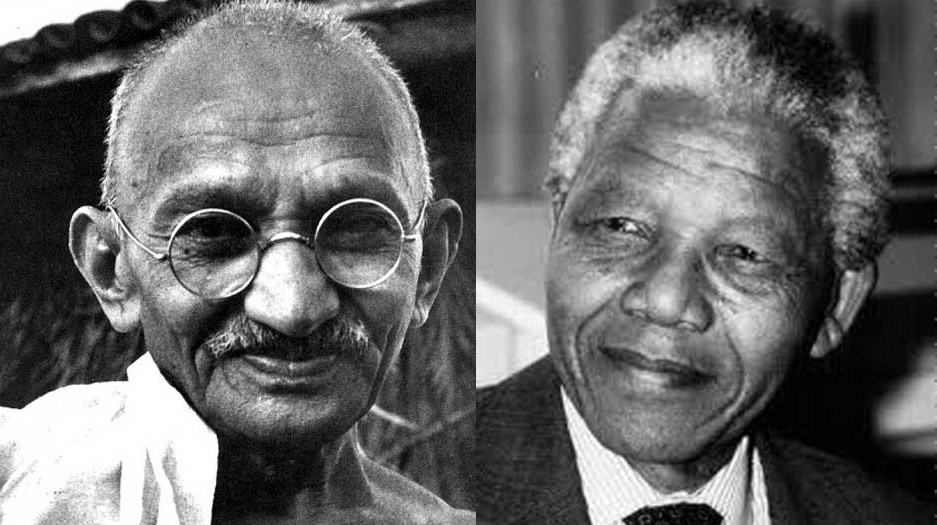
Nelson Mandela is known as Gandhi of South Africa.

Nelson Mandela was born on 18 July 1918.

We died on 5th December 2013.

Nelson Mandela International Day is celebrated on 18 July every year.

Today is 103rd birth anniversary of Nelson Mandela.

Nelson Mandela opposes the racist system of Apartheid in South Africa and dedicated his life to establishing social equality for all.

Nelson Mandela was awarded the prestigious Nobel Peace Prize in 1993.

He involved in anti colonial and African Nationalist politics, joining the AMC in 1943 and co-founding its youth league in 1944.

In 1962, He was arrested, imprisoned and subsequently sentenced to life imprisonment for conspiring to overthrow the state following the Rivonia trial.

He served 27 years in prison.

  • Nelson Mandela was also known as Madiba.
  • Nelson Mandela was birth name Rolihlahla Mandela.
  • Nelson name was given by his Primary school teacher.
  • In 1931, he begin his College degree at University College of Fort hare.
    • Nelson Mandela was expelled for participating in a protest against the universities policies.
  • Nelson Mandela received his law degree from University of South Africa in 1989.
  • The king of his village threatened him and his cousin with arrange marriages but they both ran away.
  • Nelson Mandela along with his fellow AMC member established South Africa’s first black law practice in 1952.
  • Nelson Mandela was banned from leaving the country
    • In order to leave the country he used the name David Motsamayi to get out of country in secret.
  • In prison, he was mentor to to other prisoner and taught them about nonviolent resistance.
  • Nelson Mandela believed that sports has the power to change the world, it has the power to inspire,. It has the power to unite people in a way that letter else does. It speaks to youth in a language they understand. Sport can create hope where one there was only dispair. It is more powerful than government in Breaking Down racial barriers.
  • He was released from prison in 1990 by president Frederick William De klerk.
  • Nelson Mandela was 76 year old when he was elected as president of South Africa.

Theme of national Mandela International Day 2021

  • The theme of this year is One Hand Can Feed Another.
  • Last year’s theme was Take Action, Inspire change.
  • The theme highlighted the importance of Government and citizen working together to build a peaceful equitable and sustainable world for all.

Long live ‘NELSON MANDELA’

Nelson Mandela was born on 18 July 1918, at Umtata, Cape of Good Hope in South Africa. He is an iconic figure in today’s world when it comes to fighting for one’s rights as a human being. The son of a Xhosa Chief, Mandela studied law at the University of Witwatersrand, and in 1944 joined the African National Congress (ANC), After the Sharpeville massacre (1960), he was disillusioned to the extent that he gave up his non-violent stance and became one of those who helped found the Spear of the Nation, the ANC’s military wing. Arrested in 1962, he was sentenced to life imprisonment. The South African Court convicted him on charges of sabotage as well as other crimes committed while he led the movement against apartheid.

How is Nelson Mandela International Day celebrated?

Mandela provides service to others and always wants to create a better world for everyone. So, on this day if people find injustice in the neighbourhood, city, or state they do everything to alleviate the problem. Work in soup kitchens, marched with protesters, volunteer in local organisations, and work to help bring about civil liberties for everyone. Inspire change, and make every day a celebration of Mandela Day. People work for others and want to improve the lives of people around them. They will do this by volunteering or taking part in protests.

“After climbing a great hill, one only finds that there are many more hills to climb.”

This day provides a global call for people to recognise their ability and have a positive effect on others around them. People also inspire others about the values that Mandela shared like democracy, freedom, diversity, reconciliation, and respect. To promote Nelson Mandela Day, many people and organisations around the world take part in several activities. These activities are volunteering, sport, art, education, music, and culture. This day also celebrates a campaign known as “46664”, in reference to Nelson Mandela’s Robben Island prison number. The campaign was originally launched to raise awareness about HIV/AIDS. In 1995 and 1999 Children’s Fund and the Nelson Mandela Foundation were established.

“I learned that courage was not the absence of fear, but the triumph over it. The brave man is not he who does not feel afraid, but he who conquers that fear.”

His Movements And Struggles:

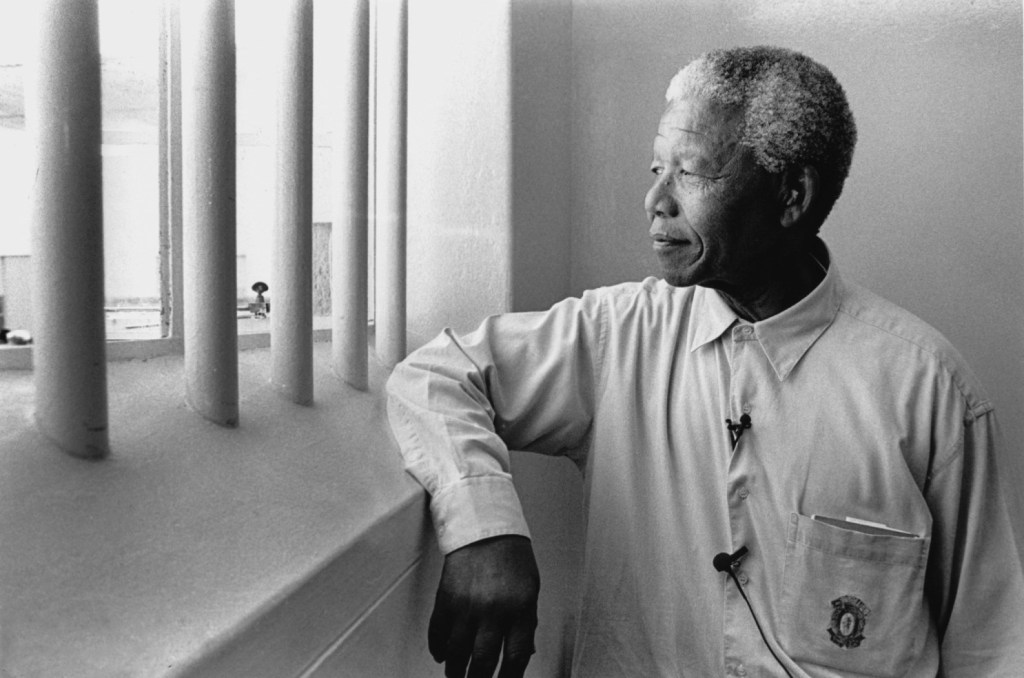
In accordance with the conviction, Mandela served twenty-seven years in prison. While in jail, Mandela’s reputation grew and he became widely known as the most significant black leader in South Africa. The conditions that he had to go through as a prisoner were appalling. He performed hard labour in a lime quarry. Prisoners were segregated on the basis of race, and the black prisoners received the fewest rations. Political prisoners were kept separate from ordinary criminals and received fewer privileges. Mandela himself describes how as a D-group prisoner, the lowest classification, he was allowed one visitor and one letter every six months. Letters, when they came, were often delayed for long periods and made unreadable by the prison censors. It calls for nerves of steel for a man imprisoned for life to get a degree of Bachelor in Law from the University of London through correspondence.

In February 1985, President PW Botha offered Mandela conditional release in return for renouncing armed struggle. Mandela spurned the offer, releasing a statement through his daughter Zindzi saying, ‘What freedom am I being offered while the organisation of people remains banned? Only free men can negotiate. A prisoner cannot enter into contracts.’

Throughout Mandela’s imprisonment, local and international pressure mounted on the South African Government to release him. In 1989, South Africa reached a crossroads when Botha suffered a stroke and was replaced as President by Frederik Willem de Klerk. De Klerk announced Mandela’s release in February 1990. His release from jail was broadcast live all over the world.

South Africa’s first multi-racial elections, in which full enfranchisement was granted, were held in April 1994. The ANC won 62 per cent of the votes in the election. Mandela became the first black President. As President from May 1994 to June 1999, Mandela presided over the transition from minority rule and apartheid, winning international respect for his advocacy of national and international reconciliation.

It is not surprising that Mahatma Gandhi should have inspired Mandela in his war against apartheid. The most universally respected figure of post-colonial Africa, Mandela was awarded the Nobel Peace Prize in 1993 along with De Klerk for their efforts to end apartheid and bring about the transition to non-racial democracy. Mandela remains an inspiring figure for any man in any corner of the world who becomes conscious of his rights and is willing to fight for the same.

Nelson Mandela International Day 2021

“May your choices reflect your hopes, not your fears.”

Nelson Mandela

Introduction

July 18th every year is observed as the Nelson Mandela International day ever since 2009. Nelson Mandela’s full name was Nelson Rolihlahla Mandela and he was also known as Madiba. He was born on July 18, 1918, in South Africa and died on December 5, 2013. He was a Black Nationalist and is popularly known as the first Black president of South Africa. He is also known for his negotiations in the 1990s with the then South African President F.W. de Klerk which helped in ending the apartheid system in the country. Later in 1993, both, Mandela and de Klerk received the Nobel Peace Prize for their efforts.

Life

Nelson Mandela studied law at the University of Witwatersrand. He joined the African National Congress (ANC) in 1944 and became the leader of its Youth League. He established the first black law practice in 1952 in Johannesburg, his focal cases were of racial segregation. He was a part of drafting the Freedom Charter, a document demanding nonracial social democracy, in 1955. Because of actions against the apartheid legislation, he became a target and was banned and arrested on charges of treason in the year 1956 but was acquitted in 1961.

He was trained in guerrilla warfare and sabotage in 1962 but the same year he was arrested again and was sentenced to five years in prison. After the trial where he made his famous speech “I Am Prepared to Die”, he was sentenced to life imprisonment only narrowly evading the death penalty. During this sentence, he was held at the Robben Island Prison off Cape Town. He was released under the government of President de Klerk on February 11, 1990, soon after which he was made the deputy president of the ANC, he then became president of the party in 1991.

Mandela won the first elections by universal suffrage and also was sworn as the president of the first multiethnic government. In 1995, he established the Truth and Reconciliation Commission (TRC) which’s work was to investigate human rights violations that took place during the apartheid. He then resigned from ANC in December 1997. He didn’t seek a second term and transferred the presidency to his successor in 1999. He established the Nelson Mandela Foundation in 1999 through which he kept working as an advocate of peace, reconciliations, and social justice.

Mandela and Gandhi

Mandela had said that Gandhiji was his role model and that he inspired him to lead South Africa on its journey of independence. He was also sometimes referred to as the “Gandhi of South Africa”. Although both of them did not meet each other, yet some similarities can be noticed such as, both emphasized moral power being a force to reckon with. Both of them were lawyers and spent time in Johannesburg’s old fort prison although it was during different years, Gandhiji in 1906 and Mandela in 1962. It is also said that during Mandela’s 27 years at the Robben Island prison, he was in the room full of books of Gandhiji, where he spent time meditating and reflecting to rid his soul of the bitterness. It was a big coincidence that two of the most inspiring world leaders had a connection to South Africa.

Conclusion

The theme of Nelson Mandela International Day 2021 is One Hand Can Feed Another. Everyone should take some time out to read about Nelson Mandela’s journey and then read about issues of violence and security around the world to understand better and play our part in the fight to make the world more peaceful.

References

International Nelson Mandela Day 2021!

Why do we celebrate this day and its significance, his life and theme for 2021.

‘This day is also known as 67 Minutes Mandela Day, as for 67 years he fought for social justice.

The theme for 2021 Nelson Mandela International Day is “One Hand Can Feed Another.”

To further this recognition of his legacy, the month of July is also unofficially recognized as “Mandela Month” in South Africa.

About Nelson Mandela:

Nelson Rolihlahla Mandela was a South African anti-apartheid revolutionary, who served as President of South Africa from 1994 to 1999. He was also a statesman and philanthropist. Influenced by Marxism, he secretly joined the banned South African Communist Party (SACP). Although initially committed to non-violent protest, in association with the SACP he co-founded the militant Umkhonto we Sizwe in 1961 and led a sabotage campaign against the government. He was arrested and imprisoned in 1962, and subsequently sentenced to life imprisonment for conspiring to overthrow the state following the Rivonia Trial. Mandela served 27 years in prison

He was the country’s first black head of state and the first elected in a fully representative democratic election.

Over the course of his life, Mandela was given over 250 awards, accolades, prizes, honorary degrees, and citizenship in recognition of his political achievements. Among his awards were the Nobel Peace Prize, Bharat Ratna, the Soviet Union’s Lenin Peace Prize, and many more. Within South Africa, he was widely considered “The Father of the Nation” and “The Founding Father of Democracy.” Worldwide, he was regarded as a “Global Icon” and was described as “One of the most revered figures of our time” by Rita Barnard.

In the 1950s, he was elected as the leader of the youth wing of the African National Congress (ANC) liberation movement. He first resorted to peaceful protests. But he was met with violence by the government, he went on to support an armed movement. Mandela was an important symbol for the oppressed in South Africa who were fighting for their rights. He was extremely instrumental in tearing down the oppressive government and laid the foundation of democracy.

He started the Nelson Mandela Foundation to combat HIV or AIDS, support educational and rural development. In 2009, the United Nations proclaimed July 18th to be International Nelson Mandela Day. On this day, people are asked to spend 67 minutes doing something good for others, which represents all the 67 years he spent working towards change.

The 1st UN Mandela Day was held on 18th July 2010.

WHY ?

We celebrate this day to remember his struggle and contribution to the world which helped to pave a path for growth from the 20th – 21st century. It is a movement for all of us to renew and imbibe the values that inspired Nelson Mandela.

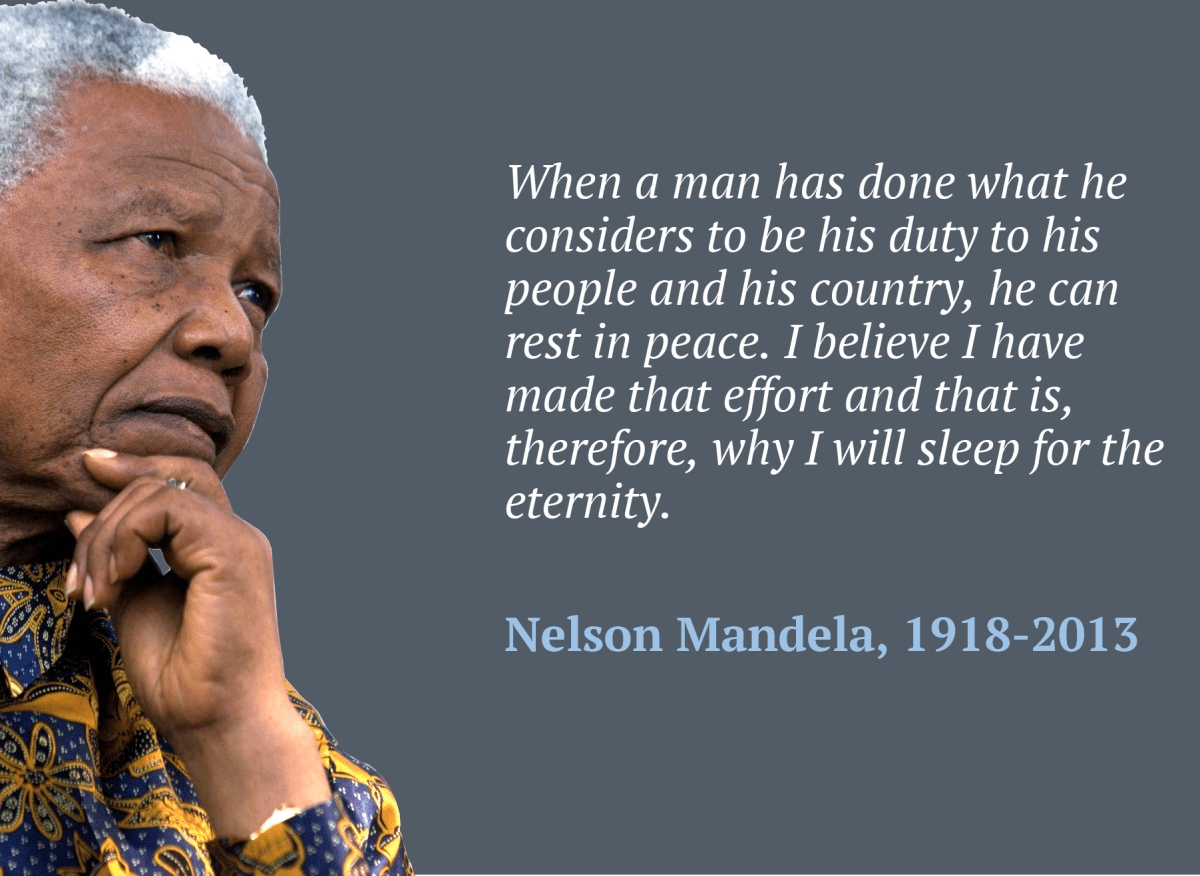
 "It is easy
 to breakdown and destroy.
  The heroes are those
 who make peace and build."
                                                              - Nelson Mandela

Things to do:

  • Learn about human rights!
  • Get acquainted with what you can do to fight alongside communities you most connect with.
  • Read about what inspired Nelson Mandela and the steps to took to fight injustice.
  • Talk with NGOs nearby you and find out how can you help the cause they are working on.
  • Talk to the friend you miss!
  • Find shelters, volunteer, or contribute food, amenities to help our beloved furbabies!!
  • Take a minute and appreciate everything that made you who you are.
  • Look into your strengths and use them to give back to the world.
  • Never underestimate the words, actions that you put out in the world! You matter!

Refences:

https://en.wikipedia.org/wiki/Nelson_Mandela

https://www.dosomething.org/us/facts/11-facts-about-nelson-mandela

Nelson Mandela

Rolihlahla Mandela was born into the Madiba clan in the village of Mvezo, in the Eastern Cape, on 18 July 1918. His mother was Nonqaphi Nosekeni and his father was Nkosi Mphakanyiswa Gadla Mandela, principal counsellor to the Acting King of the Thembu people, Jongintaba Dalindyebo. In 1930, when he was 12 years old, his father died and the young Rolihlahla became a ward of Jongintaba at the Great Place in Mqhekezweni.
Hearing the elders’ stories of his ancestors’ valour during the wars of resistance, he dreamed also of making his own contribution to the freedom struggle of his people.
He attended primary school in Qunu where his teacher, Miss Mdingane, gave him the name Nelson, in accordance with the custom of giving all schoolchildren “Christian” names
He completed his Junior Certificate at Clarkebury Boarding Institute and went on to Healdtown, a Wesleyan secondary school of some repute, where he matriculated.
Mandela began his studies for a Bachelor of Arts degree at the University College of Fort Hare but did not complete the degree there as he was expelled for joining in a student protest.
On his return to the Great Place at Mqhekezweni the King was furious and said if he didn’t return to Fort Hare he would arrange wives for him and his cousin Justice. They ran away to Johannesburg instead, arriving there in 1941. There he worked as a mine security officer and after meeting Walter Sisulu, an estate agent, he was introduced to Lazer Sidelsky. He then did his articles through a firm of attorneys – Witkin, Eidelman and Sidelsky.
He completed his BA through the University of South Africa and went back to Fort Hare for his graduation in 1943.
Meanwhile, he began studying for an LLB at the University of the Witwatersrand. By his own admission he was a poor student and left the university in 1952 without graduating. He only started studying again through the University of London after his imprisonment in 1962 but also did not complete that degree.
In 1989, while in the last months of his imprisonment, he obtained an LLB through the University of South Africa. He graduated in absentia at a ceremony in Cape Town.
Entering politics:
Mandela, while increasingly politically involved from 1942, only joined the African National Congress in 1944 when he helped to form the ANC Youth League (ANCYL).
In 1944 he married Walter Sisulu’s cousin, Evelyn Mase, a nurse. They had two sons, Madiba Thembekile “Thembi” and Makgatho, and two daughters both called Makaziwe, the first of whom died in infancy. He and his wife divorced in 1958.
Mandela rose through the ranks of the ANCYL and through its efforts, the ANC adopted a more radical mass-based policy, the Programme of Action, in 1949.
In 1952 he was chosen as the National Volunteer-in-Chief of the Defiance Campaign with Maulvi Cachalia as his deputy. This campaign of civil disobedience against six unjust laws was a joint programme between the ANC and the South African Indian Congress. He and 19 others were charged under the Suppression of Communism Act for their part in the campaign and sentenced to nine months of hard labour, suspended for two years.
A two-year diploma in law on top of his BA allowed Mandela to practise law, and in August 1952 he and Oliver Tambo established South Africa’s first black law firm, Mandela & Tambo.
At the end of 1952 he was banned for the first time. As a restricted person he was only permitted to watch in secret as the Freedom Charter was adopted in Kliptown on 26 June 1955.
The Treason Trial:
Mandela was arrested in a countrywide police swoop on 5 December 1956, which led to the 1956 Treason Trial. Men and women of all races found themselves in the dock in the marathon trial that only ended when the last 28 accused, including Mandela, were acquitted on 29 March 1961.
On 21 March 1960 police killed 69 unarmed people in a protest in Sharpeville against the pass laws. This led to the country’s first state of emergency and the banning of the ANC and the Pan Africanist Congress (PAC) on 8 April. Mandela and his colleagues in the Treason Trial were among thousands detained during the state of emergency.
During the trial Mandela married a social worker, Winnie Madikizela, on 14 June 1958. They had two daughters, Zenani and Zindziswa. The couple divorced in 1996.
Days before the end of the Treason Trial, Mandela travelled to Pietermaritzburg to speak at the All-in Africa Conference, which resolved that he should write to Prime Minister Verwoerd requesting a national convention on a non-racial constitution, and to warn that should he not agree there would be a national strike against South Africa becoming a republic. After he and his colleagues were acquitted in the Treason Trial, Mandela went underground and began planning a national strike for 29, 30 and 31 March.
In the face of massive mobilisation of state security the strike was called off early. In June 1961 he was asked to lead the armed struggle and helped to establish Umkhonto weSizwe (Spear of the Nation), which launched on 16 December 1961 with a series of explosions.
On 11 June 1964 Mandela and seven other accused, Walter Sisulu, Ahmed Kathrada, Govan Mbeki, Raymond Mhlaba, Denis Goldberg, Elias Motsoaledi and Andrew Mlangeni, were convicted and the next day were sentenced to life imprisonment. Goldberg was sent to Pretoria Prison because he was white, while the others went to Robben Island.
Mandela’s mother died in 1968 and his eldest son, Thembi, in 1969. He was not allowed to attend their funerals.
On 31 March 1982 Mandela was transferred to Pollsmoor Prison in Cape Town with Sisulu, Mhlaba and Mlangeni. Kathrada joined them in October. When he returned to the prison in November 1985 after prostate surgery, Mandela was held alone. Justice Minister Kobie Coetsee visited him in hospital. Later Mandela initiated talks about an ultimate meeting between the apartheid government and the ANC.
Release from prison:
On 12 August 1988 he was taken to hospital where he was diagnosed with tuberculosis. After more than three months in two hospitals he was transferred on 7 December 1988 to a house at Victor Verster Prison near Paarl where he spent his last 14 months of imprisonment. He was released from its gates on Sunday 11 February 1990, nine days after the unbanning of the ANC and the PAC and nearly four months after the release of his remaining Rivonia comrades. Throughout his imprisonment he had rejected at least three conditional offers of release.
Mandela immersed himself in official talks to end white minority rule and in 1991 was elected ANC President to replace his ailing friend, Oliver Tambo. In 1993 he and President FW de Klerk jointly won the Nobel Peace Prize and on 27 April 1994 he voted for the first time in his life.
President:
On 10 May 1994 he was inaugurated as South Africa’s first democratically elected President. On his 80th birthday in 1998 he married Graça Machel, his third wife.True to his promise, Mandela stepped down in 1999 after one term as President. He continued to work with the Nelson Mandela Children’s Fund he set up in 1995 and established the Nelson Mandela Foundation and The Mandela Rhodes Foundation.
In April 2007 his grandson, Mandla Mandela, was installed as head of the Mvezo Traditional Council at a ceremony at the Mvezo Great Place.
Nelson Mandela never wavered in his devotion to democracy, equality and learning. Despite terrible provocation, he never answered racism with racism. His life is an inspiration to all who are oppressed and deprived; and to all who are opposed to oppression and deprivation.
He died at his home in Johannesburg on 5 December 2013.