Launch of IRCTC iMudra

IRCTC since its inception has been one of the
front-runners of bringing e-commerce to the doorstep of common-man and
has also been a pioneer in bringing many digital innovations in
different railway domains.
Continuing with the same spirit, passion, and lots of enthusiasm, IRCTC has now launched its new product named “IRCTC iMudra” to increase its footprint in the digital payment’s domain.
IRCTC iMudra, a powerful prepaid card cum wallet is
safe, secure and easy to use customer oriented B2C product. It will open
a world of possibilities for you, empowering you with the true power of
going 
cashless on every transaction, whether you are doing a transaction
through POS machines, peer to peer money transfer, withdrawing cash at
ATMs or buying goods and services online.
  • Accessible Across All Channels like mobile app, tablet and desktop.
  • Comes with a virtual and physical card for purchasing goods online or offline.
  • Easy way to send or receive money to friends and family within the network.
  • Widely accepted across all VISA enabled ATMs in India to withdraw cash.
  • Hassle-free ticket booking on IRCTC through wallet as well as prepaid card.
  • Exclusive Launch Offers.

New Education Policy, the way to Nalanda, Takshasila glory

Expressing
concern over India’s slide from the heights of Nalanda and Takshasila
to not being among the world’s top 100 educational institutions now, the
Vice President of India and Chairman of Rajya Sabha, Shri M. Venkaiah
Naidu has said that the New Educational Policy will make India a global
educational hub. He urged the public to give their views and suggestions
on the draft NEP by the stipulated time of 15th of this month.
Shri
Naidu further called for a holistic and value-based education that will
lay strong foundations for the vibrant economy that India is emerging
as. He spoke on the challenges to Indian education after releasing a
book ‘The Dynamics of Indian Education’ authored by Prof. J.S. Rajput at
the Vice President’s residence, here today.
The
Vice President said; “These are the critical times for the country and
there is a need for having a fresh look at the education system. I have
been consistently advocating the need for revamping the education system
to not only make our universities world-class, but to make India the
knowledge hub. I am glad that the draft of the New Education Policy
makes several out of the box suggestions that have the potential to turn
India into a global education hub.”
Shri
Naidu stressed that primary education shall be in the mother tongue
which enables learning other languages effectively at later stages.
Highlighting the knowledge traditions of India, he referred to several
German Universities promoting Sanskrit to decipher ancient palm leaves
and scriptures for clues for scientific innovation.
Former
Union Minister Shri Arif Mohammad Khan who spoke on the occasion said
that the land of India for ages is marked by the tradition of knowledge
and wisdom. He referred to Prophet Mohammad as having said; “Sitting in
Mecca, I am feeling the cool breeze of Knowledge from India. I am an
Arab without Arabness; I am not an Indian but feel the Indianness.”
Prof.
Rajput, former Secretary-General of Lok Sabha, Shri Subhash Kashyap and
Chairman of Prasar Bharti, Shri A. Surya Prakash spoke on various
aspects of Indian Education.
Following is the text of Vice President’s address:
I am immensely pleased to release the book “The Dynamics of Indian Education” written by well-known educationist, Prof Rajput. 
The
book covers a whole gamut of issues relating to Indian education system
and I must compliment the author for this timely work on a topic that
is very close to my heart.
As
we all are aware, India has a rich history, tradition and culture of
education system from Vedic times. The Gurukul system of imparting
knowledge and skills used to focus on holistic development of
individuals. Education of women was also accorded huge importance during
ancient times and there were well-known women scholars during the Vedic
period.
In
fact, India was once known as Vishwaguru because of its world class
centres of learning like Takshashila, Pushpagiri, Nalanda and others. It
was stated that around 10,000 students, including many from foreign
shores used to study diverse subjects at Takshashila.
India
contributed not only in philosophy and spirituality, but in sciences,
mathematics, astronomy and other areas. The objective was “welfare of
one and all – Sarva Bhut Hite Ratah”
Subsequently,
following foreign invasions and the colonial rule, India lost its
pre-eminent position. Today, one finds that not a single Indian
university figures in the top-ranking global educational institutions.
These
are the critical times for the country and there is a need for having a
fresh look at the education system. I have been consistently advocating
the need for revamping the education system to not only make our
universities world class, but to make India the knowledge and innovation
hub.
We
need to recapture the past glory. Our education system must remain
deeply rooted to culture, while simultaneously steadfastly pursuing new
frontiers of knowledge.
Undoubtedly,
our post-Independence achievements in education are praiseworthy. We
have near total enrolment in schools in spite of over-threefold increase
in population!
The
recent launch of Chandrayaan -2 and other remarkable achievements in
space sciences have unveiled before the world the Indian tradition for
the quest of knowledge. It inspires and motivates young Indians and our
scientists deserve all the praise for making us proud. Elsewhere,
Indians working at NASA and Silicon Valley have made the country proud
with their contributions.
I
feel that the need of the hour is to provide quality education at all
levels to all people. I am glad that the draft of the New Education
Policy makes several out-of-box suggestions that have the potential to
turn India into a Global education Hub. With the draft report placed for
another round of receiving inputs, I hope that many more suggestions
would come forth to make Indian universities achieve their rightful
place in the global rankings.
I
must however, mention that in our march towards a knowledge society, we
need to strengthen our school education on priority basis. In
particular, special attention has to be bestowed to improve government
schools.
We
must reform the education system to do away with rote learning. We need
to promote concept learning, critical thinking, creativity, problem
solving skills as also multilingualism and digital literacy to enable
the students to confidently face challenges and successfully pursue
their careers.
I
need not once again enumerate the importance of teaching in mother
tongue from a young age. In fact, I have consistently been advocating
the need to make it mandatory for mother tongue to be the medium of
instruction up to primary level.
I
am told that some of the top universities in Germany teach Sanskrit to
enable the scholars of the subject decipher ancient palm leafs and
scriptures and find clues for scientific innovation. We should not
neglect Sanskrit. I feel that no language should be imposed, nor any
language opposed.
Teachers
are the pivot of national educational endeavors. We need best of the
minds in teaching profession. Once in the profession they need to
internalize “yavadjeevait adhiyate viprah” – the wise continue to gain knowledge throughout life.
Teachers
should be torchbearers of the society. I am told that there are around 1
crore teachers and 30 crore students from KG to PG level in the
country. Filling up all the vacant positions of teachers is equally
important to make our education effective.
Teachers
play the most crucial role in shaping the character of a child after
his or her parents. Therefore, teachers should have societal concerns.
We must develop a model of education that reflects Indian culture and
ethos. We need to inculcate cultural, moral, ethical and spiritual
values among children.
I
hope the new educational policy will address various concerns on
reforming the system and fulfill the need for India-centric education
architecture. The draft policy should be studied with an open mind.
People should give constructive suggestions rather than criticize it for
the sake of criticism.
We
need education for progress and development. Probably more than that,
we need Education for Character Development. Value based education that
prepares the young for an India that abounds in ‘social cohesion and
religious amity’ is our goal.
The
book practically covers all the aspects mentioned by me. Prof. Rajput
strongly pleads for value education, character formation and celebration
of unity in diversity. I wish him well in his efforts.


Commerce & Industry Minister holds discussions with CEOs of Indian IT Companies to explore new markets

Union
Minister of Commerce & Industry and Railways, Piyush Goyal,held a
meeting with senior managers of IT companies in New Delhi yesterday. The
meeting was held to discuss opportunities for Indian IT companies to
invest and grow their business in new markets like the Nordic countries,
Eastern and Central Europe, Canada, Australia and Africa and also
exploreavenues for greater investments and growth in East Asian markets
like China, Japan and Korea.
India’s
IT industry contributed 7.7% to the country’s GDP in FY 2017 and is
expected to contribute 10% of India’s GDP by 2025. According to NASSCOM,
the sector aggregated revenues of USD 160 billion in 2017. The United
States account for 2/3rds of India’s IT services exports.
India’s
IT and ITeS industry grew to USD 181 billion in 2018-19. Exports from
the industry increased to USD 137 billion in FY 2019 while domestic
revenues (including hardware) advanced to USD 44 billion.
During
the discussions with Commerce and Industry Ministry, the
representatives of the companies informed that although the Chinese IT
services market is the third largest in the world India’s investments
and business have not been able to grow in China due to various
non-tariff barriersand challenges faced by Indian companies to set up
their entity in China. Marketaccess issues that create hurdles for
Indian companies to open their business in China was also discussed.
The
top five Indian IT service companies like TCS, WIPRO, Infosys, Tech
Mahindra and HCL are doing business in China for more than a decade and
are employing 90% of local people in their China operations but returns
are very low and thereforeIndian IT service companies are not showing
much interest to invest and expand their operations in China.
Commerce
and Industry Minister during the discussions requested National
Association of Software and Services Companies (NASSCOM) and the senior
managers of the companies attending the meeting to share specific data
regarding non-tariff barriers being faced by them inChina and other East
Asian markets. Government of India will give all support for the global
growth of India’s flagship industry and will make all efforts to
facilitate the IT service industry and for that it is ready to engage
with China and also Japan and Korea, informed Piyush Goyal.
Commerce
and Industry Minister urged India’s IT services companies to explore
other markets and not be inhibited in operating in countries that are
non-English speaking. He urged the top five Indian IT firms to create a
corpus that will be spent on training manpower in languages like
Mandarin, Japanese and Korean for accessing the markets in these
countries.
The
meeting was attended by senior managers of TCS, Satyam Venture
engineering, HCL, NIIT Tech, Infosys, Invento Robotics, Tech Mahindra
and WIPRO. SangeetaGodbole, DG of Services Export Promotion Council
(SEPC) and President of NASSCOM, Debjani Ghosh, were also present during
the discussions with Commerce and Industry Minister.
India
is the largest exporter of IT services in the world and exports
dominate the Indian IT industry and constitutes about 79% of the total
revenue of theindustry. India’s IT service sector is now gearing up to
be the digital partner of intelligent automation like smart algorithms,
bots and AI tools, which arefast becoming a part of every industry and
an increasingly digital world.

Army Launches E Car to Combat Pollution

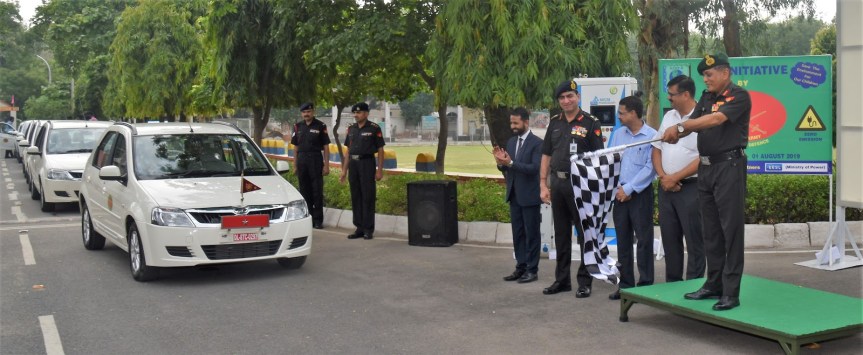
The
Indian Army in step with government policies on environmental
protection has launched an ecological initiative with employing E Cars
for use of its officials in New Delhi in partnership with Energy
Efficiency Services Ltd (EESL), a joint Venture of Central PSUs under
Ministry of Power. The introduction of E-Car in Army at Delhi was
visualised on World Environment Day and launched on 01 Aug 2019 with
flagging off the first lot of E-Cars for Indian Army by QMG, Lt Gen
Gopal R. Army plans to operate the first batch of 10 E-Cars as a pilot
project and develop further on this initiative and increase the number
of E Cars in Delhi to ensure economy, efficiency and minimal emissions.
It
is pertinent to mention that Army has always been at the forefront of
environmental initiatives. Indian Army has a large number of Territorial
Army Battalions (ECO) which have done a yeoman service in environmental
protection initiatives such as forestation. Army units posted in remote
and ecologically sensitive areas from Kashmir to Kanya Kumari have been
carrying out various activities in close coordination with local
populace to conserve the ecological balance and protect the environment.
Air
pollution has been a major challenge in Delhi. Governments across the
World are investing a lot of resources in fighting this menace. Electric
vehicle technology has proved to be a viable alternative by reducing
the carbon emission footprint. Indian companies like Tata Motors and
Mahindra have taken a lead in R&D and manufacturing of Electric
Cars. EESL has been the main facilitator in providing these vehicles to
various Government agencies. Army’s initiative in encouraging these
electric vehicles will go a long way in further development of this
technology and its adoption for the general public in near future.

Drones to undertake Large scale Mapping of Village areas in Maharashtra

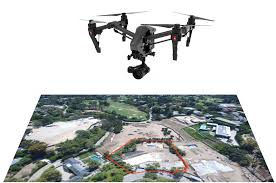
Survey
of India ,the national mapping agency of the country under the Min of
Science & Technology has signed an MoU with Department of revenue
& Land records, Govt of Maharashtra to undertake the Large scale
Mapping of Village Gaothan (Aabadi)  areas in the State of Maharashtra
using drones.
Chief
Minister of Maharashtra ,Shri Devendra Fadnavis inaugurated the Drone
based Mapping Project being carried out by Survey of India at Nimgaon
Korhale in Ahmednagar district on 31st July, 2019. Minister
of Rural Development, Women and Child Welfare Pankaja Gopinath Munde;
Surveyor General of India Lt Gen Girish Kumar, VSM; Commissioner Revenue
& Land Records; Commissioner Rural Development and Secretary, RDD
from Govt of Maharashtra along with other officials were also present
during the launch of the project. This large scale mapping project is
being carried out by Survey of India, Min of Science & Technology,
Govt of India for Dept of Revenue and Land Records, Govt of Maharashtra
using Professional Survey grade Drone covering more than 40,000 Village
Gaothan (Aabadi) areas in Maharashtra State. 
These
village Gaothan areas not been surveyed earlier will be mapped at 1:500
scale covering all land parcels in the village for preparing the
accurate revenue maps and GIS database. Drone survey will be pivotal to
fix locations of village boundaries, canals, canal limits and roads in
these villages.
A detailed presentation about this Large scale Mapping Project was also made in the National Workshop and Conference of Sarpanch and Upsarpanch organized
jointly by Department of Rural Development, Govt of Maharashtra and All
India Sarpanch Association Shirdi, Ahmednagar district on 31st July. This national conference was organized under the guidance of  CM Shri Devendra Fadnavis, presided by Minister
of Rural Development, Women and Child Welfare Pankaja Gopinath Munde
and attended by other Ministers, MP, MLAs and other dignitaries. This
conference was attended by thousands of Sarpanch, Upsarpanch and farmers
across the country and the Maharashtra state.

Sea to be The next Gateway for Tourism in The Country

The
Minister of State for Shipping (I/C) and Chemicals & Fertilizers,
Shri Mansukh Mandaviya and  Minister of State (I/C) for Tourism &
Culture, Shri. Prahlad Singh Patel discussed  the immense potential for 
maritime tourism in the country. In a  meeting between the two
Ministers held in New Delhi yesterday, the two  ministers  emphasised 
the need to promote the important tourist destinations in the coastal
areas of the country through coastal tourism .
It
was decided in the meeting to set up a committee of senior officials of
the two Ministries to explore the avenues for coastal tourism  in the
country and work out ways to promote the same. It was also  decided to
explore  the possibilities and opportunities in the areas of  Coastal
Tourism, Cruise Tourism, Sea Sports, Light House Viewing Gallery.  It
was suggested that every coastal area can create a calendar of events
for  tourist engagement, with activities like beach volleyball, sand
art, food festivals, dances of the fishing community, to name a few.
The
Shipping Ministry is promoting tourism in maritime states under the
Sagarmala Programme. This is being done in convergence with the Ministry
of Tourism and Tourism Development Departments of maritime state
governments.
These
new, unexplored tourism areas will open a door to coastal communities
of the maritime states where they will find many new and diverse job
opportunities. In the coming years, coastal and maritime tourism will be
a source for growth and job creation in the coastal states of India.
The
two Ministers  also underscored the need  for better coordination and
synergy between their respective Ministries so that desired results can
be achieved in a time bound manner.

Lok Sabha passes Consumer Protection Bill, 2019

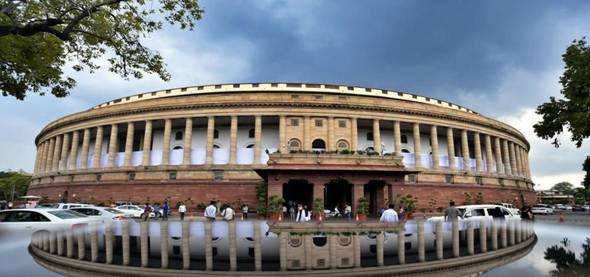
The
Lok Sabha todaypassed the Consumer Protection Bill 2019 after due
consideration and discussion.The Union Minister for Consumer Affairs,
Food and Public Distribution Shri Ram Vilas Paswan said that the bill
aims at protecting the interests of consumers by establishing
authorities for timely and effective administration and settlement of
consumers’ dispute. Moving the Bill, Minister of State for Consumer
Affairs, Food and Public Distribution, Shri Raosaheb Patil Danve said
the Bill aims to simplify a number of rules. Shri Danve said consumers
do not get quick redressal of their complaints and with the passage of
the Bill, consumers will be able to get speedy justice. He said the
government aims to simplify the entire process of redressal of consumer
grievances.
Under
the Bill, there is provision for central government to set up a Central
Consumer Protection Authority (CCPA) to promote, protect and enforce
the rights of consumers and will be empowered to investigate, recall,
refund and impose penalties. It will regulate matters related to
violation of consumer rights, unfair trade practices, and misleading
advertisements. There is also a provision for class action law suit for
ensuring that rights of consumers are not infringed upon. The authority
will have power to impose a penalty on a manufacturer or an endorser of
up to 10 lakh rupees and imprisonment for up to two years for a false or
misleading advertisement. 
Salient Features of the Bill
1.         Central Consumer Protection Authority (CCPA): Executive Agency to provide relief to a class of consumers. The CCPA will be empowered to-
  1. Conduct  investigations into violations of consumer rights and institute Complaints /Prosecution
  2. Order recall of unsafe goods and services
  3. Order discontinuance of Unfair Trade Practices and Misleading  Advertisements
  4. Impose penalties on Manufactures /Endorsers /Publishers of Misleading Advertisements
2.         Simplified Dispute Resolution process
i) Pecuniary Jurisdiction enhanced to-
  • District Commission –Up to Rs1 crore
  • State Commission- Between  Rs1 crore and Rs 10 crore
  • National Commission –Above Rs.10 crore
ii) Deemed admissibility after 21days of filing
iii) Empowerment of Consumer Commission to enforce their orders
iv) Appeals only on question of law after second stage
v) Ease of approaching consumer commission
  • Filing from place of residence
  • E-filing
  • Videoconferencing for hearing 
3.         Mediation
  • An Alternate Dispute Resolution (ADR) mechanism
  • Reference to Mediation by Consumer Forum wherever scope for early settlement exists and parties agree for it.
  • Mediation cells to be attached to Consumer Forum
  • No appeal against settlement through mediation
4.         Product Liability
A
manufacturer or product service provider or product seller to be
responsible to compensate for injury or damage caused by defective
product or deficiency in services
The Basis for product liability action will be:
  • Manufacturing  defect
  • Design defect
  • Deviation from manufacturing specifications
  • Not conforming to express warranty
  • Failing to contain adequate instruction for correct use
  • Services provided arefaulty, imperfect or deficient
New Bill- Benefit to Consumers
Presently
Consumer only have a single point of access to justice, which is time
consuming. Additional swift executive remedies are proposed in the bill
through Central Consumer Protection Authority (CCPA)
Deterrent punishment to check misleading advertisements and adulteration of products
Product liability provision to deter manufacturers and service providers from delivering defective products or deficient services
Ease of approaching Consumer Commission and Simplification of Adjudication process
Scope for early disposal of cases through mediation
Provision for rules for new age consumer issues: e-commerce & direct selling

Nepali and Santhali languages in the Scheme for grant of Senior/Junior Fellowships of Culture Ministry

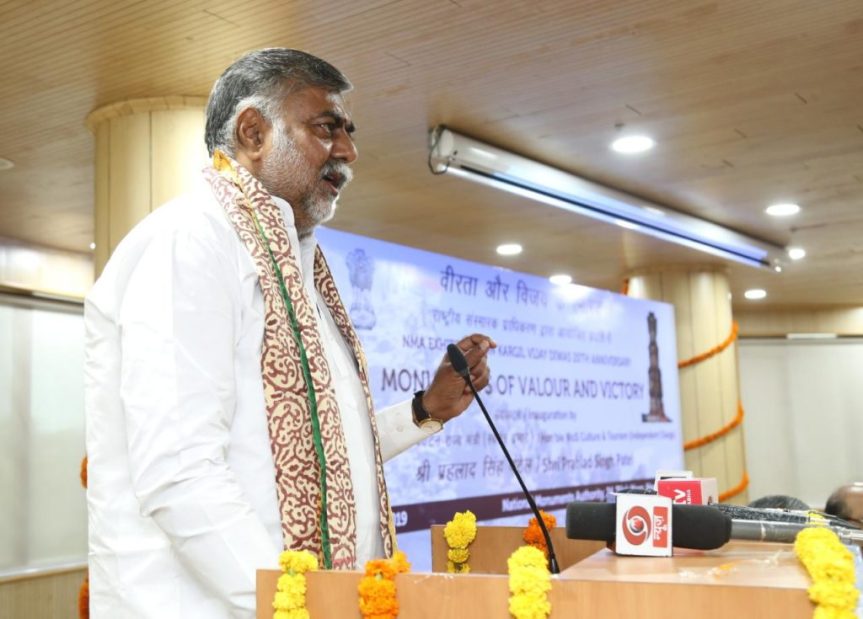
The
Union Minister of State for Culture and Tourism, Shri Prahlad Singh
Patel has announced to include the remaining 02 languages from the 8th 
Schedule of the Indian Constitution i.e. Nepali and Santhali in the
Sub-Field of Field “Literature” in the scheme component ‘Award of
Senior/Junior Fellowships to Outstanding Artistes in the Fields of
Culture’. The announcement was made by the Culture Minister during an
interaction with media in New Delhi today.

The
Ministry of Culture administers a scheme component namely Award of
Senior/Junior Fellowships to Outstanding Artistes in the Fields of
Culture. The fellowships are awarded for undertaking research oriented
projects.
Centre
for Cultural Resources and Training (CCRT), Dwarka is the Nodal
institute for handling the Scheme of Sr. /Jr. Fellowship till selection
process. “Literary Arts” is one of the Fields under this Scheme where
candidates can apply for research in 22 languages as their Sub-Field.
These 22 languages include the following 20 languages from the 8th Schedule of Articles 344(1) and 251 of the Indian Constitution along with English and Khasi:-
(1)
Assamese, (2) Bengali, (3) Bodo, (4) Dogri, (5) Gujarati, (6) Hindi,
(7) Kannada, (8) Kashmiri, (9) Konkani, (10) Maithili, (11) Malayalam,
(12) Manipuri, (13) Marathi, (14) Oriya, (15) Punjabi, (16) Sanskrit,
(17) Sindhi (18) Tamil, (19) Telugu and (20) Urdu.

Central Board of Secondary Education (CBSE) declares results of Central Teachers Eligibility Test (CTET) – July 2019

The
Central Board of Secondary Education (CBSE) declares results of Central
Teachers Eligibility Test (CTET) – July 2019 here today. The
12th edition of Central Teachers Eligibility Test (CTET) was conducted
on 7th July 2019 in 104 cities at 2942 centres all over country. Total
no of 114 City Coordinators, 2942 centre superintendents, 4335 observers
and 827 CBSE officials were deputed for smooth and fair conduct of
examination.

A
total no of 29.22 Lacs candidates were registered for this examination
out of which 23.77 Lacs candidates appeared in the examination.
The
result of this examination is declared in a record time of 23 days in
which 3.52 Lacs candidates declared qualified. Out of 3.52 Lacs, 2.15
Lacs from Paper -1(Primary school) & 1.37 Lacs from Paper-2 (Junior
high school) have qualified. The result is available at CTET website
i.e. www.ctet.nic.in and CBSE website i.e. www.cbse.nic.in.
The
mark sheet of candidates, who appeared in CTET examination July, 2019
will be available in the DigiLocker.  The qualifying certificate will be
uploaded in the DigiLocker & the qualified candidate will be
provided their login details on their registered mobile number.
The details of CTET July, 2019 Examination is as under:
Registered Candidates
Appeared Candidates
Qualified Candidates
Paper-I
1656091
1359478
214658
Paper-II
1266136
1017553
137172
TOTAL
29,22,227
23,77,031
3,51,830
The candidates are advised to check their result by login on website of CTET and CBSE.

Lok Sabha Passes the Code on Wages Bill, 2019

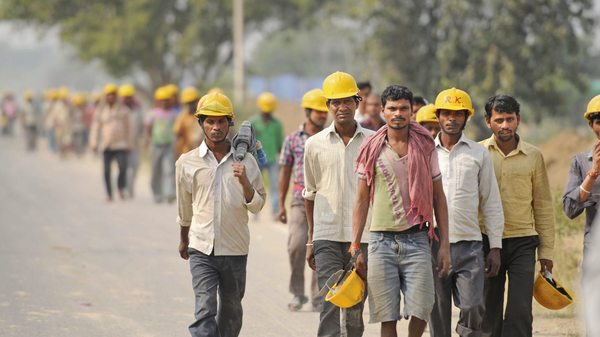
The
Lok Sabha today passed The Code on Wages Bill, 2019. While opening the
discussion for consideration and passing of the Bill,  Minister of State
(I/C) for Labour and Employment Shri Santosh Kumar Gangwar said that it
is a historic Bill which aims to transform the old and obsolete labour
laws into more accountable and transparent ones which is need of the
hour. As many as 17 present labour laws are more than 50 years old and
some of them even belong to pre-independence era.

Among
the four Acts being subsumed in The Code on Wages Bill, The Payment of
Wages Act, 1936 belongs to pre-independence era and The Minimum Wages
Act 1948 is also 71 years old. The Payment of Bonus Act, 1965 and The
Equal Remuneration Act, 1976 are also being subsumed in the Code. 
He
further said that wide consultations were held with trade unions,
employers and State governments and tripartite consultations were held
on 10th March, 2015 and 13th April, 2015. A draft
of Wage Code was made available in public domain through Ministry’s
website. Many persons gave their valuable suggestions. The Bill was
introduced in last Lok Sabha on 10 August, 2017 and was referred to
Parliamentary Standing Committee which submitted its Report on 18th December 2018. Out of 24 recommendations made by standing committee, 17 were accepted by government.
He
further said that the Code ensures minimum wages along with timely
payment of wages to all the employees and workers. Many unorganized
sector workers like agricultural workers, painters, persons working in
restaurants and dhabas, chowkidars etc. who were out of the ambit of
minimum wages will get legislative protection of minimum wages after the
bill becomes an Act. It has been ensured in the bill that employees
getting monthly salary shall get the salary by 7th of next
month, those working on weekly basis shall get the salary on last day of
the week and daily wagers should get it on the same day.
He
expressed hope that The Code on Wages will prove to be a milestone and
give respectable life to 50 crore unorganized sector workers. The
Minister responded to the debate in detail and thanked all the respected
members for cooperation in passing the Bill.
The salient features of the Code are as following:
The
Code on Wage universalizes the provisions of minimum wages and timely
payment of wages to all employees irrespective of the sector and wage
ceiling. At present, the provisions of both Minimum Wages Act and
Payment of Wages Act apply on workers below a particular wage ceiling
working in Scheduled
Employments only. This would ensure “Right
to Sustenance” for every worker and intends to increase the legislative
protection of minimum wage from existing about 40% to 100% workforce.
This would ensure that every worker gets minimum wage which will also be
accompanied by increase in the purchasing power of the worker thereby
giving fillip to growth in the economy. Introduction of statutory Floor
Wage to be computed based on minimum living conditions, will extend
qualitative living conditions across the country to about 50 crore
workers. It is envisaged that the states to notify payment of wages to
the workers through digital mode.

There are 12 definitions of wages in the different Labour Laws leading
to litigation besides difficulty in its implementation. The definition
has been simplified and is expected to reduce litigation and will entail
at lesser cost of compliance for an employer. An establishment will
also be benefited as the number of registers, returns, forms etc., not
only can be electronically filed and maintained, but it is envisaged
that through rules, not more than one template will be prescribed.

At present, many of the states have multiple minimum wages. Through
Code on Wages, the methodology to fix the minimum wages has been
simplified and rationalised by doing away with type of employment as one
of the criteria for fixation of minimum wage. The minimum wage fixation
would primarily based on geography and skills. It will substantially
reduce the number of minimum wages in the country from existing more
than 2000 rates of minimum wages.

Many changes have been introduced in the inspection regimes including
web based randomised computerised inspection scheme, jurisdiction-free
inspections, calling of information electronically for inspection,
composition of fines etc. All these changes will be conducive for
enforcement of labour laws with transparency and accountability.
 •
There were instances that due to smaller limitation period, the claims
of the workers could not be raised. To protect the interest of the
workers, the limitation period has been raised to 3 years and made
uniform for filing claims for minimum wages, bonus, equal remuneration
etc., as against existing varying period between 6 months to 2 years.

It can be said that a historical step for ensuring statutory protection
for minimum wage and timely payment of wage to 50 crore worker in the
country has been taken through the Code on Wages besides promoting ease
of living and ease of doing business.

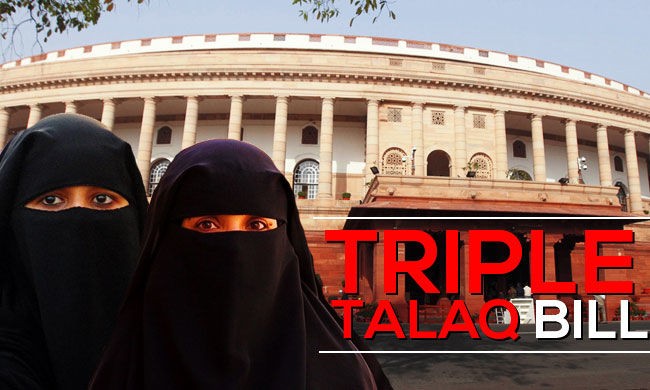
Parliament passes the Muslim Women (Protection of Rights on Marriage) Bill 2019

Parliament today passed the Muslim Women (Protection of Rights on Marriage) Bill 2019.

Expressing
satisfaction over this landmark moment, Union Minister for Home
Affairs, Shri Amit Shah congratulated Prime Minister Narendra Modi for
fulfilling his commitment and ensuring that a law is made to ban Triple
Talaq. 

The
Home Minister also congratulated Muslim women by saying, “On the
passage of this Bill, I congratulate the Muslim sisters across the
country on getting rid of the Triple Talaq curse. This act will free
Muslim women from the curse of this regressive practice”
Shri
Shah said that the Modi government is dedicated to protecting women’s
rights and ensuring their empowerment. This bill is a historic step to
protect the dignity of Muslim women and keep it intact. It will bring a
new era of hope and respect in the lives of Muslim women. From now on,
the door to unlimited possibilities will open for Muslim women and they
would now be able to play an effective role in the creation of ‘New
India’.
“Today
is a great day for India’s democracy. I thank all parties who supported
this historic bill”, Shri Shah said while thanking all the members of
Parliament.

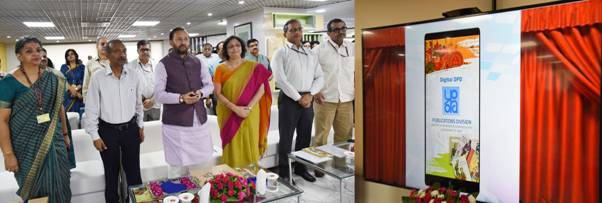
Shri Prakash Javadekar launches several e-projects of Publications Division

Union
Minister Shri Prakash Javadekar launched several e-projects of
Publications Division including its redesigned dynamic website, mobile
app “Digital DPD”, e-version of Rozgaar Samachar and  e-book “Satyagrah
Geeta” during his visit to Book Gallery at Soochna Bhawan in Delhi
today.
Speaking
on the occasion, Shri Javadekar said that in line with PM Modi’s call
to citizens in ‘Mann Ki Baat’ 2.0 programme, to make reading a habit, we
should revitalise the reading culture. He also urged for the creation
of Reading Clubs in the neighbourhood to improve the reading culture. He
added that the role of Rozgar Samachar can be improved when all the job
listing including the private jobs are listed in the newspaper. He
suggested that Rozgar Samachar when distributed in the Colleges will
help the students to improve their skill sets and make them better
suited for the job market. He said that the revamped website of
Publications Division looks attractive and dynamic, updating it daily
would make the people visit the site frequently. He was happy for the
launch of a mobile app for Publications Division which would help in
improving the reading habits of people in the era of e books and Kindle.
The details of the e-projects launched is as under:
1. Redesigned Dynamic Website: The newly revamped dynamic website (www.publicationsdivision.nic.in)
with integrated payment gateway is capable of providing real time
purchase facilities as well as updated information about Publications
Division’s books and  journals. The website will facilitate ease of
purchase. All books are available on the website for sale via payment gateway of Bharatkosh.
The website has an attractive look and feel and a well planned architecture. Catalogue of books and updates
and new books’ releases are displayed prominently for effective
engagement with aesthetic layout, soothing colour, well-designed icons
with good contrast between background and text for easy viewing. The
information is organised into different sections and categories,
catering to all stakeholders, viz. readers, authors, other publishers,
printers, agents etc.,in neatly stacked lists, with proper visual
material which is easy to understand.
The website is user-friendly with easily accessible Social Media tools. It is clutter-free with effective search feature and informative menus and sub-menu. The smooth
interface provides easy interactivity in English and Hindi. It is
accessible to everyone including specially-abled persons (with a screen
reader). Easy interface for feedback and suggestions with
Facebook and Twitter links for connecting with the organisation on Social Media have also been provided.
It has a special section on Gandhi@150. This
section details with the work undertaken with special features
including special Gandhi Catalogue, link to Gandhi Heritage Portal for
reading volumes of Collected works of Mahatma Gandhi and other Gandhian
publications.
2. Mobile App “Digital DPD”:  It
is available for free download on Google Play Store and will facilitate
tapping into the growing mobile commerce potential. The Mobile App is
synced with the Digital Rights Management System to keep a check on a
piracy and integrated with the Bharatkosh payment gateway for the ease
of payments.
3. e-version of Rozgar Samachar:
Rozgar Samachar,  a corresponding version of Employment News (English),
is a prominent job journal in Hindi  providing  information about job
opportunities in Central Government including  Public Sector
Enterprises.  It also provides information and guidance about admission
and career opportunities in various streams through career-oriented
articles by experts. 
The
e-Rozgar Samachar will provide the journal in digital form and is
available @ Rs.400 for yearly subscription The e- Rozgar Samachar is
expected to fulfil the growing needs of young readers, turning to
electronic modes of communication.
4. e-book “Satyagraha Geeta”:
The heritage value book written by eminent poet Dr Kshama Rao in 1930s
in Sanskrit verses presents the life and activities of Gandhiji. As part
of Gandhi@150 commemoration, DPD procured a PDF version of the book and
prepared the e-version of the book. English translation has also been
added to ensure wider reach.  Divided in eighteen chapters (like Adhyays of Bhagwat Geeta),
Satyagraha Geeta presents Gandhi’s ideas, philosophy of life and his
methods of action in Sanskrit verse form, capturing Gandhian ethos and
tenets.

How to Write a Press Release?

So, how to write a press release? That’s a million dollar question.
If done right, it can indeed bring you a million dollars in revenue.
Let’s get started by answering what a press release is.
“A press release is simply a statement prepared for distribution to the news media
announcing something claimed as having news value with the intent of gaining media coverage.”
A press release consists of following elements:
  • Headline

    The headline is the first single line of text in the press release and
    tells what the press release is about. It can be a very effective tool
    to grab the attention of the journalists, so writing it from a
    journalists perspective is very important. Think what headlines catch
    your eyes in the newspaper.

    The headline should be descriptive but not too long. For the
    later reason, Eduindex News limits it to 100 characters.

    The headline should be formatted in title case, that is, each word in
    the sentence should have first letter capitalized, and rest of the
    letters in lowercase. Acronyms can be in uppercase.

  • Summary

    The summary lets you build up your chance to sell your press release to
    the journalist.
    It is generally a requirement of online press release services. Identify
    a unique feature about your product or service and then write how it is
    going to revolutionize the world.

    The summary should be a single paragraph with about three to
    five lines. Beyond 250 characters is too long, so this is the limit for
    PRLog.

    All sentences in the summary should be in sentence case, that is, only
    first letter of a sentence should be capital, and all others should be
    lowercase. Again, acronyms can be all capital letters.

  • Body

    1. Dateline

      The dateline contains the release date of the press release and usually
      also the originating city of the press release. For online press release
      services like PRLog, the date stamp is automatic and should not be
      entered.

    2. Introduction

      The introduction is where the press release body starts.
      It is the first paragraph in a press release,
      that generally gives basic answers to the questions of who, what, when, where and why.

    3. Details

      The details come after the introduction.
      It gives further explanation, statistics, background, or other details relevant to the news
      and also serves to back up whatever claims were made in the introductory paragraph.

    The body should be around 3000 characters or 450 words. The body should
    have a minimum of two paragraphs. All paragraphs should be ideally
    between 5 to 8 lines each. There should be a blank line after each
    paragraph for good visibility.

  • About

    The about section is also called the “boilerplate” as it used over and
    over again. It is generally a short section providing background
    information on the press release issuing company or organization.

  • Media Contact Information

    This section contains the contact information like name, phone number,
    email address, mailing address, etc for the media relations contact
    person. For good credibility, the email address should be the same as
    the organization the press release is about. For example, if the press
    release is about an organization with a website called abcd.com, then
    the email address should be email_address@abcd.com.

General Tips

  • A press release should be written in third person. Instead of using we, us and ours, your should be using they, them and theirs.
  • It is very useful to look at other people’s press releases. Feel
    free to take a look at the most viewed press releases, as it usually
    gives a lot of insight into how to write a press release.
  • Submit press release to Eduindex News at news@eduindex.org

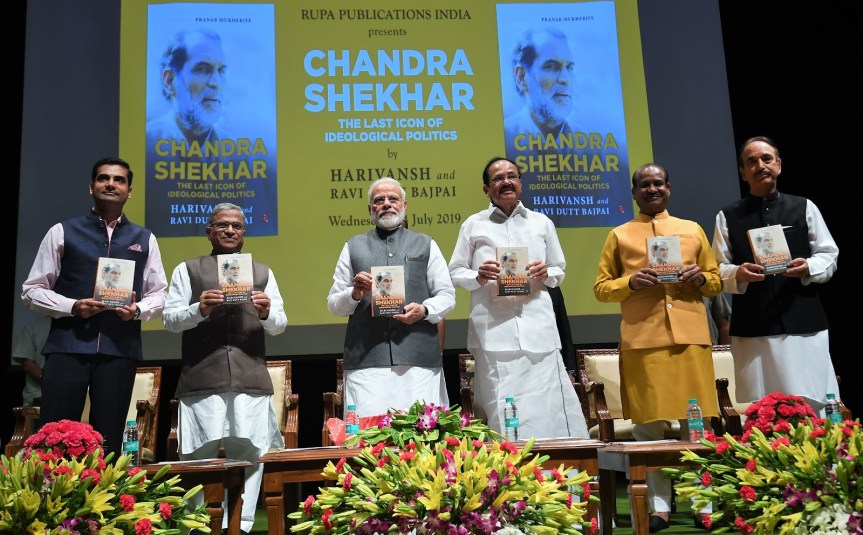
PM releases the book “Chandra Shekhar – The Last Icon of Ideological Politics”

The
Prime Minister, Shri Narendra Modi, today released the book “Chandra
Shekhar – The Last Icon of Ideological Politics.” The book has been
written by Shri Harivansh, Deputy Chairman, Rajya Sabha; and Shri Ravi
Dutt Bajpai. The book release event was held at the Balayogi Auditorium,
Parliament Library Building.
PM releases the book "Chandra Shekhar - The Last Icon of Ideological Politics"
PM releases the book “Chandra Shekhar – The Last Icon of Ideological Politics”
The Prime Minister presented the first copy of the book to the Vice President of India, Shri Venkaiah Naidu.
Speaking
on the occasion, the Prime Minister said that in today’s political
context, it is remarkable that even after about 12 years of his passing
away, the thoughts of former Prime Minister Chandra Shekhar ji, continue
to guide us, and are as vibrant as ever.
Congratulating
Shri Harivansh for writing the book, the Prime Minister shared some
memories and anecdotes of his interactions with Shri Chandra Shekhar.
He
recalled that he had first met Shri Chandra Shekhar ji in 1977. He
saidthat he was travelling with former Vice President Bhairon Singh
Shekhawat ji, and had met Shri Chandra Shekhar at Delhi Airport. He said
that the two leaders shared a close bond, despite their different
political ideologies.
The
Prime Minister also recalled that Shri Chandra Shekhar ji addressed
Shri Atal Bihari Vajpayee ji as “Guru ji.” He described Chandra Shekhar
ji as a man of remarkable culture and principles, who did not hesitate
to oppose the dominant political party of his time, because he disagreed
with certain aspects of it.
The
Prime Minister mentioned political leaders such as Mohan Dharia ji and
George Fernandes ji, both of whom, he said, spoke highly about Chandra
Shekhar ji.
Shri
Narendra Modi recalled his last meeting with Shri Chandra Shekhar ji.
He said the ailing former Prime Minister had telephoned him and invited
Shri Modi to visit him whenever he was in Delhi. During that
interaction, Shri Chandra Shekhar ji had inquired about Gujarat’s
development, and shared his perspective on many national issues.
The Prime Minister appreciated his clarity of thought, commitment to the people, and dedication to democratic principles.
The
Prime Minister also recalled the historic Padyatra that Shri Chandra
Shekhar ji had undertaken, for the farmers, the poor, and the
marginalized. The Prime Minister said that it is unfortunate that we
failed give him the respect he deserved, at that time.
The
Prime Minister said that there is a coterie of people who have sought
to create adverse impressions of some great Indian leaders, including
Dr. Ambedkar and Sardar Patel. He asserted that a museum for all former
Prime Ministers will be established in Delhi. He urged the family
members of former Prime Ministers to share aspects of the life and work
of these Prime Ministers. He said the country needs a new political
culture, beyond political untouchability.
Speaker,
Lok Sabha, Shri Om Birla; Deputy Chairman, Rajya Sabha, Shri Harivansh;
and Leader of Opposition in the Rajya Sabha, Shri Ghulam Nabi Azad,
were present on the occasion, and also addressed the gathering.

22nd National Conference on e-Governance 2019 to be held at Shillong on 8-9, 2019

The
Department of Administrative Reforms & Public Grievances (DARPG),
in association with Ministry of Electronics & Information Technology
(MeitY), Government of India and the State Government of Meghalaya will
organize the 22nd National Conference on e-Governance 2019 on 8-9th
August, 2019 at Shillong, Meghalaya on the

“Theme of the Conference is “Digital India: Success to Excellence”

. This is the first time the event
is being organized in North-Eastern region of the country. This
Conference provides a platform to disseminate knowledge on effective
methods of designing and implementing sustainable e-Governance
initiatives to provide end-to-end Digital Services, exchange experiences
in solving problems, mitigating risks, resolving issues and planning
for success. This was announced in a press conference addressed by Shri
P. S. Thangkhiew, Chief Secretary, Government of Meghalaya, Shri V.
Srinivas, Additional Secretary, Department of Administrative Reforms and
Public Grievances, at Shillong today.  The 22nd National e-Governance Conference at Shillong is part of the DARPG’s 100 days initiatives in the new Government.
The theme of this Conference is “Digital India: Success to Excellence”.
Discussions will be held on 5 sub-themes in Plenary session during the
Conference: India Enterprise Architecture (INDEA), Digital
Infrastructure, One Nation – One Platform, Emerging Technology for
Practitioners, Secretariat Reforms, National e-Governance Service
Delivery Assessment (NeSDA). 4 Breakout Sessions will be held on
sub-themes-Inclusion and Capacity Building, Engaging with Innovators and
Industry, End- to- End Digital Services: IT initiatives of State
Governments.
28 States and 8 Union Territories have confirmed their participation in the 22nd
National e-Governance Conference. Over 450 delegates are expected to
attend the Conference. An Exhibition will also be organized during the
event to showcase India’s achievements in the field of e-Governance,
along with a Hall of Fame/ photo exhibition on the award winners.
Shri P. S. Thangkhiew, Chief Secretary, Meghalaya said that the 22nd
National e-Governance Conference would be inaugurated by the Shri
Conrad Kongkal Sangma, Chief Minister of Meghalaya, and Dr. Jitendra
Singh Minister of State (Independent Charge) of the Ministry of
Development of North Eastern Region and the Minister of State in the
Prime Minister’s Office, Personnel, Public Grievances & Pensions,
Department of Atomic Energy, Department of Space. The Minister of
Information Technology and Communication and Urban Affairs Department,
Government of Meghalaya, Shri Hamletson Dohling would also address the
inaugural session. Senior Secretaries from the Government of India
including Shri K. V. Eapen, Secretary Department of Administrative
Reforms and Public Grievances and Pensions, and Shri Ajay Prakash
Sawhney Secretary Ministry of Electronics and Information Technology
would attend the conference. 15 States would be presenting their IT
initiatives and success stories in the breakout sessions.
Shri V. Srinivas, Additional Secretary DARPG said that the 22nd
National e-Governance Conference at Shillong would provide considerable
momentum to the e-Governance initiatives in the region, providing
opportunities for civil servants and industry captains of North Eastern
region to showcase their successful interventions in e-Governance in
improving end to end service delivery.