From Uncertainty to Security


How PMAY-G Transformed Nondo’s Life!

In the small village of ‘Rotlang W’ in Mizoram,’ Nondo’s family faced a constant battle for survival. As a daily wage laborer, Nondo worked tirelessly to feed his wife and five children. Yet, no amount of effort could change the harsh reality of their living conditions. Their dilapidated kutcha house, with its leaky roof and crumbling walls, offered little protection against the elements. 

During the monsoons, water seeped through the roof, soaking their clothes and bedding. Winters were unbearably cold, with biting winds finding their way through the fragile structure. The family’s health and peace of mind suffered with every cold night made us worry if our house would hold up.

Relief came in 2017 when Nondo’s name appeared on the beneficiary list of the Pradhan Mantri Awaas Yojana – Grameen (PMAY-G). The scheme, designed to provide pucca houses for vulnerable rural families, offered Nondo the opportunity to build a secure home. With financial assistance and support from local officials, construction of his house began. 
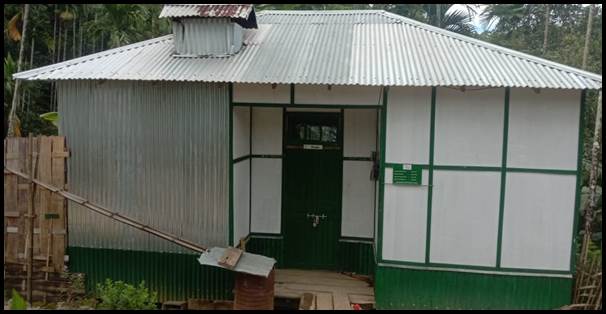
rotlanf w.jpeg

Lunglei District, Mizoram

By the end of the year, the family moved into their new home. It was a simple and sturdy structure, built to withstand harsh weather and provide a safe haven for the family. The new house brought a profound sense of security to Nondo’s family. No longer did they worry about rainwater flooding their home or chilly winds making their children sick. Their pucca house stood firm against the elements, offering warmth and stability. The newfound security also gave Nondo a sense of pride and belonging. For the first time, his family could welcome guests into their home without embarrassment or fear of judgment. 

Nondo’s story is a testament to the transformative power of PMAY-G, launched in 2016 by the Government of India to fulfil the vision of “Housing for All.” The scheme focuses on providing pucca houses with essential amenities to rural families living in kutcha houses or without a home. The key features of PMAY-G include providing financial assistance for constructing houses with a minimum size of 25 square meters. The scheme prioritizes vulnerable groups such as houseless families, households without literate adults, and those reliant on casual labour for income. Special emphasis is placed on supporting marginalized communities, including Scheduled Castes, Scheduled Tribes, and other disadvantaged sections of society.

Through such targeted measures, the program ensures that the most deserving households, like Nondo’s, benefit first.

Today, Nondo and his family live with peace of mind, no longer burdened by the fear of homelessness or the harshness of nature. Their pucca house is more than a shelter; it is a symbol of hope, resilience, and progress. 

References

PMAY Success stories

*******

55th IFFI’s Closing Film ‘Dry Season’ is a Tale of Humanity, Sustainability, and Generational bonds

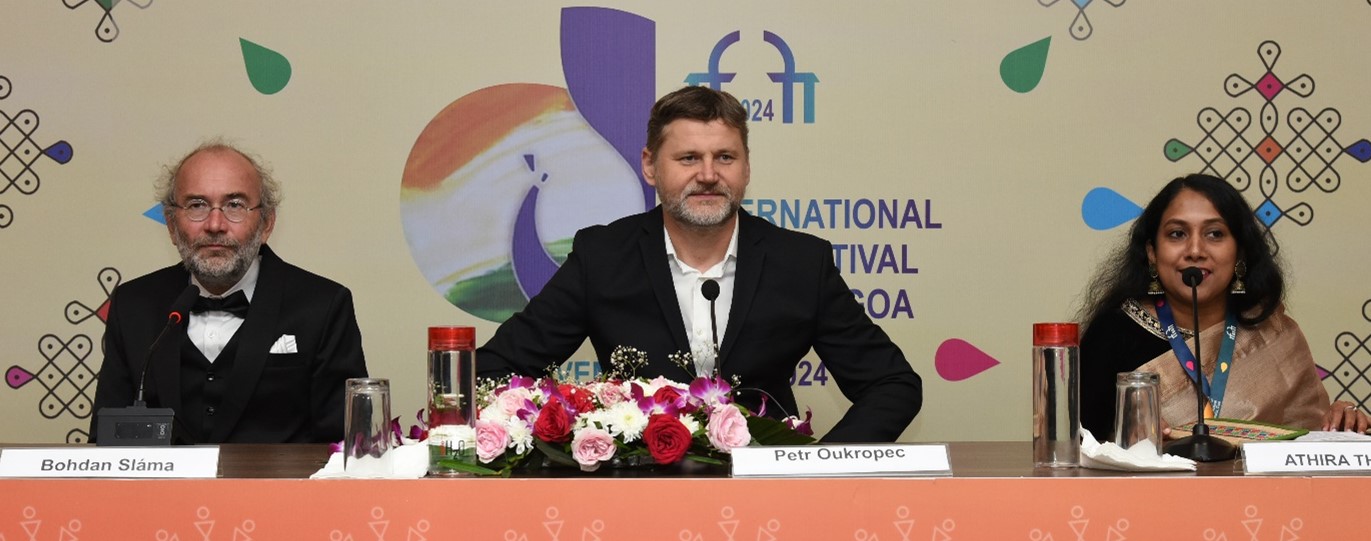
The Press Conference for the much-anticipated closing film ‘Dry Season’ (originally titled Sukho), directed by the acclaimed Bohdan Sláma and produced by Petr Oukropec, was held as part of the 55th International Film Festival of India (IFFI) in Goa. Organized by the Press Information Bureau, the event highlighted the film’s poignant exploration of environmental and generational challenges.

Set amidst verdant fields, the story follows Josef, a fifty-year-old farmer striving for an alternative lifestyle with his wife Eva and their three children. Josef’s clash with Viktor, a profit-driven agribusiness owner, intensifies as a dry summer leaves the village without drinking water, sparking tensions between their families, complicated further by Viktor’s strained bond with his returning son.

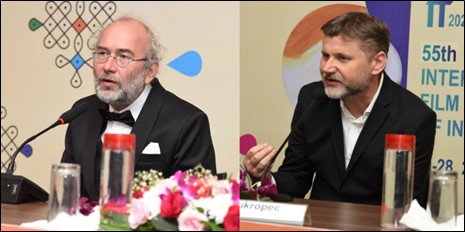
Director Bohdan Sláma reflected on the universal bond between humans and the environment, underlining the need to protect natural resources as a reflection of safeguarding the human spirit. He spoke about the meticulous journey of crafting the screenplay, which took three years and underwent 11 revisions, and expressed gratitude for the collaborative efforts of the cast and producers that enriched the filmmaking process.

Producer Petr Oukropec shared the complexities of financing and creating art-house cinema in smaller nations, emphasizing the significance of international collaborations. He lauded the film’s relevance, resonating with global audiences by addressing themes of sustainability, family, and generational divides.

The filmmakers urged younger audiences to take ownership of their future, as the narrative serves as a mirror to pressing contemporary issues. Concluding the session, Bohdan Sláma expressed hope that Dry Season would spark meaningful conversations, not just in India but across the world, reminding audiences of the delicate balance between humanity and nature.

Watch the Press Conference here:

* * *

PIB IFFI CAST AND CREW | Rajith/Supriya/Ashwani/Darshana | IFFI 55 – 114
Financial Assistance to Micro Food Processing Enterprises

Ministry of Food Processing Industries (MoFPI) is implementing a Centrally Sponsored- “Pradhan Mantri Formalisation of Micro Food Processing Enterprises (PMFME) Scheme” for providing financial, technical and business support for upgradation of micro food processing enterprises in the country. The scheme is operational for a period of five years from 2020-21 to 2025-26 with an outlay of Rs. 10,000 Crore.  The scheme aims to enhance the competitiveness of existing individual micro-enterprises in the unorganized segment of the food processing industry and promote formalization of the sector. The Scheme primarily adopts One District One Product (ODOP) approach to reap the benefit of scale in terms of procurement of inputs, availing common services and marketing of products. It provides the framework for value chain development and alignment of support infrastructure.  The ODOP are identified by States / UTs based on the agriculture production, raw material availability, perishability of the product etc. The details of financial assistance offered to the prospective entrepreneurs under PMFME Scheme to promote ODOP are at Annexure.

Ministry of Food Processing Industries (MoFPI) extends financial assistance as grant-in-aid to various institutions/ universities, Public funded organizations and recognized R&D laboratories both in public and private sector, to promote and undertake demand driven R&D work in the Food Processing Sector for product and process development, design and development of equipment, improved storage, shelf-life, packaging etc.

Under the scheme, financial assistance as grant-in-aid is given to Private organizations/ Universities/institutions/R&D laboratories and Council of Scientific & Industrial Research (CSIR) recognized R&D units in private sector to the tune of 50% of equipment cost in general areas and 70% in difficult areas and to various Universities, Indian Institute of Technology (IITs), Central/ State Government Institutions, Government funded organizations to promote and undertake demand driven R&D work in food processing sector for product & process development, design and development of equipment, improved storage, shelf-life, packaging etc. R&D projects of Government organizations/ Institutions are eligible for 100% grant-in-aid for the cost of equipment, consumables and expenditure related to Research Fellows, etc. R&D portal had been developed through the National Institute of Food Technology, Entrepreneurship & Management (NIFTEM), Kundli, Sonepat, Haryana to disseminate information relating to research & development work supported by MoFPI scheme, including outcomes, technologies developed, etc. The portal will also be a repository of R&D work by other Ministries/Institutions in the food processing sector.

This information was given by Union Minister of Food Processing Industries Shri Chirag Paswan in a written reply in Lok Sabha today.

ANNEXURE

The details of financial assistance offered to the enterprises under Pradhan Mantri Formalisation of Micro Food Processing Enterprises (PMFME) Scheme are as under:

(i). Support to Individual / Group Category Micro Enterprises: Credit-linked capital subsidy @35% of the eligible project cost, maximum ceiling Rs.10 lakh per unit;

(ii). Support to SHGs for seed capital: Seed capital @ Rs. 40,000/- per member of SHG engaged in food processing for working capital and purchase of small tools subject to maximum of Rs. 4 lakh per SHG Federation.

(iii). Support for Common Infrastructure: Credit linked capital subsidy @35% subject to maximum of Rs. 3 crore to support FPOs, SHGs, Cooperatives and any Government agency for setting up of common infrastructure. The common infrastructure will also be available for other units and public to utilize on hiring basis for substantial part of the capacity.

(iv). Branding and Marketing Support: Grant upto 50% for Branding and Marketing to groups of FPOs/ SHGs/ Cooperatives or an SPV of micro food processing enterprises.

(v). Capacity Building: The scheme envisages training for Entrepreneurship Development Skilling (EDP+): program modified to meet the requirement of food processing industry and product specific skilling.

*****

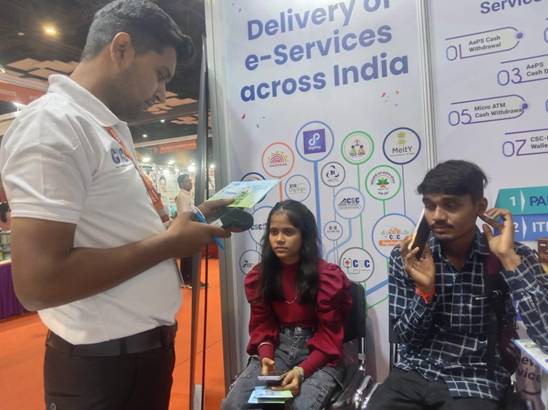
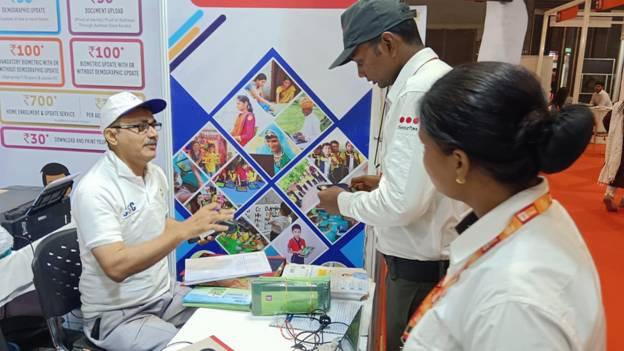
Empowering Lives through Digital Innovation: CSC Shines at India International Trade Fair (IITF)

The Ministry of Electronics and Information Technology has set up a vibrant stall at the India International Trade Fair (IITF) in Hall No. 14. Hosted by Common Service Centers (CSC), the stall showcases a wide range of digital and community services, including the Grameen eStore, CSC Academy, DigiPay, Aadhaar-related services, and other key initiatives. The primary aim of this exhibit is to spread awareness about the facilities provided by CSC and encourage more people to leverage these services for their empowerment.

The Dynamic Leaders Behind the Stall

This CSC stall is led by two dedicated and inspiring Village Level Entrepreneurs (VLEs) from Delhi, Siddharth and Vikas. Their dedication and commitment reflect the transformative power of digital services, as they serve their communities while setting examples for others.

Siddharth: A 22-Year-Old Visionary

Siddharth, a 22-year-old entrepreneur, started his CSC center in 2020. Operating from Mandawali, Delhi, he faced the responsibility of supporting his family right after completing his 12th-grade education. Despite the challenges, he turned his situation around by utilizing the income generated through CSC services. Today, Siddharth manages services such as Aadhaar registration, DigiPay, and Grameen eStore with great efficiency. His journey is a testament to how young individuals can transform their lives by seizing the right opportunities.

Vikas: A Story of Resilience and Success

50-year-old Vikas has overcome significant challenges in his life. Stricken by polio in childhood, he experiences difficulty walking. However, his determination never wavered, and he established his CSC center in the Rohini area of Delhi. Vikas’s story serves as a powerful reminder that physical limitations cannot hinder one’s drive and potential for success.
Through his center, he provides vital services like Aadhaar enrollment, seamless transactions via DigiPay, and other government schemes.

The CSC Stall: A Symbol of Digital Empowerment

Visitors to the CSC stall at IITF can explore opportunities like the Grameen eStore, which facilitates easy buying and selling of products, DigiPay for cashless transactions, and CSC Academy’s programs to enhance digital literacy. The efforts of VLEs like Siddharth and Vikas underscore how digital services can bridge gaps and empower individuals, even in the face of adversity.

Role Models for Society

The inspiring journeys of Siddharth and Vikas illustrate that digital services are not just tools for livelihood but also a means to uplift every segment of society. Their hard work and dedication have made them role models for countless others aspiring to achieve financial independence and social impact.

The CSC stall at the India International Trade Fair exemplifies the success of the Digital India initiative, reaching even the remotest corners of the country. Siddharth and Vikas, with their resilience and determination, stand as shining examples of this transformation.
Their stories teach us that success is achievable despite challenges if one has perseverance and the right opportunities. CSC’s initiative not only promotes digital inclusion but also inspires individuals across the nation to become self-reliant and empowered.

 Defence Services Staff College, Wellington in Tamil Nadu

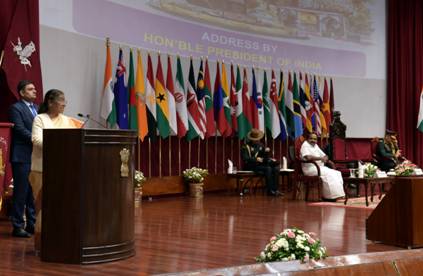
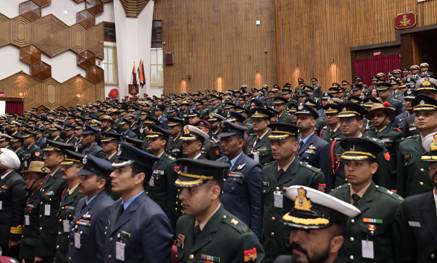
President Smt Droupadi Murmu visited the Defence Services Staff College (DSSC), Wellington in The Nilgiris District, Tamil Nadu on November 28, 2024. Addressing the student officers and faculty, the President said the DSSC has made commendable contribution to training & educating the potential leaders of the Armed Forces of India and friendly countries & selected civilian officers. Over the past seven decades, it has played a major role in professionally grooming the middle level officers. It has the unique distinction of having a composite multi-service and multi-national group of student officers and a professionally enriched faculty.

The President was happy to note that women officers are now commanding various units in all the three services. She said that the increasing strength and role of women in all spheres is encouraging and inspiring for all, especially young girls. She expressed hope for witnessing more and more women joining the Armed Forces, where they can demonstrate exceptional capabilities and break new ground in uncharted territories.

The President said that India is rising and the world is acknowledging the growth in various sectors, including defence. India is moving towards indigenisation and self-reliance to keep the Armed Forces ready to meet the future challenges. The country is being developed as a major defence manufacturing hub, and is moving towards becoming a reliable defence partner & big defence exporter.

The President said: “In the fast-changing geopolitical environment, we need to be well-prepared to tackle any situation. We not only have to secure our national interests, but also prepare for new national security challenges like cyber warfare and terrorism. Updated knowledge and cutting-edge technologies based on intensive research are required to be applied.” She expressed confidence that this course will prepare student officers all for higher responsibilities and as strategists who can deal with complex situations in an effective manner.

The President appreciated the unique role of the institution in nurturing the future senior leadership of the Armed Forces. She appreciated the creativity, dedication and the focus with which training is being conducted at the College. She also complimented the student officers for having being selected for the prestigious Staff Course at DSSC, and their rigourous efforts while undertaking this course.

 The President also interacted with the Student Officers, including 38 from friendly countries, attending the course at the DSSC. She hailed the role of the International Student Officers in strengthening the mutual cooperation and relationship of their countries with India, and wished them a fruitful and successful stay at DSSC.

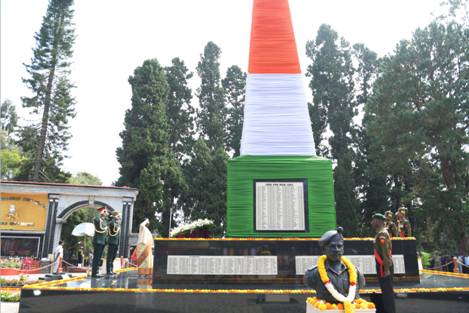
The President also laid a wreath at the War Memorial, and interacted with Ex-servicemen & Veer Naris.

The President felicitated the Veer Naris acknowledging the supreme sacrifice of their loved ones in the service to the Nation. She was accompanied by Minister of Backward Classes (Minister-in-Waiting) of Tamil Nadu Government Shri Siva V Meyyanathan and Commandant DSSC Lt Gen Virendra Vats.

Established in 1948, DSSC is a premier Tri-services institute with a mandate to train and hone their skills of selected middle-level officers of the Armed Forces of India and friendly countries. Since its inception, the College has trained more than 2,000 International Officers, and 24,000 Indian Officers have passed through its portals. The College alumni, over the years, have risen to become heads of States and Militaries across the world. The President appreciated the training activities being conducted at the College with special emphasis on initiatives undertaken on enhancing jointmanship amongst the officers of the Indian Armed Forces. 

***

Protection of the Indigenious Culture of Tribal Communities

To protect, promote & preserve various forms of folk art and culture throughout the country, the Government of India has set up seven Zonal Cultural Centres (ZCCs) with headquarters at Patiala, Nagpur, Udaipur, Prayagraj, Kolkata, Dimapur and Thanjavur. Annual grant-in-aid is released to these seven ZCCs for organizing various cultural activities and programmes on regular basis in their member States.

To promote the tribal culture, various   festivals like Hornbill Festival, Octave, Tribal Dance Festival, Adi Bimb, Adi Sapta Pallav, Adi Lok Rang, Adiwasi Mahotsav etc. are organized through Zonal Cultural Centres (ZCCs) of Ministry of Culture to showcase unique forms of folk dances, songs, cuisine, exhibitions and demonstration of traditional skill in painting, art & craft etc. Artists are engaged by ZCCs from tribal areas to showcase their talents in various cultural programmes/ activities organized by them for which they are paid honorarium, DA/TA, boarding & lodging etc. The annual grant-in-aid released to the seven ZCCs for organizing various cultural activities and programmes during the last three year is as under:

(Rs. in lakh)

Sl. No.YearAmount released
1.2021-226798.08
2.2022-236572.06
3.2023-2411967.57(as on 31st March, 2024)

Ministry of Tribal Affairs is implementing the schemes of “Support to Tribal Research Institutes and Tribal Research, Information, Education, Communication and Events” under which various activities are undertaken to conserve and promote tribal culture, archives, artefacts, customs and traditions of the tribal communities.            

Under the Scheme of “Tribal Research, Information, Education, Communication and Events (TRI-ECE)”, reputed research Institutes/ Organizations/ Universities have undertaken various research studies/ publication of books/ documentation including audio visual documentaries etc.

Kerala is a member State of South Zone Cultural Centre (SZCC), Thanjavur (an autonomous organization under Ministry of Culture) which regularly organizes cultural activities/ programmes in the State of Kerala, Andhra Pradesh, Telangana, Karnataka, Tamil Nadu, Union Territories of Andaman & Nicobar Islands, Lakshadweep and Puducherry. During the last three (03) years, funds released to SZCC, Thanjavur for organizing cultural activities/ programmes in its member States are as under:

(Rs. in lakh)

Sl. No.YearAmount released
1.2021-221640.48
2.2022-23994.87
3.2023-242135.39

A list of programmes organized by SZCC, Thanjavur in the State of Kerala during the last three (03) years is as under

Sl. No.Name of the ProgrammeDateArt forms and Category
1.Tribal festival18.02.2021 to 20.02.2021Puata (Kattunain)
Nattu Gaddika
Gattiyattam
Kambala Natti
Vattakali (Paniya)
Mangalam Kali (Malavettu)
Mangalam Kali (Mavila)
Chimmanakali
Comparing
2.“Amrutotsav” Programme25.09.2021Mangalam Kali
Alamikkali
Eruthukkali
3.Tribal Martyr Thalakkaru Chandu (Unsung Hero)04.06.2023Stage play
4.Pulikali Programme31.08.2023 to 01.09.2023Pulikali

Curtains drawn on the 43rd edition of India International Trade Fair

On the concluding day of November 27, 2024, the curtains fell on the historic 43rd edition of the India International Trade Fair (IITF). Shri Premjit Lal, ED, ITPO announced that this year a good amount of business was generated by the participants. He indicated that more than one million visitors witnessed the fair.  He praised the media for their wide coverage not only in print media but social media too. 

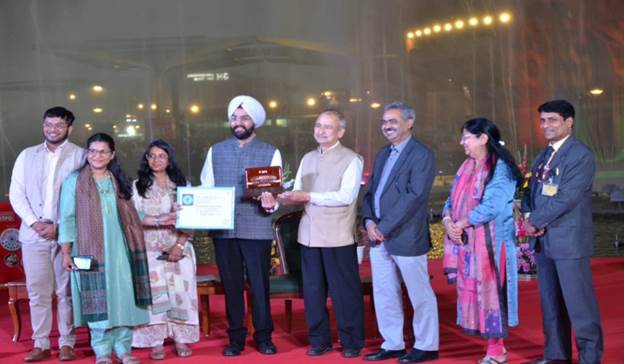
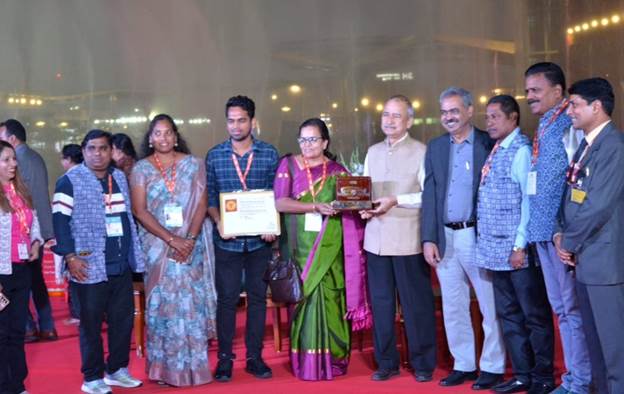
Puducherry  won  the  Gold   Medal, the Silver Medal was  presented   to Meghalaya and  the  Bronze Medal  to Karnataka in the States and Union Territories Category,  Special Appreciation Certificates  was  also  conferred  to Punjab, West Bengal and Tripura.

In the Thematic Presentation by the States Category, Madhya Pradesh won the Gold Medal, the Silver Medal was presented to Odisha and Bronze to Assam.  Special Appreciation Certificates were also given to Maharashtra, Punjab and Tamil Nadu.

At IITF, the ITPO also observed and celebrated Swachh Bharat Abhiyaan, raising awareness about cleanliness and sanitation among exhibitors and visitors and the award was also given to Swachh Pavilion – Gold to Goa, Silver to Kerala, Bronze to Haryana and Commendation was also awarded to Uttarakhand and Gujarat.

In the   Foreign   Pavilionsthe Embassy of the Republic of Tunisia was commended with the Gold Medal and Egypt (Milano Bazar) won the Silver while the Bronze Medal was presented   to Turkey, Tillo Hediyelik Eşya Sanayi tic itet Ltd. Serketi and Thailand (Thai SMEs Exporter Association).

In the Ministries and Departments, PSUs, PSB and Commodity Boards   category, Reserve Bank of India bagged the Gold Medal, Punjab National Bank (PNB), received the Silver Medal respectively, while State Bank of India (SBI) won the Bronze Medal. Special Appreciation Certificates were received by the Coal India Limited and Central Bank of India.

In the Empowering India (Ministries & Govt. Department/SARAS/KVIC/Min. of Social Justice)the Gold Medal was conferred to Ministry of Rural Development (SARAS), the Silver Medal to Khadi and Village Industries Commission (KVIC), Ministry of Micro, Small and Medium Enterprises (MSME) and Ministry of Panchayati Raj  bagged the Bronze Medal.  Special Commendation was awarded Pt. Deendayal Upadhyaya Institute for Persons with Physical Disability and Department for Promotion of Industry and Internal Trade (DPIIT) and NHDC-National Handloom Development Corporation (NHDC)

In the Private Sector, Jina Ranjit and Sons LLP won the Gold Medal, The Supreme Industries Limited (Supreme Furniture) received the Silver Medal and Ananda Dairy Limited bagged the Bronze Medal.  Special Commendation was awarded to Mittal Electronics (Sujata), Hamdard Foods India and Romana Herbal Care Pvt. Ltd. (Rosa, Hychating Mist).

Complimenting all the Award winners in different categories, Shri Premjit Lal appreciated the participants and visitors for their continued faith in the IITF format.  He also appreciated Delhi Police and other law enforcement agencies for their continued efforts in making the event incident free.ITPO also conferred awards to exhibitors in different categories.

***

Social Responsibility of Media

Daily writing prompt
What technology would you be better off without, why?

By Shashikant Nishant Sharma

Media plays a crucial role in shaping public perceptions and disseminating information, including scientific knowledge, to the general populace. However, while media has the potential to foster scientific thinking among newspaper readers, it also faces several challenges that can hinder its effectiveness in achieving this goal.

On the positive side, media can serve as a powerful tool for popularizing scientific concepts, discoveries, and advancements. Well-written articles and features in newspapers have the potential to simplify complex scientific subjects, making them accessible to a wider audience. Through engaging storytelling and relatable examples, media can bridge the gap between scientific jargon and public understanding, fostering a sense of curiosity and interest in science.

Furthermore, media coverage can help shed light on critical scientific issues such as climate change, public health concerns, and technological innovations. By presenting accurate and balanced information, media can elevate public awareness and prompt informed discussions, which are vital for making informed decisions at both individual and societal levels.

However, there are challenges that media encounters in effectively spreading scientific thinking. One significant concern is the oversimplification or sensationalization of scientific news for the sake of grabbing attention. This can lead to the distortion of scientific facts and misrepresentation of research findings, which in turn undermines the credibility of scientific information.

Additionally, the competition for readership and the need for high click-through rates in the digital age can encourage the prioritization of sensational stories over in-depth, accurate reporting. This can result in the neglect of more complex scientific issues that require nuanced understanding and analysis.

Furthermore, the lack of scientific literacy among journalists can contribute to inaccurate reporting. Misinterpretation of scientific studies or failure to critically evaluate the credibility of sources can perpetuate misinformation, leading to a misinformed public.

In conclusion, media has the potential to be a powerful agent for spreading scientific thinking among newspaper readers. However, responsible journalism, accurate reporting, and a commitment to presenting science comprehensibly and unbiasedly are crucial for media to effectively fulfil this role. Balancing the demands of generating attention-grabbing content with the responsibility of promoting accurate scientific knowledge is essential for fostering a scientifically informed society.

Poetry Depicting the Plight of the Rural Migrants

Daily writing prompt
What technology would you be better off without, why?

By Shashikant Nishant Sharma

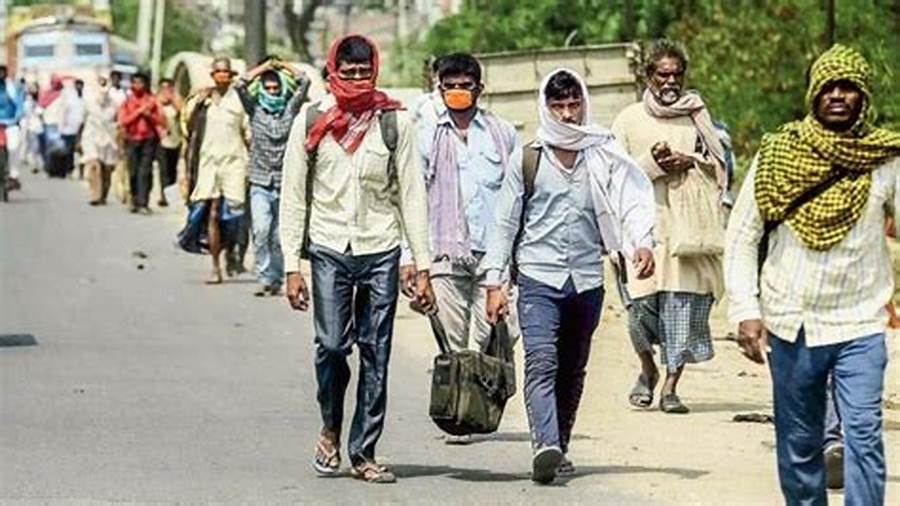
In the vast expanse of fields they toil,

The rural migrants, their hopes embroiled.

Leaving their homes, their villages behind,

Seeking better prospects, a new life to find.

Through dusty roads and uncertain trails,

They journey forth, their spirit never fails.

Dreams in their eyes, determination their guide,

They face the challenges with an unwavering stride.

From sunup to sundown, their hands never rest,

Working the soil, giving it their best.

Yet, their economic status remains a plight,

As they battle hardships, day and night.

Their labor fuels the cities’ bustling might,

Yet their own pockets struggle, a constant fight.

They build the skyscrapers, brick by brick,

But their own dreams seem just out of reach.

Their wages are meager, their earnings slim,

Struggling to provide, their chances seem grim.

But within their hearts, resilience resides,

A burning fire that no hardship can hide.

They yearn for a future where opportunities abound,

Where their efforts and sacrifices are truly renowned.

A world where their economic status can rise,

And their aspirations can touch the skies.

Let us not forget their struggles, their plight,

For they are the backbone, the true source of light.

Together, let’s work towards a better tomorrow,

Where rural migrants find solace from their sorrow.

For every field they sow, every harvest they reap,

Deserves a fair share, a promise we must keep.

So, let us join hands, bridge the divide,

And empower their dreams, side by side.

For in their hands lies the potential untold,

To transform their lives, to break the mold.

May their economic status find new heights,

As they journey towards prosperous sights.

Cabinet approves continuation of the Atal Innovation Mission

The Union Cabinet, chaired by the Prime Minister Shri Narendra Modi, has approved the continuation of its flagship initiative, the Atal Innovation Mission (AIM), under the aegis of NITI Aayog, with an enhanced scope of work and an allocated budget of Rs.2,750 crore for the period till March 31, 2028.

AIM 2.0 is a step towards Viksit Bharat that aims to expand, strengthen, and deepen India’s already vibrant innovation and entrepreneurship ecosystem.

The approval underscores the government’s commitment to fostering a robust innovation and entrepreneurship ecosystem in India. With India at rank 39 on the Global Innovation Index and home to world’s third-largest start-up ecosystem, the next phase of Atal Innovation Mission (AIM 2.0) is expected to further enhance India’s global competitiveness. The continuation of AIM will directly contribute to creating better jobs, innovative products, and high-impact services across sectors.

While building on the accomplishments of AIM 1.0, such as Atal Tinkering Labs (ATL) and Atal Incubation Centers (AIC), AIM 2.0 marks a qualitative shift in the mission’s approach. Whereas AIM 1.0 involved implementing programs that built new innovation infrastructure to strengthen India’s then nascent ecosystem, AIM 2.0 involves piloting new initiatives designed to fill gaps in the ecosystem and scaling successes through central and state governments, industry, academia and community. 

AIM 2.0 is designed to strengthen India’s innovation and entrepreneurship ecosystem in three ways: (a) by increasing input (i.e., ushering more innovators and entrepreneurs),  (b) by improving the success rate or ‘throughput’ (i.e., helping more startups succeed) and (c) by improving the quality of ‘output’ (i.e., producing better jobs, products and services).

Two programs target increasing input to the ecosystem:

  • The Language Inclusive Program of Innovation (LIPI) to build innovation and entrepreneurship ecosystems in India’s 22 scheduled languages for lowering entry barrier confronting innovators, entrepreneurs and investors who don’t speak English. 30 Vernacular Innovation Centers will be established in existing incubators.
  • The Frontier Program to create customized templates for the innovation and entrepreneurship ecosystems of Jammu and Kashmir (J&K), Ladakh, the North Eastern states (NE), Aspirational Districts and Blocks where 15% of India’s citizens live. 2500 new ATLs will be created for template development.

Four programs target improving the throughput of the ecosystem:

  • The Human Capital Development Program to create a system for producing professionals (managers, teachers, trainers) to build, operate, and maintain India’s innovation and entrepreneurship ecosystem. The pilot will produce 5500 such professionals.
  • The Deeptech Reactor to create a research sandbox for testing ways of commercializing research-based deep tech startups that require significantly longer time and deeper investment to get to market. Minimum 1 Deeptech Reactor will be piloted.
  • The State Innovation Mission (SIM) to assist states/UTs with building a strong innovation and entrepreneurship ecosystem that focuses on their areas of strength. SIM will be a component of the NITI Aayog’s State Support Mission.
  • The International Innovation Collaborations program to take India’s innovation and entrepreneurship ecosystem international. Four areas of intervention are identified: (a) an Annual Global Tinkering Olympiad (b) creation of 10 Bi-lateral, multilateral engagements with advanced nations (c) as a knowledge partner, helping the United Nation’s World Intellectual Property Organization (WIPO) spread the models of AIM and its programs (ATL, AIC) to the countries of the global south, and (d) anchoring the Startup20 Engagement Group of the G20 for India.

Two programs target improving the quality of output (jobs, products, and services):

  • The Industrial Accelerator program to increase industry involvement in scaling-up advanced startups. Minimum 10 Industry Accelerators in critical sectors will be created in Public Private Partnership (PPP) mode.
  • The Atal Sectoral Innovation Launchpads (ASIL) program to build iDEX-like platforms in central ministries for integrating and procuring from startups in key industry sectors. Minimum 10 launchpads will be built across key ministries.

*****

#AbKoiBahanaNahi Campaign to end Gender-Based Violence launched

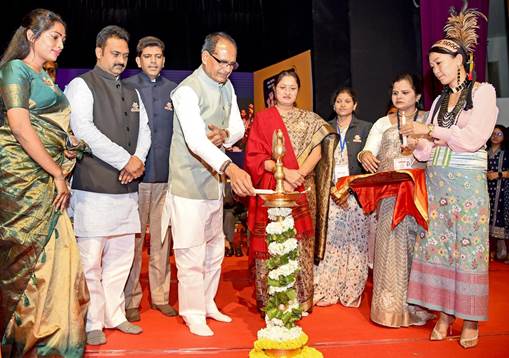
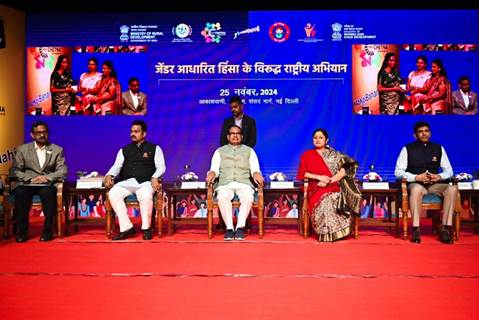
A National Campaign “#AbKoiBahanaNahi” was launched today in New Delhi. It is a collaborative effort between the Ministries of Women and Child Development and Rural Development, with support from UN Women. The Union Minister for Women and Child Development, Smt. Annpurna Devi, Union Minister for Rural Development, Shri Shivraj Singh Chouhan, Minister of State for Rural Development Shri Kamlesh Paswan and Dr. Chandra Sekhar Pemmasani, Minister of State for Rural Development and Communications were present on this occasion.

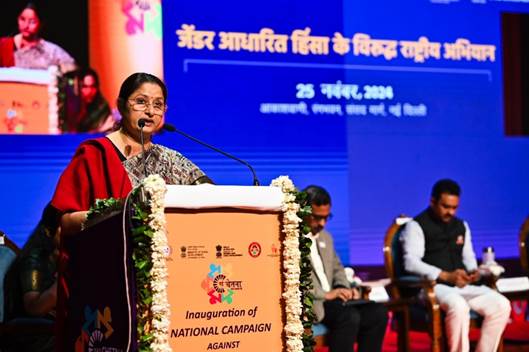
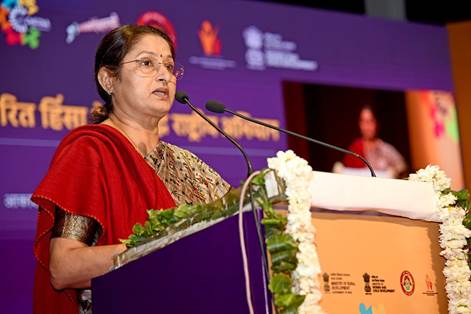
While addressing the gathering the Minister Smt. Annpurna Devi said that the purpose of this campaign being launched today is to advance the rights of women and individuals of diverse genders, and to free their lives from fear and gender-based discrimination. This aims to empower women to break free from shame and societal constraints, enabling them to report the atrocities they have faced and fight for their dignity.

A person speaking into a microphoneDescription automatically generated

This year, building on the Global Campaign of the United Nations of #NoExcuse, which draws attention to the alarming escalation of violence against women to revitalize commitments, call for accountability and action, the Government of India launched #AbKoiBahanaNahi with the aim to highlight the message of urgency of ending violence against women and girls, and underscoring zero-tolerance stance of central India towards any and all forms of gender-based violence.

The Government of India, implementing the paradigm shift in governance to women-led development, has created enabling provisions for women’s full, equal and meaningful participation in all spheres of life and the economy, such as several large scale interventions to reduce women’s drudgery and  poverty, building public care infrastructure and universal access to healthcare, to reduce women’s disproportionate care work, improving access to formal financial systems, bridging the gender digital divide, ensuring safe mobility, safe accommodation, and building a robust service delivery infrastructure for the prevention and redressal of all forms of violence against women and girls. 

A group of people sitting on a stageDescription automatically generated

Highlighting the good work already underway the Union Minister for Rural Development, Shri Shivraj Singh Chouhan, said that if women are to be completely empowered, then women empowerment, social empowerment, political empowerment, and educational empowerment must be achieved. Under the leadership of Prime Minister Shri Narendra Modi, women empowerment initiatives are being implemented as a campaign.

Gender-based violence inhibits women and girls from living with dignity and contributing as equal partners in the development process. As India aims to become a developed country by 2047, under the visionary leadership of Prime Minister Shri Narendra Modi, this dream will not be possible without women’s full and equal contribution, which, in turn, is hindered if women continue to face violence or the threat of violence. The Union Minister for Women and Child Development reiterated the importance of female participation in the economy to make Viksit Bharat, as envisioned by Prime Minister, a reality.

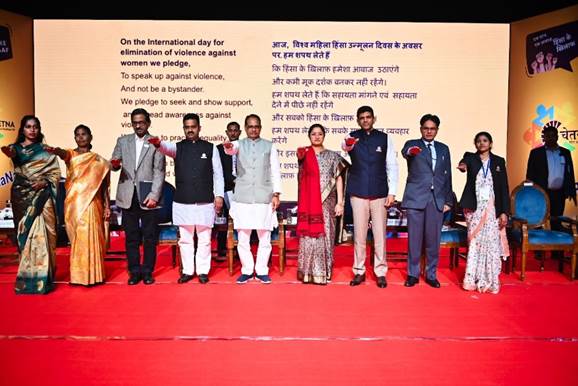
Hence, in order to urge all stakeholders to take decisive steps towards addressing violence against women and girls, the “#AbKoiBahanaNahi” (#अबकोईबहानानहीं)  campaign commenced with a national Call to Action. To ensure a wide reach on spreading the call to action on ending gender-based violence, leaving no one behind, the campaign was launched in conjunction  with the ‘Nayi Chetna 3.0 campaign,’ organized by the Ministry of Rural Development, reaffirming the national commitment to end all forms of gender-based violence.

A group of people standing on a red carpetDescription automatically generated

At the launch event, a film on #AbKoiBahanaNahi was showcased, highlighting the need for accountability from all stakeholders, including citizens, to pledge against ending gender-based violence.

The primary objective of the campaign is to foster advocacy efforts and inform policy directives concerning the safety and security of women and girls. Furthermore, this campaign serves as a critical and urgent call for systemic change, emphasizing the imperative for justice, equity, and transformation. The campaign aims to catalyze a ripple effect, where each action and initiative contributes to reinforcing the message of women’s safety as a fundamental and non-negotiable priority for national growth and development.

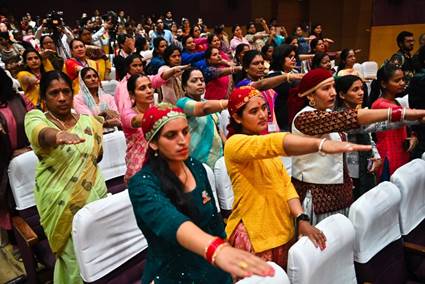
A group of women in colorful clothes doing a danceDescription automatically generated

The launch event was attended by women leaders from Self Help Groups across the country, staff from service providers for redressal for survivors of violence against women and girls, such as One Stop Centres, and Aanganwadi workers, amongst others.  To spread the awareness of the campaign to the remotest corners of the country, the launch was telecast live through the Webcast link and  Ministry of Women and Child Development’s YouTube channel.

Globally, every year, from 25th November, which is observed as the International Day for the Elimination of Violence against Women, to 10th December, which is observed as the Human Rights Day, the 16 Days of Activism campaign is observed by civil society to raise awareness on ending gender-based violence.

YouTube Link -https://www.youtube.com/embed/xTcQfXFuRmo

****

INTERNATIONAL TOURIST FOOTFALL

The Ministry of Tourism undertakes various promotional activities in important and potential tourist generating markets with the objective of showcasing India’s tourism potential and promoting tourism to the country, including the state of Himachal Pradesh. Details of promotional activities are as follows:

i.          Participation in international travel fairs and exhibitions such as World Travel Market (WTM) London, Feria Internacional de Turismo (FITUR) Madrid, International Travel & Hospitality Show (MITT) Moscow, Asia-Pacific Incentives and Meetings Event (AIME) Sydney, Internationale Tourismusbörse (ITB) Berlin, Arabian Travel Market (ATM) Dubai, International Meeting Exchange (IMEX) Frankfurt, International & French Travel Market (IFTM) Top Resa Paris, Japan Expo, Internationale Tourismusbörse Asia (ITB Asia), Singapore etc.

ii.         The Chalo India initiative has been launched by the Ministry to encourage the huge Indian diaspora to become Incredible India ambassadors and encourage their five non-Indian friends to visit India, every year.

iii.        A Chalo India portal has also been developed for registration of the Indian diaspora. Further gratis e visa to one lakh foreign tourists, visiting India under the referral program was announced.

iv.        Ministry of Tourism has launched the Incredible India Content Hub on the revamped Incredible India digital portal (www.incredibleindia.gov.in) on 27th September, 2024. The Incredible India Content Hub is a comprehensive digital repository of high-quality images, films, brochures and newsletters which can be easily accessed by the industry stakeholders (travel media, tour operators, travel agents) across the globe required to amplify Incredible India in all their marketing and promotional efforts. The revamped Incredible India Digital Portal is a tourist-centric, one-stop digital solution designed to enhance the travel experience for visitors to India.

v.         Inviting media personalities, tour operators and opinion makers to visit the country under the Hospitality Programme of the Ministry.

vi.        The promotions are being carried out in association with the State Governments and the Overseas Indian Missions including the 20 identified Indian Missions.

Ministry of Tourism, Government of India is not the regulatory authority for deciding the rate structure charged by Tourism Stakeholders.

PROMOTION OF TOURISM SECTOR IN AMRIT KAAL

In order to boost tourism sector in the country during Amrit Kaal, the Ministry of Tourism has taken the following initiatives: –

  • The Ministry of Tourism undertakes several promotional activities in potential international & domestic markets to promote various tourism destinations and products of the country in holistic manner. This includes release of media campaigns, social media promotions, webinars, participation & support to promotional events, dissemination of information and engagement through website etc. In addition, Indian Missions overseas also undertake various promotional activities to attract more global travellers to various tourist destinations of the country.
  • Ministry of Tourism launched the Incredible India Content Hub on the revamped Incredible India digital portal which is a comprehensive digital repository, featuring a rich collection of high-quality images, films, brochures and newsletters related to tourism in India. This repository is intended for the use of a diverse range of stakeholders, including tour operators, journalists, students, researchers, film makers, authors, influencers, content creators, government officials and ambassadors.
  • The Ministry of Tourism under the schemes of ‘Swadesh Darshan’, National Mission on Pilgrimage Rejuvenation and Spiritual Heritage Augmentation Drive (PRASHAD)’ and ‘Assistance to Central Agencies for Tourism Infrastructure Development’ provides financial assistance to State Governments/ Union Territory Administrations/ Central Agencies for the development of tourism related infrastructure and facilities at various tourism destinations in the country.
  • Ministry has revamped Swadesh Darshan Scheme as Swadesh Darshan 2.0 (SD2.0) with the objective to develop sustainable and responsible destinations following a destination centric approach.
  • Ministry of Tourism has been providing financial assistance to State Governments/ UT Administrations for organising fairs/festivals and tourism related events.
  • Ministry is conducting Programmes under the ‘Capacity Building for Service Providers’ (CBSP) Scheme to train and upgrade manpower to provide better service standards.
  • To enhance the overall experience of tourists by making available a pool of local, trained professionals at tourist sites across the country, Ministry launched the Incredible India Tourist Facilitator (IITF) Certification Programme – a Pan-India online learning program.

Indian Railways have taken various steps to improve the railway network and other infrastructures, which are outlined below:

i)          Railway Infrastructure Projects are taken up on the basis of remunerativeness, last mile connectivity, missing links and alternate routes, augmentation of congested/saturated lines, socio-economic considerations, enhancing connectivity to tourist and cultural places etc. depending upon liabilities of ongoing projects, overall availability of funds and competing demands. As on 01.04.2024, out of 488 Railway Infrastructure projects (187 New Line, 40 Gauge Conversion and 261 Doubling) of total length 44,488 Km costing approx. Rs. 7.44 lakh crore, 12,045 Km length has been commissioned across Indian Railways with an expenditure of Rs. 2.92 lakh crore. Augmenting railway infrastructures across Indian Railways is an ongoing and continuous process.

ii)         The Ministry of Railways has recently launched the Amrit Bharat Station Scheme for development of Railway stations on Indian Railways. The Scheme envisages development of stations on a continuous basis with a long-term approach. It involves preparation of Master Plans and their implementation in phases to improve amenities at stations, like improvement of station access, circulating areas, waiting halls, toilets, lift/escalators as necessary, platform surfacing and cover over platform, cleanliness, free Wi-Fi, kiosks for local products through schemes like ‘One Station One Product’, better passenger information systems, Executive Lounges, nominated spaces for business meetings, landscaping etc. keeping in view the necessity at each station. So far, 1337 stations have been identified under the Amrit Bharat Station Scheme over Indian Railways.

iii)       Under the National Rail Plan (NRP), around 243 tourist destinations in India were identified. Out of these, 111 places are already connected with the existing rail network, 30 tourist places are within a distance of 10 kms from the nearest railway station and 30 are within a distance of 15 kms from the nearest railway station. The remaining 72 locations are primarily wildlife sanctuaries, beaches and areas located in hilly and mountainous terrain where providing rail connectivity is either not advisable or difficult.

Further, with a view to provide enhanced amenities and facilities for tourists, projects for joint development of tourist amenities at 22 railway stations by the Ministry of Railways (MoR) and Ministry of Tourism were sanctioned on cost sharing basis.

Details of month-wise Foreign Tourist arrivals (FTAs) in the country during 2023 and 2024 (till August) are given below:

 Foreign Tourist Arrivals (FTAs) (in Lakhs)
Month20232024 @
January8.919.59
February8.9310.03
March8.258.60
April6.266.51
May6.186.00
June6.687.06
July7.867.76
August6.646.36
September6.67
October8.32
November9.49
December11.02
Total (Jan-Aug)59.7161.91
Grand Total95.21

@: Provisional

Source: Bureau of Immigration (BOI)

PROMOTION OF RURAL TOURISM

Recognizing the immense potential of rural tourism in the country, Ministry of Tourism has formulated National Strategies for Development of Rural Tourism and promotion of Rural Homestays in India.

The Ministry of Tourism promotes India in a holistic manner, through various initiatives. As part of the on-going activities, promotion of various tourism destinations and products including Rural tourism and Rural homestays are taken up.

In addition, the Ministry of Tourism has identified Rural Circuit as one of the thematic circuits under its Swadesh Darshan Scheme. The details of projects sanctioned under Rural Circuit of the scheme are given at Annexure.

The Swadesh Darshan 2.0 scheme has been initiated with the objective of developing sustainable and responsible destinations following a tourist & destination centric approach. Under this scheme, Rural Tourism Cluster Experience project has been sanctioned at Gunji, Uttarakhand.

The Government has approved the initiative to develop tribal home-stays under Swadesh Darshan Scheme, as part of ‘Pradhan Mantri Janjatiya Unnat Gram Abhiyan’. The said intervention includes development of 1000 homestays with support of upto Rs.5 Lakh per unit (for new construction), upto Rs.3 Lakh (renovation) and Rs.5 Lakh for village community requirement.

This information was given by Union Minister for Tourism and Culture Shri Gajendra Singh Shekhawat in a written reply in Lok Sabha today.
 

Annexure

PROJECTS SANCTIONED UNDER RURAL CIRCUIT OF SWADESH DARSHAN SCHEME

(Amount in ₹ crore)

S. No.Name of StateYearProject NameAmount SanctionedAmount Released
1.Bihar(2017-18)Development of Gandhi Circuit: Bhitiharwa- Chandrahia- Turkaulia44.2740.31
2.Kerala(2018-19)Development of Malanad Malabar Cruise Tourism Project57.3545.88
   Total101.6286.19

***

CONTRIBUTION OF TOURISM IN GDP

As per the 3rd Tourism Satellite Account (TSA), 2015-16, the percentage contribution of tourism sector to the country’s Gross Domestic Product (GDP) for 2018-19 to 2022-23 is given below:

Tourism GDP2018-192019-202020-212021-222022-23
Total Share in GDP (in %)5.015.181.501.755.00
Direct (in %)2.612.690.780.912.60
Indirect (in %)2.402.490.720.842.40

The above estimates are updated using National Account statistics 2024.

Ministry of Tourism has taken several initiatives over the years for development of tourism sector in the country. Some of these key initiatives are:

  1. The Ministry of Tourism under the schemes of ‘Swadesh Darshan’, National Mission on ‘Pilgrimage Rejuvenation and Spiritual Heritage Augmentation Drive (PRASHAD)’ and ‘Assistance to Central Agencies for Tourism Infrastructure Development’ provides financial assistance to State Governments/Union Territory Administrations/ Central Agencies for the development of tourism related infrastructure and facilities at various tourism destinations in the country.
  2. The Ministry of Tourism has revamped its Swadesh Darshan Scheme as Swadesh Darshan 2.0 (SD2.0) with the objective to develop sustainable and responsible destinations following a tourist & destination centric approach.
  3. Financial assistance has also been provided to the State Governments/UTs for organizing fairs/festivals & tourism related events under Domestic Promotion & Publicity including Hospitality (DPPH) Scheme.
  4. Dekho Apna Desh initiative launched with the objective to encourage citizens to travel within the country.
  5. Thematic tourism like wellness tourism, culinary tourism, rural, eco-tourism, etc. amongst other niche subjects are promoted so as to expand the scope of tourism into other sectors as well.
  6. With an aim to enable lawful inward movement of foreigners including foreign tourists, Government has taken a number of initiative over the last few years to liberalize, streamline and simplify visa regime with a view to facilitate the legitimate foreign travellers. Facility of e-Visa for 07 sub-categories i.e., e-Tourist visa, e-Business visa, e-Medical visa, e-Medical Attendant visa, e-Ayush Visa, e-Ayush Attendant Visa and e-Conference visa for the nationals of 167 countries has been provided. Visa fee has also been substantially reduced.
  7. For improving air connectivity to important tourist destinations, Ministry of Tourism has collaborated with Ministry of Civil Aviation under their RCS-UDAN Scheme. As on date, 53 tourism routes have been operationalized.
  8. Ministry of Tourism is running Pan-India Incredible India Tourist Facilitator (IITF) Certification Program, a digital initiative that aims at creating an online learning platform with the objective of creating a pool of well trained and professional Tourist Facilitators/Guides across the country and generating employment opportunities at local level.
  9. Conducting Programmes under the ‘Capacity Building for Service Providers’ (CBSP) Scheme to train and up-grade manpower to provide better service standards.
  10. Ministry of Tourism also launched a national responsible tourism initiative by the name of ‘Paryatan Mitra’ and ‘Paryatan Didi’. The initiative encompasses providing tourism related training and awareness to all individuals who interact and engage with tourists in a destination.

This information was given by Union Minister for Tourism and Culture Shri Gajendra Singh Shekhawat in a written reply in Lok Sabha today.

***