Journalism And Its Benefits


What is journalism?


The practice of journalism requires collecting, researching,
synthesizing, and presenting news and information. Additionally, it is a
byproduct of these actions.

Certain distinguishable traits and practices make journalism
distinct from other pursuits and outcomes. These characteristics not only set
journalism apart from other types of communication, but also make it essential
in democracies. History demonstrates that a society tends to have more news and
information the more democratic it is.


Benefits of Journalism


1.   You may
get to travel

Since it’s difficult to cover news globally,
However, working as a sports or entertainment journalist occasionally allows
you to travel extensively.


While exploring and moving around, you can talk
about current events. Who doesn’t enjoy travelling, right? This, in my opinion,
is one of the greatest advantages of journalism
.


2.   You can
meet different people


No matter what profession you are in, exposure
is crucial for your personal development. When you work in journalism, you are
exposed to many different things, which aids in your recognition.


 Meeting all of those folks enables you to make
some really great friends as well as realize how relative life is and how our
way of life back home is merely one of many other lives that people celebrate
across the world.


3.   You can
share your ideas


The
capacity to further your opinions and convictions is another benefit of working
as a journalist. In general, you can publish anything you want as long as it
abides by local laws, especially if you’re a freelance journalist who doesn’t
work for a media company. 
As a
result, if you see something you disagree with, you could become more conscious
of it and thereby feel better.


4.   You can
cover a variety of genres


In
general, journalism offers you a wide range of topics on which to write. You
can never learn everything because there are so many new things introduced
every day.

As a
result, you won’t eve
r run out of topics to write about, and you’ll have the
freedom to focus on the subjects you think will be most important to and
interesting to your readers.

The field
of journalism is not standardized. In fact, you will pick up fresh information
every day because you will be speaking with a range of people.


5.   You will
never find it boring

If you work as a newscaster, you won’t become
bored. They have a wide range of jobs and frequently interact with different
people, so I’m confident they’ll always have topics of conversation.


Additionally, you typically work in unfamiliar
environments and face problems every day. Journalism is one of the never-ending
careers as a result, so if you’re curious and want to be surprised, being a
journalism specialist can be the best choice for you.


6.   You can
create your new comfort zone


A great way to step outside of your comfort zone
is to become a journalist. Because we humans are generally afraid of making a
mistake, we tend to want to stay in our comfort zone and refrain from trying
too many new things
.


This might be exceedingly limiting, though, as
character development occurs solely as a result of new experiences. In
journalism, you must be willing to speak with people you otherwise would not
have. Throughout your work, you’ll also discover some unexpected items.
NEWSPAPER MIRROR TO SOCIETY.

Newspaper can be defined as a print medium for conveying current news of various information .

History of newspaper in India:
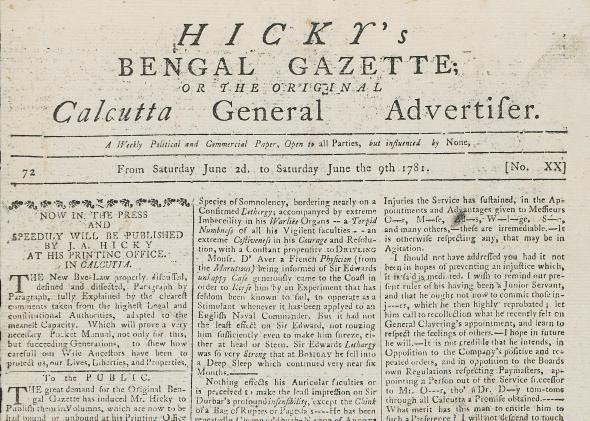
The first newspaper in India the Bengal Gazette was published in January 29, 1780 by James Augustus Hicky ,which was also known as”Calcutta Advertiser”. It was commonly known as “Bengal Gazette “. The first edition of the newspaper has two pages and was later expanded to page 4. Its size was 35 cm x 24 cm. East India Company did not considered Freedom of the Press good for society. They tried to curb the publication of newspapers. He was a very brave editor. He continued to criticize British authorities and publishing reports attacking East India Company officials for their way of working. British Authorities have arrested Hicky many times. Finally they finished his work of newspaper in 1782 and stopped publishing. Hicky was asked to leave Country. He was sent back to England. A copy of the Bengal Gazette is still preserved in the National Library of Calcutta and the British Museum in London.


Following in Hickey’s footsteps in 1780, a second newspaper was launched “The Indian Gazette” and “Calcutta Gazette” which begins publishing in 1784 and the “Bengali Journal” was started in 1785 which is also the third and fourth newspaper from Calcutta. The previous four newspaper were all published in English. Slowly Newspapers also begun to issue from other parts of the country in different languages and. The Tuesday “Madras Courier” (1785) and “Madras Gazette” (1795) starting from Madras. From Mumbai, “Bombay Herald” was started in 1789. The strict press regulations and censorship imposed by the UK hindered publication of more newspapers in India.In 1818, Lord Hastings abolished these strict censorship measures which leads to the appearance of many new newspapers in various Indian languages. Raja Ram Mohan Roy, who is known to have fought for the freedom of the press, edited a Persian weekly newspaper called “Mirat-ul-Akhbar”. But the editors of this newspaper were foreigners, not Indians. The first Indian language newspaper published by an Indian was “The Bengali Gazette” which was started in Calcutta by Gangadhar
Bhattacharjee in 1816. Pandit Jugal Kishore started Udant Martand the first Hindi newspaper published in India beginning on May 30, 1826, in Calcutta the weekly was published every Tuesday .


Importance of newspaper in India Freedom Struggle:
The newspaper and the press played a very important crutial role in the struggle for independence. The newspapers made the Indian public aware to the cruelty of the British Empire on the people . The press was the main tool for carrying out political tasks, propagating, political education, forming and spreading national ideology, mobilizing and consolidating national public opinion. The press is a powerful weapon in nationalist struggles, and Indian nationalists have led the struggle through the help of press. In fact, many of the great leaders of the freedom movement became journalists themselves and used the press as an instrument to spread their ideas to the masses and people in different parts of the country.


The Vernacular Press Act of 1878, against Indian-language newspapers, was passed in a meeting of the Royal Legislative Council. The law orders the seizure of a newspaper’s publications, papers, and other materials if the government believes the newspaper is publishing instigating material that could be harmful for the government. The Indian press enjoyed considerable freedom until 1908. However, due to the great growth of the nationalist movement, the Press Act was passed in 1908 and the Indian Press Act of 1910. Till 1930 the Indian press enjoyed relative freedom to give free opinion. However, the Press Act of 1932 and the Foreign Relations Act of 1932 refused India’s press freedom. The press was used as an effective weapon in the hands of social reform groups to expose social evils such as class restriction, child marriage, the prohibition of widows remarrying, social inequalities, laws and regulations.At that time it was very useful to uplift the society.


Newspaper at present:
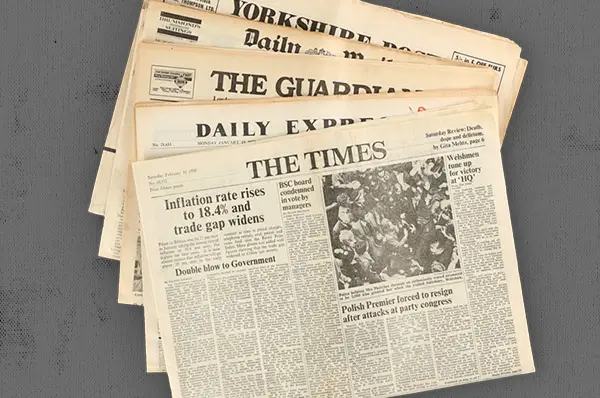
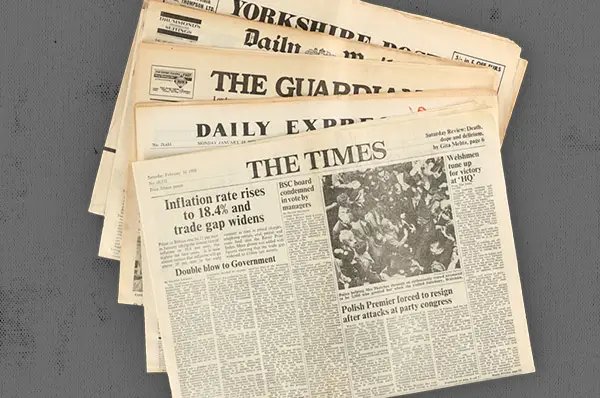
Newspapers today occupy an important place in the world. The presence of newspapers is inevitable in today time. They are the reflections of the world. The press is considered the fourth pillar of democracy. The press is the most powerful of the powerful. They are defenders of truth and human rights. They act as spokespersons for the public. They are the link between the people and their government. It was still preferred by people over other media platforms because of its reliability, at a time when media was seen as a fake system that didn’t work properly.


“A good newspaper, I suppose , is a nation talking to itself ”

By Arthur Miller

IMPORTANCE OF NEWSPAPER

Newspapers provide general information and knowledge, such as news on the economy, sports, entertainment, trade, and commerce. In short, the newspaper is extremely important to humans; reading the newspaper on a daily basis can help us strengthen our reading habits, broaden our knowledge, and improve our fluency. For those who are interested in political news, there is a comprehensive list of what is happening on the national and worldwide political fronts. How significant was it for newspapers to report in depth. Assembly elections and Lok-Sabha bye-elections were recently held, and people on every street corner could be seen frantically trying to obtain a newspaper to learn the latest results.

Then there is worldwide political news, which keeps people informed about current events across the world. Some people’s first interest in sports is to turn to the newspaper’s Sports page. It also assists us in becoming more informed citizens. Newspapers keep us informed of any changes in the country’s rules and regulations. Furthermore, they are quite educational for students. Here, a learner can learn everything there is to know about general knowledge and current events. We keep up with technological advances, government legislation, research projects, and other topics.

Aside from that, newspapers feature fantastic pieces on social concerns, civilizations, the arts, and other topics. It informs the public about key problems and conveys public opinion. As a result, individuals will be able to conduct thorough assessments of the administration and its ministers. Likewise, newspapers provide excellent job prospects. Those looking for work read newspapers in order to find dependable job openings.Aside from that, newspapers feature fantastic pieces on social concerns, civilizations, the arts, and other topics. It informs the public about key problems and conveys public opinion. As a result, individuals will be able to conduct thorough assessments of the administration and its ministers. Likewise, newspapers provide excellent job prospects. Those looking for work read newspapers in order to find dependable job openings.

The Benefits of Reading Newspapers:

Some of the advantages of reading daily newspapers are as follows:

1.The world’s news is published in newspapers.

2.Newspapers are a source of general knowledge and information.

3.Newspapers cover topics such as the economy, sports, gaming, entertainment, trade, and business.

4.Reading the newspaper is a healthy habit that has been ingrained in modern society. This habit will broaden your horizons and deepen your understanding.

5.You may stay informed by reading the newspaper. It allows you to participate in any conversation about current events throughout the world.

6.Reading newspapers will boost your general knowledge and make it easier for you to relate to what is happening in the world.

7.Reading newspapers will boost your general knowledge and make it easier for you to relate to others who frequently discuss current events and politics.

8.You will have a clear notion and comprehension of what is going on in your country and throughout the world if you read newspapers.

A World Without Newspapers:

Everything is becoming digital as the globe advances swiftly. We can do everything on our cellphones or computers, from buying to reading the news. The newspaper industry has also been affected by digitisation. Because individuals can obtain fast updates about the newest news on their phones, newspaper sales have plummeted. Is this to say that the digital era will obliterate newspapers? Given the current situation, this prospect appears to be a distinct possibility. Are we, on the other hand, ready for a world without newspapers? Without newspapers, the world would be like a house without mirrors. We won’t be able to see our own reflection as a result of this.

Compare this condition to that of the rest of the globe and the newspaper. Imagine that the world has lost its national mirror, and you are unable to get an accurate image of what is going on around you. What’s worse, instead of the national mirror, we’re getting a fun-house mirror, which distorts information and causes you to perceive what isn’t genuine. In other words, politicians will have unrestricted access to the public to spread their ads and agendas. The data won’t be trustworthy, and it won’t even be examined. There will be no journalists to decode the government and corporate spin on stealing the average guy of his money.

Publishers to rein in informal circulation of newspaper PDFs

Print news publishers are cracking down on online groups and platforms that have been sharing PDF versions of popular newspapers to readers every day.

For a lot of newspaper management bodies, these informal circulations on social media are nothing but a form of piracy. Soon only subscribed members will be able to access online newspapers.

“It has come to our attention that some publications are facing issues with distribution of the print copies and a lot of piracy and theft of newspapers is happening, especially in the digital format,” said Mary Paul, the secretary-general of the Indian Newspaper Society Secretariat.

Many newspapers are now available in the epaper format online in the morning every day, some of which are free. The availability of the epapers across platforms has been a hit, especially since the beginning of April 2020 when newspaper circulations were forced to stop at several places across the country in the wake of the global pandemic.

According to the INS, many users are creating PDFs out of newspaper pages and circulate them on WhatsApp and Telegram groups to the readers, leading to a loss in both subscription revenue for the print newspapers as well as epapers digitally.

The INS also called this circulation of newspaper on social media illegal and said publications are trying to battle it in their own ways.

The body has also come up with recommendations to stop this:


1. Communicate clearly in the apps, websites and newspapers that circulating any copy or part thereof, is illegal and strict legal action will be taken along with heavy penalties.

2. Additionally, also for any legal action taken, publish a few news stories to talk about the huge fines and lawsuits initiated against offenders to deter others from doing it.

3. Take legal action against offenders, especially against WhatsApp and Telegram admins and trigger legal notices (WhatsApp group admins are liable for anything illegal that happens in their groups).

4. Build certain product features which prevent piracy or at least slow it down. These include:

a. Limiting downloads of PDFs, Images

b. Adding Javascript code on pages to prevent copying

c. Inserting a user identifier code which is not human visible, so circulated PDFs on Social Media can be tracked back to individuals

d. Auto-generate a list of users downloading greater than a certain number of PDFs per week and block them

Some of the newspapers have already started following the recommendations. Hindi daily Dainik Bhaskar has already published a story talking about the piracy of newspapers in the form of online circulation on WhatsApp and Telegram groups.

“The newspaper is the property of the management of that paper. It can be read by either buying it or subscribing to it online. The industry is already going through a tough time and we do not want our readers to abandon the print media. The newspapers are all together in this and we will soon come out with a plan to combat this. We are sure are patrons will stand by us in this,” said the marketing head of a popular language daily of North India.