Indian Olympic medal Contender: Proud Of Our Girls

Shooting
India’s 15-member shooting contingent is the favourite to bring back a big haul of medals.

The country’s biggest hopes are pinned on Manu Bhaker and Saurabh Chaudhary.

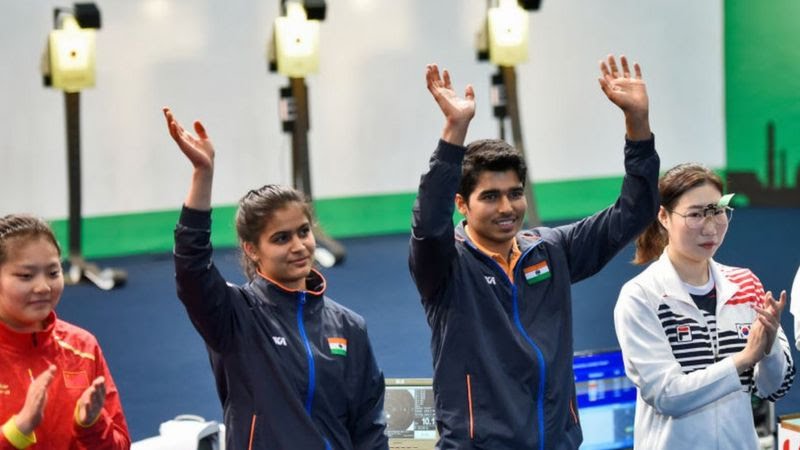
Indian shooters Manu Bhaker and Saurabh Chaudhary won the gold in the final of mixed 10m Air Pistol at ISSF World Cup, at Karni Singh Shooting Ranges on 27 February 2019 in New Delhi, India


Nineteen-year-old Bhaker, one of the top contenders in the 10m Women’s Air Pistol event, has in the past won it all from World Cup gold medals to the Commonwealth medal and Youth Olympics.

Shooter Saurabh Chaudhary, world number two and Youth Olympics champion, became the youngest Indian shooter to win a gold at the Asian Games in 2018 when he was just 16.

Both Bhaker and Chaudhary are top contenders for a medal finish when they pair up for the 10m Air pistol mixed event. The duo won five successive golds at international shooting events and a silver at the World Cup in Croatia in June.
Badminton

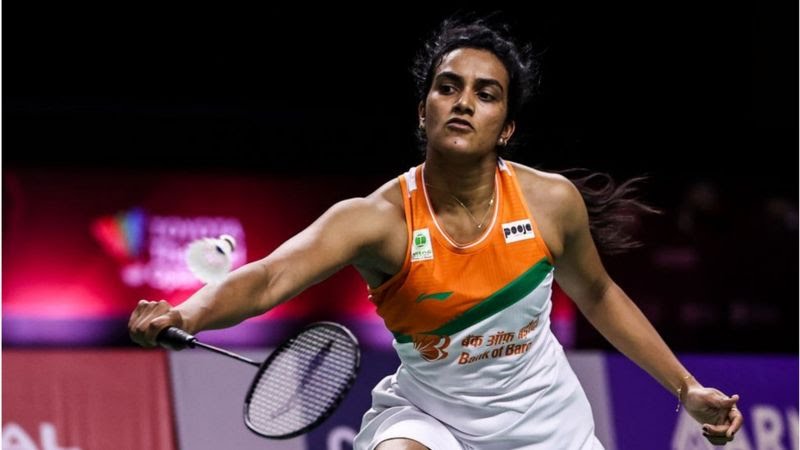
At the Rio Olympics, 21-year-old PV Sindhu bagged a silver – and won a billion hearts. Not everyone had expected a medal back then from the young shuttler. But five years on, expectations are high.

“I was just a participant back then, but now everyone says Sindhu has to get a medal,” she told the BBC recently.


Despite inconsistencies in her performance since 2019, Sindhu remains India’s top medal hope

Last year, the ace shuttler won the inaugural BBC Indian Sportswoman of the Year award.

In 2019, she was crowned the World Badminton Champion but her form has had inconsistencies since then. However, she remains India’s top medal prospect.
Boxing

Boxing
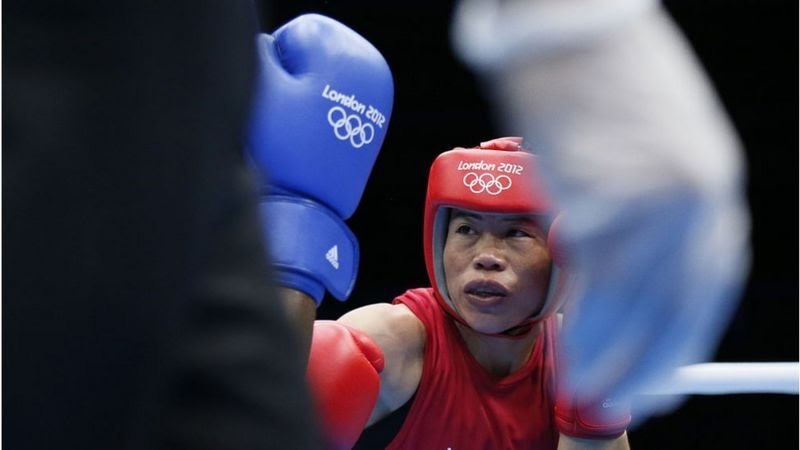
Mary Kom, also known as Magnificent Mary, the Iron Lady and many other nicknames, is a medal favourite for India.

She won a bronze at the 2012 London Olympics and will be looking to change the colour of her medal this time when she participates in the Flyweight section (51kg).


This could be the last Olympic Games for the boxing star

In May, she picked up a silver when she lost the final to Kazakhstan’s Nazym Kyzaibay during the Asian Boxing Championships in Dubai.

At 38, Kom may well be taking part in her last Olympics, and India will be rooting for her to increase her tally before she takes off her gloves.
Archery
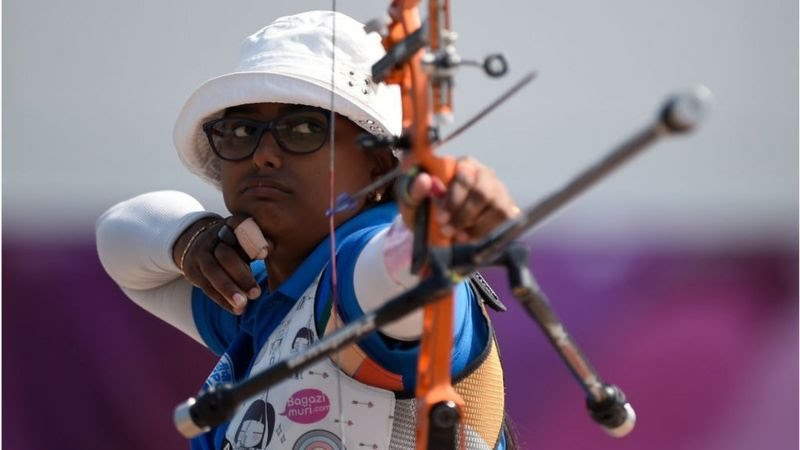
Only last month, archer Deepika Kumari won three golds at the Archery World Cup in Paris.


Deepika Kumari is the number one ranked recurve woman in the world

She is now the world number one in the women’s recurve category and a strong candidate for a medal in Tokyo.

Kumari has won nine gold, 12 silver and seven bronze medals at various World Cups and will be looking to add the Olympic medal to her tally now.
Wrestling
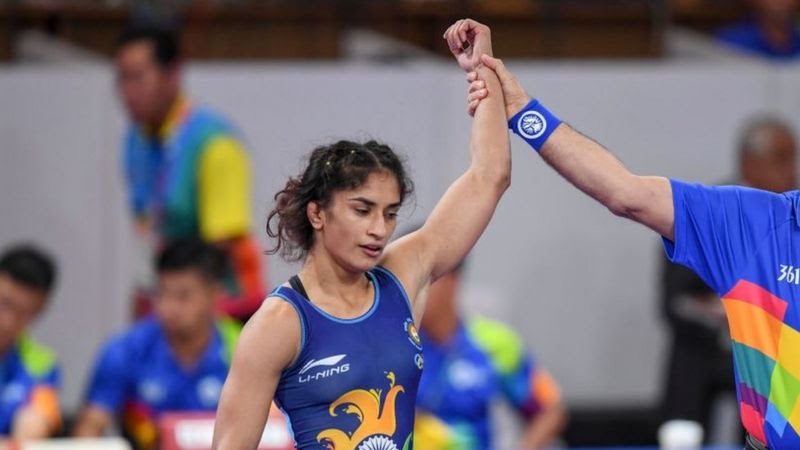
India had a decent run at the Rio Olympics in 2016, with Sakshi Malik earning a bronze medal. In Tokyo, Vinesh Phogat leads the women’s wrestling team.

Having suffered a freak injury during the Rio Olympics, Phogat returned to India in a wheelchair and underwent surgery.

The 26-year-old is now roaring to go in the 53kg category with some great wins in the last couple of months, as well as reclaiming the number one ranking.
How Much Does India Invest In Olympic Athletes?

Postponed by a year due to the pandemic, the Tokyo Olympics is now less than a month away. Last week, the Union Sports Minister Kiren Rijiju urged the people to extend their support to India’s Olympic-bound athletes, the same way they back India’s cricketers. However, India’s abysmal performances at the Olympics is in striking contrast to India’s immense success at cricket. The model of sports governance and financial irregularities are often blamed for the lack of competitive edge in sports other than cricket. So, the most obvious question that comes to our mind is, how much does India invest in the Olympics?

Money allocated for Sports

In the 2020-21 annual budget, the Government of India allocated Rs 2826.92 crore for sports, which meant an increase of mere ₹ 50 crore from the revised estimates of the financial year 2019-20. The Modi government’s flagship sports programme ‘Khelo India’ received a substantial hike of ₹ 312.42 crore and was allocated ₹ 890.42 crore compared to ₹578 crore in 2019-20. On the other hand, the National Sports Development Fund saw a reduction of ₹ 27.15 crore from ₹77.15 crore in 2019-20 to ₹ 50 crore in 2020-21. National Sports Federations saw the highest decrease after Finance Minister allocated ₹ 245 crore, ₹ 55 crore less than the previous financial year, according to The Wire. Even the budget for meritorious sportspersons saw a 40% reduction from the last financial year. It is important to note that the 2020-21 annual budget was presented in January 2020, when the government had no idea of the coming pandemic. It was also supposed to be the year of the Tokyo Olympics.

Target Olympic Podium Scheme

While these are the broad schemes under which Indian sportspersons are funded, the Target Olympic Podium Scheme (TOPS) provides financial assistance to potential Olympic medal winners. Launched in 2014, TOPS is the flagship programme of the Sports Ministry of India. The top-up funding scheme considers the performance of Indian athletes in the past three years. They are provided with personal coaches and other staff fees, cost of travel during competitions, purchase of equipment, and pocket allowance.

Looking Back At The Last Olympics

In the 2016 Rio Olympic, India spent ₹ 36.85 crore under TOPS, as per Financial Express. Nearly half of that amount was spent on shooting, which was India’s most successful Olympic sport in the previous three games. Shooting is also very expensive, which requires importing equipment from other countries. But shooting failed to bring any medal. Athletics received the second-highest funding of ₹ 7.80 crore in 2016, but India failed to make a mark in the sport. Unfortunately, out of the ₹ 36.85 crore, ₹30.49 crore had gone to disciplines that fell short of goals. Only 1.66 per cent of the total TOPS fund went to the fields that brought India two medals – PV Sindhu in Badminton and Sakshi Malik in wrestling.

Comparison With Other Countries

The United Kingdom allocated close to Rs 9000 crore on sports infrastructure and training in the annual sports budget, whereas India spent only one-third of the UK, Rs 3,200 crore, on youth affairs and sports, before 2016. The UK won 67 medals against India’s two at the Rio Games 2016. Abhinav Bindra had also tweeted back in 2016 that a medal cost UK 5.5 million pounds, and that is the kind of investment India needs to make. Otherwise, we cannot expect much. In the USA, a large number of athletes are privately funded. Individual athletes had started their own funding portal for donations from the general public. Therefore, only 10% of the US Olympic Committee’s finance was spent on athletes in Rio 2016, and the USA finished first. China, on the other hand, is known for its aggressive state-sponsored promotion of sports.

Private Investment In India

Before the 2016 Olympics, Indian Olympic Association (IOA) received donations from Reliance Jio, Amul, Tata Salt, Edelweiss Financial Services, Herbalife, Li Ning, and SBJ. Sakshi Malik had also thanked JSW Sport, a foundation funded by the OP Jindal group, after becoming India’s first medal winner in Rio Games, as reported by Hindustan Times.

However, unlike NSDF, where the contributions and sponsorships are open and documented, private funding to individual athletes is not. And most recently, the JSW Group has come on board to be the official sponsor of Team India in the Tokyo Olympics and has agreed to pledge sponsorship support of ₹ 1 crore to IOA. In 2018, the Sports Ministry earmarked ₹ 100 crore for funding of the athletes for the preparation of Tokyo Olympics 2020, which will take place this year. While the number of medals won cannot be equated to the investments made, since medals are not the only measure of success, India nonetheless needs to invest more and put in a new model of sports governance in action. A

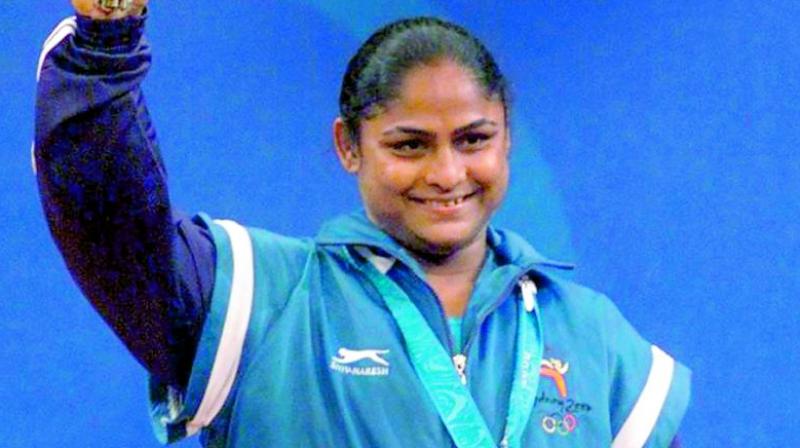
Karnam Malleswari – Torch-bearer for women in Olympics

Karnam Malleswari is the first Indian woman to win a medal at the Olympics and first Indian woman weightlifter to win gold at the World Championships.

Saikhom Mirabai Chanu made India proud by getting India’s first medal at Tokyo Olympics 2021. She won silver medal in weightlifting am being the first Indian lifter to do so. But, most of us realized now about first Indian woman to win an Olympic medal in 2000 (Sydney). She won Bronze medal in weightlifting in 2000. Let us remember Honorable Karnam Malleswari.

Karnam Malleswari :-

She was born on 1 June 1975, Voosavanipeta near Amadalavalasa, a hamlet in Andhra Pradesh. Her father Karnam Manohar was a college-level football player. She has four sisters. They are all well trained in weightlifting. It was her mother Shyamala, who encouraged and became her strength till the end Karnam Malleswari to pursue a dream. Her career started when she was 12. She was trained under coach Neelamshetty Appanna.

I feel proud to have created this pathway for our girls and to see them winning Olympic medals. Some even tell me today, ‘Ma’am you started it all’, so I feel delighted to have changed the perception, and it still remains my endeavor.

But Neelamshetty Appanna turned her away for being too weak and thin. Her mom encouraged her to keep going by training hard and proving herself that she can be whoever she wants to be. She was then noticed by Olympic and world champion Leonid Taranenko at a national camp ahead of 1990 Asian camp as a visitor since her sister Krishna Kumari, was selected for the camp. After testing her, he recommend her to the Bangalore Sports Institute.

It was her time to start shining, she broke 9 records in junior national weightlifting championships in 1990; which was her first championship.

Achievements:

  • Silver in her maiden senior national championship in 1990.
  • Bronze in her first weightlifting World Championships in 1993.
  • Gold in her next weightlifting World Championships in 1994, making her the first Indian woman weightlifter to win gold at the World Championships.
  • Silver at the 1994 Asian Games.
  • Malleswari won the world title in the 54 kg division in 1994 and 1995. Gold in World Championships in 1995.
  • Bronze in the World Championships in 1996. – Four consecutive medals in World Championships-
  • Silver at the 1998 Asian Games.
  • Bronze in the Olympics Game at Sydney in 2000.

In 1997, she married a fellow weightlifter Rajesh Tyagi, and in 2001 gave birth to a son. She took a maternity leave in 2001. She went to The Olympics at Athens in 2004 but due to severe back injury, she couldn’t give her best. She had to retire after that.

What is she doing now?

She works as the Chief General Manager (General Administration) of Food Corporation of India; Yamunanagar, Haryana.

Awards:

  1. Honored with Arujna Award in 1994.
  2. Rajiv Gandhi Khel Ratna in 1999.
  3. Padma Shri Award in 1999.

NEWS:

On International Olympic Day 2021, the Delhi government appointed India’s first woman Olympic medal winner Karnam Malleshwari as the first vice-chancellor of Delhi Sports University.

REFERENCES:

https://en.wikipedia.org/wiki/Karnam_Malleswari

https://olympics.com/en/featured-news/karnam-malleswari-india-weightlifting

Mirabai Chanu : The Girl with silver wings

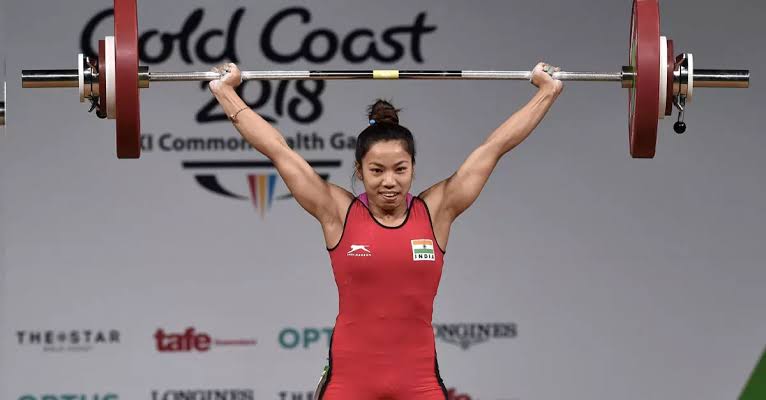
Saikhom Mirabai Chanu (born 8 August 1994) is an Indian weightlifter.She won Silver medal at the 2020 Tokyo Olympics in Women’s 49 kg, helping to secure India its 1st medal of the games.A regular presence in international events since 2014 in the 48 kg category, Mirabai Chanu has won the World Championships and multiple medals at the Commonwealth Games. She was awarded the Padma Shri by the Government of India for her contributions to the sport. First lifter to win a silver at the Olympics and second to win a medal after Karnam Malleswari‘s bronze in Sydney 2000.She was awarded Rajiv Gandhi Khel Ratna award by the Government of India in 2018.Chanu had won the silver medal in the women’s 48 kg weight class at the 2014 Commonwealth Games, Glasgow; she went on to break the games record en route to the gold medal at the 2018 edition of the event held in Gold Coast. Her biggest achievement came in 2017, when she won the gold medal at World Weightlifting Championships held in Anaheim, California

Career stats

Chanu’s first major breakthrough came at the Glasgow edition of the Commonwealth Games; she won the silver medal in the 48 kg weight category.

Chanu qualified for the 2016 Rio Olympics in the women’s 48 kg category. However, she failed to finish the event, owing to no successful lifts in any of her three attempts in the clean & jerk section.In 2017, she won the Gold medal in the Women’s 48 kg category by lifting a competition record 194 kg in total (85 kg snatch and 109 kg clean & jerk) in the 2017 World Weightlifting Championships held at Anaheim, CA, United States.

In 2021, Mirabai Chanu became the 1st and only woman Indian weightlifter to qualify for the 2021 Summer Games by securing the 2nd position in the 49kg category. The 27 year old, lifted 86 kg in snatch and then created the world record by lifting a massive 119 kg in the clean and jerk, for a total of 205 kg, which won her a Bronze medal and a ticket for Tokyo Olympics.

Chanu lifted a total of 196 kg, 86 kg in Snatch and 110 kg in Clean and Jerk to win the first gold medal for India in the Commonwealth Games 2018. En route to the medal, she broke the games record for the weight category; the effort also marked her personal best performance.She won Bronze in Clean and Jerk at 49 kg Category in 2019 Asian Weightlifting Championships. The total weight of 199 kg was her best ever and she just missed out on a bronze medal as her Snatch weight was lower than the third place athlete, both of whom had an identical total. At the 2019 World Weightlifting Championships, Mirabai lifted a total of 201kgs (87kgs Snatch and 114kgs Clean & Jerk) to finish 4th. This personal best total also created a new national record in the 49kg category. She broke her personal record again four months later when she lifted 203kgs (88kgs in Snatch and 115kg in Clean & Jerk,) in the 49kg category to win the gold medal at the 2020 Senior National Weightlifting Championships.

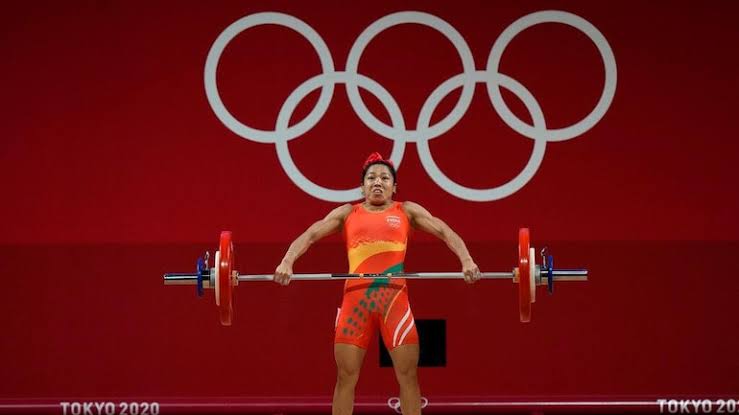
Chanu won the silver medal at the 2020 Summer Olympics in Tokyo, becoming the 1st Indian weightlifter to win silver in Olympics, winning a silver medal in 49kg weightlifting with a total lift of 202 kg. Chanu managed to lift a total of 202 kg in the women’s 49kg category to become the second Indian weightlifter after Karnam Malleswari to win an Olympic medal. A new Olympic record was registered by Mirabai Chanu with a successful lift of 115kg in clean and jerk.

She was awarded USD $1,400,000 from a private donor in India for successfully winning an Olympic medal.

Olympic ❤️

Award

₹20 lakh (US$28,000) from the Government of Manipur for the gold medal in the 2017 World Weightlifting Championships.
For winning the silver medal at the 2020 Tokyo Summer Olympics
₹50 lakh (US$70,000) from the Government of India.
₹1 crore (US$140,000) from the Government of Manipur.

India at the Olympics

The first modern Olympics were held in Athens, Greece, in 1896 and it took India only four years before seeing their first representation at the Summer Olympic Games. It all started for India in 1900 when they sent lone athlete Norman Pritchard to Paris where he won two medals in Men’s 200 meters and Men’s 200-meter hurdles. India has participated in every Summer Games since then, sending their first Olympic team in 1920 comprising four athletes and two wrestlers. It was, however, not till 1928 when they saw their next medal and thus began the domination of the Indian hockey team. The pre-Independence Indian hockey team dominated the Olympics from 1928 to 1936 winning three titles. In the 1928 Amsterdam Olympics, India beat Austria, Belgium, Denmark and Switzerland before defeating Netherlands in the final to claim their first ever gold. In 1932 Summer, Olympics, India defeated USA 24 – 1, the largest margin of victory in Olympic history. In 1936 Olympics final, they defeated Germany 8 – 1, the largest margin of victory ever in an Olympic final.

 From 1948, an independent India began sending delegations of more than 50 athletes, selected by various sports federations. The delegation was headed by a chef-de-mission. The Indian field hockey team won gold medal at the 1948 Summer Olympics by defeating Great Britain in the final. It was the first gold medal for India as an independent nation. They continued their dominance by winning the sixth straight title by defeating Pakistan in the final in 1956 Summer Olympics.  Also winning in 1964 and 1980, the Indian Hockey team has recorded eight titles in field hockey thus leading the leader board.

Originally scheduled to take place from 24 July to 9 August 2020, the Tokyo 2020 Summer Olympics was postponed in March 2020 as a result of the COVID-19 pandemic, and is held largely behind closed doors with no public spectators permitted under the state of emergency. Despite being rescheduled for 2021, the event retains the name Tokyo 2020 for marketing and branding purposes. This is the first time that the Olympic Games have been postponed and rescheduled, rather than cancelled.

On Day 1 of the Games Weightlifter Mirabai Chanu gave India its first medal at Tokyo 2020 as she won the silver medal in the women’s 49kg category as China’s Zhihu Hou took gold. China’s Zhihu lifted 94kg to create an Olympic record while a new Olympic record was registered by Mirabai Chanu with a successful lift of 115kg in clean and jerk. The Indian women’s hockey team began their campaign on a poor note, losing 1-5 to Netherlands. In table tennis singles event, Manika Batra won her first-round match against Tin-Tin Ho of Great Britain in straight games. In tennis, Sumit Nagal won his first-round singles match against 2018 Asian Games gold medallist Denis Istomin of Uzbekistan. Indian badminton men’s doubles pair of Satwiksairaj Rankireddy and Chirag Shetty overcame a difficult challenge from the Chinese Taipei’s duo of Yang Lee and Chi-Lin Wang. In men’s hockey, India beat New Zealand 3-2 in the Pool A match as they recovered from a bad start early in the match.

As of July 24th 2021, India has won 9 Gold medals, 7 Silver medals and 12 Bronze medals; giving the country a totality of 28 medals. With the expectations set high after the win of the silver medals; it looks like India will finally go back to show their dominance at the Olympics as the hockey team once did.

India’s Medal Count Starts From Todayy!!

Mirabai Chanu marked history today by securing India’s first medal at Tokyo Summer Olympics 2021. She bagged silver medal in weightlifting under Women’s 49 kg. It is more remarkable day for India as it won the medal in weightlifting after 21 years of wait and struggle.

Saikhom Mirabai Chanu was born on 8 August 1994 in Imphal ,Manipur. She was in the field of weightlifting from the age of 12 years. She was also awarded with Padma Shri by Indian Government for her contributions to the sport . She has won several medals in Common Wealth Games and World Championship.

For her win, Prime Minister Narendra Modi personally congratulated her on phone. She took twitter to express her joy , she wrote ,”thank you my coach Vijay Sharma sir”. Many popular figures like Shikhar Dhawan , Gautam Gambhir , Mahesh Babu , Virender Sehwag, Kiren Rijiju also congratulated on her success.

Tokyo Olympics Hockey India vs New Zealand

MATCH REPORT

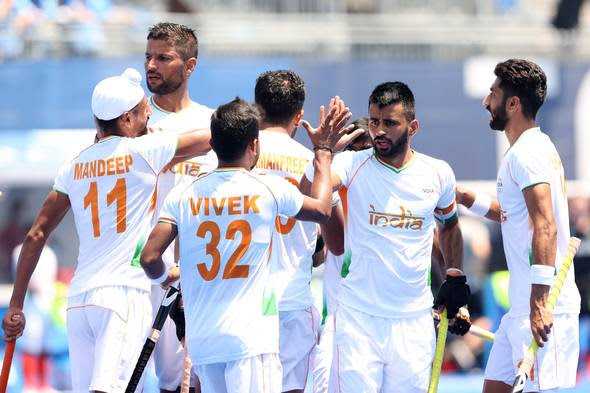
A brace from Harmanpreet Singh, both off penalty corners, and a Rupinder Pal Singh penalty-stroke conversion cancelled out Kane Russell’s opening goal for New Zealand as India took a 3-1 lead in the 33rd minute.

MATCH HIGHLIGHTS:

AND THE GAME IS OVER! INDIA BEATS NEW ZEALAND 3-2!!!

60′ PC FOR NEW ZEALAND! A brilliant run from Hugo Inglis gives NZL a chance to make it 3-3. But the Indian defence stands strong to keep the score 3-2 in their favour.

59′ NZL REFERRAL! This one is just out of pure desperation. The New Zealand players think they can win a penalty corner here. However, they end up empty handed.

58′ SREEJESH YOU BEAUTY! Kane Russell hit a stunning shot towards the top left corner of the post off a penalty corner. Indian goalie PR Sreejesh executed a full-stretch dive to his right to deny New Zealand the equaliser. Moments later, he pulled off another remarkable save in open play.

57′ BACK-TO-BACK PCs FOR NEW ZEALAND! After a long referral, NZL is eventually given the penalty corner. And, surprise, surprise! the team has won one more.

55′ Harmanpreet Singh has been the standout player on the field here. He’s put in a very good defensive shift and has converted two penalty corners. The substitute Birendra Lakra has been excellent since coming on as well.

52′ New Zealand has a slight edge when it comes to possession (52-48) today. However, the team has been a bit wasteful up front (1/5 PCs with a shooting efficiency of 25%), and that’s why India has the lead.

49′ After three consecutive successful referrals, India has a failed one in an attempt to win a penalty corner. New Zealand regains possession.

47′ Amit Rohidas and Lalit Upadhyay come up with a decent move on the left flank for India. The New Zealand defence stays compact to avert the danger.

THE FOURTH QUARTER BEGINS!

We are heading towards a thrilling final 15 minutes as India leads New Zealand 3-2 in men’s hockey on day two of the Tokyo Olympics.

THE THIRD QUARTER IS DONE AND DUSTED!

43′ GOOOOAAAAALLLLL!!!!!!! NEW ZEALAND PULLS A GOAL BACK!!!! A major lapse in concentration for the Indian defence and NZL capitalises on it. Nick Wilson receives a pass on the right flank, dribbles past Birendra Lakra and sets up Stephen Jenness, who scores past Sreejesh with ease.

40′ UPDATE: Australia beats Japan 5-3 to register the first points in Hockey at the Tokyo Olympics. The Aussies are in the same group (Pool A) as India and New Zealand.

38′ The Indian forwards are pressurising the New Zealand defence big time here. Sreejesh has had absolutely nothing to deal with at the other end this quarter.

36′ ANOTHER INDIAN PENALTY CORNER! Harmanpreet almost completed his hat-trick with the shot on target. But NZL keeper Hayward made a good save.

33′ GOAAALLLLLLLL!!!!! INDIA TAKE A 3-1 LEAD NOW!!! Another Indian penalty corner, another Harmanpreet goal. New Zealand looks extremely rusty in the middle since conceding the second goal.

32′ EARLY CHANCES FOR INDIA! Mandeep Singh has been a menace up front. He’s been supported well by Dilpreet Singh on the right. Another Indian goal looks likely.

THE THIRD QUARTER IS UNDERWAY!

Indian athletes are also in action in various other sports at the Tokyo 2020 Olympics today. Follow them through the links provided below.

SHOOTING BLOG | Read more

ARCHERY BLOG | Read more

THE SECOND QUARTER IS OVER!

29′ New Zealand enjoyed a long period of dominance in this quarter but India scored against the run of play. Nick Wilson’s missed chance could come back to haunt NZL.

26′ GOOOOAAAALLLL!!!!! INDIA TAKES THE 2-1 LEAD!! A penalty-corner innovation from the Indians and Harmanpreet Singh finds the back of the net. Rupinder Pal, the usual PC converter, slipped the ball towards Harmanpreet on his left to trick the New Zealand players.

24′ VERY CLOSE! Vivek Sagar Prasad had a wonderful chance to score. But the New Zealand defence gets the better of him close to goal.

22′ JAPAN 3 – 3 AUSTRALIA! In the other Olympic men’s hockey game happening now, the host nation and the 2004 gold medalist from Athens are involved in an exciting clash, which is in the third quarter.

19′ WHAT A CHANCE FOR INDIA! The captain Manpreet received a long pass from substitute Lalit. He was one-on-one with the NZL goalie. However, his lob attempt was saved by Hayward.

17′ New Zealand is dominating possession against India right now. The Indians are losing the ball cheaply in midfield quite too often.

THE SECOND QUARTER BEGINS!

A penalty-stroke goal from Rupinder Pal Singh cancelled out a penalty-corner strike from Kane Russell as India and New Zealand are tied 1-1 after the opening 15 minutes.

THE FIRST QUARTER COMES TO AN END!

15′ INDIAN COUNTER-ATTACK! The substitute Gurjant Singh rushes forward with the ball. But the New Zealand defence tracks back in time to avert the danger.

13′ FOUR CONSECUTIVE PCS FOR NEW ZEALAND! The Indian defence is struggling to get the ball away here. Sreejesh pulled off a brilliant save for India just moments ago. NZL messes up another penalty corner.

10′ GOOOOAAAAALLLL!!!!!! INDIA EQUALISES!!! Rupinder Pal won a penalty stroke from a penalty corner and he sent NZL keeper Leon Hayward the wrong way from close range.

9′ The experienced duo of Birendra Lakra and Lalit Upadhyay haven’t started in the first quarter. The youngster Vivek Sagar Prasad is also on the bench.

6′ GOOOOAAAALLLL!!!! NEW ZEALAND TAKES THE 1-0 LEAD!! NZL won its first penalty corner and Kane Russell converts it with precision.

5′ FOUL! Indian skipper Manpreet Singh hits New Zealand defender Nic Woods on the face with his stick, unintentionally. Woods is being treated on the field.

3′ PENALTY CORNER FOR INDIA! Mandeep Singh won this one after receiving a pass from Nilakanta Sharma. HITS THE POST! Rupinder Pal Singh misses the target by a whisker.

1′ Good early pressure from India here. Dilpreet Singh moves forward with pace on the right flank but isn’t able to create a clear-cut chance.

AND THE MATCH BEGINS!


The team lineups are out!

INDIA XI: PR Sreejesh (GK), Rupinder Pal Singh, Surender Kumar, Harmanpreet Singh, Amit Rohidas, Manpreet Singh (C), Hardik Singh, Nilakanta Sharma, Dilpreet Singh, Mandeep Singh, Shamser Singh.

COACH – Graham Reid.

NEW ZEALAND XI: Leon Hayward (G), Dane Lett, Nic Woods, Kane Russell, Blair Tarrant (C), Shea McAleese, Nick Ross, Hugo Inglis, Sam Lane, Stephen Jenness, Nick Wilson.

COACH – Darren Smith.


The world’s best coaches and scientific training have given Indian hockey a refreshingly new identity, Moscow Olympics gold medallist MM Somaya writes ahead of the country’s hockey teams’ opening games at the Tokyo Olympics.

READ MORE | Read more

He was marked out for greatness as a player and a leader even before he became a constant in the national side. Having led the Indian team at the Junior World Cup, Manpreet Singh has always had confidence in abundance but it has been tempered with a sense of responsibility as captain.

Ahead of his third Olympics, the Indian skipper shared his plans, disappointments and determination to succeed at Tokyo.

FULL STORY | Read more

MATCH PREVIEW:

It has been over 40 years since the Indian men claimed the most recent of their incredible eight Olympic hockey gold medals, which arrived at Moscow 1980.

However, their superb form in recent times makes them serious contenders to claim a ninth title at the upcoming event in Tokyo.

The team has claimed victories against nearly all the top teams in world hockey over the past few years, with Australia-born head coach Graham Reid, a former international with the Kookaburras, getting the best out of a talented and exceptionally fit collection of athletes.

India had booked its ticket to Tokyo with two victories over Russia in the 2019 FIH Hockey Olympic Qualifiers, winning 4-2 and 7-1 in Bhubaneswar.

“It has not been an easy process to make the final selection of 16 players as there is a lot of quality and ambition in this group of players,” Reid said ahead of the 2021 Tokyo Olympic Games.

RELATED | Read more

“The performance levels of all athletes are at an optimum level and more importantly they work well together. They know what it means to represent the country at the Olympics. We’re now focused on training with the same intensity and our goal is to put forward our best performance as a collective unit in Tokyo,” he added.

Meanwhile, coached by former Black Sticks midfielder Darren Smith, New Zealand – which shocked the world by becoming Olympic champion at Montreal 1976 – is renowned for its tireless work ethic as a team but is also blessed with some exceptional individuals.

Stephen Jenness and Hugo Inglis are both wonderful attacking talents, while veteran defender Shea McAleese and penalty corner expert Kane Russell are consistently excellent performers.

New Zealand reached Tokyo with two victories over Korea in the 2019 FIH Hockey Olympic Qualifiers, winning 3-2 and 3-0 in Stratford.

“It’s a pretty experienced group but it’s also the first pinnacle event for players like Sam Lane who have previously missed out through injury or Jacob Smith and Nick Ross who have been rewarded for their perseverance. They’ve shown they’re really determined to be there,” said coach Smith.

THE SQUADS:

India – P.R. Sreejesh, Manpreet Singh, Harmanpreet Singh, Rupinder Pal Singh, Surender Kumar, Amit Rohidas, Birendra Lakra, Hardik Singh, Vivek Sagar Prasad, Nilakanta Sharma, Sumit, Shamsher Singh, Dilpreet Singh, Gurjant Singh, Lalit Kumar Upadhyay, Mandeep Singh.

New Zealand – Leon Hayward, Blair Tarrant, Hugo Inglis, Steve Edwards, Sean Findlay, Stephen Jenness, Sam Lane, Dane Lett, Shea McAleese, Jared Panchia, Nick Ross, Kane Russell, Jacob Smith, Dylan Thomas, Nick Wilson, Nic Woods.


Sony TEN 3 HD/SD will telecast India events with Hindi commentary while Sony TEN 1 HD/SD and Sony TEN 2 HD/SD will have English commentary.

Live streaming of the events will be available on the SonyLIV and JioTV apps.


TOKYO OLYMPICS 2020 – INDIA

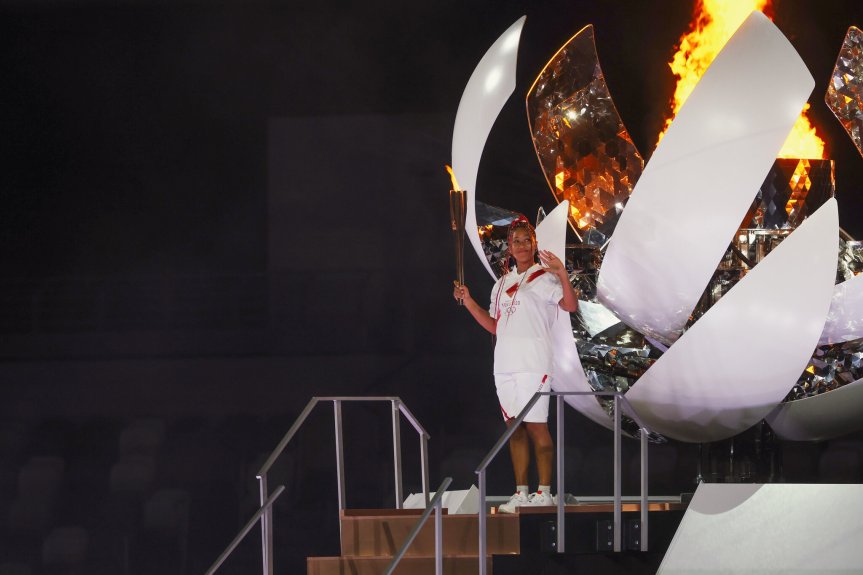
Japanese tennis star Naomi Osaka on Friday lit the Olympic cauldron to mark the formal start of Tokyo 2020, in an opening celebrated as a moment of global hope. Organisers also paid tribute to medical workers as athletes from across the world paraded into an almost empty stadium. Normally a star-studded display teeming with celebrities is now a  low-key celebration, with fewer than 1,000 people in attendance.

The Japanese Emperor Naruhito, French President Emmanuel Macron and Switzerland President Guy Parmelin were among the many world leaders and dignitaries to attend the breath-taking opening ceremony on Friday.

Six-time world champion Mary Kom and men’s hockey captain Manpreet Singh led the way as India made its way at the Parade of Nations during the Opening Ceremony of Tokyo Olympics on Friday at the Japan National Stadium. India’s Olympic contingent for Tokyo includes 127 participants from 18 sports.

We have many athletes from india who will be participating in the sports which lacked Indian representation for years, like Fouaad Mirza who is the first Indian equestrian to qualify the game in 20 years, Bhavani Devi became the first Indian fencer to qualify, Pranati Nayak is only the second Indian woman gymnast to qualify for the Olympics, Sushila Devi Likmabam will be India’s only participant in Judo  and Mirabai Chanu will be India’s only representative in weightlifting

 So let’s keep our spirits high and support our pride “Team India” to win medals and ever-lasting glory for the nation.

Australia To Host The Olympics in 2032 After Brisbane Wins Its Bid

The international Olympic Committee announced that Australia will host the Summer Olympic games for the third time It was announced on  Wednesday in Tokyo during the 138th IOC Session at Hotel Okura.

Brisbane, Australia the world’s largest sporting event will host the Olympic Games.

Adrian Schrinner, the lord mayor of Brisbane, said that the effort to make Brisbane a host city began six years ago under his predecessor.

“Our purpose was to seek an amazing, once in a lifetime opportunity for our region and for our city,” Schrinner said in a message shared on Twitter celebrating the announcement.

The IOC member nations had an easy choice to make Wednesday. Brisbane was the only option still in the running to be a host city.

Whether Olympic host cities actually gain economically from holding the event is unclear, according to some reports.

The Associated Press reports the IOC essentially gave Brisbane exclusive negotiating rights in February, leaving officials from Qatar, Hungary and Germany who has also attempted a run at the 2032 hosting effort, out in the cold.

Australia previously hosted the Olympic Games in Melbourne in 1956 and Sydney in 2020. Paris is all set to host the 2024 Olympics; Milan and Cortina d’Ampezzo in Italy will host in 2028. Beijing is hosting the 2022 Winter Olympics.

India’s Olympic Wins

The first modern Olympics were held in Athens, Greece, in 1896 and it took India only four years before seeing their first representation at the Summer Olympic Games. It all started for India in 1900 when they sent the athlete Norman Pritchard to Paris where he won two medals in Men’s 200 meters and Men’s 200 meter hurdles. Till date, India has participated in every Summer Games since 1900, sending their first Olympic team in 1920 comprising four athletes and two wrestlers. It was, however, not till 1928 that India saw its next medal, after which there have been several Olympic medals obtained. Today India holds a total of 28 Olympic medals and seems to be improving its performance at the Olympics.

Hockey

The Indian hockey team dominated the Olympics from 1928 for decades to come, winning an unprecedented 3 gold medal titles. The dominance of India’s hockey team started in 1928 in Amsterdam, when Dhyan Chand scored a hat-trick against the Netherlands in the final. Major Dhyan Chand is revered today as one of the greatest sportsman in India, and also the greatest player in the history of hockey. By the Berlin Olympics in 1936, the gold medals had piled up for India and London 1948 was the first gold medal post-independence for India. The Indian team kept winning until 1960 when the gold streak was finally broken.

Boxing

In Beijing 2008, Vijender Singh became the first Indian boxer in history to win an Olympic medal. Then in London 2012, India’s newfound love for boxing saw Mary Kom winning a bronze medal for the country. With her win, Mary Kom had become, and remains to be a role model for Indian women wanting to get involved in sports.

Shooting

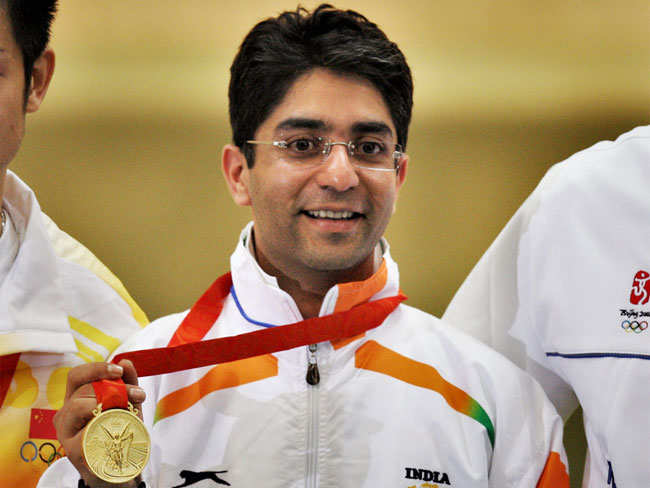
Rajyavardhan Singh Rathore was the first shooter to help India get a medal at the Athens Olympics in 2004, and inspired an entire generation to take up the sport. Following his footsteps, Abhinav Bindra won the gold medal in Men’s 10m Air Rifle at the 2008 Beijing Olympics. He remains the only individual Olympic gold medalist in India and perhaps the most notable among the Indian Olympic winners.

Tennis

India had gone without a medal of any sort for four straight editions before Leander Paes won a bronze medal in 1996. After losing to Andre Agassi in the semi-final, Paes went on to beat Fernando Meligani in the bronze medal match. The medal was a huge achievement for India as they had returned without a medal for many years before Paes won in Atlanta.  

Weightlifting

Breaking the norm of only men fetching Olympic medals for the nation, India saw Andhra Pradesh’s Karnam Malleswari clinching the bronze medal in the 54kg category at Sydney 2000, becoming the first woman in doing so. She had created history, and after her many female athletes would follow to win medals for India.

Wrestling

In 1952, Khashaba Dadasaheb Jadhav had created history by becoming the first Indian to win an Olympic medal in an individual sport at the Helsinki Olympics. The sport was wrestling, and he had won a bronze medal for it. After that in 2008, Sushil Kumar clinched a bronze medal in wrestling after a great deal of struggle and effort. Furthermore, in a traditionally male-dominated sport, Sakshi Malik became the first Indian woman wrestler to win an Olympic medal with her bronze medal finish in the Women’s freestyle 58 kg category at the 2016 Rio Olympics.

Badminton

In London 2012, Saina Nehwal became the first Indian badminton player to win an Olympic medal when her opponent, China’s Wang Xin, was forced to retire hurt during the match in the semi-final. She was the first Indian athlete to win an Olympic bronze medal in the women’s badminton singles. In the following 2016 Rio Olympics, the nation witnessed PV Sindhu take one step closer to gold by becoming the first Indian shuttler to reach an Olympic final in the 2016 Games. She was not able to clinch the victory but won a silver medal in the Olympics. She was also the youngest Indian (21 years old) to achieve this feat.

Conclusion

Every single Indian medal winner may not be mentioned in this Article, but it is important to highlight that every single person who has won a medal for India must be respected, whether that medal is bronze, silver or gold. The Olympics are a worldwide event with the highest level of competition possible, so we should be proud of those who have won for India.

India at the Olympics

Photo by Pixabay on Pexels.com

As we all know Tokyo Olympics are scheduled from start from 23rd July to 8th of August.and we all have very high hope and expectations from our players.

Olympic is an international multi-sport event that is organised after every 4 years. The first Olympic was held in 1896 in Athens.it is also considered as festival of sports Each year it is organised in different country. India has so far won just 28 medals since 1900.let us look at the past when journey for Olympics was started for India.

india’s journey to olympics

India sent its first athlete (Norman pritchard) in 1900 to the Olympics . and it took 20 years to send India’s first contingent in 1920 which consists of 5 members( 3 athletes and 2 wrestler). the quantity of players since 1920 only increased. since then India has won 28 medals which includes 9 gold ,7 silver and 12 bronze medals.

The major contribution was made from Hockey. From 1932 to 1980 India won 8 gold medals in hockey that was the golden period of Indian hockey team but after that the quality of hockey in our country decreased. in 2000, karnam Malleswari won a bronze medal and became first Indian woman to win a medal in Olympics. after that last gold medal in 1980, the next gold medal came in 2008 Beijing Olympics when Abhinav Bindra won gold medal in men’s 10-M air rifle event who became first Indian indivisual to win a gold medal in Olympics. in same Olympics VijenderSsingh also won bronze medal and became first Indian boxer to do so.

2012 london olympics was very good for india where 83 members contingent participated in olympics. and india won 6 medals.wrestler Sushil kumar became first indian wrestler to win silver medal in olympics.saina nehwal won bronze medal and became first indian woman to do so.Mary kom won bronze medal in boxing.

after this wonderful performance in 2012 Olympics, expectations were very high in 2016 Rio Olympics but it did not went very well for India .because India sent a records 117 members but we were only able to win 2 medal which included a bronze medal from Sakshi Malik in wrestling and silver medal from PV Sindhu in badminton.it was a very disappointing year for India .But the question arises why India is not able to perform well in Olympics?

if we look at any other country like USA, they won 121 ,medals in Rio Olympics. ,which is 3-4 times what India has managed so far from 1900, despite having a population of 1.3 billion. I do not think population should be considered in this matter. there are many other factors which are responsible for India’s struggle in Olympics.

reasons of India’s struggle in Olympics

  1. Infrastructure of our country

2.proper funding of players

3. lack of awareness and sports should be given more attention and priority.

4.poor rehab facilities and inexperienced coaches.

5. player are cared and given facilities when Olympics approaches but they should get it throughout their preparation to Olympics.

6.cricket is also one of the reasons. India is a cricket loving nation where every 2nd child wants to be a cricketer. i m also a cricket lover, but we should also concentrated and take interest in other sports also. Like Australia and England, they are very good cricketing nation but they are also good in other sports.

NATIONAL SPORTS DAY

India celebrates its National Sports Day every year on the 29th August.Its the birthday of the Legend, Major DHYAN CHAND ,one  of the best sportsmen ever to have graced the game of hockey. who made India proud by his extraordinary sporting skills. He was the greatest hockey player India has ever seen.

MAJOR DHYAN CHAND 

Place of Birth  :India

Born                :29 August 1905

Died                 :3 December 1979

Aged                 :74

Years of service:1922–1956(34 years) 

Playing position:Centre forward 

Awards & Achievements:

1928– Gold medal  at the Olympics, held in Amsterdam. 

1932– Gold medal at the Olympics, held in Los Angeles. 

1936– Gold medal at the Olympics, held in Berlin. 

1956– Bestowed with India’s third-highest civilian award “Padma Bhushan” by the Government of India.

This day is celebrated by organizing friendly matches between different Indian hockey teams at the Dhyan Chand National stadium in New Delhi which was constructed in the respect and honor of Major Dhyan Chand.

On this day, sports persons commemorate this day in a sportive way. The President of India Bestows prestigious awards such as the Arjuna and Dronacharya Award, Dhyan Chand Award, etc. 

OLYMPICS 2020: Tokyo

See the source image

After a year’s delay, the Tokyo Summer Olympics appear set to proceed. The world’s best athletes will once again compete in the pool, on the track, around the velodrome and high above the trampoline. But the circumstances will be most unusual. The Summer Games, scheduled for Tokyo in July and August 2020, were delayed for a year because of the pandemic. The Games are currently scheduled to proceed July 23 to Aug. 8, 2021.  The International Olympic Committee and the Tokyo organizing committee are determined to hold the Games after years of planning. They are also eager to hang on to the billions of dollars in television money that they would lose if the Games were canceled. Organizers say postponing again is not possible.

STILL KNOWN AS OLYMPICS 2020: Despite coming a year late, the Games are still called Tokyo 2020. T-shirts, mugs, signage and other branded gear will all reflect that.

Japanese against Olympics

Around 80 percent of people in Japan think the Games should not go on this summer. It has been over a year since Japan proclaimed its first one-month state of emergency back in April 2020. There have been many outbreaks throughout this year as a direct result of the non-existent COVID-19 mitigation measures. For the entire year of the global pandemic, the Abe and Suga governments focused on downplaying the pandemic, doing everything in their power to ensure the Summer Tokyo Olympics will be held this year in July. This includes covering up the realities in the country’s hospitals. As a result , people of Japan are now protesting and demanding to stop Olympics this summer. On 10th July participants in the demonstration gathered in front of a five-star hotel in the capital, where the International Olympics Committee (IOC) President Thomas Bach stays, chanting ‘no more Olympics’.

History

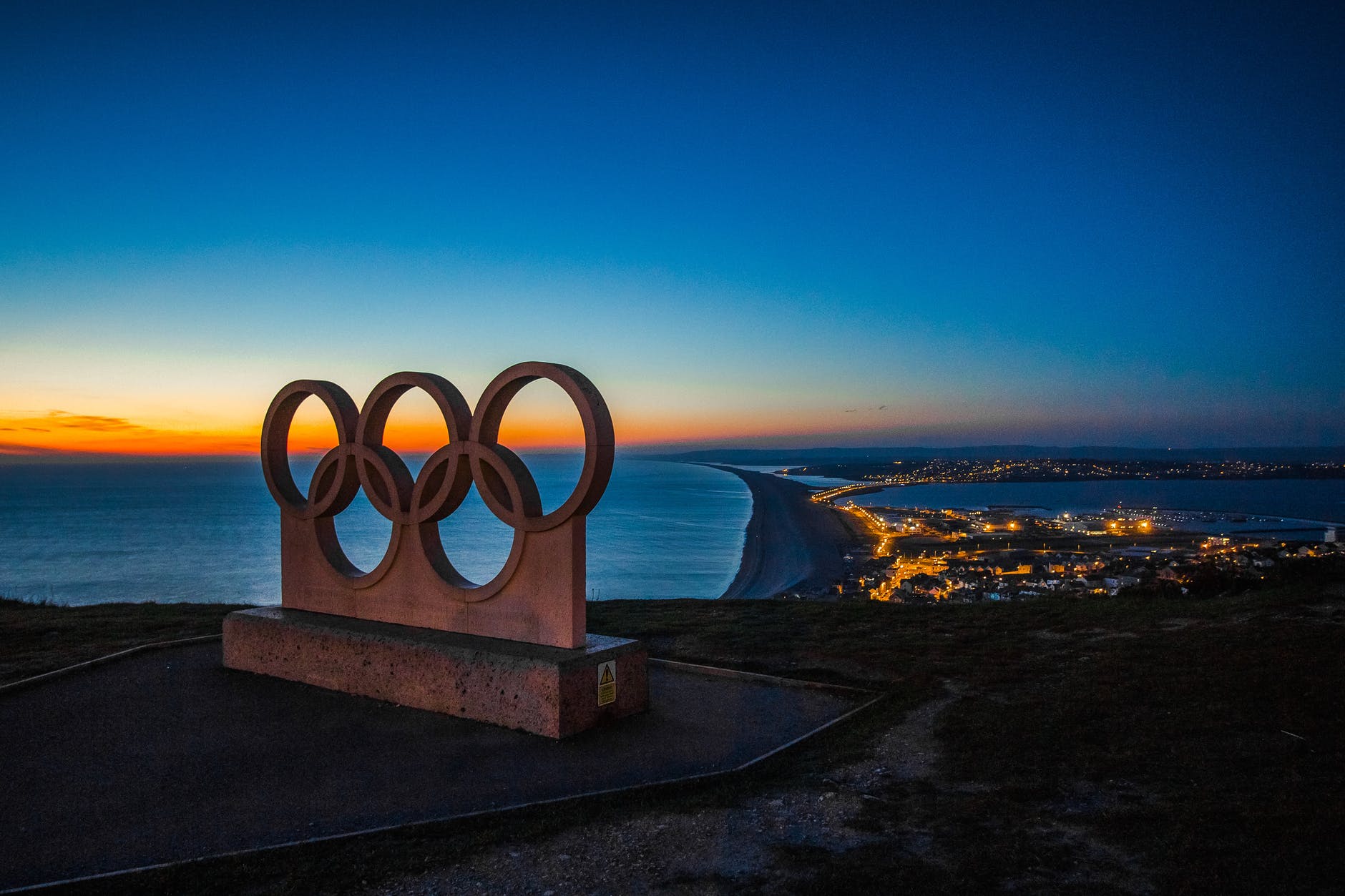
The Olympic Games are an international sports festival that began in ancient Greece. The original Greek games were staged every fourth year for several hundred years, until they were abolished in the early Christian era. The revival of the Olympic Games took place in 1896, and since then they have been staged every fourth year. The ancient Olympics were held every four years between August 6 and September 19 during a religious festival honoring Zeus. The Games were named for their location at Olympia, a sacred site located near the western coast of the Peloponnese peninsula in southern Greece. Their influence was so great that ancient historians began to measure time by the four-year increments in between Olympic Games, which were known as Olympiads. The first modern Olympics were held in Athens, Greece, in 1896. In the opening ceremony, King Georgios I and a crowd of 60,000 spectators welcomed 280 participants from 13 nations, who would compete in 43 events, including track and field, gymnastics, swimming, wrestling, cycling, tennis, weightlifting, shooting and fencing. The official symbol of the modern Games is five interlocking colored rings, representing the continents of North and South America, Asia, Africa, Europe and Australia. The Olympic flag, featuring this symbol on a white background, flew for the first time at the Antwerp Games in 1920.

Have Olympics been cancelled or postponed before?

Since the opening of the first modern Olympic Games in 1896, the international sports competition has never been postponed but only been canceled three times: once during World War I (1916) and twice during World War II (1940, 1944). The 1916 Games were inconveniently scheduled for Berlin when World War I broke out. Those Games, and the Summer Games, which were somehow scheduled for Tokyo, did not happen. The Winter and Summer Games in Italy and Britain in 1944 never happened either.

First Indian to earn ‘A’ standard Olympic quota

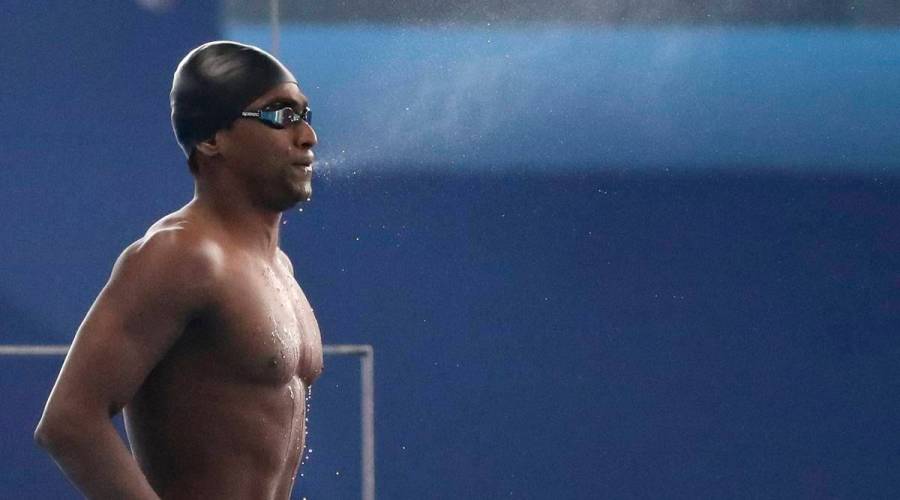
Sajan Prakash created history by becoming the first Indian ever to clear the ‘A’ standard of international swimming, clocking 1:56.38 minutes in the 200m butterfly. Eventually, heads to the Tokyo Olympics as the first Indian to make it to successive Games.

It wasn’t the fastest of races, which meant Sajan had to push himself to set the pace, with Israeli Marc Hinawi as a marker. The Indian was right behind Czech swimmer Lunak Sebastien in Lane 4 at the first turn, which he completed in 25.99s. Sajan would take the lead at 100m, clocking 29.57s on the return, and finish with identical, consistent splits of 30.41s in the second half.


27-year-old, Sajan Prakash from Kerala won gold which is his second in two weeks. After coming agonisingly close to slashing ‘A’ at Belgrade, Serbia, last week. Coach Pradeep Kumar said, “He was spending 19 seconds and 52 metres underwater over four laps, and we focussed on speeding his pace and gaining 80 centimetres in all to breach the ‘A’ Cut.”

Born in Idukki in the shadow of the tallest peak in the Western Ghats – the Anamudi mountains – Sajan swam under coach Saju Sebastien at Neyveli (Tamil Nadu) before heading off to his friend Pradeep Kumar. He would also work in a training stint in Thailand on a FINA scholarship, and was seen as the most consistent performer since his Rio Games outing. The pandemic saw him head to Dubai where he worked in an indoor pool, silently chipping away the seconds.


Former Asiad medallist Virdhawal Khade explained Butterfly is considered the hardest strokes. While Khade reckons said the Butterfly relies on strong shoulders, it is all in the kick that Sajan scores. He further contunied “Even now, he’s not the most dominant guys. But he works hardest and helps young swimmers and is generous with his help. It’s his time now to become the alpha of Indian swimming and lead the others. If youngsters ever needed someone to look up to, there’s none better than this nice guy. Sajan’s put a smile on everyone’s face in Indian swimming,”.

e-sports: Knock…Knock…Knocking at the Olympics Door

e-sports is waiting to enter a historic moment by being part of the next Olympics. e-sports is a form of futuristic sport competition based on video games. Over the last few years it has developed enough to engage professional players, both in individual and in team capacity. There are important e-sports organizations like Fnatic, Team Liquid, Cloud 9, and e-sports like League of Legends, Overwatch and Riot Games. The finesse of new technology has led to very sophisticated e-sports in the present era.

An e-sports tournament which had been due to take place in Tokyo in the lead-up to the 2020 Olympics has been delayed until 2021 due to the postponement of the Olympics to the spread of the coronavirus. The Intel World Open had been scheduled to be held between 22 July to 24 July, 2020. It is supposed to be the first major video game tournament of the decade in Japan. It was set to be an important showcase of e-sports before the opening of the Olympics. The online qualifiers were originally scheduled to start on 2 May and the final players were to compete with each other from 22 July. But the officials from the Intel World Open confirmed that all events have been postponed till next year for the safety of everyone involved with this tournament.

The tournament was supposed to be taken place at Zepp DiverCity with a $500,000 prize pool available for the participants. Two recognized e-sports titles, Capcom’s Street Fighter V: Champion Edition and Psyonix’s Rocket League, will be featured in this tournament for the nations to win.  Interestingly, Intel is modelling the tournament, perhaps the most modern item, after the traditional Olympic games format. Thus it is not only supposed to be the first crossover between the Olympics and competitive video games but also a negotiation between the modern and the traditional. Any player at any level can compete with other players for a chance to join a regional, territorial or national team. The national qualifiers will determine the best four players of each nation. Qualifying players will join one of the twelve teams. The Live Qualifier event was to be held in the Polish City of Katowice to determine the best final seven teams for the main event in Tokyo.

e-sports is not a very familiar subject in India. But it is becoming an increasingly common issue in the sporting circles with the potential for Olympic inclusion. However, it is still facing debate about its inclusion in the Olympics. The debate in Britain also concerns the videogame Fortnite’s inclusion. According to a report in the world famous magazine, The Economist, on 27 June, 2020, Prince Harry has objected to its inclusion in Olympics, a ‘peace event’, as it is a violent game. The counter-logic is that in terms of viewership it attracts the younger generation much more than traditional Olympics.

Intel is a member of the International Olympic Committee as a top-tier sponsorship programme. In a world in which sports is increasingly coming under the control of sponsorship Intetel’s views matter and cannot be simply wished away. It is to be noted that the 3D tracking software of Intel will be used during the international games. e-sports industry is already on the back of billion-dollar investments from Microsoft, Google and Amazon. It has now over one billion fans globally.

There are ongoing discussions on the inclusion of e-sports in the Pan American Games 2023 in Santiago. It had already made its presence in the 2018 Asian Games in Jakarta and Palembang. It has also been announced as a medal event at the 2022 Asian Games in Hangzhou, China. The pandemic-forced lockdown  has also led to a spurt in the popularity of e-sports in recent times. There is no little doubt that e-sports, despite its share of debates and controversies, are moving forward slowly and steadily towards greater presence in the world of sports.