Online Professional Degrees.

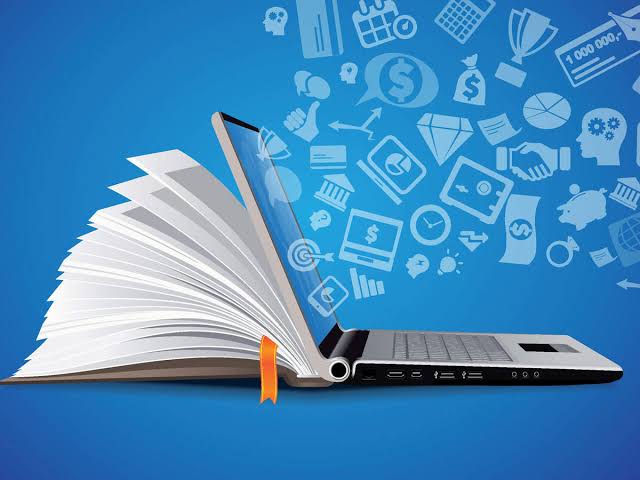
Online degree courses are by definition, those courses which can offer a degree certificate from an accredited university or college upon completion of the course by a student through the online or digital medium of the Internet. Online courses are preferred by many students who want a flexible course where they can study at their own time and place. 

Indians saw a sudden rise in online education in recent times, bringing one of the most debated subjects in the field of e-learning. There are several Indian universities offering online courses in India, thus putting an end to the drawbacks of classroom-based learning, such as location, accessibility, transport, and cost. Moreover, thousands of students in India move to different countries to get higher education and professional prospects. With Indian universities providing online courses, students can gain world quality education at the comfort of their home. For many online learning has become a way to complete their higher education. It has become a boon for working professionals as well as anyone who has other engagements to opt for online courses as it doesn’t carve into their already busy schedule. Some of the most enrolled online courses by students are :

  • Online BA
  • Online B.Com
  • Online BSc
  • Online BBA
  • Online MBA
  • Online MCA
  • Online MSc
  • Online Accounting Courses
  • Online Language master course
  • Online Content Writing course

Various websites that are providing these certified courses are.

  • Udemy
  • Coursera
  • SkillShare
  • Upgrad
  • LinkedIn Learing
  • Edx
  • UdaCity
  • Code Academy
  • Future Learn
  • Alison

Online Professional Degrees.

Online degree courses are by definition, those courses which can offer a degree certificate from an accredited university or college upon completion of the course by a student through the online or digital medium of the Internet. Online courses are preferred by many students who want a flexible course where they can study at their own time and place. 

Indians saw a sudden rise in online education in recent times, bringing one of the most debated subjects in the field of e-learning. There are several Indian universities offering online courses in India, thus putting an end to the drawbacks of classroom-based learning, such as location, accessibility, transport, and cost. Moreover, thousands of students in India move to different countries to get higher education and professional prospects. With Indian universities providing online courses, students can gain world quality education at the comfort of their home. For many online learning has become a way to complete their higher education. It has become a boon for working professionals as well as anyone who has other engagements to opt for online courses as it doesn’t carve into their already busy schedule. Some of the most enrolled online courses by students are :

  • Online BA
  • Online B.Com
  • Online BSc
  • Online BBA
  • Online MBA
  • Online MCA
  • Online MSc
  • Online Accounting Courses
  • Online Language master course
  • Online Content Writing course

Various websites that are providing these certified courses are.

  • Udemy
  • Coursera
  • SkillShare
  • Upgrad
  • LinkedIn Learing
  • Edx
  • UdaCity
  • Code Academy
  • Future Learn
  • Alison

Is offline mode of learning relatively better than online learning?

Now that schools and colleges are limping back to offline mode after long perturbation of Covid 19 pandemic, a question may strike whether offline mode of learning is really better when compared to online learning process. However,  both forms of education have their own advantages and disadvantages.

Advantages of online education:
1) It is flexible. All you need is a device with internet connection and can attend your classes from anywhere across the world.
2) Class recordings are available for later reference.
3) It is budget friendly and saves the cost of transportation , lodging and other necesseties that one has to pay whilst physically attending classes.

Advantages of offline learning:
1) Face to face student and teacher interaction helps in better understanding as teacher can give full attention to students, address their issues and solve them.
2) No distractions whilst studying since there are no other modes of entertainment where students might focus on whilst stidying.

Disadvantages of online learning:
1) Students might induldge in other activities such as surfing net, visiting social media platforms etc whilst attending classes which in turn will hamper their learning process.
2) Another disadvantage is technical glitches. Internet connectivity issues might arise during online classes thus disrupting smooth learning.

Disadvantages of offline learning:
1) No recording is available for students for later references.
2) Time management becomes an issue for students living faraway.

ONLINE LEARNING IN THE PANDEMIC: GOOD OR BAD?

Source: Google images

Covid-19 struck us without a warning and left all educational institutions scrambling to respond to its urgencies. It has also created a need to creatively deal with such unforeseen and once-in-a-century catastrophic event that is being called the ‘new normal’.
When the lockdown was announced in the last week of March after which the country came to a sudden halt. Everything was announced to be stopped for 21days, only essentials were allowed to be sold. Under this circumstance all educational institutions had to close their campuses, students living in the hostels were sent back home if possible. Nobody had imagined that it will eventually take more than 6 months (and still counting) for the situation to normalize.
Now the education system is lagging behind its schedule, but to make the situation sufferable online classes have been started by institutions. Which can result in keeping up with the schedule of the education system, but with every new change comes both, good and bad. Today we will discuss the about the impact of these online classes extensively.

The negative impact

Source: Google images


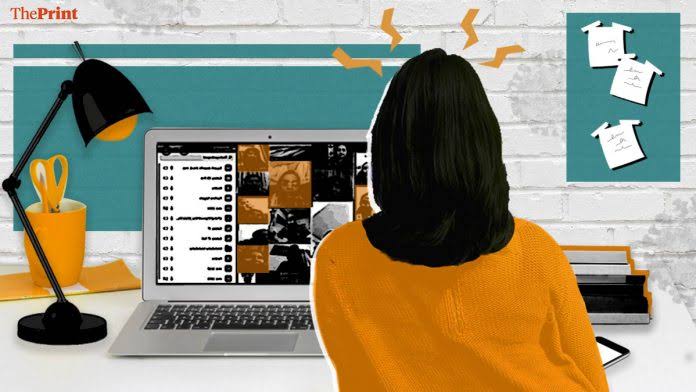
With the online classes, neither the teacher nor the student feel the same kind of energy as in face to face learning, so it may result in less enthusiasm from both the sides which will hamper the student-teacher relation.
Students who live in villages or places where the internet connection is not good or with great speed are unable to attend the online classes. This proves to be disadvantageous because the online classes are for students which if they wont be able to attend then what’s the point in conducting them?
Many institutions have decided to take online examinations too, now what will happen to the students who have poor internet connection during the exam time. They will fail because they will not be able to connect or reconnect due to bad internet connection.
Most of India’s population belongs to lower-middle class family, they don’t earn enough money to buy their children smartphones and gadgets, as a result many of the students do not have devices, smartphones and laptops or money to keep the internet connection while also paying the school fees.
Some teachers also struggle to get to know the technology. They are expected to make PowerPoint Presentations (PPTs), record the video lectures, and take online classes through different apps and online platforms, which not all of them are able to do properly. This is more common among the teachers because most of them didn’t had to that their whole life, and to learn something that is this vast, takes plenty of time.
A major problem has emerged for the teachers who often complain about some Students doing mischievous activities for entertainment. They share links of online classes that are sent to them by their teachers. They also tend to create Zoom IDs in random, unidentifiable names and troll teachers. Some switch off their camera and call teachers by their names from these IDs, some use them to send memes to teachers.
Teachers also have to face common issues like, Bullying by students, argumentative parents who often peep into classes, and distracted children and a story that I personally heard was about a student’s relative used the link to log into the class and “see what the teacher looks like, what she teaches and how she speaks”, and I am sure many others also must have experienced something like this.

The positive impact

Source: Google images

There is an abundance of benefits that students and teachers will get from online learning as well few of them could be:
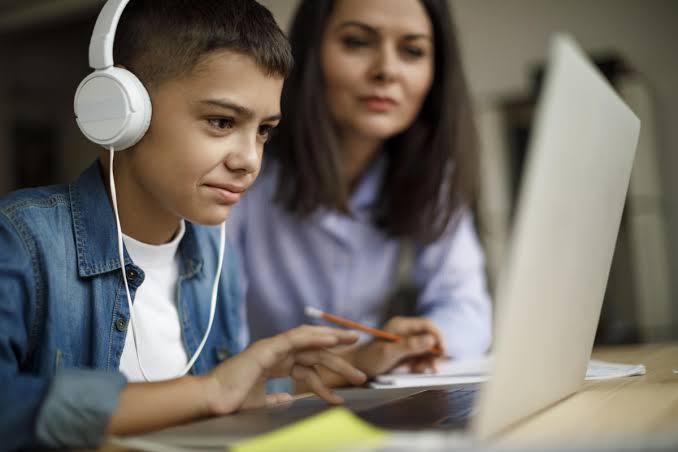
Online learning can be done from the comfort of one’s home, especially during COVID-19 outbreak, which definitely does not mean that you can lay down on your bed and attend your classes, what it means is that it is easier for you to stay at home safely and attend classes.

Different student has different level of understanding some can learn something new easier than the other whereas some may take some time, with the online learning you can learn the lesson on your pace, you just have to record the lectures, the PowerPoint presentations are uploaded for you by the teachers.

Unlike the classroom learning, here the lessons can be constantly updated and uploaded so that students can continue on if they have finished the previous lessons.

Many students in traditional classroom environments don’t feel comfortable speaking in front of everyone but In an online environment, it can be much easier to share thoughts with others. According to the National Institute of Mental Health, 74% of people suffer from speech anxiety, online classes will help them to improve and build their confidence.

Even if the exams are conducted online there is no harm in it on the plus side you will get your results instantly without having to wait for a long period of time.

Most importantly this swift shift to online mode of learning has resulted in less use of paper throughout the world as teachers and students both use technology to write notes or create presentations, thus protecting our environment.

Conclusion

As we saw above, that online learning has it’s good and bad aspects, so at least for now in this case of emergency, the online mode somewhat works for the students but still the government needs to come out with alternatives for the students with no gadgets or no internet connection or both.
For the future, that is after the pandemic is over online learning and the face to face traditional learning has to co-exist, because we can’t be fully dependent upon the virtual learning. Yes it does make the learning process easier but it still has to improve alot and also has to inculcate the values that the students learn while in the traditional learning system, and also has to eliminate the barriers in online learning so that no one is disadvantaged from this system.

UGC: New Guidelines for Online Course and Distance Learning

Photo credit: Google images

University Grants Commission (UGC), on 5th September, finalized its integrated online and distance learning regulations to provide easier access to students. 

“On Teachers Day, @ugc_india integrated distance and online regulations notified in the gazette focusing on access and equity on one side and quality-centric autonomy to the universities on the other,” Education Minister Ramesh Pokhriyal ‘Nishank’ said on social media.

Under these regulations, the top 100 universities in the National Institutional Ranking Framework (NIRF) or those with 3.26 or above National Assessment and Accreditation Council (NAAC) grades will be permitted to provide online courses without prior permission.

“The integrated regulations are student-centric. Many quality provisions have been made to ensure mobility, equivalence among different modes of education, complaint handling mechanism,” Mr Ramesh Pokhriyal ‘Nishank’ said on social media.

The minister further added that the integrated distance and online regulations are compliant to budget and Aatma Nirbhar Bharat announcements made by the government.

The University Grants Commission (UGC) has also released a checklist for students regarding adherence to the duration of the academic session, the prohibition of franchising agreement, and ensuring all activities are within the territorial jurisdiction before enrolling them into distance learning programmes.

“Please ensure that the minimum duration, nomenclature, and qualification for degree programme under which they are enrolling is strict as per UGC notification on the specification of degrees and its amendments,” said UGC Secretary Rajnish Jain in a notice listing the precautions need to be taken by students before enrolling in Open and Distance Learning (ODL) programmes.

“Also ensure that all activities of Higher Education Institutions (HEIs) including admission, counselling sessions, contact programmes, programme delivery and examinations are strictly conducted within the territorial jurisdiction,” he added.

As per norms, no university whether central, state, private or deemed to be university, can offer its programmes through franchising agreements with private coaching institutions for admitting learners and conducting courses through open and distance learning and online mode.

“Please ensure that the admission process is carried out through headquarters of the HEIs in a transparent manner. The learners are also advised to verify all details as claimed by the institution on the website. If any deviation is noticed, please communicate the same to UGC for necessary punitive action as per provisions defined under respective regulations,” Jain said.

The secretary also said that in view of the COVID-19 pandemic, the Commission has decided that the revised academic session for this year as decided by the commission for ODL programmes, shall be kept as a period of 12 months starting from September-October, 2020 and February-March, 2021.

The students have also been advised against taking admission in programmes which are prohibited in distance learning including engineering, medicine, law, dental, pharmacy, nursing, architecture, physiotherapy, agriculture, hotel management, culinary studies, valuation of real estate and MPhil or Phd programmes in any discipline.

Virtual Classrooms – An Alternative for Classroom learning

When the lock down was announced our whole educational system came to an abrupt stop. Now we had to depend on online apps and webinars to learn.

 Until the lock down period was announced most of us were not even aware of the existence of such apps.  By the time lock down was announced the fame for an app like Zoom, had won over the millions of people across the world. It was one of the popular apps used around the world to conduct meetings. It accommodated more than about 100 participants.

First times in online classes are always a headache because half of the people  forget to turn on the audio and camera. Not only us but teachers also have hard time in finding different functions.  Online classes are always an advantage in situations where classroom learning cannot take place but in many strong opinions it can never take over the idea classroom learning.

To the other side of online classes, it opens us to a world of disparities between the elite and the middle class and the poor. An online class eliminates the human connection that a face-to-face, in-house teaching environment provides. An online instructor cannot gauge the mood, involvement and engagement level of her students the way she can in a traditional lecture-based classroom.

There are a lot of problems with online learning. Most of the students will face difficulty in connecting with the teacher. Without a proper connection at home for internet, students will find difficulty in attending the classes. Proper 4G connection is need for the smooth conduct of meeting in Zoom. This creates a digital divide between the students. Not all students can afford a phone or not all will have a proper connection. This creates a differentiate between the haves and have nots. 

Such a simple issue as this can really draw us attention over the issue of network and internet connections, but what most of us forget is in some states of India, internet connections have been cut off which makes it very hard for students in that are to attend class.

Zoom classes does not allow you to enhance your learning capacity. It doesn’t provide for any kind of learning other than the academics. Sometimes the app would crash and there would be a lag.

Most of the times when classes go on, the system gets lagged and create network problems due to which students wont be able to focus. Students are forced to sit in front of their phones for hours listening to lectures which can have a lot of effect on their eyes as well as their thinking capacity.

Sometimes classes are taken without giving any breaks in between, this can cut off the span of concentration of a student. One person can normally concentrate to max to max half an hour without any other thoughts barging in, with proper breaks in between it becomes easier to learn.

Taking all these facts into consideration we can come to the conclusion that online learning may not always be an alternative for classroom education. Being in touch with human beings and socializing with people is what develops a persons character.

Most of us learn from school, from what we see and hear we develop into better versions of ourselves. Being outside in the sun, playing in the mud, reading a book to bed etc adds up to the character of a child. In all places learning by experience matters.

Silver Linings of 2020

When we’re all swearing this year to be one of the worst years of the century, and for some, let’s say the worst year of their lives. But as we say, “Every cloud has it’s silver lining” and to some degree, it’s also real. We should think of nature as a result of this lockdown of Mother Nature ‘s healing to a great degree. Many major metropolitan cities used to be heavily polluted for a variety of reasons (certainly all the reasons are linked to homo sapiens only).

According to System of Air Quality Weather Forecasting and Research (SAFAR), there was a 76% decline in the NO2 level concentration, while PM 2.5 was down by 54% as opposed to the same period in 2019.During the lockdown, SAFAR monitored pollution levels in six cities—Mumbai, Delhi, Ahmedabad, Chennai, Pune and Kolkata. The study found that Delhi’s PM 2.5 (particulate matter lesser than 2.5 microns) reduced by 39%, Kolkata’s and Ahmedabad’s by 30%, Pune by 25% and Chennai by 11%.

The Times of India

Until now it all may sound very obvious to many of you let me put some content that may sound interesting.

Wonder chicken discovered

The earliest fossil of the modern bird has recently been found, dating back 66 million years — before the age of the dinosaurs. This creature, named “the wonder chicken” by scientists, looks like a chicken from the front and a duck from the back. The discovery brings a great deal of detail to the body of scientific knowledge, telling scientists a lot about the early evolution of the modern bird and opening a discussion about its origin.

Second person in the world to be cured of HIV

A few weeks ago, the second person in the world was cured of HIV. Thanks to stem cell therapy, London, U.K. Resident Adam Castillejo is free from disease. While this treatment is high-risk and still not readily available to patients, Castillejo’s cure gives us hope that a possible gene therapy cure will be within our scope.

There are a few sites now free of COVID-19

While all of us are still terrified by the pandemic, a few areas free of coronavirus offer a silver lining for the future.Lakshadweep having zero cases is a big accomplishment as they depend on Kerala for most of their medical needs.

Apart from New Zealand, Tanzania, Fiji, Vatican City, Montenegro, Seychelles, St. Kitts & Nevis, Timor-Leste, and Papua New Guinea have treated the most recent citizens diagnosed in their countries of coronavirus.

The first in-vitro cheetah cubs to be born

At the end of February, the Columbus Zoo in Ohio announced the birth of the first cheetah cubs to be born from in vitro fertilization. Two cubs, male and female, were born to cheetah Izzy, a three-year-old mother. This feat is a milestone for both biology and zoology and comes as an indication that humans can help those at risk.Species must thrive.

Australia is no longer in the flames
The last thing to rule in the early months of 2020 before the coronavirus pandemic has eventually come to a stop. Australia is no longer on fire; the flames have been lit in New South Wales, the only state to remain on fire since early March. Its trees are now recovering, and new plant life has recently emerged from the fire-ridden landscape. While this is certainly not the end of the battle against the climate crisis, the horrors in Australia have now come to a halt.

Animal Crossing on the Nintendo Switch

Animal Crossing: New Horizons came out on the Nintendo Switch on March 20th, on a less important but still pleasant note. Now, fans of the popular Mario title will enjoy it on the newest Nintendo console. This game has become a worldwide phenomenon, as many see it as a great opportunity to fill their hours with self-isolation. This game is commonly regarded to be extremely relaxing — the idea is basically to go to an island and make a bunch of animal friends to perform simple tasks in return for prizes.

But apart from these commonly known facts and figures, perhaps this year has not proved that bad for students as well. I now may seem to most of us to be a complete blether and jabber, but let me tell you some bizarre things that none of us may have noticed.

Most of us realize what we are capable of doing apart from what we all used to do in our normal lives. We ‘re beginning to recover or develop new or outdated abilities. We began to talk of things that we would never have considered before. Others may start studying, some start cooking, drawing, coding, reading, and more.

I, myself, have learned a lot of things that I just don’t think I ‘d remember if I didn’t have the quarantine time period. There are a lot of skills that you can learn in this period of time, here in this blog I’m just mentioning their name and not the whole story (I ‘d definitely try to write my next blog on this one).

  • Start a blog
  • Learn how to code
  • Digital Marketing
  • Closing a deal
  • Copy writing skills
  • Simulations

This list is endless, and it’s just a few of them that I’m learning as a student. So believe me they ‘re all worth knowing, and you’re going to love studying not all of them, but at least some of them you have to know.

So if we get trapped in our homes and we can’t celebrate holidays or have fun with our friends and loved ones. Guys, let me make it clear that many of us are stuck with the ones who love us the most, clearly our parents and our family. Perhaps, all of us are so stressed that we generally don’t have time for our family, so mostly because of our crazy lives, we don’t even think about it. But after so many years, all of us have our childhood days back and believe me that they won’t come back once this pandemic has passed, so enjoy those moments with them.

And as for those dear ones you haven’t met for months and it seems like ages. The quote describes this well.

“As contraries are known by contraries, so is the delights of presence best known by the torments of absence.”

Alcibiades

There can be no distance from them who we want to be with and who wants to be with you. Without a doubt, this year has taken away a lot of things from us, but it can still give us a lot to enjoy. It tells us a lot, and let’s take that as a year to learn to try to understand the things we’ve never taken care of.


Burdens of online classes

I have just been promoted to the second year of my postgraduate course and our dean was very much proactive in launching the online platform by buying a Zoom subscription, providing access to the online private library and even bought subscriptions to buy e-books. A necessary amount of fees was also reduced although there is no reimbursement of the internet or Wi-Fi charges. Around 2-4 classes of duration 90 minutes are usually scheduled each day, with a couple of days off each week. Faculties usually provide assignments with deadlines and we have to prepare presentations almost every week. Everything which one usually does in a MBA college, we are doing everything and even the faculties are trying to replicate the entire offline model of MBA into an online model. Truth to be spoken, they have been successful in their endeavours, but to what extent?

With each passing day, such online classes are becoming more of a burden. Attending classes every day, for such long hours as well as trying to grasp new topics is becoming increasingly difficult. Even though the faculties are trying to make things easy, there is something about this online platform that makes the entire teaching process a mile less effective. Recent trends suggest that the attention span of a normal 25 years old human being ranges from 10 to 20 minutes. This trend is well observed when we are studying a class environment, usually surrounded by friends who help us getting through the class. But coming to the online mode, what usually happens is our attention span gets drastically reduced and since there is no check with the reality, we often drift away from what exactly is happening in the class. What spikes our frustration is the absence of non-verbal cues during the class activities or during presentation. In classes, we can see our audience and change ourselves accordingly, but in online mode, it seems like a one way communication – we only speak without any response from the opposite end. And to add to that, we always face a fear of losing internet connection in the middle of class. And God forbid, the days when that happens, we have no other options but to succumb to our own senses to try and to understand what we have missed.

But that is not all. Post graduate study is so designed that group work is more of necessity which reduces time and increases effectiveness of our study. Studying solo in our rooms is making things harder, and this is piling up day by day.

But what is more frightening and despairing is that unlike the corporate, schools and colleges does not have any mental wellness programs. Hours of online classes with studying solo in our rooms is creating a mental challenge coupled with anxiety and stress. What actually is happening now is that students are trying to cram everything but what is the effectiveness? Are we really being able to retain anything at the end of the day? There is no doubt that the faculties are trying their best, but somewhere they have failed to consider the mental challenge that we are facing in the meantime.

Online class is perfectly fine for those curriculum which have been designed in that way. It does not work, or at least we are not ready to embrace this form as a substitute of offline mode of classes.

Source – Self

Here is some tips for people who wish to pass their time productively and it’s benifits!

3 ways to spend your time productively

1. Online course

Variety of programs and courses: From traditional four-year universities to completely online career colleges, higher education today offers a variety of options for students. This means that no matter what students study, from nursing to neuroscience, they can find the courses or programs they need online. Students can also earn every academic degree online, from a career certificate to a doctorate.

More comfortable learning environment: Commercials that feature online students studying in their pajamas only skims the surface of one of the benefits of online education no physical class sessions. Students listen to lectures and complete assignments sent to them electronically, with no need to fight traffic, leave work early for class, or miss important family time.

Convenience and flexibility: Online courses give students the opportunity to plan study time around the rest of their day, instead of the other way around. Students can study and work at their convenience. Course material is always accessible online, making special library trips unnecessary. All of these benefits help students balance work and family commitments with their education.

Lower total costs: Online programs prove a more affordable option than traditional colleges. Though not all online degrees offer less expensive net tuition prices than traditional colleges, associated expenses almost always cost less. For example, there are no commuting costs, and sometimes required course materials, such as textbooks, are available online at no cost. In addition, many colleges and universities accept credits earned via free massive open online courses (MOOCs), the most recent advance in online education. These free online courses can help students fulfill general education requirements.

2. Volunteering

  • Gain confidence. Volunteering can help you gain confidence by giving you the chance to try something new and build a real sense of achievement.
  • Make a difference. Volunteering can have a real and valuable positive affect on people, communities and society in general.
  • Meet people.Volunteering can help you meet different kinds of people and make new friends.
  • Be part of a community. Volunteering can help you feel part of something outside your friends and family.
  • Learn new skills. Volunteering can help you learn new skills, gain experience and sometimes even qualifications.
  • Take on a challenge. Through volunteering you can challenge yourself to try something different, achieve personal goals, practice using your skills and discover hidden talents.
  • Have fun! Most volunteers have a great time, regardless of why they do it. 

3. Digital Marketing

Marketing is all about connecting with your audience in the right place at the right time. In the age of digitization, your best strategy would be to meet your customers online where they are already spending much time. Digital platforms are increasingly getting associated with marketing schemes and everyday life. In such circumstances, it’s essential to understand the key benefits of digital marketing. By incorporating technology-focused strategies into marketing, business owners can gain better outputs easily. So, What Exactly is Digital Marketing?

According to Victor he says, Digital marketing is the promotion of products/services via various forms of electronic media, mainly based on the internet. Basically, the definition of digital marketing refers to all of your online marketing efforts. Many businesses have already experienced advantages of digital marketing over traditional marketing. Unlike traditional marketing, it involves the use of channels and methods for a proper understanding in the real-time scenario. Thus, organizations can analyze marketing campaigns and implement necessary steps accordingly. Regardless of what your company sells, digital marketing can work effectively for any industry. With digital marketing, you can see results much faster than you might with offline marketing. The interactive nature of digital marketing strategies helps companies to grow their client base in a short span of time.

So what are you all waiting for don’t spend all your precious time by just sleep or gaming let’s do something productive.

You can also try blogging or start your very own YouTube channel or sketch the idea’s in your mind and make it into a reality!

Re-evolution 2020?

Why did I end up keeping a question mark at the end of the title? Is it in order to start my introduction with a question mark by questioning the title or which made me to write this sentence. The answer to this question is a question. Indian Education Future turns out to be a question mark and remains to be question for more far. Our future lies in the past and the past remained as a past and hence future will remain as a future. Past shouldn’t be past in order to make future as a future. Past should change so that our future will not change. Our children’s future can be ours but theirs shouldn’t be theirs which will be cycle and makes the future to be seen only in future’s future.

The change to change the educational system should change which is only possible by changing the mind sets of unchanged. This is only possible by changing the methods of bringing the awareness. Education is the only weapon which can change the change(money) of the unchanged.” Uneducated should be treated as a criminal and illiteracy must be treated as a crime which is the only way to increase the literacy rates”. Education should be mandatory which makes them to read since the only option left to them is it. Fear is the thing which wemake them to feel and the rest is automatically done. Fear for benefit will benefit the society. Before they overcome this fear at least they could have finished secondary education. As soon as they realise it, we make them to understand the importance of education. “If you can’t love to study, fear will make it so”. The feelings are different but the feeling is same. To make the future possible we should take action in the present.

Revolutionary decisions must be made in order to bring a revolution else the only thing we hear about it is “sun is revolving around the sun”.The harsh decisions that you take will make them hard and in turn shine like a diamond. Education can bring the change and in turn make the change like a unbreakable chain. If good has to happen then making bad decisions to make it is not at all a bad decision. Severe tax should be impelled on the parents who are not willing to send their children for the study and that tax will be utilised for the education of that child.