One Nation One Subscription

Daily writing prompt
What makes a good leader?

India, a land of ancient knowledge and rich tradition, has always been a beacon of innovation and discovery. From pioneering advancements in mathematics and astronomy to groundbreaking contributions in various fields of science, the country’s legacy of intellectual achievement is unmatched. On August 15, 2022, Prime Minister Narendra Modi, from the ramparts of the Red Fort, reminded the nation of this proud legacy and the critical role that Research and Development (R&D) would play in shaping India’s future. As he addressed the nation, he emphasized the importance of nurturing R&D capabilities, particularly during Amrit Kaal, and called for a renewed focus on innovation with the inspiring slogan, “Jai Anusandhan.”

This call for a vibrant R&D ecosystem resonated with the goals outlined in the National Education Policy (NEP) 2020, which identifies research as a fundamental driver of educational excellence and national progress. The policy seeks to cultivate a robust research culture that not only enhances academic quality but also accelerates India’s growth on the global stage.

In alignment with this vision, Union Cabinet has approved the One Nation One Subscription (ONOS) scheme on 25th Nov 2024. This initiative seeks to break down barriers to knowledge by providing all students, faculty, researchers, and scientists across the nation’s government higher education institutions (HEIs) and central government R&D centres with access to international scholarly journals and articles. The goal is to ensure that India’s academic and research communities are equipped with the best global resources, fostering innovation and enhancing the quality of research across disciplines.

The ONOS scheme is a cornerstone of India’s ambition to become a self-reliant and developed nation by 2047. This initiative is a key component of the Viksitbharat@2047 vision. This roadmap envisions India’s emergence as a leading global power driven by cutting-edge research, technological advancement, and self-sustained progress. Through such initiatives, India is preparing to build on its rich legacy of knowledge, positioning itself at the forefront of global innovation and discovery.

ONOS Scheme Overview:

The scheme’s objective is to provide all eligible students, faculty, researchers, and scientists with access to top-tier international research articles and journals. It covers more than 6,300 government-managed higher education institutions and central government-managed research and development institutions across the country.

The scheme provides:

•           Access to more than 13,000 scholarly journals from 30 major international publishers.

•           Benefits about 1.8 crore students, faculty, and researchers across disciplines such as STEM (Science, Technology, Engineering, Mathematics), Medicine, Social Sciences, Finance & Accounts, etc.

•           Inclusive access to research for institutions in tier 2 and tier 3 cities, ensuring equitable access to knowledge.

Key Objectives and Goals:

  • Access to Scholarly Knowledge: The scheme provides access to high-quality scholarly journals and publications across various fields. This aims to democratise access to knowledge to enhance the research capabilities of students, faculty, and researchers.
  • Inclusion of Diverse Institutions: The scheme ensures that institutions, regardless of their geographic location—in urban centres or remote areas—have access to world-class research resources. This is crucial for advancing core and interdisciplinary research in the country.
  • Global Research Participation: It aligns with the goals of Viksitbharat@2047, helping India to emerge as a global leader in research and development by enabling its academic and research institutions to engage with international scholarly communities.

Implementation Details:
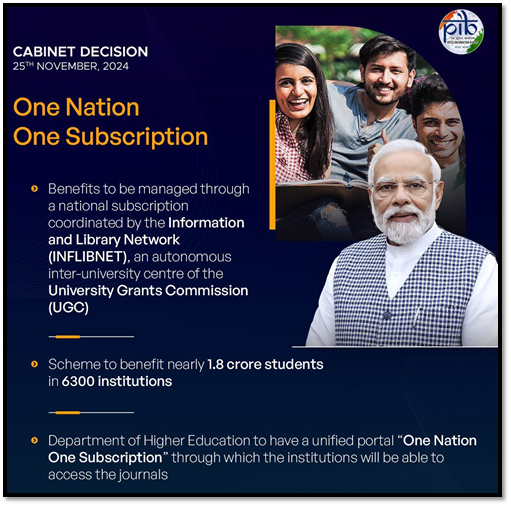
  • ImageNational Subscription via INFLIBNET: The entire subscription process will be centrally coordinated by INFLIBNET (Information and Library Network), an autonomous inter-university centre under the University Grants Commission (UGC). INFLIBNET will manage the distribution of digital access to these journals, ensuring a seamless experience for users.
  • Digital Access: Journals will be accessible entirely through a digital platform, ensuring convenience and ease for all users. This approach minimises administrative complexities and makes access available on-demand.
  • Government Allocation: A total of ₹6,000 crore has been allocated for the PM-ONOS initiative, covering three years—2025, 2026, and 2027. The funding will cover the subscription charges for all participating institutions across the three-year period. Further, ONOS will also provide central funding support of Rs. 150 Crore per year for beneficiary authors to publish in selected good quality Open Access (OA) journals.

Funding and Financial Strategy:

The ₹6,000 crore allocated for ONOS ensures smooth implementation of ONOS from 1st January 2025 to 31st December 2027

  • ONOS phase I, starting from 1 January 2025, will provide access to over 13,000 journals for more than 6,300 government academic and R&D institutes including central and state-govt universities and colleges. This translates to nearly 1.8 Crore students, faculty and researchers getting access to high quality research publications.
  • The subscription charges for journals from 30 publishers under ONOS Phase I will be centrally paid by INFLIBNET, covering payments from library consortia, HEIs, and R&D institutions under central ministries. Independent subscriptions will continue for resources not included in Phase I.
  • This phase will establish the program’s framework and ensure that key research resources are made available to a large number of institutions across India.
  • Payment of Article Processing Charges (APC) to publishers for selected high quality research publications of the researchers from these participating institutions have also been envisaged in this phase.
  • Experience of ONOS phase I will be used for designing subsequent phases of ONOS.

Further Enhancements and Features:

  • Synergy with Existing Initiatives: The ONOS scheme will complement the existing Anusandhan National Research Foundation (ANRF), which is designed to promote R&D activities across India. ONOS will facilitate easy access to international research materials, supporting the foundation’s goal of fostering research and innovation across government-managed institutions.
  • Discounts on Article Processing Charges (APCs): One of ONOS’s significant features is the discounts on Article Processing Charges (APCs). Journals typically levied these charges for publishing research articles. By negotiating lower APCs with publishers, the scheme will help Indian researchers publish their work in high-quality journals without incurring heavy financial costs.

Conclusion

The One Nation One Subscription initiative is a game-changing scheme for India’s research ecosystem. By providing digital access to over 13,000 journals from 30 international publishers, it will bridge gaps in research infrastructure across India. Through its phased implementation, the scheme will significantly contribute to enhancing India’s academic and research excellence, fostering innovation, and helping the country emerge as a global hub for scientific research. By leveraging existing consortia initiatives of 10 central government Ministries and Departments as well as initiatives of many government higher education institutions, an unifying approach through the one nation one subscription will democratise knowledge dissemination and empower a new generation of researchers and students, providing them with the resources they need to excel.

ONOS is a key part of a broader vision to transform access to knowledge in the country. As the first step in a multi-pronged approach, it expands access through the widely used subscription model. The other steps focus initially on promoting Indian journals and repositories and then introducing new research evaluation methods that consider both journal metrics and factors like innovation and entrepreneurship.

References:

Ministry of Education

Kindly find the pdf file 

****

Searching and Reading the Research Papers without Paying

Traditionally, scientific research has been tucked away behind paywalls of academic publishers. Not only is the access to papers often restricted, but subscriptions are required to use many scholarly search engines. This practice discriminates against universities and institutions with little funding who cannot afford the licenses. Closed publishing also makes it hard for people not affiliated with research institutes, such as the public, to learn about scientific discoveries.

Today, the proportion of research that is publicly accessible, at no cost, varies between disciplines. While in the biomedical sciences and mathematics, the majority of research published between 2009 and 2015 was openly accessible, this held true only for around 15 percent of publications in chemistry. Luckily, the interest in open access publishing is steadily increasing and has gained momentum in the past decade or so.

Nowadays, many governmental funding bodies around the world require science resulting from grant money they provided to be available publicly for free. The exact requirements vary and UNESCO is currently developing a framework that specifies standards for the whole area of open science.

Once I started my research on the topic, I was astonished by just how many open science tools already exist! I selected the 10 best tools for you that help you discover relevant literature, allow you to read it and save citations:

SCIENCEOPEN

Want to perform a literature search and don’t want to pay for Web of Science or Scopus or perhaps you are tired of the limited functionality of the free
 Google Scholar? ScienceOpen is many things, among others, a search platform for scientific articles. Despite being owned by a company, the platform is freely accessible with a visually appealing and functional design. Search results are clearly labelled by type of publication, number of citations, altmetrics scores, etc. and allow for filtering. You can also access citation metrics, i.e. display which publications have cited a certain paper.


READ BY QXMD

Available as an app or in a browser window,
 Read lets you create a personalised feed that is updated daily with new papers on research topics or from journals of your choice. If there is an openly accessible version of an article, you can read it with one click. If your institution has journal subscriptions, you can also link them to your Read profile. Read has been created by the company QxMD and is free to use.

CITATION GECKO

Citation Gecko is an open source web app developed by Barney Walker that can help you with your literature review. It works in the following way: First you upload about 5-6 “seed papers”. The program then extracts all references in and to the seed papers and creates a visual citation network. The nodes are displayed in different colours and sizes, depending on whether the papers are citing a seed paper or are cited by it and how many, respectively. By combing through the network, you can discover new papers that may be relevant for your literature search. You can also increase your network step by step by including more seed papers.
The underlying citation data that Citation Gecko uses is provided by Crossref and Open Citations.

LOCAL CITATION NETWORK

Similar to Citation Gecko,
 Local Citation Network is an open source tool that helps you discover new literature on your research topic. Local Citation Network was developed by Physician Scientist Tim Wölfle. The tool works best if you feed it with a larger library of seed papers than required for Citation Gecko. Therefore, Wölfle recommends using it at the end of the literature review process to identify papers you may have missed.

RESEARCHRABBIT

As an alternative to Citation Gecko and Local Citation Network, a reader recommended
 ResearchRabbit. It’s free to use and looks like a versatile piece of software to find literature by building your own citation network. ResearchRabbit lets you add labels to the entries in your network, download PDFs of papers and sign up for email alerts for new papers related to your research topic. Instead of a tool to use only once during your literature search, ResearchRabbit seems to work more like a private scientific library, storing (and connecting) all the papers in your field.

OPEN ACCESS BUTTON

Works like Sci-hub but is legal: You enter the DOI, link or citation of a paper and
 Open Access Button displays it if freely, accessible anywhere. To find an open access version, Open Access Button searches thousands of repositories, for example, preprint servers, authors’ personal pages, open access journals and other aggregators such as the COnnecting REpositories service based at The Open University in the UK (CORE), the EU-funded OpenAire infrastructure, and the US community initiative, Share.

If the article you are looking for isn’t freely available, Open Access Button asks the author to share it to a repository. You can enter your email address to be notified once it has become available.

Open Access Button is also available as a browser plugin, which means that a button appears next to an article when a free version is available. The tool is funded by non-profit foundations and is open source.

UNPAYWALL

Unpaywall is similar to the Open Access Button but only available as a browser plugin. If the article you are looking at is behind a paywall but freely accessible somewhere else, a green button appears on the right side of the article. Unpaywall is run by the non-profit organisation Our Research who has created a fleet of open science tools. I installed it recently and regret not having done it sooner, it works really smoothly!

ENDNOTE CLICK

Another browser extension that lets you access papers for free, if available, is
 EndNote Click (formerly Kopernio). As the reference manager, EndNote Click is part of the research analytics company, Clarivate.

EndNote Click claims to be faster than other plugins, bypassing redirects and verification steps. I don’t find the Unpaywall or Open Access Button plugins inconvenient to use but I’d encourage you to try them all out and see what works best for you.

One advantage of EndNote Click that a researcher told me about is the sidebar that appears when opening a paper through the plugin. It lets you, for example, save citations quickly, avoiding time-consuming searches on publishers’ websites.

CITEAS

You discovered a promising paper, read it and now you want to cite it? 
CiteAs is a convenient tool to obtain the correct citation for any publication, preprint, software or dataset in one click. Funded by the Alfred P. Sloan Foundation, CiteAs is operated partly by the non-profit, Our Research.

There you have it. 10 Open Science tools that help with your literature search!

By the way, my interactive training video, “How to get published in high-ranking journals without lacking structure in the writing process” is now available for you for free! You can schedule your private viewing session here.


If you are looking to develop a more formulaic approach to writing papers that will mean less procrastination and higher quality outputs in better journals, then this free writing training is the ideal next step for you!

TOP 5 sectors that provide opportunities in post covid-19


The current situation are impact on ongoing pandemic, this changed lots of thing around us. Many of the changes have been come with negative impact for example small business house hit very badly, change in student’s education and their learning behaviours and many more industries have faced same impact.

 However there are some sectors which are still in high demand and we have to look this positive side of this pandemic as well. These sectors are providing opportunity in short term as well as in long term.  


1.     1.  E-learning platform

During this pandemic era, when all the schools and colleges are operating in virtual mode through online classes, it’s led to create a rise of web courses and online mode of education. The cost of education to also decrease, making it more financially accessible to a larger section of society as well. This helps many e-learning platforms to grow their market and reach every section of society though internet.  


2.    2E-Commerce sector

  E-commerce was already on the rise before the pandemic hit due to our increasingly digitized & globalised world looking for further convenience. But, during pandemic consumer had a no choice to gave up there old shopping habits for fear to get sick. It is expected that e-commerce industry is likely to reach over $ 200 billion in the coming 8 years.

                Amazon, Walmart and Ali Babaare large players that will take leverage of the growth opportunity. 


3.    Remote working software

 Thegovernments implementing more serious measures such as full or partial lockdowns, and businesses struggling to find ways to maintain adequate levels of productivity, many are turning to remote working apps and software. The desire to have more flexibility of working and remain safe from virus will also drive businesses to rely more on cloud and virtual office solutions.

  The concept of ‘’WORK FROM HOME’’ become more widely popular. The tech firms like zoom, Google meet saw an unpredictable growth     that remain continues for upcoming years.  


4.    OTT platforms

covid-19 has brought a shift to the entertainment sector where over the top (OTT) platforms   replaced old entertainment watching habits.  Over the past few months, online content consumption has risen exponentially, creating a vast user base for OTT platforms. Confined to their homes for months, people turned to OTT platforms to keep themselves occupied. The worldwide   OTT   platforms are Hotstar, Netflix, Prime, etc.

5.      HEALTH CARE

The pandemic has reminded us of many key essentials, but one of the biggest takeaways has been remembering how important it is to have skilled medical staff and top end medical equipment to combat unpredictable deadly and contagious diseases. The pandemic has undoubtedly brought the pharma and healthcare sectors to the forefront. While the crisis was unprecedented and did put a strain on the industry, it has recovered quickly and is now thriving. With a surge in demand for healthcare and pharma professionals, the industry is expected to be largely immune to the looming economic slowdown in the near future.


<

p class=”MsoNormal” style=”line-height: 18.15pt;margin-bottom: 0cm;vertical-align: top”>            Covid-19 is changed whole living pattern, from virtual classroom to remote working styles etc. Newer technologies are coming up to bridge   the gap created through social distancing. The new wave of technologies emerging helped to broom some sectors that provided new opportunities to all.  

Importance of Skill Development Training

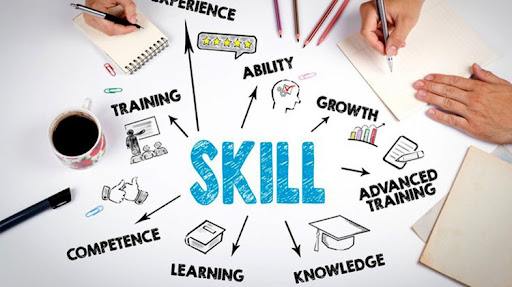
 In today’s competitive world, its very important for people to invest their time and resources to improve their skills, potential capabilities. One needs to do so in order to be future ready. One’s skills determines their ability to carry out any task effectively and efficiently. 

                                                              (Photo: doaram.com)

Skill development is a powerful tool to safeguard the future of youth and for their overall development. It is an important way to increase the employment rate of India. Skills are as essential as one’s academic qualifications. Education and skills should now go hand in hand to be successful. In today’s world, lack of education and skill development restricts people from realizing their potential capabilities and abilities. Eventually, this prevents them from contributing to the economic growth of a country. Thus, education and skill training is vital for the overall growth and personality development of an individual.
Illiteracy is one such reason for lack of skill training. The capability of the poorest sections of society to start business is restricted owing to because of their lack of business skills, illiteracy, their inability to take risks, capital, lack of investment, etc. It would be far better to upgrade their skills so that they can get employed. The strategy of the Ministry of Labor to specialize on skill upgradation has contributed significantly to this mission. 
According to the World Trade Organization, the GDP level can increase up to 3%-5% in 2035, if India focuses on skill development and training. India has taken many initiatives in this regard. The Ministry of Skill Development and Entrepreneurship (MSDE) is responsible for coordinating skill development activities in India. It has supported various organizations like National Skill Development Corporation (NSDC), which aims to promote skill development in the country by establishing institutes across the country and National Skill Development Agency (NSDA), which seeks to coordinate the efforts of the government and the private sector and aid in skill development.

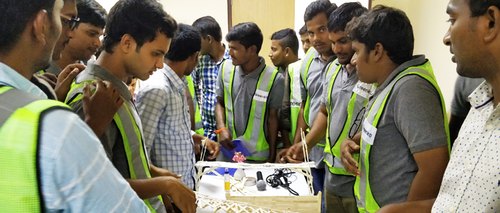
Hon’ble Prime Minister Shri Narendra Modi launched the Skill India Mission, under the Ministry of Skill Development and Entrepreneurship on 15 July 2015, which aims to train over 40 crore people in India in different skills by 2022. The mission seeks to vocational training and certification of Indian youth for a better livelihood and respect in the society. Various initiatives under this campaign are National Skill Development Mission, National Policy for Skill Development and Entrepreneurship, 2015, Pradhan Mantri Kaushal Vikas Yojana (PMKVY), Skill Loan scheme, Rural India Skill etc.

                                                     (Photo: Indiamart)

Schemes & Initiatives through NSDC

  • Pradhan Mantri Kaushal Vikas Yojana (PMKVY)
  • Rozgar Mela
  • Pradhan Mantri Kaushal Kendras (PMKK)
  • Capacity Building Scheme
  • Udaan
  • School Initiatives and Higher Education
  • India International Skill Centres (IISCs)
  • Pre Departure Orientation Training (PDOT)

Schemes related to Entrepreneurship

  • Pradhan Mantri ‘YUVA’ Yojana

Other Schemes and Initiatives

  • Skill Loan Scheme
  • Indian Institute of Skills (IISs)
  • SANKALP
  • Academic Equivalence to Vocational Qualifications
  • Aspirational Districts
  • Swachh Bharat Abhiyan
  • Technology Initiatives

To encourage enterprise and boost employment generation, skill training initiatives are coming up with specialized courses on entrepreneurship in different sectors. Skill development is a very important tool to boost self-confidence of an individual and to instill trust on themselves. With proper skill development training, one can surely become confident and successful. It not only nurtures the inner will but also boosts the personality of an individual.

<

p style=”background: rgb(255, 255, 255);border: 0px;font-family: Roboto, sans-serif;font-size: 16.1px;line-height: 23px;margin: 0px 0px 15px;padding: 0px;vertical-align: baseline”>

What is Open Access

 Open access is a broad international movement that seeks to grant free and open online access to academic information, such as publications and data. A publication is defined ‘open access’ when there are no financial, legal or technical barriers to accessing it – that is to say when anyone can read, download, copy, distribute, print, search for and search within the information, or use it in education or in any other way within the legal agreements. 

Open access is a publishing model for scholarly communication that makes research information available to readers at no cost, as opposed to the traditional subscription model in which readers have access to scholarly information by paying a subscription (usually via libraries). 

One of the most important advantages of open access is that it increases the visibility and reuse of academic research results. There is also criticism, and the aspect of quality deserves extra effort. The principles of open access are set out in the Berlin Declaration on Open Access to Knowledge in the Sciences and Humanities (2003). This declaration has been signed by many international organisations for academic research, including all Dutch universities and research organisations.

There are different ways of publishinging open access: 

1) Full Open Access journals: publication via publisher platforms, in full open access journals. This route may involve a charge. The publication costs, known as ‘article processing charges’ (APCs), are covered by authors or by their institutions. Most research funders support open access and are willing to cover the costs themselves. A list of fully open access journals that are accessible worldwide can be found on the DOAJ website.

2) Hybrid Journals: publication via ‘hybrid’ journals. These journals are subscription journals that allow open access publication of individual articles on payment of an Article Processing Charge (APC). Thanks to a series of deals between the VSNU and several academic publishers, Dutch-affiliated researchers can publishing for free in thousands of hybridjournals.

  • The green route: the full text of academic publications is deposited in a trusted repository, a publicly accessible database managed by a research organisation. You can find all Dutch institutional repositories via NARCIS, the Dutch portal for research information. NARCIS gives access to all the publications in Dutch repositories.
  • The diamond route: publication via diamond journals/platforms that do not charge author-facing publication fees (APCs). Diamond open access journals are usually funded via library subsidy models, institutions or societies.


Importance of Training and Internship

Internships and training are also like practicing the theoretical lessons in reality. It gives exposure to real-world activities. Nowadays, when employers give so much attention to resume, it shows you a far better opportunity to have some internship involved and your studies. A practical background pays a lot of effect on your resume and job opportunities. When you are looking for gaining experience, internships and training look the best way. If you take part in an internship at your college time then it can give you a job even before completing your college. A summer internship can be a distinguishing factor for winning a job opportunity. There are a lot of NGOs which provide the internship free of cost to meritorious and able students. A few of them are SNSMKS, TZF, YEF, TCSion, etc.

So, In this article, I would be discussing a few special importance of Internships and training. The importance can be pointed as follows:-
The exposure to the real-world and work environment
There are differences among being a Student, Intern, and trainee. As a student, you just learn the things but as an intern or trainee, you practice the things. You convert your learned theories to work. Here you learn how to behave with your seniors, managers and how to react to people. These things help a lot when you get your first job. As it is quite specific towards that companies and industries so you become able to know a lot about that company and its job and work structure. It also gives you a chance to try new ideas as here responsibilities are quite limited and the people are quite helpful.
Teaches you the importance of resume and work experience
When you go for an internship, either paid or unpaid, they normally give you a completion certificate. But when you do excellent in your work then gives you a Letter of Recommendation, as that is just another certificate but this has quite an excellent effect upon your future work. Here you come to know the real value of a resume. So, try to build a resume so that it shows a mirror image of you.
It allows you to know yourself better as a professional person
When you would search your mind for answers of this importance you will find that there you pass your day as an employee. You are having some work pressure, and you will be getting few more new problems. As when I was doing my last internship of fundraising I found that I am having a quite limited connection with people so I can’t collect any funds just with the help of family and friends. So, there I came to know that I should build a better network with people so that whenever I am part of such things, I may tell them and complete the work.
Creating a big network of professional people
When you go for an internship, it connects you with a lot of people other than your academic career. Here you get a chance to come in contact with a lot of successful business professionals, with them you may create your own network that helps you a lot when you try to get a job in companies. There are a lot of companies which hire people mostly with skills along with a reference, as a reference helps to believe upon that new person.
Helps you to get a job as a full-time career
As an intern when you become part of a company or an NGO and work for them, they also invest their time and money in you so they have some expectation out of you. If you do far better in your work as an intern then they offer you a full-time job, immediately or in the future as a full-time career.
So, an internship is an important time in one’s life upon which one should focus.
Now coming to our next topic which is the role of NGOs to help students in their internship.
There are a lot of job seekers who belong to a poor family, they can not afford to pay for their internship. The different NGOs help such people by allowing them to feel the corporate world and learn to compete with them.