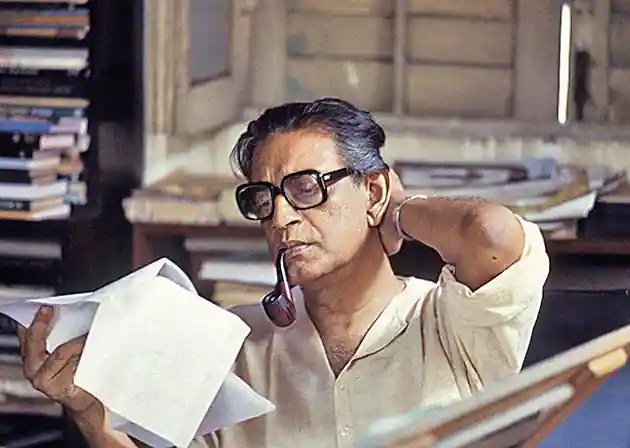
Analysing Satyajit Ray: Through The Eyes of The Master

Satyajit Ray

Introduction

Satyajit Ray was India’s first internationally recognized film-maker and, several years after his death, still remains the most well-known Indian director on the world stage. Ray has written that he became captivated by the cinema as a young college student, and he was self-taught, his film education consisting largely of repeated viewings of film classics by de Sica, Fellini, John Ford, Orson Welles, and other eminent directors.
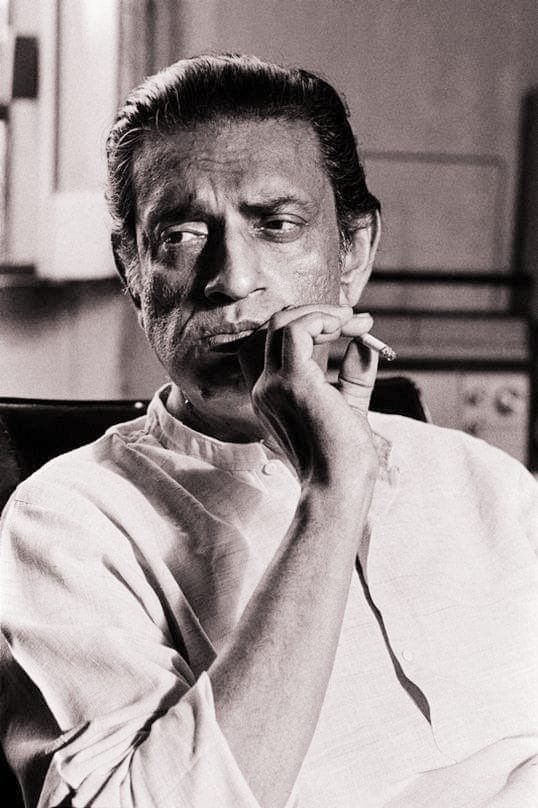
Satyajit Ray

Early Life and Family Background

Satyajit Ray was born into an illustrious family in Kolkata (then Calcutta) on 2nd May,1921. His grandfather, Upendra Kishore Ray-Chaudhary, was a publisher, illustrator, musician, the creator of children’s literature in Bengali and a leader of the Brahmo Samaj, a religious and social movement in nineteenth century Bengal. His father, Sukumar Ray, was a noted satirist and India’s first writer of nonsensical rhymes, akin to the nonsense verse of Edward Lear. Having studied at Ballygunge Government High School, Calcutta and completed his BA in economics at Presidency College, Satyajit Ray went on to develop an interest in fine arts. Later in life, Satyajit Ray made a documentary of his father’s life. His film, Goopy Gyne Bagha Byne, was based on a story published by his grandfather in 1914, but even other films, such as Hirok Rajah Deshe, “The Kingdom of Diamonds”, clearly drew upon his interest in children’s poetry and nonsensical rhymes.
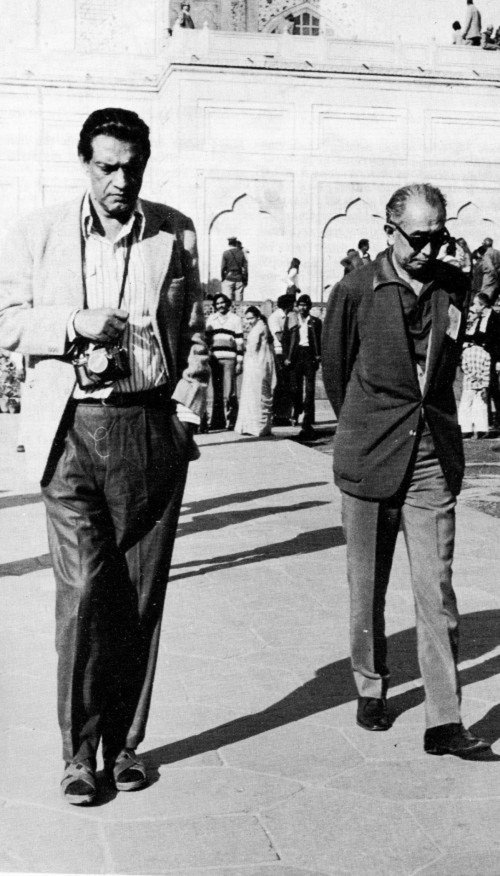
Satyajit Ray with Akira Kurosawa

The Crisis of Indian Cinema Before Ray

From the 1920s to the early 1950s, several directors working within Hollywood—as well as filmmakers in former Soviet Union, France, Italy, Germany, and Japan—considered cinema not as a mere tool of entertainment but as a medium for creative expression. Filmmakers such as Charlie Chaplin, Sergei Eisenstein, Jean Renoir, Roberto Rossellini, Vittorio De Sica, Akira Kurosawa, and others deployed artistically innovative filmic devices to convey profound statements about the complexities of life. Some of the aesthetically satisfying films produced during this period were hailed as cinematic masterpieces. Films in India, however, prioritised cliched elements such as sentimental slush, ersatz emotion, theatricality, romantic tales, spectacle-like songs, and happy endings in these decades. Instead of making serious attempts at formal experimentation, Indian directors continued catering to the lowest common denominator audience.
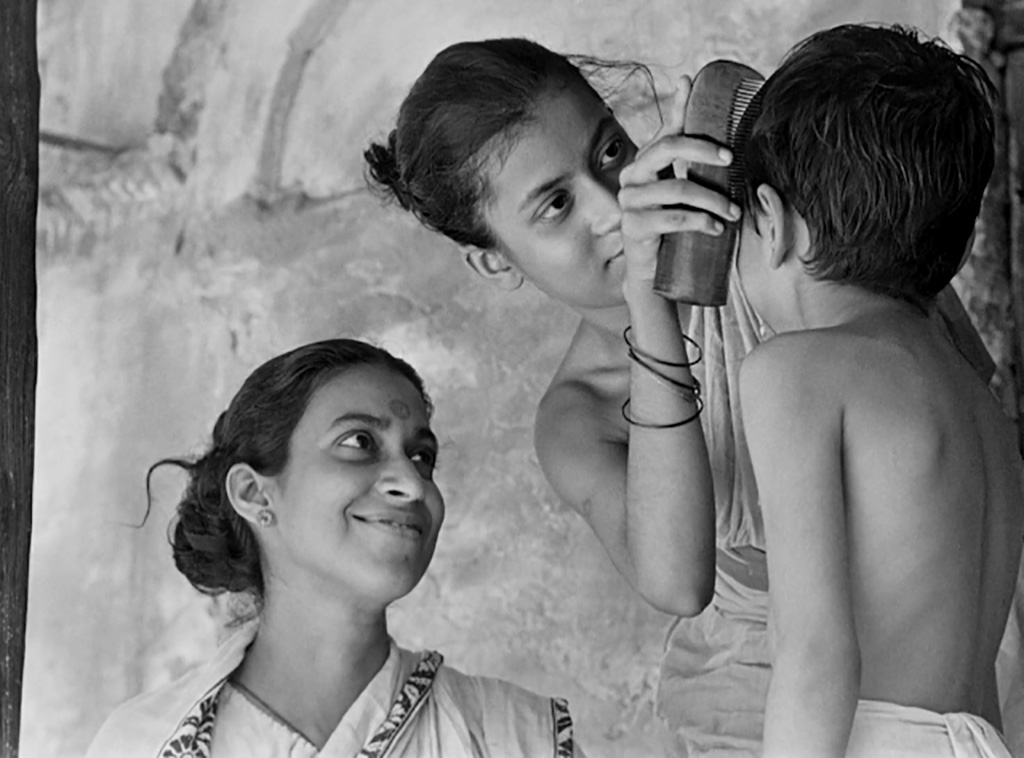
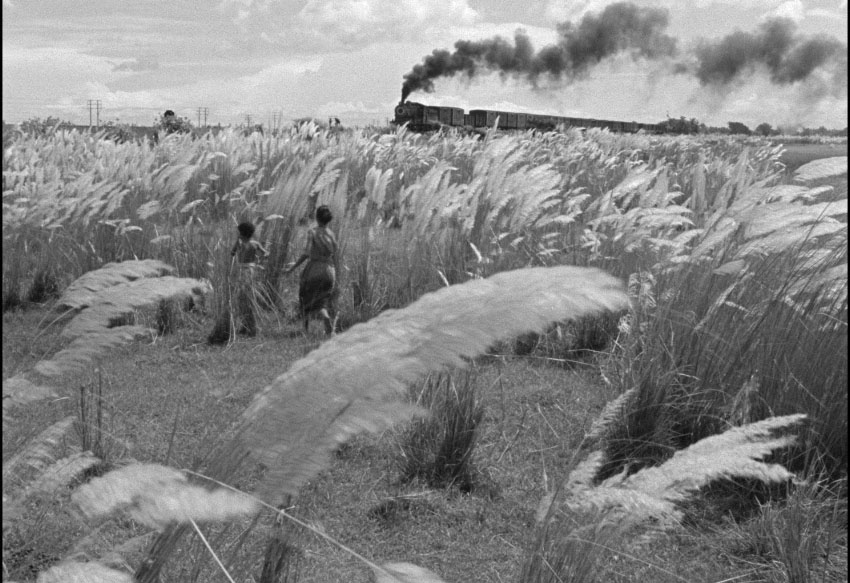
Iconic scene from Pather Panchali (1955)
Pather Panchali (1955)

Breakthrough of Satyajit Ray

A young Ray had grown up on Hollywood movies, so when his ad agency sent him to London for higher training, he spent more and more of his time in the company of films and started “losing interest in advertising in the process,” he once said in an interview. During this trip, he saw Vittorio De Sica’s “Ladri di biciclette” (Bicycle Thieves),in 1948, a neo-realist Italian masterpiece of post-War despair and was entranced by its beguiling simplicity and humanism. Back in Calcutta, he heard that Jean Renoir was in town and walked straight into the hotel where the great French filmmaker was staying to confide in his own dreams of making a movie someday. Renoir, who was location-scouting for The River in Calcutta at the time, encouraged the aspirant. And so began the journey of the song of the little road.
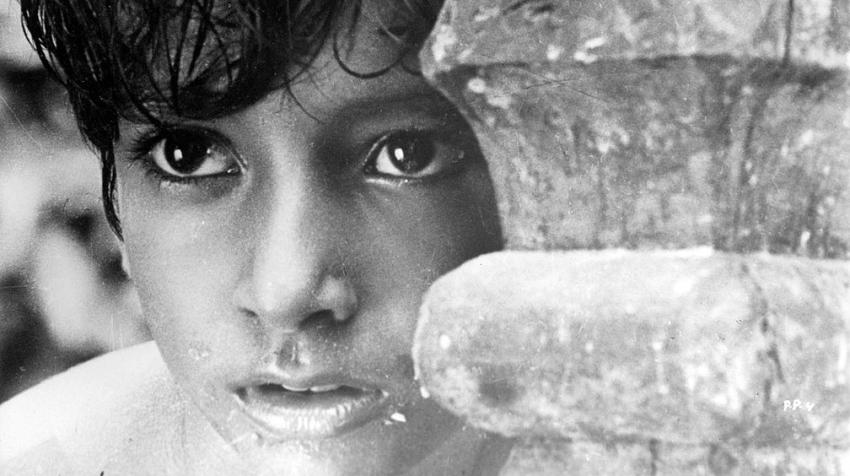
Subir Banerjee as Apu in Pather Panchali (1955)


Ray’s landmark debut, Pather Panchali ( which was adapted from  eponymous 1928 Bengali novel “Pather Panchali” by eminent Bengali novelist Bibhutibhusan Bandopadhay) was on a shoe-string budget in 1955 with a mostly non-professional cast. All the while, he clung on to his job for a safety net even as he shot what would become the first of the classic Apu Trilogy on weekends. The film was apparently being made by a group of neophytes, who had to stop filming more than once, owing to the depletion of their shoestring budget.
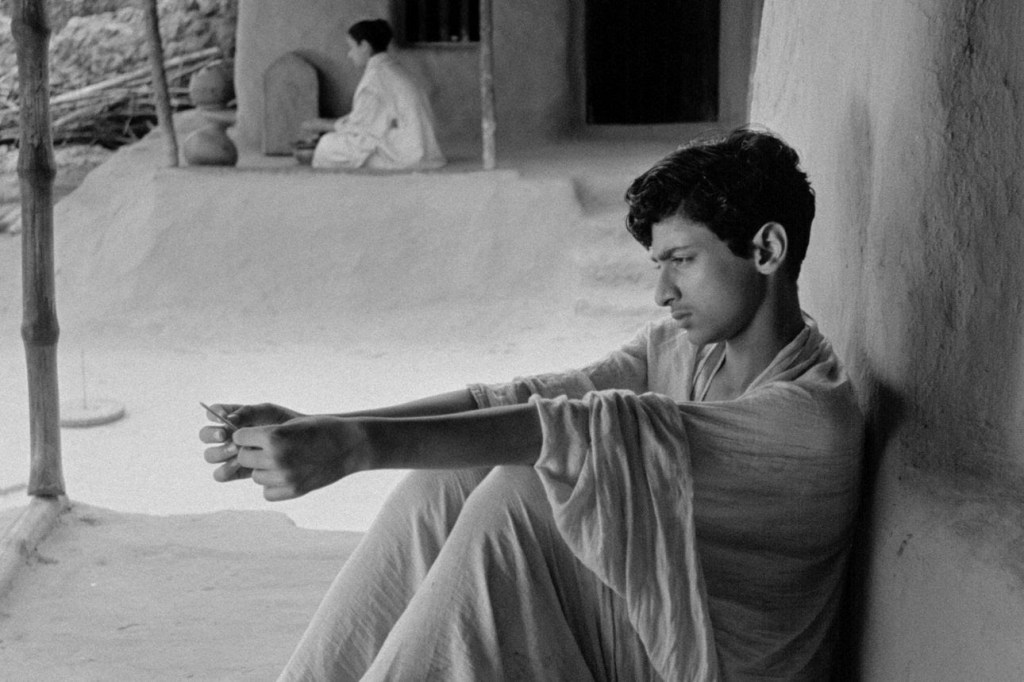
Smaran Ghoshal as Apu in Aporajito (1956)

Notable Films of Satyajit Ray

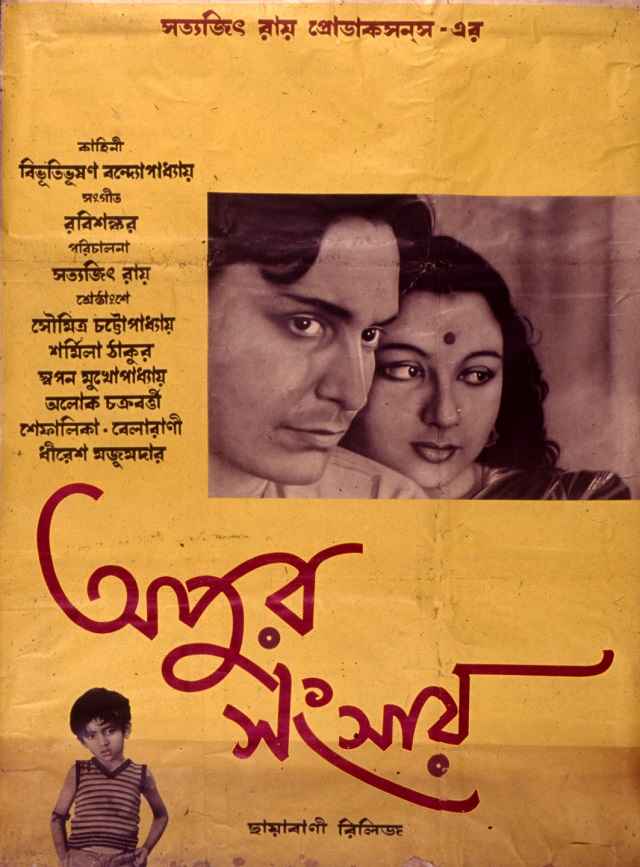
Ray directed 36 films, comprising 29 feature films, five documentaries, and two short films. Pather Panchali was completed in 1955 and turned out to be both a commercial and a tremendous critical success, first in Bengal and then in the West following a major award at the 1956 Cannes International Film Festival. sured Ray the financial backing he needed to make the other two films of the trilogy: Aparajito (1956; The Unvanquished) and Apur Sansar (1959; The World of Apu). Pather Panchali and its sequels tell the story of Apu, the poor son of a Brahman priest, as he grows from childhood to manhood in a setting that shifts from a small village to the city of Calcutta.

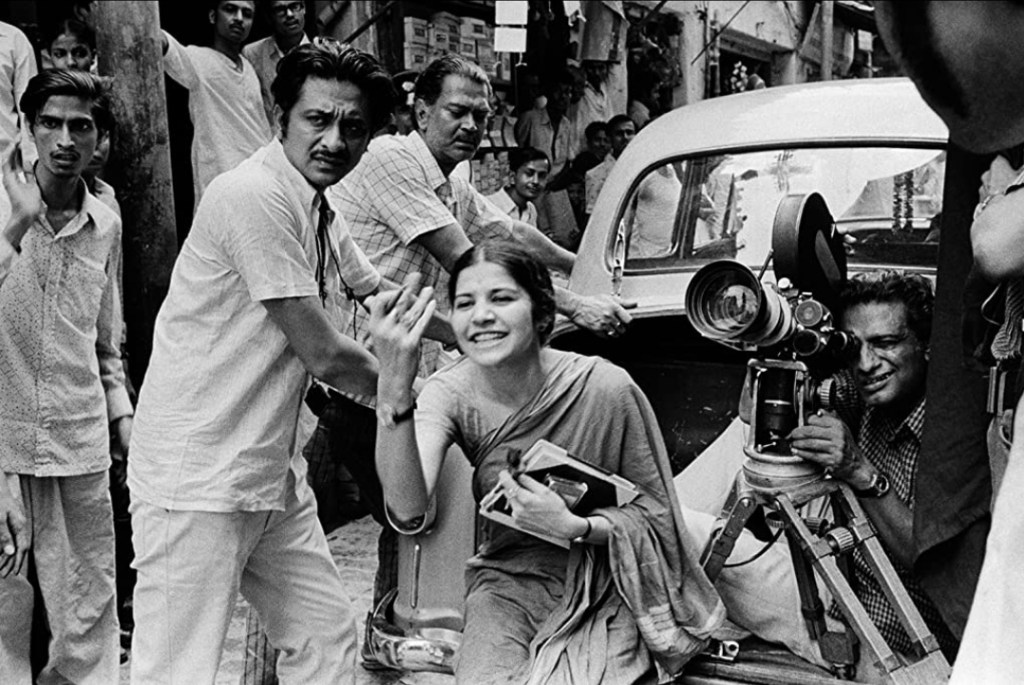
Chandana Banerjee in Teen Kanya (1961)
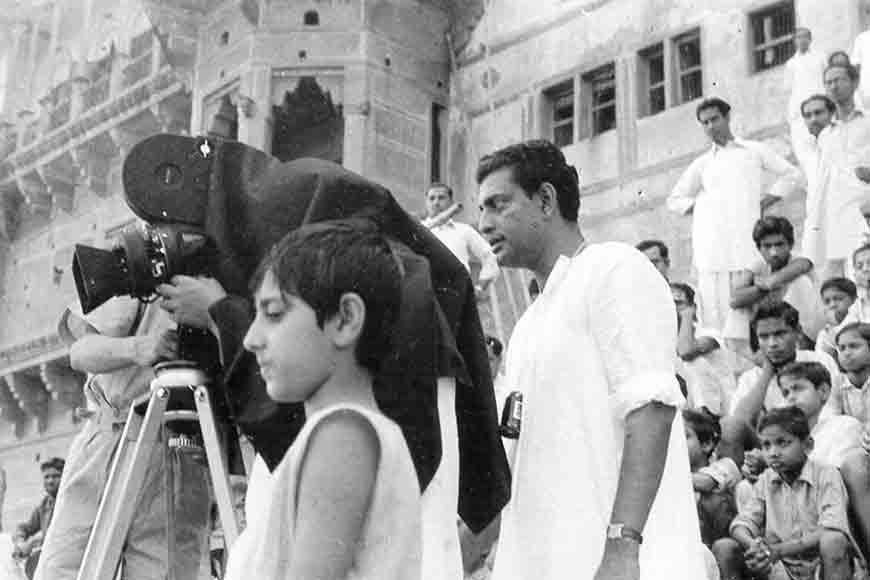
During the Shooting of Jana Aranya (1975)
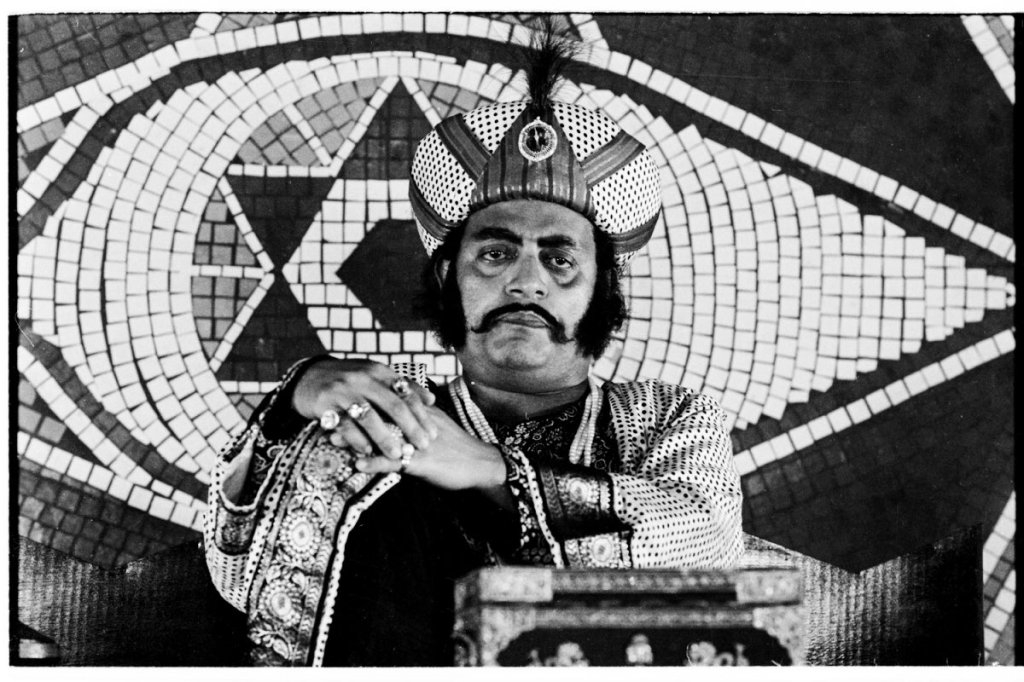
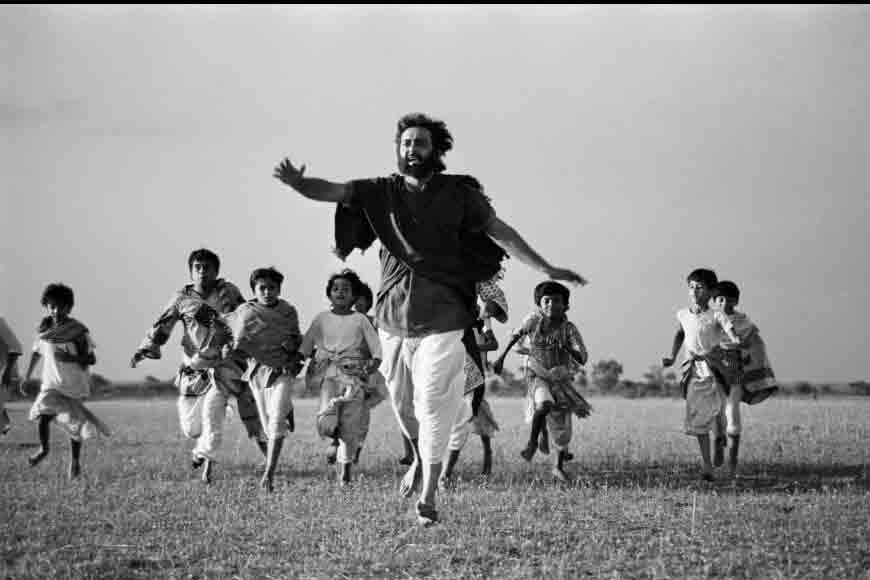
Utpal Dutta in Hirok Rajar Deshe(1980)
Soumitra Chatterjee in Hirok Rajar Deshe (1980)
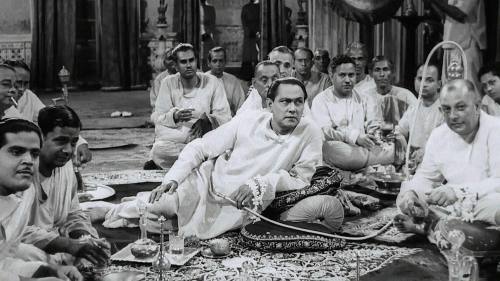
Chhabi Biswas (in middle) in Jalsaghar (1958)
Shabana Azmi in Shatranj ke Khilari (1977)
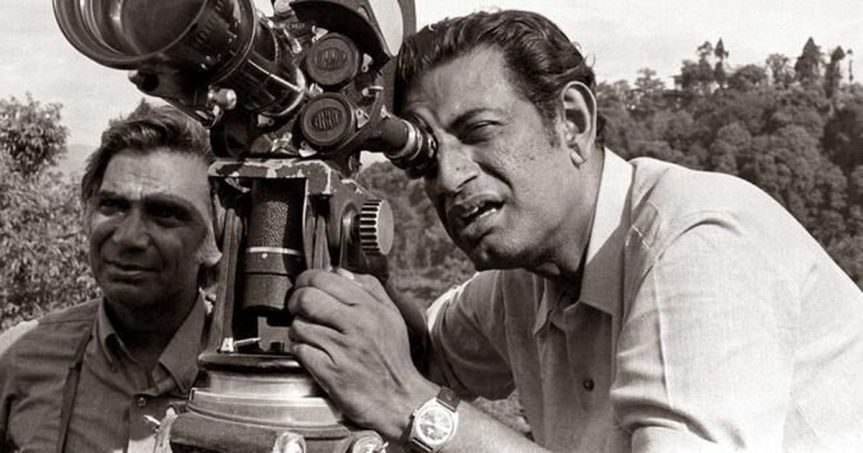
Satyajit Ray during the shooting of Sonar Kella(1974)

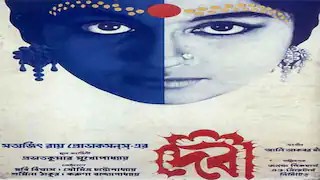
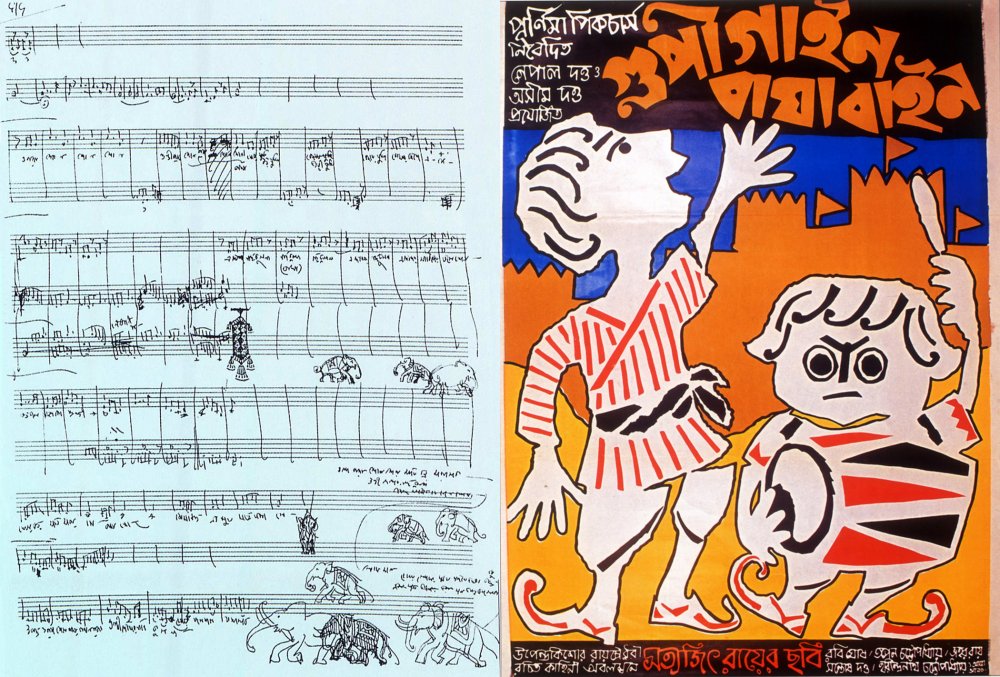
Ray’s major films about Hindu orthodoxy and feudal values (and their potential clash with modern Western-inspired reforms) include Jalsaghar (1958; The Music Room), an impassioned evocation of a man’s obsession  with music; Devi (1960; The Goddess), in which the obsession is with a girl’s divine incarnation; Sadgati (1981; Deliverance), a powerful indictment of caste; and Kanchenjungha (1962), Ray’s first original screenplay  and first colour film, a subtle exploration of arranged marriage among wealthy, westernized Bengalis. Shatranj ke Khilari (1977; The Chess Players), Ray’s first film made in the Hindi Language , with a comparatively large budget, is an even subtler probing of the impact of the West on India. Although humour is evident in almost all of Ray’s films, it is particularly marked in the comedy Parash Pathar (1957; The Philosopher’s Stone) and in the musical Goopy Gyne Bagha Byne (1969; The Adventures of Goopy and Bagha), based on a story by his grandfather. 

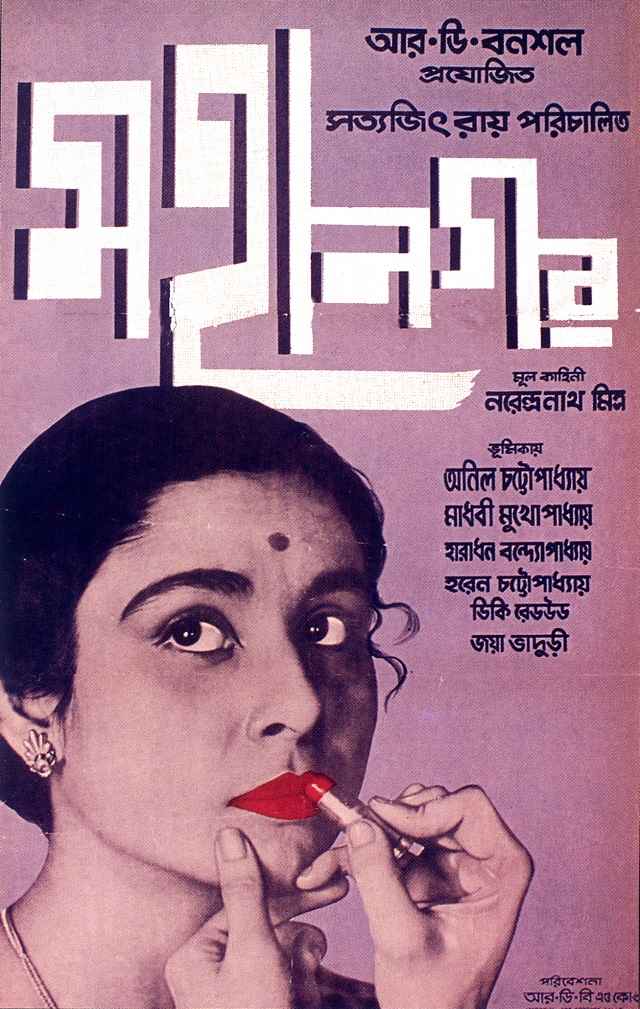
His other notable films were Ahsani Sanket (1973; Distant Thunder), Aranyer Din Ratri (1970; Days and Nights in the Forest) , Mahanagar (1963; The Big City) and a trilogy of films made in the 1970s—Pratidwandi (1970; The Adversary), Seemabaddha (1971; Company Limited), and Jana Aranya (1975; The Middleman), Ganashatru (1989; An Enemy of the People),  Shakha Prashakha (1990; Branches of the Tree), and the Agantuk (1991; The Stranger).

Poster of Shatranj ke Khilari (1977)
Poster of Devi(1960)
Poster of Ghore-Baire
Poster of Mahanagar(1963)
Poster of Apur Sansar (1959)
Poster of Nayak
Poster of Charulata

Work As A Novelist

Ray created two popular fictional characters in Bengali children’s literature—Feluda, a sleuth, and Professor Shanku, a scientist. The Feluda stories are narrated by Topesh Ranjan Mitra aka Topse, his teenage cousin, something of a Watson  to Feluda’s Holmes. The science fictions of Shonku are presented as a diary discovered after the scientist had mysteriously disappeared. Ray also wrote a collection of nonsensical verses named Today Bandha Ghorar Dim, which includes a translation of Lewis Carroll’s “Jabberwocky”. He wrote a collection of humorous stories of Mulla Nasiruddin  in Bengali.  Ray wrote an autobiography about his childhood years, Jakhan Chhoto Chhilam (1982), translated to English as Childhood Days: A Memoir by his wife Bijoya Ray. In 1994, Ray published his memoir, My Year’s with Apu, about his experiences of making The Apu Trilogy.
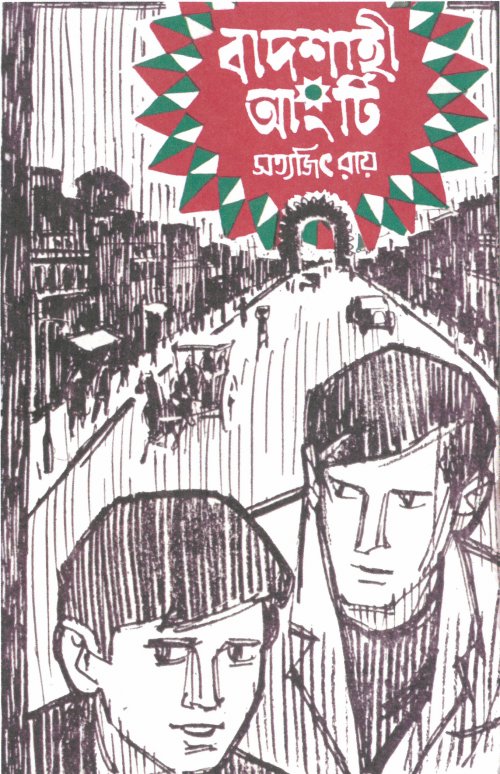
Book Cover illustrated by Satyajit Ray, himself for his first detective novel “Badshahi Angti”.
The musical score and Poster for Goopy Gyne Bagha Byne(1969), done by Satyajit Ray, himself
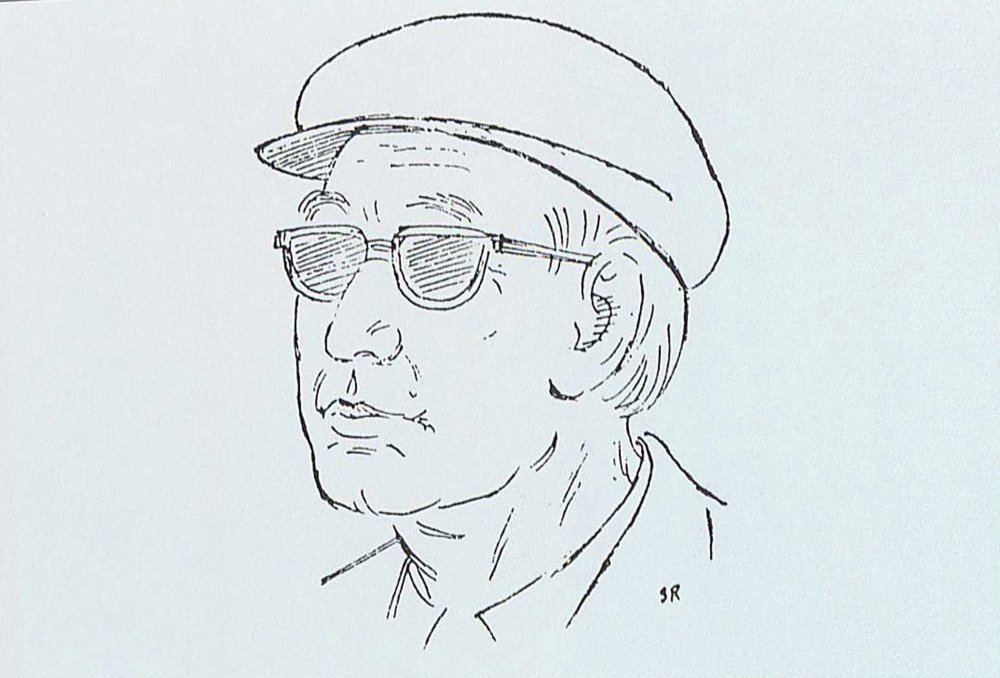
Portrait of Akira Kurosawa, illustrated by Satyajit Ray

Critical Analysis of Satyajit Ray

Instead of acting like a propagandist, Ray wanted to make people aware of the persistence of certain social problems. Devi and Ganasatru show people’s blind religious beliefsSakha Prasakhadiscloses the involvement of the top officials with bribery and corruption, Shatranj ke Khilari indicates the indolence and lack of political consciousness of the wealthy people, Aranyer Din Ratrireveals the insensitivity and boasting of the urban young men, and Mahapurush mockingly exposes the failure of the urban elite to embrace rational thoughts. Given the necessity of making people conscious of the same problems in present-day society, these films are still relevant today. Ray’s films also made a departure from tradition by frequently including strong women characters. Sarbajaya in Pather Panchali and Aparajito, Manisha in Kanchenjungha, Arati in Mahanagar, Charu in Charulata, Karuna in Kapurush, Aditi in Nayak, Aparna and Jaya in Aranyer Din Ratri, Sudarshana in Seemabadhdha, and Ananga in Asani Sanket appear as bolder, more confident, and more resilient than the male characters. In an interview, Ray states that the inclusion of unwavering women characters reflects his own attitudes towards and personal experience with women.

Awards Received by Satyajit Ray

Ray received many awards, including 36 National Film Award  by the Government of India, and awards at international film festival. In 11th Moscow International Film Festival 1979, he was awarded with the Honorable Prize for the contribution to cinema. At the Berlin International Film Festival, he was one of only four filmmakers to win the Silver Bear for Best Director  more than once and holds the record for the most Golden Bear  nominations, with seven. At the Venice Film Festival, where he had previously won a Golden Lion for Aparajito  (1956), he was awarded the Golden Lion Honorary Award in 1982. That same year, he received an honorary “Hommage à Satyajit Ray” award at the 1982 Cannes International Film Festival. Ray is the second film personality after Charlie Chaplin  to have been awarded an honorary doctorate  by Oxford University.

He was awarded the Dadasaheb Phalke Award  in 1985, and the Legion of Honour  by the President of France  in 1987. The Government of India awarded him the Padma Bhusan in 1965 and the highest civilian honour, Bharat Ratna, shortly before his death. The Academy of Motion Picture Arts and Sciences  awarded Ray an Honorary Award  in 1992 for Lifetime Achievement. In 1992, he was posthumously awarded the Akira Kurosawa Award for Lifetime Achievement in Directing at the San Francisco International Film Festival.

Conclusion

Whenever we talk about radical filmmaking in the realm of Bengali cinema, Satyajit Ray’s maiden feature (made in the face of tremendous odds) is mentioned. From Pather Panchali to his last film Agantuk, Ray never compromised on high standards, thereby making a huge impression. Having a greater familiarity with the oeuvre of Ray would enable people to understand the impressive qualities and importance of socially-meaningful cinema. We are surely in need of films that would make us perceive the beauty of a dewdrop on a blade of grass, strengthen our sense of humanism, and raise our social consciousness—hence, the everlasting relevance of the cinema of Satyajit Ray.
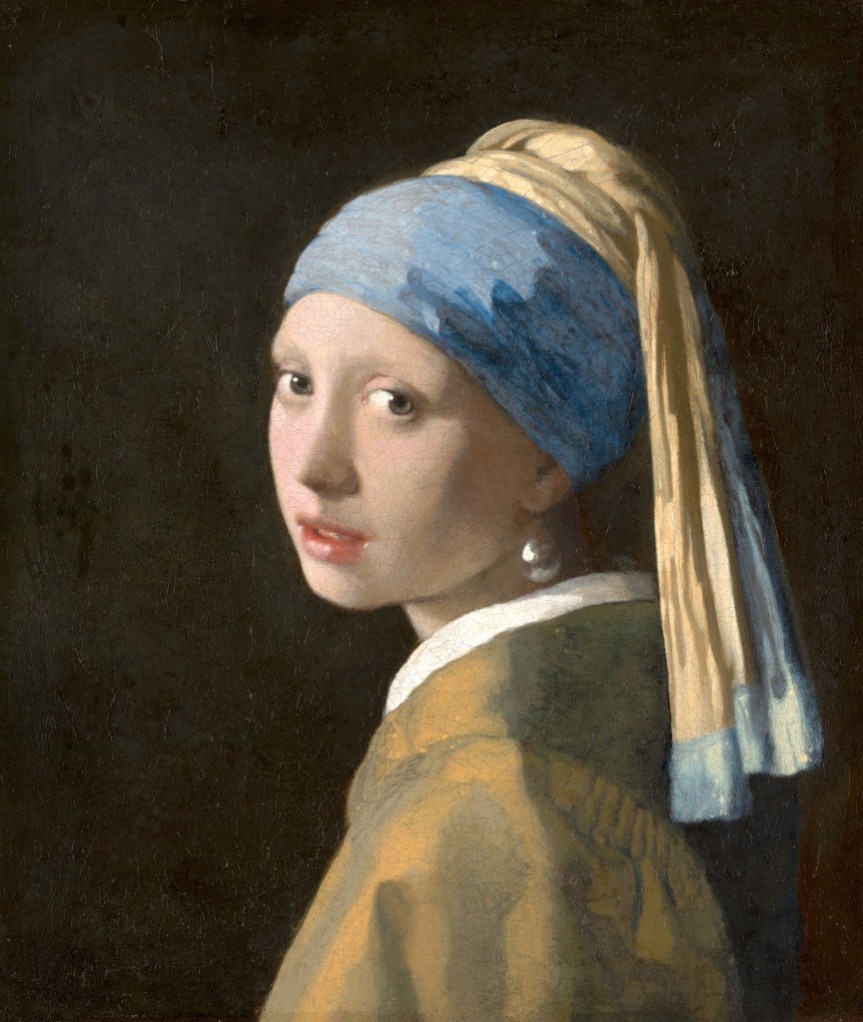
The Girl With a Pearl Earring: What Made It So Famous

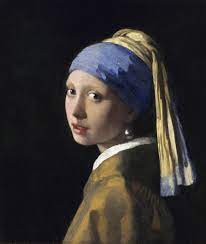
The Girl With a Pearl Earring (1665) by Johannes Vermeer

Introduction

Nicknamed the “Mona Lisa of the North“,the Girl with a Pearl Earring, is one of the masterpieces by famed Dutch painter, Johannes Vermeer. It hauntingly engages the viewer with enhanced realism, showcasing the electrifying gaze of a young girl adorned with a blue and gold turban. Created by Vermeer in 1665 during the Baroque period, the upper bust of the girl against a dark background has a three-dimensional effect that sets off her glowing appearance.

Historic Background

In Vermeer’s era, paintings were considered to be craftsmanship instead of art. Vermeer, a Dutch master painter at his peak, dedicated his life to developing his craft. By 1665, when the Girl with a Pearl Earring was created, Vermeer had begun to depict women, demonstrating a deep interest in their socio-cultural roles. The subject in this painting is believed to be Vermeer’s daughter, Maria.

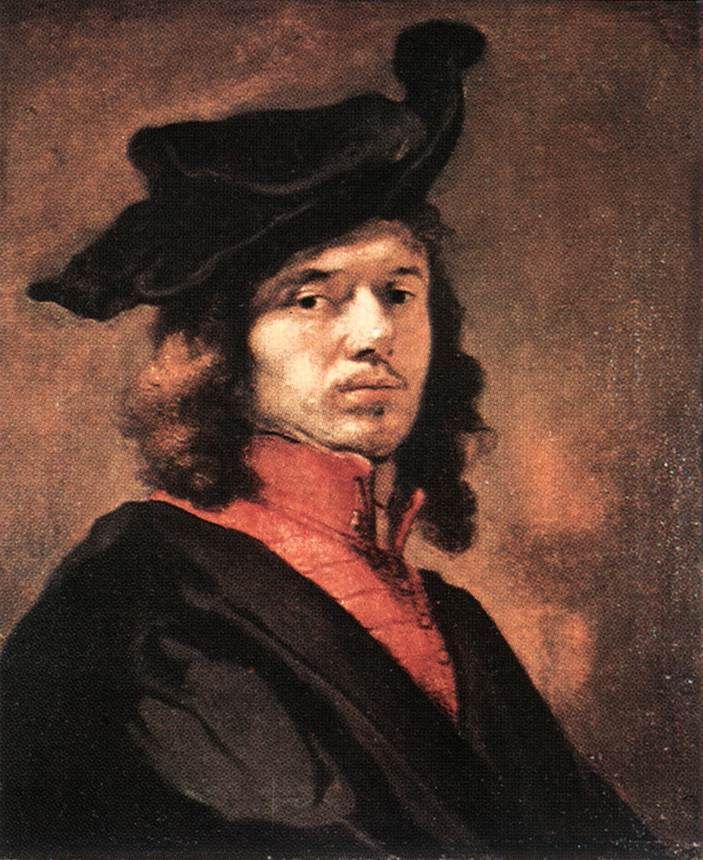
Self-Portrait of Johannes Vermeer

Subject of The Painting

The Painting was basically crafted with oil Painting on canvas and is categorized in Dutch Realism Movement arts. Although many art critics contend that the Girl with a Pearl Earring is a portrait, the prevailing argument is that it is a tronie, which is a study of the facial expressions of a living model. The composition of Girl with a Pearl Earring is delightfully simple. Unlike most of the other paintings by the Delft master, the subject here is only a simple head of a girl looking over her shoulder at the viewer. In Girl With a Pearl Earring, the young female model appears to be startled by something, while glancing taciturnly over her shoulder.No hint of a setting is provided, other than its atmospherically dark tone. This too is unusual for the mature Vermeer. The unusually direct contact between subject and spectator, and the slightly parted position of the lips, presents a sense of immediacy so great as to imply significant intimacy. The girl is wearing a simple brownish-yellow top, which contrasts strongly with her bright white collar. A further contrast is offered by her blue and yellow or turban (or chaperon) which gives the picture a distinctly exotic effect. During Vermeer’s time, the turban was a popular prop for tronies because of its deep folds and robust shades, which allowed artists to show off their skills and abilities.

Discussing the Painting: The uniqueness

Utilizing the technique of under-painting, or a monochromatic ground, Vermeer made the Girl with a Pearl Earring seem to lift from the canvas. Through careful use of his palette, he created the deep, rich tones of the girl’s headdress and gown. Then, to give her skin a glowing appearance, he used pigments to create light and shadow effect that contrasted the background. The Pearl Earring, status symbol of the period , worn by the subject, composed by only two brush strokes. The two whites, one on each corner of her mouth, helped to enliven the subject’s pensive smile.

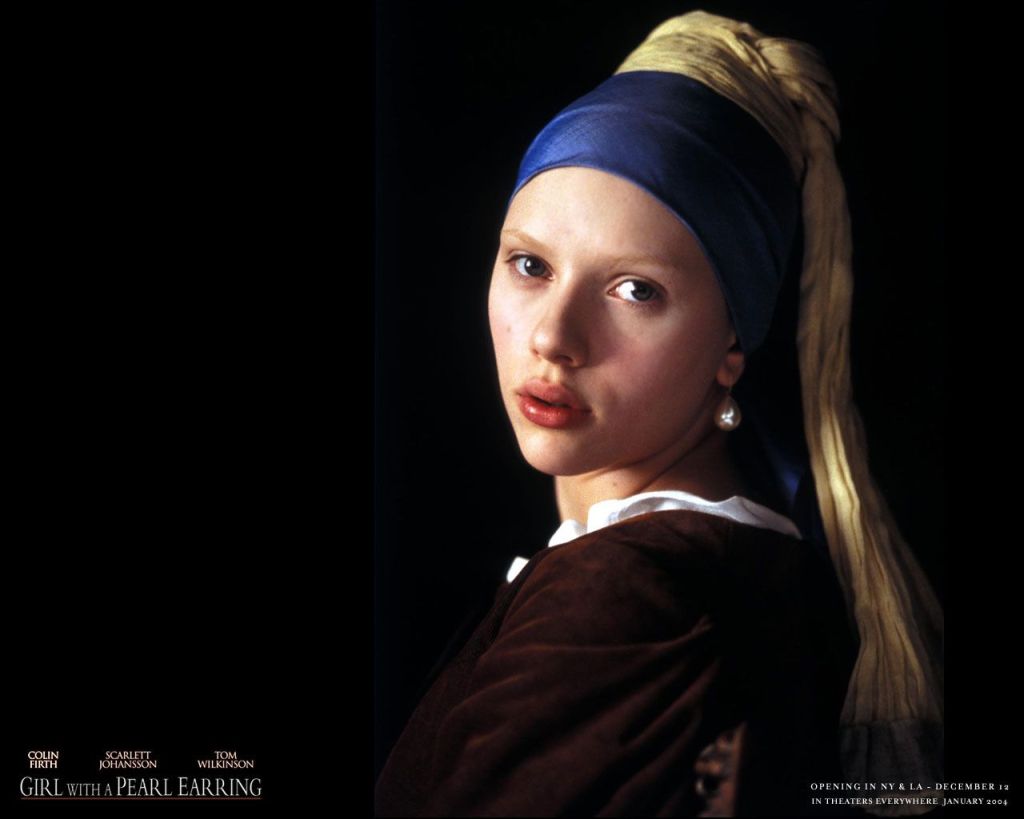
Scarlett Johansson in Girl With a Pearl Earring movie (2003)

The Painter’s Touch: The Cinematic Adoption

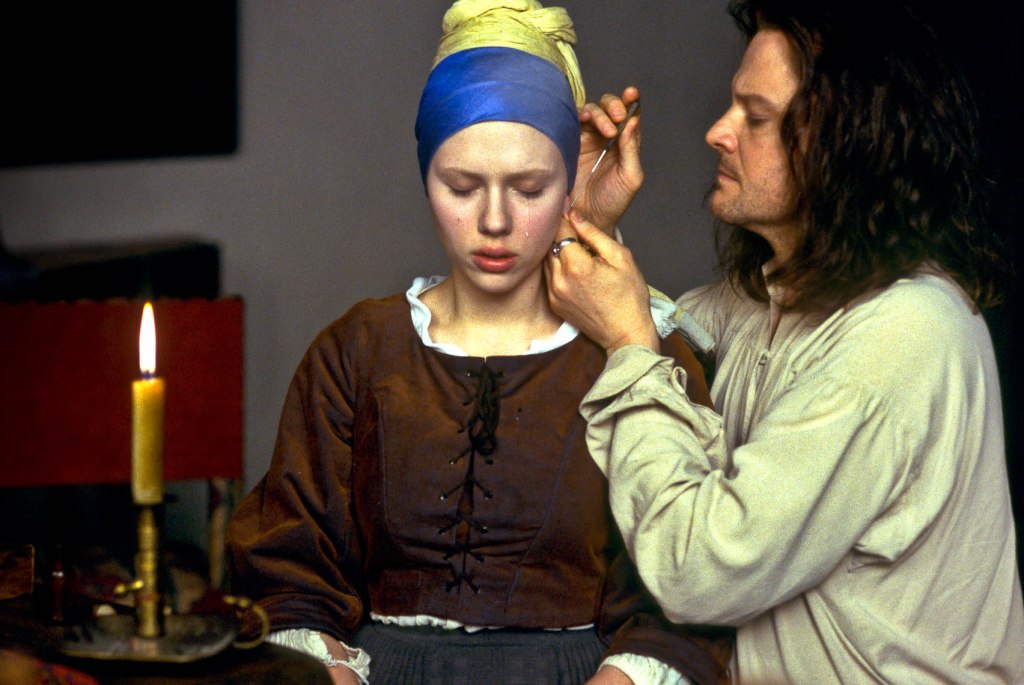
Although now a highly regarded artist, Vermeer was not well known outside of his native city of Delft during his lifetime or in the decades after. Historians credit the 19th-century French critic Étienne-Joseph-Théophile-Thoré (under the pseudonym of William Bürger) for reassessing the artist’s work, which eventually led to Vermeer’s distinguished reputation. Even so, Girl with a Pearl Earring became one of Vermeer’s more famous pieces only around the turn of the 21st century, with the 1995 blockbuster exhibition at the National Gallery of Art, Washington,D.C. and the publication of the best-selling novel Girl with a Pearl Earring by Tracy Chevalier in 1999. The book fashioned the painting’s subject into a housemaid named Griet who works in Vermeer’s home and becomes his paint mixer. It was adapted into an Oscar nominated movie in 2003 starring Scarlett Johansson as the fictional Griet and Colin Firth as Vermeer.

Scarlett Johansson as Griet and Colin Firth as Vermeer in Girl With a Pearl Earring movie (2003)

Where at Present Day

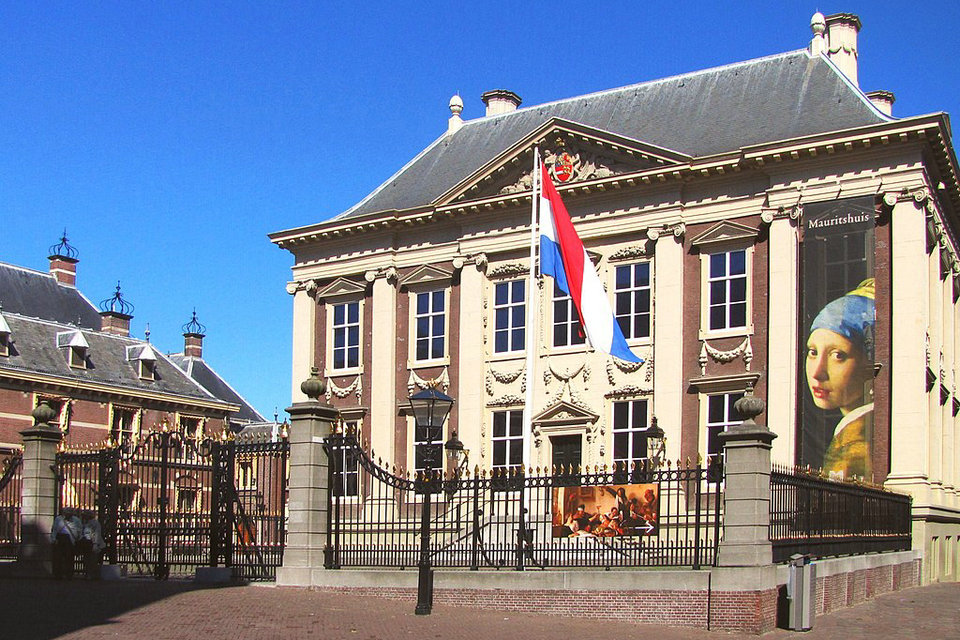
Mauritshuis, Den Haag, Netherlands

As the buildings of Mauritshuis Museum ,Hague underwent renovation in 2012, Girl with the Pearl Earring travelled to Japan, Italy, and the United States. It drew crowds in each location, attesting to its now firm place in audience regard. When Girl returned to the Netherlands in 2014, the Mauritshuis announced it would no longer lend out the painting, assuring visitors that the museum’s main attraction would always be in its home.

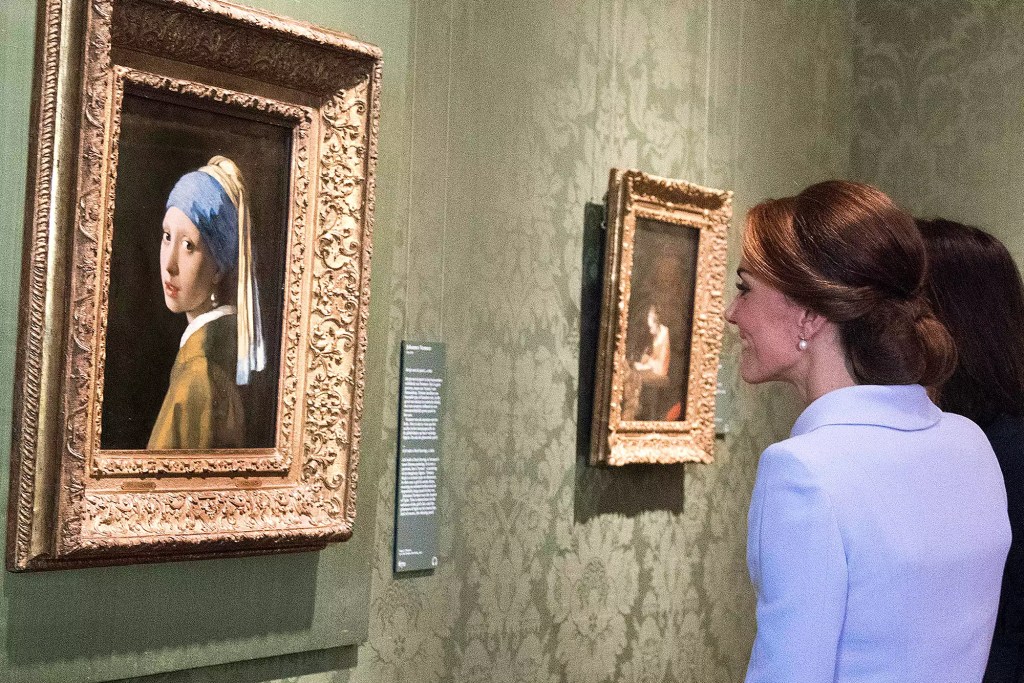
Princess Kate Middleton of England came face-to-face with one of the best-loved paintings in the world — “Girl with a Pearl Earring” — during a visit to the Mauritshuis museum in The Hague.
 

Conclusion

Humans have always adored paintings as one of the highest form of visual arts, and few of such arts can truly surpasses the inertness of still lives and remains immortal forever. The Girl With a Pearl Earring, poses the appeal of simplicity to rethink of life and consider the fact that beauty of life can also be found in the simplest joys around us.

The Genius of da Vinci- 3

Leonardo and Science                                                                       

Leonardo’s genius went beyond art and paintings, he shared just as much of a connection with science as he did with his art if not more. His contribution to science and scientific inventions were most probably a result of his artistic abilities.             

Leonardo studied anatomy, botany, light, chemistry, astronomy, mathematics, to name a few without receiving any sort of formal education.                                                    

Leonardo kept a log of his ideas, observations, and scientific drawings. According to him science and art shared a resemblance with each other which is quite evident from his journals that seem to blend art and science together.

FACTOID  Leonardo sometimes wrote from right to left because he was a lefty. Therefore most of his writing is in mirror image.

Leonardo learned the basics of anatomy and the human body when he was working for Verrocchio. Leonardo dissected about 30 human corpses in his lifetime. The hospitals in Italy let him continue his studies for research purposes after he established himself as a great artist.

In his dissection studies, he would pull on different muscles to see the effect it would have on the movement of other muscles. His anatomy research also included his studies of facial features. He studied the changes that different emotions caused in the facial features and those of people with a facial deformity or a sickness as well. He studied the human skeleton and pointed out that the sacrum (a bony structure in the vertebral column) is a fusion of 5 bones, which now holds to be true. He did all of this back then, when relatively close to no resources existed.

He studied the human heart and figured out how the valves of the heart work but couldn’t figure out the whole circulation system. In 2005, a heart surgeon in The UK took aid from Leonardo’s journals of the human heart. His studies are being used by top surgeons in the 21st century, over 500 years later.

Leonardo da Vinci was granted the permission to perform his experiments and do all this research after establishing himself as a profound artist during that time. The hospital gave him corpses to dissect and so he did.

Leonardo’s journals contain drawings of some flying machines that he was working on at that time. One such machine had wings that resembled the wings of a bat. Though his drawings were not fully correct and would not have worked in practicality, it is still exceptional that a man like him without major resources could do so much. 

His journals contain much more than whatever has been mentioned so far and will probably remain alien to the world or even if someone is able to somehow get their hands on said journal will also need the intellect to understand it.

Leonardo was much more than an artist but sadly that’s exactly what most people know him as. His ability to blend art and science made him extremely special. Imagine the things he could have achieved if he were born in today’s time. We would know so much more about the things unknown to mankind. He was an artist ahead of his time and needs to be recognized not just for his art but his true genius.

The Genius of da Vinci – 2

Adoration of the Magi 

One of the many paintings that Leonardo left unfinished, that is a skill all artists possess. The painting portrays the Virgin Mary with her chid and the Magi (the three wise men who paid homage to Jesus as the king of Jews) kneeling in adoration in front of them. Behind them, some ruins along with a few horsemen that appear to be fighting and a palm tree which holds a significance in the Bible.

This unfinished masterpiece now resides at the Uffizi Gallery in Florence, Italy.

The Last Supper                                                                               

The Last Supper is a mural painting that depicts Jesus having his last supper (the last meal of Jesus with his disciples in Jerusalem before he was arrested and crucified). In the painting, Jesus’ Apostles can be seen reacting to him saying “one of you will betray me”, “one of you”, referring to one of his apostles.                                                          This was painted by Leonardo in the late 15th century and started to deteriorate quite quickly, due to humidity and the painting techniques used by the artist. It took a long time to restore this painting with the final restoration being done in 1999 and was then returned back to where it belongs- Convent of Santa Maria Delle Grazie in Milan, Italy.

Salvator Mundi                                                                                    

In this painting, Leonardo shows Jesus wearing a robe, with the fingers of his right hand forming a cross pointing upwards while holding a crystal ball in his left.                        

This painting was sold for $450 million to Badr Bin Abdullah, a Saudi minister, in 2017.   What makes it worth $450 million?                                                                                

Well, you see no piece of art is only famous for its artistic grandeur, most pieces of art involved in some sort of controversy have a tendency to embark themselves in textbooks. Salvator Mundi went through it’s fair share of controversies. There were multiple times since the birth of this painting when it was thought to be destroyed. The painting vanished from the public eye in the year 1763 and was found in the 1900s in a rather impaired condition. Then in 2005, a group of individuals bought this painting for about $10,000 and was densely overpainted which made it look like a knock-off. Dianne Dwyer Modestini was given the job to restore this painting and the process came to an end around 2010.                                                                                                       

Even now, theories exist about the whereabouts of this piece which adds to the fascination.

Mona Lisa                                                                                          

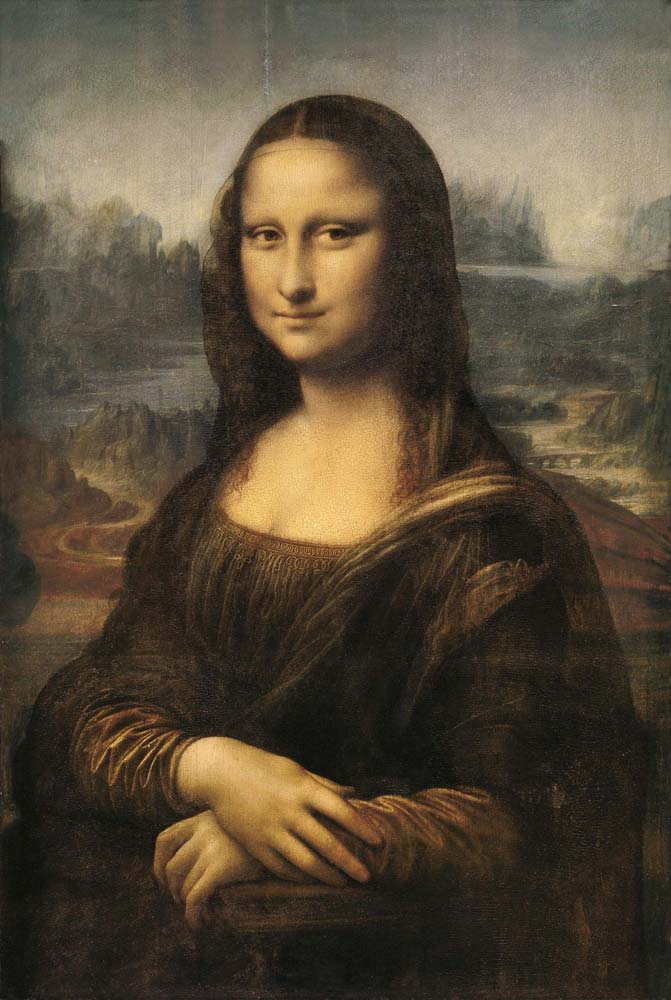
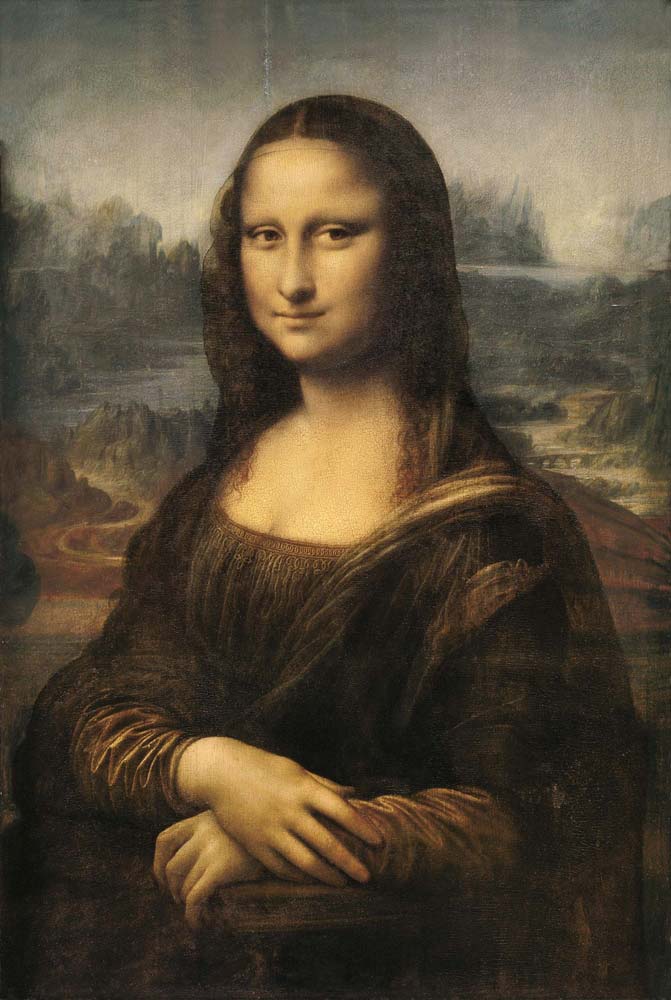
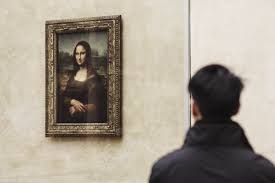
One of the greatest paintings to ever be painted. Mona Lisa is a portrait painting of an Italian woman Lisa Gherardini painted in the early 1500s. The painting shows the woman looking directly at the observer. The woman in the painting possesses a certain amount of poise and grace. The landscape shown by Leonardo looks very surreal making the painting all the more captivating. The lady’s smile has been a subject of discussion among art lovers but a 2003 study suggested that the smile vanishes when you look directly at her mouth and reappears when you observe the face as a whole.  Leonardo used a technique called ‘sfumato’ with this one which is a technique involving the blending of colors into one another making the transition between different tones easier and giving life to the painting.                           Mona Lisa is housed by the Louvre museum in France

The genius of da Vinci 1

Leonardo da Vinci, a Renaissance man born in Italy in 1452, considered as one of the greatest painters the world has ever witnessed, was not just a painter but a man of great intellect. His scientific journals and studies way ahead of their time are to this date used by scientists to get a better understanding of them . In addition to being a painter, a sculptor, he was an anatomist and was well known in the field of engineering, architecture and astronomy as well. da Vinci was unmatched, the only artist who was able to get close to his art was the sculptor of the statue David Michelangelo. The fascinating thing is that he was able to do all this without being exposed to a speck of formal education or training in any field except in painting. He was taught how to read and do basic mathematics all the rest was his own creation.

Leonardo was a genius to say the least, he possessed curiosity ever so great. Maybe, this is what made him so great, his desire for knowledge.                                                                   

His scientific evaluations and anatomic studies are very much evident in his paintings. He used his scientific knowledge to better himself as an artist, and so he did.                                     

Here, we are going to take a look at a few of his paintings and some of his contributions in the milieu of science.

Leonardo da Vinci was born in a town in Vinci, Florence. His father was a Florence based legal notary and his mother belonged to a lower class. Not much is known about his family.

PAINTINGS

Leonardo is undoubtedly one of the greatest artists to have ever lived, but where did he start his artistic journey from?

Leonardo worked as an apprentice under Andrea del Verrocchio, an Italian painter, and sculptor of the 15th century. Leonardo first got introduced to Verrocchio at one of his workshops. He learned a plethora of skills by working for Verrocchio and later also collaborated with him for a painting called The Baptism of Christ around 1475.

Baptism of Christ was a collaborative effort of Andrea del Verrocchio and his student Leonardo da Vinci. This painting depicts Jesus being baptized (the Christian act of sprinkling water on someone, symbolizing purification), with two angels beside him, kneeling. The one performing Jesus’ baptism is John the Baptist, who can be seen with a golden cross and a halo over his head. The pair of hands shown above Jesus’ head is God’s representing approval and acceptance. A dove can also be seen above Jesus’ head as well, symbolizing the Holy Spirit.

Saint Jerome in the Wilderness Another unfinished yet wonderful piece by da Vinci portrays Saint Jerome, a Latin priest in the Christian Church, in the middle of the desert, kneeling, looking fixedly upwards with his arm extending outwards. A lion can be seen resting on the ground looking at the Saint. The lion’s presence can be accounted for by the fact that Saint Jerome helped a lion that entered the monastery where he stayed once, by removing a thorn from the lion’s paw.                                                                                                              

Leonardo used a method called tempera for this painting, which involves mixing of painting pigments with water-soluble emulsions, along with classic oil painting techniques.                                                                                     

This painting is currently present at the Vatican museum in Rome.

About that artist- Claude Monet

Claude Monet is considered as the initiator of impressionism along with Pierre-Auguste Renoir, Alfred Sisley, and Frédéric Bazille, who he met while studying under Charles Gleyre.

Early Life

Oscar Claude Monet was a French painter born in 1840 in France. Monet was the eldest kid in his family. He grew up around the coast, which plays a significant role in some of his works. In 1851, Monet got into  Le Havre secondary school of the arts. In his early years Monet started to show inclination towards art and would draw caricatures, which brought him initial success at the age of 15.

In 1858, he met Eugène Boudin through whom he was introduced to multiple techniques namely “en plein air” or painting in open air which he would go on to use in most of his paintings throughout his painting career .

Introduction to Art 

In 1858, Monet started studying in Paris where he was introduced to artists like  Charles Daubigny and Constant Troyon. Monet was called for military service under  Chasseurs d’Afrique

In Algeria. Every experience, every scene for an artist has the potential to serve as an inspiration for an artist and his time in Algeria did exactly that. The colors of Northern Africa were an inspiration for his later research. He was forced to return to Le Havre in 1862 due to illness. He met Johan Barthold Jongkind, who also played an important role and shaped his artistic perception along with Boudin.

In 1867 Monet had a child whom he named Jean with Camille Pissarro. 

A lot of his success comes from the work that he produced between 1865-75. One of those works include Le Déjeuner sur l’herbe which he finished in 1866 which shows a group of well dressed people enjoying a picnic. His paintings from this period portrayed very trivial, domestic scenes.

Some of his paintings from this period include The Beach at Sainte-Adresse(1867), The Woman in the Green Dress (1866), Portrait of Claude Monet, Carolus-Duran (1867).

In 1972, Monet came across Japanese paintings  which influenced his later paintings. Since then, his paintings revolved around nature. Monet is most known for his series of motifs that he started creating in the 1880s, these were impressionist paintings.

Later Years 

In 1883, Monet moved to Giverny with his family. Here he started working on a series of paintings mostly inspired by his surroundings. These paintings represented the River Thames, Charing Cross. During this time Monet frequently traveled to Lomdon and Venice. In 1893, Monet started to assemble a water lily garden and soon this garden became a subject of his later paintings. Most of his work in the 1900s remained unknown to a large population till the mid 20th century. In the later years of his life, his eyesight began to deteriorate despite that he did not stop painting, he painted almost all his life. In 1923, he went through a cataract surgery which improved his sense of sight a bit and went back to some of his older unfinished paintings. In 1926, Monet passed away. Hw spent most of his later years grieving for his friends who he had lost in World War I and perhaps this grief resulted in a series he called Weeping Willow which is regarded as one of his most beautiful series that he painted  

Who is the girl with the pearl earring

The woman stands, a dark, ill-lit scene surrounds her, making it seem 3D, almost real; that is the girl with the pearl earring. 

Girl with the pearl earring is perhaps one of the most famous paintings to ever exist, also known as The “Mona Lisa of the North” this art piece by the dutch artist Johannes Vermeer is undoubtedly his most recognized work.

Vermeer and his style

Johannes Vermeer, a dutch painter born in 1632, in Delft, Netherlands is one of the most celebrated artists of all time. Although he was not very well known in his time, his work was posthumously recognized by critics.

Vermeer portrayed typical scenes in his art, ordinary everyday scenes. People doing everyday tasks, nothing out of the box,but these scenes were very skillfully painted. The perspective and the orientation of light was all very precise. For instance his painting The Music Lesson (1665), at first glance it seems a pretty simple painting of a teacher giving a piano lesson but there’s always more than meets the eye, the tiles show a perspective leading up to the student, the light coming through the window forces the observer to focus their attention right in the middle. The observer is not conscious of these things but influences them in some way.

What is so special about it?

A painting’s prevalence is not just determined by how good the painting itself is, but what the painting represents,the political environment during the time it was painted, and controversies it is involved in.

Girl with the pearl earring was painted in 1665, which shows a young woman looking directly at the observer. She can be seen wearing a turban, a mustard cardigan and a pearl earring. This painting is different from all of vermeer’s paintings, the lady is not doing any chore rather she just looks at the observer, this along with her inconspicuous eyebrows led to it’s comparison with the Mona Lisa. but it is not a portrait, it is a tronie.

Her lips are slightly parted, her gaze is at the observer. It looks almost 3D. Vermeer used a technique called sfumato for this painting, a technique that involves blending of colors to give a blurry or hazy appearance. Vermeer left out a lot of details,It is a tronie 

This was painted during a time when the church or the royals held power and depicted a working class girl. The pearl earring could be ironic. also the pearl is too big to be real, therefore the critics speculate that he could’ve intentionally painted it that way, to make it seem fake and also 17th century dutch women did not wear turbans.

Later assessment 

Vermeer ‘s work was assessed in the 19th century by a critic, which led to his recognition and became widely mainstream only in the 21st century.

A novel has also been written around this painting called  Girl with the Pearl Earring in 1999, written by Tracy Chevalier and later in 2003, a movie was also made, inspired from the book, with Scarlet Johansen playing the protagonist.

The painting sits Mauritshuis, The Hague, Netherlands

About that artist- Artemisia Gentileschi

Artemisia Gentileschi is regarded as one of the most illustrious artists of the 17th century. She made a name for herself during a time when women were not allowed to be a part of art and cultural activities. Her paintings were a symbol of women empowerment of the Baroque period and yet are not well known.

Early life

Artemisia was born in 1593 in Rome Italy, to Orazio Gentileschi, a renowned painter at the time. Her father recognized her talent from an early age and encouraged her to paint. Her father was a huge follower of the remarkable Baroque painter Caravaggio and her own paintings were highly inspired by Caravagio’s dramatic realism.  

Career

Gentileschi’s earliest known work is Sussana and the Elders, who at the time of painting this was only 17. The painting shows a young woman Sussane taking a bath in her garden and two men with ill intentions and a predatory look towering over the young women. Sussane who obviously seems very vulnerable at the moment and can not do much but just confute the two men with her actions which go to waste. This painting is inspired from a tale in the book of daniel. This tale portrays Sussana taking a bath in her garden as two elders start spying and harassing her sexually. 

In 1611, an Italian landscape painter Agostino Tassi who was working under Orazio, went into their house and raped Artemisia. Orazio was under the impression that Tassi would be marrying her daughter to save the Gentileschi name from embarrassment but when Tassi refused to do so Orazio took him to trial. This was really tragic for the 17 year old Gentilesci, according to her father and all the other men in power her virginity was stolen but for her it was a part of her that was stripped away. As if this wasn’t enough torture for her she was tortured with nails and screws at the trial to attest the authenticity of her testimony. Tassi was found guilty but did not serve any sentence owing to his relations with the pope.

A short while after the trial, her father married her off to a Florence based artist and moved to florence. This period of her life brought her tremendous success. She became the first woman to be accepted at the Academy of Design, Florence. This meant that she did not need permission from any man to buy art supplies, she could do it without any men controlling her.

In Florence, Gentileschi had developed her own style. She used tenebrism in her paintings which is a style of painting that uses light and dark contrasts and the dark becomes a dominating feature.

In 1620, she completed Judith Slaying Holofernes, which is inspired from a narrative in The Bible. Throughout the history of art many versions of this tale have been painted by multiple artists, even Caravaggio but Gentileschi’s  version is more real and violent. This work of hers can be compared with her own traumatic experience, where Holofernes can be compared to Tassi and Judith is Gentileschi.

Now it is not that she was the first female painter ever but all the female artists that came before her chose still lives or aesthetically pleasing subject matters. Gentileschi on the other hand, portrayed women that were a subject to male oppression like herself and were raw. Yet she is not very well known in the 21st century. Gentileschi’s work is empowering and a mark of early feminism and needs to be celebrated.

About that artist- francis bacon-2

Saying that Francis Bacon’s life was tragic would be an understatement. He went through a great deal of emotional and mental trauma. 

Tough love

In the 1950s Bacon was moving around a lot, living ephemerally he became romantically involved with and that was Peter Lacy who was an English pilot. His relationship with Lacy was toxic in every way, shae and form to say the least. Their love was fervent and extremely passionate that perfectly enveloped the vicious and destructive side it possessed. Bacon was somewhat of a masochist and Lacy, the opposite. Peter lacy would beat Bacon and abuse him throughout their relationship. Now, an ordinary person would have been appalled by the actions of peter lacy, but this was bacon he was no ordinary man. He loved Lacy with all his might, he was obsessed with him and was blinded by this very love that was, inch by inch devouring his very existence. In fact it was so destructive that once, Lacy threw him out of the window of his house over an argument they had. Bacon’s face was disfigured owing to the assault on him by Lacy. This also affected Bacon’s artisan.

Around this time Bacon’s paintings changed dramatically, his style was much more different than the one’s he made previously.

Evolution of his work

The paintings he made in the 50s were characterized by the use of a combination of blue, black and green colors which could be attributed to the changes occurring in his life.

Francis Bacon’s series of seven paintings Man in Blue I-VII, 1954 shows men in black suits present in a murky, grey almost alien landscape seemingly estranged and bewildered.

His paintings Two Figures, 1953 and Two Figures, 1953 see two men in a rather strange setting with one on top of the other. These paintings vividly point towards the relationship between him and lacy.

A few years later lacy moved back to morocco and bacon followed him there. Francis Bacon had achieved a lot more by this time. He held multiple exhibitions and his paintings were being displayed in reputed museums and art galleries. Just before one of his exhibits in London, he was told that Lacy had passed away. This deeply scarred him.

After a little while he met George Dyer, and became involved with him too, who was a subject for a lot of his subsequent paintings. His relationship with Dyer was not as eventful as his previous relationship except just a few incidents. Dyer was found dead in the bathroom of a hotel where Bacon and Dyer were staying. His painting figure at a washbasin, 1976 resembles a man lying in the bathroom which could be about Dyer.

Over the next years Bacon’s work kept on evolving and his paintings became more polished but his desires didn’t falter. He continued to act the way he used to. In 1992, Bacon succumbed to a heart attack. His art was esoteric and he still maintained that cryptism in his art even though there was a lot that he was going through beyond his colors and canvas.

ABOUT THAT ARTIST- Francis Bacon-1 

A lot of you might think of the philosopher, but that is not who we are going to talk about in this article. 

There was another Francis Bacon, who was named after the philosopher and British Chancellor who, as the artist’s father claimed, was their ancestor born in 1909 in Dublin, Ireland an artist known for his unorthodox, borderline disturbing paintings.

A lot of his paintings were portraits of faces disfigured from some form of emotional suffering which his life was certainly full of. He derived inspiration for his paintings from an array of landscapes. For example he derived inspiration for one of his paintings from a nurse screaming in the movie battleship potemkin molded with his own fascinating imagination.

Humble beginnings 

Bacon was asthamatic and from a young age was very much in touch with his feminine side, his homosexuality was beginning to transpire and his family, especially his father considered it an abomination and Bacon, at the age of 16, was dismissed from his house. He went to London afterwards, where he did a couple of odd jobs just trying to make ends meet. Francis Bacon later started living with an art connoisseur, in France whom he met at an exposition. It was in France where the idea of becoming a painter started to grow on him. The Spanish painter Pablo Picasso was a major influence for Bacon, he was extremely in awe of the way Picasso’s ability to imagine and the uncanny geometry he used, the fragments of which can be slightly seen in Bacon’s work.

Early career 

Francis Bacon completed his first painting called crucifixion in 1933 and this brought him some success. But things did not run so smoothly for him after his artistic debut, his career saw a decline from here. His subsequent paintings did not receive critical or commercial success, instead his paintings were being criticised at this time.

Bacon did not release any of his work to the public for a while after this. During this time he was extremely self critical of his work, and was dissatisfied with almost all of it until he released his painting Three Studies for Figures at the Base of a Crucifixion in 1944 at an exhibition which enticed a lot of attention back to him. From this point onwards Bacon saw substantial success.

Bacon went on to make paintings such as Painting, 1946, Head I, 1948, Head VI, 1949 and perhaps his most famous, a painting inspired from Velázquez’s Portrait of Pope Innocent X by the Spanish painter Diego Velázquez. 

All his paintings till now had very similar color scheming, he used quite dark, gloomy colors for a lot of his work and all of them possess an enigmatic whiff to them. His paintings seem like a hybrid of something so familiar yet something that can still manage to evade one’s imagination.

During all this while Bacon’s transformation could be seen through his paintings, his work was evolving as the years passed by and was being deeply affected by his personal experiences as one would expect.

About that artist- Van Gogh

Vincent van Gogh perhaps, one of the greatest artists to have ever lived, was born in 1853, in the Netherlands. He was the eldest of six children to his parents, and was only in touch with 2 of his siblings later in life. His brother Theo Van Gogh was the closest to him.

 Van Gogh is considered as the greatest post impressionist (post impressionism is a French art movement, mainly characterized by vivid hues and exuberant brush strokes). Unfortunately, His artwork did not receive much success while he was alive

Van Gogh died at an early age of 37 and was not around to witness his work being recognized and appreciated.

Introduction to art

At the age of 16, he apprenticed at the art dealers Goupil and Cie at The Hague branch through his uncle. He worked at the Goupil in London and Paris as well in the following years. The everyday exposure to art seemed to intrigue him. Artists such as Frans Hals, Jean Francois Millet started to grow on him and greatly inspired him throughout his life.

He became extremely successful during his time at the Goupil but art dealing did not satisfy him at all, in fact he despised it and was dropped off from the Goupil during his time in Paris after which he took up a couple of different jobs and had to experience some unfortunate events led him to become devout and extremely pious. During his time back home he used to translate the verses of the bible in English and French.

One of his jobs included working as a missionary among the less privileged section of the society at a coal mining region, where he lived among the poor and gave away his possessions, this did not sit well with the religious authorities, and the church later banished him.

This left him feeling dejected and out of sorts. He felt abandoned by society and isolated himself. It was during this time that he used painting as a form of expression.

He moved to Brussels to learn drawing, and then later he moved to Hague to work under the guidance of Anton Mauve, a Dutch painter.

Van Gogh and Mental Health

Van Gogh went on to produce great paintings in the subsequent years, these years also saw his artwork evolve greatly. He worked with Paul Gaugin for an ephemeral time of about two months.

This was a time of absolute distress for him, he was tortured by his own head and his solitude did not side with him.  In fact he was so troubled that one night he cut off his own year with a blade.

After this event, he was hospitalized where he kept experiencing psychotic episodes and yet was able to give the world some of the best paintings like The Starry Night, Olive Trees, Garden Of The Asylum and many more.

Van Gogh made his best paintings during the last two, extremely disturbing years of his life. Consumed by loneliness and the voices in his head, Van Gogh succumbed to his own mind. At the age of 37, he shot himself.

Vincent Van Gogh was a highly inspirational artist who had the ability to express emotions through a simple stroke of his brush. He expressed his pain through his brush which gave birth to an alluring piece of art that can make you feel emphatic emotions. And keep in mind that he was able to do this despite his ill mental health.

The REAL SMURF village

Hello guys! Have you ever watched the movie “smurfs”. If not definitely watch it it’s a fun film.

But this just an animated movie but there exists a real smurf village in this world!
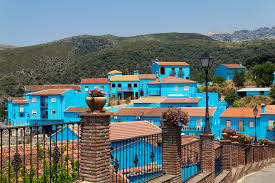
This village is located in juzcar ,spain and can be easily located ,you want to know why? Because it's a blue-tiful village.
From tyla.com

Although the smurfs are not present in this village and is a normal village like any other then why do you think it is called a smurf village .

It is called because the whole village painted their houses in blue dedicating it to the film smurfs.

From ladbible.com

They even have statues located here and there and visiting this “blue-tiful” city you enter into a whole new world.

Like every other village everyone leads their daily lives normally but painting a whole village is something to talk about.

This painting of the whole village in blue colour was something that is intiated to promote the movie "Smurfs " which can captivate people by thinking out of the box .
From:veebrant.com

They chose this village juzcar because they are famous for mushrooms and Smurfs love and live in mushrooms so this place is perfect as this city not only promotes the movie but also can be related to the movie.

This started attracting tourists ,travellers,celebrities  to this city ,this place became a hub for all the smurf fandoms to gather .

Every wall has a smurf painting on it them and evey corner of the city is painted in blue and an astonishing amout of effort has been put in to this.

From hlc edu.in

Although the sponsors offered to paint back the village into white but the villagers liked as it is at present now and declined their offer .

This place gives off an relaxing vibe where one can visit it to just walk through the village and experience the refreshing atmosphere and appreciate the village for its simplicity.

Thankyou^^.

What’s special about Mona Lisa?

Most people feel disappointed when they see the most famous painting in the world “Mona Lisa”. Questions like ‘Why is this painting famous?’, ‘Is it worthy enough to be called a masterpiece?’, ‘What makes her unique?’ arise in the minds of hundreds. But if we ignore it all and just look at the painting, we see the greatest psychological portrait ever painted. A portrait that is much more ahead of time that we are still trying to figure out.

Leonardo da Vinci in his sixties moved to the Chateau of Amboise in France with his sketchbooks and one painting “The Mona Lisa”. Because he knows how important the painting was for him.

Leonardo is one of the greatest inquisitive minds in history, a self-made man with an unquenchable appetite for knowledge, and dedicated his life to studying anatomy, geology, and philosophy.

Leonardo da Vinci

The Painting

Mona Lisa was painted on a thin-grained piece of a poplar tree and a layer of lead white. He used glazes that have a very small amount of pigment mixed with the oil. This brought depth and luminosity as the white undercoat of lead reflects the light through the glazes. He used tiny brushstrokes applied super slowly over years. Leonardo pioneered many brushing techniques which brought the paint to life.

Mona Lisa

Clothes and Jewelry

Unlike any other commissioned portraits of the aristocracy we usually see with expensive outfits, Mona Lisa is a pretty simple wealthy woman with no jewelry, clothes that are nothing special, and simple hair.

Leonardo uses the classic pyramid-shaped composition that was introduced during the renaissance. The structure provides stability and provides a central focus. In this painting, the focus is directed towards her face.

What makes her different?

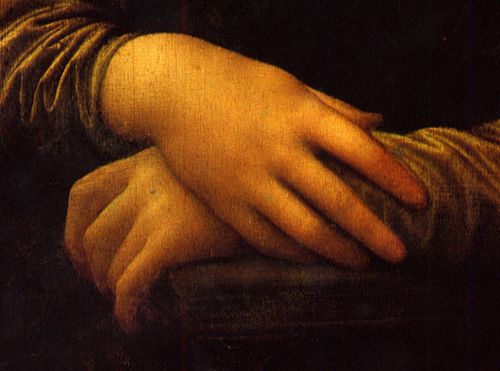
Instead of a full-length pose, Leonardo had painted Mona Lisa in a three-quarter length to cut down the distractions. Today this pose is normal but on those days it was groundbreaking. Previously the people in the portrait are erect, but Mona Lisa is relaxed with hands resting gently.

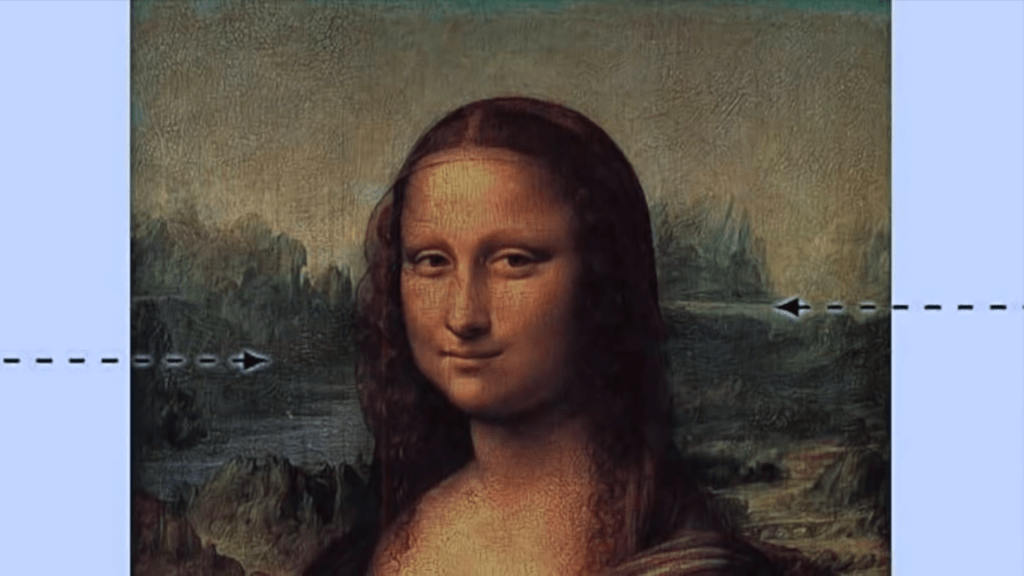
If you look at Mona Lisa’s eyes you see they are staring at you, but women in paintings never did that. The background of any other portrait has a simple background of either an open sky or a room but the background of the Mona Lisa is a complex aerial perspective of a landscape. The curves of her hair and clothing reflect the valleys and river flowing connecting humanity and nature. If you look at the background and compare the horizons on both sides you see it is not lined up. This visual trick gives an illusion of movement.

level of horizons

Her eyes and smile follows you

Leonardo has used the Sfumato technique to paint Mona Lisa’s eyes. It creates a depth near the eyes of Mona Lisa which is unusual in the case of other paintings and sculptures. Leonardo has studied human anatomy, the structure of a human face, and smiles exposing the muscles and nerves. He started researching how a smile works and analyzed every possible movement of the face. Artists never painted a smiling face before, portraits are generally serious. When you look into her eyes first she smiles then she is not. The smile comes and goes as we look deep into her face. When we look away smile stays.

Leonardo from his optic studies observed that the light comes and hits the whole retina instead of hitting at one point. This was the key to her mysterious smile.

The human eye has two different regions for seeing the world one is a central area called the fovea(to read colors) and the other is the peripheral area(to see the black and white motion and shadows). When we focus on the eyes the peripheral vision is on the smile and pick up the shadows from her cheekbones. When you look at her smile directly you cannot see the shadows, and she isn’t smiling but smirking. This is not your imagination, but it is about how you see.

Her eye’s on you!
Inner part of the eye

Sfumato technique

Sfumato is a blending technique for softening the transition between colors to make sure there are no sharp lines, layer by layer he blended everything in Sfumato style.

Chiaroscuro

chiaroscuro is an effect of contrasted light and shadow that gives a 3D effect.

These styles were never seen before Mona Lisa. Hence, seeing Mona Lisa for the first time must have been astonishing. How genius Leonardo da Vinci is that he understood this 500 years ago.

credits to the right owners of the pictures used.

The Art of Rogan Painting

India is a diverse country, rich in age-old traditions and culture. Throughout its history, India has witnessed the emergence of many exotic art forms and craftsmanship. However, with the rise of cutting-edge technology of industrial textiles, many traditional craft forms have taken a massive hit. Rogan painting is a classic example of an enthralling yet sadly dying art. 

What is Rogan Painting?

Rogan painting is a 400-year old inherited traditional textile craft of Gujarat. It is considered to be the oldest and most challenging printing art in the history of textile. The word Rogan means oil in PersiaWith origins in Persia, it was brought to India around 300 years ago, even though there is not enough historical evidence to support the statement. 

Preparation of the Ingredients

The chief ingredients required for Rogan painting are castor oil, wood, kerosene oil and dyes. The first step in the painting is the preparation of Rogan paste. 

After preparing a furnace and selecting a suitable aluminium container, the local craftsmen boil a litre of castor oil for a minimum of four hours. The time required for boiling may vary depending upon the quantity of the oil taken. Then, they continuously stir the oil until it is time to remove the container from the furnace to let it cool down. While boiling, the castor oil may catch fire, after which it is immediately taken out and covered with a lid. During this, the impurities present in the oil gets thrown out in the form of fumes. This process is repeated several times until the oil forms a thick, gelatin-like consistency and turns yellowish. 

Traditionally, the dyes used in Rogan painting were derived from organic, natural sources such as stones and plants. But today, synthetic dyes are used too. Red, yellow, blue, white, green, and brown are the primary colours used in the painting. 

A manual stone grinder was used to mix naphthol dyes and white chalk powder and prepare the colour paste. With the gradual addition of water, the required consistency of the paste is reached. The Rogan paste is added to the colour paste and ground until it forms the desired soft, smooth, gelatinous dye paste. 

Process of Rogan Painting

The process of painting is a very tedious and cumbersome task. Initially, the craftsmen lay the fabric to be painted on the floor. Next, they take a lump of the dye paste and put it on the palm of one hand. They hold a suya rod or a metal stylus in the other hand and mix the thick paste till it stretches into a thread-like structure. 

They carefully twist the rod to create beautiful motifs and patterns across the fabric without the rod touching the cloth. After that, they fold the fabric and press it evenly to obtain an identical impression on the other half of the fabric. Lastly, the fabric is left out in the sunlight for about six to seven hours to let it dry.

The intricate motifs that embellish the fabric, such as geometric flowers, peacocks, the tree of life, etc., are inspired by the history and folk culture of the Kutch region of Gujarat.

Originally, the Rogan Art was used to adorn the trousseau of a bride. But due to the limited resources, meeting the market demand has become a challenge. From almost becoming a dying art to gaining worldwide recognition, Rogan Art sure has come a long way.

An orb and Leonardo da Vinci: The Salvator Mundi Painting Solved

Leonardo da Vinci, the artist of the famous Mona Lisa and Salvator Mundi painting, is a man of mysteries. He was more than a painter. He was an avid engineer, scientist, sculptor and an architect with deep knowledge about science and astronomy. The alien theories, the striking symbolism theories and more out-of-the world speculations about his work are being debated up till now. One such puzzle is the Salvator Mundi painting

The Salvator Mundi Painting

Salvator Mundi
The Salvator Mundi painting

The Salvator Mundi painting was created by da Vinci somewhere between 1490-1500. It is the world’s most expensive painting, priced at 450 million US dollars. No, Mona Lisa isn’t the most expensive one. Deep search can tell you that. The image depicts a man, presumably Jesus Christ, holding in his hand a spherical ball like structure. Nothing mysterious about the painting as of now. Okay. So what was solved?

To understand how scientists solved the puzzle, we have to look up the problem. As I had already stated, da Vinci was a man of science and had genuine knowledge about it. It can be proved by looking at his works which deceivingly represent scientific facts. Salvator Mundi means ‘savior of the earth’. So it can be interpreted that the glass orb that Jesus is holding symbolizes the earth.

The problem behind

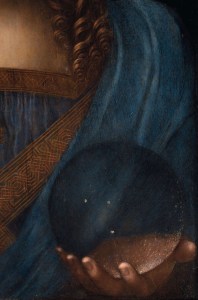
What is wrong about this painting is that, any 10th grader would know that a convex lens would provide an inverted, magnified, reversed image of an object placed behind it. The glass orb must act like a convex lens and thus do the same. But if you observe carefully, you can see that it appears as if those properties are defied and a clear, non-reversed image of Jesus’ hand and clothing is visible behind the glass orb.

You may argue that any painter would be ignorant of the science behind a convex lens. But Leonardo da Vinci was not ‘any painter’. He was a polymath of the High Renaissance! He has portrayed much more complex scientific principles in his work than that of a convex lens. There is no plausible way that da Vinci couldn’t have known the laws of optical physics. So why did he do that?

Solved

The puzzle was solved by computer scientists from the University of California, Irvine. The painting was 3d virtualized to study about how the various material orbs would appear under different refractive conditions. Many materials with which orbs could be designed were taken into consideration. At last it was concluded that the spherical orb was not a solid mass, instead a hollow orb. Hollow orb does not behave like a convex lens. It displays the image as it is, thus adhering with the painting. They predicted that the glass of the orb in Salvator Mundi was a fraction of an inch thick thus accounting for the quality.

Did Leonardo da Vinci actually paint it?

Many critics claim that the painting is not actually da Vinci’s. They point that da Vinci is more of a scientist to commit such trivial errors and thus proving that he did not paint it at all and that it was painted by a ‘lesser’ painter. But many say that, such a clever installation of the orb itself is a proof of authenticity. In order to think about hollow orbs and paint it during the 1500s would take immense intellect, which can only be done by the polymath himself.

Leo constellation?


three dots
The three dots in the glass orb

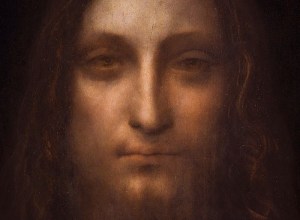
Orange iris
The orange iris of Jesus in the painting

As if the Salvator Mundi has not enough controversies, one more intriguing detail is the three dots painted in the glass orb giving it a mystical appearance. The three dots are said to represent the constellation of the sign Leo. What does it have to do anything with this painting? Well, if you observe the iris of Jesus, a faint orange glow emanates from within. The orange iris imitates Lion’s eyes. And thus the constellation, many say. Some also relate to the fact that his name Leonardo is the reason behind. However there is no concrete explanation behind.

Hope I kindled some curiosity within you today. I leave you with one of my favorite da Vinci’s quote:

To develop a complete mind:

Study the science of art;

Study the art of science.

Learn how to see. Realize that everything connects to everything else.

-Leonardo da Vinci