

The evolution in the Life Insurance industry post pandemic.

Photo by Kindel Media on Pexels.com

The global pandemic of covid-19 has created a atmosphere that have made humans realize the value of one’s life. Pandemic has made potential risks to human life and business starkly visible, forcing the entire civilization and economies to reorient their way of living. The life insurance sector has also seen this impact, the industry settled more claims in the year 2021 than in 2020 due to this global event. A sudden demand for life insurance policies and increased claims induced operational changes for the insurance industry.

The recent trend in the life insurance sector can been seen in below mentioned five points.

  • Increase in the policy holders.

There has been a noticeable shift in who and how life insurance solutions are being consumed. A particular increase was witness among the young insurer those in the age group of 20-30 years have become more conscious about life insurance.

  • Implementation of technology in operation.

Insurance advisors earlier engaged potential customers in face-to-face conversations due to the challenges posed due to social distancing. They had to change to online meetings quickly. The advantage of online video conversations is that they can be done at any convenient time or even on-the-go.

  • Offering of wider range of policies by insurance companies.

With the increase in the demand, it has made mandate for the insurance companies to offer a wide range of policies that can cater to the need of the groups of people. Introduction of specific policy for health care workers, for younger generations, for the one who have been got in the disease of covid are some of the different segment that have got been introduced amid pandemic.

  • Sustainability and Environment, Social and Governance.

Among financial services companies, life insurers are better positioned to invest based on Environment, Social and Governance (ESG) principles under the broader theme of sustainability. The long-term capital that they hold is an enabler. They can invest in businesses that commit to environmental goals, sustainability, and better governance.

  • Restoring customers faith by Insurers.

In 2022, insurers will have to make efforts to restore customers’ faith in the industry, as well as minimizing customer losses in the wake of premium rises. Insurers will no doubt focus on improving the customer experience by increasing transparency and simplifying the claims process in order to boost retention rates and strengthen consumer brand loyalty.

This year also like the preceding one will be a difficult year for many insurers, with some industries still predicting losses a year ahead. Hopefully, many of the changes insurers can make to automate and streamline their workflows in the coming years can mitigate these losses in the wake of the pandemic.
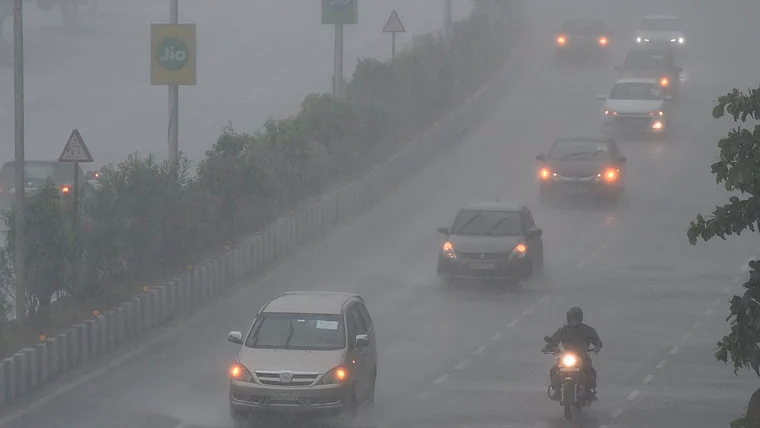
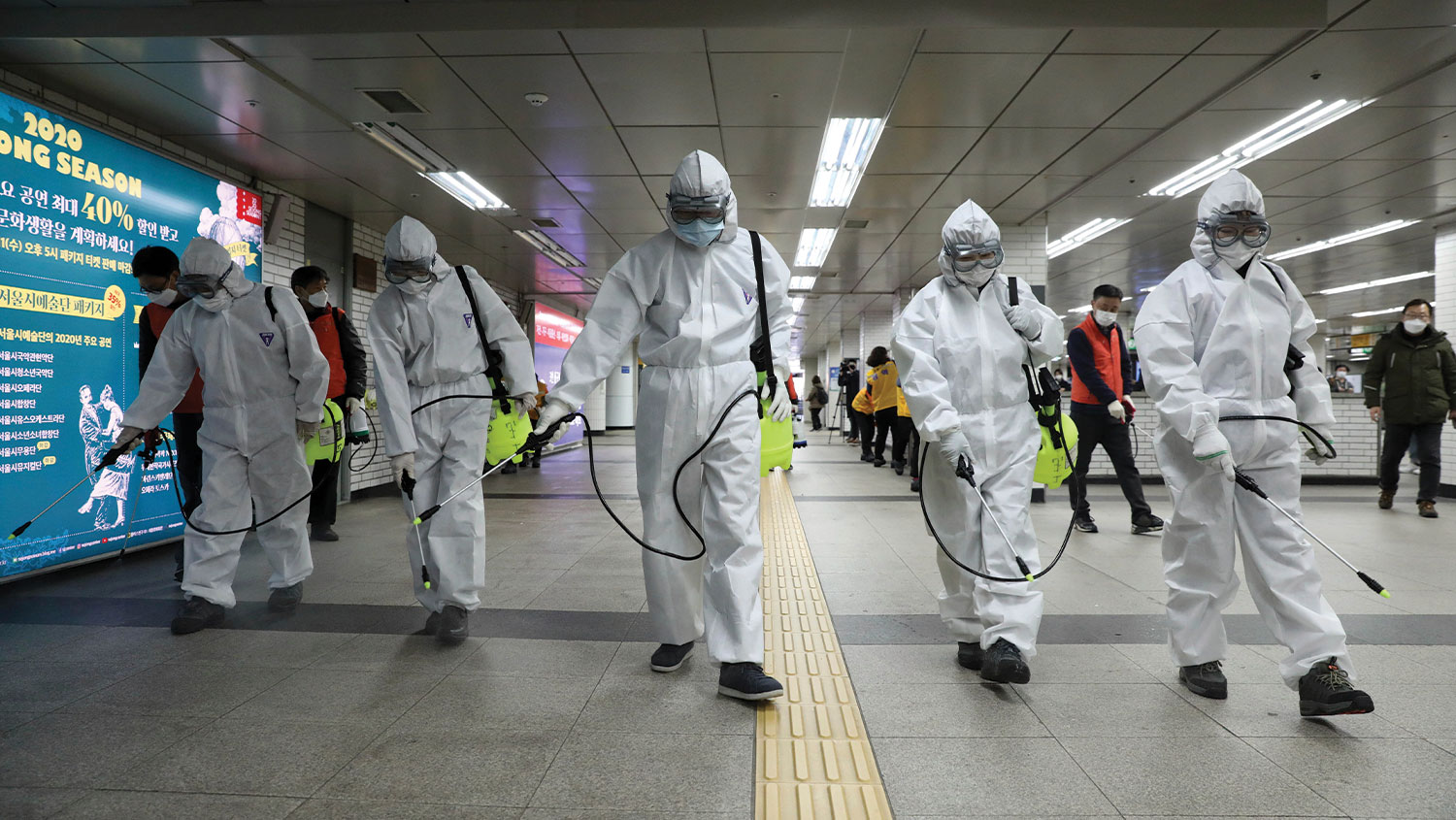
Floods in Maharashtra

Navi Mumbai Weather Update: As rain lashes city, NNMC shares monsoon  estimates for Vashi, Belapur, Nerul and Airoli
when it rained,
after days, after months,
after years, I felt alive
when the rain touched,
my cheeks, they blushed,
and grinned. As they do,
when they meet a long-lost friend
i wanna go out and say hi,
say that it’s been rough,
without you,
but I can’t.
me grinning and blushing,
and dancing hands in hands,
in rain, would bring back wounds,
the ones that are healed,
the ones that are to be healed.

Climate change is real!

Maharashtra has been dealing with two disasters; Floods in the midst of this ongoing pandemic. These floods have posed a grave threats to all the people.

Maharashtra witnessed high-intensity floods due to the incessant rains over the past few weeks. At least 209 people have died due to the floods in Maharashtra and eight still remain missing. A total of 4,34,185 people from eight districts have been evacuated to safer places, as rescue operations continue.1Among the 209 fatalities, the Satara district reported 46 deaths, followed by 35 in Ratnagiri, 15 in Thane, seven in Kolhapur, four in Mumbai, three in Pune, four in Sindhudurg and two each in eastern Maharashtra’s Wardha and Akola districts.

A total of 3,221 animals have died. Meanwhile, the floodwater has entered the roads and fields, submerging many areas of the Sangli district in Maharashtra making it hard for people to commute from one place to another.

Heavy rainfall in Maharashtra has caused flooding in several areas of the state, including Kolhapur. Houses, roads, and commercial establishments remained partially submerged in floodwater in Kolhapur on Monday.

MUMBAI: Despite the fact that the rains have lessened this week after last week’s torrential downpour, Mumbai has already received 93 percent of the season’s average rainfall. The average rainfall for this season is 2205.8 mm, with 2052.7 mm recorded at the Santacruz observatory. There are two more months of monsoon left to cover the remaining 7% of the seasonal rain target.
While there were no rains at the IMD’s Colaba observatory, the Santacruz observatory recorded 4.3mm of rain, which is considered light rain. Significant weather systems, such as the offshore trough from Karnataka to Kerala’s coast, as well as the low pressure region, have become less prominent, according to IMD sources.
Most of the season’s rainfall so far has been recorded in a heavy rain spell restricted to just a few hours.
This resulted in significant water logging, as well as the loss of life and property. Since the start of the monsoons, IMD’s Santacruz observatory has recorded 235mm of rain on July 17-18, and 253mm on July 16-17. A total of 231.3mm fell in a 24-hour period between June 9 and 10. The IMD has issued a green alert till Thursday, indicating only light to moderate rain activity.

In these past months,

World After the COVID 19 Pandemic

COVID-19 will reverse both of those trends, increasing the space both between countries and among people. Some will laud these changes for increasing safety and resilience. But a world that’s less global and fewer urban would even be less prosperous, less stable and fewer fulfilling. Future is shrouded in clouds of uncertainty, as resilient leaders steel oneself against all possible global outcomes, few are more prominent than others. These are two most predicted and certain scenarios of how the planet would begin of COVID 19. Less global, more isolated. Even before COVID-19, the decades-long trend toward ever-more globalization of trade, investment, supply chains and other people flow were starting to grind to a halt. We began to seem closer to range in terms of the products we produce and consume, the people with whom we interact, and where we get our energy and our money. In retrospect, we’ll come to look at the years right before the 2008 financial crisis as “peak globalization.” Since then, the mixture of recession, inequality and populism has created a growing anti-globalization and anti-immigration consensus in western countries, exemplified by the U.S. trade war with China. The reaction of developed economies to the coronavirus will only strengthen this consensus, as all things international are going to be viewed as incurring unnecessary and dangerous risks.

What WHO calling the coronavirus outbreak a pandemic means | Science News

What was a growing “anti-globalization” consensus is poised to crystalize into a “de-globalization” reality. We are being told this de-globalization will make us all more resilient. But it’ll also make us less prosperous — with less choice and better prices. it’s going to also make us less secure, as international cooperation will decrease and therefore the potential for international conflict will increase. Less density, more distance. Urbanization is probably going to be the opposite major casualty of the coronavirus. Unlike globalization, the trend of ever greater-urbanization was unaffected by the worldwide financial crisis. Even America — the land of all things suburban — joined the worldwide march into cities. People were interested in cities not just for economic opportunity but also for the urban lifestyle. After coronavirus, people are going to be more scared of crowded trains and buses, cafes and restaurants, theaters and stadiums, supermarkets and offices. Crowded spaces are the lifeblood of cities. But now crowds are seen as major health risks. People that have the power to exit the town will increasingly be tempted to try to do so. people that cannot leave will feel at increased risk, hunker down, and reduce their movements and contacts. it’s hard to believe Manhattan without the subway and 10-deep pedestrians on Fifth Avenue. But that will be the increasing post-COVID reality. De-urbanization would harm the economic process because cities generate enormous scale economies and have proved to be remarkably effective incubators of creativity and innovation. This might be particularly true in developing economies where the movement of individuals from rural areas to rapidly expanding cities has been perhaps the key driver of poverty reduction. But the shrinking of cities will produce other adverse effects too, from reducing cultural vibrancy and cosmopolitanism to exacerbating global climate change. Additionally, to be more productive, cities also tend to be more environmentally sustainable. A world that’s less global and fewer urban would be far less appealing to me, personally. But it’s also a world that might hurt economic prosperity, reduce shared understanding among disparate people, and increase the prospect of conflict among them. Our immediate reactions to COVID-19 will lead us to require both to de-globalize and to de-urbanize. But we must take fully under consideration the profound longer-term costs of doing so. Globalization and urbanization generate challenges we must confront, all the more so during a post-coronavirus world. the answer is to manage them, to not reverse them.

Humanity’s Strongest Weapon- Hope

What does the word hope mean to you? Hope means many different things to different people. For some, hope is about expecting to get promoted. For some, hope is about living in better conditions, or the next day being better than today. Hope is an optimistic state of mind which is based on an expectation of positive outcome. Hope is humanity’s weapon against suffering and doom. You might have heard about the ‘Pandora’s box’. In Greek mythology, Pandora’s box was an artifact. Pandora’s curiosity led her to open a box, which released many curses on humanity. In the end when Pandora was depressed and regretted her decision, Hope came out. This tells us the importance and power of hope. Hope stands alone against all the evils. 

Hope gives us the strength to stay strong and face the challenges. But why are we talking about hope? During the pandemic, when we feel that we are lost, doomed, bent to suffering, hope can lift us up. The hope that we will make it out, the hope that these days too shall pass, will surely enable us to sail through these dark times. 

Emily Dickinson once said- “ Hope is the thing with feathers that perches in the soul and sings the tune without the words and never stops at all.” 

I believe this is a very beautiful way to express the meaning of hope. Hope lifts our soul when we feel low. To further our understanding of hope, I wish to share a story.

Image result for Hope. Size: 266 x 160. Source: www.uhsinc.com

Long time ago, there lived a poor orphaned girl, Belia. Only once had she seen her parents, that too when they left her in the hands of mother nature at the age of 4. She lived in an old hut along with another girl, Susan, who too had been abandoned by her once mother. Now they lived in destitute conditions in the lonely woods. 

“Susie! Come.” called Belia. They headed to the river to gather some berries, if there were any left. Day by day, man was growing fond of exploiting nature. Last year, they strolled in the meadows and made beautiful garlands. But now, the meadows were cleared, leaving hardly any flowers for the girls. As they walked past the cleared meadow, Belia said, “I tell you Susie, one day, we will have our flowers back.” Susan sighed and replied, “Lia, please stop dreaming. They are gone forever. They are never coming back.” Belia smiled and rushed to the river. “I don’t know how or when, but I know they surely will, Susie.” said Belia. 

Seasons changed, the girls found themselves famished. There were hardly any berries left, or money. They became fragile and lethargic due to starvation. Susan burst out into tears, ”No one cares if we live or die. I can’t bear this anymore.” Belia consoled her, ”Susie, don’t worry, someday soon we will have lots of food. Let’s go to the town to see if we find any.” Susan had lost her strength, ”No! We will die of starvation. I no longer wish to survive.” Saying this she lay down. Belia was too hopeful to give up, ”If you are unable to walk, I will go and bring some food. I know, I will find some.” Belia set out to the town. She sang merrily in her journey, as if she was a princess. She came by a big house. There she requested them to give some bread. After a long while of seeking their charity, the house Mistress gave her two pieces of bread. She rejoiced and turned back to her hut. 

Unfortunately, while crossing the river back home, her foot slipped and her basket fell into the river. She put in all of her remaining energy in chasing it. It was futile. She was panting, and fell to the ground with despair. She looked at the sky and begged for food. She heard a dulcet melody. She followed the song. The melody was coming from a few miles away. She walked and walked. Whenever the thought of giving up came to her mind, the melody relit the hope within her. Finally, she reached a pond, surrounded by trees, from whose branches hung red apples, however the melody had stopped. She jumped with joy and plucked an apple. She relished her apple. Then plucked a few more, tied them in her frock and hurried to the hut. 

Susan lay there on the cold ground. Belia tried waking her up. However, Susan lay there still. She truly had given up.

https://en.wikipedia.org/wiki/Hope 
https://dictionary.cambridge.org/dictionary/english/hope