The novel Coronavirus has created a catastrophe in the entire world bringing it down to its knees with cases counting more than 16.7Cr, (as per the data provided by Wikipedia).
It’s not the first time that a pandemic has engulfed this large number of people from around the world. History has records of many deadly diseases creating havoc in the world.
Human civilizations have evolved and developed continually, causing population bursts. With no efficient knowledge of sanitation and hygiene, and poor health facilities people have unknowingly created fertile situations for the growth of these deadly infections.
The Centers for Disease Control and Prevention (CDC) has defined a pandemic as “an epidemic that has spread over several countries or even continents. Pandemics usually affect large segments of the population”.
Here’s a list of the worst hit pandemics through history.
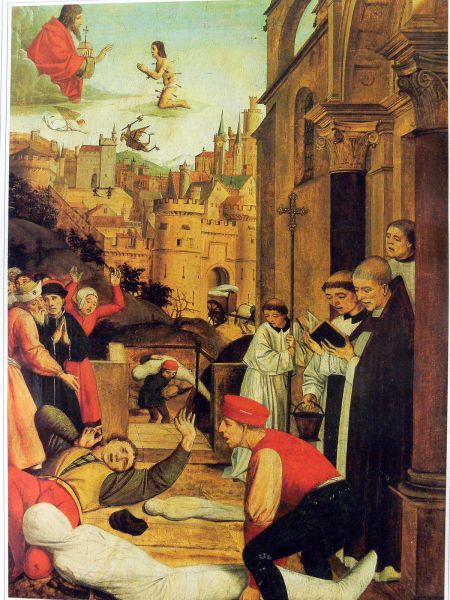
Plague of Justinian, 541-542
Saint Sebastian pleads with Jesus for the life of a gravedigger afflicted by plague during the Plague of Justinian. (Josse Lieferinxe, c. 1497–1499) Source pic- Wikipedia
The plague of Justinian was the worst pandemic recorded in history caused by the fatal bacterium called Yersinia pestis. The plague was brought to Constantinople, the capital of the Byzantine Empire, in 541 CE from Egypt. During the time Egypt was paying a tribute to Emperor Justinian in grains. The plague-laden fleas infected the rats eating grains.
This lethal disease spread like a forest fire across Europe, Asia, North Africa, and Arabia killing an estimated 30 to 50 million people, almost half of the world’s population.
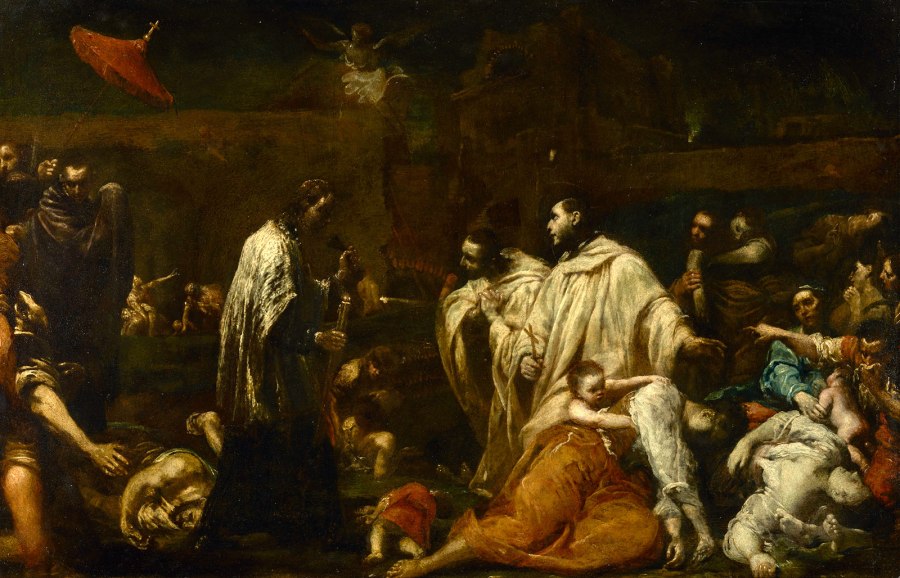
Black Death (1347-1351)
This was a global bubonic plague that hit Europe in 1347-1351, astonishingly taking a toll of 200 million in just 4 years. It was a type of plague that was spread via the bite of infected rat fleas. This plague caused religious, socio-economic upheaval with a profound impact on European history. The bacterium that caused this was the same that brought the Plague of Justinian.
During this time the sailors that had came to Europe were required to stay on their ship for 30 days, which was known as “Trentino” in Venetian law. Later, the Venetians increased the forced isolation to 40 days or a “quarantino”. From here quarantine word was introduced which is now in great implementation.
The painting “Blessed Bernard Tolomei Interceding for the Cessation of the Plague in Siena” by the Italian artist Giuseppe Maria Crespi. Source pic- Britannica
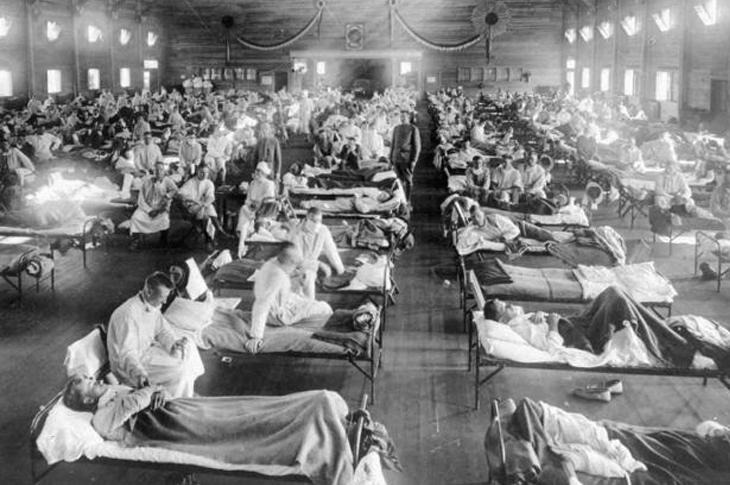
Spanish Flu 1918:
Source pic-World Health Organization
Spanish flu was the most severe and devastating influenza pandemics that the world ever witnessed. Also known as the 1918 influenza pandemic, it infected 500 million people – about a third of the world’s population at the time – in four successive waves. Though the flu engulfed Europe, America, and parts of Asia, the exact place and cause of its origin are unknown to this day. Some say that the flu showed itself in the military camp in Kansas, and from the US it spread to Europe when the troops traveled east in World War I.
Though the name is Spanish flu the pandemic did not originate in Spain, the British Medical Journal referred to the virus as “Spanish flu” because Spain was hit hard by the disease.
Small Pox 15th Century:
Smallpox has been estimated to have killed over a 500 million people. It was in 1980 that the World Health Organization declared smallpox to be eradicated.
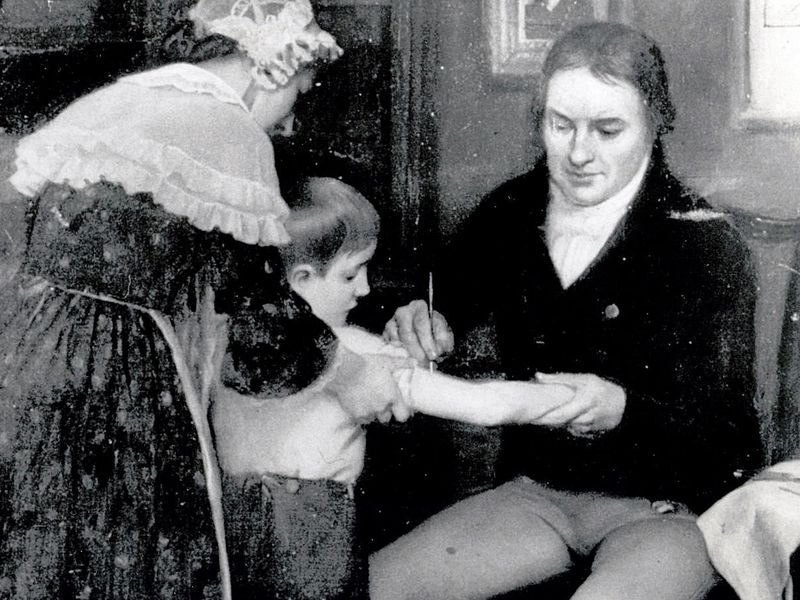
Edward Jenner giving the boy smallpox vaccine. source pic- Smithsonian Magazine
Smallpox became the first death-dealing pandemic whose vaccine was developed in the late 18th-century, by a British doctor named Edward Jenner.
Edward Jenner observed that some local milkmaids were not exposed to the harsh virus and just showed mild symptoms which were called “cowpox”. Edward then decided to extract a small sample of milkmaid’s pus and inject it into the arm of a young boy named James Phipps. After that, he exposed the boy to the smallpox virus, and to his amazement, the boy showed no illness. This was the first vaccine ever discovered in history.
Life has been unreal for everyone around the globe during the past one-year accounting to the outbreak of COVID 19 pandemic. The world is on its path to recovery from the pandemic which has utterly upturned our lives. Though new strains of the virus have emerged in the UK and other parts of the world, life was almost getting back to normal with the invention of COVID 19 vaccines. However, the end of coronavirus may not be an end to the pandemic outbreaks as WHO has revealed the discovery of a new deadly virus which might be as deadly as Ebola and as contagious as Corona. The World Health Organization (WHO) has named the new virus “Disease X”, where “X” stands for unexpected. The presence of the virus is hypothetical for now but an outbreak that scientists and public health experts fear could lead to serious disease around the world if and when it occurs.
Professor Jean-Jacques Muyembe Tamfum, the scientist who discovered the African Ebola virus admonished that ‘Disease X’ could be more fatal and rapidly spreading. Scientists have found out that this new virus has originated in the tropical rain forests of Africa. “If a pathogen emerged from Africa it would take time to spread all over the world. So, if this virus is detected early — like in my institution here — there will be an opportunity for Europe [and the rest of the world] to develop new strategies to fight these new pathogens,” said Muyembe.
Disease X was added earlier to the priority list by the World Health Organization to stimulate research and precautions regarding the possible outbreak. “Disease X represents the knowledge that a serious international epidemic could be caused by a pathogen currently unknown to cause human disease,” WHO said. With the outburst of COVID 19 pandemic, all countries are prudent upon their health care sector. In addition to this, WHO has raised an alert around the globe to strengthen the primary health care provisions in every country to prevent, detect and mitigate emergencies.
The primary distinction between public-sector and private-sector jobs is that public-sector jobs are commonly within a government firm and are controlled by the Government or various Government bodies, whereas private-sector jobs are those where people who are working for non-government offices, controlled by Individuals or private companies. People are more inclined towards Government sector jobs, and the faith in the private sector’s jobs is also developing rapidly. The modern generation wants to accomplish a job post in private enterprises and it is because of wage increment approvals, top hierarchy, and additional benefits.
There are many advantages of working in government agencies such as a stable job with beneficial packages with the best retirement privileges (Pension). But it is slightly difficult to bag a government job, mainly because it is a necessity to crack entrance examination within the time frame allotted and there are certain age limitations too. Even though government jobs are known for less salary, the starting payroll of a bank clerk is 20k per month, and higher designation entry-level monthly salaries can be as high as INR 70k to 80k and above. Superior officials experience the generous advantages of monthly pays of well over Rs.2.0 lakhs. Compared to private jobs, government employees have less work pressure and experience plays an important role in government administration with promotions. Disadvantages of government jobs are the misuse of power, political interference, the financial burdens, etc. which is why normally people avoid getting into the government sector. Certain Government Sectors Jobs are armed forces, Civil Service, Health Care, etc.
In the private sector, it links performance and growth. The better you work, the greater will be your growth. If you are dedicated and have the talents to work up to the next level, you will be promoted to the next level. Employment in the private sector provides more growth opportunities and is more flexible in allowing employees to move further into the engaging roles within the company,with which they can lead a lavish lifestyle. But how much ever-interesting it sounds there are a lot of obstacles in working in private companies such as instability of job, like in case of failure to gain scheme funding, recession, low business performance all can act against an employee. If a private-sector organization is suffering loss, then your work may be at stake. That means there is zero job security. Certain private sector jobs are Law Firms, Newspapers, Hospitality, and magazines, etc. If an individual is not interested in joining the public or private sector then the person can set up their own business which can be difficult to start but can go smoothly if handled well which depends on the individual.
But in this pandemic Government jobs have proven to be very useful because many people who were employed in the private sector have lost their jobs, which can be very stressful in the difficult phase of time where expenditure is more. It depends on a person to make the right choice according to their talent and capacity.
The COVID-19 pandemic has had far-reaching consequences beyond the spread of the disease itself and efforts to quarantine it, including political, cultural, and social implications.
pandemic on politics :- A number of provincial-level administrators of the Communist Party of China (CPC) were dismissed over their handling of the quarantine efforts in Central China, a sign of discontent with the political establishment’s response to the outbreak in those regions. Some experts believe this is likely in a move to protect Communist Party general secretary Xi Jinping from people’s anger over the coronavirus pandemic. Some commentators have suggested that outcry over the disease could be a rare protest against the CPC. Additionally, protests in the special administrative region of Hong Kong have strengthened due to fears of immigration from mainland China. Taiwan has also voiced concern over being included in any travel ban involving the People’s Republic of China (PRC) due to the “one-China policy” and its disputed political status. Further afield, the treasurer of Australia was unable to keep a pledge to maintain a fiscal surplus due to the effect of the coronavirus on the economy. A number of countries have been using the outbreak to show their support to China, such as when Prime Minister Hun Sen of Cambodia made a special visit to China with an aim to showcase Cambodia’s support to China in fighting the outbreak of the epidemic.
The United States president Donald Trump was criticised for his response to the pandemic. He was accused of making several misleading or false claims, of failing to provide adequate information, and of downplaying the pandemic’s significance. Trump was also criticised for having closed down the global health security unit of the United States National Security Council, which was founded to prepare the government for potential pandemics.
The Government of the Islamic Republic of Iran has been heavily affected by the virus, with at least two dozen members (approximately 10%) of the Iranian legislature being infected, as well as at least 15 other current or former top government officials, including the vice-president. Advisers to Ali Khamenei and Mohammad Javad Zarif have died from the disease. The spread of the virus has raised questions about the future survival of the regime.
Sovereignty
Geoeconomics and country risk-experts have emphasized the potential erosion of political and economic sovereignty that may affect some already-enfeebled countries like Italy: Edward Luttwak has called Covid-19 “the virus of truth”. M. Nicolas Firzli, director of the World Pensions Council (WPC) and advisory-board member at the World Bank Global Infrastructure Facility (GIF), refers to the pandemic as “the Greater Financial Crisis”, that will “bring to the surface pent-up financial and geopolitical dysfunctions … [many] national economies will suffer as a result, and their political sovereignty itself may be severely eroded”.
Civil Rights and Democracy :- Iran, Jordan, Morocco, Oman, and Yemen banned the printing and distribution of newspapers. On 30 March, the parliament of Hungary granted Prime Minister Viktor Orban the power to rule by decree for an indefinite period.
World Peace :- The coronavirus pandemic appears to have worsened conflict dynamics; it has also led to a United Nations Security Council resolution demanding a global ceasefire. On March 23, 2020, United Nations Secretary-General António Guterres issued an appeal for a global ceasefire as part of the United Nations’ response to the COVID-19 coronavirus pandemic. On 24 June, 2020, 170 UN Member States and Observers signed a non-binding statement in support of the appeal, rising to 172 on 25 June, 2020. On 1 July 2020, the UN Security Council passed resolution S/RES/2532 (2020), demanding a “a general and immediate cessation of hostilities in all situations on its agenda,” expressing support for “the efforts undertaken by the Secretary-General and his Special Representatives and Special Envoys in that respect,” calling for “all parties to armed conflicts to engage immediately in a durable humanitarian pause” of at least 90 consecutive days, and calling for greater international cooperation to address the pandemic.
Education impacts ;- The pandemic has affected educational systems worldwide, leading to the widespread closures of schools and universities. According to data released by UNESCO on 25 March, school and university closures due to COVID-19 were implemented nationwide in 165 countries. Including localized closures, this affects over 1.5 billion students worldwide, accounting for 87% of enrolled learners.
Coronavirus and inequality :- Low income individuals are more likely to contract the coronavirus and to die from it. In both New York City and Barcelona, low income neighborhoods are disproportionately hit by coronavirus cases. Hypotheses for why this is the case include that poorer families are more likely to live in crowded housing and work in the low skill jobs, such as supermarkets and elder care, which are deemed essential during the crisis. In the United States, millions of low-income people may lack access to health care due to being uninsured or underinsured. Millions of Americans lost their health insurance after losing their jobs. Many low income workers in service jobs have become unemployed.
Religious Impact :- The pandemic has impacted religion in various ways, including the cancellation of the worship services of various faiths, the closure of Sunday Schools, as well as the cancellation of pilgrimages surrounding observances and festivals. Many churches, synagogues, mosques, and temples have offered worship through livestream amidst the pandemic. Relief wings of religious organisations have dispatched medical supplies and other aid to affected areas. Adherents of many religions have gathered together to pray for an end to the pandemic, for those affected by it, as well as for the God they believe in to give physicians and scientists the wisdom to combat the disease; in the United States, Trump designated 15 March 2020 as a National Day of Prayer for “God’s healing hand to be placed on the people of our Nation”.
Psychological impact
On 18 March 2020, the World Health Organization issued a report related to mental health and psychosocial issues by addressing instructions and some social considerations during the COVID-19 outbreak.
Due to doubts if pets or other livestock may pass on coronavirus to humans, many people were reluctant to keep their pets fearing transmission, for instance in the Arab World, celebrities were urging people to keep and protect their pets. Meanwhile, people in the U.K. tended to acquire more pets during the coronavirus lockdown.
Suicide :- The coronavirus pandemic has been followed by a concern for a potential spike in suicides, exacerbated by social isolation due to quarantine and social-distancing guidelines, fear, and unemployment and financial factors.
Domestic violence :- Many countries have reported an increase in domestic violence and intimate partner violence attributed to lockdowns amid the COVID-19 pandemic. Financial insecurity, stress, and uncertainty have lead to increased aggression at home, with abusers able to control large amounts of their victims’ daily life. United Nations Secretary-General António Guterres has called for a domestic violence “ceasefire”
Elderly care
Older people are particularly affected by COVID-19. They need special attention during the COVID-19 crisis, and their voices, opinions and concerns are important in formulating responses.
Global data are extremely uncertain at present, nonetheless, the heightened risks of COVID-19 for older persons are evident in all national data. The scale of testing and nature of reporting vary between governments and hence there is risk of misinformation by generalizing from the experience and reports of a given country.
While the number of older persons is relatively and absolutely smaller in developing countries, particularly in Africa, this coincides with other serious structural risks. Countries with the fewest older persons (such as many of the least developed countries), have the fewest health resources, limited experience caring for older patients (including few geriatric specialists), less institutional care for older persons, and far fewer public or NGO support structures for outreach, screening and community-based care of older persons.
Older persons living in long-term care facilities, such as nursing homes and rehabilitation centers, are particularly vulnerable to infection and adverse outcomes from COVID-19. Older persons who live alone may face barriers to obtaining accurate information, food, medication, and other essential supplies during quarantine conditions and community outreach is required. Older persons, especially in isolation, those with cognitive decline, and those who are highly care-dependent, need a continuum of practical and emotional support through informal networks (families), health workers, caregivers, and volunteers.
The Government of India had announced a lockdown over the last few months due to the Coronavirus pandemic. A lockdown was imposed on the whole country from the month of April. The lockdowns were imposed as a preventive measure for the pandemic. Since rates of infection have still not gone down, these measures are being continued.. Recently there has been a change in the guidelines and a new system of “Unlock” is being introduced in the country. Today, a new set of guidelines were announced regarding the unlock. The Ministry of Home Affairs has issued a new guideline about the opening up of more institutions and activities. Metro train services and open air theatres are to be allowed in areas other than Containment Zones. A new set of lockdowns is being extended in the country and the rules will apply to zones where there are active cases and places labelled as containment zones. Other zones will have less strict Unlock rules. These guidelines will be extended in the country till 30 September.
The Centre has said,”The new guidelines, issued today, are based on feedback received from States and UTs, and extensive consultations held with related Central Ministries and Departments.” After issuing the guidelines, the Home ministry also announced opening up of more activities, like the resumption of Metro train services and open air theatres. Closed theatres have not been permitted to be kept open. Until further notice they will be closed. The re-opening of activities rule will only be applicable in areas outside the Containment Zones, said the Ministry. The Centre has allowed the states and Union Territories to permit up to 50 per cent of its teaching and non-teaching staff to be allowed to go to the schools for online teaching and other official and related work. States will also be allowed to permit students of classes 9 to 12 to visit their schools, but only in areas which are not included under the containment zones, said the government order. The Centre, however, has allowed reopening of higher education institutions. But this is only for research scholars and post-graduate students of technical and professional programmes which require necessary laboratory or experimental works in labs or other institutions. The previous Unlock3 guidelines which were issued on July 29 had allowed the opening up of yoga institutes and gymnasiums. It had also removed restrictions on movement of individuals during night curfew.
School, colleges and other educational institutions will continue to remain closed for students, said the Centre on Saturday as it issued the guidelines for the month-long fourth phase of easing down the restrictions for the pandemic – “Unlock4” – which begins from September 1. The Home Ministry, issuing the guidelines, announced opening up of more activities, like restarting of Metro train services and open air theatres. The re-opening of activities will only be allowed in areas outside the Containment Zones, according to the Ministry guidelines.
The Unlock3 guidelines issued on July 29 had allowed opening of yoga institutes and gymnasiums and removed restrictions on movement of individuals during night curfew. In its latest order, the States have also been asked not to impose any local lockdown restrictions in places outside Containment Zones. According to the government data, India’s COVID-19 numbers rose to 34,63,972 with a single-day spike of 76,472 new infections, while the death count climbed to 62,550 in 24 hours.
From the beginning of the year, the situation around the world is grave. The rise of the newly formed virus had made everyone to stay caution about every little thing. The behavior of population across the globe had changed in an instant. Major industries and firms had faced hard hit from this crisis and suffers a huge loss of turnover and profits. One such sector which is neglected completely altogether from the starting of lock down is travel and tourism. From the commencement of the pandemic had made many people to travel and reach their hometown safely, but lately this industry got completely shut, following a loss in transportation sector as well.
America’s travel industry is among the hardest hit. The U.S. travel associations projects a loss of 4.6 million jobs through May, a figure likely to increase. U.S. weekly jobless claims doubling in a week and by far the biggest spike in half a century. Tourism decline is a driving reason for job losses in states including Nevada, where Las Vegas casinos and jumbo hotels have gone dark.
To improve this situation and employment, the hotel chain has launched their project ‘We Care’ in South Asia which will focus on enhanced technology, sanitation and security efforts to fight the virus spread. “Social distancing will continue and hotels will have to gear up for the day to day operations. With corporate groups, for instance, it is expected that they will split it up into smaller regional events with 3-4 events spread out as opposed to larger events earlier. Self drive car rental company Zoom car has been focused on working with essential service providers in this time and predicts city-based travel to take off sooner. “There will certainly be a bias towards in-city trips compared to outstation ones. Also, we see a stronger focus on shorter term subscriptions. We expect 90% to be in-city rentals and 10% outstation during the post COVID time,” highlights Greg Moran, co-founder & CEO, Zoom car.
Recovery will happen, albeit at its own pace. And with travel taking its own course in a post lock down world, wanderlust will just have to take the road less traveled.
While the outbreak of the Covid 19 pandemic prompted lockdowns in many countries all over the world, the resultant decrease in emissions may have improved the health of our planet. Incidents where endangered animals have been spotted in certain areas were all around social media.
The worldwide disruption caused by this has resulted in great impacts on the environment and the climate. Also, the considerable decline in travel has caused many regions to experience a large drop in air pollution. Carbon emission rates have reduced across countries significantly. There have been many instances where considerable changes in environmental conditions were observed. In China, lockdowns and similar measures have resulted in a 25 percent reduction in carbon emissions and 50 per cent reduction in nitrogen oxides emissions. One scientist estimated that this may have saved at least 77,000 lives over the course of two months. When compared with indexes of last year, pollution levels in New York have decreased almost by 50% this year. Satellite images have shown that Nitrogen dioxide emissions have started to decrease in Northern Italy, Spain and United Kingdom.
As most people had to stay at home due to lockdown and travel restrictions, many animals have been spotted in several cities. Sea turtles were spotted laying eggs on beaches they once avoided. This was found in coasts of the Bay of Bengal due to the lowered levels of pollution and human intervention. In the United States, dangerous vehicle collisions with animals such as deer, elk, moose, bears, mountain lions were very common. These incidents have reduced greatly and the rates fell by 58% during March and April. Endangered animals were visible in urban cities. A group of Nilgai deers were spotted on the roads of Noida near New Delhi. Dolphins which were seen in the Ganges many years ago, were also spotted in the river during the lockdowns. Several migratory birds were spotted across cities.
Gabon, an African country, had decided to ban the human consumption of certain animals like, bats and pangolins. This was done to reduce the spread of zoonotic diseases because the novel coronavirus is thought to have transmitted to humans through these animals.
According to a study published in May 2020, it was found that the rate of daily global carbon emissions during the lockdown in early April fell by 17%. This could possibly lead to an annual carbon emissions decline of up to 7%, which would be the biggest drop in emissions since World War II according to the study. Researchers suggest that these decreases are mainly due to the reduction of transportation usage and industrial activities. It is true that rebounding and returning to our previous routine and lives could diminish these reductions due to the more limited industrial activities. Due to the reduction in flights, air pollution levels have also dropped significantly.
Temporary changes have affected the environmental conditions. However, whether this pandemic will have a lasting impact on the environment is yet to be known. None of us would have wanted to lower emissions in this way, but it has shown us what we can do together in times of need. Covid-19 has shown us the importance of lives, health services, jobs and mental health. It has also shown us the difference that people and communities can make when they work together – this has given us hope that we can show the same zeal while dealing with climate change and saving our planet.
‘If a free society cannot help the many who are poor, it cannot save the few who are rich’, quoted John F. Kennedy years before an epidemic like Covid-19 could have even been forecasted.
Starting from the Plague, a bacteria led pandemic to the Spanish Flu caused by a virus in 1918, the world has seen an invisible enemy mongering fear among the people. Though the epidemics did not change the patterns in people’s reactions but it outbreaks have certainly taught us about social distancing and responsibility. The response to the current pandemic, Novel Coronavirus Disease (COVID 19) has been no different. The current situation where the Government has been repeatedly asking people to be selfish about their loved ones and stay indoors is undoubtedly a decision in the public welfare as it stands as the only way to fight the issue. This infection with symptoms is frightening and can kill people in large numbers as evident in the developed countries but the epidemic is more threatening when thought of people it might affect without symptoms.
Looking back, the plague epidemic was certainly a major turning point in India’s public health system. The principles introduced were new then and vaccines developed turned the history of hospitalization in the country. But when it first came in Mumbai, there were only Social Service leagues and other voluntary organizations which did the work of supplying food and medicine to the needy. Thus, there was impression of hope and being taken care of even when the situation turned helpless.
The society is divided into sections and it is not unknown to anyone of the country. Even though the upper class can claim money not being important more than happiness, the lower class does not even know the meaning of happiness if there is no penny in the pocket. The lockdown period has pushed the lower class people, working under ‘no work, no pay’ policy to the extreme points of their lives so much that the deaths due to hunger can compete with the numbers of deaths due to the virus after a couple of months. The situation is similar to the Plague in a lot of ways, maybe it is time to change the principles and policies of the wage workers and mark it in the history once again.
Coronavirus pandemic is not a depression yet but it is a recession already. The country can easily fall back into a temporary economic crisis and technical point of actions can prevent permanent scars of depression. Compelling the payment of wages to the daily wage workers can be a measure that can instantly transform the social safety of the nation as once these workers lay off; there might be irreparable damages to the entire nation’s productive capacity.
The government has issued directions to the employers to pay wages on mere humanitarian grounds and, it is not only for the permanent workmen but for the contract workers as well. The Disaster Management Act, 2005 or the Epidemic Diseases Act, 1897 which specifically came into force after the epidemic in Mumbai does not guarantee any such direction to be in compliance with the statutory law. However, Central and State governments can take its measures accordingly and it is backed by the provisions.
Though it has taken time but the Government has come up with ideas to deal with the situation. The government has strictly advised to support the country by paying wages without any consequential deduction in wages for this period. The direction is issued particularly for the casual or contractual workers. On non-payment, the employees can drive down morally to combat their fight. On such kind of a scene, India, as a country, would lose even if it manages to fight the virus.
But the circular is only an ‘advisory’ and has not been issued under any law, ultimately making it not binding on any person. As dealt in the judgment of Narendra Kumar Maheshwari v Union of India that any policy does not take the place of law. Even the legislation under the Disaster Management Act, 2005 does not prohibit any employer from terminating employees or to vary their terms of service. But it does mention securing employees as it requires them to be paid salaries in the course of business. There also lies a major difference between the terms, employees and workmen as pointed out in Dhrangadhra Chemical works Limited v State of Saurashtra. The matter stands important since a workman is entitled to retrenchment as well as other benefits unlike the employers irrespective of whether temporary or permanent. It is important to note that ‘natural calamity’ is not particularly defined in the Act and can be claimed to fall under the ambit of it.
The migrants are stranded on roadways due to the current situation but hands of employers are tied as well and even though some might think but everyone cannot afford the same. Such a crisis is itself not compensated under loan forbearance.
In such a situation, the solution can be to adopt the idea of common law ‘lay off’ concept to pay 50% of wages so that their daily needs are at least met and also so that it can be done for a larger period to a bigger audience. The Government can also secure by adopting Canada’s plan to subsidize certain requirements and by giving them a privileged position by offering different schemes.
It is time that the country understands that we are all in this together. Without one section the other cannot sustain for long. Very evidently, when John F. Kennedy quoted, he might not have forecasted viruses or pandemics but he knew the world required to stand together for development.
Nobody was expecting to be one day locked in their homes and worrying about keeping the virus at bay. Untill the vaccines are out we have to take certain serious measures to ensure the safety of our family and loved one’s.
Is cleaning like we usually did enough? What can a common man do without thehigh tech protective gears?
Let us break down some steps which can be followed at home as a part of our daily routines to not only clean but also disinfect :
Food and it’s cleaning procedure:
Nowadays with online shopping of essentials, we must make sure that the vegetables and fruits are disinfected. We must transfer the eatables into a dish and wash off the container immediately. If it is a disposable container, throw it in the trash can which should have a lid. Remove and throw away outer cartons of cereal boxes. All unnecessary shrink wraps and plastic packaging must be disposed off. Beverage bottles and cans can be wiped with disinfectant. Fresh vegetables and fruits must be thoroughly rinsed under a running tap, preferably with warm water and salt and turmeric. Wash your hands with soap and water once you are done. One can also keep certain items in sunlight to naturally kill some germs under the Uv rays.
Washing clothes after returning home:
Warm water destroys germs. So, use the warmest water appropriate for the fabrics you are washing. Use a generous amount of detergent or soap along with disinfectant liquids likke Dettol/ Savlon. Allow the clothes to dry fully, either in the dryer or outside on a clothesline in the sun. All of the above steps are necessary to fully exterminate the virus. Remember to disinfect the laundry bag as well. And wash your hands with soap immediately afterwards.
Disinfect surfaces that are frequently touched:
Surface that are touched very frequently like door knobs, door edges, handrails, light switches, kitchen and living room surfaces, mobile phones, earphones, remote controls, wallets, toilet seats, taps, tables and chairs should be cleaned one a week or even more frequently.
If the surface is too grimy, you first want to clean it with soap and water. Use a clean piece of cloth or a kitchen sponge wipe. Then wipe the surface with a disinfectant wipe or a disinfectant solution that has at least 70% alcohol. You can also use bleach. One cup of bleach mixed with five gallons of water is suitable for non-wood surfaces. For wooden surfaces, a solution of white vinegar and water works well.
The disinfected surface needs to dry naturally. Do not quickly wipe it dry. Most disinfectants need to stay wet on a surface for at least a few minutes in order to be effective. We suggest using a wipeable waterproof cover for your phone. It will be easier to disinfect and there’ll be less chance of the disinfect damaging the device.
Cleaning of floors and walls of theHouse:
Even if you are not using a vacuum cleaner, you can manually sweep and mop the floor with disinfectant. Pay special attention to high-traffic zones like porches, hallways, lobbies, kitchens and corridors. You want to clean the floor in these places more thoroughly. Make this an everyday habit and if you go outside then twice a day is highly recommended.
What to doif you come home from outside:
When you come home from outside, you bring a lot of germs into the house on your clothes, shoes and bags. As soon as you enter the house, remove your shoes and overcoat at the door. Leave your bags in a corner and head straight to the bathroom. Wash your hands, face and other exposed parts with water and soap. Next, disinfect your bags and the things you have brought home. You can use wipes or simply wash them with soap water. You can also sun them out as heat is known to kill coronavirus.
These are some of the few things you can do to make sure you and your family stay safe and healthy through this pandemic.
India the only major Asian economy that’s grown its export share since the start of the tariff wars in 2018 is the one with the fewest trade links to China. India’s share of world exports rose to 1.71% in the first quarter of 2019 from 1.58% in the fourth quarter of 2017, data compiled by Bloomberg show. The share of every other economy among Asia’s 10 biggest exporting nations fell in the same period.
The two largest goods traded by India are mineral fuels (refined or unrefined) and gold (finished gold ware or gold metal). In the year 2013-14, mineral fuels (HS code 27) were the largest traded item with 181 billion USD worth imports and 64.685 billion USD worth re-exports after refining. In the year 2013-14, gold and its finished items (HS code 71) were the second largest traded items with 58.465 billion USD worth imports and 41.692 billion USD worth re-exports after value addition. These two goods constitute 53 per cent total imports, 34 per cent total exports and nearly 100 per cent of total trade deficit (136 billion USD) of India in the financial year 2013-14. The services trade (exports and imports) are not part of commodities trade. The trade surplus in services trade is 70 billion USD in the year 2017-18.
Part of the reason for India’s outperformance is that it’s not as integrated into global manufacturing supply chains as peers, which means exporters are cushioned from rising trade tensions in the region.
It’s a sentiment that was flagged by central bank Governor Shaktikanta Das in an interview.
“India is not part of the global value chain,” he said. “So, U.S.-China trade tension does not impact India as much as several other economies.”
China is the biggest buyer of goods from South Korea and Japan, whose share of world exports have fallen the most in Asia. For India, China is the third-largest market, after the U.S. and the U.A.E.
“Our biggest advantage is that our product basket and market basket are both quite diversified,” said Rakesh Mohan Joshi, a professor at the Indian Institute of Foreign Trade in Delhi.
Trade tensions between the U.S. and China have given India an opportunity to ramp up exports to both countries, according to Ajay Sahai, director general and chief executive officer of the Federation of Indian Export Organisations.
India’s exports to the U.S. grew at the fastest pace in six years in the year ended March 2018, while exports to China surged 31%, the second highest annual pace of growth in more than a decade, data from India’s Ministry of Commerce show.
“China is more willing to give market access to India than ever before,” said Sahai, pointing to increased access for products such as rice, fruits and vegetables, with potential for greater exports of pharmaceuticals and automobile components to China.
On the other hand, India’s exports to the U.S. could lose momentum. President Donald Trump has criticized India for its tariffs on U.S. products, and withdrew trade concessions on $6.3 billion of Indian goods on June 1. India responded with higher tariffs on about 30 American products.
India stands at number 16 in the list of global trading partners and the nation is running with its pace to reach under top 10 in the list but the covid-19 pandemic has hit not just Indian economy but the entire world economy. The all of world would take steep financial dive with this epidemic before reaching on its initial status, till then let’s hope for the betterment of not just India, but the whole of world and the severely impacted victims of this contagious virus.
June 2020 has seen two important government initiatives for the every-day earners for food in news. They are the Garib Kalyan Rojgar Yojana and the PM Street Vendor’s Atmanirbhar Nidhi.
First on the list is the Garib Kalyan Rojgar Yojana. It is a central government initiative taken amidst the pandemic circumstances. The Abhiyaan was launched by the Prime Minister in June from Telihar in Bihar. As so the title suggests, the objective of the Abhiyaan is to secure, empower lives by providing livelihood opportunities. The scheme is specifically launched for that population of the country whose areas or villages have witnessed the return of a large number of migrant workers after the citizens were no longer employed following the lockdown announced for the devastating Covid-19.
This campaign is sought to be one of the components of Rs 1.70 lakh crore package under Pradhan Mantri Garib Kalyan Yojana which was set to help the poor fight against Corona Virus Pandemic.
The Campaign is nothing but a massive employment -cum- rural public works in which the public works are to be undertaken with an aim of generating a resource envelope of minimum Rs 50,000 crores. The campaign would involve 125 days of work. The public works will supposedly include rural housing for the poor along with the provision of providing drinking water through the already established Jal Jeevan mission. The infrastructure of Panchayat Bhavans, rural mandis, community toilets, rural roads, etc. are sought to be developed.
The initiative is hoped to cover 116 districts in 6 states – Uttar Pradesh, Bihar, Rajasthan, Madhya Pradesh, Odisha and Jharkhand. There are 27 aspirational districts hoped to be covered under this initiative. The mentioned are estimated to hopefully cover about 2/3 of the unemployed migrant workers. A major emphasis has also been put to the rural infrastructure. The initiative will have 25 different types of public works which is specifically to create infrastructure and importantly boost livelihood opportunities in the areas.
High speed and cheap internet are also part of the maintenances to be provided in every rural household. Thus, there shall be laying of fibre cable.
The campaign however would require a Multi-Ministerial Effort between different Departments of the Government with Ministry of Rural Development as the nodal Ministry along with the other ministries such as Panchayati Raj, Mines, Road and transport etc.
Second on the news was the PM Svanidhi. The initiative PM Street Vendor’s Atmanirbhar Nidhi was launched by the Ministry of Housing and Urban Affairs. It is launched with the aim of introducing a special micro-credit facility Scheme which would provide affordable loans to the street vendors, who recently went on losses or no business at all since the wake of the COVID-19 crisis. This scheme will thus enable the street vendors to resume work and earn their livelihoods.
The beneficiaries will include over 50 lakh people which would include the vendors, hawkers, etc. who work to supply fruits, vegetables, ready-to-eat street foods etc in the markets. It would also include the business of service providers like barber shops, laundry services etc.
The scheme shall be available for beneficiaries belonging to only those States and Union Territories which have notified been under the Rules and Scheme provided under Street Vendors Protection of Livelihood and Regulation of Street Vending Act in 2014.
The vendors or the hawkers can avail a loan (working capital) of up to Rs. 10,000 which is subject to be repayable in monthly instalments within the tenure of one year. On timely and the early repayment of the loan, credit limit was claimed to be raised and interest subsidy to be given at the rate of 7% per annum which ultimately shall be credited through Direct Benefit Transfer on a quarterly basis. 108 cities were selected, and the loan disbursement was planned to commence in July, 2020. The eligible lenders were rated as the bank such as Regional Rural Banks, Small Finance Banks, Non-Banking Finance Companies, Micro Finance Institutions established in some States and Union territories.
The Small Industries Development Bank of India (SIDBI) is an implementation agency. It was developed to manage the credit guarantee approved to the lending institutions through Credit Guarantee Fund Trust for Micro and Small Enterprises.The SIDBI was developed through an Integrated PM SVANidhi portal. The Portal was developed to integrate credit management and PAiSA portal of MoHUA to administer the interest subsidies automatically.
Let’s take up any project in an organization, especially Multinational Corporations, and try to understand the hierarchy levels in a team. Usually at the top, there is the delivery manager followed by project manager and then there is the team lead with all the assistant team members at the base of the hierarchy. On any normal day, the delivery manager is the one who is answerable to the client during the time of project going live or at the times of crisis. The project manager is answerable to the clients on a weekly basis with the team lead reporting to the project manager with all the milestones and progress reports. So to sum up, the work was usually into two fonts, managers who manages the entire group and is answerable to the client and the team lead who lead the team and reports to the managers. So this traditional way of doing business was going on until the pandemic hit the business.
For the past four months, we are working from home. We have forgotten what the boundary exactly looks like between office and home, with a little concern for privacy and social life. We are always trying to do ‘more’ and in a ‘better’ way and there are times, when we feel helpless, if and when we do not get the same amount of cooperation and assistance from our team lead or managers. Numerous articles are being published everywhere on how to improve effective communication in remote work but there is always a bit of communication gap, especially when we are unable to apprehend the non-verbal cues. It is at this time, when the managers should step down from being a manager to being a leader.
A leader is someone who acts a ring-bearer to a team member. He does not just say what to do, rather he works with him, side by side, to sail through the problem. Whenever a team member expresses a concern or some problem, instead of just providing a solution, he listens to it and deals with the situation with empathy. In fact, a team leader gives a solution by being a part of the solution. Having done a part time internship in such a culture, I have observed that the managers, even in remote scenario, tend to be stoic and still behaves in a very formal way. It is high time that the managers step down into the shoes of the leaders and lead the team through such a mind-wrecking situation, instead of just managing it.
As per my observation, a few ways by which the managers can put on a leadership cap are:
A team huddle in the morning, discussing about the team progress and also providing a platform open for suggestions.
Listen to pertinent problems of team members and deal with empathy, thus going over the notion of manager.
Arrange for coffee break, once every half-month, and the discussions should be on the recent advancements and not just on news.
Managers should be bit more personal rather than being formal.
Remote work calls for different measures and from the organizational perspective, managers putting on leadership cap will go a long way in building a sustainable and resilient organizational culture. If we take this as a parameter and compute the cost-benefit analysis, this approach will definitely improve the productivity and thus will create multi-fold productivity.
From past three months our country is facing a series pandemic i.e. coronavirus that resulted to lockdown in India from 24 March,2020 declared by our prime minister Narendra Modi. COVID-19 is the greatest challenge of our age that has taken life of many people till date. Till now there are 3, 80,532 cases in india, total deaths due to this increased to 12,573. Coronavirus pandemic should serve as a wake up call for India in many situations like health infrastructure, self reliant India, digital India, unemployment rate , poverty. Coronavirus highlights the problem of migrant labour in India which is not able to reach their homes and is left jobless in this harsh conditions. But however, govt supported them and managed to provide basic requirements of food and money for their survival. The coronavirus is a wake up call to strengthen health infrastructure in India. The capital of India , New Delhi has the second largest number of cases in india where there are no beds left in govt hospitals . The poor people are not able to get public healthcare with the shortcoming. The public as well as private healthcare system needs fixing. India not even spend 2% of their gdp in heath that strongly needs to be improved . But good side is that everyone is cooperating in this harsh time . The Indian railways are converted into isolation wards, gurudwara committee had also decided to convert their areas of gurudwara in Delhi into isolation wards and provide them basic healthcare facilities. COVID-19 is an opportunity for India to be self reliant. We should reduce our dependence on imports. From this state will get better revenue and rate of employment will be increased in our country. There will be positive impact on every stratum of the society. Hence we should strengthen our infrastructure for basics hygiene.
‘Intellect’ refers to the creations of the mind. Intellectual Property is a type of intangible property and includes inventions, literary and artistic works, symbols, names and paintings.
Intellectual Property Rights (IPRs) are the Rights granted to the creators of Intellectual Property (IP) by the Government. The nature of IPR is territorial. In any country an IP has to seek protection separately under the relevant laws.
Mechanisms which are Special in nature have been kept in place for various territories in order to provide protection to different types of IPRs. It confers an exclusive right to the inventor/ creator or assignee to fully utilize the invention/ creation for a given period of time.
It’s been established that the intellectual labor associated with the innovation should be given due importance so that public good emanates from it.
This is a strong tool, to protect investments, time, money, effort invested by the inventor/creator of an IP, since it grants the inventor/creator an exclusive right for a certain period of time for use of his invention/creation.
Hence it aids in the economic development of a country by promoting healthy competition and encouraging industrial development which shall also aid in the growth of the economy.
WHAT IS AN INTELLECTUAL PROPERTY?
Intellectual Property(IP) refers to creations of the mind; inventions; literary and artistic works; and symbols, names and images used in commerce.
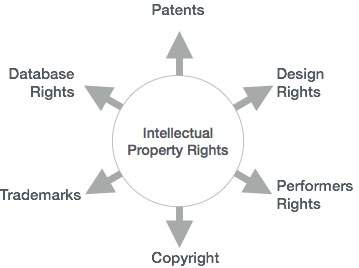
IP is divided into two categories: 1) Industrial Property:- includes patents for inventions,trademarks, industrial designs and geographical indications. 2) Copyright:- covers literary works (such as novels,poems and plays), films, music, artistic works (e.g., drawings, paintings, photographs and sculptures) and architectural design.
In Intellectual property(IP), there are Rights which relates to the rights of performing artists in their performances, producers of phonograms in their recordings, and broadcasters in their radio and television programs are included.
WHAT ARE INTELLECTUAL PROPERTY RIGHTS?
So what do you mean by intellectual property rights? IP rights like any other property right allow creators, or owners, of patents, trademarks or copyrighted works to benefit from their own work or investment in a creation.
These rights are outlined in Article 27 of the UDHR which provides for the right to benefit from the protection of moral and material interests resulting from authorship of scientific, literary or artistic productions.
The importance of intellectual property was first recognized in the Paris Convention for the Protection of Industrial Property (1883) and the Berne Convention for the Protection of Literary and Artistic Works (1886). Both treaties are administered by the World Intellectual Property Organization (WIPO).
There are various pros which are more compelling than the cons.
1) The progress and well-being of humanity rest on its capacity to create and invent new works in the areas of technology and culture.
2) The legal protection of new creations and this encourages the commitment of additional resources for further innovation.
And Lastly the third pros is that the 3) Promotion and protection of intellectual property spurs economic growth, creates new jobs and industries, and enhances the quality and enjoyment of life.
An efficient and equitable intellectual property system can help all countries to realize intellectual property’s potential as a catalyst for economic development and social and cultural well-being. The intellectual property system helps strike a balance between the interests of innovators and the public interest, providing an environment in which creativity and invention can flourish.
INTELLECTUAL PROPERTY HOLDERS IN A QUANDARY DUE TO COVID-19 PANDEMIC
While experts are in a combat mode and the race is on to discover the cure for COVID-19, the claim of intellectual property rights for exclusive use of the cure poses a dilemma as it is not considered the most rational thing to do at the moment.
Carlos Correa addressed to organizations like WHO, WTO and WIPO via an open letter to seek support for WTO countries that invoke the ‘security exception’ contained in Article 73 of the Agreement on Trade Related Intellectual Property Rights (TRIPS) Agreement, to take ‘actions it considers necessary for the protection of its essential ‘security interests’ in the wake of COVID-19 threat.
It has been suggested that invocation of exception under Article 73 will be warranted to procure medical products and devices or to use the technologies to manufacture them as necessary to take cue of the present public health emergency.
By suspending the enforcement of any Intellectual Property right as given under Article 73(b) of TRIPS Agreement, an obstacle for the procurement or local manufacturing of the medical equipments shall be necessary in order to protect the population of the world will be outlasted.
The question which is raised due to the above is regarding IP rights which are aimed to aid the public by promoting technological advancement in return of providing the inventor an exclusive right over the invention, though for a limited time. Though the IP rights are at a standstill due to the outbreak the IP Registry offices all over have limited their functioning.
TYPES OF INTELLECTUAL PROPERTY
Trade Mark: –
A trademark is used in order to identify a business entity and it also differentiates the goods made or services offered by a company or an individual. Names, Words, Logos, Colors, Packaging, Sounds (audible), Signs (visual) or any combination thereof are considered and can be filed as trademarks.
A trademark must be Unique and Distinctive in nature and must also avoid adjectives for eg efficient and Names of person or places (E.g. India). Even Obscene words, Religious or Government words or symbols (E.g. OM) and Common Shapes (Square) should be avoided.
The Trade mark means a mark used in relation to goods for the purpose of indicating a connection in the course of trade between the goods and some person having the right as proprietor to use that mark.
The function of a trade mark is to give an indication to the purchaser or a possible purchaser as to the manufacture or quality of the goods, to give an indication to the trade source from which the goods come or the trade hands through which they pass on their way to the market.
The Trade Marks Act, 1999 is an act which provides for the registration and better protection of trademarks for goods and services and for the prevention of the use of fraudulent marks. A trade mark is valid for a period of 10 years.
Case Name: The Coca-Cola Company v. Bisleri International Pvt. Ltd Case Citation: Manu/DE/2698/2009
Copyright: –
Copyright is an exclusive legal right granted to the creators of an intellectual work. The owner of a Copyright has rights to reproduce, translate, adapt, perform, distribute and must be publicly allowed to display the work, etc.
Registration is not mandatory since copyright comes into existence as soon as the intellectual work is created but it is recommended to register a copyright for better enforceability, since registered copyrights have more evidentiary value in court.
(a) Types of Works covered under Copyright:-
(1) Literary including Software – Books, Essay, Compilations, Computer Programs.
(2) Artistic – Drawing, Painting, Logo, Map, Chart, Plan, Photographs, Work of Architecture.
(3) Dramatic – Screenplay, Drama.
(4) Musical – Musical Notations.
(5) Sound Recording – Compact Disc.
(6) Cinematograph Films – Visual Recording which includes sound recording.
(b) Duration of Copyright:-
(1) Literary, Dramatic, Musical or Artistic Works – Lifetime of the author + 60 years from the death of the author.
(2) Anonymous & Pseudonymous Works – 60 years from the year the work was first published.
(3) Works of Public Undertakings & Government Works – 60 years from the year the work was first published.
(4) Works of International Organizations – 60 years from the year the work was first published.
(5) Sound Recording – 60 years from the year in which the recording was published.
(6) Cinematograph Films – 60 years from the year in which the film was published.
Case Name:- Indian Performing Rights Society Ltd. v. Eastern India Motion Picture Association Case Citation: – 1977 SCR (3) 206
Designs: – The Design Act, 2000 states that it protects the aesthetic and ornamental features of an object. As per the Act a 2D or 3D pattern of a handicraft, a product, or even an industrial commodity.
The Unique Selling Point (USP), protects the looks and feels of the product and it prevents the duplication of the product. An industrial design helps in drawing a customer’s attention and helps in increasing the commercial value of an article.
Case Name:-Cello Household Products v. M/S Modware India and anr Case Citation:- Notice of Motion (L) No. 209/2017 in Suit (L) No. 48/2017
Patents On the 4th December, 2018, The Ministry of Commerce and Industry released the draft (rules amendment) for Patents Act 1970. These rules are mainly amended with respect to international applications, patent opposition and a few form related extensions. The Central Government proposes to make these amendments in exercise of the powers conferred by section 159 of the Patents Act, 1970.In order to align with TRIPS, inventions which are not patentable have been included even, wider rights of patentee is incorporated. Uniform period of protection is 20years. Case Name: Bajaj Auto Limited v.TVS Motor Company Limited. Case Citation: JT 2009 (12) SC 103
5. Integrated Circuits
Semiconductor Integrated Circuits Layout Design (SICLD) Act 2000 states the meaning of Semi conductor Integrated Circuit as, a product having transistors and other circuitry elements designed to perform an electronic circuitry function. There are 2 types of designs as per the act:-
(i) Layout Design – A layout of transistors and other circuitry elements including lead wires which connects semiconductor integrated circuits.
(ii) Layout-Design Registry (SICLDR) is the office where the applications on Layout-Designs of integrated circuits are filed for registration. The jurisdiction of this Registry is whole of India. The Registry, as per the guidelines laid down in the Semiconductor Integrated Circuits Layout Design (SICLD) Act 2000 and the Semiconductor Integrated Circuits Layout-Design (SICLD) Rules 2001, examines the layout-designs of the Integrated Circuits and issues the Registration Certificate to the original layout-designs of the Semiconductor Integrated Circuits.
Case Name: Sunil Alag v. Union of India and Others Case Citation: W.P. (C) 8152/2013
6. Biological Diversity
The Biological Diversity Act 2002 was enacted to realize the objectives enshrined in the United Nations Convention on Biological Diversity (CBD) 1992 which was passed by the Lok Sabha on 2nd December 2002 and by the Rajya Sabha on 11th December 2002.
It recognizes the sovereign rights of states to use their own Biological Resources due to the scarcity and also to conserve it. The Act provides for a mechanism for equal sharing of benefits arising out of the use of traditional biological resources and knowledge. It is a federal legislation enacted by the Parliament of India for preservation of biological diversity in India.
Case Name: Environment Support Group vs National Biodiversity Authority Case Citation: W.P. No.41532 / 2012
7. Plant Varieties and Farmers
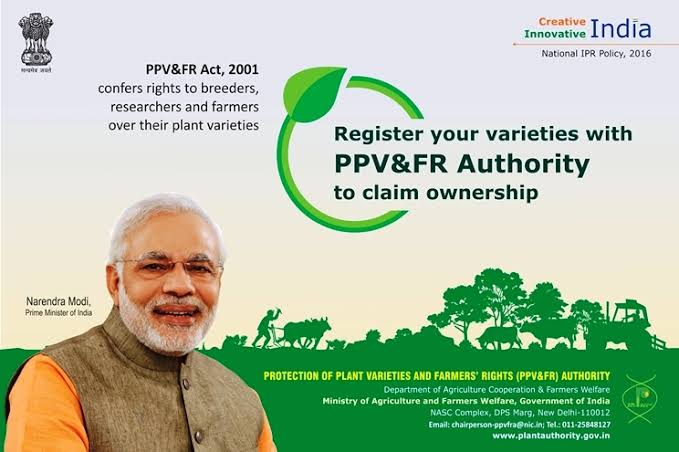
Protection of Plant Varieties and Farmer’s Rights Act of 2001(PPV & FR Act, 2001) confers right to breeders, researchers and farmers over their plant varieties. Reaching legislation with regards to establishing rights for farmers to save, use, exchange and sell farm saved seed.
The Act establishes nine rights for farmers of which the most important in this regard are the right to “seed” and the right to “compensation” for crop failure (Art. 39). Not only does the 2001 Act protect the rights of framers to save, use, exchange and sell farm- saved seed, it also seeks to ensure that these seeds are of good quality, or at least that farmers are adequately informed about the quality of seed they buy.
In addition, safeguards are provided against innocent infringement by farmers. Farmers who unknowingly violate the rights of a breeder are not to be punished if they can prove that they were not aware of the existence of such a breeder’s right (Art 42).
Case Name:- Monsanto Technology LLC & Ors Vs. Nuziveedu Seeds Ltd & OrsHigh Court of Delhi Case Citation: CS (Comm) 132/2016
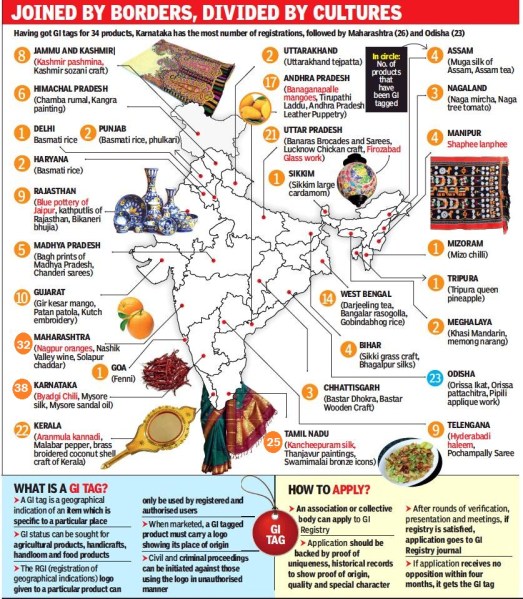
The Geographical Indication of Goods:- The Geographical Indications of Goods (Registration and Protection) Act, 1999 states Geographical Indication as it is primarily an agricultural or food product, natural or a manufactured product (handicrafts, Handloom textiles or industrial goods) originating from a definite geographical territory. A product is considered to be manufactured in a territory if any one of the activities of either the production or of processing or preparation of the goods takes place there. It promotes the producers prosperity of goods which have been produced in the geographical territory.
It helps the producer community to differentiate its products from other competing products that are present in the market and generate goodwill around its products. Hence, it acts as a signaling device by helping consumers to identify genuine quality products.
Case Name:- Tea Board Vs ITC Limited on 20 April, 2011 Case Citation:- GA No. 3137 of 2010 CS No. 250 of 2010
It has been suggested that invocation of exception under Article 73 will be warranted to procure medical products and devices or to use the technologies to manufacture them as necessary to take cue of the present public health emergency.
CONCUSION
The above overview clearly depicts that India has adopted and adhered to the latest IPR Regime and it has forayed into the global trade competition with a double edged sword.
Outbreak of novel corona virus toward the year’s end 2019 have halted the entire world on the wheels, the infection is in discriminatory to such an extent that it did not separate any nation whether created like China, Europeans, Canada and creating like India. It Would never look whether you are rich, a clergyman, a spouse of a president , a poor a matured or a kid. its pace is spreading to such an extent that inside two or multi month it became pandemic started from a city in china.
A virus, which is catastrophic too, has arrive at all over the world however something important called to be HUMANITY is absent and escaped the reach of masses. a contamination of a virus could enter , go starting with one individual then onto the next however Humanity which can be spread , learn develop , rehearsed is elusive and battling for worldwide effort. like the notorious COVID-19. we have seen mayhem everywhere throughout the world , the major on are talked about however list are perpetual in the decade.
To settle on reset humankind, we should comprehend the significance of the term pandemic uninvolved of different terms episode, plague. A flare-up is spreading a malady in a specific region, plague is spreading for huge scope in a nation and pandemic is a worldwide scale occasion of spreading the sickness. for example Covid 19 began as flare-up in Wuhan area, China and turned as pestilence when complete China is affected, at last WHO declared it as Pandemic when rest of the world like Spain, USA, India, Korea are affected and nonstop spreading.
Out of enduring have risen the most grounded souls; the most monstrous characters are burned with scars As statement expressed, pandemic like covid 19 brought sufferings financially( workforce deficiencies, low gracefully) socially( self separation) assemble quality towards greater condition cordial. With pandemics diminishing carbon dioxide outflows into air because of low transportation and gracefully, expanded force slices because of increment request on the way towards sustainable power source, expanded disengagement towards developing of greens at homes is only resetting needs of people.
These difference in needs are not constrained to condition just, yet in addition monetarily, low interest prompts builds quality and diminishing costs, political objective of social prosperity with most noteworthy need, Individually, expanded communication with family, diminished relocation and upgraded asset usage, broadly, expanded social reconnaissance for containing the pandemics, low loan fees for money related help, universally, common exchange on social circle than financial circle.
Does pandemics reset humanity and priorities in the end always
With serious outcomes, danger of national security, loss of jobs, day pay misfortune for normal .laborers, increment clinical expenses on isolation, increase everyday costs by social removing are on one hand, where worldwide reaction of protectionism by restricting air travel from specific nations, lock down of vacationer puts because of pandemic impacts the nations severely. After the Spanish influenza in 1918, with huge loss of populace, the recharged intrigue has given to wellbeing segment with expanded innovative work for immunizations, observing for tainted. Be that as it may, it doesn’t halted the expanded industrialization with helpless sanitation urban bunches. Be that as it may, in contemporary world, the nations like India, endemic with pandemic like intestinal sickness which is significant reason for high number of passing’s, government has started different plans like Mission Indradhanush for immunization, swachh bharat for sanitation has demonstrated outcome by decreasing the quantity of cases and force of spread. Despite the fact that the changed needs like intestinal sickness free India ought to go with increment wellbeing spending plans, framework, specialist persistent proportion where India must core interest.
As Hegel said in his persuasive strategy, each proposal have absolute opposite and join produce blend, Pandemics like Covid 19 resets the needs, resetting mankind required long haul endeavors from political and individual on equivalent balance. Worldwide settlements, for example, International Treaty on Climate, Refugees, Epidemics ought to be followed in letter and soul, innovative work ought to keep the worldwide norms, customary qualities, for example, Korean welcome of welcome, Indian Namaste ought to be advanced.







 Eduindex
You must be logged in to post a comment.