With 7 billion people in the world, it will be a foolish thing to think that everyone thinks the same way, maybe they do in one thing or the other. However, the point is truth is subjective – with as many people, as many opinions, as many ways of living, as many ways of thinking, the truth about non-physical entities/things such as ‘truth’ itself is subjective. Many a times, the opinions, the perspectives get influenced by the surroundings. It in more than a way reflects the values imbibed while growing up.
Beauty, too, is subjective. There is no definite way to define beauty. For a person, beauty exudes calmness, while for someone else, it might be excitement. What might be beauty for one, might not be for the other. It is all about the perspective difference in perspective can be quite infuriating but it doesn’t mean that one is entirely wrong. However, here we are not talking about who is wrong and not. We are trying to bring into everyone’s notice again that beauty has no particular way. It is subjective, relative and not something absolute.
Consider this: For a person with darker skin than yours, you are fair
For a person with a fairer skin than yours, you are dark
For a person taller than you, you are short
For a person shorter than you, you are taller
For a person on a lean side than you, you are on the fat side
For a person on a fat side than you, you are on the lean side.
This list can go on. The relativity and subjectivity of the things, living and non-living alike do not allow us to put a definite meaning to anything.
Indeed, beauty lies in the eyes of the beholder. It depends on the observer’s perspective which in turn is influenced by various experiences, by the values imbibed, by their surroundings, by the knowledge intake, by their ways of thinking. This is why it becomes necessary that the environment in which a person lives should be such it doesn’t not induce some harmful perspective. Any form of shaming about people choices of living in any non-harmful way should not be given a space, not be taught.
In this post-modern era, when uniformity is in the process of being renounced, diversity needs to be accepted, respected and allowed.
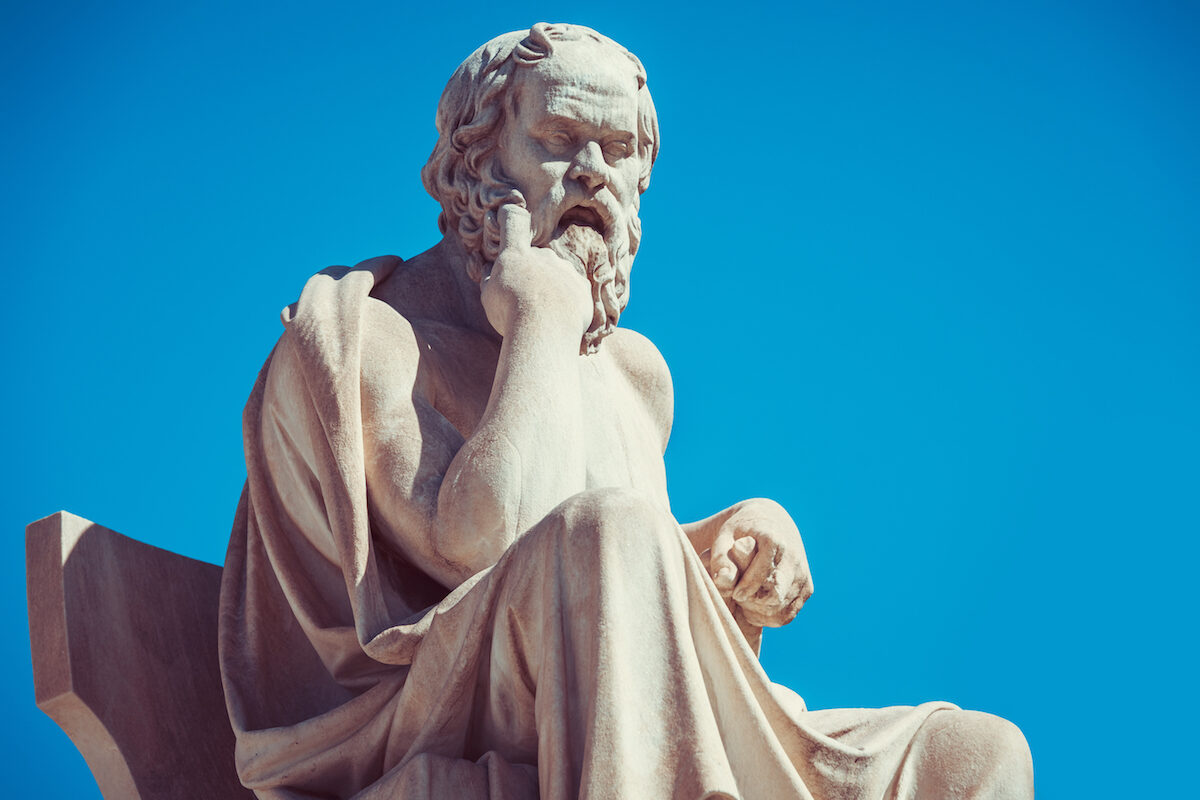
Socrates of Athens was one of the most famous figures in world history for his contributions to the development of ancient Greek philosophy which provided the foundation for all of Western Philosophy. He is, in fact, known as the “Father of Western Philosophy” for this reason. He was originally a sculptor who seems to have also had a number of other occupations, including soldier, before he was told by the Oracle at Delphi that he was the wisest man in the world. In an effort to prove the oracle wrong, he embarked on a new career of questioning those who were said to be wise and, in doing so, proved the oracle correct: Socrates was the wisest man in the world because he did not claim to know anything of importance.
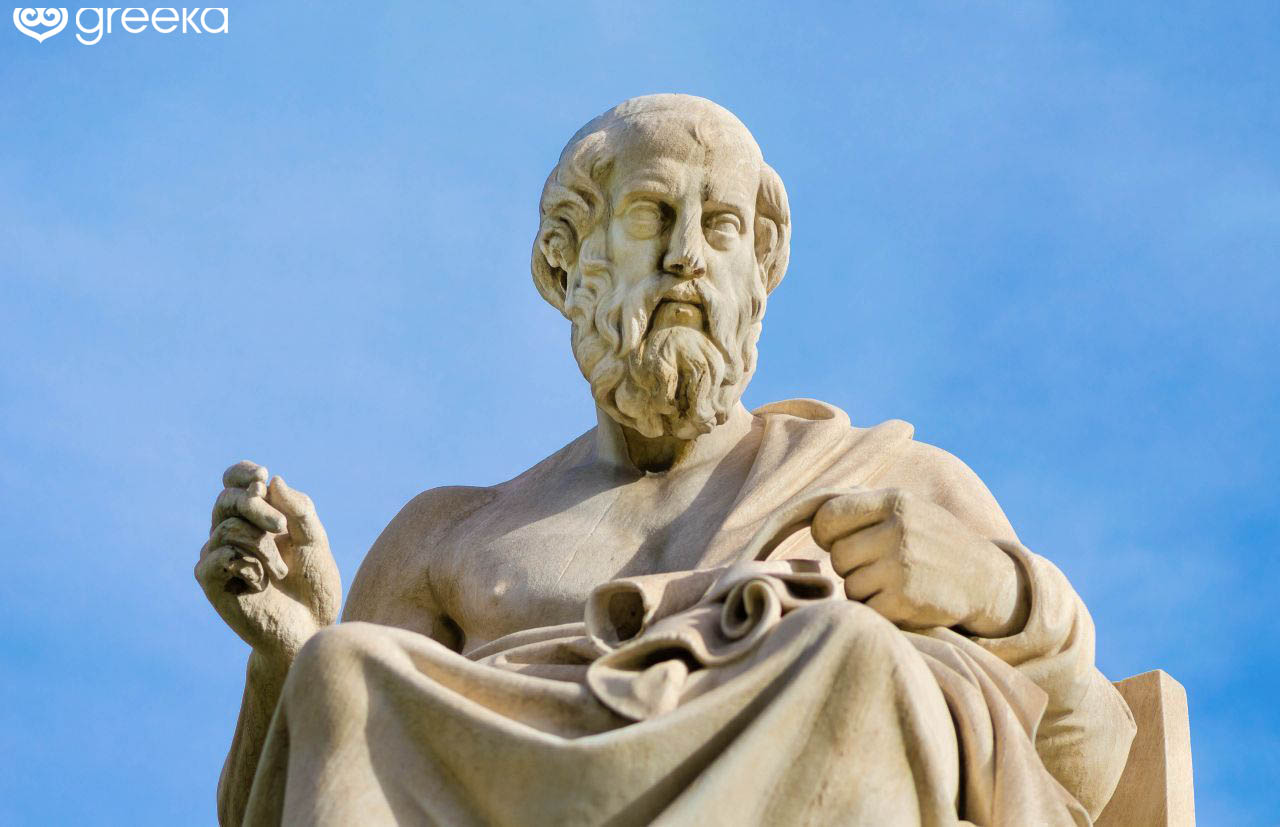
Plato
His most famous student was Plato (l. c. 428/427-348/347 BCE) who would honor his name through the establishment of a school in Athens (Plato’s Academy) and, more so, through the philosophical dialogues he wrote featuring Socrates as the central character. Whether Plato’s dialogues accurately represent Socrates’ teachings continues to be debated but a definitive answer is unlikely to be reached. Plato’s best known student was Aristotle of Stagira (l. 384-322 BCE) who would then tutor Alexander the Great (l. 356-323 BCE) and establish his own school. By this progression, Greek philosophy, as first developed by Socrates, was spread throughout the known world during, and after, Alexander’s conquests.
Early Life
Socrates was born c. 469/470 BCE to the sculptor Sophronicus and the mid-wife Phaenarete. He studied music, gymnastics, and grammar in his youth (the common subjects of study for a young Greek) and followed his father’s profession as a sculptor. Tradition holds that he was an exceptional artist and his statue of the Graces, on the road to the Acropolis, is said to have been admired into the 2nd century CE. Socrates served with distinction in the army and, at the Battle of Potidaea, saved the life of the General Alcibiades. He married Xanthippe, an upper-class woman, around the age of fifty and had three sons by her. According to contemporary writers such as Xenophon, these boys were incredibly dull and nothing like their father. Socrates seems to have lived a fairly normal life until he was told by the Oracle at Delphi that he was the wisest of men. His challenge to the oracle’s claim set him the course that would establish him as a philosopher and the founder of Western Philosophy.
The Oracle and Socrates
When he was middle-aged, Socrates’ friend Chaerephon asked the famous Oracle at Delphi if there was anyone wiser than Socrates, to which the Oracle answered, “None.” Bewildered by this answer and hoping to prove the Oracle wrong, Socrates went about questioning people who were held to be ‘wise’ in their own estimation and that of others. He found, to his dismay, “that the men whose reputation for wisdom stood highest were nearly the most lacking in it, while others who were looked down on as common people were much more intelligent”. The youth of Athens delighted in watching Socrates question their elders in the market and, soon, he had a following of young men who, because of his example and his teachings, would go on to abandon their early aspirations and devote themselves to philosophy (from the Greek ‘Philo’, love, and ‘Sophia’, wisdom – literally ‘the love of wisdom’). Among these were Antisthenes of Athens (l. c. 445-365 BCE), founder of the Cynic school, Aristippus of Cyrene (l. c. 435-356 BCE), founder of the Cyrenaic school), Xenophon, whose writings would influence Zeno of Citium, (l.c. 336-265 BCE) founder of the Stoic school, and, most famously, Plato (the main source of our information of Socrates in his Dialogues) among many others.
Trial and Death of Socrates
In 399 BCE Socrates was charged with impiety by Meletus the poet, Anytus the tanner, and Lycon the orator who sought the death penalty in the case. The accusation read: “Socrates is guilty, firstly, of denying the gods recognized by the state and introducing new divinities, and, secondly, of corrupting the young.” It has been suggested that this charge was both personally and politically motivated as Athens was trying to purge itself of those associated with the scourge of the Thirty Tyrants of Athens who had only recently been overthrown. His execution was delayed for 30 days due to a religious festival, during which the philosopher’s distraught friends tried unsuccessfully to convince him to escape from Athens. On his last day, Plato says, he “appeared both happy in manner and words as he died nobly and without fear.” He drank the cup of brewed hemlock his executioner handed him, walked around until his legs grew numb and then lay down, surrounded by his friends, and waited for the poison to reach his heart.




 Eduindex