Sahitya Akademi, India’s premier literary institution working under the Ministry of Culture, Government of India, will be organizing its annual Festival of Letters at Rabindra Bhavan in New Delhi from 7th March 2025 to 12th March 2025. Union Minister for Culture and Tourism Shri Gajendra Singh Shekhawat, Government of India, will inaugurate the festival. Sri Mahesh Dattani, eminent English Playwright will be the chief guest of the award ceremony in which the prestigious Sahitya Akademi Awards in 23 languages will be presented and Sri Upamanyu Chatterjee, eminent Writer and Scholar will deliver this year’s Samvatsar Lecture.
This is Asia’s Largest Literature Festival with about 700 writers from different parts of the country representing more than 50 languages participating in the festival that spans over 100 sessions. The theme of the festival will be Indian Literary Traditions and a National Seminar on the topic featuring eminent thinkers and writers will be organized during the last three days of the festival.
The festival will feature Young Writers, Women Writers, Dalit Writers, Writers from North East, Tribal writers and poets, LGBTQ writers and poets along with many eminent writers, translators, publishers, poets and distinguished personalities from different walks of life and Festival of Letters continue its status as India’s Most Inclusive Literature Festival since 1985.
A daylong programme for children, Spin A Tale, will be organized on the final day of the festival. Throughout the festival, there will be presentations, readings and discussions by eminent authors, poets, translators, publishers and critics on a wide range of subjects.
On three evenings, cultural performances by eminent artists like Rakesh Chaurasia (flute recital), Nalini Joshi (Hindustani Vocal) and Fouzia Dastango and Ritesh Yadav (Dastan-e-Mahabharata) will be organized. The Festival of Letters is open and free for all the literary lovers and those who wish to taste the flavour of Indian’s longest running Literature Festival.
Postdoc Candidate for the project “Climate Citizenship”
Vacancy number15478Job typeAcademic staffHours (in fte)0,8External/ internalExternalLocationLeidenPlaced on18 February 2025Closing date31 March 2025 38 more days to apply
Leiden University’s Institute of Cultural Anthropology and Development Sociology (CADS) is looking for
Postdoc Candidate for the project “Climate Citizenship” (2 years, 0.8 fte)
We welcome applications for a Postdoc position in the project “Climate Citizenship: Infrastructures, Environments, and Democracy in the Era of Climate Change,” funded by a European Research Council Starting Grant (ERC-StG). The project is led by Principal Investigator Dr. Andrew Littlejohn and hosted by Leiden University’s Institute of Cultural Anthropology and Development Sociology.
Climate Citizenship explores how adapting environments to climate change through new forms of nature-based infrastructure reshapes people’s relationships with each other and the state. Examples range from green roofs and vertical gardens to urban parks, flood plains and more ambitious efforts to transform landscapes. The project treats these infrastructures as social and political as well as environmental experiments. It asks: when and how do they stimulate behavioural change, create new alliances between stakeholders, or transform the division of rights and responsibilities within a society?
The case studies will employ an “ecographic” approach combining quantitative data from the ecological and material sciences with qualitative data gathered through ethnographic methods such as participant observation. As a Postdoc, you will help to develop this approach. You will visit scientists researching and/or working on green infrastructure projects in Japan, the Netherlands, and the United States and interview them on their methods. You will then analyse what kinds of data and techniques the PhD researchers will need familiarity with, and where in the process of gathering ecological data ethnographic methods and insights can be interpolated.
What you will do
Conduct interviews and observations with scientists in the Tokyo Bay area (Japan), the Rhine-Meuse-Scheldt Delta (the Netherlands), and Louisiana Delta (the United States);
Assist the PI in developing an “ecographic” approach and an ecographic protocol for the PhD candidates;
Write a peer-reviewed journal article with the PI on ecographic methods and their potential;
Contribute to fine-tuning the research agendas of the PhD candidates through evaluating their proposals and participating in regular team meetings (online where necessary).
You will be part of a team also comprising two PhD candidates and the PI. The entire team is expected to reside in the Netherlands and work from Leiden for the duration of the project, except during fieldwork.
What you bring
PhD in Science and Technology Studies, Cultural Anthropology, or another relevant social science (if your PhD is not in Science and Technology Studies, you must have demonstrated expertise in the social study of science or interdisciplinary research methods);
Demonstrated passion for developing interdisciplinary and transdisciplinary research projects and approaches;
Experience with independently coordinating and conducting ethnographic research, and ideally, some experience with quantitative and/or ecological research methods;
Excellent research and writing skills as demonstrated by a track record of scholarly publications commensurate with your career stage;
Excellent command of English (speaking and writing);
Independent work attitude and demonstrable ability to work in a team.
Where you will work The Faculty of Social and Behavioural Sciences consists of five institutes: Centre for Science and Technology Studies, Cultural Anthropology and Development Sociology, Education and Child Studies, Political Science, and Psychology. The faculty has approximately 7000 students and 1000 staff members. Within the institutes, not only education is provided but also groundbreaking research is conducted that pushes the boundaries of our understanding of human behaviour and societal structures. What makes our faculty unique is the diversity of research topics, the various styles of teaching, and the way professional support is organized; this provides you with the opportunity to explore and develop your interests and expertise. Visit our website for an impression: Welcome to the Leiden Faculty of Social and Behavioural Sciences – Leiden University.
Leiden University’s Institute of Cultural Anthropology and Development Sociology (CADS) Leiden University’s Institute of Cultural Anthropology and Development Sociology concentrates on ‘global vulnerability and social resilience’. The institute has three main themes: diversity, sustainability, and digitalisation. CADS is dedicated to making a real-world impact, not just studying change, but also working with communities to promote positive change through education and research. We use a unique approach that blends qualitative, quantitative, audiovisual, and digital methods based on ethnographic fieldwork.
With our unique blend of interdisciplinary interests, comparative regional studies, and social science research methods, we emphasize our role in the extensive collaborative network within Leiden University. In both our research and education, we engage in extensive interdisciplinary and international networks.
What we offer Our goal is to work together to create a transparent and inclusive work environment in which everyone feels welcome and appreciated. Our organisation is always evolving, and we need your ideas for improvement and innovation to take us further. We want to devote attention to your personal development.
You can expect an enjoyable job within the socially relevant world of education and research. The University’s challenging and international work environment is located just steps away from Leiden’s lively city centre or the bustling city centre of The Hague. We also want to work with you to devote attention to your health and vitality, for example with the fun activities we organise through Healthy University.
We also offer:
A 0,8 fte employment contract, initially for a period of 1 year, with the possibility of extension for a second year after a positive evaluation. This contract falls under the Collective Labour Agreements (CLA) of Dutch Universities;
A salary of a minimum of € 4,060 and a maximum of € 5,331 gross per month, based on a full-time appointment (38 hours) (scale 10.4-10.12); with increments based on the CLA.
A holiday allowance (8%), an end-of-year bonus (8,3%), and an attractive pension scheme at ABP;
Our individual choices model gives you some freedom to assemble your own set of terms and conditions.
Candidates from outside the Netherlands may be eligible for a substantial tax break.
What we find important Promoting an inclusive community is central to Leiden University’s values and vision. Leiden University aims to be an inclusive community in which all students and staff members feel valued and respected and are able to develop to their full potential. Diversity in experiences and perspectives enriches our teaching and strengthens our research. High-quality education and research mean inclusive education and research.
Want to apply or find out more? If you want to apply straight away, click the application button. If you would like more information about what the job entails, please contact: Dr. Andrew Littlejohn, Assistant Professor at a.l.littlejohn@fsw.leidenuniv.nl
You can apply until March 31, 2025; applications will be processed immediately. Online interviews will be held with shortlisted candidates in April-May 2025. The intended starting date is August 2025.
To apply, please submit:
A cover letter explaining your motivation for working in the climate citizenship project (maximum 2 pages);
Curriculum vitae (CV), including publications (maximum 2 pages);
A short research proposal (maximum 500 words) in which you outline your approach to the role described above;
A copy of either a representative publication or your PhD thesis;
Prastavana Bharatiya Budget har saal desh ki aarthik niti, development aur vikas ke liye ek mahatvapurn kadam hota hai. Har varsh, sarkar naye budget ke madhyam se apne vision aur goals ko prastavit karti hai. 2025 ka budget bhi kisi bhi anya budget se kam nahi, isme naye reforms aur schemes ka zikr hai jo aam janta se lekar business aur agriculture tak sabhi ko prabhavit karenge.
Budget Ka Mukhya Uddeshya 2025 ka budget desh ke aarthik vikas ko boost dene aur garib aur madhyam varg ko zyada suvidhaen dene par kendrit hai. Is budget ka main uddeshya hai:
Garib aur madhyam varg ko fayda: Is baar ki sarkari schemes mein aise reforms shamil kiye gaye hain, jo middle-class aur lower-income groups ko direct fayda denge.
Infrastructure mein sudhar: Sarkar ne infrastructure ke sector mein investment ko badhane ka vada kiya hai, taaki desh mein rozgar ke naye avsar mil sakein.
Naye taxes aur schemes: Kuch naye tax reforms aur business-friendly policies ka bhi zikr hai, jo vyapariyon aur karyakari vyaktiyon ko fayda pahuchayenge.
Khudra Vistaar Is budget mein kuch mukhya highlights hai:
Fiscal Deficit: Fiscal deficit ko control karna, inflation ko stable rakhna aur public debt ko manage karna budget ka ek important goal hai.
Naye taxes: Budget mein kuch naye tax slabs propose kiye gaye hain, jo aam aadmi ko relief denge.
New Schemes: Infrastructure, education, aur health sectors ke liye naye schemes ka prastav hai, jaise ki “Har Ghar Tak Rozgar” aur “Swachh Bharat Mission 2.0.”
Key Sectors Affected by the Budget
Shiksha aur Swasthya: Education aur health sectors mein funding ko badhaya gaya hai, jo ki desh ke yuva aur poor communities ko zyada benefits dega.
Krishi aur Kisan: Budget mein agriculture aur rural development ke liye kai schemes announce ki gayi hain, jo kisano ki income ko badhane aur unhe sustainable farming techniques se judne mein madad karengi.
Defence: Desh ki suraksha ko mazboot karne ke liye, defence budget mein bhi badhotri ki gayi hai, jo desh ki security aur technology development mein kaafi mahatvapurn sabit hogi.
Budget Ka Samarthan Aur Aalochana Samarthan: Budget kaafi positive responses la raha hai. Experts aur economists ka kehna hai ki yeh budget desh ke liye ek strong growth path dikha raha hai. Garib aur madhyam varg ko financial relief aur business environment ko sudharne ki koshish ki gayi hai.
Aalochana: Lekin kuch critics ka kehna hai ki budget mein kuch sectors ko abhi bhi kam focus diya gaya hai. Jaise ki, unemployment ke issues ko address karte hue, jo asli problems hain, unko zyada detail mein nahi discuss kiya gaya.
Aarthik Vistaar Yeh budget desh ki economy ke liye important hai. Agar yeh successfully implement hota hai, toh aane wale kuch varshon mein GDP growth, employment rate aur standard of living mein sudhaar dekhne ko mil sakta hai. Infrastructure mein investment se rozgar ke naye avsar banenge aur business sector ko bhi boost milega.
Antim Vichar Is budget ka aam janta par kaafi asar hoga. Khaas kar middle class aur lower-income groups ko direct financial relief milega. Agar yeh budget sahi tarike se lagu hota hai, toh desh ki economy mein ek positive change dekhne ko mil sakta hai. Yeh budget, desh ke vikas aur growth ki taraf ek naya kadam hai jo sabhi ko fayda pahuncha sakta hai.
Naye Tax Reforms aur Schemes Ki Jankari Aap is budget ko apne daily life mein aise samajh sakte hain ki naye tax reforms se apke income aur spending par kuch prabhav padenge. Agar aap ek business owner hain, toh aapko tax slabs aur business-friendly policies se fayda ho sakta hai.
Is budget ke madhyam se sarkar ne apne vikas ki neeti ko ek nayi disha dikhayi hai, aur har kshetra ko sudharne ka prayas kiya hai.
“One Flesh” written by Elizabeth Jennings is a poem which shows the narrator’s reaction towards the passionless marriage of her parents. She explores their never in a melancholic tone. The title can be related to Bible in the Book of Genesis, in the creation of Adam and Eve. There the two individuals were ‘one flesh’ and could not be divided. This concept also extends to marriage where two individuals become one entity. Here the parents of the narrator were also ‘one flesh’ as mentioned in the title. They are the remnants of a former passion. Speaker says that she has rarely seen her parents touch or when they did that was fake or an act of necessity. Their relationship does not seem genuine. Poet describes the relation as ‘flotsam’ which shows their relationship growing colder. Poet also says that “whose fire from which I came, has now grown cold?”. The poet views her parents behaviour as chaste, or they are preparing themselves for the lives of chastity. During those times chastity was of utmost importance. So the narrator ends the poem by saying that all people, including her parents’ final destination is chastity.
Even though at an age they engage in passionate relationship they ultimately return to abstinence. Poet also questions whether the parents know they are old. The parents lie close but, they are not speaking to one another. They are mentally apart, their minds drifts to different places. The poet says that they are wasting precious moments they are together. For the speaker time seems to be a feather, which is withering away. Even though poet is able to find the feather parents are not realising that time is not left.
Dwight Okita’s poem “In Response to Executive Order 9066” addresses issues such as identity, and discrimination as a result of cultural hybridity. The narrator of the poem is a fourteen year old Japanese girl who writes a letter to the government in response to Executive Order 9066. As the title of the poem implies the historical context of the poem is the time when president Franklin D Roosevelt signed the Executive Order 9066. After two months of the Japanese attack on the Pearl Harbour Roosevelt signed the order, which orders the removal of over 12000 people of Japanese descent from the West Coast. This resulted in their loss of home, job and all other possessions including human rights.
Okita uses the form letter to represent the innocence as well as the horrors in the mind of the young people who were forced to leave to the camps. The narrator presents the the people in her life, from father to best friend in the letter. The relevance of racial identity among children is presented by the best friend. Through the first person narrative, poet presents the contrast between two cultures, one she came from and the other she grew up.
tje narrator is a normal, naive American girl even though she is of Japanese origin. She says to the government that it is obvious that I will be coming to the camp and I have packed. Her innocence is visible when she mentions about the tomato seeds. Her father warns her that they don’t grow there. The cultural dilemma faced by the girl can be find when she mentions about her inability to use chopsticks and her love for hotdogs.
The following lines after this shows the horrors of migration, war and racial identity among children. Denise and the narrator were best friends. But after being aware that narrator is of Japanese origin her friend has started to discriminate her. She said “you are going to start a war”. Denise also told her to keep their mouth shut, and not to give secrets to the enemies. Thus these lines suggest that even innocent people were considered as enemies or “other” as a result of war. Even being a young naive girl, the narrator is discriminated.But she looks upon this discrimination with hope and love and gives Denise tomato seeds and tells her that “she would miss her”.
Through this poem Okita presents themes like discrimination, innocence and ignorance. Both the characters are ignorant. The narrator is ignorant about her being discriminated, and it’s reason, about her future in the camps. The friend is ignorant about war and considers and stereotypes every Japanese as enemies. This shows her ignorance. Innocence is the primary theme of the poem through which the narrator is unfolding her feelings and hope. Poet shows how war and relocation affect the common people and children who are not even part of that.
Philip Larkin is a British poet of twentieth century. His poem “Church Going” deals with the issues regarding the declining religious beliefs and spirituality of the twentieth century. The title of the poem carries multiple connotations. In a primary analysis the title may refer to going to the church for participating in the sermons or for praying. Another meaning is just visiting the church for the sake of visiting. And in a deeper analysis it can be said that the title may refer to going away from the church which means an escape from religion and spirituality.
The poem is filled with various rhetorical questions through which poet brings a sense of sarcasm. Poet is at the church in the beginning. As he enters he thuds close the door. But he refuses to enter first, because he doesn’t want to disturb the practices. Then there are several instances in the poem which reflects the lack of faith in the poetic persona’s mind.
He has seen many pillars, bible, altar and he doesn’t feel any respect towards them. He reads from the Bible in a sarcastic way and exits. He feels a kind of uncle or irreverence towards the church and religion. The poetic persona wonders that what will happen to the church if the people completely stop the visit. He says that some will be tourist attractions with their documents and ceremonial plate wares. Others will decay and take over by sheeps and cows. Or some women with superstitious beliefs would visit.
The narrator also wonders who will be the last person to visit the church as a church. One may be a history buff, or an antique lover. Someone who loves the Christmas will also be a visiter. But the last person may be a poet like the narrator, bored and ignorant about religion. Even though the poetic persona is ignorant and having irreverence, says that the church held everything together from the shattered form. It is the place of marriage, birth and death and gives meaning to all human action. The church, which is a serious and meaningful place in a meaningful ground combine all human instinct and humans seek wisdom from here. Through the poem Philip Larkin presents a contrast between shattering beliefs and the spirituality of the twentieth century and the role of church and religion in giving meanings to human life.
John Keats introduced the term Negative Capability in a letter written in December 1817. In his own terms that is, “when a man is capable of being in uncertainties, mysteries, doubts without lany irritable reaching after fact and reasons”. According to M H Abrahams this can be taken to characterize an impersonal or objective author who maintains aesthetic distance as opposed to a subjective author who personally involved with the characters and actions represented in a work of literature, and as opposed to an author who uses a literary work to present and to make persuasive his or her personal beliefs. John Keats himself characterized this quality of writing between Shakespeare and Coleridge. In simple terms negative capability is against the pursuit of logic and reason in favor of a sense of beauty and wonder. In Keats’ poem Ode to a Nightingale an example of negative capability is visible. The poem deals with the poet’s musings on morality in a pessimistic manner. In the beginning the poet is being mesmerized by the nightingale’s song and he is in a state of intoxication. Later poet intends to join the bird by forgetting all the worldly difficulties by having high quality vine. But then the poet rejects this idea and by his “viewless wings of poesy” he can leave the sense. He believes his imagination will help him to forget all the pains of life. And he is already with the bird with his imagination. Towards the end poet believes that this is the most appropriate time to die because he can leave the world by listening to the immortal song of nightingale. When Keats concludes the poem he is in a state of confusion and says “was it a vision or dream?” He is in a state of internal conflict and never reaching for facts or reasons. In this instance we can find element of negative capability in Ode to a Nightingale.
Among the 20th century poets, Yeats is considered as the craftsman in the use of symbols and images. His poems are filled with complex system of symbols. The poem Byzantium is also rich with various symbols and images. The poem consists of five stanzas and each stanza carries a key image and symbols. Through this key image Yeats portrays the theme of the poem. The title of the poem itself do not stand for the real Byzantine Empire. It is the country or Empire of the mind which is a transcendental place out of the constraints of Time and Space. Here the empire stands for Purgation and Paradise. The poem focuses on the eternity of art and is contrasted with the sensual elements of the physical world. Through the use of complex symbols Yeats successfully presented this idea.
The poem begins with the unpurged images of the natural world. The starlit and moonlit dome of the cathedral looks down with disdain on the complexities of man.The dome is the powerful symbol used by the poetic personae. The dome is symbolic of the perfection and eternity which is opposed to the natural world of passion. The dome can also be considered as the symbol for the permanence of art. As Keats used the ‘grecian urn’ as a symbol for the eternity of art, the dome stands for the same and it scorns the complexities of man.
On another level this dome has another symbolic significance. This can also be relate to the creation of poem or art. According to Richard Ellmann Byzantium is a description of th act of making a poem. While analyzing on the basis of this, the poet is the Emperor and Byzantium is the ideal place for the poet, where all the unpurged realities disappear. The church gong is the premonition of death. As the gong sounds the realities disappear and the poet begins writing the poem. And the dome is the tower of the poetfrom where he is looking as a spectator to the world. The conflict between the real and the ideal is powerfully portrayed through the symbol of dome.
The next key symbol of the poem is the superhuman figure. This is the soul of the dead and is unwinding the memories of earthly existence. Actually the dead is the living. After death the soul liberates from the constraints of body and is living forever. So the dead is the actual living and living is really the death. The superhuman figure signifies imagination. As said before the poem can also be analyzed on the basis of creation and process of making a poem. The superhuman figure is the poet’s imagination. This purified soul will teach the poet wisdom and take him to heaven, Byzantium. In the process of creation of the poem poet attains perfect bliss. This imagination gives coherence to things and resolve all differences. What the poet saying is that the artist has to exploit the tension between the physical and spiritual worlds.
Among all the symbols used in the poem, golden bird is the most important one. Like the dome, the golden bird sitting in the golden bough also symbolizes perfection in the creative process. Through this symbol poet celebrates artificiality and changelessness of art. The golden bird is opposed to the living things and it scorns the common birds. So the perfected art looks down the nature which is subjected to time and emotions.
The flames represents spiritual realization. They are purgatorial fire. On the emperor’s pavement, fire fed by no fuel is burning and the souls of the dead purify themselves by dancing. They are ideal flames. Apart from spiritual realization the flames and purgatorial dance als represents the process of making poem. As Richard Ellmann says this poem is about the creation of art and each stanza depicts the image of imagination and art. So here the emperor’s pavement is the poet’s tower and the flames are the imagination of the poet. The blood begotten spirits are the raw material for the poem and dance is the process of creation. The raw materials gets purified and the imagination cannot be disturbed because it is independent. So here also the symbol stands for the creative genius. The golden smithies, dolphins and sea are the symbols presented in the final stanza. Dolphins are the images for resurrection and it guides to enlightenment. The poet describes the shore of ocean of life in the last lines. On the level of creation the dolphin and goldensmithies represents duality and craftsmanship of the poet respectively and it gives order to flesh and passion. Marble of the dancing floor is the imagination of the poet and it breaks the chaos.
Apart from these major symbols, Yeats presents certain images. The moon presented in the beginning stands for cycle of time and different phases in the man’s life. Mire is the cycle of birth and death. The “mummy cloth” which is unwinding clearly signifies what is inside beyond the question of life and death.Yeats used four elements of creation as symbols in the poem. The empire stands for earth, heaven for air, sea for water and flames for fire. Here Yeats attempted to bring together spiritualism, symbolism, aesthetics and mysticism. Thus he powerfully brought the themes of battle between immortality and creation, nature v/s art, human imperfection and perfected form of art and tension between life of senses and soulful life. Through the symbolic analysis of the poem it can be understood that Yeats is a craftsman in the use of symbols and images.
You woke up and you decided to choose fear. A fear that overcame you every time you decided on doing something exceptional or exiting or different from the usual. That fear even scared your shadow in doing something uncanny and that fear was so strong that you didn’t even get the time to regret what you just did. That fear made you take stupid decisions like, rejecting the people who love you or not being able to perform even the simplest of tasks or just loosing contact with everything that was beautiful in the world including the human beings you wanted to be yours. And finally when you got hold of your surroundings, of your real self again it was too late.
It was too late to say sorry, to say that you were out of your senses because you were not, you were under the spell of your own fear and that made you go for a wrong life decision. You fought well for yourself, with yourself, but you never recognised that the need was to fight the devil called unknown fear. You lost in your game, in your own life and you thought that fear of uncertainty will leave you once you could make things better or normal again but you were wrong all along. For you were not to make things okay but you were to get rid of the fear but you failed. This failure in leaving the fear behind, got you to the failure in life and even when you tried you just lost the sparkle you once owned.
It must have been disheartening for you losing it to the fear of the unknown but did that fear actually broke your heart? Or did it just get you an ache that you could not forget? You tried getting busy in the worldly pleasures only to come home to an empty room or rather a room full of despair, disappointment and rejection. That room you wished for to be filled with fragrance of flowers of your honesty, fruits of your true nature but rather there was just fear that smelled delicious to you then. You attempted and looked outside of the window seeking any light, some light of hope or optimism to teach you how to live without fear but in that moment you rather accepted defeat for you didn’t see any beam of positivity.
When your world came to a standstill for the ills you had performed or all the actions you had been proud of you believed it to be the new normal. You accepted that you had lost at life and just then, you saw what you had been waiting to see. You saw the end of the tunnel, it was not close, not near enough to even have a clear view but you knew it was there. You felt it. You finally felt the pressure being dropped off your chest, you felt lighter, much lighter than you had ever been in your life, you felt free. You assumed it to be the new beginning, a fresh start without the baggage of the past, of the fear but you were proven wrong, again, by the witch of words. The words you had hoped would clear your sky for you, didn’t tidy up even the slightest of your discomfort but rather brought you back to the starting of the tunnel, for this time the fear was even stronger than before and you were losing it all again.
You believed you stood an opportunity to make things right, but it was a thorny path to follow. The path where you knew everything, where there was no uncertainty but rather you were well versed with every inch of it. There you saw your beam again and you thought you were just in time to grab it, that finally you would be free and liberated from all the struggles you faced, from the sense of regret that hit you once in a while, but just when you were about to catch it, its tail slipped your hand and you saw it going away from you, this time forever, for you were again in the same pothole, where even if you try hard you fell again and again for you knew it was the hole of the fear of the unknown and no matter how hard you tried you were not able to leave it all behind, leave it all in the past and that’s the reason why you still live without what you asked for but with the fear of the unknown.
This works intends to analyse the elements of symbolism in Nissim Ezekiel’s poem ”In the country cottage”. Ezekiel is considered as a master in the use of symbols and images. Symbolism is the literary device that uses symbols, like words, locations and abstract ideas to represent something beyond literal meaning. Thus the use of symbolism add emotion, imagery, themes and sometimes it defines characters present in a literary work. Nissim Ezekiel is a poet who use highly evocative and suggestive symbols and images in his poetry. The images and symbols usually used by Ezekiel are women, natural elements like hill, river, sky, sun etc. These symbols give pictorial quality to his poems. Even though he uses simple language and less use of words, it makes the work impressive and sharpens the intended meaning.
In the poem In the Country Cottage the speaker talks about a particular night in a cottage when a lizard came out at night.All the other members of the house seemed lazy and decided to go to bed early as the saw the lizard. Then Nissim Ezekiel shows the image of the lizard through his description.The gray coloured stout lizard was laying without any movements. Poets says that the lizard seems to give a lesson of patience. As the poet says, “…he was more alive than us in silent energy..” the lizard was more alive than humans, in it’s silent energy. The lizard gave his full concentration in this act of waiting for the cockroaches. Its only intention was to kill the cockroaches and in silent energy it outed for them. The next morning the other family members woke and found that the lizard completed its job with utmost ‘cleanliness’ and left the place.
Even though the poem presents ordinary things and is shorter with lesser words, the symbol of lizard is significant. The lizard can be considered as the symbol of cleanliness, patience and dutifulness.Thus it shed light on the line of the achieves who both work hard and remains patient for achieving the goal. Thus it is a symbol of perseverance and will power. By the use of this symbol poet urges the people to save their energy for better purpose, instead of wasting time for futile activities. Thus Nissim Ezekiel places the ordinary lizard for superior to lazy humans. It can be said that he is a poet who make use of the ordinary situations and creatures and makes great poems from them. From the ordinariness of human life he emphasizes the philosophy of life. As said earlier, Ezekiel is considered as a master in the use of symbols and images. His major poems like Enterprise, Night of a Scorpion,The Professor, Philosophy and Marriage possess such symbolic and pictorial qualities. Examples from the poem Enterprise is the use of the symbol “pilgrimage”, which stands for life and “sun” stands for hostility between nature and human aspirations.
While analyzing these symbols in his poems it can be concluded that he is a great artist. The symbolism he used in his work had deep meaning which can encourage any reader to think further about the life from a fresh perspective. By the use of images or symbols of primitive simplicity, he shows the world that poetry does not have to deal with great philosophical truths to be impressive, and ordinary situations are more than enough.
Margaret Atwood is a well known feminist author who writes about the oppression of women in a patriarchal society. Her poem This is a Photograph of Me also shares this idea symbolically through the image of a photograph. The title of the poem itself shows the passive role of women in society. In a society which is regulated by men the role of women is passive. But without them the society will not survive. Atwood begins the poem by describing the photograph. It is a blurred photograph which was taken some time ago. And throughout the lines she continues the description of the photograph’s each element. There is the branch or part of a tree in the left hand side of the photograph, which has emerged to the right hand side. This branch without any roots can be considered as the role of women in a society who is placed on the left side or weaker side. But on the right hand side of the photograph a frame house is visible which is associated with men. The background of the photograph is a lake which represents the society. And beyond that lake there is low hills. The hills and lakes keep the women in shadow. Margaret Atwood is trying to show that the society and men exploits the true potential of women. The narrator says that I’m in the lake, in the center of the picture. But it is difficult to say precisely where she is. This shows the nature of a patriarchal society. The place of womanhood in a society is mandatory. However the world tries, the women’s place cannot be underwritten. Atwood focuses on this truth by saying that her place in the photograph is not clear. But when we look long enough everyone will be able to see her place in the photograph or the society itself. Through the image of a photograph Atwood strongly presents the oppression faced by women. Photograph stands for history which is not clear. The contribution of women to the society is necessary but the history created by men does not praise of give importance to them. Women are always hidden or drowned as Atwood says. This truth is underlined by Atwood in this feministic poem, This is a Photograph of Me.
My beloved, have a taste of this cup of my emotions, From my very hands…”
Madhushala (the house of wine or the Tavern) is probably one of the most beloved pieces of poetry in Hindi literature. Harivansha Rai Bachchan has brought forth the wine to the lips of every reader and has metaphorised wine to mean every thing in life. It’s a complete book – a poem 145 stanzas long – prasing the tavern as a temple while contrasting the realities India faced in the face of the partition and freedom struggle. The tavern is like his life – the wine and the drinker complement each other just like two people in a relationship. The wine then becomes the sun, soon to become the moon and the drinker a person who is trying to find way through his life.
Call it not lava, though it flows red, like a tongue of flame. Call it no Alas, he that with eager lips, has not kissed this wine, Alas, he that trembling with joy, has not touched a brimming goblet, He that has not drawn close the coy wine-maiden by her hand, Has wasted this honey-filled tavern of Life.
Few poems could stand as high and mighty as this one. It is a poem that reflects life and India and as much a contemporary material as it was at the time of its inception. It is a story of human emotions more than just a poem and is hence, a very good read!
Life is short. How much love can I give and how much can I drink? They say, “He departs,” at the very moment that he is born. While he is being welcomed, I have seen his farewell being prepared. They started closing the shutters of the tavern, as soon as they were raised.
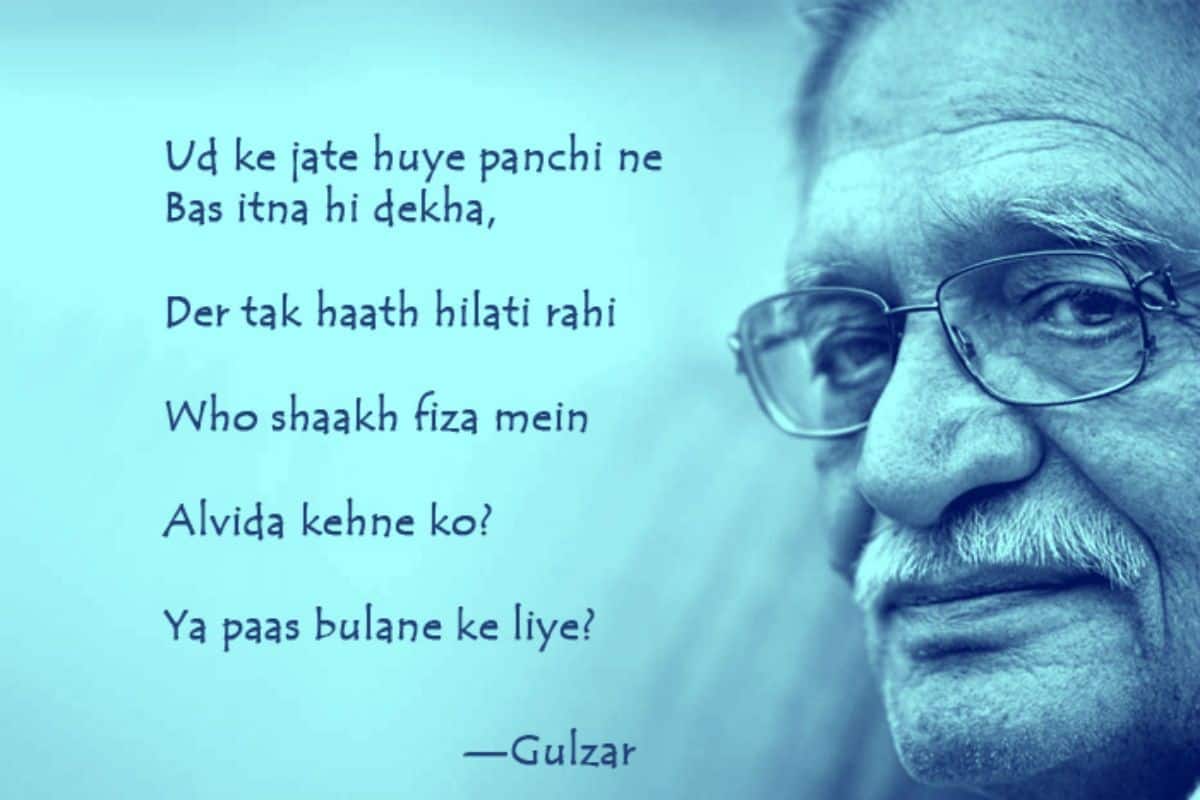
In his seminal essay, ‘The Defence of Poetry‘, the Romantic poet Percy Bysshe Shelley endeavors to define the function of poetry. Shelley states that “Poetry lifts the veil from the hidden beauty of the world, and makes familiar objects be as if they were not familiar.”
On that account, Shelley would readily claim Gulzar in his breed of poets for the latter’s ability to verbalize and derive poetry out of regular and commonplace things. Over the course of half a century, Gulzar has produced countless verses that have left every listener mesmerized by the extraordinary visuals produced by ordinary words.
How Does He Make The Impact?
The immense power of Gulzar’s pen has found numerous means. He has written dialogues, screenplays and even poetic anthologies. However, the dominion where he reigns supreme is lyricism. Verses produced by him propel any song towards the domain of poetry. His graceful blend of Hindi and Urdu allows him to draw images and sights that could only be a poet’s imagination.
What fascinates about his writing capabilities, even more, is the ubiquitousness of it. These lyrics talk and discuss anything and everything on the face of the earth. A simple look at the body of his work might overwhelm anyone for the number of songs that he has penned in his splendid career. This number, however, feels surprisingly insufficient when you begin to listen to each song. For the more you discover, the more you crave.
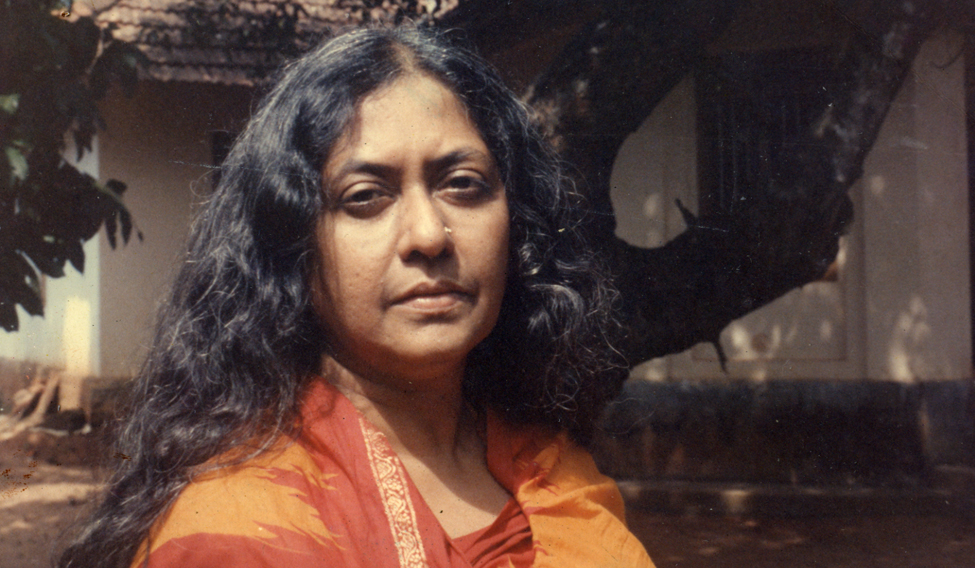
“All round me are words, and words and words, They grow on me like leaves, they never Seem to stop their slow growing From within… But I tell my self, words Are a nuisance, beware of them, they Can be so many things, a Chasm where running feet must pause, to Look, a sea with paralyzing waves, A blast of burning air or, A knife most willing to cut your best Friend’s throat… Words are a nuisance, but. They grow on me like leaves on a tree, They never seem to stop their coming, From a silence, somewhere deep within…” ― Kamala Suraiyya Das, Summer in Calcutta
ABOUT THE POET
Kamala Das was born in the year 1934 in Malabar, Kerala. She received her education at home. Her mother wrote poetry in Malayalam and Kamala Das also published short stories in Malayalam before her first book of poems, Summer in Calcutta’ appeared in 1965 and brought her recognition. Her works in English include The Playhouse and Other Poems’ and her autobiography ‘My Story’.
Her poetry is frank and open. It impresses by being totally natural and distinctively feminine. Her favourite theme is fulfilment and unfulfillment in love and her expression is striking for its frankness and intensity of feeling. She won the poetry award of the Asian PEN, Manila in 1964 and the Kerala Sahitya Academy Award in 1969.
THE POEM
In this poem Kamala Das recreates idealized moments in her childhood. It is a nostalgic, sentimental reminiscence of her family home in Malabar. She remembers the landscape of Kerala. Others may be annoyed by the heat dust and noise, but she always longs for the hot noon in Malabar because it is associated in her mind with wild men, wild thoughts, wild love.’ It has been often said that her poetry is in the nature of a psychic striptease and she always exudes autobiography. Most of her poems deal with the theme of unfulfilled love, her search for love and her failure to get it. Some of them, like the poem under consideration also deal with the loss of her happy childhood in the family home in Malabar. She writes, from every city I have lived, I have remembered the noons in Malabar with an ache growing inside me, a homesickness.’
The poem is a nostalgic journey down memory lane and the poetess looks back on her pre-marital years when she lived happily in her family home in Malabar. She particularly misses the hot noons of Malabar when the streets of Malabar used to be crowded with interesting people and pleasant sounds, beggars, bangle-sellers, fortune-tellers and other strangers used to throng the streets. She confesses that no doubt her house in Calcutta also gives her a chance to see and hear similar type of people. In the Calcutta streets also can one see a fortune-teller with parrots and soiled cards, beggars and bangle-sellers sell their wares in sing-song voices. But there is a major difference between the noons in Malabar and those in Calcutta.
Everything and everybody in Malabar bore a look that was innocent pure and familiar. All pulsated with a warm and full life her home, the Malabar town and its landscape. Contrasted with it Calcutta appeared strange and dirty. The cries of the beggars, fortune- tellers and bangle-sellers jar harshly to the ears of the poetess. There are jungle voices and their eyes hot burning and wild. The heat of the noon in Calcutta is maddening and strange.
To live in Calcutta is a torture for Kamala Das as her mind and body reject this environment. Her soul yearns to return to her heavenly home in Malabar where she spent a joyous childhood.
Malabar was a place which the poetess associated with love but in Calcutta she finds the people to be freaks, abnormal persons who cannot love. The poetess attempts to show that the transition from childhood is from a world of joy and love into a cold, indifferent world. The childhood memories are a much-needed relief.
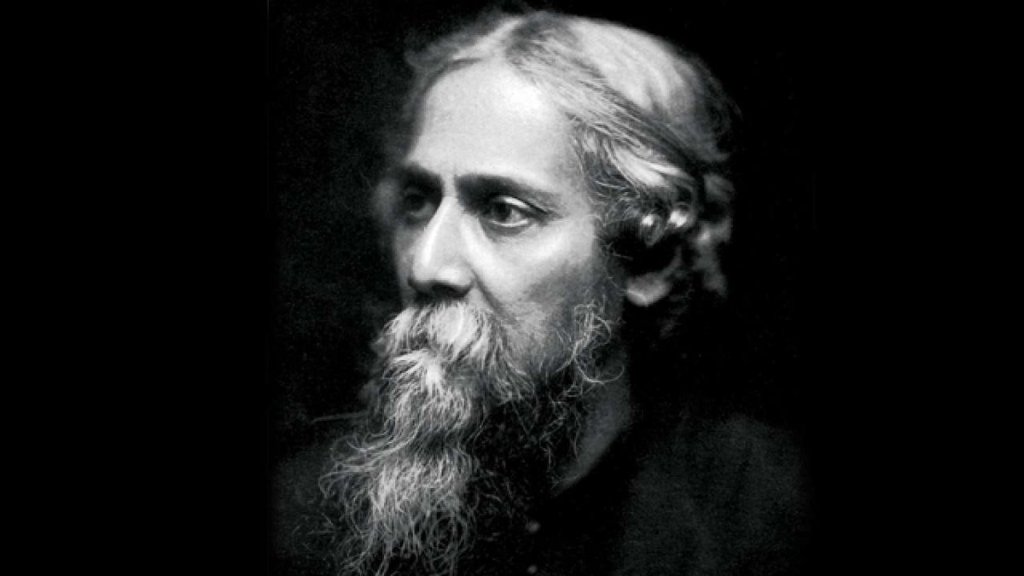
“O master poet, I have sat down at thy feet. Only let me make my life simple and straight, like a flute of reed for thee to fill with music.”— Rabindranath Tagore
ABOUT THE POET
Rabindranath Tagore was born in Calcutta on May 6, 1861. Tagore came from a wealthy Bengali family. He was educated privately and went to England in 1877 to study law but soon returned to India or a time he managed his father’s estates and became involved with the Indian nationalist movement writing propaganda. His characteristic later style combines natural descriptions with religious and philosophical descriptions. He is our greatest poet after Kalidas. His Gitanjali published in 1912, won the Nobel Prize.
Tagore wrote a large number of lyrics in Bengali and translated some of them himself into English. He also wrote novels, short Stories and plays. His best-known novels and poetry include The Gardener, The Crescent Man, Songs of Kabir. ‘Chitra’ etc.
Tagore was a messenger of India who showed Europe some of the beauty and greatness of our ancient land. He brought great glory to his motherland.
THE POEM
‘Flute-music’ is the story of a lower middle-class clerk who lives an abject poverty. He lives in a dingy room on the ground floor of two Storeyed houses. He barely manages to exist on his meagre salary and feels suffocated and nauseated by the darkness and foul smell of the alley. But one evening the music from the flute of one of the Residents makes him dream and he feels uplifted like a king. He dreams of marrying the girl of his dreams and forgets his destitute life.
The poem gives an account of the poverty-stricken existence of a middle-class clerk.
In Kinu, the milkman’s street, on the ground floor room of a double storeyed house lives a poor clerk. The windows of the room have bars, the walls are old and peeling, falling to dust in most places or damp with moisture. On the door of the room is pasted Picture of Lord Ganesh, the god who brings success and prosperity, taken from a roll of cloth. Apart from the clerk there is another inhabitant of the room who lives without paying any rent, it is a lizard. But there is a difference between the lizard and the clerk, unlike him the lizard never goes hungry. The clerk gets a salary of twenty-five rupees a month as a junior clerk in a trading office. The Datta’s give him food for giving tuition to their son. In the evening he goes to Sealdah station to save the cost of electricity in his room and to while away time. Engine’s puff, whistles shriek, coolies shout, passengers hurry past. He stays there till past ten ‘o clock and then goes to sleep in his dark, silent and lonely room.
In a village, situated on the banks of the Dhalesvari river, his aunt’s family resides. He was to marry her brother-in-law’s daughter. The moment was lucky for her, no doubt about that, as he ran away. The girl was saved from marrying him, a poor man and he was saved from her. She did not come as his wife to the room but he was always thinking of her: dressed in a Dacca sari, with the red vermilion on her forehead showing her marital status.
It was raining heavily. His cost of travelling by tram mounts. But still his pay is deducted for reaching office late. In the street are strewn mango peels and stones, pulp of jack-fruit, rotting fish-gills, dead kittens and all kinds of other rubbish. Like his fast-diminishing salary his umbrella is also full of holes. His office clothes are wet and water oozes out like a religious man who has bathed for his prayers. The damp dinginess of monsoon prevails in his room, like an animal that has been trapped, still and shocked. Day and night the clerk feels helpless and bound on to a world which is only partly alive.
At the street corner lives Kanta babu-a man with long hair which has been carefully parted, large eyes and tastes which have been carefully pampered. He regards himself as a good musician who is skilled at playing the cornet: its sound can be heard at intervals, wafting on the vile-smell of the street it is heard sometimes in the middle of the night and sometimes at dawn, sometimes it can be heard in the afternoon when the sun shines brightly and the shadows are also not dark. However, on that particular evening Kanta babu starts playing the notes of Sindhu-Baroya raag on his instrument. The whole sky resounds with the soulful music playing the notes of the pain of separation. At that very moment the filthy street is no longer a reality, as false and dirty as the senseless talk of a drunk man, and the clerk also forgets his reality and feels at par with the Emperor Akbar. His torn umbrella takes the form of an emperor’s royal parasol and his soul rises along with royalty towards the same heaven. He no longer feels humble, the music uplifts him as if he were a king.
The music is what is true, a reality where, in the eternal evening he visualises his wedding, the waters of the Dhalesvari river flow its banks shaded by the leafy tamal trees and the girl waits for him in the courtyard of her house, wearing a Dacca sari, with the red mark of vermillion on her forehead.








 Eduindex
You must be logged in to post a comment.