The National Education Policy (NEP) 2020, envisions a comprehensive revision and revamping of the education system, including its governance and regulation. The Department of School Education & Literacy remains committed to supporting students in achieving better learning outcomes, thereby ensuring an inclusive and effective education system.
In line with this commitment, the Central Government, through notification (G.S.R. 777(E)) dated 21st December 2024, published in the Gazette of India, has amended the rules under the Right of Children to Free and Compulsory Education (RTE) Act, 2009, as revised by the RTE (Amendment) Act, 2019. The amended rules, titled the Right of Children to Free and Compulsory Education (Amendment) Rules, 2024, introduce significant changes to promote student learning while ensuring equity and inclusion.
The amendment is the introduction of a revised “Detention Policy” applicable to students in Grades 5 and 8 of school established, owned or controlled by the Central Government, or the administrator of the Union Territory, having no legislature.
Under this, if a student fails to meet the promotion criteria after annual examination, he or she will be provided additional instruction and an opportunity to appear for a re-examination within two months of the declaration of results. In the event the student does not meet the promotion criteria even after the re-examination, he/ she will be continued in the same grade. During this period, the class teacher will actively engage with the student and the parents, providing specialized guidance and addressing identified learning gaps through targeted interventions.
Though the RTE Act was amended in 2019 it was decided to await finalisation of National Education Policy (NEP), 2020 and National Curriculum Framework for School Education (NCFSE), which was put up in public domain on 23.08.2023. After due consultation with stake holders, the rules have been notified.
As reported by States and Union Territories, 18 States/UTs have issued notification for implementation of provisions of RTE(Amendment) Act, 2019, these include Assam, Bihar, Gujarat, Himachal Pradesh, Jammu & Kashmir, Jharkhand, Madhya Pradesh, Meghalaya, Nagaland, Punjab, Rajasthan, Sikkim, Tamil Nadu, Tripura, Uttarakhand, West Bengal, NCT of Delhi and Dadar & Nagar Haveli & Daman & Diu. State of Haryana and UT of Puducherry are yet to take a decision in the matter.
The States/UTs of Andhra Pradesh Arunachal Pradesh, Chhattisgarh, Goa, Karnataka, Kerala, Maharashtra, Manipur, Mizoram, Odisha, Telangana, Uttar Pradesh, Andaman & Nicobar Island, Chandigarh, Ladakh and Lakshadweep continue to follow the no detention policy from Class I to VIII.
The amendment reinforces that no child shall be expelled from school until the completion of elementary education ensuring every child’s right to education.
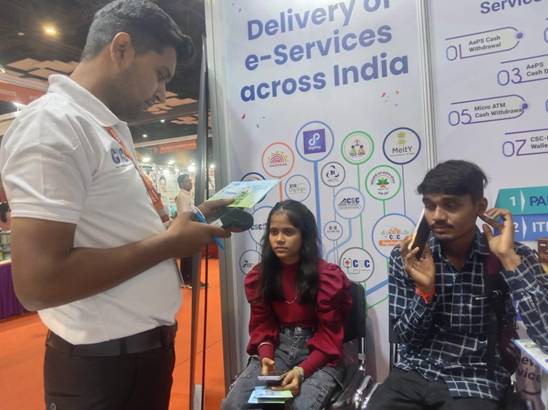
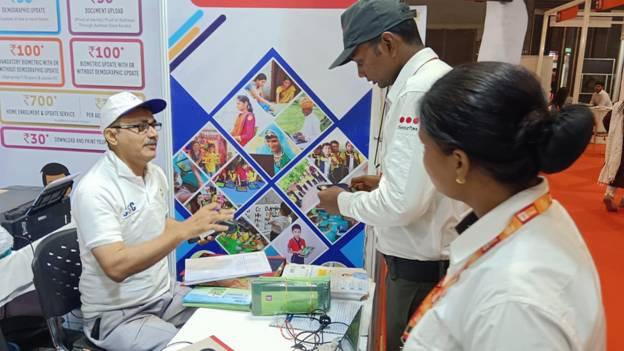
The Ministry of Electronics and Information Technology has set up a vibrant stall at the India International Trade Fair (IITF) in Hall No. 14. Hosted by Common Service Centers (CSC), the stall showcases a wide range of digital and community services, including the Grameen eStore, CSC Academy, DigiPay, Aadhaar-related services, and other key initiatives. The primary aim of this exhibit is to spread awareness about the facilities provided by CSC and encourage more people to leverage these services for their empowerment.
The Dynamic Leaders Behind the Stall
This CSC stall is led by two dedicated and inspiring Village Level Entrepreneurs (VLEs) from Delhi, Siddharth and Vikas. Their dedication and commitment reflect the transformative power of digital services, as they serve their communities while setting examples for others.
Siddharth: A 22-Year-Old Visionary
Siddharth, a 22-year-old entrepreneur, started his CSC center in 2020. Operating from Mandawali, Delhi, he faced the responsibility of supporting his family right after completing his 12th-grade education. Despite the challenges, he turned his situation around by utilizing the income generated through CSC services. Today, Siddharth manages services such as Aadhaar registration, DigiPay, and Grameen eStore with great efficiency. His journey is a testament to how young individuals can transform their lives by seizing the right opportunities.
Vikas: A Story of Resilience and Success
50-year-old Vikas has overcome significant challenges in his life. Stricken by polio in childhood, he experiences difficulty walking. However, his determination never wavered, and he established his CSC center in the Rohini area of Delhi. Vikas’s story serves as a powerful reminder that physical limitations cannot hinder one’s drive and potential for success. Through his center, he provides vital services like Aadhaar enrollment, seamless transactions via DigiPay, and other government schemes.
The CSC Stall: A Symbol of Digital Empowerment
Visitors to the CSC stall at IITF can explore opportunities like the Grameen eStore, which facilitates easy buying and selling of products, DigiPay for cashless transactions, and CSC Academy’s programs to enhance digital literacy. The efforts of VLEs like Siddharth and Vikas underscore how digital services can bridge gaps and empower individuals, even in the face of adversity.
Role Models for Society
The inspiring journeys of Siddharth and Vikas illustrate that digital services are not just tools for livelihood but also a means to uplift every segment of society. Their hard work and dedication have made them role models for countless others aspiring to achieve financial independence and social impact.
The CSC stall at the India International Trade Fair exemplifies the success of the Digital India initiative, reaching even the remotest corners of the country. Siddharth and Vikas, with their resilience and determination, stand as shining examples of this transformation. Their stories teach us that success is achievable despite challenges if one has perseverance and the right opportunities. CSC’s initiative not only promotes digital inclusion but also inspires individuals across the nation to become self-reliant and empowered.
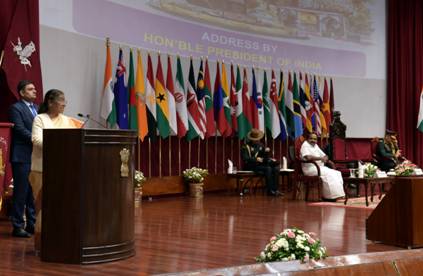
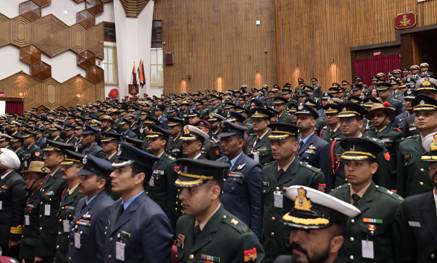
President Smt Droupadi Murmu visited the Defence Services Staff College (DSSC), Wellington in The Nilgiris District, Tamil Nadu on November 28, 2024. Addressing the student officers and faculty, the President said the DSSC has made commendable contribution to training & educating the potential leaders of the Armed Forces of India and friendly countries & selected civilian officers. Over the past seven decades, it has played a major role in professionally grooming the middle level officers. It has the unique distinction of having a composite multi-service and multi-national group of student officers and a professionally enriched faculty.
The President was happy to note that women officers are now commanding various units in all the three services. She said that the increasing strength and role of women in all spheres is encouraging and inspiring for all, especially young girls. She expressed hope for witnessing more and more women joining the Armed Forces, where they can demonstrate exceptional capabilities and break new ground in uncharted territories.
The President said that India is rising and the world is acknowledging the growth in various sectors, including defence. India is moving towards indigenisation and self-reliance to keep the Armed Forces ready to meet the future challenges. The country is being developed as a major defence manufacturing hub, and is moving towards becoming a reliable defence partner & big defence exporter.
The President said: “In the fast-changing geopolitical environment, we need to be well-prepared to tackle any situation. We not only have to secure our national interests, but also prepare for new national security challenges like cyber warfare and terrorism. Updated knowledge and cutting-edge technologies based on intensive research are required to be applied.” She expressed confidence that this course will prepare student officers all for higher responsibilities and as strategists who can deal with complex situations in an effective manner.
The President appreciated the unique role of the institution in nurturing the future senior leadership of the Armed Forces. She appreciated the creativity, dedication and the focus with which training is being conducted at the College. She also complimented the student officers for having being selected for the prestigious Staff Course at DSSC, and their rigourous efforts while undertaking this course.
The President also interacted with the Student Officers, including 38 from friendly countries, attending the course at the DSSC. She hailed the role of the International Student Officers in strengthening the mutual cooperation and relationship of their countries with India, and wished them a fruitful and successful stay at DSSC.
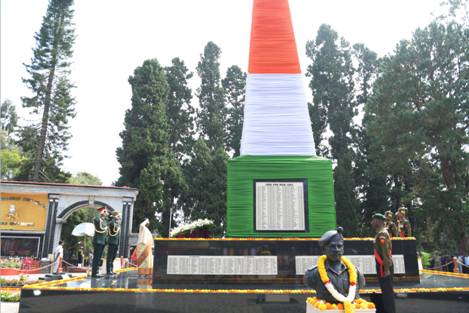
The President also laid a wreath at the War Memorial, and interacted with Ex-servicemen & Veer Naris.
The President felicitated the Veer Naris acknowledging the supreme sacrifice of their loved ones in the service to the Nation. She was accompanied by Minister of Backward Classes (Minister-in-Waiting) of Tamil Nadu Government Shri Siva V Meyyanathan and Commandant DSSC Lt Gen Virendra Vats.
Established in 1948, DSSC is a premier Tri-services institute with a mandate to train and hone their skills of selected middle-level officers of the Armed Forces of India and friendly countries. Since its inception, the College has trained more than 2,000 International Officers, and 24,000 Indian Officers have passed through its portals. The College alumni, over the years, have risen to become heads of States and Militaries across the world. The President appreciated the training activities being conducted at the College with special emphasis on initiatives undertaken on enhancing jointmanship amongst the officers of the Indian Armed Forces.
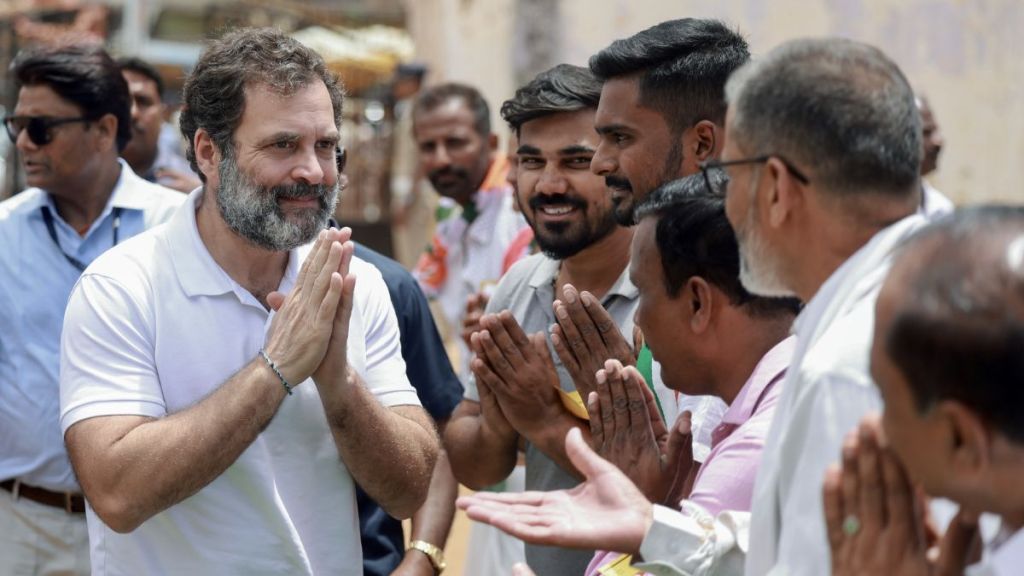
Demography, encompassing factors like age, caste, and religion, influences voting patterns in Karnataka state elections. Understanding the composition of the electorate helps analyze alliances and voting behavior. Rahul Gandhi, a prominent politician from the Indian National Congress, has campaigned in Karnataka and sought to mobilize support for his party. His effectiveness in connecting with voters and influencing the election outcome varies, as it depends on multiple factors beyond an individual’s influence. Other dynamics, such as party strategies, local issues, and the performance of rival parties, also play crucial roles in determining the results of Karnataka state elections.
Demography plays a significant role in elections as it involves the study of population characteristics and their influence on political outcomes. In the context of the Karnataka state election results, demography can provide insights into the composition of the electorate, such as age, gender, caste, and religion, which can shape voting patterns and alliances. Rahul Gandhi is a prominent Indian politician and a member of the Indian National Congress party. His role in the Karnataka state election results would depend on various factors, including his party’s performance, his campaign efforts, and his ability to connect with voters. While he may have campaigned in the state and tried to mobilize support for his party, the overall outcome of the election would depend on multiple factors beyond any individual’s influence.
Changing Demography of Karnataka
Karnataka has experienced significant demographic changes in recent years. The state’s population has been growing steadily, primarily due to natural increase and in-migration from other parts of India. According to the 2011 census, Karnataka had a population of approximately 61 million. Urbanization has been a prominent trend in the state, with cities like Bengaluru, Mysore, and Mangalore witnessing rapid growth. Bengaluru, in particular, has emerged as a major IT and technology hub, attracting professionals from different parts of the country. This influx of migrants has contributed to the cosmopolitan nature of the city. Karnataka is linguistically diverse, with Kannada being the primary language spoken by a majority of the population. However, there are also significant populations that speak other languages such as Tamil, Telugu, Urdu, and Konkani, among others. In terms of religious composition, Hinduism is the predominant religion in Karnataka, followed by Islam, Christianity, and Jainism. The state is also home to various religious sects and communities, contributing to its religious diversity. Caste continues to be a factor influencing Karnataka’s demography and politics. Historically influential communities, such as the Lingayats and Vokkaligas, have played significant roles in the state’s social and political landscape. However, other communities, including Scheduled Castes (Dalits) and Scheduled Tribes, have also gained political representation and influence.
It’s important to note that the demographic landscape of Karnataka may have evolved since my last update. For the most up-to-date and precise information, referring to recent studies and official data sources is recommended.
Emergence of Rahul Gandhi
Rahul Gandhi is a prominent Indian politician and a member of the Indian National Congress party. He is the son of former Indian Prime Minister Rajiv Gandhi and the grandson of former Prime Minister Indira Gandhi. Rahul Gandhi’s emergence as a political figure in India began with his active involvement in the Indian National Congress party and his eventual entry into electoral politics. Rahul Gandhi initially served as a general secretary of the Indian National Congress, working behind the scenes to strengthen the party’s organization and support its electoral campaigns. Over time, he took on a more prominent role within the party, becoming the vice president in 2013 and eventually the president of the Indian National Congress in 2017. Rahul Gandhi’s emergence as a political leader has been characterized by efforts to connect with the youth, marginalized communities, and rural populations. He has advocated for issues such as social justice, inclusivity, and economic development. Rahul Gandhi has campaigned extensively in various state elections, including Karnataka, and has sought to rally support for his party’s candidates. While Rahul Gandhi has garnered a considerable following and support within the Indian National Congress party, his political journey has seen ups and downs. He has faced criticism and scrutiny from political opponents and has been actively involved in debates and discussions on various national and regional issues. It is worth noting that political dynamics and individual influence can vary over time, and the specific impact and future trajectory of Rahul Gandhi’s emergence in Indian politics will continue to evolve as political landscapes change.
History of Karnataka Elections
The history of Karnataka elections dates back to the formation of the state in 1956. Since then, Karnataka has witnessed numerous state assembly elections as well as Lok Sabha (parliamentary) elections. Here is a brief overview of the history of Karnataka elections: Early Years: The first general elections in Karnataka took place in 1957. The Indian National Congress (INC) dominated the political landscape in the early years, winning the majority of seats in the state assembly. Coalition Politics: In the 1980s and 1990s, Karnataka witnessed the rise of coalition politics. The Janata Party, a coalition of various anti-Congress parties, came to power in 1983, marking a shift from single-party dominance. This period saw multiple governments being formed by different alliances, including the Janata Dal and Bharatiya Janata Party (BJP). Rise of the BJP: The Bharatiya Janata Party (BJP) gained prominence in Karnataka during the late 1990s and early 2000s. In 2004, the BJP formed its first government in the state, led by Chief Minister B.S. Yeddyurappa. However, the government faced internal issues, leading to its collapse. Congress Revival: The Indian National Congress made a comeback in Karnataka politics, winning the state assembly elections in 2013. Siddaramaiah became the Chief Minister, leading a Congress government. However, in the 2018 elections, the Congress was unable to secure a majority, leading to a coalition government with the Janata Dal (Secular) party.
Recent Elections: In the most recent state assembly elections held in 2018, the BJP emerged as the single largest party. After a period of political uncertainty, the BJP formed the government with B.S. Yeddyurappa as the Chief Minister. However, in subsequent by-elections, the BJP lost a few seats, resulting in a change of Chief Minister with B.S. Yediyurappa resigning and Basavaraj Bommai taking office in 2021. It’s important to note that the political landscape in Karnataka has been dynamic, with various parties and alliances vying for power. State elections in Karnataka have seen the emergence of regional parties, coalition governments, and shifts in power between the Indian National Congress and the Bharatiya Janata Party. The outcome of elections in Karnataka has had implications for state governance as well as national politics.
New Challenges for Congress Party
The Congress Party in India has faced several challenges in recent years. Here are some of the key challenges it has encountered:
Electoral Performance: The Congress Party has witnessed a decline in its electoral performance, especially in national elections. In the 2014 and 2019 Lok Sabha elections, the party faced significant setbacks, winning only a limited number of seats. This decline has impacted its overall political influence and ability to form a government at the national level.
Leadership Crisis: The party has grappled with a leadership crisis, with a lack of clear and dynamic leadership. This has resulted in a leadership vacuum and internal factionalism, which have weakened the party’s ability to present a united front and effectively communicate its message to the electorate.
Ideological Positioning: The Congress Party has faced challenges in clearly articulating its ideological positioning. In recent years, there has been a growing trend of political parties aligning themselves with specific ideologies or issues, while the Congress Party has struggled to define and communicate its distinct ideological stance.
Regional Strongholds: The Congress Party has lost ground in many states where it previously had strongholds. Regional parties have gained prominence and appeal, leading to a fragmentation of the political landscape. This has reduced the Congress Party’s ability to form alliances and consolidate its support base.
Youth Appeal: The Congress Party has faced difficulties in appealing to the aspirations and concerns of the younger generation. It has struggled to connect with the youth, who are increasingly looking for dynamic and transformative leadership and policies.
Communication Strategy: The Congress Party has faced challenges in effectively communicating its policies and achievements to the electorate. It has struggled to counter the narrative of its political opponents and has often been perceived as lacking a robust communication strategy.
Organizational Strength: The Congress Party has faced issues with its organizational strength and grassroots presence. It has struggled to rejuvenate its party structure and mobilize workers effectively, particularly at the local level.
To overcome these challenges, the Congress Party needs to undertake significant introspection, revitalize its leadership, redefine its ideological positioning, and strengthen its organizational structure. It must also focus on engaging with the aspirations of the youth and effectively communicate its policies and vision to regain public trust and support.
Concluding Remarks
The Congress Party’s performance in Karnataka elections has been subject to critical appraisal due to a mix of successes and failures. While the party has experienced some notable achievements, it has also encountered significant setbacks. Here is a critical appraisal of the Congress Party’s performance in Karnataka elections:
Mixed Electoral Performance: The Congress Party has had mixed electoral performances in Karnataka. It won the state assembly elections in 2013, forming the government under the leadership of Siddaramaiah. However, in the subsequent 2018 elections, the party failed to secure a majority and had to form a coalition government with the Janata Dal (Secular) party. This highlighted a lack of sustained popularity and the inability to secure a clear mandate.
Leadership Challenges: The Congress Party has struggled with leadership challenges in Karnataka. While Siddaramaiah played a significant role in the party’s victory in 2013, his tenure as Chief Minister was marked by controversies and internal rifts. Additionally, the absence of a strong and decisive leader at the state level has affected the party’s ability to effectively mobilize support and present a cohesive image.
Intra-party Factionalism: The Congress Party in Karnataka has been plagued by factionalism and infighting. Internal divisions and power struggles have hindered the party’s unity and cohesion, leading to weakened electoral campaigns and suboptimal coordination among party members.
Failure to Capitalize on Governance: The Congress Party’s tenure in Karnataka witnessed a mixed record in governance. While some initiatives were undertaken, such as social welfare programs and measures to address agrarian issues, the party failed to effectively communicate and capitalize on these achievements. Inadequate implementation and a lack of clear messaging hindered their ability to connect with voters and secure their trust.
Inability to Counter BJP’s Rise: The Congress Party has struggled to counter the Bharatiya Janata Party’s (BJP) rise in Karnataka. The BJP’s strong organizational structure, effective campaign strategies, and appeal to Hindutva ideology have posed significant challenges for the Congress Party. The party has been unable to effectively counter the BJP’s messaging and address the concerns of a changing electorate.
Failure to Strengthen Party Organization: The Congress Party has faced challenges in strengthening its party organization at the grassroots level in Karnataka. The absence of a robust and well-connected organizational structure has hindered their ability to mobilize support and build a strong voter base.
To improve their performance in national elections, the Congress Party needs to address these critical issues. They should focus on nurturing strong and decisive leadership, resolving internal factionalism, communicating their achievements effectively, countering the BJP’s rise, and revitalizing the party organization at all levels. Additionally, connecting with voters on issues that resonate with them and presenting a clear vision for the state’s development will be crucial in rebuilding public trust and support.
References
Antil, A., & Verma, H. V. (2021). Rahul Gandhi on Twitter: An analysis of brand building through Twitter by the leader of the main opposition party in India. Global Business Review, 22(5), 1258-1275.
Devi, B. U. (2013). Rahul Gandhi’s Immaturity. Economic and Political Weekly, 48(43), 5-5.
Gould, H. A. (1997). General Elections, 1996: Karnataka: Decline and Fall of the Congress Machine. Economic and Political Weekly, 2335-2349.
Manor, J. (2008). Letting a winnable election slip away: Congress in Karnataka. Economic and Political Weekly, 23-28.
Mahapatra, S., & Plagemann, J. (2019). Polarisation and politicisation: the social media strategies of Indian political parties.
Manor, J. (2013). Lucky in Its Adversaries: A Slipshod Congress Gains a Majority in the Karnataka Election. Economic and Political Weekly, 51-59.
Palshikar, S., & Suri, K. C. (2014). India’s 2014 Lok Sabha elections: Critical shifts in the long term, caution in the short term. Economic and Political Weekly, 39-49.
Pinto, A. (1994). Karnataka Assembly Elections: An Overview. Economic and Political Weekly, 3309-3311.
Shastri, S. (2009). Leadership at the state level mattered. Economic and Political Weekly, 88-91.
Shastri, S. (2013). The 2013 Karnataka Assembly Outcome: Government Performance and Party Organization Matters. Studies in Indian Politics, 1(2), 135-152.Simmons, C. (2019). Dynastic Continuity and Election in Contemporary Karnataka Politics. In South Asian Sovereignty (pp. 136-149). Routledge India.
The Government is continuously working under the leadership of Prime Minister Shri Narendra Modi for the development of the country, especially the vulnerable tribal group families, through the ambitious Pradhan Mantri Jan Man Yojana (PM-Jan Man). Under this, Union Minister for Rural Development and Agriculture & Farmers’ Welfare Shri Shivraj Singh Chouhan giving a gift to the tribal families of Madhya Pradesh, has approved more than 30 thousand houses in Madhya Pradesh. Union Minister said that PM Modi’s government is fully committed and sensitive towards the deprived and exploited. He said that every possible work will be done continuously for the upliftment of this section.
Union Minister Shri Shivraj Singh Chouhan, while approving the allocation of additional targets for the year 2024-25 under the Pradhan Mantri Awas Yojana, Ministry of Rural Development, said that PM Janman Mission aims at the development of 75 Particularly Vulnerable Tribal Groups (PVTGs) who have been left out from the schemes of various Ministries/Departments. Shri Chouhan said that the full focus of the Modi government is to reach out to the last person in the country. He informed that the targeted housing (4.90 lakh houses) under PM-Janman is to be completed by March 2026.
Union Minister informed that earlier a target6 of 3,70,963 (2,18,890 in the year 2023-24 and 1,52,073 in the year 2024-25) has been allocated to the States4, out of which 3.38 lakh houses have been sanctioned and the first installment3 has been released to 2.71 lakh beneficiaries and 62,005 houses have been completed. After the survey, the states have identified 46,573 additional eligible families, out of which more than 30 thousand houses have been allotted additionally to Madhya Pradesh. Earlier, 1,44,200 houses have been approved for Madhya Pradesh.
Approval of roads in Andhra Pradesh under PM-Janman – Shri Shivraj Singh Chouhan has also approved 76 roads of 297.18 km length in the state of Andhra Pradesh under PM-Janman. The estimated cost of these 76 roads is Rs 275.07 crore, out of which the central share is Rs 163.39 crore and the state share is Rs 111.68 crore.
Additional sanctioned housing in Madhya Pradesh (district wise)
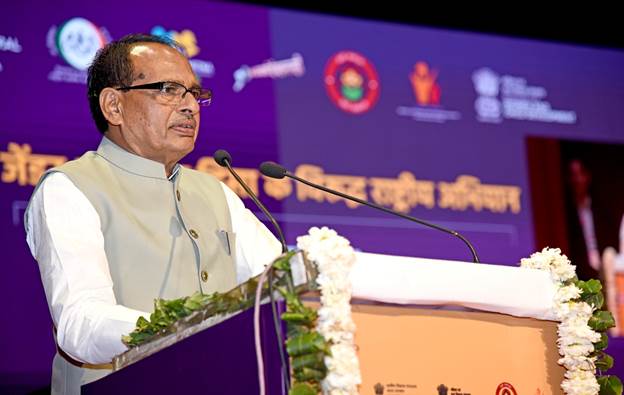
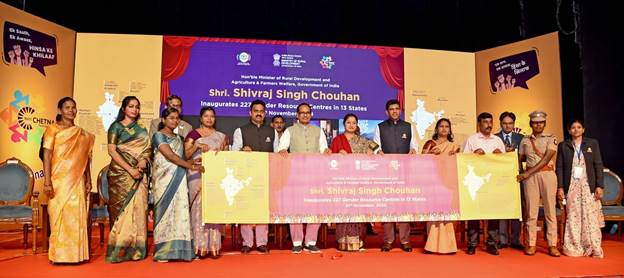
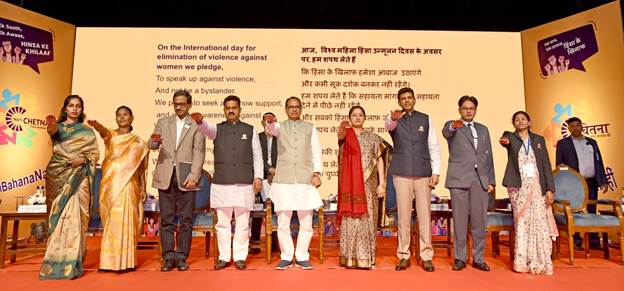
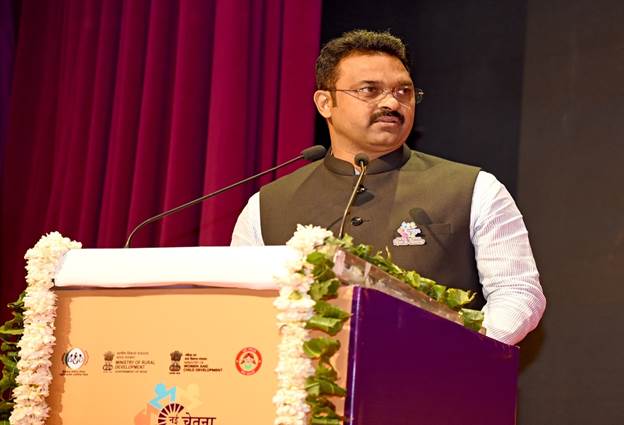
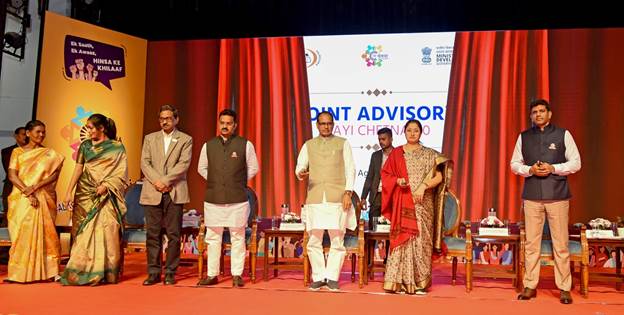
Union Minister of Rural Development and Agriculture & Farmers’ Welfare, Shri Shivraj Singh Chouhan launched the third edition of Nayi Chetna – Pahal Badlaav Ki, a one month long national campaign against gender-based violence in New Delhi today. Union Minister of Women and Child Development Smt. Annpurna Devi also graced the event with Ministers of states of Rural Development Shri Kamlesh Paswan and Dr. Chandra Sekhar Pemmasani. The campaign, organized by the Deendayal Antyodaya Yojana – National Rural Livelihoods Mission (DAY-NRLM) under the aegis of the Ministry of Rural Development, will run across all States and Union Territories until 23rd December 2024. This initiative, led by DAY-NRLM’s extensive Self-Help Group (SHG) network, embodies the spirit of Jan Andolan. The Nayi Chetna campaign aims to amplify awareness and drive informed action against gender-based violence through grassroots initiatives. Union Minister of Rural Development Shri Shivraj Singh Chouhan released Nayi Chetna 3.0 joint Advisory along with Union Minister of Women and Child Development Smt. Annpurna Devi and Ministers of state of Rural Development Shri Kamlesh Paswan and Dr. Chandra Sekhar Pemmasani. And they also inaugurated 227 new Gender Resource Centers in 13 states.
Shri Shivraj Singh Chouhan said that during his tenure as Chief Minister of Madhya Pradesh, he initiated numerous schemes aimed at women’s development. These initiatives brought about significant positive change in their lives, also enhancing their respect within their households.If women are to be completely empowered, then women empowerment, social empowerment, political empowerment, and educational empowerment must be achieved. Under the leadership of Prime Minister Shri Narendra Modi, women empowerment initiatives are being implemented as a campaign. I heartily congratulate Prime Minister Shri Narendra Modi for this endeavour. Programs like Nayi Chetna must be taken to society, as violence persists, affecting not only rural areas but also cities, where incidents like Nirbhaya occur. Daughters like Rubika Pahari and Ankita Sen are victims of heinous crimes. During my tenure as Chief Minister, I observed that 90% of rape cases involved acquaintances. Widespread public awareness is essential to combat this issue. Women self-help groups have sparked a revolution in women empowerment, uniting women as a force. This campaign must be taken to every village through these groups. To enhance its effectiveness, we will review and strategize its implementation in every village and city, with a focus on urban areas.
Shri Chouhan emphasizes the need for a new consciousness in India, where the tradition of respecting women seems to be dwindling. He stresses that there should be no tolerance for violence against women and no excuses for not taking action. To achieve this, he advocates for the death penalty for those convicted of rape, arguing that human rights are for humans, not for those who commit heinous crimes. He also highlights the importance of unity and collective effort among women, the Women Development Department, self-help groups, and society as a whole to ensure safety and end violence. Shri Chouhan envisions a future where women can live without fear of violence, and he urges everyone to work together to achieve this goal.
Shri Kamlesh Paswan highlighted the remarkable efforts of the Rural Development Ministry, under Prime Minister Shri Narendra Modi’s leadership, in empowering women, who constitutes half of India’s population. Notably, the housing scheme has made significant strides, allocating 75% of houses to women. This initiative is part of the rapid changes taking place in India to promote women’s equality.
Dr. Chandra Sekhar Pemmasani said that our nation’s progress hinges on the dignity, security, and freedom of every woman especially those in our rural heart land. Gender based violence is a global issue that knows no boundaries, taking many forms from physical and emotional abuse to online harassment and cyber bullying. Many gender based violence cases go unnoticed due to fear, social stigma, lack of awareness and inadequate support systems, therefore empowering women isn’t just a policy, and it’s our moral duty and societal necessity Dr. Pemmasani added.
Secretary of Rural Development Shri Shailesh Kumar emphasized the crucial role of women’s determination and dedication in driving this movement forward. He stressed that a strong movement can only be formed with the active participation and support of women. Shri Shailesh Kumar also acknowledged the current situation of gender-based violence and inequalities in India. Despite progress in women’s education, health, and political participation, women continue to face challenges like discrimination, social norms, high levels of violence, and unequal household workload. In rural India, the statistics are alarming, with 49% of women having no control over their income and 32% believing their opportunities are limited due to gender inequality.
The campaign is a collaborative effort in the spirit of “whole of government” approach and witness participation of 9 Ministries/Departments namely Ministry of Women and Child Development, Ministry of Health and Family Welfare, Department of School Education and Literacy, Ministry of Home Affairs, Ministry of Panchayati Raj, Ministry of Social Justice and Empowerment, Ministry of Youth Affairs and Sports, Ministry of Information and Broadcasting and Department of Justice.
The objectives of Nayi Chetna 3.0 include raising awareness of all forms of gender-based violence, encouraging communities to speak out and demand action, providing access to support systems for timely assistance and empowering local institutions to act decisively against violence.The campaign’s slogan, “Ek Saath, Ek Awaaz, Hinsa Ke Khilaaf,” embodies the call for collective action through convergence efforts, adopting a whole-of-society and whole-of-government approach.
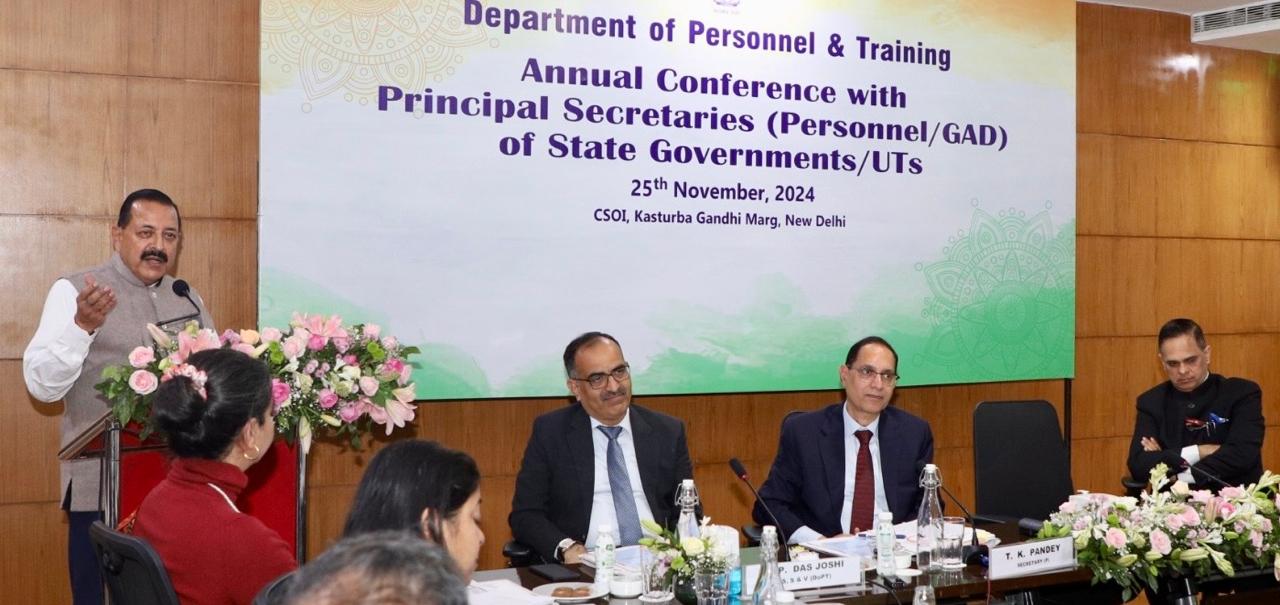
Union Minister of State (Independent Charge) for Science and Technology; Earth Sciences and Minister of State for PMO, Department of Atomic Energy, Department of Space, Personnel, Public Grievances and Pensions, Dr. Jitendra Singh convened a meeting of State GAD/ Personnel Secretaries to receive an update about the status of General Administration Department working in individual States and UTs as well as to familiarise them with new initiatives undertaken by the Central Government headed by Prime Minister Sh Narendra Modi.
The Union MoS DoPT shared a futuristic vision in governance driven by latest technology and motivated by the goal of Viksit Bharat 2047.
The meeting served as a platform for fostering knowledge exchange and collaboration among administrative leaders, with a focus on capacity building, technological integration, and reforms to enhance governance. The conference saw participation from almost all the States and Union Territories.
Addressing the participants, Dr. Jitendra Singh underscored the critical need for regular interactions to empower civil servants in meeting the evolving challenges of governance. He reaffirmed the government’s commitment to transparency, integrity, accountability, and efficiency, as reflected in initiatives like Mission Karmayogi, which has institutionalized capacity building for civil servants at all levels.
Highlighting the importance of grievance redressal mechanisms, the Minister noted that the centralized system has witnessed an unprecedented increase in public trust, with complaints handled annually growing from 2 lakh in 2014 to over 25 lakh in 2024. This surge demonstrates the government’s ability to address citizens’ concerns more effectively and in a timely manner.
During the meeting, Union Minister Dr. Jitendra Singh addressed several concerns raised by Principal Secretaries regarding administrative challenges and the development of civil servants. One key suggestion was the creation of a mentoring framework where senior officers could guide younger batches, helping them benefit from the knowledge and experience of their seniors. The Minister acknowledged this proposal and highlighted the importance of mentorship in shaping future leaders within the civil service.
Dr Jitendra Singh shared that the Department of Personnel and Training (DoPT) had already initiated a mentorship program in 2016, where officers undergo a three-month exposure to central government priorities, gaining a better understanding of national-level governance. This initiative has proven effective in boosting the confidence and initiative of younger officers, enabling them to interact with senior mentors and learn key aspects of governance practices.
In response to concerns about the lack of exposure for officers at the Deputy Secretary and Joint Secretary levels, Dr. Jitendra Singh emphasized ongoing efforts to address this gap. He highlighted initiatives like the National Learning Week and Mission Karmayogi, which now cater to various levels of civil servants, including those in state administrations. These programs are designed to equip officers with the necessary skills to navigate dynamic governance challenges.
Dr. Jitendra Singh also appreciated the development of online knowledge series aimed at providing essential information to officers and assured that the DoPT would collaborate with states to share best practices and resources, further enhancing the learning environment for civil servants nationwide.
The conference explored several key topics vital to governance and administrative reforms, with a focus on the increasing role of technology in administration. A major highlight was the implementation of centralized grievance mechanisms, which have greatly enhanced public trust in the system’s responsiveness. The discussions showcased success stories, such as the integration of face recognition technology and year-long capacity-building initiatives, both of which are helping civil servants adapt quickly to evolving governance needs. These reforms, along with Mission Karmayogi’s institutionalized framework, are equipping officers with the necessary skills to tackle modern administrative challenges effectively.
Sessions at the conference aimed to provide civil servants with the tools needed for contemporary governance. The Department of Personnel and Training (DoPT) presented key personnel reforms, and a discussion on Mission Karmayogi illustrated its transformative impact on civil services. The event also highlighted the use of electronic Human Resource Management Systems (eHRMS) to streamline personnel management, alongside discussions on the successful implementation of the Right to Public Grievance Redressal Act, which has boosted public service accountability.
Additionally, the Department of Administrative Reforms and Public Grievances (DARPG) conducted a session on digitalization, centralized grievance redressal, and special campaigns, aiming to modernize administrative processes.
Dr. Jitendra Singh emphasized the need for states to adopt technologies like face recognition systems to improve administrative efficiency. He also stressed that the capacity-building measures under Mission Karmayogi would help civil servants navigate the complexities of modern governance.
The Minister also highlighted the 2018 amendments to the Prevention of Corruption Act, which introduced accountability for both bribe-givers and bribe-takers, fostering a more balanced and just approach to corruption. He further emphasized the need for regular exchanges of best practices among states to replicate successful governance models nationwide.
The conference, organized by DoPT, saw the participation of DoPT Secretary Shri Tuhin Kanta Pandey, DARPG Secretary Shri V. Srinivas, and senior officials from both departments, enriching discussions on governance reforms.
Dr. Jitendra Singh concluded by expressing confidence that these collaborative efforts would drive progress and empower civil servants for more effective public service delivery.
The Ministry of Labour and Employment launched eShram portal (eshram.gov.in) nationwide on 26th August 2021 for creation of a comprehensive National Database of Unorganised Workers (NDUW) verified and seeded with Aadhaar. eShram portal is meant to register and support the unorganised workers by providing them a Universal Account Number (UAN).
In October 2024, on an average about 60,000 registrations happened on eShram per day and a single day registration reached 97,839 on 09.10.2024. As on 19th November 2024, over 30.40 crore unorganised workers have registered on eShram portal, on a self-declaration basis. The key social security benefits extended to the unorganised workers through eShram portal are as follows:
eShram has been integrated with National Career Service (NCS) Portal. An unorganised worker can register on NCS using his/ her Universal Account Number (UAN) and search for suitable job opportunities. An option/ link has also been provided to registrant on eShram portal to seamlessly register on NCS.
eShram is also integrated with Pradhan Mantri Shram Yogi Maandhan (PM-SYM). PM-SYM is a pension scheme for unorganised workers who are aged between 18-40 years. Using UAN (eShram), any unorganised worker can easily register on Maandhan portal.
To provide skill enhancement and apprenticeship opportunities to unorganised worker, eShram has been integrated with Skill India Digital portal of Ministry of Skill Development and Entrepreneurship.
eShram is also integrated with myScheme portal. myScheme is a National Platform that aims to offer one-stop search and discovery of the Government schemes. It provides an innovative, technology-based solution to discover scheme information based upon the eligibility of the citizen.
Further, Ministry of Labour and Employment has also launched the eShram– “One-Stop-Solution” on 21st October 2024. eShram– “One-Stop-Solution” entails integration of different Social Security/ Welfare schemes at single portal i.e., eShram. This enables unorganised workers registered on eShram to access social security schemes and see benefits availed by them, through eShram. So far, twelve (12) Social Security/ Welfare Schemes have been integrated/ mapped with eShram which includes: – One Nation One Ration Card, Mahatma Gandhi National Rural Employment Guarantee Act, National Social Assistance Programme (Indira Gandhi National Disability Pension Scheme, Indira Gandhi National Widow Pension Scheme, National Family Benefit Scheme) Pradhan Mantri Awas Yojana – Gramin (PMAY-G), etc.
eShram data is being shared with State/ UTs Labour Departments through integration and Data Sharing Portal (DSP) based on Standard Operating Procedure (SOP) and guidelines prepared by Ministry of Labour and Employment in consultation with National Informatics Centre (NIC), Unique Identification Authority of India (UIDAI) and States/ UTs. All States/UTs have been on boarded on Data Sharing Portal (DSP) and 10 States/UTs have completed integration.
Integration of Social Security/ Welfare Schemes with eShram is a continuous process.
The Government of India has introduced a pension scheme for unorganized workers namely Pradhan Mantri Shram Yogi Maan-dhan (PM-SYM) to ensure old age protection for Unorganised Workers. The scheme was launched in March, 2019. The third party evaluation of PM-SYM was done by Indian Institute of Public Administration that recommended inter-alia, to increase income limit from Rs.15000 to Rs.18000 and entry age for eligibility criteria to be relooked to 18 to 50 years.
For the first time, the definition of ‘gig workers’ and ‘platform workers’ and provisions related to the same have been provided in the Code on Social Security, 2020 which has been enacted by the Parliament. The Code provides for framing of suitable social security measures for gig workers and platform workers on matters relating to life and disability cover, accident insurance, health and maternity benefits, old age protection, etc.
The Ministry of Labour and Employment had launched the e-Shram-“One Stop-Solution” on 21st October 2024. This entails integration of different social security/welfare schemes at single portal i.e. e-Shram. This enables unorganised workers registered on e-Shram to access social security schemes and see benefits availed by them so far, on single portal i.e. e-Shram.
“Labour” as a subject is in the Concurrent List of the Constitution of India and under the Codes, the power to make rules has been entrusted to Central Government as well as State Governments. As a step towards implementation of the four Labour Codes, the Central Government has pre-published the draft Rules under Labour Codes. As per available information, 32, 31, 31 and 31 State/Union Territories have also pre-published the draft Rules under the Code on Wages, 2019, the Industrial Relations Code, 2020, the Code on Social Security, 2020 and the Occupational Safety, Health and Working Conditions Code, 2020, respectively.
The Labour Codes strengthen the protection available to workers, including unorganized workers in terms of statutory minimum wage, social security and healthcare of workers. The Code on Wages, 2019 has envisaged statutory right for minimum wages and timely payment of wages to all workers to support sustainable growth and inclusive development. Besides, the Code on Social Security, 2020 aims to extend social security benefits to all workers both in the organised and unorganised sectors. The Labour Codes have been aligned with the present economic scenario and technological advancements along with reduction in multiplicity of definitions & authorities. The Codes also ease compliance mechanism aiming to promote ease of doing business/setting up of enterprises and catalyze creation of employment opportunities while ensuring safety, health and social security of every worker. Use of technology, such as, web-based Inspection has been introduced in order to ensure transparency & accountability in enforcement. A provision for worker reskilling fund has been envisaged in the Industrial Relations Code, 2020 for re-skilling the retrenched workers which provides for crediting fifteen days’ wages last drawn by the worker.
Government of India announces the commencement of a historic year-long celebration to commemorate the 75 years of the adoption of the Constitution of India, a milestone that reflects the remarkable journey of our democracy and the enduring legacy of our founding principles and Constitutional values starting on Constitution Day (Samvidhan Diwas), 26th November 2024. These celebrations are being conducted under the campaign tagline “Hamara Samvidhan, Hamara Swabhimaan” and aim to honour the contributions of the Constitution’s makers while reiterating the core values enshrined in it.
On 26th November 1949, the Constituent Assembly of India adopted the Constitution of India, which came into effect on 26th January 1950, marking the beginning of a new era in Indian history. This day is significant as it marks the adoption of the world’s longest written Constitution, a cornerstone of India’s democratic framework. Since its inception, the Constitution serves as the guiding framework, shaping the nation’s progress over the past 75 years.
Celebration – Highlights:
Special Website (constitution75.com): A dedicated website, constitution75.com, has been created to enable citizens to engage with the Constitution’s legacy through interactive activities and resources. The website offers:
Read the Preamble and record a video: Citizens can participate in the campaign by recording videos while reading the Preamble of the Constitution in languages of their choice. The videos can be uploaded on the campaign website and certificate of participation can be downloaded.
Explore the Constitution in Multiple Languages: Access the full text of the Constitution in multiple languages, making it accessible to all citizens.
Dive into History: Learn about the making of the Constitution, read debates from the Constituent Assembly, reports of various committees involved in the making of the Constitution and gain insights into the values and principles that shaped modern India.
Interactive Features: “Know Your Constitution”, an AI enabled interactive feature, where one can ask questions about the Constitution and receive detailed answers related to the Constitution of India.
Mass reading of Preamble on November 26, 2024
On 26th November 2024, from schools to offices, from cities to villages, millions across India will read the Preamble together.
Capture the moment by uploading your selfies and videos on the website (constitution75.com) and sharing them on social media with pride.
Inaugural Programme at Central Hall of Parliament on 26th November 2024:
A grand inaugural programme will be held at the Central Hall of Parliament, led by the President of India, in the presence of the Vice President, Prime Minister, Speaker of Lok Sabha and other dignitaries.
Programme Highlights:
Short Film Presentation dedicated to the glory of the Constitution of India, its making and historical journey.
Release of a commemorative Coin and Stamp dedicated to the 75th anniversary of adoption of Constitution of India.
Release of Books titled “Making of the Constitution of India: A Glimpse” and “Making of the Constitution of India & its Glorious Journey”
Release of Booklet dedicated to the Art of the Constitution of India.
Release of the Constitution of India in Sanskrit.
Release of the Constitution of India in Maithili.
Ceremonial reading of Preamble led by the President of India.
The Government of India calls upon the citizens to be a part of this historic occasion and show our collective pride in our Constitution and demonstrate our commitment to the democratic values that define our nation.
How to participate!
Visit constitution75.com to read the Preamble of the Constitution, record and upload your videos, and download a certificate of participation.
Engage with the interactive features of the website, explore the Constitution in multiple languages, and learn more about the journey that brought India its guiding framework.
Join the nationwide movement on 26th November 2024, take part in the reading of the Preamble at schools, colleges, government and private offices, panchayats, and others, across the country. Share your participation on social media to inspire others.
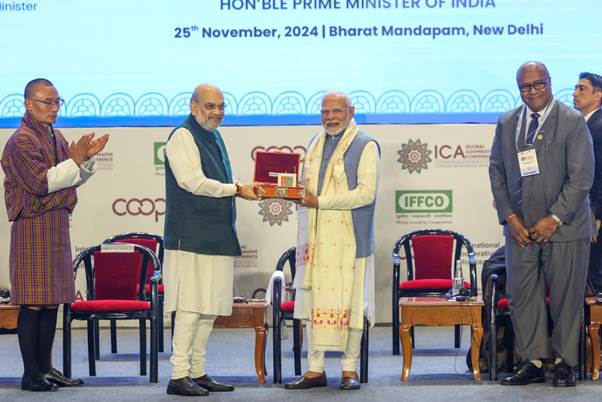
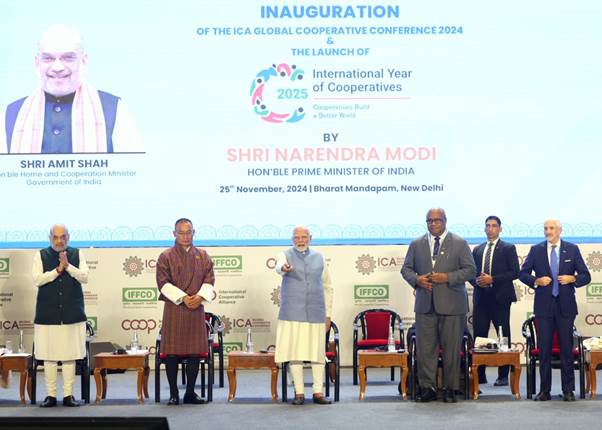
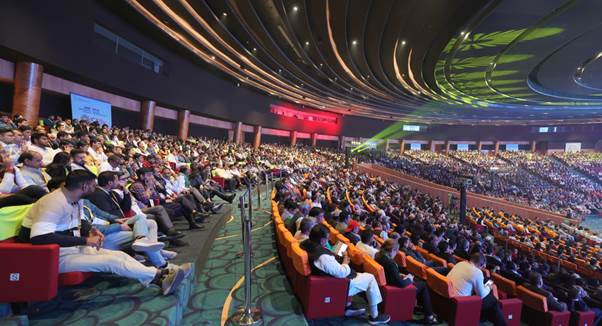
Prime Minister Shri Narendra Modi inaugurated the Global Cooperative Conference 2024 at Bharat Mandapam in New Delhi. Prime Minister Shri Narendra Modi also launched the United Nations’ International Year of Cooperatives 2025 and released a commemorative postal stamp. On this occasion, Union Home Minister and Minister of Cooperation Shri Amit Shah, the Prime Minister of Bhutan, the Deputy Prime Minister of Fiji, the President of International Cooperative Alliance (ICA), the Secretary of the Ministry of Cooperation, and several other dignitaries were present.
On this occasion, Union Home Minister and Minister of Cooperation Shri Amit Shah said in his address that the United Nations’ decision to observe 2025 as the International Year of Cooperatives is a timely step and will prove to be a blessing for millions of poor people and farmers worldwide. He added that the inauguration of the International Year of Cooperatives-2025 by Prime Minister Modi today and the hosting of the International Cooperative Conference of the ICA in India is a welcome step.
Shri Amit Shah said that Prime Minister Shri Narendra Modi three years ago gave the clarion call of “Sahkar Se Samriddhi” which reflects the essence of theme of this conference, which paved the way for the prosperity of millions of villages, women, and farmers. He said that in previous 3 years, many new activities have taken place in the cooperative sector of India, and after 75 years of independence, India’s cooperative movement has experienced a revival, bringing with it a new zeal.
Union Home Minister and Minister of Cooperation said that in next 3 years, through 2 lakh new Primary Agricultural Credit Societies (PACS), there will not be a single village panchayat in India without a cooperative society. He said that many steps have also been taken to make PACS modern, tech-enabled and economically-viable. He said that through 3 new cooperative bodies formed at the national level, the farmers of India will be able to increase their access to the domestic as well as global market. He said that National Cooperative Exports Limited (NCEL), National Cooperative Organics Limited (NCOL) and Bharatiya Beej Sahakari Samiti Limited (BBSSL) will not only increase the participation of farmers in world trade in the coming days, but will also work to inspire cooperatives all over the World as to how a small farmer can reach all the markets of the World. Shri Shah said that Indian Farmers Fertiliser Cooperative (IFFCO), Krishak Bharti Cooperative (KRIBHCO) and Amul have set examples in the field of cooperatives all over the world and similarly these three cooperatives will also guide the people working in the cooperative sectors of the World.
Shri Amit Shah said that after the formation of the Ministry of Cooperation three years ago, the entire legal framework of cooperatives has been strengthened, the White Revolution 2.0 and the Blue Revolution have also begun, in which the role of cooperatives is very important. He said that under the leadership of Prime Minister Modi, comprehensive changes have taken place in the last 3 years for the overall development of cooperatives. Shri Shah said that in the coming days, we are also going to build a cooperative university, through which trained and tech-enabled human resources will be created. In the “International Year of Cooperatives,” the Modi government will usher in new dimensions to India’s cooperative movement by introducing a new cooperative policy.
Union Home Minister and Minister of Cooperation said that in order to expand the reach of cooperatives, the Government of India is committed to connecting every village and farmer with the cooperative movement. He added that numerous efforts have been made to explore new areas and extend the scope of cooperatives.
Shri Shah stated that under the guidance of Prime Minister Modi, significant work has been done in the past three years to extend the reach of cooperatives to every individual and sector. He emphasized that the cooperative movement has opened several avenues for the empowerment of villages, farmers, women, and the underprivileged. Through this movement, the goal of “Sahkar se Samriddhi” envisioned by Prime Minister Modi, can be achieved in the coming times. He also said that the International Year of Cooperatives, inaugurated today by Prime Minister Shri Narendra Modi, will pave the way for the empowerment of millions of poor people, farmers, and women worldwide, enabling them to live with dignity and respect.
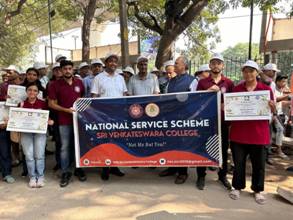
Shri K. Sanjay Murthy, Secretary, Department of Higher Education (DoHE), Ministry of Education, participated in a Swachhata Campaign under the theme of Swabhav Swachhata, Sanskaar Swachhata commemorating the birth anniversary of Mahatma Gandhi and Shri Lal Bahadur Shastri at the Sri Venkateswara College (SVC), University of Delhi, today. The Ministry of Education organised the event in collaboration with the National Service Scheme (NSS).
Additional Secretary, DoHE, Shri Sunil Kumar Barnwal; Joint Secretary (DoHE) Smt. Neeta Prasad; Joint Secretary (DoHE), Shri Ekram Rizvi; Joint Secretary (DoHE), Smt. Rina Sonowal Kouli; Shri Chaitanya Prasad, officials of the Ministry along with Prof. V Ravi, Principal, SVC; Prof. K Chandramani, Vice-Principal, SVC and other faculty members were also present at the event.
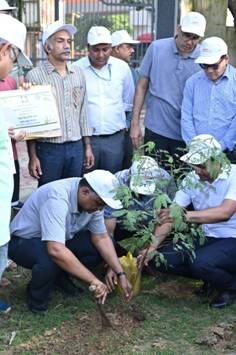
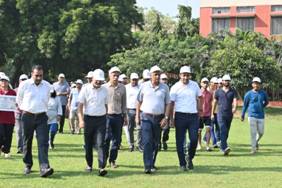
Shri K. Sanjay Murthy and other dignitaries planted five trees under the ‘Ek Ped Maa Ke Naam’ Campaign at the college premises. They also participated in cleaning a black spot/cleanliness target unit (CTU) near the Satyaniketan bus stand near the college. NSS members, NSS volunteers of the college, RWA representatives, social workers and MCD staff joined them in thoroughly cleaning the place.
The Secretary urged the locals to maintain the cleanliness of the place in future and also ensured the help of the College in this regard if needed. He also motivated the students to participate in the cleanliness drive in the future. He also answered their queries regarding the National Education Policy 2020. The students shared their experiences and teaching while working in the NSS.
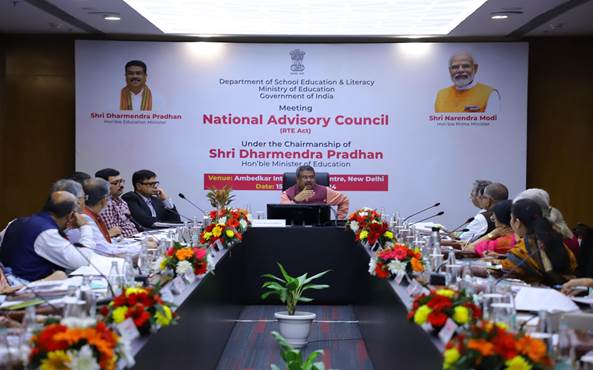
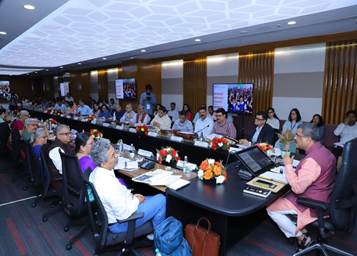
Union Minister for Education, Shri Dharmendra Pradhan chaired the National Advisory Council meeting, focusing on strengthening the implementation of the Right to Education (RTE) Act, which primarily emphasises access to school education. The National Education Policy 2020 highlights the revision and revamping of the education structure, including its regulation and governance, to create a new system that is aligned with the aspirational goals of 21st century education by providing holistic, inclusive and multidisciplinary growth in school curriculum.
In his keynote address, Shri Dharmendra Pradhan emphasised the Government of India’s dedication to guaranteeing universal access to quality education and reaffirmed the commitment to strengthening of school education in the country guided by the Implementation of the RTE Act,2009 and the holistic and transformative provisions of National Education Policy 2020. He focused on developing a thorough plan to integrate innovative teaching methods and significantly enhance learning outcomes to strengthen the educational framework in the forthcoming years. He stressed on providing a special focus on Early Childhood Care and Education (ECCE) that ensures the cognitive development of children according to the NEP 2020. Additionally, the Minister highlighted the need to formulate a comprehensive strategy for effective pedagogy and teaching methodology, with a strong emphasis on ensuring quality education, accessibility, affordability, equity and inclusivity in the implementation of educational interventions.
Shri Sanjay Kumar, Secretary (DoSEL), addressed the transformative journey of the education policies and the commitment to achieve the vision of Viksit Bharat through the National Education Policy, 2020. He urged the council members to examine the advancements in the education sector and provide their insightful feedback to the participants.
Shri Vipin Kumar, Additional Secretary (DoSEL), highlighted the current state of the government’s initiatives under the RTE Act of 2009, particularly the provision of free textbooks, uniforms, the Mid-Day Meal Scheme and many other interventions related to it.
Aligned with the vision of the National Education Policy (NEP) 2020, these initiatives form the core of the Samagra Shiksha scheme, which is dedicated to enhancing the quality of education and promoting equity and inclusivity. By integrating these components, Samagra Shiksha promotes holistic development and improves learning outcomes, ensuring that every child has the necessary interventions for a seamless transition from elementary to secondary education. It was also mentioned during the discussion that while RTE Act 2009 talks about the elementary education upto class 1 to class 8 but NEP-2020 takes care of the holistic developmental needs of 15 years of school education.
The National Advisory Committee members shared their valuable insights to create a more cohesive and equitable education system. The committee members highlighted the need to strengthen the school ecosystem, teacher education and socio-economically disadvantaged groups, as underscored in the NEP 2020. The meeting was attended by distinguished dignitaries and senior officials from the Department of School Education and Literacy and autonomous bodies of the Department.
Additionally, Director, NCERT mentioned that 79 Primers have been developed in scheduled languages of the respective State/ UTs. These Primers are in accordance with NEP 2020, which fosters education in child’s native language to facilitate their overall development. This meeting marks a crucial step towards further strengthening the education system in India, ensuring that every child receives their right to free and compulsory education and reinforcing the principles of equity and inclusivity in education.
In a significant move to enhance bilateral cooperation in the education sector, Union Minister for Education Shri Dharmendra Pradhan will visit Singapore and Australia from 20 to 26 October 2024. The visit is expected to foster collaboration, participation, and synergy in critical areas of mutual interest in education.
During the two day visit in Singapore, Shri Dharmendra Pradhan will address the members of Indian diaspora on 20th October 2024. The next day, Shri Dharmendra Pradhan will meet the Prime Minister of Singapore, H.E. Lawrence Wong; Deputy Prime Minister, H.E. Gan Kim Yong; Education Minister, H.E. – Chan Chun Sing; and Foreign Minister H.E. Vivian Balakrishnan. Shri Pradhan will visit the National University of Singapore ranked No.1 in Asia. He will also visit a local secondary school to discuss the scope of syllabus integration, keeping AI in focus. He will meet academicians, eminent representatives from alumni of IITs and IIMs and engage in discussions related to the education ecosystem of both countries.
During the 3-day visit to Australia, on 23rd October 2024, the Minister, in Melbourne, will meet Hon. Jason Clare MP, Minister for Education. Shri Pradhan will also deliver the Plenary address at the Australian International Education Conference. The Minister will be visiting the South Melbourne Primary School which is known for integrated approaches to learning.
He will visit ‘Discovery to Device’ at RMIT University which is a unique centre for MedTech prototyping and manufacturing. The visit will explore collaborative approaches to the commercialisation of medical technologies and role of industry-academia linkages in driving innovation..
Shri Pradhan will meet Hon. Jacinta Allan MP, Premiere of Victoria along with Australian Education Minister Hon Jason Clare MP. He will also visit Monash University to observe their Innovation Lab and Centre for Nano-fabrication.During his stay in Melbourne, Shri Pradhan will also interact with senior academics of Indian origin.
To explore opportunities for partnerships in educating early childhood education workforces, Shri Pradhan will visit Auburn Long Day Child Care Centre in Sydney on 24th October 2024. The Minister will interact with the representatives of the Innovative Research Universities (IRU) and will attend the 2nd Australia India Education and Skills Council.
On 25th October 2024, he will visit the Granville South Creative and Performing Arts High School.Shri Pradhan will visit the site of the Macquarie Park Innovation District (MPID). As home to over 180 multinational companies, MPID facilitates the practical application of research across telecommunications, digital industries, medical technology and pharmaceuticals for economic benefit.
Later in the day, Shri Pradhan will interact with Indian research students hosted by the Group of Eight, Australia’s most research intensive universities.
Shri Pradhan will visit the UNSW Energy Institute and the Trailblazer for Recycling and Clean Energy (TraCE) at the Tyree Energy Technologies Building, Kensington. Here, he will observe real-world examples of practical research applications with commercial impact through the UNSW Energy Institute, which brings together world-leading researchers and the energy industry.
He will also visit UTS Moore Park Sports and Exercise Precinct to explore cooperation in sports education and sports research. UTS’s Moore Park Precinct is a state-of-the-art teaching, research and sporting facility.
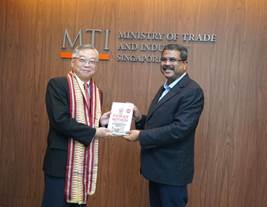
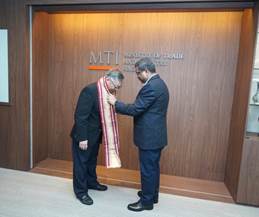
Union Minister for Education, Shri Dharmendra Pradhan, met the Deputy Prime Minister and Minister for Trade & Industry of Singapore, H.E. Gan Kim Yong.
Shri Pradhan had an engaging conversation with H.E. Gan Kim Yong on cooperation in skills-based education and training to build competencies of the future generations.
Earlier in the day, Shri Pradhan met the Prime Minister of Singapore, H.E. Lawrence Wong, and had meaningful conversations on elevating and expanding the bilateral cooperation in school education, vocational education and research, between the two nations.
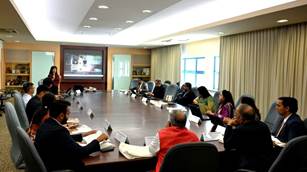
Shri Pradhan also met Singapore’s Minister for Education, Mr. Chan Chun Sing, to discuss strengthening bilateral cooperation across various areas of education. The Minister also met with Singapore’s Minister for Foreign Affairs, Mr. Vivian Balakrishnan, to discuss deepening the India-Singapore Knowledge Partnership.
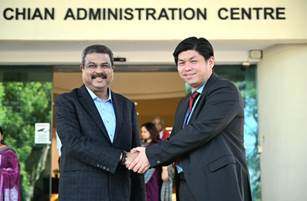
Shri Pradhan visited the Hwa Chong Institution (HCI) in Singapore, to explore best practices for building ‘schools of the future’. He commended the school’s use of cutting-edge technologies, such as AI, to enhance student experiences, strengthen learning outcomes, and nurture the unique strengths, talents, and creative pursuits of each student. Shri Pradhan also observed several similarities between the educational approaches outlined in India’s National Education Policy (NEP) 2020 and the curriculum, pedagogy, and student development strategies at HCI. He reiterated India’s commitment to shaping responsible global citizens by providing students with access to world-class education.
The Minister’s visit to Singapore, followed by a trip to Australia, from 20 to 26 October 2024, aims to foster collaboration, participation, and synergy in critical areas of mutual interest in education.






GGGB.jpeg)


 Eduindex
You must be logged in to post a comment.