Principles of Good Layout for an Advertisement Copy

Principles of Good Layout

The twelve features, qualities, or principles of good layout are as follows:
Image Credits © Manoj Patil.Focus on dominant element.
Unity of all ad parts.
Good use of contrast.
Right balance of elements.
Maintain proportion of space.
Follow the eye movement.
Simple and uncomplicated layout.
Ease of readability.
Use of whitespace.
Clarity of ad message.
Good ad atmosphere.
First impression.
Now let’s discuss each quality, feature or principle of a good layout.

1. Focus on dominant element

Good layouts have a starting point. It is called dominant element. This element is the most important part of the advertisement. It may be the headline, the illustration, the body copy, etc. The copywriter has to decide which part is the dominant part. Normally, there is only one dominant element in the ad. The dominant element must be large. It must have a bright colour. It must look better than the other parts of the ad. The consumer must get attracted towards the dominant part of the ad.
2. Unity of all ad parts
The advertisement consists of many parts. All parts of the ad have a relation with each other. All these parts must have one objective. The objective must be to inform the consumer about the product and to persuade them to purchase the product. So, all parts of the ad must work together. They must not work against each other. There must be unity among all the parts of the ad. If unity is maintained, then the combined effect will also be good. We can have unity by keeping proper space between words and lines. We can also use the same style of printing.

3. Good use of contrast

Contrast means to use opposite colours, like black and white, etc. Contrasted ads stand out because they appear different. For e.g. If all the ads in a magazine are in colour and if one ad is in black and white. Then the black and white ad will stand out in contrast. We can also use contrast for different parts of the ad. So that each part of ad stand out in contrast. We can also use contrast for a dominant part of the ad.

4. Right balance of elements

The advertisement must have a right balance. Balance means the relationship between right-hand side and left-hand side of the ad.
There are two types of balance:Formal balance: Here, the words and pictures on the right side are equal to the words and images on the left-hand side of the ad. So, the right-hand side and the left side matches each other in size, shape and colour. They are placed exactly on the opposite side of each other. Such a balance is called a formal balance.
Informal balance: Here, each part of the ad is placed on the page at random. There is no balance between right-hand side and left-hand side. But, as a whole the ad looks balanced. Informal balance is quite difficult to achieve. It requires more imagination and a high level of creative skill. It looks better than the formal balance.

5. Maintain proportion of space

The advertisement must maintain proportion. The entire space must get divided among the different parts of the ad. The division must not be equal. If all the parts have same space, then the ad will not look good. More space must be provided to the dominant (important) part of the ad. Less space must be given to the less important parts.

6. Follow the eye movement

The advertisement must be prepared to cover the movement of the eye. The movement of the eye is from left to right. A person first looks up then he looks down. So, the advertising idea must move from left to right and from top to bottom.
The advertiser can control the eye movement by using the following points:Gaze movement: According to research, a person’s eyes will follow other eyes. That is, if many people are looking in one direction, then a new person will also look in that direction. Such behaviour is natural. So the readers will also follow the gaze of the people, animals and birds appearing or presented in the ad.
Size: Generally, large size parts attract people. So the main part of the ad must also be large.
Pointing devices such as hands, fingers, arrows, etc., are used to attract the attention of the reader.
Cartoons and comic pictures are also used to grab the attention of the readers.

7. Simple and uncomplicated layout

The layout must be simple. It must have very few elements in it. The lesser the elements, the stronger will be the impact (impression). Too many parts of the ad will make it useless. So the ad must have many empty spaces. It must not look very crowded and complicated.

8. Ease of readability

The reader must be able to read the advertisement easily and quickly. The words in the ad must not be small sized. Avoid using capital letters for full paragraphs. Only significant words or sentences must be written in capital letters.

9. Use of whitespace

The advertisement must not appear stuffed and crowded. There must be enough white (blank) space to make it look uncluttered and pleasing. White space will attract the attention of the reader by making the ad look rich and classy.

10. Clarity of ad message

The advertisement must be very clear about its objective. The reader must easily understand the ad message. He must not be confused to grasp the central message of the ad. He must also not have any doubts about the ad.

11. Good ad atmosphere

The atmosphere surrounding the advertisement must not be ignored or overlooked. The surrounding of an ad is also essential to make the ad appear attractive and pleasing. A shabby background or atmosphere makes even an attention-grabbing ad less appealing.

12. First impression

The first impression is the best impression. If the impact of the first impression is good, then the reader will read the full ad message and react positively. He may desire to purchase a product or try a service. However, if the first impression fails to create a good impression, then the reader won’t read the full ad message. He may not remember and lose interest in the advertised product or service. In such a case, sales won’t happen and the advertisement will fail to achieve its goal.
Therefore, the copywriter must make the first impression of the ad impactful. A positive impact can be achieved by using a catchy slogan, attractive colours, lots of white space, good illustration, so on.

Fayol's Principle of Division of Work – Meaning, Example, Explanation

Principle of Division of Work
In context of this article, let’s revise the meaning of following words:Division of something (e.g. an object, a process, work, etc.) means to divide, chop or break it up into smaller parts to facilitate a better understanding, easier handling and operation, and focused observation on a fixed set of goals. It is a way to separate things apart based on some established criteria like quality, quantity, nature of work, so on. It untangles, simplifies, and narrows down various complexities that were involved prior separation. It helps to ease and enhance the efficiency of managing a giant complex task through smaller chunks that are easy to handle.
Work is any assigned job, task, duty, goal or an objective one is supposed to accomplish (achieve) before the deadline (on-time) and as expected at the expense of one’s mental and physical labour to earn the desired reward (usually monetary but not always) in return.
With this understanding, let’s grasp the meaning of division of work:
Image credits © Gaurav Akrani.Division of Work means to divide or break up a single complicated job into different smaller specialised tasks.
Here, each of these smaller tasks is handled separately probably by an expert or a team working under his command.
In case, these tasks are dependent on each other’s completion, they are achieved separately and procedurally one after another.
When all smaller tasks complete as expected, they all together help to accomplish the single complicated job.
Study the following image depicting an example of division of work.
Image credits © Gaurav Akrani.
Consider for an example, for the first time in your life you have planned to construct a beautiful dream house at your favourite location. Before initiating the actual phase of construction work, you do some pre-research regarding how to build a house systematically. You figure out which crucial steps you’ll need to carry out and professional services you’ll need to access, communicate, negotiate and hire. After getting acquainted with the basic construction procedure and having the necessary funds in hand, you start further planning accordingly.
You divide the combined work of house construction as follows:First, you hire an Architect to prepare the layout plan of your house as per your needs.
Once the house plan is ready, you then contact and hire a civil contractor to build your house as per the approved plan.
When primary construction phase ends, you finally hire an interior designer to enhance the beauty or aesthetic feel of your dream house.
The division of work does not stop at the above three steps else it further bifurcates into numerous specialised works as listed below.
Architect divides his work of preparing the layout plan of house among:Draftsman,
3D-Designer,
Structural Designer, etc.
Civil contractor divides his work of house construction among:Civil Engineer,
Supervisor,
Masons,
Labours,
Welder,
Electrician,
Plumber, so on.
Interior Designer realises his creative aesthetic concept from:Carpenter,
False Ceiling installer,
Painter,
Tiler,
Windows installer,
Handyman,
Electrician,
Landscaper, etc.
In fact, efficient completion of each of the above listed numerous specialised works overall helps to progress gradually and ultimately finish the single difficult job of a house construction.
Explanation of Henri Fayol’s Principle of Division of Work:
Image credits © Gaurav Akrani.In French, Henri Fayol originally called it ‘La Division Du Travail’ in his influential book ‘Administration Industrielle et Générale.’
According to Fayol, the ‘Division of Work’ or ‘Specialization’ is of the natural order. That is this principle is present and seen operating in nature too.
It is noticeable in the animal world. If a creature is highly developed, then its organs are also highly differentiated to efficiently carry out numerous specialized bodily functions to sustain the whole body itself. For example, a unicellular animal called Amoeba is physically less complicated than a multicellular Human Being. In other words, the Human body has more specialized organs compared to Amoeba‘s body.
It is also noticeable in our human societies or communities. When society grows from its primitive stage to a developed (civilised) one, new dedicated social organs (agencies) also start appearing and developing within its sphere by dividing and replacing the functions of old organs. For example, when a small town transforms into a giant metropolitan city the role, functions, scale of operation of its local administrative body also expands, divide and becomes much more complicated than its previous stage.
When an entrepreneur starts a company, most of the important business activities at the initial phase of setup are personally managed and handled by himself. However, as the company grows, he hires staff to support such a growth. He assigns his newly appointed staff various duties and some key responsibilities that earlier he was personally handling and managing. In other words, he now doesn’t do the same work he was earlier doing else he now get it done from his qualified staff instead. As the activities of the company expand further, newer branch offices, departments, positions, personnel, etc. also starts expanding and widely replacing the functions of a single person who once founded the business. For example, Mark Zuckerberg, who founded the Facebook.
The objective of the division of work is to get more work done in a better way with the same effort and become productive.
If a person is engaged routinely in the same type of occupation, after some time, as a consequence of his routine he automatically acquires some expertise, skill, sureness, accuracy and precision over how to do it in a better and efficient way. Such an ability develops as a result of his numerous hours of work and regular practice. Knowledge acquired through routine work process makes him more competent than those who lack such an experience.
According to Henri Fayol, when there is a change in individual’s occupation (work) it results in the phase of adaptation that demands efforts for adjusting to the new job. Each change of routine work reduces the output, decreases the yield or productivity of an individual. However, an individual’s performance can be regained through quality training, regular practice, earned experience, and passage of time.
Division of work helps to reduce the number of objects (*) towards whom some attention and efforts need to be focused and directed. It is the best-recognized means (way) to make the best use of individuals and teams (groups of people) in most work-related environments. Note: (*) Here, objects are those individuals whose regular job (duty) has been changed or altered and on whose shoulders newer responsibilities are laden, and are, therefore, going through the phase of adaptation.
The principle of Division of Work not just applies to the technical work. It is also applicable to all other types of jobs where there is a need or demand for less or more individuals who specializes in different areas and have the essential set of skills or talents.
As a consequence, the division of work mainly results in:Specialization of functions – Here, tasks are separated into different functions or roles according to the expertise of one’s nature of work.
Separation of powers – It means there is a distribution of authority.
The advantages of division of work are now universally recognized.
Even though the principle is applicable in most work-related scenarios, it is still subjected to limitations like:Doing the same type of work for a longer period makes it monotonous.
Since labor or work is divided, it greatly increases interdependency.
Also, since the focus in only on executing one’s assigned part of work, there is a lack of the spirit of collective responsibility.
Conscious of such limitations or shortcomings, Sir Henri Fayol, recommended using:The principle of division of labour in moderation and not in excess.
One’s wise judgement earned from years of work experience.
References (2)
Following authoritative books were referred to compile this article and are also recommended for further clarity on the Principle of Division of Work:Henri Fayol. Administration Industrielle et Générale. Part 2. Chapter No.1. Page No.26 and 27.
Constance Storrs. General and Industrial Management, 2013 Edition. Part II. Chapter No.IV. Page No.19 and 20. Martino Publishing. ISBN 978-1-61427-459-9.

PERMACULTURE-ETHICS,PRINCIPLES,METHODS

BY DAKSHITA NAITHANI

INTRODUCTION TO PERMACULTURE:

Permaculture is a method of design in agriculture that emphasises whole-systems thinking and the use of or stimulation of natural patterns.

Bill Mollison, a senior lecturer in Environmental Psychology at the University of Tasmania, and David Holmgren, a graduate student in the Department of Environmental Design at the Tasmanian College of Advanced Education, coined the term.

These principles are being applied in a growing variety of industries.

HISTORY:

Permaculture as we know it now was created in the 1970s t happened approximately a decade after the world became aware of the risks of pesticides like DDT and the damage they represented to humanity and the environment.

Because it was created for the development of long – term (in other words, permanent) systems, the phrase was coined from a combination of the words “permanent” and “agricultural.”

It was one of the first agricultural systems to recognise that local actions might have drastic implications.

 Holmgren is credited for popularising permaculture but it’s worth mentioning that various books on topics like agroforestry and forest farming have been around since the 1930s or earlier.

3 ETHICS:

Permaculture has 3 core tenants:

•             Care for the earth. To put it another way, assist all living systems in continuing to exist and multiply. But a healthy world is required for existence, it is important to understand the principles of nature and how it functions.

•             Care for the people. Allow people to have access to the resources they require to live. Members of the community who are in need of assistance are supported by the community (e.g. after someone dies, help build homes).

•             Fair share. We should take only what we require and reinvest any excess. Any surplus can be used to assist satisfy the other two basic tenets. This involves reintroducing waste products into the system so that they can be reused.

PRINCIPLES:

All sustainable community design initiatives should use Permaculture concepts.

They are the most important rules for putting it into practise. They may aid in improving and protecting the land, ecosystem, and people, as well as maximising efficiency and productivity.

These principles promote innovation while maximising outcomes. Every location, every circumstance, and every family is unique. As a result, each project’s plans, procedures, plants, animals, and building materials may differ. Even yet, the same principles apply to any location and endeavour, big or little.

1. Observe and Interact

2. Catch and Store Energy

3. Obtain a Yield

4. Apply Self-regulation and Accept Feedback

5. Use and Value Renewable Resources and Services

6. Produce No Waste

7. Design From Patterns to Details

8. Integrate Rather Than Segregate

9. Use Small and Slow Solutions

10. Use and Value Diversity

11. Use Edges and Value The Marginal

12. Creatively Use and Respond to Change

BENEFITS OF PERMACULTURE:

Reduced water usage

Wastewater and rainfall are used in permaculture. This is useful for homes, but for farms with larger areas, it becomes a more cost effective and efficient means of watering the produce.

Reduced waste

Nothing is thrown away. Garden waste, leaves, table scraps, and other waste products are composted or fed to animals as food. Some people go beyond and utilise compost toilets to fully live a zero-waste lifestyle. Permaculture is only sustainable if it makes use of leftovers.

Economically feasible

It is cost effective since pesticides are not required, and most systems require minimal upkeep. All you have to do is water the plants and mulch them once in a while.

Less pollution

Permaculture is a more natural manner of growing food, tractors and other powered agricultural equipment are rarely used.

Improved values

You’ll automatically acquire more ethical and good principles like consuming little, just using what you need, minimising pollution, and helping others if you practise.

More self-sufficiency

A farmer or gardener who practises permaculture may grow a broader range of crops on their property. It allows you to be self-sufficient by allowing you to grow whatever you desire or need to eat.

Applicable to existing systems

 Agricultural systems and lands that already exist can be converted to principles. Permaculture may be practised on a big or small scale wherever that you can normally grow food.

COMMON METHODS OF PERMACULTURE:

1) Agroforestry

Agroforestry is a technique that incorporates trees, shrubs, animals, and crops. The term is derived from a blend of agriculture and forestry. These two apparently disparate professions collaborate to produce systems that are more resilient, healthy, lucrative, and productive. Forestry farming, which is a permaculture technique also falls under the category of agroforestry. However, the main concept is to construct your food forest using a seven-layered method. A canopy layer, a low tree layer, a shrub layer, a herbaceous layer, a rhizosphere, a ground cover layer, and a vertical layer are all included. Silvopastoral and silvoarable are two other agroforestry systems.

2) Hügelkultur

Hügelkultur is a German word that means “hill culture.” It’s a method of burying huge volumes of wood in order to increase the soil’s ability to retain water. This rotting wood behaves like an absorbent, soaking up water from the ground.  Plant materials which behave as a compost are usually placed on top of the mound and decomposed into the soil. A Hügelkultur mound generally lasts 5 to 6 years until the wood rots completely and the procedure must be repeated.

3) Harvesting Rainwater and Grey water

Instead of letting rainwater wash from the property, you may collect it and store it for later use. Roofs gather the majority of rainwater. Eaves troughs, which collect and transport water away from buildings, are likely already installed on your farm’s homes, barns, and other structures. To collect rainwater, just connect a big tank to your downspout and catch the water rather than having it seep into the ground and go to waste. Storm water harvesting is another way to collect water. It is distinct from rainwater harvesting in that it collects runoff from creeks, drains, and other waterways rather than from rooftops. Grey water is a last source of reusable water on the farm. This is water that is used in the house or on the farm for things like bathing and doing laundry.  Because grey water includes detergents, it cannot be used for drinking, but it may be utilised for irrigation purposes and other reasons.

4) Cell Grazing

Grazing is commonly seen as a negative activity that, if not carried out appropriately, has the potential to harm the ecosystem in various ways. Allowing animals to overgraze a region can have severe repercussions, and this is true. Cell grazing is the favoured approach in permaculture. This entails moving herds of animals between fields, pastures, or woodlands on a regular basis. The disruptions created by grazing animals, when done correctly, can actually improve the ecosystem and allow plants to recover more quickly. It also keeps an eye on how animals interact with the land. Plants require appropriate time to rest between each grazing and therefore it’s critical that a region receives a rest time after being grazed.

5) Sheet Mulching

Mulching is simply any protective layer placed on top of the soil to retain water and prevent weed development and is used by many farmers and gardeners. A variety of materials such as wood chips, cardboard, plastic, stones, and are frequently employed. Sheet mulching is an organic no-dig technique that aims to imitate natural soil building in forests, namely how leaves cover the ground. Sheet mulching is most often done with alternating layers of “green” and “brown” materials. Fallen leaves, shredded paper and cardboard, pine needles, wood chips, and straw are examples of brown materials. Manure, grass clippings, worm casings, vegetable scraps, hay, coffee grounds, and compost are examples of green materials. It’s possible to utilise 5 to 10 layers of materials. Sheet mulching adds nutrients and minerals to the soil, inhibits weed development, regulates weather and protects against frost, reduces erosion and evaporation, and absorbs rainwater.

6) Natural Building

Natural building is a more environmentally friendly alternative to purchasing materials from your local hardware shop or lumber yard. You should try to employ as much recycled materials as possible in a system. There are a lot of renewable resources on the land that you may employ in your next construction project. Most people ignore clay, pebbles, wood, reeds, straw, and sand, which are all easily available materials. Tires, which are less natural, can also be utilised for building. This is a fantastic method to recycle old tyres that would otherwise be thrown away or burned. Similarly, instead of purchasing new windows, discarded glass windows are frequently repurposed.

7) No-Till or Minimum-Till Farming

The goal of no-till farming is to leave the soil untouched. The soil is left undisturbed rather than being broken up before planting. This helps to keep water in the soil, keeps carbon from leaving the soil, increases soil quality, and lowers the quantity of weed seeds that are brought closer to the surface to germinate. The soil is disturbed by conventional agriculture methods. This allows carbon dioxide to enter the atmosphere while also over oxygenating the soil. Loosening the soil in this way can cause erosion and nutrient runoff, as well as obliterate important fungal networks. Tilling can be reduced or even removed altogether for some systems with the right approaches.

8) Intercropping and Companion Planting

Intercropping is the planting of more than one two plant species in the same region that mutually benefit one another. Companion planting, for example, involves growing strong-scented plants and herbs such as basil, oregano alongside primary. Many of these companion plants with powerful smells are repulsive to pests. Not only that, but some of them really help the plants they’re partnered with to grow and taste better. Others help to loosen the soil or provide additional advantages. While many plants get along well when grown together, there are some who don’t because they demand the same nutrients or for other reasons.

9) Market Gardening

Market gardening is an intriguing shift away from conventional style of agriculture, which is carried out on huge swaths of land far out in the nation, to smaller plots of land, even in metropolitan areas sometimes. Market gardeners, as the name implies, sell their vegetables at farmer’s markets, however some may also supply restaurants and grocery shops directly.

Cash crops are aggressively produced on a small scale in market gardening (usually less than an acre of land.) While cultivating on as little as a quarter acre of land, a market gardener may earn up to $100,000 each year.

Are Gandhian principles relevant today?

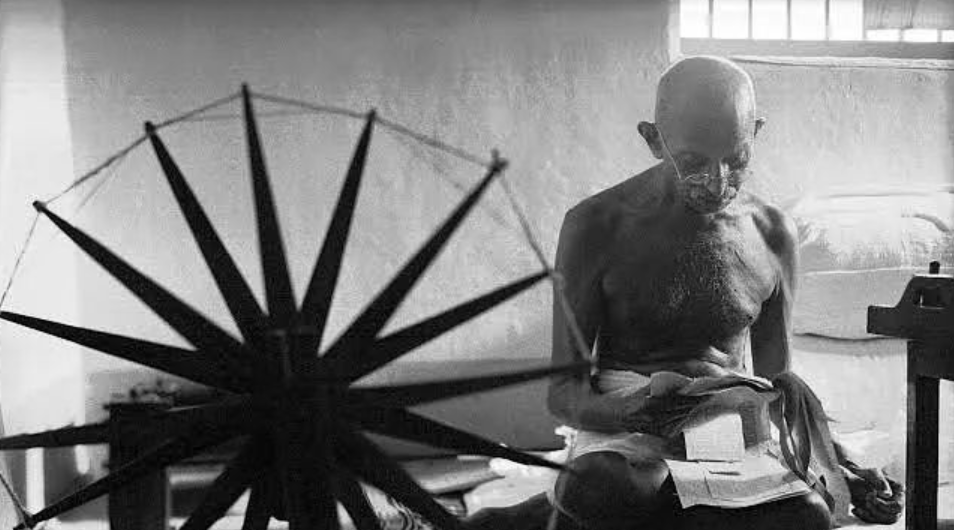
Gandhiji was a national leader of India who forced the Britishers to leave India without resorting to violence. He is regarded both as a transformational leader and a leader of the masses. Every year on 2nd October, we celebrate Mahatma Gandhi’s birth anniversary and recall his principles and philosophies. It is a fact that Gandhiji adhered to his principles of non violence, truth and satyagraha with utmost sincerity to achieve his goals. Many people argue that all his principles hold good in today’s world. We all have moved years ahead with lots of changes in lives, innovations in science and technology, vivid variety of lifestyles. Here the point is if the principles and ideologies of Gandhi are still relevant or practical in modern world or not.

YES

•Gandhiji’s principle are valid and everlasting His principles are based on truth and non-violence are the base of civilized human society. He practically proved to the whole world that a war can be fought without indulging in violence. In modern world violence is increasing rapidly. Nuclear weapons and terrorism are becoming common these days. More and more People are resorting to violence and divided into religious and ethnic compartments. We need guidance and the direction to save the world from this desperate situation.

• Gandhiji is an inspiration to international leaders also.

Gandhian principles are followed not only by national leaders but also by some eminent foreign leaders like Dalai Lama, Barack Obama, Martin Luther King Jr, Nelson Mandela etc.

• Gandhi’s principles of economic independence valid even today

Even today, our Prime minister has launched a programme ‘Make in India’ which very much reflects Gandhiji’s principles of spinning Khadi and giving employment to thousands of poor people.

NO

• Violence multiplies on being non-violent

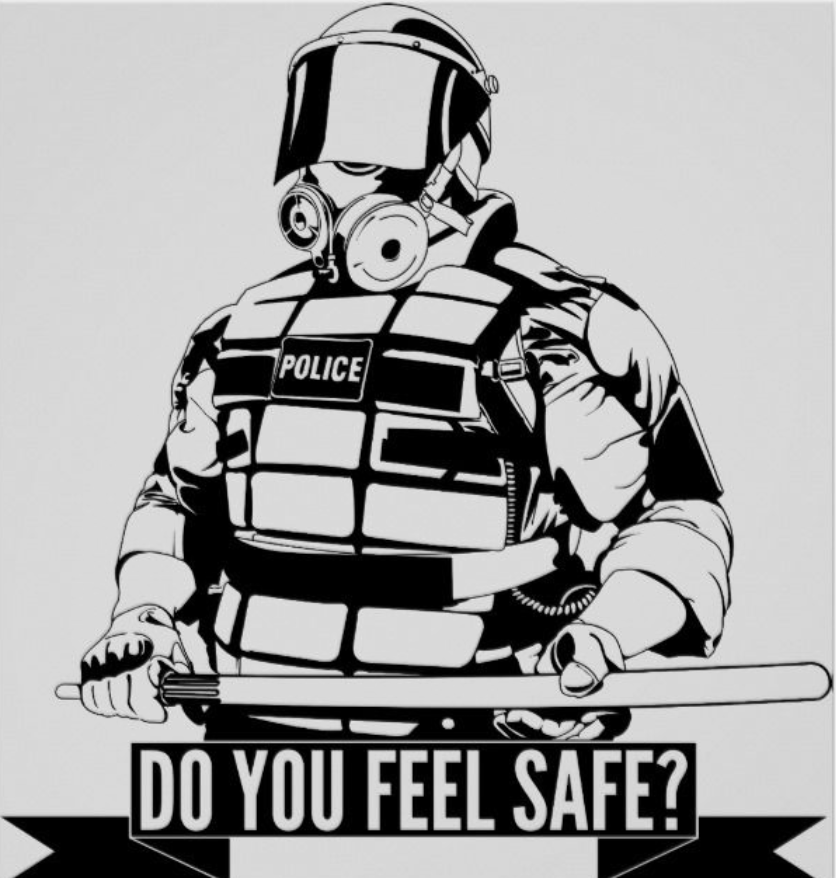
In today’s era, violence can best be answered by violence. Those who remain silent when treated with violence suffer even worse if they do not fire back in the same way.

• Modern culture outplays Gandhian swawlambi philosophy

In today’s modern world, trends and fashion have taken a new shape and so people wear trendy outfits and by no means they are restricted to use self made khadi clothes as part of ‘Swawlambi’ philosophy of Gandhiji.

• Principle of truth not valid today

In a world where money is the most important part of life, big business houses and capitalists thrive on lies to make huge profits. Advertising agencies most of the time try to cheat people by projecting false claims. Today values and meaning of the success are far more different from the values of Gandhiji.

To conclude we can say that some of Gandhian principles are relevant even today, though some of them have become outdated and irrelevant. The principle of non violence cannot be ignored. Gandhiji’s vision cannot be ignored as they form the very base on which a new generation of decision makers must adapt in order to compete on the global level. If the energy of the youth can receive honest and selfless motivation and direction from the experienced then India can surely progress. Gandhi’s vision should not be lost in religious, political and emotional fervours. It must be reorganized and reconstructed for a brighter and logical future.

Thank you for reading. Have a nice day! 🌼