
Bail orders finally being computerised

Computer-mediated communication (CMC) is defined as any human communication that occurs through the use of two or more electronic devices. This tecnhique is indeed being adopted by the honourable Supreme Court Of India. The Chief Justice N.V.Ramana flanked by justices L.Nageswara Rao and A.S.Bopanna announced in open court the rolling out of a new scheme called “FASTER” or “Fast and Secure transmission of electronic records”. The use of this scheme would instantly, directly , securely and electronically transmit bail and other orders to jail authorities, district courts, high courts and tribunals. The Chief justice remarked that rolling out of this scheme is essential considering the fact that peope given bail by courts, even by the supreme court have to wait for days before prison authorities release them.” it is just too much”, he said.

The Chief justice heading specail bench, voiced the Supreme court’s displeasure at prison authorities who insist on receiving by hand the “authentic” hard copy of the bail order regardless of the fact that the personal liberty of the people is brushed aside.

The CJI said “in this age of information and communication technology, we are still looking at the skies for the pigeons to communicate the orders”.

The initiative was applauded by the Attorney general K.K.Venugopal.

Further orders

The bench further passed orders requring the state governments to file their reports about the internet connectivity in thier jails to prevent and resolve technical glitches that might occur in the future. The Secretary General of the Supreme Court was directed to submit a comprehensive report within two weeks for formulating the scheme.

The basis of formulation

The hearing was based on a suo moto case , “Delay in release of convicts after grant of bail”, registered on the initiative of Chief justice Ramana to confront the problem which effects the liberty and dignity of the prisoners.

Recent events

In recent times, 13 prisoners in Agra central jail who suffered imprisonment of upto two decades despite being decalred “juveniles” by the Juvenile Justice Board at the time the crime was commited by them. The Supreme Court Of India on july 8th granted bail to those 13 persons, but they were released after a delay of 4 days for cause being; the prison authorities needed a “authentic” hard copy.

Another event of that sort where prisoners were released after sometime after being granted bail is, when Pinjra tod actvists Devangana Kalita and Natasha Narwal and jamia Milia Islamia student Asif Iqbal Tanha walked out of jail only with a delay of two days after bail was granted to them.

A true reform

This is a reform which will change lives eventually by protecting and taking cognizance of their personal liberty. The chief justice N.V.Ramana is seen stressing on personal liberty because once in 1975, when the emergency was declared he witnessed the taste of the poison; civil liberty being taken away. Justice Ramana said the Emergency taught him much about the “human tragedies of hunger, pain and suffering”. Chief Justice Ramaana, recounted his flight in 1975, as an 18-year-old student, from imminent arrest in a lorry to his maternal aunt’s home with ₹10 in his pocket.
The Impact of Solitary Confinement

Many years ago, the approach toward detention institutions, convicts, and punishment was severe and obnoxious. After a prolonged battle with the government, the principle of recognizing the human being in the convicted perpetrator has been approved. The socio-legal approach is based on peace, mutual respect, and individual human respect. If a person commits a crime, it does not follow that he stops to be a human being and can be denied those components of existence that constitute basic humanity.

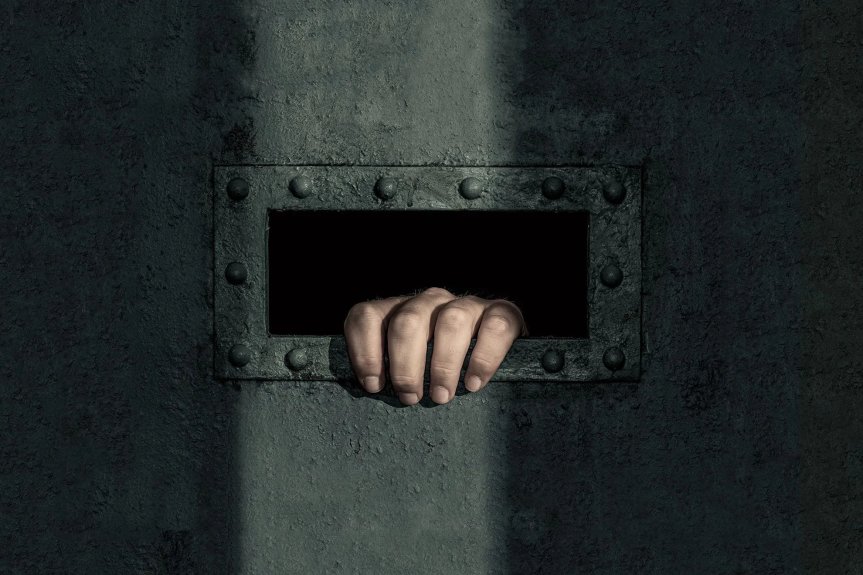
Solitary confinement is a type of imprisonment in which an inmate is segregated from other inmates and subjected to strict observation. It has been proved that such confinement is traumatic and has a negative impact on the prisoner’s overall well-being both physically and mentally. Prisoners are kept in solitary confinement for a variety of reasons. When prisoners are kept in solitary confinement as a form of punishment for what is deemed excessive behavior, such as aggression against fellow prisoners, they are usually forced to stay there for a specified period of time as a measure.

Solitary confinement, according to research findings, fundamentally affects a person’s brain, resulting in major and long-term mental health concerns as well as the expansion of deviant and violent behavior. There is a distinction between loneliness (a highly unpleasant experience to perceived isolation and the imposition of social isolation, also known as social pain) and aloneness (a tendency toward being alone/the decision to be alone), and the brain responds in very different ways. Solitary confinement as a form of punishment is akin to torture, having devastating effects for brain health. Prisoners who are isolated endure a range of psychological impacts, including emotional, cognitive, and psychotic disorders.

Prisons are already destructive, and putting people in solitary confinement adds an added layer of pressure that has been proved to create lifelong abnormalities in people’s minds and characters. In fact, long periods without human interaction have been found to physically decrease the part of the brain that plays a crucial role in memory. And, because humans are social animals by nature, denying people of their capacity to socialize can result in “social pain”, which experts define as “the feelings of sadness and suffering that result from negative social situations such as social deprivation, isolation, rejection, or loss.” Social pain impacts the brain in the same manner that physical pain does, and it can trigger much more suffering due to humans’ tendency to remember social pain months or even years afterwards. Even if a person does not enter solitary confinement with a mental disorder, the consequences of isolation may cause them to acquire a distinct psychiatric syndrome.

Life is more than just animal existence. The people incarcerated cannot be denied the same. A prisoner, whether convicted, under trial, or detained, continues to be a human being. They have all of the rights that a free person enjoys, but with some limitations. Being imprisoned does not strip people of their fundamental rights. Even while imprisoned, he has all of his basic fundamental rights. And especially in this pandemic, when many people are left alone or with a cellmate in confined spaces for 24 hours a day, knowing the negative impacts of solitary confinement and reforming these practices is more necessary than ever.

The Proliferation of Undertrials in Indian Jails

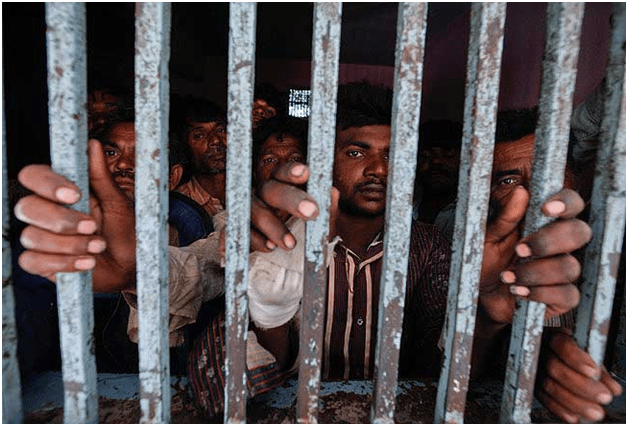
The Indian prisons are overcrowded with prisoners. But does that means the rate of crimes committed in India is also increasing? The answer is no. The crime rate is not yet a major concern in the country unlike India’s judicial system. The majority of the inmates who languish in Indian prisons are not convicted of any crime or offence by any judicial court. In fact they are yet to be convicted and are under trial. The population of undertrials exceed the number of convicted prisoners in Indian jails.

It is against the laws of the constitution to detain an individual for long periods of time without trial. Free legal aid and speedy delivery of justice are the fundamental rights of all the citizens of India. However, most of the undertrial prisoners in Indian jails are unaware of their fundamental rights as they are poor and illiterate. The reports by National Crime Record Bureau (NCRB) says that the majority of the undertrials are from socio-economic backward classes of the society. Most of them belong to the SC, ST and OBC categories. They are so poor that they could not even afford their bail fees.

The hiking number of undertrial prisoners depicts the flaws of the Indian judicial system. An accused spend years in judicial custodies before their cases are heard in any judicial court. Their case remains pending and goes on for a period which often exceeds their period of imprisonment when they are convicted by law. It also happens that an accused is proven innocent by a court after being kept in imprisonment for years before their hearing commences.

People coming from socio-economically weaker sections of the society had to suffer for the slow and lethargic justice delivery system of India because they could neither afford their bail fees nor a good lawyer. Most of them are also young and falls in the age group of 18-20 years. They ruin some valuable years of their life in prison for minor offences or sometime without committing any offence. The damage to their life, career and reputation are irrevocable. The Indian legal and judicial system should be accountable and compensate these unfortunate specimen of humankind who are mere victims of India’s slow justice delivery system.