1 HIDDEN SKILL WITHIN

1 HIDDEN SKILL WITHIN, it is the art of giving power to words to influence, inspire and transform the lives of the people which is none other that “PUBLIC SPEAKING”. Public speaking is where if one can speak then one can definitely influence and when they can influence they can change the lives of the entire world. The speech is power and it is the power to persuade as the skill of public speaking is highly based on the quality of their thoughts and perception.

” THEY MAY FORGET WHAT YOU SAID BUT THEY WILL DEFINETLY REMEMBER HOW YOU MADE THEM FEEL!”

One of the best skill we develop inside apart from listening, reading and writing is the skill to speak. The skill of speaking in the public is the natural fundamental skill to express our inner feelings and perception on any topic. It is the beautiful ability of people to distinguish the sounds in form of alphabets. Public speaking as the name suggests it is the skill of speaking in front of a group of people for persuasive, informative and most importantly expository purposes. Public speaking’s main objective is to stress on a idea and assert it so as to make the audience think and react over it.

1 HIDDEN SKILL WITHIN: HOW TO OVERCOME ITS FEAR

Face Everything And Rise or Forget Everything and Run , the definition of fear is completely dependent on one’s own perspective. It is often said that the fear of public speaking is a fear greater than the death for most of the people. According to research and psychiatrists the fear of this public speaking is caused by the fear of standing out, fear of ostracism, the fear of criticism, the fear of riddle and last but not the least the fear of being an outcast.

do check out how to master public speaking with these 5 simple tips:   https://www.huffpost.com/entry/confident-public-speaking_b_4058830#:~:text=5%20Secrets%20to%20Looking%20Confident%20While%20Speaking%20in,4%20Practice%2C%20practice%2C%20practice.%20…%20More%20items…%20

It is very true that we need not be pro while starting any task but we need to start to be pro in that task and also all speakers were not so good at the beginning. The best way to overcome the fear of public speaking is to speak looking at your audience straight in to their eyes with boldness and confidence. Self confidence is the key role playing and the way you express and with the ease the every single member in crowd understands tells how comfortable you are. When you speak about something you are passionate about you will be more comfortable and confident.

If you are willing to work at it you can rapidly improve the quality of every part of your life. According to research listening to music before taking can not just elevate your mood but also calms your mind do check out my previous article on MAN’S GREATEST CREATION: MUSIC

Speaking in Public

One of the hardest and easiest jobs to do is public speaking. If you are someone who is confident enough to speak in front of an audience, then it comes on the accessible side, which one will definitely enjoy doing. But if you are on the other side then, believe me, it is quite a task to do. I feel everyone is a victim of the brutal audience sitting over there, or the fear of going down to the stage and speaking in front of people, or sometimes one’s lack of preparation also causes some serious problems. Nevertheless, this can all be covered up.

There are some techniques which can be used to overcome the fear of the audience. These are as follows

  1. Know your content- This helps in getting an insight into what you are going to speak. Which in turn would also help to grasp the content in a better and effective way. This is the very basic step to feel confident while you are up there on the stage.
  2. Practice as much as you can- It is well said that practice makes a man perfect. Practising will make you feel easy with your content. It will familiarize you more with the content. You will get to know the different pitches, when you are supposed to speak in which pitch. Practising in front of a mirror is one of the most effective ways.
  3. Know your audience- Knowing your audience, what they expect from you can be a great help. One must know what type of audience they have and should prepare accordingly.
  4. Scan audience- Scanning for friendly faces in the audience and imagining the entire as the friendly one can also boost one’s easiness on the stage, and be extremely helpful.
  5. Redirecting Nervousness- Redirect your nervousness into bodily gestures, helps you look more engaging and confident about your content and the way you are explaining becomes attractive.
  6. Focus on the bright side- Try to be focused on the bright side of the picture. This would help in keeping away anxiety.
  7. Stay focused- Being calm and focused during all your time, while on the stage would be reflected in your performance.
  8. Keep a smile on your face- Keeping a smile unconditionally help you to feel ease at any given situation. This would be a good tip in keeping you away from the nervousness and anxiety one might face. This will give a satisfactory feeling that you are having a good time while being up there.

THE ART OF PUBLIC SPEAKING

Man is not born with the latent ability of oration, it is developed over a significant period of time with experience and practice. The act of speaking face to face with a live audience is included in oratory practices. It is one of the most essential skills that an individual must imbibe within himself. Public speakers do have the potential to bring about a revolution in a society. Speakers from various places across the globe have played a crucial role in motivating their audiences in dark times. It can be called as an art that is used for teaching, persuasion or entertainment of listeners. Speakers who communicate with audiences to teach them something, often make use of jargons and anecdotes which will boost the learning ability and performance of the audience. Whereas speakers who wish to persuade their niche audience into doing something, put hyperbole, metaphors and persuasive literary tools into their speech.

Fortunate ones are immune to the fear of public speaking, but there are people with poised personalities and good literary skills and are yet low on confidence if made to face an audience. One need not feel worried about how to tackle the anxiety that builds up while delivering a speech. There are certainly a few tips and tricks that one can carry up his sleeve.

KNOW YOUR NICHE AUDIENCE BEFOREHAND

One needs to use alternative speaking styles while interacting with listeners belonging to different age groups, genders, societal strata, etc. Crafting the speech based on the type of audience which will be attending the session, will certainly help to maintain cordiality and smoothness in the oration.

FOR INSTANCE – While delivering a speech for a formal session, with businessmen and industrial expertise as the audience, one does not make use of comical references or satirical expressions.

USE OF APPROPRIATE GESTURES

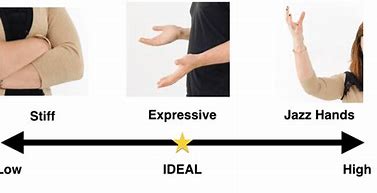
Making sure that your bodily gestures do not portray that you are anxious from within, is important. Clasping of hands, standing in the same stance for a longer time, rubbing of palms, tapping of feet should be avoided. Standing in an erect stance, with an amiable expression and making eye to eye contact with the audience present is essential. Simple confident hand gestures and displaying counting of points on fingertips from time to time, will attract the audience to follow along. An appropriate body language helps the speaker to engage well with the audience.

FOR INSTANCE – Distracting hand gesture such as fidgeting prevents the audience from absorbing what the speakers is trying to explain.

VOCABULARY BUILDING

To attain a sufficient level of mastery in usage of words and arranging them into sentences, reading does play a major role. Getting your hands on various genres of write-ups, hunting for meanings of less comprehensible words and jotting down those words on flashcards or sticky notes is one of the techniques to improvise on your vocabulary. Attempting to communicate with people possessing admirable literary skills, will help one to carefully pay attention to pronunciation of a plethora of words. Not everybody gets the privilege of interacting with literary expertise, but one can definitely listen to podcasts, songs, speeches and other audio visual means of learning.

FOR INSTANCE – Glancing through the Thesaurus such as the Oxford Dictionary on a regular basis, is beneficial to improve the vocabulary.

ENDLESS HOURS OF PRACTICE

We have all come across the quote, “Practice makes a man perfect.” One does not necessarily require an audience to practice public speaking. Many present day orators must have practiced their speeches in front of the mirror as newbies. Including personal experiences, explanation of real life stories, subtle humour can be used to craft a speech. After the script has been finalized, beginners can practice speaking against the mirror or a small group and record what is being spoken. But, one must not constantly make use of the mirror as a tool because the concept of public speaking in itself states that a speech has to be delivered in front of an audience. Hence, a mirror cannot create an audience like impact for the speaker. Thus, regular practice will help one to analyse his/her shortcomings and can make alterations accordingly.

FOR INSTANCE – Practicing in front of a mirror, will help an individual to focus on his gestures and he can thereby try to eliminate under confident bodily motions.

Man cannot gain absolute perfection in all the tasks throughout his journey of life. But one can definitely attempt to minimize the flaws or shortcomings within oneself. This blog strives to highlight the methods through which one can build up spoken skills and the confidence required to conquer the fear of Public Speaking.

WAYS TO IMPROVE SPEAKING SKILLS

Speaking is the art of conveying thoughts and feelings vocally through language. It may be an informal speech or a formal one. Informal speech is the casual conversations that you have in our day-to-day life. Formal speech is the conversations that you have in official meetings, schools, and colleges. It is one of the communication skills that are necessary to maintain good relationships in the work environment. This skill gives the ability to speak with others effectively. Here are few tips that will help you to improve your verbal skills.

  • EXPAND YOUR VOCABULARY

Learning new words and phrases every day can widen your vocabulary. Have a target to learn few words per day and follow that throughout the year. For example, if you learn one word per day then you should have learned 365 new words in one year. These targets help you to have gradual increments daily. While you are learning be specific in what you are learning. Analyze what terms you require and learn accordingly.

  • CONCENTRATE ON YOUR PRONUNCIATION

You might know a lot of words, but do you pronounce them all correctly? You may or may not. When you are learning words have the habit of learning them with the right pronunciation. You may also need to learn how to use the word, intonation, and stress. Try to use a particular accent throughout your speech and don’t mix up different accents. This will showcase your speaking efficiency.

  • SPEECH SHADOWING

Shadowing helps to improve your language fluency. Shadowing is the technique of repeating a speaker right after him. It is like giving an echo to the speaker’s speech. Take a video of a good speaker and listen to it. Shadow the speaker with subtitles first, then try without transcripts. Start from simple videos, practice until you speak them perfectly, and move on to the next higher-level video.

  • IMITATE GOOD SPEAKERS

This is an effective way of improving your style and proficiency by listening to others. Listen to many good speakers and try to imitate them. Here, copying is not wrong rather it is good to do so as it helps in betterment your style and outlook. First, listen, observe then imitate. While you imitate record yourself to compare with the original one. You can repeat to listen as many times as you need until you are ready.

  • PRACTICE DAILY

Have a good practice of speaking the language. You may practice by speaking with your friends, colleagues or even with your family members. Start your practice from normal conversations and improve it gradually. You may also attend online classes to practice and speak along with a teacher to guide you. Practice by seeing yourself in the mirror. This self-talk enables you to know your expressions and body language. Record yourself when you practice and listen to it to correct your mistakes. Always speak with confidence in yourself. This shows your speech up. Try to keep the natural flow of the language. Use shortened forms and learn to use the word stress correctly. Participate in public events and competitions without hesitation. This will be a great learning for anyone because you gain confidence and lose fear as you do it in front of an audience.

These are some of the points that you could follow if you want to improve your speaking skills. Always keep in mind that even the best speakers emerged from the worst. So, practice hard until you master the skill. HAPPY LEARNING😊.

TIPS FOR PUBLIC SPEAKING

1. ACT CONFIDENTLY

Move towards the stage with energy and enthusiasm and deeply breath for few seconds. Look towards your audience straight in the eyes, and begin to talk as confidently as if every one of them owed you money. Imagine that they do. Acting confidently will help you gain some confidence and its better than talking nervously.

2. CHOOSE YOUR TOPIC WISELY

Your topic is the major factor of the success of your talk. Choose that topic which you feel most earnest and enthusiastic about, because if you feel confidently about your topic then only you can deliver a good speech. For example I like sports and book and I will talk about them.

3. INCLUDE YOUR AUDIENCE

Make the audience a part of your speech, because then only they will attentively listen to you  and will eagerly wait for what you have to say. And the best way to do that is by asking simple question that the audience can easily answer.

4. FIRST SPEAK TO YOUR FRIENDS

Before speaking directly to audience, rehearse that topic by actually speaking in front of someone like your friend or your family member. This will help you to become more confident about your topic and also it will help to learn what you have missed in your talk through your friend.

SOFT SKILLS

What are soft skills?

Soft skills are the traits that make your character. These are the skills that are common for anyone who is seeking a job regardless of the work domain. Soft skills are opposite to the hard skills that are completely related to the job stream. Hard skills differ from person to person while soft skills are common to all. These are the skills that should be demonstrated in our work environment and cannot be added to the resume. Some of the soft skills are communication, leadership, interpersonal skills, teamwork, critical thinking, creativity, work ethic, and many more.

Communication

Communication is the most important soft skill that anybody can possess. It is the speaking and writing skills that show the way you express yourself and your thoughts. It is a crucial skill for people in sales fields. Some common skills that fall under communication are presentation, public speaking, verbal and non-verbal communication, and listening.

Leadership

It is the quality that takes a person to higher positions. It shows how you mentor and your co-workers and employees and guide your teams. This includes the quality of volunteering and taking responsibility. This skill helps you to grow in your career. It is also critical for entrepreneurs. The leader must be able to take decisions. It includes decision-making skills, management skills, and mentorship.

Inter-personal skills

Inter-personal skills are the ones that we use unknowingly on a daily basis. These include the way we communicate with our teammates and co-workers. The relationship we maintain with others in the work environment and the optimistic approach towards things also are considered interpersonal skills. Some other skills which come under this are empathy, patience, diplomacy, etc.

Teamwork

It is the coordination that you maintain within the team. Taking the consent of each team member before starting work, giving equal opportunity and priority to each member’s opinion, discussing the plans and executing it in the right way, working together and faster to accomplish tasks – all these are combined and said as teamwork.  

Critical thinking

It is the ability to analyze and understand the problems and find out a solution for them. The person should have the quality of making the right decisions and changing them if they went wrong. The situations need to be handled smoothly without tension and stress. Observation, logical thinking, troubleshooting, flexibility, curiosity, and acceptance of changes come under critical thinking.

Work ethic

This is the quality of being punctual, organized in their works, submitting reports before the deadline. It is most essential for any type of job, be it small or big. Some of the work ethics are being independent, dedication, attentiveness, multitasking, time management, and so on. Employers are more likely to offer the job to a person with a good work ethic as it shows your professional behavior and organized approach towards work.

Creativity

It is a skill that requires innovative thinking to find a solution. It is needed in every field but it is most indispensable for designers, architects, and artists. Some skills that are included in creativity are thinking out of the box, imagination, mind mapping, application of the idea, experimenting, etc.

Apart from these, there are many more soft skills like planning, management, business ethics, business etiquette, self-confidence, time management and stress management, decision making, etc. You can cultivate these skills by practicing in your day-to-day life with your colleagues and friends.

Do check this course to learn more about it. 

Source: https://learning.tcsionhub.in/courses/career-edge-young-professional/

Effective speech 101

The first step is to overcome the fear of public speaking. Effective speaking is not an inbuilt talent. You can develop it through correct practices just as we learn other things in life.

You can do this through:

  1. Deep breathing: Before and after your speech
  2. Shifting your focus from how you look and feel to the message you want to share with your audience. Do not imitate others, just be yourself.
  3. Visualizing: Take 10-15 minutes a day to relax, close your eyes and visualize the room you are speaking in, the audience and yourself confidently delivering your speech, smiling and moving across the stage.
  4. Focus on facts, not fears: Instead of focusing on your irrational fears- mind going blank or audience getting bored- focus on the thoughts like ‘I have the sketch, I know the bullet points or I am knowledgeable on this topic.’ Rehearse it with your friends or family.
  5. Focus on speech clarity: Organize the speech around two or more important points rather than including all the information from everywhere.
  6. Never memorize it word to word. Just remember the facts and major points and you will come around. Make brief notes of interesting things or which you don’t want to miss.
  7. Be excited about your subject, include experiences and provide examples. They do wonders!

After overcoming the fear of speaking, begin with all the important points for effective speaking.

  1. Story telling

Audience can forget data and statistics, but they will never forget a delightful story. Use stories from real-life events, something funny to share from your past incidences or challenges, struggle and success stories, etc.

Your stories should be:

  • Relevant to the subject
  • Short and simple
  • At proper intervals
  • Relatable

        You should:

  • Express emotions through body language.
  • Use adjectives and verbs to make the stories more interesting.

You should not:

  • Use more than two stories on the same topic.
  • Fill it with too many minute details or characters which distract the audience from the primary concern.
  • Not use uncommon jargons.

2. Body language: It is our way of communicating through our body movements and gestures to express our emotions, expressions, and actions. We should also read the body language of our audience.

For a positive body language:

  • Posture: Feel comfortable and stay upright. No slouching shoulders or bent posture. Do not lean or grip the lectern. If you are sitting, do not lean, bent or move your legs very much.
  • Body placement: Move as you speak. Use the space, be with the audience and not behind the lectern or just positioned in one place. This cannot apply if you are sitting in a studio where you need to be seated.
  • Arms: Do not use hand gestures which reveal anxiety. Example: Clutching your hands, fiddling with your clothing, cracking fingers, etc.
  • Facial expressions: Smile at your listeners as you talk. It is very effective when you gain their admiration.

3. Tone of voice: The study related to the vocal part of the non- verbal communication is called paralinguistic. And paralanguage refers to the non- verbal elements of communication. These are:

Speech Pace: It is the speed at which we speak. Practice for 150 words per minute. It is the ideal limit. Steady your breathing, focus on enunciation, reflect about punctuation in your speech.

Speech Pitch: It is the placement of your voice on a musical scale from high to low. Usually men have lower pitch than woman. Varying your voice pitch differentiates different emotions and points. It is the easiest way to avoid monotony, add excitement, make certain words and ideas stand out, appear relaxed and confident to the listeners. Identify the exact words and phrases that you want to emphasize. Example: Use higher pitch for excitement and lower pitch for seriousness or to add weight to the message.

Speech Volume: It is the loudness of your voice. It depends on the space of speaking and the size of the audience. It should not look as if you are shouting when you are not. There should not be a difficulty in listening to you. Reach everyone in the distance too. You can change your loudness for creating dramatic effects or expressing powerful emotions.

4. Pauses: Pauses are much needed. There is no need to fill silence with umm, ahm, like, you know or and. There are 3 types of to use in different ways:

  • Brief pause: Last for half a second to 2 seconds. Use it for separating a thought, emphasizing last words, or building anticipation for what is coming.
  • Long pause: Can last anywhere from 3 seconds to a couple of minutes. Used for creating tension.
  • Spontaneity pause: Speakers are to use it when they are searching for the right word or pretending to reflect on something.You can also plan and plot these pauses. They ultimately make your the speech look more real, polished and less rehearsed.

5. Visual aids: These include flip charts, projectors, slide shows, handouts, and certain props.

  • Adding a visual dimension can make a speech look more vivid, graphic, and professional looking.
  • Multiplies understanding
  • Helps to maintain attention
  • Adds humour or creates excitement
  • Organizes complex information

Encourages gesture and movement to connect more with your audience. With good practice and knowledge of your subject, you can easily become an effective speaker.

20 Tips for Mastering the Art of Public Speaking

When my class was asked to describe our greatest fear- some said spiders while some said ghosts. But when the fingers were pointed at me and the entire class was staring at me for an answer, I froze. That is exactly when I knew my greatest fear was public speaking. The best way one can get over their fear is by practising it hence I made it my goal to be an ace at it. Today I’m a teacher and I speak in front of my students with ease and charisma.

The Wolf of Wall Street': A howling disappointment

Here are some of the tips that helped me through my process of practising public speaking:

1. Know your audience.

If you are speaking in front of an audience, there is usually a reason. Know who you are speaking to and what they want or need to take away. If it’s friends and family, entertain them. If it’s a corporate event, teach and inspire them. Knowing the demographic of the audience is imperative.

2. Rehearse, rehearse, rehearse.

Nothing becomes muscle memory unless you practice relentlessly. If you have a big speech coming up, make time every day to practice. Prepare your goals and the content well ahead of time. This can be done while driving, exercising, in the car, on a plane…anywhere.

3. Practice with your friends and family.

Once I know the content, I like to add a little bit of distraction to test how well prepared I really am. Turn on the TV or rehearse while pushing your child in the swing. Anything that adds a little more challenge. While taking a shower or even while dinner with your parents.

4. Maintain your own style.

Different events will often require a different approach or style. Sometimes reading a prepared speech is fine. But know it backward are forward so you’re not staring down at the pages the whole time. Some use notes. Others prefer to be 100 percent scripted and memorized. If that’s your style, memorize the content so well that you can go off script if needed — and so you don’t sound like you’re reciting a poem. Use the proper approach for the appropriate event.

5. Know the environment.

Know the venue where you will be speaking. Get there well ahead of time. Walk the room. Walk the stage. Get a feel for the vibe of the environment so you are more comfortable when its “go time.”

6. Test all equipment.

Nothing sucks more that last-minute technical difficulties. Avoid adding even more stress by testing any and all equipment and audio visual functions ahead of time. And have backups.

7. Practice in front of a mirror.

Practicing in front of a mirror is a good way to learn the proper amount of body motion, hand usage and facial expressions.

8. Take every opportunity to speak.

The only way to get better at anything is to do it all the time. Rehearsing is good, but nothing compares to actually getting up in front of an audience and doing it for real.

9. Practice body language and movement.

Remember, communication is much more about tone and body language than the words we say. The words of course matter, but emphasis comes with movement and body language.

10. Slow down.

We have some great sayings in the SEAL teams: “slow is smooth, and smooth is fast, ” and “don’t run to your death.” Nothing shows nerves more than racing through your presentation. If you want to impact the audience in a meaningful way, make sure they actually hear what you are saying. Slow it down.

11. Make eye contact, but avoid heavy body movements.

This one is very important, and it doesn’t matter how big the audience is. Make eye contact with as many people as possible. It makes the audience members feel like you are speaking directly to them. And don’t just stick to people in the first couple rows. Look at the people in the back too.

12. Know your material.

If your goal is to become a thought leader or actually teach the audience something, only a truly authentic understanding of the material will get you there.

13. Take long pauses.

Similar to slowing things down, make a point to take long pauses. And make them longer than you even think is appropriate. It can have a great impact on emphasizing key points and emotionally connecting to the audience.

14. Practice tone and voice modulation.

Don’t just eek your way through a speech using the same tone and volume. Tone and projection add a layer of entertainment and help keep the audience fully engaged from start to finish. These too must be practiced religiously.

15. Use humor and emotion.

It doesn’t matter what you are talking about. There is always a place for emotion or humor, or both. I find self-deprecating humor to work the best. And if you are starting to get emotional, so what? Use it. The audience may not remember everything you said, but they will remember how you made them feel. 

16. Mentally prepare.

Find time during the hour before your speech for some solitude. Get your mind right. Clear your head. If it’s five minutes before, just relax. The time for making sure you know the material perfectly has passed.

17. Exercise before you go on.

It’s almost impossible to feel stress and anxiety after a good workout. If you have the time, exercise. The closer to your speech, the better. It’s also a good time to practice. I like to rehearse while running or swimming.

18. Project confidence.

The more you project confidence, the more confident you are likely to feel. Get out there and own the room. Even if you are terrified. Fake it. Look people in the eye and command their attention.

19. Don’t go over the allotted time.

When in doubt, go under the allotted time. Less is sometimes more. But never, ever, go over. It’s poor speaking etiquette and shows you are not prepared. It’s also disrespectful of the agenda for the event. Again, just practice.

20. Ask for feedback.

Most of us don’t like to ask for feedback, especially when we know the response may include some constructive criticism.

However feedbacks if taken positively can do wonders for your speech improvisation especially from a third-party point of view.

Why Are We Clapping? - A History of Applause

Speaking is a great way to connect with people and a skill we all should master.

It’s a must for leaders and managers. It’s a must for sales. It’s basically a requirement for all entrepreneurs and business leaders.

So go on and practice this skill which will be your life saver!