Seven States leading in terms of estimated procurement of rice including Punjab, Chhattisgarh and Telangana

 The Secretary, Department of Food & Public Distribution (DFPD), Government of India, chaired a meeting of State Food Secretaries and Food Corporation of India (FCI) on 21.08.2023, to discuss the procurement arrangements for Kharif Crop ensuing Kharif Marketing Season (KMS) 2023-24.

A quantity of 521.27 LMT rice has been estimated for procurement during the forthcoming KMS 2023-24 (Kharif Crop) as against the previous year estimates of 518 LMT wherein 496 LMT was actually procured during last KMS 2022-23 (Kharif crop).  During KMS 2023-24 (Kharif Crop), the leading States in terms of estimated procurement of rice are Punjab (122 LMT), Chhattisgarh (61 LMT) and Telangana (50 LMT) followed by Odisha (44.28 LMT), Uttar Pradesh (44 LMT), Haryana (40 LMT), Madhya Pradesh (34 LMT), Bihar (30 LMT), ndhra Pradesh (25 LMT), West Bengal (24 LMT) and Tamil Nadu (15 LMT).

A quantity of 33.09  LMT of coarse grains /millets (Shri Anna) has been estimated for procurement by the States during the KMS 2023-24 as against actual procurement of 7.37 LMT during KMS 2022-23 (Kharif & Rabi). 6 minor millets have also been introduced to be purchased by the States at MSP of Ragi starting this KMS 2023-24, upto three years. To increase the procurement & Consumption of millets, Govt of India has revised the distribution period of millets, incorporated inter-state transportation of millets, added provision of advanced subsidy, administrative charges @2% and also revised guidelines for facilitating procurement of six minor millets. States/UTs were advised to focus on procurement of millets, not only on account of International Year of Millet-2023 but also for diversification of crops and enhanced nutrition in dietary patterns.  

During the meeting, issues relating to gunny bags requirement, route optimization for transportation of foodgrains from designated depots to Fair Price Shops, improving infrastructure in procurement centres, monitoring of wheat stock limit portal etc. were also discussed.

The meeting was attended by Principal Secretary/Secretary (Food) or Representatives of Andhra Pradesh, Assam, Bihar, Chhattisgarh,  Gujarat, Haryana, Himachal Pradesh, Jammu & Kashmir, Jharkhand, Karnataka, Rajasthan, Kerala, Madhya Pradesh, Maharashtra, Odisha, Punjab, Tamil Nadu, Telangana, Tripura, Uttar Pradesh, Uttarakhand and West Bengal. The meeting was also attended by Chairman & Managing Director, FCI & Other officers of FCI, Department of Food & Public Distribution, Indian Metrological Department and Department of Agriculture & Farmers Welfare.

***
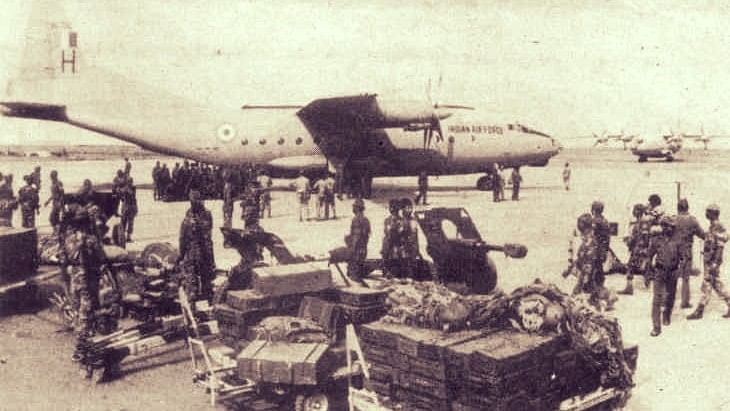
Operation Cactus by Indian Armed Forces which saved Maldives freedom.

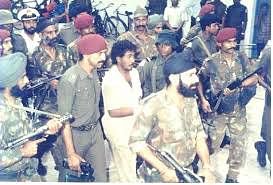
Operation Cactus, led by the Indian Armed Forces in 1988, to stop a group of Maldives mercenaries led by businessman Abdullah Rutufi, and armed mercenaries of the Tamil Elam People’s Liberation Organization (PLOTE), a separatist Tamil organization in Sri Lanka. It’s strategy was to overthrow the government in the Maldivian island republic.

Thier were two coup attempr done before 1988.The 1980 and 1983 coup attempts against President Maumoon Abdul Game were not considered serious, but the third coup attempt in November 1988 surprised the international community. About 80 armed PLOTE mercenaries boarded a speedboat from a Sri Lankan cargo ship hijacked in the capital Male before dawn. A similar number has previously invaded Male in the guise of a visitor. The mercenaries soon gained control of the capital. This includes major government buildings, airports, ports, television and radio stations. The mercenaries then marched to the presidential residence, where President Gayoom lived with his family. However, before they arrived at the presidential residence, President Gayoom was escorted to the Defense Minister’s house by a Maldivian national security forces. The Secretary of Defense then took the president to a safe home.

Meanwhile, the mercenaries occupied the presidential residence and managed to take the Maldivian Minister of Education hostage. President Gayoom called on Sri Lanka and Pakistan government to intervene in the military, but both refused to help because of lack of military power. The president then demanded Singapore’s intervention, but Singapore refused for the same reason. He then contacted the United States and was told that it would take a couple of days for the US military to reach the Maldives from the nearest military base in Diego Garcia, which was almost 1000 km away. The president then contacted Britain and who advised them to seek help from India. After that, President Gayoom sought help from the Indian government. India soon accepted their request and an emergency meeting was convened at the Secretariat Building in New Delhi. Within 16 hours of SOS, India was ready for thier missions.

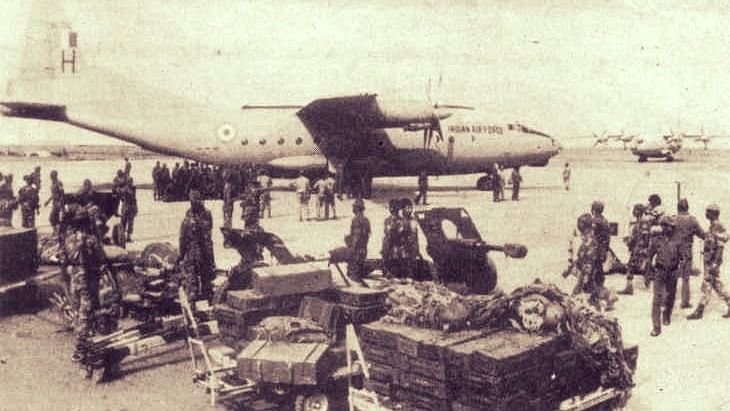
Rejaul Karim Laskar, a member of India’s then ruling party, the Indian National Congress, said that intervention of India in coup d’etat was necessary because without India’s intervention, outsiders powers were tempted to intervene and establish base in the Maldives. . Therefore, India intervened through “Operation Cactus”. On the night of November 3, 1988, the Ilyushin Il-76 aircraft of the Indian Air Force took elements of the 50th Independent Parachute Regiment, the 6th Parachute Regiment Battalion, and the 17th Parachute Field Paratrooper Regiment under Brigadier General Farsala from Agra Air. He flew non-stop for over 2,000 kilometers (1,240 miles) and landed at Male International Airport on Hulhule Island. Indian Army paratroopers arrived in Hulhule nine hours after President Gayoom proceedings.

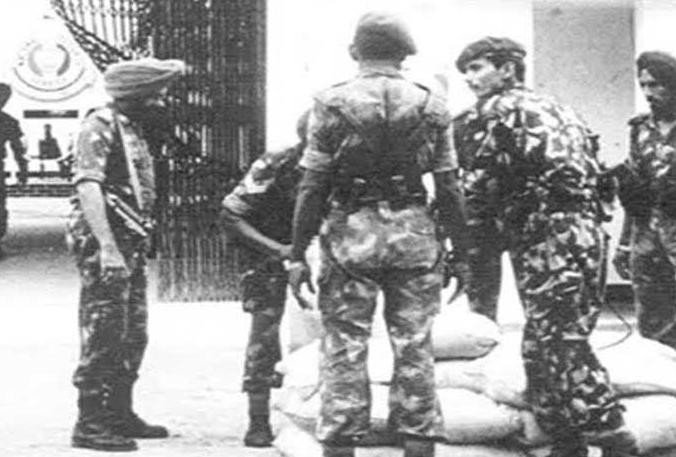
Indian paratroopers quickly secured an airfield and sailed to Male on a confiscated boat to rescue President Gayoom . Paratroopers handed over control of the capital to President Gayoom ‘s government within hours. Some of the mercenaries fled to Sri Lanka on a hijacked cargo ship. Those who could not arrive at the ship in time were immediately rounded up and handed over to the Maldivian armed Forces and government. According to reports, 19 people died in battle, most of them mercenaries. The dead included two hostages killed by mercenaries. And Operation Cactus took 18 hours for Indian Armed Forces from start to finish. Indian Navy frigate Godavari and Betwa intercepted a cargo ship off Sri Lanka and captured mercenaries. The swift intervention and accurate intelligence of the Indian Army was able to successfully subdue the coup attempted in the island nation.

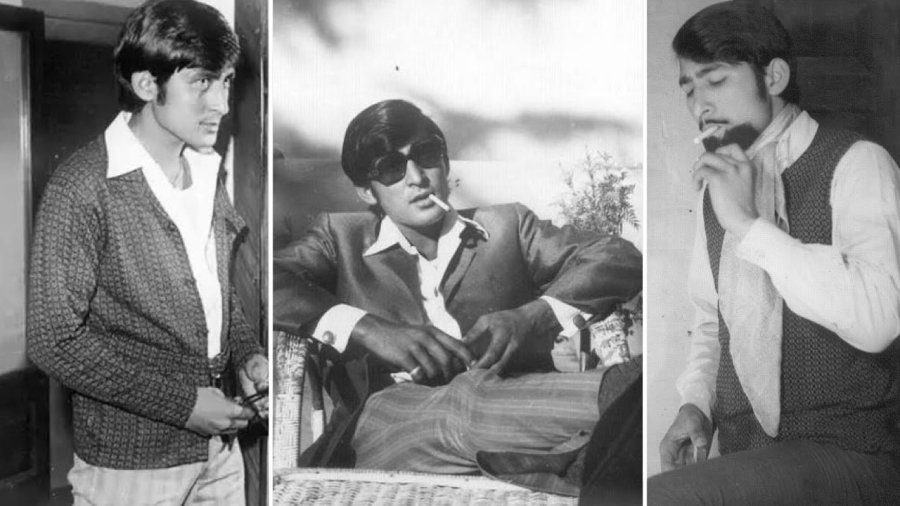
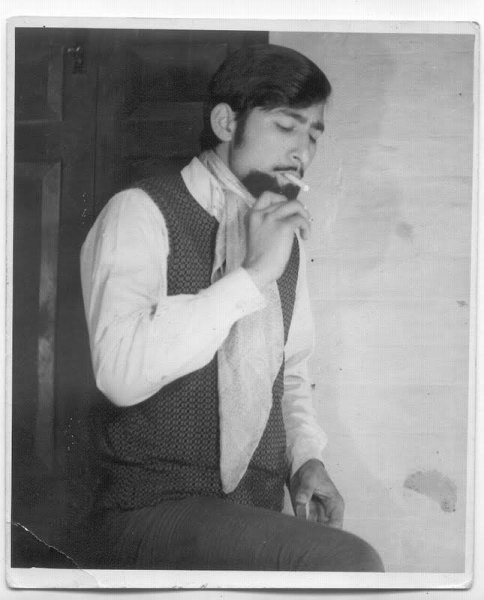
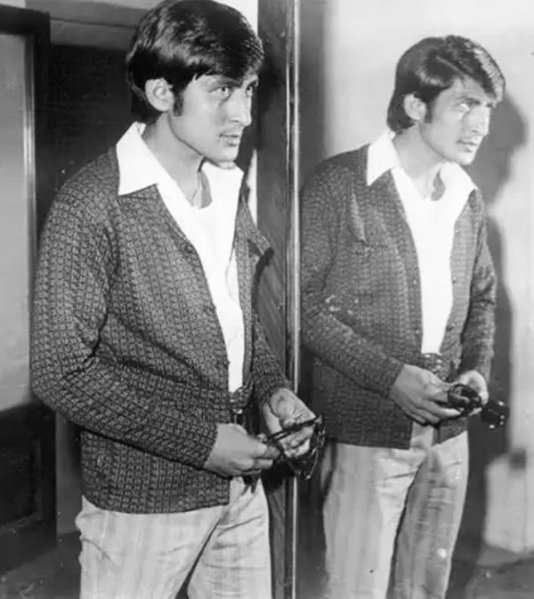
“Black Tiger” Of India Ravindra Kaushik.

Ravindra Kaushik who served in (R&AW) ,famously known as Black Tiger was born in Sri Ganganagar, Rajasthan on 11 April 1952 in a Brahmin family.
Ravindra during his graduation days used to do drama plays and during this time Kaushik displayed his talent at the national level dramatic meet in Lucknow, Uttar Pradesh, which was witnessed by officials from the Research and Analysis Wing. After which he was contacted and offered a job of being an undercover Operative for Research and Analysis Wing in Pakistan.

After agreeing to work for R&AW Kaushik was given extensive training in Delhi for two years. He underwent circumcision so he could pass as a Muslim. He was taught Urdu, given Islamic religious education and acquainted with the topography and other details about Pakistan. Being from Sri Ganganagar, a city near Rajasthan’s border with Punjab, he was well versed in Punjabi, which is widely understood in Punjab and Pakistan as well., India. In 1975, at the age of 23, He was sent to Pakistan.
Kaushik was given the cover name “Nabi Ahmed Shakir” and entered Pakistan in 1975. He was successful in getting admission in Karachi University and from where he completed his LLB. He then joined Pakistan Army as a commissioned officer and eventually promoted to the rank of a major. While living in Pakistan under his cover he married a local girl named Amanat, the daughter of a tailor in one of the army units, and with whom he fathered a boy .

From 1979 to 1983, while working as an officer, he passed on valuable information to R&AW which was of great help to India. He was given the title of ‘Black Tiger’ by India’s then home minister late S. B. Chavan.

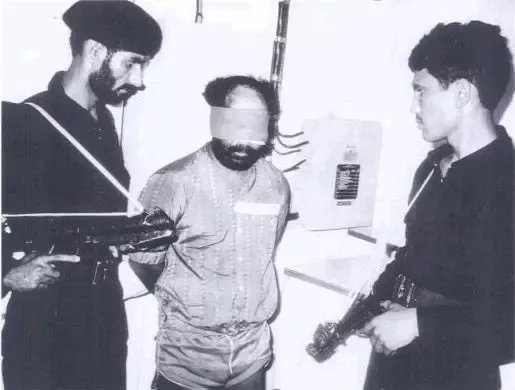
In September 1983, R&AW sent a low-level operative, Inyat Masih, to get in touch with Kaushik. However, Masih was caught by Joint Counterintelligence Bureau of Pakistan’s ISI and blew Kaushik’s cover. Kaushik was then captured, tortured for two years at an interrogation center in Sialkot. He was given the death sentence in 1985. His sentence was later commuted to a life term by the Supreme Court of Pakistan. He was kept in various jails in various cities, including Sialkot, Kot Lakhpat and in Mianwali jail for 16 years. He managed to secretly send letters to his family in India, which revealed his poor health condition and the trauma faced by him in Pakistani jails.He also adresses his thoughts on his country and department. In one of his letters he wrote:
“Kya Bharat jaise bade desh ke liye kurbani dene waalon ko yahi milta hai?” (Is this what people who sacrifice their lives for a big country like India get?”
In November 2001, he was caused with pulmonary tuberculosis and heart disease in Central Jail Mianwali in Pakistan.
He served for Research and Analysis Wing from 1975 to 1983.

“Writing about magic is harder than writing about spies because you’re dealing with something that doesn’t really exist.”

-Anthony Horowitz

What Is Causing Punjab’s Severe Electricity Crisis?

As temperature levels are on the rise in Punjab, where paddy transplantation is also in full swing, the state is experiencing a severe power outage. Even when the farm sector has still not received the guaranteed eight-hour electricity supply residential consumers have now been forced to suffer as a result of extended electricity outages

Furthermore, the state-owned power company PSPCL has enforced a two-day mandatory reduction on high-consumption industries in order to redirect electricity to farms and the household sector There is also a restriction on operating air conditioning units in government offices, as their hours have been reduced from 8 a.m. to 2 p.m. due to the shortages

The requirement for electricity has reached 14,225 MW as temperatures have risen and it is the peak season for paddy transplanting. The electricity providers, though, have only been able to deliver 12,800 MW. The 1,425 MW shortfall has resulted in power outages lasting up to 14 hours in the residential sector. Now, businesses have been closed down for two days to guarantee that the farming industry receives adequate supplies and also that the critical window for paddy transplanting is not missed. Farmers and residential customers took to the streets in protest a few days earlier. Industry groups are protesting that this was the last thing they wanted in the midst of a pandemic that has devastated all businesses.

What may have caused the state’s electricity problem?

The shutting down of the government-run thermal plant in Bathinda and two units of yet another government thermal plant in Ropar, with a total capacity of 880 MW, was one of the first actions taken by the current Congress administration in Punjab. There were no backup plans in place to compensate for the loss of output once these factories were closed.

Furthermore, in 2018, the government rejected PSPCL’s intention to build a 100-MW solar facility at the Bathinda thermal plant, which could have been operational within a year. A PSPCL request to upgrade a Bathinda thermal facility to utilize biomass fuel from paddy straw was also denied.

In addition, a unit of the private TSPL Power Plant located in Talwandi Sabo has been shut down since March 8 due to a lack of repairs. The plant generates 660 MW. According to former PSPCL chairman Baldev Singh Sra, the plant had to be closed down due to defective Power Purchase Agreements (PPAs).

Why is it that Punjab seems unable to purchase electricity then?

PSPCL is experiencing financial difficulties. The state owes it Rs 5,000 crore for agricultural subsidies, while government institutions owe PSPCL Rs 2,000 crore. During one latest power meeting held, Chief Minister Amarinder Singh instructed the finance department of the state to provide Rs 500 crore towards the usability for power purchase. Furthermore, even if it purchased additional electricity, the state of Punjab has a transmission capacity of 13,000 MW only.

What has the Punjab government said?

A. Venu Prasad, CMD of PSPCL, blamed the power outage on the collapse of the Talwandi Sabo power plant. He also stated that the hailstorm that occurred between June 10 and 15 contributed to the problem and that it took them many days to fix the plant. Because the destruction was so extensive, several areas are still being repaired.

Prasad also stated that the state’s water table was dropping and that more electricity was needed to extract water from the ground bore wells. He stated that the administration was dedicated to delivering electricity and that they had already begun acquiring power from other sources to hold them over till the situation passed. He said that the issue is now under order.