
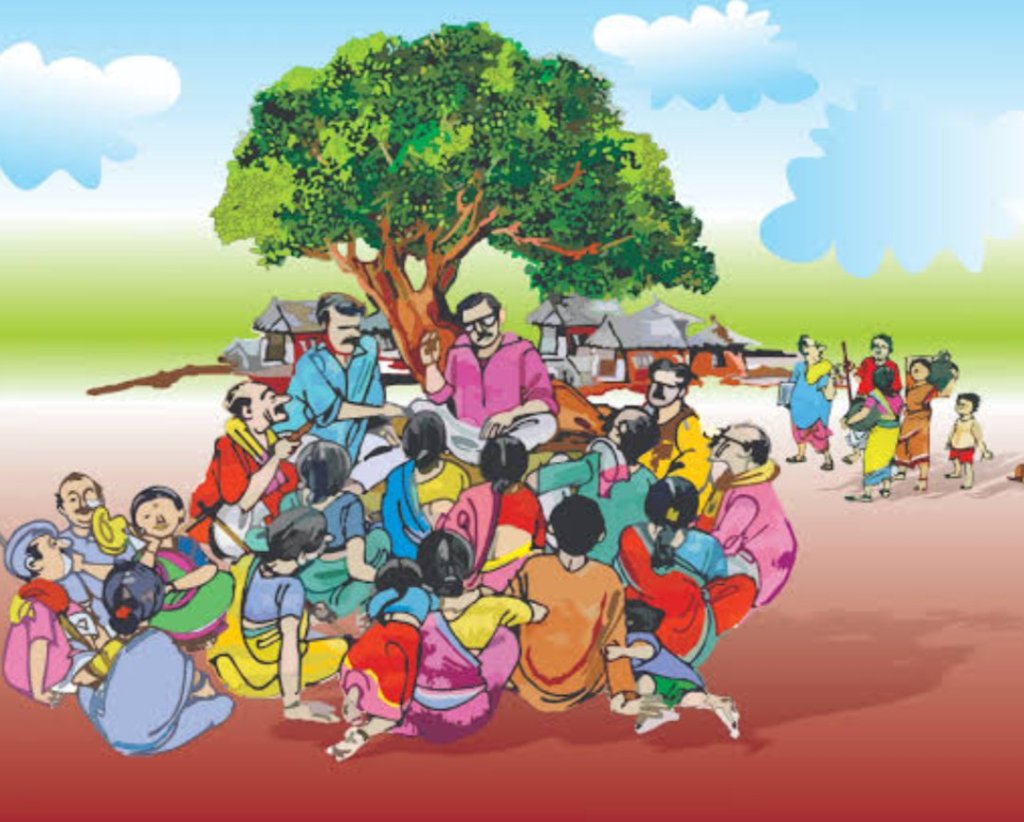
Panchayat Raj Institutions vital force for Indian democratic structure

Source: latestlaw.com

Evolution and development of the local self Government has long history. The notion of direct democracy in janapada and mahajanapadas, that said to be precursor of panchayati Raj Institutions in Post – independence India. The idea of local self – Government  (LSG) was also extended to the urban areas, thereby making the notion of local self government two dimensional i.e. rural local self Government and urban local self Government.

Local Self Government based on basic human needs having direct bearing on the lives of the individual and the community as whole, better fulfilled by a government to which the individual and the local community have direct and easy access. Panchayati Raj in India signifies the system of rural local self Government.

Post independence times, democratisation of the Polity in the members of the constituent assembly, Gandhian plea for a village based system of political formation fostered by a stateless, classless society was initially rejected by the Congress Constitution committee. The idea of Panchayati Raj finding a place in the Constitutional framework of the country persuaded to provide a place of relative insignificance to the dream of Panchayati Raj by placing part IV of the Constitution.

It was created to establish democracy at the grassroot level.  It was constitutionalised through 73rd Constitutional Amendment Act 1992. The Ministry of Rural Development looks after the matters relating to panchayati Raj bodies. The 5th entry of state list of the 7th schedule to the Constitution of India deals with local government. The government to operationalize the panchayati Raj with the inauguration of the Constitution on 26th January 1950.


Committees on Local Self Government

Balwant Raj Mehta Committee

In 1957, Government of India appointed a committee under Balwant Mehta to examine the working of the community development Programme and National Extension services. The committee recommended the establishment of democratic decentralization, which ultimately came to known as Panchayati Raj.

Recommendations of Balwant Mehta Committee are as follows;

Establishment of a 3 tier panchayat Raj system Gram panchayat at the village level, panchayat samiti at the block level, Zila Parishad at the district level.  

The village Panchayat should be constituted with directions elected Representatives. The panchayat samiti and Zila Parishad should be constituted with indirectly elected members.

These bodies are entrusted with all developmental activities. The Panchayat samiti should be the executive body while the Zila Parishad be the advisory body.

The district collector should be the Chairman of Zila Parishad.

National Development Council accepted these recommendation, but left to states to evolve their own patterns.


Ashok Mehta Committee

In December 1977, the janta Government appointed a committee on panchayat. Raj Institutions under the chairmanship of ashok mehta. It submitted it’s report in August 1978 and made 132 recommendations to revive and strengthen the declining Panchayati Raj system in the country.

The 3 tier system of Panchayati Raj be replaced by the two tier system, Zila Parishad at the district level. A district should be the first point for decentralization under popular supervision below the state level. Zila Parishad should be the executive body and made responsible for planning at the district level.

There should be an official participation of political parties at all levels of panchayat elections. The panchayat Raj Institutions should have compulsory powers of taxation to mobilize their own financial resources.

A minister for panchayat Raj should be appointed in the state council of ministers to look after the affairs of the panchayati Raj Institutions. Seats for SC and ST should be reserved on the basis of their population.

GVK Rao Committee

The planning commission of India in 1985, appoint GVk Rao as the Chairman of the committee on administrative arrangement for rural development and poverty alleviation programmes. The commission found that bureaucracy side lined Panchayati Raj in developmental process. The phenomenon of bureaucratisation of development administration’ results into grass without roots.

The committee made following recommendations:

Zila Parishad should become the principal body for management of all development programme at the district level. Planning functions at the state level should be transferred to the district level planning units.

A post of District Development commissioner should be created. He should act as the chief Executive officer of Zila Parishad.

The Panchayati Raj Institutions at the district and lower levels should be assigned an important role with respect to planning implementation and monitoring of rural development programme. Election to Panchayati Raj Institutions should be held regularly.

LM Singhvi Committee

Rajiv Gandhi Government in 1986, appointed a committee on “Revitalization of Panchayati Raj Institutions for democracy and development” under the  ‘Chairmanship of LM Singhvi’.

Constitutional recognition of the Panchayati Raj Institutions were recommended. It suggested Constitution provisions to ensure regular , free and fair elections to the panchayati Raj bodies.

Nyaya panchayat should be established for cluster of village. The village Panchayats need to be equipped with financial resources.

The judicial tribunals should be established in each state to adjudicate controversies about the election to the panchayati Raj Institutions their dissolution and other matter related to their functioning.


73rd Amendment Act 1992

The Constitutional Amendment Act of 1992 has added Part – IX to the Constitution of India. It is entitled as The Panchayats’ and consists of provision from Article 243 to 243. The act also add 11th schedule to the Constitution. It contains 29 functional items of the panchayat and deals with Article 243- G.

Panchayati Raj Institutions get a constitutional status and State Government are oblised to adopt the new Panchayati Raj Act. Constitution balance between the center and state is not disturbed by the act.

Gram Sabha

Gram Sabha as the foundation of the panchayati Raj system. The Gram Sabha is a body consisting of persons registered in the electoral rolls of a village comprised within the area of panchayat at the village level. The Gram Sabha exercise such powers and functions at the village level. The Balwant Rai Mehta committee report, which envisaged a three tier structure at local level, made no formal mention of the Gram Sabha.

Gram Sabha exists as a statutory body in almost all states except in Kerala and Tamil Nadu. In states like Bihar, Odisha and Rajasthan, all the audit residents of a village or a group of village are it’s member.

Functions of Gram Sabha

To help implementation of the development programme and schemes of the panchayat. To support the programme of mass education and family welfare.

To solicit support in cash or kind or both and voluntary labour from the Public for community welfare programme. To discuss and appropriate action with regard to reports of the vigilance committee.
 

Panchayat Raj Institutions vital force for Indian democratic structure

Source: latestlaw.com

Evolution and development of the local self Government has long history. The notion of direct democracy in janapada and mahajanapadas, that said to be precursor of panchayati Raj Institutions in Post – independence India. The idea of local self – Government  (LSG) was also extended to the urban areas, thereby making the notion of local self government two dimensional i.e. rural local self Government and urban local self Government.

Local Self Government based on basic human needs having direct bearing on the lives of the individual and the community as whole, better fulfilled by a government to which the individual and the local community have direct and easy access. Panchayati Raj in India signifies the system of rural local self Government.

Post independence times, democratisation of the Polity in the members of the constituent assembly, Gandhian plea for a village based system of political formation fostered by a stateless, classless society was initially rejected by the Congress Constitution committee. The idea of Panchayati Raj finding a place in the Constitutional framework of the country persuaded to provide a place of relative insignificance to the dream of Panchayati Raj by placing part IV of the Constitution.

It was created to establish democracy at the grassroot level.  It was constitutionalised through 73rd Constitutional Amendment Act 1992. The Ministry of Rural Development looks after the matters relating to panchayati Raj bodies. The 5th entry of state list of the 7th schedule to the Constitution of India deals with local government. The government to operationalize the panchayati Raj with the inauguration of the Constitution on 26th January 1950.


Committees on Local Self Government

Balwant Raj Mehta Committee

In 1957, Government of India appointed a committee under Balwant Mehta to examine the working of the community development Programme and National Extension services. The committee recommended the establishment of democratic decentralization, which ultimately came to known as Panchayati Raj.

Recommendations of Balwant Mehta Committee are as follows;

Establishment of a 3 tier panchayat Raj system Gram panchayat at the village level, panchayat samiti at the block level, Zila Parishad at the district level.  

The village Panchayat should be constituted with directions elected Representatives. The panchayat samiti and Zila Parishad should be constituted with indirectly elected members.

These bodies are entrusted with all developmental activities. The Panchayat samiti should be the executive body while the Zila Parishad be the advisory body.

The district collector should be the Chairman of Zila Parishad.

National Development Council accepted these recommendation, but left to states to evolve their own patterns.


Ashok Mehta Committee

In December 1977, the janta Government appointed a committee on panchayat. Raj Institutions under the chairmanship of ashok mehta. It submitted it’s report in August 1978 and made 132 recommendations to revive and strengthen the declining Panchayati Raj system in the country.

The 3 tier system of Panchayati Raj be replaced by the two tier system, Zila Parishad at the district level. A district should be the first point for decentralization under popular supervision below the state level. Zila Parishad should be the executive body and made responsible for planning at the district level.

There should be an official participation of political parties at all levels of panchayat elections. The panchayat Raj Institutions should have compulsory powers of taxation to mobilize their own financial resources.

A minister for panchayat Raj should be appointed in the state council of ministers to look after the affairs of the panchayati Raj Institutions. Seats for SC and ST should be reserved on the basis of their population.

GVK Rao Committee

The planning commission of India in 1985, appoint GVk Rao as the Chairman of the committee on administrative arrangement for rural development and poverty alleviation programmes. The commission found that bureaucracy side lined Panchayati Raj in developmental process. The phenomenon of bureaucratisation of development administration’ results into grass without roots.

The committee made following recommendations:

Zila Parishad should become the principal body for management of all development programme at the district level. Planning functions at the state level should be transferred to the district level planning units.

A post of District Development commissioner should be created. He should act as the chief Executive officer of Zila Parishad.

The Panchayati Raj Institutions at the district and lower levels should be assigned an important role with respect to planning implementation and monitoring of rural development programme. Election to Panchayati Raj Institutions should be held regularly.

LM Singhvi Committee

Rajiv Gandhi Government in 1986, appointed a committee on “Revitalization of Panchayati Raj Institutions for democracy and development” under the  ‘Chairmanship of LM Singhvi’.

Constitutional recognition of the Panchayati Raj Institutions were recommended. It suggested Constitution provisions to ensure regular , free and fair elections to the panchayati Raj bodies.

Nyaya panchayat should be established for cluster of village. The village Panchayats need to be equipped with financial resources.

The judicial tribunals should be established in each state to adjudicate controversies about the election to the panchayati Raj Institutions their dissolution and other matter related to their functioning.


73rd Amendment Act 1992

The Constitutional Amendment Act of 1992 has added Part – IX to the Constitution of India. It is entitled as The Panchayats’ and consists of provision from Article 243 to 243. The act also add 11th schedule to the Constitution. It contains 29 functional items of the panchayat and deals with Article 243- G.

Panchayati Raj Institutions get a constitutional status and State Government are oblised to adopt the new Panchayati Raj Act. Constitution balance between the center and state is not disturbed by the act.

Gram Sabha

Gram Sabha as the foundation of the panchayati Raj system. The Gram Sabha is a body consisting of persons registered in the electoral rolls of a village comprised within the area of panchayat at the village level. The Gram Sabha exercise such powers and functions at the village level. The Balwant Rai Mehta committee report, which envisaged a three tier structure at local level, made no formal mention of the Gram Sabha.

Gram Sabha exists as a statutory body in almost all states except in Kerala and Tamil Nadu. In states like Bihar, Odisha and Rajasthan, all the audit residents of a village or a group of village are it’s member.

Functions of Gram Sabha

To help implementation of the development programme and schemes of the panchayat. To support the programme of mass education and family welfare.

To solicit support in cash or kind or both and voluntary labour from the Public for community welfare programme. To discuss and appropriate action with regard to reports of the vigilance committee.

 

EVOLUTION OF CONTENT DRIVEN CINEMA IN INDIA

Source: Mindscreen

Good content driven movies are not new phenomena in indian cinema. We have already encountered since 60s but like change is part of any civilization or human life same occurred in Indian cinema which eventually turned out only in Bollywood. Firstly we need to understand Bollywood is not sole representer of Indian cinema infact it is just a entity of ocean. Why I am saying content had it’s own long back story with filmmakers like Bimal Roy, hrishikesh Mukherjee, shyam benegal, guru dutt.

We had tendency to watch good cinema but off course how human evolve too fast in peculiar manner as no other species able to do. That’s how ‘Art of filmmaking ‘ appeared to distorted in 80s and 90s.

What is content?
First, we need to track down the meaning of CONTENT that what do we mean by content ?

Information , experience of our surrounding ; expressing through the medium of writing , speech, poster and film. The main components are here – Information and experience. When any filmmaker portraying real life challenges , situations what happens people feel attach to those situations audience ready to believe what writers wants us to believe audience feels like he/she like me it okay not to be okay.

Content is something when filmmaker become successful to build that bond between script and audience which was result of real life experiences.

Golden age of Cinema

60s and 70s was the time when Indian cinema was on it’s peak of content driven script best part was audience love those movie. Let’s talk about few movies from that time – A kannada film Malaikkallu (1954) beautiful love story , Bedara kannapa. Bimal Roy was one of the finest filmmaker in india. He made movies on class struggle, casteism. For instance Do bigha zameen (1953) which was story of misuse of Power, Sujata( 1959), Bandini (1963). Each film has their own questions to the Society. These are not critical claim movies but real entertainment even in 21th century.

Hrishikesh Mukherjee who introduced new blend of entertainment and depicted the real life difficulties beautifully like in Anand (1971), Anari ,Abhimaan (1973) these films has its own substance to deal with filmmaking. If we talk about Abhimaan , Mukherjee was depicted as love, bliss, anger, ago, heartbreak and reunion of love again.

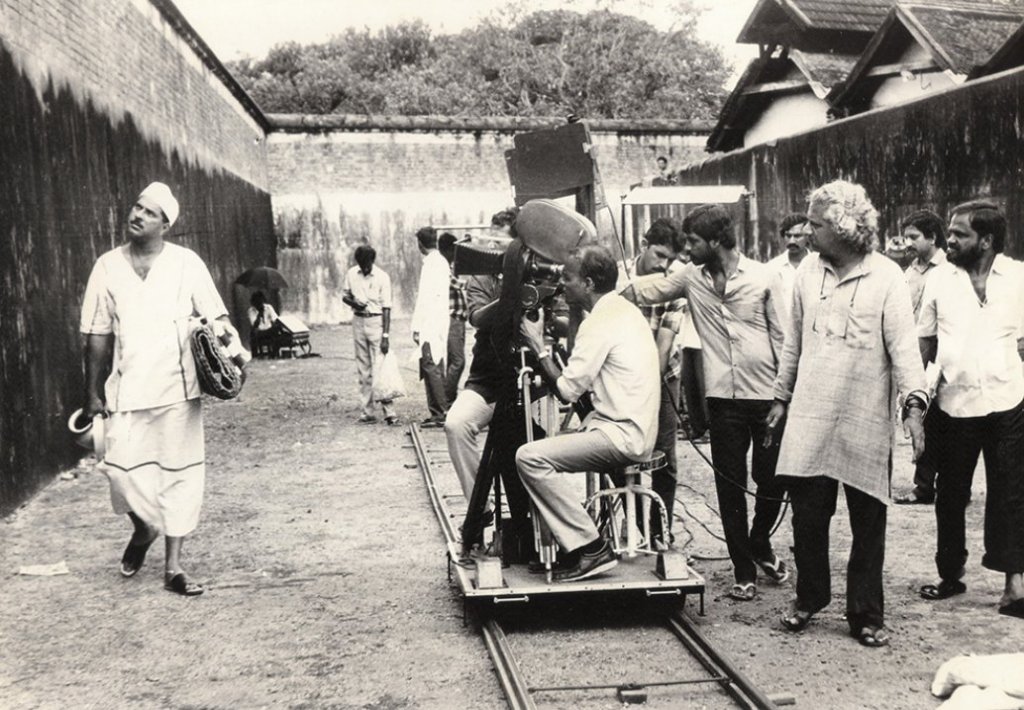
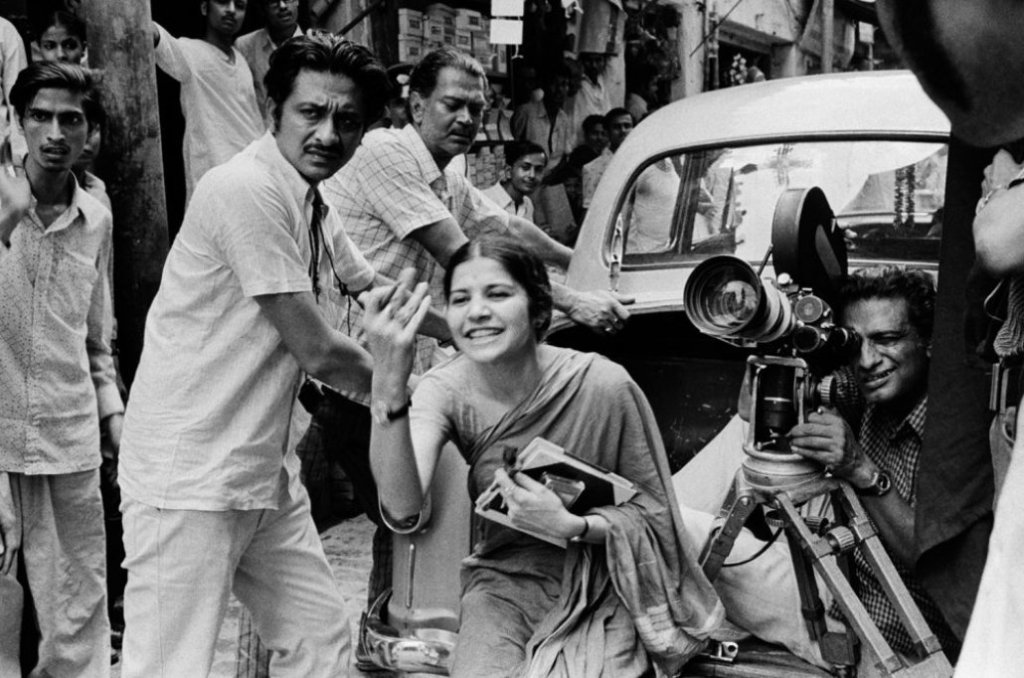
Now, the man who inspires and motivates young filmmakers to work on their ideas makes us all love his movies that is one and only satyajit Ray who changed the entire experience of filmmaking. The Apu trilogy (1955- 59) , The music room (1964) even though these films are in Bengali Language but language couldn’t switch off the impact.

Guru dutt another renowned filmmaker who made such incredible films – pyasa, kagaaz ke phool, chaudhvin ka Chand. Shyam benegal is one of understated filmmaker in modern time and for millennials. He gave Nishant , ankur, manthan( Indian’s first crowdfunded film by farmers who donated 2 rupees each) & terikal. Nishant was emphasize on during the time of feudalism in India, rural elite and sexual exploitation of women. This movie selected for Palme d’or 1976 Cannes film festival. The treatment of movie was so real that appeared very much real even in today’s time.

One element was common in 60s and 70s that filmmaker were not afraid to make good cinema, those makers knows how to write script that turned into great screenplay. Remember this is all happening in 60s where no use of excessive technology or no business Mongols of Bollywood.

Emphasis of Bollywood

From the time of 80s the style of filmmaking was changed or more likely to say distorted. Now, in 90s the explosion of star power corrupted the scripts , producers more inclined towards taking big stars in their movies without thinking about script and screenplay.

In 80s & 90s most common script pattern was “love story” and STARS like we don’t have mind to understand other kind of genres. Movies like – Tezaab, lamhe, raja hindustani , Dil toh pagal hai Chandni and kuch kuch hits hair, Hum aapke hair kon an d Hum sath sath hai etc. Now, we are not saying these were the only type of movies at that point of time exist ; there was also good movies like parinda, arth, sparsh, masoom, ek doctor ki maut, Drishti.

Reign of the good movies

After the gangs of wasseypur (2012) Bollywood discovered new and improved love for content driven cinema. After that Bollywood flooded with good filmmakers but old, rotten content still not vanished but level was decreased.

Queen, gangs of wasseypur, Hindi medium, The lunchbox , Vicky donor, udta Punjab , Shahid, talvar , piku are the movies which got tremendous account of love from audience as well as critical claimed movies. So now happened producers started to invest their money in fresh and fine scripts distributors had to turned their sides.

Let’s talk about web series if we talking about content web series culture changed the whole market for digital media. Where filmmakers are ready to play with screenplay, giving twist and turn. In this process , actors who are talented but put on backfoot now got their fair chance and basically employment.

When Content became Business

Movie business is unknown to commoners but insiders (families of Bollywood) knows really well how this business runs , have their production house. The whole idea is big production house grabs more screens on the basis of big stars only. Distributors are all set to do whatever these big house demands for example Thugs of Hindustan. In terms of box office collection masaan was flop but not literally. Ishqzaade, jab Tak hai jaan , rowdy rathore, ek tha tiger, agneepath, cocktail , Chennai express were all big blockbusters but as far as we see content was in dry and ancient well.

Regional Cinema of India

Regional Cinema has vast variety of exploration , big spectrum of ideas most importantly courage to implement their ideas in better screenplay. Veedu , sairat, chumbak, jogwa naal, aamas , visaranai, baaram all these movies has their different way to deal with society norms which wrapping in entrainment.

Conclusion

We should start praising good movies, audience (we) are everything in show business. If we find bad scripted film good because of stars then we are at the wrong side. We are investing our money at wrong recreation in terms of movies. Now we have to decide what we want in our entrainment list. Create a kind of environment for stars that if they produce and feature in trash films we not going to watch then stars will also take serious measures in the departments of script, writers and audience.

Remember we make them stars so, we are more responsible!!

KodiSoftware Download For Free | Top sites


Let’s start with knowing that what is Kodi software and why one should have it.

What is Kodi software?

Initially released in 2002 [as Xbox media play], in 2003 [as Xbox media centre]. Kodi software application is developed by the XBMC Foundation, Kodi is a free and open-source media player software application, it’s a non-profit technology consortium. It’s a 10-foot user interface with television and remote controls.

With a view of most streaming media such as podcasts, music, videos and views from the internet, one can access all Common digital media. These are some of its platform PowerPC, IA-36, ARM and x64(x84-64). Available in 12[75 including incomplete translations] language. HTPC it’s is a multi-platform home-theater PC application. Kodi is highly customizable so allow it’s users to stream media content via online services such as Crackle, Amazon Prime Internet Videos, Pandora Internet Radio, Spotify and Youtube.

The later version of kodi has a (PVR) graphic front and end. All these available advantages make Kodi a great software to be utilized.

 Let’s now dive into how to download Kodi for free.

Already millions of people are enjoying this great software for free. Kodi is running on the most common processer architectures, iOS, Android, MOS X and Windows operating systems.

How to download : select your platform

As Kodi supports a large range of devices and operating systems, it is multi flavour. Simply select your platform in which you want to install Kodi on and enjoy Kodi.


Slowing Industrial Production : Reasons & Solutions

Industrial production declined at a 2.2 percent annualized pace through the first half of 2019. It’s tempting to interpret the slump as an early warning of a faltering economy, but a closer look at the headwinds facing the nation’s manufacturers reveals several idiosyncratic forces behind the slowdown. Tariffs are unlikely to have been a major factor in the decline, and the underlying support from consumer demand remains strong.

Industry’s slowdown has been concentrated in the energy, automotive and aerospace sectors due to unique forces that are likely to subside without causing broader economic disruption. Despite falling industrial production, the tightening labor market implies that the expansion still has momentum.

The Index of Industrial Production (IIP), considered as the representative of industrial growth in India witnessed the reduced growth of 2.7% in May 2015 making a dent on the tall claims of the government about the revival of high growth phase. The overall growth of the secondary sector for the month of April was also revised downward to 3.4% from the earlier estimated 4.1%.

The slowdown in the industrial growth was driven by the slow growth in manufacturing sector from 4.2% in April 2015 to 2.2% in May 2015. Among the sub-sectors of industry: mining and electricity sectors improved to 2.8% and 6% respectively but consumer good industry contracted by 1.6%.

The consumer durables and non-durables both saw the negative growth of -3.9% and -0.1% respectively. Capital goods also dragged the industrial growth as they saw a meagre 1.8% growth in May 2015 as compared to 6.8% in April 2015.

Despite the improvement in core sectors like electricity and mining, slower growth in capital goods indicate that business sentiments are still not strong enough to make companies add machinery to their production lines to increase the production.

Are Tariffs to Blame?

Escalating trade tensions are undoubtedly concerning for businesses that rely on international supply chains and sales to overseas markets. But the actual tariffs levied so far amount to a relatively small slice of the US economy.

Last year’s $35 billion worth of tariffs on Chinese imports amounted to only 0.18 percent of American GDP, and its impact was offset by devaluation of the Chinese renminbi, which discounted Chinese goods on the US market.

If trade tensions really were behind the industrial slump, high-tech manufacturers should have been the hardest hit. Yet this sector has been one of the brightest spots in US industrial production, expanding at a 9 percent annualized pace this year, almost triple last year’s growth rate. America’s high-tech manufacturers have had little trouble sourcing components from foreign suppliers and selling their products overseas.

The Bigger Picture

Industrial activity is still important to the economy, but as a share of GDP, manufacturing has shrunk considerably from past decades. Today, industrial production represents only 11.5 percent of the economy and accounts for about 8 percent of the workforce; it’s possible for manufacturers to make modest cutbacks without stalling overall GDP growth.

As the headwinds facing the nation’s energy, automotive and aerospace manufacturers subside, industrial production should return to alignment with consumer demand. As always, layoffs are providing a reliable indicator of whether a disappointing economic indicator is actually causing distress for businesses. So far, industry’s slump hasn’t created a surge in applications for unemployment benefits; this implies that manufacturers aren’t making permanent staff cuts, confident that their assembly lines should soon be operating at full capacity.

Reasons of Slowdown

The negative growth of consumer goods was a significant drag on the industrial growth in May 2015. The demand for consumer goods has contracted in May 2015 due to low demand from rural areas. The unseasonal rainfall during the harvesting season in April resulted in heavy loss of rabi crops in general and wheat in particular adversely affecting the income of the farmers. Loss of income resulted in reduced demand from rural areas and ultimately affecting the growth of consumer goods.

Slow growth in capital goods and manufacturing indicated that investment climate is still not positive enough to usher high growth and signals the need of urgent reforms. Though government has made some moves to reduce the hassles in doing business in India, country still ranks low in doing business. Slow growth indicates that there is still a lot of scope to improve the investment climate. Reduced demand, infrastructural bottlenecks and many archaic laws are putting impediments for the high growth. When it is easy to do business in low cost countries like Bangladesh, Vietnam why would an international manufacturer invest in India. The cyclical upswing in demand can definitely improve the growth but this would not be sustainable.

Possible Solutions

As far as consumer demand from the rural sector is considered, it is likely to improve due to better than expected monsoon and we can see better growth of consumer sector during the third quarter. Reserve Bank on its part may reduce the interest rates to improve the investment climate as inflation is likely to remain within safe limits. But major thrust had to come from the government. However, ad hoc measures would only give a temporary boost to the growth.

For permanent solution, government must ensure positive and enabling environment. For that matter comprehensive reforms are required in every sector including labour relations, policy solutions, infrastructure improvements, energy reforms, financial reforms, skill enhancements etc. Along with aforesaid measures, bureaucratic hassles must be reduced to minimum because in comparison to other nations, red tapism plays a significant role in delaying the assured investments while denying the possible investments.

Moreover, government cannot bank on any one measure to usher growth but a holistic approach is required for a diverse growth that can gainfully absorb the increasing Indian work force.