

Sleep is one of the most important part of our lives . We spend about one third of our life sleeping. It is as necessary as food and water. Sleep affects almost every type of tissue and system in the body.
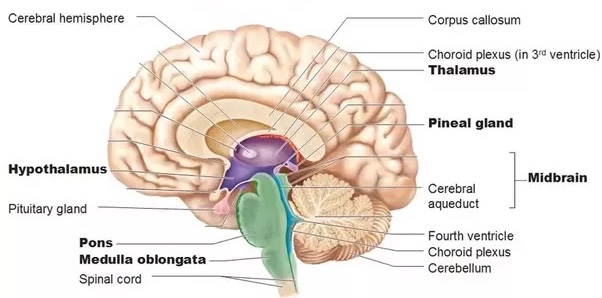
Anatomy of sleep
Hypothalamus
It is a peanut- sized structure above the Pituitary gland deep in the brain. It acts as the control centre responsible for shutting down the brain’s arousal signals that affect sleep. The nerve cells of neurons in the hypothalamus are strongly activated during sleep. Within the hypothalamus is the Suprachiasmatic nucleus (SCN)- groups of thousands of cells that receive data about light exposure directly from the eyes and controls the sleep rhythm.
Brain stem
The Pre-optic neurons and the brain stem produce a neurotransmitter called Gamma Amino Butyric Acid (GABA) which acts as an inhibitor as it blocks certain of signals and decreases activity in the nervous system.
Pons and Medulla
Pons, Medulla and mid brain send signals to relax or `paralyse’ muscles essential for body movement in the REM( rapid eye movement )sleep. This prevents The body to move the limbs in dreaming state and protects it from any damages by acting out.
Thalamus
It acts as a relay for information from the senses to the Cerebral Cortex. The cerebral cortex processes data from memory. In deep sleep stage, thalamus becomes quiet but during REM sleep or when we are dreaming, it becomes active sending out sounds,pictures or emotions that make our dreams.
Pineal gland
It is situated in the middle of the brain and is the major site for the production of hormone called Melatonin. This hormone helps put the body asleep when the lights go off. It helps with the timing of Circadian rhythm (internal biological clock) and with sleep.
Amygdala
An almond -shaped structure located deep within the temporal lobes of the brain. It is involved in the processing of emotions and memories. It becomes highly active during REM sleep.
Release of adenosine ,which is a chemical released by cells in the basal forebrain supports sleep drive. Taking caffeine blocks the action of this chemical.
Stages of sleep
Stage 1 Non REM sleep (NREM)
- The brain slows down.
- The heartbeat , eye movements and breathing slows.
- Body relaxes and muscles may twitch.
- Lasts 5-10 mins.
Stage 2 NREM sleep
- The body becomes less aware of the surroundings.
- Body temperature drops.
- Eye movements stop.
- Lasts about 20 minutes per cycle
The brain also produces rapid,rhythmic brain waves known as sleep spindles. This allows it to gather ,process and filter newly acquired memories.
Stage 3 NREM
- Slow brain waves called Delta waves are produced.
- It allows you to feel refreshed the next day.
- This is the state of deepest sleep.
- You are blood pressure drops and breathing slows.
REM sleep
- Voluntary muscles become immobilised.
- Rapid eye movement from side to side.
- You are breathing becomes faster and irregular.
- Heart rate and blood pressure increase.
- You dream ( about 2 hours every night).
- Begins about 90 minutes after falling asleep.
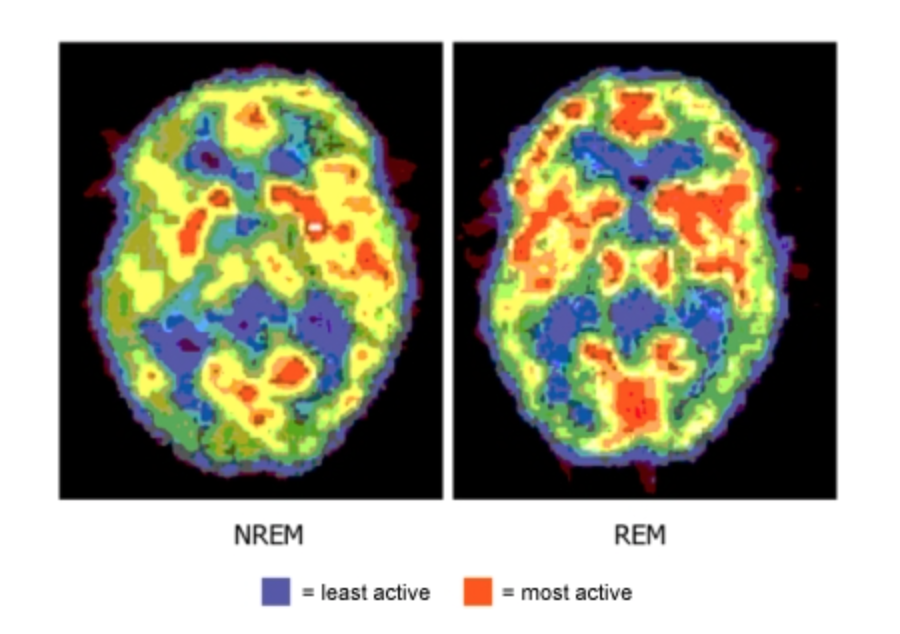
An average sleep cycle lasts about 90 minutes . Ideally, we need 5-6 cycles of sleep every 24 hours. Adults need 7 to 8 hours of sleep a night. Although scientists are still trying to learn exactly why we need sleep but studies show that sleep is necessary for survival. The amount of sleep affects our immune system ,nervous system, growth and memory. After all , it is a well know fact that:
Sleep is the best medicine.


 Eduindex
You must be logged in to post a comment.