

Empirical studies are crucial in early research as they provide a robust framework for gathering data and drawing informed conclusions. They are grounded in observation and experimentation, allowing researchers to gather data through various means such as experiments, surveys, and direct observations. This reliance on data drives the inquiry process, fostering a cycle of hypothesis formulation, testing, and revision based on the results obtained. The role of empirical studies in early research is to establish credibility, which is essential for gaining acceptance within the academic community and influencing policy or practice. It also helps in refining research questions and hypotheses, identifying gaps in knowledge, and formulating specific, testable hypotheses. This iterative process enhances the quality of research design and ensures that investigations are directed toward answering pertinent questions that address real-world issues. Empirical studies also facilitate generalization, allowing researchers to identify patterns and trends within data that can be generalized to broader populations. This is especially important in fields like social sciences, where understanding human behaviour in diverse contexts is critical. Early empirical research helps delineate the parameters of these generalizations, ensuring that subsequent studies build on a solid empirical foundation. Cultivating methodological rigour is vital in the early stages of research, as it sets a precedent for maintaining high standards throughout the investigation. Adhering to empirical methods fosters an environment of accountability and transparency, which is indispensable in scholarly work. Lastly, empirical studies illuminate practical challenges that may arise in real-world applications. By engaging directly with the subject matter, researchers can identify obstacles and limitations that theoretical frameworks might overlook, ensuring that research outputs are relevant and can effectively inform practice, policy or further inquiry.
Tag: research
Understanding Position and Discourse Research: A Necessity for Early Researchers
Position and discourse research are two distinct methodologies in academia that significantly impact the outcomes and implications of scholarly work. Position research emphasizes the researcher’s stance or perspective concerning the subject matter, exploring how their background, experiences, values, and beliefs inform their understanding and interpretation of a given topic. This approach is particularly important in fields such as social sciences, humanities, and qualitative research, where the subjective nature of knowledge production is acknowledged. In position research, the researcher explicitly states their positionality, which can include their cultural, social, and academic backgrounds, as well as their motivations for engaging with the topic. This transparency allows readers to critically assess how the researcher’s biases may influence the research findings and conclusions. By acknowledging their position, researchers can foster a more nuanced and reflexive understanding of their work, enriching the overall discourse. Discourse research focuses on how language and communication shape social realities. It examines how language constructs meaning, influences perceptions, and reflects power dynamics within a society. Discourse researchers analyze texts, spoken communication, and various forms of media to uncover underlying ideologies and social structures. This research approach is often employed in fields such as linguistics, sociology, and media studies, where understanding the interplay between language and society is paramount. Key differences between position and discourse research include focus and objectives, methodology approaches, and implications for interpretation. Position research encourages researchers to reflect on their biases and how these may shape their interpretations, while discourse research demands an analysis of how language constructs meaning and power, leading to insights into societal norms and hierarchies. Recognizing these distinctions will empower early researchers to produce meaningful and impactful research.
Understanding the Differences Between Theoretical and Positional Research: A Necessity for Early Researchers
Understanding the differences between theoretical and positional research is crucial for early researchers as it enhances the quality of research and helps develop a solid foundation for future investigations. Theoretical research focuses on developing, testing, and refining theories, often grounded in existing literature and seeking to expand upon established paradigms or concepts. It employs various methodologies, such as literature reviews, conceptual analysis, and mathematical modelling, to analyze existing theories and frameworks to identify gaps or inconsistencies. The outcomes of theoretical research typically manifest as new theories, models, or frameworks that can be tested through empirical research. This type of research provides a theoretical basis for understanding complex phenomena. On the other hand, positional research is more focused on applying theories to specific contexts, often driven by the researcher’s perspective or stance on a particular issue. It aims to understand and interpret specific situations or phenomena within a particular context, often influenced by their values, beliefs, or experiences. Positional research often employs qualitative methodologies, such as case studies, interviews, and ethnographic studies, to immerse researchers in the context they are studying, gathering insights and perspectives that inform their understanding of the phenomenon. Understanding these differences is vital for early researchers as it helps select the appropriate research method for a given study, aids in the critical evaluation of existing literature, and fosters a more nuanced understanding of the research process. Both theoretical and positional research contribute to the advancement of knowledge in different yet equally important ways. In conclusion, understanding the differences between theoretical and positional research is essential for early researchers to effectively navigate the landscape of academic inquiry, contribute meaningfully to their fields, and lay the groundwork for future exploration.
13TH GRADUATION CEREMONY OF THE NATIONAL INSTITUTE OF SCIENCE EDUCATION AND RESEARCH AT BHUBANESWAR
The President of India, Smt Droupadi Murmu graced the 13th Graduation Ceremony of the National Institute of Science Education and Research (NISER) at Bhubaneswar, Odisha today (July 9, 2024).
Speaking on the occasion, the President said that NISER’s journey has been only for a few years but in a short period, it has made an important place for itself in the education world. She was happy to note that this institution is moving forward by synchronising the rationality of science and the values of tradition.
Addressing the students, the President said that meaningful education and knowledge is only that which is used for the betterment and upliftment of humanity. She expressed confidence that wherever they would be working, they would achieve the best levels of excellence in their field. She hoped that along with their achievements in their field of work, they would also discharge their social duties with full accountability. She said that Mahatma Gandhi has defined seven social sins, one of which is merciless science. That is, promoting science without sensitivity towards humanity is like committing a sin. She advised students to always remember this message of Gandhiji.
The President advised students to always maintain humility and the spirit of inquiry within them. She said that they are expected to consider their knowledge as a social enterprise and use it for the development of society and the country.
The President said that along with the boon of science, there is always the danger of its curse. Today, very rapid changes are taking place in the field of Science and Technology. New technological developments are providing capabilities to human society, but at the same time, they are also creating new challenges for humanity. Like CRISPR-Cas9 has made gene editing very easy. This technology is a huge step towards solving many incurable diseases. However, problems related to ethical and social issues are also arising due to the use of this technology, Similarly, due to the advances in the field of Generative Artificial Intelligence, the problem of deep fake and many regulatory challenges are coming to the fore.
The President said that experiments and research in the field of Fundamental Science often take a lot of time to get the results. Many times breakthroughs have been achieved after facing disappointment for many years. She told students that they may go through such a phase at times when their patience is tested. But they should never be discouraged. She advised them to always remember that developments in fundamental research prove to be extremely beneficial in other areas as well.
Please click here to see the President’s Speech –
***
Countries List for Collaboration in Research

- Afghanistan
- Angola
- Bangladesh
- Belarus
- Belize
- Benin
- Bhutan
- Burkina Faso
- Burundi
- Cabo Verde
- Cambodia
- Cameroon
- Central African Republic
- Chad
- Comoros
- Congo
- Cook Islands
- Côte d’Ivoire
- Cuba
- Democratic People’s Republic of Korea
- Democratic Republic of the Congo
- Djibouti
- Dominica
- Equatorial Guinea
- Eritrea
- Eswatini
- Ethiopia
- Gambia
- Ghana
- Grenada
- Guinea
- Guinea-Bissau
- Guyana
- Haiti
- Iran
- Kenya
- Kiribati
- Kyrgyzstan
- Lao People’s Democratic Republic
- Lebanon
- Lesotho
- Liberia
- Madagascar
- Malawi
- Maldives
- Mali
- Marshall Islands
- Mauritania
- Micronesia (Federated States of)
- Mozambique
- Myanmar
- Nauru
- Nepal
- Nicaragua
- Niger
- Niue
- Palau
- Papua New Guinea
- Republic of Moldova
- Rwanda
- Saint Helena
- Saint Lucia
- Saint Vincent and the Grenadines
- Samoa
- Sao Tome and Principe
- Senegal
- Sierra Leone
- Solomon Islands
- Somalia
- South Sudan
- Sudan
- Suriname
- Syrian Arab Republic
- Tajikistan
- Timor-Leste
- Togo
- Tokelau
- Tonga
- Tuvalu
- Uganda
- Ukraine
- United Republic of Tanzania
- Vanuatu
- Yemen
- Zambia
- Zimbabwe
Top 20 Research Institutes in Africa
Africa is home to a diverse array of cultures, languages, and landscapes, and within its borders, there are numerous research institutes dedicated to advancing knowledge and contributing to global scientific progress. These institutions play a crucial role in fostering innovation, conducting groundbreaking research, and addressing challenges unique to the continent. In this article, we will delve into the top 20 research institutes in Africa, showcasing their contributions to various fields of study.

Top Research Institutes of Africa
Africa is home to several renowned research institutes across various fields. Here are some of the top research institutes in Africa:

-
Council for Scientific and Industrial Research (CSIR), South Africa: CSIR is one of the leading scientific and technology research, development, and implementation organizations in Africa. It conducts multidisciplinary research in areas such as health, natural resources, environment, defense, and more.
-
African Institute for Mathematical Sciences (AIMS), South Africa and Senegal: AIMS is a pan-African network of centers of excellence in mathematical sciences. It focuses on advancing education and research in mathematics and its applications to contribute to Africa’s development.
-
International Livestock Research Institute (ILRI), Kenya: ILRI conducts research on livestock-related issues, including animal health, genetics, nutrition, and sustainable livestock systems. It aims to improve food security, reduce poverty, and promote environmental sustainability.
-
Kenya Medical Research Institute (KEMRI), Kenya: KEMRI is a leading research institution in Africa, primarily focusing on medical and health research. It conducts research on infectious diseases, non-communicable diseases, and health systems strengthening.
-
Institut Pasteur de Dakar, Senegal: Institut Pasteur de Dakar is a renowned biomedical research institute that conducts research on infectious diseases, including tropical diseases such as malaria, yellow fever, and Zika virus.
-
National Institute for Communicable Diseases (NICD), South Africa: NICD is a public health institute that conducts research on communicable diseases, including surveillance, outbreak investigations, and laboratory diagnostics.
-
South African Medical Research Council (SAMRC), South Africa: SAMRC is one of Africa’s leading health research organizations, focusing on various health challenges facing the continent, including HIV/AIDS, tuberculosis, maternal and child health, and non-communicable diseases.
-
African Centre for Technology Studies (ACTS), Kenya: ACTS is a policy research and training organization focusing on sustainable development in Africa. It conducts research on climate change, energy, agriculture, and technology innovation for sustainable development.
-
National Institute for Medical Research (NIMR), Tanzania: NIMR is a leading research institution in Tanzania, focusing on biomedical and health research. It conducts research on malaria, tuberculosis, HIV/AIDS, and other infectious diseases.
-
Centre for Scientific and Industrial Research (CSIR), Ghana: CSIR Ghana conducts research in various fields, including agriculture, industry, environment, and health. It aims to promote sustainable development and industrialization in Ghana and beyond.
These are just a few examples of the many research institutes contributing to scientific advancement and development across Africa.
Correlation of Dynamics of Pedagogical Skill and the Psychological Support


By Sushila & Dr. Yogendra Nath Chaubey

“Quality Education” the fourth goal among the seventeen Sustainable Development Goals (SDG) outlined by the United Nations, is “to ensure inclusive and equitable quality education and promote lifelong learning opportunities for all”. These descriptions are remarkably similar to the focus identified through this research and, with this in mind, the three dimensions of this research are further explained as being; (1) the ‘Importance of Interaction’ – referring to the various levels of interaction between individuals within the school environment, accounting for behaviour, atmosphere, and types of communication, (2) the ‘Dynamics of Individuation’ – referring to the way in which the differing needs of individuals are personalised and catered for, accounting for classroom pedagogical approaches and student diversification, and (3) the ‘Need for Psychological Support’ – referring to the way in which individuals within the school and the school as a whole is supported by its community, from both an educational and psychological perspective. By suggesting that these research directions are intertwined concepts, they propose a holistic observation of contributing factors that influence the educational process.
This assessment could be used to identify teacher strengths from a personal, interpersonal, psychological, and pedagogical perspective. The Questionnaire of Teacher Interaction (QTI), Technological Pedagogical and Content Knowledge (TPaCK), and Mental Health Inventory (MHI) were used in the pilot study and were considered to be suitable for the needs of this research stage.
The ‘Educational Bubble’
In a recent talk, Seema Bansal (2016) mentioned being asked by the then head of the Department of Education in the state of Haryana (India), for help in addressing issues in their public schools. These ‘issues’ ranged in detail and complexity, including that up to 50% of students fall so far behind their peers before the age of eleven that they will be unable to recover. Despite public schools offering free meals or books to students, it was also found that 40% of parents would pull their children out of these public schools and register them into private schools. Bansal (2016), representing BCG (Boston Consulting Group), was asked to assist in the education renovation of an Indian state of Haryana, which consists of 15,000 public schools with over 2 million students. Bansal mentions needing to uncover the factors that have caused the educational issues in the first place and, in identifying the goals necessary to develop strategies for reaching this particular goal, decided to go directly into classrooms and observe the way educators were teaching. Reporting that the problem within Indian schools was the quality of education, not access to education, mentions that Bansals’ BCG team devised a three-year plan that was based around student learning outcomes and explicit focusing of accountability, data systems, and organizational capacity.
Bansal (2016) reports that Haryana teachers were very capable of teaching a class but, the majority of their time was spent outside of the classroom; this was interesting as, before physically entering a classroom, non-educators had apparently viewed teachers being ‘lazy’ or ‘incapable’. Although Bansal (2016) reported teachers not necessarily teaching, she mentions that it was because they were supervising the construction of new classroom buildings, supervising the cooking of student lunches, or visiting a bank to deposit scholarship money for students. This particular insight was (and is) incredible; Bansal asked teachers why they were not teaching and the teachers answered by saying that “when a supervisor comes to visit us, these are exactly the things that he checks” (5:29). This particular finding shows that in the provision of government programmes in Haryana, designed to motivate students to stay in school and give greater access, had become an additional point of accountability for teachers and had started to impede classroom instruction. Seeing this as an issue, Bansal and her team began to look at the literature at various educational programmes and pilot programmes that have been shown to improve instructional practice. However, what a large proportion of individuals fail to recognise is how the implementation of these programmes will always come at a cost. For example, schools that take part in a pilot that explores the use of innovative technologies on student learning might show that this programme does indeed result in higher levels of academic outcomes.
In Bansal’s (2016) talk she mentions that, with regards to studies and interventions, researchers will typically bring in resources such as money, experience, research assistants, or products. Unless researchers intend to roll out this innovation across every classroom in the country, the findings are most likely going to be un-scalable, ungeneralisable, unusable, and does not reflect a real-world classroom setting. It has been previously mentioned that “teaching requires being responsive to real-world conditions and constraints that shape the activities of the classroom and students” (Motoca et al., 2014, pg. 120). This view is similar to schools being ‘learning organisations’ where the “emphasis of research might be more upon the selection and differentiation of pupils and on their subculture rather than on the authority structure or the decision-making processes within the school” (Bell, 1980, pg.183). Hamzah, Yakop, Nordin and Rahman (2011) explain that, like all organisations, there is a strong emphasis on schools to adapt to their surroundings, encourage flexibility, and to be responsive to the various societal and cultural changes across an educational landscape.
While there is a large body of evidence favouring schools as learning organisations (Mulford, 1997; Stoll and Fink, 1996), research concerning how a school should go about this change is not as prevailing (Silins, Zarins, & Mulford, 2002). While it is clear that there are similarities between a school and an ‘organisation’, both have structure, both have management, there is leadership, interaction, and varying levels of accountability, it is also clear that many factors influence the way in which both operate. Johnston (1998) sought to investigate the key characteristics that involved a school identifying itself as being a ‘learning organisation’. Although focusing exclusively on post-primary schools based in Austrailia, it was found that inclusive, collaborative structures, effective communication channels, integrated professional development, and learning-focused leadership were the four main characteristics of schools being one of these ‘learning organisations’.
Under the three guiding topics of this research, explicitly outlined through questions and hypotheses, this current research sought to discover what the Irish educational environment needs and how a piece of research could be used practically to support school systems and the individuals within them. This research is looking towards the perception of a school being a learning organisation; considering the way which Silins, Zarins and Mulford’s (2002) express the four factors of ‘learning organisations’ above. These descriptions are remarkably similar to the focus identified through this research and, with this in mind, the three dimensions of this research are further explained as being; (1) the ‘Importance of Interaction’ – referring to the various levels of interaction between individuals within the school environment, accounting for behaviour, atmosphere, and types of communication, (2) the ‘Dynamics of Individuation’ – referring to the way in which the differing needs of individuals are personalised and catered for, accounting for classroom pedagogical approaches and student diversification, and (3) the ‘Need for Psychological Support’ – referring to the way in which individuals within the school and the school as a whole is supported by its community, from both an educational and psychological perspective. By suggesting that these research directions are intertwined concepts, they propose a holistic observation of contributing factors that influence the educational process.
While research in an Irish context has found that only 33.1% of schools regularly engage with SSE (Brown, 2010), this dispute between the DES and teaching unions will cause frustration, anxiety, and confusion throughout the educational community. The SSE is a thorough research process that requires considerable resources, the problem is one of ‘lack of support’, almost mirroring the issues faced by Bansal’s (2016) team in Haryana. Additionally, this lack of support echoes in other ways. For example, on 30th of March 2016, the INTO released a press release that argued against the cut in government funding for education and highlighted that schools are being forced to fundraise themselves, that they are “kept running on cake sales, raffles and sponsored walks” (2016b), despite having no empirical evidence to support.
3.6. Conclusion – The Individualised Teacher Report
This claim within the press release itself, it does clearly articulate the many problems experienced in Irish Education.
Despite focusing on the individual educator, rather than the collective school environment, this Ph.D. project somewhat resembles the development of a self-evaluation process; it requires educators to compete measures that evaluate their subjective instructional and psychological resources. Although the issues surrounding self-evaluation may be a possible limitation, this research would argue the opposite. This study could provide a process that allows schools to self-evaluate in a way that takes the workload away from schools, provides tailored feedback to individual educators, has a standardised methodological approach, and is evidence based and research driven. A new model of self-evaluation may be considered a momentous task; however, it is not beyond the scope of this project.
According to Collins and Pratt (2011), “there is a move to adopt a single, dominant view of effective teaching … [where] teachers are asked to reflect on who they are and how they teach but with an implied message that reflection should conform to some preconceived notion of a ‘good’ teacher” (pg. 359). It is naïve to assume that there is a ‘single view’ of what it means to be an effective educator, as the requirements and needs of one classroom group will differ that than of another. What is arguably more appropriate for education, rather than training educators to teach in the same way and conform to a preconceived notion of what a ‘good teacher’ is, is to encourage and train teachers to be self-reflective and adapt their teaching to suit the needs of their students. Boud, Keogh, and Walker (1985) mentioned that reflective practice is an important human activity where provision is given for individuals to recapture their experiences and evaluate them to improve on one’s abilities. One consistency throughout the literature of educator training and interaction is the importance of self-reflection; Paterson and Chapman (2013), for example, argue that self-reflection that motivates an individual to learn from their experiences and is the key towards the maintenance and development of competency throughout their work practices. Others, such as or Hendrickx et al. (2016), mentions that reflective teachers who are aware of their influence on student behaviour can tailor their interactions to benefit their instructional practices.
According to Patil (2013), reflective practices are self-regulated processes that aim to enhance an individuals’ ability to communicate and make balanced decisions. Educational researchers, such as Valli (1997), describe reflective teachers as being individuals that can “look back on events, make judgments about them, and alter their teaching behaviors in light of craft, research, and ethical knowledge” (pg. 70). Other researchers argue that reflective action “involves intuition, emotion, and passion and is not something that can be neatly packaged as a set of techniques for teachers to use” (Zeichner & Liston 1996, pg. 9). These quotes would suggest that reflective practice in education is an ideal that pedagogics and educational researchers would encourage teachers to become accustomed to, but that the practical implementation of may be somewhat difficult to achieve.
Kay and Johnson (2002), speaking about the University of Washington’s teacher education programme, mention that the reflective seminars and completion of reflective portfolios are a useful method to provide support to student teachers in developing the skills necessary to reflect on their practices. Kay and Johnson (2002) do mention that the limitation of these methods is the way they categorise dimensions of reflection into a teachable concept, or that the use of typologies naturally constrain teachers towards ‘thinking like a teacher’. But, similar to Pratt and Collins (2010) view of the TPI, the concept of using this approach as a tool is quite useful. Without the opportunity and a way for teachers to systematically reflect on their instructional practices, they may be unable to view the importance of their instructional decisions, interactions, and relationships with students.
REFERENCES:
- Bansal, S. (2016, May). TED Paris: How to fix a broken education system without any more money. Retrieved 1/7/2016 from TED.com at https://www.ted.com/talks/ seema_bansal_how_to_fix_a_broken_education_system_without_any_more_money?language=en.
- Motoca, L. M., Farmer, T. W., Hamm, J. V., Byun, S. Y., Lee, D. L., Brooks, D. S., … & Moohr, M. M. (2014). Directed consultation, the SEALS model, and teachers’ classroom management. Journal of Emotional and Behavioural Disorders, 22(2): 119-129.
- Bell, L. A. (1980). The School as an Organisation: a re‐appraisal. British Journal of Sociology of Education, 1(2), 183-192.
- Hamzah, M., Yakop, F. M., Nordin, N. M., & Rahman, S. (2011). School as learning organisation: The role of principal’s transformational leadership in promoting teacher engagement. World Applied Sciences, 14, 58-63.
- Mulford, B. (1998). Organisational learning and educational change. In A. Hargreaves, A. Lieberman, M. Fullan and D. Hopkins (Eds). International Handbook of Educational Change. Norwell, MA: Kluwer Academic Publishers.
- Silins, H., Zarins, S., & Mulford, W. R. (2002). What characteristics and processes define a school as a learning organisation? Is this a useful concept to apply to schools? International Education Journal, 3(1): 24-32.
- Johnston, C. (1998). Leadership and the learning organisation in self-managing schools. Unpublished doctoral dissertation, University of Melbourne, Victoria.
- Brown, (2010). A mixed methods analysis of a mixed methods system: attitudes of Post Primary school Principals to internal/external evaluation: The Case of Ireland. Cited In McNamara, G., & O’Hara, J. (2012). From looking at our schools (LAOS) to whole school evaluation-management, leadership and learning (WSE-MLL): the evolution of inspection in Irish schools over the past decade. Educational Assessment, Evaluation and Accountability, 24(2), 79-97.
- Collins, J. B., & Pratt, D. D. (2011). The teaching perspectives inventory at 10 years and 100,000 respondents: Reliability and validity of a teacher self-report inventory. Adult Education Quarterly, 61(4); 358-375.
- Boud, D., Keogh, R., & Walker, D. (1985). Reflection, Turning Experience into Learning. Routledge.
- Paterson, C., & Chapman, J. (2013). Enhancing skills of critical reflection to evidence learning in professional practice. Physical Therapy in Sport, 14(3): 133-138.
- Hendrickx, M. M., Mainhard, M. T., Boor-Klip, H. J., Cillessen, A. H., & Brekelmans, M. (2016). Social dynamics in the classroom: Teacher support and conflict and the peer ecology. Teaching and Teacher Education, 53, 30-40.
- Patil, S.S.J. (2013). Reflective practice in education. Global Online Electron Int Interdi Res J, 2(1): 356-358.
- Valli, L. (1997). Listening to other voices: A description of teacher reflection in the United States. Peabody Journal of Education, 72(1): 67–88.
- Zeichner, K. M., & &Liston, D. P. (1996). Reflective teaching: An introduction. Mahwah, New Jersey: Lawrence Erlbaum Associates.
- Johnson, B.R., & Kay, A.J. (2002). Mixed Methods Research: A Research Paradigm whose Time Has Come. Educational Researcher, 33(7): 14-26.
Link to DOWNLOAD Full PDF
Top Fully Funded PhD and Postdoctoral Programs in Environment and Sustainable Development
By Shashikant Nishant Sharma
As the global community continues to grapple with pressing environmental challenges, the need for qualified professionals in the field of environment and sustainable development becomes increasingly crucial. Pursuing a PhD or postdoctoral program in this field not only offers individuals the opportunity to contribute meaningfully to addressing environmental issues but also opens doors to diverse career paths in academia, research, policy, and more. In this article, we will explore some of the top fully funded PhD and postdoctoral programs in environment and sustainable development.
- Fulbright Scholar Program
The Fulbright Scholar Program is renowned for providing fully funded opportunities for scholars, including those in the field of environment and sustainable development. This program promotes international collaboration and cultural exchange, allowing scholars to conduct research, teach, or pursue advanced studies in the United States and other countries.
- European Environmental Agency (EEA) PhD Studentship Program
The EEA offers fully funded PhD studentships in collaboration with various universities across Europe. These programs focus on a wide range of environmental topics, including climate change, biodiversity conservation, and sustainable resource management. Scholars benefit from access to cutting-edge research facilities and a collaborative network of experts.
- Swiss Federal Institute of Technology (ETH Zurich) – Doctoral Programs
ETH Zurich is a prestigious institution known for its commitment to sustainability and environmental research. The university offers fully funded doctoral programs in environmental science and engineering, providing students with the opportunity to work on interdisciplinary projects and contribute to sustainable development.
- MIT Environmental Solutions Initiative – Postdoctoral Fellowships
The Massachusetts Institute of Technology (MIT) Environmental Solutions Initiative offers postdoctoral fellowships for researchers interested in addressing global environmental challenges. This program provides funding and mentorship to scholars working on innovative and impactful projects related to environmental sustainability.
- Australian Research Council (ARC) Centre of Excellence for Environmental Decisions – Postdoctoral Fellowships
The ARC Centre of Excellence for Environmental Decisions in Australia provides postdoctoral fellowships for researchers in the field of environmental science and sustainable development. This program supports projects aimed at enhancing decision-making processes for biodiversity conservation and ecosystem management.
- Chinese Academy of Sciences (CAS) – International Postdoctoral Exchange Fellowship Program
The CAS International Postdoctoral Exchange Fellowship Program encourages international collaboration in environmental research. This fully funded program allows postdoctoral researchers to work with leading Chinese institutions on projects related to environmental protection, climate change, and sustainable development.
- United Nations University – PhD Fellowships in Sustainability Science
The United Nations University offers fully funded PhD fellowships in Sustainability Science, focusing on research that addresses global sustainability challenges. Fellows have the opportunity to work with leading experts and contribute to policy-relevant research in areas such as climate change, sustainable development, and natural resource management.
Conclusion
Embarking on a fully funded PhD or postdoctoral program in environment and sustainable development opens up exciting opportunities for researchers to make meaningful contributions to the global effort to address environmental challenges. These programs not only provide financial support but also offer access to cutting-edge research facilities, expert mentorship, and a network of like-minded professionals. As the demand for skilled individuals in this field continues to grow, these top programs play a crucial role in nurturing the next generation of leaders and innovators committed to creating a more sustainable and resilient world.
References
Åkerlind*, G. S. (2005). Postdoctoral researchers: roles, functions and career prospects. Higher Education Research & Development, 24(1), 21-40.
Fairman, J. A., Giordano, N. A., McCauley, K., & Villarruel, A. (2021). Invitational summit: Re-envisioning research focused PHD programs of the future. Journal of Professional Nursing, 37(1), 221-227.
Ginther, D. K., & Heggeness, M. L. (2020). Administrative discretion in scientific funding: Evidence from a prestigious postdoctoral training program✰. Research policy, 49(4), 103953.
Gould, J. (2015). How to build a better PhD. Nature, 528(7580), 22.
Universities offering doctoral and post doctoral courses in health economics and sustainable development. (2024, January 29). Edupub.org. https://articles.edupub.org/2024/01/universities-offering-doctoral-and-post.html
Impact of Financial Literacy on Retirement Planning of Women Employees in Public Electricity Companies in Telangana
By S. Kavitha Devi & M. Priyanka
Abstract:
The purpose of this research is to investigate the Impact of financial literacy on retirement planning of women employees in public Electricity companies in Telangana. The current research study is an investigative and exploratory research. It uses primary data. The study examined partial least square-structural equation modelling (PLS-SEM) obtained by sampling data from 406 women employees of Public Electricity Companies in Telangana. The findings of this study have important inferences for both researchers and practitioners in the field of personal finance. They highlight the significance of FL in influencing individuals’ Retirement Planning. Moreover, the role of psychological factors emphasizes the need to consider these factors when examining the relationship between FL and Retirement Planning. These findings suggest that interventions aimed at improving FL should also focus on enhancing individuals’ Psychological Factors and cultivating positive Retirement Planning Behavior.
Keywords: financial literacy; financial risk tolerance; retirement planning; herding behavior.
Introduction
Financial education or financial literacy has gained relevance in recent years as a result of the rising complexity of the financial products and services available, as well as information asymmetry between financial service providers and consumers. Financial education is the process of obtaining the information and abilities needed to handle and use money in an educated and efficient manner. It is a lifelong process that assists people and households in becoming more knowledgeable about the financial goods and services offered in the market in order to make wise decisions regarding their use. Financial education is broadly defined as the understanding of financial market products, particularly rewards and risk, in order to make educated decisions. Organisation for Economic Co-operation and Development (OECD, 2013) has defined financial education as “the process by which financial consumers/ investors improve their understanding of financial products, concepts and risks through information, instruction and/or objective advice, develop the skills and confidence to become more aware of financial risks and opportunities, to make informed choices, to know where to go for help, and to take other effective actions to improve their financial well-being”. According to Standard & Poor’s Ratings Services Global Financial Literacy Survey, 2014 “76% of Indian adults do not understand key financial concepts like inflation, compounded interest rate, and risk diversification adequately. This finding says that financial literacy is lower than the worldwide average”. Authors Lusardi and Mitchell, 2011, Bucher-Koenen and Lusardi, 2011, Grohmann et al. have revealed in their papers that there is a positive impact of financial literacy on retirement planning.
The development and expansion of any country is heavily influenced by its economic condition. Proper capital formation is necessary to stimulate the process of economic growth. The financial market is crucial in accelerating capital development by encouraging savings and using investment alternatives, which contributes to speeding up the process of wealth creation.
Being a developing country, India needs rapid capital generation. This could only be accomplished by encouraging smart planning and guiding people’s financial habits. The Indian economy has expanded at a quicker rate from the previous decade, however in order to achieve the goal, economic growth alone is not enough must improve citizen living standards. According to Singh (2008) “development cannot be measured only in terms of growth, instead the objective must be to achieve the improvement in the standard living of people.”
According to Ahuwalia (2008) “Indians are poor investors but smart savers. They do not prepare for the long term and do not invest in long-term investment products. Furthermore, it was stated that Indians like to save their money into their houses instead of saving in banks or other investments. This will be a major issue in India, where social security is non-existent”.
Indian Population Context:
(Source: IMPORTANCE OF SAVINGS FOR RETIREMENT AND EARLY DECISION
MAKING IN HUMAN LIFE, N Sheikh & S Karnati – 2021)
India is young demographically with 90% of population under the age of 60 years but ageing gradually, it is estimated that persons above the age of 60 would increase from ~8.9% of the population now to ~15% by 2050. Those above 80 are likely to increase from ~0.9% to ~2.8%. According to United Nations World Population Prospects, India’s 60-plus population is expected to reach 323 million by 2050 – a number greater than US Population of 2012.
Figure above shows historical data and future forecasts on the Indian population’s dependency from 1980 to 2050. It can be seen that the percentage of dependent people gradually increased between1980 to 2015. However, the share of the dependent population is predicted to rise faster between 2015 and 2050. In 2050, 15% of India’s elderly population would be dependent on the working population.
Despite the fact that the transition from a young to an older age structure indicates a successful and satisfying outcome of health improvement, the rate of old and the size of the Older population with diverse requirements and resources creates various obstacles for health care providers and Government officials. The percentage of old age people has increased and is expected to increase further, while the percentage of the young age group is decreasing, resulting in a slow but continuous shift to an older population structure in the country. Furthermore, the transition from a young age structure is not uniform across the country. A rising old population requires increased quantity and quality of elder services, income security, and overall improved quality of life. The necessity for social pension payments and the resulting financial outlays to meet expanding old-age dependency and a decreasing support base is more demanding for policy consideration now and in the future.
Research Gap
According to the review of the literature, even though women’s literacy rates have improved significantly in recent years, there are still significant gender gaps in financial education in
India. More research is needed on the factors that contribute to these gaps and an apparent gap is observed in understanding the retirement financial planning of women in India. Previous research on financial literacy usually focuses on its potential effects on financial decision-making; however, little research is done on its effects on retirement planning. Therefore, the present study having spotlight on Financial Literacy and Retirement planning aimed and focused on women employees in electricity companies in Telangana. Majorly it considers respondents awareness levels towards financial literacy and retirement planning decisions of respondents using three components to calculate the financial literacy (financial knowledge, financial attitude and financial behaviour) of women employees to assess the holistic impact on retirement planning decisions. We examine the potential effects of financial literacy on retirement planning of women employees in Public electricity companies in Telangana. This study will fill in this research gap.
Objectives of Research
1) To find the relationship between financial literacy levels and retirement financial planning.
2) To study the impact of psychological constructs variables on the retirement planning of women employees in public electricity companies of Telangana and analyses the financial literacy levels.
Hypotheses
Hypotheses are considered to be the most significant tool in a research study. It makes a difference in representing new tests and their views. Hypotheses are based on fundamental assumptions in every research study. Following a thorough analysis of the relevant literature, an attempt was made to create the conditional assumption in constructing the test and its reasonable consequences. The following hypotheses have been developed for the aim of the research.
H01: There is no significant relationship between financial literacy levels and retirement financial planning.
H02: There is no significant influence of psychological constructs on retirement financial planning.
H02a: There is no significant influence of Future time prospective on retirement financial planning.
H02b: There is no significant influence of Attitude towards Retirement on retirement financial planning.
H02c: There is no significant influence of Risk tolerance on retirement financial planning.
H02d: There is no significant influence of Retirement Goal Clarity on retirement financial planning.
Methodology
Primary Data
Primary Data collected through a Survey Questionnaire from the respondents of women employees in Public Electricity Companies in Telangana
For current study both convenience and snowball sampling methods (non-probability) sampling techniques were used to recruit potential samples for the achievement of the research objectives. Convenience sampling refers to the collection of data from immediately available representative respondents of the population of the study. Convenience sampling would help a researcher when he could not have access to the entire population of the study and/or when a researcher had difficulty identifying the representative sample of the study.
Snowball sampling refers to the researcher initially recruiting participants, and these initial participants help to recruit future respondents for the study. This technique helps the researcher when he is facing challenges or difficulties to collect data from the target potential population of the study. The researcher may be face difficulty due to unknown to the respondents and hesitate to give important personal information to strangers.
This study involved the collection of personal and financial information of the respondents. Some respondents may be unwilling to provide their personal and financial information.
Therefore, convenience and snowball sampling techniques were employed in this study to gather the data to evaluate the research hypothesis. The blend of convenience and snowball sampling methods helps to achieve reliable results for the research investigation.
Secondary Data:
Secondary data collected from various Publications, Journals, Articles, Newspapers and official websites Viz. RBI, SEBI, IRDAI, PFRDA, NCFE, etc.,
Period of the study is between July 2022 and November 2022.
Calculation of Sample Size
The present research study is an investigative in nature, the study is done based on four public electricity companies in Telangana selected on the basis of population as criteria. In order to study the perception of women employee’s financial retirement planning from each company, sample variables are selected proportionately. Hence the total sample size is 406.
|
Sl. No. |
Name of the company |
Population (women employees) |
|
1 |
TSSPDCL |
1320 |
|
2 |
TSNPDCL |
1182 |
|
3 |
TSGENCO |
2429 |
|
4 |
TSTRANSCO |
2125 |
|
TOTAL |
7056 |
|
(Source: collected from respective HR Department by Researcher)
The total women employees of Public Electricity Companies in Telangana is 7056, out of that population the sample is detrained and drawn according to Krejcie Morgan table, at Confidence Level of 95%, Confidence Interval is 4%, Proportion is 5% and if Population is below 8000,
Sample size determined is 367 respondents. In present study 430 respondents sample size was taken, among them 406 were found to be relevant for study.
Proportionately the sample is determined from each company as follows:
|
Sl.
No. |
Name of the company |
Population (womenemployees) |
Proportionatesample |
|
1 |
TSSPDCL |
1320 |
80 |
|
2 |
TSNPDCL |
1182 |
72 |
|
3 |
TSGENCO |
2429 |
131 |
|
4 |
TSTRANSCO |
2125 |
123 |
|
TOTAL |
7056 |
406 |
|
Measurement of Reliability
|
Cronbach’s Alpha |
No of Items |
|
0.867 |
45 |
The degree of consistency between multiple measurements of variables was measured by the reliability test. Reliability calculates the accuracy and precision of a measurement procedure. Cronbach’s Alpha is widely used to measure thereliability of data. The coefficient of Cronbach’s Alpha value for financial literacy and retirement planning of womenemployees in public electricity companies of Telangana for 45 variables was 0.867 as presented in the above table.
Analytical Tools and Software
The current research study is an investigative and exploratory research. It uses primary data. Thus data would be analyzed through descriptive statistics, structural equation modeling, factor analysis and frequency tables etc, The software package like SmartPLS is used to analyze the data.
Data Analysis and Results:
Correlation Between Latent Constructs
Correlation refers to the extent to which two variables move together in a systematic way. It quantifies the strength and direction of the relationship between variables. Correlation coefficients, often represented as path coefficients in SEM, indicate the extent to which the latent constructs are related.
Correlation between latent constructs
|
Constructs |
Financial Literacy |
FUTURE TIMEPERSPECTIVE |
ATTITUDETOWARDSRETIREMENT |
RISKTOLERANCE |
RETIREMENTGOALCLARITY |
SOCIALGROUPSUPPORT |
PLANNINGACTIVITY |
SAVINGS |
|
Financial Literacy |
1.000 |
0.320 |
0.303 |
0.417 |
0.272 |
0.449 |
0.443 |
0.268 |
|
FUTURE TIMEPERSPECTIVE |
0.320 |
1.000 |
0.326 |
0.299 |
0.293 |
0.322 |
0.318 |
0.288 |
|
ATTITUDETOWARDSRETIREMENT |
0.303 |
0.326 |
1.000 |
0.284 |
0.277 |
0.305 |
0.301 |
0.274 |
|
RISKTOLERANCE |
0.417 |
0.299 |
0.284 |
1.000 |
0.255 |
0.420 |
0.414 |
0.251 |
|
RETIREMENTGOALCLARITY |
0.272 |
0.293 |
0.277 |
0.255 |
1.000 |
0.274 |
0.270 |
0.245 |
|
SOCIALGROUPSUPPORT |
0.449 |
0.322 |
0.305 |
0.420 |
0.274 |
1.000 |
0.445 |
0.270 |
|
PLANNINGACTIVITY |
0.443 |
0.318 |
0.301 |
0.414 |
0.270 |
0.445 |
1.000 |
0.266 |
|
SAVINGS |
0.268 |
0.288 |
0.274 |
0.251 |
0.245 |
0.270 |
0.266 |
1.000 |
These correlations provide insights into the relationships between the latent constructs. For example, Retirement Planning is positively associated with Financial Literacy. As well as, FTP, ATR, RT, RGC, SGS, PA and Savings shows positive associations with Financial Literacy. However, it’s important to note that correlation does not imply causation, and further analysis is needed to understand the underlying factors influencing these relationships.
Common Method Bais (CMB)
The Common method bias can be caused by different groups responding differently to the same questions or scales, leading to inaccurate results(Podsakoff & Organ, 1986). Another source of bias is the researcher’s own expectations or preconceptions about the data. This could lead to a researcher interpreting the data in a way inconsistent with the actual results. (MacKenzie & Podsakoff, 2012) (Spector, 2006).
Inner Model VIF Values using Random Variable method
|
Constructs |
Random Variable |
|
Financial Literacy |
1.720 |
|
Future Time perspective |
1.303 |
|
Attitude Towards Retirement |
1.507 |
|
Risk Tolerance |
1.635 |
|
Retirement Goal Clarity |
1.121 |
|
Social Group Support |
1.565 |
|
Planning Activity |
1.626 |
|
Savings |
1.747 |
To mitigate the CMB, used different anchors of constructs while collecting the data from respondents, different scales were also adopted, research instrument was pre-tested with two academicians in the field and six respondents. and report a full collinearity measure by reporting that all inner and Outer VIF values are less than 3.3(Kock & Lynn, 2012) (Kock, 2015).
Hence the model is free from CMB.
Factor Loading and AVE ( From author collected data)
These results indicate that the indicators generally have strong to moderate relationships with their respective constructs, and the constructs explain a substantial amount of variance in their indicators.
The Model Assessment Procedure introduced by Hair et al. in 2017a is a methodology used to evaluate the performance and validity of a statistical model. This procedure involves several steps to ensure the accuracy and reliability of the model’s results. The Model Assessment Procedure by Hair et al. provides a systematic framework for developing and evaluating statistical models, ensuring that they are robust, reliable, and appropriate for the research objectives at hand.
1. Evaluation of the Measurement Model:
1.1.Internal Consistency & Reliability: Internal consistency and reliability are important concepts in the field of measurement and psychometrics. They refer to the extent to which a measurement instrument, such as a questionnaire or a test, consistently and reliably measures a particular construct or attribute.
Reliability Thresholds
|
Constructs |
Cronbach’s alpha |
Composite reliability (rho_a) |
Composite reliability (rho_c) |
|
Future Time Prospective |
0.702 |
0.783 |
0.812 |
|
Attitude Towards Retirement |
0.700 |
0.711 |
0.752 |
|
Risk Tolerance |
0.720 |
0.743 |
0.753 |
|
Retirement Goal Clarity |
0.909 |
0.923 |
0.931 |
|
Social Group Support |
0.702 |
0.719 |
0.749 |
|
Planning Activity |
0.726 |
0.730 |
0.731 |
|
Savings |
0.715 |
0.721 |
0.765 |
Cronbach’s alpha values greater than 0.60 for the early stages of the research, values of at least 0.70 required, values higher than 0.95 are not desirable(Nunnally,1978)
Cronbach’s alpha can be considered the lower bound and composite reliability(rho_c) the upper bound of the exact internal consistency and reliability.
1.2.Discriminant validity: Discriminant validity is a concept in measurement and psychometrics that assesses the extent to which different measures or indicators of distinct constructs are distinct or discriminate from each other. It examines whether measures designed to capture different constructs are truly measuring separate concepts and not converging or overlapping.
Heterotrait-Monotrait Ratio (HTMT)
|
Constructs |
Attitude Towards Retirement |
F L |
F T P |
P A |
R G C |
R P |
R T |
Savings |
|
Financial Literacy |
0.61 |
|
|
|
|
|
|
|
|
Future Time Prospective |
0.60 |
0.84 |
|
|
|
|
|
|
|
Planning Activity |
0.57 |
0.83 |
0.86 |
|
|
|
|
|
|
Retirement Goal Clarity |
0.52 |
0.76 |
0.41 |
0.80 |
|
|
|
|
|
Retirement Planning |
0.51 |
0.65 |
0.54 |
0.72 |
0.74 |
|
|
|
|
Risk Tolerance |
0.49 |
0.97 |
0.69 |
0.53 |
0.63 |
0.66 |
|
|
|
Savings |
0.45 |
0.66 |
0.57 |
0.85 |
0.55 |
0.59 |
0.68 |
|
|
Social Group Support |
0.44 |
0.71 |
0.60 |
0.65 |
0.54 |
0.62 |
0.61 |
0.78 |
Based on the HTMT values and their confidence intervals, it can be concluded that all the constructs (Financial Literacy, Future Time Prospective, Planning Activity, Retirement Goal Clarity, Retirement Planning, Risk Tolerance, Savings, Social Group support) exhibit discriminant validity. This suggests that these constructs are distinct from each other and do not overlap significantly in measurement.
2. Evaluation of the Structural model:
Evaluation of the Structural Model involves assessing collinearity among constructs, significance and relevance of path coefficients, predictive accuracy (R-squared, F-squared, Q-squared, PLS predict), predictive model selection, and goodness-of-fit.
2.1. Collinearity among constructs:
The Variance Inflation Factor (VIF) is a measure of the degree of multicollinearity between predictor variables in a linear regression model. A VIF of 1 indicates no correlation between the predictor variable and other predictor variables in the model, while a VIF more significant than 1 indicates some degree of multicollinearity. Typically, a VIF value of 5 or greater indicates high multicollinearity and may require corrective action. The VIF values were, listed in Table 5.6, below 5 confirm there was non-existence of multi-collinearity between constructs in this study. . For this, we report a full collinearity measure by reporting that all inner VIF values are less than 3.3 (Kock & Lynn, 2012)(Kock, 2015).
Inner Model VIF Values
|
Constructs |
Attitude Towards Retirement |
F L |
FTP |
PA |
RGC |
RP |
RT |
Savings |
SGS |
|
Financial Literacy |
|
|
|
|
|
1.458 |
|
|
|
|
Retirement Planning |
1.659 |
|
1.885 |
1.215 |
1.632 |
|
1.145 |
1.745 |
1.656 |
Source: Calculated by Author
In summary, based on the VIF values provided, there is no substantial collinearity issue among the constructs in the model. The VIF values are all relatively low, indicating that the variables are not highly correlated, and the model is not affected by multicollinearity.
2.2. Hypotheses Testing:
After confirmation of the reliability and validity of the outer model, the significance of research model (hypothesized) relationships was examined with standardized path coefficient (b) and critical value (T-Value) at the significant level of 5 % (P-Values) by using the PLS bootstrapping.
The first hypothesis (H1) is supported by (β=0.626, P<0.05) Financial Literacy positively effects Retirement Planning.The second hypothesis (H2) is supported by (β=0.932, P<0.05) Retirement Planning positively effects Future Time Prospective.The third hypothesis(H3) is supported by (β=0.905, P<0.05) Retirement Planning positively effects Savings. The fourth hypothesis(H4) is also supported (β=0.817, P<0.05) as Retirement Planning has a positive significant effect on ATR. The fifth hypothesis (H5) is also supported (β=0.874, P<0.05) as Retirement Planning has a positive significant effect on Planning Activity.
The sixth hypothesis (H6) is also supported (β=0.839, P<0.05) as Retirement Planning has a positive significant effect on Risk Tolerance.
The seventh hypothesis (H7) is supported by (β=0.921, P<0.05), as Retirement Planning has a positive significant effect on Retirement Goal Clarity.
The eighth hypothesis(H8) is supported by (β=0.892, P<0.05), as Retirement Planning has a positive significant effect on Social Group Support.
|
Hypothesis |
Relationship |
Path Coefficients (b) |
Standard Deviation (STDEV) |
T Value (|b/STDEV|) |
P Values |
Decision |
|
H1 |
Financial Literacy – Retirement Planning |
0.626 |
0.057 |
10.982 |
0.000 |
supported |
|
H2 |
Retirement Planning Future Time Prospective |
0.932 |
0.043 |
21.674 |
0.000 |
supported |
|
H3 |
Retirement Planning –Savings |
0.905 |
0.039 |
23.205 |
0.000 |
Supported |
|
H4 |
Retirement Planning-> Attitude Towards Retirement |
0.817 |
0.046 |
17.760 |
0.001 |
supported |
|
H5 |
Retirement Planning-> Planning Activity |
0.874 |
0.048 |
18.208 |
0.000 |
supported |
|
H6 |
Retirement Planning- Risk Tolerance |
0.839 |
0.071 |
11.816 |
0.012 |
supported |
|
H7 |
Retirement planning-Retirement Goal Clarity |
0.921 |
0.083 |
11.096 |
0.000 |
supported |
|
H8 |
Retirement planning- Social Group Support |
0.892 |
0.049 |
18.204 |
0.000 |
supported |
2.3.Goodness-of-fit: For PLS-SEM SRMR will give a goodness-of-fit index.
Standardized root mean square residual (SRMR): squared discrepancy between the observed correlations and the model implied indicator correlations.
SRMR assessing the quality of the whole model results (i.e., jointly evaluating the outer and inner model results). It Should be less than 0.08 (Hair et al.,2019).
As per PLS algorithm results, the research model’s SRMR is 0.075, which is less than the threshold limit (0.08). Hence it is concluded as our model has a good fit.
Discussion:
The frequency statistics of age represent that most of the women working in Public Electricity companies in Telangana were aged between 31 to 40 years representing almost 32.5 %; aged between 41 to 50 years represented 29.3 %, 21.2 % of respondents were from the age group of 51-60 years and 7 % of respondents were above the age 60 who were near to retirement and 10.0% of individuals falls under the age group 20 to 30 years. All the respondents were below their retirement age. The Profession of the respondents were either financial or non-financial. Maximum respondents i.e., 61.33% respondents were from non-financial background. The rest 38.66% respondents were from financial background. Findings of the study reveal that most of the respondents were from non-financial background.
The findings of this study have important inferences for both researchers and practitioners in the field of personal finance. They highlight the significance of FL in influencing individuals’ Retirement Planning. Moreover, the role of psychological factors emphasizes the need to consider these factors when examining the relationship between FL and Retirement Planning. From a practical standpoint, these findings suggest that interventions aimed at improving FL should also focus on enhancing individuals’ Psychological Factors and cultivating positive Retirement Planning Behavior. This could be achieved through targeted educational programs, financial counselling, and promoting a financial environment that fosters positive financial behaviors.
Conclusion:
Result shows that those who practice constructive financial habits tend to achieve good Retirement Planning. The well Retirement Planning can be enhanced through sound FL, FTP, ATR, SGS, RGC, Planning Activity, Savings. Among the predictors of Retirement Planning, Psychological factors has a higher impact followed by financial literacy of women employees. It is very important to understand the concepts like the impact of simple and compound interest rates, understands inflation, risk diversification, and the time value of money, have a positive perception of money, budget money in a planned manner, and explore financial products/services like a savings account, debit card, credit card, and insurance, to achieve the Retirement Planning of women employees. The research model has explained 39.2% of the variance in financial wellbeing. So, it can be concluded as Retirement Panning is a long-term goal to achieve by admitting financial literacy, psychological factors. By prioritizing financial literacy, psychological factors individuals can achieve Retirement Planning and improve their overall quality of life.
References:
[1.] Hogarth, R. M., & Karelaia, N. (2006). “Take-the-best” and other simple strategies: why and when they work “well” with binary cues. Theory and Decision, 61, 205-249.
[2.] Lusardi, A., & Tufano, P. (2015). Debt literacy, financial experiences, and overindebtedness. Journal of Pension Economics & Finance, 14(4), 332-368.
[3.] Lusardi, A. (2008). Financial literacy: an essential tool for informed consumer choice? (No. w14084). National Bureau of Economic Research.
[4.] Lusardi, A. (2008). Household saving behavior: The role of financial literacy, information, and financial education programs (No. w13824). National Bureau of Economic Research.
[5.] Thomson, S., De Bortoli, L., Underwood, C., & Schmid, M. (2020). PISA 2018: Financial Literacy in Australia.
[6.] Awais, M., Laber, M. F., Rasheed, N., & Khursheed, A. (2016). Impact of financial literacy and investment experience on risk tolerance and investment decisions: Empirical evidence from Pakistan. International Journal of Economics and Financial Issues, 6(1).
[7.] Garman, E. T., MacDicken, B., Hunt, H., Shatwell, P., Haynes, G., Hanson, K. C., … & Woehler, M. B. (2007). Progress in measuring changes in financial distress and financial well-being as a result of financial literacy programs. Consumer interests annual, 53, 199-211.
[8.] Beal, D., & Delpachitra, S. (2003). Financial literacy among Australian university students. Economic Papers: A journal of applied economics and policy, 22(1), 65-78.
[9.] Bianchi, M. (2018). Financial literacy and portfolio dynamics. The Journal of Finance, 73(2), 831-859.
[10.] Bialowolski, P., Cwynar, A., Xiao, J. J., & Weziak‐Bialowolska, D. (2020). Consumer financial literacy and the efficiency of mortgage‐related decisions: New evidence from the Panel Study of Income dynamics. International Journal of Consumer Studies.
[11.] Lusardi, A., & Tufano, P. (2015). Debt literacy, financial experiences, and overindebtedness. Journal of Pension Economics & Finance, 14(4), 332-368.
[12.] Taft, M. K., Hosein, Z. Z., Mehrizi, S. M. T., & Roshan, A. (2013). The relation between financial literacy, financial wellbeing and financial concerns. International journal of business and management, 8(11), 63.
[13.] Chu, Z., Wang, Z., Xiao, J. J., & Zhang, W. (2017). Financial literacy, portfolio choice and financial well-being. Social indicators research, 132(2), 799-820.
[14.] Frijns, B., Gilbert, A., & Tourani-Rad, A. (2014). Learning by doing: The role of financial experience in financial literacy. Journal of Public Policy, 34(1), 123-154.
[15.] Ameliawati, M., & Setiyani, R. (2018). The influence of financial attitude, financial socialization, and financial experience to financial management behavior with financial literacy as the mediation variable. KnE Social Sciences, 811-832.
[16.] Khan, F., & Surisetti, S. (2020). Financial well-being of working women: mediating effect of cashless financial experience and digital financial self-socialization. Khan, F and Surisetti, s. Financial well-being of working women: mediating effect of cashless financial experience and digital financial self-socialization. MDIM Business Review, 1(2), 51-68.
[17.] Nikolaos D. Philippas & Christos Avdoulas (2020) Financial literacy and financial well-being among generation-Z university students: Evidence from Greece, The European Journal of Finance, 26:4-5, 360-381, DOI: 10.1080/1351847X.2019.1701512
[18.] Yakoboski, P. J., Lusardi, A., & Hasler, A. Financial literacy and well-being in a five generation America.
[19.] Pandey, A., Ashta, A., Spiegelman, E., & Sutan, A. (2020). Catch them young: Impact of financial socialization, financial literacy and attitude towards money on financial well‐being of young adults. International Journal of Consumer Studies, 44(6), 531-541.
[20.] Chhatwani, M. (2022). Mortgage delinquency during COVID-19: do financial literacy and personality traits matter?. International Journal of Bank Marketing.
[21.] Thongrak, N., Chancharat, S., & Kijkasiwat, P. (2021). Financial Literacy: Does It Improve Well-being? A Case Study of Farmers in Khon Kaen, Thailand. In Environmental, Social, and Governance Perspectives on Economic Development in Asia. Emerald Publishing Limited
[22.] Nunnally, J. C. (1978). Psychometric Theory 2nd ed. Mcgraw hill book company.
[23.] Gutiérrez‐Nieto, B., Serrano‐Cinca, C., & de la CuestaߚGonzález, M. (2017). A multivariate study of over‐indebtedness’ causes and consequences. International Journal of Consumer Studies, 41(2), 188-198.
[24.] Huston, S. J. (2010). Measuring financial literacy. Journal of consumer affairs, 44(2), 296-316.
[25.] Fornero, E., Monticone, C., & Trucchi, S. (2011). The effect of financial literacy on mortgage choices.
[26.] Lusardi, A., & Mitchell, O. S. (2014). The economic importance of financial literacy: Theory and evidence. Journal of economic literature, 52(1), 5-44.
[27.] Bhalla, G. S., & Chadha, G. K. (1982). Green Revolution and the Small Peasant: A Study of Income Distribution in Punjab Agriculture: II. Economic and Political Weekly, 870-877.
[28.] Madi, A., & Yusof, R. M. (2018). Financial Literacy and Behavioral Finance: Conceptual Foundations and Research Issues. Journal of Economics and Sustainable Development, 9(10), 81-89.
[29.] Wolfe-Hayes, M. A. (2010). Financial literacy and education: An environmental scan. The International Information & Library Review, 42(2), 105-110.
[30.] Amisi, S. A. R. A. H. (2012). The effect of financial literacy on investment decision making by pension fund managers in Kenya (Doctoral dissertation).
[31.] Musundi, K. M. (2014). The effects of financial literacy on personal investment decisions in real estate in Nairobi count (Doctoral dissertation, University of Nairobi).
[32.] Financial Express Bureau, November 24,2020
[33.] Atkinson, A., & Messy, F. A. (2012). Measuring financial literacy: Results of the OECD/International Network on Financial Education (INFE) pilot study.
CALL FOR PAPERS: INTERNATIONAL JOURNAL OF RESEARCH (IJR)
body {
font-family: Arial, sans-serif;
line-height: 1.6;
margin: 20px;
}
    h1 {
        color: #333;
    }

    img {
        max-width: 100%;
        height: auto;
        margin-bottom: 15px;
    }

    .rating {
        display: inline-block;
        unicode-bidi: bidi-override;
        color: #888;
        font-size: 24px;
        height: 1em;
        position: relative;
    }

    .rating span {
        display: inline-block;
        position: absolute;
        overflow: hidden;
        color: #FFD700;
    }

    .rating input {
        display: none;
    }

    .rating label {
        cursor: pointer;
        width: 1em;
        font-size: 24px;
        text-align: center;
        line-height: 1.6;
    }

    .rating label:before {
        content: '★';
    }

    .rating input:checked ~ label,
    .rating input:checked ~ label ~ label {
        color: #FFD700;
    }


<h1>📢 <span style="--tw-border-spacing-x: 0;--tw-border-spacing-y: 0;--tw-ring-color: rgba(69,89,164,.5);--tw-ring-offset-color: #fff;--tw-ring-offset-shadow: 0 0 transparent;--tw-ring-offset-width: 0px;--tw-ring-shadow: 0 0 transparent;--tw-rotate: 0;--tw-scale-x: 1;--tw-scale-y: 1;--tw-scroll-snap-strictness: proximity;--tw-shadow-colored: 0 0 transparent;--tw-shadow: 0 0 transparent;--tw-skew-x: 0;--tw-skew-y: 0;--tw-translate-x: 0;--tw-translate-y: 0;border: 0px solid rgb(217, 217, 227);font-weight: 600">CALL FOR PAPERS: INTERNATIONAL JOURNAL OF RESEARCH (IJR)</span> 📢</p><div class="separator" style="clear: both;text-align: center"><a href="https://blogger.googleusercontent.com/img/b/R29vZ2xl/AVvXsEiijH2Nf7mJHVqSuJbovC6g_A6roM1hU5ONL0YuNS6CyPZNNvZM83GINaFNSAlE57vaRjoR2XN_ICb4UpWncv5RCbqVImesIdHnKFAbS19tfqcRnAe5m2XzU9Rm0OFhyzaiVE-FY6mcgcwMZqE0VE_DCoyCBTNShmt79u9SNSyLVq2jCtYBD81IiYZ1ZVc/s430/Screenshot%202024-01-24%20at%2012.21.12%20AM.png" style="margin-left: 1em;margin-right: 1em"><img border="0" height="320" src="https://blogger.googleusercontent.com/img/b/R29vZ2xl/AVvXsEiijH2Nf7mJHVqSuJbovC6g_A6roM1hU5ONL0YuNS6CyPZNNvZM83GINaFNSAlE57vaRjoR2XN_ICb4UpWncv5RCbqVImesIdHnKFAbS19tfqcRnAe5m2XzU9Rm0OFhyzaiVE-FY6mcgcwMZqE0VE_DCoyCBTNShmt79u9SNSyLVq2jCtYBD81IiYZ1ZVc/s320/Screenshot%202024-01-24%20at%2012.21.12%20AM.png" width="318" /></a></div><br /><p>
✨ ISSN: 2348-6848 | Website: http://ijrjournal.com ✨
Are you an enthusiastic researcher seeking a reputable platform to showcase your work? Look no further! The International Journal of Research (IJR) invites scholars, academicians, and researchers worldwide to submit their papers for review and publication in our esteemed journal.
Why Choose IJR?
🌐 Global Reach: IJR is an international journal with a broad readership, providing a global platform for your research to be recognized and appreciated.
🔍 Google Scholar Indexing: Our journal is indexed on Google Scholar, ensuring maximum visibility for your published work.
👥 Peer Review: Rigorous peer review ensures the quality and integrity of the published articles.
📚 Open Access: IJR believes in making knowledge freely accessible. Enjoy the benefits of open access to your published research.
Submission Process:
📧 Submit your paper for review to: ijr@ijrjournal.com
📅 Rolling Submissions: We accept submissions throughout the year, providing you with the flexibility to submit your work at your convenience.
CALL FOR PAPERS – OTHER JOURNALS:
-
International Journal for Social Studies (IJSS):
- 📧 Submit to: editor@edupub.org
- 🌐 Journal Website: https://journals.edupub.org/index.php/ijss
- 📚 Google Scholar Indexed: Ensure your research gains visibility in the academic community.
-
Journal for Studies in Management and Planning (JSMP):
- 📧 Submit to: editor@edupub.org
- 🌐 Journal Website: https://journals.edupub.org/index.php/jsmap
- 📚 Google Scholar Indexed: Make an impact in the field of management and planning with our peer-reviewed journal.
Be part of a community that values and promotes quality research!
Join IJR, IJSS, and JSMP to contribute to the global pool of knowledge and make a lasting impact in your field.
🌐 Explore more at: http://ijrjournal.com | https://journals.edupub.org
📚 Submit your paper today and pave the way for your research to be acknowledged globally! 📚
Benefits of using Google Scholar
Google Scholar is a freely accessible search engine that indexes scholarly articles, theses, books, conference papers, and patents. It provides a valuable resource for researchers, academics, and students seeking scholarly information across various disciplines. While Google Scholar itself doesn’t directly offer backlinks, there are several benefits associated with using Google Scholar that indirectly contribute to the visibility and credibility of academic work.

-
High-Quality Academic Content:Google Scholar focuses on indexing scholarly content, ensuring that the information retrieved is from reputable and peer-reviewed sources. This emphasis on quality makes it a reliable platform for accessing academic literature.
-
Increased Visibility:Researchers and academics benefit from increased visibility when their work is indexed on Google Scholar. This can lead to broader exposure, as other researchers, students, and professionals discover and cite their work. The more citations a paper receives, the higher its visibility in search results.
-
Academic Reputation and Recognition:Being indexed on Google Scholar adds to the academic reputation of researchers and institutions. It serves as a digital repository for academic achievements, making it easier for peers and collaborators to find and reference their work.
-
Citation Tracking:Google Scholar allows authors to track citations of their work, providing insights into the impact and influence of their research. This feature is valuable for researchers looking to gauge the reception and relevance of their scholarly contributions.
-
Research Collaboration:The platform facilitates collaboration by connecting researchers with similar interests. Authors can find potential collaborators by exploring related research, which can lead to joint projects, publications, and a broader academic network.
-
Google Scholar Profile:Researchers can create a Google Scholar profile to showcase their academic output, including publications and citation metrics. This profile can serve as a comprehensive and up-to-date portfolio of their scholarly contributions.
-
Backlinks from External Platforms:While Google Scholar itself doesn’t provide backlinks, the visibility gained through citations and references on Google Scholar can lead to backlinks from external platforms. Other researchers, educators, or institutions may link to relevant papers on their websites, creating a network of backlinks that enhance the online presence of academic work.
-
Integration with Institutional Repositories:Many academic institutions integrate their repositories with Google Scholar, ensuring that the work of their researchers is easily discoverable. This integration can indirectly contribute to backlinks when institutions link to their researchers’ profiles or specific publications.
In conclusion, Google Scholar offers numerous benefits for academics, including increased visibility, academic recognition, and the potential for indirect backlinks from external sources. Researchers and institutions can leverage these advantages to enhance their online presence and contribute to the dissemination of high-quality scholarly content.
National Institutes of Health (NIH) Grants: Offering Opportunities in Health-related Research
The National Institutes of Health (NIH) stands as a cornerstone of biomedical and health-related research, driving innovation and scientific breakthroughs. At its core, NIH functions as the primary agency of the United States government, dedicated to advancing knowledge about health and disease. Among its myriad initiatives, the NIH offers grants that serve as lifeblood for researchers, funding groundbreaking studies across diverse scientific domains. These grants provide not only financial support but also an invaluable endorsement and recognition that catapults research endeavors forward.

The NIH grants cater to a wide spectrum of research areas, covering everything from basic science to clinical trials, public health interventions, and translational research. This expansive reach ensures that investigations into fundamental biological processes, disease mechanisms, therapeutics, and population health are consistently supported and propelled forward.
The significance of NIH grants lies not just in the financial backing they offer, but also in the stamp of credibility they confer upon researchers and their work. The NIH grant review process is rigorous, emphasizing scientific merit, innovation, and potential impact. Successful applicants gain more than just financial resources; they also receive validation and recognition within the scientific community, paving the way for future collaborations and opportunities.
Securing an NIH grant, however, is no easy feat. The process demands meticulous planning, a well-crafted proposal, and a clear understanding of NIH guidelines and priorities. Here are key steps to navigate the NIH grant application process:
-
Identify the Right Grant Opportunity: NIH offers various grant types (R01, R21, etc.) for different stages and types of research. Choose the grant program aligning best with your research goals.
-
Develop a Strong Research Proposal: Craft a compelling proposal that outlines the significance, innovation, approach, and potential impact of your research. Emphasize how your work aligns with NIH priorities.
-
Understand NIH Guidelines: Familiarize yourself with NIH guidelines, submission deadlines, and specific criteria for the grant you are applying for. Follow instructions meticulously.
-
Collaborate and Network: Collaborate with experts, build collaborations, and seek mentorship. Networking within your field can provide insights and support.
-
Seek Feedback: Prior to submission, seek feedback from colleagues, mentors, or NIH program officers. Constructive criticism can significantly improve your proposal.
-
Submit and Follow-up: Submit your application through NIH’s electronic system and monitor the review process. Even if your application is not funded initially, use reviewer feedback to strengthen future submissions.
-
Persistence and Continuous Learning: Grant writing is a skill that improves with practice. Learn from both successful and unsuccessful attempts to refine your approach.
The National Institutes of Health is the largest public funder of biomedical research in the world. In fiscal year 2022, NIH invested most of its $45 billion appropriations in research seeking to enhance life, and to reduce illness and disability. NIH-funded research has led to breakthroughs and new treatments helping people live longer, healthier lives, and building the research foundation that drives discovery.









20 diverse Research Grants available across various fields:
20 diverse research grants available across various fields:
-
National Institutes of Health (NIH) Grants:
Offering numerous opportunities across biomedical and health-related research. - National Science Foundation (NSF) Grants: Supporting fundamental research and education in all fields of science and engineering.
- European Research Council (ERC) Grants: Funding for groundbreaking research across various disciplines in Europe.
- Wellcome Trust Grants: Supporting biomedical research, healthcare, and medical innovation globally.
- Bill & Melinda Gates Foundation Grants: Focusing on global health, poverty alleviation, and education initiatives.
- Google Research Awards: Funding for innovative computer science research projects.
- US Department of Energy (DOE) Grants: Supporting research in energy, technology, and national security.
- American Heart Association Grants: Funding cardiovascular research and initiatives.
- MacArthur Foundation Grants: Supporting projects aimed at addressing critical social challenges.
- Smithsonian Research Grants: Funding opportunities for various fields in science, art, history, and culture.
- Human Frontier Science Program (HFSP) Grants: Supporting international collaborations in life sciences.
- Howard Hughes Medical Institute (HHMI) Grants: Funding for biomedical research and science education.
- European Molecular Biology Organization (EMBO) Grants: Supporting life sciences research and training in Europe.
- Alfred P. Sloan Foundation Grants: Focusing on science, technology, economics, and more.
- National Geographic Society Grants: Funding for research and exploration in natural sciences, conservation, and anthropology.
- European Union Horizon 2020 Grants: Funding various research and innovation projects across Europe.
- Spencer Foundation Grants: Supporting education research aimed at improving outcomes.
- Simons Foundation Grants: Funding mathematics, theoretical physics, and autism research.
- Arts Council England Grants: Supporting arts, culture, and creative projects across England.
- Japan Society for the Promotion of Science (JSPS) Grants: Funding for international collaborative research in Japan.

These grants cater to diverse research interests, providing opportunities for scientists, scholars, and innovators worldwide to pursue impactful projects in their respective fields.
You can also refer to Research Grants
Gati Shakti Vishwavidyalaya (GSV) Vadodara and Airbus sign Memorandum of Understanding (MoU) for aerospace teaching and research
Indian Railways’ Gati Shakti Vishwavidyalaya (GSV) Vadodara and Airbus today entered into collaboration to significantly strengthen the Indian aviation sector. An MoU (Memorandum of Understanding) was signed at Rail Bhawan, New Delhi between Mr. Rémi Maillard (President and Managing Director, AIRBUS India and South Asia) and Prof. Manoj Choudhary (Vice-Chancellor, Gati Shakti Vishwavidyalaya). The MoU was signed in the presence of Shri Ashwini Vaishnaw, Minister of Railways, Communications, Electronics and IT who is also the First Chancellor of Gati Shakti Vishwavidyalaya. Ms. Jaya Varma Sinha, the Chairperson and CEO, Railway Board and senior officials of the Railway Board were present on the occasion.
Airbus and Tata had recently announced a partnership to design, innovate, make, manufacture and develop in India C295 aircraft facility at Vadodara (Gujarat). Airbus is the world’s largest manufacturer of commercial aircraft and a leading producer of helicopters, defence and space equipment. The company has a long-standing relationship of symbiotic growth with India. The company recognises India as a key driver of global aviation as well as an indispensable talent and resource hub and is committed to maturing all the necessary building blocks to develop a fully integrated aerospace ecosystem in the country. Make in India is at the heart of Airbus’ business strategy in India and the company is steadily increasing India’s contribution to its global products.
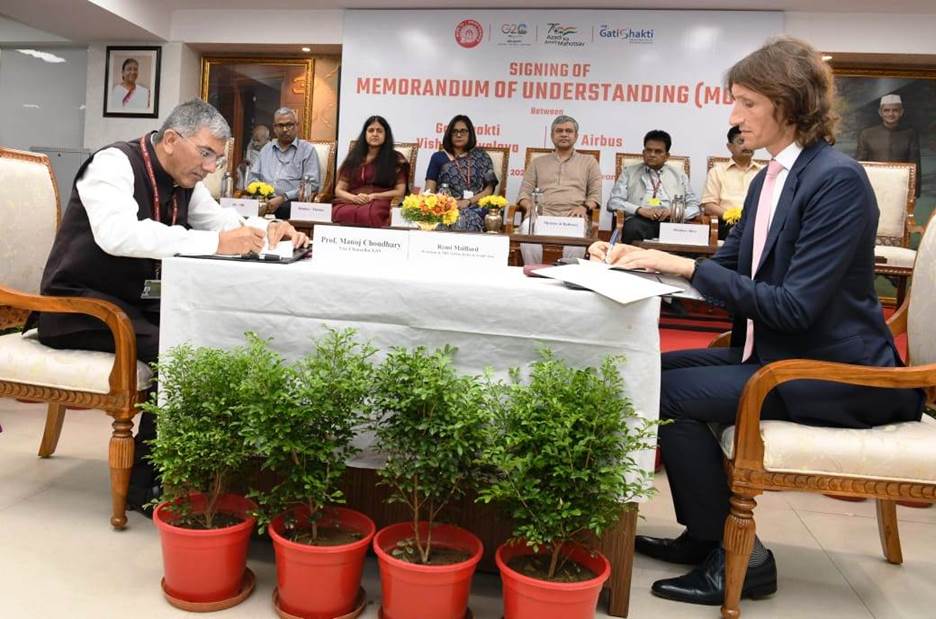
Speaking on the occasion, Shri Ashwini Vaishnaw said, “GSV will focus on intense industry-academia partnerships. All its courses will be designed in collaboration with industry. The students who study at GSV will be industry ready. They will be highly sought after for employment in transportation and logistics sectors. Today’s MoU with Airbus is a significant step in achieving this goal.”
Speaking at the event, Mr. Rémi Maillard, President and Managing Director, Airbus India and South Asia, said, “As a company that is committed to developing the aerospace ecosystem in India, we realise our responsibility to invest in human capital development. The partnership with Gati Shakti Vishwavidyalaya will develop a strong pipeline of skilled workforce in the country that will be future ready to serve its fast-growing aerospace sector.”
This industry-academic partnership will enable co-development and co-delivery of sector-relevant skilling courses and programs for regular students and working professionals, joint research and industry experiences for faculty, internships and placements for students and scholarship programs. It will create job opportunities for students as per the industry requirements. It is expected that 15000 students are likely to be placed in Airbus Indian operations.
Gati Shakti Vishwavidyalaya (GSV) Vadodara was established through an Act of Parliament in 2022, for creating best in class manpower and talent for the entire transportation and logistics sectors. This Central University is sponsored by the Ministry of Railways, Govt. of India and has Shri Ashwini Vaishnaw, Minister of Railways, Communications, Electronics and IT as its First Chancellor.
Focusing exclusively on transport and logistics sectors, GSV is a “first of its kind” university aiming to fulfil the mandate of the National Developmental Plans (PM Gati Shakti National Master Plan 2021 and National Logistics Policy 2022) across railways, shipping, ports, highways , roads, waterways, and aviation etc. Following a demand-driven curriculum and leveraging state of the art infrastructure of all the Centralized Training Institutes of Indian Railways, the GSV shall create a resource pool of professionals across technology, economics, management and policy comprising multidisciplinary teaching (bachelors/masters/doctoral), executive training and research. GSV shall also undertake trainings for Indian Railways probationers and serving officers.
Being an Industry-driven and Innovation-led university, GSV already has several collaborations with leading institutions and industries across the world.
***
 Eduindex


You must be logged in to post a comment.