How we create equality

While surfing through linkdein I came across a post where a doctor sir Ganeshan, he was providing free medical deliveries to girl. Many people of community have distinct view of it as if it is a right way and right thing.

In my view, this is how we create equality,
there are two ways
first, we share everything we have equally and eventually with time everything gets equalize,
another way is we try balancing both sides like if people are not happy after having girl child we will free them from fee charge(its temporary solution of a big part of solution) and as societies are progressing they will learn and improve with time.
Example of first one is colonized countries they doesn’t got support from developed countries and they got bullied many time but we are slowly progressing toward equality,
Example of second one is solutions for girl equality by indian govt, it involves temporary(situation based) solution like dowry punishment to educating and reservation, the benefits of having second way is it’s fast, and it has lots of temporary solution to big problems like girl foeticide case.

You can see post here

https://www.linkedin.com/posts/ashwini-mahesh_activity-6846473782144630785-ZcoR

Connect me on LinkedIn here

https://www.linkedin.com/in/shivam-soni-a99a4a186

Role of Women in Shaping Society

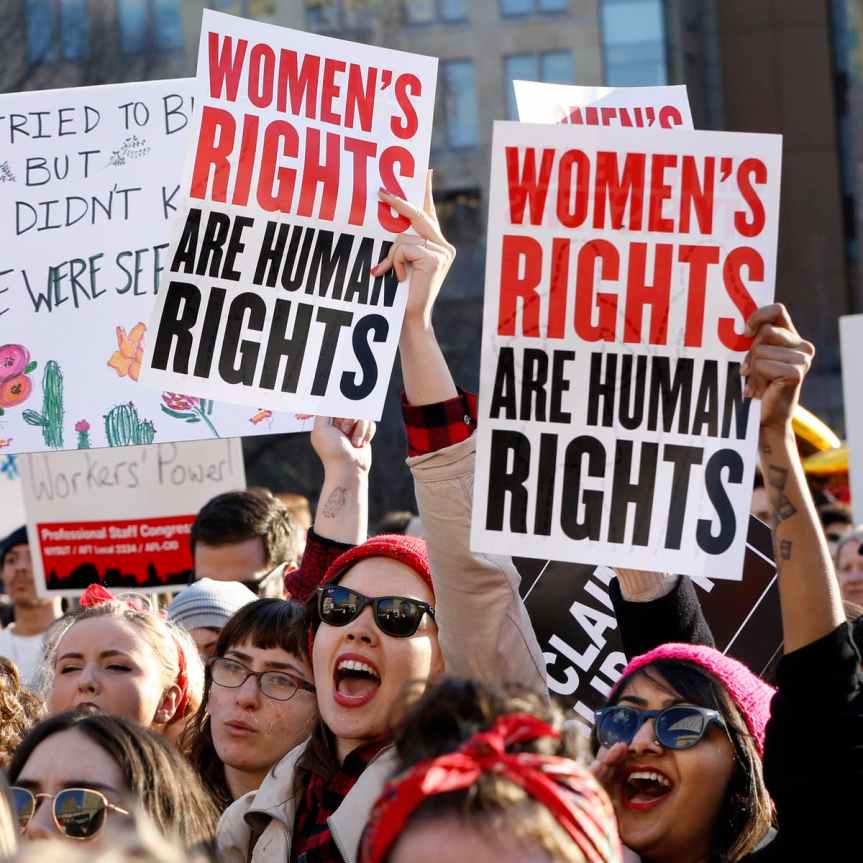
Women plays a crucial role in developing any society. Freedom of Independence has been suppressed from the ancient times but, the woman have fought for their rights in the history and fighting for themselves in today too. Now this need to be taken into consideration that even today the women have to prove themselves that they worth being treated equal to their mens counterpart.

Women have fight for everything which the men automatically gets as their birth privilege, because of which women they have value for each of these things. The situation good in urban areas but the womens in rural area face domestic violence, mental torture, not allowed to work or study. The are forced to limit their world in a small house.

In this I does not mean that every women are facing this level of injustice in rural area, but even if one of them is facing this that is going to impact the whole family of her, as if she have a daughter she will suppress her and if she have a son he will be learning same thing to disobey women. As one rightly said that have men gets educated he gets educated alone, but when women gets educated a whole family gets educated.

In some or the other sence always a women gets questioned for her deeds, she always has to prove herself better than a men to get appreciated. We have to actually change the mentality that be like a boy, no just be yourself. We have to change a stereotype that she walks like a men, he walks like a girl, this is the work of men, that is the work of women.

THE FIGHT AGAINST CHILD TRAFFICKING

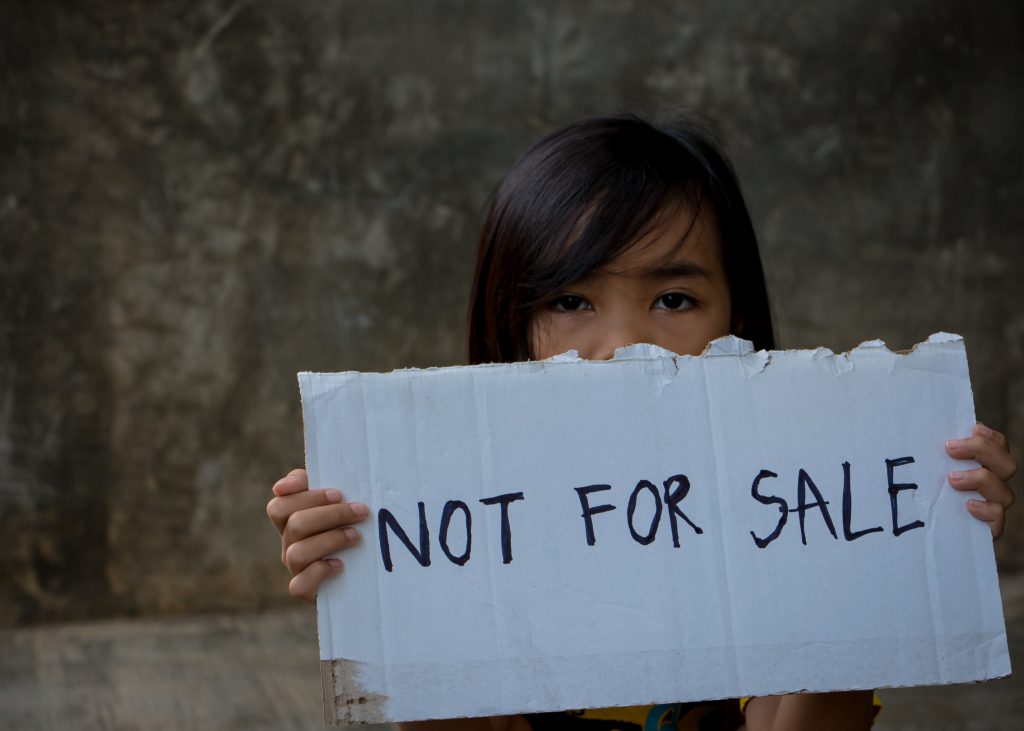
Child trafficking alludes to the abuse of girls and boys, essentially for labor work and sexual exploitation. Children account for 27% of all the illegal exploitation victims around the world, and two out of each three child victims are girls. Some of the time sold by a relative or an associate, in some cases baited by bogus guarantees of education and a “superior” life.

Child Trafficking in the European Union - Humanium

The reality is that they take advantage of children. They are held in slave-like conditions without sufficient food, haven or clothing, and are regularly seriously manhandled and cut off from all contact with their families. Every country on the planet is influenced by human trafficking, and subsequently, kids are compelled to exit school, hazard their lives and are denied of what each child deserves ,a better future.

We can stop this by supporting unprivileged children who are denied of legitimate education, health and shelter. It’s a child right to get legitimate education, heath and shelter fundamentally a superior living. We can do this by interfacing with NGOs which work in improvement of kids’ lives. We can donate cash, garments and different accomplices to them. Also strict action should be taken against those who are involved in this vicious crime. Children are future of a country if they are not safe then a country will never develop.

RESOURCES:

https://www.savethechildren.org/us/charity-stories/child-trafficking-awareness

5 Writs in Indian Constitution

Know about how to voice for your rights, legal bounds, and solve wrong conducts or mistakes by legal officials.

Writs! What do you mean by writs?

In common law, a writ is a formal written order issued by a body with administrative or judicial jurisdiction; in modern usage, this body is generally a court. Warrants, prerogative writs, and subpoenas are common types of writ, but many forms exist and have existed.

Why are Writs needed?

It is a constitutional remedy available to a person to bring his complaint or grievance against any administrative action to the notice of the court.

Types of Writs:

  • Writ of Habeas Corpus
  • Writ of Mandamus
  • Writ of Certiora
  • Writ of Prohibition
  • Writ of Quo-Warranto,

WRIT OF HABEAS CORPUS

It is also known as the “great writ”

Habeas Corpus means “Let us have the body.”. In other words, it means “you may have the body” which means that a person under arrest is to be brought before a judge or into court. It is an important writ for personal liberty. A person, who is arrested, can move the Court for the issue of Habeas Corpus. 

It is an order by a Court to the detaining authority to produce the arrested person before it so that it may examine whether the person has been detained lawfully or not. It ensures that a prisoner can be released from detention if the Court is convinced that the person is illegally detained—that is, detention lacking sufficient cause or evidence.

The person under arrest or any another person on his behalf can file a writ in this. Formal and informal applications in respect of the writ is accepted by the Courts. It is only a procedural remedy and does not necessarily protect other rights, such as the entitlement to a fair trial. A person cannot make the application for the Writ successively to different judges of the same court. 

In India, writs are issued by the Supreme Court under Article 32 of the Constitution of India and by the High Court under Article 226 of the Constitution of India.

Writ of Mandamus:

Mandamus means “We Command”. Mandamus is an order from a superior court to a lower court or tribunal or public authority to perform an act, within its duty. In short, it is an order to perform a duty which should have done but failed to do so.  It is the discretionary power of a court. It is simply to ensure rights are ensured and the Government Authorities perform their duties.

The writ of mandamus can be granted when there is right to compel the performance of some duty cast upon the authority. It can also be issued to public authority to restrain it from acting under a law which has been declared unconstitutional. The petitioner has a right recognized by law.

The writ cannot be granted when

  • Duty is not compulsory.
  • Against a private individual, private organization since they are not entrusted with public duty. 
  • To enforce an obligation arising out of contract.
  • Where the right of the petitioner has lapsed

Writ of Certiora

Certiorari means to be certified. The Writ of Certiorari can be issued by the Supreme Court or any High Court for retracting the order which is already passed by an inferior court and to properly investigate the matter and opinions objectively. A writ of certiorari is only granted when a Court has acted without or in excess of its jurisdiction and For correcting error of law. It cannot lie to remove merely ministerial act or to remove/cancel executive administrative acts. It is corrective in nature which means the purpose of this Writ is to correct an error.

When there is an error apparent on the record, it becomes a valid ground for issuing the Writ of Certiorari.

Certiorari can be resorted to only after the order or decision has been announced.

Writ of Prohibition

Writ of prohibition means to cease or to stop. it is also known as a ‘Stay Order’. When a lower court or a body tries to perform an action outside its jurisdiction, This Writ issued by a superior court to lower court or a tribunal to prohibit or forbidden it to do so. The Supreme Court can issue this Writ only where a fundamental right is affected.

In cases where the court is partly acting within its jurisdiction and partly outside it, the Writ will be issued against the act which is partly outside its jurisdiction. This Writ can be issued only when the proceedings are pending in the inferior court and not when an order has already been passed by that court. The Writ of Certiorari can be issued only when the order has passed.

Writ of Quo-Warranto

The word Quo-Warranto literally means “by what warrants?” and ‘by what authority’. It is issued restraining a person from acting in a public office to which is out of bounds. The business or the office in question is public office. The issue of summon is followed by legal proceedings, during which an individual’s right to hold an office or governmental privilege is challenged. 

Grounds on what it is issued.

The nature of the duties which arises from this office is public. The person against whom the Writ is sought to be issued is in actual possession of the office and is using such office.

Article 21 of Constitution of India: Protection of Life and Personal Liberty

‘Everybody has the option to life, freedom and the security of individual.’ The right to life is without a doubt the most fundamental, all things considered. Any remaining rights add quality to the life being referred to and rely upon the pre-presence of life itself for their activity. As basic freedoms can just append to living creatures, one may anticipate that the right should life itself to be in some sense essential, since none of different rights would have any worth or utility without it. There would have been no Fundamental Rights worth focusing on if Article 21 had been deciphered in its unique sense. This Section will inspect the right to life as deciphered and applied by the Supreme Court of India.

Article 21 of the Constitution of India, 1950 gives that, “No individual will be denied of his life or individual freedom besides as indicated by strategy set up by law.” ‘Life’ in Article 21 of the Constitution isn’t just the actual demonstration of relaxing. It doesn’t hint simple creature presence or proceeded with drudgery through life. It has a lot more extensive significance which incorporates right to live with human respect, right to work, right to wellbeing, right to contamination free air, and so forth

Right to life is fundamental to our very presence without which we can’t live as an individual and incorporates every one of those parts of life, which go to make a man’s life significant, complete, and worth living. It is the lone article in the Constitution that has gotten the most stretched out conceivable translation. Under the covering of Article 21, so numerous rights have discovered asylum, development, and nourishment. In this manner, the minimum essentials, least and fundamental requirements that are fundamental and unavoidable for an individual is the center idea of the right to life.

On account of Kharak Singh v. Province of Uttar Pradesh[i], the Supreme Court cited and held that:

By the expression “life” as here utilized something more is implied than simple creature presence. The hindrance against its hardship reaches out to every one of those appendages and resources by which life is appreciated. The arrangement similarly restricts the mutilation of the body by removal of a shielded leg or the pulling out of an eye, or the annihilation of some other organ of the body through which the spirit speaks with the external world.

In Sunil Batra v. Delhi Administration[ii], the Supreme Court repeated with the endorsement the above perceptions and held that the “right to life” incorporated the option to have a solid existence in order to partake in all resources of the human body thriving conditions. It would even incorporate the right to security of an individual’s practice, culture, legacy and all that offers importance to a man’s life. It incorporates the right to live in harmony, to rest in harmony and the option to rest and wellbeing.

Right To Live With Human Dignity

In Maneka Gandhi v. Association of India[iii], the Supreme Court gave another dimension to Art. 21 and held that the option to live isn’t simply an actual right yet incorporates inside its ambit the right to live with human pride. Elaborating a similar view, the Court in Francis Coralie v. Association Territory of Delhi[iv], saw that:

“The option to live incorporates the right to live with human poise and all that accompanies it, viz., the minimum essentials of life like satisfactory nourishment, dress and asylum over the head and offices for understanding composition and communicating one’s thoughts in assorted structures, uninhibitedly moving about and blending and blending with individual people and should incorporate the right to fundamental necessities the fundamental necessities of life and furthermore the option to continue capacities and exercises as establish the absolute minimum articulation of human self.”

Another expansive definition of the subject of life to nobility is to be found in Bandhua Mukti Morcha v. Association of India[v]. Describing Art. 21 as the core of fundamental rights, the Court gave it an extended understanding. Bhagwati J. noticed:

“It is the fundamental right of everybody in this nation… to live with human poise liberated from misuse. This right to live with human nobility cherished in Article 21 gets its life breath from the Directive Principles of State Policy and especially provisions (e) and (f) of Article 39 and Articles 41 and 42 and in any event, consequently, it should incorporate security of the wellbeing and strength of laborers, men and women, and of the young period of children against misuse, openings and offices for children to create in a solid way and in states of opportunity and pride, instructive offices, just and compassionate states of work and maternity help.

“These are the base requirements which should exist to empower an individual to live with human nobility and no State neither the Central Government nor any State Government-has the privilege to make any move which will deny an individual of the enjoyment of these fundamental things.”

Following the above-expressed cases, the Supreme Court in Peoples Union for Democratic Rights v. Association of India[vi], held that non-payment of least wages to the specialists utilized in different Asiad Projects in Delhi was a refusal to them of their right to live with essential human pride and violative of Article 21 of the Constitution.

Bhagwati J. held that rights and advantages presented on workmen utilized by a worker for hire under different labor laws are plainly proposed to guarantee fundamental human nobility to workmen. He held that the non-implementation by the private workers for hire drew in for developing a structure for holding Asian Games in Delhi, and non-enforcement of these laws by the State Authorities of the arrangements of these laws was held to be violative of the fundamental right of laborers to live with human pride contained in Art. 21.

In Chandra Raja Kumar v. Police Commissioner Hyderabad, it has been held that the right to everyday routine incorporates right to experience with human pride and goodness and, consequently, holding of excellence challenge is repulsive to respect or respectability of women and irritates Article 21 of the Constitution in particular if the equivalent is horribly revolting, profane, disgusting or expected for coercing. The government is engaged to forbid the challenge as questionable execution under Section 3 of the Andhra Pradesh Objectionable Performances Prohibition Act, 1956.

In State of Maharashtra v. Chandrabhan, the Court struck down an arrangement of Bombay Civil Service Rules, 1959, which given to payment of just an ostensible resource stipend of Re. 1 every month to a suspended Government Servant upon his conviction during the pendency of his allure as illegal on the ground that it was violative of Article 21 of the Constitution.


The Right To Education.

The Right of Children to Free and Compulsory Education Act or Right to Education Act (RTE), is an Act of the Parliament of India authorized on 4 August 2009, which portrays the modalities of the significance of free and obligatory schooling for children somewhere in the range of 6 and 14 in India under Article 21a of the Indian Constitution. India became one of 135 nations to make training a fundamental right of each child when the Act came into power on 1 April 2010.

The Act makes instruction a fundamental right of each child between the ages of 6 and 14 and determines least standards in elementary schools. It requires all non-public schools to save 25% of seats to children (to be repaid by the state as a component of the public-private organization plan). Children are conceded in to tuition based schools dependent on monetary status or rank based reservations. It likewise restricts all unnoticed schools from training, and makes arrangements for no gift or capitation expenses and no meeting of the child or parent for affirmation. The Act likewise gives that no child will be kept down, removed, or needed to breeze through a board assessment until the culmination of elementary schooling. There is likewise an arrangement for uncommon preparing of school quitters to carry them acceptable with understudies of a similar age.

The RTE Act requires overviews that will screen all areas, distinguish children requiring instruction, and set up offices for giving it. The World Bank instruction expert for India, Sam Carlson, has noticed: “The RTE Act is the principal enactment on the planet that puts the obligation of guaranteeing enrolment, participation and fruition on the Government. It is the guardians’ duty to send the children to schools in the US and different nations.”

The Right to Education of people with handicaps until 18 years old is set down under a different enactment – the Persons with Disabilities Act. Various different arrangements with respect to improvement of school framework, instructor understudy proportion and personnel are made in the Act.

Training in the Indian constitution is a simultaneous issue and both focus and states can administer on the issue. The Act sets down explicit obligations regarding the middle, state and neighborhood bodies for its implementation. The states have been clamoring that they need monetary ability to convey instruction of suitable norm in all the schools required for all inclusive training. In this manner plainly the focal government (which gathers the greater part of the income) will be needed to sponsor the states.

A board set up to contemplate the assets requirement and subsidizing at first assessed that INR 1710 billion or 1.71 trillion (US$38.2 billion) across five years was needed to implement the Act, and in April 2010 the focal government consented to sharing the financing for implementing the law in the proportion of 65 to 35 between the middle and the states, and a proportion of 90 to 10 for the north-eastern states. Be that as it may, in mid 2010, this figure was moved up to INR 2310 billion, and the middle consented to raise its offer to 68%. There is some disarray on this, with different media reports expressing that the a lot of the implementation costs would now be 70%. At that rate, most states should not have to expand their schooling financial plans generously.

A basic development in 2011 has been the choice taken on a basic level to stretch out the right to schooling till Class X (age 16) and into the preschool age range. The CABE board is currently investigating the ramifications of rolling out these improvements.

The Ministry of HRD set up an undeniable level, 14-part National Advisory Council (NAC) for implementation of the Act. The individuals included Kiran Karnik, previous leader of NASSCOM; Krishna Kumar, previous overseer of the NCERT; Mrinal Miri, previous bad habit chancellor of North-East Hill University; Yogendra Yadav – social researcher. India

Sajit Krishnan Kutty, Secretary of The Educators Assisting Children’s Hopes (TEACH) India; Annie Namala, an extremist and head of Center for Social Equity and Inclusion; and Aboobacker Ahmad, VP of Muslim Education Society, Kerala.

A report on the situation with implementation of the Act was delivered by the Ministry of Human Resource Development on the one year commemoration of the Act. The report concedes that 8.1 million children in the age bunch six-14 stay out of school and there’s a deficiency of 508,000 instructors country-wide. A shadow report by the RTE Forum addressing the main schooling networks in the nation, nonetheless, testing the discoveries bringing up that few key lawful commitments are falling behind the timetable. The Supreme Court of India has likewise mediated to request implementation of the Act in the Northeast. It has likewise given the lawful premise to guaranteeing pay equality between educators in government and government helped schools. Haryana Government has relegated the obligations and duties to Block Elementary Education Officers–cum–Block Resource Coordinators (BEEOs-cum-BRCs) for viable implementation and persistent checking of implementation of Right to Education Act in the State.

It has been called attention to that the RTE act isn’t new. Widespread grown-up establishment in the demonstration was gone against since the majority of the populace was unskilled. Article 45 in the Constitution of India was set up as a demonstration: The State will attempt to give, inside a time of a long time from the commencement of this Constitution, free of charge and necessary schooling for all children until they complete the age of fourteen years.

As that cutoff time was going to be passed numerous many years prior, the instruction serve at that point, MC Chagla, notably said: “Our Constitution fathers didn’t mean that we just set up cabins, put understudies there, give undeveloped instructors, give them terrible course readings, no jungle gyms, and say, we have consented to Article 45 and essential training is growing… They implied that genuine training ought to be given to our children between the ages of 6 and 14” – (MC Chagla, 1964).

During the 1990s, the World Bank subsidized various measures to set up schools inside simple reach of provincial ommunities. This work was solidified in the Sarva Shiksha Abhiyan model during the 1990s. RTE takes the interaction further, and makes the enrolment of children in schools a state right.

Human rights and armed conflict

Armed conflicts

Numerous armed conflicts are currently taking place around the globe, cost of which goes beyond the numbers deaths but it also includes the victims of the consequences of war.The number of indirect victims of armed conflicts is much higher than that of direct deaths.  Indirect death is mainly caused by some preventable infectious diseases, undernourishment , and pregnancy-related conditions. In addition to deaths, armed conflicts also lead to undernourishment, increased infant mortality rates, forced migration, refugees, destruction of infrastructure.

International armed conflict, internationalized armed conflict, and non-international armed conflict are the three types of conflicts recognized by International humanitarian law.

Human rights

“Human rights” can be defined as rights of all human beings, regardless of nationality, residence, gender, ethnic origin, race, religion, language or any other status. Everyone is equally entitled to their human rights without any discrimination. This belief is fairly new and it stems from an evolution of the reflection of human dignity over the past centuries.

After World War II, stronger ideas of human rights emerged . People wanted to make sure that they never again be unjustly denied freedom, food, and shelter. The calls for human rights standards to protect citizens from abuses by their governments, came from different parts of the world. These voices played an important role in the San Francisco meeting that drafted the United Nations Charter in 1945. United Nations was then established with the primary goal of maintaining international peace and preventing conflict.

International humanitarian law

Human rights during armed conflicts are infringed upon the most. Therefore, over the years, there has been much focus on the formulation of mechanism aimed at alleviating human suffering armed conflicts. International law of armed conflicts, of which humanitarian law is a part, tries to provide protection to victims of war and crimes.

Why isn’t everyone a feminist?

It has come to my surprise that most people do not identify themselves as feminists. I have no idea what some people think feminism is. So, here is the dictionary meaning of the word feminism. 

Feminism is defined as the belief in social, political, and economic equality of sexes. 

I would like to emphasise the word equality. Feminism does not support sexism.Feminists do not put men down, nor do we support the women who put them down. Feminism is the belief in equality and not female superiority.

I was surprised to see some of the women not identifying themselves as feminists. I have come across women saying things like: 

I don’t face gender discrimination, so why should I support feminism. 

To all the women who have similar beliefs, it is the FEMINISTS that got you to a place where you can say sentences like these. 

Do you really think that without voices being raised, you got to a place where you are?

Women did not even have the right to vote, study, or work. Back in the old days, men did not even consider women. So, we have come a long way from women-only staying in the households to now becoming presidents.

 Secondly, there are still so many issues happening against women, and we must raise voices. If you have the privilege to face no gender discrimination, that is good for you. But do you not want that for every single girl out there?

To all the people who think that feminism is unnecessary, I would like to show some of the achievements done by feminists.

  • Right to vote
  • Gain access to birth control
  • Bought women out of household
  • Calling out on rape culture
  • Fought for legal discrimination
  • Making the workplace a little more equal

These were just a few of the things done because of feminists. So, the next time you think feminism is not needed and that we are already in an equal world.

Well, open your eyes. There is still a long way to go.

  • Saudi Arabia gave women the right to drive in 2018.
  • Each minute 28 girls are married before they are ready
  • One in three women have experienced physical or sexual violence
  • 62 million girls are denied an education all over the world
  • 4 out of 5 victims of human trafficking are girls

These were just a few facts out of 100 more issues that women face today. This data is for people who think we already have achieved gender equality. We have not and, we still need feminism.

If you are one of those people who does not like being labeled but believes in equality of both sexes. What are you afraid of? It is just a label for the betterment of our society. If you think people are going to judge you for it. Those are the people who did not do their research on what feminism is.

I am a proud feminist and, I am here to fight against the injustice that women go through. If you are with me, I hope you all identify yourself as a feminist.

If you are not convinced and, women with strong opinions on achieving equality bother you. Well, you can contribute to the world of misogyny. 

Every Indian should be mindful of the potential ten Laws and Rights

The Indian judicial system has bestowed a great deal of authority on the citizens of the country to guard their basic rights. Regrettably, not everyone is aware of their rights and power. As an Indian citizen, it is critical that you are knowledgeable with the country’s laws and rights that not only protect people’s interests but also make our lives easier. Below providing 10 rights and liabilities that everyone should be aware of:-

1.If your cylinder bursts, you are entitled to a 40-lakh insurance payout.

According to the legislation, all registered LPG users are entitled to a Rs 40 lakh insurance policy in the event of death or property damage caused by cylinder explosions. This is a blanket for the whole family. But however, this is partly true as reported, the insurance coverage is not Rs 40 lakh. The court decides the amount according to the victim’s age, salary and other conditions. To claim this compensation, customers must file a FIR with the nearest police station and send it to the gasoline business in question.

2. Motor Vehicle Act 1988

Sections 185 and 202 of the Motor Vehicle Act of 1988 provide that if your 100ml blood contains more than 30mg of alcohol while driving, the police can arrest you without a warrant.

3. Women can only be arrested by female cops.

Only female officers have the authority to arrest women, and they must remain at the police station the whole time. If only male cops have arrived for the arrest, women have the right not to attend to the station. Male police officers should obtain a formal authorization from the magistrate to escort the lady in the event of a serious offence. 

4. Section 46 of Criminal Procedure Code- Before sundown, women should be detained.

Women must be detained before sundown, no lady can’t be arrested earlier than 6 A.M. and after 6 P.M.   

5. In hotels, you can ask for water and use the restroom for free under the Indian Sarais Act of 1887.

A person is permitted by law to request free water from any hotel. Even if you are not a client, you can use a hotel’s toilet for free even if it’s a 5 star hotel. 

 6. Domestic Violence Act of 2005: 

In today’s time live-in relationships are so common because of which this law becomes extremely important to know about. Under this act, It is not illegal for a young boy and a young girl to live together in a “live-in relationship.” Even the baby from this connection is a legal son or daughter who has full ownership of his or her father’s possessions.

7. Maternity profit act of 1961

No company can fire a pregnant woman under the Maternity Profit Act of 1961. It might result in a maximum sentence of three years in jail. 

If the company (government or private) employs more than ten people, the pregnant woman is entitled to 84 days of paid maternity leave.

8.  Section 129 of motor vehicle act

Part 129 of the Indian Motor Automobile Act states that two-wheeler users must wear a helmet. Part 128 of the Motor Vehicle Act sets a maximum of two riders per motorcycle. This regulation also states that if a traffic cop takes something from a car or motorcycle, it is illegal. You have entire authority to file a legal proceeding against the officer.

9. The Most Retail Value Act of 2014

It states that a storekeeper cannot charge more than the written value of a product, but a shopper has the option to pay less than the stated value of a commodity.

10. Part -13 of the Hindu Marriage Act, 1955

It states that any husband or wife may file for divorce in a court of law on the grounds of adultery (a physical relationship outside of marriage), impotency, leaving home without notice, changing Hindu faith and adopting a different faith, madness, incurable illness, and no information about the husband or wife.

Restoration of Provisions of SC / ST Act

The weak sections of society are often repressed and exploited by society. To control such behavior and actions the government proposes some laws and bills to safeguard the rights of such weaker sections. But these laws are sometimes misused for the satisfaction of personal desires, and such actions need to be regulated.


An amendment bill was passed in March 2018 to restore the provisions of Scheduled castes and Scheduled Tribes (Prevention of Atrocities) Act 1989. According to the National Crime Records Bureau, under the initial provision, the conviction rate remained as low as just 15.4% in 2016. The amendment bill included three new clauses to the existing Act – for the registration of a First Information Report ( FIR ), against any person, a preliminary enquiry shall not be required; no approval would be required for the arrest of the accused under the Act; under this Act, Section 438 of the Code of Criminal Procedure, dealing with anticipatory bail shall not apply, allowing the accused to apply for anticipatory bail; the decision to arrest or not rests in the hands of the investing officer which cannot be taken away. The Supreme Court also issued guidelines to safeguard people against arbitrary arrest by making the arrest possible only after the written permission of the appointing authority for the public servants and Senior Superintendent of Police in the case of private-sector employees. The verdict for the restoration of the SC / ST Bill faced a widespread protest from the Dalits as according to them it dilutes the original nature of the provision. the Supreme Court took this decision considering the interests of the Scheduled Tribes / Scheduled Castes and as well as the arbitrary arrests taking place under the provision. The decision was made in regards –


• It was observed by the Supreme Court that the Scheduled Castes and Scheduled Tribes (Prevention of Atrocities) Act, 1989 was used negatively as a way to blackmail and harass the innocent common citizens as well as the public servants in many cases.
• It was also observed that the Act was misused in many cases just to fulfill personal agendas by registering false complaints.
• The main purpose of the Act which was to break the caste-based boundaries was diluting and rather becoming strong because of the false complaints filed for the satisfaction of personal interests.
• The arbitrary arrest of the accused is tried to be put in control by making arrest possible on the written permission of the appointing authority in case of a public servant and written permission of the Superintendent of Police (SP) in case of a public servant.

The restoration was made keeping in mind the interests and safeguard of the marginalized without hampering the safeguard of the general public. Without going for a preliminary enquiry for a First Information Report (FIR) it ensured safeguard for the marginalized and by controlling the arbitrary arrests of the accused by making the arrest possible only after the written permission of the appointing authority and Superintendent of Police under this Act it safeguarded the general public.

Children and Lack of Education

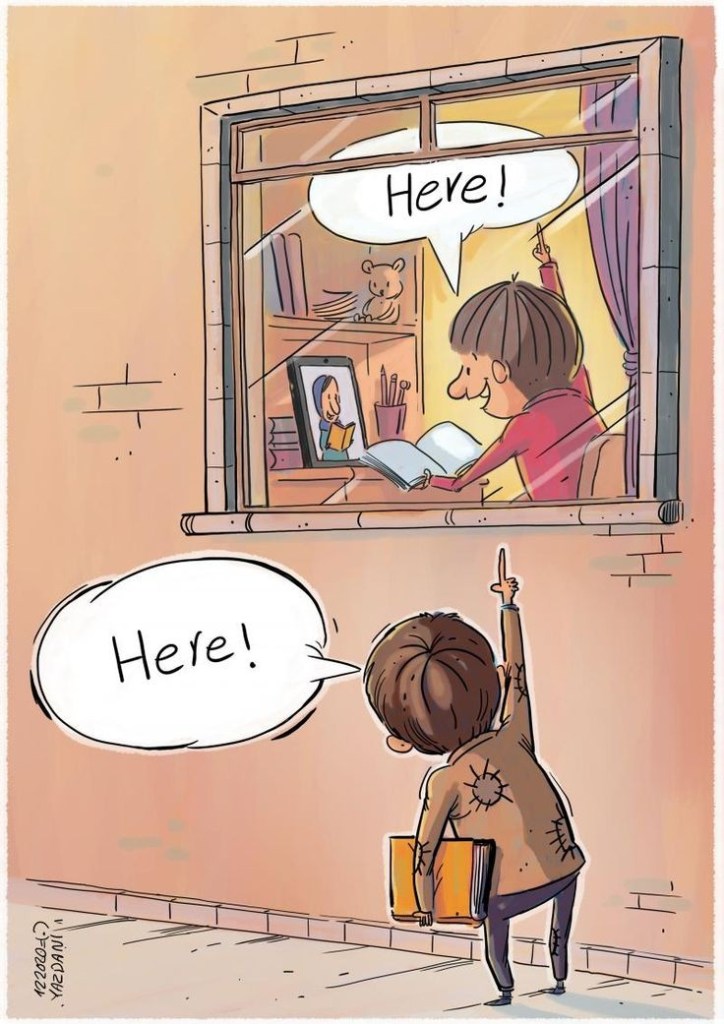
There are many circumstances of children around the world who experience a lack of education, resulting in them having a below average level of knowledge. Lack of education is a significant barrier for underprivileged children around the world.

Today, education remains an inaccessible right for millions of children around the world. More than 72 million children of primary education age are not in school and 759 million adults are illiterate and do not have the awareness necessary to improve both their living conditions and those of their children.

What Is Lack of Education?

  • A lack of education can be described by a state where people have lower than average common knowledge and basic skills to support them in their daily life.
  • This includes the ability to read, write, spell, speak, and do simple math.

What Causes Lack of Education?

  • A lack of education is a significant concern due to lack of funding for education, having untrained teachers, limited or no classroom space, limited resources (e.g., paper, pencil, etc.), living far away from school, and living in countries of conflict.
  • This concern is a leading issue in underdeveloped countries as an education system is highly dependent on region’s economic status.

People Who Are Less Likely To Receive Education

Females

  • Girls are commonly left uneducated because many countries believe there is more value in educating boys in comparison to girls.
  • Additionally, girls are forced to marry as early as eighteen years old which prevent them for continuing their education.

Children With Disabilities

  • Children with disabilities most regularly do not regularly receive education because teachers do not receive adequate training to work with these kids.
  • In addition, these children face a lot of discrimination in terms of accessibility to a safe learning environment, as well as communication with their surroundings.

Outcomes From a Lack of Education

  • Lack of education can prevent a person from having a sound voice in society, as they face communication barriers and are looked down upon
  • Not having enough education is a leading cause of unemployment, as many industries require well informed and educated individuals to step into an employment position
  • Being uneducated puts people at a higher risk of falling into the poverty trap, which is defined by being unable to escape poverty due to a lack of resources. This is because education provides people with the means to make a sustainable living; however, without it, the chances of having a sufficient income is low
  • Lacking education promotes exploitation, as many people without a proper education take on unsafe positions. Some of these positions include becoming a prostitute, sweatshop laborer, and can even result in child marriages.

Prevalence Rates

  • 34.3 million girls around the world do not attend primary school.
  • 97.4 million girls around the world do not attend secondary school.
  • In countries of conflict, girls are twice as likely to receive education in comparison to countries without conflict.
  • In developing countries, up to 95% of disabled children are not enrolled in school.
  • 51% of the uneducated population comes from South Asia.

Awareness on Educational Rights

‘Education is a human right which should be accessible to everyone without any discrimination.’

Right to Education (RTE) Act, 2009

The Right to Education Act 2009, also known as the RTE Act 2009, was enacted by the Parliament of India on 4 August 2009. 

Free and compulsory education for children aged between 6-14 years in India under Article 21 (A) of the Constitution of India.

This act came into effect on 1 April 2010 and made India one of the 135 countries to have made education a fundamental right for every child. 

1. Compulsory and free education for all

2. The benchmark mandate

3. Special provisions for special cases

4. Quantity and quality of teachers

5. Zero tolerance against discrimination and harassment

6. Ensuring all-round development of children

7. Improving learning outcomes to minimize detention.

8. Monitoring compliance of RTE norms

9. Right to Education Act is justiciable

10. Creating inclusive spaces for all

Still there is no proper awareness about this among people.

Qualified faculty, including both male and female teachers, close accessibility of schools, proper infrastructure, hygienic toilets, and free meal system must be implemented in all the schools.

Awareness creates interest and interest creates demand. So, let’s show some interest and hope that this demand creates a real, free, and quality education for everyone someday soon.

Other Backwards Classes (OBC) Bill

The OBC Bill provides constitutional status to the National Commission for Backward Classes (NCBC), which was established under the National Commission for Backward Classes Act, 1993. The power of examining complaints regarding the inclusion or exclusion of individuals or groups in the list of backward classes. The 123rd constitutional bill finally got a nod from the Supreme Court in August 2018 after being not established as a law in 2017 due to lack of majority in the house and inserted a new Article 338B.

This new bill gives the commission to investigate and monitor for the safeguard of the socially and educationally backward classes with the powers of a civil court while investigating and also gives it the power to summon any person across the country and also enforce their presence. As of earlier the commission for SC / ST used to hear for the grievances of the OBCs. The new bill also provides for having a chairperson for the commission, a vice-chairperson, and three other members who will be appointed by the President. The tenure and working conditions for all the members will be decided by the President. BJP government also assured that the committee would include a woman member also. The NCBC will be working for the socio-economic upliftment of the OBCs.

Duties of the National Commission for Backward Classes (NCBC) are –

  • Investigation and Monitoring of the safety and provisions provided to the backward classes under the constitution and other implemented laws.
  • It can inquire about the violation of the rights-specific complaints.
  • Annual reports should be presented to the President, and to be tabled in Parliament and State Legislative Assemblies.
  • To give advice and make recommendations on the socio-economic development of the backward classes.

Reports suggest, that there is less than 15% reservation in the government sector jobs for the OBCs. According to the reports of the Department of Personnel and Training (DoPT) 8.4% grade A pots are occupied by OBCs, mentioned Ram Gopal Yadav, SP, Uttar Pradesh. He even said during the parliamentary debate on the OBC Bill that, there is no need for an OBC creamy layer, as raising the limit of the creamy layer won’t benefit anyone. And also, that, though there is a need to increase the reservation in jobs for the OBCs but getting jobs alone won’t help much. The mindset of people needs to change too. Parties like Biju Janata Dal and Dravida Munnetra Kazhagam party asked for the power to add or eliminate in the list of backward classes to be laid in the hands of the State and not Centre the state knows better about what kind of people belong in that particular State while Bahujan Samaj Party (BSP) asked for reservation for the OBCs even in the private sector. Some even asked for the filling of the reserved vacant seats and that the member of the committee should be chosen from the individuals belonging to the OBC category. However, article 342 A authorizes the President to specify for the socially and educationally backward classes in consultation with the Governors of the respective States. The present members to NCBC are Dr. Bhagwan Lal Sahni as the chairperson, Dr. Lokesh Kumar Prajapati as the Vice-Chairperson, Shri Ajoy Kumar as the Secretary, and the other three members are – Dr. Sudha Yadav, Shri Kaushalendra Singh Patel, and Shri Achary Thalloju.

Human Rights

‘A right is not what someone gives you; it’s what no one can take from you.’

We need human rights for protection when our legal rights have been violated by the state or individuals, and to encourage justice and fairness within our societies.

Because of this widely accepted reason human rights are protected by raising both national and international awareness of human rights violations. This can help draw attention and resolve such situations, by creating moral pressure on the government.

Photo by cottonbro on Pexels.com

Constitutional Rights:

The Constitution of India provides for six Fundamental Rights:

  • Right to equality (Articles 14–18)
  • Right to freedom (Articles 19–22)
  • Right against exploitation (Articles 23–24)
  • Right to freedom of religion (Articles 25–28)
  • Cultural and educational rights (Articles 29–30)
  • Right to constitutional remedies (Article 32)

Chronology of events:

1989- Scheduled caste and scheduled tribe act was passed.

1993- National human rights commission established under human rights act.

2001- Supreme court passes extensive orders to implement the right to food.

2005- National Rural Employment Guarantee Act (NREGA) guarantees universal rights to employment.

Latest petitions in Supreme Court:

The Nirbhaya case- to ensure right against exploitation.

Cheap cancer drugs- to ensure right to life.

Curbing the sale of acid- to ensure the right against exploitation.

Photo by Belle Co on Pexels.com

Abortion – The Debate on the Sole Choice of the Mother

Abortion is the term used to identify the act of intentionally interrupting pregnancy and not allowing the embryo or foetus to continue its normal process. The definition clearly recognizes only women reproductive parts giving a clear message that it only affects the women. But the question is whether it is actually true and justified from a general point of view. 

Up to some extent, we find the world comfortable with the debate being a sole decision of the mother because there is no proper legislation regarding it yet. Our Legislation gives special Right to Women in order to encourage them to be at par to men in day to day life but no where does it mention that Men should compromise for the same. What is fair should remain fair according to law. If it is a “women’s choice” whether or not she wants to become a mother then it is also a man’s choice whether or not he wants to become a father.

When a father doesn’t have an opportunity to express his opinion it only disapproves that he as a human, can have feelings. It is totally unjust that he doesn’t have a preference in the birth of his own child. In the support of my argument, there are provisions that I feel can be enforced. Like, if both parents choose to have an abortion then the child is aborted where both of them have an equal share in costs of the procedure. But if the mother chooses to have an abortion and the father wants to keep the child then she shall not be required to fund any part of procedure or any costs that may arise from it. Similarly, if the mother chooses to keep the child but the father wanted the abortion, then the father shall have zero legal or financial obligations from the day forward. In each case, the father shall likewise be recognized, and his choice duly recorded as a matter of legal record.

Another point to give light to is, when we claim that it is only about the mother’s choice, we tend to deny the whole of father’s responsibility in the scenario. Perpetually like that men need to stay out of the discussion about abortion because it is a woman’s body is not only untrue, it is catastrophic for generations to come. It is a sort of hindrance to the society we need for its utmost development. What we need is a generation of young men who honour ladies by helping them protect the precious gift of their sexuality as it was intended to be. We need a generation of young men who will not treat women like objects but honour them with dignity and respect. A generation who will not run away when they get a woman pregnant or pressure a woman to end their life. We need a generation of men who will love their unborn child and go to utmost lengths to encourage the mother to have their baby. They must be willing to help raise the child or place the child for adoption. In addition to that, we also need a generation of women who will encourage men to take responsibility and show the sacrificial love and empathy that ought to mark men, not push them out of the conversation of abortion.

Though abortion uniquely affects women, it is not only about women. It is also about the child in her womb, and the child’s father. Because in the end, it is her body but it is THEIR baby.