Artificial Intelligence: Can the AI take over?

Artificial Intelligence is a topic with a vast appeal to the en masse. People believe that it is the future of human techologies. But beyond that, people are of various school of thoughts. The first group assumes that AI shall help humanity achieve singularity – a point in technological development that shall mean an utopia. We shall spend all our time towards spiritual and emotional development while most of the crude tasks shall be taken care by machines. The second school of thought assumes that AI shall take over humanity as its overlords. Let us analyse both.

The history of animated, self-thinking, free willed machines is not new at all. It has been imagined for centuries by fiction writers. However, the modern conception of AI in scientific thinking started about 80 years ago. John McCarthy, an American mathematician proposed the idea of such machines back in the first half of the 20th century. Alan Turing, the inventor of the Turing Machine, a British mathematician also proposed his idea of intelligent machines, his proposal now famously called the Turing Test. However, for the next 40 years or so, no important research occurred in the field. It was only in the last decades of the 20th century, when the research started again and not before humanity entered into the 21st century that something formidable was created.

As of today, AI has invaded all spaces of human endeavor. Mechanics, mechatronics, smart devices, our smartphones – all of it is infiltrated with AI. But this AI is what most scientists call ‘weak AI’. It cannot really think. It has a predefined algorithm and then it uses that algorithm to capture inputs and ‘learn’ about new scenarios as per its algorithmic definitions. This AI cannot work without human input and can certainly not take over the world. It can however carry out some actions that are equivalent to evolution as the AI at the Facebook research Center developed their own language to communicate. However, this evolution still does not mean that the AI is “thinking”. It is just evolving its learning based on a preprogrammed code. It is nothing like human beings where discretion is a thing. Even the famous robot AI, Sophia is but a weak AI – a little better than SIRI and google assistant but that is all there is to it. It is not a self-thinking, free-willed machine.
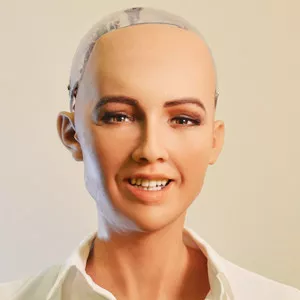
Sophia the Robot – Keynote Speaker | London Speaker Bureau
Sophia, the robot

Researchers have tried hard to create strong AIs with a completely different set of ethical concerns – the main obviously being how would such machines live with humans if they are free to think – but have failed so far. And believe it or not, strong AIs might really not be a thing for at least another 50-100 years at the very least. Maybe even a couple of centuries after that.

So, if you’ve watched the movie Prometheus or Covenant and are scared of the possibility of David being a reality, grab a cup of coffee and relax. By the way, both the movies are really good!

Alien: Covenant, a review by guest columnist David 8 | by Charles Evans |  Medium
David-8 from the movie Prometheus.

Synthetic Intelligence: Is it the new 7th kingdom?

From watching ‘I am mother’ to binging ‘Is the world going to be invaded by robots in the future?’ at 2am in your bedroom, the human mind has always weighed the possibility of synthetic intelligence taking up human roles in the near future. Even though I may be a tech person, somewhere in the least of my concerns, there is a red light that blinks whenever I come across such content. So is this red light just a jitter or does it scream the doomsday of humankind?

Spoiler alert for the book ‘Origin’!

If you have read the book ‘Origin‘ by the renowned author Dan Brown, then you may have been horrified when you reached the climax. The synthetic intelligence product Winston, much like our present-day Alexa and Google Assistant, but way advanced, plots and kills it’s own creator. Now, the twist here is that Winston did nothing but what it was said to do. Yes! Shocking right?

The only disturbing fact is the lengths it goes to execute that command. Because, unlike humans, they don’t have a way out. They are programmed to carry out a task and do whatever it takes to do it. The factor of unpredictability or ‘escape’ doesn’t exist here. But humans use it all the time. My job stresses me too much? Quit it! I’m unable to concentrate on online classes? Then don’t! Scroll Instagram!

Yin-Yang symbol and synthetic intelligence
The yin-yang symbol represents order and chaos

The human mind strives to maintain order. It does not like chaos. So it eliminates negative outcomes/thoughts automatically. If you don’t believe it, then think about the fear that would engulf each person if they consider the fact that the probability they could die right now is 4%. Maybe this is what makes us humans. The ability to accept failure. The ability to ignore problems and take a positive outlook. The ability to expect good from everyone.

Humanity and synthetic intelligence

The chances that synthetic intelligence could be the 7th kingdom is definitely high. Statistics don’t lie. But that doesn’t mean its judgement day for humankind. It took million years of Darwinian evolution to end up to the species that we are now. All the fetish around synthetic/artificial intelligence, Iot and automata was formed within a few decades. For these intelligences to reach human maturity it could take a million more years. Until then, it is safe to say that you needn’t worry about sci-fi documentaries or films that romanticize robot invasion.

I hope I’ve given you enough to think about for the day. Here is a quote to conclude the post, which ironically was the inspiration behind it.

One machine can do the work of 50 ordinary men. No machine can do the work of one extraordinary man

-Elbert Hubbard


8 WAYS Technology is Helping To Fight the CORONA VIRUS 2020

As Corona virus keeps on getting bigger and spreads so is the technology and innovation. It is making peoples life easier in the lockdown by keeping us all virtually connected. Technology is helping the authorities fight this virus.

The Drones in the Skies-

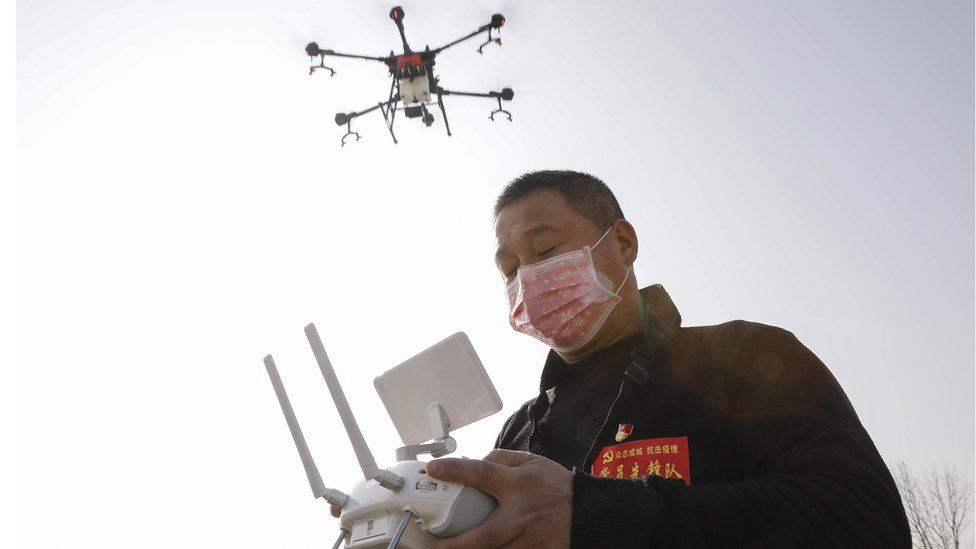
These flying camera birds are helping in patrolling and making sure evrybody is maintaining social distancing. They help the officials check on things and also maintain social distancing at the same time. In remote areas agricultural drones were used for spraying disinfectants. In some parts of the country theyare being used to deliver crucial medical supplies.

Coronavirus: China's tech fights back - BBC News

Online Clinics and Counseling-

Due to this one illness other diseases have lost its importance. People suffering from issues like hypertension and arthiritis are being provided with online medical assistance. Many institutes are also offering online psychological counseling service.

How Technology Has Made Online Medical Consultation Possible ...

Robot nurses and Artificial Intelligence scans

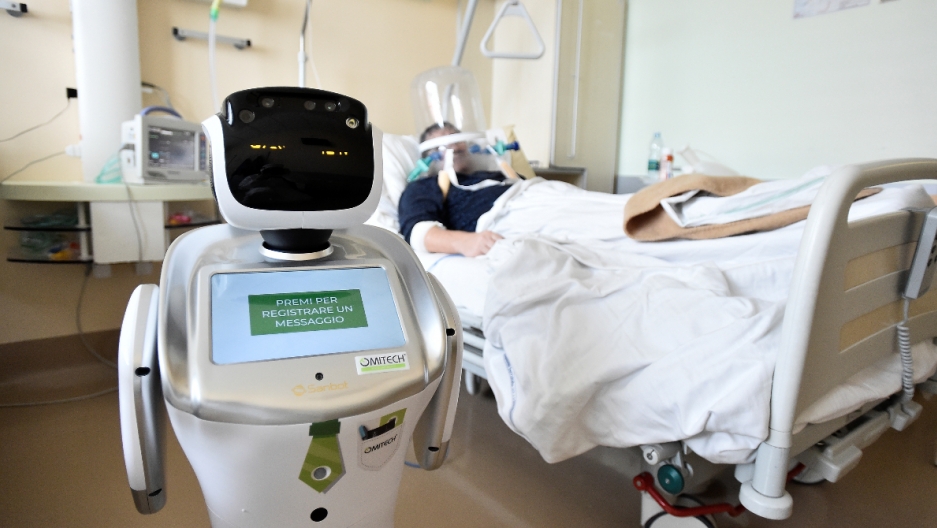
Robots are also used in many Chinese hospitals to deliver food, medicine and other supplies to patients; to disinfect hospitals and other public areas; to check patients temperatures; and to answer common questions. Coronavirus is being   diagnosed using AI, which can read thousands of CT scans in 20 seconds with an accuracy rate of 96%.

Robot nurse helps Italian doctors care for COVID-19 patients

Virtual Classrooms

After weeks of schools being closed, possibly the biggest challenge for parents is keeping children occupied and continuing their schoolwork.  To enable this, many schools have rolled out online learning platforms, where students take courses and teachers give lectures from home, via live-streaming platforms.

With online classes in vogue, schools shift focus to feedback and ...

Research and Development

Within the first few weeks of the virus, China had sequenced the genome. By posting that sequencing online, it trigged a ripple effect in research labs across the world, with a surge in orders for synthetic samples of the virus to build copies of it from scratch. This allowed new treatments to be trialed – even experiments that failed offered vital clues in guiding researchers on where they should focus.

Three TN medical colleges to get virus research labs in 6 months ...

Smartphones and Internet

Smartphones are playing a critical role in reducing exposure. Delivery apps offer contact-less delivery, whereby drivers drop food off at a specific point – including a card stating the temperature of everyone involved in cooking and delivering the food. Another offers users maps marking residential communities with confirmed cases and their proximity to them. Meanwhile, mobile payment apps are reducing transmission along paper money, which can carry viruses for up to 17 days. With the world’s highest penetration of e-wallets and two of the world’s largest mobile pay, Chinese fin-tech is helping to slow the coronavirus spread.

India lockdown throws online delivery out of gear, millions cry

Work From Home

A major challenge during the virus is being able to work.  Several tech companies are offering free online collaborative tools. Other businesses have quickly adopted work-from-home policies, using online meeting software, collaborations platforms and LBS technology to clock in and  ensure employees stay home. At UNDP, the use of Zoom teleconferencing and ERP Platforms have allowed us to keep working.

Coronavirus and Working From Home: How to Keep the Kids Busy - Nelson

Virtually Connected

Compulsory quarantine has disrupted daily life and curtailed social interaction for nearly one fifth of the global population. This is leading millions to meet online instead. Families dine together with relatives in distant cities, raising a glass to each other on camera. Even weddings have been held in Virtual Reality.

Things To Do With Friends While Hanging Out Virtually - Addison ...

While the use of technology can at times present its own challenges, and fuel debates about privacy and public good; in the fight against the coronavirus, it is playing a critical role in offering treatment, information, support, food, schooling and greater safety for many.

Can robot replace human teachers?

With the advent of technology we ofteb heard that robot should teach in the schools. But if we think about this, is it really possible or justifiable to replace human teachers by robots. I think NO.

In a classroom the role of the teacher is not to just teach the children a particular topic at his/her own pace and leave the class. Teacher also analyse children’s behaviour, talk about their issues, give them moral support which is never possible by a robot. And if we talk about learning only then also teaching can change her method according to the comfort and understanding of children. He/she can use easy language help the child to understand the concepts by real life instancea but if we talk about robots they can teach what we program in then in a single way only. Robots also don’t able to recognise whether the child is understanding whatever they are trying to teach.

Apart from this, we humans are social animals. We learn by seeing other people doing things, discussing among each other. But if we replace human teachers by robots than learning become passive or one sided in which just robot is teaching and students are listening and can sometimes ask their enquiries. There is no interaction like as in classroom with teachers and students.

If we see the assessment of students it is true that robots can do assessment in a fast and efficient way and they can also tell students where they are lacking but robots can never understand individual needs. Whereas if we see a human teacher assessing even after referring to an exam sheet , she think about if a child made a progression or not. She also think about the previous assignment and discuss the improvement with children which is impossible with a robot teacher.

So for teaching we not only need knowledge, and efficiency but also understanding, emotions and engaging capabilities which is possible only in human beings.

So, we may take the help of robots in our school but we cannot replace them by teachers as learners need a direction to learn which is more important than lectures and a lots of human emotions which can be provided by a human teacher only.