It goes without saying that India has always cherished to maintain good bilateral ties with Saudi Arabia. The incumbent PM Narendra Modi has right from start always shown a great deal of interest in improving further the bilateral relations between both the countries and deepening them further. The Crown Prince of Saudi Arabia – Mohammad Bin Salman too has shown great interest in enhancing further the bilateral relations between India and Saudi Arabia.
It goes without saying that the sustained efforts to end the prolonged nonchalant relations between both the countries began seriously for the first time while former PM late Atal Bihari Vajpayee was at the helm of affairs. The first step was taken when Vajpayee’s Foreign Minister Jaswant Singh had travelled to the kingdom of Saudi Arabia in early 2001. We then saw how five years later, King Abdullah visited Delhi which was the first visit to India by a Saudi monarch in half a century to announce a new phase being heralded in bilateral relations. But the depth was still lacking and attention was confined only to buying oil from Saudi Arabia and exporting manpower.
However, much water has flown under the bridge since then! It cannot be denied that the expansion and institutionalization of strategic cooperation between India and Saudi Arabia started taking deep roots during the Prime Minister Narendra Modi’s latest two-day visit visit to Saudi Arabia in end of October which is the second in three years. After arriving in Riyadh, PM Modi tweeted on a happy note saying that, “Landed in the Kingdom of Saudi Arabia, marking the start of an important visit aimed at strengthening ties with a valued friend. Will be taking part in a wide range of programmes during this visit.”
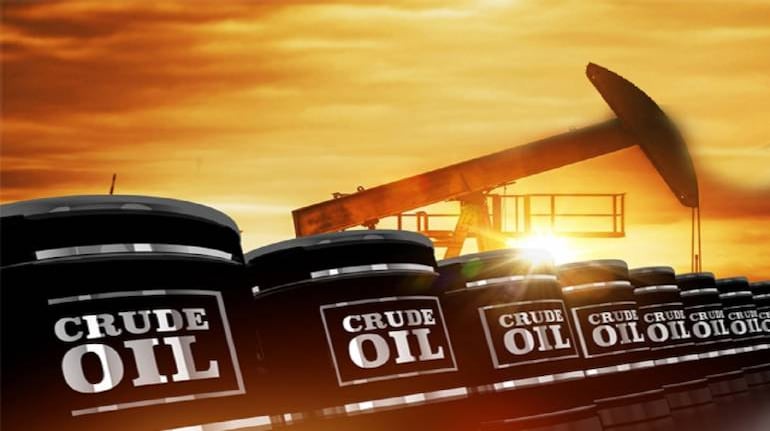
It is quite well known that Saudi Arabia is second biggest supplier of oil to India after Iraq. It is also India’s fourth largest trading partner and the bilateral trade amount adds up to $27.48 billion in 2017-18 and Saudi investment of around $ 100 billion in India in various key areas like energy, agriculture, minerals, mining, petrochemicals and infrastructure is also in the pipeline. This makes the relations between both the countries all the more important and both countries appreciate this fully.
As we all know, this latest visit by PM Modi to Saudi Arabia was about Modi delivering a keynote at the high profile “Future Investment Initiative Summit” that was basically an initiative of Crown Prince of Saudi Arabia. It also cannot be denied that this visit of PM Modi to Riyadh truly marks the consolidation of a bilateral partnership that has long struggled to take deep roots and this is in the mutual long term shared interests of both the countries.
It is most refreshing to learn that India and Saudi Arabia have shown together deep interest in last few years to deepen the ties between both the countries. This has culminated in the launch of a Strategic Partnership Council between both the countries during PM Modi’s visit to Saudi Arabia just recently. This new body comprising of two mechanisms which will be headed by the Foreign Ministers and Commerce Ministers of both sides will guide and monitor relations in some crucial areas, as for instance, energy, security and trade.
It cannot be lightly dismissed that India is one of eight countries with which Saudi Arabia is forging strategic partnerships under its Vision 2030 policy. Saudi Arabia understands fully the growing potential of India and this alone explains as to why it has placed India in the club of those few countries with whom it is forging strategic partnerships as just stated above. This is bound to deepen the bilateral ties between both the countries.
It is also quite heartening to note that in a marked departure from the one they issued in February 2019, the joint statement by New Delhi and Riyadh made no mention at all on the resumption of dialogue between India and Pakistan. In the joint statement that was issued on October 29 after the bilateral meeting was concluded between PM Narendra Modi and Saudi King Salman bin Abdulaziz Al Saud, the two sides reiterated their “categorical rejection of all forms of interference in the internal affairs of countries” and the need for the international community to fulfil its responsibilities towards “preventing any attacks on the sovereignty of States”. This was the need of the hour also!
Be it noted, the February 2019 joint statement that was issued after Saudi Crown Prince Mohammad bin Salman’s visit to India had a full paragraph on India-Pakistan relations stating that, “The two sides stressed the importance of regional stability and good neighbouring relations. His Royal Highness appreciated consistent efforts made by Prime Minister since May 2014 including Prime Minister’s personal initiatives to have friendly relations with Pakistan. In this context, both sides agreed on the need for creation of conditions necessary for resumption of the comprehensive dialogue between India and Pakistan.”
It cannot be lost on us that the recent October 29’s joint statement between both India and Saudi Arabia was silent on India-Pakistan ties or a dialogue. This is a healthy sign as relations between both the countries are now not placing Pakistan on priority list any longer! It has to be unequivocally appreciated!
Also it cannot be ignored that unlike February 2019 when the joint statement said that the Prime Minister and His Royal Highness “condemned in the strongest terms, the recent terrorist attack on Indian security forces on 14 February, 2019 in Pulwama in Jammu & Kashmir”, there was no reference this time to the Pulwama attack. The joint statement said that, “The Indian side condemned the terrorist acts against civilian installations in the Kingdom”. This was a reference to the drone attacks on Saudi oil fields. The joint statement said that both sides expressed their rejection of all terrorist acts and stressed the need to “prevent access to weapons including missiles and drones to commit terrorist acts against other countries”.
Needless to say, the February statement too had called upon “all States to deny access to weapons including missiles and drones to commit terrorists acts against other countries. This time, on terrorism, it said that the two sides stressed that “the extremism and terrorism threaten all nations and societies. They rejected any attempt to link this universal phenomenon to any particular race, religion or culture.” Very rightly so!
More importantly, in a new formulation, both sides also called for “closer cooperation in the United Nations Counter-Terrorism Center”, and also agreed on strengthening cooperation in combating terrorist operations, exchange of information, capacity building and strengthening of cooperation in combating transnational crimes, within the framework of the existing bilateral security cooperation.
Any discussion on India’s deepening ties with Saudi Arabia would be incomplete without mentioning the full list of 12 Memorandum of Understanding (MoU) that were signed between both the nations following bilateral talks. So let us discuss them one by one. They are as follows:-
1. The most significant MoU was signed to establish a Strategic Partnership Agreement that was signed by the Prime Minister of India – Narendra Modi and Crown Prince of Saudi Arabia – Mohammed bin Salman bin Abdulaziz Al Saud.
2. MoU on Cooperation in the Field of Renewable Energy between Saudi Ministry of Energy and Ministry of New & Renewable Energy of India that was signed by Dr Ausaf Sayeed who is the Ambassador of India to Saudi Arabia and HRH Prince Abdulaziz bin Salman Al Saud who is Energy Minister of Saudi Arabia.
3. MoU on Security Cooperation that was signed by TS Tirumurti who is Secretary, Economic Relations (ER), Ministry of External Affairs (MEA) of India and HRH Prince Abdulaziz bin Saud bin Naif Al Saud who is Interior Minister of Saudi Arabia.
4. MoU for cooperation in combating illicit trafficking and smuggling of narcotic drugs, psychotropic substances and chemical precursors that was signed by Dr Ausaf Sayeed and HRH Prince Abdulaziz bin Saud bin Naif Al Saud.
5. MoU between Saudi General Authority of Military Industries (GAMI) and Department of Defence Production, Ministry of Defence concerning collaboration in military acquisition, industries, research, development and technology that was signed by TS Tirumurti and HE Ahmad Al-Ohali who is Governor of General Authority of Military Industries of Saudi Arabia.
6. MoU for cooperation in Civil Aviation that was signed by Dr Ausaf Sayeed and HE Abdulhadi Al-Mansouri who is President of GACA in Saudi Arabia.
7. MoU between Central Drugs Standard Control Organization (CDSCO), Ministry of Health & Family Welfare and Saudi Food & Drug Authority (SFDA) for Cooperation in the field of medical products regulations that was signed by TS Tirumurti and HE Dr Hisham Al Jadhey who is CEO of SFDA of Saudi Arabia.
8. Letter of Intent between Small and Medium Enterprises General Authority (Monshaat) of the Kingdom of Saudi Arabia and Atal Innovation Mission (AIM), NITI Aayog of the Republic of India that was signed by Dr Ausaf Sayeed and Engineer Saleh Al-Rasheed who is Governor of Small and Medium Development Authorities of Saudi Arabia.
9. Cooperation Programme between Foreign Service Institute, MEA and Prince Saud Al Faisal Institute of Diplomatic Studies (IDS) of Ministry of Foreign Affairs of Saudi Arabia by Dr Ausaf Sayeed and Dr Abdallah Bin Hamad Al Salamah who is Director General of Prince Saud Al Faisal Institute for Diplomatic Studies.
10. MoU between Indian Strategic Petroleum Reserves Limited (ISPRL) and Saudi Aramco signed by HPS Ahuja who is CEO and MD of ISPRL of India and HE Ahmad Al-Subayae who is Vice-President of ARAMCO of Saudi Arabia.
11. MoU for Cooperation between National Stock Exchange (NSE) and Saudi Stock Exchange (Tadawul) signed by Vikram Limaye who is MD and CEO of National Stock Exchange of India and Engineer Khaled Al-Hasan who is CEO of Saudi Stock Exchange (Tadawul).
12. MoU between National Payments Corporation of India (NPCI) and Saudi Payments that was signed by Arif Khan who is the Chief Digital Officer of National Payments Corporation of India and Ziyad Al Yusuf who is MD of Saudi Payment.
In its joint statement pertaining to the volatile Syrian situation, the two leaders of India and Saudi Arabia very rightly highlighted the importance of preserving unity in Yemen, ensuring its stability and coming out with a viable political solution to solve the Yemeni crisis that would be based on the outcome of the Yemeni National Dialogue, GCC initiative and the Security Council Resolution (2216).
On Palestine, India and Saudi Arabia both stressed on the need for achieving a comprehensive, just and lasting peace in Palestine based on relevant UN resolutions and the Arab Peace Initiative. Both leaders exuded confidence that the peace resolution will guarantee the rights of the people of Palestine and lead to the establishment of their independent state based on the 1967 borders with Jerusalem as its capital.
Last but not the least, the two leaders also agreed on the ever-lasting importance of bilateral engagement in promoting ways to secure the waterways in both the Indian Ocean region and the Gulf, from any threat that may endanger the interests of the two countries including their national security. Finally, we saw how at the end of the visit, PM Modi extended an invitation to King Salman to visit India to complete the consultations and further discuss matters of bilateral cooperation and international issues of mutual interest. PM Modi also reiterated his support to Saudi Arabia for its upcoming Presidency of the G20 in 2020.
On a concluding note, it may well be said that the bilateral relations between India and Saudi Arabia have certainly deepened over the last couple of years but still there is lot of scope for expanding it further which must be worked out exhaustively. No doubt, PM Narendra Modi is showing considerable interest in ensuring that relations between both the countries are further deepened and what is most comforting to note is that this is being reciprocated by the Saudi Crown Prince Mohammad bin Salman bin Abdulaziz Al Saud in equal measure! This will benefit both the countries equally!
Sanjeev Sirohi, Advocate,
s/o Col BPS Sirohi,
A 82, Defence Enclave,
Sardhana Road, Kankerkhera,
Meerut – 250001, Uttar Pradesh.








 Eduindex