National Rural Livelihoods Mission (NRLM): Empowering Rural India

National Rural Livelihoods Mission (NRLM): Empowering Rural India
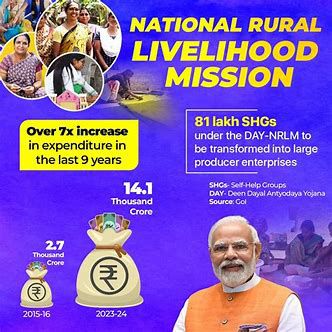
The National Rural Livelihoods Mission (NRLM) is a flagship program of the Indian government aimed at reducing poverty and vulnerability among rural communities. Launched in 2011, NRLM seeks to promote sustainable livelihoods, social empowerment, and inclusive growth in rural areas.

Objectives:

  1. Promote livelihoods: Enhance income and employment opportunities for rural households.
  2. Social empowerment: Build capacities and confidence among rural communities, especially women.
  3. Inclusive growth: Foster inclusive growth, reducing poverty and vulnerability.

Key Features:

  1. Community-led approach: Empowers rural communities to take ownership of their development.
  2. Self-Help Groups (SHGs): Supports SHGs, promoting savings, credit, and entrepreneurship.
  3. Capacity building: Trains community members in skills, leadership, and entrepreneurship.
  4. Financial inclusion: Facilitates access to financial services, reducing dependence on informal lenders.
  5. Livelihoods promotion: Supports agriculture, animal husbandry, and non-farm activities.

Strategies:

  1. Intensive Block-level Approach: Focuses on intensive capacity building and livelihoods promotion in selected blocks.
  2. Partnerships and collaborations: Fosters partnerships with NGOs, banks, and private sector entities.
  3. Technology-enabled solutions: Leverages technology for capacity building, financial inclusion, and livelihoods promotion.

Benefits:

  1. Improved livelihoods: Enhanced income and employment opportunities for rural households.
  2. Social empowerment: Increased confidence and capacities among rural communities, especially women.
  3. Financial inclusion: Reduced dependence on informal lenders, improved access to financial services.
  4. Inclusive growth: Reduced poverty and vulnerability, promoting inclusive growth.

Challenges and Future Directions:

  1. Scalability and sustainability: Scaling up NRLM’s impact while ensuring sustainability.
  2. Diversification of livelihoods: Promoting diversified livelihoods, reducing dependence on agriculture.
  3. Technology integration: Leveraging technology to enhance NRLM’s impact and reach.
  4. Convergence with other initiatives: Integrating NRLM with other government initiatives for greater impact.

In conclusion, NRLM has been a pioneering initiative in empowering rural India, promoting sustainable livelihoods, social empowerment, and inclusive growth. As the program continues to evolve, addressing challenges and building on successes will be crucial to achieving its vision of a poverty-free, vibrant rural India.

COVERAGE OF UJJWALA YOJANA

 Pradhan Mantri Ujjwala Yojana (PMUY) was launched on 01.05.2016 to release deposit free LPG connection in the name of adult woman member of poor households across the country. The primary objective of the PMUY is to provide access to clean cooking fuel LPG to such poor households thereby protecting their health by reducing the serious health hazards associated with use of conventional cooking fuel such as firewood, coal, cow dung etc. which cause severe indoor household air pollution. Use of LPG as cooking fuel frees women from the drudgery of collecting firewood, reduces time spent on cooking and prevents deforestation. As on 31.01.2024, 10.15 Crore PMUY connections have been released across the country.

In order to augment LPG coverage in the country various steps have been taken inter alia, including organizing campaigns for promotion of PMUY, organizing melas/camps to enroll and distribute connections, promotion through Out of Home (OOH) hoardings, radio jingles, Information, Education and Communication (IEC) Vans etc., spreading awareness about advantages of using LPG over other conventional fuels and safe usage of LPG through LPG Panchayats, enrolment/awareness camps under Viksit Bharat Sankalp Yatra, facilitation of consumers and their families for Aadhar enrolment and opening of bank accounts for getting PMUY connections, simplification of process of getting LPG connection, online application for PMUY connection at http://www.pmuy.gov.in, nearest LPG distributors, Common Service Centres (CSC) etc., option of 5 Kg Double Bottle Connection (DBC), swap option from 14.2 Kg to 5 Kg, provision for Migrant Families to avail new connection on Self-Declaration instead of Proof of Address  and Ration Card. Further, OMCs are continuously commissioning new LPG Distributorships, especially in rural areas. Since the launch of PMUY scheme, OMCs have commissioned 7905 Distributorships across the country, out of which 7325 (i.e. 93 %) are catering to rural areas (commissioned during 01.04.2016 to 30.06.2024). As a result of these efforts, the per capita consumption for PMUY beneficiaries has improved to 3.95 refills per year. Further, LPG coverage in the country has improved from 62% in April 2016 to near saturation now.

Independent studies and reports have shown that PMUY scheme has had a significant positive impact on the lives of rural households, especially women and families in rural and remote areas. Some key benefits are briefly explained below:

(i) PMUY had resulted in a shift from traditional cooking methods that involve burning solid fuels like wood, dung and crop residues. The use of cleaner fuel lowers indoor air pollution, leading to improved respiratory health, particularly among women and children who are traditionally more exposed to household smoke.

(ii) Households in rural areas, especially those in remote locations, often spend a significant portion of their time and energy in collecting traditional cooking fuels. LPG has reduced drudgery and the time spent on cooking by women of poor households. The free time, thus, available with them can be utilized in multiple spheres for enhanced economic productivity.

(iii) Transition from biomass and traditional fuels to LPG reduces the dependency on wood and other biomass for cooking purposes, leading to a decrease in deforestation and environmental degradation. This benefits not only the households but also contributes to broader environmental conservation efforts.

(iv) The use of LPG for cooking reduces the risk of accidents related to open fires, which is particularly important for the safety of women and children. Accidental burns and injuries associated with traditional cooking methods are minimized, contributing to a safer household environment.

(v) With improved cooking facilities, there is a potential positive impact on nutrition. Families may find it easier to cook a variety of nutritious meals, contributing to better overall health.

Schemes and key Initiatives under the Ministry of Tribal Affairs for the next 100 days

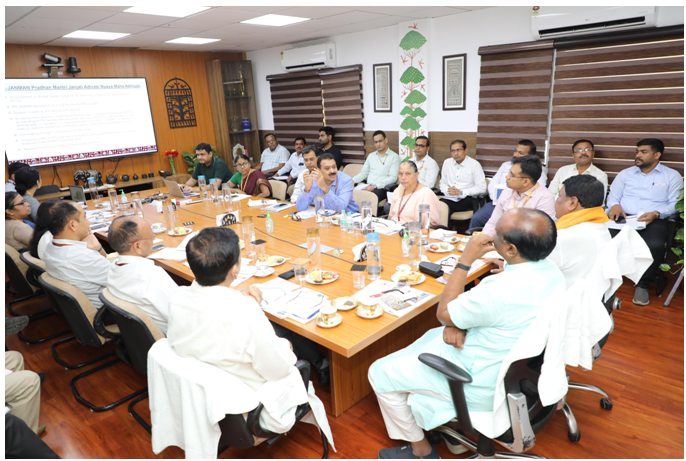
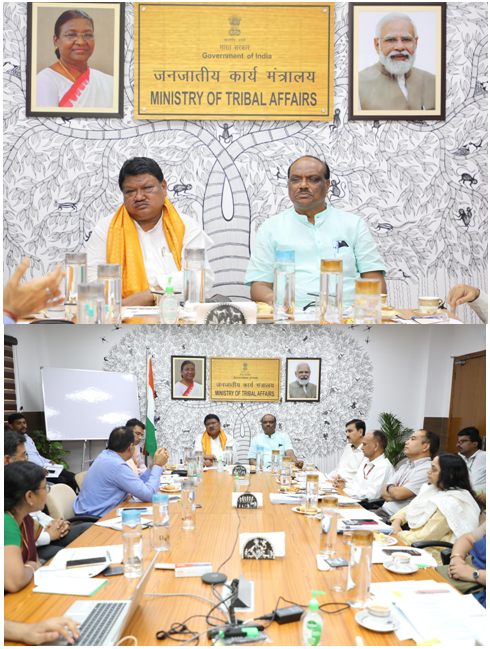
 In a daylong meeting in New Delhi today, Union Minister for Tribal Affairs, Shri Jual Oram and Minister of State, Shri Durgadas Uikey reviewed the progress of schemes and strategized on key initiatives of the Ministry for the next 100 days.

The meeting commenced with a comprehensive presentation on the Ministry’s schemes and initiatives, followed by an overview of the budget.

Key schemes and initiatives discussed in the meeting were:

  • Scholarships schemes for tribal students
  • Pradhan Mantri Janjati Adivasi Nyaya Maha AbhiyaN (PM-JANMAN)
  • Pradhan Mantri Adi Adarsh Gram Yojana (PMAAGY)
  • Eklavya Model Residential Schools (EMRS)
  • Livelihood Schemes
  • Grants under Proviso to Article 275 (1) of the Constitution
  • Support to Tribal Research Institutes (TRIs)
  • Support to voluntary organisations (NGOs)
  • Major initiatives taken in the health sector, and
  • Other ancillary matters handled by various divisions of the Ministry

Shri Oram emphasised the importance of these initiatives in fostering an inclusive and equitable society. Shri Uikey echoed these sentiments, highlighting the collaborative efforts needed to drive these initiatives forward. Secretary (Tribal Affairs), Sh. Vibhu Nayar,  along with senior officers, provided valuable insights and detailed plans to ensure timely and effective implementation.

The meeting concluded with a unanimous commitment of the Ministry to work tirelessly for the outlined goals for empowering tribal community.

*****

Ayushman Bharat PMJAY and Ayushman Bharat Digital Mission (ABDM)

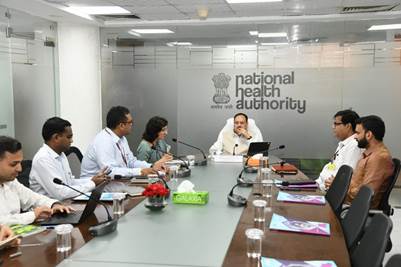
 Union Minister of Health and Family Welfare Shri Jagat Prakash Nadda reviewed the Ayushman Bharat Pradhan Mantri Jan Arogya Yojana (PMJAY) and Ayushman Bharat Digital Mission (ABDM) with senior officials of National Health Authority (NHA), here today.

A detailed presentation was made to the Union Health & Family Welfare minister on their salient features, the present status of the schemes and different aspects of their operationalisation by Ms. Deepti Gaur Mukherjee, CEO, NHA. Scheme has achieved significant milestones in terms of 34.7 crore Ayushman Cards, 7.35 crore hospital admissions amounting to more than ₹1 lakh crore. NHA presented the plan to strengthen the network of empanelled hospitals and effectively engage with them.

Underlining the vision of Hon. Prime Minister of universal health coverage and benefiting the most needy and vulnerable sections of the society through AB PM-JAY, the Union Health Minister directed the officials to ensure that benefits of these visionary schemes reach the most needy and vulnerable sections of the society. He stated that We need to ensure that challenges and any issues that are hampering the effective implementation of PM-JAY are resolved early in coordination with States”. He has directed NHA to engage and coordinate with the States on a regular basis to understand in-depth the issues at hand and resolve them in unison.

Shri Nadda stated that to strengthen and expand Ayushman card creation of eligible beneficiaries, especially in the urban areas and metropolitan cities, a bottom-up approach needs to be adopted, where we create pathways and mechanisms whereby, they can be easily verified for creation of Ayushman card. “Let us keep our systems flexible and agile to ensure the enrolment process”, he advised.   

Noting that it is important to learn from the experiences of the beneficiaries, Shri Nadda stated that smart technology tools can be employed to connect directly with the beneficiaries and collect their hospitalisation and treatment experiences.  This will help us to improve delivery of our healthcare services, he highlighted.

The union Health minister was also briefed about the fraud detection and prevention measures being taken by NHA, which has helped to enhance the efficiency of the scheme.

Shri. J P Nadda also reviewed the National Health Claims Exchange (NHCX). NHXC has been developed by NHA in collaboration with Insurance Regulatory Development Authority of India (IRDAI). NHCX will enable paperless settlement of claims submitted by hospitals to insurance company. This will also enable IRDAI to have a dashboard view of claims settlement status in real time. 33 insurance companies covering 99% insurance market have been integrated on NHCX platform. Citizens will also be able to see the status of their insurance claim through the mobile.

Concept of Viksit Bharat is not just a goal but a sacred mission

 The Vice-President, Shri Jagdeep Dhankhar today remarked that concept of Viksit Bharat @2047 is not just a goal but a sacred mission. Asserting that this century belongs to Bharat, he called upon “every citizen, every institution, and every sector of our society” to contribute their utmost.

Addressing the students and faculty of NMIMS in Mumbai today, VP underlined that as a consequence of series of affirmative governance initiatives, there has been a sea change in the business ecosystem and India is now seen as a favourite destination of investments and opportunities.

Shri Dhankhar compared India’s political journey to a rocket’s ascent, emphasizing resilience and progress despite occasional challenges. He noted that just as air pockets do not disturb a flight’s trajectory or destination, India’s political challenges have not hindered its rise. Highlighting the nation’s significant progress, Shri Dhankhar emphasized on the immense effort required a decade ago to launch this journey and remarked “Trust me, the next five years will see India’s rise like that of a rocket breaking beyond gravitational force.”

Highlighting the presence of nefarious forces with pernicious designs attempting to demean and taint the nation’s progress, the Vice-President called on the youth to actively counter negative narratives aimed at tarnishing India’s institutions and growth trajectory.

Talking about the abrogation of Article 370, VP referred to a Parliamentary discussion in 1963 in which the then Prime Minister had stated that Article 370 would wear away over time, emphasizing its temporary nature. Thanking the Parliamentarians for their decisive action in abrogating Article 370 in 2019, Shri Dhankhar mentioned that that the outcomes might have been different had Dr. Ambedkar drafted Article 370 or Sardar Patel been in charge of the integration of Jammu and Kashmir after the independence.

In his address, the Vice-President highlighted the illustrious history of India’s renowned educational institutions like Nalanda, Takshashila, Vikramshila, and Vallabhi. He emphasized that these ancient universities made India a knowledge powerhouse, significantly enhancing its diplomatic soft power and shaping trade directions. He also underlined the critical relevance of higher education in national development and empowerment, drawing from the legacy of these historic centers of learning.

Highlighting the transformative power of education, Shri Dhankhar described it as a driving force that empowers individuals, fosters innovation, and propels economic growth, contributing significantly to societal and national progress.

On this occasion, VP also urged the youth to break free from conventional thinking and embrace the vast opportunities available to today. Expressing the need to move beyond the traditional focus on competitive examinations and explore the new, unconventional prospects emerging in various fields, Shri Dhankhar encouraged everyone to look beyond the horizon and recognize the immense potential in emerging areas such as AI, quantum computing, Green Hydrogen Mission.

Dr. (Smt.) Sudesh Dhankhar, Shri Ramesh Bais, the Governor of Maharashtra, Shri Praful Patel, the Member of Parliament, Rajya Sabha, Shri Amrishbhai Rasiklal Patel, Chancellor of NMIMS, Dr. Ramesh Bhat, Vice-Chancellor, NMIMS, Dr. Sharad Mhaiskar, Pro Vice-Chancellor, NMIMS, faculty members, staff and students were present on the occasion.\

Read full text here : https://pib.gov.in/PressReleasePage.aspx?PRID=2032761

*****

Make in India scheme

 Make in India is a programme of the Government of India to encourage the people of India to manufacture in our own country. Mainly the programme aims to the growth of the manufacturing industry. This programme was launched by our honourable Prime Minister Narendra Modi on September 25, 2015, in New Delhi.

The main importance of the Make in India programme is on 25 sectors. They are shipping railways, biotechnology, thermal power, automobile components, roads and highways, oil and gas, tourism and many more.

Prime Minister Narendra Modi said while delivering the speech from the Red Fort that Comes and makes in India, people of our India have many skills and talents to do our own thing at its best to make in India and also manufacture in India. This will help to raise our economic growth and a chance to prove ourselves that the people of India can do anything.

If you want to know more about this Make in India scheme please visit http://www.makeinindia.com for more details.

How to spot a pyramid scheme. 

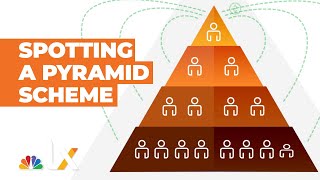
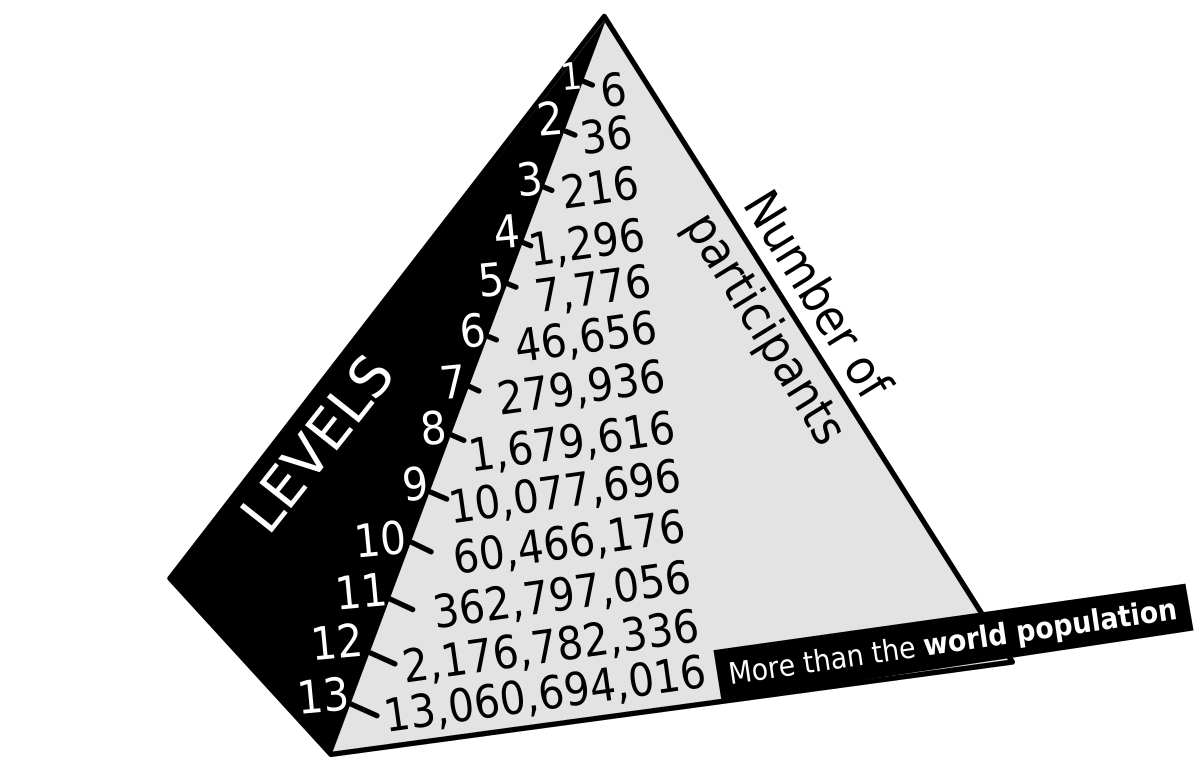
A pyramid scheme is a fraudulent system of making money based on recruiting an ever-increasing number of “investors.”  The initial promoters recruit investors, who in turn recruit more investors, and so on. The scheme is called a “pyramid” because at each level, the number of investors increases. The small group of initial promoters at the top require a large base of later investors to support the scheme by providing profits to the earlier investors.

Let’s assume the following: Founder Mike sits alone at the top of the heap, represented by the number “one.” Assume Mike recruits 10 second-tier people to the level directly below him, where each newbie must issue him a cash payment for the privilege of joining. Not only do those buy-in fees funnel directly into Mike’s pocket, but each of the 10 new members must then recruit 10 tier-three members of their own (totaling 100), who must pay fees to the tier-two recruiters, who must send a percentage of their takes back up to Mike. According to the hard-sell pitches made at recruitment events, those bold enough to take the pyramid plunge will theoretically receive substantial cash from the recruits below them. But in practice, the prospective member pools tend to dry up over time. And by the time a pyramid scheme invariably shuts down, the top-level operatives walk away with loads of cash, while the majority of lower-level members leave empty-handed. It should be noted that because pyramid schemes heavily rely on fees from new recruits, the vast majority do not involve the sale of actual products or services with any intrinsic value.

Unfortunately, these types of scams sometimes prey on people who need income quickly. For example, if you lost your job and are having a hard time finding a new job, you might be more willing to look into an opportunity that offers a fast return. But avoid the temptation to overlook the feeling that something is too good to be true. Instead, take a moment to calm yourself so you can make a legitimate plan after losing your job. Go over your budget—or create one for the first time—so you can manage your money in the best way possible while you try to increase your income.

How to Spot a Pyramid Scheme

Pyramid schemes and MLM sound a bit alike, don’t they? Here are some signs of a pyramid scheme, provided by the US Securities and Exchange Commission, to help you understand whether you’re considering a scam or a legitimate MLM opportunity:

  • You’re not selling something real. Legitimate MLMs sell tangible goods—many times there’s a ready-made market for them.
  • Get-rich-quick promises. If you’re being offered overnight success, get-rich-quick guarantees, or passive income promises, it’s probably too good to be true. People who make money with legitimate MLMs put a lot of time and effort into their businesses.
  • The company can’t prove it generates retail income. If the business can’t show you financial statements that demonstrate income from the sale of product, it could be generating all its income from recruiting people into the pyramid.
  • Strange or unnecessarily complex commission processes. Legitimate MLMs have easy-to-understand, product-based commissions.

The Bottom Line

Pyramid schemes are illegal in many countries. The model of profiting by using the network effect often traps individuals into recruiting their acquaintances, which can feel slimy for everyone involved and can ultimately strain relationships. Some people may shoot their shot each time and invest in multiple schemes losing money each time. Victims of pyramid schemes are often embrassed into silence and keep blaming themselves for not being tenacious enough to earn the promised returns, when in truth it’s the system that is faulty. Get rich quick schmes never work and will allways have some strings attached to it that can put people into legal trouble. Vigilance and knowledge about where your money goes are important factors that people must know, preventing them from falling pray for traps like the pyramid scheme.

sources – https://www.investopedia.com/insights/what-is-a-pyramid-scheme/ https://www.credit.com/blog/what-is-a-pyramid-scheme/

How to spot a pyramid scheme.

A pyramid scheme is a fraudulent system of making money based on recruiting an ever-increasing number of “investors.”  The initial promoters recruit investors, who in turn recruit more investors, and so on. The scheme is called a “pyramid” because at each level, the number of investors increases. The small group of initial promoters at the top require a large base of later investors to support the scheme by providing profits to the earlier investors.

Let’s assume the following: Founder Mike sits alone at the top of the heap, represented by the number “one.” Assume Mike recruits 10 second-tier people to the level directly below him, where each newbie must issue him a cash payment for the privilege of joining. Not only do those buy-in fees funnel directly into Mike’s pocket, but each of the 10 new members must then recruit 10 tier-three members of their own (totaling 100), who must pay fees to the tier-two recruiters, who must send a percentage of their takes back up to Mike. According to the hard-sell pitches made at recruitment events, those bold enough to take the pyramid plunge will theoretically receive substantial cash from the recruits below them. But in practice, the prospective member pools tend to dry up over time. And by the time a pyramid scheme invariably shuts down, the top-level operatives walk away with loads of cash, while the majority of lower-level members leave empty-handed. It should be noted that because pyramid schemes heavily rely on fees from new recruits, the vast majority do not involve the sale of actual products or services with any intrinsic value.

Unfortunately, these types of scams sometimes prey on people who need income quickly. For example, if you lost your job and are having a hard time finding a new job, you might be more willing to look into an opportunity that offers a fast return. But avoid the temptation to overlook the feeling that something is too good to be true. Instead, take a moment to calm yourself so you can make a legitimate plan after losing your job. Go over your budget—or create one for the first time—so you can manage your money in the best way possible while you try to increase your income.

How to Spot a Pyramid Scheme

Pyramid schemes and MLM sound a bit alike, don’t they? Here are some signs of a pyramid scheme, provided by the US Securities and Exchange Commission, to help you understand whether you’re considering a scam or a legitimate MLM opportunity:

  • You’re not selling something real. Legitimate MLMs sell tangible goods—many times there’s a ready-made market for them.
  • Get-rich-quick promises. If you’re being offered overnight success, get-rich-quick guarantees, or passive income promises, it’s probably too good to be true. People who make money with legitimate MLMs put a lot of time and effort into their businesses.
  • The company can’t prove it generates retail income. If the business can’t show you financial statements that demonstrate income from the sale of product, it could be generating all its income from recruiting people into the pyramid.
  • Strange or unnecessarily complex commission processes. Legitimate MLMs have easy-to-understand, product-based commissions.

The Bottom Line

Pyramid schemes are illegal in many countries. The model of profiting by using the network effect often traps individuals into recruiting their acquaintances, which can feel slimy for everyone involved and can ultimately strain relationships. Some people may shoot their shot each time and invest in multiple schemes losing money each time. Victims of pyramid schemes are often embrassed into silence and keep blaming themselves for not being tenacious enough to earn the promised returns, when in truth it’s the system that is faulty. Get rich quick schmes never work and will allways have some strings attached to it that can put people into legal trouble. Vigilance and knowledge about where your money goes are important factors that people must know, preventing them from falling pray for traps like the pyramid scheme.

sources – https://www.investopedia.com/insights/what-is-a-pyramid-scheme/ https://www.credit.com/blog/what-is-a-pyramid-scheme/

SCHEME FOR GOOD SAMARITAN

 The Ministry has launched the “Scheme for grant of Award to the Good Samaritan who has saved life of a victim of a fatal accident involving a motor vehicle by administering immediate assistance and rushing to Hospital/Trauma Care Centre within the Golden Hour of the accident to provide medical treatment” on 03.10.2021.  As per the Scheme Guidelines, the amount of award for each Good Samaritan would be Rs. 5,000/- per incident. The Scheme has been widely publicized through social media including PIB Note.

As per the information available with the Ministry, total number of road accidents in the country during the last three calendar years from 2018 to 2020 is given in the table below:


Year

Total Number of Road Accidents

(in numbers)

% change

2018

4,67,044

2019

4,49,002

-3.86

2020

3,66,138

-18.46

As may be seen, there is marginal decrease in the number of road accidents.

Based on the FIR data received from various States/UTs, the yearly analysis are done at Transport Research Wing of this Ministry. As per analysis of the reasons for road accidents, these mainly occur due to multiple causes such as over speeding, use of Mobile phone, drunken driving/consumption of alcohol / drug, overloaded Vehicle, vehicular condition, poor light condition, jumping red light, overtaking, neglect of civic bodies, weather condition, fault of driver, driving on wrong side, defect in road condition, defect in condition of motor vehicle, fault of cyclist, fault of pedestrian etc.  Further, based upon the various studies the Ministry has formulated a multi-pronged strategy to address the issue of road safety based on Education, Engineering (both of roads and vehicles), Enforcement and Emergency Care.

As part of operation and maintenance of the National Highways under National Highways Authority of India (NHAI), there is provision of Ambulances with paramedical staff / Emergency Medical team with Technician / Nurse which are stationed near the toll plazas.


Ministry of Road Transport and Highways has formulated Rules regarding the rights of Good Samaritan vide notification dated 29.09.2020 (GSR 594(E) to motivate the general public to help the road accident victims in emergency situation. As per the notification, a Good Samaritan who has informed the police of any accident involving a motor vehicle, or who has transported a victim of an accident involving a motor vehicle to the hospital, shall not be subjected to any further requirements by the police or the hospital, and shall be permitted to leave immediately. Besides, this Ministry has also issued a scheme on 21.09.2021, namely “Scheme of Financial Assistance for Administering Road Safety Advocacy and Awards for the outstanding work done in the field of road safety” through which various NGOs and other organizations organize different road safety related activities including activities to motivate general public to help the road accident victims in emergency situation and awareness about it.


Is Indian Handicraft at risk ?

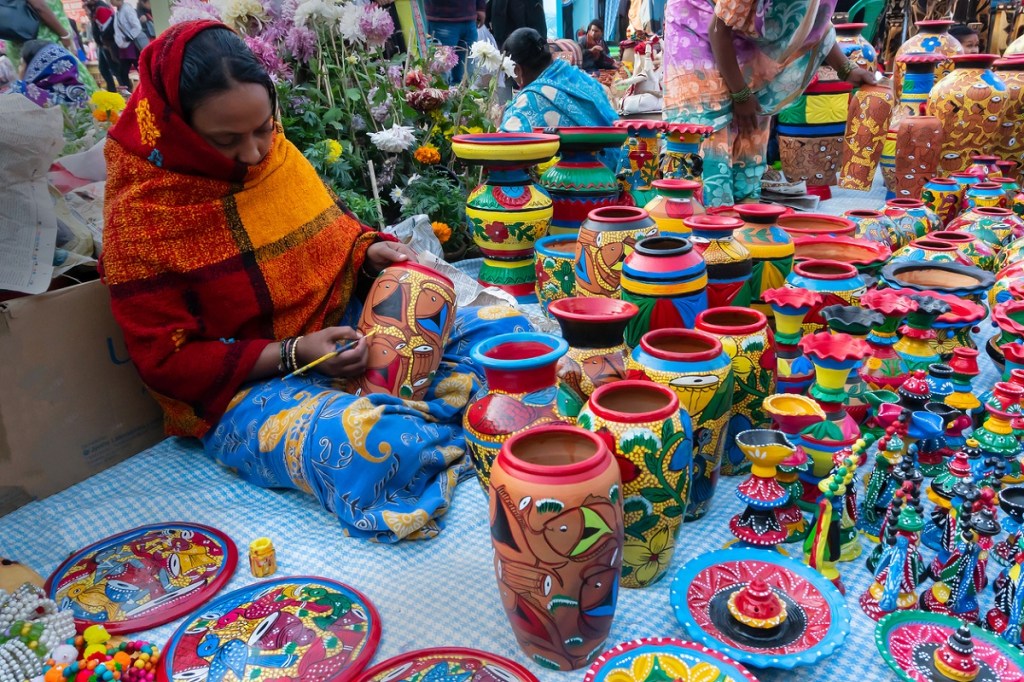
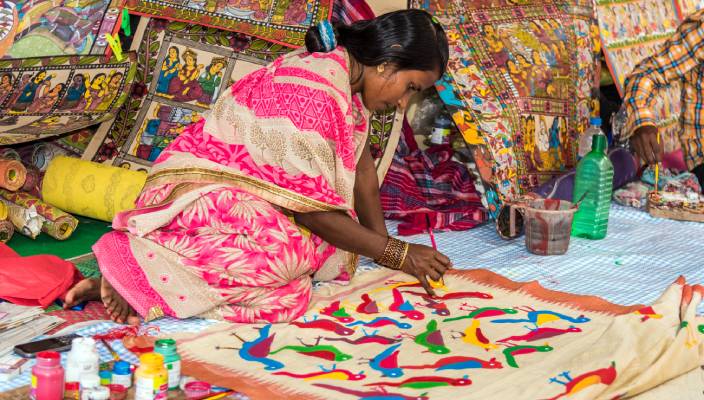
Handicraft as we all know it, is the craft work of processing materials by hands or simple hand tools. The outcome of such a craftwork involves decorative pieces or useful objects. The materials used in the making are mostly natural, but can be industrially processed or even recycled too.

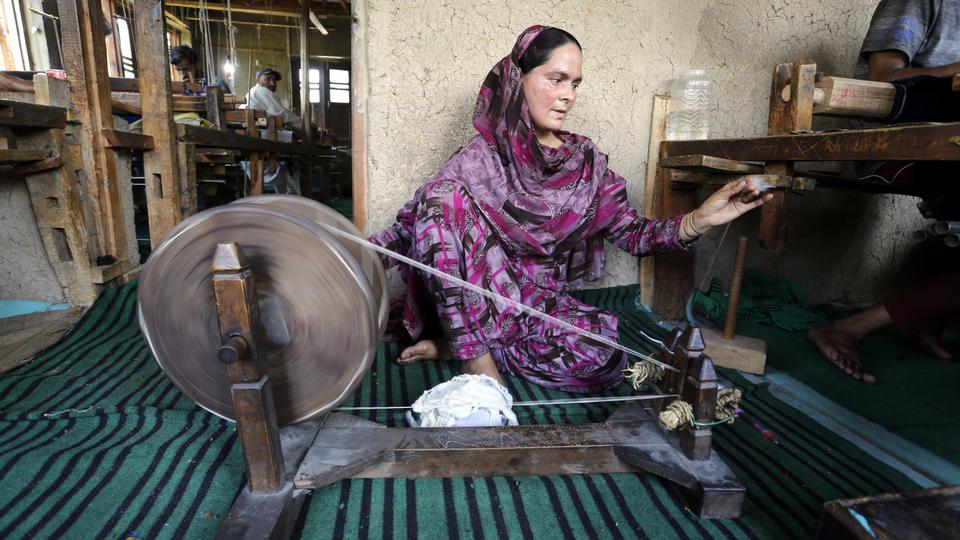
Handicraft is an artform that is deeply rooted in the traditions of India. And the sector provides livelihood to lakhs of people. They produce goods ranging from carpets, potteries, paintings, embroidery and the list goes on. Every region in India has handicraft that is unique to that region. Such as Chikan Kari weaving from Lucknow. Madhubani paintings from Mithalia, Bidri metal handicraft from Karnataka, Pashmina shawls from Kashmir and so on.

However, over the years this industry had to endure certain challenges, making it hard for the artisans to flourish and make a living.

Issues faced by artisans

There are a number of reasons why artisans in the craft industry are facing problems. Some of the widely varied reasons are;

  • Informal sector- Handicraft industry is a highly informal sector. Artisans are usually structured through informal contracts between traders, middlemen, master artisans and low skilled artisans. Along with that, this industry is largely unorganised, making it hard for the industry to flourish organically.
  • Lack of education- The lack of education makes it difficult for the artisans to manage inventory, access government schemes information and bargain with traders and middleman.
  • Outdated production methods- Artisans lack the funds to upgrade to better tools and technologies or undergo training.
  • Competition from organised sector- Artisans are losing customers, due to the arrival of cheaply priced machine made products, especially Chinese made goods.

These are few of the reasons handicraft industry is lagging behind. However, it is never too late to make amends and prevent the sector from sinking.

How to revive the Handicraft industry?

One of the first steps to be taken to boast the Handicraft industry, is the action to make this industry organised. It is a given fact that middlemen and traders mend their ways into benefiting from the sales by jeopardizing the livelihood of artisans. Having an organised and formal sector will help with the righteous distribution  of profit. This is the task of the government to take needful action and prioritise this industry just like any other high yielding industry.

Along with taking into account the mission of creating awareness among the artisans and educating them on basic information about the working and functioning of the industry. Apart from that, it is also important for the government to create awareness among the common public and urge them to help save the livelihood of handicraft workers, and avoid choosing cheaper machine made alternative. Thus helping to preserve the Indian tradition.

Government’s role in empowering Indian Handicraft

Over the past few years, the Government of India has launched schemes and plans that could potentially benefit the handicraft artisans. Some of the schemes are;

  • National Handicraft Development Programme
  • Ambedkar Hastshilp Vikas Yojna
  • Handicraft Mega Cluster Mission
  • Integrated Handloom Development Scheme

Mentioned above are just few of the schemes launched by the government. But just launching schemes would not be of much help, until and unless those schemes are actually implemented at the grassroot level.

In instances like these, NGOs like Cradftizen Handicraft, Asha Handicraft Association, etc.,  play a vital role in campaigning such schemes across the artisans, and making them aware about their right and benefits.

                   The handicraft industry makes Rs 25,000 crores annually by exporting goods. This sector has a lot of potential that can be tapped and channelised into a highly profitable industry, along with benefit and uplifting the artisans, who are keeping the Indian traditions and craft alive.

Knowing about the Government schemes launched during COVID-19

June 2020 has seen two important government initiatives for the every-day earners for food in news. They are the Garib Kalyan Rojgar Yojana and the PM Street Vendor’s Atmanirbhar Nidhi.

First on the list is the Garib Kalyan Rojgar Yojana.  It is a central government initiative taken amidst the pandemic circumstances. The Abhiyaan was launched by the Prime Minister in June from Telihar in Bihar. As so the title suggests, the objective of the Abhiyaan is to secure, empower lives by providing livelihood opportunities. The scheme is specifically launched for that population of the country whose areas or villages have witnessed the return of a large number of migrant workers after the citizens were no longer employed following the lockdown announced for the devastating Covid-19.

This campaign is sought to be one of the components of Rs 1.70 lakh crore package under Pradhan Mantri Garib Kalyan Yojana which was set to help the poor fight against Corona Virus Pandemic.

The Campaign is nothing but a massive employment -cum- rural public works in which the public works are to be undertaken with an aim of generating a resource envelope of minimum Rs 50,000 crores. The campaign would involve 125 days of work. The public works will supposedly include rural housing for the poor along with the provision of providing drinking water through the already established Jal Jeevan mission. The infrastructure of Panchayat Bhavans, rural mandis, community toilets, rural roads, etc. are sought to be developed.

The initiative is hoped to cover 116 districts in 6 states – Uttar Pradesh, Bihar, Rajasthan, Madhya Pradesh, Odisha and Jharkhand. There are 27 aspirational districts hoped to be covered under this initiative. The mentioned are estimated to hopefully cover about 2/3 of the unemployed migrant workers. A major emphasis has also been put to the rural infrastructure. The initiative will have 25 different types of public works which is specifically to create infrastructure and importantly boost livelihood opportunities in the areas.

High speed and cheap internet are also part of the maintenances to be provided in every rural household. Thus, there shall be laying of fibre cable.

The campaign however would require a Multi-Ministerial Effort between different Departments of the Government with Ministry of Rural Development as the nodal Ministry along with the other ministries such as Panchayati Raj, Mines, Road and transport etc.

Second on the news was the PM Svanidhi. The initiative PM Street Vendor’s Atmanirbhar Nidhi was launched by the Ministry of Housing and Urban Affairs. It is launched with the aim of introducing a special micro-credit facility Scheme which would provide affordable loans to the street vendors, who recently went on losses or no business at all since the wake of the COVID-19 crisis. This scheme will thus enable the street vendors to resume work and earn their livelihoods.

The beneficiaries will include over 50 lakh people which would include the vendors, hawkers, etc. who work to supply fruits, vegetables, ready-to-eat street foods etc in the markets. It would also include the business of service providers like barber shops, laundry services etc.

The scheme shall be available for beneficiaries belonging to only those States and Union Territories which have notified been under the Rules and Scheme provided under Street Vendors Protection of Livelihood and Regulation of Street Vending Act in 2014.

The vendors or the hawkers can avail a loan (working capital) of up to Rs. 10,000 which is subject to be repayable in monthly instalments within the tenure of one year. On timely and the early repayment of the loan, credit limit was claimed to be raised and interest subsidy to be given at the rate of 7% per annum which ultimately shall be credited through Direct Benefit Transfer on a quarterly basis. 108 cities were selected, and the loan disbursement was planned to commence in July, 2020.  The eligible lenders were rated as the bank such as Regional Rural Banks, Small Finance Banks, Non-Banking Finance Companies, Micro Finance Institutions established in some States and Union territories.

The Small Industries Development Bank of India (SIDBI) is an implementation agency. It was developed to manage the credit guarantee approved to the lending institutions through Credit Guarantee Fund Trust for Micro and Small Enterprises.The SIDBI was developed through an Integrated PM SVANidhi portal. The Portal was developed to integrate  credit management and PAiSA portal of MoHUA to administer the interest subsidies automatically.