Set up of schools for child labour

 The Ministry of Labour & Employment had implemented the National Child Labour Project (NCLP) Scheme for rehabilitation of child labourers through District Project Societies under the chairmanship of the District Magistrate since inception of the Scheme in 1988.  Under the NCLP scheme, the children in the age group of 9-14 years are rescued / withdrawn from work and enrolled in the NCLP Special Training Centres (STCs), where they are provided with bridge education, vocational training, mid-day meal, stipend, health care, etc. before being mainstreamed into formal education system.  NCLP scheme has now been subsumed under Samagara Shiksha Abhiyan (SSA) Scheme with effect from 01.04.2021. Henceforth, the recused child labourers will be mainstreamed into formal education system through STC operational under SSA.  At present, no Special Training Centres (STC) is functional under NCLP scheme.

 No new STCs under NCLP Project have been approved after 31.03.2021. The number of districts in which Special Training Centres under NCLP Scheme were sanctioned since inception as on 31.03.2021 is at Annexure-I.

The details of funds released under the NCLP scheme during 2020-21 to 2022-23 is at Annexure-II. As on 31.03.2023, around 14.3 lakh children were rescued/withdrawn from work, rehabilitated and mainstreamed under National Child Labour Project (NCLP) Scheme since inception of the Scheme.


Annexure-I


Number of Districts in which Special Training Centres were sanctioned under NCLP Scheme since inception as on 31.03.2021

Sl. No.

Name of State

No. of Sanctioned NCLP Districts

  1.  

Andhra Pradesh

13

  1.  

Assam

5

  1.  

Bihar

24

  1.  

Chhattisgarh

8

  1.  

Gujarat

9

  1.  

Haryana

3

  1.  

Jammu & Kashmir

3

  1.  

Jharkhand

8

  1.  

Karnataka

17

  1.  

Madhya Pradesh

22

  1.  

Maharashtra

18

  1.  

Nagaland

1

  1.  

Odisha

24

  1.  

Punjab

3

  1.  

Rajasthan

27

  1.  

Tamil Nadu

18

  1.  

Telangana

31

  1.  

Uttar Pradesh

56

  1.  

Uttarakhand

13

  1.  

West Bengal

20

  1.  

Delhi

1


Total

 324


Annexure –II

Grant Released under National Child Labour Project Scheme, State-wise, during 2020-21 to 2022-23:

( Rs. In Lakhs)

Sl. No.

Name of  State

2020-21

2021-22

2022-23

1

Andhra Pradesh

306.29

32.01

116.37

2

Assam

49.64

81.10

140.68

3

Chhattisgarh

0

0

0

4

Gujarat

61.36

12.23

0

5

Haryana

116.83

34.79

0

6

Jammu & Kashmir

32.48

0

12.70

7

Jharkhand

177.42

0

60.73

8

Karnataka

82.74

7.53

18.14

9

Madhya Pradesh

363.41

143.29

236.50

10

Maharashtra

931.49

196.53

102.54

11

Nagaland

0

0

0

12

Odisha

115.16

236.66

57.24

13

Punjab

206.41

317.35

37.53

14

Rajasthan

124.19

16.64

0.64

15

Tamil Nadu

482.00

323.45

184.74

16

Telangana

152.86

71.56

94.65

17

Uttar Pradesh

433.83

137.70

99.91

18

Uttarakhand

0

0

0

19

West Bengal

463.37

203.10

424.26


This information was given by Union Minister of State for Labour and Employment Shri Rameshwar Teli in a written reply in the Lok Sabha today.

***

Is NSHSS a Legitimate Academic Organization?

Bloganuary writing prompt
If you could un-invent something, what would it be?

The National Society of High School Scholars (NSHSS) frequently comes into conversation among students, parents, and educators across the nation. Promising a vast array of benefits from scholarship opportunities to academic prestige, it naturally sparks curiosity — as well as skepticism — regarding its legitimacy. With invitations arriving in the mailboxes of high-achieving students, the central question arises — is the honor of being an NSHSS member as distinguished as it appears? In this article, we’ll delve into the NSHSS’s background, operations, and the perceptions that it holds among various academic stakeholders.

Understanding the National Society of High School Scholars

The National Society of High School Scholars was founded in 2002 by Claes Nobel, a member of the family known for the Nobel Prizes, and James Lewis, an educator. It markets itself as an organization that connects high-performing students with unique educational and career opportunities. The NSHSS champions itself as being a springboard to future success and a network where young scholars can thrive.

Membership to NSHSS includes a one-time fee. Following payment, members are provided with various resources such as access to scholarship platforms, academic competitions, and university admissions resources. It’s the outlay of this fee that has people questioning, “Is NSHSS a scam?” and wondering about the true value of its benefits.

Examining the Criteria for NSHSS Membership and Offerings

One of the most debated aspects of NSHSS is the criteria for membership. To join, students need to meet certain academic standards, such as maintaining a specific GPA or achieving a particular score on standardized tests. These thresholds are set by the society and used as benchmarks for prospective members.

Once a part of NSHSS, members have access to a suite of benefits. These include exclusive scholarships, events for leadership development, and college fairs specifically geared toward members. The organization also provides various tools and resources to aid in the college application process.

Additionally, the NSHSS sells branded merchandise and offers members the chance to buy honor cords and other recognition paraphernalia for graduation ceremonies. For some, these tangible items add to the perceived value of membership, while for others, they represent a commercial aspect of the society that undermines its academic foundation.

Scholarships awarded via NSHSS are diverse, ranging from merit-based to those targeted toward specific fields of study or extracurricular interests. The society also provides avenues to internships and mentorship programs, furthering its mission to prepare members for their educational and professional futures.

Debating the Value and Recognition of NSHSS in Academic Circles

Discussion often arises regarding how well-regarded NSHSS membership is within academic and professional spheres. Some educators and college admissions officers recognize the society for its efforts in rewarding academic achievement. However, this recognition isn’t universally held across all educational institutions.

Critics argue that while NSHSS provides benefits, the value may not align with the cost of membership. From an admissions standpoint, simply being part of an organization like NSHSS isn’t always a distinguishing factor. Admissions committees increasingly look for depth in activities and personal achievements beyond membership in honor societies.

Furthermore, the marketing tactics used by NSHSS have been a point of contention. With aggressive advertising and bold claims about society’s impact on a student’s future success, some question the substance behind the style. It’s important for students and parents to thoroughly research and weigh these factors before committing to membership.

Overall, the NSHSS presents a mix of opportunities and challenges for high-achieving students seeking to enhance their academic and professional journeys. While some find value in the networking and resources provided, others question the cost and the actual impact on college admissions and future success. As with any such decision, it is imperative for students and parents to conduct thorough research, consider testimonials from both students and educators, and reflect on personal objectives before committing to membership in NSHSS or similar organizations.

INITIATIVES TO ENHANCE PERFORMANCE OF SAINIK SCHOOLS

 The primary aim of Sainik Schools is to prepare cadets academically, physically and mentally for entry into the National Defence Academy. Various steps are in place for ensuring the academic excellence of the cadets of 33 Sainik Schools. These include conducting of interactive training & close monitoring of progress of cadets, remedial classes for slow learners, introduction of latest pedagogical practices, in service course and training for teachers, guest lectures & motivational tours for cadets etc. 

Initially in 1961, 05 Sainik Schools were opened by the Government under the aegis of Sainik Schools Society. However, to meet the growing aspirations of the people and to attract youth from diverse socio-economic backgrounds in order to foster a sense of national integration and unity, 28 more Sainik Schools were subsequently opened across the country making it a total of 33 Sainik Schools.

Recently, in 2021, Government has approved a scheme to establish new Sainik Schools under partnership mode with Government/private schools/NGOs/Trusts etc in order to set up such schools on the pattern of existing Sainik Schools by aligning their education system with Sainik Schools ethos, value system and national pride. A total of 42 schools have been approved so far under partnership mode out of which sessions have commenced in 19 schools. 

In order to achieve gender equality and to pave way for induction of women in Armed Forces, Girl Cadets have also been inducted in all 33 Sainik Schools w.e.f. 2021-22.

The Sainik Schools have evolved over the years as a model in imparting quality education and training to cadets and prepare them to be good citizens and excel in all walks of life. 

Various initiatives have been undertaken by Sainik Schools to instill a sense of civic responsibility and leadership among cadets as indicated below:

  • Prefectorial system is followed in all Sainik Schools where cadets are assigned with specific responsibilities to develop leadership qualities. 
  • Cadets are encouraged to participate in various exchange programmes being organized among Sainik Schools and other Schools to make them understand about civic responsibilities and develop leadership qualities. 
  • Sainik Schools undertake social work and community service projects including outreach programmes. Cadets are also involved in initiatives such as tree plantations drives, cleanliness campaigns, and volunteering at local community organizations. This help in fostering a sense of responsibility towards the society.
  • Educational tours and visits are arranged to expose the cadets to diverse environments and situations. These experiences help in developing adaptability, cultural understanding, and a sense of responsibility towards the larger community.
  • NCC is compulsory for both boys and girls cadets which help to develop qualities of character, courage and discipline among the cadets.  


This information was given by Raksha Rajya Mantri Shri Ajay Bhatt in a written reply to Lt Gen (Dr) D P Vats (Retd) in Rajya Sabha today.

****

Eklavya Model Residential School at Kuliana, district Mayurbhanj, Odisha

 The President of India, Smt Droupadi Murmu, inaugurated an Eklavya Model Residential School at Kuliana, district Mayurbhanj, Odisha today (November 20, 2023).

Speaking on the occasion, the President said that during her childhood there was no school near her home; therefore, she had to go away from home for study. She said that many children were deprived of education at that time due to non-availability of a nearby school which is not the case today. She expressed confidence that with the opening of the Eklavya Model Residential School, local children will now have more opportunity for education.

The President said that education is the key to economic and social well-being. She advised parents to educate their children.

Addressing the children, the President said that she also comes from a humble background like them. She got the opportunity to serve the citizens, because of her education. She said that education can make them successful. Being an educated person, they can contribute to the progress of the country and society along with their own development.

The President said that the Government of India has started multi-pronged schemes through various ministries to provide railways, national highways, education, health and other such basic amenities in tribal dominated areas. She was happy to note that more than 700 Eklavya Model Residential Schools are being established across the country for education of tribal children. She said that in these schools more than 3.5 lakh tribal students across India will be able to get quality education and be able to contribute to the development of society and nation.

***

DS/AK

37 PM SHRI Kendriya Vidyalayas and 26 PM SHRI Jawahar Navodaya Vidyalayas in Odisha

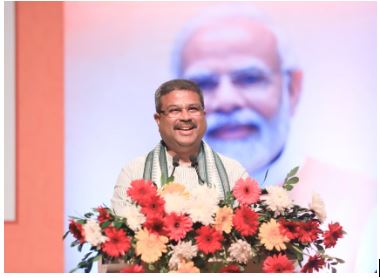
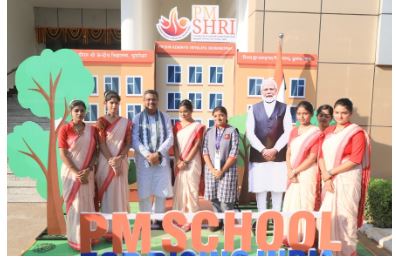
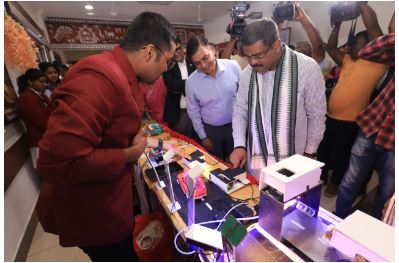
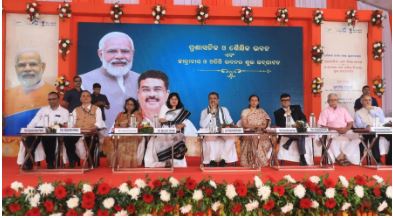
 Union Minister for Education and Skill Development & Entrepreneurship, Shri Dharmendra Pradhan launched 37 PM SHRI Kendriya Vidyalayas and 26 PM SHRI Jawahar Navodaya Vidyalayas in Odisha. Dignitaries, officials, academicians, and students were also present at the event.

 While speaking at the event ,Shri Pradhan expressed his gratitude for Prime Minister Shri Narendra Modi and said, these schools will work in full spirit of the National Education Policy 2020 and provide quality education to the students with comprehensive and inclusive education. He also informed that about 800 government schools in Odisha will be developed into PM Shri Schools and more than Rs. 1600 crore will come. He also requested the Chief Minister of Odisha Shri Naveen Patnaik to sign an MoU to implement the PM Shri Yojana in Government Schools of Odisha through which, two writing schools in every block and urban area of Odisha will be developed into PM Shri Schools.

 Shri Pradhan stated that to achieve the goal of a developed India by 2047, the education sector of the country needs to move forward. For that, rural children should be educated in the 21st century to prepare them for the future, he commented.

 Earlier in the day, the Minister inaugurated the administrative and academic building, dormitory and guest house at the Oriental Language Centre of the Indian Language Institute, Bhubaneswar. Shri Pradhan, while speaking at the event, highlighted the importance of the development projects that will help to expand the facilities for training Odia, Shantali, Bengali, and Maithili. 

 Shri Pradhan also emphasized the unique identity of the Odia language, stating the sweetness of the language spoken in Sambalpur and Ganjam and the elegance of the language in Mayurbhanj and Dhenkanal. He also mentioned that the tribes of Odisha have different languages. 

 The Minister also informed that on the occasion of the Bharatiya Bhasha Diwas, to be celebrated on the birth anniversary of freedom fighter, eminent Tamil poet Mahakabi Chinnaswamy Subramania Bharati, on 11 December, lecture and essay competition on Odia language will be organised in all schools and colleges, to encourage the new generation.

 Expressing his gratitude to Prime Minister Shri Narendra Modi for implementing the National Education Policy 2020, Shri Pradhan mentioned that priority has been given to teaching not only language as a subject but also other subjects in the mother tongue. When children read texts in the language they speak and listen to at an early stage, their ability to research, reason and analyse is enhanced, he commented. 

 PM SHRI schools will showcase the implementation of the National Education Policy 2020 and emerge as exemplar schools shaping the path towards a brighter future for students. They will create holistic and well-rounded individuals equipped with key 21st-century skills.

Image

Image

Image

Image

***

Kendriya Vidyalayas (KVs)

 Kendriya Vidyalayas (KVs) are a system of central government schools in India under the auspices of the Ministry of Education, Government of India. These schools were established to cater primarily to the educational needs of children of transferable central government employees, including defense and paramilitary personnel, by providing a common educational platform across the country.

Key Features of Kendriya Vidyalayas:

  1. Uniform Curriculum: KVs follow a standardized curriculum prescribed by the Central Board of Secondary Education (CBSE). This ensures consistency in education across all KVs, regardless of their location.

  2. Availability Across Locations: Kendriya Vidyalayas are located in various parts of the country, including remote areas and defense stations, providing quality education to children whose parents are frequently transferred.

  3. Affordable Education: The schools aim to provide quality education at a reasonable cost, making it accessible to children from diverse socio-economic backgrounds.

  4. Language Policy: While the medium of instruction in KVs is primarily Hindi and English, efforts are made to promote multilingualism, allowing students to learn multiple languages.

  5. Holistic Education: Alongside academics, KVs focus on holistic development, offering various extracurricular activities such as sports, arts, music, debates, and science exhibitions.

  6. Qualified Faculty: KVs typically have well-qualified and experienced teachers who undergo regular training and professional development programs.

  7. Priority for Government Employees’ Children: Children of central government employees, including defense and paramilitary personnel, receive priority in admission to KVs. However, a certain number of seats are often available for non-government employee children through open admission processes.

  8. Innovative Teaching Methods: KVs often adopt modern teaching methods and technology to enhance the learning experience of students.

  9. Community Involvement: These schools often foster a sense of community and inclusivity, involving parents, local communities, and alumni in various school activities.

  10. Strong Academic Record: KVs have a track record of producing well-rounded individuals who excel not only academically but also in various fields like sports, arts, and sciences.

Kendriya Vidyalayas play a vital role in providing quality education, particularly to the wards of central government employees. They aim to create an environment conducive to learning, fostering the overall development of students and preparing them for the challenges of the future.

Navodaya Vidyalayas

 Navodaya Vidyalayas are a system of co-educational residential schools in India, established and managed by the Navodaya Vidyalaya Samiti, an autonomous organization under the Ministry of Education, Government of India. These schools aim to provide quality education, primarily to rural children, with an emphasis on promoting talent and enhancing the intellectual capabilities of students.

Key Features of Navodaya Vidyalayas:

  1. Rural Focus: Navodaya Vidyalayas primarily target talented children from rural areas, ensuring that quality education is accessible to those residing in remote and rural regions.

  2. Admission through Selection Test: Admissions to Navodaya Vidyalayas are based on an entrance examination called the Jawahar Navodaya Vidyalaya Selection Test (JNVST). This merit-based selection process aims to identify talented students from various districts.

  3. Free Education: Navodaya Vidyalayas provide tuition-free education, including boarding and lodging, to all students. This enables students from economically disadvantaged backgrounds to access quality education without financial constraints.

  4. Multilingual Environment: While the medium of instruction is primarily in the regional language, Navodaya Vidyalayas also emphasize the learning of English and Hindi, fostering a multilingual environment.

  5. Holistic Development: Alongside academics, these schools focus on extracurricular activities such as sports, arts, music, and cultural programs to ensure the holistic development of students.

  6. Innovative Teaching Methods: Navodaya Vidyalayas often adopt modern teaching methodologies, educational technology, and interactive learning tools to enhance the learning experience.

  7. Quality Infrastructure: The schools typically have well-equipped classrooms, laboratories, libraries, sports facilities, and residential accommodations to provide a conducive learning environment.

  8. Community Engagement: Navodaya Vidyalayas encourage the involvement of local communities, parents, and alumni in various school activities and initiatives.

  9. Emphasis on Values: Besides academic excellence, these schools promote values like integrity, leadership, social responsibility, and respect for diversity.

  10. Success Stories: Many alumni from Navodaya Vidyalayas have excelled in diverse fields, contributing significantly to various professions and sectors across the country.

Navodaya Vidyalayas play a pivotal role in identifying and nurturing the talents of rural students, providing them with opportunities for quality education, personal growth, and future success. They aim to bridge the gap between rural and urban educational standards and create a brighter future for talented children from rural areas.

Delhi Public School (DPS)

 Delhi Public School (DPS) is a renowned chain of private educational institutions in India known for its quality education, comprehensive curriculum, and emphasis on holistic development. Established by the Delhi Public School Society, these schools follow a standardized curriculum while maintaining individuality and academic excellence across various locations.

Key Aspects of Delhi Public Schools:

  1. Legacy and Network: DPS has a vast network of schools across India and even internationally, maintaining a reputation for academic excellence and holistic development. Each school, while following a core curriculum, often adapts to regional needs and preferences.

  2. Quality Education: These schools are known for their high academic standards and comprehensive educational programs that encompass various subjects, co-curricular activities, and extracurricular initiatives.

  3. Curriculum: DPS typically follows the CBSE (Central Board of Secondary Education) curriculum, emphasizing a well-rounded education covering subjects like mathematics, sciences, languages, social sciences, arts, and physical education.

  4. Holistic Development: The schools focus not only on academics but also on fostering students’ overall growth by encouraging participation in sports, arts, cultural activities, and community service.

  5. Infrastructure and Facilities: DPS campuses often boast modern infrastructure, well-equipped classrooms, libraries, laboratories, sports facilities, and technology integration to support modern learning methodologies.

  6. Faculty and Staff: Highly qualified and experienced educators are a hallmark of DPS, ensuring quality teaching and mentorship for students.

  7. Values and Ethics: DPS emphasizes moral and ethical values, aiming to nurture responsible and socially conscious individuals.

  8. Extracurricular Activities: These schools encourage students to participate in various extracurricular activities like debates, quizzes, music, dance, drama, and sports to foster a well-rounded personality.

  9. Parental Involvement: DPS often encourages parental involvement in a child’s education, organizing events, workshops, and parent-teacher meetings to foster a supportive learning environment.

  10. Alumni Network: Many DPS alumni have excelled in diverse fields globally, contributing to society and upholding the reputation of the institution.

DPS institutions are widely recognized for their commitment to providing quality education and shaping young minds to face the challenges of the modern world. They focus not only on academic excellence but also on instilling values, leadership qualities, and a sense of social responsibility in their students.

Eklavya Model Residential Schools

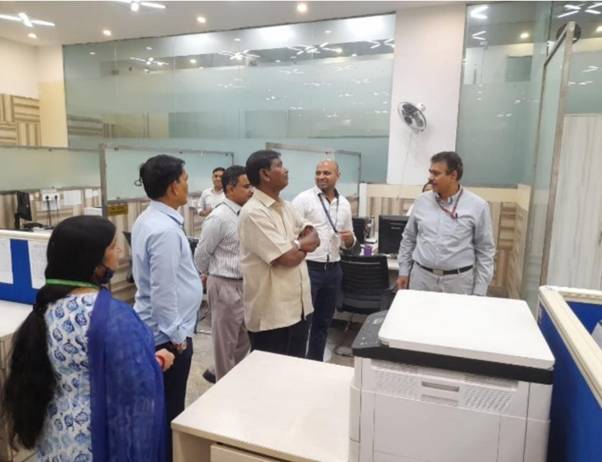
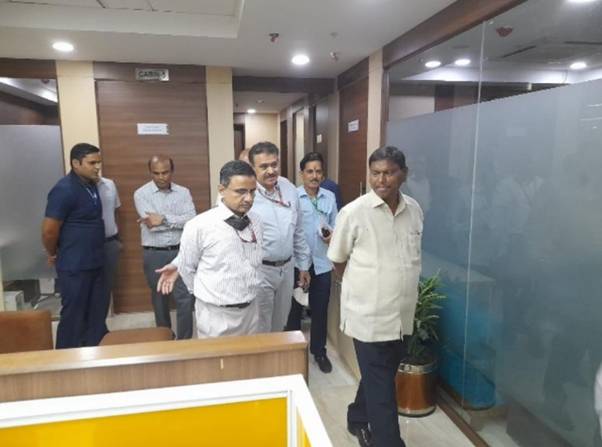
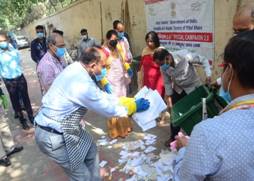
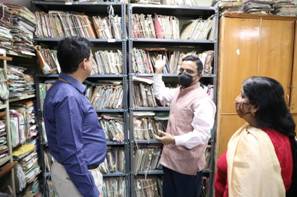
 The  Union Minister of Tribal Affairs, Shri Arjun Munda, inspected several of the Ministry of Tribal Affairs’ offices and divisions in the Jeewan Tara Building on Parliament Street in New Delhi and in National Tribal Research Institute as part of the special campaign 2.0 launched by Government of India from 2nd October to 31st October, 2022 in outstation offices, attached/subordinate offices.

Union  Minister of Tribal Affairs ShriArjun Munda  also reviewed the various activities taken up under the campaign during his visit to various offices of the Ministry. 


The Secretary Ministry of Tribal Affairs, Shri Anil Kumar Jha and the officers and staff of Ministry of Tribal Affairs also actively participated in the campaign.

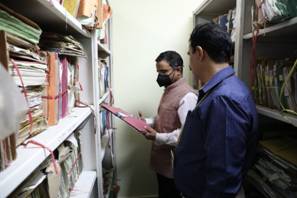
The Secretary, Ministry of Tribal Affairs, visited the subordinate divisional offices of the Ministry at the Jeewan Tara Building and National Tribal Research Institute. 

The  Secretary  reviewed the process of weeding  out old of old records and digitisation exercise being done by the Ministry.   He inspected record room and examined files and records being weeded out  as per the official procedures.

The campaign aims  at cleanliness in the offices and reducing pendency of grievances, VIP reference and parliamentary issues. 


The campaign  was  taken up in more than 300 premises which included the attached offices, Eklavya Model Residential Schools spread across country.  

Tribal students from  Eklavya Model Residential Schools actively participated in the  cleaning initiatives.


The Ministry of Tribal Affairs has always emphasised on providing clean and hygenic working environment for the officials and staff. The awareness drive aimed at cleanliness in government departments and sensitising government officials about cleanliness.

******

Football for Schools program to reach schools in all 700+ districts across India, Navodaya Vidyalaya Samiti to be the nodal agency

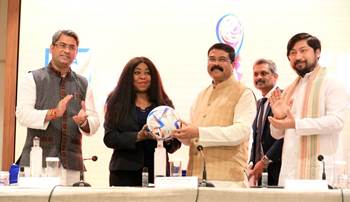
  Union Education and Skill Development Minister Shri Dharmendra Pradhan today met Secretary-General, FIFA, Ms. Fatma Samoura ahead of FIFA U-17 World Cup. MoS, Sports, Shri Nisith Pramanik; President, All India Football Federation, Shri Kalyan Chaubey; Secretary General, AIFF, Shri Shaji Prabhakaran and officials of Ministry of Education, Ministry of Sports and Youth Affairs NVS, CBSE and SAI also attended the programme.

  2022-10-10 18:18:48.465000

Discussions centred around collaboration with FIFA & UNESCO’s Football for Schools Programme in the schools across the country.

In a joint press conference after the meeting, Shri Pradhan said that the Football for Schools movement espouses the spirit of NEP 2020 and promotes sports-integrated learning. It will boost culture of sports in India and help in developing skills of our students, he further added.

He said that the Government of India is committed to promote sports and create a mass movement for football, especially among school children, in line with Prime Minister Narendra Modi’s vision of developing India as a sporting superpower as well as ensuring a Fit India.

Keeping in view the large network of schools, Ms. Samoura and the Minister agreed to take the Football for Schools programme to all the 700+ districts in India. Shri Pradhan informed that Navodaya Vidyalaya Samiti will be the nodal agency on behalf of the Ministry of Education to take this initiative forward.

Speaking on the occasion, Shri Nishith Pramanik said that this initiative will be a game changer for the future of football game. He also said that Sports Authority of India will extend all support for this initiative.


*****

Analyzing Mid-day Meal: India’s School Lunch System

Official Logo of Mid-day Meal Scheme

Introduction

Food is a basic need of life.  And Education is important to make the life affluent. A hungry stomach cannot grasp the teachings of Education at school, there to provide better Education, schools all around the world, offer lunch to the students. In India, the system of school lunch is referred to as Mid-day Meal. In today’s editorial, we’re going to share insights about the system of Mid-day Meal in India.

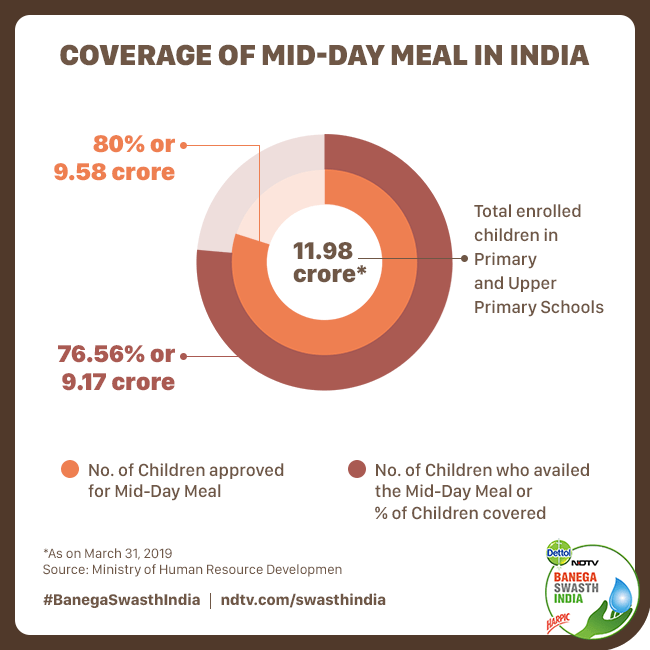
Coverage of Mid-day Meal Scheme in India

Brief Idea of What Mid-day Meal Is

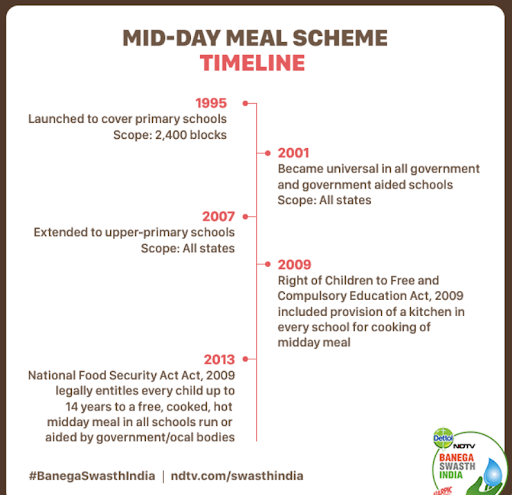
The Midday Meal Scheme, launched in 1995  by former Prime Minister of India, P.V. Narsimha Rao, under the Ministry of Education, is a school meal programme in India designed to better the nutritional  standing of school-age children nationwide. The programme supplies free lunches on working days for children in primary and upper primary classes in government, government aided, local body, Education Guarantee Scheme, and alternate innovative education centres, Madarsa  and Maqtabs  supported under Sarva Shiksha Abhiyan , and National Child Labour Project schools run by the Ministry of Labour. Serving 120 million children in over 1.27 million schools and Education Guarantee Scheme centres, the Midday Meal Scheme is the largest of its kind in the world.

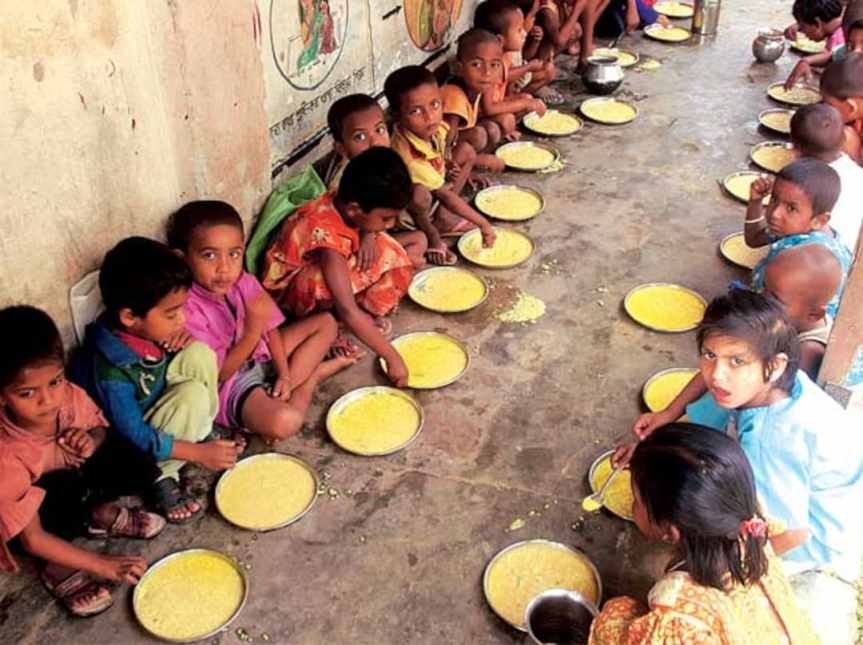
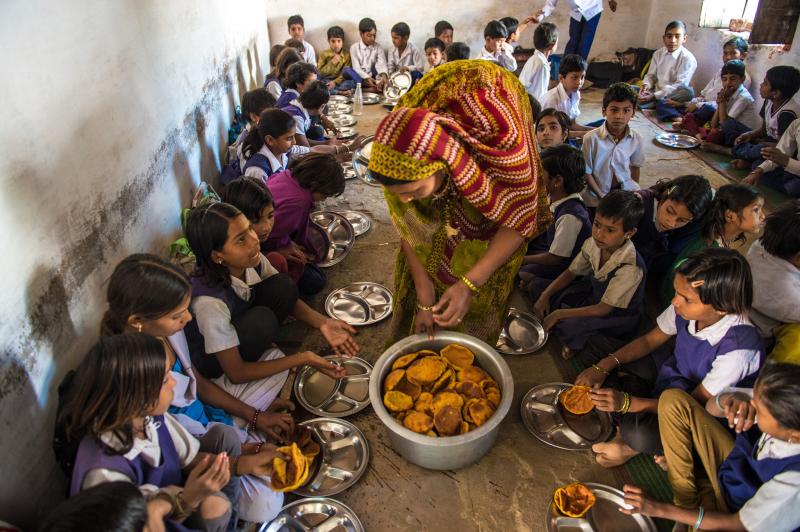
Students having Mid-day Meal at a School in India

Objectives of Mid-day Meal Scheme

  • To increase the enrolment in the schools of children who belong to disadvantaged sections of the society .
  • To increase attendance of students in Government and Government aided schools.
  • To retain the children studying in class I to VIII.
  • To give nutritional support to the children studying in the elementary level, specially in drought-prone areas.
  • To address hunger and malnutrition and increase socialization among the castes.
Mid-day Meal Scheme Timeline in India

Features of Mid-day Meal Scheme

  • It is one of the world’s largest school meal programs intended to achieve the goal of universalization of primary education.
  • For the implementation of the scheme, the Ministry of Human Resources and Development is the authorized body to implement the scheme.
  • It is a centre-sponsored scheme, so, the cost is shared between the states and the centre. Where the share of the centre is 60 percent.
  • The first state to implement the midday meal scheme was Kerala in 1984.
  • Till 2002, the scheme is designed especially for the government, government-aided and local body schools. But later on, the benefit of the mid-day meal scheme is extended to those children who were studying in educational guaranteed scheme centres or Alternative & Educational Centres.
  • In 2004, the scheme is again revised, and central assistance is offered for the cooking cost.  Apart from that, the transport subsidy included for all states, maximum of Rs 100 per quintal is provided to the special category states and Rs 75 per quintal for other states.
  • The provision of serving mid-day meals during summer vacation to the children in drought-affected areas was also added.
  • In 2006, the cooking cost was enhanced to Rs 1.80 per child/ school day for states in North Eastern Region and Rs 1.50 per child/ school day for other states and UTs.
  • In 2007, the scheme benefit is also extended to the children studying in the educationally Backwards Blocks.
  • Apart from the calories and food intake, for micronutrients (tablets and deworming medicines), each child is entitled to receive the amount provided for in the school health program of the National Rural Health Mission.
  • Meals provided under the Mid-day Meal Scheme
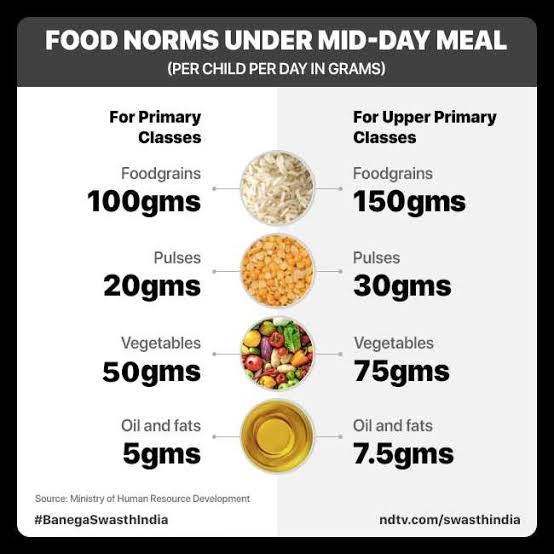
Food Norms under Mid-day Meal Scheme
  • The quantity of food items provided under this scheme per child per school day is as follows:
Food itemsPrimary level (Class I-V)Upper level (Class VI-VIII)
Food Grains100 gms150 gms
Pulses20 gms30 gms
Vegetables (leafy also)50 gms75 gms
Oil & fat5 gms7.5 gms
Salt & condimentsAs per needAs per need
Calories IntakePrimaryUpper Primary
Energy450 calories700 calories
Protein12 grams20 grams
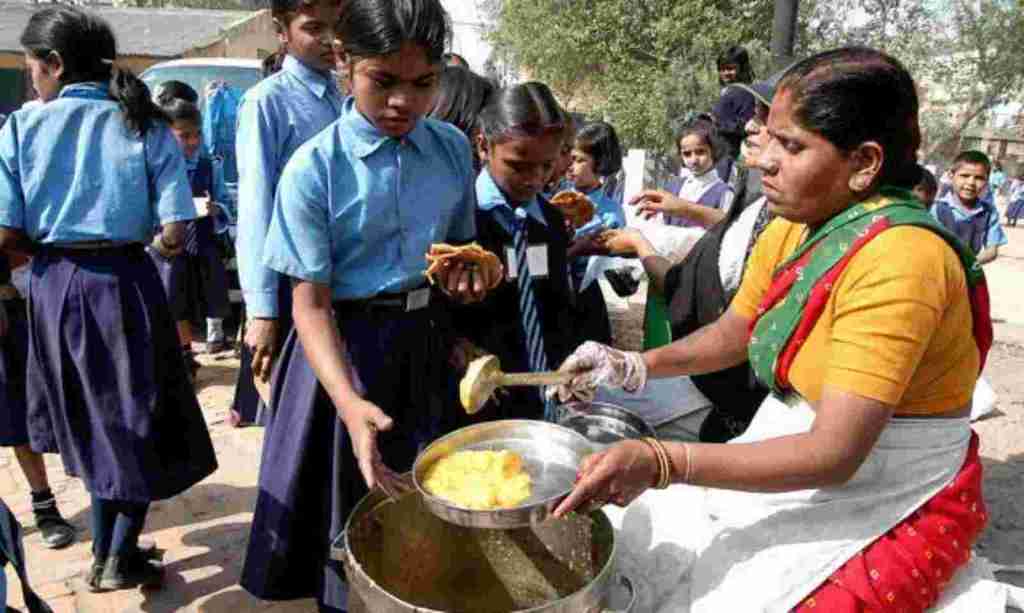
Serving of Mid-day Meal

Advantages of Mid-day Meal

  • It satisfies the hunger of many children.
  • Supplying nutrition to children of the poor section helps them in concentrating on their studies better.
  • Students come to government schools daily and won’t be asked to do labour work.
  • Addresses the issue of malnutrition.
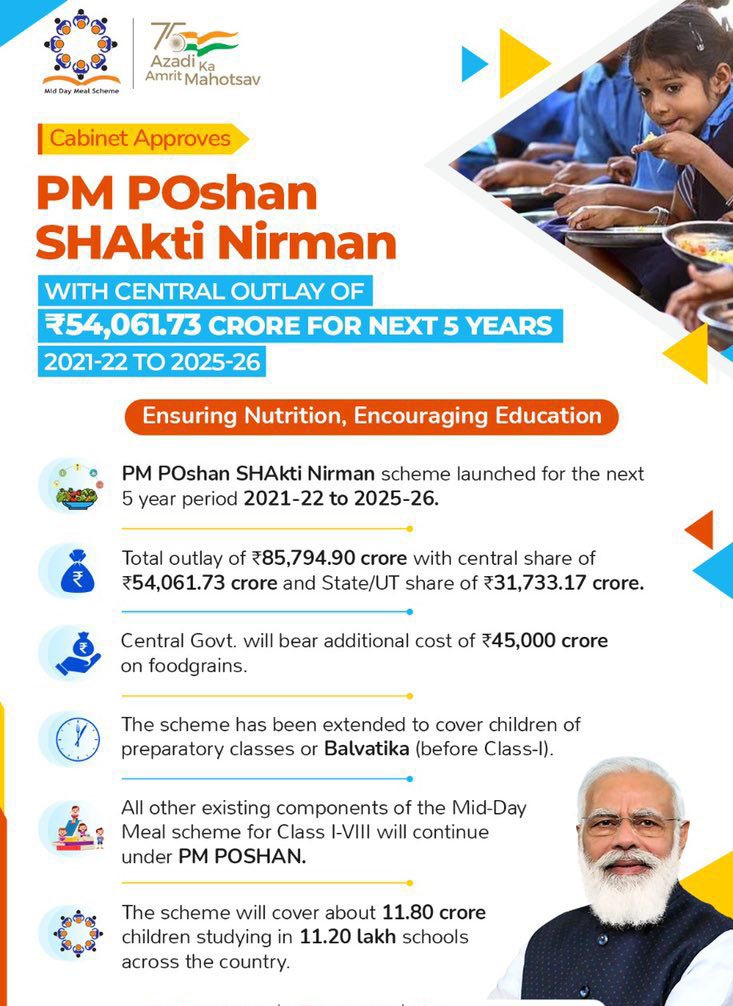
PM POSHAN SHAKTI NIRMAN

Recent Improvisation of Mid-day Meal Scheme

During the celebration of India’s 75th Independence Day as Azadi Ka Amrit Mahotsav, the Cabinet approved for the implementation of PM POSHAN SHAKTI NIRMAN for next 5 years i.e. 2021-22 to 2025-26.

Conclusion

There is no doubt that school is the only place that contributes to the socio-economic development of society. Here children from various backgrounds come together for promoting the culture of unity and brotherhood. The education they receive at school prepares them to achieve their goals and lead a successful life. When we talk about government schools, here children mostly come from economically challenged backgrounds. So, even though education schemes like Sarva Shiksha Abhiyaan are being implemented, the difficult financial conditions force these children to skip school and go on work. In such kind of circumstances,  the real potential of mid-day meal surfaces. Mid-day meal acts as an attractive incentive for parents to send their children to school with the sole hope that the young ones will receive at least one plate full of the meal for the day. 

Students of Kendriya Vidyalaya across the country

 Union Minister for Education and Chairman, Kendriya Vidyalaya Sangathan Shri Ramesh Pokhriyal ‘Nishank’ virtually interacted with the students of KendriyaVidyalayas across the Country. The Minister attended the programme from KV Andrewsganj, New Delhi and answered the queries of the students.

During the interaction program, the students asked questions related to various fields and subjects. Replying to the query by a student of KV Gurugram, Shri Pokhriyal informed that as the curriculum was cut by 30 percent this year due to Covid-19, therefore in the upcoming competitive examinations like JEE and NEET this year the candidates will have more options to answer the questions.

In response to another query asked by a student from Varanasi, Shri Pokhriyal said that the facilities of online education will continue even after the school reopens. For some time, a mixed format of online and offline will be available for the students.

In response to a question asked by the student of Kendriya Vidyalaya Andrewsganj about the New Education Policy- 2020, the Minister said “New Education Policy has been prepared keeping in mind the India of future. A lot of emphasis has been laid on practical knowledge rather than just bookish knowledge. Vocational training facility will be provided for students from class 6 onwards, in which internship is also associated. Artificial intelligence will also be taught from the school level itself. At the same time, Indian values ​​and culture will also be promoted. This policy is capable of realizing the dream of AatmaNirbhar Bharat”.

Minister also recited his favourite poems on a question related to his literary skills.

Earlier, Shri Pokhriyal also planted a sapling in KV Andrewsganj premises. Giving momentum to the Fit India campaign, he also inaugurated an ‘Open Gym’ in the KV. Apart from this, a Musical Garden was also inaugurated by the Minister in the school premises.

Commissioner, KVS Ms. Nidhi Pandey gave the Welcome Address, while Addl Commissioner, KVS Ms. V. Vijayalakshmi presented the vote of thanks. Senior officials of the Ministry were present on the occasion

******


Register with Sainik Schools Society for setting up new schools

 Marching ahead in tune with National Education Policy (NEP), Government has decided to provide increasing focus on value-based education enabling children to develop pride in rich culture and heritage of this nation, effective leadership with character, discipline, sense of national duty and patriotism through setting up of 100 new Sainik Schools under Sainik Schools Society, Ministry of Defence in partnership with Private Schools/NGOs/States. 

Towards this end, applications were invited for joining the initiative only through the web portal https://sainikschool.ncog.gov.in. Presently, 284 schools have registered therein and the evaluation for identifying prospective partners is underway for the academic session 2022-23. In view of the response to this initiative and the need for finalising the evaluation in a time bound manner, it is now being considered to close the receipt of further applications. Accordingly, closing date for any fresh registrations on the web portal https://sainikschool.ncog.gov.in is 31 January 2022. No fresh registrations will be accepted after 31 January 2022 as the portal will be closed for this purpose for the academic session 2022-23.

Initiatives by Navodaya Vidyalaya Samiti to ensure continuity of education

 Navodaya Vidyalaya Samiti (NVS) with the support of Ministry of Education, MHA and state administration ensured safe return of 3173 migrated students of Class-IX during COVID pandemic period. By imparting online training to teachers and conducting online classes, NVS made all efforts to ensure no academic loss to students. For students without proper devices, proper education is being ensured by providing study materials, AAC and printed assignments.  The following activities in academics and capacity building were undertaken:  

  1. Academics
  • Opening of JNVs: NVS developed SOP for opening of JNVs on the basis of SOP issued by MOE, MHA & MoHFW by incorporating the salient features of state administration guidelines.  Accordingly, Students of classes X and XII have reported in JNVs for physical classes with their parents’ consent. 406 JNVs have been reopened in states/UTs where permission to open residential schools have been given. Bridge courses and special classes are being carried out for the students to fill up the learning gaps.  National Pre board Exams have been completed for classes X and XII. 
  • Launch of Vigyan Jyoti Phase-2: Vigyan Jyoti Project is an ambitious collaborative initiative between Dept. of Science & Technology and Navodaya Vidyalaya Samiti for promotion of Girls Students in JNVs. Vigyan Jyoti Project (Phase I) is going successfully in 58 JNVs since December 2019.  The same is extended to 42 more JNVs in Phase-II.
  • Fulbright Teacher Exchange Program:  Mr Vivekananda Gosh, JNV Kolar Karnataka & Mr Amit Kumar, JNV Shimla Himachal Pradesh have been selected for the Fulbright Teaching Excellence Achievement (FTEA) & The Fulbright Distinguished Awards in Teaching Program for International Teachers (FDAI) for 2020-21.

B.    Capacity building  Programmes in collaboration with other organizations

  1. Six Days’ Training Programme for Regional Language Teachers in collaboration with CIIL, Mysore in light of NEP-2020

Keeping in view the importance of Regional languages as per NEP-2020, 45 Malayalam, 106 Marathi, 94 Kannada & 69 Telugu language teachers of NVS have been trained.

  1. Five Days’ Online Training Programme on Pedagogical Leadership for NVS Principals in collaboration with NIEPA New Delhi

NEP-2020 has outlined the Role of Principals focussing on preparing & implementing Pedagogical Plans based on Competency based Education. NVS in collaboration with NIEPA, New Delhi is organizing Five Days’ Online Training for preparing Principals as Master Trainers to impart further training to their fellow Principals on Pedagogical Leadership in two batches of 50 Participants in each batch. The training programme for the first batch is scheduled from 22nd February, 2021 and second programme is scheduled in the month of April, 2021.

C. Kala Utsav 2020- NVS Performance

In Kala Utsav-2020, RUPESH DEBBARMA from JNV Gomti, Tripura won first prize in Folk Music and D VENKAT RAO from JNV East Godavari, AP won first prize in 3D Sculpture. 


D VENKAT RAO from JNV East Godavari, AP who won first in 3D Sculpture


RUPESH DEBBARMA from JNV Gomati, Tripura who won first in Folk Music

*****

Residential schools/hostels funded under Samagra Shiksha named as Netaji Subhas Chandra Bose residential schools/hostels

 In a befitting honour to Netaji Subhas Chandra Bose, the Ministry of Education has decided to name residential schools/ hostels funded under Samagra Shiksha of MoE, as “Netaji Subhas Chandra Bose residential schools/hostels”. The association of these schools with Netaji Subhash Chandra Bose will act as an inspiration to the children and also motivate the teachers, staff and administration to enable them to achieve high standards of excellence. This will also help create awareness about the facility of these Residential Schools and Hostels in difficult areas and inspire these schools to achieve high standards of quality education.

The Ministry of Education under Samagra Shiksha provides financial assistance to states and UTs for opening and running of Residential Schools and Hostels in hilly terrain, small and sparsely populated areas for children who are in need of shelter and care, in addition to the provision of regular schools. The objective is to ensure universal enrolment and provide schooling facilities in areas which are sparsely populated (mostly tribal areas) where opening of schools may not be viable and for children in urban areas who are in need of care and protection.

The residential facilities are also provided to child labour rescued, migrant children who belong to poor landless families, children without adult protection, separated from their families, internally displaced persons, and children from the areas of social and armed conflict and natural calamities.  Preference is given to EBBs, LWE affected districts, SFDs and the Aspirational districts identified by NITI Aayog.

In these residential schools and hostels, in addition to regular school curriculum, interventions for all round development of children such as provision of Specific Skill Training, physical self-defense, medical care, community participation, monthly stipend are also made available to children.  A total of 1063 residential facilities (383 residential Schools and 680 Hostels) have been sanctioned to States and UTs so far.


Residential Schools and Hostels Approved under Samagra Shiksha (Cumulative )

S.

No

STATE NAME

Residential Schools

Hostels

1

ANDHRA PRADESH

3

14

2

ARUNACHAL PRADESH

155

54

3

ASSAM

3

1

4

BIHAR

6

9

5

CHHATTISGARH

67

39

6

DELHI

0

3

7

HARYANA

4

3

8

JHARKHAND

25

16

9

KARNATAKA

5

0

10

KERALA

0

6

11

LADAKH

0

2

12

MADHYA PRADESH

11

390

13

MAHARASHTRA

3

8

14

MANIPUR

9

8

15

MIZORAM

4

11

16

NAGALAND

7

11

17

ODISHA

3

18

18

PUNJAB

0

5

19

RAJASTHAN

7

34

20

SIKKIM

0

1

21

TAMIL NADU

13

0

22

TELANGANA

33

8

23

TRIPURA

4

14

24

UTTAR PRADESH

9

0

25

UTTARAKHAND

0

6

26

WEST BENGAL

12

19

Total

383

680

Generated as on Thursday, December 03, 2020

*************