Swachh Vidyalaya Puraskar 2021 – 2022

 Shri Subhas Sarkar, Minister of State for Education today virtually launched Swachh Vidyalaya Puraskar (SVP) 2021 – 2022. The event was attended by Mrs Anita Karwal, Secretary (SE&L), and representatives from all States and UTs and UNICEF.

Shri Sarkar while launching the awardsunderlined the importance ofWater, Sanitation and Hygiene in Schools as it plays a significant role in determining the health of students, their attendance, dropout rate, and learning outcomes. The provision of water, sanitation and hygiene facilities in schools secures a healthy school environment and protects children from illness (including COVID-19) and exclusion, he added. Shri Sarkar emphasized that the SwachhVidyalayaPuraskarrecognise, inspire and award the schoolswho have undertaken exemplary work in the field of water, sanitation and hygieneand also provides a benchmark and roadmap for schools to make further improvements in future.

In order to create self-motivation and awareness about sanitation the SwachhVidyalayaPuraskar (SVP) was first instituted by the Department of School Education and Literacy, in 2016-17.

The SVP 2021-22 is open to all categories of schools. i.e. Government, Government aided and Private schools in both rural and urban areas. The schools will be assessed through an online portal & mobile app in 6 sub-categories: Water, Sanitation, Hand Washing with soap, Operation and Maintenance, Behaviour Change and Capacity Building and the newly added category on COVID-19 Preparedness and Response and the system will generate the overall score and rating automatically.The schools have been given sufficient time till March 2022 to apply for the awards so that they can do so at an appropriate and safe time.

Schools shall be awarded at the District, State and National level based on an internationally recognized five star rating system. Also, every school will get a certificate of participation showing the category-wise scores and overall rating of the school. This will help in promoting sustainable practices of improved Water, Sanitation & Hygiene in schools.

At the National level, 40 schools will be selected for awards this year under the overall category. The award money for the schools has been enhanced this year from Rs. 50,000/- to Rs. 60,000/- per school, under Samagra Shiksha scheme. Also, 6 sub-category wise awards have been introduced for the first time, with award money of Rs. 20,000/- per school.


* * * * *

Career Guidance for Students

 Central Board of Secondary Education (CBSE) organizes a two day capacity building programme for the teachers on career guidance of students. The trained teachers take sessions with senior students in their respective schools. The programme focuses on dimensions of career information, strategies and resources used in imparting career information, setting up a career resources room in a school, role of a teacher in imparting career guidance and understanding career development.

In Kendriya Vidyalaya Sangathan (KVS) services of counselors are engaged on part time contractual basis in all Kendriya Vidyalayas across the country. There is also a provision of inviting experts from different fields to sensitize students about the career options available for them to pursue.

In Jawahar Navodaya Vidyalayas (JNV) career guidance sessions are conducted regularly by the Counselors, Teachers and Vice Principals. Special sessions are also conducted for students in JNVs by inviting eminent experts of various fields.

National Scholarship Portal (NSP) is one-stop solution through which various services starting from student application, application receipt, processing and disbursal of various scholarships to students are enabled. The main objective of NSP is to ensure timely disbursement of scholarships to students and to provide a common portal for various scholarships schemes of Central and State Governments. National Means-cum-Merit Scholarship Scheme (NMMSS) of D/o SE&L is on-boarded on NSP. The details are available on the NSP Portal. The link is as follows: https://scholarships.gov.in


Samagra Shiksha Scheme for School Education

 The Cabinet Committee on Economic Affairs, chaired by Prime Minister Shri Narendra Modi, has given its approval for continuation of the revised Samagra Shiksha Scheme for a period of five years i.e., from 2021-22 to 2025-26 with a total financial outlay of Rs.2,94,283.04 crore which includes Central share of Rs.1,85,398.32 crore.

Benefits:

The scheme covers 1.16 million schools, over 156 million students and 5.7 million Teachers of Govt. and Aided schools (from pre-primary to senior secondary level).

Details:

The Samagra Shiksha scheme is an integrated scheme for school education covering the entire gamut from pre-school to class XII. The scheme treats school education as a continuum and is in accordance with Sustainable Development Goal for Education (SDG-4). The scheme not only provides support for the implementation of the RTE Act but has also been aligned with the recommendations of NEP 2020 to ensure that all children have access to quality education with an equitable and inclusive classroom environment which should take care of their diverse background, multilingual needs, different academic abilities and make them active participants in the learning process.

The major interventions, across all levels of school education, proposed under the scheme are: (i) Universal Access including Infrastructure Development and Retention; (ii) Foundational Literacy and Numeracy, (iii) Gender and Equity; (iv) Inclusive Education; (v) Quality and Innovation; (vi) Financial support for Teacher Salary; (vii) Digital initiatives; (viii) RTE Entitlements including uniforms, textbooks etc.; (ix) Support for ECCE; (x) Vocational Education; (xi) Sports and Physical Education; (xii) Strengthening of Teacher Education and Training; (xiii) Monitoring; (xiv) Programme Management; and (xv) National Component.

Following new interventions have been incorporated in the revamped Samagra Shiksha based on the recommendations of the National Education Policy 2020:

  • In order to enhance the direct outreach of the scheme, all child centric interventions will be provided directly to the students through DBT mode on an IT based platform over a period of time.
  • The scheme will have an effective convergence architecture with various Ministries/ developmental agencies of the Centre and State Governments. The expansion of vocational education will be done in convergence with the Ministry of Skill Development and Entrepreneurship and other Ministries providing funding for Skills. The existing infrastructure of schools and ITIs and Polytechnics will be used to ensure optimum utilization of the facilities, not only for school going children but also for out of school children.
  • Provision of training of Master Trainers for training of Anganwadi workers and In-service teacher training for ECCE teachers.
  • Provision of upto Rs 500 per child for Teaching Learning Materials (TLM), indigenous toys and games, play based activities per annum for pre-primary sections in Government Schools.
  • NIPUN Bharat, a National Mission on Foundational Literacy and Numeracy to ensure that every child achieves the desired learning competencies in reading, writing and numeracy at the end of grade III and not later than grade V has been launched under the scheme with provision of TLM upto Rs 500 per child per annum, Rs 150 per teacher for teacher manuals and resources, Rs 10-20 lakh per district for assessment.
  • Specific   training   modules   under   NISHTHA  by NCERT to train Secondary teachers and Primary teachers.
  • Strengthening of infrastructure of schools from pre-primary to senior secondary, earlier pre-primary was excluded.
  • Incinerator and sanitary pad vending machines in all girls’ hostels.
  • Addition of new subjects instead of Stream in existing senior secondary schools.
  • Transport facility has been extended to secondary level @ upto Rs 6000 per annum.
  • For out of school children at 16 to 19 years of age, support will be provided to SC, ST, disabled children, upto Rs 2000 per child per grade to complete their secondary/senior secondary levels through NIOS/SOS.
  • Financial support for State Commission for Protection of Child Rights @ Rs 50 per elementary school in the state, for protection of child rights and safety.
  • Holistic, 360-degree, multi-dimensional report showing progress/ uniqueness of each learner in the cognitive, affective, and psychomotor domains will be introduced in the form of Holistic Progress Card (HPC).
  • Support for activities of PARAKH, a national assessment centre (Performance, Assessments, Review and Analysis of Knowledge for Holistic Development)
  • Additional Sports grant of upto Rs. 25000 to schools in case atleast 2 students of that school win a medal in Khelo India school games at the National level.
  • Provision for Bagless days, school complexes, internships with local artisans, curriculum and pedagogical reforms etc included.
  • A new component Appointment of Language Teacher has been added in the scheme- components of training of teachers and bilingual books and teaching learning material added, besides support for salary of teachers.
  • Provision made for all KGBVs to be upgraded to class XII.
  • Enhanced financial support for existing Stand-alone Girls’ Hostels for classes IX to XII (KGBV Type IV) of uptoRs 40 lakh per annum (earlier Rs 25 lakh per annum).
  • Training for 3 months for inculcating self-defence skills under ‘Rani Laxmibai Atma Raksha Prashikshan’ and amount increased from Rs 3000 to Rs 5000 per month.
  • Separate provision of stipend for CWSN girls @ Rs. 200 per month for 10 months, in addition to student component from pre-primary to senior secondary level.
  • Provision of annual identification camps for CWSN at block level @Rs. 10000 per camp and equipping of Block Resource centres for rehabilitation and special training of CWSN.
  • Provision for Establishment of New SCERT has been included and new DIETs in districts created upto 31st March 2020.
  • Setting up of assessment cell preferably at SCERT to conduct various achievement surveys, develop test materials & item banks, training of various stakeholders & test administration, data collection analysis and report generation, etc.
  • The academic support of BRCs and CRCs has been extended for pre-primary and Secondary level also.
  • Support   under   Vocational   Education   extended   to Government aided schools also in addition to Government Schools and grant/number of job roles/sections linked to enrolment and demand.
  • Provision of Classroom cum workshop for Vocational Education in schools serving as Hub for other schools in the neighbourhood. Provision of transport and assessment cost for schools serving as spokes has been made.
  • Provision of ICT labs, Smart classrooms including support for digital boards, smart classrooms, virtual classrooms and DTH channels have been provided.
  • Child tracking provision included for students of Government and Government aided schools
  • Support for Social Audit covering 20% of schools per year so that all schools are covered in a period of Five years.


Implementation Strategy and Targets:

The Scheme is implemented as a Centrally Sponsored Scheme through a single State Implementation Society (SIS) at the State level. At the National level, there is a Governing Council/Body headed by the Minister of Education and a Project Approval Board (PAB) headed by Secretary, Department of School Education and Literacy. The Governing Council/body will be empowered to modify financial and programmatic norms and approve the detailed guidelines for implementation within the overall Framework of the scheme. Such modifications will include innovations and interventions to improve the quality of school education.

In order to enhance the direct outreach of the scheme, all child centric interventions will be provided directly to the students through DBT mode on an IT based platform over a period of time.

The Scheme covers 1.16 million schools, over 156 million students and 5.7 million Teachers of Government and Aided schools (from pre-primary to senior secondary level) by involving all stakeholders of the school ecosystem i.e. Teachers, Teacher Educators, Students, Parents, Community, School Management Committees, SCERTs, DIETs, BITEs, Block Resource Persons, Cluster Resource Persons, Volunteers for providing quality, inclusive and equitable education. Further, the scheme will have an effective convergence architecture with various Ministries/ developmental agencies of the Centre and State Governments. As envisaged in NEP 2020, there will be a greater focus on imparting skills among the students. The expansion of vocational education will be done in convergence with the Ministry of Skill Development and Entrepreneurship and other Ministries providing funding for Skills. The existing infrastructure of schools and ITIs and Polytechnics will be used to ensure optimum utilization of the facilities, not only for school going children but also for out of school children.


Major Impacts:

The Scheme aims to universalize access to school education; to promote equity through the inclusion of disadvantaged groups and weaker sections, and to improve the quality of education across all levels of school education. The major objectives of the Scheme are to Support States and UTs in: 

  1. Implementing the recommendations of the National Education Policy 2020 (NEP 2020); 
  2. Implementation of Right of Children to Free and Compulsory Education (RTE) Act, 2009; 
  3. Early Childhood Care and Education; 
  4. Emphasis on Foundational Literacy and Numeracy; 
  5. Thrust on Holistic, Integrated, Inclusive and activity based Curriculum and Pedagogy to impart 21st century skills to the students; 
  6. Provision of quality education and enhancing learning outcomes of students; 
  7. Bridging Social and Gender Gaps in School Education; 
  8. Ensuring equity and inclusion at all levels of school education; 
  9. Strengthening and up-gradation of State Councils for Educational Research and Training (SCERTs)/State Institutes of Education and District Institutes for Education and Training (DIET) as nodal agency for teacher training; 
  10. Ensuring safe, secure and conducive learning environment and maintenance of standards in schooling provisions and 
  11. Promoting vocational education.


AtmaNirbhar Bharat:

Recognizing the crucial role of Foundational skills in the national development, it was announced under the ‘AtmaNirbhar Bharat’ campaign that a National Foundational Literacy and Numeracy Mission will be launched, for ensuring that every child in the country necessarily attains foundational literacy and numeracy in Grade 3 by 2026-27. In this context, “National Initiative for Proficiency in Reading with Understanding and Numeracy (NIPUN Bharat)” has been launched on 5th July 2021 under Samagra Shiksha.

Details and progress of scheme if already running:

The Scheme is being implemented as a Centrally Sponsored Scheme in partnership with State and UT Governments to support  the   States  and  UTs  in  universalizing  access  and improving quality of school education across the country. The achievements of Samagra Shiksha are as follows:


•      During 2018-2019 to 2020-2021, 1160 schools have been upgraded at Elementary, Secondary and Higher Secondary level, 54 new residential schools/ hostels have been opened, 41180 schools have been strengthened (including Additional classrooms), 13.51 lakh schools have been provided library facilities, 13.14 lakh schools have been provided sports equipment facility, 12633 schools have been covered under ICT & Digital initiatives, 5579 schools have been covered under vocational education, 783 KGBVs have been upgraded from class VIII to class X, 925 KGBVs have been upgraded from class VIII to class XII and 11562 separate girls toilets have been constructed.

•      In addition, during 2018-2019, 4.78 lakh out of school children have been provided special training at elementary level, 4.24 lakh children have been provided transport and escort facility, 16.76 lakh children have been covered under Section 12(l)(c) of the RTE Act, 6.96 cr children have been provided free uniforms, 8.72 cr children have been provided free textbooks at elementary level, 0.74 cr children have been provided remedial teaching, 14.58 lakh teachers have been trained, 69173 schools provided self defence training to girls, 3.79 lakh CWSN girls have been provided stipend and 23183 special educators have been provided financial assistance.

•      Also, during 2019-2020, 5.07 lakh out of school children have been provided special training at elementary level, 6.78 lakh children have been provided transport and escort facility, 21.58 lakh children have been covered under Section 12(l)(c) of the RTE Act, 6.89 cr children have been provided free uniforms, 8.78 cr children have been provided free textbooks at elementary level, 1.76 cr children have been provided remedial teaching, 28.84 lakh teachers have been trained, 166528 schools provided self defence training to girls, 3.22 lakh CWSN girls have been provided stipend and 24030 special educators have been provided financial assistance.

•      Also, during 2020-2021, 3.23 lakh out of school children have been provided special training at elementary level, 2.41 lakh children have been provided transport and escort facility, 32.67 lakh children have been covered under Section 12(l)(c) of the RTE Act, 6.57 cr children have been provided free uniforms, 8.84 cr children have been provided free textbooks at elementary level, 1.44 cr children have been provided remedial teaching, 14.32 lakh teachers have been trained, 81288 schools provided self defence training to girls, 3.52 lakh CWSN girls have been provided stipend and 22990 special educators have been provided financial assistance.


Background:

Union Budget, 2018-19 has announced that school education would be treated holistically and without segmentation from pre-primary to class XII. It is, in this context, that the Department launched the Integrated Scheme for School Education, Samagra Shiksha in 2018 by subsuming the erstwhile Centrally Sponsored Schemes of Sarva Shiksha Abhiyan (SSA), Rashtriya Madhyamik Shiksha Abhiyan (RMSA) and Teacher Education (TE). The scheme treats school education as a continuum and is in accordance with Sustainable Development Goal for Education (SDG-4). The scheme not only provides support for the implementation of the RTE Act but has also been aligned with the recommendations of NEP 2020 to ensure that all children have access to quality education with an equitable and inclusive classroom environment which should take care of their diverse background, multilingual needs, different academic abilities and make them active participants in the learning process.

*******

Innovation-driven virtual schools to achieve greater inclusion in school education

 Union Education and Skill Development Minister, Shri Dharmendra Pradhan and Union Minister for Social Justice and Empowerment Shri Virendra Kumar today jointly launched the booklet on One-year New Education Policy (NEP) – 2020 Achievement along with some major initiatives of the New Education Policy- 2020 such as NIPUN Bharat FLN tools and resources on DIKSHA; Virtual School of NIOS; Alternate Academic Calendar of NCERT; and Release of ‘Priya’- accessibility booklet developed by the NCERT and Department of Empowerment of Persons with Disabilities. Minister of State for Education Smt Annapurna Devi and Secretary, School Education Smt Anita Karwal were also present on the occasion.

Addressing the participants, the Minister said that NEP is a guiding philosophy to transform the hopes and aspirations of millions of the youth to reality and making India self – reliant. He said that the formulation of NEP is also a live example of co-operative federalism to achieve a common goal of making India a global hub of knowledge. When we look back at the progress of NEP, we get more confident about the future of our students, he added.

Shri Pradhan stated that Education is not merely a competition to acquire degrees, but is a transformative tool to leverage knowledge for character building and eventually nation building. The Minister stressed that the Government is working to facilitate upgradation of infrastructure in schools, such as ensuring that Internet reaches the village schools across the country.

Shri Pradhan said that the book “Priya -The Accessibility Warrior”, released today will sensitize the students on accessibility related issues for Divyangs. Special emphasis has been laid to make the booklet simple, interesting and interactive to create awareness on accessibility in children right from their formative years, he added.

The Minister while launching the Virtual School of NIOS said that this school is a new model of learning and is an example how leveraging technology and innovation can facilitate greater inclusion in education. The school is first-of-its-kind initiative in the country which will provide advanced digital learning platforms through Virtual Live Classrooms and Virtual Labs., he added. Shri Pradhan also said that the Alternate Academic Calendar of NCERT has been developed to facilitate teachers and parents to assess the progress in the learning of children. The Alternate Academic Calendar contains week-wise plan of interesting and challenging activities, with reference to learning outcomes, themes and chapters taken from syllabus or textbook.

Speaking on the occasion Shri Virendra Kumar said that the accessibility opens doorways to opportunity and growth, thus, reinstating the importance of creating an accessible environment for everyone. He further said that awareness and a sensitized community are the essential fuels driving any revolutionary change. Government’s commitment to promote accessibility led to the development of the E-Comic cum Activity Book, titled – ‘Priya- The Accessibility Warrior’.

Shri Kumar urged both the Departments of School Education & Literacy and Department of Higher Education to take up the task of creating accessible educational infrastructure and content on a mission mode, consistently progressing towards Inclusive Education which is a vital component of the new National Education Policy. On the occasion of the 75th year of Independence of India, let us all work with our Children to become ‘Accessibility Warriors’ and make inclusive education a reality to build a brighter future for all our citizens, he added.

Another important initiative launched was “Priya -The Accessibility Warrior”, which is the outcome of collaborative efforts of Department of Empowerment of Persons with Disabilities (Divyangjan), Ministry of Social Justice and Empowerment and Department of School Education and Literacy. It provides glimpses into the world of a girl named Priya who met an accident and could not walk, due to plastered leg. The story depicts how Priya managed to participate in all activities at school, and in the process learnt the importance of the accessibility. She, therefore takes the pledge of being an accessibility warrior. The comic book is also available with Indian Sign Language (ISL) explanatory videos.

NEP 2020 envisages education as a continuum without any segmentation and focuses on making education more experiential, holistic, integrated, character-building, inquiry-driven, discovery-oriented, learner-centred, discussion-based, flexible, and above all, more joyful. With this perspective, the Department of School Education and Literacy has taken up a multitude of initiatives at all levels of school education and has achieved 62 major milestones which will eventually transform the school education sector.

Other major achievements include: the launch of NIPUN Bharat Mission with a vision to ensure every child achieves the desired learning competencies in reading, writing and numeracy by the end of Grade 3, by 2026-27; aligning of the existing scheme of Samagra Shiksha with Sustainable Development Goal for Education (SDG-4) and the NEP 2020 to ensure inclusive and equitable, quality, and holistic school education; Vidya Pravesh- a three months School Preparation Module for Grade I children; Blue print of National Digital Education Architecture (NDEAR) conceived to energise and catalyse the education ecosystem, capacity building of Secondary teachers under NISHTHA with a focus on improvement in quality of teachers and learning outcomes of students, Assessment reforms to make learning more joyful and experiential, DIKSHA as an teaching-learning repository of engaging e-content, etc.

NIPUN Bharat FLN tools and resources has been made available under a separate vertical for FLN resources developed under DIKSHA to assist and mentor States/UTs and teachers for implementing NIPUN Bharat guidelines. This vertical has infographics and videos on learning outcomes and assessment tools for teachers to facilitate them.

The programme was attended by senior officials and heads of autonomous institutions of the department, senior officers from the School Education department of all States and UTs and experts.

Click the link below to see the booklet on One-year New Education Policy (NEP): https://www.education.gov.in/sites/upload_files/mhrd/files/upload_document/nep_achievement.pdf

Click the link to see the booklet “Priya -The Accessibility Warrior”: https://ncert.nic.in/ComicFlipBookEnglish/mobile/

Click below to see the details of Virtual Open School: http://virtual.nios.ac.in/

*****

Promotion of research and innovation in schools

 Samagra Shiksha is an integrated programme which envisages  all round development of children. With the focus on connecting school-based knowledge to life outside the school, making learning of Science and Mathematics a joyful and meaningful activity and to bring focus on innovation and use of technology, Rashtriya Avishkar Abhiyan (RAA) has been set up by Ministry of Education as a convergent framework that aims at nurturing a spirit of inquiry and creativity, love for Science and Mathematics and effective use of technology amongst children of the age group of 6 to 18 years Some of the major objectives are to enable children to become motivated and engaged in Science, Mathematics and Technology (SMT) through observation, experimentation, drawing inferences, model building, rational reasoning and testability and to create curiosity, excitement and exploration among school children in Science, Mathematics and Technology.

The details of expenditure of funds under RAA for the last three years and provision for 2021-22 are as given below.

(Rs.in lakh)

2018-19

2019-20

2020-21

2021-22

11172.342

15963.22

14253.74

15748.72


The School Innovation Ambassador Training Program (SIATP) was launched on 16th July 2021 by Ministry of Education’s Innovation Cell (MIC), CBSE and AICTE in collaboration with Ministry of Tribal Affairs to strengthen the mentoring capacity of teachers for nurturing and handholding innovative and creative ideas from students. The Objectives of the SIATP are(i) to create a culture of innovation, creativity and entrepreneurship in schools; (ii) Preparing teachers to handhold the ideas and innovative thoughts from students; (iii) Creating the in-house pool of mentors in schools to mentor the students; (iv) Creating awareness on innovation and start-ups among the students and faculties; (v) Prepare teachers to conduct idea competitions, hackathons and enable them to act as an evaluator for Idea Competitions conducted for students; and (vi) Create the foundation and capable human resource for School Innovation Council (SIC), a council of teachers, students and experts from industry and academia to conduct round the year activities for students and teachers on Innovation and Entrepreneurship.

The Department of Science & Technology started a unique programme ‘Vigyan Jyoti’ for meritorious girls with the aim to address the under representation of women in different fields of Science Technology Engineering and Mathematics (STEM) in the country. As a first step, the “VigyanJyoti” has been introduced in the year 2019-20 at the school level wherein meritorious girl students of Class 9-12 are being encouraged to pursue higher education and career in STEM field. The VigyanJyoti envisaged hand-holding and interventions right from the school level i.e., Class IX and which will continue till the PhD level to encourage girls to pursue a career in under represented areas of STEM. Various activities such as science camps, special lectures/ classes, counselling of students and parents, interaction with role models, tinkering activities, visit to Knowledge Partners/ Research Labs/ Industries/ NGOs are being conducted in the programme in order to motivate girls.

Under the ‘Aatma Nirbhar Bharat Abhiyan’ initiated by the Hon’ble Prime Minister of India, Toycathon-2021 is conceived to challenge India’s innovative minds to conceptualize novel Toy and Games based on Bharatiya civilization, history, culture, mythology and ethos.

Toycathon 2021 is an inter-ministerial initiative organized by Ministry of Education’s Innovation Cell with support from All India Council for Technical Education, Ministry of Women and Child Development, Ministry of Commerce and Industry, Ministry of MSME,  Ministry of Textiles and Ministry of Information and Broadcasting.

Toycathon 2021 is a unique opportunity for Students, Teachers, Start-ups and Toy experts/professionals in India to submit their innovative toys/games concepts and win large number of prizes worth Rs. 50 lakhs.

Through conceptualizing new and innovative toys by students using local materials which are economical, affordable, safe, environment friendly, and of exceptionally high quality for both Indian and global markets, it has kindled the innovative and creative spirit of students. Winning Teams efforts will be made to commercialize the exceptional toy concepts will support from Industry and investors.

Safety of Students in Schools

 Education is a subject in the concurrent list of the Constitution and therefore safety and security of the school children come under the purview of the respective States and UTs.Department of School Education and Literacy (DoSEL), Ministry of Education has developedGuidelines on School Safety and Security, which, interalia, contain provisions for fixing the accountability of the school management in the matter of safety and security of children studying in Government, Government-aided and Private Schools. These guidelines have been circulated to all States/UTs/Autonomous Bodies of DoSEL and Stakeholder Ministries on 01.10.2021. The guidelines detail the accountability of various stakeholders and different departments in ensuring the safety and security of children in schools.The guidelines issued by the center are advisory in nature and States/UTs are expected to implement them and they may incorporate additions/modifications to them, if deemed necessary, according to their specific requirements. These guidelines are uploaded on the website of DoSEL at

https://dsel.education.gov.in/archivesupdate?title=&field_update_category_target_id=All.

SHOULD TEACHERS BE TESTED JUST LIKE STUDENTS ?

Teachers take exams of students to test how good they are in studying so wouldn’t it be right to take exam of teachers to test how good are they at teaching ? When a student is not studying properly teachers often scold student or contact his/her parents. So, if a teacher is lacking somewhere in teaching shouldn’t students tell him so that he can change his method of teaching.

Students are future of a country and teachers have responsibilities to shape them so that they can have a better future. It is just like a potter gives shape to a clay. I’m not saying that students get a spotless chit for pinning everything on teachers in the event that they don’t get successful. The two of them are similarly responsible for student’s prosperity or disappointment.

Teaching is regularly a singular undertaking. More often than not the teacher is separated from everyone else before the students and he is considered as an insightful master. How an teacher can know how great he is at his specific employment ? How might he work on his courses ? That is the reason, an teacher needs the assistance of his students to land input about his position. He needs input to further develop his showing abilities and his instructing materials.

3 New Teaching Strategies for the Return to Classrooms | Elmhurst  University Blog

Those criticism are additionally an approach to make a discourse among teachers and students. Students ought to reserve the option to criticize both the substance and the techniques for educating. On one hand, the student might turn out to be more persuaded and afterward may connect with and listen all the more cautiously during the class. Then again, they can foster analysis which is today a fundamental ability in a world overpowered by data. Through this interaction of recognizing the failure of their teachers, students will deal with their own failure all the more without any problem.

Again, I am not encouraging the act of disrespect towards teacher. Teachers are incredible individuals who teach us however in case they are managing their work wrongly, they ought to be corrected by understudies. Actually like how teachers set students back on track way. This will be improvement for both teachers as well as students.

TIPS FOR STUDYING EFFECTIVELY ONLINE

How many times have we opened our books to study, only to discover that even sitting for hours, we are still unable to grasp the material? Because of our sub-conscious mentality, we sometimes attend class yet don’t understand anything. We are physically there in class, but not psychologically.

Here are some study suggestions to help you get the most out of your time:

1.Select a study location that has reliable Internet access.

Making a Good Study Place For Board Exam : Good environment highly..

When studying, you will most likely need to refer to online lectures and notes. As a result, you’ll need a study location where your Internet connection won’t be disrupted. Internet access will be especially vital for things like class study sessions.

2.Make a schedule for studying.

How to Create a Study Schedule: 14 Steps (with Pictures) - wikiHow


In order to succeed in an online course, you must stick to a rigid timetable. You must keep up with the course material on your own time even if you are not expected to attend courses or lectures at specific times. As a result, self-discipline is critical. Make a weekly schedule for logging into the class and studying the information.

3. Be disciplined.

Becoming a Disciplined Person | Little Things Matter

It can be hard to stick to a schedule for an online course. However, be strict with yourself about adhering to your schedule. Self-discipline is vital to your success in an online course.

It can be difficult to focus on your online course if you have a social media account open in another tab on your computer. When you’re doing classwork, avoid browsing the Internet, checking your email, and other distractions.

4.Actively learn

When the neurons in your brain are active, you can learn. You must engage your intellect in order to learn properly. Write notes in your own words, recollect knowledge, and speak about what you know about a subject without referring to notes.

5.Staying Motivate

How to stay motivated on We Heart It


To achieve your goals, employ motivational techniques. You may study while listening to music you enjoy, or imagine yourself finishing the assignment in an hour and taking a well-deserved vacation.

6.Any materials should be printed.


The internet or your computer can be a source of distraction at times. When you’re studying, it’s a good idea to switch your laptop off. You should also print out course materials such as the curriculum and timetable.

7.Test yourself

Test Yourself: Psychology Cheats For PlayStation 3 - GameSpot

Even if you don’t have access to practice tests, you can still test yourself by writing down everything you remember after each new chapter or frequently asking yourself questions about what you’re learning.

Improving ‘syllabus’ at school- Part II

“Education is the key to success”. But is it actually providing knowledge to the extent that it makes everyone better off ? Do the lessons taught in schools really matter in our lives ? Is the education system well-established keeping in mind the needs of the times ?

We need to accept that our education system is ruined by some corrupt people hindering the growth and success of the country. Somehow we all know that the training techniques in our schools is old style now and that it requires improvements.

It also becomes a burden for students when they are loaded with tests, assignments and project besides getting regular homework. The classrooms too get filled with only subject-related matter and less care is taken for extra-curriculum.

However there is more scope for extra-curriculum as compared to competitive and corrupt field of academics. It has become corrupt since leverage is being given to some sections or some particular people are being favored in terms of marks(/quotas) or job posts, allocation of funds, etc.

Instead of the regular pattern of teaching, the focus should be made on skill development of students. They acquire more importance in life. Now we see that students lack even the basics of what the corporate world demands of them. From there arises the need to join paid courses after school. You sacrifice peak time for decision making of your life in learning something that should have been the syllabus in the schools! Isn’t it frustrating for someone who holds personal responsibilities and obligations already and had been dreaming of placements and other great opportunities to come on way after education ? Shouldn’t our system be wide enough to support growth and development of individuals, accepting it as their duty towards the nation ?

But the need of the hour is to take action. We can’t continue blaming others’ unless we put forward a step by ourselves. As it has been well said “Be the change you want to see”. The schedule needs to be changed. There is a need for addition of classes for upskilling of students by professionals in the schools itself as there is no time left afterwards, as many say.

There should be attention towards holistic development of a child from the very beginning by arranging music classes, sports period, and other possible skill enhancement classes in schools. This would ensure inclined growth of the child towards his/her area of interest. The students will have knowledge of various fields from the very beginning and this will help them decide early what do they wish to pursue as a career. This is the major problem now-a-days that the youth is not sure of their future goals. They surely have the spark to do wonders but don’t have the correct guidance as to what is best for them or how can they achieve their aims in between the complexities of the world.

The academics should be limited now, to the extent of its feasibility in life and higher studies be offered with a wider choice so that the focus is narrowed upon the future without compromising with present. Knowledge and practical-ability should be given priority over marks and grades. There are innumerable examples of people who were weak in studies but their practical approach proved beneficial for the world. Therefore the students should be taught the practical aspects more than the bookish language and terms.

Coming back to skills, there are a variety of fields where interests of a student can be drawn upon. Painting or sketching, writing, dance and singing, sports(basketball, relay race, badminton), etc. should not be limited to a single period in a week. They should be emphasized as much as academics’ competitions. Training should be provided to those who are keen about such extra activities which are actually, not “extra”.

Skills of the Future

The new world order, brought on by the fourth Industrial Revolution, demands that today’s children acquire skills that will serve them well in the future.

Photo by Andrea Piacquadio on Pexels.com

The world we live in will change so fundamentally that students who come out of school by 2030 will make careers in fields that we have no idea about in the present.

As all of these trends happen, the winners will be those who are able to participate fully in innovation-driven ecosystems by providing new ideas, business models, products, and services, rather than those who can offer only low-skilled labor or ordinary capital, points out Klaus Schwab, founder and executive chairman of the World Economic Forum, in his seminal work, the Fourth Industrial Revolution.

This view is supported by other experts.

According to David Deming, associate professor of education and economics at Harvard University, Soft Skills like sharing and negotiating will be crucial. Modern workplace, where people move different roles and projects, closely resembles pre- school classrooms where we learn social skills such as empathy and cooperation. =

In effect, the skills and traits that must be inculcated in our children include : Social Intelligence

Photo by Polina Zimmerman on Pexels.com

This set of skill include empathy or the awareness of self and others perspective collaboration, negotiations and conflicts resolution, persuasive communication that can change minds and hearts.

A sense of service mindedness, trustworthiness and transparency.

Reference

http://www.timesofindia.com

http://www.wikipedia.com

School vs Workspace

Our children must learn how to acquire knowledge that can be applied across domains and situations.

Photo by samer daboul on Pexels.com

Traditionally, schools and colleges have been cloistered enrollments where students only acquire knowledge. They then move to the next stage of their lives – into work places – where they may or may not apply the knowlege they have.

This separation has ensured that young people who join the work force have no idea about the exigencies of the work environment and are completely unprepared to deal with this situation.

However, future workplaces are likely to be far removes from conventional or current experiences.

In fact, it is estimated that most of tomorrow’s workforce may be contractual. In fact, already many large organizations are tapping into on-demand talent of the gig economy.

Increasingly, these new economy workers will be required to rely on their own knowledge and the skills to provide services and produce products that solve businesses’ and society’s pressing problems.

Photo by Burst on Pexels.com

Our children, therefore, must learn how to acquire relevant knowledge that can be applied in different domains and circumstances. They must discover the joy learning so that they can become learners for life as well as independent learners, capable of handling uncertainty with flexibility.

Schools must therefore re-engineer their systems, curricular and pedagogies to ensure that students have agency over their own learning and lives and learn to learn, unlearn and re-learn with agility.

Schools, therefore, must teach children to be entrepreneurs, expose them to real life work and social environments through projects and experiences so that they know how to tackle challenges that lie ahead and are capable of solving problems independently.

Reference

http://www.timesofindia.com

http://www.wilipedia.com

http://www.hindustantimes.com

WHY CELLPHONE SHOULD NOT BE ALLOWED IN SCHOOL ?

Cell phones are extremely helpful. They assist us to contact with individuals. We can get different data about different things by means of web. Yet, are cellphones that vital in an understudy life that he/she can take that to class ? The appropriate response is no a result of the accompanying reasons:

1.Interruption/Distraction

While Cell telephones are in your grasp the entire day, warnings will continually go off. You’re compelled to looked without figuring it out. Understudies get diverted all for the duration of the day without seeing they are. The entirety of the data from their instructors go in one ear out of the other, and fail to remember all that they were educated. Many time understudies will have games on their telephones and consider passing a level and attempt and have a go at deduction they will complete it and afterward work, however without seeing when they finish a level the class is going to be done and you have no work done.

Distraction-Blocking Apps to Become a Better, More Productive Salesperson -  Salesforce Canada Blog

2.Grades Falling

At the point when children are on their telephones for the majority of their days, they don’t take care of job and grades drop drastically. At the point when you take a gander at your telephone it typically requires around 5 minutes to zero in again on whatever they were doing previously. Data isn’t being put away in your cerebrum so work isn’t possible.

More students got F's in first term of school year - The Washington Post

3.Can make understudies get vexed

With the pace of Cyberbullying going up numerous children will get singled out over web-based media and keep taking a gander at various things for the duration of the day and get vexed and not have the option to focus on their work. Likewise, say you and a companion or a beau/Girlfriend get in a contention, you will be more stressed over that than your school work.

4.Schoolwork

On the off chance that children are continually on their telephones at school, what makes you believe they’re not going to do exactly the same thing at home. In case they’re occupied for the duration of the day and not managing job in school, schoolwork is less inclined to complete at home. Grades continually drop as a result of understudies accomplishing school work, however significantly more due to schoolwork. On the off chance that Cell telephones weren’t permitted in school, understudies may basically have the option to complete their work in school and could decrease schoolwork.

5.Break course

Ordinarily when an understudy doesn’t get something or simply doesn’t have any desire to do it, they’ll go to their telephone as opposed to requesting help or clarification. By this point understudies don’t think often about their work. So they simply forget about it.

6.Insolence

At the point when an instructor is talking and showing something new to understudies, and many are on there telephones while few are attempting to learn, these children on the telephone are diverting the other. Indeed, even without sound being on, in case you’re playing a game or watching a video on quiet, more often than not another person can get an impression and not quit thinking back. This is slighting your instructor who is removing time from their day to show you and help you while you’re on your telephone.

7.Cheating

Kids are standing out enough to be noticed, so with regards to stepping through an exam they have no clue about what the appropriate responses are such countless understudies will cheat and not learn anything. In the event that an understudy is bamboozling they’re not picking up anything and by and by getting into a school turns out to be much harder.

Students caught cheating in Gujarat board exams, FIR lodged against Class  10 student - Education Today News

8.Public activity

I accept an understudies public activity is vital. It encourages children to interface with individuals for when they have some work further down the road. Understudies being secured in their telephones the entire day, they don’t understand there is a genuine world out there. Social connection isn’t simply messaging, it’s going out and verbally conversing with somebody. Commonly, without a genuine public activity it can likewise cause sorrow, it can make somebody think they have no companions and nobody likes them, however truly this is on the grounds that they’re generally on their telephones as opposed to going out and really attempting to interface with somebody.

RESOURCES:

https://www.addictiontips.net/phone-addiction/why-cell-phones-should-not-be-allowed-in-school/

IMPORTANCE OF SEX EDUCATION

BY: VAIBHAVI MENON

“Everyone has bodies, right? It’s nothing to be ashamed of.” Sex education is the instruction of issues relating to human sexuality, including emotional relations and responsibilities, human sexual anatomy, sexual activity, sexual reproduction, age of consent, reproductive health, reproductive rights, safe sex, birth control and sexual abstinence. Sex Education is something that should be taught to individuals from a young age. Due to it being a sensitive topic not a lot of people are comfortable learning or teaching the subject because of which much importance isn’t given and this causes negative effects. Most people get aware of the word “sex” during their teen years but they dont get proper education on it and that negatively impacts their life. Sex education talks about protection from diseases like STD’s which could range from AIDS TO HIV, how to avoid teen pregnancies through different methods such as surgical methods or physical methods.

In India especially, enough significance is not given cause unwanted pregnancies or getting a disease. Therefore Evidence-based sexual health education can improve academic success; prevent dating violence, and bullying; help youth develop healthier relationships; delay sexual initiation; reduce unplanned pregnancy, HIV, and other STIs.  Evidence-based sexual health education reduces sexual risk behavior by delaying sexual initiation, reducing pregnancy and STIs, and increasing contraceptive use thereby protecting student health. There’s nothing simple about teaching kids about sex. In these times of precocious pre-teens, pregnancy among teenagers, and sexually transmitted diseases (STDs), children and adolescents need much more than a one-time chat about the birds and the bees. Pregnancy prevention and safe sex really should be ongoing, age-appropriate topics. Ideally, children will get all of the information they need at home from their parents, but school should also be an important source of information. Research has shown time and time again that abstinence-only education doesn’t work. Over the past 20 years, numerous studies have consistently demonstrated that teaching comprehensive sex education in schools doesn’t have the downside most people are afraid of. In other words, providing condoms in schools doesn’t encourage adolescents to start having sex earlier, or even more often. Having those condoms available does seem to encourage teens to use them, but only if they would be having sex anyway. Only 20 states require sex and HIV education be taught in schools. Sex is a fundamental part of being human; but less than half of our states require sex and HIV education, and most of what is taught is sub-par. Just because we refuse to talk about sex doesn’t mean it’s just going to go away. Only 20 states require sex and HIV education be taught in schools. Sex is a fundamental part of being human; but less than half of our states require sex and HIV education, and most of what is taught is sub-par. Just because we refuse to talk about sex doesn’t mean it’s just going to go away. Sex education is important. It’s been proven time and time again. We know students who receive formal sex education in schools are shown to first have sexual intercourse later than students who have not had sex education. Sex education does not encourage teenagers to have sex, it does quite the opposite. Every teenager should have sex education incorporated into their schooling. It shouldn’t be opt-in or opt-out but mandatory. Why should parents be able to opt their children in or out of a subject that they’ll need later in life, one way or another?

Sex education should be mandatory, comprehensive, medically accurate, and taught throughout student’s school years, just like math. It’s been shown to help students, not hurt. Not only is having access to sex education that is not only comprehensive but medically accurate a human right; it’s our fundamental duty as a society to educate the next generation. Currently, we are failing.  

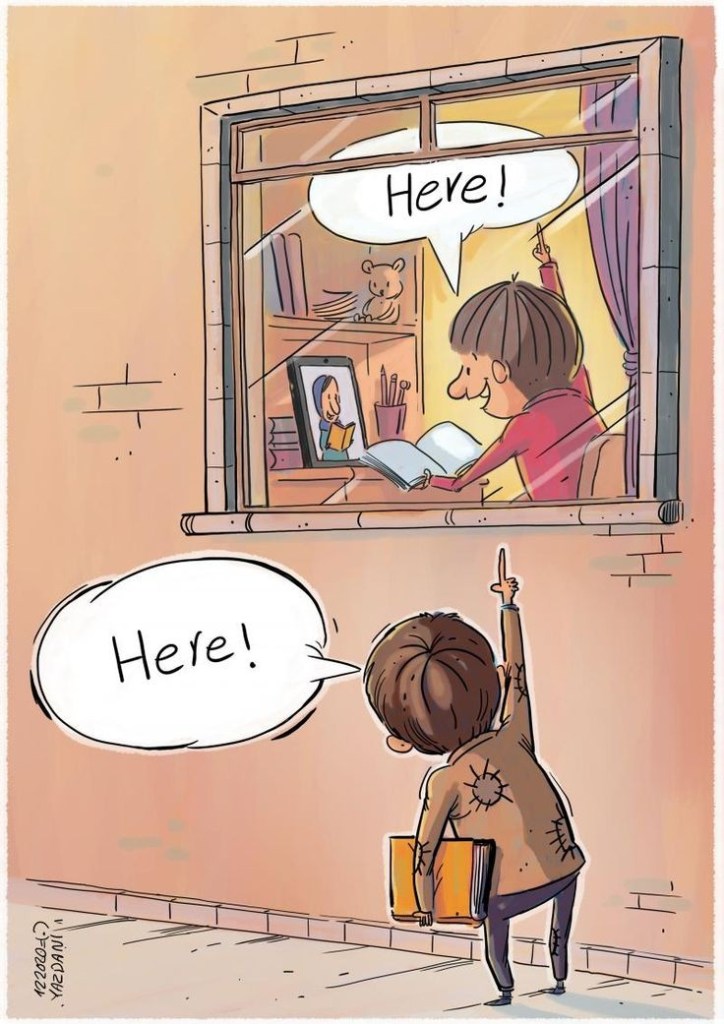
Children and Lack of Education

There are many circumstances of children around the world who experience a lack of education, resulting in them having a below average level of knowledge. Lack of education is a significant barrier for underprivileged children around the world.

Today, education remains an inaccessible right for millions of children around the world. More than 72 million children of primary education age are not in school and 759 million adults are illiterate and do not have the awareness necessary to improve both their living conditions and those of their children.

What Is Lack of Education?

  • A lack of education can be described by a state where people have lower than average common knowledge and basic skills to support them in their daily life.
  • This includes the ability to read, write, spell, speak, and do simple math.

What Causes Lack of Education?

  • A lack of education is a significant concern due to lack of funding for education, having untrained teachers, limited or no classroom space, limited resources (e.g., paper, pencil, etc.), living far away from school, and living in countries of conflict.
  • This concern is a leading issue in underdeveloped countries as an education system is highly dependent on region’s economic status.

People Who Are Less Likely To Receive Education

Females

  • Girls are commonly left uneducated because many countries believe there is more value in educating boys in comparison to girls.
  • Additionally, girls are forced to marry as early as eighteen years old which prevent them for continuing their education.

Children With Disabilities

  • Children with disabilities most regularly do not regularly receive education because teachers do not receive adequate training to work with these kids.
  • In addition, these children face a lot of discrimination in terms of accessibility to a safe learning environment, as well as communication with their surroundings.

Outcomes From a Lack of Education

  • Lack of education can prevent a person from having a sound voice in society, as they face communication barriers and are looked down upon
  • Not having enough education is a leading cause of unemployment, as many industries require well informed and educated individuals to step into an employment position
  • Being uneducated puts people at a higher risk of falling into the poverty trap, which is defined by being unable to escape poverty due to a lack of resources. This is because education provides people with the means to make a sustainable living; however, without it, the chances of having a sufficient income is low
  • Lacking education promotes exploitation, as many people without a proper education take on unsafe positions. Some of these positions include becoming a prostitute, sweatshop laborer, and can even result in child marriages.

Prevalence Rates

  • 34.3 million girls around the world do not attend primary school.
  • 97.4 million girls around the world do not attend secondary school.
  • In countries of conflict, girls are twice as likely to receive education in comparison to countries without conflict.
  • In developing countries, up to 95% of disabled children are not enrolled in school.
  • 51% of the uneducated population comes from South Asia.

Introduction to chameli devi public school

Chameli Devi Public school is located in Indore. It is one if the most popular school in the city. The school is from the agrawal group which had several colleges and schools in the city itself.

The school was started by Mr. Puroshtam Agrawal with a view of providing quality education to middle class students. The name of school was kept in the memory of his mother.

The school is affiliated by CBSE board and is upto class 12th. The streams offered are science,maths and commerce. The campus of school is 5.22 acres having playgrounds, computer labs,smart classes, science labs.

It is running in two shifts separately for bots and girls. Morning shift is for boys and noon for girls. But for 11th and 12th all classes are in morning. Co-ed is not Available in school. Both 11th and 12th classes run separately for boys and girls on different floors.

Upto class 8th books for school is from agrawal group i.e. learn by fun. From class 6th onwards Science ncert is taught. From class 9th onwards you will have ncert books.

CCTVs and fire extinguishers are present in school and proper guards are available. The fees of school is also affordable. For more details you can visit school.

Address is Tejpur gadbadi, keshar bagh road, Indore.