PRESENCE OF MICROPLASTICS IN ENVIRONMENT; A RISING CONCERN

Microplastics have become one of the greatest threats to the entire planet. Their presence has been identified from arctic snow to alpine soil in the deepest trenches of oceans. Scientists are yet to find out the impacts of microplastics in the human body but have recognized their intake by people both directly and indirectly through the food they have, the water they drink and the air they breathe.

Instead of biodegradation, plastic undergoes physical breakdown resulting in the formation of particles smaller than 5mm in size known as microplastics and particles having a diameter less than 0.001mm known as nanoplastics. Microplastics are usually discarded while washing synthetic clothes, vehicle tyres and emissions of plastic pellets from industries.

The existence of microplastics in the marine sediments and bottom-living creatures of the sea is a serious indication of the potential environmental hazards due to pollution. Once ingested by small creatures, the microplastics move through the food chain affecting the entire biodiversity and the exposure of wildlife to tiny particles of plastics can lead to infertility, inflammation, cancer etc. Studies on marine animals have reported an increasingly alarming rate of microplastics in every one of 50 marine mammals washed up on the shores. They have also been found in insects and birds. Apart from the identified health impacts on animals and marine life, very little is known about its health effects on humans.

The omnipresence of plastic in our environment is equally treacherous to humans even though its consequences are yet to be identified. Analysis of bottled drinking water across the globe conducted by WHO in 2018 has detected the potential risks of microplastic in 90% of the world’s most popular bottled water brands.

The studies conducted by WWF in 2019 shows that the average human eats around 2000 microplastics weakly and 90% of rainwater samples collected from various regions contain a considerable amount of microplastic in it. 

Reports on recent research conducted on deceased human organs have discovered the traces of numerous types of plastic in almost all major organs including kidney, lungs, liver etc and it also suggests that microplastics can persist in the human body. These harmful chemicals in plastic materials can cause adverse health imbalances including cancer, birth defects, developmental and reproductive issues, endocrine disruption, and compromised immunity.

The most shocking fact is that the microplastics have made their way into the human body, even in the placenta of several unborn children. Long term health hazards caused by extremely small particles of plastic in the placenta of the babies and their mothers is a serious concern. These particles are likely to have been consumed or breathed in by mothers that could carry chemicals that may upset the foetus’s developing immune system.

The inventions humans have made through the overexploitation of nature without taking the harmful effects into consideration now seems to bite back at them one by one as the maker of plastic seems to be made of plastic. It’s high time for us to respect nature and live within its bounds.

Medical science Latest News: Some Interesting Researches.

  1. Do you know how your cell phone’s sensor can calculate the alcohol percentage present in your body? It calculates the percentage by monitoring the way you are walking.
    Researchers from Stanford University and the University of Pittsburgh completed this study on 18th August. In a sample of 17 participants, they could calculate the intoxication amount with 92% accuracy. The study focuses on blood alcohol concentration (BAC) and breath alcohol concentration (BrAC). They published the study in Journal of Studies on Alcohol and Drugs.
  2. Can we treat dementia and Alzheimer’s with sound waves? A team of Doctors led by Cardiologist Hiroaki Shimokawa recently experimented and discovered that applying low-intensity pulsed ultrasound (LIPUS) to the entire brain of a mouse improved blood vessel formation and nerve cell regeneration without having apparent side effects. “The LIPUS therapy is non-invasive physiotherapy which could apply to high-risk elderly patients with no surgery or anesthesia, and could be used repeatedly,” says Shimokawa. See the study here.
  3. Scientists solve mystery behind body odour! This is not our fault. Researchers at the University of York found out that there is a special microbe which lives in the human armpits. This odour is called thioalcohol, which gets released when these microbes feed on other compounds on our skin. The study is published in Nature journal.
  4. Coronavirus: Filter “paper” made from titanium oxide nanowires can trap pathogens and destroy them with light. This is a discovery by an EPFL laboratory which can be put to use in personal protection equipment, in ventilation and air conditioners. Although experiments are still under process, they say that it be equally successful on a wide range of viruses, including SARS-CoV-2 or coronavirus.

Surviving core of Jupiter-like planet 39 times massive than Earth sighted near the distant star

A planet 39 times huge than the earth is sighted orbiting the distant star located 730 light-years away from Earth at very high speed, and with astronomers determining that it might be the surviving core of an ill-fated planet once perhaps larger than Jupiter- the largest planet in our Solar system that was removed of its gaseous atmosphere.

The planet is called TOI-849b is the largest rocky planet ever discovered and it orbits the star 10 times more rapidly than Earth orbiting the Sun, completing an orbit every 18 hours.

Researchers told that it is the largest rocky planet ever found and in addition to it will provide a great chance to explore interior gas giant like Jupiter the largest planet in our solar system since it would be the first planetary core ever discovered.

“This planet could have been a gas giant like Jupiter, which then lost its outer envelope through some violent evolution. This could be because it collided with another planet towards the end of its formation, or later ventured too close to its host star and was stripped of its atmosphere,” said astronomer David Armstrong of the University of Warwick in England, lead author of the research published in the journal Nature.

He further put back by saying that “An alternative is that the planet got stuck while forming, building up a core but failing to collect the gas we would normally expect”.

The team of researchers has explored that the planet called TOI-849b is orbiting around a star little smaller and cooler than the sun and planet has a diameter of 43,500 less than than the planet Neptune having diameter 49,244 km, of the smallest of four gas planets Jupiter, Saturn, Uranus and Neptune but larger than our earth having diameter 12,742 km.

The gas planet consists of a solid core enveloped by a vast atmosphere consisting of mainly hydrogen and helium with a relatively small rocky core and with tracks of water, methane, ammonia, and other hydrogen compounds. Since there is no well-defined surface we can’t land on the gas giant planets. Since the atmosphere gets deeper and deeper as we move toward the core of gas giant planets like Jupiter. Since the rocky planet like Earth and Mars have a simply defined difference between atmosphere and surface but has gas giant does not have well-defined surface. That’s why the exploration of these gas giant planets are difficult.

This planet will provide a great opportunity to explore the interior of the gas giant planets. Since we know that the gas planets are much more than just the gas.

The planet “TOI-849b itself is much more enormous than we expect even gas giant planetary cores to be,” Armstrong said, “and this might imply a new planet formation or evolution pathway which we don’t yet understand.”

Further, they added the planet TOI-849b orbits a star which is 730 light-years away from Earth. A light-year is the distance light travels in a year nearly about 9.5 trillion km. It’s is much closer to the star than the mercury distance from Sun.

Government has set up Atal Innovation Mission (AIM) to provide exposure to science and technology to students

The Government of India is encouraging the schools to provide exposure to science and technology to students so that they can be acquainted with futuristic technology platforms. Government has setup the Atal Innovation Mission (AIM) at NITI Aayog. The objective of establishing AIM is to create scientific temper and cultivate the spirit of curiosity and innovation among young minds. Towards this end, AIM is establishing Atal Tinkering Laboratories (ATL) across the country for students between grade 6th to 12th, equipped with latest emerging technologies such as electronics, IoT, 3D printing, Robotics, etc.

In schools, AIM facilitates to set up network of ATL in India. The vision of ATL initiative is to ‘Cultivate 1 Million children in India as Neoteric Innovators’. The objective of this scheme is to foster curiosity, creativity and imagination in young minds and inculcate skills such as design mind-set, computational thinking, adaptive learning, physical computing, rapid calculations, measurements, etc.  As on date, 8878 schools have been selected and 4680 schools have been given the ATL grant in aid for establishment of ATL.

A total of Rs. 1000 crores are currently earmarked for AIM up to financial year 2019-20. There is no direct allocation of funds at a state/district level by AIM. The disbursement of the funds is directly made by AIM to the beneficiaries and administered centrally.

This information was given by the Union Minister for Human Resource Development, Dr. Ramesh Pokhriyal ‘Nishank’ in a written reply in the Rajya Sabha today.

*****

Rajya Sabha passed 3,817 Bills in the last 67 years; Held 5,466 sittings since 1952

The first ever effort by the Rajya Sabha secretariat to quantify and analyse the legislative work done by the Upper House since it came into being in 1952 has revealed that the House has passed 3,817 Bills till the end of the last and the 249th session. Of these, 60 Bills had lapsed due to the dissolution of Lok Sabha at various points of time while 63 Bills were deemed to have been passed by the Upper House while two Bills cleared by it are still to be taken up in Lok Sabha. In effect, a total of 3,818 Acts of Parliament have been made since the first general elections in 1952.
A wide range of such statistical summary and other details on various aspects of the functioning  of the House are contained in a publication “Rajya Sabha : The Journey since 1952” released by Chairman Shri M.Venkaiah  Naidu at a meeting of the leaders of various parties and groups here today. Shri Naidu convened the meeting to seek cooperation of the parties for smooth functioning of the landmark 250th session of Rajya Sabha beginning tomorrow.
The 118 page publication with 29 chapters is a ready reckoner with interesting statistics, details of the first moves and some unique events besides details of major Bills passed by the Rajya Sabha in respect of social change, economic transformation, industrial development, health, education, agriculture, environment, national security and the objectives of 103 Constitution amendments so far made etc.
A glimpse of the content relating to the journey of Rajya Sabha during the last 67 years since it’s first sitting on 13.5.1952 is furnished below:
Members :
Total members of Rajya Sabha so far including those with more than one term is 2,282 including 208 women and 137 nominated members. Dr.Mahendra Prasad is serving the highest number of 7th term followed by Dr.Manmohan Singh serving 6th term. Dr.Najma Heptulla and late Shri Ram Jethmalani are the other two with six terms each.  Shri Ghulam Nabi Azad, Shri A.K.Anthony, Shri Ahmed Patel and Smt.Ambika Soni are into their fifth term while Shri Pranab  Mukherjee, late Shri Bhupesh Gupta, Shri Sitaram Kesri, Ms.Sajor Khaparde, Shri B.V.Abdulla Koya  were among the 11 members with five terms in the Upper House. Rajya Sabha Chairman Shri Naidu is among the 45 members with four terms each.
The representation of women in Rajya Sabha increased from 15 (6.94%) in 1952 increased to 31(12.76%) in 2014 and is now  26(10.83%) in 2019.
Some unique events relating to Rajya Sabha:
1.Casting vote by the Chair: The first and the only time when a Presiding Officer of Rajya Sabha cast his  vote was when the Panel Chairman Shri M.A.Baby did so on 5.8. 1991 when the voting was tied 39-39 on the Statutory Resolution moved by the opposition seeking disapproval of the Code of Criminal Procedure (Amendment) Ordinance resulting in the victory of the opposition in the House.
2.President Rule approved only by Rajya Sabha: It happened only twice in respect of extension of President Rule in Tamilnadu and Nagaland in 1977 and in case of Haryana in 1991 when Lok Sabha was dissolved.
3.Removal of a Judge: The only time Rajya Sabha adopted a motion for removal of a Judge was in respect of Justice Soumitra Sen of Calcutta High Court on 18.8.2011 but he resigned before the motion was taken up in Lok Sabha.
4.Expulsion of members: Rajya Sabha adopted a motion on 15.11.1976 for expulsion of Dr.Subramanian Swamy whose conduct and activities were found by a Committee to be derogatory to the dignity of the House and it’s members. Dr.Chatrapal Singh was expelled on 23.11.2005 after Ethics Committee found him guilty of accepting money for asking questions. Dr.Swami Sakhsi Ji Maharaj was expelled on 21.3.2006 for irregularities in recommending projects under MPLAD scheme.
5.Suspension of members for the remainder of the session:  7 members viz.,Shri Kamal Akhtar,Shri Veer  Pal  Singh Yadav, Dr.Ejaz Ali, Shri Sabir Ali, Shri Subhash Prasad Yadav, Shri Amil Alam Khan and Shri Nand Kishore Yadav were on 9.3.2010 suspended for the remainder of the 219th session for willfully obstructing the Business of the House during discussion on women’s reservation bill.
6. Reprimand: Former Member of Rajya Sabha Shri K.K.Tiwari was summoned to the Bar of the House and was reprimanded on 1.6.1990 for a statement published in newspapers the same day that brought the office of Chairman and the House to indignity and contempt.
7. Bill passed by Rajya Sabha but negative by Lok Sabha: The Constitution (Sixty-fourth Amendment) Bill, 1990 seeking to amend Article 356 relating to extension of President’s Rule in Punjab.
8. Bills passed by Lok Sabha but negatived by Rajya Sabha (5): The Constitution (Twenty-fourth Amendment) Bill, 1970 seeking to terminate privy purses and privileges of former Indian States, The Banking Service Commission (Repeal) Bill, 1977, The Constitution (Sixty-fourth Amendment) Bill, 1989 seeking to insert a new Part IX in the constitution relating to Panchayats, The Constitution (Sixty-fifth Amendment) Bill, 1989 relating to Nagar Panchayats and Municipalities and The Prevention of Terrorism Bill, 2002.
9.Bill reconsidered by Rajya Sabha: Rajya Sabha passed the Parliament (Prevention of Disqualification) Amendment Bill on 17.5.2006 as earlier passed by Lok Sabha but the President referred the same for reconsideration on 30.5.2006. Rajya Sabha reconsidered the same and passed as it was on 27.7.2006 and Lok Sabha passed it four later and was later assented to by the President on 18.8.2006.
10. Bills passed at the joint sittings of both the Houses of Parliament (3):
-The Dowry  Prohibition Bill, 1959 was first introduced in and passed by Lok Sabha. Rajya Sabha later insisted on some amendments to which Lok Sabha did not agree. The Bill was passed on 9.5.1961 at a joint sitting.
-The Banking Service Commission (Repeal) Bill, 1978 first introduced in and passed by Lok Sabha was later rejected by Rajya Sabha. It was passed on 16.5.2018 at a joint sitting.
-The Prevention of Terrorism Bill, 2002 passed by Lok Sabha was negatived by Rajya Sabha and was later passed at a joint sitting on 26.3.2002.
Some firsts relating to Rajya Sabha:
First sitting of the House was held on 13.5.1952
First Bill passed : The Indian Tariff (Second Amendment) Bill, 1952
First Bill concerning social change: The Special Marriages Bill, 1952
First Constitution Amendment Bill passed by Rajya Sabha: The Constitution (Second Amendment) Bill, 1953 for readjustment of  representation in Lok Sabha by increasing the size of population per constituency.
First Bill on Law and Order: The Preventive Detention (Second Amendment) Bill, 1952
First Bill on imports: The Live-stock Importation (Amendment) Bill, 1953
First media related Bill: The Press (Objectionable Matters) Amendment Bill, 1953
First on reorganization of States: The Andhra State Bill, 1953
First Bill on health education: The All India Institute of Medical Sciences Bill, 1955
First on urban development : The Faridabad Development Corporation Bill, 1955
First on agriculture: The Agriculture Produce (Development and Warehousing Corporations) Bill, 1956
First Bill on all-India services: The All India Services (Amendment) Bill, 1958
First security related Bill: The Armed Forces (Assam and Manipur) Special Powers Bill, 1958
First relating to animals: The Prevention of Cruelty to Animals Bill, 1959
First on corporate take over: The Jayanti Shipping Company (Taking Over of Management) Bill, 1966
First on pollution: The Prevention of Water Pollution Bill, 1969
First nationalization Bill: The Banking Companies (Acquisition and Transfer of Undertakings) Bill, 1970
First against economic offences: The Economic Offences (Incapability of Limitation) Bill, 1974
First Money Bill deemed to have been passed by Rajya Sabha: The Appropriation (Railways) No.4 Bill, 1978
First Bill referring to terrorism: The Terrorist Affected Areas (Special Courts) Bill, 1984
Bills passed by Lok Sabha and amended by Rajya Sabha : The 120 such  Bills include; The Companies Bill, 1953, The UGC Bill, 1954, The Constitution (Forty-fourth Amendment) Bill, 1978, The Chit Funds Bill, 1982, The Prevention of Corruption Bill, 1988, The Prevention of Money Laundering Bill, 2002, The Special Economic Zones Bill, 2005, The Right to Fair Compensation and Transparency in Land Acquisition Bill, 2013, The Lok Pal and Lok Ayuktas Bill, 2016, The National Medical Council Bill, 2019 and The Motor Vehicles (Amendment) Bill, 2019.
The most impactful Bills passed by Rajya Sabha sector-wise since 1952 include:
-The  Hindu Marriage and Divorce Bill, 1952, The Hindu Succession Bill, 1954, The Sexual Harassment of  Women at Workplace (Prevention, Prohibition and Redressal) Bill, 2012, The Muslim Women (Protection of Rights on Marriage) Bill, 2019 and the Constitution (One Hundred and Third) Amendment Act, 2019 providing for reservation for the economically weaker sections.
The Companies Bill, 1953 (and of 1956 and 2013), Banks Nationalisation Bill, 1970, Coal Mines Nationalisation Bill, 1973, the Prevention of Money Laundering Bill, 1999, the Fiscal Responsibility and Budget Management Bill, 2003, the Black Money (Undisclosed Foreign Income and Assets) and Imposition of Tax Bill, 2015, the Constitution Amendment Bill, 2016 introducing GST, The Fugitive Economic Offenders Bill, 2018 and the Insolvency and Bankruptcy Code, 2016.
The States Reorganisation Bill, 1956, The North-Eastern Council Bill, 1969, The National Capital Region Planning Board Bill, 1985, The Constitution 73rd and 74th Amendment Acts, 1992 providing for direct elections to Panchayats and Municipal bodies with one third reservation for women and The Jammu and Kashmir Reorganisation Bill, 2019.
The National Bank for Agriculture and Rural Development Bill, 1981, The Agricultural and Processed Food Products Export Development Authority Bill, 1985 and The National Dairy Development Board Bill, 1987.
The All India Institute of Medical Sciences Bill, 1955, The Pre-Natal Diagnostic Techniques (Regulation and Prevention of Misuse) Bill, 1991, The Transplantation of Human Organs (Amendment) Bill, 2011 and the National  Medical Commission Bill, 2019
The University Grants Commission Bill, 1954 and the Right of Children to Free and Compulsory Education Bill, 2009.
The Wild Life (Protection) Bill, 1972, The Forest (Conservation) Bill, 1980, The Environment (Protection) Bill, 1986, The Compensatory Afforestation Bill, 2016.
The Unlawful Activities (Prevention) Bill, 1967, The Maintenance of Internal Security Bill, 1971, The National Security Bill, 1980, The Terrorists and Disruptive Activities (Prevention) Bill, 1985, The Prevention of Terrorism Bill, 2002, The National Investigation Agency Bill, 2008 and The Unlawful Activities (Prevention) Amendment Bill, 2019.
Other impactful Bills passed by Rajya Sabha include; The Official Languages Bill, 1963, The Prevention of Black Marketing and Maintenance of Supplies of Essential Commodities Bill, 1980, The Consumer Protection Bill, 1986, The Prasar Bharati (Broadcasting Corporation of India) Bill, 1989, The Places of Worship (Special Provisions) Bill, 1991, The Acquisition of Certain Areas at Ayodhya Bill, 1993, The Cable Television Networks (Regulation) Bill, 1995, The Electricity Regulatory Commission Bill, 1998, The Information Technology Bill, 2000, The Right to Information Bill, 2005, The National Rural Employment Guarantee Bill, 2005, The Lok Pal and Lok Ayuktas Bill, 2013, The Aadhar (Targeted Delivery of Financial and Other Subsidies, Benefits and Services) Bill, 2016 and the Motor Vehicles (Amendment) Bill, 2019.
In his foreword to the publication, Chairman Shri Venkaiah Naidu said; “Indeed, Rajya Sabha has all through been a lively and sagacious institution. It should continue to function with even greater vigor and zeal towards fulfilling the aspirations of the people, especially, the younger ones. Still, some missed opportunities may not be ruled out. We need to learn from the experience of the last 67 years and strive to make our Parliament even more effective towards building a New India which compares favorably with the better placed in the comity of the nations. Time is the essence in doing so and for making up for the missed opportunities.”
**********


Dr. Harsh Vardhan calls for developing innovative cooling solutions

Union Minister for Science & Technology, Earth Sciences and Health & Family Welfare, Dr. Harsh Vardhan addressed an Award Ceremony here today to announce the finalists of the ‘Global Cooling Prize’. He called for developing innovative cooling solutions which are energy efficient.  During the ceremony, he said energy efficient and climate friendly cooling solutions are the Government’s priority.
“We recognise the power of innovation to catalyse climate friendly development and growth.  Accordingly, we have bolstered our research, development and innovation efforts to further global climate agenda and strengthened our commitment to accelerate clean energy innovation so that it plays a key role in Mission Innovation.
Dr. Harsh Vardhan said India has been leading from the front in the global campaign to tackle Global Warming and Climate Change. The Prime Minister Shri Narendra Modi had spelled out India’s agenda during the 2015 United Nations Climate Change Conference in Paris, He said. “In fact, the Mission Innovation programme was coined by Shri Narendra Modi,” he added.


Dr. Harsh Vardhan said the world today needs an extremely efficient cooling technology, a solution that can sustainably meet the comfort-cooling needs of our growing population without contributing to runaway climate change or costly stresses on already burdened electricity systems.
“It becomes even more relevant for a country like India which is on the path of economic growth and has relatively low penetration of air conditioning.  .  The Government recognises this need and is fully committed to provide “Thermal comfort for all” which has been articulated so well in the India Cooling Action Plan,” he said.
Dr. Harsh Vardhan hoped the finalists of the ‘Global Cooling Prize’ will deliver the prototypes having capability to deliver climate friendly solutions within the broad parameters of energy efficiency and costs.
Speaking on the occasion, Professor Ashutosh Sharma, Secretary Department of Science and Technology (DST), said our goal is to cut carbon footprint by as much as 80 percent and reduce energy consumption by half. The High Commissioner of the United Kingdom to India, Mr. Dominic Asquith also addressed the gathering.
During the ceremony, Dr. Harsh Vardhan presented Awards to the eight finalists of the GCP. The finalists are Daikin Air Conditioning India Pvt. Ltd., Godrej and Boyce Mfg. Co. Ltd., and S&S Design Startup Solution Pvt. Ltd. – all three from India; M2 (Square) Thermal Solutions, Transaera Inc. and Kraton Corporation (in collaboration with IIT Bombay, Infosys and Porus Labs)- all three from the US; Gree Electric Appliances Inc. of Zhuhai, China; and Barocal Ltd of UK.
The eight selected teams showcased a wide range of technology ideas, from smart, hybrid designs of vapour compression technology to smart, hybrid designs of evaporative cooling to solid-state cooling technologies with application of low or no global warming potential refrigerants.
A global coalition led by the Department of Science and Technology, Government of India; Rocky Mountain Institute (RMI)— a leading global research institute; and Mission Innovation — a global initiative of 24 countries and the European Union to accelerate global clean energy innovation — launched the Global Cooling Prize in November, 2018 with the aim of spurring the development of a radically more efficient, climate-friendly residential cooling solution.
Innovation and new technologies in the cooling industry are especially crucial for India, Studies suggest that the cost to the Indian economy due to lost productivity from extreme heat could exceed $450 billion by 2030. While the household ownership of ACs in India today is a mere 7%, the demand for comfort cooling is expected to drive the total stock of room ACs in India to over 1 billion by 2050 — a 40-fold growth from 2016. Growth in the demand for cooling will be dramatic, particularly in urban areas, due to the underlying need for a solution to the problem of heat stress. 
Since its launch, the Prize has received overwhelming international participation — over 2,100 participant registrations were received from innovators, start-ups, research institute, universities, and key Air Conditioning industry manufacturers in over 95 countries. Of these registered entities, 445 teams submitted their preliminary ideas and 139 teams from 31 countries around the globe followed through with their submission of the full Detailed Technical Application. The teams selected to go forth to the next round are being awarded US$ 200,000 each to develop their prototypes, which will then be tested in India in the summer of 2020.
The winner of the Global Cooling Prize will be announced in November, 2020 and awarded more than US$1 million in prize money.
*****

Union HRD Minister Shri Ramesh Pokhriyal ‘Nishank’ addresses education

Union HRD Minister Shri Ramesh Pokhriyal ‘Nishank’ addressed education ministers/representatives of of nearly 190 countries at the 40th UNESCO General Conference today in Paris. Speaking on the occasion he said that age-old immortal Indian culture has considered the whole world as family. Spreading the great idea of ​​VasudhaivaKutumbakam all over the world,  India has prayed for the welfare of the entire humanity by accepting the hypothesis of “SarveBhavantuSukhinah, Survey SantuNiramaya”, he added.By contemplating the idea of Integral Human Debate, we have pledged to reach out to the last person in the society.
The HRD Minister said that the motto of India is “Collective efforts, for growth of all, with everyone’s trust” as it was mentioned by thePrime Minister of India, Mr Narendra Modi, at the 74thConference of the United Nations General Assembly.
The Minister said that this session of UNESCO has another significance as it is being held at a time when the whole world is celebrating the 150th birth anniversary of Mahatma Gandhi. His message on truth and non-violence is even more important and relevant today.Through education, we are trying to pursue and spread the spirit of universal brotherhood, social harmony, cordiality, human values and love to each and every citizen of India, he added.
Shri Nishank said that being the third largest education system in the world, it is important for India to be committed in building a bright future of more than 33 crore students.There are more than 1000 universities andmore than 45000 degree colleges in India and is the country with the largest number of young population. India has been playing a positive and constructive role to carry forward the UNESCO’s mission and realize our common objectives.
He assured continuous support of India to UNESCO in its effort to pursue its core mandate of building peace through international cooperation in  Education,Science,Environment and Culture. He said that our philosophy, our thinking and our feeling everything remains focused for the welfare of humanity,”Asato Ma SadgamyaTamaso Ma Jyotirgamya”meansleadall creatures from  falsehood to truth and from  darkness to  light.
He appreciated the efforts of UNESCO to ensure that every child and citizen receives quality education. He said that according to our mandate, we were able to reach every child across India by implementing the Right to Education Act 2009. He said that India has one of the oldest centres of learning in the world, the Nalanda University. Nalanda, Vikramashila, Vallabhi University have been the centre of attraction for students and scholars from different parts of the world.
He informed the gathering that in a span of 33 years, some radical changes have been made  in the education sector of the country. Through our new education policy, we are committed to achieve the target fixed in the areas of quality, employability, creativity, inclusiveness, human values, science & innovation, skill, Social interest, practical research, and environmental education.
The HRD Minister further said that India is highly determined to make higher education qualitative and affordable.Through SWAYAM-portal, we are trying to provide free online education not only Indian students but also to foreign students. In India, already  12.3 million students are taking online education under the SWAYAM portal. We are also providing free online education through E-VidyaBharati and Arogyabharati, through SWAYAM PRABHA, DTH Channel. He also informed that we have already entered in to an agreement with African Countries for providing the same at free of cost.
He also informed the gathering that India has provided 1000 scholarships to all of the ASEAN countries for research, in our excellent IITs. He said that IMPRINT, SPARC, STRIDE, NIRF Ranking, IMPRESS and GIAN are some of our schemes by which students from other countries are getting education in India. He said that more than 100 excellent educational institutes of India are available as attractive destination for students all over the world under Study in India program.
While speaking about teachers’ training he said that we understand the importance of training programs for the teachers therefore we have started the world’s largest teacher training programme “Nishtha” under which more than 4.2 million teachers will be trained. In the same manner, more than 1 million higher education teachers will be trained under ARPIT programme, he added.
The HRD Minister conveyed his thanks to UNESCO for including the city of Jaipur in the World Heritage List. He also thanked UNESCO for including KumbhMela, the world’s largest human gathering, in the list of intangible heritage. Likewise he also welcomed the selection of Mumbai and Hyderabad in list of network of creative cities.The Minister said that we are in favour of strengthening the 1970’s conference which discussed the illegal import, export and transfer of ownership of cultural property.
He said that this year UNESCO has declared “International Year of Indigenous Languages”. Hesaid that there are more than 2000 indigenous languages in India and India is committed to preserving and strengthening Hindi, Sanskrit and all other Indian languages ​​and their script.
He said that India is committed to achieve UNESCO’s sustainable development goals with the help of science and technology. In this context, the Prime Minister of India, Shri Narendra Modi has unveiled ‘India Technology Vision 2035’ at the 103rd Indian Science Congress, which focuses on 12 subjects.
The Minister said that new schemes like clean energy, research, solar energy and water technology have been introduced to protect our environment. India Has led the “International Solar Alliance” to reduce the growing climate imbalance in the field of environment in India, he added.
The challenge before the world of climate change is to face it together.Climate change is a major challenge before all of us.India wants to take this kind of initiative with other countries in the fields of education, culture, science, technology, water and sanitation. He requested the entire world that together we can meet the Sustainable Development Goals of the UNESCO Environment Sector.
The Minister reiterated that India is in favor of integrating UNESCO into the broader framework of UN reform in the organization. We believe that the amendment to the UNESCO Constitution will have far-reaching effects and will encourage mutual cooperation and committee, he added.
He also reiteratedthat India needs to integrate into the broader framework of UN reform in UNESCO’s organization. We believe that amending the UNESCO Constitution will have far-reaching effects, he added.
*****

Rashtrapati Bhavan to Host Conference of Directors of IITS, NITS and IIEST on November 19

Rashtrapati Bhavan will host a conference of the Directors of IITs, NITs and IIEST, Shibpur on November 19, 2019. This Conference is part of regular interactions of the President of India, Shri Ram Nath Kovind, with such institutions in his capacity as visitor to 152 Central Universities and institutions of higher learning.
The agenda items of the conference will include – deliberations on challenges / opportunities along broad parameters on which NIRF rankings are based; participation and contribution of alumni in activities of the institutes; steps to increase representation of women in faculty and student intake; ways to involve students in nation building; promotion of research, innovation and entrepreneurship; filling up of vacancies, including faculty from foreign universities;  and review of major infrastructure projects.

Apart from the Directors of 23 IITs, 31 NITs and IIEST, Shibpur, the Conference will be attended by the Union Minister for Human Resource Development, Minister of State in the Ministry of Human Resource Development, Secretary (Higher Education), Secretary, Department of Science and Technology and Chairman AICTE.
****

Rashtrapati Bhavan to Host Conference of Directors of IITS, NITS and IIEST on November 19

Rashtrapati Bhavan will host a conference of the Directors of IITs, NITs and IIEST, Shibpur on November 19, 2019. This Conference is part of regular interactions of the President of India, Shri Ram Nath Kovind, with such institutions in his capacity as visitor to 152 Central Universities and institutions of higher learning.
The agenda items of the conference will include – deliberations on challenges / opportunities along broad parameters on which NIRF rankings are based; participation and contribution of alumni in activities of the institutes; steps to increase representation of women in faculty and student intake; ways to involve students in nation building; promotion of research, innovation and entrepreneurship; filling up of vacancies, including faculty from foreign universities;  and review of major infrastructure projects.

Apart from the Directors of 23 IITs, 31 NITs and IIEST, Shibpur, the Conference will be attended by the Union Minister for Human Resource Development, Minister of State in the Ministry of Human Resource Development, Secretary (Higher Education), Secretary, Department of Science and Technology and Chairman AICTE.
****

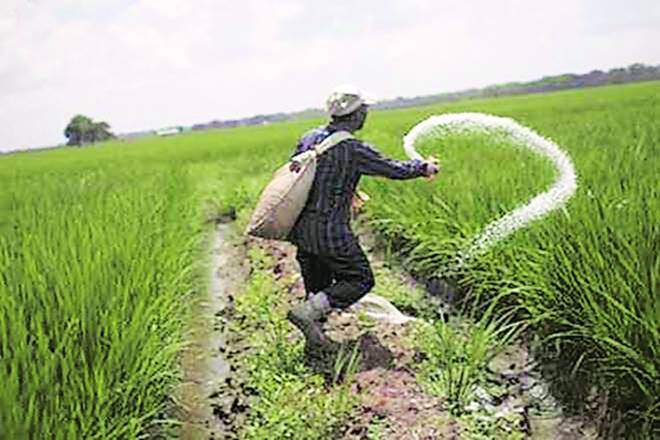
4 day long National Agrochemicals Congress concludes with recommendations for safe and judicious pesticide use in the country

The four day long National Agrochemicals Congress with the theme Country’s Status on Various Fronts of Agrochemicals concluded here today. The plenary sessions had deliberations on Issues and Concerns of Agrochemicals for sustainable farming. Recommendations from the congress included labelling of pesticide indicating the mode of action, status of country’s preparedness in invasive exigencies, to rethink on restrictive banning of pesticides in view of risk based considerations, policy regarding data protection of imported technical pesticides, policy for introduction of safe nano-formulations and empowerment of farmers through training and extension.

In the concluding session, Prof. Ramesh Chand, Member NitiAyog outlined the importance of responsible use of agrochemicals utilising precision technologies to reduce wastageof applied chemicals into environments.Prof. Chand advised the stakeholders to discourage false claims about agrochemicals and tackle the spread of wrong perception in public about agrochemicals. He exhorted agrochemicals scientists and microbiologists to workout on chemical and microbial interventions to transform biomass waste into a wealth.
DrTrilochanMohapatra, DG ICAR addressing the session said that agrochemicals will continue to play a major input in agriculture to meet the crop production targets and we must strive to ensure its safe and judicious use. He requested the scientists to comprehensively work upon the aspects of nano-pesticide approach to ensure safety of humans, livestock and environment.
Speaking at the session, Dr. Ashok Dalwai, CEO NRAAsaid that there is a need for reorientation in the thought process of society with regard to agrochemicals and experts have a big role in this exercise. He emphasized upon liberalization of registration procedures, enforcement of regulations at state level and access to technical pesticides.
This was the first ever National Agrochemicals Congress and this will hereafter be conducted in three years. The Congress is conducted in view of the role chemical pesticides still continue to play in pest management as more and more target specific and environment friendly products are being introduced. The benefits of pesticide use are high relative to their risks. New concepts in crops, human health, resource management, nanotechnology, smart formulations and related sciences are likely to boost agricultural productivity. With this background, current status of agrochemicals on various fronts have been collated for researchers and policy makers in order to ensure agriculture grow in a sustainable manner.
***

Career options in India: Disaster Management as a career Option

Disaster Management is an essential requirement of a modern society. Growing population and critical ecological balance have increased the risk of disaster. Natural disasters like- flood, cyclones, tsunami, flash floods, earthquakes; and man-made disasters like- fire incidents, train/plane crashes, civil structure collapses are just around the corner. The dense population and intense economic activities have raised the potential of the impact of these disasters astronomically. Natural disasters alone have taken 2 million lives according to UN estimates and another 800 million lives were affected directly or indirectly.
Therefore, the need of managing such disasters is more than ever before. The society and governments need to be ready for disasters beforehand; manage the disasters when they occur so that the impact is minimal and rehabilitating fast so that life gets back on the track. Disaster Management is basically a course to do these activities professionally and more systematically.


Career Options

Disaster Management roles can be categorized in 3 major categories-
  1. Disaster Prevention- Disaster prevention is one of the major and most important task of disaster managers. It is focused on activities and measures undertaken to prevent the occurrence of natural disasters and human hazards.
  2. Disaster Preparedness- This would concern with planning, monitoring and policy making regarding disaster management and safety practices.
  3. Disaster Relief- This is managing the disaster hit. Here the focus would be on the immediate recovery- minimizing impact on economy and lives.
  4. Disaster recovery- Here the focus is on bringing the lives back to normalcy. Rehabilitation of people, rebuilding of houses and restarting of economic activities. It would also involve studying the impact of the disaster and cultivating the learning to mitigate the disaster better the next time.


Pros and Cons of a career in Disaster Management

Pros
  • This career gives opportunity to help disaster victims and save lives.
  • By helping to prepare better for disasters, you can help country and society to save millions 
  • The work is exciting and adventurous.
  • As world is learning more about the disasters, the career options are on growth.
Cons
  • The field is still emerging, and the career options and payments are somewhat limited.
  • The work is often in remote areas and on the disaster struck locations.
  • The adventure also comes with significant risk.


How to pursue a career in Disaster Management?

You can complete your graduation in any stream and pursue masters in Disaster Management. You can follow this up with PhD.
The alternative path can be- after competing graduation and take a diploma in Disaster Management.


Top Disaster Management Institutes in India

College
Location
Website
Jamsetji Tata Centre for Disaster Management, Tata Institute of Social Sciences (TISS)
Mumbai
Indian Institute of Ecology and Environment
New Delhi
National Institute of Disaster Management (NIDM)
New Delhi
Indira Gandhi National Open University
New Delhi
School of Distance Learning (Annamalai University)
Annamalai, Tamil Nadu
University Centre for Disaster Management (Guru Govind Singh Indraprastha University)
Dwarka, Delhi
School of Distance learning (Sikkim Manipal University of Health, Medical and Technological Sciences)
Manipal
Department of Geography (Panjab University)
Chandigarh
International Centre of Madras University (Madras University)
Chennai
The Global Open University
Nagaland
National Civil Defense College
Nagpur
Asian Institute of Fire Safety
Chattisgarh
Faculty of Environmental Science, Rajiv Gandhi University
Arunachal Pradesh
North-Eastern Hill University
Shillong


Job Opportunities

As discussed earlier, the job opportunities are still growing in this sector. However, government is updating regulations about this regularly. Manufacturing plants are already required to have safety officers. Government has also constructed NDRF team. 

Other than the organized sector, plenty of opportunities lie with World Bank, UN agencies and NGOs.

The allure of the journal impact factor holds firm, despite its flaws

Many researchers still see the journal impact factor (JIF) as a key metric for promotions and tenure, despite concerns that it’s a flawed measure of a researcher’s value.
A journal’s impact factor indexes the average number of citations its recently published articles receive. As critics have noted, it’s often driven by a small number of highly cited articles, is vulnerable to being gamed by editorial policy, and is not calculated in a transparent way. Nonetheless, it remains an integral part of the Review, Promotion and Tenure (RPT) process at many academic institutions.
A recent survey of 338 researchers from 55 universities in the United States and Canada showed that more than one-third (36%) consider JIFs to be “very valued” for promotions and tenure, and 27% said they were “very important” when deciding where to submit articles.
The survey was led by Meredith Niles, assistant professor at the Department of Nutrition and Food Sciences at the University of Vermont, and was part of a larger study, published as a preprint on bioRxiv, investigating how researchers feel about the JIF.
It found that the respondent’s age or status had no bearing on what they perceived to be the value of the JIF in the RPT process. But non-tenured and younger researchers, for whom RPT matters most, put more weight on JIFs when deciding where to publish.
The respondents also indicated a belief that their peers placed more importance on the JIF than they did. Niles describes this as a form of “illusory superiority”, whereby people tend to view themselves in a more favourable light than others.
This result indicates the need for “honest conversations” about what really matters when communicating academic research, Niles says.
“If we don’t actually care about the JIF as much as factors such as readership and sharing the results of our work with people who can most advance our field, then let’s stop pretending we care and treating it as the gold standard.”
A call for research assessment reform
The survey follows a study from the same project, published in eLife last month, which analyzed the text of 864 RPT documents from 129 North American universities.
Overall, 30 of the institutions (23%) referred to impact factors or related phrases such as “high impact journal” in at least one of their RPT documents. That figure rose to 40% for research-intensive institutions.
“Faculty often talk about impact factors as featuring heavily in evaluations, but we weren’t aware of any studies that had tried to quantify its use,” says lead author, Erin McKiernan, professor in the Biomedical Physics programme at the National Autonomous University of Mexico.
Among the 30 universities that mentioned impact factors, the majority (87%) supported their use. Just four (13%) expressed caution against using them.
McKiernan notes that the analyses did not include possible indirect references to JIFs such as “top-tier journal”. “We may be seeing only the tip of the iceberg,” she says.
According to Björn Brembs, a neuroscientist from the University of Regensburg, in Germany, who reviewed the study for eLife, the continuing deference to the JIF shows how scientists can be highly critical in their own subject domain, yet “gullible and evidence-resistant” when evaluating productivity.
“This work shows just how much science is in dire need of a healthy dose of its own medicine, and yet refuses to take the pill,” he says.
Anna Hatch, community manager of the San Francisco Declaration on Research Assessment(DORA), which cautions against the use of journal-level metrics in academic evaluations, adds that the results provide an important benchmark by which to measure progress in research assessment reform.
“I hope the findings inspire faculty, department chairs, and other university administrators to examine their RPT documents and, if necessary, have frank discussions about how to best evaluate researchers without relying on proxy measures of quality and impact,” she says.

Art and Science of Teaching

Abstract

Teachers are the flag bearers of humanity. They spend their entire
lives making next-generation wiser and more productive to society. Demands from
the roles of teachers have been increasing with the growing vastness of the
subjects. Mere knowledge is not sufficient to be a good teacher. It is an art
to make the subjects lucid and interesting enough to get through the restless
younger generations; it is a science to keep the learning process more
objective and accurate. Teaching is perhaps the most perfect example of the
amalgamation of science and art into one.


Introduction

Our ability to think and process
information is what sets us apart from the monkeys. Humans are the only species
who have benefited from the number of years of their existence because they
accumulate knowledge and pass on to fellow human beings. We do not need to take
pain of learning to light fire or make wheels, because our forefathers did it
for us thousands of years back! And some of them took the responsibility of
teaching this skill to their next generation and the same has been being passed
on ever since. Unless there were responsible teachers in each generation, this
power of humanity would vanish.

Role of a Teacher

A teacher is the most important person
in our lives after our parents who kindles the life of others with his
knowledge and make them humane and productive. One cannot really learn things
without having a teacher in his life- formal or informal, but a teacher is must
to learn anything. Scriptures across the world sing of the praises of teachers.
In fact one Hindi proverb even goes to say that the teacher is even more
respectable than God himself.
Of course, the subjects to learn
have gotten more and more complicated over time. Early teachers like Aristotle and
Chanakya could have afforded to teach all the subjects ranging from political
science to philosophy to mathematics to science to economics. But now the
subjects have become much more complex. One person may really need to spend his
entire life to understand probably just one concept of one subject! Therefore,
the job and qualifications demanded of a teacher has become more complex.
A good teacher needs to have
sufficient professional or specialized knowledge in a particular subject. As Brad
Henry once said “A good teacher can inspire hope, ignite the imagination, and
instill a love of learning.

T
eachers need to accumulate knowledge and invest this in their students to
pave path of a good future to them with widen up thinking and absorbing ability
giving sense about the truth of life, and thus making them a more productive
member of society.
The teacher has to act as a
mediator between books and students and try to make ease their way of
understanding subjects.  He has to
encourage and build a friendly environment to facilitate learning, encourage
Q&A. He builds up a student confident enough to face the society, confident
enough to put their knowledge to test in the real world.
Therefore, behavioral training is
also a part of teaching that grows reciprocity and cooperation among students. The
teacher has to teach moral and ethical values to students.

Is teaching a science or an art?

Good teaching has
to blend emotions and feelings with objectivity of observations, measurements
and the precision of language. To make learning effective, the process has
to be interactive and objective. Without the use of the scientific method, the
learning may not have necessary impact. Therefore, it is essential to
scientifically proven processes like- discussions, active learning, distance
learning, and case studies, to facilitate learning.
But identifying
the correct set of tools to facilitate learning and perfect delivery of the
tool is actually an art. Creating a healthy environment is important for having
the desired impact of these techniques.
 Therefore good teaching is the perfect blend
for art and science.