Confidence:a key to success?

Confidence means feeling sure of yourself and your abilities in a realistic and secure way. Yes, it is rightly said that confidence is the key to success. It is built on the choices and accomplishments that feed your passion, most of all making you happy and feeling proud on yourself.

It doesn’t mean to feel like superior from others or in any arrogant way but to believe in a positive manner that you’re capable. A confident person can achieve the goals and face the scenarios of life far better than those who lacks it.

The people who are confident enough are admired by others ,can take the risk , look up the situations positively and also inspire others.

” low self-confidence isn’t a life sentence. Self confidence can be learned , practiced and mastered- just like any other skill. Once you master it, everything in your life will change for the better”.

Barrie Davenport

Tips to be confident:

  1. It is obvious that if you don’t believe in yourself how do u expect any other person to do that ? Confidence begins to develop by the time of accomplishment of the goals. So GET THE THINGS DONE is the foremost step in which you are required to set-up your day-to-day goals and when you will achieve them, automatically you will have the confidence of doing it.
  2. Just setting up of the goals is not enough and there comes the second tip to MONITOR THE PROGRESS by which you can easily know how much you have achieved and also can make any changes in your goals if needed to satisfy them.
  3. The way you appear or dress have a significant impact on your confidence .So DRESS SMART , it is the international symbol of status and no matter where you live it is always preferable to bring more attractiveness and confidence in you.
  4. Here comes the role of a BODY LANGUAGE which plays more important role in judging the personality of a person. Behave in a manner which will present you more confident . Always walk tall ,have an eye contact while talking and be energetic.
  5. Find out your strengths and try to LEVERAGE YOUR STRENGTHS dont give much focuss on your shortcomings otherwise you will become less confident. Just know your areas of master and bring them to more upper level to increase them it will eventually help you to be more confident about yourself.
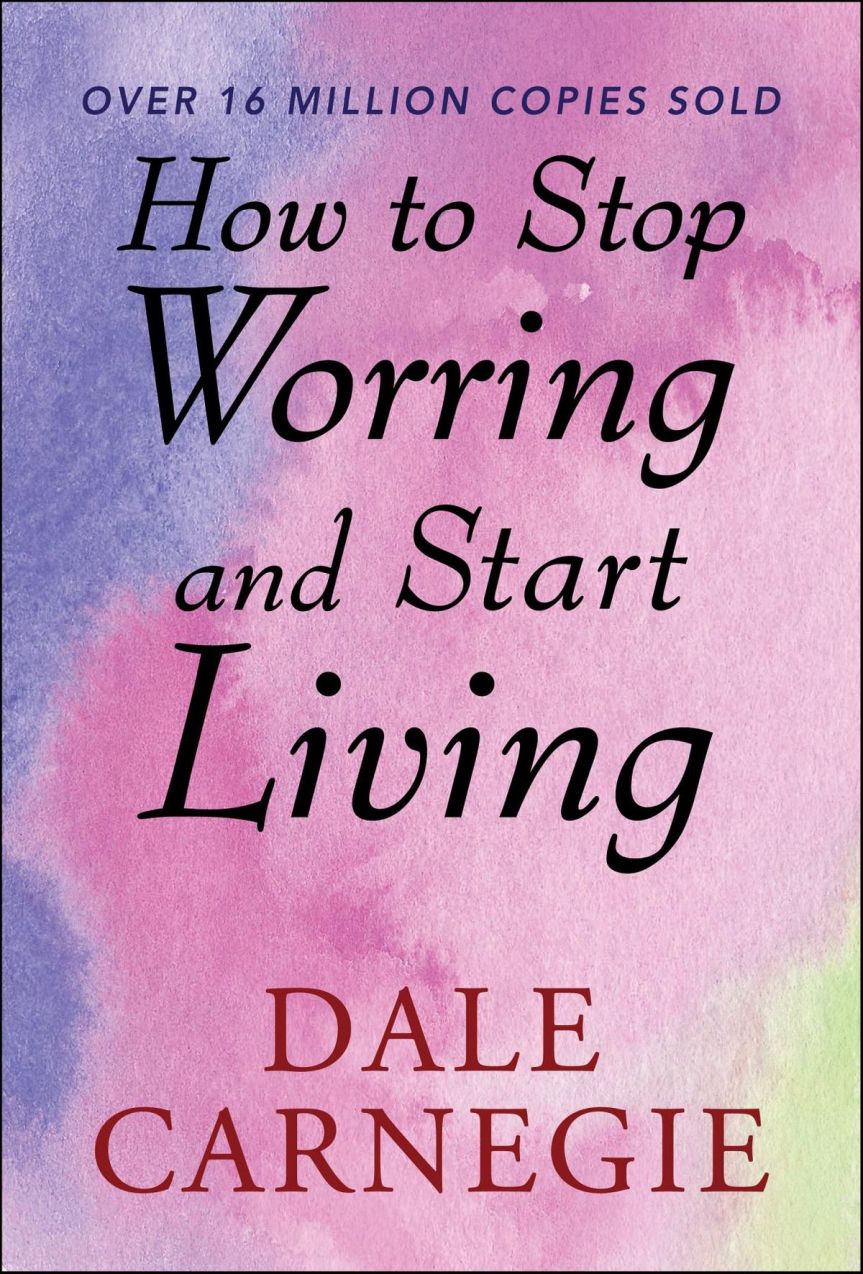

How to stop worrying and start living- Book Review

“How to Stop Worrying and Start Living” is a self-help book by Dale Carnegie. Although the book was first published in 1948 this book still holds much importance in human life and all the principles are as accurately applicable now as then in those days, simply – a timeless classic. I read this book in the darkest days of my life, in a phase where I didn’t even have the slightest motivation of getting out of bed in the morning and it helped me to overcome all those fears and implanted a sense of peace within my heart and lightened the emotions with those words. 

The book is divided into 8 sections-

PART I: Fundamental facts you should know about worry.

PART II: Basic Techniques in Analyzing Worry.

PART III: How to Break the Worry Habit Before it Breaks You.

PART IV: Ways to Cultivate a Mental Attitude That Will Bring You Peace and Happiness.

PART V: The Perfect Way to Conquer Worry.

PART VI: How to Keep From Worrying About Criticism.

PART VII: 6 Ways to Prevent Fatigue and Worry and Keep Your Energy and Spirits High.

PART VIII: “How I Conquered Worry”.

By seeing all the section names you must have guessed how power-packed the book is. 

This book helps you to analyze and identify your worries and tells you if they are worth worrying about or not. It gives many techniques to conquer your worries and stay relaxed. It helps to see the little things to be grateful for. The wisdom of this book is far beyond any reviewer’s words. This is a must-read for anyone who has taken worrying to the next level or those who want to be more aware of themselves and the people around them. The language, the writing style, the explanation everything is simple and lucid. 

This book is not for those light readers or those who just read for fun. This is a book to read and highlight and take down notes and to read and re-read them and constantly improving yourself.

This book has many lines or I can say paragraphs which I want every person in the world to read but some of them are lengthy and I cant out everything here so I suggest you read the book and find out yourself but here are some of them-

“Every day is a new life to a wise man.”

Acceptance of what has happened is the first step in overcoming the consequences of any misfortune.

When we have accepted the worst, we have nothing more to lose. And that automatically means, we have everything to gain!

I would rather be a carefree person with no responsibility than wreck my health at forty-five by trying to run a railroad or a cigarette company.

The most relaxing recreating forces are a healthy religion, sleep, music, and laughter. Have faith in God—learn to sleep well— Love good music—see the funny side of life— And health and happiness will be yours.

‘I am not going to worry! I am not going to cry! And if there is anything to mind over matter, I am going to win! I am going to LIVE!’

Let’s not allow ourselves to be upset by small things we should despise and forget. Remember “Life is too short to be little.

Here I was, wanting to change the whole world and everyone in it—when the only thing that needed changing was the focus of the lens of the camera which was my mind. When moments of uneasiness try to creep in (as they will in everyone’s life) I tell myself to get that camera back in focus, and everything is OK.

I hope this review convinces you enough to read the book.

Stress Management Through Sahaja Yoga Meditation

Introduction

Stress is unavoidable in the current scenario, where the entire world is facing the Corona virus pandemic. With the toll of deaths and positive cases of Corona virus on rise, every person in this world is under stress and anxiety. Higher levels of stress adversely affect the physical as well as psychological health of the individuals concerned. Therefore, it becomes highly essential to manage stress at initial stages, so as to avoid severe consequences of high stress on health. The present article focuses on the management of stress through a unique form of meditation, i.e, ‘Sahaja Yoga’. Sahaja Yoga is a scientifically proven technique of meditation which involves the awakening of the dormant primordial energy- the Kundalini, and integrating it with the all-pervading cosmic energy. Regular practice of Sahaja Yoga meditation leads to the inner transformation of an individual, whereby one becomes more moral, integrated, balanced and healthy.

What is Stress?

Stress refers both to the circumstances that place physical or psychological demands on an individual and to the emotional reactions experienced in these situations. It leads to severe effects on the physical as well as psychological health of the individuals concerned such as frequent headaches, heart disease, myocardial infarction, cardiovascular disease, musculoskeletal disorders, diabetes, high anxiety, depression, post-traumatic stress disorder and so on. Since, stress is a psychological phenomenon, its management can be best realised by treatment focused at the mental level. Thus, the present article aims at spreading awareness about the stress management technique called ‘Sahaja Yoga’ and highlighting its significance in the improvement of overall health, especially, psychological health.
Sahaja Yoga Meditation

What is Sahaja Yoga?

The word ‘Sahaja’ means ‘spontaneous’ and ‘Yoga’ means ‘union with the self’
Sahaja Yoga was founded in 1970 by Mrs. Nirmala Srivastava, more widely known as ‘Shri Mataji Nirmala Devi’. Shri Mataji was spiritually enlightened since birth and granted en-masse realisation to people free of any materialistic consideration. For 40 years since 1970, she travelled tirelessly across the globe to teach Sahaja Yoga meditation world-wide at her own expenses 

Human Subtle System

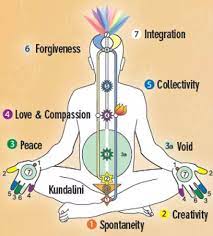
The process of Sahaja Yoga meditation works through the subtle system which comprises of three energy channels (nadis) and seven energy centres (chakras). At the root of this system lies a protective power – Kundalini. Amongst the three channels (Nadis), the left channel called Ida Nadi represents our desires (Ichha shakti); the right channel called Pingla Nadi represents our working ability (Kriya shakti); and the central channel called Sushumna Nadi represents our assent. The seven energy centres in the body correspond to the seven nerve plexuses: the pelvic plexus (Mooladhara Chakra), the aortic plexus (Swadhistana Chakra), the solar plexus
(Nabhi Chakra), the cardiac plexus (Heart Chakra), the cervical plexus (Vishuddhi Chakra), the optic chiasma (Agnya Chakra) and the limbic area of the brain (Sahasrara Chakra). These energy centres are responsible for maintaining their surrounding physical organs in the body.
When Kundalini rises it crosses all the six energy centres and emits from the seventh centre (Sahasrara Chakra) and unites the individual consciousness with universal consciousness. An individual rise above the three channels of the subtle system and reaches a timeless state beyond the past, present and future – a state of thoughtless awareness. This process is referred to as Self-realisation. As an evidence of self-realisation, an individual feels cool breeze of vibrations on the head and palms of hands .

How Sahaja Yoga Meditation Helps in Stress Management?

It is imperative to understand how stress arises and how is it managed through Sahaja Yoga meditation. The central channel (Sushumna Nadi) is the path of rising Kundalini and a channel of balance. An individual having too many desires and always thinking about the past deviates from the central channel and puts his left channel under pressure. On the other hand a workaholic person, always working and planning for the future puts his right channel under pressure. The left-sided individuals become highly emotional, conditioned and day dreamers while right-sided people become highly egoistic and harsh on others. Stress is the result of such an imbalance between the two energy channels and deviation from the central channel.
Therefore, one should always keep his attention on the central channel and remain in the balanced state in order to be stress-free. Thus, Sahaja Yoga helps in managing stress effectively by attaining and maintaining the balanced state through regular meditation, since by focussing on the central channel one remains in present rather than thinking about past or future events.


Sahaja Yoga in the present Coronavirus Scenario

As many as 200,000 people across 60 countries have attended online meditation sessions since 16 March 2020 with the commencement of lockdown, according to the information published nation-wide from H.H. Shri Mataji Nirmala Devi Sahaja Yoga Trust (National Trust). The Youtube channel – Pratisthan, Pune of the Trust has seen around 2 million views with 7.31 lakh watch hours and over 13.2 million impressions in the lockdown period. Each viewer attended an average of 8.6 session and spent average of 23 minutes per visit, which is substantial as people look towards meditation to overcome anxiety during COVID19 lockdown.

Conclusion

Sahaja Yoga meditation activates and nourishes the parasympathetic nervous system which relaxes both body functions and the brain by reducing thinking functions Thus, regular meditation everyday cleanses the subtle system, relaxes body and mind, and gradually one starts experiencing physical, mental and emotional benefits also, apart from gaining stress relief Thus, the Indian government should focus on building resilient citizens which can adjust with the pressures of the present stressful scenario.

JOURNEY TO SANITY – DOUBLE STANDARDS

EMOTIONS ARE GENDER NEUTRAL

We have been conditioned in such a way that it is believed, that women are supposed to be fragile and sensitive in nature where as men are supposed to be thick-skinned and emotionally numb. However, in reality emotions are gender neutral. It’s not manly to be strong and harsh. And similarly, it’s not feminine to be weak and to cry. The experiences faced by men or women might be different but since they are both humans and have emotions, it is not wrong to express it.
(So, the next time someone tells you to man up and stop crying, you know what to say)

SHARING RESPONSIBILITIES AND RESPECTING THE OPINIONS OF YOUR PARTNER DOES NOT MAKE YOU A ‘JORU KA GULAM

Understanding, Compassion and Mutual – Respect should be the basis for any healthy relationship. It is the basic need of a human to be heard and acknowledged. Hence, it doesn’t make a man a ‘Joru Ka Gulam’ if he is respectful to the opinions of his partner and understands him/her. Society in general tends to question and mock those changes that question their years of belief. In order to avoid their inner-conflict, they discourage the progressive mass so that they don’t have to change and no one can question them. (Yes, kind of like a defence mechanism – Pointing fingers at the other person before they point at you).

FAMILY RESPONSIBILITY SHOULD NOT BE THE SOLE RESPONSIBILITY OF A MAN OR A WOMEN.

Two people form a relationship and they are called partners for a reason. They are part responsible for every aspect of a household. So why should the burden of the entire family fall on the shoulders of a single person. It is normal for a woman to have a successful career and to support a family financially. (No, it doesn’t make him less manly by earning less or letting his wife handle finances). Similarly, household chores should not be the sole responsibility of a women. It doesn’t make a man submissive if he cooks for his partner or does basic household chores. Rather, such relationships are built on mutual respect and compassion which tend to last longer.

STRONG, BRAVE AND INDEPENDENT ARE NOT TERMS SYNONYMOUS WITH MEN.

It is acceptable for a women to be strong yet sensitive, to be scared yet courageous enough to face it. Adjectives like strong, brave are often used for men, whereas it’s completely normal for a women to have each of those qualities. We have women officers who are equally as brave as the men. There are men who prefer household work over finances and it doesn’t make them dependant on their partners or submissive in any way.

Do not forget to read more from the series 🙂

JOURNEY TO SANITY – ACCEPTANCE

JOURNEY TO SANITY – SUNSHINE 🌤️

JOURNEY TO SANITY – MINDFULNESS

JOURNEY TO SANITY -JOURNALING

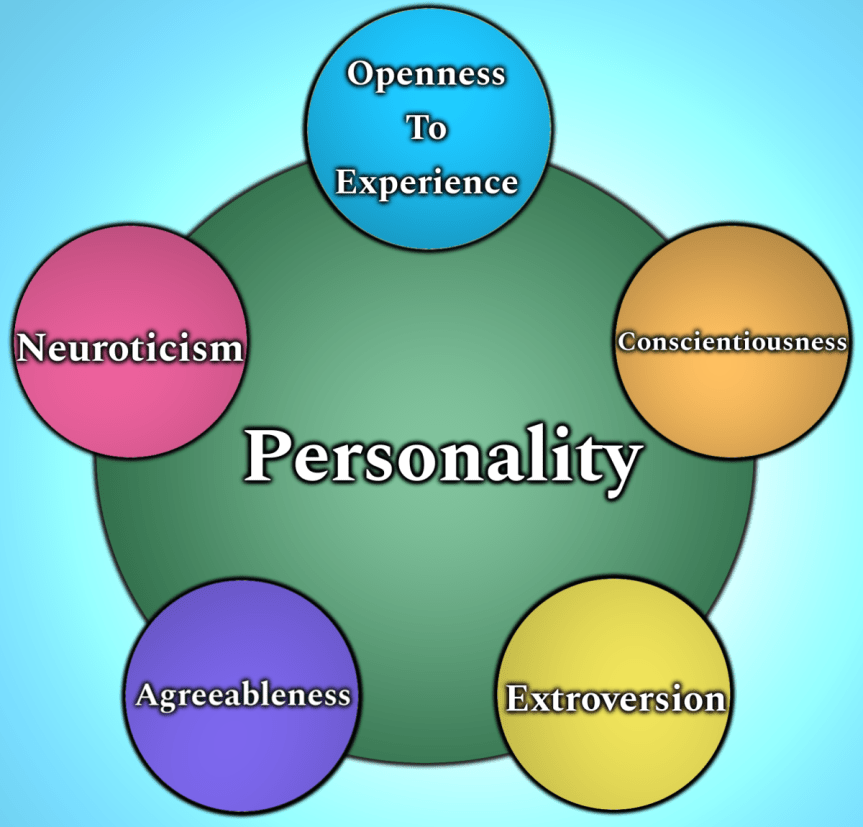
MEANING OF PERSONALITY

personality

The wordpersonality’ is derived from the Latin word ‘Persona’, which means ‘mask’ . A mask was worn by various actors in dramas in those days of ancient Greek civilization. Personality usually means that an individual is much more than his outer appearance . Personality is a dynamic and organized set of characteristics possessed by a person that influence his/her cognitions, emotions, motivations and behaviors in various situations. Personality also refers to the patterns of thoughts, feelings, social adjustments and behaviors persistently exhibited over time that strongly influences one’s expectations . self-perceptions, attitudes and values . Till now there is no universal consensus on the definition of personality in psychology . However, the following definitions can be beneficial for us to understand the clear cut meaning of personality.

  1. According to Munn, ”Personality is the most characteristic integration of an individual’s structures, modes of interest, attitudes, behaviors, capacitis, abilities and aptitudes.”
  2. According to Morton Prince,Personality is the sum total of all the biological innate dispositions, impulses, tendencies, appetities and instincts of the individual and the disposition and tendencies acquired by experience,”
  3. According to Allport ,”personality is the dynamic organization of those psychophysical systems that determine an individual’s adjustment to his environment.”
  4. According to MC Dougall, ”Personality is a synthetic unity of all mental and physical functions in their intimate interplay”
  5. According to Burgess, ”Personality is the integration of all habits which determines the role and status of the person in society,”
  6. According to Freeman, ”Personality is the integrated organization of all cognitive, conative, affective and physical characteristics that impose on individual and his uniqueness”.
  7. According to Warren , “Personality is the entire organization of a human being at any stage of his development”.

As a matter of fact , all the above mentioned definition do not define personality completely .These definitions only explain the meaning of personality . It can be concluded that the personality of an individual is very broad . All the characteristics such as physical , mental , social , intellectual , emotional , etc., are included in personality which makes him extraordinary and are expressed from time to time in daily life , It can also be said that personality is the sum of inner and outer capabilities of an individual .

Self help and personality development

INTRODUCTION:-

While self-improvement is essentially a solo act i.e. usually picking up a book and learning the technique of improving the target area on your own and at your own pace. Personality Developing on the other hand, usually involves some external help. … You cannot get there without Personal Development and self-improvement.

Self help:-

Self Help Word Cloud, Health Concept Stock Photo, Picture And Royalty Free  Image. Image 41206493.
SELF Help Group are small groups of 15-20 members of rural people in particular women belonging to one neighbouhood who meet and saves regularly. The members of the group can take small loan to meet their needs on low interest rate.

Functioning:

  • Most of the decisions regarding the savings and loan activities are taken by the group members.
  • The group decides as regards the loans to be granted- the purpose, amount, interest to be
    charged, repayment schedule etc.
  • Group is responsible for the repayment of the loan.
  • Any case of non-repayment of loan, by any one member is followed up seriously by other members in the group.
  • The SHG help borrowers overcome the problem of collateral.
  • They provide timely loans for a variety of purposes and at a reasonable interest rate.
  • The group provrdes a platform to discuss and act on a variety of social issues such as health, nutrition, domestic violence, etc.

Personality development:-

Definition:

Personality development is the development of the organized pattern of behaviors and attitudes that makes a person distinctive. Personality development occurs by the ongoing interaction of temperament , character, and environment.

Description:

Personality is what makes a person a unique person, and it is recognizable soon after birth. A child’s personality has several components: temperament, environment, and character. Temperament is the set of genetically determined traits that determine the child’s approach to the world and how the child learns about the world. There are no genes that specify personality traits, but some genes do control the development of the nervous system, which in turn controls behavior.
A second component of personality comes from adaptive patterns related to a child’s specific environment. Most psychologists agree that these two factors—temperament and environment—influence the development of a person’s personality the most. Temperament, with its dependence on genetic factors, is sometimes referred to as “nature,” while the environmental factors are called “nurture.”
While there is still controversy as to which factor ranks higher in affecting personality development, all experts agree that high-quality parenting plays a critical role in the development of a child’s personality. When parents understand how their child responds to certain situations, they can anticipate issues that might be problematic for their child. They can prepare the child for the situation or in some cases they may avoid a potentially difficult situation altogether. Parents who know how to adapt their parenting approach to the particular temperament of their child can best provide guidance and ensure the successful development of their child’s personality.
Finally, the third component of personality is character—the set of emotional, cognitive, and behavioral patterns learned from experience that determines how a person thinks, feels, and behaves. A person’s character continues to evolve throughout life, although much depends on inborn traits and early experiences. Character is also dependent on a person’s moral development .
In 1956, psychiatrist Erik Erikson provided an insightful description as to how personality develops based on his extensive experience in psychotherapy with children and adolescents from low, upper, and middle-class backgrounds. According to Erikson, the socialization process of an individual consists of eight phases, each one accompanied by a “psychosocial crisis” that must be solved if the person is to manage the next and subsequent phases satisfactorily. The stages significantly influence personality development, with five of them occurring during infancy, childhood, and adolescence .

Infancy:

During the first two years of life, an infant goes through the first stage: Learning Basic Trust or Mistrust (Hope) . Well-nurtured and loved, the infant develops trust and security and a basic optimism. Badly handled, the infant becomes insecure and learns “basic mistrust.”

Toddlerhood:

The second stage occurs during early childhood, between about 18 months to two years and three to four years of age. It deals with Learning Autonomy or Shame (Will) . Well-parented, the child emerges from this stage with self-confidence, elated with his or her newly found control. The early part of this stage can also include stormy tantrums , stubbornness, and negativism, depending on the child’s temperament.

Preschool:

The third stage occurs during the “play age,” or the later preschool years from about three to entry into formal school. The developing child goes through Learning Initiative or Guilt (Purpose) . The child learns to use imagination; to broaden skills through active play and fantasy; to cooperate with others; and to lead as well as to follow. If unsuccessful, the child becomes fearful, is unable to join groups, and harbors guilty feelings. The child depends excessively on adults and is restricted both in the development of play skills and in imagination.

School age:

The fourth stage, Learning Industry or Inferiority (Competence) , occurs during school age, up to and possibly including junior high school. The child learns to master more formal skills:
  • relating with peers according to rules
  • progressing from free play to play that is structured by rules and requires teamwork (team sports)
  • learning basic intellectual skills (reading, arithmetic)
At this stage, the need for self-discipline increases every year. The child who, because of his or her successful passage through earlier stages, is trusting, autonomous, and full of initiative, will quickly learn to be industrious. However, the mistrusting child will doubt the future and will feel inferior.

Adolescence:

The fifth stage, Learning Identity or Identity Diffusion (Fidelity) , occurs during adolescence from age 13 or 14. Maturity starts developing during this time; the young person acquires self-certainty as opposed to self-doubt and experiments with different constructive roles rather than adopting a negative identity, such as delinquency. The well-adjusted adolescent actually looks forward to achievement, and, in later adolescence, clear sexual identity is established. The adolescent seeks leadership (someone to inspire him or her), and gradually develops a set of ideals to live by.
The Child Development Institute (CDI) rightfully points out that very little knowledge is available on the type of specific environment that will result, for example, in traits of trust being more developed in a person’s personality. Helping the child through the various stages of emotional and personality development is a complex and difficult task. Searching for the best ways of accomplishing this task accounts for most of the research carried out in the field of child development today.
Renowned psychologist Carl Rogers emphasized how childhood experiences affect personality development. Many psychologists believe that there are certain critical periods in personality development—periods when the child will be more sensitive to certain environmental factors. Most experts believe that a child’s experiences in the family are important for his or her personality development, although not exactly as described by Erikson’s stages, but in good agreement with the importance of how a child’s needs should to be met in the family environment. For example, children who are toilet trained too early or have their toilet training carried out too strictly may become rebellious. Another example is shown by children who learn appropriate behavior to their sex lives when there is a good relationship with their same-sex parent.
Another environmental factor of importance is culture. Researchers comparing cultural groups for specific personality types have found some important differences. For example, Northern European countries and the United States have individualistic cultures that put more emphasis on individual needs and accomplishments. In contrast, Asian, African, Central American, and South American countries are characterized more by community-centered cultures that focus on belonging to a larger group, such as a family, or nation. In these cultures, cooperation is considered a more important value than competitiveness, which will necessarily affect personality development.

Common problems:

Infants who are just a few weeks old display differences between each other in how active they are, how responsive they are to change, and how irritable they are. Some infants cry constantly while others seem happy and stay fairly quiet. Child development research conducted by the CDI has identified nine temperamental traits that may contribute to a child’s personality development being challenging or difficult:
  • activity level (how active the child is generally)
  • distractibility (degree of concentration and paying attention when the child is not particularly interested)
  • intensity (how loud the child is)
  • regularity (the predictability of biological functions like appetite and sleep)
  • sensory threshold (how sensitive the child is to physical stimuli: touch, taste, smell, sound, light)
  • approach/withdrawal (characteristic responses of a child to a new situation or to strangers)
  • adaptability (how easily the child adapts to transitions and changes such as switching to a new activity)
  • persistence (stubbornness, inability to give up)
  • mood (tendency to react to the world primarily in a positive or negative way)
Temperamental traits are enduring personality characteristics that are neither “good” nor “bad.” Early on, parents can work with the child’s temperamental traits rather than oppose them. Later, as the child grows up, parents can help the child to adapt to his or her own world in spite of inborn temperament.

Parental concerns:

Most children experience healthy personality development. However, some parents worry as to whether their infant, child, or teenager has a personality disorder. Parents are usually the first to recognize that their child has a problem with emotions or behaviors that may point to a personality disorder.
Children with personality disorders have great difficulty dealing with other people. They tend to be inflexible, rigid, and unable to respond to the changes and normal stresses of life and find it very difficult to participate in social activities. When these characteristics are present in a child to an extreme, when they are persistent and when they interfere with healthy development, a diagnostic evaluation with a licensed physician or mental health professional is recommended.

When to call the doctor:

Parents who suspect that their child has a personality disorder should seek professional help. It is a very important first step in knowing for sure whether there is a disorder, and if so, what treatment can best help the child. Child and adolescent psychiatrists are trained to help parents sort out whether their child’s personality development is normal.

KEY TERMS:

Behavior —A stereotyped motor response to an internal or external stimulus.
Character —An individual’s set of emotional, cognitive, and behavioral patterns learned and accumulated over time.
Cognition —The act or process of knowing or perceiving.
Cognitive —The ability (or lack of) to think, learn, and memorize.
Gene —A building block of inheritance, which contains the instructions for the production of a particular protein, and is made up of a molecular sequence found on a section of DNA. Each gene is found on a precise location on a chromosome.
Identity —The condition of being the same with, or possessing, a character that is well described, asserted, or defined.
Maturity —A state of full development or completed growth.
Personality —The organized pattern of behaviors and attitudes that makes a human being distinctive. Personality is formed by the ongoing interaction of temperament, character, and environment.
Socialization —The process by which new members of a social group are integrated in the group.
Temperament —A person’s natural disposition or inborn combination of mental and emotional traits.

Resources:-

BOOKS:

AACAP and David Pruitt. Your Child: Emotional, Behavioral, and Cognitive Development from Infancy through Pre-Adolescence. New York: Harper Collins, 1998.
AACAP and David Pruitt. Your Adolescent: Emotional, Behavioral, and Cognitive Development from Early Adolescence through the Teen Years. New York: Harper Collins, 1999.
Allen, Bem P. Personality Theories: Development, Growth, and Diversity. Harlow, UK: Allyn & Bacon, 2002.
Berger, Elizabeth. Raising Children With Character: Parents, Trust, and the Development of Personal Integrity. Lanham, MD: Rowman & Littlefield Publishers, 1999.
Erikson, Erik. Childhood and Society. New York: W.W. Norton & Company, 1993.
Erikson, Erik. The Erik Erikson Reader. New York: W.W. Norton & Company, 2000.
Goleman, Daniel. Working With Emotional Intelligence. New York: Bantam, 1998.
Rogers, Carl. On Becoming a Person. Boston: Mariner Books, 1995.
Shaffer, David R. Social and Personality Development. Independence, KT: Wadsworth Publishing, 1999.
“Social, Emotional, and Personality Development.” Handbook of Child Psychology , edited by William Damon and Nancy Eisenberg. 5th ed. New York: Wiley, 2000.

PERIODICALS:-

Biesanz, J. C. et al. “Personality over time: Methodological approaches to the study of short-term and long-term development and change.” Journal of Personality. 71, no. 6 (December, 2003): 905–41.
Hart, D. et al. “Personality and development in childhood: a person-centered approach.” Monographs in Social Research on Child Development. 68, no. 1 (2003): 1–119.
Jensen-Campbell, L. A. et al. “Interpersonal conflict, agreeableness, and personality development.” Journal of Personality. 71, no. 6 (December, 2003): 1059–85.
Roberts, B. W. and R. W. Robins. “Person-Environment Fit and its implications for personality development: a longitudinal study.” Journal of Personality. 72, no. 1 (February, 2004): 89–110.
Roberts, B. W. et al. “The kids are alright: growth and stability in personality development from adolescence to adulthood.” Journal of Personality & Social Psychology. 81, no. 4 (October, 2001): 670–83.
Shiner, R, and A. Caspi. “Personality differences in childhood and adolescence: measurement, development, and consequences.” Journal of Child Psychology & Psychiatry. 44, no. 1 (January, 2003): 2–32.

ORGANIZATIONS:-

American Academy of Child & Adolescent Psychiatry (AACAP). 3615 Wisconsin Ave., N.W., Washington, DC. 20016–3007. (202) 966–7300. Web site: http://www.aacap.org.
American Academy of Pediatrics (AAP). 141 Northwest Point Boulevard, Elk Grove Village, IL 60007–1098. (847) 434–4000. Web site: http://www.aap.org.
American Psychological Association (APA). 750 First Street, NE, Washington, DC 20002–4242. (800) 374–2721. Web site: http://www.apa.org.
Child Development Institute (CDI). 3528 E Ridgeway Road, Orange, California 92867. (714) 998–8617. Web site: http://www.childdevelopmentinfo.com.

WEB SITES:-

CDI. Child Development Basics. Available online at: http://www.childdevelopmentinfo.com/development (accessed March 5, 2005).
Great Ideas in Personality. Available online at: http://www.personalityresearch.org/ (accessed March 5, 2005).
The Personality Project. Available online at: http://www.personality-project.org/personality.html (accessed March 5, 2005).
Monique Laberge, Ph.D.

Reference Links:

https://ask.learncbse.in/t/what-are-self-help-groups-describe-in-brief-their-functioning/43084
http://www.healthofchildren.com/P/Personality-Development.html