How to Improve Concentration?

“Concentrate all your thoughts upon the work at hand. The sun’s rays do not burn until brought to a focus”

– Alexander Graham Bell

Introduction

The definition of concentration is exclusive attention to one object. Concentration means focused attention and it is very important. It helps in studying, allows faster comprehension, improves memory, helps in focusing on a task, allows to ignore unwanted thoughts. It is also helpful in meditation. It is very common to be reading a paragraph when you realize you zoned out and then having to go back and read the whole paragraph just to be zoned out again and repeating the cycle. This happens because of a lack of focus or concentration. This article aims to discuss ways to improve concentration.

Train your brain

Results from a study show that spending 15 minutes a day for 5 days a week on training your brain has a huge impact on your power of concentration. You can train your brain by playing games such as sudoku, crossword puzzles, chess, jigsaw puzzle, scrambles, and memory games. These games can also help in developing short-term memory and will also teach you problem-solving skills. In kids, even colouring improves concentration.

Get your game on

Some new research shows that playing video games can also help in boosting concentration. It says that playing video games for an hour can help in improving visual selective attention (VSA), which is the ability to focus on some tasks while ignoring distractions. Note that this research has been done on a very small level so it is not conclusive yet.

Improve sleep

Sleep is a very important part of our day as getting enough of it helps in a lot of areas of our day. Sleep deprivation easily disrupts our concentration and other functions like memory and attention. Not getting enough sleep on a regular basis can result in affecting your mood and performance at tasks, it can also slow down your reflexes. With enough sleep, you have enough energy to focus on your task without getting sleepy.

Make time for exercise

A 2018 study shows that physical activity helps in improving concentration and attention. Regular exercise has many benefits like increased concentration. In older adults, it shows that moderate physical activity for a year can help in stopping or reversing memory loss. Any type of exercise can work, the point is to get your heart rate up, it can be a walk for half an hour, a morning jog, walk to whatever place you have to go to or bike.

Spend time in nature

Getting outside in nature for even 15 to 20 minutes will help in boosting your concentration. Research from 2014 found evidence which says that including plants in office spaces has helped employees with their productivity, adding to that, it also increases the air quality. It can be any kind of exposure to nature, going for a walk in the park, or even just sitting in your backyard.

Listen to music

According to research, playing music, nature sounds, or even white noise to cover up background noise can help in improving concentration and other brain functions.

Conclusion

Having the power to focus and concentrate will make a huge change in your life. It lets you be more productive as you will be able to focus on your tasks without distractions, and when there are no distractions, things get done faster. Once you start concentrating, you will realize how much time you were wasting normally.


References

How to Increase Productivity? (For Students)

“The key is not to prioritize what’s on your schedule, but to schedule your priorities.”

– Stephen Covey

Introduction

Productivity isn’t only for working people, it is equally if not more important for students. As a student you are learning a lot of new things at the same time, it might even become overwhelming. You can be in school or college, you will still need productivity and organization. It is important to stay on track, achieve your goals, be it short-term or long-term. Life as a student can be very distracting, there are too many things begging for attention, such as sports, friends, a social life, partying. At the same time, you are absorbing a lot of new information from everywhere, and to be on top of all your work will help in not feeling overwhelmed. This article aims to discuss how to increase productivity as a student.

Make a To-Do List

Now, this might sound a little stupid but To-Do Lists help a lot, speaking from personal experience. It will be ideal to make the list before sleeping, that way you will not have to waste some time of the day in making the list, and it will also help you in understanding how much you need to get done and you will wake up prepared for it. The very basic way is to just list down the tasks you have for the day but if you want to go a level up, you can schedule your tasks by the hour, that is make a timetable for the day which will include your daily activities as well. For Example:

7:30 – Wake up

8:00 – Attend Family Law Class

10:40 – Have breakfast

11:15 – Do research for Memo

1:00 – Have lunch

Understand Your Learning Style

Everyone has a different style of learning:

Visual learning – learning things by looking at things like graphs, charts, and infographics. Learning things by looking at them.

Kinesthetic learning – learning things through a practical approach like experiments.

Auditory learning – learning things by hearing them said aloud.

Reading and Writing Learner – learning things by writing them and then revising from them.

Once you figure out your learning style, you should try to follow it as that is the best-suited one for you and will help you in understanding better and quicker.

Take Breaks

Studies show that your productivity stays intact when you take short breaks after studying for some time. This gives your brain time to stay focused and motivated. If you keep pushing your brain beyond its capability, you are creating stress and you start getting tired.

Reduce Social Media time

It is a well-known fact that social media is the biggest distraction for everyone. Asking to quit also may sound absurd but all of it depends on your self-control. Personally, I am good at staying away from it when needed so I have never had to quit it temporarily, but if you know you do not have good self-control, you should try to quit it for some time. If that sounds like too much to you, you can try to set time slots when you get to check social media and keep it away when doing a task. Remember that developing self-control is very important.

Reward Yourself

It is important to understand that the practice of rewarding yourself will only work if you have a good sense of self-control. Once you achieve your goal, you can reward yourself with little things like watching a movie, an episode of your favourite series or going out with your friend. This way you have something to look forward to after finishing your work.

Conclusion

Productivity is best accompanied by time management, they both go hand-in-hand. You can only become more productive if you have learnt to manage your time properly. These tips should help with increasing productivity but you should take efforts to increase your self-control as it is a huge part of everything in our life.

References

Improving 'syllabus' at school- Part II

“Education is the key to success”. But is it actually providing knowledge to the extent that it makes everyone better off ? Do the lessons taught in schools really matter in our lives ? Is the education system well-established keeping in mind the needs of the times ?

We need to accept that our education system is ruined by some corrupt people hindering the growth and success of the country. Somehow we all know that the training techniques in our schools is old style now and that it requires improvements.

It also becomes a burden for students when they are loaded with tests, assignments and project besides getting regular homework. The classrooms too get filled with only subject-related matter and less care is taken for extra-curriculum.

However there is more scope for extra-curriculum as compared to competitive and corrupt field of academics. It has become corrupt since leverage is being given to some sections or some particular people are being favored in terms of marks(/quotas) or job posts, allocation of funds, etc.

Instead of the regular pattern of teaching, the focus should be made on skill development of students. They acquire more importance in life. Now we see that students lack even the basics of what the corporate world demands of them. From there arises the need to join paid courses after school. You sacrifice peak time for decision making of your life in learning something that should have been the syllabus in the schools! Isn’t it frustrating for someone who holds personal responsibilities and obligations already and had been dreaming of placements and other great opportunities to come on way after education ? Shouldn’t our system be wide enough to support growth and development of individuals, accepting it as their duty towards the nation ?

But the need of the hour is to take action. We can’t continue blaming others’ unless we put forward a step by ourselves. As it has been well said “Be the change you want to see”. The schedule needs to be changed. There is a need for addition of classes for upskilling of students by professionals in the schools itself as there is no time left afterwards, as many say.

There should be attention towards holistic development of a child from the very beginning by arranging music classes, sports period, and other possible skill enhancement classes in schools. This would ensure inclined growth of the child towards his/her area of interest. The students will have knowledge of various fields from the very beginning and this will help them decide early what do they wish to pursue as a career. This is the major problem now-a-days that the youth is not sure of their future goals. They surely have the spark to do wonders but don’t have the correct guidance as to what is best for them or how can they achieve their aims in between the complexities of the world.

The academics should be limited now, to the extent of its feasibility in life and higher studies be offered with a wider choice so that the focus is narrowed upon the future without compromising with present. Knowledge and practical-ability should be given priority over marks and grades. There are innumerable examples of people who were weak in studies but their practical approach proved beneficial for the world. Therefore the students should be taught the practical aspects more than the bookish language and terms.

Coming back to skills, there are a variety of fields where interests of a student can be drawn upon. Painting or sketching, writing, dance and singing, sports(basketball, relay race, badminton), etc. should not be limited to a single period in a week. They should be emphasized as much as academics’ competitions. Training should be provided to those who are keen about such extra activities which are actually, not “extra”.

Sustainable development

Reasonable advancement is a getting sorted out rule for meeting human improvement objectives while at the same time supporting the capacity of regular frameworks to give the normal assets and biological system administrations on which the economy and society depend. The ideal outcome is a condition of society where day to day environments and assets are utilized to keep on addressing human necessities without subverting the uprightness and dependability of the normal framework. Supportable improvement can be characterized as advancement that addresses the issues of the present without compromising the capacity of people in the future to address their own issues. Manageability objectives, like the current UN-level Sustainable Development Goals, address the worldwide difficulties, including neediness, disparity, environmental change, ecological debasement, harmony, and equity.

While the cutting edge idea of supportable improvement is gotten for the most part from the 1986 Brundtland Report, it is likewise established in before thoughts regarding reasonable woods the executives and twentieth-century natural concerns. As the idea of manageable improvement created, it has moved its concentrate more towards the monetary turn of events, social turn of events and ecological assurance for people in the future.

The idea of reasonable advancement has been, and still is, subject to analysis, including the topic of what is to be supported in feasible turn of events. It has been contended that there is nothing of the sort as a feasible utilization of a non-inexhaustible asset, since any certain pace of misuse will ultimately prompt the fatigue of earth’s limited stock this point of view delivers the Industrial Revolution in general unreasonable.

Reasonable advancement has its foundations in thoughts regarding economical backwoods the board which were created in Europe during the seventeenth and eighteenth centuries.[8][5]:6–16 in light of a developing familiarity with the consumption of lumber assets in England, John Evelyn contended, “Planting and planting of trees must be viewed as a public obligation of each landowner, to stop the dangerous over-misuse of regular assets.” in his 1662 exposition Sylva. In 1713 Hans Carl von Carlowitz, a senior mining executive in the help of Elector Frederick Augustus I of Saxony distributed Sylvicultura financial aspects, a 400-page work on ranger service. Expanding upon the thoughts of Evelyn and French clergyman Jean-Baptiste Colbert, von Carlowitz fostered the idea of overseeing woodlands for supported yield.[8] His work affected others, including Alexander von Humboldt and Georg Ludwig Hartig, in the long run prompting the advancement of the study of ranger service. This, thus, affected individuals like Gifford Pinchot, the main top of the US Forest Service, whose way to deal with timberland the board was driven by the possibility of shrewd utilization of assets, and Aldo Leopold whose land ethic was powerful in the advancement of the natural development during the 1960s.

Following the distribution of Rachel Carson’s Silent Spring in 1962, the creating natural development caused to notice the connection between monetary development and improvement and ecological corruption. Kenneth E. Boulding in his powerful 1966 exposition The Economics of the Coming Spaceship Earth distinguished the requirement for the monetary framework to fit itself to the environmental framework with its restricted pools of assets.

Jobs for the Future

There are two reasons why students are interested in sustainable management studies.

Photo by Magnetme on Pexels.com

Youngsters are now facing the impact of climate change themselves. Many of them have experienced-led disasters such as floods and cyclones, more than their previous generation did.

Second, there is growing awareness on the regulatory requirement and the investor’s demand, said Jagdish Ratnani, a Professor.

Nevertheless, the fact is that many jobs of the future will require hordes of managerial talent who understand ESG. Its a great career opportunity, Aditya Shelar, a student at IIM Lucknow, thinks that business in future will think beyond numbers and they would need people who under- stand a range of issues.

The transition to electric vehicles, higher solar power adoption, green practices in real-estate as well as carbon neutral policies will all require manpower that drive these shifts.

Environment and sustainability will have to be embedded in both corporate thought and actions. Its a requirement for branding, for raising funds, and to capture young and aware consumers. Institutions will increasingly adopt that in the classroom and beyond. It was said by Gopal Sarangi of TERI Institute of Advance Studies.

Photo by Angela Roma on Pexels.com

Some firms want to evaluate if their manpower is conscious about ethical business strategies. Some firms want to evaluate if their manpower is conscious about ethical sourcing, environment reservation, SGD goals like equality at workspace, the side effects of child labour and fair wage.

All this will fuel demand for more courses in B- Schools.

Reference

http://www.intershala.com

http://www.timesofindia.com

THE SOCIAL NOVEL

The Social Novel may be defined as a fictional narrative that focuses on the varieties of human behavior in society and the way in which the characters reflect or contradict the values of that society.

In this genre, the characters are seen in the background of their social milieu and culture. The inner life of the characters find the place in such novels, greater importance is given to their conflicts and collisions with classes and believes. The essence of a social novel is the conflict between the individual and the society that surrounds him based on different concepts of values.

Two Groups of Social Novel:

Social novels can be divided into two groups.

  • The novel of Manners.
  • The novel of Civilization.

The novel of Manners:

The novel of manners is concerned with social behavior and its correctness in a given society. The concept of behavior achieves some grant moral effect as we find in the novels of Jane Austen “Pride and Prejudice” and Emma are the best examples. The novelist is preoccupied with the niceties of social conduct and often, commerce by the employment of Irony and satire exposes undesirable passions like arrogance, hypocrisy, and snobbery. Henry James’ novel ‘The ambassador’ is a successful social novel of manners. It depicts with great humor and delicacy the reaction of different American types to a European environment. Evelyn Waugh’s “A handful of dust” is a social novel of manners that presents The vision of sin and guilt in the modern world. The social novel of manners has a satiric structure as we find in Jane Austen. Even modern novelists make use of the same formula. For instance, Philip Roth satirizes the self-protective attitude of the modern middle class in his novel ‘Goodbye Columbus’.

The novel of Civilization:

The social novel of Civilization takes a comprehensive view of the whole Civilization. The best examples are Charles Dickens’s “Little Dorrit” and Tolstoy’s “War and Peace” the novel Civilization aims at revealing the meanings, principles, and social styles that govern people’s lives. The action of individuals is examined in the light of the Civilization that surrounds them. In “Little Dorrit” Dickens explores the English society dominated by the corrupt business class. In the novel Civilization characters or viewed as part of the developing environment. The splendor or shame of their past is exploding. The significance of the character’s behavior becomes clear only in the background of the Civilization which he represents. In “War and Peace” Tolstoy presents the different stages in the development of each character. The novel Civilization, sometimes, depicts the different stages in the growth of the writer’s consciousness as in Marcel Proust’s ‘Remembrance of Things Past’. Sometimes it uses our family story as in Faulkner’s ‘Sartoris’ or Galsworthy’s ‘Forsyte Saga’.

The Social Novel is a technique in literature. In which the authors express and illustrate society, ethics, etiquette, and protocols. Nowadays, various authors are following this technique in their writings. Especially, to illustrate the Epic society, Dynasty, and fictional Mythologies. This literary form serves as a device to illustrate society.

The Detective Novels

The Gothic Novels

INTERNSHIP IS THE NEED OF EVERY STUDENT RIGHT NOW !

An internship is the position of a student or trainee who works in an organization, sometimes without pay, in order to gain work experience or satisfy requirements for a qualification. A good degree with good marks will not take you to an organization , but internship will . you need the experience to get hands-on knowledge in your career field. In today’s labour market, employers rely heavily on CVs that demonstrate relevant work history, whether it is from actual job experience, volunteer work, or interning at a company. According to NACE’s Class of 2019 Student Survey, “More than half of all graduating seniors who applied for a full-time job (53.2%) received at least one job offer. Within this group, 57.5% of students who had an internship and 43.7% of graduating seniors who did not have an internship received a job offer.”

An internship is an official program offered by organizations to help train and provide work experience to students and recent graduates. The concept of working as an intern began a long time ago but has drastically evolved over the years. Internships first started as a labourer who would take on young individuals and teach them their art or trade. In exchange for being taught a skill, the trainee would agree to work for the labourer for a specific time. The skill taught there will help you in the real market scenarios , which will help you to solve real market problems .

Getting job experience is very important in today’s life . You can get an internship at a small company or get experience by freelancing. Any experience where you use skills that you can transfer to your future career is an excellent addition to your CV. It can help you demonstrate your commitment and capabilities to an employer while highlighting the skills that are both appropriate and transferable to the post you are applying for. An internship will give you the best experience regarding the job .

FIVE IMPORTANCE OF INTERNSHIP

  1. You will get an experience of the real market , the things which you have learnt in books , the things which you are having the book knowledge of , that book knowledge is used in the practical form .
  2. You will learn skills that will help you in your future jobs & these skills will let you fit in a better organization
  3. Internship allows you to learn about yourself , the more you will discover the job , the more you will get to know about yourself , your qualities & abilities.
  4. Internship allows you to gain competitive edge over others , those who have not done any internship will not get the exposure that you have received & will for sure lack the direction to do a specific work
  5. Internship helps you to build critical network connections because you are involve with them who are expert in that field .

Being happy is a need or a purpose??

Whatever we are doing in our life at this time is directly or indirectly related to only one ultimate goal and that is we all want to be happy in our life. But, are we really happy? Or why we are not happy? And how to become happy?? There are so many lots of questions that are searched on the internet related to happiness? Funny thing is that we are asking from the machines that how we become happy in our life?

We are the people of the generation that are unhappy so that they become happy. Everyone in one of his/ her childhood faces a question from someone that what do you want to become? And we gave so many options like maybe this or that but neither of us told us nor we realized that before become specialist in a different field first we become happy in our life. After reading this I am sure a question arises in your mind that before achieved financial independence how do we become happy? for one moment think that how you perform well when you are so much depressed? First, you should understand that being successful or being happy is two different goals so don’t mix two in one. Success is a goal but happiness is the thing that you need in this process.

People thought that if they become happy all the time, are they achieve success or not, so I think till now I have not read anywhere or heard from anyone that if you are happy you are not eligible for attaining success. So please don’t become so serious be punctual, be dedicated towards your goal.

And there are so many people in this world that are already trapped in the web of complex things and become unhappy so don’t try to become one of them, be happy for yourself, this is one of the best gifts that you give yourself. Whatever the situation of life is be happy and face that like a warrior,

If you are struggling in your life currently, please don’t become depressed, be happy because this happiness add some power to your confidence so that you face your struggle more valiantly,

There are lots of people in your nearby area they say that when this or that thing will complete they become so much happy, and after that, you saw that after goal achieved they become so much depressed and after asking they say that, this is not that thing what they want in their life, so don’t to be happy it is free of cost in every country. So please be happy,

Because this is a chain reaction when one person is happy, he/ she will never make someone’s life unhappy. So ultimately if you are happy you not only uplift your life you also provide little contributions towards the world’s happiness.

Life is a struggle, so accept it and enjoy your single moment on this planet. And before becoming anyone in any field, become happy in your life. And don’t depend on anyone for your happiness.

Being happy is a need that is required to achieve all the purposes of our life.

Scuba diving academy to come up at Chintapalli in Visakhapatnam, Andhra Pradesh

Here is some good news for all the watersport lovers in Vizag. A scuba diving academy will be coming up soon in the district, at Chintapalli. The city of beaches has been into the watersports trend, with activities like kayaking, snorkeling, jet skiing and scuba diving. Among these four, scuba diving is the more popular watersport. This watersport is not available at places in India such as Goa, Pondicherry, and the Andaman and Nicobar Islands. But fortunately, Vizag has adopted this highly thrilling and mesmerising underwater activity. 

Taking a big step towards promoting tourism in Vizag, a scuba diving academy at Chintapalli village in Visakhapatnam District. The academy will be started by Livein Adventures, a Vizag-based adventure sports firm, which operates water sports activities in the city with the support of the Andhra Pradesh Tourism Development Corporation (APTDC). This will be a first-of-its-kind scuba diving academy in Andhra Pradesh and one among very few such academies in India. The academy will come up on four acres of land at chintapalli and will be built at an estimated budget of Rs 2 crore. 

Speaking to Yo! Vizag, Balaram Naidu, of Livein Adventures, revealed, “The academy will have courses on basic diving, kayaking, and boating from October 2021. The courses will range from two days to 6 months in duration. Interested individuals, swimmers and non-swimmers, will be able to take globally certified courses on open water diving, rescue diving and advanced diving.” 

Time Management

“Time and tide wait for no one,” as the saying goes. To be successful in all parts of life, a person must grasp the value of time. People who waste time are those who have not developed their own personality.

What is Time Management ?

  • Time management is the process of properly managing time so that the appropriate amount of time is allotted to the appropriate task.
  • Individuals who use effective time management can assign particular time slots to tasks based on their value.
  • Time management is the process of making the best use of one’s time, which is constantly finite.

Consider which activity is more essential and how much time should be devoted to it. Determine which tasks should be completed first and which may wait a bit longer. Time Management plays a very important role not only in organizations but also in our personal lives.

Time management includes the following:

  • Planning that works:- Make a detailed plan for your day. Make a To-Do List or a “TASK PLAN.” Make a list of the key tasks that must be completed in a single day, together with the amount of time that should be allotted to each task. High priority tasks should be prioritised first, followed by those that do not require much of your attention at the present. Complete all outstanding chores one by one. Do not start new work until you have completed your prior assignment. Tick the ones you’ve already finished. Make certain that you complete the assignments within the time period specified.
  • Establishing goals and objectives:- Working in an organisation without goals and aims is like to the captain of a ship being disoriented at sea. Yes, you’d be lost. Set goals for yourself and make sure they are reasonable and attainable.
  • Establishing deadlines:- Set deadlines for yourself and work hard to do projects ahead of time. Don’t wait for your bosses to ask you every time. Learn to accept responsibility for your job. You are the only one who has the authority to establish deadlines. Consider how much time and how many days you need to commit to a specific activity. Use a calendar to keep track of crucial dates and deadlines.
  • Responsibilities are delegated:- Learn to say “NO” at work. Don’t try to accomplish everything on your own. There are others as well. Accepting something that he knows is tough for him is not a good idea. Employees’ roles and duties must be allocated based on their interests and specialisations in order for them to complete assignments on time. A person who is unfamiliar with something requires more time than someone who is well-versed in the subject.
  • Organizing tasks according to their importance:- Sort the jobs according to their significance and urgency. Understand the distinction between significant and urgent tasks. Determine which chores should be completed within a day, which should be completed within a month, and so on. The most critical tasks should be completed first.
  • Investing the appropriate amount of time in the appropriate activity:- Make it a habit to do the right thing at the right time. Work completed at the wrong time is of little value. Don’t squander a whole day on something that can be completed in an hour or two. Also, set aside some time for personal calls or monitoring Facebook or Twitter updates. After all, a human is not a machine.

For Effective Time Management one needs to be:

  • Organized:- Keep piles of files and mounds of paper away from your desk. Throw away whatever you don’t need. Make folders for crucial papers. Keep the files in their designated drawers, with labels on the top of each file. It saves time that would otherwise be spent on ineffective searches.
  • Don’t misuse time:- Do not kill time by loitering or gossiping around. Concentrate on your work and finish assignments on time. Remember your organization is not paying you for playing games on computer or peeping into other’s cubicles. First complete your work and then do whatever you feel like doing. Don’t wait till the last moment.
  • Be Focussed:- One needs to be focused for effective time management.

Benefits of Time Management:

  • Time management teaches a person to be punctual and disciplined. As a result of efficient time management, one learns to work only when necessary. Individuals should construct a “TASK PLAN” or a “TO DO” List at the start of the day to jot down tasks that need to be done in a certain day based on their significance and urgency against the precise time slots allotted to each activity. A Task Plan provides employees with a feeling of direction at work. An individual understands how his day will unfold and works appropriately, resulting in greater productivity.
  • As a result of efficient time management, one gets more organised. Keeping things in their appropriate placements saves time spent searching for documents, essential files, folders, stationery items, and so on. Individuals maintain their workstations, study zones, cubicles, and meeting places clean and tidy to improve time management. People learn to manage their time well as a result of Time Management.
  • Effective time management increases a person’s morale and confidence. Individuals become well-known in their organisations and among their peers as a consequence of their ability to complete assignments within the time constraints imposed by Time Management. People who appreciate the value of time are the ones who stand out in a crowd. Individuals who complete their task on time are looked up to by others and are constantly the centre of attention.
  • Individuals that stick to a time schedule achieve their goals and objectives in the least amount of time. Effective time management enables staff to fulfil objectives well ahead of deadlines and complete tasks just when they are needed.
  • Effective time management enables an individual to reach the peak of success fast and to remain there for an extended period of time. An employee who works just for the purpose of working makes no impact and is never taken seriously at work. Effective time management is critical to enhancing an individual’s productivity. When people manage their time properly, their output improves significantly.
  • Better time management contributes to better planning and, ultimately, better forecasting. Individuals learn to prepare ahead of time and know where they stand in five years.
  • According to research, those who complete activities on time are less likely to experience stress and worry. Remember that spending time and cribbing afterwards is pointless. Finish any outstanding job on time, and you’ll have enough of time for your friends, relatives, and family members.
  • Time management allows a person to prioritise jobs and activities at work. It is stupid to continue to be overwhelmed. You should not accept everything that comes your way.
  • Time management enables an individual to take a methodical approach.

People who single handedly brought a CHANGE in the society

What we learn from our society we follow that and pass on the same to the generation which follows. In India, if anyone wants to make a change in the normal dynamical functioning of a society, they are generally demotivated by the statement that “What will happen by a SINGLE PERSON’s efforts”. This is what we have heard since ages and this is what is being passed on to us from the older generations. As people prefer security in every sense, whether it be life security, job or financial security. Because to make changes requires guts to stand alone and continue doing what one believes in.

Also, we inspire each other in the way we may have never thought of. How many of you after watching a sport inspired movies have at least once tried that sport? Inspiration lies in every corner of the world i.e. if you really open your eyes to see it.

This blog will tell you about some INDIANS who single handedly managed to bring a drastic change in the society.

  1. JADAV PAYENG– Popularly known as the “FOREST MAN OF INDIA”, a title which was conferred to him by the vice Chancellor of the Jawaharlal Nehru University in 2012, Jadav is a man responsible for creating the  forest that stands at 550 hectares today on the island of Majuli near Jorhat.

It all started when a teenager Jadav living in the state of Assam near the Brahmaputra river region noticed the decreasing number of reptiles and snakes from the forests near his house due to excessive cutting of the trees. The elders of his village told him that if a house is not made for the animals they will all die. He thought about how he will feel when instead of snakes, the number of human started to decrease. He knew he had to do something, so he went to the forest department with his problem which was actually everyone’s but it was conveniently ignored. The forest department then taunted him to start planting trees himself and that is what he did. He started planting saplings on a small deserted island near the Brahmaputra river for nearly three decades and now this full grown forests spread over many hectares of land.

People travel from across the globe to see his forest that is visited by 120 species of birds, including migratory ones; and elephants, rhinos, and tigers that visit from Kaziranga National Park. Also, a herd of 50 to 150 elephants remains in the forest for nearly three months a year. Locals call it ‘Mulai forest’; Mulai is Jadav’s nickname.

While rest of his friends have a stable , comfortable life in the cities, Jadav refused to leave the forests which was his home and live with his wife and 3 children in a hut in the village. He says that his awards are his wealth.

2.SUDHANSHU BISWAS- A revolutionary freedom fighter who was one of those many unsung heroes who were the support to the ones at front on the battlefront, is the founder of 18 schools which educates poor and orphan children with the aim of giving them a brighter life. After India gained Independence , Biswas wen toff to Himalayas to understand true purpose of life and when he came back , there was a new mission he decided to embark upon. Biswas established two Ashrams in South 24 Parganas. Later, in 1973, he set up Sri Ramakrishna Sevashram near Baruipur. By 1996, he had built 18 free schools for the poor and downtrodden in the most underdeveloped areas of Sundarbans. He also has a old age home for people from nearby villages .

It is truthfully said that a REVOLUTIONARY NEVER DIES. Now in his 90s, Biswas still continues to run the schools and even teaches mathematics to the students. Biswas has proved that Age is just a number, it is the will power that matters.

3. RITU BIYANI – After having suffered and recovered from Breast cancer herself, she made it a point to educate the women living in the tribal , urban and rural areas to educate them about Breast cancer and help them find adequate treatment for the same. In India, women generally tends to ignore their health problems as they do not wish to disturb the dynamics of her family by bringing forth her health issue. The reason being that In Indian households women carry the ultimate responsibility of the family from feeding to taking care of everyone. In the process of fulfilling their responsibilities , they often tend to care about themselves and this carelessness then leads to dangerous consequences.

Many women doesn’t know or fail to notice the early signs of breast cancer and even if they do , they fail to get proper help for the same. Ritu Biyani holds a LIMCA BOOK OF RECORDS recognition in being the only woman to travel across the four points of the country to spread awareness about the same. If she might also have “minded with her own business” after getting recovered, then the many whose lives have been saved because of her efforts may have died.

Her BREAST CANCER AWARENESS CAMPAIGN continues to help those who have been living under darkness and scaredness of this disease taking them away soon.

4.GANGADHARA TILAK KATNAM-Once on a rainy day in Hyderabad, the car driven by Mr. Tilak suddenly fell, into a pothole and he ended up accidentally spoiling the uniform of kids standing nearby. He felt so ashamed for the same but again it was not his fault. Gangadhar like many other Indians could have left the matter at this but no he decided to find a solution by himself as such things which are the responsibility of the authorities are blatantly ignored by them. Now, a retired railway officer at 67, instead of enjoying his retirement he set off every morning in his car filled with gunny sacks containing tar to repair the roads himself. He picks these left over sacks from the roadsides and when the quantity fell short of the required amount , he even uses money from his own pocket.

It is his dream to see a pothole -less Hyderabad. He has until now  fill over 1,125 potholes so far. For two and half years, he filled potholes single-handedly and with his own money. Now many citizens and software engineers are joining in Gangadhara’s Shramadaan (voluntary contribution of labor). From June 2012, the GHMC (Greater Hyderabad Municipal Corporation) started supplying BT MiX material to Gangadhara.

MAGIC IN A CUP OF TEA!!!

Every morning won’t be complete without a cup tea right? Many people can’t do their work without a cup pf tea. Tea gives us refreshness and make us active. Though many like coffee, there are people who love tea too. The reason for me to talk about tea is nothing but today’s topic revolves around tea. Let me tell you an essay written by Eric Arthur Blair about a cup of tea.

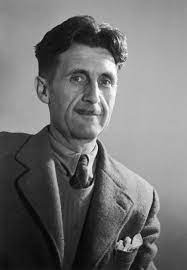
Eric Arthur Blair, known by his pename George Orwell, was an English Novelist, journalist and a critic. He opposed totalitarianism and supported democratic socialism. He is best known for the Allegorical novella ‘Animal farm” and the dystopian novel “Nineteen Eighty Four”. He wrote an essay about ‘A nice cup of tea’ and it was published in London Evening Standards in 1946. It is about the discussion of the art of making tea. He states ten rules to be followed while making tea. Let me tell you about his essay.

Eric Arthur Blair (George Orwell)

The author said that there are no cookery books that has the preparation of tea as a recepie. Countries like Eire, NewZealand and Australia which has tea as a part of civilization. He says that Chinese tea has virtues but there is no much stimulation in it. So the author prefers Indian or Ceylonese tea.

  • The first rule is that one should prefer Indian or Ceylonese tea. One does not feel wiser or more optimistic after drinking it. ‘A nice cup of tea’ literally means Indian tea.
  • Second rule is that tea should be made in small quantities in a tea pot. The teapot should be made of China or earthenware. Silver and birtannia ware tea pots produce inferior tea and enamel parts are worse. In the army, the tea is made in a big cauldron, tastes of grease and whitewash.
  • Thirdly, the pot should be warmed beforehand rather than placing it with water in it.
  • Fourthly, the tea should be strong. He states that one strong cup of tea is better than twenty weak ones. All tea lovers not only love a strong tea but like it a little longer with each year that passes.
  • Fifthly, the tea should be put straight into the pot. Don’t use strainers or muslin bags to imprison the tea. One can swallow tea-leaves in considerable quantities without ill effect and if the tea is not loose in the pot it never infuses properly.
  • Sixthly, one should take teapot to the kettle and no other way about. The water should be boiling at the time, one should keep it on the flame while pouring it.
  • Seventhly, after making the tea, one should stir it, or better give it a good shake allowing the leaves to settle.
  • Eighthly, one should drink it out in a cylindrical type of cup rather than a shallow type of cup. The shallow cup will have the tea half cold before one starts, drinking it.
  • Ninthly, one should pour the cream off the milk before using it for tea. Milk with cream gives a sickly taste.
  • Tenthly, one should pour tea into the cup first and then add milk. By pouring the tea first, one can regulate the amount of milk to be added to the tea. He also says that one should drink tea without adding sugar. Adding sugar, destroys the taste of the tea. He also asks the question to the tea lovers, How can you call yourself a tea lover if you destroy the flavour of your tea by adding sugar into it? He also says that adding sugar is similar to drinking a hot water.

The points said by him are quite controversiable. But try to drink a cup of tea without sugar for a fortnight, and you will never ruin your tea by adding sugar to it. Think about yourself guys. This essay is quite interesting. I like this essay and how about you guys?

Read more;

Informal Communication-Improve English Conversations

When we communicate with our family, friends, relatives or even strangers in a casual set up, it is called Informal communication. This includes exchange of casual words- views or opinions, ideas or other interactions where the intention is only to know the person or acquire some knowledge. It is not meant for formal expression or behaviour.

It is important that we communicate effectively even if we are in an informal set up. It gives an impact and creates an impression in the mind of the other person about you. Good communication helps you enhance your growth as an individual. There is some framework you would work upon in order to be a good communicator.

It is important that your message reaches the intended person the way you mean it. There are some behavioural patterns to be followed when you interact with somebody regardless of the person’s age or gender. The most important thing to keep in mind is to respect them.

  • Never use rude words with anyone. Always be calm and speak softly. Nobody likes a person who is aggressive and harsh in his/her behaviour.

Whenever you are talking with somebody, give that person the time to complete his point. Listen carefully to what the other person is trying to convey through his words to you.

  • Never jump in between a conversation or disturb/stop somebody in-between. Let them complete and then you speak.

Keep your lines precise and avoid useless information or words which may lengthen the message and the real meaning gets lost.

  • Avoid jargon so as to make the message understandable. Also, speak only what is necessary. Speaking out unnecessary stuff may get your real message lost in the conversation.

Your body language should go with what you are conveying to the speaker/listener. The other person should not feel you are trying to dominate him/her.

  • Don’t be too loud with your body language when you are speaking and express your alertness through your body language while listening to somebody. It will assure the person of interaction from your side.
Photo by Matheus Bertelli on Pexels.com

The way you address the other person is important in deciding the response you will get from him/her. It is also the case of a formal discussion or conversation.

It is all upto you that how well you express yourself in front of others, the similar response you will get! Also, you should take into consideration whom are you talking with. This simply focus on the personality or behaviour of the person you are trying to communicate.

It is often a problem that people don’t know how to start a conversation with a stranger or a high official person. Making new friends is included in this. Since English as a language is preferred all across , the basics you can start with is to address the person saying hello, with a smile or in the formal manner(good morning) as the case may be. Initiate with what you want to say, with clarity of thought. Don’t mix up your words and make sure the person is listening to you and is interested in continuing the talk. There needs to be some common topics to make up a friend otherwise you won’t get expected response.

The way you address should be in accordance with the personality of the person; whether he/she accept frank behaviour or likes to talk about information, entertainment, etc. All such aspects help ending up with an engaging conversation. There might be people who don’t like talking much. In that situation, you avoid it and let them have their space.

How to Increase Productivity? (For Work)

“Focus on being productive instead of busy.”

– Tim Ferris

Introduction

The definition of productivity is the effectiveness of productive effort or the rate at which a person, company, or country does useful work. In these times every single person has a lot of work on their plate, be it work from the office, school, college, or work related to the house, some extra project you might be working on, or be it just your mental health. To finish the numerous tasks, we need to be productive to finish these effectively and still be left with some time to relax and hang back from the rush of daily life. So we can say that productivity is about getting the required result in less time and effort. Increased productivity is directly related to improved time management. This article aims to list ways to increase productivity for work.

Plan Ahead

The practice of approaching work at random is one of the hindrances to productivity. When you attack work at random, you are not sure about how much more is left and by when you will be able to get to it. To deal with this, you must plan ahead, it can be daily, weekly or monthly planning. It puts you in control of how much work you have and till when you can complete it. Planning offers you clarity.

Set Realistic Goals

You should set goals in such a manner that you have set milestones that help you in knowing your destination. The best way to set goals is to follow SMART.
S – specific, significant, stretching
M – measurable, meaningful, motivational
A – agreed upon, attainable, achievable, acceptable, action-oriented
R – realistic, relevant, reasonable, rewarding, results-oriented
T – time-based, timely, tangible, trackable.

Track and Limit

If you implement a tracking system through which you monitor how much time you take to finish one task, you will be able to understand if you are using your time effectively or not, and if not, then where are you wasting it. Every person has a different productive golden hour. By tracking your day, you will be able to understand when your golden hour is and you can schedule your work accordingly.

Be Proactive, Not Reactive

Being proactive helps you in avoiding the time you waste around and then rush to react in time. When you are reactive, you let others call the shot and give you the work to be done but when you are proactive, you are a few steps ahead of others and you get to call the shots.

Minimize Distractions

Most of our time gets wasted on the number of distractions that put us off our work path. Everyone has become addicted to being online and that is one of the major distractions. It is important to work smarter and set boundaries such as setting work hours during which time you will not be available to others, silencing notifications, setting time slots to check social media and emails, and not doing it during the work hour.

Get Enough Sleep

It is a known fact that not getting enough sleep has negative effects on our performance in all aspects of life but work gets affected the most. This happens because when you are working, you need logical reasoning which is done by your prefrontal cortex which gets impacted by the lack of sleep. Therefore, it is important to get at least 7-9 hours of sleep a night.

Conclusion

Once you understand the importance of productivity, you will learn that it will become a huge part of your whole life, not only when it comes to your work life but also your personal life, as when you are on top of all your work is only when you can give enough time to your personal life as well.

References

THE AGRARIAN REVOLUTION

The term Agrarian Revolution implies the great changes that took place in the agricultural methods of England during the second half of the 17th century and the first half of the eighteenth century.

Causes of the Revolution:

  • The old open field system was wasteful of land because, according to this arrangement, every year one of the three fields was to be out of cultivation.
  • Secondly, come the old system of distribution of land was wasteful of time.
  • Thirdly, there was the necessity of confirming the customs of the village and thus made experiments in agriculture method possible.

In the 18th century, the population was increasing and so more food was needed. Owing to the scarcity of food materials there was a rise in prices. The old-fashioned farmers thought that they could get more money if they produce more. This idea was an incentive for them to improve their agricultural methods.

Reallocation of Lands:

Reallocation of lands in consolidated blocks which could be enclosed, several Enclosure Acts were passed in the reign of George II and George III. There were many cases of the poor peasants being not satisfied with the reallocation. Such people sold their small holdings to wealthy businessmen of the city who were eager to possess lands of their own. The final result of this tendency was that the class of rural inhabitants known as yeomen disappeared.

Advantages of enclosure system:

One of the advantages of the enclosure system was that it gave scope for many enterprising people to make experiments. Jethro Tull of Berkshire was the inventor of the drill for sowing seeds. He also emphasized the necessity of capital selection of seeds if good crops were to be obtained.

Another pioneer is Charles Townshend of Norfolk. He adopted Tull’s principles and paid much attention to the question of rotation of crops. He introduced the four-course rotation of turnips, barley, clover, and ryegrass, and wheat. These measures prevented an unprotective fallow. His innovation made Norfolk a leading agricultural country. With the result that in the thirty years the rental of the one farm rose from 180 pounds to 800 pounds a year.

The work of Townshend was continued by Thomas Cook. He followed the precepts of Tull and in addition fed the soil with manures including bones. In nine years he was able to grow excellent wheat crops. He also introduced new artificial foods such as oil cake under led the way in fattening cattle for the London markets. He held a yearly meeting for farmers at his house and these meetings farming topics were discussed and much advice was given and received. It is estimated that the annual rental of his estate Rose from 2,200 pounds in 1776 to 20,000 pounds in 1816.

Cattle farming:

While Norfolk landlords were thus making great improvements in arable farming, a Leicestershire farmer, Kama Robert Bakewell was revolutionizing English methods of stock breathing. Up to this time sheep had been valued chiefly for their wool, the production of mutton had been only secondary. Bakewell was the first to turn his attention to the production of meat as the main consideration of stock breeding. By patient choice and experiment, he succeeded in producing a new breed of sheep with fattened quickly and weighed heavy. His success attracted the attention of many. Farmers from far and wide visited his farm at Dishley and became converts to his new methods. Others who did pioneering work in this field were George Culley, Charles Colling, and John Salman.

Board of agriculture:

Royal patronage was also given to the moment of revolutionizing the agriculture methods. George III, affectionately known to his subjects as a farmer George, established a model farm at Windsor. The success of the moment was due to the writings of agriculture writers, the most famous was Arthur Young. When a board of agriculture was established in 1793. Young was made its secretary.

Conclusion:

With the advent of the enclosure system, the English banking system also grows, for even the wealthy landlords did not have money to do the fencing and other improvements. So they have to borrow money from the banks. Through all those methods was very desirable from the point of view of production, it had a harmful effect on the partition. The system deprived him of the privilege of grazing his cattle and cutting fuel from the commons.

What is a Novel

Picaresque Novel