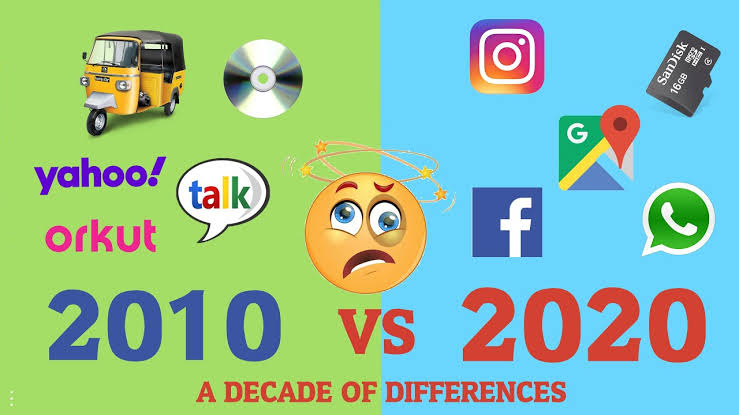
It has been ages since I last smiled at an unknown stranger when our eyes met. Social media, news, movies, has made us so uptight and alert that our natural reflex has shifted from smiling to suspecting them.
We no longer enjoy food as we did
Snapchat and Instagram have made people forget the value of here and now. Instead of being happily in the present moment, we are often more focused on portraying a happy life which may be far from the reality. The satisfaction of the first sip of the morning tea or the first bite of the domino’s pizza doesn’t feel the same as it did a decade ago. The first thought that we have when we see a delicious food now is to click a perfect picture to show other’s how wonderful our life is.
We no longer see Bollywood as we did before
A decade back movie stars were famous for their work and that was enough in itself. Acting was seen as a profession and a job. However, the current Bollywood seems more like a political party than a show business. It is not the work but the lives of the celebrities that we are most interested in. Political leaders are supposed to have opinions and that is what is to be taken seriously by the people. However, now it is the opinions of our favourite celebrities that we are more into.
We no longer have real meaningful bond
The friendship and relationship trends have changed since the last decade. There were more meaningful bonds between link minded people who were true to one another (even behind their back). However, now the long evening chai meets have turned to Starbucks coffee meets. Where though we are physically together, but mentally and emotionally far into two different worlds in our mobile phones.
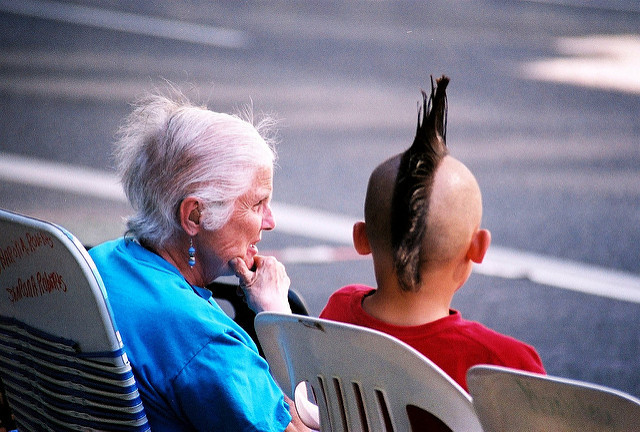
The gap between the old and the young people is called generation gap. Old people feel that lack of respect for the elders and disrespect to the existing system of the society will bring disaster for young generation. Young boys and girls, on the other hand, feel that ‘the old are fools’. The gap between the old and the new generations is widening owing to several reasons.
First, all young people feel that the present education has no relation with the realities of life. Secondly, the present life has become busy and fast. Thirdly, the young people are generally idealistic. When they find corruption in every sphere of life, they feel disgusted. Fourthly, to express their unhappiness with the existing state of affairs, young people take to violence or behave oddly.
In order to bridge the generation gap, elders should be sympathetic towards the young. They should realise the emotion, ambition and problems of the young. The young should realise that they have no experience in life.
So, they should value the advice of the elders. The general gap between the two groups of people is so wide in the western countries that they live separately. In India the traditional joint family system has slowed the growth of this gap. But now such a family also is breaking down.
It is said , Little of man’s behaviour is instinctive , rather his behaviour is ‘ learnt ‘.
At birth the human child possesses the potentialities of becoming human .
The human child comes into the world as a biological organism and becomes a social being by learning social ways of acting .
The child becomes a man or a person
( Purush) through various experiences .
Socialist referred it as “socialised person “
Every society has its own way of making a biological organism into a socialised being .
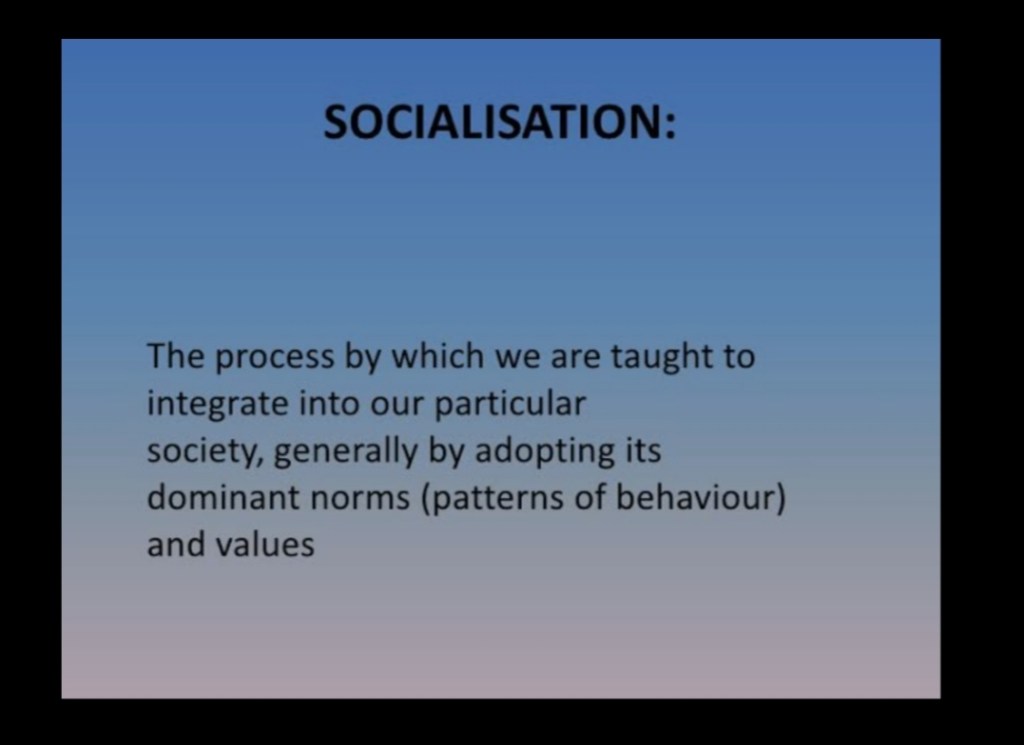
This social training is called “Socialisation “
Hence , the process of moulding and shaping the personality of a human infant is called “Socialisation “.
Sociologists have often referred to socialisation as “transmission of culture “.
A man is not only social but also a cultural being .
Cultural learning is the process by which the individual learns the fundamental culture pattern of the society in which he lives or will live . Culture includes not only its living members but also members of past generations and those yet unborn . Culture defines social conditions for us like what we eat , drink , wear , God we worship , our beliefs etc.
Still cultural learning does not completely define socialisation .
Socialisation is an aspect of all activities within human societies and are socialised in the course of the activities.
Socialisation is the process of adjustment of an individual to conditions of his social environment . There are some relevant internal forces that direct or limit socialisation like instinct , urges , capabilities , education , reflexes , etc .In the process of socialisation an individual learns culturally approved habits , ideas ,. beliefs . He is taught his rights and duties ,his position and responsibilities. The culture rules are so completely internalised that they become part of individual personality .
Definitions :-
Lundberg says that socialisation consists of the ” complex processes of interaction through which the individual learns the habits , beliefs ,skills and standards of judgement that are necessary for his effective participation in social groups and communities . “
Peter Worsley explains socialisation as the process of “transmitted culture, the process whereby men learn the rules and practice of social groups “.
Socialisation is the process of working together ,of developing group responsibility or being guided by the welfare needs of others ”
– Bogardus
W.F. Ogburn defines Socialisation as “, the process by which the individual learns to conform to the norms of the group “.
Hence , Socialisation is a process of transforming the human animal into human being ,of converting the biological being into social being .
Characteristics of Socialisation :-
• It is a continuous process .
• Socialisation is also referred to as ” transmission of culture “.
• Socialisation is social learning .
• Socialisation can be informally or formally conducted
• Socialisation means internalisation of norms .
• The process of Socialisation emerges from the development of “self “.
• Timing is an important concept of Socialisation .
Types of Socialisation
Ian Robertson in his book “Sociology “( 1977) described four types of Socialisation . According to him , an individual undergoes four types of socialisation in his lifetime .
1:
Primary Socialisation :-
Many Sociologists like Sigmund Freud, George Herbert Mead, Charles Cooley, Jean Piaget and Talcott Parsons , have contributed to the theory of primary socialization.
Primary Socialisation is the most essential and fundamental type of socialisation. Period early in a person’s life during which they initially learn and build themselves through experiences and interactions around them is the period of primary socialisation.
It takes place in the early years of life of a newborn individual .It includes teaching of language and cognitive skills , internalisation of culture and norms , developing a perspective , emotional ties etc.
Primary socialization starts with the family teaching children how to bond, create relationships, and understand important concepts including love, trust, and togetherness.
“Internalisation of norms ” is the most important aspect of primary socialisation . It is a process where the norms of the society become a part of an individual .
Several agents reinforce an individual’s learning of norms , the right and wrong behaviour .
2:
Secondary Socialisation:
Secondary socialisation generally refers to the social training received by the child in institutional or formal settings and continues throughout the rest of his life.The process can be seen at work outside the immediate family, in the ‘peer group’. The growing child learns very important lessons in social conduct from his peers. He also learns lessons in school. Hence, socialisation continues beyond and outside the family environment.
3:
Anticipatory Socialisation :-
According to Merton , the process whereby men socialise themselves into the culture of groups with the anticipation of joining that group .
Men learn not only the culture of the group which they belong to but also about the group they don’t. An individual may socialise into groups of which they are already members or into groups to which they wish to become attached.
For instance , a person starts doing his physical exercises and learns to become tough mentally and physically if he intends to join the military.
Socialisation is not a process that takes place merely in early childhood but also at different times and places throughout life .
4:
Developmental Socialisation and Resocialisation :-
According to Ian Robertson ,
“It builds on already acquired skills and knowledge as the adult progresses through new situations such as marriage or new jobs . These require new expectations , obligations and roles . New learning is added to and blended with old in a relatively smooth and continuous process of development “.
Developmental Socialisation is based on learning on the achievements of primary socialisation. A person learns more developed beliefs, values and norms through which he learns how to act in his new role.
Re- Socialisation fundamentally means ” stripping away of the learned patterns and substitution you f new ones “
Re- Socialisation takes place mostly when a social role is radically changed during periods of rapid mobility .
Agents of Socialisation
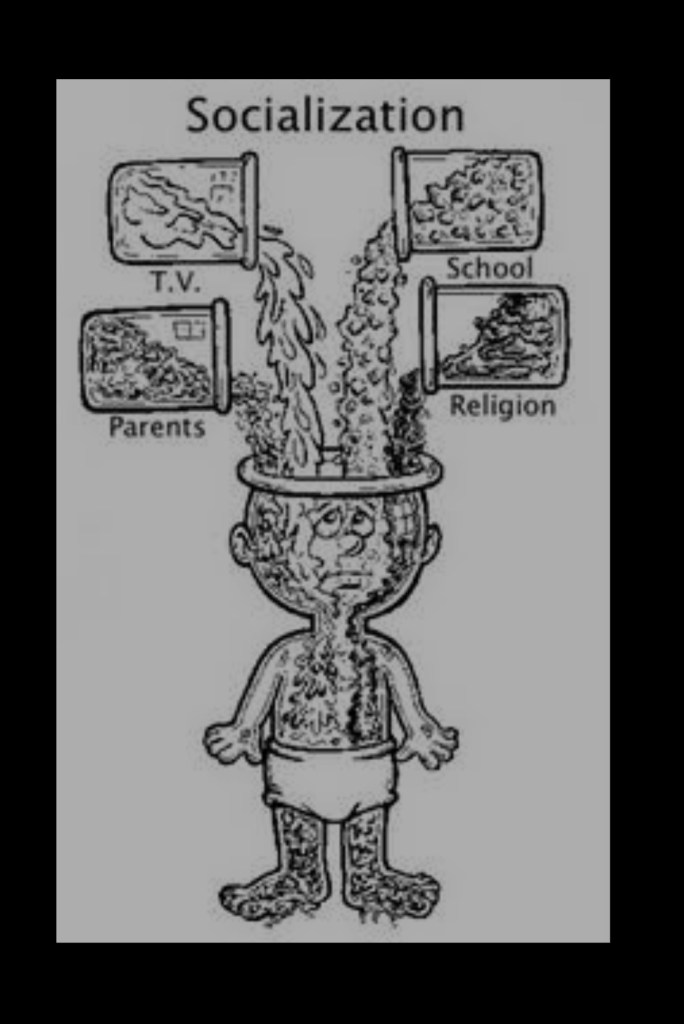
Socialisation includes moulding and shaping the personality of an individual . The continuous process of socialisation includes some agents who help an individual human being to become a social being .
• Family and Parents :-
The first stage of socialisation starts from the foetal form , where the mother plays an important role . The process of socialisation begins with parental , particularly maternal influence on an individual.
Parents are the first to introduce the child to the society system and culture of his group.
The family acts as the fundamental agent in internalisation of roles for an individual.
• Peers :-
As the child grows he starts associating with other individuals outside his family . He learns from these individuals in school or in the playground or on the street .
The peers group forms perspective on several important topics .
In modern society the peer group has surpassed the importance of the parental group. An individual has more communication understanding with his peers than his own family.
The child maintains an egalitarian relationship with those who are of the same age or gender .
It’s with the peers group that an individual learn more information regarding culture , manners , fashion , styles , gender etc.
• Teachers :-
School is the most influencing place where an individual learns how to behave and form an independent personality . Teachers are major agents of socialisation. School is a formal conduct in the process of socialisation . Teachers help an individual to be responsible and mature .
• Literature and Mass of Communication :-
Entertainment media , mass.media , literature , plays an important Agent I’m socialising . The different opinions or perspectives on several important topics like political , economical , social , etc are highly influenced by these agents.
The attitudes and ideologies ,the words written by someone impact a person in guiding and forming a perspective in a new light .
Stages of Socialisation
Socialisation is a continuous process of learning. AC children are taught about social life in various stages . The form of socialisation begins with ‘ simplicity to complexity’ as the social world gets wider and wider and the child is confronted with several things to learn and adjust .
At each stage of socialisation the child internalises a ‘ system ‘ of roles .
Socialisation consists of four stages from infancy to adulthood .
The first stage –
The Oral Stage :- Oral Stage begins with the birth of the child . It lasts till the child completes his one year .In the foetal form the child feels the comfort of his mother’s womb .
In this stage the child establishes his oral dependency by whimpering or bawling for everything .
Sigmund Freud ,an Australian Psychiatrist ,called this stage as primary identification as a child tries to internalise his and his mother’s role .
2:
The Second stage
The Anal Stage :- The next stage in socialisation is the Anal Stage which begins just after the completion of the oral stage . In this stage the child is taught to do some fundamental tasks such as eating , Cleaning , toileting , etc .
In the first stage the oral dependency starts to fade and the child learns that he cannot depend completely on his mother .
In this stage the child’s mother is the socialising agent .The child in this stage separates his and his mother’s role and understands the social system to a larger extent than in the first stage .
3:
The Third stage
The Oedipal Stage :-
The thirst stage starts from the fourth year of the child and lasts till puberty i.e 12-13 years .
The third stage the child establishes his role on the basis of his sex .
The boys and girls learn about their roles in the society and identify themselves as part of the social system and starts internalising according to their sex , the role of others and their identities on the basis of their gender .
4
The Fourth Stage :-
The Stage of Adolescence :- The fourth is the stage where the child becomes free from their parental control and establishes independence . Parents play an important role in a child’s life at all stages . Despite the freedom from parental control ,they help the child to make some very important decisions in his life . They encourage and help them to take new roles during this period of Adolescence . They expect the child to learn new responsibilities and new roles that are assigned to them .
In modern society ,the parents intend to give more freedom than traditional societies where parents take mostly all the important life decisions of the child .
This stage is the most important stage in socialisation as the child’s behaviour and personality depends on the kind of learning he / she learns and the decision he/ she takes that affects the society . During adolescence the child goes through several physiology and psychological changes ,which affects mentally and emotionally and hence establishes more new experiences than any other stages .
Socialisation makes an individual a social being who transmits cultural ideas , beliefs , languages , skills etc from generation to generation, learns rules and practices of social groups and contributes to forming a society .



 Eduindex
You must be logged in to post a comment.