Top 10 Scholars of the World

Daily writing prompt
If you could be someone else for a day, who would you be, and why?

here’s a list of ten influential scholars from various fields, although “top” is subjective and may vary depending on criteria like impact, citations, awards, and contributions to their respective fields:

Photo by Davis Su00e1nchez on Pexels.com
  1. Noam Chomsky (Linguistics, Philosophy, Cognitive Science): Known for his groundbreaking work in linguistics, Chomsky is also a prominent figure in political activism and philosophy. His theories on generative grammar have revolutionized the study of language.
  2. Stephen Hawking (Theoretical Physics, Cosmology): Renowned for his work on black holes, Hawking made significant contributions to our understanding of the universe despite battling amyotrophic lateral sclerosis (ALS). His book “A Brief History of Time” brought complex scientific concepts to a wider audience.
  3. Angela Davis (Social Activism, Critical Theory): A scholar-activist, Davis is known for her work in feminism, Marxism, and prison abolitionism. Her writings on race, class, and gender have had a profound impact on social justice movements globally.
  4. Michio Kaku (Theoretical Physics, Futurism): Kaku is a leading theoretical physicist known for his work on string theory and his popular science books exploring the future of technology and humanity. He’s a frequent commentator on science and technology in the media.
  5. Judith Butler (Gender Studies, Philosophy): Butler’s contributions to gender theory and queer studies have reshaped how we understand identity and performativity. Her book “Gender Trouble” is considered a seminal work in feminist philosophy.
  6. Edward Said (Literary Theory, Postcolonialism): Said’s work on Orientalism and colonial discourse has had a profound impact on literary studies, cultural studies, and postcolonial theory. His critiques of Western representations of the Middle East continue to influence academic discourse.
  7. Cornel West (Philosophy, African American Studies): A public intellectual and political activist, West is known for his work on race, class, and democracy. His blend of philosophy, theology, and social criticism has made him a prominent figure in contemporary American thought.
  8. Mary Beard (Classics, Ancient History): A distinguished classicist, Beard’s work on ancient Rome and Greece has brought new insights into the study of antiquity. Her engaging writing style and public engagement have made her a leading figure in popularizing the classics.
  9. Amartya Sen (Economics, Social Choice Theory): Sen’s contributions to welfare economics and social choice theory have earned him the Nobel Prize in Economics. His work on poverty, development, and capabilities has had a significant impact on global policy.
  10. bell hooks (Feminist Theory, Cultural Criticism): An influential feminist theorist and cultural critic, hooks’ work on intersectionality, love, and the politics of representation has been pivotal in feminist thought. Her accessible writing style has made her ideas accessible to a wide audience.

This list represents just a fraction of the many scholars making significant contributions to their respective fields.
The Bhoodan movement-  A Bloodless Revolution

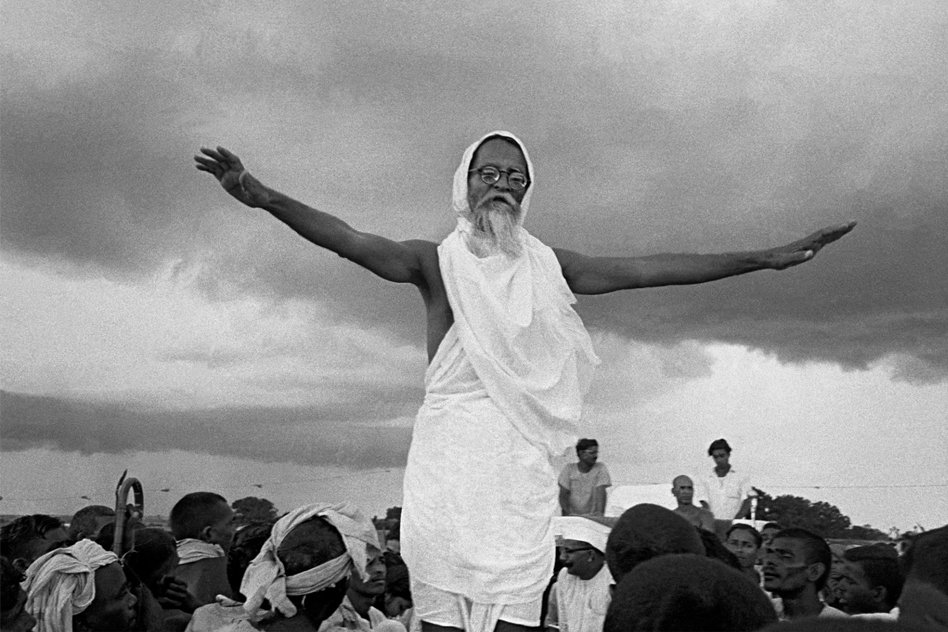
Vinoba Bhave was born in Gagode village, Raigad, Maharashtra. A keen follower of Mahatma Gandhi, Vinoba Bhave took part in the freedom struggle and started the Bhoodan movement in 1951. He was an avid social reformer throughout his life. Vinoba Bhave, a humble spiritual leader, the first non-violent resister to the Britishers and reformer of Independent India started what we know as the Bhoodan movement – a landmark in Indian history where its mission was to persuade wealthy landowners to willingly give a small share of their land to the landless people .About four years later after india gained independence, Vinoba Bhave carried out a unique movement of his own. He travelled across all of India to convince the wealthy land-owners or land-lords to share a small area of their land with their poor and downtrodden neighbours with the condition that they can’t sell the land. Over a span of 20 years, a total of 4 million acres of land was shared across the country through this movement. Bhoodan literally means a donation of land. As implied by the name, in this movement, landlords voluntarily give up land to be distributed to landless labourers, who would then cultivate the land..

How it started

Bhoodan or Land Gift movement began with Acharya Vinoba Bhave in 1951 in Telangana. An inspirational icon, Vinoba Bhave’s work & dedication impacted people all across the country. He vowed to life-long celibacy as well as selfless service for others when he was as young as 10 years old. As it is said about him, “Perhaps none of Gandhi’s followers have created so many worshippers of Truth & Non-violence, so many genuine workers as has Vinoba Bhave.” It all began on April 18th 1951, which we now know as the historic day this movement began. Vinoba Bhave stepped into the Nalgonda district, which was the epicenter of communist activity in the region. He stayed at Pochampalli, a village with about 700 families who have him a hearty welcome. He visited the ‘untouchables’ or Harijan colony, where they asked for 80 acres of land for 40 families. As documented in history, while the discussion was going on, Ram Chandra Reddy who was the local landlord, got up and exclaimed, “I will give you 100 acres for these people.” This made Vinoba come up with an idea, that this may have the solution for possibly resolving land issues across the country. Soon, this movement led to become the Gramdan or village-gift movement and went through many levels of allied programmes and initiatives. In October 1951 rose a demand for fifty million acres of land for the landless in the whole of India by 1957, thus turning a small goal into a mass-scale movement. The success lasted till 1957, post which it slowly faded.

Outcomes

It gained a lot of success, especially in Northern India in UP and Bihar. Over 4.5million acres of land in India was given as a donation by 1957. The core belief of land being a gift of earth which belonged to everyone made its way into minds of everyone. With time, many problems seeped into the movement later such as slow progress, bribery, donating bogus land, greed to get more land or incorrect implementation in some regions. The movement soon failed due to increasing misuse of a voluntary movement for self-serving purposes by a few.

To conclude taking an overall view it cannot be gainsaid that the Bhoodan – Gramdan Movement, despite all its real & apparent limitations, it would ever be deemed as a glorious attempt for a peaceful & non-violent solution of the basic land problem of Indian society & through it for a non-violent reconstruction of the Sarvodaya socio-economic-politico order of universal relevance & significance

https://thelogicalindian.com/story-feed/get-inspired/vinoba-bhaves-bhoodan-movement/

Marxism

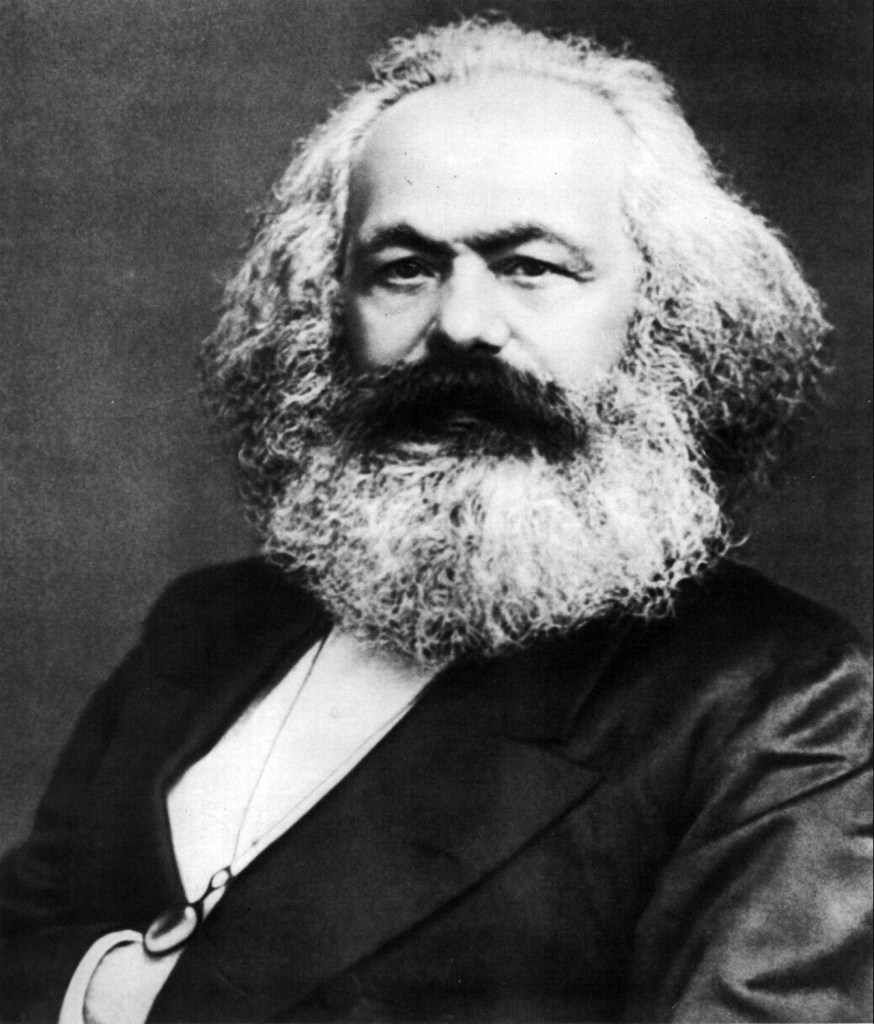
Marxism, also referred to as communism, is a political ideology,philosophy and a body of doctrine which was developed by Karl Marx and Freidrich Engels. Major contributor to the philosophy of Marxism, Karl Marx, was born in Trier, Rhine province, Prussia in 1818. He was born to a Jewish family, which later converted to Christianity. Marx was awarded a Doctorate of Philosophy for his essay on materialism of the Epicurus, a famous Greek Philosopher. He joined as an Assistant Editor at the Rhenish Times and was promoted to the position of Chief Editor. He left this job due to differences between him and the owner. In 1843, he moved to France. He became the editor of the Franco-German Yearbook and continued until it went out of business. Here, he became acquainted to French and German extremists like Proudhon, Mazzini, and Engels. The Communist Manifesto was jointly released by Karl Marx and Friedrich Engels in 1848. Marx published the first volume of Das Capital in 1867 and the remaining volumes were published posthumously by his friend Friedrich Engels. He spent his final years in exile and poverty in London

Marxism uses historical materialism to explain class relations and social conflict. The philosophy of Marxism was greatly influenced by Friedrich Engels who was an idealist. This led to the the concept of dialectical materialism. According to dialectical materialism, the prominent ideas that originate in the human mind at a particular point in time are called the thesis. Certain ideas, then, emerge as a response to these prominent ideas which are called as the anti-thesis. Ultimately, there is a conflict between thesis and anti-thesis, which leads to the formation of the synthesis. For example, the synthesis of the thesis of importance of capital and anti-thesis of importance of labour is class war. 

According to materialistic interpretation of History, throughout history a man pursues his material needs, which in turn creates history, and only after fulfilling his material needs he shifts his focus to higher goals. Using this interpretation, Marx classifies history into four stages based on modes of production. The first one is the Primitive Communist Stage. In this stage, the factors of production were meagre and were shared among the people of the community. The next stage is the ancient stage. The class structures had developed during this period. Slaves were owned by certain masters and these people controlled the factors of production. Being the master, their needs were fulfilled and possessed a surplus and denied benefits to workers. In a similar manner, the feudal lords exploited the landless serfs in the feudal stage and capitalist exploit the workers in the industrial stage.

Another important principle of Marxism is the theory of surplus value. According to this theory, the value of a commodity is equated to the wages paid to the labourer. Any value above the commodity value is regarded as surplus value, which is both needless and exploitative. According to this philosophy, the surplus value results in the exploitation of the labourer as the producer extracts illegitimate profits. The next principle is the theory of class war. According to Marx, two classes of people exist in all stages of history – the bourgeoise and the proletariat. The bourgeoise refers to people who are in control of the factors of production and pay for the labour of other people. The proletariat refers to people who are workers and do not own any or control any factors of production. History is nothing but a clash between these two classes where the former has always exploited the latter – master-slave, landlord-serf, capitalist-worker. The interests of these two classes are, au fond, in conflict with each other. This results in a continuous conflict called class war.

By exploiting the labour of the proletariat, the rich manage to build vast amounts of wealth. The concentration of wealth in their hands increases and the poor become poorer. This enlarges the gulf between the rich and the poor. Only a few people end up controlling most of the resources. This is called concentration of capital. The continuous exploitation of the proletariat by the bourgeoise forces them to rebel against the controllers of production. Therefore, revolution by the proletariat against the bourgeoise becomes inevitable. 

According to Marx, after the revolution by the proletariat, the capitalists will be removed from the position of power and the dictatorship of the proletariat will be established. The proletariats after the revolution will wipe out the capitalists. This is the dictatorship of the proletariat. This will lead to the formation of a classless society where there is no conflict between people. In a classless society, there is no more any need for the state to maintain order and harmony amongst people. This is the end goal of communism. According to Karl Marx, religion is the opium of the people. It makes people sway to sentiments and is used as a tool of exploitation by the capitalists. However, Karl Marx did not advocate the abolition of religion. Socialism, which is considered peaceful and evolutionary, was a prelude to Marxism, which is violent and revolutionary. Marxism took hold of Russia during the World War 11. After the fall of the Soviet Union, the popularity and influence of Marxism has waned.

|Ways of acquiring Mate|

How does one gets married? Normally people get married by publishing matrimonial ads in newspapers, online sites, or with the help of relatives who acts as mediators. This was about the modern industrial society, but the tribal society is unique, so their ways of getting married are also unique. Tribes have nine different ways of acquiring a mate.

In this article, I will show the different ways of acquiring a mate prevalent in tribal society.

Marriage by capture– When a man snatches away a woman from her village and marries her, it is called marriage by capture. This form of marriage is most popular among the Naga who invade villages and capture girls. 

Marriage by exchange- Under this marriage, two households exchange women with each other and thus avoid paying the bride price. Bride price is the payment made by the groom’s side to the bride’s side to marry her. This form of marriage is found all over India and is also found among the non-tribals.

Marriage by purchase- In this form of marriage bride price is the central theme. Among the Munda, Ho, Santhal it is the most prevalent. The high bride price has the worst consequences as is seen in the case of the Ho tribe of Chotanagpur where to escape the bride price many youth resorts to marriage by capture or remain unmarried.

Marriage by elopement- It is a peculiar feature of tribal India. Anthropologists believe this kind of marriage has emerged as a result of boys and girls shedding their traditional submissiveness. If the parents’ consent is not forthcoming, they resort to elopement and get married.

Marriage by service- In this form of marriage the groom serves in the house of the bride as suitor-servant and marries her after a lapse of few years. they have to work in the bride’s household for three years and have to fulfill all the responsibilities of a son. This form of marriage is a way to avoid payment of bride price completely or minimizing it through service rendered by the prospective groom at the bride’s residence. For example, marriage by service is found among the Gond Baiga, Birhor.

Marriage by intrusion- Here a girl desirous of marrying an unwilling young man thrust herself on the groom and his parents. She tries to serve her prospective in-laws and can be tortured in return. If she persists in her intentions and her endurance lasts for a considerable period she is finally accepted as a daughter-in-law.

Marriage by trial- In this form of marriage, the prospective groom has to prove his prowess before he can claim the desired girl. Thus he is required to undergo a trial.It is most popular among Bhils. During Holi festival, young men and women perform a folk dance known as ‘gol gadhedo’ around a pole or a tree to the top of which there is a coconut and jaggery tied. The girls make a ring around the tree and the boy to marry the girl has to break the ring and eat the coconut and jaggery after climbing the tree. In all this, he is beaten up, and inspite of all this if he succeeds he gets the right to demand any girl from the group as his wife.

Marriage by mutual consent- In this formalities of marriage are arranged by parties concerned through the process of mutual consent and consultation. This practice is result of tribal contacts with Hindus, Christians, etc.

Marriage by probation-  Under this the prospective husband and wife are expected to live together for some time for marriage in the bride’s house. If they like each other and willing to marry, elders arrange their marriage.Otherwise, the man has to pay compensation to the girl’s parents. This form of marriage can be called a primitive version of the modern practice of courtship. It is prevalent among Kuki tribes of Andhra Pradesh.

Hence this was the nine different ways of acquiring mate found among the tribals. These kind of marriages is in contrast to the marriages in mainstream society. These interesting ways of getting married make the tribes even more unique.

An Anthropological Critique of Development: The Growth of Ignorance

Development is almost a mainstream word is today’s day and age and because of that, there are also negative connotations attached to it. In this book, such aspects of development have been discussed at length and it is edited by Mark Hobart. The subject of western development models has come under intense scrutiny and criticisms in recent times. In fact, western anthropologists have questioned the application of scientific knowledge in processes of development. They argue that despite investing large sums of money, in reality the experience of countries in Africa, Asia and Latin America has been just the opposite. Problems of underdevelopment continue to plague the countries of these regions. Over the last few decades or so, a new paradigm of development has emerged. According to this, local knowledge and very often a ‘bottoms-up’ approach to problem solving are increasingly being advocated and implemented. At the outset, the editor of this collection of essays, Mark Hobart, says that the essays and participants’ voices question the claims of western science to providing solutions to underdevelopment and in understanding the importance of local knowledge and its application.

The 12 contributors to this compendium challenge the Utopian view of western knowledge as the only and successful way in achieving economic and social development. Using ethnographic case studies from Europe, Africa, Asia and Latin America, the contributors examine the ways in which local and indigenous knowledges are often more effective than western knowledge and systems in finding solutions to problems. The essays offer a practical approach of using theory and practice for development that economists, sociologists, and political scientists, among others, will find useful.

The book cogently describes the importance of development in the world today. Development means different things to several people. It is considered ‘important’ for developing nations to receive developmental aid. It is big business for banks and industries. Multilateral agencies help super powers by handing out the promise of loans to developing nations. For many advanced nations, through their development agencies, aid is an important arm of their economic diplomacy. Yet others are able to leverage their aid-giving capabilities to creating markets for their multinational corporations and help further their powerful vested interests in the process. The whole process of development is so one-sided and top-down that it has become the idiom of economics, technology and management. As noted earlier, what is ignored are the knowledges of the peoples being developed.

The essays clearly reveal that local and indigenous knowledge can form the basis of sustainable management and development. Use of technology and western scientific knowledge have to be employed prudently and judiciously. The essays show that local knowledge and a common-sense approach go a long way in problem solving. Local wisdom, sometimes going back in time and history, can still find a place in the modern world. In our own country, Gandhian ideals and thoughts, such as in rural development, self-sufficiency, at the local level and indigenous practices will help our rural areas prosper. These and a healthy mix of wisdom imbibed from our forefathers should help take India forward.

The Enlightenment Age

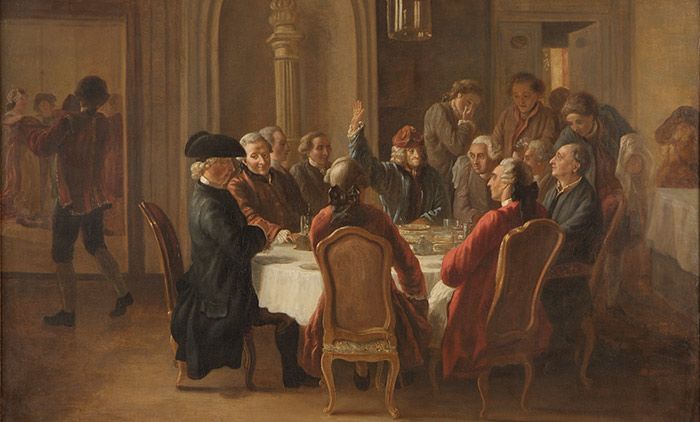
The Age of Enlightenment, also called the Age of Reason was an intellectual revolution which dominated Europe during the 17th and 18th century. Enlightenment was the emergence and creation of ideas which challenged the existing notions of the world. It questioned the existing set of ideas and conceptions about religion, society and politics. Before this period, Europe was essentially a land dominated by religion. This intellectual movement was carried out by the Enlightenment philosophers like Baron de Montesquieu, Voltaire, David Hume and Adam Ferguson.

According to some, the beginning of the Enlightenment was after the publication of René Descartes’ philosophy of ‘Cogito, ergo sum’ (“I think, therefore I Am”) in 1637, while others belief the publication of Isaac Newton’s ‘Principia Mathematica’ (1687) began the Scientific Revolution and the beginning of the Enlightenment.

The philosophers and intellectuals challenged the clergy men who supported the traditional view of society. These new ideas influenced cultural practices like writing, painting, printing, music, sculpture and architecture. There was also significant progress in technology and medical science.

The key ideas of the Enlightenment were Reason, Empiricism, Science, Universalism, Individualism, Secularism, Freedom and similar others. The thinkers stressed on the primacy of reason to establish rationalist ideas based on fact. The key to expanding human knowledge was shifted upon empirical facts and scientific experiments. This concept of scientific reason was considered universal and could be applied to all situations. Philosophers opposed all traditional religious authority and stressed on the importance of knowledge free from all religious biases. They pointed out the creation of a form of knowledge which was not influenced by any religious ideas or superstitions. A secular idea was born and this spread quickly throughout Europe. This led to the belief that all individuals are same and equal despite their religious and philosophical views.

It was the idea of Individualism which was the starting point of all scientific knowledge. Science was the supreme form of knowledge as scientific facts were based on observation and experiments. This led to an increase in objective ideas and decrease in belief of superstitions. The philosophers wrote in a very direct way and took clear positions. They wrote about important changes and transitions going on in the society. A traditional social order was replaced by a modern State. The formation of a political State took place and the powers shifted from the hands of the Church to the State. Society was no longer dependent on the traditional religious institutions. It was believed that the application of reason and scientific knowledge could remove the cruelty and injustice from social institutions. The works of Voltaire instilled a desire for new ideas and belief in progress among the Europeans.

Thinkers like Saint Simon greatly influenced the societal processes. According to him modern society was threatened by anarchy and disorder. To bring back social order a Science of Society would be necessary. He constructed a ‘Social Physiology’ to bring order and stability in the society. He believed that modern society would flourish if science and industry were used for the service of humans. A major social re-organisation would be necessary to bring about order and proceed towards a successful social change which would bring about societal progress. Although his ideas were neglected at first, as Europe became engulfed with disorder and war, these ideas started influencing people. Eventually Saint Simon became a key figure in the liberal political movements of Europe.