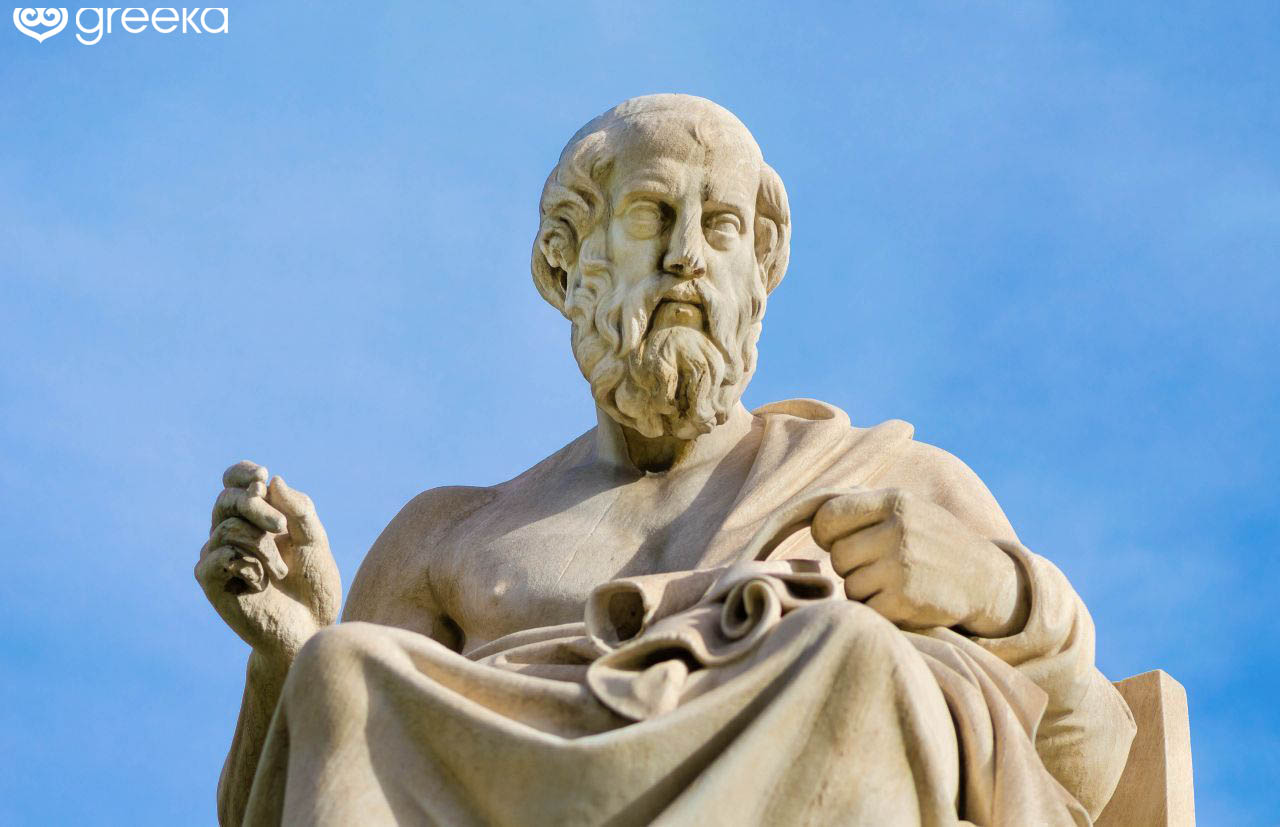
Father of western philosophy- Socrates

Socrates is one of the most prominent philosophical figures in the history of western philosophy. He laid the bricks for the very same idea on which philosophers like Plato and Aristotle built upon in the coming years.

Firstly let’s dissect the term “philosophy”, it comes from the Greek word philo- meaning love and sophia- meaning wisdom, i.e., the love for wisdom. 

Socrates’s lifestyle

Socrates followed his love for wisdom/knowledge for as long as he lived, he pursued knowledge in it’s absolute true sense, he thought that pursuing knowledge was the ultimate purpose of life and Socrates didn’t just think that he lived by these words, his actions reflected his ideas in the purest form. But he was born in 469 BC in Athens during a time when court trials were on the basis of the intensity of the arguments made and not facts, so no points for guessing that Socrates’s ideas were not received well by the Athenian population. 

And you can’t really blame them, that was a long long time ago, a time when women were thought to be inferior than men, it was a time when slavery was normal. On the other hand socrates did not do a very good job at dealing with people either, he was not the most hygienic person of that time, he did not shower for days and would go around the city asking random people questions and if that wasn’t enough he would tell them they were wrong. This is what Socrates loved to do, question and not because he knew more than an average Athenian citizen or that he wanted to massage his own ego; on the contrary Socrates admitted that he knew nothing. There is a very well known quote by Socrates that goes “One thing only I know, and that is that I know nothing”, that is why he went around Athens asking everybody questions hoping to one day find some answers, spoiler alert he didn’t. The Athenian population wasn’t very fond of him, and found him to be annoying.

Socrates- the martyr

And just to make it more clear, he annoyed the people so much that they united together and eventually he was put on trial. At this point you might think that Socrates would have given up on his unapologetic attitude but he didn’t. He stood by his principles even though he knew it would lead to his death. Socrates was a smart person, he could have very easily won that trial by making a strong argument but if he did then all his ideas and all his actions would have been in vain. In that trial, Socrates said that the people of Athens should be thanking him for asking them questions and showering upon them his own wisdom, this did not sit well with the jury and about many more dialogues later the jury declared Socrates guilty and was later sentenced to death by drinking poison.

Socrates died a martyr, a martyr for philosophy, he died defending his ideas. Socrates might have died but he made sure to immortalize his ideas.

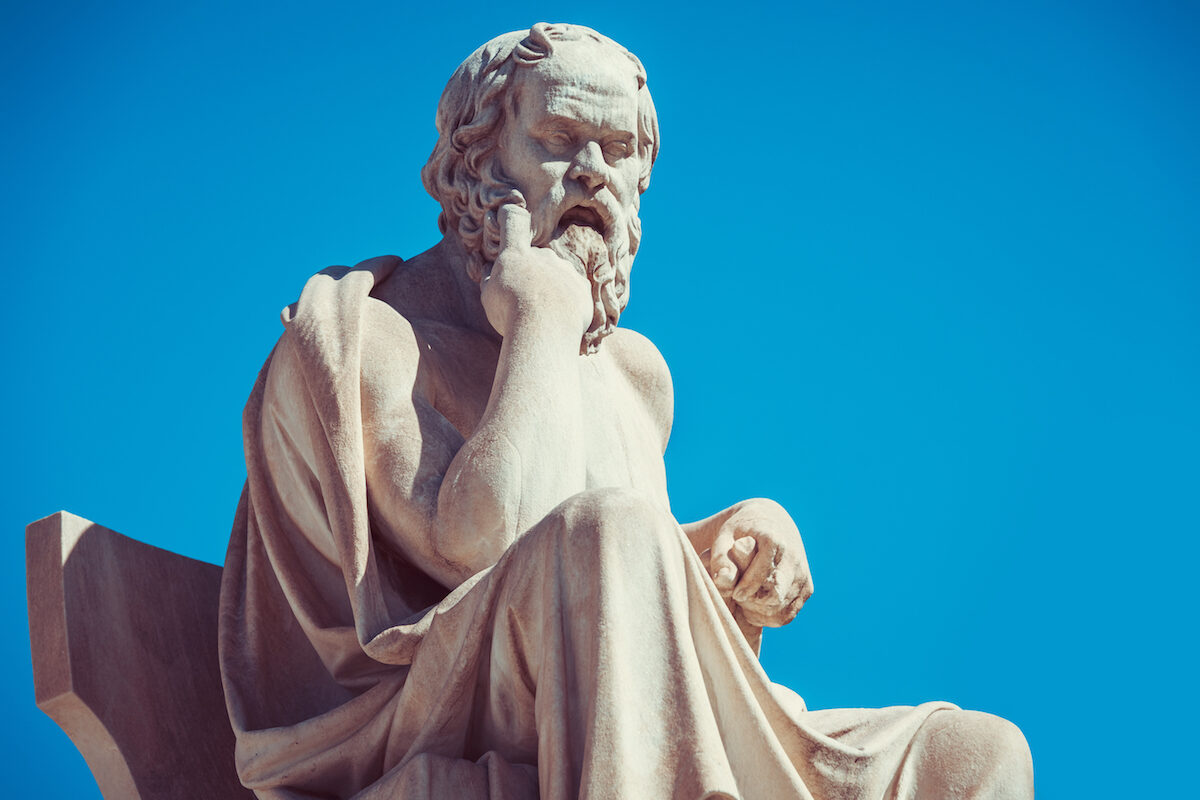
An unexamined life is not worth living

 by Shashikant Nishant Sharma 

                                                       (Photo: Motivation Mentalist)

Well said by
Socrates.

An
unexamined human life is deprived of the meaning and purpose of existence. The
ability to introspect removes the individualistic absurdity by invoking a
commitment to moral integrity and social solidarity.

 Just like a seed
needs soil, sunlight and water for its germination, human life needs
introspection and examination for its growth. A greater understanding of the
experiences gained in the life at any particular time, enriches one’s
engagement with self and the universe.

Mahatma Gandhi’s
examination of self through his autobiography, “My experiments with
truth”, highlights the significance of reflection on life. Mahatma Gandhi
was not only able to map his weaknesses and vulnerabilities through the
examination, but was also able to question his prejudices and understand his
strength as a human being.

 This very ability
to reflect on life adds more depth to the character of Arjun in Mahabharat than
most of the other characters. Instead of following the norms and fighting with
his clan, Arjun questions the meaninglessness of the war and the purpose of his
life.

 The fast-changing
societies and consumerist culture in the contemporary world leave less time for
human beings to examine and think about the changes. Adaptation to changes have
become automatic and unquestionable.

 The quotation has
strong relevance in the present times where human beings are burdened with the
histories of war, colonisation, nationalisation, erosion of morality in the
scientific and technological advancements and the sense of spiritual
uprootedness. 

It is in these
times that one needs to dwell deeper into the conscience to find the purpose of
existence and engage in a more meaningful manner with the society.


SOCRATES

Socrates of Athens was one of the most famous figures in world history for his contributions to the development of ancient Greek philosophy which provided the foundation for all of Western Philosophy. He is, in fact, known as the “Father of Western Philosophy” for this reason. He was originally a sculptor who seems to have also had a number of other occupations, including soldier, before he was told by the Oracle at Delphi that he was the wisest man in the world. In an effort to prove the oracle wrong, he embarked on a new career of questioning those who were said to be wise and, in doing so, proved the oracle correct: Socrates was the wisest man in the world because he did not claim to know anything of importance.

Plato

His most famous student was Plato (l. c. 428/427-348/347 BCE) who would honor his name through the establishment of a school in Athens (Plato’s Academy) and, more so, through the philosophical dialogues he wrote featuring Socrates as the central character. Whether Plato’s dialogues accurately represent Socrates’ teachings continues to be debated but a definitive answer is unlikely to be reached. Plato’s best known student was Aristotle of Stagira (l. 384-322 BCE) who would then tutor Alexander the Great (l. 356-323 BCE) and establish his own school. By this progression, Greek philosophy, as first developed by Socrates, was spread throughout the known world during, and after, Alexander’s conquests.

Early Life

Socrates was born c. 469/470 BCE to the sculptor Sophronicus and the mid-wife Phaenarete. He studied music, gymnastics, and grammar in his youth (the common subjects of study for a young Greek) and followed his father’s profession as a sculptor. Tradition holds that he was an exceptional artist and his statue of the Graces, on the road to the Acropolis, is said to have been admired into the 2nd century CE. Socrates served with distinction in the army and, at the Battle of Potidaea, saved the life of the General Alcibiades. He married Xanthippe, an upper-class woman, around the age of fifty and had three sons by her. According to contemporary writers such as Xenophon, these boys were incredibly dull and nothing like their father. Socrates seems to have lived a fairly normal life until he was told by the Oracle at Delphi that he was the wisest of men. His challenge to the oracle’s claim set him the course that would establish him as a philosopher and the founder of Western Philosophy.

The Oracle and Socrates

When he was middle-aged, Socrates’ friend Chaerephon asked the famous Oracle at Delphi if there was anyone wiser than Socrates, to which the Oracle answered, “None.” Bewildered by this answer and hoping to prove the Oracle wrong, Socrates went about questioning people who were held to be ‘wise’ in their own estimation and that of others. He found, to his dismay, “that the men whose reputation for wisdom stood highest were nearly the most lacking in it, while others who were looked down on as common people were much more intelligent”. The youth of Athens delighted in watching Socrates question their elders in the market and, soon, he had a following of young men who, because of his example and his teachings, would go on to abandon their early aspirations and devote themselves to philosophy (from the Greek ‘Philo’, love, and ‘Sophia’, wisdom – literally ‘the love of wisdom’). Among these were Antisthenes of Athens (l. c. 445-365 BCE), founder of the Cynic school, Aristippus of Cyrene (l. c. 435-356 BCE), founder of the Cyrenaic school), Xenophon, whose writings would influence Zeno of Citium, (l.c. 336-265 BCE) founder of the Stoic school, and, most famously, Plato (the main source of our information of Socrates in his Dialogues) among many others. 

Trial and Death of Socrates

In 399 BCE Socrates was charged with impiety by Meletus the poet, Anytus the tanner, and Lycon the orator who sought the death penalty in the case. The accusation read: “Socrates is guilty, firstly, of denying the gods recognized by the state and introducing new divinities, and, secondly, of corrupting the young.” It has been suggested that this charge was both personally and politically motivated as Athens was trying to purge itself of those associated with the scourge of the Thirty Tyrants of Athens who had only recently been overthrown. His execution was delayed for 30 days due to a religious festival, during which the philosopher’s distraught friends tried unsuccessfully to convince him to escape from Athens. On his last day, Plato says, he “appeared both happy in manner and words as he died nobly and without fear.” He drank the cup of brewed hemlock his executioner handed him, walked around until his legs grew numb and then lay down, surrounded by his friends, and waited for the poison to reach his heart.