The Hiroshima Day

6th August 1945. Imperial Japan had refused to surrender even though all the other Axis powers had. Hitler and Mussolini were dead – the Second world war in Europe had come to an end as far as conflicts were concerned (A long age of a partitioned Germany and the Nuremberg trials would happen later). Roosevelt had overseen the construction of secret weapon and Truman, who came to power in the April of that year, ordered for its use.

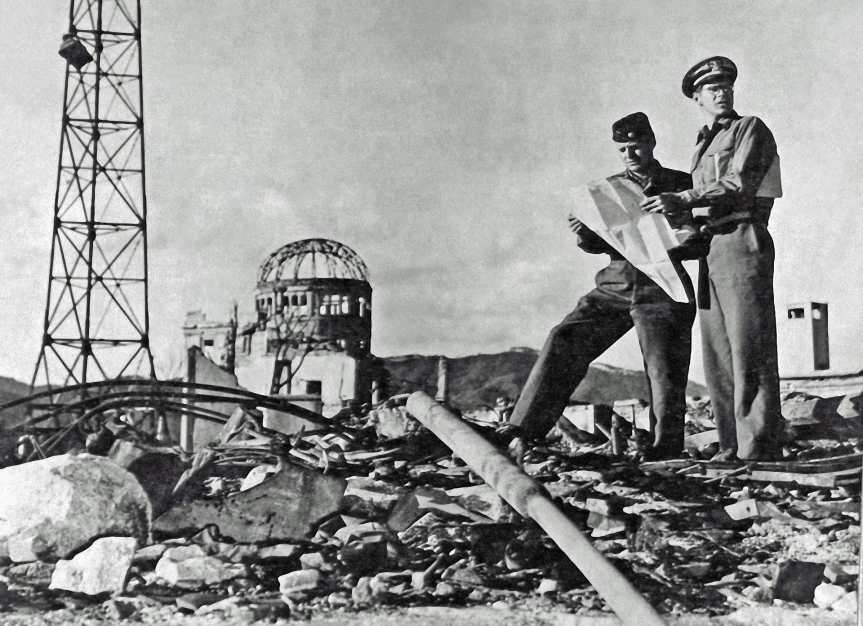
Atomic Bomb Dropped on Hiroshima - HISTORY
Hiroshima was the first city in history to suffer a nuclear detonation.

The city of Hiroshima was bombed on the 6th of August 1945 – the first ever atomic bomb attack in human history. 3 days later, another Japanese city – Nagasaki was bombed with the nuclear weapon – forcing Japan to surrender unconditionally and bring the second world war to a decisive end in the favour of the Allied forces. But Truman and most Americans shall never know what it is to be bombed with the weapon. Hiroshima and Nagasaki mark the only instances of atomic bombing recorded. The Allied had failed to bring Japan to its knees and sought the Atom bomb as a quick and effective way. But this quick way, which was a joint plan by the US and its allies – as required by the Quebec Agreement killed a 150,000 people – a 120,000 of them being civilians in Hiroshima alone. And this might have been one of the deadliest attacks on a civilian city by any country involved in a conventional warfare – let alone the US that was trying top be the leader of human rights and civilian liberties.
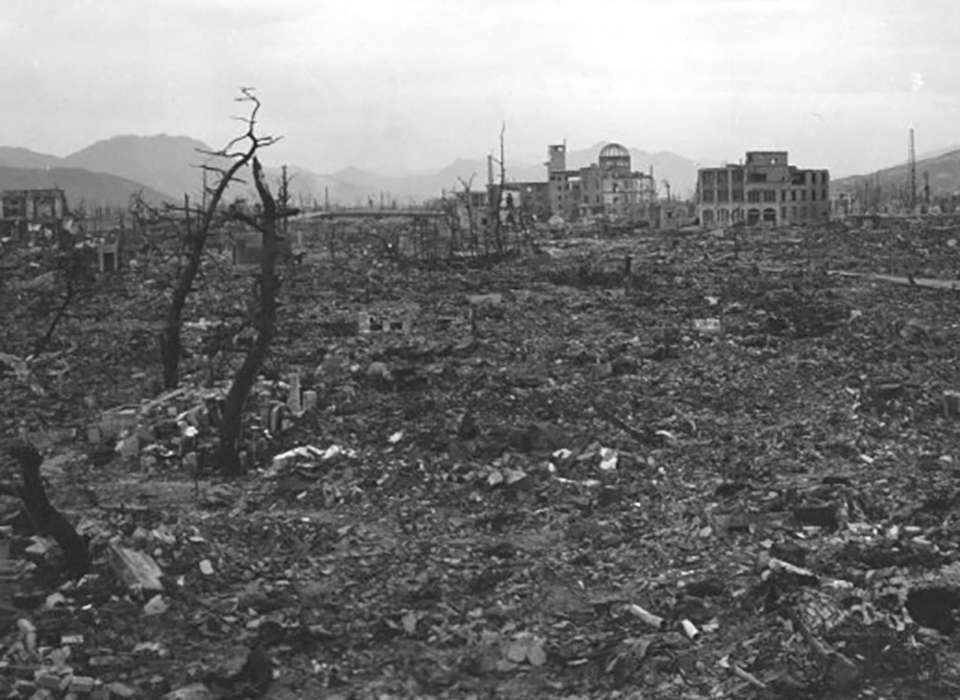
The Most Fearsome Sight: The Atomic Bombing of Hiroshima | The National  WWII Museum | New Orleans
A 120,000 people and 50sq km of area were eradicated in a matter of seconds.

To the Allies, the bomb meant an end to warfare and a sign of American supremacy for the next 5 decades. But to Japan, it meant deaths of 200,000 people in both cities and several decades of nuclear poisoning, radiation induced mutations and cancers that spanned several generations and in some families continue even today.

The University of Texas created a photobook to let the average American – who allegedly yields more pride than sympathy toward the incident – to know of the plight of a nuclear warfare. And people across the world – may it be Chinese, Indian, Pakistani, American, Russian, Israeli or North Korean(if they could read this) would agree that the rhetoric of a nuclear warfare is so blatant in these societies that a bunch of stupid people in the government can lead to a humanitarian and environmental crisis unprecedented in history.
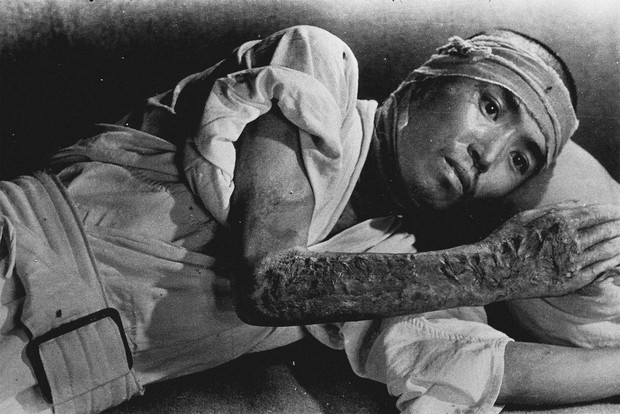
University of Texas photo book aims to show realities of Hiroshima,  Nagasaki blasts to US - The Mainichi
Raditation poisoning killed about 20,000 more people in the later months.

The Hiroshima Day is a reminder of the powers of nature that man has been able to harness and the fact that these powers mean only more responsible behaviour is needed in all of us.

Hiroshima Peace Memorial Park Hiroshima Tickets & Tours - Book Now
The Hiroshima Memorial Park stands as a testimony to those people who bore the brunt of war between two groups who sought nothing but a global supremacy in trade and diplomacy.

The War that divided the world

Photo by Pixabay on Pexels.com

No, I am not talking about the World Wars. I am talking about a war where actually no was ever fought, a bullet fired or a war bell rung. I am talking about the COLD WAR, a war that lasted more that the two world wars combined. This war was a period of geopolitical conflicts and ideological battles. It became as to who were more powerful militarily and economically. This war divides the world into two distinct blocs and there was a constant threat of war even after the horrors of the world war was over.

Basically, it was more of an ideological conflict. The Americans believed in FREE market system and capitalism. They allowed private ownership and accumulation of wealth and profit. There was always competition with the rich getting richer.

On the other hand, USSR or Union of Soviet Socialists Republics believed in Karl Marx’s theory of communism and collective ownership. All the wealth of the nation is to be collectively owned and shared. It even had the ideal of a stateless society where all are equal.

Clearly, both of these are extreme ideologies with little respect to be in the middle ground. And this became the cause of the war. Both of them viewed the other as an enemy and a threat to their state. They started expanding their influence to their neighboring states. They had almost fanatic ideas that the other will take over the world. So by hook or crook, they started defending their ideas and values.

But mostly, a was never fought between them. There was immense stockpiling of weapons as a precautionary move. USA and USSR started to influence the other countries by providing them with monetary aids. The Cold War even went to this extent where even the same country as divided up into two halves. For example, Korea, Vietnam and Germany. There was a display of stark contrast between these two halves.

But it does not mean that no life was killed. Extremely polarized wars took place at the battles of Korea an Vietnam. The worst policy to ever be criticized was that USA and USSR both purposely helped one half of the same country. While USA helped South Korea, USSR helped only North Korea. There was no effort from anyone to resolve the war but prove their superiority. Countless people have been killed in the wars.

Another horrific war that occurred was the Vietnam War. Almost a million of American soldiers were deployed in this war. Even the American public opinion were against the war but consecutive American Presidents were determined to win the war. Even the United Nations or the UN could not take any steps to promote world peace. The other newly independent states of Asia and Africa were cautious about engaging in such decisive politics.

Eventually, this war fizzled out in the 90’s when the state of USSR collapsed. After that the world witnessed the rise of unipolar USA practically taking the reins of the entire world. It severely dominated world affairs to look after its own interest, to what is referred to as Unilateralism.

The Cold War surely disturbed world harmony. This conflict showed that how even ideologies can become such rigid and intolerant. We must live together peacefully and support everyone to become the best version of oneself rather than being engaged in this ‘ego war.’

What World would be Like Without Wars!!!

The past years saw a series of devastating natural disasters, continuing terror attacks and conflict, and the threat of virulent new diseases. These issues affect every one of us with no respect for political or geographical borders; they are perhaps an integral aspect of globalisation. But the most effective search for solutions to these global problems starts with a focus on our immediate, individual realities.

Peace is not simply the absence of war. A peaceful society is one in which everyone can maximise their potential and build fulfilling lives free from threats to their dignity. Rallying public opinion to the cause of peace and disarmament requires people from all walks of life. There needs to be a revolutionary transformation in the way people think about peace.

Humanity has now entered a new era where these assumptions require an overhaul. The major threats to our security now emanate from issues that cannot be dealt with by weaponry, namely global warming, migration, cyber attack and the rich–poor gap. Our security now depends on our ability to cooperate with nations who might previously have been our enemies. We now know enough about preventing armed violence to avoid the catastrophic consequences of recent wars. Attempts to stop war from the top down often fail because of the mindsets – fear, aggression, competition, greed – shared by most of those leaders filtered to the top by our current systems. One of the best ways to overcome the force of these attitudes and emotions is by systematically building trust through dialogue.

Globalization, paradoxically, may one day help put an end to war. In the short term, of course, the rapid expansion of global trade — unregulated and ungoverned by international institutions — has intensified ethnic and religious conflict, widened the gulf between rich and poor, and sparked “resource wars” to control oil and water.

A transformation in the inner life of a single individual can spur similar changes in others. As this extends into society, it generates a powerful vortex for peace that can steadily shape the direction of events. The collective impact of ‘ordinary citizens’, awakened and empowered, can propel humankind towards the goals of genuine disarmament and a flourishing culture of peace.

Prevention of Wars:-

  1. The keys to successful prevention of war are respect, speed of reaction, and developing an understanding of how power works.
  2. The cycle of violence starts with an atrocity, causing terror and trauma, followed by grief and then anger, which leads to the drive for retaliation and revenge, causing an escalation of atrocities. Thus the cycle of violence can continue over generations and even centuries.
  3. The cycle can be broken by tried and tested methods of conflict transformation, including consultation with religious leaders, bridge building, setting up truth and reconciliation commissions, training mediators, freeing child soldiers, trauma counselling and strengthening the rule of law.
  4. Enable women to help make peace. Women are shown to be the most effective and tenacious peace builders. However, more than 90% of negotiators and those in policymaking positions on peace and conflict are male, meaning that the suffering and trauma of women and children in war are not taken into account at the peace table.

Conclusion:-

What becomes evident in this work is that we are living through an age of profound transformation in the human condition. The human-made issues we face in this turbulent age are challenging our human capacity to evolve. We have the opportunity now, as never before, to develop our consciousness – and therefore our way of treating one another – to a new level.

Refrences:-

https://economictimes.indiatimes.com

http://www.resurgence.org