Story of a Old Man

Once upon a time, in a small village nestled amidst rolling hills, there lived an old man named Ramdas. Ramdas had spent his entire life as a shepherd, tending to his flock of sheep on the lush green pastures. But with age catching up to him, he found it increasingly challenging to continue his demanding work.

One day, as Ramdas sat under the shade of a towering oak tree, feeling a sense of melancholy, he noticed a peculiar little goat grazing nearby. The goat had a mischievous glint in its eyes and a playful bounce in its steps. Intrigued by the lively creature, Ramdas approached it cautiously.

To his surprise, the goat seemed to understand him as it responded with gentle bleats. Ramdas felt an instant connection and decided to bring the goat home. He named her Lila, which means “playful” in the local language.

As days turned into weeks, Ramdas and Lila formed an unbreakable bond. Lila would accompany him everywhere, her hooves echoing beside his weary footsteps. The villagers marveled at the sight of the old man and the goat, for they had never witnessed such a unique companionship.

Lila, though small, possessed an extraordinary talent. She had a knack for finding the juiciest patches of grass, the sweetest leaves, and the most fragrant herbs. Ramdas would sit back and watch as Lila grazed, her delicate munching filling the air with a sense of tranquility.

One fateful day, a great drought struck the village, leaving the pastures barren and dry. Ramdas, with a heavy heart, knew that his sheep would suffer. He worried about their survival as they depended on the pastures for their sustenance. But Lila, being the resourceful creature she was, had a different idea.

One evening, Lila led Ramdas up a steep mountain path, her nimble steps guiding him with unwavering confidence. At the mountaintop, they discovered a hidden oasis, a secret haven untouched by the drought. The lush greenery and gushing waterfall were a sight to behold.

With Lila’s guidance, Ramdas brought his flock of sheep to this newfound sanctuary. The sheep feasted on the abundance of fresh grass, regaining their strength and vitality. The villagers were astounded by Ramdas and Lila’s discovery, and word of their miracle spread far and wide.

As the years passed, Ramdas grew frail, his once-strong body weakened by time. But Lila remained by his side, her unwavering loyalty comforting him in his twilight years. They had become legendary figures in the village, symbols of resilience, companionship, and the indomitable spirit.

When Ramdas eventually passed away, Lila mourned his loss, her bleats echoing through the hills. The villagers erected a statue in their honor, a testament to the extraordinary bond between a humble old man and his remarkable goat.

And so, the story of Ramdas and Lila continued to be shared by generations, a tale of love, courage, and the extraordinary things that can be achieved when two souls find solace in each other’s company.
Story of Edupub

Once upon a time, there was a small publishing company called Edupub. The company specialized in creating educational books and materials for students of all ages. However, the company struggled to keep up with the ever-evolving technology in the education industry.

One day, the founder of Edupub, a young and innovative entrepreneur named Sarah, attended a conference on the future of education technology. At the conference, she met several developers who were working on interactive and immersive educational tools.

Sarah was inspired by the possibilities that these tools could bring to the educational publishing industry. She immediately set out to collaborate with these developers to create the next generation of educational materials.

After months of hard work, Edupub launched its first interactive book. The book combined text, images, videos, and interactive quizzes, all in one digital platform. Students could read, watch, and interact with the material, making learning a more engaging and immersive experience.

The interactive book was an instant hit, and soon, schools and universities all over the world began to adopt the technology. Edupub became known for its innovative and cutting-edge educational materials, and its popularity soared.

As the company grew, Sarah continued to push the boundaries of what was possible in educational publishing. She worked with developers to create virtual reality simulations, augmented reality textbooks, and even personalized learning platforms that adapted to each student’s unique learning style.

Edupub’s success caught the attention of investors, and the company received funding to expand its offerings even further. They began to partner with schools and universities to create customized learning experiences, tailoring the materials to fit each institution’s unique needs.

Years later, Edupub had become the go-to company for innovative and immersive educational materials. The company had changed the way students learned and provided new opportunities for educators to engage with their students. Sarah was proud of what she had accomplished, and her dedication to innovation had paved the way for a new era in educational publishing.

Story – Attitude is everything

Moral Stories For Kids | Bedtime Stories | Stories for kids in english -  YouTube

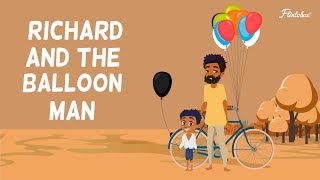
There was a man who made his living selling balloons at a fair. He had balloons of many colors, including red, yellow, blue and green. Whenever business was slow, he would release a helium-filled balloon into the air. When the children saw the balloon go up, they all wanted one. They would come up to him, buy a balloon and his sales would go up. All day, he continued to release a balloon whenever sales were slow. One day, the balloon man felt someone tugging at his jacket. He turned around and a little boy asked, “If you release a black balloon, will that also fly?” Moved by the boy’s concern, the man replied gently, “Son, it is not the color of the balloon, it is what’s inside that makes it go up.”

THE same principle applies to our lives: It’s what’s inside that counts and what’s inside of us that makes us go up is our attitude.

Many of you might have read/ heard this story before; Richard and the balloon man. But despite of the above conclusion, there’s more to the story. The story also focuses on colour discrimination. Everyone human being, right from their birth, are taught to consider fair, white people as beautiful whereas the dark ones are considered being ugly. Who categorized humans based on their appearance and not what they own inside them. No outer appearance decides the altitudes a person might reach, it’s the attitude they hold that paves their way towards success.

William James of Harvard University said, “The greatest discovery of my generation is that human beings can alter their lives by altering their attitudes of mind.”

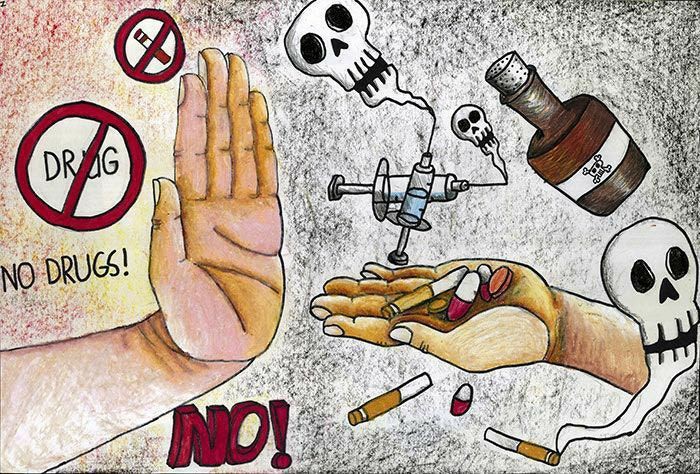
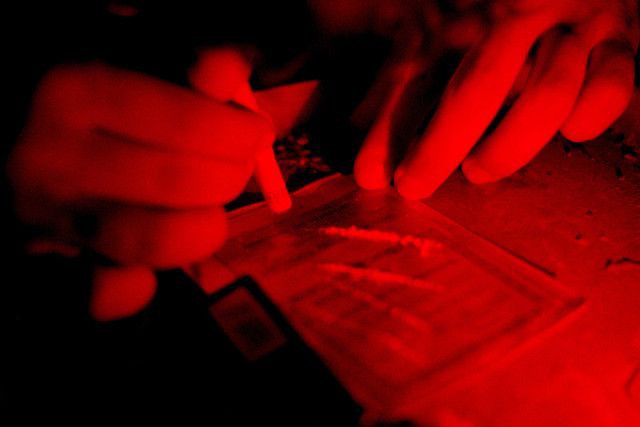
Drugs : you choose , you loose .

Addiction is just a way of trying to get at something else. Something bigger. Call it transcendence if you want, but it’s a rat in a maze. We all want the same thing. We all have this hole. The thing you want offers relief, but it’s a trap.

DRUGS ” A five letter word that is destroying human race. A word that could get you to the cloud nine and than kick you from the top.

What do you think it is ?

Is it a pleasure or a pain ?

Some says ‘it gives you wings ‘, others says ‘it makes you insane ‘ . What would you do , if someone is taking drugs ? Well , I would fly (its a joke ).

Ok , Let’s just get over with the topic .

Introduction

All the suffering, stress, and addiction comes from not realizing you already are what you are looking for.

– Jon Kabat-Zinn

Drugs are substances that change a person’s mental or physical state. They can affect the way your brain works, how you feel and behave, your understanding and your senses. This makes them unpredictable and dangerous, especially for young people.

Drug addiction is a chronic brain disease. It causes a person to take drugs repeatedly, despite the harm they cause. Repeated drug use can change the brain and lead to addiction. That can destroy one’s life .

Signs that shows someone has a drug problem

  • Changing friends a lot .
  • Spending a lot of time alone.
  • Losing interest in favorite things.
  • Not taking care of themselves – for example, not taking showers, changing clothes, or brushing their teeth.
  • Being really tired and sad.
  • Eating more or eating less than usual.
  • Being very energetic, talking fast, or saying things that don’t make sense.
  • Being in a bad mood.
  • Quickly changing between feeling bad and feeling good.
  • Sleeping at strange hours.
  • Missing important appointments.
  • Having problems at work or at school.
  • Having problems in personal or family relationships.

If a person shows these signs than he / she is using drugs . But it’s not , it’s a probability . The person may or may not be using drugs . For the assurance you have to ask the person (well they can lie ) . Take them for the blood test . It will show if the person is taking drugs or not . It’s a simple procedure .

Why can’t people stop using drugs on their own?


Repeated drug use changes the brain, including parts of the brain that give a person self-control. These and other changes can be seen clearly in brain imaging studies of people with a drug addiction. These brain changes explain why quitting is so difficult, even when an addicted person feels ready.

Many people are compelled to enter treatment by the pressure of their family, friends, or a court system. People of all ages with substance use disorders live in fear of what will happen if their drugs are taken away.

Due to the addiction , they experience a variety of physical and emotional withdrawal symptoms, including depression, anxiety, and other mood disorders; restlessness, and sleeplessness . It may lead you to the death bed .

Treatment :

Counseling and other behavioral therapies are the most commonly used forms of treatment. Medications are often an important part of treatment, especially when combined with behavioral therapies. Treatment plans must be reviewed often and modified to fit the patient’s changing needs.

  • Rational Emotive Behavior Therapy.
  • Cognitive Behavioral Therapy.
  • Detoxification.
  • Treatment with Medication.
  • 12-Step Facilitation.

One of the hardest things was learning that I was worth recovery.

Link

A Tale of An Indomitable Woman

Laxmi Agarwal, was only 15 when her jilted lover had thrown acid on her and she had to bear the brunt of a monstrous attack. The motive of the attacker was vengeance for her refusal to marry him. She was burning alive on the road in excruciating pain and was screaming for help on the road. When the accident took place, she was in a state of shock. The only question that kept arising in her mind was “why me?” For two and a half months she refused to look at herself in the mirror, she failed to have the spirit to face what she had been through. Her heart and mind were filled with feelings of self -hatred and shame.

People around her especially women would call her names and taunted her. They faulted her for this heinous crime and questioned her upbringing which would leave her and her family tormented. She was scarred for her entire life and was traumatized that she had contemplated suicide. But thinking of the pain that she would cause to her parents, she decided to end such thoughts. Her attacker assumed that he would leave her trapped within the four walls of her house but little did he know that he had ruined her face not her dreams.

Change was afoot for Laxmi, she refused to be enslaved by the injustice caused to her, with her family’s support she bounced back powerfully. She had filed a Public interest litigation in the supreme court that dealt with acid attack crimes and also petitioned for the ban of the sale of acid which led to the court ordering central and state governments to curb the regulation of acid. After four years of trial her attacker was put behind the bars. Laxmi Agarwal was presented with the International Women of courage award by Michelle Obama, she was also given the International Women Empowerment Award from the Ministry of Women and Child Development, she has challenged the stereotypes and prejudices of the beauty community and has helped over 400 acid attack survivors with her NGO.

Putting myself in her shoes, at such a young age seeing your life colliding and having no control over is horrifying. Face is the first part of the body which is directly associated to your identity. It would have felt like someone has taken away my identity for the rest of my life. The look on my face would change how people would perceive me and that would have impacted me mentally as the psychological pain cannot be measured. Women like Laxmi are an epitome of courage and resilience going through a life changing event still led her to having a strong ground beneath her. She did not let anyone else decide what her life could be and took charge over it herself. Laxmi encourages people to fight against wrongful acts and stand up for themselves. She is undoubtedly an inspiration for not only acid attack survivors but also for every person who has faced injustice in their lives.

EVERYONE’S JOURNEY IS DIFFERENT

My mom told me a story about how everyone has their own story

A Young Man and his father were travelling by train and they seem to be very happy. A young man in his twenties was seeing out from the train’s window and suddenly he is shouted father, see the sun it looks like a circle Then his father smiled at him.

young men again shouted – father, look at the trees as they are going behind. father again smiled at the young man. A couple sitting nearby looked at the young man’s childish comment with pity.

Suddenly the young men exclaimed again.. father, look at the clouds and sun! they are all running with us. The couple observed the young man’s behaviour for a long time they couldn’t resist and said to the old man “why don’t you take your son to a good doctor?” The old man smiled at his son and said “we did and we are just coming from the hospital”

The couple saw them with strange expression. The Old man said again “My son was blind from birth and he just got his vision today”

Every person in the world has a story. Don’t judge people before you truly know them. The Truth might surprise you.

Everyone’s journey is different

A society that can breach the stereotype in India .

I never feel confined by gender, by labels, by expectations, by stereotypes. I’m free to be myself.

Princess Nokia

Introduction

During the last two decades it is said that to be a women is the most precious gift a human can have . To be able to give birth to another human being that lives inside precisely 9 months at most .

But their is another dispute that a women can only be a insider . That can fulfill the needs of the dominant society.

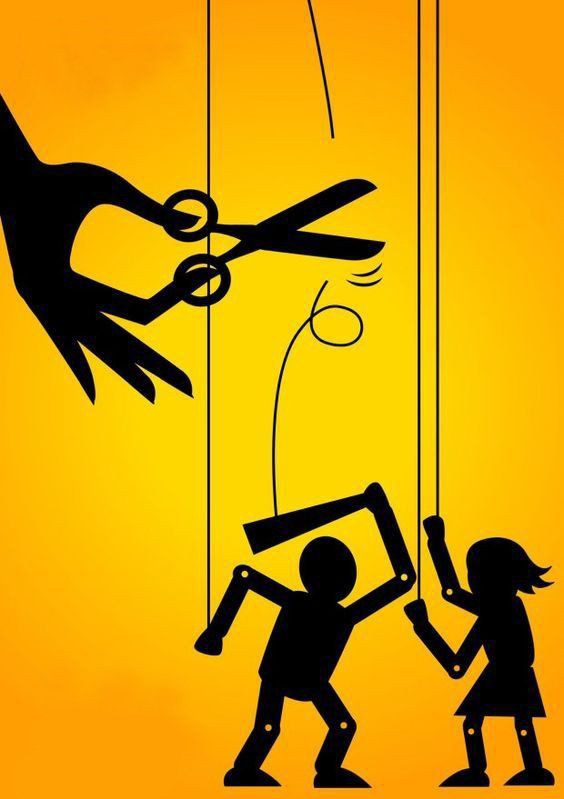
Isn’t these two statements are contradictory. In first one a women is a precious gift and in another she can only fullfill one’s needs but only in four walls .

Aren’t they human or a thing that can only live under the roof of men for living ?

Women have always played an important role in the society . Even in the ancient times , they were considered as an equal with the men . So what change , the air , the water , the life style or the mindset . We can also say that the stereotype mindset in society .

Years and years before people grew their ego and think about their individual benefits. Women lead life with virtue , wisdom and respect .

When it start

It was all not same as it was now , their were times when women rule the nation . But due to the foreign invasion , women suffer immensely . At the mediaeval times , women came to be confined within the four walls of the house .

Mediaeval period also known as ‘DARK AGE ‘ as very few women’s were found to be a ruler at that period . It was the period when women brought to the deeds where they made to be inferior to men .

They were raped and brutally killed by the demons who think they can dominate them .

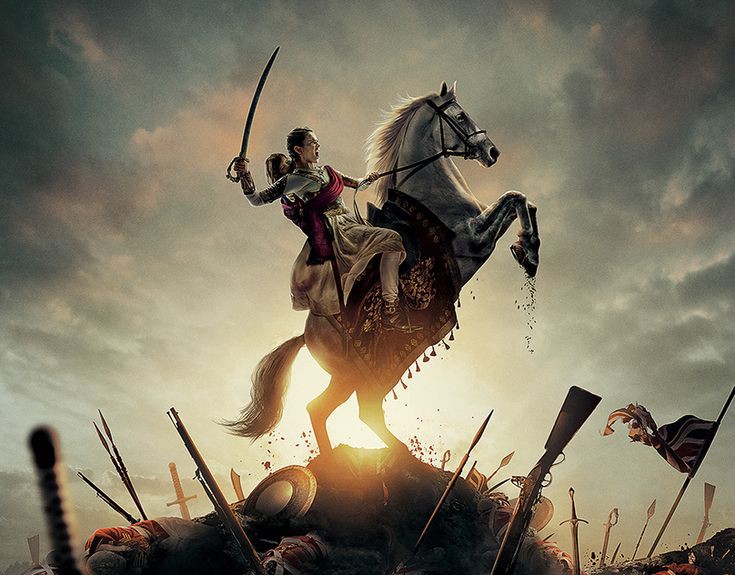
Rani Padmavati, Jodha Bai, Gulbadan Begum, Nurjahan, Jahan Ara , Mumtaj Mahal, Razia Sultan , Jija Bai are some of the women who fought for their right , safety , people , family and love also saved many .

“And one day she discovered that she was fierce, and strong, and full of fire, and that not even she could hold herself back because her passion burned brighter than her fears.”

– Mark Anthony

Modern era

It’s a century of love , reliability , equality and most important individuality .

Then why women are always compared to the men . Why they questioned when they are innocent . ( Well not all are innocent and victim , just for those who are ) .

I do believe that men and women are different . Their differences doesn’t make them weak . It’s just a perspective and view of people that make them vulnerable .

But do women care , it’s their own life not to say that anyone means ANYONE can come and stamp their ‘so called ’ rules on them . Not against the male gender but to those who think they can dominate and lock them in four walls .

Not to say, if women lock men in four wall room . So what will happen to them . Umm. Let’s think , they run like a horse at the time when the room unlocked .

If OJO -MOJO can’t stay in their rooms can’t OLLE do the same . Yes she can , also kick their humpy dumpy bum.

Let’s end the topic and eat some more . It’s a 21st century donot let someone walk on you , you can stand for yourself .

“Don’t let anyone speak for you, and don’t rely on others to fight for you.”

– Michelle Obama

This editorial is written under one’s perspective . Neither against any gender nor in favour .

Humanity’s Strongest Weapon- Hope

What does the word hope mean to you? Hope means many different things to different people. For some, hope is about expecting to get promoted. For some, hope is about living in better conditions, or the next day being better than today. Hope is an optimistic state of mind which is based on an expectation of positive outcome. Hope is humanity’s weapon against suffering and doom. You might have heard about the ‘Pandora’s box’. In Greek mythology, Pandora’s box was an artifact. Pandora’s curiosity led her to open a box, which released many curses on humanity. In the end when Pandora was depressed and regretted her decision, Hope came out. This tells us the importance and power of hope. Hope stands alone against all the evils. 

Hope gives us the strength to stay strong and face the challenges. But why are we talking about hope? During the pandemic, when we feel that we are lost, doomed, bent to suffering, hope can lift us up. The hope that we will make it out, the hope that these days too shall pass, will surely enable us to sail through these dark times. 

Emily Dickinson once said- “ Hope is the thing with feathers that perches in the soul and sings the tune without the words and never stops at all.” 

I believe this is a very beautiful way to express the meaning of hope. Hope lifts our soul when we feel low. To further our understanding of hope, I wish to share a story.

Image result for Hope. Size: 266 x 160. Source: www.uhsinc.com

Long time ago, there lived a poor orphaned girl, Belia. Only once had she seen her parents, that too when they left her in the hands of mother nature at the age of 4. She lived in an old hut along with another girl, Susan, who too had been abandoned by her once mother. Now they lived in destitute conditions in the lonely woods. 

“Susie! Come.” called Belia. They headed to the river to gather some berries, if there were any left. Day by day, man was growing fond of exploiting nature. Last year, they strolled in the meadows and made beautiful garlands. But now, the meadows were cleared, leaving hardly any flowers for the girls. As they walked past the cleared meadow, Belia said, “I tell you Susie, one day, we will have our flowers back.” Susan sighed and replied, “Lia, please stop dreaming. They are gone forever. They are never coming back.” Belia smiled and rushed to the river. “I don’t know how or when, but I know they surely will, Susie.” said Belia. 

Seasons changed, the girls found themselves famished. There were hardly any berries left, or money. They became fragile and lethargic due to starvation. Susan burst out into tears, ”No one cares if we live or die. I can’t bear this anymore.” Belia consoled her, ”Susie, don’t worry, someday soon we will have lots of food. Let’s go to the town to see if we find any.” Susan had lost her strength, ”No! We will die of starvation. I no longer wish to survive.” Saying this she lay down. Belia was too hopeful to give up, ”If you are unable to walk, I will go and bring some food. I know, I will find some.” Belia set out to the town. She sang merrily in her journey, as if she was a princess. She came by a big house. There she requested them to give some bread. After a long while of seeking their charity, the house Mistress gave her two pieces of bread. She rejoiced and turned back to her hut. 

Unfortunately, while crossing the river back home, her foot slipped and her basket fell into the river. She put in all of her remaining energy in chasing it. It was futile. She was panting, and fell to the ground with despair. She looked at the sky and begged for food. She heard a dulcet melody. She followed the song. The melody was coming from a few miles away. She walked and walked. Whenever the thought of giving up came to her mind, the melody relit the hope within her. Finally, she reached a pond, surrounded by trees, from whose branches hung red apples, however the melody had stopped. She jumped with joy and plucked an apple. She relished her apple. Then plucked a few more, tied them in her frock and hurried to the hut. 

Susan lay there on the cold ground. Belia tried waking her up. However, Susan lay there still. She truly had given up.

https://en.wikipedia.org/wiki/Hope 
https://dictionary.cambridge.org/dictionary/english/hope

Maggi story as brand

The MAGGI brand originated in Switzerland. It was founded in 1884, when Swiss entrepreneur Julius Maggi had a vision: to make good-tasting and nutritious food accessible to busy, working families. He invented a powdered pea and bean soup, to provide nutritious, easy to prepare food for busy women who worked in factories and didn’t have time to prepare healthy meals.

This first MAGGI product was followed two years later with the invention of ready-to-use soups and liquid seasoning. Nestlé acquired the MAGGI brand in 1947 and today, more than 120 years later, we strive to build on Julius Maggi’s ambition of making delicious, quality and nutritious food accessible to all.

Today the tradition continues around the world. Whether it’s MAGGI bouillons, soups, or seasonings, consumers have come to know and trust the MAGGI brand for its high quality, convenience and nutrition.

History

The company originated in Switzerland in 1884, when Julius Maggi took over his father’s mill. He quickly became a pioneer of industrial food production, aiming to improve the nutritional intake of worker families. Maggi was the first to bring protein-rich legume meals to the market, and followed up with a ready-made soup based on legume meals in 1886. After that Julius Maggi introduced bouillon concentrates, first in capsules, then in cubes. In 1897, Julius Maggi founded the company Maggi GmbH in Singen, Germany.

Maggi has become a household name and it is synonymous with noodles. However, Maggi offers other products apart from noodles, and these are soups, ketchups, sauces, and stock cubes. Maggi as a brand was established in 1863 in Switzerland, when Julius Michael Johannes Maggi developed a formula to bring greater taste to meals. In 1882, the Swiss Public Welfare Society authorised Maggi to come up with a vegetable food product that is easy and quick to prepare, to help with the problem of women having less time in the kitchen.

This led to the creation of two instant pea soups and an instant bean soup that reached the height of success. In 1947, Maggi merged with Nestle and since then it has been providing high quality and innovative products to the world.   Maggi has captured the hearts of millions around the world because it understands the needs of people and manages to meet these demands. For example, in the 1980s, when there was a huge increase in the number of women joining the workforce, Nestle India introduced Maggi 2 Minute Noodles to the Indian crowd. This is how Maggi revolutionised the instant food industry, particularly the instant noodles segment. When eating habits of people changed, Maggi tweaked its products to include low-fat bouillons.   

When Maggi was launched in India in the 1980s, there was no direct competition from instant noodle brands. However, there was competition from other snacks that Indians had been fond of for decades, and these included samosas, pakoras, and sandwiches. However, most of these snacks are purchased from roadside stalls, and are relatively unhygienic and unhealthy. So, Maggi positioned itself as the only hygienic homemade brand. It decided to target working women who did not have much time to prepare elaborate meals in the kitchen. However, Maggi realised later, through surveys, that children were the largest consumers of Maggi noodles. And then Maggi repositioned its brand towards the kids segment and included various promotional tools such as sketch pens, colour pencils, and fun books to entice children. And this worked wonders for the brand. Due to its promotional activities, Maggi’s annual growth grew by 15% during its initial years, and today, Maggi is the leading brand in the instant noodles segment in India, with a market share of 79.3%.   

Maggi is worth Rs 200 crores and contributes to approximately 10% of Nestle India’s top line. Being a pioneer in the noodles market in India has definitely given Maggi a boost and first mover’s advantage over other brands. Maggi is slowly but surely widening its market to reach out to more and more people. Today, Maggi has introduced Vegetable and Dal Atta noodles to cater to those who are health conscious. Maggi’s products come in travel packs as well as bulk packs, to cater to those who look for convenience while travelling and those who are price sensitive and prefer to purchase food in bulk. Maggi is one of the few brands to have taken the time to understand its consumers and their requirements, which is why it is one of the most successful brands, not only in India but in the world. 

KFC story in India, Kentucky Fried Chicken (KFC)

KFC was the first foreign fast food restaurant chain to enter India in 1990s after the Indian government implemented the economic liberalisation policy. At that time, KFC received permission from the Indian government to open 30 outlets across the country. The first KFC outlet in India was opened in Bangalore in June 1995 and from 30 outlets, the number has grown to 296 today. Fast food restaurants have gained popularity in India because of their customised menus that suit the taste buds of the citizens. Many people have the misconception that KFC only sells fried chicken; this is not at all true. In India, KFC has added a number of vegetarian items on its menu – Veg Zinger, Veg Rice Bowlz, and Veg Strips.   

When KFC first entered the Indian market, there were a lot of protests, and the Bangalore outlet was repeatedly ransacked. Many Indians were worried that the Western culture would seep into the Indian roots, leading to the dilution of indigenous traditions. To prevent further onslaughts on the KFC outlet, the management of the KFC outlet demanded a police van to be permanently parked outside for almost a year. Another KFC outlet was opened in Delhi in the same year but the combined revenue of both the Bangalore and Delhi outlets was not sufficient to continue the KFC business in India. The reason why KFC did not gain popularity is because of anti-KFC movements that accused KFC of using illegally high amounts of monosodium glutamate, which are harmful to health. Also, the anti-KFC movements claimed that KFC sold food that was cooked and fried in pork fat. Given all these accusations against KFC, the fast food restaurant did not reap sufficient revenue to continue its operations in India. As a result, KFC had to abandon the Indian market.​​​​​​​

Once the Indian market cooled down, KFC returned to the country in 1999 and set up an outlet in Bangalore. Until 2004, KFC only operated one outlet in India. As the sole outlet started making money, KFC expanded its operations throughout India and today, KFC outlets can be found in a number of cities. KFC has come a long way since its establishment in India in 1995. Despite facing a rejection from consumers, KFC did not lose hope in the Indian market. Instead of eliminating India from its venues of operation, it analysed the problems faced by KFC in India and worked hard to resolve them.   It is this tenacity that won the hearts and stomachs of millions of Indians, who finally decided to embrace KFC’s dishes and give KFC a second chance.

KFC (short for Kentucky Fried Chicken) is an American fast food restaurant chain headquartered in Louisville, Kentucky, that specializes in fried chicken. It is the world’s second-largest restaurant chain (as measured by sales) after McDonald’s, with 22,621 locations globally in 150 countries as of December 2019. The chain is a subsidiary of Yum ! Brands, a restaurant company that also owns the Pizza Hut, Taco Bell, and WingStreet chains.

KFC was founded by Colonel Harland Sanders, an entrepreneur who began selling fried chicken from his roadside restaurant in Corbin, Kentucky, during the Great Depression. Sanders identified the potential of the restaurant franchising concept, and the first “Kentucky Fried Chicken” franchise opened in Utah in 1952. KFC popularized chicken in the fast-food industry, diversifying the market by challenging the established dominance of the hamburger. By branding himself as “Colonel Sanders”, Harland became a prominent figure of American cultural history, and his image remains widely used in KFC advertising to this day. However, the company’s rapid expansion overwhelmed the aging Sanders, and he sold it to a group of investors led by John Y. Brown Jr. and Jack C. Massey in 1964.

KFC was one of the first American fast-food chains to expand internationally, opening outlets in Canada, the United Kingdom, Mexico, and Jamaica by the mid-1960s. Throughout the 1970s and 1980s, it experienced mixed fortunes domestically, as it went through a series of changes in corporate ownership with little or no experience in the restaurant business. In the early-1970s, KFC was sold to the spirits distributor Heublein, which was taken over by the R.J. Reynolds food and tobacco conglomerate; that company sold the chain to PepsiCo. The chain continued to expand overseas, however, and in 1987, it became the first Western restaurant chain to open in China. It has since expanded rapidly in China, which is now the company’s single largest market. PepsiCo spun off its restaurants division as Tricon Global Restaurants, which later changed its name to Yum ! Brands.

KFC’s original product is pressure-fried chicken pieces, seasoned with Sanders’ recipe of 11 herbs and spices. The constituents of the recipe are a trade secret. Larger portions of fried chicken are served in a cardboard “bucket”, which has become a feature of the chain since it was first introduced by franchisee Pete Harman in 1957. Since the early-1990s, KFC has expanded its menu to offer other chicken products such as chicken fillet sandwiches and wraps, as well as salads and side dishes such as French fries and coleslaw, desserts, and soft drinks, the latter often supplied by PepsiCo. KFC is known for its slogans “It’s Finger Lickin’ Good !”, “Nobody does chicken like KFC”, and “So good”.

The story of a story: origin of rumour

People always try to create a story since it’s a story. Something which meant to happen will never be a story and something which happened will never become a story. Story has a separate value that lies within the truth of the incident.

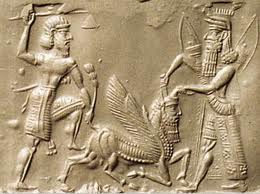
Gilgamesh (right) and Enkidu offending the gods by slaying the Bull of Heaven.

The greatest happening will never be treated as story because it’s already treated as something else known as history. The word “hiSTORY” itself has a story within it. The story is never a story when story is created as story. The story always lie in lies because the truth never unveils the story. The begging of the story is ending of the truth. The first story has no place in the history because it is told in the future.

Let me guess what you might guess,but neither Adam nor Eve’s did it. The first written story that has come down to us is “The Epic of Gilgamesh”. It is a mythologized account of an historical figure, Gilgamesh, a ruler of the Sumerian city-state of Uruk, believed to have ruled sometime between 2700-2500 BC.

Using the world’s most powerful tool namely the story people talk about it and make a way to gain popularity by faking it as reality. The story has a power to modify and manipulate the people to belive the story and make them to spread and thus develops the thread of stories and make it a reality. The story is always a story but it will not remain as a story. People believe the people not the story. People not only make the stories but aslo make them to believe it. People should stop believing in storytellers because they are stories.

The story is the origin of rumour. People became tired of believing the stories. So people started talking about people and eventually made stories out of people which turned into the people’s story. People never get bored to talk about people and hence stories. The people’s stories are framed as rumours. Rumour can be referred as a currently circulating story or report of uncertain or doubtful truth. No body like to gossip because it is not a rumour. Rumour spreads like tumour and we cannot control it once it’s out of the hand.

Humans always know what they do and always do what they not to. Humans talk to humans about humans. Talkin is good, gossiping is admirable, but spreading rumours is offensive. People should think before spreading about the news because after spreading there is no need to do it so. Think before you talk and don’t act after you did. Acting is so easy because that is what everyone does. The most difficult thing to do is to stop talking. People only stop talking is the moment before they start to talk. If you can’t stop talking then don’t start. If you start talking then don’t spread. Spreading the rumours is more dangerous than spreading a communicable disease like corona.

If we stop believing people then we stop believing stories. The deaf are more luckiest people because they don’t get a chance to listen to the conversations of wicked humans. Their thought process is free from thinking about the people who they might think might be thinking of them. Become deaf while hearing such rumours because it is the only way to do it.