Mother nature the word we often come across but we don’t give much importance. In this context nature has been given in the respect of a mother. But as we all know that a mother’s presence is so much in a life that at a point we start to ignore her little little things done for us. Similarly we have forgotten the importance of mother nature too.
Just think if we don’t have this nature what would happen of us. None of us would have been alive. We should not be so thankless towards nature who has always helped us in all aspects.
Instead of respecting nature as mother we have started exploiting it. We are taking the resources from nature but we are not giving anything bad to her free just want to full feel handbag letting hands empty.
This change we cannot bring all alone we need the support of all us, but everything starts with a single step if even one starts to respect or do something towards nature everyone else would join. The need of today’s just that one step.
Just take care for nature as if you are caring your own mother then you will start experiencing an aura of happiness. Nature is our everything and we are because of nature so please protect mother nature and mother earth.
An earthquake is a natural disaster whose arrival cannot be announced in advance. Earthquakes are more frequent in mountainous areas. Earthquake has many causes such as volcanic eruption due to excess heat. Sliding rocks under the earth. Collide or move existing plates under the earth. Earth quakes when an earthquake strikes, due to which houses, trees, plants etc. fall and millions of humans and animal birds die under them. Whenever an earthquake comes, there is a lot of destruction.
Earthquake also comes due to the burden on the earth and when it comes, the biggest danger is the collapse of high buildings. In the event of an earthquake, all people should go out of the house to the open ground. An earthquake cannot be predicted, but many preparations can be made to avoid it. For this people are advised to stay in wooden houses. They must keep a mobile phone and flashlight with them. It is not possible for humans to stop earthquakes but tree plants protect us from earthquakes. So to prevent disaster like earthquake, we should plant more and more trees.
Simply speaking, Earthquake means the shaking of the Earth’s surface. It is a sudden trembling of the surface of the Earth. Earthquakes certainly are a terrible natural disaster. Furthermore, Earthquakes can cause huge damage to life and property. Some Earthquakes are weak in nature and probably go unnoticed. In contrast, some Earthquakes are major and violent. The major Earthquakes are almost always devastating in nature. Most noteworthy, the occurrence of an Earthquake is quite unpredictable. This is what makes them so dangerous.
Types of Earthquake
Tectonic Earthquake: The Earth’s crust comprises of the slab of rocks of uneven shapes. These slab of rocks are tectonic plates. Furthermore, there is energy stored here. This energy causes tectonic plates to push away from each other or towards each other. As time passes, the energy and movement build up pressure between two plates.
Therefore, this enormous pressure causes the fault line to form. Also, the center point of this disturbance is the focus of the Earthquake. Consequently, waves of energy travel from focus to the surface. This results in shaking of the surface.
Volcanic Earthquake: This Earthquake is related to volcanic activity. Above all, the magnitude of such Earthquakes is weak. These Earthquakes are of two types. The first type is Volcano-tectonic earthquake. Here tremors occur due to injection or withdrawal of Magma. In contrast, the second type is Long-period earthquake. Here Earthquake occurs due to the pressure changes among the Earth’s layers.
Collapse Earthquake: These Earthquakes occur in the caverns and mines. Furthermore, these Earthquakes are of weak magnitude. Undergrounds blasts are probably the cause of collapsing of mines. Above all, this collapsing of mines causes seismic waves. Consequently, these seismic waves cause an Earthquake.
Explosive Earthquake: These Earthquakes almost always occur due to the testing of nuclear weapons. When a nuclear weapon detonates, a big blast occurs. This results in the release of a huge amount of energy. This probably results in Earthquakes.
Effects of Earthquakes
First of all, the shaking of the ground is the most notable effect of the Earthquake. Furthermore, ground rupture also occurs along with shaking. This results in severe damage to infrastructure facilities. The severity of the Earthquake depends upon the magnitude and distance from the epicenter. Also, the local geographical conditions play a role in determining the severity. Ground rupture refers to the visible breaking of the Earth’s surface.
Another significant effect of Earthquake is landslides. Landslides occur due to slope instability. This slope instability happens because of Earthquake.
Earthquakes can cause soil liquefaction. This happens when water-saturated granular material loses its strength. Therefore, it transforms from solid to a liquid. Consequently, rigid structures sink into the liquefied deposits.
Earthquakes can result in fires. This happens because Earthquake damages the electric power and gas lines. Above all, it becomes extremely difficult to stop a fire once it begins.
Earthquakes can also create the infamous Tsunamis. Tsunamis are long-wavelength sea waves. These sea waves are caused by the sudden or abrupt movement of large volumes of water. This is because of an Earthquake in the ocean. Above all, Tsunamis can travel at a speed of 600-800 kilometers per hour. These tsunamis can cause massive destruction when they hit the sea coast.
In conclusion, an Earthquake is a great and terrifying phenomenon of Earth. It shows the frailty of humans against nature. It is a tremendous occurrence that certainly shocks everyone. Above all, Earthquake lasts only for a few seconds but can cause unimaginable damage.
Flood is a type of natural hazard, affecting humans and natural habitats, or even killing them. A flood can also cause severe damage to homes, factories, places in public, etc. Initially, the trees in the forest should not be cut down unethically because they can cause many human disasters, which include flooding. A flood occurs; therefore, it is not possible to absorb the rainwater in the plant root, so water flows directly.
Secondly, in our properties, in the desert field and along the side of the road, we can plant any plants so that the plant root can quickly suck up the water. It provides other incentives, such as reducing air contamination and embracing the ‘Go Green’ Global Warming and Climate Change Policy on our Planet. The last thing is that we should not throw waste anywhere to disturb the flow of the river. In Jakarta, for example, people want to dump the trash somewhere as in the canal, and also in the drainage, resulting in flooding every year. In many other places, such as Situ Gintung and Wasior, the other flood is because people like to throw waste anywhere. By doing that, we can minimize disasters and contribute to defending our environment. So, we have to keep our environment clean.
Flood is one of the most dangerous natural disasters. It happens when excessive water is collected in any area. It usually happens due to heavy rainfall. India is highly prone to flood. There are many regions in the country that face this natural disaster because of the overflowing of rivers. Moreover, it also happens because of the melting of snow. Another reason for floods is when the dam breaks down. If we look at the coastal areas, the hurricanes and tsunamis are held responsible for causing floods. In this essay on flood, we will see the prevention and after-affect of flood.
In other words, whatever the cause may be, it is equally dangerous. It has a lot of harmful consequences. Flood damages the living conditions and it takes a lot of time to recover from this disaster. Therefore, the consequences of floods must be known and steps must be taken to prevent it.
After-effects of Flood
Floods interrupt with the day to day functioning of the affected area. The severe floods sometimes cause mass destruction. A lot of people and animals lose their lives due to floods. Several others are injured. Floods also bring a rise in diseases. The stagnant water attracts mosquitoes causing malaria, dengue, and more illnesses.
Furthermore, people face power cuts due to the danger of electrocution. They also have to face expensive pricing. As the supply of food and goods gets limited, the prices naturally grow higher. This creates a big problem for the common man.
Most importantly, the whole country faces economic loss. The resources needed to rescue people and tackle this disaster demands a hefty amount. Plus, the citizens lose their houses and cars which they worked all their lives for.
Subsequently, floods also hamper the environment. It causes soil erosion and this degrades the quality of the soil. We lose out on fertile soil. Similarly, floods also damage flora and fauna. They damage crops and displace trees. Thus, the measure should be taken to avoid these grave consequences.
Ways to Prevent flood
The government and citizens must work together to formulate ways to prevent floods. Proper awareness must be spread about the steps to take when floods occur. Warning systems must be set up so people get sufficient time to save themselves. In addition, areas that are more likely to have floods must have tall buildings above the flood level.
Further, there should be an efficient system for storing excessive water due to rain. This will prevent the overflowing of water. One of the most important steps is to strengthen the drainage system. This can avoid water logging which will prevent floods.
Other than that, dams must be constructed strongly. The use of cheap materials causes dams to break. The government must ensure there is a quality building of dams to prevent floods.
In short, we cannot prevent natural causes like rain and the melting of glaciers. However, we can stop the manmade causes like breaking of dams, poor drainage system, installing warning systems and more. We should take inspiration from countries like Singapore that never experience floods despite having heavy rainfall for most time of the year.
Poverty! Poverty is lack of food, Poverty is lack of shelter, Poverty is being sick and can not afford medicines, Poverty is knowing how to read but can’t afford going to School, Poverty is being unemployed. And Poverty is lack of representation and freedom.Poverty has so many faces, and can describe in different ways. Most often, poverty is a situation people want to escape.
We have to take the step to reduce poverty so that many more may have enough food to eat, adequate shelter to cover their head, access to education and health.Overpopulation and underdevelopment in the country is the main cause for poverty. The birth rate in India is very high and the former has taken the measure of the ‘one child policy’ to change the situation, but the latter has not made any effort yet.
Underdevelopment is another reason, the country do not have enough economic growth to support their growing populations.Poverty in India can eradicate with some effective programmes, just need a joint effort from everyone not only from the government. Government of India should make effective policies aiming to develop rural areas through the key components like primary education, population control policies, family welfare, job creation and many more.
We can define poverty as the condition where the basic needs of a family, like food, shelter, clothing, and education are not fulfilled. It can lead to other problems like poor literacy, unemployment, malnutrition, etc. A poor person is not able to get education due to lack of money and therefore remains unemployed. An unemployed person is not able to buy enough & nutritious food for his family and their health decline. A weak person lacks the energy required for the job. A jobless person remains poor only. Thus we can say that poverty is the root cause of other problems.
How Poverty is Measured?
For measuring poverty United nations have devised two measures of poverty – Absolute & relative poverty. Absolute poverty is used to measure poverty in developing countries like India. Relative poverty is used to measure poverty in developed countries like the USA. In absolute poverty, a line based on the minimum level of income has been created & is called a poverty line. If per day income of a family is below this level, then it is poor or below the poverty line. If per day income of a family is above this level, then it is non-poor or above the poverty line. In India, the new poverty line is Rs 32 in rural areas and Rs 47 in urban areas.
Causes of Poverty
According to the Noble prize winner South African leader, Nelson Mandela – “Poverty is not natural, it is manmade”. The above statement is true as the causes of poverty are generally man-made. There are various causes of poverty but the most important is population. Rising population is putting the burden on the resources & budget of countries. Governments are finding difficult to provide food, shelter & employment to the rising population.
The other causes are- lack of education, war, natural disaster, lack of employment, lack of infrastructure, political instability, etc. For instance- lack of employment opportunities makes a person jobless & he is not able to earn enough to fulfill the basic necessities of his family & becomes poor. Lack of education compels a person for less paying jobs & it makes him poorer. Lack of infrastructure means there are no industries, banks, etc. in a country resulting in lack of employment opportunities. Natural disasters like flood, earthquake also contribute to poverty.
In some countries, especially African countries like Somalia, a long period of civil war has made poverty widespread. This is because all the resources & money is being spent in war instead of public welfare. Countries like India, Pakistan, Bangladesh, etc. are prone to natural disasters like cyclone, etc. These disasters occur every year causing poverty to rise.
Ill Effects of Poverty
Poverty affects the life of a poor family. A poor person is not able to take proper food & nutrition &his capacity to work reduces. Reduced capacity to work further reduces his income, making him poorer. Children from poor family never get proper schooling & proper nutrition. They have to work to support their family & this destroys their childhood. Some of them may also involve in crimes like theft, murder, robbery, etc. A poor person remains uneducated & is forced to live under unhygienic conditions in slums. There are no proper sanitation & drinking water facility in slums & he falls ill often & his health deteriorates. A poor person generally dies an early death. So, all social evils are related to poverty.
Government Schemes to Remove Poverty
The government of India also took several measures to eradicate poverty from India. Some of them are – creating employment opportunities, controlling population, etc. In India, about 60% of the population is still dependent on agriculture for its livelihood. Government has taken certain measures to promote agriculture in India. The government constructed certain dams & canals in our country to provide easy availability of water for irrigation. Government has also taken steps for the cheap availability of seeds & farming equipment to promote agriculture. Government is also promoting farming of cash crops like cotton, instead of food crops. In cities, the government is promoting industrialization to create more jobs. Government has also opened ‘Ration shops’. Other measures include providing free & compulsory education for children up to 14 years of age, scholarship to deserving students from a poor background, providing subsidized houses to poor people, etc.
Poverty is a social evil, we can also contribute to control it. For example- we can simply donate old clothes to poor people, we can also sponsor the education of a poor child or we can utilize our free time by teaching poor students. Remember before wasting food, somebody is still sleeping hungry.
One of the purest relationships is the relationship of friendship. A person without a friend lives a hard life. Everybody needs a companion to deal with our experience. It is dependent upon you that how you define friendship. It can be sharing your food, taking care of that person, supporting them in their thick and thin. You may not be loud about it, but if you care for a person silently, that is what friendship is. Friendship is about laughing together on small things, cherishing every moment you share, standing together for each other even when the world turns their backs towards them.
Friendships are sometimes more durable than the relationship of love. Even though the definition of friendship varies from person to person, the core meaning behind it is the same for everybody. Life is empty without a friend. So when you gain a true friend, make sure you cherish it with all your heart. The person with a real friend, with whom all the things can be shared, are the luckiest in the world. A friend will never judge you, and they will never stop scolding you if you are wrong. But whatever the situation be, they will always be there to support you.
Friendship is one of the greatest bonds anyone can ever wish for. Lucky are those who have friends they can trust. Friendship is a devoted relationship between two individuals. They both feel immense care and love for each other. Usually, a friendship is shared by two people who have similar interests and feelings.
You meet many along the way of life but only some stay with you forever. Those are your real friends who stay by your side through thick and thin. Friendship is the most beautiful gift you can present to anyone. It is one which stays with a person forever.True FriendshipA person is acquainted with many persons in their life. However, the closest ones become our friends. You may have a large friend circle in school or college, but you know you can only count on one or two people with whom you share true friendship.There are essentially two types of friends, one is good friends the other are true friends or best friends. They’re the ones with whom we have a special bond of love and affection. In other words, having a true friend makes our lives easier and full of happiness.
Most importantly, true friendship stands for a relationship free of any judgments. In a true friendship, a person can be themselves completely without the fear of being judged. It makes you feel loved and accepted. This kind of freedom is what every human strives to have in their lives.In short, true friendship is what gives us reason to stay strong in life. Having a loving family and all is okay but you also need true friendship to be completely happy. Some people don’t even have families but they have friends who’re like their family only. Thus, we see having true friends means a lot to everyone.
Importance of FriendshipFriendship is important in life because it teaches us a great deal about life. We learn so many lessons from friendship which we won’t find anywhere else. You learn to love someone other than your family. You know how to be yourself in front of friends.Friendship never leaves us in bad times. You learn how to understand people and trust others. Your real friends will always motivate you and cheer for you. They will take you on the right path and save you from any evil.Similarly, friendship also teaches you a lot about loyalty. It helps us to become loyal and get loyalty in return. There is no greater feeling in the world than having a friend who is loyal to you.Moreover, friendship makes us stronger. It tests us and helps us grow. For instance, we see how we fight with our friends yet come back together after setting aside our differences. This is what makes us strong and teaches us patience.Therefore, there is no doubt that best friends help us in our difficulties and bad times of life. They always try to save us in our dangers as well as offer timely advice. True friends are like the best assets of our life because they share our sorrow, sooth our pain and make us feel happy.
PPLO is started by G.Sanjay on 2019 as an initiative to serve the lunch to the poor people who starve for food.
PPLO’s motive is to “Reduce Shortage by Donating the Wastage“.
FOOD WASTAGE- A SHORT GLIMPSE AND STATS:
Having food is something to celebrate but have you ever wondered consciously just much food you waste. Have you ever stopped to analyze just how much food is wasted in your household, society, country and the world? It is not something that people, who have food readily available whenever they feel hungry, worry about. However, for people who are not even able to eat one meal a day, often wonder if all the food that is being wasted around them on a daily basis could have filled their stomach.
Food waste is an issue of importance to global food security and the environment. But what a lot people may not realise is that is impacts a country’s economy as well. Every day, food suitable for human consumption is wasted in large quantities in medium and high-income countries at the retail and consumer level. In fact, a significant food loss and waste occur at the production to processing stages in the food supply chain in low-income countries.
Food Wastage in India:
Contrary to the belief of Indians that we don’t waste food, data showed that India wastes as much food as the whole of United Kingdom consumes. In fact, food wastage is an alarming issue in India and country’s streets, garbage bins and landfills have sufficient evidence to prove this. According to the United Nations Development Programme, up to 40 per cent of the food produced in India is wasted and about 21 million tonnes of wheat are wasted annually.
You don’t even have to scour through several resources to see how much food is wasted in the country. During the nationwide lockdown this year, India registered high wastage because of a poor supply chain. Food delivery website MilkBasket lost 15,000 litres of milk and 10,000 kg of vegetables in a single day after delivery agents were denied entry in societies due to lockdown. Farmers in Belagavi district of Karnataka spilt thousands of litres of milk in a river after they could not reach the people due to the lockdown. Several other reports surfaces which showed how much food was wasted.
Food Wastage stats:
Around 67 million tonnes of food is wasted in India every year which has been valued at around Rs 92,000 crores. For context, this amount is enough to feed all of Bihar for a year
Annually, nearly 21 million metric tonnes of wheat rots in India. This figure is equal to Australia’s total annual production
According to old 2018 BMC data, Mumbai generates close to 9,400 metric tonnes of solid waste per day, from which 73% is food, vegetable, and fruit waste, while only 3% is plastic.
National Delhi also generates around 9,000 metric tonnes of waste per day, with the country’s largest landfill located in East Delhi.
Economic Impact:
Food Wastage not only leads to negative environmental impact but also causes economic loss. According to an FAO report, approximately one-third of all food produced for human consumption is lost or wasted. The economic costs of this food wastage are substantial and amount to about $1 trillion each year. However, the hidden costs of food wastage extend much further. In addition to the $1 trillion of economic costs per year, environmental costs reach around $700 billion and social costs around $900 billion.
Global food wastage costs as per FAO report:
3.5 Gt CO2e of greenhouse gas emissions. Based on the social cost of carbon, these are estimated to cause $394 billion of damages per year.
Increased water scarcity, particularly for dry regions and seasons. Globally, this is estimated to cost $164 billion per year.
Soil erosion due to water is estimated to cost USD 35 billion per year through nutrient loss, lower yields biological losses and off-site damages. The cost of wind erosion may be of a similar magnitude.
Risks to biodiversity including the impacts of pesticide use, nitrate and phosphorus eutrophication, pollinator losses and fisheries overexploitation are estimated to cost $32 billion per year.
Increased risk of conflict due to soil erosion, estimated to cost $396 billion per year.
Loss of livelihoods due to soil erosion estimated to cost $333 billion per year.
Adverse health effects due to pesticide exposure, estimated to cost $153 billion per year.
Earlier this year, former Union Minister of Consumer Affairs, Food and Public Distribution Ram Vilas Paswan said that in financial year 2019-20, foodgrain wastage in the country stood at 1,930 tonnes, which was 0.002 per cent of the total procurement. The total procurement in FY 2019-20 was 751.72 LMT (Lakh Metric Tonnes). The minister shared the data on Twitter and asserted that the notion that foodgrain wastage is high in FCI (Food Corporation of India) godowns is not true. While he was right, the truth is that over a thousand tonnes of foodgrains was wasted which could have fed millions of people.
Now that it is clear that food wastage cripples a country’s economy to an extent that most are unaware, some measures that the government needs to take is to include containing wastage in transportation, improve storage facilities. Food processing also needs to be sped up so food is saved and wasted less to feed more.
PPLO’s WORK:
In PPLO Sanjay and his friends collects the food wasted by common people from their schools and houses and test the quality of the food ensuring that only healthier and good food will be served. We then serve the lunch for the poor people in need instead of throwing to the dusbin. If we find the food has been contaminated we convert the food into a manure by composting.
So in PPLO we ensure that the food is not wasted and it is either used to feed humans or to nurture plants.
Why eat lunch?
Lunch is an important meal for everyone. It provides energy and nutrients to keep the body and brain working efficiently through the afternoon. A packed lunch made at home can be a healthy and delicious choice and gives you control over the foods and ingredients included so the mothers or fathers or children who cook their food for loved ones can able to help the people in need by donating their wastage. So, we took a step to serve the lunch to the needs.
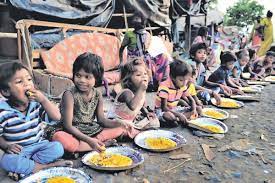
We were able to provide lunch for the slum consisting of 370 people from food collected from a single school. So, we can able to feed the whole world if the wastage is managed properly.
Food waste as fertilizer.
Foods which we find contaminated are transformed to manure to Grow plants. We could use all the food waste and prepare a compost out of them which can be used as organic fertilizer. This way we save the earth from the pollution caused by food waste and also do something productive.
Food waste is unique as a composting agent, it is the main source of organic matters. Fruits, vegetables grains, coffee filters, eggshells can be composted.
PPLO MISSION:
FOOD FOR ALL AND WASTE FOR NONE.
PPLO ACCOMPLISHMENT:
PPLO was successful in providing lunch for nearly 400 people from the food remains generated by a school of 527 students.
If you would like to support PPLO or if you need support from PPLO
Most of us are familiar with the term bullying. We know what it is and why it is wrong. No one wants their kids to be bullied and well, frankly, no good parent wants their child to be a bully. However, since the advent of the digital age, bullying has also extended its claws to the cyber world. When adults torment, harass, humiliate, or threaten each other using support from the internet, it is known as cyber-harassment or cyber-stalking. But when a child, be it a preteen or a teen, gets involved, that is, both the parties are children, it is called cyber-bullying.
Cyber-bullying is usually not a one-time communication. Kids keep on changing their roles, going from the victim to the bully and back again. The person who is a cyberbully for one moment may become the victim the next moment. Many children don’t even realize that they are being a bully or being bullied online. As responsible adults, it is our duty to educate and warn them.
Signs of cyber-bullying
Access to a phone, computer, or any other communication device puts the kids in the way of cyber-bullying. Here are some of the common signs to look out for if you think a child is being cyber-bullied.
Secrecy: Generally, a child beings active secretive or protective of a communication device in case of bullying. Check if your kid gets nervous about receiving a text or an email or is not interested in sharing his experience of the day with you.
Mood swings: Often a child shows sudden changes in mood or behavior. His sleep and appetite patterns are disturbed and he gets agitated easily.
Slipping grades: All the pent-up tension causes a child to lose his focus in his studies and his grades start slipping. He faces difficulty in understanding even the easiest of the topics.
Combat cyber-bullying
Talk: The first thing to do is make your ward comfortable around you and ask him questions to learn what is happening, how it started, and who is involved. Be a part of his virtual and real life.
Document: Keep a record of what is happening and where it is happening. Take screenshots of harmful posts, it will help to document the bullying and may even serve as proof later on.
Report: Many institutions have a strict policy on bullying and will take strict action on reporting the culprit to them. Social media platforms also have policies on cyber-bullying and reporting the offensive content to them may get it removed even.
Support: At a sensitive time like this, the child needs the emotional support of his friends and family. Try to reach both, the bully and the target and express your concern. Sometimes a public intervention by a trusted adult can be helpful, shifting the focus from the negative or hurtful posts to the more positive aspects of the target. If the case worsens, try to seek professional help from a guidance counselor or mental health professional.





 Access to a phone, computer, or any other communication device puts the kids in the way of cyber-bullying. Here are some of the common signs to look out for if you think a child is being cyber-bullied.
 Talk: The first thing to do is make your ward comfortable around you and ask him questions to learn what is happening, how it started, and who is involved. Be a part of his virtual and real life.
 Eduindex
You must be logged in to post a comment.