Hamara Samvidhan – Hamara Samman Campaign

The third regional event of the ‘Hamara Samvidhan Hamara Samman’ campaign is being organised to commemorate 75th anniversary of the adoption of the Indian Constitution and India’s establishment as a Republic whichwas successfully held today at IIT Guwahati from 4:30 PM to 5:30 PM. In the series of regional events as a part of a year-long nationwide campaign, this third regional event was organized under the aegis of the Designing Innovative Solutions for Holistic Access to Justice (DISHA) scheme[1], implemented by the Department of Justice, Ministry of Law and Justice, Government of India.

The event was graced by Shri Arjun Ram Meghwal, the Minister of State for Law and Justice (Independent Charge) and Minister of State for Parliamentary Affairs, who delivered the keynote address. Hon’ble Minister emphasized the importance of Constitutional awareness and legal empowerment. Shri Justice Vijay Bishnoi, the Hon’ble Chief Justice of the High Court of Gauhati, attended the event as the Guest of HonourHon’ble Justice Shri Lanusungkum Jamir attended the program as an esteemed guest and shared the dais.

The event began with a significant and symbolic gesture of planting of saplings to honor the 15 women members of the Constituent Assembly, who played a crucial role in the creation of India’s Constitution. This tribute under the campaign of ‘Ek Ped Maa Ke Nam’ was an attempt to highlightthe pivotal yet often overlooked role of women in shaping the country’s democratic foundation.

Welcoming the dignitaries on the dais and the audience, Secretary (Justice) DoJ, shared the various elements of the Hamara Samvidhan Hamara Samman Campaign and the releasesof three products which were launched during the event namely Samvidhan Katta, Comic Book and Podcasts.

The Samvidhan Katta magazine, which showcases 75 stories that illustrate the impact of the Indian Constitution in everyday life. These stories, shared by stakeholders and field functionaries from the Tele Law and Nyaya Bandhu programs, provided insightful perspectives on how the Constitution continues to safeguard the rights of Indian citizens.

Comic Bookwas unveiled during the event, featuring the real-life stories of 10 beneficiaries who have used the Tele Law and Nyaya Bandhu programs to protect their Constitutional rights. Presented in an engaging comic format, the book aims to make legal rights more accessible and relatable to the general public.

In addition, eight podcasts were released, focusing on the role of the Tele Law and Nyaya Bandhu programs in helping citizens safeguard their rights. These podcasts, aimed at reaching a broader audience, provide practical insights into the significance of the Constitution and how it can be used to defend legal rights.

Highlighting the significance of the Hamara Samvidhan Hamara Samman campaign, Guest of Honor, Hon’ble Chief Justice of Gauhati High Court, Shri Vijay Bishnoi reflected he Constitution of India, as the fundamental law of the land, embodies the values, principles, and governance framework of our country. All the organs of the State owe their origin and derive their authority from the Constitution and discharge their respective functions within its framework. The Constitution of India is the supreme legal authority which binds the legislative, executive, and judicial organs of our country, and guides the State’s functioning, while ensuring citizen’s rights and responsibilities. He further mentioned that this awareness is necessary so that all of us, irrespective of our social, political, Ideological, religious, linguistic and economic differences, can lead dignified life in a just society.

Addressing the audience Hon’ble Minister reflected that the Constitution of India protects the citizens of India.  Hon’ble Minister mentioned that the planting of sapling is a special tribute in honor of 15 women members of the Constituent Assembly. These remarkable women, who worked tirelessly and selflessly, have often remained unsung heroes in the narrative of India’s democratic journey.  Hon’ble Minister mentioned that as we planted these saplings, we symbolize not only the deep roots of our Constitution but also the growth of values such as justice, equality, and freedom, which continue to nurture our society today. He also mentions about the drafting Committee member who belonged from Assam,Syed Muhammad Saadulla was the only member from Assam to serve on the Drafting Committee of the Constitution of India. He also mentions about the female member of the Constituent assembly which was Late Smt. Leela Roy. Hon’ble Minister made the participants aware about the contributors in the making of the Constitution. The purpose behind organizing third regional event in Assam was to remember the contributions made by the people of Assam in the making of the Constitution as it’s the 75th year of its adoption.He paid tribute to Dr. B.R. Ambedkar to his contribution in the making of the Constitution of  India. He also elaborated His last speech before the adoption of the Constitution. He further mentioned about the importance of Ashoka chakra in our National Flag where 24 spokes which have its own relevance and importance to the daily lives of the citizens. Furthermore, he elaborated on the core values of the Constitution, with a particular focus on equality, liberty and fraternity and encouraged attendees to remain aware of their rights and perform their respective duties as citizens by elaborating an example from daily life.

Dignitaries were presented with special mementoin the form of Preamble of the constitution of India.Shri Niraj Kumar Gayagi, Joint Secretary, Department of Justice.Presented a vote of thanks at the end of the event.

Approximately 1400 participants attended the event, including Hon’ble Judges of the Gauhati High Courtofficials from the High Court Registryofficials from the Assam State Legal Services Authorityadvocates from the Guwahati Bar Associationjudicial officersVillage-Level Entrepreneurs (VLEs) from the Common Service Centers (CSCs)students and faculty from National Law University, Guwahati, and senior officials from IIT Guwahati, along with Central and State government representatives. In addition, several stakeholders of the Department of Justice joined the event virtually, contributing to the event’s outreach and inclusivity.

The ‘Hamara Samvidhan Hamara Samman’ campaign, which was officially launched by the Hon’ble Vice President of India on 24th January 2024 at the Dr. B.R. Ambedkar International Centre in New Delhi, has aimed to promote the understanding of the Indian Constitution and raise awareness about legal rights among citizens. As part of its efforts, regional events have been organized across the country, with Bikaner and Prayagraj already hosting successful events in the past year. The Guwahati event marks a significant step in furthering the campaign’s goals, reaching diverse communities in the Northeast.

****
SC Recognises Sex Work as a Profession

Recently, in a significant order, Supreme Court has recognised sex work as a “profession” and observed that its practitioners are entitled to dignity and equal protection under the law. The court invoked its special powers under Article 142 of the Constitution. 

Highlights of the Supreme Court Judgment

Sex workers are entitled to equal protection of the law and criminal law must apply equally in all cases, on the basis of ‘age’ and ‘consent’.

  • When it is clear that the sex worker is an adult and is participating with consent, the police must refrain from interfering or taking any criminal action.
  • Sex workers should not be “arrested or penalised or harassed or victimised” whenever there is a raid on any brothel, “since voluntary sex work is not illegal and only running the brothel is unlawful”.

A child of a sex worker should not be separated from the mother merely on the ground that she is in the sex trade.

  • Further, if a minor is found living in a brothel or with sex workers, it should not be presumed that the child was trafficked.
  • In case the sex worker claims that he/she is her son/daughter, tests can be done to determine if the claim is correct and if so, the minor should not be forcibly separated.

The media should take “utmost care not to reveal the identities of sex workers, during arrest, raid and rescue operations, whether as victims or accused and not to publish or telecast any photos that would result in disclosure of such identities.

Challenges Faced by Sex Workers

Discrimination and Stigmatisation:

  • The rights of sex workers are non-existent, and those doing such work face discrimination due to their criminalised status.
  • These individuals are looked down upon and have no place in society, and most times are treated harshly by their landlords and even the law.

Abuse and Exploitation:

  • Most times, sex workers are exposed to a slew of abuses that range from physical to mental attacks.
  • They would face harassment from clients, their own family members, the community, and even from people who are supposed to uphold the law.

Plight of Victim in Criminal Justice System

                                                        (Photo: The Daily Guardian)

You want to report,
but that could get your family in danger… And if you snitch on a real gang
leader…. they can get you bad… [The] police don’t have your back unless
you’re like someone on the news or whatever, and they will kind of give you
witness protection. But that doesn’t happen in the real world. 

FEMALE,
SACRAMENTO

 The expression
‘victims of crime’ has been defined in section 2 of the code of criminal
procedure, 1973. Initially, the criminal justice system in India was focused on
punishment as part of the crime without much attention on the suffering of
victims of crime. The rights of prisoners were protected even after their
conviction whereas little concern was shown for the rights of victims of crime.
Though there is a wealth of data on victims of reported crime nationally, as
well as various services and programs intending to meet their needs, there
remains a dearth of clear information on how to interrupt cycles of violence
and the persistence vulnerability that keeps such an overwhelming percentage at
high risk of experiencing more crime.

 However, with the
emergence of public interest litigation, the higher courts’ attention was drawn
to this lacunae in the existing criminal justice system by social activists,
and the courts started granting compensatory relief to victims of crime, but
comprehensive legislation on this aspect of criminal justice was still awaited.
In recent times, among the many reforms canvassed for improving the criminal justice
system is the one that advocates a victim orientation to criminal justice
administration. Though there are some provisions under the Indian constitution
and some sections in the code of criminal procedure, 1973 to protect the rights
of the victims and for providing compensation, the criminal courts at the lower
level in India have ignored those provisions for a long time and not utilized
them during their sentencing processes.

 Victim plays an
important role in the criminal justice system but his or her welfare is not
given due regard by the state instrumentality. Thus, the role of high courts or
the supreme court in our country in affirming and establishing their rights
holds much importance. “
Tears shed for the accused are traditional
and trendy but has the law none for the victim of crime, the unknown martyrs
“?
This remark by the Hon’ble Justice VK Krishna Iyer aptly describes the plight
of victims in the criminal justice system in our country. The victim is almost
a forgotten entity in the criminal system rather the irony is that the victim
sets the wheel of justice moving by giving information to the state
instrumentalities without which the entire system would collapse.

 Victims
should come first
“…

 It is of
course an indisputable fact that victims of crime have long been a forgotten
group, a group that suffered for centuries not only from society’s neglect but
also from the exploration of their rightful dias by the state. It is also true
that they had their conflicts stolen by professionals and by the criminal
justice system. However, the exceptional speed with which they were
rediscovered and their cause adopted by the politicians, let alone the
political climate that prevailed at the time of their rediscovery, is bound to
raise questions about the real interests and motives behind what has been
portrayed as a genuinely humanitarian and disinterest cause.

 A comprehensive
legal code for victim compensation is a dire necessity. The time has come for
the legislature to stop shirking its duty. Hence, a comprehensive legal code
should be enacted providing for fair treatment, assistance, and adequate
compensation to victims of crime. Only on embarking on this step can justice in
its more altruistic forms be obtained. It should be made mandatory for the
state to pay compensation to the victims of the crime of not only the private
criminal wrongs but also for the criminal acts perpetrated by its agencies.
This mandatory duty of the state gains importance from two points of view
namely as a welfare state committed to the constitutional goal of social
justice and secondly, for its failure to protect the life, liberty, and
security of its citizens.

 Therefore, I would
like to conclude with this quote-

 “Too
much money…. often resulted in further crimes which were fatal to innocent
victims who need not have been victims if justice had been put first and mercy
second
.” 

Agatha Christie


Section “66A” of the IT act

Section 66A in The Information Technology Act, 2000

66A Punishment for sending offensive messages through communication service, etc. Any person who sends, by means of a computer resource or a communication device,-

[a], any information that is grossly offensive or has menacing character;

or(b) any information which he knows to be false, but for the purpose of causing annoyance, inconvenience, danger, obstruction, insult, injury, criminal intimidation, enmity, hatred or ill will, persistently by making use of such computer resource or a communication device;

or(c) any electronic mail or electronic mail message for the purpose of causing annoyance or inconvenience or to deceive or to mislead the addressee or recipient about the origin of such messages,shall be punishable with imprisonment for a term which may extend to three years and with fine.

For the purpose of this section, terms “electronic mail” and “electronic mail message” means a message or information created or transmitted or received on a computer, computer system, computer resource or communication device including attachments in text, image, audio, video and any other electronic record, which may be transmitted with the message.

Unconstitutional

Shreya Singhal v. Union of India is a judgement by a two-judge bench of the Supreme Court of India in 2015, on the issue of online speech and intermediary liability in India. The Supreme Court struck down Section 66A of the Information Technology Act, 2000, relating to restrictions on online speech, as unconstitutional on grounds of violating the freedom of speech guaranteed under Article 19(1)(a) of the Constitution of India. The Court further held that the Section was not saved by virtue of being a ‘reasonable restriction’ on the freedom of speech under Article 19(2). The Supreme Court also read down Section 79 and Rules under the Section. It held that online intermediaries would only be obligated to take down content on receiving an order from a court or government authority. The case is considered a watershed moment for online free speech in India.

Recent buzz

On July 5 this year, a Bench led by Justice Rohinton F. Nariman said it was “distressing,” “shocking” and “terrible” that people are still booked and tried under Section 66A even six years after the apex court struck down the provision as unconstitutional and a violation of free speech.NGO People’s Union of Civil Liberties, represented by senior advocate Sanjay Parikh and advocate Aparna Bhat, had drawn the court’s attention to the violations.Justice Nariman had authored the judgment trashing Section 66A in a petition filed by law student Shreya Singhal, who highlighted cases of young people being arrested and charged under the ambiguous provision for their social media posts.

“Section 66A of the IT Act has continued to be in use not only within police stations but also in cases before trial courts across India. This information was available on Zombie Tracker website, developed by a team of independent researchers… The findings of the website reveal that as on March 10, 2021, as many as 745 cases are still pending and active before district courts in 11 States, wherein the accused are being prosecuted for offences under Section 66A of the IT Act,” the PUCL has submitted.

Vandalism cannot be neutralised by claiming immunity

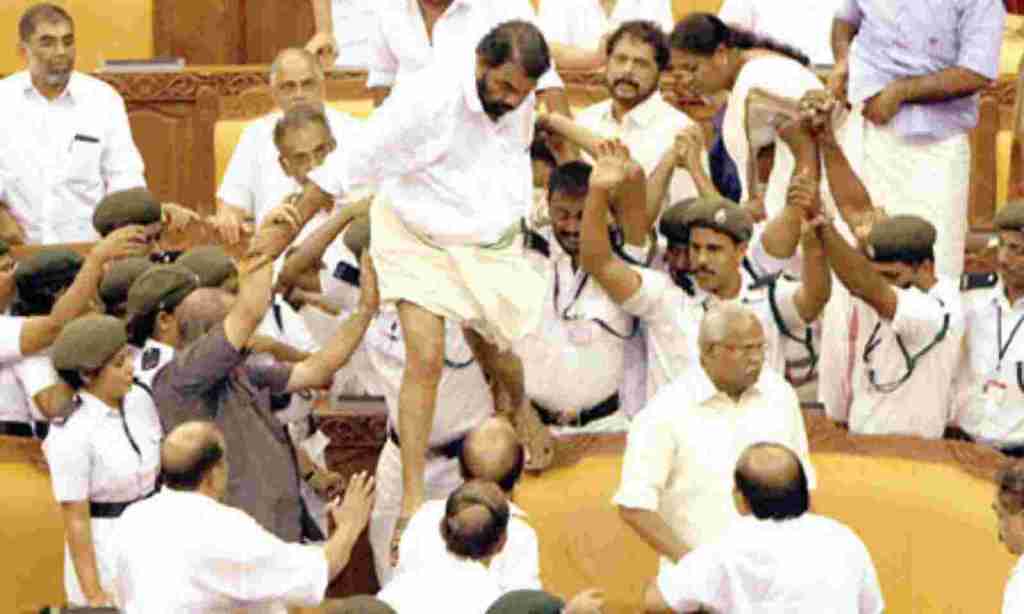
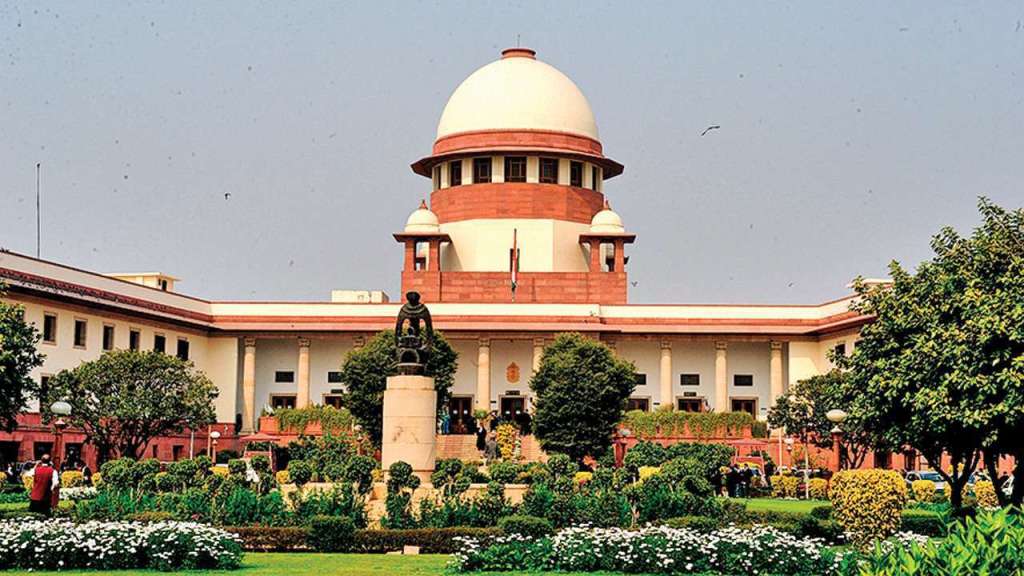
The Supreme Court on Wednesday held that legislators who indulge in vandalism and general mayhem cannot claim parliamentary privilege and immunity from criminal prosecution while dismissing appeals by Kerala government and ruling Left Democratic Front (LDF) to withdraw a criminal case against their leaders who destroyed public property and disrupted a Budget speech on the State Assembly floor in 2015.

“Parliamentary privileges and immunities are not ‘gateways’ for legislators to claim exception from the law of the land, especially criminal law,” a Bench of Justices D.Y. Chandrachud and M.R. Shah observed in a judgment.

Vandalism on the Assembly floor could not be equated with the right to protest by Opposition legislators. Destruction of public property could not be equated with the exercise of freedom of speech.

Legislators should act within the parameters of the public trust imposed on them to do their duty. They had taken office swearing true allegiance to the Constitution. They had to uphold the sovereignty and integrity of India and had to perform the duty imposed on them by the people who elected them, it said.

It was definitely not for them to “betray the trust of the people” who elected them as law makers by engaging in wanton destruction of public property in the Assembly and then claim privilege and immunity from the very process of law. That was like missing the woods for the trees, the Supreme Court noted. Engaging in acts of violence inside the Assembly could hardly be in the “larger public interest” or be considered as “legitimate” protests, as claimed by the State government and the accused leaders.

The Chief Judicial Magistrate, Thiruvananthapuram, was justified in declining the Public Prosecutor’s application to withdraw the criminal case against the accused LDF leaders, one of them being the current State Education Minister, V. Sivankutty. The Supreme Court agreed with the Magistrate’s view that the application for withdrawal was not made in good faith. Criminal law must take its normal course, the court ordered.

The State government and the accused LDF leaders, who were in the Opposition in 2015, had claimed parliamentary privilege, arguing that the incident occurred inside the Assembly hall. They had claimed immunity from criminal prosecution. They had argued that the prior sanction of the Speaker was necessary before the registration of an FIR by the police.

The televised images from the day of the incident show legislators come to blows on the House floor and hurl chairs, computers and other public property soon after Finance Minister K.M. Mani began his budget speech during the UDF government’s tenure. The MLAs are facing charges of criminal trespass, mischief and destruction of public property.

“MLAs only have parliamentary privileges and immunities essential for doing their duty,” Justice Chandrachud responded. The court said breaking chairs and indulging in destruction of public property on the Assembly floor could not be said to be an ‘essential function’.

“MLAs do not stand above the general application of law,” Justice Chandrachud observed in the judgment.

The Supreme Court had reserved its judgment in the case on July 15. The State and the accused persons had appealed against a High Court order which confirmed the Magistrate’s decision to refuse the Prosecutor permission to withdraw the criminal case.

The Supreme Court had consistently taken a strong prima facie view against the conduct of the MLAs. Justice Chandrachud had said these legislators ought to face trial or there would be “absolutely no deterrent to this kind of behaviour”.

The Public Prosecutor’s application to withdraw the cases was dismissed by the Thiruvananthapuram Chief Judicial Magistrate on September 22, last year. The Magistrate had concluded that the request was made “without good faith and under external influence”. The High Court had confirmed the Magistrate’s decision in March.

Plea for south bench of the Supreme Court

Bar Council heads of the southern States including Telangana, Andhra Pradesh, Tamil Nadu, Kerala, and Karnataka have appealed to Vice-President M. Venkaiah Naidu, and the Chief Justice of India N.V. Ramana to consider setting up the long pending demand of a Supreme Court bench in the south on Monday.

The delegation consisting of TS BC chairman A. Narasimha Reddy, AP BC chief G. Rama Rao, TN BC chief P.S. Amal Raj, Karnataka BC chief L. Srinivasa Babu, Kerala BC chief K.N Anil Kumar along with ex-MLC N. Ramchander Rao met both the dignitaries at Delhi where they presented a memorandum highlighting the need for such a step listing out the advantages. Pointing out that there were 65,000 cases pending in the SC, they argued for immediate reforms like establishing permanent regional centres of the Apex Court for the north, south, east and west at Delhi, Kolkata, Chennai and Mumbai as it was the need of the hour to ensure accessible and speedy justice to the people. Over the decades, several standing committees of the Parliament, Law Commissions, Bar Councils and several others have made several representations in this regard. In fact, the Law Commission in 2009 recommended setting up of a Constitution Bench with seven judges in Delhi and four Cessation Benches in Chennai/Hyderabad, Mumbai and Kolkata with four to six judges each. These were to work as appellate courts arising out of orders of the SC.

Though this was rejected in 2010 by SC the time has come to revisit this, they asserted. They also stated that Article 130 of the Constitution empowers the CJ to constitute with the consent of the President these regional benches. It would not only allow common people who cannot afford to make trips to Delhi to appeal to the highest courts but will also open up opportunities for the legal fraternity besides helping in reducing the pendency of cases in the courts.

“The present system of working of the SC needs to be changed if the delayed justice notion is to be changed,” they said and claimed in a press release later in the evening that both the VP and CJ had “responded positively”.

Words of the former law minister; Ravi Shankar Prasad

Law Minister Ravi Shankar Prasad, in a letter to Rajya Sabha member and Marumalarchi Dravida Munnetra Kazhagam (MDMK) chief Vaiko, said that though the matter of setting up a Southern Bench of the Supreme Court of India is pending in the top court, the issue has so far not found favour. The letter, dated February 12, responded to a query raised by Mr. Vaiko in Parliament, in which he asked if a Bench of the Supreme Court of India can be set up in south India.

“As as you must be aware, according to Article 130 of the Constitution, the Supreme Court shall sit in Delhi or in any other place or places as the Chief Justice of India may, with the approval of the President of India, from time to time, appoint. Representations have been received at various times from various quarters for the establishment of Benches of the Supreme Court in various parts of the country,” Mr. Prasad said in his letter.

Bail orders finally being computerised

Computer-mediated communication (CMC) is defined as any human communication that occurs through the use of two or more electronic devices. This tecnhique is indeed being adopted by the honourable Supreme Court Of India. The Chief Justice N.V.Ramana flanked by justices L.Nageswara Rao and A.S.Bopanna announced in open court the rolling out of a new scheme called “FASTER” or “Fast and Secure transmission of electronic records”. The use of this scheme would instantly, directly , securely and electronically transmit bail and other orders to jail authorities, district courts, high courts and tribunals. The Chief justice remarked that rolling out of this scheme is essential considering the fact that peope given bail by courts, even by the supreme court have to wait for days before prison authorities release them.” it is just too much”, he said.

The Chief justice heading specail bench, voiced the Supreme court’s displeasure at prison authorities who insist on receiving by hand the “authentic” hard copy of the bail order regardless of the fact that the personal liberty of the people is brushed aside.

The CJI said “in this age of information and communication technology, we are still looking at the skies for the pigeons to communicate the orders”.

The initiative was applauded by the Attorney general K.K.Venugopal.

Further orders

The bench further passed orders requring the state governments to file their reports about the internet connectivity in thier jails to prevent and resolve technical glitches that might occur in the future. The Secretary General of the Supreme Court was directed to submit a comprehensive report within two weeks for formulating the scheme.

The basis of formulation

The hearing was based on a suo moto case , “Delay in release of convicts after grant of bail”, registered on the initiative of Chief justice Ramana to confront the problem which effects the liberty and dignity of the prisoners.

Recent events

In recent times, 13 prisoners in Agra central jail who suffered imprisonment of upto two decades despite being decalred “juveniles” by the Juvenile Justice Board at the time the crime was commited by them. The Supreme Court Of India on july 8th granted bail to those 13 persons, but they were released after a delay of 4 days for cause being; the prison authorities needed a “authentic” hard copy.

Another event of that sort where prisoners were released after sometime after being granted bail is, when Pinjra tod actvists Devangana Kalita and Natasha Narwal and jamia Milia Islamia student Asif Iqbal Tanha walked out of jail only with a delay of two days after bail was granted to them.

A true reform

This is a reform which will change lives eventually by protecting and taking cognizance of their personal liberty. The chief justice N.V.Ramana is seen stressing on personal liberty because once in 1975, when the emergency was declared he witnessed the taste of the poison; civil liberty being taken away. Justice Ramana said the Emergency taught him much about the “human tragedies of hunger, pain and suffering”. Chief Justice Ramaana, recounted his flight in 1975, as an 18-year-old student, from imminent arrest in a lorry to his maternal aunt’s home with ₹10 in his pocket.

CASE SUMMARY: M/S. Century Textiles Industries V. Deepak Jain & ANR on 20 March, 2009


DETAILS:

Case Name: M/S. Century Textiles Industries … vs Deepak Jain &ANR

Citation: [2009] INSC 573 (20th March 2009)

Court of jurisdiction: The Supreme Court of India

Year of the case: 20th March 2009

Appellant: M/S. Century Textiles Industries

Respondent: Deepak Jain

Bench/ Judges: D.K Jain, R.M Lodha

SUMMARY:

Challenge in this appeal is to the judgment and order dated 18th November, 2004 rendered by a learned Single Judge of the High Court of Madhya Pradesh at Jabalpur, in Civil Revision No. 364 of 2004 filed under Section 115 of the Code of Civil Procedure, 1908 (for short `the CPC’). By the impugned judgment, the learned Judge allowing the Revision Petition has set aside the order passed by the Second Additional District Judge, Jabalpur in Execution Case No. 2 of 2004, whereby and whereunder he had held that the objector Deepak Jain and D.K. Jain are the same person and proprietor of M/s Surya Trading Company–the judgment debtor.

Shorn of unnecessary details, the case of the appellant, in brief, is that it is engaged in the business of manufacture of cement. It required the services of Clearing and Forwarding Agents. Respondent No.1, namely, Deepak Jain applied for the said agency in the name of a proprietary concern `M/s. Deepak Jain’ at 743, Sarafa Bazaar. In the application, he gave the reference of his father Shri S.C. Jain, Advocate, 744, Sarafa Bazaar. Both the properties, namely, 743 and 744 at Sarafa Bazaar are stated to be ancestral properties of Deepak Jain/D.K. Jain. The said respondent operated a Bank Account No. 454 with Punjab & Sind Bank for his dealings. He also had another account No. 453 with the same branch of the bank operated under the name and style of “M/s Surya Trading Company, Proprietor, D.K. Jain”, respondent No.2 in this appeal.

According to the appellant, though the agency was in the name of a proprietary concern, styled as M/s. Deepak Jain, but after sometime, Deepak Jain started dealing with them as “M/s. Surya Trading Company, Proprietor, D.K. Jain” as well. He corresponded from both the addresses, namely, 743 and 744, Sarafa Bazaar. In discharge of his liability towards the appellant, the first respondent issued a Cheque in the sum of Rs.10,68,335/- dated 2nd August, 1992 from Account No. 453 of “Surya Trading Company” as D.K. Jain. However, the Cheque was returned unpaid. The appellant filed a Civil Suit for recovery of the said amount against “M/s Surya Trading Company, Proprietor D.K. Jain”. The Suit was decreed ex- parte on 10th March, 1997. On summons being issued by the Executing Court, Deepak Jain appeared before the Court and filed objections, pleading that he was neither D.K. Jain nor proprietor of M/s. Surya Trading Company and not even a resident of 744, Sarafa Bazaar. Accepting the objections preferred by Deepak Jain, by order dated 14th August, 2001, the Executing Court held that the decree could be executed only against D.K. Jain and not against Deepak Jain. Aggrieved by the order passed by the executing Court, the appellant filed a Civil Revision before the High Court. Vide order dated 21st August, 2002, the High Court disposed of the Revision Petition with the following direction:  “After hearing the learned counsel for the petitioner, this Revision is disposed of with the direction that in case petitioner files an appropriate application disclosing and specifying the identity of the proprietor, an enquiry thereon shall be held by the Executing Court and the same shall be decided in accordance with law.”

None of the parties questioned the said order and thus it attained finality. On 2nd December, 2002, the appellant moved an application before the Executing Court disclosing and specifying the identity of the judgment debtor. The first respondent–Deepak Jain contested the said application by stating that he was not the proprietor of M/s. Surya Trading Company and that he had no connection with 744 Sarafa Bazaar as well. The Executing Court framed the following issues:

1. Whether the objector Deepak Jain, Advocate S/O Late Shri Sumer Chandra, Advocate, R/O 744, Saraffa Bazar, Kamaina Road, Jabalpur is the proprietor of M/s. Surya Trading Company?

2. Relief and expenses.

Parties led evidence on the first issue. The Executing Court, upon analysis of the evidence so led, came to the conclusion that Deepak Jain was the proprietor of M/s. Surya Trading Company and Deepak Jain and D.K. Jain are the same person. For the sake of ready reference, the relevant portion of the order passed by the Executing Court is extracted below:

“It appears from the perusal of the letter, Exh. P-4 that above letter has been written on the Letter Head in the name of Deepak Jain, 743, Saraffa Bazar, Kamania Gate. The letter has been addressed to M/s. Manikgarh Cement, Nagpur. The contents of the letter, related to sending cement and in place of account, M/s. Surya Trading Company has been written. It has not been clarified by the Objector that when he has no concern with M/s. Surya Trading Company, then on what basis name of M/s. Surya Trading Company has been mentioned on the letter, Exh. P-4 dated 2.11.1990 Thus, it is evident from the letter verified by the Objector himself that business of M/s. Surya Trading Company is being managed by Deepak Jain himself. Because as per statement of Objector as per letter, Exh. P-4, it is his Firm and writer of this letter on the Letter Head, is no one other than Deepak Jain himself. In this letter, demand has been given for M/s. Surya Trading Company. Thus, it is evident from the letter, Exh. P-4 that owner of M/s. Deepak Jain and proprietor of M/s. Surya Trading Company Shri D.K. Jain are the same person.”

Obviously, being aggrieved by the said order, Deepak Jain filed Civil Revision No. 364 of 2004. The main ground of challenge was that the Executing Court had wrongly placed the onus on him to prove that he was not D.K. Jain. However, there was no challenge to the jurisdiction or power of the Executing Court to decide the issues framed.

As noted earlier, by the impugned order, the High Court has come to the conclusion that the Executing Court could not decide issue No.1 in exercise of its jurisdiction under Section 47 of the CPC. It has been held that the Executing Court could not go behind the pleadings and the judgment in the Civil Suit, wherein the case of the appellant related to the transaction with “M/s. Surya Trading Company proprietor D.K. Jain” and there was no reference of objector Deepak Jain, S/o late Sumer Chandra Jain, Advocate, 743 Sarafa Bazaar, Jabalpur in the judgment of the Civil Court. It has been observed that without seeking amendment under Section 152 of the CPC of the judgment-decree, the appellant was erroneously endeavouring to execute the money decree against Deepak Jain.

Being aggrieved by the decision of the learned Single Judge, the appellant is before us in this appeal, by special leave.

Mr. Sunil Gupta, learned senior counsel appearing on behalf of the appellant, strenuously urged before us that by the impugned order, the High Court has in effect overturned its  earlier order dated 21st August, 2002 in Civil Revision No. 379 of 2002 (extracted above), whereby the Executing Court had been directed to hold an inquiry into the question of identity of the proprietor of M/s. Surya Trading Company. It was submitted that the High Court failed to appreciate that its own earlier order mandated the Executing Court to determine the identity of the proprietor of the judgment debtor and, therefore, the Executing Court was certainly competent and entitled to go into the said question in terms of Section 47, CPC. It was also contended that adjudication on the question of identity being a pure question of fact, it could not be interfered by the High Court in exercise of its jurisdiction under Section 115, CPC. In support of the proposition that the High Court should have taken into consideration the decision of the Co-ordinate Bench of the same High Court, dated 21st August, 2002, which had attained finality, learned counsel placed reliance on the decisions of this Court in Topanmal Chhotamal Vs. M/s. Kundomal Gangaram & Ors.1; Jai Narain Ram Lundia Vs. Kedar Nath Khetan & Ors.2 and Ravinder Kaur Vs. Ashok Kumar & Anr.3. AIR 1960 SC 388 AIR 1956 SC 359 (2003) 8 SCC 289

Per contra, Mr. Shiv Sagar Tiwari, learned counsel appearing on behalf of the respondents, supported the impugned judgment and submitted that the Executing Court had misread the evidence while coming to the conclusion that Deepak Jain and D.K. Jain are one and the same person and proprietor of M/s. Surya Trading Company. Learned counsel submitted that the High Court was justified in holding that the Executing Court could not go behind the decree and that the only remedy available to the appellant herein was to seek rectification of the decree by moving proper application under Section 152 of the CPC.

Having bestowed our anxious consideration to the background facts obtaining in the present case, in particular, the order passed by the High Court on 21st August, 2002, in the first round of litigation in execution proceedings, subject matter of Civil Revision No. 379 of 2002, in our opinion, the impugned judgment is unsustainable.

There is no quarrel with the general principle of law and indeed, it is unexceptionable that a court executing a decree cannot go behind the decree; it must take the decree according to its tenor; has no jurisdiction to widen its scope and is required to execute the decree as made. However, the  question which falls for consideration in the present case is that when a specific issue regarding the identity of the judgment-debtor had been raised and entertained by the High Court in the first Civil Revision Petition, decided on 21st August, 2002, and the Court having remitted the matter to the Executing Court.

REMARKS

In my opinion, on facts in hand, the Executing Court had no option but to determine the question of identity of the judgment-debtor because of the direction of the High Court and the issues raised before it. Indeed, no objection to the jurisdiction of the Executing Court to determine the issue could or was raised. It is also manifest that the said direction by the High Court was keeping in view the provisions of Section 47 of the CPC.

Section 47 of the CPC contemplates that all questions arising between the parties to the suit in which the decree was passed, or their representatives, and relating to the execution, discharge or satisfaction of decree, have got to be determined by the court executing the decree and not by a separate suit. In the instant case, the controversy before the High Court, in the first instance, was whether the decree against “M/s Surya Trading, Proprietor, D.K. Jain” could be executed against Deepak Jain, who according to the decree holder, was no one else but D.K. Jain. It is true that Deepak Jain, as such, was not a party to the suit but the fact remains that “M/s Surya Trading Company, Proprietor, D.K. Jain” was Deepak Jain himself and, therefore, the question referred to the Executing Court by the High Court for determination was whether “D.K. Jain” and “Deepak Jain” were two different entities. We have no hesitation in holding that in the peculiar situation arising in the case, the said issue could be adjudicated under Section 47 of the CPC, notwithstanding the fact that Deepak Jain was not a party in the suit, wherein the decree in question was passed.

Moreover, it is evident from the order of the Executing Court that no plea regarding the applicability of Section 47 of the CPC was raised on behalf of the judgment-debtor before that Court. We are unable to persuade ourselves to agree with the High Court that the only course available to the decree holder was to seek amendment of the decree under Section 152 of the CPC, as was canvassed before us by learned counsel for the respondents. A bare reading of Section 152 CPC makes it clear that the power of the Court under the said provision is limited to rectification of clerical and arithmetical errors arising from any accidental slip or omission. There cannot be re- consideration of the merits of the matter and the sole object of the provision is based on the maxim actus curiae neminem gravabit i.e., an act of court shall prejudice no man. In our judgment, the issue requiring adjudication by the Executing Court did not call for and was clearly beyond the scope of Section 152 CPC.

We are also constrained to observe that while dealing with the second Revision Petition, the High Court failed to take into consideration the order passed by a learned Single Judge on 21st August, 2002, whereby the Executing Court was directed to conduct inquiry in regard to the status of the objector to the execution proceedings. Time and again it has been emphasised that judicial propriety and decorum requires that if a Single Judge, hearing a matter, feels that earlier decision of a Single Judge needs re-consideration, he should not embark upon that enquiry, sitting as a Single Judge, but should refer the matter to a larger Bench. Regrettably, in the present case, the learned Single Judge departed from the said healthy principle and chose to re-examine the same question himself. In view of the foregoing discussion, the appeal is allowed and the impugned judgment of the High Court is set aside with costs, quantified at Rs.20,000/-.

CASE SUMMARY: R.M.D.C. VS. UNION OF INDIA

DETAILS:

Case Name: R. M. D. Chamarbaugwalla vs. Union of India

Citation: 1957 AIR 628, 1957 SCR 930

Court of jurisdiction: Supreme Court of India

Year of the Case: 9 April, 1957

Appellant: R. M. D. Chamarbaugwalla 

Respondent: Union of India

Bench/Judges: HON’BLE JUSTICE T. L. VENKATARAMA AYYAR, HON’BLE JUSTICE S. R. DASS (CJI), HON’BLE JUSTICE B. P. SINHA, HON’BLE JUSTICE S. K. DAS AND HON’BLE JUSTICE P. B. GAJENDRAGADKAR

SUMMARY:

In R.M.D.C. v. Union of India, AIR 1957 SC 628, the constitutionality of the Prize Competitions Act 1955, was challenged on the ground that it violated the Fundamental Right of the petitioners secured by Article 19(1(g). The impugned Act, provided for the control and regulation of prize competitions. It was contended that Section 2(d) of the impugned Act which defined the expression “prize competitions” included not only competitions of a gambling nature but also those in which success to a substantial degree depends on skill.

Having regard to the circumstances under which the impugned Act was passed, the Supreme Court held that it was to control and regulate prize competitions of a gambling character. Therefore, the Court stated that the application of impugned provision of the Act could be restricted to the competitions of gambling character. The provisions of the impugned Act were thus held severable in their application to competitions, in which, success did not depend, to any substantial extent, on skill. The Court held that when a Statute, was in part, void, it would be enforced as regards the rest, if that was severable from what was invalid, The Court then referred to the rules of construction laid down by the American Courts for the operation of the doctrine of severability and applied these to the present case.

The Supreme Court then summed up the rules relating to severability

1. In determining whether the valid parts of the statute are separable from the invalid parts thereof, it is the intention of the Legislature that is the determining factor. The test.to be applied is whether the Legislature would have enacted the valid part if it had known that the rest of the statute was invalid.

2. If the valid and invalid provisions are so indistinguishably mixed up that they cannot be separated from one another, then, the invalidity of a portion must result in the invalidity of the Act in its entirety. On the other hand, if they are so distinct and separate that after striking out what is invalid, what remains is in itself a complete code independent of the rest, then it will be upheld notwithstanding that the rest has become unenforceable.

3. Even when the provisions which are valid are distinct and separate from those which are invalid, if they all form parts of a single scheme which is intended to be operative as a whole, then also the invalidity of a part will result in the failure of the whole.

4. Likewise, when the valid and invalid parts of a statute are independent and do not form part of a scheme but what is left after omitting the invalid portion is so thin and truncated as to be in substance different from what it was when it emerged out of the legislature, then also it will be rejected in its entirety.

5. The reparability of the valid and invalid provision of a statute does not depend on whether the law is enacted in the same section or different sections (Vide Coley’s Constitutional Limitations, Vol. I, pp. 361-362), it is not the form, but the substance of the matter that is material, and that has to be ascertained on an examination of the Act as a whole and of the setting of the relevant provision therein.

6. If after the invalid portion is expunged from the statute what remains cannot be enforced without making alterations and modifications therein, then the whole of if must be struck down as void, as otherwise it will amount to judicial legislation.

7. In determining the legislative intent on the question of severability, it will be legitimate to take into account the history of legislation, its object, the title and the preamble to it.

REMARKS

Intention of the legislature will determine whether the valid part of a statute is severable from the invalid parts. If the valid and invalid provisions are so inseparably mixed up that they cannot be separated from another, then the irrationality of a portion must result in the invalidity of the Act in its whole. On the other hand, if they are so distinct and separate that after striking out what is invalid what remains is itself a complete code independent of the rest, then it will be upheld notwithstanding that the rest had become unenforceable.

Courts would be reluctant to declare a law invalid or ultra vires on account of unconstitutionality. Courts would accept an interpretation, which would be in favour of constitutionality rather than the one which would render the law unconstitutional. The court can resort to reading down a law in order to save it from being rendered unconstitutional. But while doing so, it cannot change the essence of the law and create a new law which in its opinion is more desirable.

Covid-19 lockdown won’t impact three-month cheque validity, rules Supreme Court…

The Supreme Court on Friday said that Covid-19 lockdown will not impact the three-month period of validity of the cheques.

A three-judge bench, headed by Chief Justice of India (CJI) Sharad Arvind Bobde, was considering request of extension of timelines under various laws.

When the question came on extension of three-month period of validity of cheques, the Reserve Bank of India (RBI) informed the court that the same should not be done as it would impact banking activities.

The bench, also comprising Justices R Subhash Reddy and AS Bopanna, accepted RBI suggestion and kept the three-month validity period of cheque intact.

The RBI has fixed validity period of cheque under Section 35A of the Banking Regulation Act. The court noted that all banking systems across the country follow this prescribed period and there is no need to interfere with the same.

The central government ordered starting economic activities in the country after an over two-month-long lockdown in phases. While the first phase of relaxation, called Unlock 1, began on June 1, the second of the three phases came into force from July 1.

Though considerable relaxations have been given by the government in Unlock 2, there are no concessions for containment zones. The government advisory said that lockdown shall continue to be implemented strictly in the containment zones till July 31. Within the containment zones, strict perimeter control will be maintained and only essential activities are allowed.

Supreme Court And Covid19 – A Forgotten Responsibility?

The Supreme Court in june said it will investigate the practicality of physical appearances of lawyers in the court while sticking to physical distancing standards in the midst of the COVID-19 pandemic. The court has been hearing pressing cases through videoconference all through the time of the lockdown. The Benches hearing these cases sit in the courts while legal advisors, who are provided with video joins, make their entries from their homes or workplaces. The court had named this component as the ‘virtual court’ system. However, the Supreme Court Advocates-on Record Association (SCAORA) has been making portrayals to the top court that a greater part of the legal counselors find that they can’t adequately introduce their contentions during virtual court hearings. SCAORA had as of late kept in touch with the court to start physical court hearings from July to serve the legal advisors.

The Bar Council of India (BCI) had recently asked the Chief Justice of India Sharad A. Bobde to continue physical court hearings from June 1. BCI chairperson and senior advocate Manan Kumar Mishra had written in a portrayal to the CJI that solitary a “handful of privileged class of advocates are beneficiaries of the virtual court system”. In its short roundabout, the court showed that it was available to the chance of physical court hearings, gave supporters and gatherings who come face to face to introduce their cases give a joint agree with respect to their “eagerness for genuinely showing up and contending in court”. The court said it would think about how conceivable it is dependent upon the accessibility of Benches, requests of the skilled position and physical removing standards.

Since March, 2020 an enormous number of people and associations have moved toward the Supreme Court concerning the effect of Covid-19. A large number of the Petitions, for example, the supplication to pronounce monetary crisis, are trivial. Some others have petitions requiring significant levels of clinical or other mastery, which the Supreme Court doesn’t have, can’t be gone into. Then again, various issues have been brought up in the Supreme Court which it could have and ought to have engaged however neglected to do as such. The essential methodology of the Supreme Court has been to either say that the Government is accomplishing awesome work and in this way the Court ought not meddle or to say that these are matters concerning strategy which can’t be meddled with. Basically the Supreme Court has been profoundly respectful towards whatever the Central Government says, particularly through the Solicitor General; and when pushed, the court will at the most solicitation the Central Government to consider the issue brought up in a Petition. No course of events is given nor any direction with regards to what are the elements to be taken into account while thinking about the issue. No inquiries are posed and no worries communicated; the Petition passes on a characteristic demise. Let us presently take a gander at a portion of the significant issues managed by the Supreme Court concerning Covid-19.

undoubtedly, this was uncommon in which the Government must be permitted a specific opportunity to go about as it saw fit. In any case, to totally abandon its duties towards the poor was something shocking. Possibly, be that as it may, Covid-19 is the darkest stage throughout the entire existence of the Supreme Court when it renounced its obligation at one go towards a huge number of penniless and underestimated individuals and this record will take some beating in the decades to come.

CASE SUMMARY: BIKRAM CHATTERJI VS. UNION OF INDIA

Case Name: Bikram Chatterji & Ors. Vs. Union of India & Ors.

Appeal No.: Writ Petition(s) (Civil) No(s).940/2017

Date of Judgment: 21-Aug-18

Court: Supreme Court of India

The case study is a landmark decision of the Hon’ble Supreme Court regarding the real estate industry in India and presumably the most anticipated in the light of the various challenges faced by home-buyers throughout India.

FACTS:

In 2011, Projects of Amrapali group launched construction of 42000 flats in Noida and Greater Noida and promised that delivery of possession will be made after 36 months. Buyers in 2010 – 2014 signed the buyer’s agreement. Even after payment of 40% consideration they faced the threat of forfeiture. The agreement contained some terms as to interest of owners, Clause 14 authorized himself to finance himself from any loans by way of mortgage/ charge / security and allotees cannot raise objection. Clause 15 authorized the builder to keep full authority over flat depriving allotees any lien or interest despite full payment. Clause 19(a) the builder was obliged to complete flats of Centurion Park within 30 months from date of commencement of signing agreement which may vary more or less than 6 months. Clause 19(c) builder fixed sum of Rs. 5 per square feet per month for period of delay. Breach of obligation by respondents to deliver flats even within 36 months. They did not pay amount to the allotees and also the bank. And buyers had to pay the EMI’s to bank thereby causing double loss.

Some consumers approached NCDRC by filing consumer complaint. Bank of Baroda filed a company petition in 2017 before the NCLT under Section 7 of Insolvency and Bankruptcy Code, 2016. The NCLT appointed Interim Resolution Professional. Moratorium was also declared thereby under the SARFAESI Act, 2002. The order adversely affected the interest of thousands of homebuyers of various projects being developed by Amrapali.

Meanwhile, a writ petition was also filed in Supreme Court. The apex court after hearing the complaints and in light of the accusations of draining off of funds being made against the Amrapali Group decided to take cognizance of petition and ordered to conduct a forensic audit over all the agencies of Amrapali Group.

ISSUES:

  • The charges levied by officials, banks, home purchasers and development agencies shall be valid.
  • The Amrapali Group’s RERA registration may be cancelled.
  • Form of relief accessible to homebuyers.

HELD:

Supreme Court held that:

RERA Amrapali Group registration under RERA Act shall be revoked and NBCC (India) Ltd is finalizing various projects.

The separate lease agreements issued for projects under consideration in favour of Amrapali Group Authorities are revoked and all the rights will now be vested in the Court Receiver who has authority to alienate, lease out or take any decision to raise funds. The Court Receiver will pay money raised to NBCC will complete the project with 8% profit margin (senior Adv., Shri R. Venkataramani).

The Authorities and Banks do not have the right to sell the property of the property buyers or the land leased for payment of their dues. They have to receive all their charges from the selling of other assets attached to the Amrapali Group.

The right of the lessee shall be enshrined in the Court Receiver (formerly with the Amrapali Group) and shall, by means of an authorized person on his behalf, conclude a tripartite agreement and perform all other acts as may be necessary and shall also make sure that the title is handed over to the home-buyers and that the possession is handed over to them.

https://indiankanoon.org/doc/6791744/

Who is Owner of the Vehicle?

In a fresh development, the Supreme Court just recently on June 18, 2020 in a latest, landmark and extremely laudable judgment titled Surendra Kumar Bhilawe vs The New India Assurance Company Limited in Civil Appeal No. 2632 of 2020 (Arising out of Special Leave Petition (C) No. 20569 of 2016) has laid down in no uncertain terms that it is the person in whose name the motor vehicle stands registered, who would be treated as the owner of the vehicle, for the purposes of the Motor Vehicles Act. The case arose out of an insurance claim made by one Surendra Kumar Bhilawe. Surendra’s insurance claim was thus upheld!

                                           To start with, this noteworthy judgment authored by Justice Indira Banerjee for herself and Justice R Banumathi sets the ball rolling in para 2 wherein it is observed that, “This appeal is against a judgment and order dated 23.2.2015 passed by the National Consumers Disputes Redressal Commission, New Delhi, hereinafter referred to as ‘National Commission’, allowing Revision Petition No. 4126/2014 filed by the Respondent, hereinafter referred to as ‘the Insurer’, setting aside an order dated 09.01.2014 passed by the District Consumer Disputes Redressal Forum, Raipur, hereinafter referred to as ‘the District Forum’ allowing the Complaint Case No. 404 of 2012; and an order dated 22.7.2014 passed by the Chhatisgarh State Consumer Disputes Redressal Commission Pandri, Raipur (C.G), hereinafter referred to as the State Commission, dismissing an appeal being Appeal No. FA/14/85 of the Insurer against the said order of the District Forum; and dismissing the said complaint filed by the Appellant.”  

                                         To be sure, para 3 then states that, “The Appellant was the owner of Ashok Leyland 2214 Truck bearing Registration Number C.G.04/JA3835, which was covered by a Policy of Insurance issued by the Insurer being Policy Number was 45030031110100001693, effective for the period from 2.6.2011 to 1.6.2012.”

                                          Needless to say, it is then mentioned in para 4 that, “On 11.11.2011, the said lorry, which was loaded with Ammonia Nitrate at Raipur, commenced its journey for Dhanbad, where the Ammonia Nitrate was to be unloaded. The lorry was driven by Driver, Rajendra Singh.”

                                                   While elaborating further, it is then specified in para 5 that, “On 13.11.2011, at about 1.45 p.m., while the said truck was on its journey from Raipur to Dhanbad, it met with an accident near Bhakuwa Toil Police Station, Gumla in Jharkhand. It is stated that while negotiating the said truck, near a culvert, to save a cow, which had come on its way, the Driver lost control, as a result of which the said truck turned turtle and fell into a river by the side of the road and was extensively damaged. The Ammonia Nitrate, carried in the truck was also washed away.”

                                           On expected lines, we then see that it is revealed in para 6 that, “The accident was reported to the Gumla Police Station, District Gumla, Jharkhand on 16.11.2011 and on 25.11.2011 the Appellant lodged a claim with the Insurer, through one Mohammad Iliyas Ansari.”    

                                     What followed next is then stated in para 7 that, “On receipt of information regarding the accident, and the claim, the Insurer appointed an independent Surveyor and Loss Assessor to conduct a spot survey. The independent Surveyor and Loss Assessor appointed by the Insurer, namely, Shri Birendra Kumar Gupta, conducted a spot survey and submitted his report on 29.11.2011.”

                                    As it turned out, para 8 then notes that, “The Insurer, thereafter, appointed one Shri Gyan Chandra, Valuer, Surveyor, Loss Assessor and Investigator to conduct the final survey.  The said Shri Gyan Chandra submitted a report dated 25.1.2012 assessing the loss recoverable from the insurer at Rs. 4,93,500/- after deduction of salvage value.”

                                           While explaining the twists and turns that followed, it is then enunciated in para 9 that, “However, instead of reimbursing the loss, the Insurer issued a show cause Letter dated 22.3.2012 to the Appellant requiring the Appellant to show cause why the claim of the Appellant should not be repudiated, on the allegation that, he has already sold the said truck to the said Mohammad Iliyas Ansari on 11.4.2008. It is, however, not in dispute that the Appellant continued to be the registered owner of the said truck, on the date of the accident.”

                                        While dwelling on the appellant’s version, it is then enshrined in para 10 stating: “It is the case of the Appellant that the said truck which had been purchased with finance from ICICI Bank, stood hypothecated to ICICI Bank, and the same could not be transferred without the consent of ICICI Bank. ICICI Bank had not issued ‘No Objection’ to the Appellant for transfer of the said truck, as the dues of ICICI Bank had not been repaid in full till the date of the accident. Admittedly, however, the Appellant had entered into a sale agreement with the said Mohammad Iliyas Ansari.”

                             While carrying on forward in the same vein, it is then pointed out in para 11 that, “The Appellant claims that he duly replied to the show cause letter and that he also sent a legal notice on 2.6.2012 to the Insurer to which there was no reply. The Insurer was disputing the claim, as it had been submitted by Mohammad Iliyas Ansari, and also on the ground of delay in filing the police complaint and in reporting the accident to the Insurer.”

                                     Furthermore, it is then revealed in para 12 that, “The Appellant himself submitted a motor claim again on 22.8.2012, but the Insurer refused to accept the same. Under cover of a letter dated 22.8.2012, the Appellant sent the claim form, along with the requisite documents, to the Insurer by Registered Post.”

                                                As a consequence, what then unfolds is elaborated in para 13 stating that, “Aggrieved by the action of the Insurer company in not releasing the claim of the Appellant, towards reimbursement of losses on account of the Accident, the Appellant approached the District Forum with the complaint numbered Case No. 404 of 2012, referred to above.”  

                                         What came as a shot in the arm for the Appellant is then enumerated in para 14 stating that, “By a judgment and order dated 9.1.2014, the District Forum allowed the complaint filed by the Appellant and directed the Insurer to pay Rs. 4,93,500/- to the Appellant within a month along with interest @ 6% per annum from the date of filing of the complaint, that is, 6.10.2012 till the date of payment and further directed the Insurer to pay the Appellant a sum of Rs. 5,000/- towards compensation for mental agony and Rs. 2,000/- towards cost of litigation.”

                                Against this backdrop, what follows next is then explained in para 15 holding that, “The Insurer appealed to the State Commission. The said appeal, being Appeal No. FA/14/85, was dismissed by the State Commission by an order dated 22.7.2014, which was challenged by the Insurer before the National Commission by filing the Revision Petition No. 4126 of 2014.”

                                  What ultimately turned the tables is then stated in para 16 as follows: “By the judgment and order impugned bfore us, the National Commission has allowed the Revision Petition, set aside the orders of the District Forum and the State Commission respectively, and dismissed the complaint of the Appellant.”

                                    No doubt, the tables were again restored to its original state by the Supreme Court Bench and this is best manifested in para 29 wherein it is held that, “There was no material evidence at all before the National Commission, on the basis of which the National Commission could have reversed the concurrent factual findings of the District Forum and the State Commission which unerringly led to the conclusion that ownership of the said truck never stood transferred to Mohammad Iliyas Ansari.”    

                                            In a stinging rebuke to the National Commission, the Apex Court Bench also noted in para 28 that, “The National Commission completely ignored the following concurrent findings of the District Forum and State Commission:-

(i)                         Even after the date of the purported sale agreement, that is, 11.4.2008, the Appellant continued to pay instalments to ICICI Bank towards repayment of the loan for purchase of the said truck.

(ii)                      The ICICI Bank had neither released the said truck from hypothecation nor given ‘No Objection’ for the sale of the said truck.

(iii)                   The Appellant paid the premium and took out the policy of insurance on or about 31.5.2011 covering the period from 2.6.2011 to 1.6.2012 in his own name. This was over three years after the date of the purported sale agreement.

(iv)                   No steps were taken by the Appellant or by Mohammad Iliyas Ansari to have the registration of the said truck transferred in the name of Mohammad Iliyas Ansari.

(v)                      The permit for operating the said truck was still in the name of the Appellant over three years after the purported sale agreement.”

                                            More damningly, it is then also held in para 39 that, “It appears that the National Commission patently erred in holding that the Appellant had been paid the consideration without even examining if Mohammad Iliyas Ansari had paid any instalments to ICICI Bank.”   

                               Most significantly, it is then very rightly held in para 53 that, “In our considered opinion, the National Commission erred in law in reversing the concurrent factual findings of the District Forum and the State Commission ignoring vital admitted facts as stated above, including registration of the said truck being in the name of the Appellant, even as on the date of the accident, over three years after the alleged transfer, payment by the Appellant of the premium for the Insurance Policy, issuance of Insurance Policy in the name of the Appellant, permit in the name of the Appellant even after three years and seven months, absence of ‘No Objection’ from the financier bank etc. and also overlooking the definition of owner in Section 2(30) of the Motor Vehicles Act and the Rules framed thereunder, including in particular the transferability of a policy of insurance under Section 157.”

                                      Be it noted, it is then envisaged in para 54 that, “In view of the definition of ‘owner’ in Section 2(30) of the Motor Vehicles Act, the Appellant remained the owner of the said truck on the date of the accident and the Insurer could not have avoided its liability for the losses suffered by the owner on the ground of transfer of ownership to Mohammad Iliyas Ansari.”

                                           Finally, it is then held in the last para 57 that, “The judgment and order of the National Commission is unsustainable. The appeal is, therefore, allowed. The impugned order of the National Commission under appeal is set aside and the order of the District Forum is restored. The Insurer shall pay to the Appellant a sum of Rs. 4,93,500/- as directed by the District Forum with interest as enhanced by this Court to 9% per annum from the date of claim till the date of payment. The sum of Rs. 5,000/- awarded by the District Forum towards compensation for mental agony and Rs. 2,000/- awarded towards the cost of litigation, is in our view grossly inadequate. The Insurer shall pay a composite sum of Rs. 1,00,000/- to the Appellant towards cost and compensation for the agony caused to the Appellant by withholding his legitimate dues. The amounts as directed above shall be paid to the Appellant within six weeks from date of the judgment and order.”

                                          To sum up, this carefully drafted, excellently worded and well reasoned judgment delivered by a two Judge Bench of the Apex Court comprising of Justice Indira Banerjee and Justice R Banumathi speaks for itself! It makes it abundantly clear that the Insurer cannot shirk of his responsibility in case of an accident on any ground if the insured continues to remains the owner of the vehicle as we see in this case also! Very rightly so! No denying or disputing it!

Sanjeev Sirohi, Advocate,

s/o Col BPS Sirohi,

A 82, Defence Enclave,

Sardhana Road, Kankerkhera,

Meerut – 250001, Uttar Pradesh. 

SC Takes Suo Motu Cognizance Of Worst Conditions Of Hospitals

Without wasting any time, the highest court of our country which is the Supreme Court very rightly, very commendably and very consciously took suo motu cognizance of the most degrading, most deplorable and most dehumanizing treatment of the Covid-19 patients and dead bodies in the hospitals etc after watching it live in India TV news channel as also other news channels especially of LNJP hospital in Delhi which has shaken the whole country beyond belief! Chief Justice of India Sharad Arvind Bobde took cognizance of this most serious issue and assigned it to a three-Judge Bench as stated below. Former Union Law Minister and senior and eminent advocate of the Supreme Court Dr Ashwani Kumar too had written to the CJI on June 8 highlighting the undesirable and horrifying manner in which patients and the bodies were being mishandled!

                                           No doubt, we all always consider hospitals to be the safest refuge when we are not well. But after seeing what has been shown in different news channels about how the Covid-19 patients are treated, how they are thrown like animals and how even dead bodies keep lying unattended in hospitals. It is high time that the hospitals and the respective State governments must wake up from their deep slumber, see the ground reality for themselves and from now onwards stop trusting hospitals blindly under any circumstances!

                                            It goes without saying that hospitals too must be held accountable from now onwards just like other institutions. Those hospitals who don’t cater for their patients must be held accountable and punished most severely! There should be no mercy for them as they betray the very purpose for which hospitals are set up! Doctors and nurses who are found wanting also must be held fully accountable and penalized severely for it!  

                                           To start with, a 3 Judge Bench of Supreme Court comprising of Justice Ashok Bhushan, Justice Sanjay Kishan Kaul and Justice MR Shah in this crucial suo motu case registered as “In Re Proper Treatment of COVID-19 Patients And Dignified Handling Of Dead Bodies In The Hospitals, Etc. in Suo Motu Writ Petition (Civil) No(s). 7/2020  most crucially set the ball rolling by first and foremost observing that, “The cognizance of suo motu writ petition has been taken on the basis of media reports and programmes aired in several channels presenting horrific scenes from LNJP hospital, which is a Covid dedicated hospital. The India TV, in its programme on 10th June 2020, has shown certain videos which indicate the pathetic condition of the patients admitted in the hospital and the deplorable condition of the wards. The patients are in the wards and the dead bodies are also in the same wards. Dead bodies are seen also in the lobby and waiting area. The patients were not supplied with any oxygen support or any other support, no saline drips were shown with the beds and there was no one to attend the patients. Patients are crying and there is no one to attend them. This is the condition of the Government Hospital of Delhi which has capacity of 2000 beds. As per the Government App, only 870 beds were occupied in LNJP Hospital as on 11.06.2020. The Government App itself gives the details of beds occupied in the Government and Private hospitals in Delhi. In the Government hospitals, the number of beds is 5814, out of which 2620 are occupied.”

                             More damningly and more tellingly, it is then pointed out by the Apex Court Bench that, “The reports also indicate that the patients suffering from Covid-19 are running from pillar to post to get admission in the hospitals whereas large number of beds are lying vacant in Government hospitals. The large number of beds in Government Covid Hospital being vacant in a situation where patients suspected of Covid-19 are running from pillar to post to get admission in any hospital tells about the mismanagement and sorry state of Government hospitals in Delhi. The State is not only duty bound to increase the number of beds but also to provide appropriate infrastructure and staff for manning the Covid-19 patients. The pathetic condition of the patients and improper care and treatment of the patients shown by the media has pained this Court.”

                                  While rapping the State Government of NCT of Delhi and its officers on its knuckles, the Apex Court Bench then further minces no words to observe that, “The State on whom the duty lies to take care of health of its citizens cannot abdicate its responsibility of ensuring that all hospitals including Government hospitals take care of the Covid-19 patients. The duty of the State of NCT Delhi does not end in informing the people that it has arranged 5814 beds in Government hospitals and 9535 beds including private hospitals. The State and its officers are also duty bound to ensure that patients are taken care, attended, provided all medical facility, the hospitals have necessary infrastructure and staff.”

                 Going ahead, the Apex Court Bench then further observes that, “We have also noticed that the Government App of Delhi itself indicates that the number in testing of Covid-19 patients has gone down in the month of June, 2020 as compared to the month of May 2020. On 27th May 2020, the number of samples tested is 6018, on 9th June 2020, the number is 4670, on 11th June 2020, the total testing in Delhi is reported as 5077 whereas in the State of Maharashtra as 16,000 and in the State of Tamil Nadu as 17675. The media reports indicate that there is an increase in the number of patients affected by Covid-19 every day in the entire country especially in Delhi, Maharashtra, Tamil Nadu, Chennai and Ahmedabad. The number of patients increasing day by day is 10,000 or more per day. We do not understand why the tests have gone down in State of NCT Delhi. Non-testing of the patients is not a solution to the problem rather increase in the testing facility is the duty of the State, so that people may come to know about their health status regarding Covid-19 and they may take appropriate care and treatment of Covid-19.”

                     While strongly recommending more testing, the Apex Court Bench then states that, “We impress upon the States to ensure that there should be steep increase in the testing both by Government hospitals and private labs and whosoever desires for testing should not be denied on any technical ground or any other ground. The States may consider simplifying the procedure so that more and more tests be held to benefit the patients.”

                                  Why talk about Delhi alone? Why not talk about other states also? Why should they be not discussed?

                                        As it turned out, the Apex Court Bench then pointed out that, “We have also noticed that apart from Delhi, there is a grim situation in the other States also, more particularly, in the States of Maharashtra, Tamil Nadu, West Bengal and Gujarat.”

                                 What’s more, the Bench also then brings out that, “Mr. Tushar Mehta, learned Solicitor General appearing for the Union of India submits that although there are Covid-19 Guidelines on Dead Body Management issued by the Government of India, Ministry of Health & Family Welfare, Directorate General of Health Services on 15.03.2020 which are in the nature of directives, we notice that there is no proper adherence to the guidelines nor the hospitals are giving due care and concern to the dead bodies.”

                                      Worse still, the Bench then also notes that, “The patients’ relatives are not even informed for several days of the death of the patient as has been reported in the media. It is also brought to our notice that the details of cremation as to when the dead body will be cremated are not even informed to their close relatives. Due to which the families of the patients are not even able to see the dead bodies or attend their last funeral rites.” This a terrible and pathetic state of affairs! What can be worse than this?

                               Needless to say, the Apex Court Bench then states that, “All these facts, which have been brought to the notice of the Court by the media reports, clearly indicate a very sorry state of affairs of the patients of Covid-19 in the Government hospitals in the NCT of Delhi as well as in other States.”

                                         What followed next was ostensibly as anticipated and as the Bench lays bare that, “We, thus, issue notice to the Union of India, NCT of Delhi, States of Maharashtra, West Bengal, Tamil Nadu and Gujarat as well as to the LNJP Hospital in Delhi. We shall also consider issuing notice to other states, Government and Private hospitals subsequently.”

                                            Furthermore, the Bench then adds that, “Mr. Tushar Mehta, learned Solicitor General accepts notice on behalf of the Union of India and Mr. Sanjay Jain, learned ASG accepts notice on behalf of the NCT of Delhi.”

                                            To put things in perspective, the Bench then further adds that, “Let notice be served to other States through the standing counsel of the States as well as through the Chief Secretaries of the State Governments. LNJP hospital, Delhi be also noticed through its Director. We direct that the Chief Secretaries of the States shall immediately take appropriate notice of the status of patients’ management in the Government hospital in their respective States and take remedial action. Status report with regard to Government hospitals, patient care and the details of the staff, infrastructure etc. should be brought before the Court so that appropriate directions be issued by the Court as found necessary on the next date of hearing.”

                                        Finally, the Bench then in the concluding part concludes by observing that, “Notice be issued today itself by the Registry. List the matter on 17.06.2020 for further consideration. Let the affidavit be filed either by the Chief Secretaries or Secretary, Ministry of Health and Family Welfare of the concerned States. With regard to LNJP hospital, Delhi in addition to affidavit by the Chief Secretaries or Secretary, Ministry of Health and Family welfare, affidavit be also filed by the Director of Medical Superintendent of LNJP hospital. Referring to reports in media showing deplorable state of affairs in the hospital.”   

                                               As a corollary, the Delhi government immediately swung into damage control mode and said that it accepted the court’s observations with the “utmost respect and with absolute sincerity”.  It also made it known that, “The Delhi government is determined to provide health care for all to ensure best possible treatment to each COVID-19 patient. But, if there are any gaps that still remain and is brought to our notice we will act on them sincerely and immediately.”

                                                 It must be brought out here that Delhi recorded 1877 new corona virus cases on June 11, its highest single day spike taking the tally in the city to over 34,000 mark, according to health authorities. The death toll stood at 1085. Delhi has the third highest number of corona virus cases in India after Maharashtra and Tamil Nadu.

                                           In conclusion, this latest, landmark and extremely laudable wake-up call coming directly from the Apex Court must cause the concerned States and concerned hospitals to immediately swung into action and make the necessary corrections. There can be no excuses or reasons of any kind on this as it directly concerns the lives of the people! The AAP government in Delhi must especially take effective and speedy action to ensure that the deplorable, degrading and detesting conditions of even big hospitals like LNJP are promptly redressed so that the Supreme Court never again is pained to issue compelling directives as we see now!    

Sanjeev Sirohi, Advocate,

s/o Col BPS Sirohi,

A 82, Defence Enclave,

Sardhana Road, Kankerkhera,

Meerut – 250001, Uttar Pradesh.

Independence and Fearlessness of Judiciary not only Expected from Superior Courts but also from District Judiciary

It is most pleasing, most heartening and most refreshing to learn that the highest court of India that is the Supreme Court has most recently on September 26, 2019 in a latest, landmark and extremely laudable judgment titled Krishna Prasad Verma (D) Thr. LRs Vs State of Bihar & Ors in Civil Appeal No. 8950 of 2011 has minced absolutely no words to underscore clearly, convincingly and categorically the independence, sanctity and fearlessness of judiciary. No nation can function smoothly where judiciary does not function independently. While quashing disciplinary action taken against a judicial officer, the Supreme Court took a strong and commendable stand that independence and fearlessness of judiciary is not only expected at the level of the superior courts but also from the district judiciary.  

                                       To start with, this extremely commendable judgment authored by Justice Deepak Gupta (oral) for himself and Justice Aniruddha Bose in its introductory part that is para 1 of this judgment sets the flow by first and foremost observing most rightly that, “In a country which follows the Rule of Law, independence of the judiciary is sacrosanct. There can be no Rule of Law, there can be no democracy unless there is a strong, fearless and independent judiciary. This independence and fearlessness is not only expected at the level of the Superior Courts but also from the District judiciary.” Who can deny this? All those who form a part of the District judiciary must also always bear this in mind while deciding cases!

                                       While continuing in the same vein and taking it further, it is then pointed out in para 2 that, “Most litigants only come in contact with the District judiciary. They cannot afford to come to the High Court or the Supreme Court. For them the last word is the word of the Magistrate or at best the Sessions Judge. Therefore, it is equally important, if not more important, that the judiciary at the District Level and at the Taluka level is absolutely honest, fearless and free from any pressure and is able to decide cases only on the basis of the facts on file, uninfluenced by any pressure from any quarters whatsoever.”

                                            To be sure, it is then further pointed out in para 3 that, “Article 235 of the Constitution of India vests control of the subordinate Courts upon the High Courts. The High Courts exercise disciplinary powers over the subordinate Courts. In a series of judgments, this Court has held that the High Courts are also the protectors and guardians of the judges falling within their administrative control. Time and time again, this Court has laid down the criteria on which actions should be taken against judicial officers. Repeatedly, this Court has cautioned the High Courts that action should not be taken against judicial officers only because wrong orders are passed. To err is human and not one of us, who has held judicial office, can claim that we have never passed a wrong order.”

                                           It is remarkable to note that the top court in this extremely landmark judgment has very candidly admitted in para 3 that to err is human and made it amply clear that no Judge of Supreme Court also can claim that he/she has never passed a wrong order! This is really laudable and all Judges even of the Supreme Court and even the Chief Justice of India must always remember this! There can be no denying it!

                                       Needless to say, it is then also however, made absolutely clear in para 4 that, “No doubt, there has to be zero tolerance for corruption and if there are allegations of corruption, misconduct or of acts unbecoming a judicial officer, these must be dealt with strictly. However, if wrong orders are passed that should not lead to disciplinary action unless there is evidence that the wrong orders have been passed for extraneous reasons and not because of the reasons on the file.”

                                 Briefly stated, it is then held in para 5 that, “We do not want to refer to too many judgments because this position has been laid down in a large number of cases but it would be pertinent to refer to the observations of this Court in Ishwar Chand Jain Vs. High Court of Punjab & Haryana and another, (1988) 3 SCC 370, wherein this Court held as follows:

“14. Under the Constitution the High Court has control over the subordinate judiciary. While exercising that control it is under a constitutional obligation to guide and protect judicial officers. An honest strict officer is likely to have adversaries in the mofussil courts. If complaints are entertained on trifling matters relating to judicial orders which may have been upheld by the High Court on the judicial side no judicial officer would feel protected and it would be difficult for him to discharge his duties in an honest and independent manner. An independent and honest judiciary is a sine qua non for rule of law. If judicial officers are under constant threat of complaint and enquiry on trifling matters and if High Court encourages anonymous complaints to hold the field the subordinate judiciary will not be able to administer justice in an independent and honest manner. It is therefore imperative that the High Court should also take steps to protect its honest officers by ignoring ill-conceived or motivated complaints made by the unscrupulous lawyers and litigants. Having regard to facts and circumstances of the instant case we have no doubt in our mind that the resolution passed by the Bar Association against the appellant was wholly unjustified and the complaints made by Shri Mehlawat and others were motivated which did not deserve aany credit. Even the vigilance Judge after holding enquiry did not record any finding that the appellant was guilty of any corrupt motive or that he had not acted judicially. All that was said against him was that he had acted improperly in granting adjournments.””     

                                          As a corollary, it is then laid down in para 6 that, “Thereafter, following the dicta laid down in Union of India & Ors. Vs. A.N. Saxena, (1992) 3 SCC 124 and Union of India & Ors. Vs. K.K. Dhawan, (1993) 2 SCC 56, this Court in P.C. Joshi Vs State of U.P. & Ors. (2001) 6 SCC 491, held as follows:

“7. In the present case, though elaborate enquiry has been conducted by the enquiry officer, there is hardly any material worth the name forthcoming except to scrutinize each one of the orders made by the appellant on the judicial side to arrive at a different conclusion. That there was possibility on a given set of facts to arrive at a different conclusion is no ground to indict a judicial officer for taking one view and that too for alleged misconduct for that reason alone. The enquiry officer has not found any other material, which would reflect on his reputation or integrity or good faith or devotion to duty or that he has been actuated by any corrupt motive. At best, he may say that the view taken by the appellant is not proper or correct and not attribute any motive to him which is for extraneous consideration that he had acted in that manner. If in every case where an order of a subordinate court is found to be faulty a disciplinary action were to be initiated, the confidence of the subordinate judiciary will be shaken and the officers will be in constant fear of writing a judgment so as not to face a disciplinary enquiry and thus judicial officers cannot act independently or fearlessly. Indeed the words of caution are given in K.K. Dhawan case and A.N. Saxena case that merely because the order is wrong or the action taken could have been different does not warrant initiation of disciplinary proceedings against the judicial officer. In spite of such caution, it is unfortunate that the High Court has chosen to initiate disciplinary proceedings against the appellant in this case.””

                                      While endorsing this again, it is then pointed out in para 7 that, “In Ramesh Chander Singh Vs. High Court of Allahabad & Anr. (2007) 4 SCC 247, a three-judge Bench of this Court, after considering the entire law on the subject, including the authorities referred to above, clearly disapproved the practice of initiating disciplinary proceedings against the officers of the district judiciary merely because the judgment/orders passed by them are wrong.”

                                       More importantly, it is then made clear in para 8 that, “No doubt, if any judicial officer conducts proceedings in a manner which would reflect on his reputation or integrity or there is prima facie material to show reckless misconduct on his part while discharging his duties, the High Court would be entitled to initiate disciplinary cases but such material should be evident from the orders and should also be placed on record during the course of disciplinary proceedings.”

                                    On a different note, it is then pointed out in para 9 that, “Coming to the facts of this case there are two charges against the appellant, who was a judicial officer. The charges are as follows:

                                     CHARGE-1

“You, Sri Krishna Prasad Verma while functioning as Additional Distt. & Sessions Judge, Chapra granted bail to M/s Bishwanath Rai and Pradeep Rai on 11.7.2002 in S.T. No. 514 of 2001 arising out of Chapra (M) Khatra P.S. Case No. 453/2000 registered U/s 302/34 I.P.C. notwithstanding the fact that the bail petitions of Bishwanath Rai was earlier rejected by this Hon’ble Court vide order dated 27.3.2001 and 4.7.2001 passed in Cr. Misc. No. 34144/2000 and 15626/2001 respectively, that of Sheo Nath Rai vide order 13.2.2001 and 26.11.2001 passed in Cr. Misc. No. 3387/2001 and Cr. Misc. No. 30563/2001 respectively and that of Pradeep Rai vide order dated 28.2.2001 passed in Cr. Misc. No. 3599/2001.

The aforesaid act on your part is indicative of some extraneous consideration which tantamount to gross judicial impropriety, judicial indiscipline, lack of integrity, gross misconduct and an act unbecoming of a Judicial Officer.

                                    CHARGE-2

You, Sri Krishna Prasad Verma while functioning as Additional District and Sessions Judge, Chapra with an intent to acquit Raju Mistry, the main accused in N.D.P.S. Case No. 15/2000 arising out of Revealganj P.S. Case No. 137/2000 (G.R. No. 1569 of 2000) registered under sections 22, 23 and 24 of the Narcotics Drugs and Psychotropic Substances Act, 1985 closed the proceeding in great haste resulting in acquittal of Raju Mistry, who was charged of driving a Jeep bearing No. W.B.C. 4049 carrying 90 Kg. Charas, without exhausting all coercive methods to record the statement of the Investigating Officer of the case as there is no proof on the record to show that the non-bailable warrant issued against the said Investigating Officer was ever served on him.

The aforesaid act on your part is indicative of some extraneous consideration which tantamount to gross judicial impropriety, judicial indiscipline, lack of integrity, gross misconduct and an act unbecoming of a Judicial Officer.””

                                    To put things in perspective, it is then elaborated upon in para 10 that, “As far as the first charge is concerned, a major fact, which was not considered by the enquiry officer, the disciplinary authority as well as the High Court was that the Additional Public Prosecutor, who had appeared on behalf of the State had not opposed the prayer of the accused for grant of bail. In case, the public prosecutor does not oppose the bail, then normally any Judge would grant bail.”

                                What’s more, it is then stated in para 11 that, “The main ground to hold the appellant guilty of the first charge is that the appellant did not take notice of the orders of the High Court whereby the High Court had rejected the bail application of one of the accused vide order dated 26.11.2001. It would be pertinent to mention that the High Court itself observed that after framing of charges, if the non-official witnesses are not examined, the prayer for bail could be removed, but after moving the Lower Court first. The officer may have been guilty of negligence in the sense that he did not carefully go through the case file and did not take notice of the order of the High Court which was on his file. This negligence cannot be treated to be misconduct. It would be pertinent to mention that the enquiry officer has not found that there was any extraneous reason for granting bail. The enquiry officer virtually sat as a court of appeal picking holes in the order granting bail.”

                                           Be it noted, it is then illustrated in para 12 that, “It would be important to mention that it seems that later it was brought to the notice of the appellant that he had not taken note of the order of the High Court while granting bail on 11.07.2002. Thereafter, he issued notice to all the three accused on 23.08.2002 i.e. within less than two months and cancelled the bail granted to all the three accused on 11.07.2002. If he had made the mistake of not seeing the whole file, on that being brought to his notice, he corrected the mistake. After the appellant cancelled the bail and the accused were again arrested, they again applied for bail and this bail application was rejected by the appellant on 18.12.2002.”

                                 What we then see being unearthed is pointed out in para 13 that, “After rejection of the bail application of the accused, two out of three accused moved the High Court. The High Court granted bail to one of the accused and the bail application of the other was rejected, not on merits but on the ground that he did not disclose the fact that he had earlier moved the High Court for grant of bail. This itself is clear indicator of the fact that probably even the order passed by the appellant is not an incorrect one.”

                                 Moving on, it is then further pointed out cogently in para 14 that, “Coming to the second charge, which is under the Narcotics Drugs and Psychotropic Substances Act, 1985 (hereinafter referred to as the “NDPS”). On 18.07.2002 the appellant, a Special Judge, closed the evidence of the prosecution which resulted in material witnesses not being examined and consequently the accused was acquitted. As far as this obligation is concerned, the enquiry officer on the basis of the statements of two clerks of the Court has made lengthy observations that the appellant did not send any communication to the Superintendent of Police, the District Magistrate and other authorities to ensure the production of the witnesses. According to the enquiry officer, this being a serious matter, the evidence should not have been closed and the appellant should have made efforts to approach the senior officials to get the witnesses produced. The Code of Criminal Procedure or the NDPS Act do not provide for any such procedure. It is the duty of the prosecution to produce the witnesses. Even in this case, interestingly, the Public Prosecutor had made a note on the side of the daily order-sheet that he is unable to produce the witnesses so the evidences may be closed. We fail to understand how the appellant has been hanged whereas no action has been taken or recommended against the Public Prosecutor concerned. We are constrained to note that the enquiry officer, while conducting the enquiry, has noted, while considering the arguments of the delinquent official, that he had raised a plea that he closed the evidence because the Public Prosecutor had made the statement, but while holding the appellant guilty of misconduct no reference has been made to the statement of the Public Prosecutor.”

                           Interestingly enough, it is then enunciated in para 15 that, “We may also note that the case of the appellant is that he had given 18 adjournments for production of the witnesses to the prosecution in the NDPS case. Such a judicial officer is between the devil and the deep sea. If he keeps on granting adjournments then the High Court will take action against him on the ground that he does not dispose of his cases efficiently and if he closes the evidence then the High Court will take action on the ground that he has let the accused go scot-free. That is not the purpose of Article 235 of the Constitution of India. That is why we again repeat that one of the responsibilities of the High Court on the administrative side is to ensure that the independence of the District judiciary is maintained and the High Court acts as a guardian and protector of the District judiciary.”

                         More consequentially, it is then enunciated in para 16 that, “We would, however, like to make it clear that we are in manner indicating that if a judicial officer passes a wrong order, then no action is to be taken. In case a judicial officer passes orders which are against settled legal norms but there is no allegation of any extraneous influences leading to the passing of such orders then the appropriate action which the High Court should take is to record such material on the administrative side and place it on the service record of the judicial officer concerned. These matters can be taken into consideration while considering career progression of the concerned judicial officer. Once note of the wrong order is taken and they form part of the service record these can be taken into consideration to deny selection grade, promotion etc., and in case there is a continuous flow of wrong or illegal orders then the proper action would be to compulsorily retire the judicial officer, in accordance with the Rules. We again reiterate that unless there are clear-cut allegations of misconduct, extraneous influences, gratification of any kind etc., disciplinary proceedings should not be initiated merely on the basis that a wrong order has been passed by the judicial officer or merely on the ground that the judicial order is incorrect.”

                               Finally, it is then held in the last para 17 that, “In view of the above discussion, we allow the appeal, set aside the judgment of the High Court and quash all the orders passed against the delinquent officer. He is directed  to be given all consequential benefits on or before 31.12.2019. The appeal is allowed with costs of Rs 25,000/-.”

                                       In summary, it is a very well written judgment which leaves no room for doubt whatsoever! All the Judges of the District Judiciary must abide in letter and spirit what has been held so rightly and brilliantly in this extremely landmark judgment by the top court! All the Superior Courts must also follow it and respect the District judiciary as directed in the said order!

Sanjeev Sirohi, Advocate,

s/o Col BPS Sirohi,

A 82, Defence Enclave,

Sardhana Road, Kankerkhera,

Meerut – 250001, Uttar Pradesh.