The Government has launched several key schemes to upgrade agricultural technology to improve productivity, sustainability, and farmers’ income. The Digital Agriculture Mission, is a major initiative that leverages technologies like Artificial Intelligence (AI), Big Data, and geospatial data for better crop monitoring, soil management, and weather forecasting. Indian Council of Agricultural Research (ICAR), during the last ten years has developed 2900 varieties out of which, 2661 varieties are tolerant to one or more biotic and/or abiotic stresses. About156 technologies/machines/process protocols were developed for production and post-harvest production of agriculture. Technologies related to animal, Fisheries sector were also developed for enhancing productivity of animal, fisheries, aquaculture, diagnostics & vaccines for animal and fish health management, processing and value addition. For increasing awareness and promotion of newly developed technologies, Krishi Vigyan Kendras (KVKs) and State Agricultural Universities (SAUs) conduct trainings, field level demonstration, farmers’ interface meetings, skill development programs among the small and marginal farmers and other stakeholders and making agriculture more efficient and profitable.
The Government has introduced many initiatives to enhance agricultural marketing such as e-NAM, Kisan Rail and Kisan Udan for improved logistics. The promotion of Farmer Producer Organizations (FPOs) aims to reduce intermediaries and strengthen market access for farmers. Additionally, agri-tech startups and online platforms like AGRI-Bazaar help farmers to connect directly with buyers, ensuring better pricing and increased income.
ICAR recommends soil test based balanced and integrated nutrient management through conjunctive use of both inorganic and organic sources (manure, biofertilizers etc.) of plant nutrients for judicious use of chemical fertilizers and to improve soil health. All these measures reduce chemical fertilizer use in the country. Also, ICAR suggests judicious use of water through efficient irrigation techniques including micro-irrigation for various crops to save irrigation water substantially.
The Soil Health Card Scheme also promotes the use of soil-appropriate fertilizers to reduce wastage and improve productivity. Further, the Government supports State Governments through scheme the Per Drop More Crop (PDMC) to improve water use efficiency, reduce costs, and enhance farm income. While the Government has promoted the Pradhan Mantri Kisan Sampada Yojana, which focuses on enhancing value-added processing, improving the shelf-life of farm products, and linking farmers with agro-industries.
The Government through ICAR flagship network project ‘National Innovations in Climate Resilient Agriculture’ (NICRA) develop and promotes climate resilient agricultural technologies in 151 climatically vulnerable districts spread across the country, which are prone to extreme weather conditions like droughts, floods, frost, heatwaves, etc in light of the challenges posed by climate change. Climate resilient technologies viz., climate resilient varieties, intercropping systems, conservation agriculture, crop diversification, agroforestry systems, zero-till sowing, green manuring, integrated farming systems, integrated nutrient and pest management, organic farming, site specific nutrient management, in-situ moisture conservation, protective irrigation, micro irrigation methods etc. have been developed and demonstrated to large number of farmers through farmers’ participatory approach. Further, these technologies have been documented for 23 States and 3 Union Territories and shared with the State departments for further upscaling and convergence with on-going schemes in the States.
To promote Precision Agriculture, ICAR has a Network Program on Precision Agriculture (ICAR-NePPA) working at 16 locations to develop ICT based technologies for accelerated profitable and sustainable system through precise use of inputs. Some of the outcomes of the project related to adopting to climate change/ weather aberrations are as, sensor-based soil and crop health monitoring and precision management of inputs (water and fertilizer) using robotics, IoTs and Data analytics; developed technologies for pest and disease monitoring particularly for rice and cotton crops for value added advisories for real time management.
ICAR operates All India Coordinated Research Programme on Integrated Farming Systems (AICRP-IFS) in 25 States/UTs and All India Network Programme on Organic Farming (AINP-OF) in 16 States to develop sustainable farming practices such as alternate efficient cropping systems, integrated farming systems, organic farming and natural farming to address the challenges posed by climate change. A total of 76 models of integrated farming system (IFS) including 8 integrated organic farming system models for 26 States/UTs and organic farming packages for 80 cropping systems suitable to 16 States have been developed so far.
(c): To help farmers in building resilience against extreme weather events and ensure long-term agricultural sustainability in the country, the Government of India implements National Mission for Sustainable Agriculture (NMSA), which is one of the Missions within the National Action Plan on Climate Change (NAPCC). NMSA has three major components i.e. Rainfed Area Development (RAD); On Farm Water Management (OFWM); and Soil Health Management (SHM). The Government of India provides financial assistance to the states through the NMSA to cope with the adverse impacts of climate change.
Further, Government has introduced flagship yield based Pradhan Mantri Fasal Bima Yojana (PMFBY) along with Restructured Weather Based Crop Insurance Scheme (RWBCIS) from Kharif 2016 to help farmers build resilience against extreme weather events.
Through Technology Demonstration component of NICRA, 6,93,629 farmers were benefitted through technology demonstrations and 6,47,735 farmers were benefitted through 23,613 capacity building programs on climate resilient agriculture.
Government is promoting organic farming through the schemes of Paramparagat Krishi Vikas Yojana (PKVY) in all the States/UTs (except North Eastern States). For North Eastern States, the Government is implementing Mission Organic Value Chain Development for North Eastern Region (MOVCDNER) scheme. Both the schemes stress on end-to-end support to farmers engaged in organic farming i.e. from production to processing, certification & marketing and post-harvest management training and capacity building. Under PKVY, assistance of Rs. 31,500 per ha for a period of 3 years is provided for promotion of organic farming. Out of this, assistance of Rs. 15,000 per ha for a period of 3 years is provided to farmers adopting organic farming through Direct Benefit Transfer for on- farm /off –farm organic inputs. Under MOVCDNER, assistance of Rs. 46,500/ha for 3 years is provided for creation of Farmers Producer Organization, support to farmers for organic inputs etc. Out of this, assistance @ Rs. 32500/ ha for 3 years is provided to farmers for off -farm /on –farm organic inputs under the scheme including Rs. 15,000 as Direct Benefit Transfer to the farmers.
Two types of organic certifications systems have been developed to ensure quality control of organic produce as given below:
Third Party Certification by Accredited Certification Agency under National Programme for Organic Production (NPOP) scheme under Ministry of Commerce and Industry for development of export market. Under NPOP certification scheme the production and handling of activities at all stages such as production, processing, trading and export requirements for organic products is covered.
Participatory Guarantee System (PGS-India) under Ministry of Agriculture and farmers Welfare in which stakeholders (including farmers/ producers) are involved in decision making about the operation of the PGS-India certification itself by assessing, inspecting and verifying the production practices of each other and collectively declaring produce as organic. PGS- India certification is to meet the demand of domestic market.
The total cumulative state wise organic area covered under NPOP certification & PGS-India certification under PKVY is 59.74 lakh ha is given at Annexure-I.
Under PKVY assistance @ Rs 4,500/ha is provided for 3 years to facilitate value addition, marketing and publicity. Assistance is provided for certification & training and handholding & capacity building @ Rs 3.000/-ha for 3 years and Rs 7,500/- ha respectively for 3 years under PKVY for farmers. Whereas under MOVCDNER scheme assistance is provided @ Rs10,000/ -ha for 3 years for training, capacity building & certification.
To ensure market availability States organize seminars, conferences, workshops, buyer-seller meetings, exhibitions, trade fairs, and organic festivals either within their own region or in key markets of other states. Government has developed web portal- www.Jaivikkheti.in/ as an online marketing platform for direct sale of organic produce by farmers to the consumers to help them for better price realization. A total of 6.22 lakh farmers have been registered under Jaivik kheti portal.
Annexure-I
State wise details of total cumulative area covered under organic farming NPOP (including MOVCDNER) + PGS under PKVY till 2023-2024
It is agreed to the view that biological substitutes for chemical fertilizers and pesticides can improve health of soil, human and planet, besides benefiting farmers.
In order to promote use of bio-fertilizers, the Indian Council of Agriculture Research (ICAR) has developed improved and efficient strains of bio-fertilizers specific to different crops and soil types under the Network project on ‘Soil Biodiversity-Bio-fertilizers’. Under this project ICAR has developed improved and efficient strains of bio-fertilizer specific to different crops and soil types, Liquid Bio-fertilizer technology with higher shelf life, bio-fertilizer consortia formulation with two or more bio-fertilizer strains, microbial enriched bio-compost and Zinc & Potassium Solubilizing Bio-fertilizers. The ICAR also imparts training to educate farmers on use of bio-fertilizers.
To promote use of organic fertilizers in the country, Government is promoting organic farming through the schemes of Paramparagat Krishi Vikas Yojana (PKVY) in all the States/UTs (except North Eastern States). For North Eastern States, Mission Organic Value Chain Development for North Eastern Region (MOVCDNER) scheme is being implemented. Both the schemes stress on end-to-end support to farmers engaged in organic farming i.e. from production to processing, certification & marketing and post-harvest management training and capacity building. Under PKVY, assistance of Rs. 31,500 per ha for a period of three years is provided for promotion of organic farming. Out of this, assistance of Rs. 15,000 per ha for a period of three years is provided to farmers through Direct Benefit Transfer for on- farm /off –farm organic inputs. Under MOVCDNER, assistance of Rs. 46,500/ha for 3 years is provided for creation of Farmers Producer Organization, support to farmers for organic inputs etc. Out of this, assistance @ Rs. 32500/ ha for 3 years is provided to farmers for off -farm /on –farm organic inputs under the scheme including Rs. 15,000 as Direct Benefit Transfer to the farmers. The year-wise fund released including assistance for procurement of off-farm and on-farm organic inputs during the period of last three years is as under:
Rs. in Crore.
Year
PKVY
MOVCDNER
2021-22
88.58
133.29
2022-23
188.78
144.42
2023-24
206.39
230.67
In order to ensure the avaibility of good quality of bio-fertilizers, organic fertilizers and Bio- stimulants, the Government of India regulates its quality under the Fertilizer Control Order (1985).
Government is implementing Market Development Assistance (MDA) @ Rs. 1500/Metric Tonne to promote organic fertilizers, viz., Fermented Organic Manure/ Liquid Fermented Organic Manure/Phosphate Rich Organic Manure produced at plants under Galvanizing Organic Bio Agro Resources Dhan (GOBARdhan) scheme of Ministry of Jal Shakti, Department of Drinking Water and Sanitation.
To incentivize the farmers to reduce the overall consumption of fertilizers for improving soil health and fertility and sustainable productivity, “PM Programme for Restoration, Awareness, Nourishment and Amelioration of Mother Earth (PM-PRANAM)” incentivizes States and Union Territories to promote alternative fertilizers and balanced use of chemical fertilizers. Under this programme, 50% of subsidy savings will be passed on as a grant to the state that reduces chemical fertilizers.
National Center of Organic and Natural Farming (NCONF) and its Regional Center of Organic and Natural Farming (RCONF) located at Ghaziabad, Nagpur, Bangalore, Imphal and Bhubaneswar organise various trainings and online awareness campaign on organic and natural farming. ICAR also imparts trainings, front-line demonstrations, awareness programs etc. to educate farmers on organic farming, through network of Krishi Vigyan Kendras.
This information was given by the Minister of State for Agriculture & Farmers’ Welfare Shri Ramnath Thakur in a written reply in Lok Sabha today.
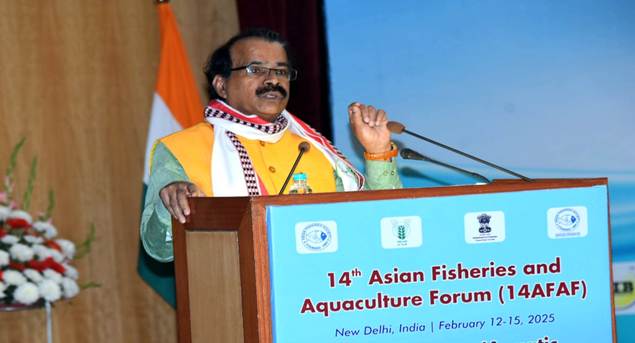
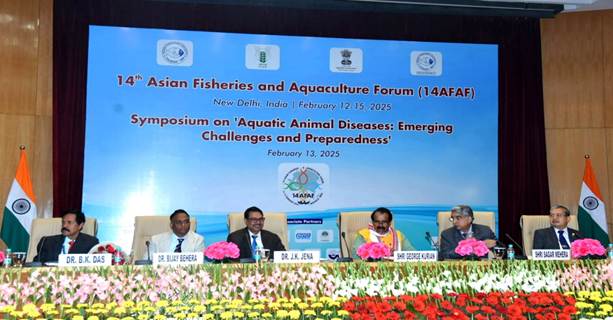
Union Minister of State for Fisheries, Animal Husbandry and Dairying Shri George Kurian has inaugurated the symposium on ‘Aquatic Animal Diseases: Emerging Challenges and Preparedness’ organised at the ICAR Convention Centre, Pusa Campus, New Delhi today. The symposium was organised as part of the 14th Asian Fisheries and Aquaculture Forum (14AFAF) meet being held here from 12-15 February, 2025 with the theme “Greening the Blue Growth in Asia-Pacific.
Speaking on the occasion, Shri George Kurien said appreciated ICAR for its initiative in organizing the symposium and emphasized the “One Earth – One Family” approach, stressing the importance of nutrition and biosecurity in aquaculture. He highlighted that sustainable aquaculture practices are key to ensuring food security, livelihoods, and economic growth in India. He acknowledged the efforts made under various government initiatives such as PMMSY and emphasized the need for continuous research and innovation in aquatic animal health management. He called for a multi-stakeholder approach, involving government agencies, research institutions, and industry players, to work together towards strengthening disease surveillance, enhancing biosecurity protocols, and improving diagnostic and therapeutic measures.
Dr. J.K. Jena, DDG (Fisheries Science), ICAR, and Convener of the symposium, provided an overview of the event, thanking the Government of India and Network of Aquaculture Centers in the Asia Pacific for their support. He emphasized about the need of strong biosecurity measures and discussed the ongoing NSPAAD Phase II and INFAR project, which aim to develop strategies for better disease control in aquaculture. He emphasized the Network project on Fish Health as a crucial initiative for advancing disease research and control in aquaculture. which focuses on disease management and early response mechanisms to mitigate potential risks in fish farming. Furthermore, he stressed that disease management will be critically important for the future in light of the diversification of aquaculture with introduction of new species, new systems, and the expansion of aquaculture. He also highlighted the importance of diagnostics, therapeutics, and vaccines for effective disease management in aquaculture.
Shri Sagar Mehra, Joint Secretary, Department of Fisheries, Ministry of Fisheries and Animal Husbandry and Dairying in his address, highlighted the vital role of fisheries in supporting livelihoods and the economy. He stressed the importance of national, regional, and local-level strategies to combat disease outbreaks effectively. He underscored the need for proactive response mechanisms, recognizing that disease transmission is often linked to live animal movement. He called for enhanced biosecurity measures and early detection systems to safeguard the sustainability and economic viability of the aquaculture industry.
Dr B.K. Behera, Chief Executive, NFDB emphasized the need to institutionalize fish disease surveillance programs in India to ensure systematic disease monitoring, early detection, and effective control. He highlighted the importance of establishing disease-free zones in key aquaculture areas to prevent the spread of infections and enhance biosecurity measures. Institutionalizing surveillance would require integrating it into national aquaculture policies, strengthening regulatory frameworks, and ensuring sustained funding and implementation across states.
Dr. Eduardo Leano, NACA, Thailand provided insights into NACA’s mission since 1990, operating in 20 countries and spearheading five key disease surveillance programs. He highlighted the growing risk of antimicrobial resistance (AMR) in aquaculture and stressed the urgent need for a sustainable, internationally coordinated approach to aquatic biosecurity.
Earlier Dr. B.K. Das, Director of ICAR-CIFRI, delivered the welcome address, highlighting aquaculture advancements and the importance of strengthening disease management. He emphasized the Network project on fish health under National Surveillance Programme for Aquatic Animal Diseases (NSPAAD) as a key initiative for improving disease surveillance and fostering innovation in aquatic health solutions.
Dr. P.K. Sahoo, Director, ICAR-CIFA, delivered the Vote of thanks, acknowledging the contributions of all dignitaries and participants.
The Asian Fisheries and Aquaculture Forum (AFAF) is a triennial event of the Asian Fisheries Society with its Headquarters in Kuala Lumpur, Malaysia. This 14AFAF is being jointly organized by the Asian Fisheries Society (AFS), Kuala Lumpur; Indian Council of Agricultural Research (ICAR), New Delhi; the Department of Fisheries (DoF), Government of India; and the Asian Fisheries Society Indian Branch (AFSIB), Mangalore. This prestigious event is being hosted in India for the 2nd time after the 8AFAF held at Kochi in 2007.
Agriculture forms the backbone of many economies around the world, especially in developing countries. It provides food, raw materials, and employment to a significant proportion of the global population. The concepts of agricultural productivity and the market for agricultural produce are closely intertwined, influencing food security, economic development, and rural livelihoods. This essay delves into the intricacies of agricultural productivity, the factors affecting it, and the dynamics of the market for agricultural produce.
Understanding Agricultural Productivity
Agricultural productivity refers to the output generated per unit of input in farming activities. Inputs may include land, labor, capital, seeds, fertilizers, water, and technology. Productivity is a critical measure of the efficiency and sustainability of agricultural practices. It determines the ability of a nation to meet the growing food demands of its population and contributes significantly to economic growth.
Factors Affecting Agricultural Productivity
Technological Advancements:
Adoption of modern farming techniques, mechanization, and biotechnology significantly enhances productivity.
Precision farming, irrigation systems, and genetically modified crops are examples of innovations that have improved yields.
Soil Fertility and Management:
The quality of soil determines its capacity to support crops.
Practices such as crop rotation, organic farming, and balanced fertilization help maintain soil health.
Climate and Weather Conditions:
Temperature, rainfall, and sunlight are critical for crop growth.
Erratic weather patterns due to climate change pose challenges to agricultural productivity.
Access to Inputs:
Timely availability of quality seeds, fertilizers, and pesticides influences productivity.
High input costs or unavailability can hinder optimal agricultural output.
Government Policies and Support:
Subsidies, minimum support prices (MSPs), and agricultural extension services impact farmers’ ability to adopt better practices.
Infrastructure development, such as roads and irrigation facilities, also plays a vital role.
Education and Training:
Farmers with knowledge of modern farming techniques are better equipped to enhance productivity.
Agricultural extension programs and capacity-building initiatives are essential for disseminating knowledge.
Market for Agricultural Produce
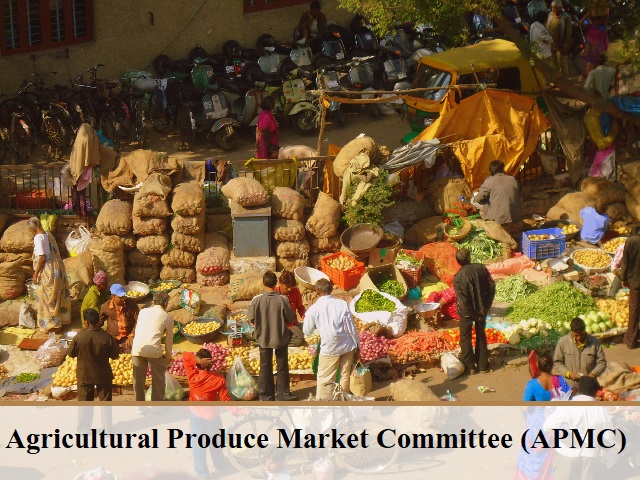
The market for agricultural produce refers to the entire system through which farm products are bought, sold, processed, and distributed. It encompasses local markets, wholesale markets, export markets, and online platforms. An efficient market system is crucial for ensuring fair prices for farmers and adequate supplies for consumers.
Challenges in Agricultural Markets
Price Volatility:
Agricultural produce is often subject to price fluctuations due to seasonal variations, demand-supply imbalances, and global market trends.
Lack of Market Access:
Farmers, especially smallholders, face challenges in accessing profitable markets due to poor infrastructure and inadequate market information.
Middlemen and Exploitation:
A significant portion of profits is often absorbed by intermediaries, leaving farmers with low returns.
Post-Harvest Losses:
Poor storage facilities, inadequate transportation, and lack of cold chains result in significant wastage of perishable commodities.
Trade Barriers:
Export restrictions, tariffs, and non-tariff barriers limit farmers’ access to international markets.
Improving Agricultural Markets
Infrastructure Development:
Investments in roads, cold storage, and warehouses can minimize post-harvest losses and improve market access.
Digital Platforms and E-Markets:
Initiatives like eNAM (National Agriculture Market) and online trading platforms can connect farmers directly to buyers, ensuring better prices.
Cooperatives and Farmer Producer Organizations (FPOs):
FPOs enable farmers to pool resources, negotiate better prices, and access markets collectively.
Government Interventions:
Policies such as MSPs and procurement mechanisms provide price stability and income security for farmers.
Value Addition and Processing:
Promoting agro-industries and value-added products increases the profitability of agricultural produce.
Interrelationship Between Productivity and Market Dynamics
Higher agricultural productivity and efficient markets are mutually reinforcing. Increased productivity ensures a steady supply of produce, stabilizing prices and enabling market growth. Simultaneously, well-functioning markets incentivize farmers to adopt better practices, invest in technology, and enhance productivity.
Conversely, inefficiencies in markets can lead to low returns for farmers, reducing their capacity to invest in inputs and technology, thereby negatively affecting productivity. Ensuring a balance between production and market demand is essential for the sustainability of the agricultural sector.
Conclusion
Agricultural productivity and the market for agricultural produce are pivotal to food security, economic development, and rural prosperity. Addressing the challenges in both domains requires a comprehensive approach that combines technological innovation, supportive policies, infrastructure development, and market reforms. By fostering synergy between productivity and market efficiency, nations can build resilient agricultural systems that cater to the needs of their populations and contribute to global food security.
References
Amadi, L. A., Ogbanga, M. M., & Agena, J. E. (2015). Climate change and feminist environmentalism in the Niger Delta, Nigeria. African Journal of Political Science and International Relations, 9(9), 361-371.
Chavas, J. P. (2008). On the economics of agricultural production. Australian Journal of Agricultural and Resource Economics, 52(4), 365-380.
de Lima, G. N., Zuñiga, R. A. A., & Ogbanga, M. M. (2023). Impacts of Climate Change on Agriculture and Food Security in Africa and Latin America and the Caribbean. In Climate Change and Health Hazards: Addressing Hazards to Human and Environmental Health from a Changing Climate (pp. 251-275). Cham: Springer Nature Switzerland.
Gollin, D. (2010). Agricultural productivity and economic growth. Handbook of agricultural economics, 4, 3825-3866.
Jack, J. T. C. B., Ogbanga, M. M., & Odubo, T. R. (2018). Energy poverty and environmental sustainability challenges in Nigeria. Ilorin Journal of Sociology, 10(1), 19-31.
Ogbanga, M. M., & Sharma, S. N. (2024). Climate Change and Mental Heat.
Ogbanga, M. M. (2024). Assessment of the Barriers to the Adoption of Clean Energy for Household Cooking in Okrika Local Government Area.
Ogbanga, M. M. (2024). Examining the Potential of Women Organisations in Promoting the Use of Clean Energy for Household Cooking; A Study of Okrika Local Government Area.
Van der Ploeg, J. D. (2019). Labor, markets, and agricultural production. CRC Press.
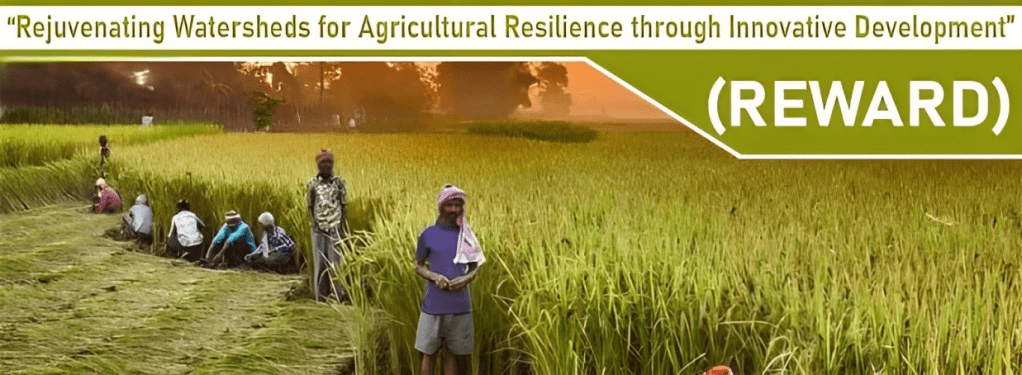
REWARD (Rejuvenating Watersheds for Agricultural Resilience through Innovative Development Programme) is a collaborative effort between the Government of India, the State Governments of Karnataka and Odisha, and the World Bank. This program, funded with a $115 million (INR 869 crore) loan, aims to enhance farmers’ resilience to climate change and promote higher agricultural productivity and incomes. By adopting improved watershed management practices, the program seeks to support the restoration of degraded land, double farmers’ income, and build a more resilient food system. It will leverage science-based approaches, spatial data, technologies, and knowledge exchanges to achieve its objectives.
Through this short article I would like to introduce you to an exciting initiative called REWARD (Rejuvenating Watersheds for Agricultural Resilience through Innovative Development Programme). This scheme has been launched by the World Bank. The REWARD is a comprehensive program designed to address the challenges faced by agricultural communities in ensuring water availability and promoting sustainable farming practices. Water scarcity and its impact on agriculture have become increasingly significant concerns in recent years. The REWARD program aims to rejuvenate watersheds by implementing innovative solutions that enhance water conservation, management, and agricultural resilience. By adopting a holistic approach, the program seeks to create a positive and sustainable impact on local communities, agriculture, and the environment. Here are some key components of the REWARD program:
Watershed Restoration: REWARD focuses on restoring and rehabilitating degraded watersheds through various techniques such as reforestation, soil erosion control measures, and the construction of check dams and percolation tanks. These efforts aim to improve water retention capacity and recharge groundwater levels (Larson et al., 2001).
Water Conservation and Management: The program emphasizes the adoption of water conservation practices within agricultural systems. It promotes efficient irrigation methods like drip irrigation and micro-sprinklers, encourages rainwater harvesting, and implements water storage infrastructure. These measures help optimize water use and reduce wastage (Jha et al., 2019).
Capacity Building and Training: REWARD provides training and capacity-building programs to farmers, local communities, and other stakeholders. These initiatives enhance their knowledge and skills in water management, sustainable agricultural practices, and the implementation of innovative technologies. By empowering individuals and communities, the program seeks to create long-term resilience (Hanchinal et al., 2014).
Research and Innovation: REWARD encourages research and development activities to identify cutting-edge technologies and practices for water conservation and watershed management. This includes promoting the use of precision agriculture, remote sensing, and data analytics to optimize water usage, crop selection, and resource allocation (Fielke et al, 2022).
Collaboration and Partnerships: The success of REWARD relies on collaboration among various stakeholders, including government agencies, non-profit organizations, research institutions, and local communities. The program encourages partnerships to leverage expertise, resources, and knowledge-sharing, fostering a collective effort towards achieving sustainable water and agricultural practices (Daves et al., 2002).
In a collaborative effort, the Government of India, along with the State Governments of Karnataka and Odisha, and the World Bank, have entered into a significant agreement. This agreement involves a financial commitment of $115 million (INR 869 crore) for the implementation of a program called Rejuvenating Watersheds for Agricultural Resilience through Innovative Development Programme (Press Bureau of India, Feb 18, 2022). The primary objective of this program is to enable national and state institutions to adopt improved practices in managing watersheds. By doing so, the program aims to enhance the resilience of farmers to climate change, promote higher agricultural productivity, and ultimately improve their incomes. India’s government has set ambitious goals of restoring 26 million hectares of degraded land by 2030 and doubling farmers’ income by 2023. Effective watershed management plays a crucial role in achieving these targets, especially in rainfed areas, by fostering livelihood improvements and creating a more resilient food system (Mirzabaev & Wuepper, 2023). The new program will assist the participating state governments in their endeavors to revamp watershed planning and execution processes, emphasizing science-based approaches that can be replicated nationwide. It will also encourage other states to adopt innovative strategies for watershed development.
The COVID-19 pandemic has highlighted the urgent need for sustainable and risk-averse agricultural practices in India. Such practices can safeguard farmers from climate uncertainties and bolster their livelihoods (Sonkar et al., 2022). Although India already has a robust institutional framework for watershed development, this project places renewed emphasis on science-based and data-driven approaches, opening up new opportunities for farmers in the face of climate change (Lele et al., 2020).
India currently boasts one of the world’s largest watershed management programs. This new initiative will further advance the progress made by leveraging comprehensive spatial data and technologies, decision support tools, and knowledge sharing platforms. The International Bank for Reconstruction and Development (IBRD) will provide financial support through a loan. Out of the total loan amount, $60 million (INR 453.5 crore) will be allocated to Karnataka, $49 million (INR 370 crore) to Odisha, and the remaining $6 million (INR 45.5 crore) will be allocated to the central government’s Department of Land Resources. The loan has a maturity period of 15 years, which includes a grace period of 4.5 years (Press Bureau of India, Feb 18, 2022).
Through the REWARD program, the government aims to improve the overall water availability and quality, enhance agricultural productivity, and build resilient communities. By integrating innovative solutions with traditional knowledge, we envision a future where agriculture thrives while preserving our precious water resources.
References
Dawes, S. S., & Pardo, T. A. (2002). Building collaborative digital government systems: Systemic constraints and effective practices. Advances in digital government: Technology, human factors, and policy, 259-273.
Fielke, S., Taylor, B. M., Coggan, A., Jakku, E., Davis, A. M., Thorburn, P. J., … & Smart, J. C. (2022). Understanding power, social capital and trust alongside near real-time water quality monitoring and technological development collaboration. Journal of Rural Studies, 92, 120-131.
Hanchinal, R. R., Agrawal, R. C., Prakash, R., Stephen, T., & Jaiswal, J. (2014). Impact of awareness programmes and capacity building in Farmers’ Plant Variety Registration under the PPV&FR Act.
Jha, S., Kaechele, H., & Sieber, S. (2019). Factors influencing the adoption of water conservation technologies by smallholder farmer households in Tanzania. Water, 11(12), 2640.
Larson, M. G., Booth, D. B., & Morley, S. A. (2001). Effectiveness of large woody debris in stream rehabilitation projects in urban basins. Ecological Engineering, 18(2), 211-226.
Mirzabaev, A., & Wuepper, D. (2023). Economics of Ecosystem Restoration. Annual Review of Resource Economics, 15.
Press Bureau of India. (2022, February 18). Govt. of India, World Bank sign loan agreement of $115 million for implementation of “Rejuvenating Watersheds for Agricultural Resilience through Innovative Development” (REWARD) Project. Press Bureau of India. https://pib.gov.in/PressReleaseIframePage.aspx?PRID=1799348
Sonkar, V. K., Bathla, S., & Kumar, A. (2022). Impact of National Lockdown on Rural Household’s Income. Economic & Political Weekly, 57(1), 59.
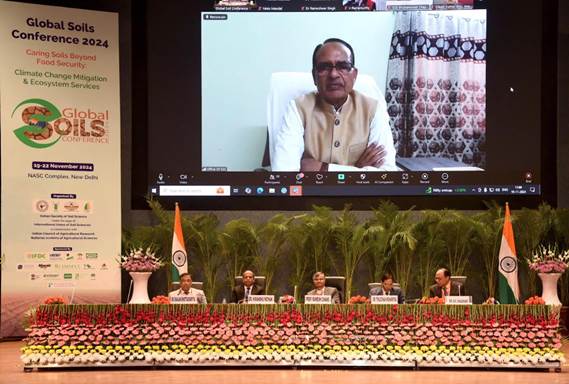
Union Agriculture & Farmers’ Welfare and Rural Development Minister Shri Shivraj Singh Chouhan addressed the Global Soils Conference 2024 organized in PUSA New Delhi today through video conferencing. Union Agriculture minister said that the basic mantra of Indian culture is the belief in a shared consciousness among all beings. Our sages have taught that there is only one universal consciousness in everyone; hence, the whole world is one family, and we should treat everyone as our own. This consciousness is not limited to humans but extends to animals as well. He also added that it is also present in the soil, emphasizing that soil is not lifeless but living.
Shri Chouhan stated that our body is made up of various elements, among which soil is a major component and only if there is soil, there is life. If the soil becomes unhealthy, living beings cannot remain healthy either. We complement each other, so it is essential to ensure that the soil remains healthy. Today, the whole world is concerned about the health of the soil. This earth does not belong to us alone; animals and plants also have rights to it, Shri Chouhan added. He also emphasized that soil health is a matter of serious concern today. India has made remarkable progress in agriculture since independence. At one time, there was a shortage of food grains in the country, and food had to be imported from other nations. However, the Green Revolution brought about a significant transformation in India, the union minister added. The adoption of high-yielding crops and their varieties, better irrigation techniques, and modern agricultural systems have ensured food security for millions of Indians. Following this, the Rainbow Revolution further diversified agriculture through horticulture, dairy, aquaculture, poultry, and other sectors, making agriculture a main pillar of the Indian economy. “I am pleased to share that India now produces 330 million tonnes of food grains annually, contributing significantly to global food trade and generating $50 billion in export earnings” the union Agriculture minister said.
Shri Chouhan also added that increasing use and dependence on chemical fertilizers, indiscriminate exploitation of natural resources and unstable weather have put pressure on the soil. Today India’s soil is facing a major health crisis. According to many studies, 30 percent of our soil has been spoiled. Soil erosion, salinity, pollution are reducing the level of essential nitrogen and micro nutrients in the soil. The lack of organic carbon in soil has weakened its fertility and resilience. These challenges not only affect production but will also create livelihood and food crisis for farmers in the times to come, Union Minister said. Our government has taken many initiatives for soil conservation and which leads to higher soil fertility. Making Soil Health Card was started in 2015 under the leadership of Prime Minister Shri Narendra Modi. More than 220 million cards have been made and given to farmers. And Farmers now know which fertilizer to use in what quantity through the soil health card. Under Pradhan Mantri Krishi Sinchai Yojana- Per Drop More Crop, we have focused on judicious use of water, reducing wastage and reducing peak nutrient residues. An organic basic development compilation has been created for the North East and farmers in these 8 states are being motivated to adopt organic farming practices while protecting the biodiversity of the ecologically sensitive area. The work of making natural farming a mission is also going on in India. He also said that chemical fertilizers are not only deteriorating the health of the soil but also the health of humans and animals. To maintain soil fertility, integrated nutrient and water management methods will have to be adopted. We should take all measures to improve soil health, reduce soil erosion and water storage capacity through various methods like micro irrigation, crop diversification, agro-forestry etc.
Shri Shivraj Singh Chouhan said that the role of solution and extension systems of scientific innovations on war footing is important. Krishi Vigyan Kendras of India, in collaboration with agricultural technology management agencies, are also working to provide knowledge and skills to farmers. The lab to land distance between science and farmers has to be reduced. We are continuously making efforts to ensure timely delivery of correct information from scientists to farmers. Krishi Vigyan Kendra is also making many efforts in this direction. Shri Chauhan added that we are also going to start the program of Modern Agriculture Chaupal soon in which scientists will continuously discuss with the farmers and give information and also solve the problems. Apart from this, private and NGO led extension services have brought advanced technology to the farmers and farmers are now taking advantage of it.
The Union Agriculture Minister also added that farmers are the biggest guardians of the soil and we have to empower them through education, encouragement and modern scientific information. Youth should also be included in this. Agriculture is a profitable and respectable profession; there is a need to encourage the youth for this also. Women students and researchers should play a leading role in developing innovations that address local and global soil challenges. He said that soil erosion is not only a national issue but a matter of global concern which is a part of the Sustainable Development Goals of the United Nations. It is essential to achieve the SDGs. The conference is an opportunity for nations to collaborate, share technologies and work towards sustainable land management. I urge all participants to consider solutions that can be implemented on a large scale that will benefit not only the farmer, but entire humanity and the entire fauna and trees. I call upon scientists, stakeholders, policy makers, industry representatives, NGOs and students to join hands in the mission to restore soil health. The Government of India is committed to supporting initiatives that ensure sustainable and profitable agriculture, resilient ecosystems and food security for all. Together we pledge to ensure a sustainable future for all living beings and future generations, Shri Chouhan concluded.
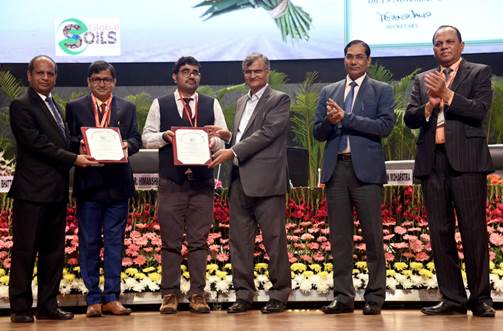
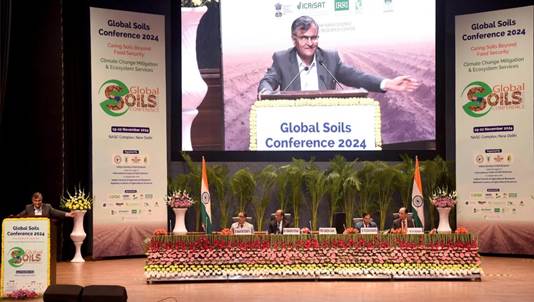
Prof.Ramesh chand, Member of NITI Aayog, Dr.Trilochan Mohapatra, chairperson Protection of Plant Varieties and Farmers’ Rights Authority, and former Secretary DARE and DG ICAR, Dr Himanshu Pathak, Secretary DARE and Director General, ICAR&President ISSS were present at the function.








 Eduindex
You must be logged in to post a comment.