Jyotirlinga is a term used in Hinduism to refer to twelve holy shrines that are dedicated to the worship of Lord Shiva. The term “jyotirlinga” translates to “lingam of light,” which refers to the radiant energy that is believed to emanate from these shrines. There is a distance of 2383 km between Kedarnath and Rameswaram. But all these temples fall in almost the same parallel line. After all, thousands of years ago, the technology with which these temples had been built in a parallel line is a mystery to this day.In this article, you can read about the 12 Jyotirlingas below:
Somnath Jyotirlinga: Located in the state of Gujarat, Somnath Jyotirlinga is considered to be the first among the twelve jyotirlingas. The temple has been destroyed and rebuilt several times throughout history.
Mallikarjuna Jyotirlinga: Located in the state of Andhra Pradesh, Mallikarjuna Jyotirlinga is situated on Shri Shaila Mountain. The temple is considered to be one of the holiest shrines in South India.
Mahakaleshwar Jyotirlinga: Located in the city of Ujjain in Madhya Pradesh, Mahakaleshwar Jyotirlinga is one of the most famous jyotirlingas in India. The temple is known for its unique architecture and rich history.
Omkareshwar Jyotirlinga: Located in the state of Madhya Pradesh, Omkareshwar Jyotirlinga is situated on an island in the Narmada River. The temple is famous for its unique location and beautiful natural surroundings.
Kedarnath Jyotirlinga: Located in the state of Uttarakhand, Kedarnath Jyotirlinga is situated in the Himalayas. The temple is considered to be one of the holiest shrines in the country and is visited by millions of pilgrims each year.
Bhimashankar Jyotirlinga: Located in the state of Maharashtra, Bhimashankar Jyotirlinga is situated in the Sahyadri Mountains. The temple is known for its beautiful architecture and stunning natural surroundings.
Vishwanath Jyotirlinga: Located in the city of Varanasi in Uttar Pradesh, Vishwanath Jyotirlinga is one of the most famous temples in India. The temple is known for its beautiful architecture and rich history.
Triambakeshwar Jyotirlinga: Located in the state of Maharashtra, Triambakeshwar Jyotirlinga is situated in the Western Ghats. The temple is known for its beautiful architecture and stunning natural surroundings.
Baidyanath Jyotirlinga: Located in the state of Jharkhand, Baidyanath Jyotirlinga is situated in the town of Deoghar. The temple is known for its unique architecture and rich history.
Nageshwar Jyotirlinga: Located in the state of Gujarat, Nageshwar Jyotirlinga is situated on the coast of the Arabian Sea. The temple is known for its beautiful location and rich history.
Rameshwaram Jyotirlinga: Located in the state of Tamil Nadu, Rameshwaram Jyotirlinga is situated on an island in the Gulf of Mannar. The temple is known for its beautiful architecture and stunning natural surroundings.
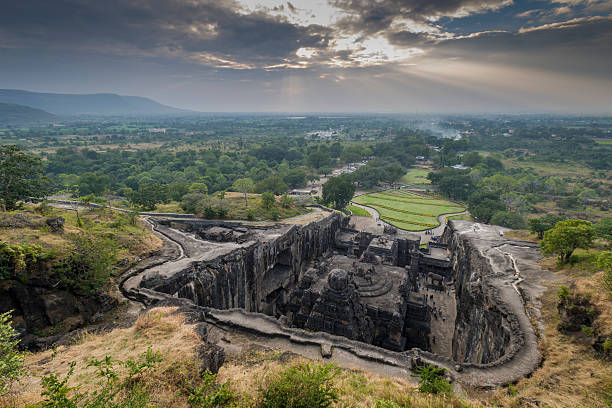
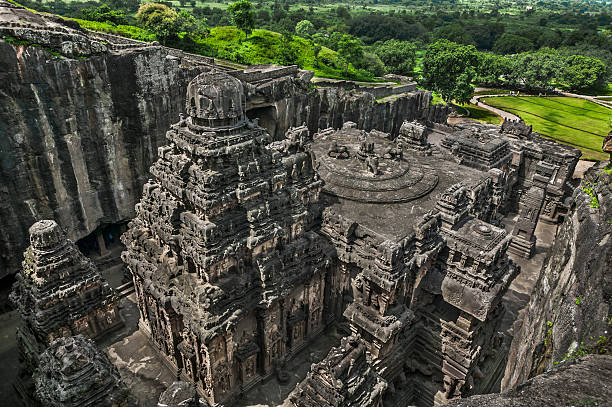
Grishneshwar Jyotirlinga: Located in the state of Maharashtra, Grishneshwar Jyotirlinga is situated near the famous Ellora Caves. The temple is known for its beautiful architecture and rich history.
Each temple is unique in its own way and has its own rich history associated with it. For example, the Somnath Jyotirlinga is believed to have been built by the moon god, Chandra, to seek forgiveness for the curse he received from his father-in-law, Daksha. The Kedarnath Jyotirlinga is believed to be the place where Lord Shiva appeared in the form of a bull to bless the Pandavas after the Kurukshetra war. Pilgrims from all over India and the world visit these shrines to seek the blessings of Lord Shiva and attain spiritual enlightenment.
The significance of the twelve jyotirlingas is not only limited to their religious importance but also to their historical and cultural value. These temples are considered to be a representation of the rich cultural heritage of India, and are an important part of its history. Visiting these shrines is also believed to be a spiritual journey that can bring about a sense of peace and enlightenment.
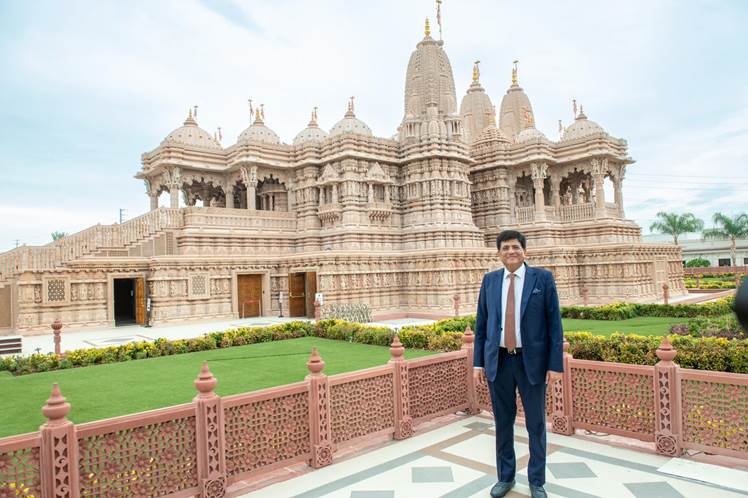
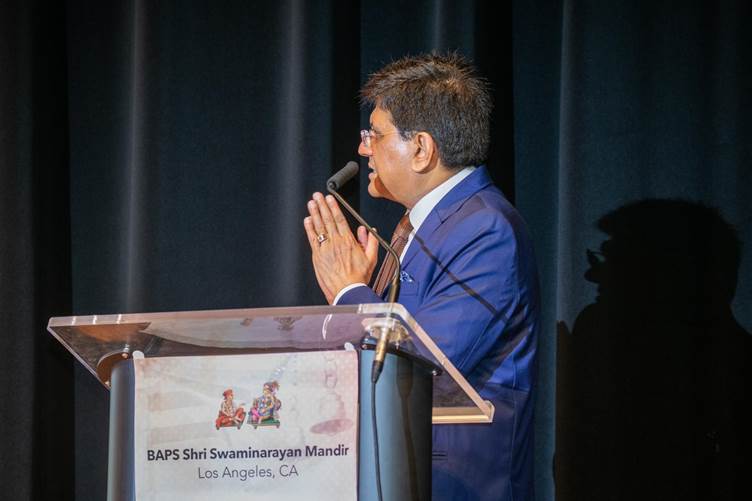
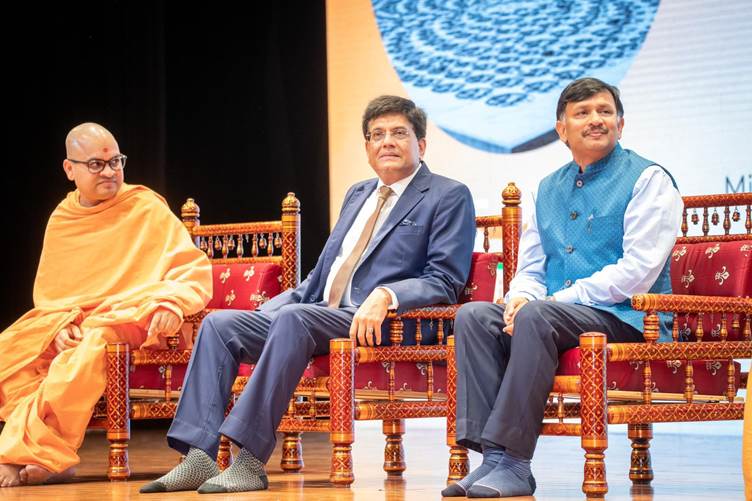
Union Minister of Commerce and Industry, Consumer Affairs, Food and Public Distribution and Textiles, Shri Piyush Goyal today said that BAPS Swaminarayan temple was doing great service to the society all over the world. He was addressing Indian Community after a visit to the Shree Swaminarayan Temple in Los Angeles.
Expressing his admiration at the beauty of the Shree Swaminarayan temple complex in Los Angeles and conveying his congratulations on the completion of 10 years of its existence, the Minister said that the presence of the temple was very befitting to the significant presence of Indians in the area and the contribution of Indians to the development and growth of the area of Los Angeles.
Paying his tributes to Pramukh Swami Maharaj on his centennial birth anniversary, he said that this was a very special occasion for all of us around the world who have received his blessings and learnt goodness from him. Reminiscing that he has had the privilege of having a special bonding with Pramukh Swami Maharaj Ji’s various programs over the years, Shri Goyal said that he also got a chance to actively participate in the 75th anniversary celebrations of Pramukh Swami Maharaj in Mumbai many years ago.
Shri Goyal said that he has always had the good fortune of visiting Shree Swaminarayan temples across the world and added that the temple in Los Angeles was very unique and beautifully planned and executed. The feeling of spirituality one experiences when visiting this temple in itself is very unique, he said.
The Minister observed that the contribution of BAPS in keeping Hindus together and keeping the spirit of Hinduism glowing and flowing all around the world is invaluable. He opined that when people moved out of India and experience the material facets of life, the, the next generation was observed to lose the connect to the motherland. But wherever Swaminarayan temple has come up, spirituality flourishes there and the next generation retains its connect with the motherland. They inculcate very good habits and practices. Therefore, this institution is doing great service to the society at large all over the world, he said.
Underscoring that Swaminarayan Bhagwan has always believed in humanity and spirituality and in service to society, Shri Goyal said that his teachings focussed on our role in giving back to the humanity at large. The wonderful teachings of gyan, bhakti and shraddha that Swaminarayan has taught us and Pramukh Swami Maharaj has propagated will remain with all of us. His teachings will continue to inspire and guide me all through my life, Shri Goyal said.
Prime Minister Shri Narendra Modi will visit Varanasi on 13-14 December. At around 1 PM on 13 December, Prime Minister will visit Shri Kashi Vishwanath Temple and offer prayers, after which he will inaugurate phase 1 of Shri Kashi Vishwanath Dham, constructed at a cost of around Rs 339 crores.
It was the vision of the Prime Minister for a long time, to facilitate the pilgrims and devotees of Baba Vishwanath, who had to encounter congested streets and surroundings with poor upkeep, when they practiced the age-old custom of taking dip in the holy river, collecting Gangajal and offering it at the temple. To realise this vision, Shri Kashi Vishwanath Dham was conceptualised as a project to create an easily accessible pathway to connect Shri Kashi Vishwanath Temple to the banks of the River Ganga. To kickstart the work for this pious endeavour, the foundation stone of the project was laid by the Prime Minister on 8th March 2019.
Prime Minister took a keen and active interest at all stages of the project. Regular briefings, reviews and monitoring was done by the Prime Minister himself, and he constantly gave inputs and insights to improve the project and make it more accessible for pilgrims, including for the disabled. The project was designed to provide easy access for the disabled and old age people with provision of ramps, escalators, and other modern facilities.
A total of 23 buildings will be inaugurated in the phase 1 of the project. They will provide a variety of facilities to the pilgrims visiting Shri Kashi Vishwanath Temple, including Yatri Suvidha Kendras, Tourist Facilitation Centre, Vedic Kendra, Mumukshu Bhavan, Bhogshala, City Museum, Viewing Gallery, Food Court, among others.
The project involved purchase and acquisitions of more than 300 properties around Shri Kashi Vishwanath Temple. Prime Minister’s vision to take everyone along was the principle based on which mutual negotiations were done for these acquisitions. In this endeavour, the rehabilitation of around 1400 shopkeepers, tenants and homeowners were done amicably. The testimony of the success is the fact that there is no litigation pending in any court of the country regarding acquisitions or rehabilitation related to the development of the project.
Prime Minister’s vision was also to ensure that all heritage structures be preserved during the course of development of the project. This foresight came handy when, during the process of destruction of the old properties, more than 40 ancient temples were rediscovered. These temples have been restored and beautified, while ensuring that there is no change in the original structure.
The scale of the project was such that the project is now spread over a massive area of about 5 lakh square feet, whereas earlier premises was limited to just around 3000 square feet. Despite the Covid pandemic, the work on the project has been completed as per the planned schedule.
During the visit to Varanasi, the Prime Minister will also visit Kaal Bhairav Temple at around 12 noon and witness Ganga Aarti while on board a Ro-Ro Vessel at around 6 PM on 13 December. On 14 December, at around 3:30 PM, Prime Minister will attend the 98th anniversary celebrations of Sadguru Sadafaldeo Vihangam Yog Sansthan at Swarved Mahamandir in Varanasi. During the two-day visit, Prime Minister will also participate in a conclave of Chief Ministers of Assam, Arunachal Pradesh, Goa, Gujarat, Haryana, Himachal Pradesh, Karnataka, Madhya Pradesh, Manipur, Tripura, Uttar Pradesh and Uttarakhand, along with Deputy CMs from Bihar and Nagaland. The conclave will provide an opportunity to share governance related best practices and is in line with the Prime Minister’s vision of furthering team India spirit.
Located along the pristine coastline of the Bay of Bengal the city houses numerous pilgrimage sites & beaches. Buzzing with devotees who come here to pay obeisance to the deity. The city is widely famous for hosting celebrations larger-than-life.
1] Tourist attractions
The city can be mainly bifurcated into two parts based on the grounds of interests of tourists – temples & beaches. So, following is a list of places & must do’s :
Jagganath Temple
Being one of the Char Dham pilgrimages one is expected to pay a visit at least once in a lifetime to gain merit. This coastal town of Puri enshrined Lord Jagganath, Lord Balabhadra & Goddess Subhadra in this colossal temple. The temple is famous for its annual chariot festival – Rath Yatra.
Sun Temple
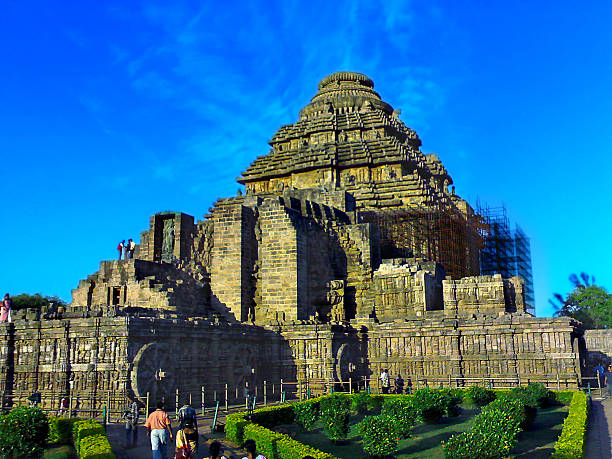
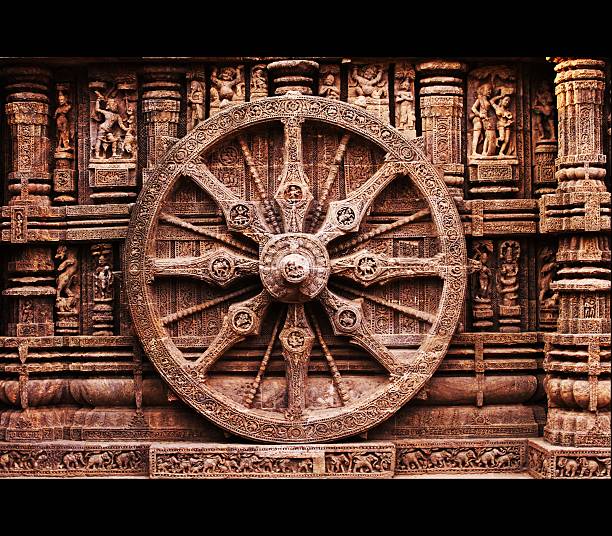
A UNESCO World Heritage Site, the precision & intricacy of architecture is worth gazing at hours at. It remarkably proves the sheer brilliance of architects of that era. The temple is designed in the silhouette of a gigantic chariot along with 7 horses & 24 wheels. It was conceived as a chariot of the Sun God. Spread across a sprawling area it also a beautiful garden.
Puri Beach
On the outskirts of the city, it’s fringed with beaches & lakes that remain blanketed in relative calm & serenity. Nothing beats over lazing around on the warm sands under the sun, with the sound of the waves and the glorious view of the distant horizon. It is also known as the Golden Beach. You may also spot some camels here offering rides to tourists at the beach. While others can be seen getting some cheap thrills by the seashore.
Chilika Lake
Chilika Lake is a brackish water lake and the biggest inland shallow lagoon. Chilika is a hotspot of biodiversity and has been designated as the biggest breeding place for Flamingos. Every year as winter sets in millions of migratory birds from different parts of the world i.e Siberia, Russia, etc. flock the lake making Chilika. A significant population of Irrawaddy Dolphin is also found here. And if you are a pescatarian don’t forget to try out some exotic species of fishes.
2] Art & Culture
Arts and crafts including handiwork, handlooms, and architecture reflect the prevalent temple culture. The cultural history of Puri dates back to primordial times. The ancient culture of Puri has some most expressive dance forms i. e Odissi & Mahari. They are an integral part of the folk culture of Puri. Patta-Chitra paintings are folk paintings that are the most indigenous, antique & spectacular paintings found here. Palm leaf paintings, tussar paintings, palm leaf engravings, stonework, cow dung, and papier-mache toys are also famous here. Sand sculpture and applique art are significant to the city’s sand beaches.
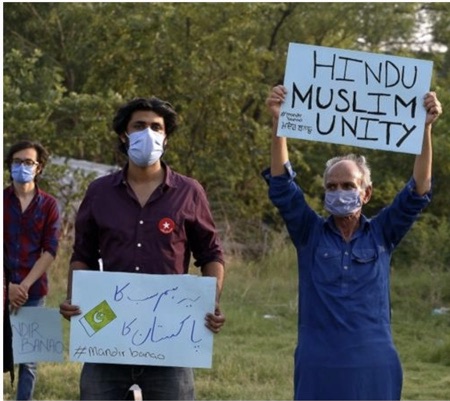
You must have seen a video which got viral few days back where a boy was seen damaging the walls of a temple that is currently being built in Islamabad(Pakistan). Another example like this was where a five year old boy was seen warning the Pakistani Prime Minister Imran Khan that if he will allow the the temples to be built, he will “kill all the Hindus”. Imagine a five year child speaking in his childish voice and warning such higher authority which may seem funny, but on the other hand this is a very important matter for the society that some people of Pakistan are filling up their children’s mind with filth and not showing them the right way where they should treat everyone as equal irrespective of caste, colour, gender plus nationality. I do agree with some of the things that the conflict between India and Pakistan is never ending but at least we can try to change the minds of the youth who will take the country forward.
Let me begin with the actual story where the Pakistani Government has decided to release funds for the Hindu temple to be built in Islamabad. This decision was made for the Minority class- the Hindu’s in Pakistan who also have the right to worship God in the temples. This plan was committed in the year 2017 by Nawaz Sharif’s government but it got delayed due to some issues. This is not the first time where the government has taken such step, before this the government took many initiatives for Hindu pilgrimage like they renovated Katas Raj Temple– a buddhist temple for the Hindus to worship. The Government has also helped the Sikh community with building gurudwaras for them like The Peshawar Gurudwara and the Nankana Sahib in Sailkot which was renovated for the sikhs.
aljazeera.com
Well, all of these things are small stepping stones by the Government for the minority so that they can also live like normal people without the barriers of religion. But on the other hand some projects have been backlashed by the Muslims of Pakistan where in a recent example the Pakistani government was planning to celebrate the legacy of Maharaja Ranjit Singh with statue, but it ended up causing a controversy on social media and in less than two months the statue was vandalised by the people. How will the country progress like this where the people are still not agreeing to some basic terms of accepting their fellow citizens as equal, building a temple or a gurudwara will never harm the other religion in fact all of these initiatives will bring the conflicts to an end. I am not saying that we Indians are the best and we don’t do such things, we are still facing major conflicts between Hindu and Muslim and there is no other solution to bring an end to this but there are Gurudwaras, Temples, Mosque and Church which are built together on the same lane and people respect that.
But why are these issues still arising, why can’t the soldiers just guard the country peacefully? The major reason for this is ‘Education‘ where the children are taught some facts which are against Hindus and Muslims, the facts which are putting them apart instead of living in tranquility and in harmony. The youth is being taught the wrong subjects with wrong facts and the society is also playing a major role in this, where they term minority people with funny names, where they are always referred to as a ‘minority class‘ instead of terming them as equal citizens.
All these examples and statements are not to hurt anyone be it from any religion or country. Building a temple or a gurudwara or even a mosque will never help the people to understand and have respect for the other religious sentiments, but education is and will be the only factor to bring everyone together and to treat everyone as equal, not becoming religion bias.
“My religion is ver simple, my religion is Kindness.” -Dalai Lama
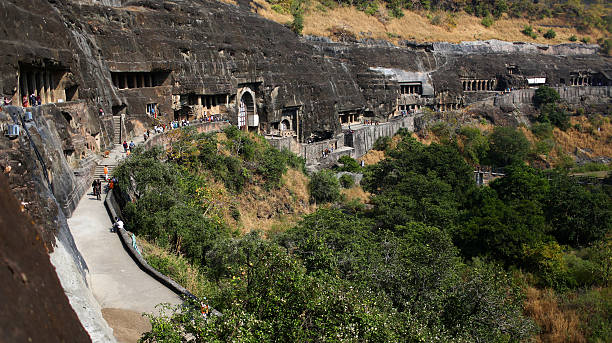
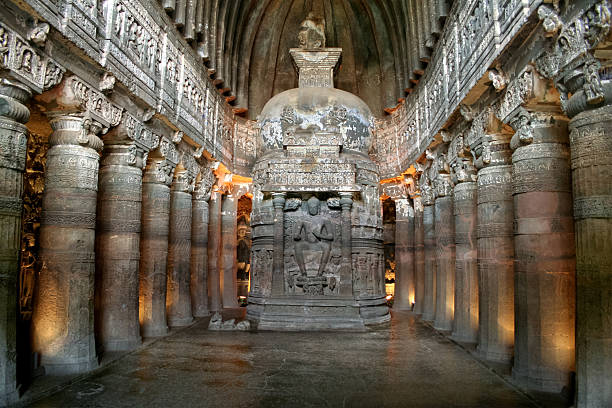
Carved over a period of several centuries, the mystery of Ajanta Caves might never have been uncovered had it not been for a chance pursuit of a tiger by the British Officer John Smith in the year 1819! As old as 200 BCE, the caves are located in Aurangabad district of Maharashtra. Over the multitude of years they fell into disuse and a forest grew over and around them. Carved over many many years by different artisans, they are believed to have been made a refuge for the Buddhist monks during the rains. Some go as far as to say that they were pathways to heaven.
With numerous carvings that describe the life and times of the eras, they are like a window that one can peek through into the glorious past of India. The caves run for a mind numbing length of 29 rock cut caves, all of which have both female and male representation, which is a rare sight! Examples of immense scientific calculations are evident too, as the sun lights up cave 19 on the winter solstice and cave 26 on the Summer solstice in a precision that has persisted over the years!
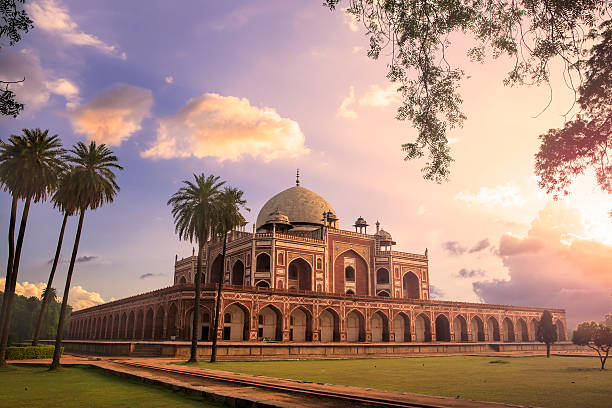
The monument to love that inspired the Taj Mahal-The Humayun Tomb
The Humayun’s Tomb
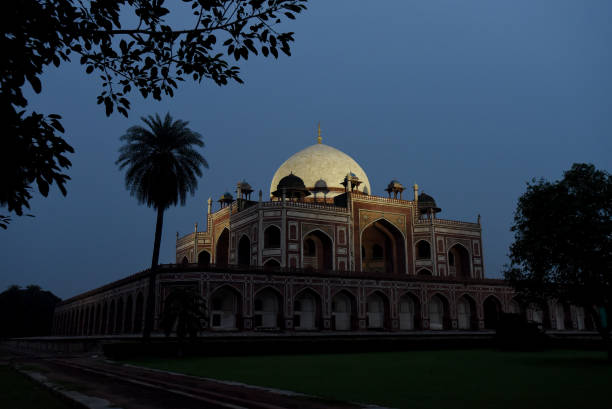
Pick up any form of literature and you will notice that ‘Taj Mahal’ has forever been cited as the all enduring monument of the love of a king for a queen. But, there was one tomb before that, that a grieving widow built for the love and devotion that she felt towards her husband; The Humayun Tomb. The pioneering example of Mughal architecture, its glorious combination of Persian and Indian architecture forms was to set a prelude to an era that was to be embellished by the grandeur of Mughal architecture. Bega Begum, spent her entire life overseeing the construction and design of this tomb that was commissioned to the great Persian architect Mirak Mirza Ghiyas.
One of its kind architecture, this garden tomb houses the graves of over 150 members of the Mughal family. The UNESCO cites it’s reasons for considering it as one of the greatest examples of architecture by saying, “This building tradition culminated in the Taj Mahal, constructed a century later. Despite being the first standardized example of this style, Humayun’s Tomb is an architectural achievement of the highest order.”
Konark Sun Temple
An ode to Sun God, where even stones speak up in prayer- Konark Temple
No text of architecture in India is complete without the mention of Sun Temple at Konark, the namesake of the city itself is an elegy to the Sun God, Kona (Corner) and Arka (Sun). On the sparkling coasts of Bay of Bengal rests this edifice that commemorates the work of the masters of ancient times. The temple has an elaborate and intricate mammoth structure that depicts the chariot of the Sun God replete with 24 carved wheels, each of them 3 m in diameter, pulled by seven horses and guarded by two lions at the entrance that bravely crush elephants.
An example of beautiful melee of science, architecture and devotions the sun dials on the temple can calculate time to the exact minute even to this day! There are also three statues of the sun god that catch the rays of the sun precisely at dawn, noon and sunset! Rabindranath Tagore has famously said about the temple “Here the language of stone surpasses the language of man.” The temple beckons to question the monotonous styles of architecture that India has regressed itself to!
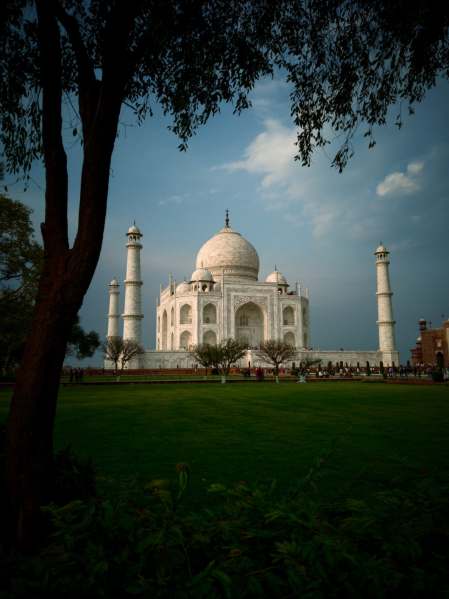
A eulogy to undying love set in white marble- The Taj Mahal
Taj Mahal
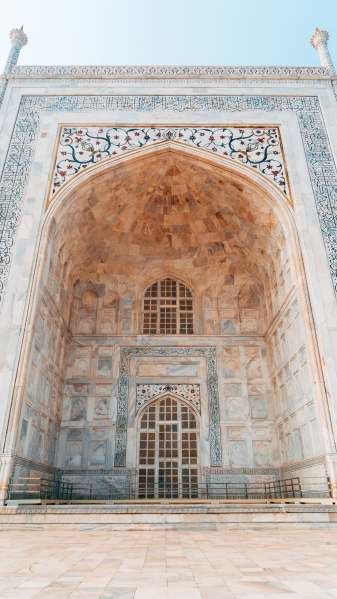
Ask anyone, any man or woman about the icon they associate with India, and their answers would most likely allude to the Taj Mahal. Built by the Mughal Emperor Shah Jahan, it is one of the most grandiose gestures of love to ever be materialized on the face of earth. As famously said by the greatest poet, Rabindranath Tagore, “The Taj Mahal rises above the banks of the river like a solitary tear suspended on the cheek of time.” Inspite of the multitude of tourists that visit it, the declarations of love that it has witnessed and countless examples that it has set, there is a sense of melancholy as one approaches the monument, a sense of pain of a lover separated from his wife by death.
The Taj Mahal was built in 1653 AD by over twenty thousand artisans who toiled over 22 years! The white marble was bought in from Makrana in Rajasthan and was transported by elephants. In its days of glory the Taj Mahal was adorned with no less than 28 types of precious stones, brought in from as far as Tibet and Persia. Like the moods of his lady love, the exterior of the Taj also changes colors from a pinkish hue in the dawn to a dull gold at noon and finally, all enduring sparkling white under the moonlight. Legends say that as the emperor lay imprisoned by his own son in the Agra Fort, he derived solace from gazing at the tomb of his beloved wife, at whose side he was finally laid to rest.
The integral land of three beliefs, The Ellora Caves
Ellora caves
The Ellora caves is a sculpture’s beautiful blended expression of three major Indian regions: Buddhism, Brahmanism and Jainism. There is something beautiful about this place that takes you to a journey in the past where all these religions born and grew together. The 34 monasteries and temples are carved and dug all together on the wall of a huge basalt cliff in Maharashtra. These splendors of art is a beautiful combination of, when art meets religion
The twelve caves of the Buddhist group speaks about the benevolence of this calm religion, Buddhism. The ‘Cavern of the Ten Avatars’ is a majestic art piece constructed under the reign of Krishna I. The ethnicity of Jain group is well reflected by the sanctuaries carved by the Digambra sect of this pure religion. These gems of art are the immortal legends of the vast rock-cut architecture in India. The elegance of Dravidian Sikhara, which is a flat roofed madapa positioned over sixteen pillar, the gigantic Ravana figure reflecting the strength of this villainous legend as the sculpture here shows him lifting Mt Kailasha is an epitome of the ancient Indian art.
Where the walls sing and sculptures dance, the Chola temples
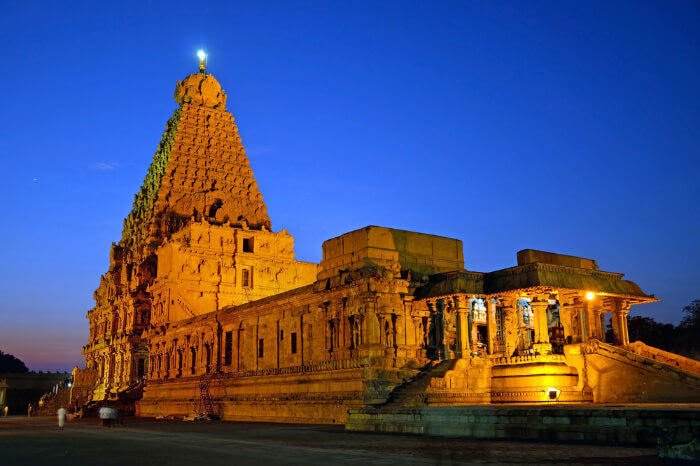
Brihadisvara Temple
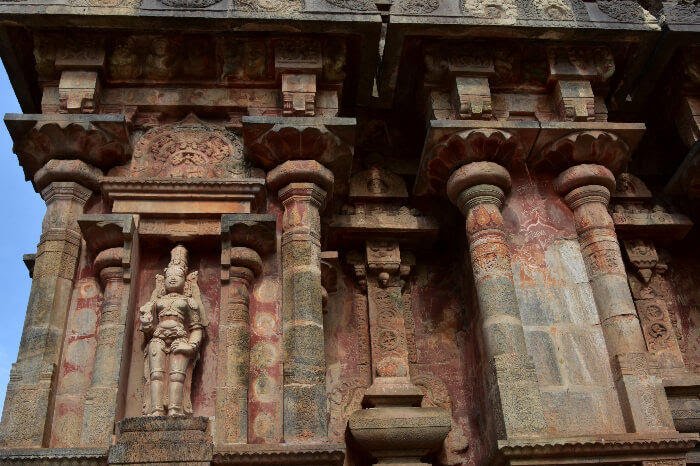
The beautiful Chola temples are living tales of the vast empire that Cholas established in Thanjavur. These magnificent temples built during the reign of Rajaraja were the epitome of the vast religious inclination of these rulers as the inscriptions and the chronicles on the wall sing about their opulent rule. This temple in the ancient time was note a mere religious center but a full functional business establishment which was served and maintained by a permanent staff of several hundred priests, 400 devadasi and 57 musicians.
Airavatesvara Temple At Darasuram
The temple was also used for lending money to ship-owners, craft guilds and villagers on a fixed interest rates. The entire temple carved in granite is believed to be inspired by the Pallava architecture. The beautifully adorned 108 poses of the Bharata- Natyam on the walls reflects the hours of torturous patience the sculptures went through. The beautiful series of carvings depicting the legend ruler Rajaraja conversing with his guru, Karuvir Devar is stunningly sculpted in rich colors which rewinds you to the beautiful ancient time of king and queens.
A rock cut sonnet to the great war of Mahabharata, Mahabalipuram
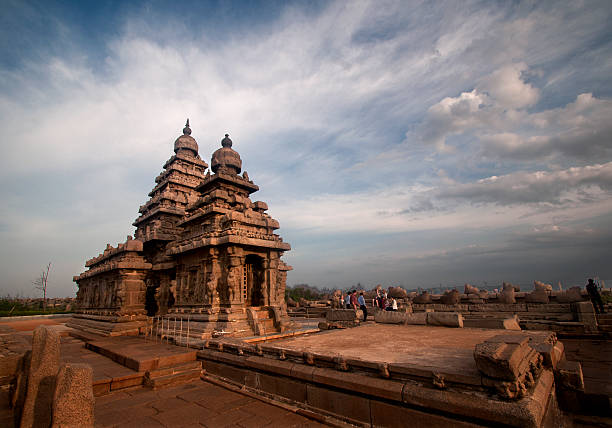
Shore temple Mahabalipuram
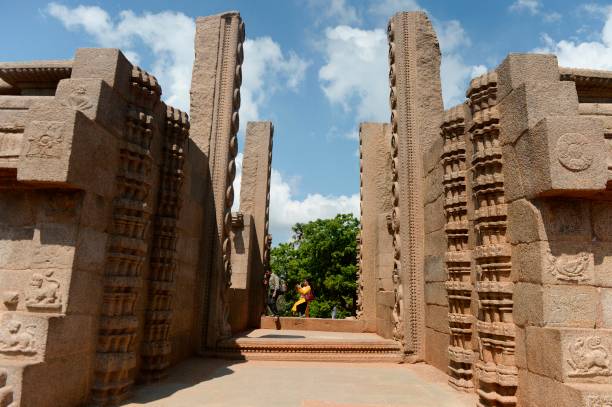
It is a widely accepted belief that the great war fought between the Kauravas and the Pandavas, at Kurukshetra, is instrumental in shaping the history and geography of the Indian subcontinent as we know today. The temples of Mahabalipuram demonstrate exactly that, in the rock cut carvings of the great temple architectures, one can clearly see the scenes from the great epic.
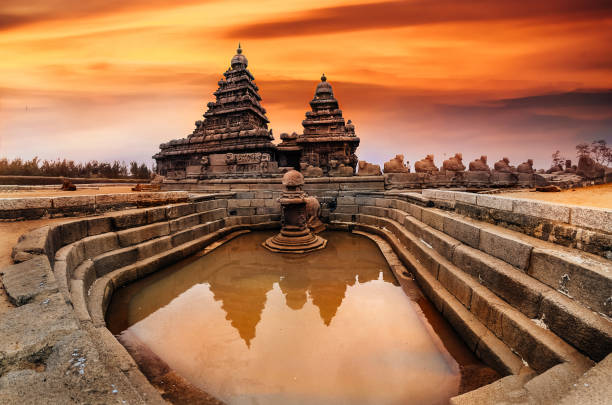
The architecture demonstrates a clear allusion to the sectarianism that had started during the period as different areas were assigned to different Gods. The travels of Marco Polo also describe the Seven Pagodas of Mahabalipuram that belonged to the original structure built in the time when the city was a thriving merchant port. Out of these seven only one has survived in the form of a beautiful shore temple!
Sunset reflection of shore temple
The architect represents neither a Dionysian nor an Apollinian condition: here it is the mighty act of will, the will which moves mountains, the intoxication of the strong will, which demands artistic expression. The most powerful men have always inspired the architects; the architect has always been influenced by power.
Last Sunday morning my father entered from balcony for lifting up his call he was looking annoyed after attending the call, when I enquired what was the reason he told me that he was dreaming and this telephone woke him up from the dream and brought him back to the reality.
As he told he was dreaming about his lost childhood…….
On a lazy Sunday morning, sitting in balcony, sipping hot tea and enjoying rain is an unparalleled experience. Vivid memories of past passes through the mind like sequence of a movie. People from hinterlands of the country migrate in search of job and choose to stay in busy cities like Mumbai always bear a nostalgic feeling about their “lost villages”. Rain always help memories to take shape and take back us to the “good old days”.
During Late 60s and 70s, each Kerala village use to have one or two primary schools and one high school.Study after seventh standard involve some extra walking through paddy fields or palm groves along with rocky areas. To reach nearest High school, some students used to take bus for a short distance. My village was blessed with a high school with reasonable educational facilities and excellent set of teachers.
Education starts from home, enjoying walk through paddy fields crossing a canal and then the most difficult balancing act of crossing a narrow path way over slippery rock and flowing water during monsoon. After reaching school there will be a foot ball session till the school bell rang. Playground used to be uneven and filled with stones and hard rock pieces. Some areas were slippery and hard. These challenging conditions never affect the zeal of players. Injuries were order of the day due to hard condition of ground as well as aggressive nature of few individual players.
Way back home after school was also equally interesting. People discuss about the day’s events and express their views. Some interactions used to end up in fight between two groups. Walking back home in heavy rain used to be a normal affair during monsoon. Summer evening used to be hot and sticky. People used to prefer shady routes to reach home.
On Sundays and school holiday we used to go to the nearest forest for grazing cows. The forest was not dense, but it used to be the source for fresh grass for cattle and timber for households. Women folk used to go to the forest during early hours of the day and collects logs. They used to pack their days collection and carry by head and exit the forest area before the forest guards become active.
Villages in Kerala were always blessed with its natural water bodies and amazing greenery. Area close to Sahya mountains receive heavy rain from June to October. Due to this the nature used to be fresh and clean during most part of the year but hot and humid during the summer. From February to mid of May, weather used to be very hot and humid during the day. Summer is the time of heat and humidity as well as the temple festivals. Evening Summer rain used to give respite from scorching heat often. Smell of the soil after the first rain fall was a refreshing experience.
April and may were mid-summer vacation days for schools. Day start with busy playing session in harvested paddy fields along with friends and an hour-long bath and swimming session in village pond by noon. After noon was the time for relishing summer delicacies such as mangos and jackfruits. Visiting temple on special days to witness annual temple fest was in the card on few days of the month. During this period, porticoes of temple used to witness various temple art forms like ‘Kalmezhuthu Pattu’ (Color full Rangoli display of portraits of goddess on floor and a musical concert), Chendamelam (a drum concert). Some temples used to organize Kathakali during late evening. Annual festival used to prolong from twelve to fifteen day for each temple with final day as “Vela” or “Uthsavam’. A procession of elephants along with plots depicting men dressed in various Hindu gods and legendary heroes used to be a common mix in these processions. The tallest among the tuskers will carry the deity on its back with ceremonial outfits and other elephants will position either side during the procession. The culmination of the fortnight long festival will be marked with heavy fireworks which will tremble the whole village.
The ringing phone caught my attention and I was brought back to reality. As expected that my boss’ s call. Working from Home gives him a privilege to call me even on holiday morning when I was trying to go back to my golden days in my lost village.





 Eduindex
You must be logged in to post a comment.