
To Kill A Mockingbird by Harpee Lee

Nelle Harper Lee popularly known as Harper Lee was born in April 25 1926. She was an American novelist and known for her classic novel “To kill a Mockingbird”

To Kill a Mockingbird gives a picture of 1930’s fictional town Maycomb, Alabama. The book deals with various topics that was prevalent at that time , from hypocrisy to racism. Though the topic of book is very serious, author has written it in very light tone which makes book less depressing and more fun to read

There are really some interesting characters in the book , my favorite being Jean Louise ‘Scout’ Finch and her fathet Atticus Finch. Jean Louise ‘Scout’ Finch , popularly known as Scout is loud and intelligent girl. She is not afraid of saying what she thinks and deeply resent the idea of ‘Proper lady like behaviour’. She usually gets irritated when her aunt tries to teach her ‘ how a lady should behave’. She is just a girl who wants to live her life like just a regular kid. The whole book is written through her perspective and shows the various encounters she faces in three years of her life from being age 6 years old to 9 years old.

Atticus Finch is a widowed father of Scout and Jem Finch ( elder brother of Scout). He is a lawyer whose life gets changed drastically when he gets the case of black man being accused of raping white woman. Since it was 1930s there was a major racism at that time. So when Atticus takes up the case , almost all the people starts to hate him and his children. Though providing sufficient evidence that black man was falsely accused , he fails to save him from allegation. This shows how at that time black people were wrong in whatever they did and whites were always seemed as correct , no matter what. Atticus is shown as a father who does not have a great relationship with his children but never fails give right lesson and value to them.

One of the most interesting and mysterious character in the book is Arthur Radley , famously known among children as “Boo Radley”. He lives in the same area as of Finch family. There are many rumours surrounding why he is socially reclusive and almost all the people of fears him. Ironically, in the end he saves the lives of Scout and her brother. This book does a really great job in showing how people are often misjudged because of their looks and behavior

Apart from this people there are other characters named Nathan Radley ( brother of Arthur Radley) , Dill Harris ( best friend of Jem and Scout). The first half of book revolves around the life of children ( Scout , Jem and Dill) but the later half proceeds toward a serious note when Atticus takes the case. This book will surely give readers a good laugh and insight of 1930’s hypocrite and racist world.

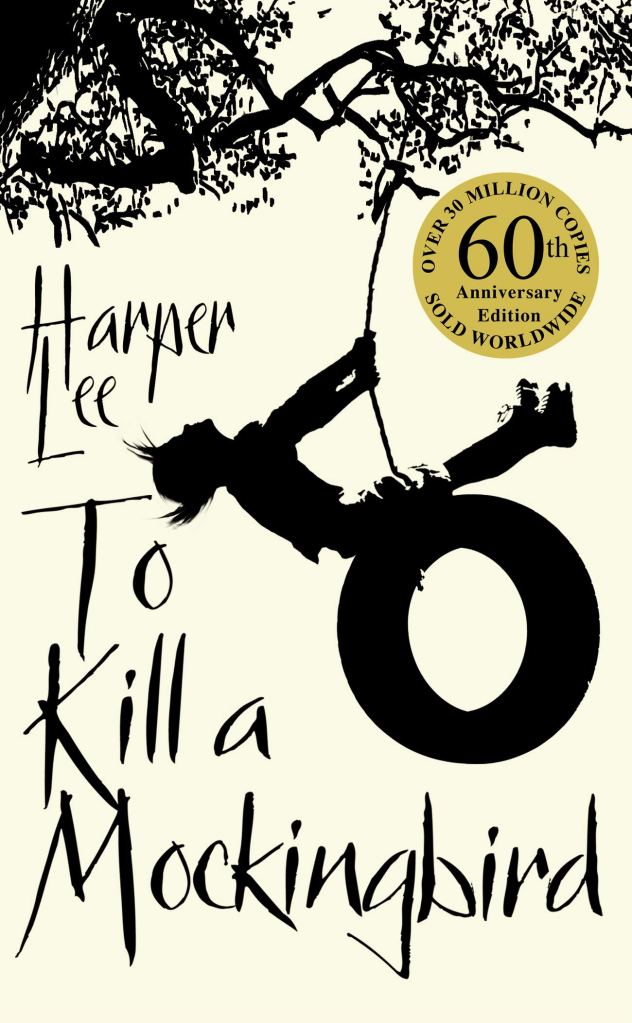
Race and class in Harper Lee’s ‘To Kill a Mockingbird’

‘To Kill a Mockingbird’ is a Southern gothic bestseller written by Harper Lee. The novel is narrated by Scout Finch, a six-year-old white girl who learns about life, people and the injustices prevalent in her society. Through her, Lee cleverly portrays issues such as gender, race and class discrimination in the fictional setting of Maycomb county, Alabama. Readers have speculated that the character of Scout was based on Lee’s own childhood experiences, wherein she combines the nostalgic elements with the political situation that she witnessed around her in America. Scout’s innocence and her defiance against the social hierarchies in Maycomb cuts a deeper meaning into the futility of these societal constructs.

Race is one of the issues that is evidently portrayed in the novel. Scout’s father Atticus Finch is a lawyer who defends the less privileged. He strives hard to stand by his moral compass and wishes to set an example for his children through his actions. One of the major events in the novel takes place when Atticus chooses to defend Tom Robinson, a black man accused of raping a white woman. The racist residents of Maycomb, as well as his family members are horrified and attempt hard to dissuade him. So much so, that even Scout and her brother Jem are subjected to verbal abuse by other children for his actions. During the trial, Atticus provides clear evidence to prove Tom’s innocence. Despite the impressive evidences, the extremely racist jury sentences him to jail where he later attempts to escape, but is shot and killed. We see that even the law is corrupted when it comes to rendering justice to innocent African Americans. Tom Robinson’s trial scene is monumental in proving the racial discrimination in America.

Calpurnia, the Finch family’s black maid plays a significant role in Scout’s life. Unlike most southern black characters, she is well- educated and is highly respected within the Finch family. Having lost her mother at a young age, Scout regards Calpurnia as a mother-like figure. One of the important moments in the novel is when Calpurnia takes Jem and Scout to the Black Church. Here, the children witness a different side of characteristics in Calpurnia as she interacts with the rest of her community. W. E. B. Du Bois refers to this as “double consciousness”; a phenomenon wherein a person exhibits two different personalities with the blacks and the whites. This can be seen as a defence mechanism to gain acceptance in a white supremist society due to their own internalised racism. Furthermore, despite being a novel that is concerned with issues like racism, it only portrays a subjective version of it. The black community are not given a voice of their own against this prejudice, which marginalises them within the text. If they are given a voice, it is usually to show gratitude to the good white people instead of raising their anger and frustration against the racial injustices in Maycomb.  

Social class prejudice is an important element highlighted in ‘To Kill a Mockingbird’. This can be understood clearly when Jem imagines ‘folks’ as being divided into four different kinds. “Our kind of folks don’t like the Cunninghams, the Cunninghams don’t like the Ewells, and the Ewells hate and despise the coloured folks.” (Lee, 249) Through Jem, Lee clearly explains the class hierarchical structure of Maycomb. It is a prejudice engrained in Maycomb which even dictates the relationship between children at school. But the novel also explains that the class system can eventually be dismantled. Initially, when Scout treats Walter Cunningham Jr differently, Calpurnia teaches her otherwise and makes her realise that a person’s financial background has nothing to do with their personality. When Cunningham Sr. arrives with a mob to lynch Tom Robinson, Scout’s innocence humbles him, saving Tom’s life briefly. Scout thus is able to achieve a small proportion of justice by disregarding the class system. Her reply “I think there’s just one kind of folks. Folks.” (Lee, 250) is an innocent yet powerful statement against the prevailing class structure in the society.

“You never really understand a person until you consider things from their point of view…”

Harper Lee

Aside from race and class, the novel also deals with other important issues like gender, disability, and sexuality. As Scout belongs to a middle-class white family, the primary concern that she personally deals with is sexism. She is portrayed as a tomboy, who is forced to confirm to the conventional idea of a girl. Over the years, readers have come up with multiple theories from the book pertaining to current social issues which proves that even after sixty years, it is still contemporary. Atticus’s advice that “You never really understand a person until you consider things from his point of view . . .” is a principle that could serve as a solution for all types of prejudices. And as mentioned by John Green, the “combination of nostalgia and criticism makes Mockingbird both endearing and enduring.” To Kill a Mockingbird is revolutionary in the fact that it brilliantly portrays multiple serious themes through the eyes of an innocent child.

Reference Links:

To kill a mockingbird- Book review

A book relevant at all times through all ages.

You might have read the book at some point in your life. Either due to pressure from others (including google) or due to curiosity. And when you read it you have absolutely no regret you did so. You are left with nothing but inspiration, a new outlook on life, and love for everyone no matter how many times you read it.

The book is through the viewpoint of jean louise and is set in 1930s America. A time of trial and tribulation for the American people due to the great American economic depression. However, the beauty of the book is such that even in such times, in a time of no money, no support, when you feel that the entire worlds burden is on you, even at that time you can still be good, do the right thing and set an example. The book is not just relevant to the Americans, but to every race of the world. Every part of world has a society hierarchy, be it on the basics of colour, ancestors, job, caste, religion, sex or money. The book gives an example of America at a time when racism and woman oppression was quite prevalent in the country, and slavery was just starting to be condemned. The mindset of Atticus finch, his values and beliefs in a town where everyone, even his family were pro racisms and sexism, is quite inspirational. Because of his ethical and not his physical ability, he acts as an unconventional hero and role model. The entire novel shows the theme of morality, very difference from our modern-day movies where heroes are defined on their physical capabilities and looks.

The books highlights the fact that everyone has the capability to change and do the right thing, no matter how bad they are or what has happened in their past. Mrs Dubose for example, is a recovering morphine addict, who suffered and had the constant urge to use the drug, even when her health had given her away and made her despicable. Even a person like her had the will to do the right thing and she decided that during the last stages of her life, she is not going to hold on to the drug. She wanted to be liberated from a thing that had caused her so much of damage, and indeed she did. The book captures the essence of innocence and how just by following your gut instinct a person can come to know whether a thing is right or wrong. This innocence, however, prevails only in a child who is not subjected to the senseless rules and mannerisms of the society. Most of the people, while growing up, succumb to these mannerisms and idiosyncrasies of the society, in an effort to fit in. The few who resist this grow up to be like Atticus finch, not being xenophobic or homophobic but instead changing the mindset of the society and uplifting others. Everyone takes something different from the other, from this book, based on their life experience.

The book is a good teacher to our country India, which is one of the most diverse countries of the world in all aspects, be it colour, religion, caste, languages and beliefs. Our country is divided among itself in a variety of ways. Dowry, the need for a male child, oppression of woman, and superstition are still prevalent in rural areas of the country. However, one thing that is faced by most of India is interfaith marriages and casteism. A country this diverse is bound to have such problem. Understanding and overcoming the peculiar beliefs of people to not marry a person out of their religion or even in their religion but of a different caste is one thing that our country can learn from the lesson of equality the book teaches us. People can live together and follow different religion. Atticus finch is all the social workers who help the needy, all the teachers, and guardians who set good moral standards for their children, all the lawyers who fight for woman injustice and equality, Atticus finch can be the growing population of LGBTQ community and animal lovers.

Everyone is equal. You are a human being and so are the people around you. Hence, before you judge anyone, step into their shoes and see their perspective. And remember, kill all the bluejays you want, if you can, but it’s a sin to kill a mockingbird.