IF KNOWLEDGE IS POWER, WHY IGNORANCE IS BLISS ?

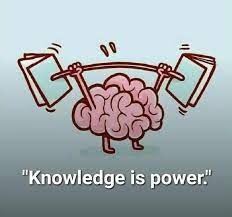
Knowledge means understanding of something such as facts, information, description and skills. It is the source of power to man and this distinguishes him from other creatures of the universe. However man is genuinely more vulnerable than numerous creatures, for he can’t see similar to a bird, nor can lift heavy weights as certain creatures. In any case he is the most remarkable animal on earth. This power essentially comes to him from information not from actual strength. ‘Knowledge is power’ implies that a man has instruction and a full oversight on his life by utilizing the strength of information. This means a person has the resources to express his views dynamically and make intelligent decisions based on his every day situations, awareness and understanding.

Kim Harrison Quote: “Knowledge is Power. Ignorance is Bliss. But curiosity  – even if it had killed

Ignorance, nonetheless, is “an absence of information, instruction, or mindfulness”. Knowledge is amazing, indeed, however a few people think it is incredible to pick when you need to know and proficient in something. This is the reason ignorance is bliss for some individuals. While knowledge is something you can decide to have, ignorance is picking whether you need to have a specific information. In any case, having an “ignorance is bliss” mindset is like people who love to procrastinate. They realize they have a forthcoming cutoff time, yet they fear the possibility of managing it, thus they delay it until they can no longer do so. Ultimately, they’ll encounter the cutoff time. Is ignorance truly euphoria? You can decide to not know something, however sooner or later, whatever information you’re attempting to keep away from will introduce itself to you. Knowledge is genuinely power, as you have control.
In any case, we can’t deny the way that sometimes “ignorance is bliss”. For instance, imagine a situation wherein an exceptionally giant meteor will hit earth. Having the information on this you will attempt each conceivable thing to save earth. You will attempt to change the predetermination. Eventually, you will either be successful or not. Notwithstanding, in case you were totally ignorant about this reality you would have proceeded with your life or would have attended parties, not realizing the end is near. The person that have the knowledge about the incoming meteorite may have the power to change something but he or she can never experience happiness or bliss at that kind of situation knowing their impending demise. He may get miserable or cry over the way that world is reaching a end.


Comparative Study b/w Parliamentary and Presidential System of Government

Parliamentary system is a democratic form of government in which the party with the greatest representation in parliament (legislature) forms the govt., its leader becoming prime minister or chancellor. Presidential form of govt. is a democratic and republican govt. in which a head of govt. leads an executive branch. The head of govt. is in almost cases also the head of the state, which is called the President. India follows a parliamentary form of govt. modelled on Britain’s.

Features

Features of Presidential system are that the executive can veto acts by the legislature, the President has a fixed tenure and cannot be removed by a vote of no confidence in legislature. The President has the power to pardon or commute judicial sentences awarded to criminals and the President is elected directly by the people or by the people or by an electoral college whereas features of parliamentary system are- close relationship b/w the legislature and the executive, executive is responsible to the legislature, there are two executive i.e. real executive and titular executive, bicameral legislature, no fixed tenure, leadership of Prime Minister.

Merits

Merits of Presidential system are- seperation of powers, expert govt., stability and less influence of the party system.

Merits of Parliamentary system are- better coordination b/w executive and legislature, prevents authoritarianism, responsible govt., represents diverse groups, flexibility in the system.

Demerits

Demerits of Presidential system are- less responsible executive, deadlocks b/w executive and legislature, rigid govt., spoils system as the system gives the President sweeping powers of patronage.

Demerits of Parliamentary system are- no seperation of powers, unqualified legislators, instability, failure to take prompt decision because there is no fixed tenure, party politics is more.

Conclusion

The Presidential system is better for one because of its seperation of powers, the role of judiciary and the govt. accountability to its people. We should ensure a system of govt. whose leaders can focus on governance rather than on staying in power. The present parliamentary system has been tried and tested for nearly 70 years. It can be reformed thoroughly to remove the challenges thrown up by it. Also, there is a need to reform the electoral processes to make democracy more robust.

Science and technology related

INTRODUCTION:-

The evolution of science is like a boon to the world, as human beings come to know a lot about the world they are living in including the activities they indulge into. Furthermore, the development of technology along with the advancement in Science helps to bring in a revolution in various fields such as medicine, agriculture, education, information and technology, and many more.In the present world, if we think of any sort of development, then the presence of science and technology cannot be ignored.

What is Science?

Science fundamentally is the systematic study of the structure and behavior of the natural and physical world through observations and experiments.
Study of science evolved with the civilization of human beings.

What is Technology?

Technology (which is basically derived from the Greek word ‘technologia’) is an art, skill or ability, which is used to create and develop products and acquire knowledge.
Scientists used their knowledge to develop technology and then used technology to develop Science; so, because of this reason science and technology are an integrated term in today’s world.
Consider the following points to understand the relationship between Science and Technology −
  • Contribution of Science to Technology
  • Contribution of Technology to Science
Let us discuss these points in brief.

Contribution of Science to Technology

Let us now understand how Science has contributed to Technology −

Science as a direct source of new technological ideas

For example, innovation and development medical instruments; nuclear technology, radar system, etc.
Contribution of Science

Science as a source of engineering

Most of the technical knowledge used in the designing and development of tools and techniques is actually an outcome of ‘engineering science’.
Engineering Science
Science has also helped in the development of human skills. This is one of the fundamental contributions of Science.

Contribution of Technology to Science

Consider the following points to understand the contribution of Technology to Science −

Technology as a source of scientific challenges

The development in the field of technology paves way for research and development in the field of Science. For example, space science is one of them. Technological development likewise indirectly stimulates basic research in the field of science.

Instrumentation and measurement techniques

Development of advanced instruments facilitated scientists to measure the distance between sun and earth, the intensity of sun’s rays, the revolution of celestial bodies, internal problems of human beings, life of a bridge, etc.

Connection between science and technology:-

Science is the study of the natural world by scientific method i.e. collecting data through a systematic process. And technology is where we apply science to create devices that can solve problems and perform different tasks. Technology is literally the application of science. So, it is really impossible to separate the two.
Science, innovation, and technology each represent a successively larger category of activities that are highly interdependent from each other but distinct. Science contributes to technology generally in six ways:
  • New knowledge which serves as a direct source of ideas for new technological innovations.
  • Source of tools and techniques for more efficient engineering designs and a knowledge base for evaluation of the feasibility of different new designs.
  • Research instrumentation and laboratory techniques used in research eventually find their way into the design or industrial practices, through different methods in different areas.
  • The practice of research as a source for the development and assimilation of new human skills and capabilities useful for different innovative technologies.
  • Creating a knowledge that becomes increasingly important in the assessment of technology in terms of its wider social and environmental impacts.
  • Develops knowledge that enables more efficient strategies of applied research, development, and refinement of new technologies.
The confer impact of technology on science is of equal importance as a source of unavailable instrumentation and techniques needed to address difficult scientific questions more efficiently.

Reference Links:-

https://www.tutorialspoint.com/fundamentals_of_science_and_technology/fundamentals_of_science_and_technology_introduction.htm
https://timesofindia.indiatimes.com/readersblog/tech-freek/connection-between-science-and-technology-23913/