Significant job loss due to lockdown, Tourism Minister tells Rajya Sabha.
With the tourism industry among the hardest hit due to the pandemic, it is estimated that about 21.5 million people working in the sector lost their jobs during the nine-month period from April 2020-December 2020, as per the data shared by the government recently.
In a written reply to the Rajya Sabha, Tourism Minister G. Kishan Reddy said a significant number of jobs were lost in the tourism sector once the lockdown was implemented.
“About 14.5 million jobs during Q1, 5.2 million during Q2 and 1.8 million jobs during Q3 were expected to have been lost as compared to estimated 34.8 million jobs in the pre-pandemic period of 2019-20,” the Minister said.
Mr. Reddy said this was one of the key findings of the study done by the National Council of Applied Economic Research (NCAER) for the Ministry of Tourism to assess the extent of losses to the sector.
As per the report, due to overall economic slowdown during 2020-21, tourism economy or tourism direct gross value added (TDGVA) saw a fall of 42.8% in April-June 2020, 15.5% in July-September 2020 and fall of 1.1% in October-December 2020.
“Due to significant drop in tourist arrivals and hence tourism expenditure, during the pandemic, it is estimated that TDGVA plummeted by as much as 93.3% in Q1 of 2020-21 over its level in the same quarter of previous year,” the Minister stated, adding that it picked up slightly to post a decline of 79.5% and 64.3% in second quarter and third quarter respectively.
However, Mr. Reddy added that the Tourism Ministry did not maintain data on revenue generated from tourism.
Replying to another query, the Minister said no formal study had been instituted by the Ministry to assess whether the movement of people from all States increased at tourist places, which might raise fears of the increase in COVID-19 positive cases after the second wave.
Further, Mr. Reddy said that as per the Bureau of Immigration, the number of foreign tourist arrivals in India stood at 10.93 million in 2019, declining to 2.74 million in 2020 and about 0.42 million till June 2021.
According to the data compiled by the Ministry of Tourism, domestic tourist visits during the calendar year 2019 stood at 2321.98 million and in 2020 at 610.21 million.
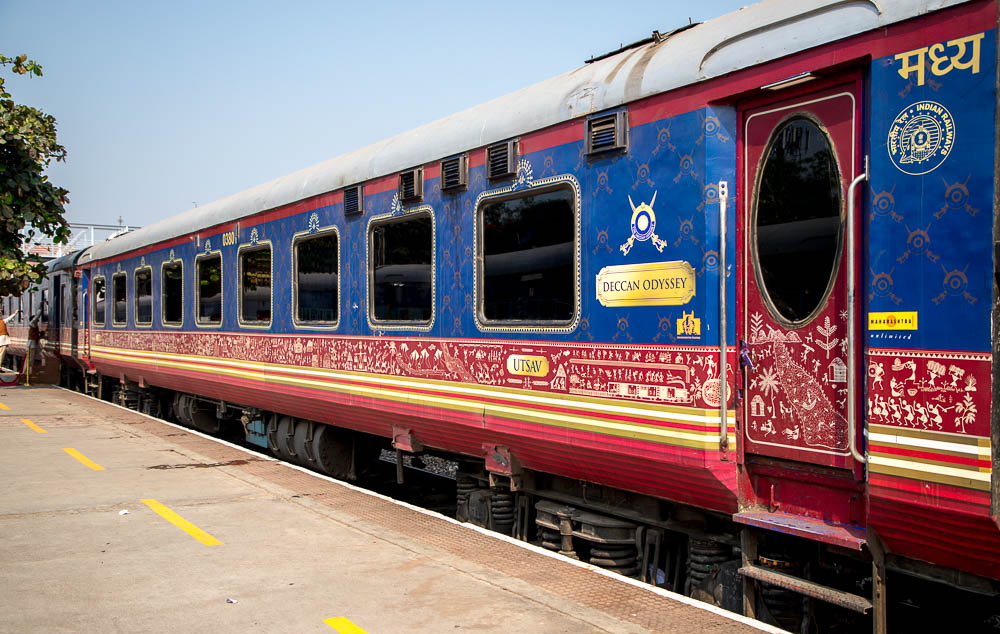
“Atithi Devo Bhava” means “Guest is God” and India, with its beautiful & luxurious trains, proves it True. They make India memorable for the visiting tourists by Providing them with the most exquisite & hospitable experience. These trains are the epitome of luxury, offering passengers a glimpse of the country’s rich culture, exotic destinations, and spellbinding sceneries.
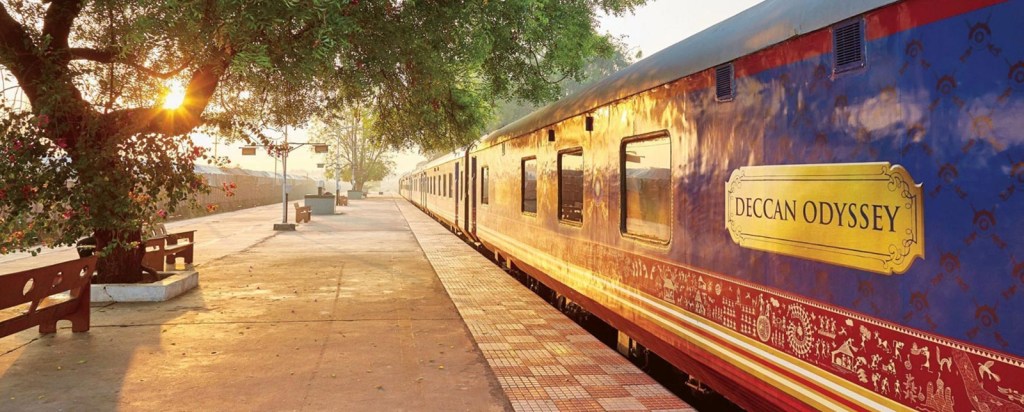
The Deccan Odyssey
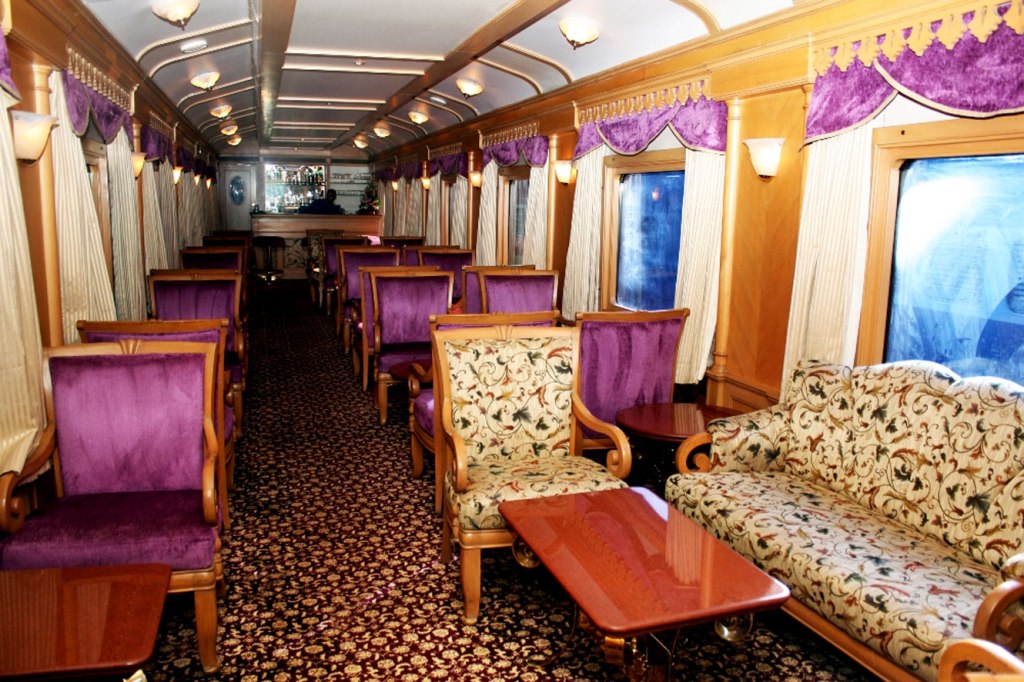
Deccan Odyssey was launched in 2005 to boost tourism in Maharashtra. The Indian Railway and the Maharashtra State Government collaborated on the project. This sumptuous train travels through Maharashtra’s tourism destinations, offering passengers a glance at the state’s culturally rich legacy. The exquisite interiors are reminiscent of a timeless classic, yet with a contemporary twist, creating a wonderful mix for a memorable moment.
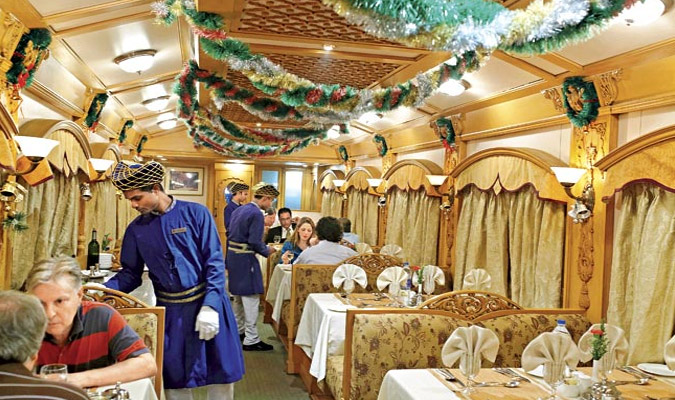
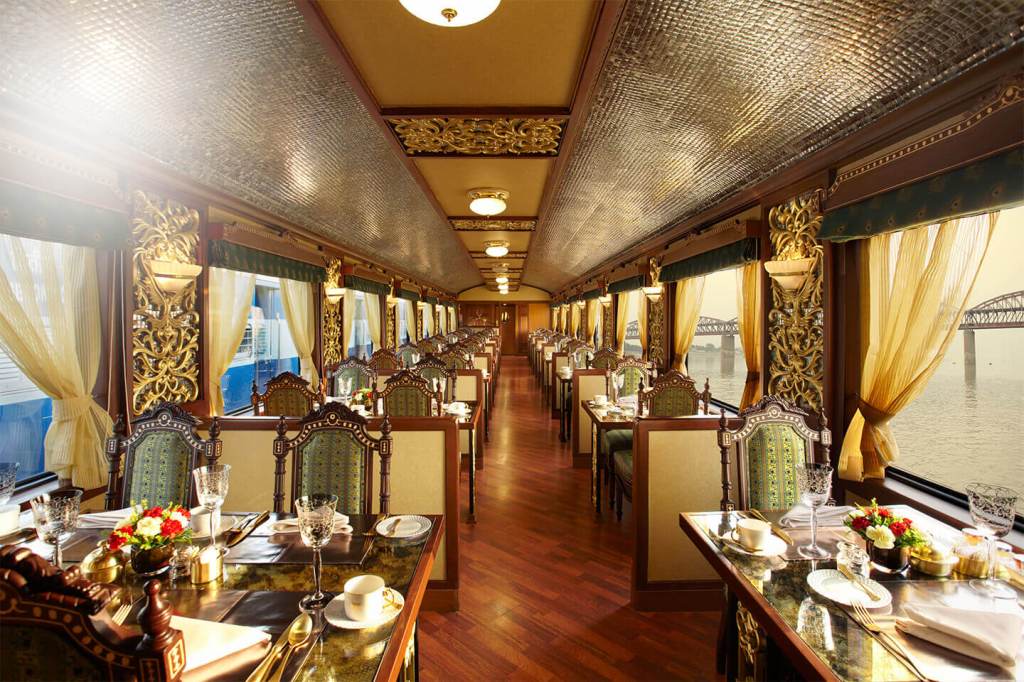
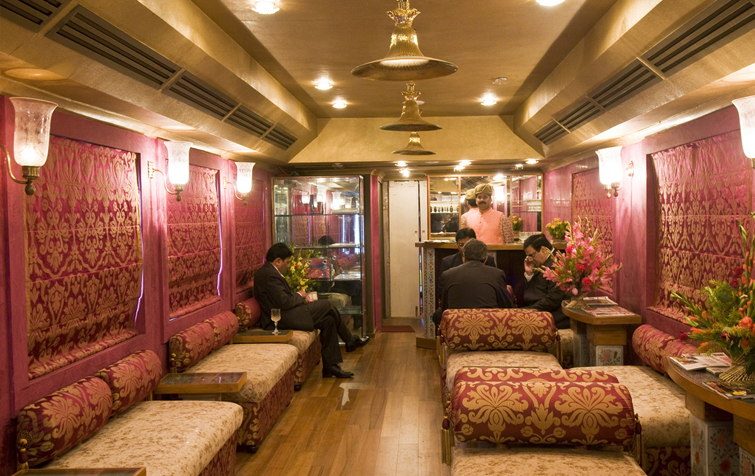
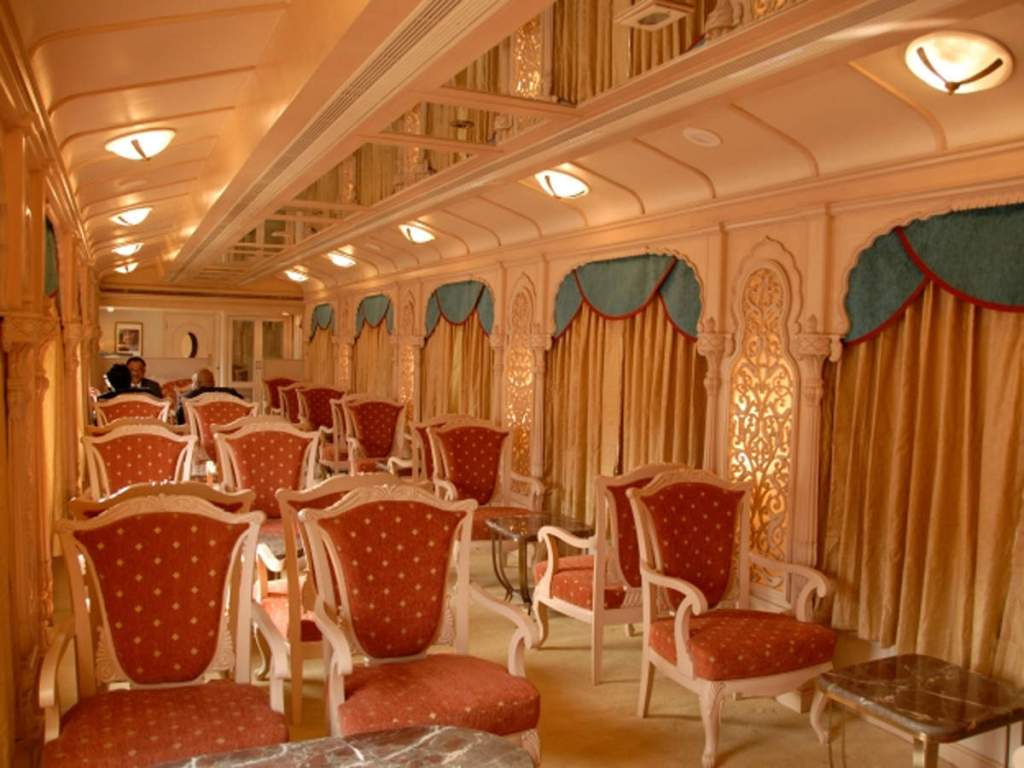
The opulent Deluxe Cabins and Suite Cabins with attached restrooms showcase state-of-the-art amenities and provide passengers with a luxurious voyage. Dining Car, Saloon, Bar Lounge, Mini Gymnasium, Conference Hall, and Ayurvedic Spa are among the other onboard amenities. This regal journey is like a five-star hotel on wheels, with all the luxuries. Twelve passenger cars, one conference car, two dining cars, two generators, luggage cars, two staff cars, one spa car, and one bar car make up the Deccan Odyssey’s 21 coaches.
The train has a crew of over 30 to supervise a pleasant & comfy trip for all the 90 passengers on board. The Deccan Odyssey Train offers six different itineraries for discovering India’s most exotic destinations: Indian Odyssey, Indian Travel, Hidden Treasures of Gujarat, Deccan Jewel, and Maharashtra Wild Trail.
Maharajas’ Express
The ‘Maharajas Express‘ train, an ultra-luxury train travel experience, has won the ‘World’s Leading Luxury Train’ award seven years in a row at the annual World Travel Awards. It now ranks higher than other world-class luxury trains like the Royal Scotsman in the United Kingdom, the Orient Express in Europe, and the Blue Train in South Africa.
The Maharajas Express offers four separate routes across North, Central, and Western India, with four different cabin and suites classifications to pick from. Three of the journeys last three nights, while the others last six nights each. All passenger cabins are equipped with individual temperature controls, televisions, DVD players, direct dial telephones, and internet connectivity, to name a few amenities, to make your journey as convenient and pleasant as possible.
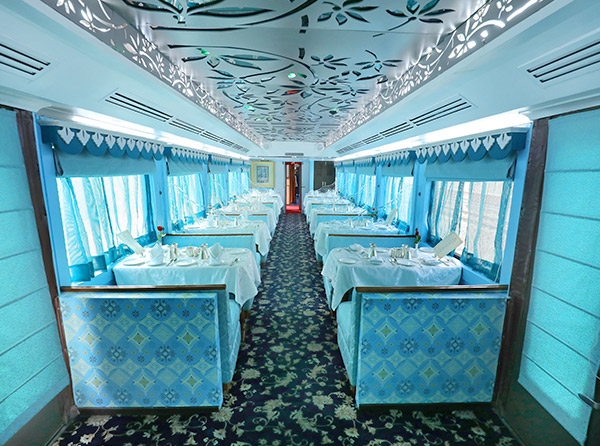
Mayur Mahal and Rang Mahal are two fine dining establishments on the Maharajas’ Express. It has a seating capacity of 42 people, enabling everyone on board to dine together. It also offers an exotic Safari bar with a fine collection of wines, beers, and other refreshments for all passengers. There is also a lounge called ‘Raja Club,’ which includes comfy seats and club armchairs. The Maharajas’ Express also features a high-end boutique with exquisite and one-of-a-kind items.
The Golden Chariot
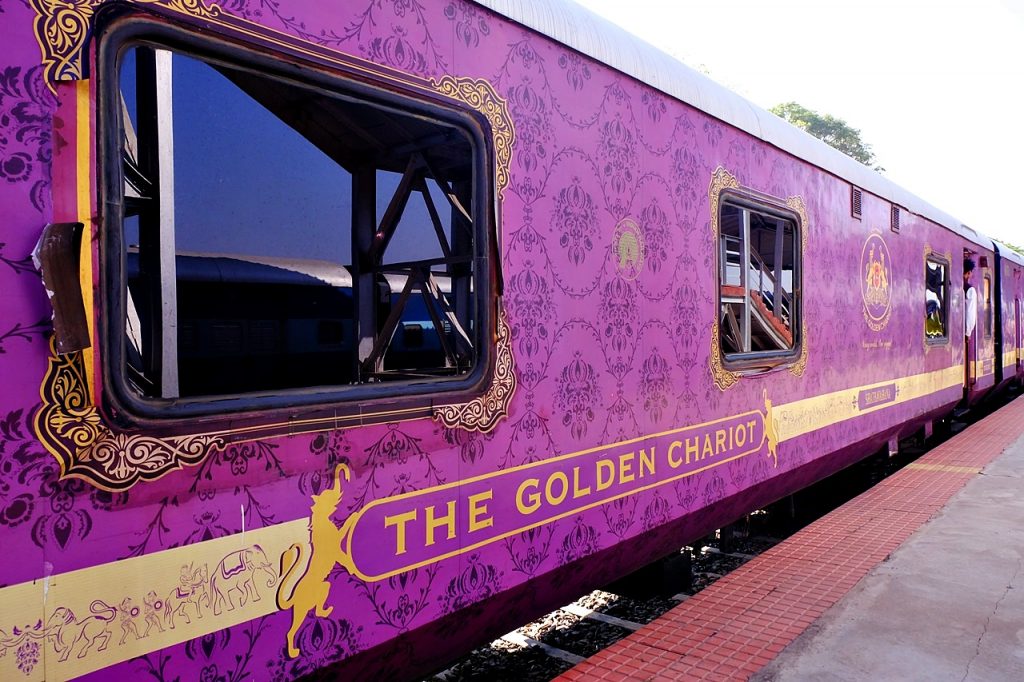
The luxurious Golden Chariot Train travels to Bengaluru, Bandipur, Halebidu, Chikmagalur, Chettinad Kumarakom, Mysore, Hampi, Belur, Badami, Mahabalipuram, Goa, Thanjavur, and Kochi for its passengers. A collaboration between the IRCTC and the KSTDC, The Golden Chariot train aims to exhibit South India’s grandeur in the shortest time feasible. Pride of Karnataka, Jewels of South, and Karnataka’s Glimpses are three of the train’s itineraries, lasting between 4 to 7 days.
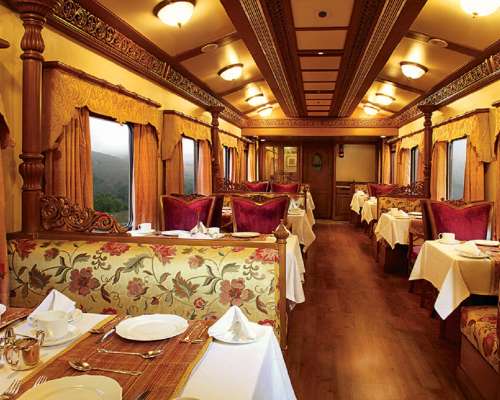
Golden Chariot offers perfect travel joy with luxurious interiors and well-appointed cabins designated after Karnataka’s ruling dynasties. The luxury train features an Ayurvedic spa, 2 fine dine restaurants, deluxe wooden suites with private washrooms, a gym, and a conference area. Golden Chariot is sheer grandeur on wheels, inspired by Dravidian art and culture. This 18-coach luxury train includes 44 guest suites that can accommodate approx. 84 people.
Royal Rajasthan on Wheels
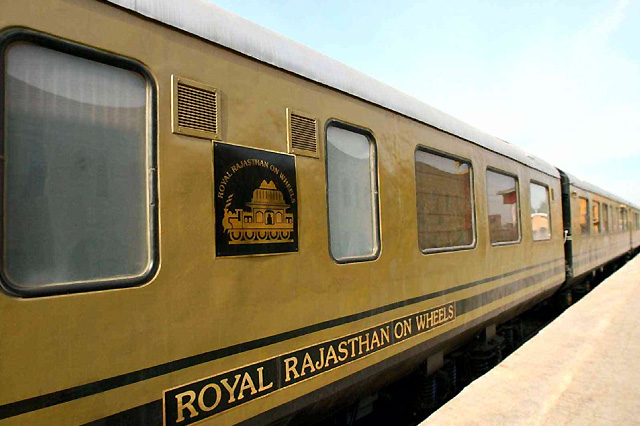
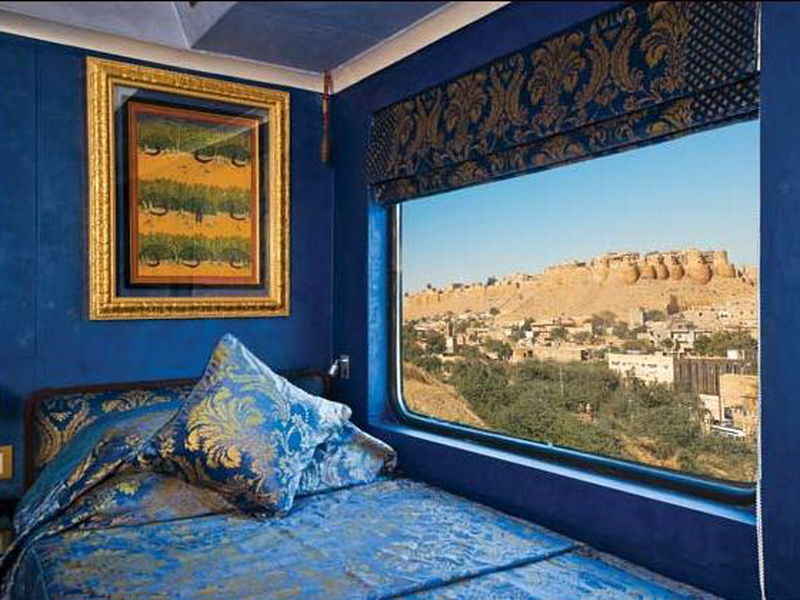
The interiors of Royal Rajasthan on Wheels are magnificent and luxurious. This luxury train has 14 passenger coaches, each named after one of Rajasthan’s majestic palaces. There are 13 deluxe and two super-deluxe saloons. Each saloon is designed elegantly with the highest quality jewels such as ruby, pearl, and sapphire, and offering its visitors a sense of grandeur and imperial lifestyle.
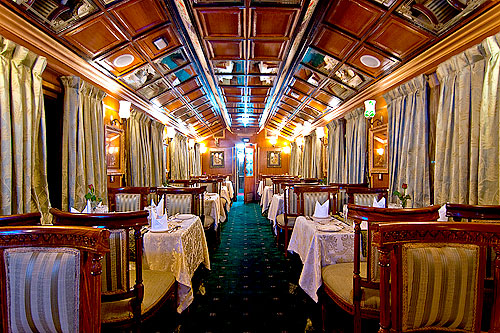
Beautiful silk and velvet bedspreads adorn the coaches, evoking the true beauty and allure of Rajasthan. In addition, each saloon’s vintage furnishings enhance the journey’s elegance and beauty. The coaches are fitted with study tables, chairs, and almost all of the lavish facilities and conveniences, to make the travel extra enjoyable. With its two beautiful restaurants, Swarn Mahal and Sheesh Mahal, a ride on the Royal Rajasthan on Wheels becomes more thrilling and scrumptious. They serve a range of cuisines to their customers, including traditional Rajasthani delicacies, Continental, Chinese, and other international cuisines. While touring on the Royal Rajasthan on Wheels, a spa onboard provides the best leisure and rejuvenation.
Palace on Wheels
Palace On Wheels commenced service on January 26, 1982, and has remained a popular mode of travel in Rajasthan ever since. Within a few years, the Palace on Wheels was named one of the world’s top 10 most sumptuous train excursions. The 14 air-conditioned coaches are named after erstwhile Rajput states to reflect the royal past’s beauty and interiors.
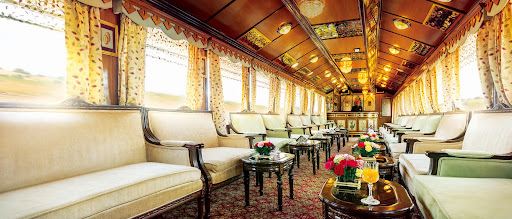
Each saloon has a little pantry to ensure the all-time availability of hot and cold beverages, as well as refreshments. Sofas to curl up on, strategically placed lighting to read by, beautifully fitted beds with plush furniture, integrated closets, and enormous window panes to gaze out at the rolling landscape have all been thoughtfully arranged. The train includes two opulent retro bars, “Maharaja” and “Maharani,” both decorated in Rajasthani style and serving mouthwatering Continental, Chinese, Indian, and Rajasthani cuisines. In the eateries, seating is thoughtfully placed near glass windows. The Palace on Wheels also has a well-stocked bar with a wide selection of Indian and international alcoholic beverages.
Pandit Jawaharlal Nehru, the late Prime Minister of India, referred to Puducherry as “the Window of French Culture.”
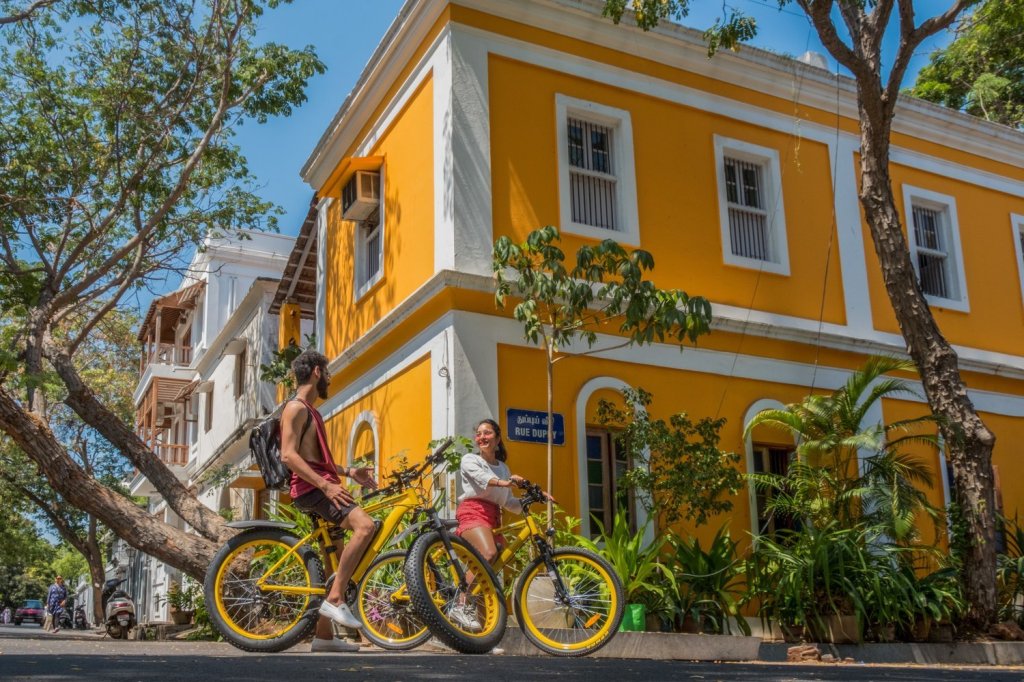
Once the French’s primary headquarters in India, Puducherry is often nicknamed “The Paris of the East”. For 138 years, the French governed the Union Territory. It once had solely French as its official language. The town’s distinctiveness is intricately bound to its exquisite city planning and Franco Tamil architecture. The city is modelled after a late-eighteenth-century fortified French port town, “bastide”. This magnificent destination has incredibly beautiful geography along the seashores, coconut trees, and a diverse range of fauna and vegetation.
The former French settlements- Puducherry, Karaikal, Mache, and Yanam are all part of the Union Territory of Puducherry. The states of Tamilnadu and Kerala surround Puducherry and Karaikal, whereas Kerala and Andhra Pradesh surround Mahe and Yanam. It has many scenic places to visit like:
Paradise Beach
Paradise Beach, often known as Plage Paradiso, is located near Pondicherry town in Chunnambar. The beach fringed with golden sand, is relatively undiscovered. a 20- to 30-minute ferry ride over the backwaters is the only way to get here. The breathtaking ferry trip from the boathouse to the beach adds to the thrills; the backwaters on the way to the beach are lush and densely forested with mangrove plants. A plethora of birds can be seen while on the journey. Early morning, Paradise Beach is a great spot to catch a glimpse of the eastern shore’s dawn. A number of water sports facilities are also available. Visitors can also try their hand at fishing by renting fishing rods and nets.
White Town
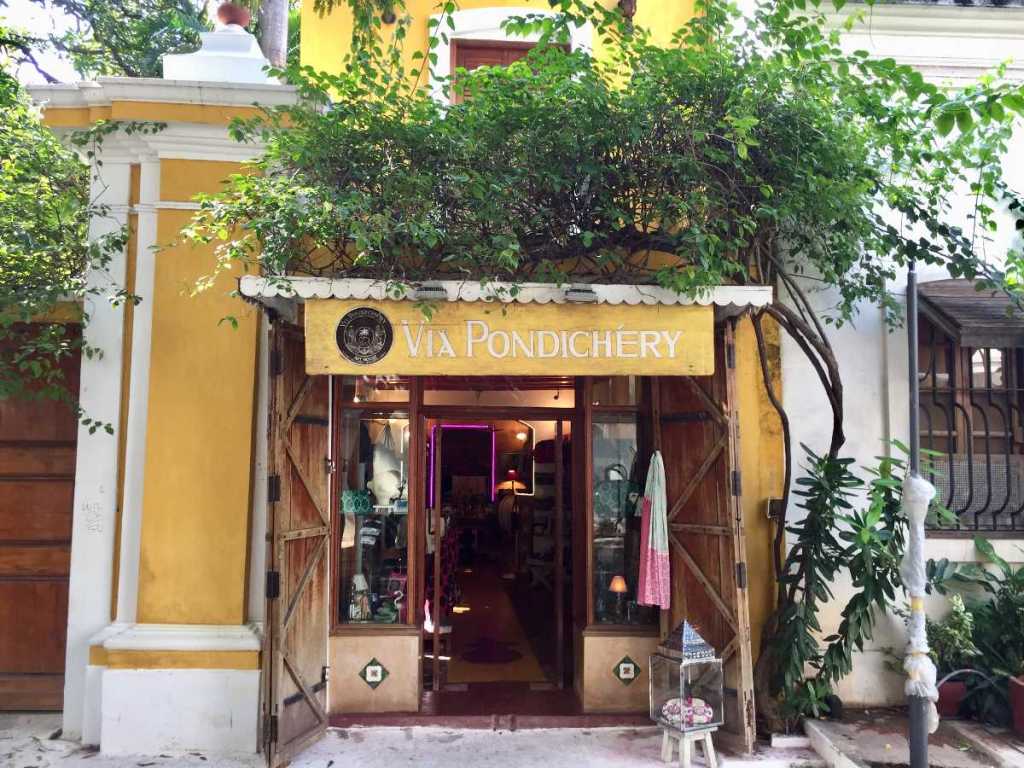
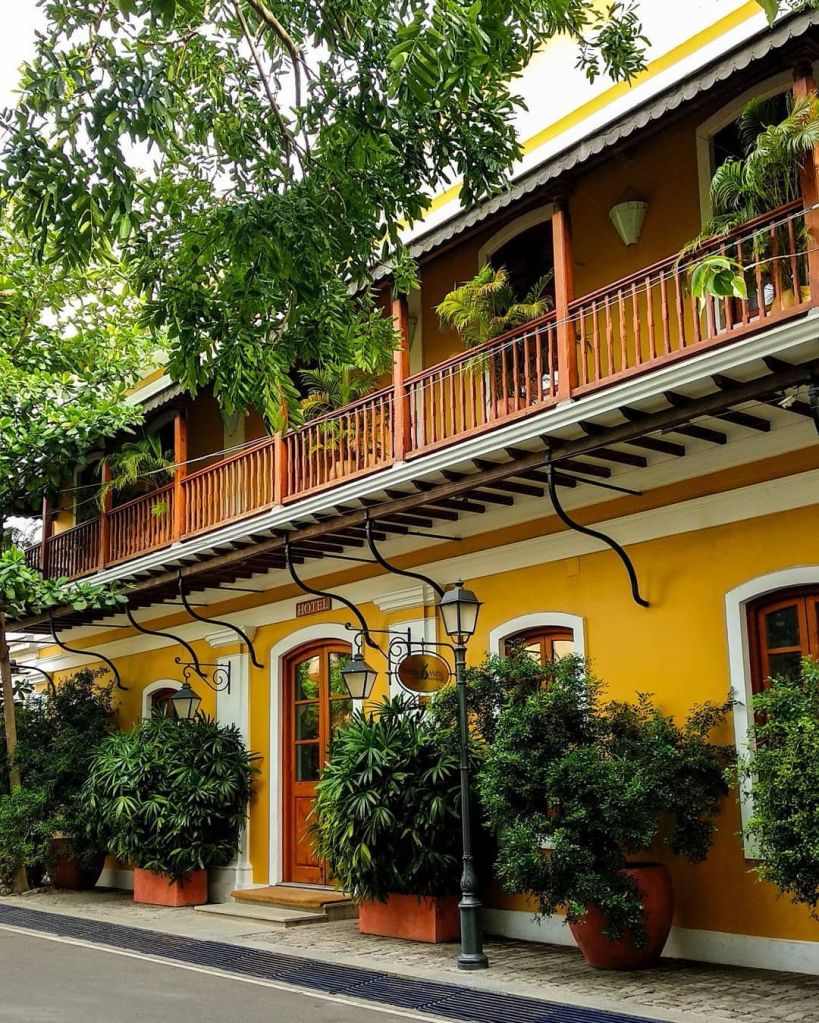
White Town, also dubbed as the French Colony of Puducherry, is a residential enclave in town with an intertwined culture of Tamils and primitive French families. The colony retains the old-world elegance, prettiness, and architecture of historic French Quarters, with cobblestone lanes and mustard yellow dwellings. The majority of them refurbished into vintage hotels, eateries, unique cafés, and art museums. The structures are typically painted in tones of pastel yellow, and the well-kept walkways are flanked with beautiful trees. White Town, known as the former French headquarters, borrows heavily from foreign culture, which is also a hallmark of the area. Furthermore, it is famed for its attractive but pricey marketplace, which is primarily comprised of boutiques, high-end labels, and stores that deal in highly customized stuff. The majority of those are still owned and operated by French nationalists.
Basilica of the Sacred Heart of Jesus
This church was built by French missionaries in 1908 and was accorded the status of Basilica in 2011. It is one of India’s 21 Basilicas and the only one in Pondicherry. The Church of the Sacred Heart of Jesus, one of Pondicherry’s most beautiful Catholic churches, is a stellar example of Gothic architecture. Biblical texts, as well as depictions of Jesus and Mother Mary, are etched in Latin on the entrance door. New Year’s Eve, Christmas Eve, and Easter Day are all lavishly celebrated in the church. The stained-glass panels of the architecture depict Christ’s life as well as the lives of the Catholic Church’s saints. The church is Pondicherry’s first basilica, the 6th in Tamil Nadu, the 20th in India, and the 50th in Asia.
Scuba Diving
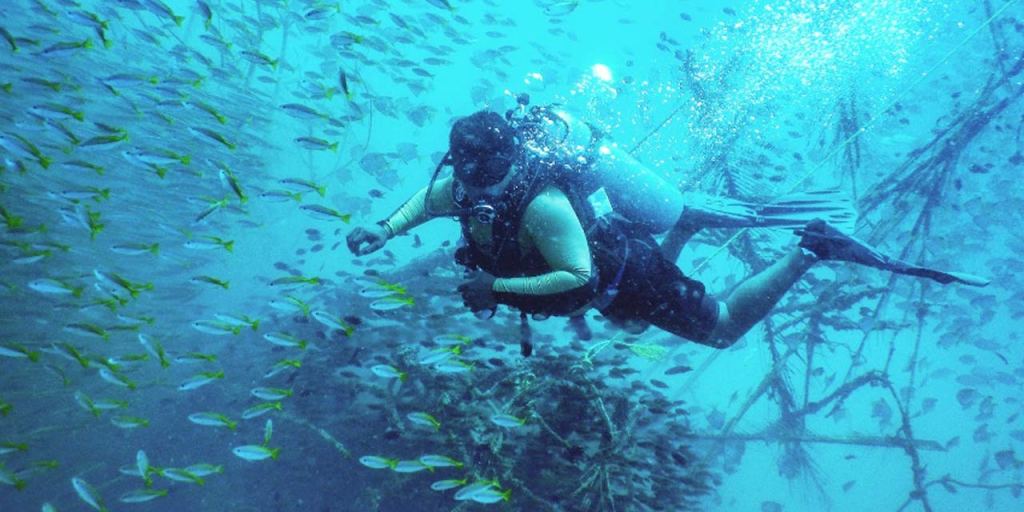
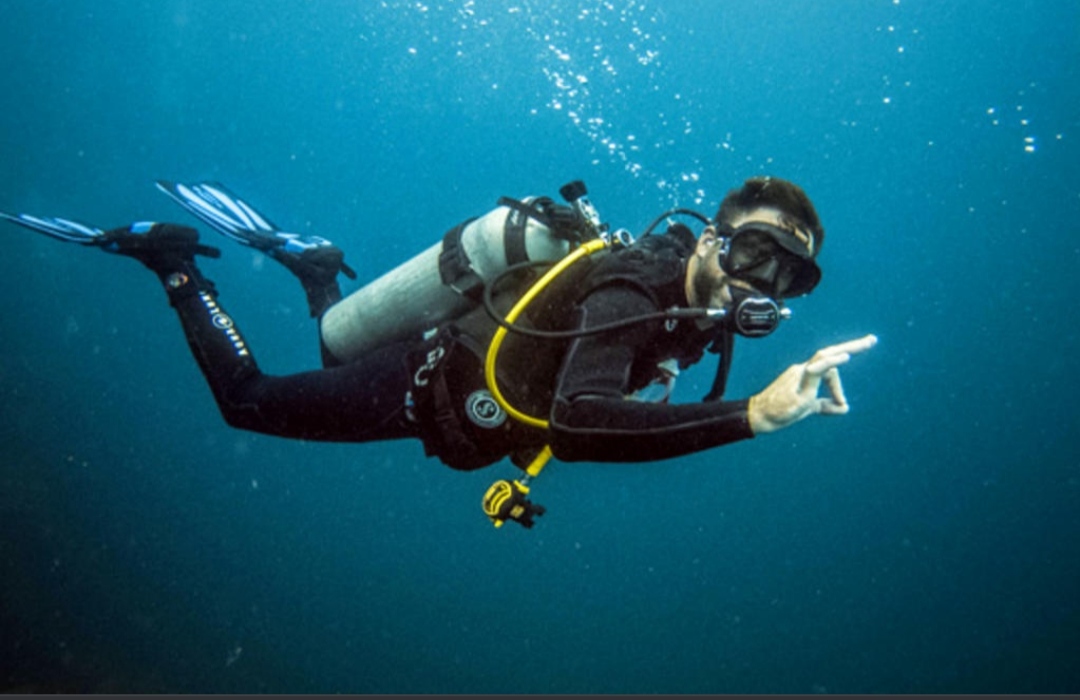
Pondicherry, rich in stunning marine life, provides an unparalleled scuba diving expedition off the country’s Eastern Shore. A dive into the sea will allow you to see spectacular coral reefs as well as fascinating creatures including manta rays, kingfish, sea snakes, lionfish, butterflies, crustaceans, moray eels, and more. Whale sharks, sharks, dolphins, and turtles are all possible sightings. Pondicherry is an enticing diving destination.
Auroville Ashram
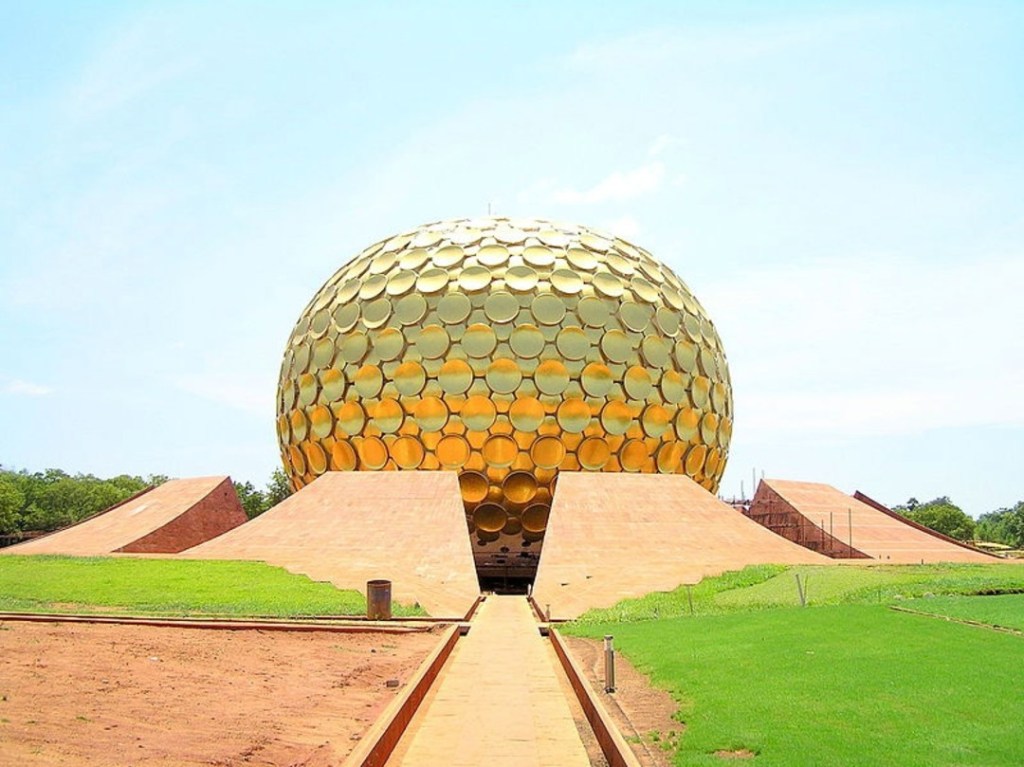
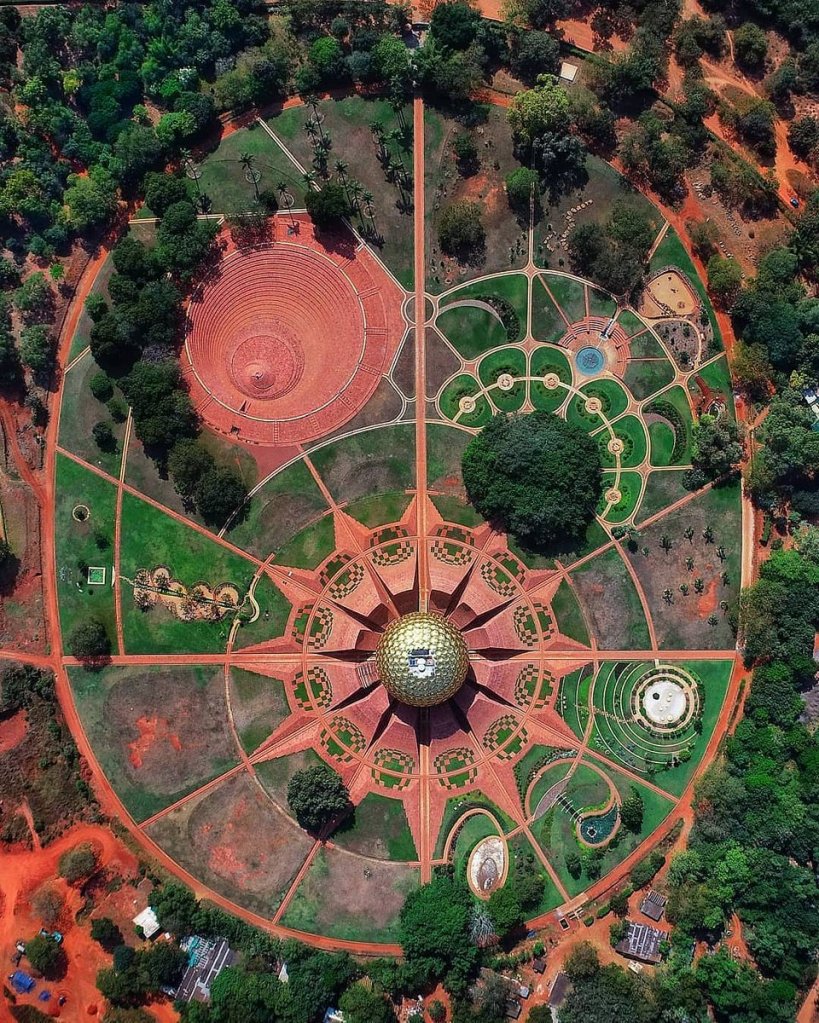
The Auroville Ashram dubbed the “Universal Town,” is an experimental township whose goal is to build a community wherein folks from all nationalities and faiths could dwell together in harmony. It was founded in 1926 by Sri Aurobindo and a disciple of Shri Aurobindo, a French Lady known as ‘Maa’ or ‘The Mother.’ The Indian government backed the initiative, and UNESCO praised it in a 1966 resolution, calling it “a project of vital importance to humanity’s future.” In 1968, the town was formally established.
The architecture of the city is as remarkable as the concept. With the famous Matrimandir in the core and gardens ringing it, the city is laid out in a circle with a radius of 1.25 kilometres. The city’s central business district, cultural corridor, peace zone, and residential zone are all located just beyond the city borders. The city is surrounded by a “green belt” that acts as a wildlife habitat, a food/timber source, and a buffer against urban development, among other things.
Here is some good news for all the watersport lovers in Vizag. A scuba diving academy will be coming up soon in the district, at Chintapalli. The city of beaches has been into the watersports trend, with activities like kayaking, snorkeling, jet skiing and scuba diving. Among these four, scuba diving is the more popular watersport. This watersport is not available at places in India such as Goa, Pondicherry, and the Andaman and Nicobar Islands. But fortunately, Vizag has adopted this highly thrilling and mesmerising underwater activity.
Taking a big step towards promoting tourism in Vizag, a scuba diving academy at Chintapalli village in Visakhapatnam District. The academy will be started by Livein Adventures, a Vizag-based adventure sports firm, which operates water sports activities in the city with the support of the Andhra Pradesh Tourism Development Corporation (APTDC). This will be a first-of-its-kind scuba diving academy in Andhra Pradesh and one among very few such academies in India. The academy will come up on four acres of land at chintapalli and will be built at an estimated budget of Rs 2 crore.
Speaking to Yo! Vizag, Balaram Naidu, of Livein Adventures, revealed, “The academy will have courses on basic diving, kayaking, and boating from October 2021. The courses will range from two days to 6 months in duration. Interested individuals, swimmers and non-swimmers, will be able to take globally certified courses on open water diving, rescue diving and advanced diving.”
One of the shaktipeethas (places of worship where the body parts of the goddess Sati fell), is the Chintpurni Temple located about 50 miles [80 km] from Dharamsala. The supreme deity is Goddess Chintpurni, who is said to remove troubles, and is represented by the pindi (circular goddess). Legend has it that when Lord Vishnu cut the body of Maa Sati in 51 parts to end King Shiva’s dance of the destruction of the earth, the pieces were scattered in different parts of India. Considered one of the most important of the 51 shaktipeethas, it is believed that the head of the goddess Shakti fell to Chintpurni.
The Chintpurni Devi Temple is visited by devotees from all over India, who come to pray at the Lotus feet of Mata Chhinnamastika Devi. Puranic traditions say that Chinnamnamastika Devi is protected by Rudra Mahadev or Lord Shiva on all four sides. At the same distance from Chintpurni stands four Shiva temples, Muchkund Mahadev in the north, Shiva Bari in the south, Kaleshwar Mahadev in the east and Narayna Mahadev in the west. The temple remains open between 4 a.m. and 11 p.m.
In the past decades, tourism has experienced continued growth and became one of the fastest growing economic sectors globally. The sector witnessed a 59% growth over the decade in international tourists’ arrivals from 1.5 billion 2019 compared to 880 million in 2009. Globally, the industry contributed to $8.9 trillion to the global GDP in 2019 equaling a contribution of 10.3%. However, the strong growth has been halted in 2020 amid the Covid-19 pandemic. With airplanes on the ground, hotels closed and travel restrictions implemented, travel and tourism became one of the most affected sectors since the very start of the virus spread. The pandemic has cut international tourist arrivals in the first quarter of 2020 to a fraction of what they were a year ago.
Closing borders, tourism & travel ban
Countries all over the world applied travel restrictions to limit the coronavirus spread. Airport closures, the suspension of flights, and nationwide lockdowns are just some of the measures that countries are implementing in an effort to contain the pandemic. After the spread of the pandemic in the first two quarters of 2020, at least 93% of the global population lived in countries with coronavirus-related travel restrictions, with approximately 3 billion people residing in countries enforcing complete border closures to foreigners.
The decline of International Tourists during the Pandemic
The number of international tourist arrivals has been growing remarkably in the last decade and still sustained growth throughout the last years; in 2017 arrivals reached a total of 1.3 billion globally, 2018 reaching 1.4 billion and 1.5 billion in 2019. In 2020, due to the severe impact of the COVID-19 Pandemic, international tourism went down by 65% in the first half of 2020 when compared with 2019 figures.In May 2020, the majority of the UNWTO (World Tourism Organization) tourism experts expect to see signs of recovery by the final quarter of 2020 but mostly in 2021.
Covid-19 and Airline Failures
The International Air Transport Association (IATA) financial outlook released in June showed that airlines globally are expected to lose $84.3 billion in the year of 2020 for a net profit margin of -20.1%. It also stated that revenues will fall by 50% to $419 billion from $838 billion in 2019. In 2021, losses are expected to be cut to $15.8 billion as revenues rise to $598 billion. IATA’s Director General and CEO, stated that “Financially, 2020 will go down as the worst year in the history of aviation. On average, every day of this year will add $230 million to industry losses. In total that’s a loss of $84.3 billion”. What’s shocking is witnessing how many airlines have failed during the coronavirus pandemic. And even for airlines that are still in business, the situation is severely difficult. The second-largest carrier in South America, Avianca Holdings survived the Great Depression – but not coronavirus. The airline filed for Chapter 11 bankruptcy protection in May.
Hospitality Sector Hit by the Lockdown
The lockdown due to the pandemic has affected the tourism industry across the globe, and the hotel sector is among the hardest hit. Global hospitality data company STR compared 2020’s first quarter status to 2019 figures, hotel occupancy rates dropped as much as 96% in Italy, 68% in China, 67% in UK, 59% in US. There’s no doubt that the hotel industry has witnessed a severe impact by the pandemic and the lockdown status.
Balancing the Return of Tourism Revenues and Safety
As of July 2020, the EU opened borders to tourists from 15 different countries leaving the U.S. off the list. Health officials developed a plan to classify accepted countries based on how the country is performing in controlling the coronavirus. A country is considered under control when they have a number close to or below the EU average for new coronavirus cases over the last 14 days and per 100,000 inhabitants. On 15 June, the European Commission launched ‘Re-open EU’, a web platform that contains essential information allowing a safe relaunch of free movement and tourism across Europe. The platform will provide real-time information on borders, available means of transport, travel restrictions, public health, and safety measures.
The Return of Tourism Globally
With lockdowns ending around the world, many countries have started to ease border restrictions and reopen for international tourists. Although many governments are still advising against “nonessential” international travel, a host of popular destinations have eased their Covid-19 border restrictions and are readily welcoming tourists back:
– The European Commission has released guidelines for how its Member States can start to ease coronavirus travel restrictions and enable tourism to begin again
– Destinations like Dubai, the Maldives, Egypt, Lebanon, Croatia, Kenya, Tanzania and Jamaica have already opened their doors to foreign visitors again, while Thailand hope to reopen soon
While tourism is slowly returning in some destinations, most members of the UNWTO Panel of Tourism Experts expect international tourism to recover only by the second half of 2021, followed by those who expect a rebound in the first part of next year.
However, there are still concerns over the lack of reliable information and deteriorating economic environment which are indicated as factors weighing on consumer confidence, especially with the potential new limits on travel as world comes to grips with second Covid-19 wave. The concerns over the waves of coronavirus brought on by returning vacationers are wreaking havoc on the world’s tourism industry.
India is the land of beautiful places. There are many beautiful places to visit in India, it will give you the most amazing experience. So, in this blog I am going to tell you some famous tourist places to visit in India.
TAJ MAHAL
Taj Mahal is the best tourist spot in India. It is one of the seven wonders of the world. It is located in Agra, Uttar pradesh. Taj Mahal is named after Mumtaz Mahal, the wife of emporer Shah Jahan. The construction of Taj Mahal was started on 1631 and was completed on 1648. It was built with the help of 20,000 workers. Taj mahal was built in the memory of Mumtaz Begum. People from all over the world come to visit it. According to a survey more than 15 million of people visit Taj Mahal every year. The address of this place is 64 taj road, Agra-282001.
2. INDIA GATE
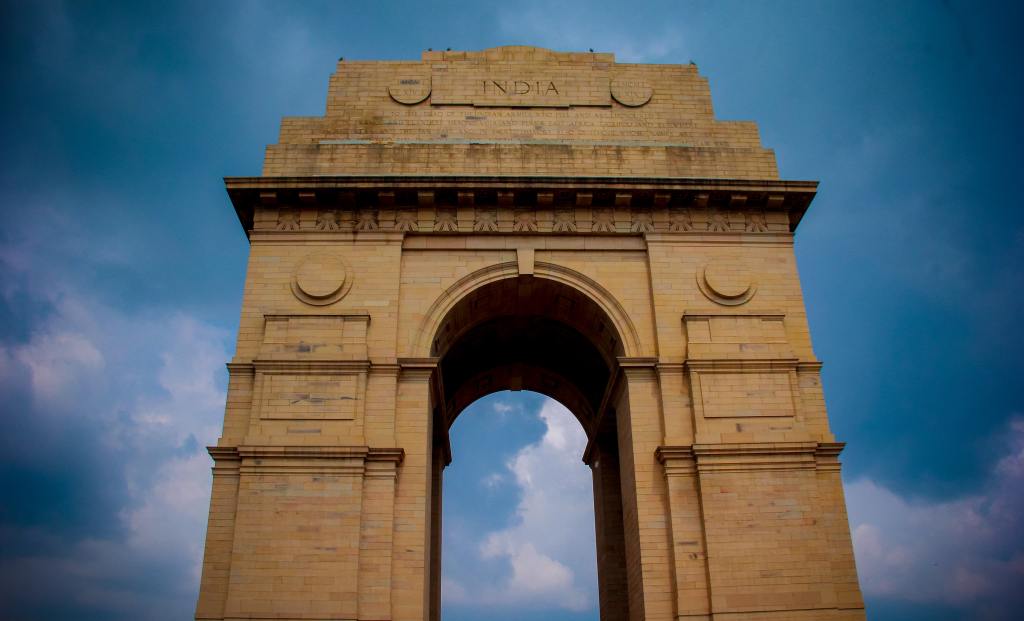
India gate, formally known as All India War Memorial is a war memorial located in Delhi. It is a memorial to 70,000 British Indian soldiers who died between the following years 1914 to 1921 in France, Persia, East Africa, Flanders, etc. It is one of the most famous places in India. The monument is about 42 metres high. The specialty of this place is, about 13,300 servicemen’s names are inscribed on this gate. Every years lakhs of people come to visit it. It was established on February 10th, 1921 and it is designed by a famous architect Edwin Lutyens, an Englishmen who designed numerous monuments other than it. The address of this place is Rajpath, New Delhi, Delhi 110001.
3. LOTUS TEMPLE
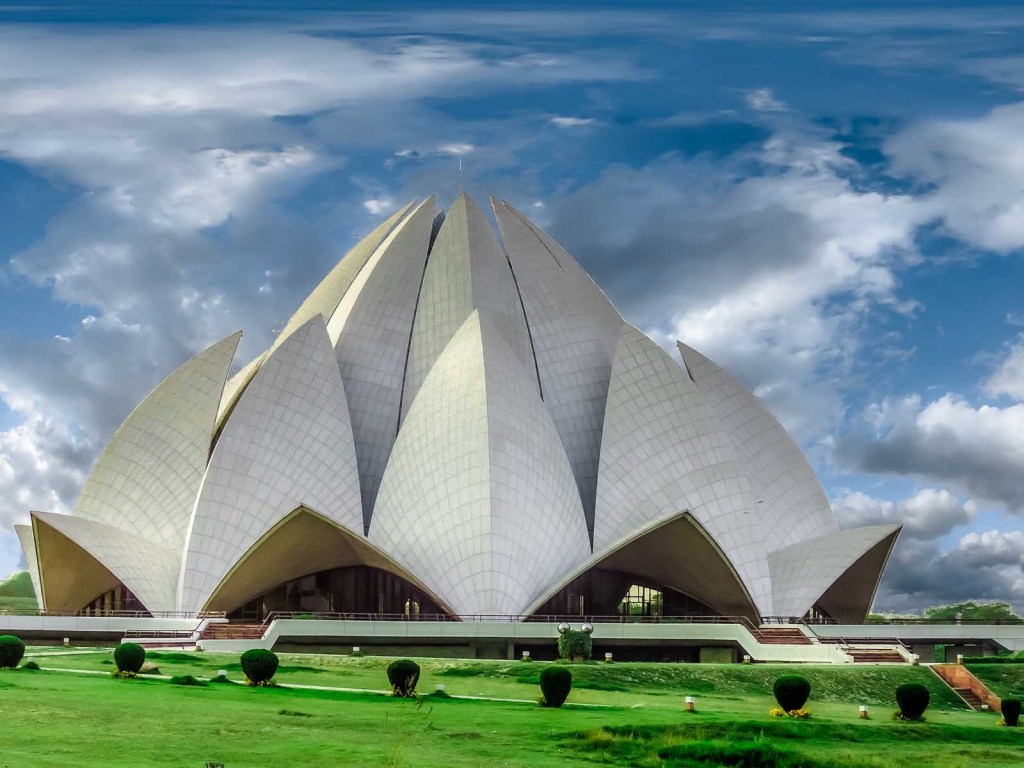
Lotus Temple is a Baha i House of Worship located at New Delhi. It the most beautiful and attract monument place in India. It was established on 1986 and it was designed by Iranian architect Fariborz Sahba. The lotus temple name derived from its design, as it looks like a lotus. It is also one of the famous place in India. The address of this place is Bahapur, Kalkaji, New Delhi.
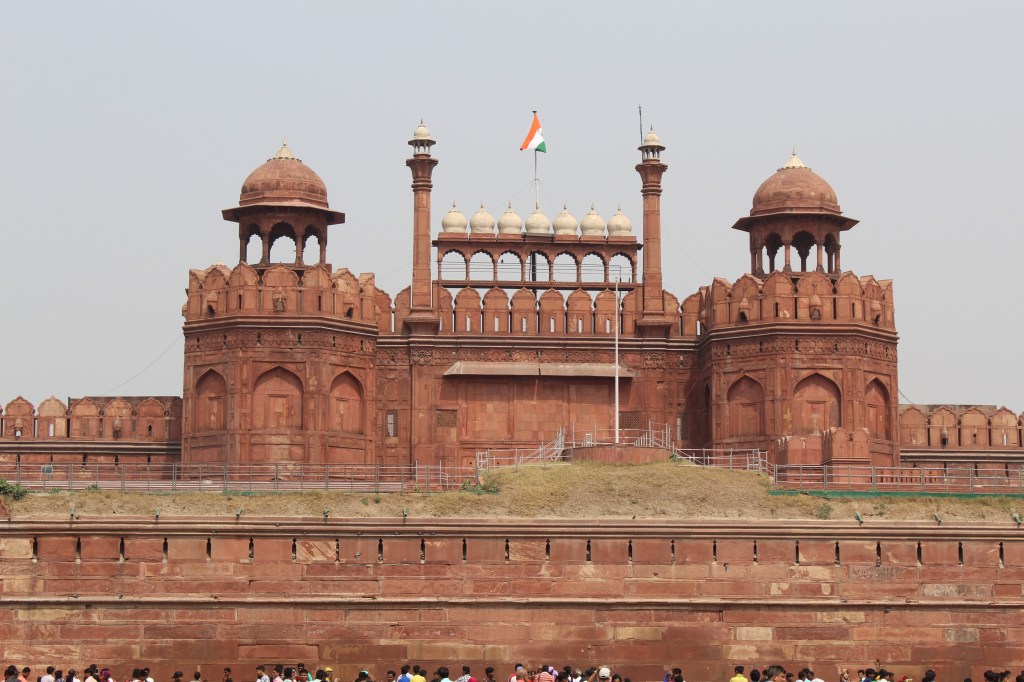
4. RED FORT
Red fort(also known as Lal Qalʿah) is a historical fort located in New Delhi, It is the main residence of Mughal Emperors. It is designed by Ustad Ahmad Lahori, who also built Taj Mahal. It was built by red sand stone and it is 75 metre high. Emperor Shah Jahan commissioned the construction of red fort on 12th May 1638, when he decided to shift his capital from Agra to Delhi. Every year on 15th August, the prime minister of India hoists Indian tricolor flag at main gate. Every year many people come to visit this place. The address of this place is Netaji Subhash Marg, New Delhi.
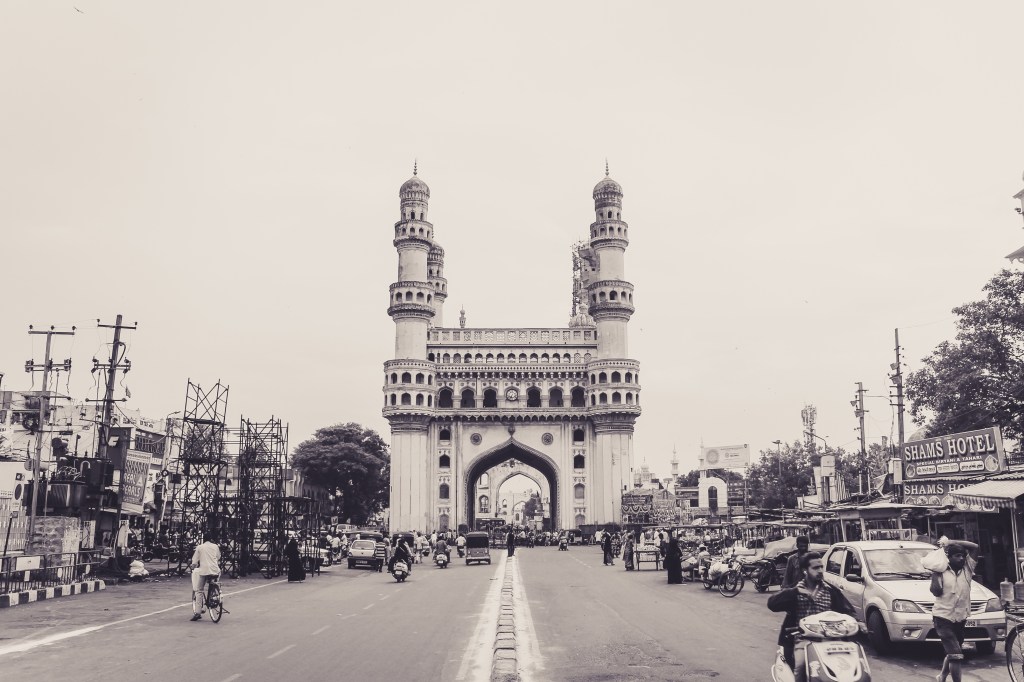
5. CHARMINAR
Charminar is a monument and a mosque located at Hyderabad, Telangana. It is one of the tourist attraction in Hyderabad. It was built by Mohammed Quli Qutab Shah who is the fifth ruler of Qubt Shahi Dynasty, in 1591 to commemorate the end of the plague in the city. The monument is 56 metre high. Approximately 1.7 million of people visit Charminar every year. The address of this place is Char kaman, Hyderabad.
Ecotourism is now described as “responsible travel to natural regions that conserves the environment, supports local people’s well-being, and includes interpretation and education” (TIES, 2015).
Both staff and visitors are expected to participate in education.
Ecotourism has been hailed as a panacea around the world: a way to fund conservation and scientific research, benefit rural communities, promote development in poor countries, improve ecological and cultural sensitivity, instill environmental awareness and social conscience in the travel industry, satisfy and educate discriminating tourists, and some claim and bring world peace
Ecotourism is a type of tourism that aims to have a low environmental impact, is environmentally friendly, and avoids the negative consequences of many large-scale tourism projects in previously undeveloped areas.
History of eco-tourism
Although the origins of the term “ecotourism” are unknown, Heizer (1965) appears to be one of the first to use it, identifying four “pillars” or principles of responsible tourism: minimizing environmental impacts, respecting host cultures, maximizing local benefits, and maximizing tourist satisfaction.
In the 1970s and 1980s, ecotourism grew out of the environmental movement’s womb. Growing environmental concerns, along with a growing discontent with mass tourism, resulted in a surge in demand for alternative outdoor experiences.
At the same time, developing countries came to recognize that nature-based tourism may be a source of foreign cash while also being a less resource-intensive alternative to forestry and agriculture.
Many Definitions of Eco-Tourism
Ecotourism, according to Ceballos-Lascurain, is “travelling to relatively undisturbed or uncontaminated natural areas with the specific goal of studying, admiring, and enjoying the scenery and its wild plants and animals, as well as any existing cultural manifestation (both past and present) found in these areas.”
Ecotourism is defined as “responsible travel to natural regions that conserves the environment and improves the well-being of local people,” according to the Ecotourism Society.
“Ecotourism is nature-based tourism that combines teaching and interpretation of the natural environment and is managed to be environmentally sustainable,” according to the Ecotourism Association of Australia.
This definition emphasises that the word “natural environment” encompasses cultural elements, and that “ecologically sustainable” refers to a fair return to the local people as well as long-term resource conservation.
Ecotourism, according to Tickell, is “travel to appreciate the world’s wonderful diversity of natural life and human culture without harming either.”
Ecotourism is a type of environmentally friendly tourism that promotes environmental and cultural awareness, appreciation, and conservation.
We defined mass tourism as a more traditional kind of tourism development in which short-term, free-market principles predominate and profit maximization is the primary goal. Tourism development was once thought to be a desirable and generally “clean” business for nations and regions to pursue.
This was especially true in terms of gains in foreign exchange profits, job creation, and infrastructure development, such as transportation networks.
We are more prone these days to demonize or portray traditional mass tourism as a beast; a creature with few redeeming features for the destination place, its people, and its natural resource base.
This isn’t to say that “mass tourism” hasn’t generated issues; it has. There has been a legitimate need to establish an alternative way to tourism growth that mitigates the harmful effects of mass tourism.
As a result, the concept of “alternative tourism” has gained popularity. This alternate strategy has been referred to as a “competing paradigm” to mass tourism, but it may also be seen as a complimentary approach. That is, there is no such thing as “alternative tourism.”
As a result, the dispute devolves into a semantic one. It may be best to recognize that alternative tourism is a natural result of a growing awareness of tourist development and its strengths and weaknesses.
Alternative tourism is a broad phrase that refers to a variety of tourist tactics (e.g., suitable, eco, soft, responsible, people to people, and green tourism), all of which claim to provide a more environmentally friendly alternative to traditional mass tourism in specific areas.
However, as Weaver correctly points out, alternative tourism is not without its detractors. It is apparent that just because alternative tourism arose in response to mass tourism’s negative repercussions does not mean it is less destructive or better than its alternatives.
Nature of Ecotourism
Between 2008 and 2017, tourism is predicted to rise at a rate of 4.3 percent per year in real terms. Ecotourism, often known as nature-based tourism, is the fastest-growing segment of the tourism business, increasing three times faster than the overall industry.
There can be little doubt that rising environmental concerns, along with the historically common habit of travel as a means of escape to nature, are encouraging people to seek solitude with nature, resulting in an increase in the number of visitors to national parks and other protected places.
Nature-based tourism encompasses a variety of aspects. Although not all forms of travel to natural places are necessarily ecotourism, this is an important step in distinguishing nature-based tourism from ecotourism and provides us with a number of levels at which to differentiate the link between certain tourism activities and nature:
Those activities or experiences that rely on the natural world. Those activities or experiences that are made better by the presence of nature. Those activities or experiences that happen to take place in a natural context. Nature-based tourism is divided into numerous categories, each of which employs a combination of these dimensions.
Camping, too, is an activity/experience that is frequently enhanced by nature. Most people would rather camp in a natural area than along the side of a busy highway.
As a result, while nature is an important aspect of these experiences, it is not the driving force behind them.
When it comes to tourism, India always founded as an attractive place to visit. From different types of people to different types of culture and traditions, the country has everything that one is looking for. But why India? Because it costs very cheap and very little amount of money to travel the most beautiful places around the region. The Country has the most beautiful beaches, Mountains, deserts, Forests, Rivers and the old historical temples that one should visit.
Here are the TOP 6 tourist places in India that a traveler Should Visit.
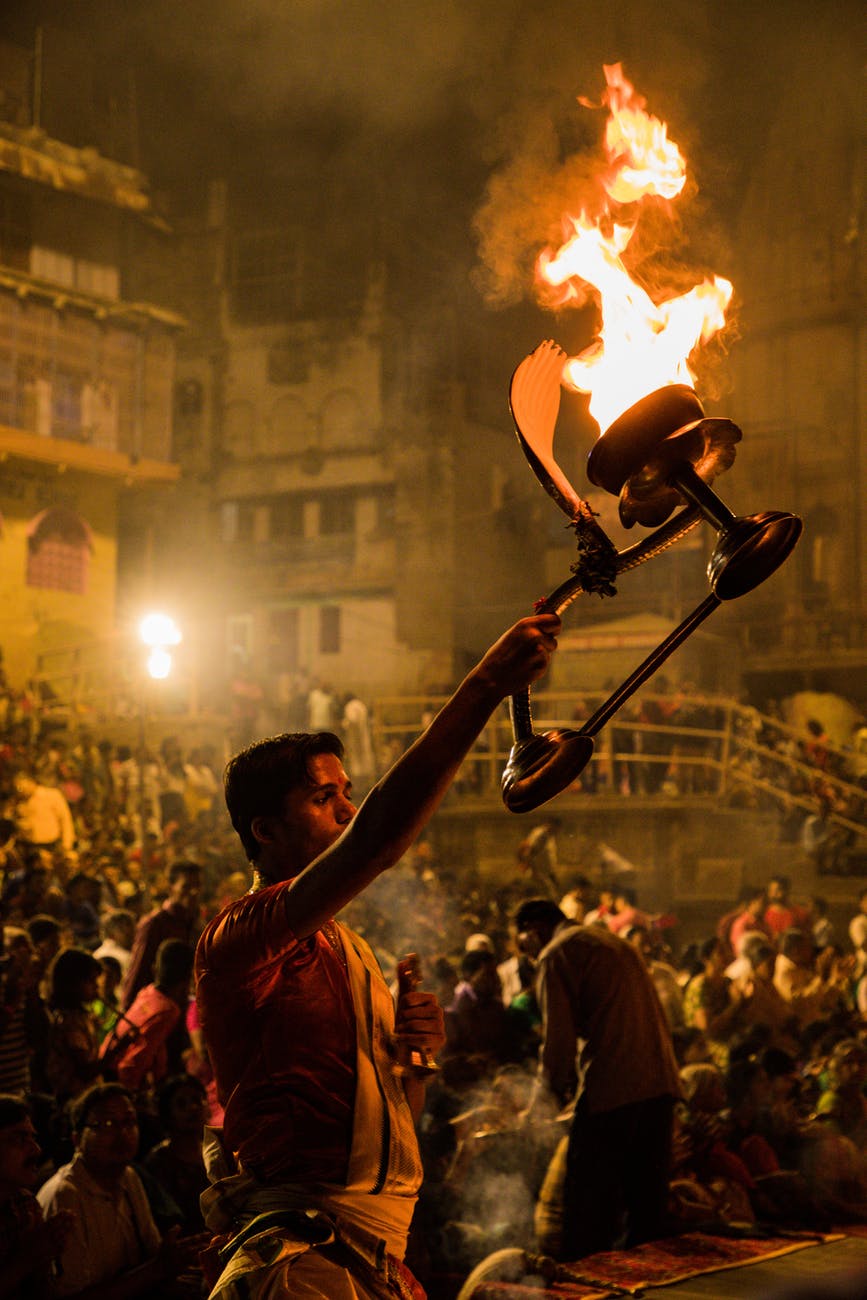
If one wants to travel every corner of the country, then they should start with this place and set it up at the of the priority list. Visiting the place where you can smell the Hindu culture everywhere. One should see the night near the river Ganga, where Hundreds and thousands of people come together and performs rituals and prayers. It is one of the most famous place in all over India. Starting a journey with the blessing of God is a best way to start. You can try a number of different food style around the street of Varanasi.
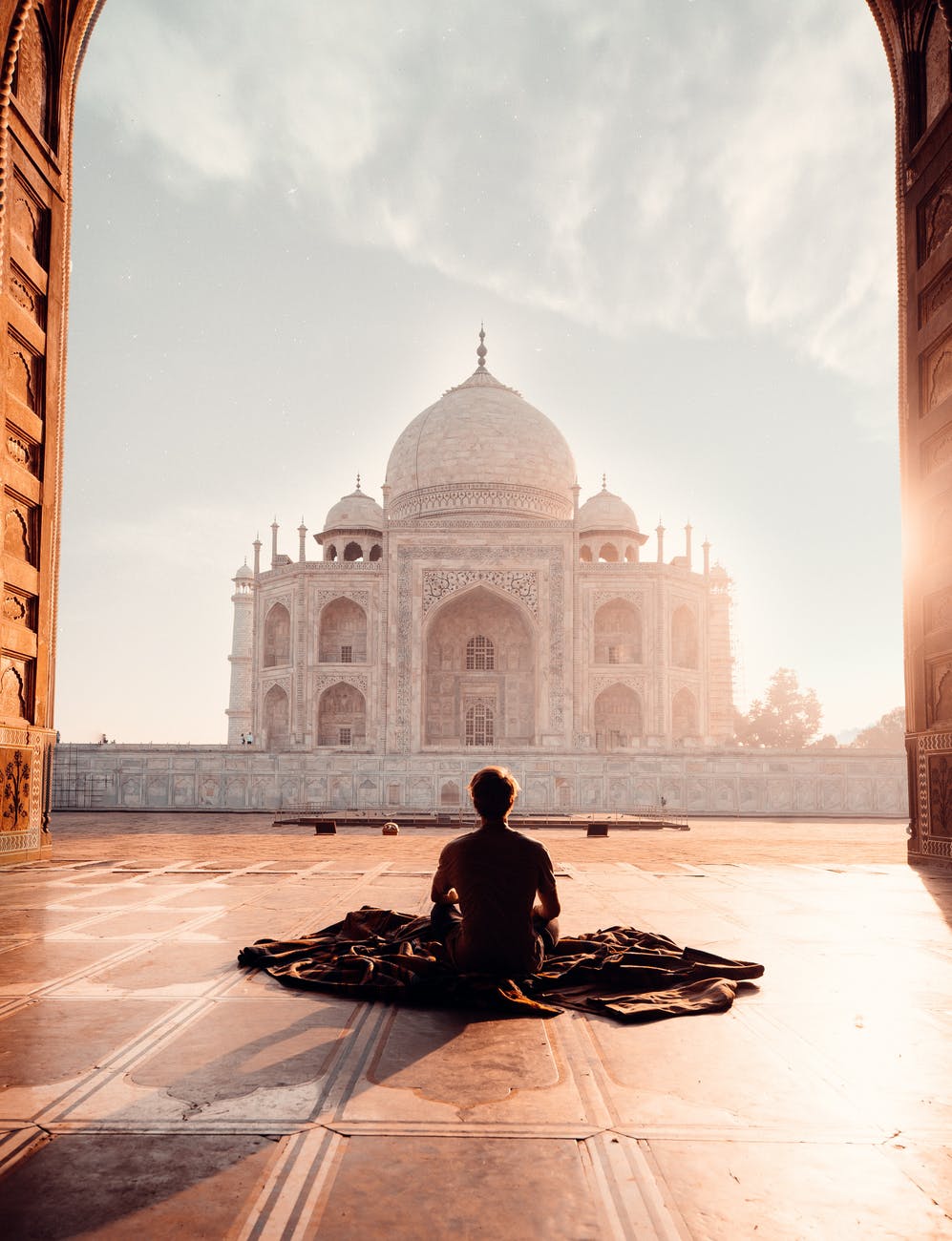
Taj Mahal is one of the examples of the most beautiful Monuments that one could ever visit. Taj Mahal is a wonder out of total 7 In the world. It was built around 1648 and was started in 1631 after the death of Mumtaj Mahal, the wife of Shah Jahan. It has a beautiful story of love and most famous in the world. It was decorated with diamonds, mother of pearls, Jade and was constructed with white marble.
Feel the cold wind at the top of the hill around the Himalayas, a relaxation to your eyes while watching the beauty of nature. One of the finest pieces of nature that one could ever see in Shimla. The place costs quite less than the others. There’s a town hall at the center of the town and number of hill stations around the place. If one loves to visit the nature, then this place needs to be visited.
One could experience the old rich culture in this place. From the old tradition of shopping to Visiting the finest pieces of architecture, this place brings everything you need. Jaipur is the capital city of Rajasthan State and also known as “Pink City”. There are most famous places around the city which needed to be visited and they are, Hawa Mahal, Jantar Mantar, Amber Fort, and City Palace.
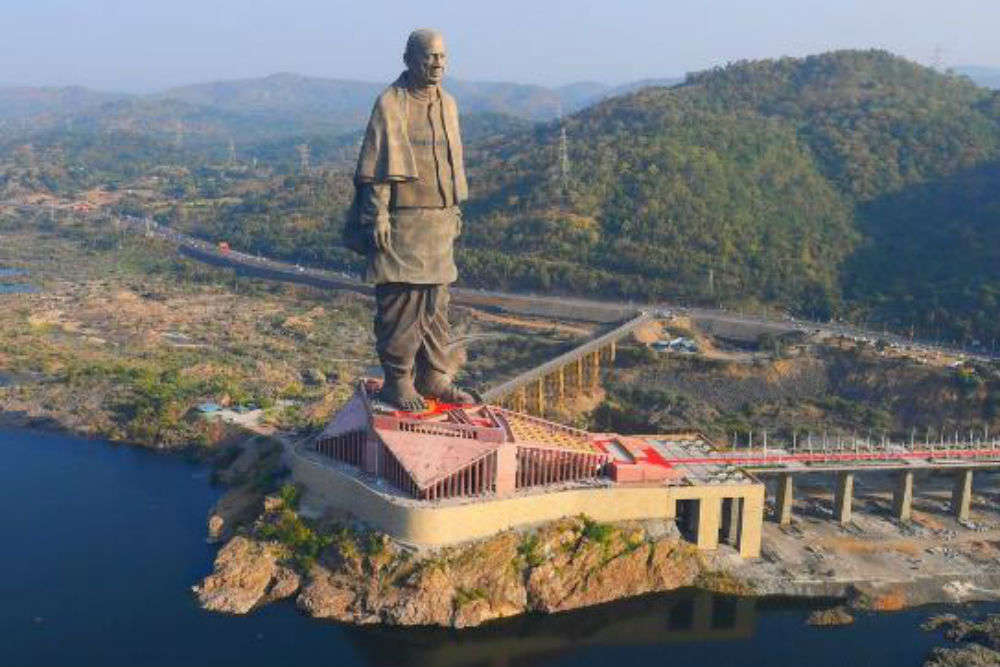
Recently, India had built the World’s Tallest State in the Name of One of the Country’s Freedom Fighter and also Known As an Iron Man of India, Shree ” Sardar Vallabhbhai Patel”, a former Deputy Prime Minister Of India. The statue is 180 meters Tall and Located near the Sardar Sarovar Dam. It serves the major tourist Attraction as well as it is a symbol of India’s integrity and resolve.
1. Rajmachi, Maharashtra
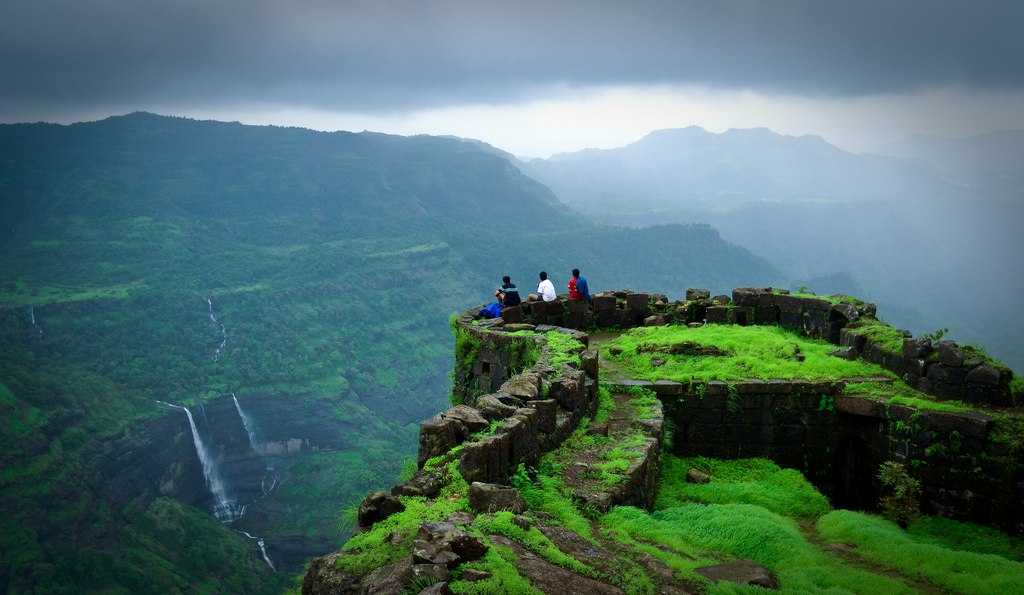
If one Love trekking then this place must needed to be visited. It is situated near a small village and has 2 two fortified peaks Shrivardhan and Manaranjan forts, located near two famous hills of Lonavala and Khandala. One can trek Upto 3 to 4 hours to reach the destination or one can easily drive to the other route and can trek for just 20 to 40 Minutes to reach the hill.
There are plenty of Places In India, which must be Visited by a traveler and above were one of those places.
If you are bored from drives, lakes, beaches, resorts, mountains, deserts, valleys, trenches and even underwater sea-diving and have shit ton of money in store, this article is for you. And even you don’t have that kind of money, then hang on. Hopefully, there will be cheaper space-crafts for us as well very soon. And, you would have probably guessed by now. I am talking about this new adventure sport, recently launched in market, very very recently. Last week, Richard Benson, a British Businessman in his ship virgin galactic, made a quick visit to space and another famous businessman, Jeff Bezos is ‘all set to launch’ today. They are opening what we call space-tourism for the wealthy mass of the world.
Space-tourism, as the name itself explains, refers to humans travelling to space for
amusement
diversion
enjoyment
fun
hobby
show-off
spending money
what-ever your reason might be, thereby making space accessible to all us non-astronauts who are clearly not interested in space for any scientific purposes, thank you very much. This isn’t the first time a space tourist has visited space. In the year 2001, US millionaire Dennis Tito PAID US $ 20 Million to travel via the Russian Soyuz spacecraft thereby visiting the international space station and even ended up spending 8 days there. There were 7 more people until 2009, before the Russian company closed off this private sale of tickets. And so, now if it makes you think about this ‘amidst nowhere’ proposals or this private floating marriage or even spending your weekend up there, it might someday be your dream come true. Just hang on there for a while, or year, or a decade, maybe.
Till now, Space Adventures was the only private company sending private customers to space. Now, there are 3 more participants in this ‘Race to the Space’- all set to explore this new venturing tourism domain with its high profits and the intense thrill that comes with it- both for the tourists as well as organizers.
Richard Branson’s Virgin Galactic- Started in 2004, its a reusable space plane and can fly off into sub-orbital space. It uses VSS unity space-plane lifted using VSM Eve- a large carrier aircraft. A single ticket is estimated to be priced at between $300,000 and $400,000 and offers a 2.5 hours flight with 6 min of weightlessness. The space-ship was separated 45 minutes into the flight. It can carry 6 passengers- 2 crew-persons and 4 customers.
Jeff Bezos’s blue origin- Founded in 2000, it works towards vertical take-off into the sub-orbital space as well as vertical landing. It aims for an 11 minute flight after separation and a few minutes of weightlessness. It shows you the curvature of earth before returning. Blue origin flight can take up-to 6 passengers. Unlike other companies, Blue Origin works at providing holidays at affordable rates. So, look out for this one. it might very well plan your next holiday.
Elon Musk’s SpaceX-This company was formed in 2002. Its dragon capsule uses a reusable Falcon rocket to launch itself into space. It is capable of carrying up-to 7 people. The mission is expected to last 3-4 days.
Space tourism has a very high significance in the near future. Seeing the number of millionaires and billionaires across the world, the market is estimated to comprise nearly 2.4 million people in the near future and is a boost to the world economy. And who knows, maybe space tourism might even help us to expand life throughout the space and find us a new place to live in this infinite space. But whatever it may do in this regard, it is bound to increase our interest in space exploration and we might as well make an engineer or a scientist out of it or a wonderful sci-fi and maybe the next world-hit movie. Success of this industry will bring in investments that will lead to development of more advanced technologies in the future. And if we are unable to find somewhere to live, we might end up making one for ourselves. Who knows?
With this rosy picture, painted in our minds, we need to loo at the harms it offers to not only us but the already degraded-due-to-human-activity- “EARTH”. The soot or black carbon that is emitted by rockets gets accumulated in the stratosphere and cannot be washed away by rains and wind and hence, will stay in this region of the atmosphere for years thereby causing serious damage as well as causing elements to escape the earth’s recycling process. After a particular height when we escape the earth’s atmosphere or in the region where the atmosphere thins we are exposed to harmful radiations and solar flares. Also travelling via a space craft can affect our vision, cognition, balance and motor control. The industry has just begun. It might lack the necessary safety equipment or might avoid them in the absence of safety protocols.
The space is a dangerous area we are willing to venture. Before further developments in this field, we need to ask ourselves if space is even meant for humans? Or if we haven’t done enough damage to nature and our surroundings as it is? Is it all worth the harms it offers? Can we do without it? And if we can’t, isn’t it better to leave it to those experts who might extract a lot more than just fun out of it?
Who does not want to explore new places? Everyone loves to travel and visit beautiful places. India is a destination for tourist lover of all over the world as every type of tourist place can be found here. From mountains to sea, from forest to desert and from historical to science places. According to statistic 2019, India ranks 34th out of 140 tourism countries from all over the world. Here I have given some suggestion of places from India where you will forget yourself with the touch of nature. So, pack your bag and go to these places.
Snow in Gulmarg
1) Gulmarg, Jammu-Kashmir (North of India) : Jammu- Kashmir is called ‘heaven on earth’. It is a popular hill station and town in Kashmir. Its location is sets in the Pir panjal Range of WESTERN Himalayas. The height of this place is 2650m from sea level. During summer (April- May) it is full of greeneries. But the best time for tourism is January to February for snowfall. Here you can take a ride of gondola, enjoy the beautiful scenery of mountains in Khilanmarg, make an iceman from snow and feel the speed of snow skiing.
Gulmarg meadow in Summer Desert of Jaisalmer
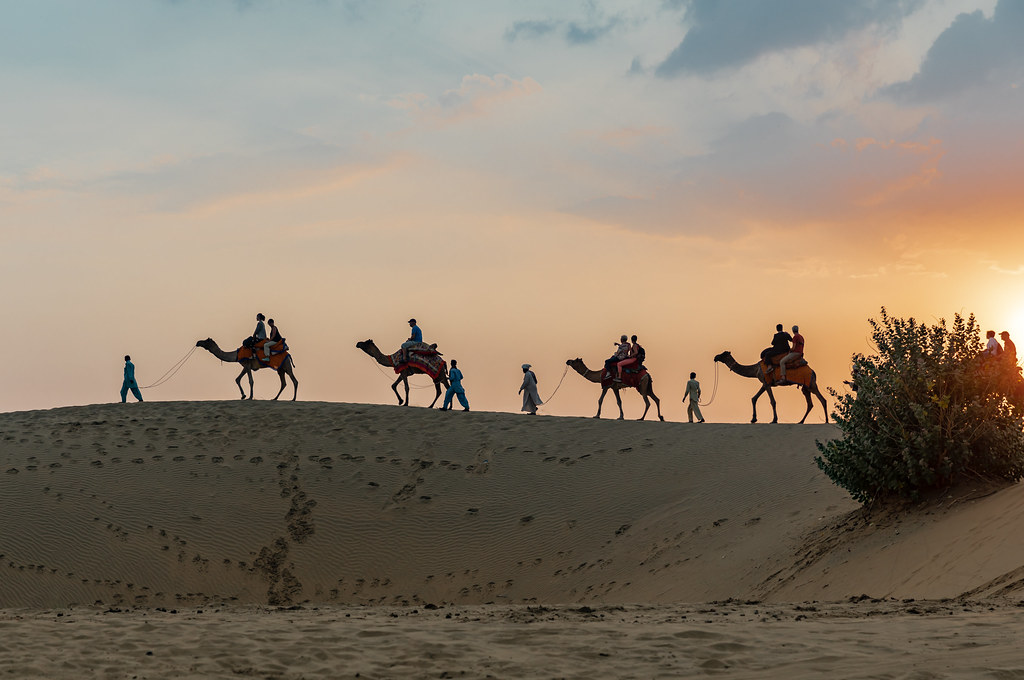
2) Jaisalmer, Rajasthan (west of India): Jaisalmer, the golden city, is a desert city. It’s the 9th biggest sub- tropical desert in the whole world. It also works as a natural barrier between two countries, India and Pakistan. In the sea and mountains of the sand, you can enjoy the camel riding, feel the hot and cold weather during day and night in campaign. Take the pleasure of camel ride to travel in the desert .Don’t think that sand can’t give you the pleasure because it will certainly give you much more than you think.
Camel Ride in The Desert of JaisalmerBlackwaters in Kerala
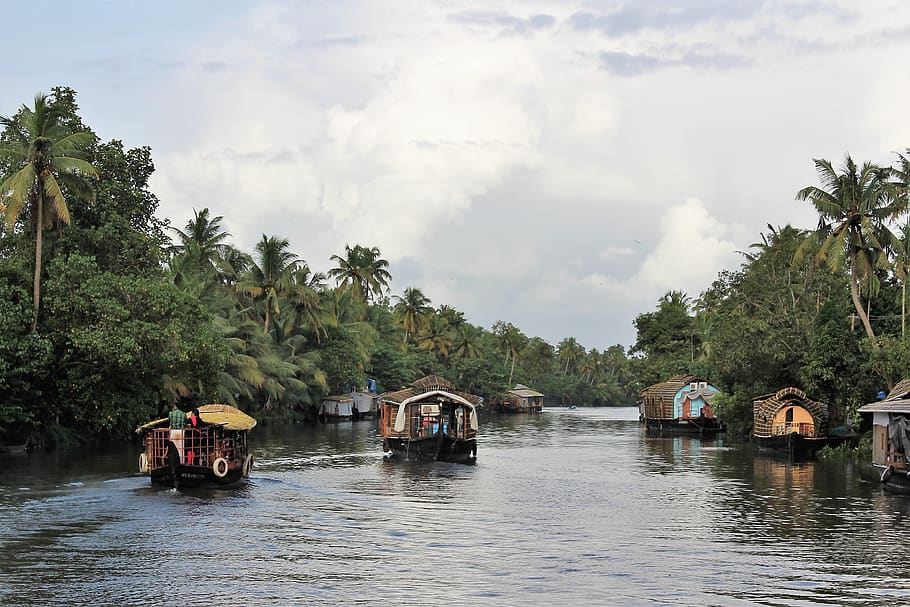
3) Blackwaters, Kerala (south of India): It is a nature made water path in Kerala. This biackwaters is a water connection between lagoons, and lakes of Arabian sea. This blackwater wide more than 900km in size with some rivers, lake, water cannels etc. Vambanad lake which is India’s ever long lake, situated here. You can enjoy these waterbed sceneries in ferny ride.
Gangtok in Sikkim
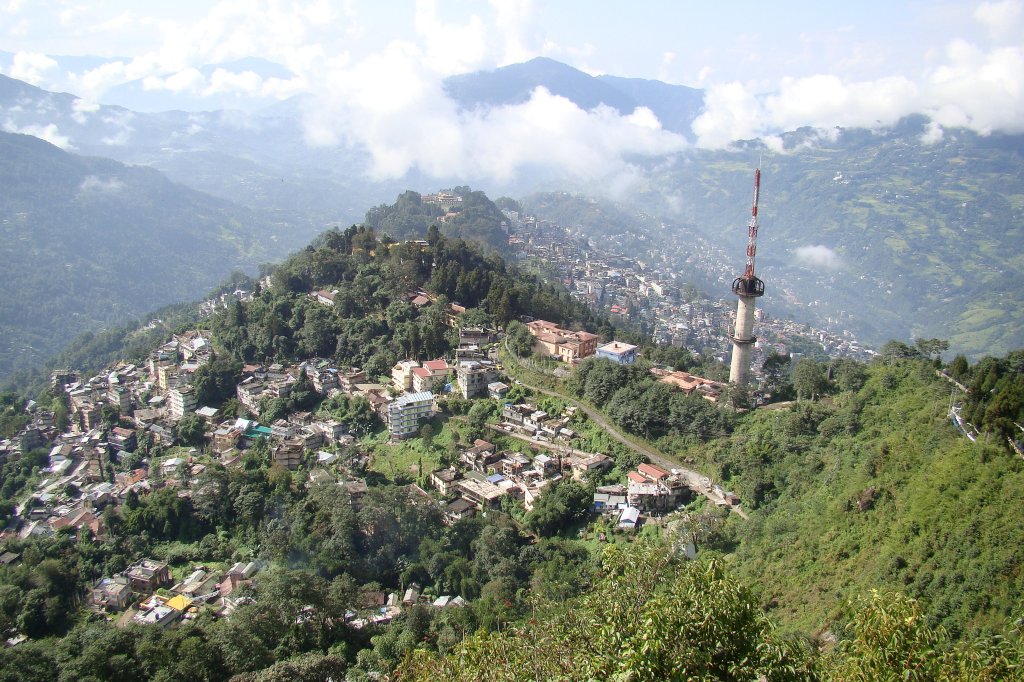
4) Gangtok, Sikkim (North- east of India): It is the capital town of Sikkim which is situated in the height of 1650m from sea level. It is a valley town with the scenery of majestic mountains. It was famous for pilgrims’ place of Buddhist. The spectacular mountain scenery, wonderful Tibetan culture and magnificent monasteries, flower gardens will make you addict to this place.
Scenery of Gangtokal lake in Srinagar
5) Srinagar, Jammu & Kashmir (North of India) : It is the northeast city of India .There are lot of lakes in Srinagar .You can enjoy & travel in the lake with shikara ride. You can enjoy luxury living in cozy boat houses . Dal lake is the most famous lake in the northern India . You can also bought things from floating market in the morning time . You also be able to enjoy the traditional festive meat dish Wazwan .The enormous sight of 30 hector tulip garden will enlighten your mood . You can also watch the whole Srinagar from the city tower of Pari Mahal in Zabarwan mountain . The water of Chashme shahi will cure your body with your medicinal power . You will feel yourself as a ruler in the majestic palace of Maharaja Hari Singh .
Boat house in the lakes of SrinagarShikara in the lake of Srinagar
Following a routine is a killer for your soul. Who doesn’t dream of traveling to different places and gaining new experiences and knowledge or do you want to spend your entire life in the same place you grew up in and see the same bunch of people every day and eat the same type of food you’ve always eaten? Because giving excuses to yourself for having no time and money isn’t good enough.
“The core of man’s spirit comes from new experiences” a famous dialogue from the movie ‘Into the Wild’ talks about the same thing; having new experiences. The world is a beautiful place and there are many natural and man-made beauties which you just cannot miss seeing. The world has many picturesque towns, beautiful beaches, museums, and many other incredible destinations which you should not miss before you die.
Today I am going to discuss with you and suggest you 10 most incredible destinations which you can add to your bucket list.
1.Get off the grid at Venice, Italy– It is an ancient small town built on a lagoon. It is the most visited travel destination. It has the most number of bridges in the world and it is also famous for its canal routes; no wonder it’s why called ‘City of Canals’ & ‘ The floating City’. It is one of the most picturesque cities in Italy. You can easily get lost here while traveling as it’s mapped like a labyrinth. There are many hidden routes and shortcuts but all worth exploring. The cafes in Venice are just like any other cafe in Italy. You’ll find people mostly start their day standing at a bar where they drink coffee with croissants. This city is full of life adorned with stunning art and beautiful architecture.
2. See the coral life at The Great Barrier Reef, Australia – It’s the first coral reef system to be awarded World Heritage status. No wonder why it is one of the seven wonders of the world. There are more than 1500 species of fish. You can also spot Nemo too. Snorkeling and diving are the things tourists mostly come here for. It is one of the best experiences in the world.
3. Eye Capturing Cappadocia, Turkey– The name is derived from a Persian word called katpaktukya meaning ‘the land of the beautiful horse’. Horses hold a special place in the lives of the people who live there. These locals also use horses as an alternative mode of transport for the tourists. This place is like nowhere on earth. The main attractions are the stunning landscapes, the Goreme Cave Churches, underground cities and of course the hot air balloons.
4. Mesmerising Meteora, Greece– Meteora meaning ‘ suspended in the air has earned its popularity from the vertical rocks which have turned and twisted with time into bizarre and yet beautiful rock formations. Here the monasteries which are placed atop these rocks appear as if they are hanging in the air like shown in fairytales. You can go to Meteora if you are looking for a relaxing getaway.
5. Salar de Uyuni, Bolivia – Salar de Uyuni is located in Bolivia is one of the most beautiful and remarkable vistas of South America. It is the world’s largest salt flat area stretching more than 4050 square miles of Altiplano. To experience the breathtaking mirror effect most tourists visit this place in the rainy season which lasts from December to April. This is also a heaven for photographers as the endless horizon allows them to play with perspective and depth of field.
6. The magnificent Grand Canyon, US – This wonder of nature extends up to 277 miles. Here the tourists come from all over the globe to take part in a range of activities. The Grand Canyon also offers breathtaking panoramas and stunning sights. Tourists usually come here for hiking, experiencing the iconic mule trip, rafting, etc.
7. Aurora Australis – To see this is truly once in a lifetime experience thing. While we all know about the famous northern lights called the Aurora Borealis we hardly talk about the southern lights. These lights can only be viewed from the southern latitudes and can only be seen within a limit of a 30-degree latitude line. this phenomenon makes the sky look magical. There you will find the sky dancing in green and red light.
8. The pyramid of Giza, Egypt – The pyramids have always been a mystery. People usually travel to visit the pyramid of Giza to travel back in time, to see Egypt’s beautiful landscapes and its vast deserts. The Egyptian civilization is one of the oldest civilizations of the world and as it is one of the 7 wonders of the world this fact itself should be the reason enough for you to include it into your bucket list.
9. Swing at the ‘ End of the World’, Banos, Ecuador – The swing is located on top of a mountain alongside the Tungurahua volcano. This became a tourist destination for its picturesque location. 10. Maui, Hawaiian Island – Maui Island is part of an archipelago and is the biggest island in Hawaii. It has become a tourist spot for its beauty and the dormant volcano which adds to the adventurous fun for the tourists to visit it.
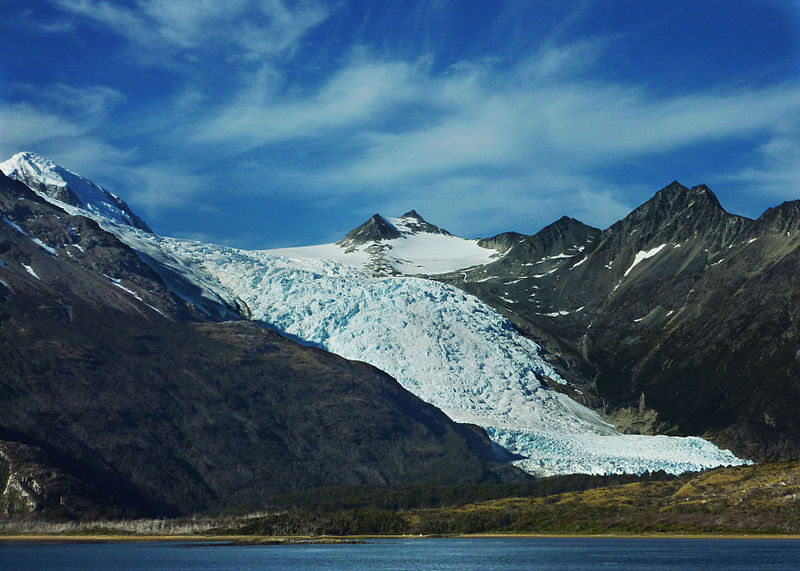
Tierra del Fuego, which stands for “Land of Fire” in Spanish, is an archipelago or a cluster of islands in the southern most tip of South America. It is located across the Strait of Magellan. The archipelago consists of the main island, Isla Grande de Tierra del Fuego and a group of many islands, including Cape Horn and Diego Ramirez Islands. Tierra del Fuego is divided between Chile and Argentina and is located close to the perennially frozen continent of Antarctica. Tourism is a major component of the local economy.
Brief History
The History of Tierra del Fuego ranges from settlement of the region by the local Yaghan and the Selk’nam people to it’s discovery by the infamous Portuguese explorer Ferdinand Magellan on whom the strait of Magellan is named after, to Spanish European colonization and the genocide of the natives during the gold rushes in the region.
In recent history, both countries have explored the region for oil extraction and formulated their Antarctic claims. In the 1960’s and 70’s there was even a threat of military conflict looming between the two countries over a few islands which almost led to an Argentine invasion of Chile in 1978. Ths very threat of war caused the Chilean regime of Dictator Augusto Pinochet to give logistical support and information to the British during the Falklands War of 1982.
Geography
The archipelago consists of the main Isla Grande de Tierra del Fuego island. Its westernmost part belongs to Chile and the rest to Argentina. The Chilean part is the region named Magallanes y Antarctica Chilena whose capital is Punta Arenas. The village of Puerto Toro located here is probably the Southernmost village in the world.
Punta Arenas, Chile
The eastern part of the main island, and a few small islands in the Beagle Channel, belong to Argentina. They are part of the Tierra del Fuego, Antarctic territory and South Atlantic islands province. The capital is Ushuaia, whis claims the title of the southernmost city of the World.
Ushuaia, Argentina
The Beagle Channel
Flora & Fauna
Only few Islands here forests which are classified as Magellanic subpolar. Trees like winter’s bark, Lenga beech, Magellan’s beech, Northofagus Antarctica etc are found here.
Seals in Tierra del Fuego
The most notable animals found here are Sea Gulls, Guanacos, Foxes, Kingfishers, Condors, Penguins, Owls, Austral Parakeets, North American Beavers, Sea Lion, Leopard Seals etc.
Tourist spots are places of uncommon attractiveness. West Bengal stretches from the Himalayas to the Bay of Bengal. On the north there are beautiful mountain ranges in Darjeeling the queen of hill towns.
Darjeeling gives beautiful view of sunrise on Kanchenjunga. From Darjeeling one can come to Kalimpong. One can take a short trip to Mirik, to see a sweet water lake. There is a forest at Jaldapara where wild animals move freely. Next, Kolkata is the chief tourist spot in West Bengal.
There are the museum, zoo, Jain Temple, Kalighat Temple, Metro Railway, planetarium, Science City, etc. Outside Kolkata there are the temple of Dakshineswar and Belur which are associated with Ramakrishna and Vivekananda.
Further down there is the Sundarban inhabited by the Royal Bengal Tiger the national animal of India. Out in the district, the religious places like Tarapith and Kamarpukur attract à large number of tourists every day.
Next there is Santiniketan an abode of peace where Visva Bharati University was set up by Rabindranath. Those interested in historical places will find Gaur and Murshidabad interesting.
To see the ancient art of Bengal, tourists are to come to Bankura and Bishnupur.The sea beach Digha attracts many tourists every day.
• Collapse of international tourism -cost the world at least $4 trillion.
• Report -jointly released by UN Conference on Trade and Development (UNCTAD) and UN World Tourist Organization (UNWTO).
• India – 54% drop in tourist arrivals in 2020.
• Tourism is not expected to return to pre- COVID levels until 2023. Cost the world -$1.7 trillion and $2.4 trillion in 2021.
• Three scenarios. Optimistic. Pessimistic. Uneven roll-out of vaccines. • Developing countries -majority in losses due to the asymmetric roll-out of vaccines. • Tourism likely to pick up faster this summer
North America and Europe.
• Loss in tourism sector -Felt particularly by women and young people. • 100-120 million tourism jobs are at stake.
• Recommended quick roll-out of vaccines globally. • Appreciated The EU Digital COVID Certificate initiative. Facilitate safe free movement of citizens in the EU during the COVID-19 pandemic.
• Recommended socio-economic measures to protect livelihoods.
• Grim warning -some tourism-related businesses would not survive even after restrictions are removed.





















 Eduindex
You must be logged in to post a comment.